It has become increasingly evident that reducing carbon dioxide emissions is not happening quickly enough to prevent runaway climate change and that negative emission techniques will need to be utilized as well. Negative emissions means removing carbon dioxide that is already in the atmosphere.
There are high-tech approaches to the problem that are under development, generally in the category of direct air capture technologies. But there are also low-tech approaches that utilize the carbon capturing abilities of plants to suck CO2 out of the atmosphere.
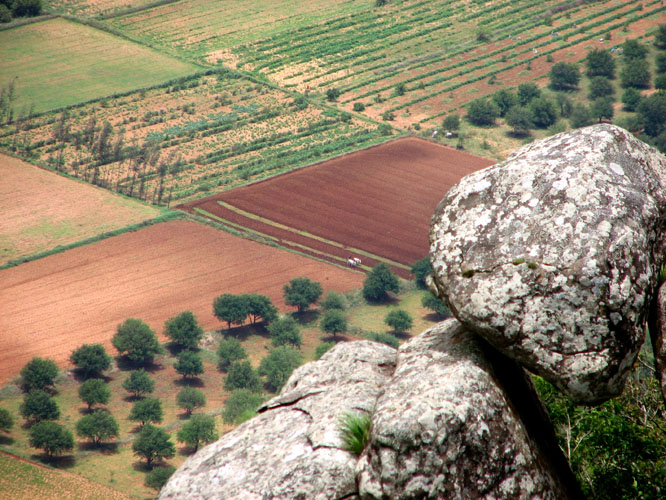
The most methodical way to accomplish this is by the use of agroforestry, defined as agriculture with trees. Agroforestry involves growing trees, shrubs and vegetables in tight assemblages. It includes trees on farms and other agricultural landscapes, farming in forests and along forest margins, and tree-crop production that includes cocoa, coffee, rubber and oil palm.
Agroforestry as a strategy for removing carbon from the atmosphere is likely to be much cheaper than high-tech approaches. It can simultaneously provide food, fiber, medicines and profit for people, as well as providing habitats for bird, bugs, monkeys, frogs and other species. While agroforests are most easily cultivated in the tropics, they are feasible in most places including across temperate regions in the United States.
Planting more trees is something we already hear about all the time as being desirable for the climate. Agroforestry takes this further by trying to maximize the benefits that trees provide by integrating them into agriculturally productive landscapes. We are likely to still need exotic carbon-capturing technologies in the battle to mitigate the effects of climate change but maximizing the use of agroforestry – a practice that actually goes back centuries or even millennia – makes abundant sense as well.
**********
Your solution to the need for carbon sequestration as “The most methodical way to accomplish this is by the use of agroforestry” has a couple of significant flaws.
Recent research has shown that managed forests are poor carbon sinks compared to older forests with large trees. This debunks the forestry industry’s narrative that young, fast-growing trees capture more carbon than large old trees. See research by Bob Leverett, among others, including research from Harvard Forest. Some material here: https://newenglandforests.blogspot.com/2018/09/a-call-for-old-growth-forest.html
Next, agroforestry in the tropics – for example the oil palm industry in Indonesia, has unleashed massive environmental devastation by clear-cutting and burning old growth rain forest and replacing it with huge oil palm monocultures. See NY Times article here: https://www.nytimes.com/2018/11/20/magazine/palm-oil-borneo-climate-catastrophe.html?rref=collection%2Fsectioncollection%2Fmagazine&action=click&contentCollection=magazine®ion=rank&module=package&version=highlights&contentPlacement=1&pgtype=sectionfront
Agroforestry makes sense in the limited case where you add trees to an existing agricultural monoculture. But to really make headway with carbon capture, humans need to plant more forests and leave large tracts of existing ones alone for hundreds of years. It’s not a business model, but it’s what we all need for a healthy, sustainable future.
Jake, agroforestry is not managed forestry, it’s the growing of food among trees. It does not replace natural forests but appears on the ag landscape where you might instead see a mono crop of corn. Also, oil palm plantations are not considered agroforestry, these monocultures are planted after natural forests are cleared often times, and no trees are grown among the palms. It’s fundamentally different. The FAO indicates there are 1 billion hectares of degraded forestland globally upon which agroforestry could be adopted since it builds soil and water tables while sequestering carbon (an estimated 45 gigatons of it is sequestered already by current agroforestry). That would double the amount of land in agroforestry globally already, without affecting the forests you want to leave standing.