• Skip to primary navigation
  • Skip to main content
  • Skip to primary sidebar

Earth Wise

A look at our changing environment.

  • Home
  • About Earth Wise
  • Where to Listen
  • All Articles
  • Show Search
Hide Search
You are here: Home / Archives for agroforestry

agroforestry

Forest-based agroforestry

July 30, 2025 By EarthWise Leave a Comment

Exploring forest-based agroforestry as a natural climate solution

Tree plantings have become a go-to climate solution for governments and conservation groups due to the carbon-storing potential of trees.  While planting new trees on open farmland would help capture additional carbon, a new study led by scientists from Yale School of the Environment suggests a powerful alternative: forest-based agroforestry.

Instead of clearing land for crops or starting fresh with new trees, forest-based agroforestry (or FAF) brings agriculture into existing forests.  Think fruits, nuts, and medicinal plants, for example, grown sustainably under a forest canopy – all while maintaining biodiversity and storing carbon.

According to the researchers, human activity in forests is often seen as harmful. But for thousands of years, Indigenous and local communities have managed forests in ways that actually strengthen them.

The study, which was recently published in the journal Nature Climate Change, found that FAF not only rivals tree planting in terms of climate benefits, but it can also generate income and support cultural practices tied to the land.

Despite these benefits, forest-based agroforestry receives far less funding and policy support due to two key misconceptions. It’s frequently confused with industrial systems focused on global commodity crops, and results from tropical regions are wrongly assumed to apply to temperate and boreal forests.

The researchers recommend including FAF in agroforestry policies, clearly distinguishing it from harmful industrial practices, and expanding research on FAF in temperate and boreal regions to guide better land management.

Forest-based agroforestry appears to be a natural climate solution hiding in plain sight.

**********

Web Links

Agriculture in Forests Can Provide Climate and Economic Dividends

Photo, posted May 8, 2023, courtesy of Preston Keres / USDA Forest Service via Flickr.

Earth Wise is a production of WAMC Northeast Public Radio
Non-Native Plants And Insect Decline | Earth Wise

January 15, 2021 By EarthWise Leave a Comment

The impact of non-native plants on insect decline

Global insect populations have been in decline since the beginning of the 20th century.  The decline accelerated during the 1950s and 1960s, and it has reached alarming levels during the past 20 years.

The causes of plummeting insect populations include habitat destruction, deforestation, climate change, light pollution, and the rise of industrial agriculture.  This so-called insect apocalypse is being mirrored by a bird Armageddon because so many bird species depend on insects for their diets.

A still controversial, but increasingly likely factor in the decline of insect populations is the spread of non-native plants in agriculture, agroforestry, and horticulture.  A recent study published in the journal Ecological Entomology presents recent data supporting the proposition that the widespread displacement of native plants is a key cause of insect declines. 

Many insects depend on a limited number of plants for survival.  In many cases, insects’ diets are restricted to a single plant family.  When native host plants dwindle or disappear from an area, the population of insects that depend on those plants shrinks.

There are examples of insects that adopt introduced plants as food sources, such as silver-spotted skipper butterfly larvae feeding on invasive kudzu in the eastern U.S.  But generally, the widespread incursion of non-native plants is harmful to native insect populations.

Non-native plants are especially popular for horticulture.  Millions of acres of potential insect habitat have been transformed into food deserts for native insects.  The authors of the recent study recommend that Americans should extensively include native plants in their yards to help preserve insect diversity.

**********

Web Links

How Non-Native Plants Are Contributing to a Global Insect Decline

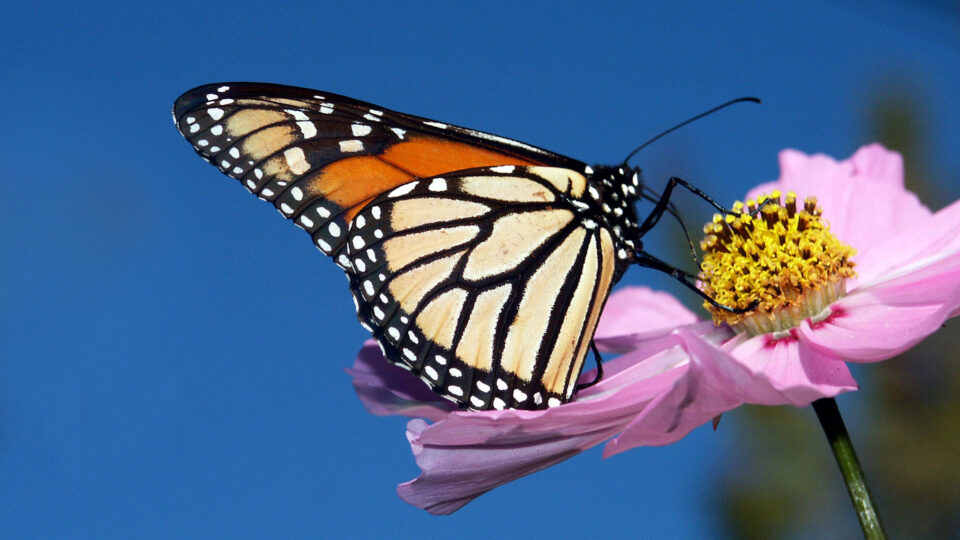
Photo, posted May 2, 2004, courtesy of Bernard Spragg via Flickr.

Earth Wise is a production of WAMC Northeast Public Radio.

Agroforestry

December 27, 2018 By EarthWise 2 Comments

https://earthwiseradio.org/wp-content/uploads/2018/12/EW-12-27-18-Agroforestry.mp3

It has become increasingly evident that reducing carbon dioxide emissions is not happening quickly enough to prevent runaway climate change and that negative emission techniques will need to be utilized as well.  Negative emissions means removing carbon dioxide that is already in the atmosphere.

[Read more…] about Agroforestry

Primary Sidebar

Recent Episodes

  • An uninsurable future
  • Clean energy and jobs
  • Insect declines in remote regions
  • Fossil fuel producing nations ignoring climate goals
  • Trouble for clownfishes

WAMC Northeast Public Radio

WAMC/Northeast Public Radio is a regional public radio network serving parts of seven northeastern states (more...)

Copyright © 2026 ·