• Skip to primary navigation
  • Skip to main content
  • Skip to primary sidebar

Earth Wise

A look at our changing environment.

  • Home
  • About Earth Wise
  • Where to Listen
  • All Articles
  • Show Search
Hide Search
You are here: Home / Archives for high tech

high tech

The carbon footprint of urban agriculture

March 22, 2024 By EarthWise Leave a Comment

Urban agriculture – essentially farming within a city – has become increasingly popular worldwide.  It is intended to make cities and urban food systems more sustainable.  There are social and nutritional benefits to urban agriculture, but its carbon footprint has not been widely studied.

There are high-tech, energy-intensive forms of urban agriculture, such as vertical farms and rooftop greenhouses.  But most urban farms are decidedly low-tech such as individual gardens managed by single farmers and community gardens managed by small groups of people.

A comprehensive international study led by the University of Michigan calculated the greenhouse gas emissions associated with the materials and activities of urban farms over their operating lives.  The emissions, expressed in the quantity of carbon dioxide equivalents produced per serving of food, were then compared to those of foods raised by conventional agriculture.

On average, food produced through urban agriculture emitted six times higher amounts of CO2 per serving than conventionally grown produce.

The study went on to recommend best practices crucial to making low-tech urban agriculture more carbon-competitive with conventional agriculture.  These include making use of infrastructure for more extended periods of time, making use of urban waste, and maximizing social and health benefits. 

Urban agriculture offers a variety of social, nutritional, and place-based environmental benefits and has its place in future sustainable cities.  It is important to implement it in ways that are most beneficial.

**********

Web Links

Study finds that urban agriculture must be carefully planned to have climate benefits

Photo, posted July 27, 2016, courtesy of Sandra Cohen-Rose and Colin Rose via Flickr.

Earth Wise is a production of WAMC Northeast Public Radio

A Fabric To Keep You Cool | Earth Wise

September 1, 2020 By EarthWise Leave a Comment

cooling fabric technology

About 10% of all electricity consumption in the U.S. is devoted to keeping us cool with air conditioning and other methods.  Researchers at two universities in Shanghai, China have developed a new material that can be made into clothing that cools the wearer without using any electricity.

The new fabric transfers heat, allows moisture to evaporate from the skin, and repels water.  Cooling off a person’s body is much more efficient than cooling off an entire room or a building.  There have been textiles and types of clothing designed to perform the cooling function, but most of those have disadvantages.  These include some combination of poor cooling capacity, high energy consumption, complex and time-consuming manufacturing, and high cost.

The researchers wanted to develop a personal cooling fabric that can efficiently transfer heat away from the body while at the same time being breathable, water resistant and easy to make.

The new fabric is made by electrospinning an ordinary polyurethane polymer with a water-repelling fluorinated version of polyurethane polymer along with a thermally conductive filler composed of boron nitride nanosheets.  The resultant material is a nanofibrous membrane that repels water from the outside but has large enough pores to allow sweat to evaporate from the skin and air to circulate. 

Tests of the membrane demonstrated higher thermal conductivity than other conventional or high-tech fabrics.  Used in clothing, the material would be more effective than previous fabrics in conducting heat away from the body. It may be possible to beat the heat without turning on the AC.   These membranes could also be useful for solar energy collection, seawater desalination, and thermal management of electronic devices.

**********

Web Links

New fabric could help keep you cool in the summer, even without A/C

Photo courtesy of the American Chemical Society on Youtube.

Earth Wise is a production of WAMC Northeast Public Radio.

A High-Tech Fire Alarm | Earth Wise

July 23, 2020 By EarthWise Leave a Comment

In recent years, wildfires have been a global problem, notably in California, Brazil, and Australia.  It has become increasingly important to be able to respond to new fires as soon and as quickly as possible.  Such response can make the task of extinguishing them easier, thereby reducing the amount of damage and the loss of property and life.

Traditional methods for detecting forest fires include satellite monitoring, ground patrols, and watch towers, all of which have high labor and financial costs but suffer from low efficiency.  Remote sensing technologies are becoming increasingly common but rely on batteries for power, requiring servicing in remote locations to replace depleted batteries.  Solar cells represent an alternative to batteries, but it is challenging to use them in forests because of shading and foliage coverage.

A team of researchers at Michigan State University has developed a remote forest fire detection and alarm system powered by nothing more than the movement of tree limbs in the wind.  The device is known as an MC-TENG, which is an acronym for multilayered cylindrical triboelectric nanogenerator.  The triboelectric effect is a phenomenon where certain materials become electrically charged when they separate from a second material with which they were previously in contact.  In the new device, two cylindrical sleeves fit within one another – one anchored and the other free to slide.  The device is tied to a tree branch and when the branch sporadically moves in the wind, electricity is generated and stored in a carbon-nanotube-based micro supercapacitor.  This powers a sensing system that can continuously monitor environmental conditions without requiring any maintenance.

A combination of carbon monoxide and temperature sensors provides a high-tech fire alarm that can operate continuously in the most remote forest.

**********

Web Links

Self-Powered Alarm Fights Forest Fires, Monitors Environment

Photo, posted August 3, 2012, courtesy of Lukas Schlagenhauf via Flickr.

Earth Wise is a production of WAMC Northeast Public Radio.

Fighting Mildew With Robots | Earth Wise

July 10, 2020 By EarthWise Leave a Comment

Using robots to fight mildew in agriculture

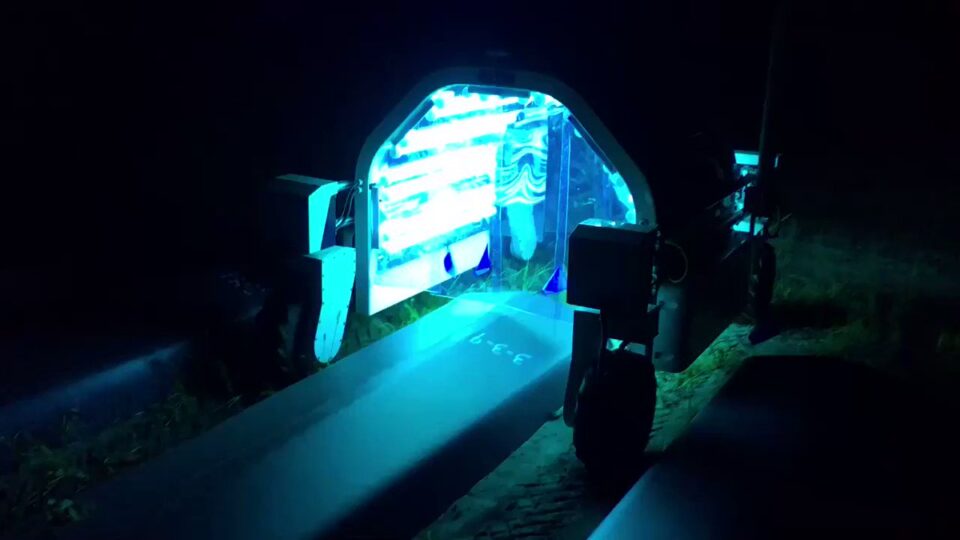
Cornell Researchers have partnered with Norwegian company SAGA Robotics to develop autonomous robots that can roam vineyards at night armed with ultraviolet lamps that can kill powdery mildew, which is a pathogen that devastates many crops, including grapes.

The robots are being field tested on Chardonnay grapes at two sites:  Cornell AgriTech’s research vineyards in Geneva, New York, and at Anthony Road Wine Co. in Penn Yan, New York.

Cornell has been researching the use of UV light to kill grapevine powdery mildew for nearly 30 years.  They have also worked with the University of Florida on using it to control powdery mildew in strawberries.

The UV treatment has been shown to suppress powdery mildew over a period of two years with the application of treatments once a week.  The technique represents a breakthrough because the mildew can adapt to chemical anti-fungal sprays in a single season, making them ineffective.  UV light damages DNA, but mildews have natural biochemical defenses that are triggered by the blue light present in sunlight.  By applying the UV at night, when there is no blue light from the sun, the defenses of the mildew are defeated.

In earlier trials, the researchers used UV lamps mounted on a tractor wagon, but this required all-night labor to treat an entire vineyard.  That has now been replaced with autonomous vehicles that can work seven nights a week, all night long.

The next development will be imaging technology that will detect and quantify mildew on grape leaves.  With this, the dose of UV light applied to a particular vine will depend on whether it is sick or healthy.

A high-tech solution to a problem that plagues vineyards.

**********

Web Links

Robots armed with UV light fight grape mildew

Photo courtesy of Rodrigo Onofre/Twitter.

Earth Wise is a production of WAMC Northeast Public Radio.

Can We Remove Enough CO2 From The Air?

January 9, 2019 By EarthWise Leave a Comment

As atmospheric carbon dioxide levels continue to set new records and the effects of climate change grow stronger, humanity has continued to procrastinate on reducing emissions.  As a result, it is increasingly clear that any strategy to avoid runaway climate change will have to involve the use of “negative emissions”- techniques or technologies that actually remove CO2 from the air.

There are both low-tech and high-tech methods for removing carbon dioxide from the atmosphere and both are likely to be needed. 

On the low-tech side, afforestation (planting trees where there were none before), reforestation, changes in forest management, rebuilding the carbon backbone in agricultural soils, and the use of energy from waste biomass are all ways to take carbon out of the atmosphere.

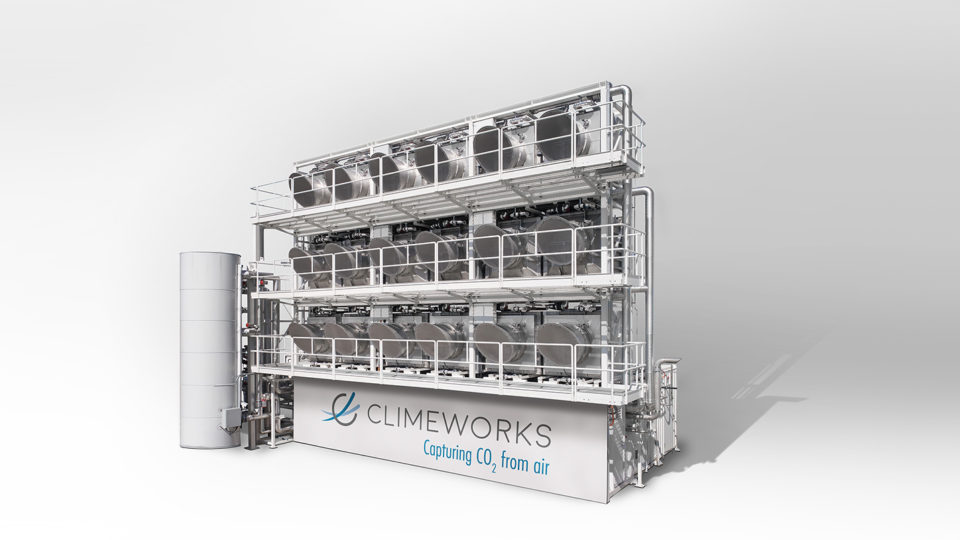
On the high-tech side, direct air capture technologies that take CO2 out of the air and store it in the ground are making rapid progress.   Right now, they are still very expensive,but that is changing.  There is an analogy to wind and solar technology. Not very long ago, both of those technologies were quite expensive but now their costs have plummeted to the point where they are often the cheapest way to make electricity.  With sufficient development effort and deployment, direct air capture technology could become quite affordable.

Some people advocate geoengineering as a solution for climate change.  While removing carbon dioxide amounts to tackling the root cause of the warming climate,geoengineering would address the problem by changing the climate again in some other way.  It is at best an extremely dangerous approach.

Removing CO2 using a combination of natural and man-made techniques is an important part of mitigating the effects of climate change.

**********

Web Links

Climate Solutions: Is It Feasible to Remove Enough CO2 from the Air?

Photo courtesy of Climeworks. 

Earth Wise is a production of WAMC Northeast Public Radio.

Agroforestry

December 27, 2018 By EarthWise 2 Comments

https://earthwiseradio.org/wp-content/uploads/2018/12/EW-12-27-18-Agroforestry.mp3

It has become increasingly evident that reducing carbon dioxide emissions is not happening quickly enough to prevent runaway climate change and that negative emission techniques will need to be utilized as well.  Negative emissions means removing carbon dioxide that is already in the atmosphere.

[Read more…] about Agroforestry

Primary Sidebar

Recent Episodes

  • An uninsurable future
  • Clean energy and jobs
  • Insect declines in remote regions
  • Fossil fuel producing nations ignoring climate goals
  • Trouble for clownfishes

WAMC Northeast Public Radio

WAMC/Northeast Public Radio is a regional public radio network serving parts of seven northeastern states (more...)

Copyright © 2026 ·