• Skip to primary navigation
  • Skip to main content
  • Skip to primary sidebar

Earth Wise

A look at our changing environment.

  • Home
  • About Earth Wise
  • Where to Listen
  • All Articles
  • Show Search
Hide Search
You are here: Home / Archives for oil palm

oil palm

Palm oil and water quality

June 3, 2024 By EarthWise Leave a Comment

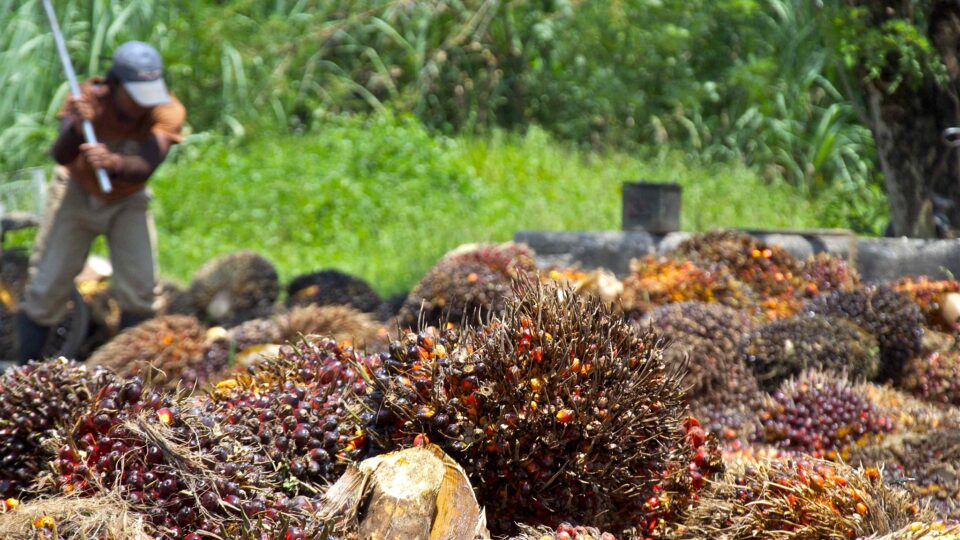
Palm oil is the world’s cheapest and most widely used vegetable oil.  In fact, more than 86 million tons of palm oil was consumed last year alone.  Even though few of us cook with it, palm oil can be found in approximately half of all packaged grocery items – everything from ice creams and pizzas to detergents and cosmetics. 

This massive global demand for palm oil is driving tropical deforestation around the world.  While many studies have shown how converting rainforests to oil palm plantations causes biodiversity loss, researchers from UMass Amherst are the first to demonstrate how these plantations also cause wide-ranging disturbances to nearby watersheds.

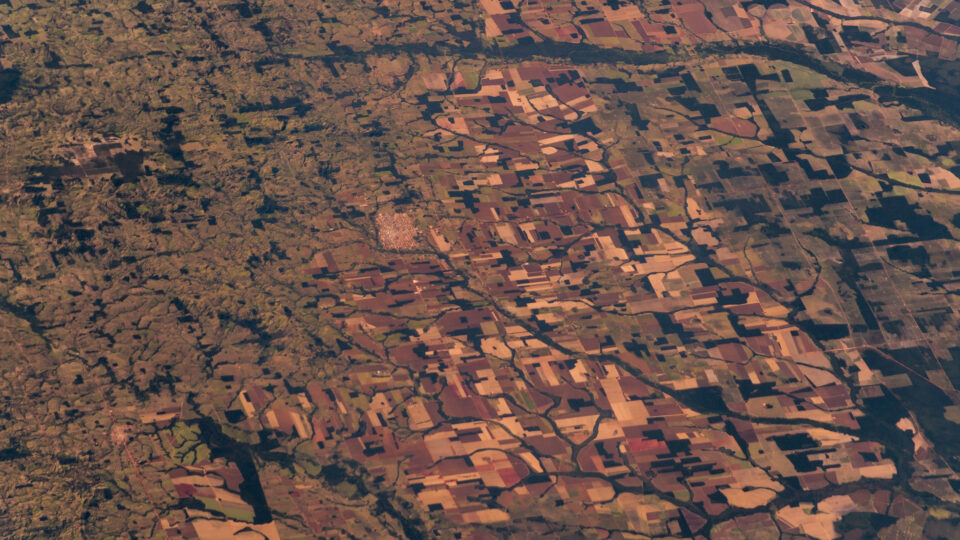
In the study, which was recently published in the journal Science of the Total Environment, the research team focused on the Kais River watershed of West Papua, a province in the far east of Indonesia.  Approximately 25% of the watershed has been turned into oil palm plantations. The watershed is also one of the oldest continually inhabited homes for different groups of Indigenous Papuans.

The researchers found that the conversion of tropical rainforest to oil palm plantation has increased precipitation, runoff, and soil moisture. Water quality in the watershed has also gotten dramatically worse: sedimentation has increased by 16.9%, nitrogen by 78.1%, and phosphorus by 144%.

The research team hopes regulators will work to limit the use of pesticides, conduct continuous water quality monitoring, and ensure that downstream communities have access to water quality information. 

**********

Web Links

Oil Palm Plantations Are Driving Massive Downstream Impact to Watershed

Photo, posted December 13, 2008, courtesy of Fitri Agung via Flickr.

Earth Wise is a production of WAMC Northeast Public Radio
Record Levels Of Deforestation In The Amazon | Earth Wise

March 25, 2022 By EarthWise Leave a Comment

Record levels of deforestation in the Amazon Rainforest

The Amazon rainforest is the largest rainforest in the world, covering more than 2.5 million square miles.  It’s home to 10% of all known species in the world.  The Amazon rainforest’s biodiversity is so rich that scientists are still discovering new plant and animal species today.  

The Amazon rainforest absorbs huge amounts of carbon dioxide from Earth’s atmosphere, making it a key part of mitigating climate change.  The vast rainforest acts as what’s known as a carbon sink.  Simply put, a carbon sink is anything that absorbs more carbon from the atmosphere than it releases.  But as trees in the Amazon disappear, so does the ability of the rainforest to absorb carbon dioxide.

Deforestation of the Amazon rainforest remains a major problem.  According to satellite data from the Brazilian government, the number of trees cut down in the Brazilian Amazon in January far exceeded deforestation figures for the same month last year.  Approximately 166 square miles of land was deforested in January alone, which is five times greater than what was lost in January, 2021.

Cattle ranching – both for beef and for leather – remains the leading cause of deforestation in the Amazon rainforest.  Trees in the Amazon are also cut down for their wood, as well as to clear the land in order to grow food crops, such as soy, sugar, and oil palm. 

Many companies have pledged to achieve “net zero” deforestation in their supply chains over the years, but most have not lived up to the commitment. 

Deforestation is not only a major driver of climate change, but it’s also the leading cause of species extinction.  Preserving the Amazon rainforest is vital. 

**********

Web Links

Amazon deforestation: Record high destruction of trees in January

Greenpeace calls on fast food giants to take a stand against Bolsonaro’s Amazon destruction

Hundreds of Companies Promised to Help Save Forests. Did They?

Photo, posted July 14, 2018, courtesy of Alexander Gerst via Flickr.

Earth Wise is a production of WAMC Northeast Public Radio.

A Palm Oil Replacement | Earth Wise

December 15, 2020 By EarthWise Leave a Comment

A possible replacement for palm oil

In the 1990s, cardiovascular health issues associated with partially hydrogenated oils containing harmful trans fats became a focus of great concern.  As a result, food companies looked for substitutes and the alternative they identified was palm oil.  Its ability to remain solid at room temperature made it well suited for many food applications.  Unfortunately, that property stems from its high saturated fat content, which means it also increases the risk of coronary heart disease.

The widespread use of palm oil has also caused significant environmental problems.  Palm oil plantations have replaced millions of acres of tropical forests, destroying the habitat for numerous species and threatening biodiversity.

Other potential replacements for partially hydrogenated oils such as coconut oil tend to be more costly, limited in supply, and also high in saturated fats.

Food scientists at the University of Guelph in Ontario, Canada, recently demonstrated the use of enzymatic glycerolysis (EG) to turn liquid vegetable oils into solid fats.  Their process is able to produce solid fats with the textural and structural properties desired by consumers.

The process is fairly simple, relatively easy to scale up, and is amenable to smaller food production or even local production.  Using it would enable food producers to use all sorts of readily available vegetable oils that can be produced in parts of the world that are not necessarily tropical regions.

Palm oil use is not going to go away, but this work may point a way to help slow down the destruction of ecosystems and animal habitats as well lead to more sustainable and healthy food sources.

*********

Web Links

U of G Food Scientists Find Palm Oil Alternative That’s Good for Human, Planet Health

Photo, posted February 21, 2010, courtesy of Craig Morey via Flickr.

Earth Wise is a production of WAMC Northeast Public Radio.

Land Use Change And Flooding | Earth Wise

September 30, 2020 By EarthWise Leave a Comment

Land use change leads to increased flooding

Land use change refers to the conversion of a piece of land’s use by humans from one purpose to another. Land use change is commonly associated with biodiversity loss and increased greenhouse gas emissions.  But how does land use change impact water cycles? 

According to researchers from the University of Göttingen in Germany, IPB University, and BMKG (both in Indonesia), the expansion of monocultures, such as rubber and oil palm plantations, leads to more frequent and more severe flooding.  The researchers explain the increase in flooding “with a complex interplay of ecohydrological and social processes, including soil degradation in monocultures, the expansion of oil palm plantations into wetlands, and the construction of flood protection dams.” 

For the study, which was recently published in the journal Ecology & Society, the research team interviewed nearly 100 Indonesian farmers, villagers, and decision-makers in Sumatra.  The team supplemented its research with data on precipitation, river and groundwater levels, soil properties, and regional mapping. 

During large-scale land use change – like plantation expansions – newly-compacted soil causes rainwater to runoff as opposed to being absorbed.  As more plantations are established in floodplains, the owners try to control flooding on their land by building barriers.  But these dams often lead to increased flooding on neighboring lands.  This understandably triggers social tensions between other farmers and plantation owners.     

In order to reduce the negative impact of land use change on the water cycle, the research team suggests soil protection and improved planning – especially in floodplains – would be a good place to start.  

**********

Web Links

Land use change leads to increased flooding in Indonesia

Photo, posted October 8, 2018, courtesy of Artem Beliaikin via Flickr.

Earth Wise is a production of WAMC Northeast Public Radio.

Disappearing Rainforests | Earth Wise

July 2, 2020 By EarthWise Leave a Comment

rainforests continue to disappear

Forest loss is a major contributor to climate change, and it is continuing at a rapid pace.  The tropics lost about 30 million acres of tree cover in 2019, a third of which was within humid tropical primary forests, which are especially important for biodiversity and carbon storage.  To put that loss in a human-scale perspective, it is the equivalent of losing a football field of primary forest every six seconds for the entire year.

The losses last year were 2.8% higher than in the previous year, and these losses have continued over the past 20 years despite worldwide efforts to halt deforestation.  

Brazil single-handedly accounted for over a third of all global loss of humid tropical primary forests. Bolivia experienced record-breaking tree cover loss due to fires.  The losses in its forests were 80% greater than in any previous year.  The fires were often started by people who were trying to clear land for agriculture but had the fires go out of control. Several countries in Africa’s Congo Basin also experienced sustained or worsening forest loss. 

Indonesia, often the focus of the world’s attention for its deforestation activities, actually saw a 5% reduction in primary forest loss in 2019.  It was the third year in a row for lower losses.  The now-permanent moratorium on clearing forests for oil palm plantations and logging seems to be working.

Going forward, the coronavirus pandemic poses additional threats to the world’s forests in the near future.  There may be a tendency to sacrifice forests in pursuit of economic recovery, which will only lead to future complications for the health and livelihoods of millions of people around the world.

**********

Web Links

We Lost a Football Pitch of Primary Rainforest Every 6 Seconds in 2019

Photo, posted February 7, 2011, courtesy of Chad Skeers via Flickr.

Earth Wise is a production of WAMC Northeast Public Radio.

Unleash the power of Uniswap Exchange and elevate your crypto trading experience with its revolutionary decentralized exchange platform.

Agroforestry

December 27, 2018 By EarthWise 2 Comments

https://earthwiseradio.org/wp-content/uploads/2018/12/EW-12-27-18-Agroforestry.mp3

It has become increasingly evident that reducing carbon dioxide emissions is not happening quickly enough to prevent runaway climate change and that negative emission techniques will need to be utilized as well.  Negative emissions means removing carbon dioxide that is already in the atmosphere.

[Read more…] about Agroforestry

Primary Sidebar

Recent Episodes

  • An uninsurable future
  • Clean energy and jobs
  • Insect declines in remote regions
  • Fossil fuel producing nations ignoring climate goals
  • Trouble for clownfishes

WAMC Northeast Public Radio

WAMC/Northeast Public Radio is a regional public radio network serving parts of seven northeastern states (more...)

Copyright © 2025 ·