• Skip to primary navigation
  • Skip to main content
  • Skip to primary sidebar

Earth Wise

A look at our changing environment.

  • Home
  • About Earth Wise
  • Where to Listen
  • All Articles
  • Show Search
Hide Search
You are here: Home / Archives for plantings

plantings

Paris and climate change

September 8, 2025 By EarthWise Leave a Comment

Officials in Paris are taking steps to prepare for a warmer future

Paris is associated with climate change by virtue of the 2015 international agreement seeking to limit the amount of warming taking place on the planet.  But Paris is well aware that the world is not making much progress in meeting the goals of that agreement and the French capital is already suffering from the impact of the warming climate.

France has had multiple heat waves this summer that have seen multiple record high temperatures across the country.  Eight of the 10 hottest summers recorded in Paris have occurred since 2015.

Paris officials have performed heat crisis simulations to learn what the effects of extreme heat situations would be.  One simulation looked at the impact of temperatures reaching 122 degrees.  The consequences to many of the city’s functions and systems would be dire.  This might seem outlandish, but in 2019, temperatures in Paris reached 109 degrees, and climate change is warming Europe at more than twice the global average.  With its zinc roofs, squares paved with stone, and highest population density in Europe, Paris is especially ill-suited to hot weather.

Paris is taking steps to prepare for a warmer future.  It is pulling up asphalt parking places and road centers to plant trees, 15,000 last winter alone.  It is putting up more shade structures and water misters.  Paris is insulating older buildings – 7,000 a year now and a goal to reach 40,000 a year by 2030.  Paris is registering isolated older or disabled people, so that they can be checked on during heat waves.

It is a race against time.  Paris is trying to prepare for the changes to come.

**********

Web Links

Paris Braces for a Future of Possibly Paralyzing Heat

Photo, posted September 30, 2018, courtesy of Pedro Szekely via Flickr.

Earth Wise is a production of WAMC Northeast Public Radio

Parks for bugs

May 27, 2025 By EarthWise Leave a Comment

Urban areas can have a variety of green spaces:  gardens, parks, and roadside and median plantings.  It turns out that these spaces can serve as pollinator refuges.

A study by researchers at the University of British Columbia found that reducing lawn mowing and creating pollinator meadows – essentially parks for bugs – significantly boosts pollinator diversity and creates healthier and more resilient ecosystems.

The 3-year study surveyed pollinators in 18 urban parks across the city of Vancouver.  It compared parks where meadows were planted and mowing was restricted with parks that were kept as standard turfgrass lawns.

Parks with meadows saw an immediate increase in pollinator species – from 21 to 47 more wild bee and hoverfly species – compared to parks without meadows.  These increases continued over the entire three-year study period.

The researchers identified more than 100 species of wild bees and hoverflies and 35 of them were only found in parks with meadows.

People think of urban landscapes as poor environments for biodiversity, but this study demonstrated that even relatively small changes can have significant impacts.  Even a patchwork of small habitats can allow species to move freely and settle into multiple areas quickly.

The researchers had advice for urban residents as well.  They suggest that people reduce mowing, plant native flowering shrubs and trees, create diverse habitats that incorporate a variety of plants that bloom at different times, avoid pesticide use, and leave natural nesting sites for pollinators.

Preserving pollinators is an important task and having a few parks for bugs can really help.

**********

Web Links

How ‘parks for bugs’ boost pollinators in Vancouver

Photo, posted September 19, 2011, courtesy of Eric Bridiers / U.S. Mission Geneva via Flickr.

Earth Wise is a production of WAMC Northeast Public Radio
Solar farms and pollinators

September 30, 2024 By EarthWise Leave a Comment

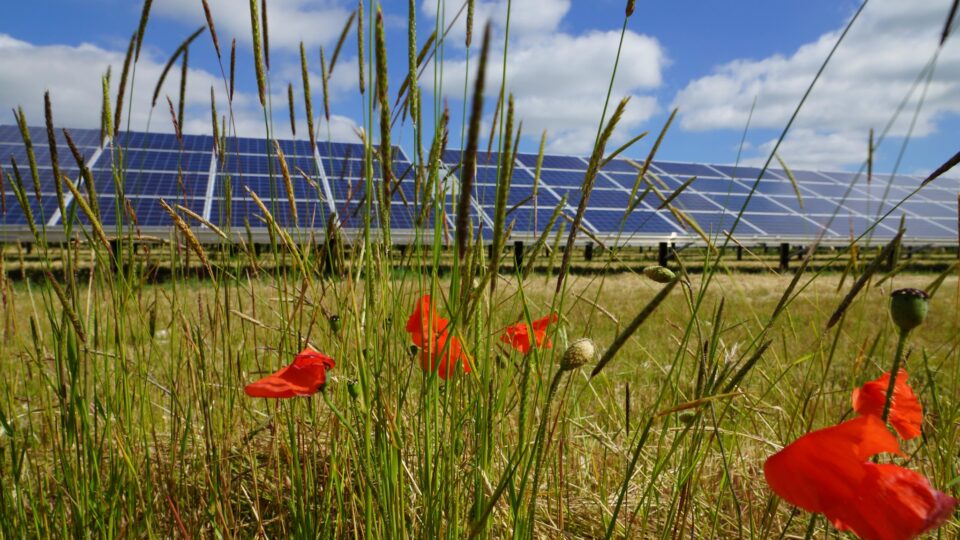
Two important environmental challenges are finding some literal common ground:  the need to reduce carbon emissions and the fight to stave off global biodiversity collapse.  Both issues can be addressed at solar farms.

Solar energy is an important weapon in the battle against climate change.  But utility-scale solar farms take up large amounts of land.  Large-scale solar farms already take up nearly a thousand square miles of land in the US and will take up much more in the coming decades.

In the meantime, the biodiversity collapse is being driven in large part by habitat loss.

Given all this, solar farm operators, biologists, and environmentalists are teaming up to grow pollinator-friendly plants in and around solar farms. The plantings attract insects, birds and even mammals. The more plant diversity in the solar farms, the more environmental benefits can be achieved. 

There are costs associated with creating pollinator-friendly solar farms. Ideally, solar panels need to be installed at greater height than otherwise in order to permit growing many of the plants that attract bees and butterflies.  But there are economic benefits associated with attracting and sustaining pollinators.  On a cautionary note, there have already been cases of greenwashing, where solar operators claim environmental benefits far in excess of the scope of the actual efforts they have made. 

There are both governmental and non-governmental agencies seeking to assess and certify pollinator-friendly solar farms.  There is considerable variability in the ecological value of existing farms.  Pollinator-friendly solar farms are in their early days, but they have a lot to offer as a win-win strategy for the environment.

**********

Web Links

Solar Farms Have a Superpower Beyond Clean Energy

Photo, posted December 4, 2014, courtesy of Juwi Renewable Energies Limited via Flickr.

Earth Wise is a production of WAMC Northeast Public Radio
Counting Trees | Earth Wise

April 11, 2023 By EarthWise Leave a Comment

Researchers have developed a new method for counting trees

Scientists estimate that there are about 3 trillion trees on the earth.  A huge number but probably half as many as there were before people entered the picture.  And we’re losing about 10 billion trees a year to toilet paper, timber, farmland expansion, and other human activity.  Trees play a crucial role in taking carbon dioxide out of the atmosphere and storing it away.  For this reason, trees have become an integral part of the effort to mitigate climate change.

There are major initiatives underway around the world to plant more trees.  Part of this is driven by the increasing use of carbon credits by companies trying to offset their carbon emissions.   These credits are earned by either planting new trees or paying farmers or other landowners not to cut down existing trees.  But how many trees are actually planted and how many survive over time?

Whether these efforts are really resulting in more trees and more carbon storage is not easy to determine.  Current international inventories of global tree-sequestered carbon are subject to great uncertainty.

Researchers from the University of Copenhagen and NASA have developed a method for mapping large numbers of trees and determining their carbon content.  Using artificial intelligence techniques to analyze ultra-high-resolution satellite images, they can count trees, determine their individual species, and measure their carbon content.

A study of images from Africa’s Sahel region found that it is home to nearly 10 billion trees that are currently storing 840 million tons of carbon.

Now that the groundwork for this new methodology is complete, it is ready to be deployed by public agencies, NGOs, and other interested in monitoring the numbers of trees and their carbon content.

**********

Web Links

The counting of nine billion trees could help manage climate credits and nature restoration

Photo, posted October 27, 2018, courtesy of Ian Dick via Flickr.

Earth Wise is a production of WAMC Northeast Public Radio
Low Fares Clean German Air | Earth Wise

September 29, 2022 By EarthWise Leave a Comment

Low fare for public transportation help clean the air in Germany

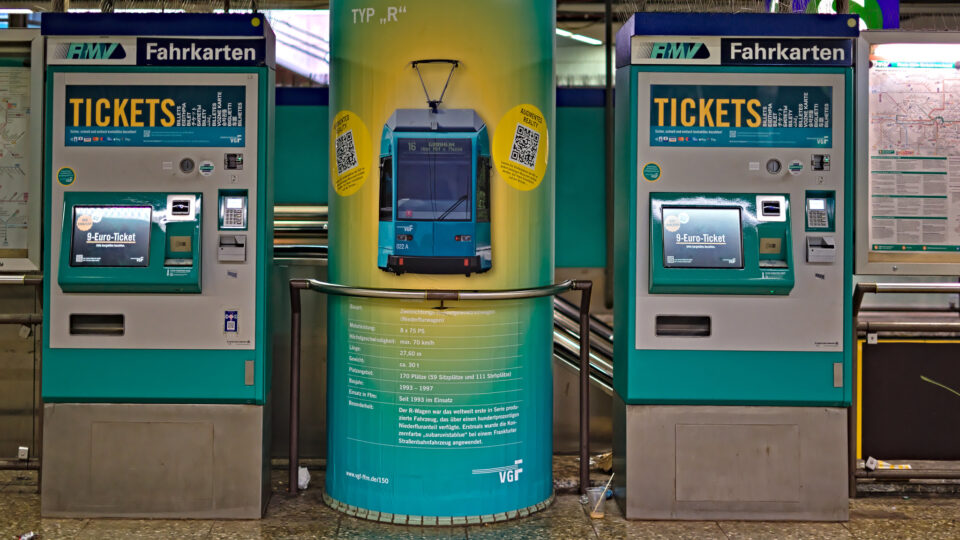
Germany’s parliament set summer public transport fares at 9 euros a month as a way to slash pollution and reduce imports of Russian oil.   The low price included all buses, trams, subways, and regional trains, effectively lowering prices by more than 90% in some cities.  Berliners saved 98 euros on their monthly travel pass; commuters in Hamburg saved even more.

The program began June 1 and ended August 31.  The bargain rates drove widespread use of public transport and discouraged the use of cars, which already was undesirable due to high gasoline prices.   Over the three-month period, transit authorities sold over 50 million subsidized tickets.  One out of five travelers were using public transport for the first time, according to surveys.

According to an estimate from the Association of German Transport Companies, the program helped to avoid 1.8 million tons of carbon dioxide emissions.  This is roughly equivalent to taking 1.5 million cars off the road for the summer or planting 30 million trees.

The discount transit program had a clearly positive effect on the climate and, obviously, was a source of financial relief for German citizens.  Last year, Germany was the largest buyer of Russian oil in Europe and it wanted to make drastic reductions in its purchases.  The success of the program prompted many to ask for it to be continued.  However, the program cost the government about 2.5 billion euros in reimbursements to transit companies.  The German government has said it would not be extended.

Nonetheless, German policymakers are weighing other proposals for low-cost public transit.  Clearly encouraging people to use public transit pays dividends.

**********

Web Links

Germany’s Cheap Summer Train Fares Prevented 1.8 Million Tons of Carbon Pollution

Photo, posted June 6, 2022, courtesy of 7C0 via Flickr.

Earth Wise is a production of WAMC Northeast Public Radio
Soaring Heat And Inner-City Neighborhoods | Earth Wise

August 31, 2021 By EarthWise Leave a Comment

Inner cities especially vulnerable to climate change

The record-breaking heatwaves this summer have exposed the special vulnerability inner cities have to the effects of summer heat.  Climate change has exacerbated and supercharged heatwaves, as was seen in Seattle and Portland in late June.

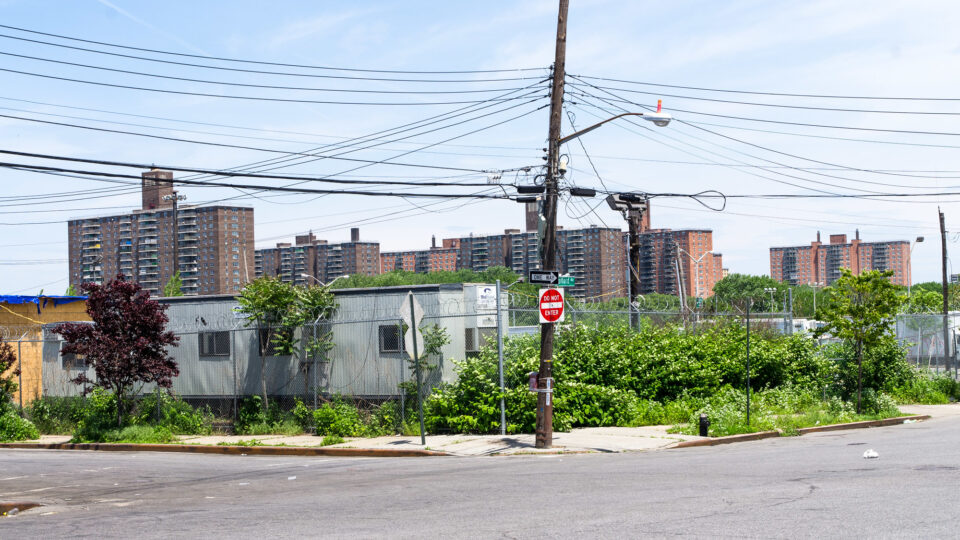
Urban cores can be 10 degrees or more warmer than the surrounding countryside.  The urban heat island effect is a result of how cities are built, with so much pavement, so many buildings, and not enough trees.  On top of this, decades of disinvestment in neighborhoods where people of color live have left them especially vulnerable to heat as their homes are not able to cope with it.

In New York City, some residents of Hunts Point in the Bronx keep lists of neighbors they check on to help keep the most vulnerable alive during heat waves.  The city has subsidized 74,000 air conditioners for low-income, elderly residents, and is spending millions to plant trees.  In Phoenix, the hottest big city in the country, officials are working to develop new models for cooler public housing and cooling for streets and pedestrian corridors.

A study, published in 2020, looked at the linkage between higher heat island temperatures and past practices of redlining, where home loans and insurance were unavailable to people in neighborhoods of color.  In 94 of 108 communities studied, the formerly redlined neighborhoods had higher surface temperatures.

Cities are confronted with two heat problems:  emergencies that require immediate action to save lives, and long-term issues related to combating soaring temperatures in heat islands strengthened by global warming. In many cases, cities are not prepared for either problem.  Dealing with and adapting to heat is essential to the long-term viability and quality of life in our cities.

**********

Web Links

A Triple Whammy Has Left Many Inner-City Neighborhoods Highly Vulnerable to Soaring Temperatures

Photo, posted May 27, 2014, courtesy of Dan DeLuca via Flickr.

Earth Wise is a production of WAMC Northeast Public Radio.

The Importance Of Urban Green Spaces | Earth Wise

August 10, 2021 By EarthWise Leave a Comment

Every urban green space is critically important to mental and physical well-being

Projections are that 68% of the global population will be living in cities by 2050.  It is therefore not surprising that urban green spaces are critically important for promoting mental and physical well-being.

An international study, published in Science Advances, took soil samples from different types of urban green spaces and comparable neighboring natural ecosystems in 56 cities from 17 countries across six continents.

The study concluded that even roadside plantings contribute a range of important microbial communities that are critical for sustaining productive ecosystems services, such as filtering pollutants and sequestering carbon dioxide.

Parks and gardens constitute most of the open spaces available for recreational activities in cities and play important roles in curbing pollution, reducing noise, and lowering air temperatures.

In addition, human exposure to soil microbes has been shown to be beneficial to human health by promoting effective immunoregulation functions and reducing allergies. The study found that city parks and even roadside plantings support a great variety of different microbes that are different from natural ecosystems. 

We think of roadsides as being barren but the vegetation along footpaths and roadsides are important microbial habitats.  Some European cities, such as Bern in Switzerland, have instituted policies to protect the natural vegetation along footpaths and roadsides.

The new study is a part of a series of research efforts looking at the important of green spaces for ecosystem health.  As the world becomes increasingly urbanized, every bit of greenery in cities and highways is important and is needed for sustaining a healthy environment.

***********

Web Links

Every spot of urban green space counts

Photo, posted June 3, 2013, courtesy of Manuel MV via Flickr.

Earth Wise is a production of WAMC Northeast Public Radio.

Europe’s Green Deal: Bad For The Planet? | Earth Wise

December 28, 2020 By EarthWise Leave a Comment

Europe's Green Deal might simply be exporting its environmental pollution

In 2019, the European Union announced the “Green Deal,” a comprehensive program aimed at making Europe the first climate-neutral continent, implementing environmentally friendly transport, increasing recycling, and expanding renewable energy.

The Green Deal involves significant changes to European agriculture.  Over the next ten years, under the ambitious environmental program, at least a quarter of all agricultural areas will be farmed organically, the use of fertilizers and pesticides greatly reduced, 3 billion trees planted, 15,000 miles of rivers restored, and the population declines of pollinators reversed.

However, in a recent article published in Nature, scientists at the Karlsruhe Institute of Technology show that this Green Deal might actually be a bad deal for the planet.

The problem is that the EU is likely to basically be outsourcing environmental damage by its high imports of agricultural products.

According to the Karlsruhe study, the EU annually imports millions of tons of agricultural products, as much as 20% of its produce and much of its meat and dairy products.  Quite often, these imports come from countries whose environmental laws are far less stringent than those in Europe.

The EU cannot impose environmental standards on other countries, but it can demand that goods entering the European market meet EU requirements.  The study points out that Europe’s carbon footprint has to be evaluated on a global basis.  If the EU is truly to become a climate-neutral continent, it must include foreign trade goals and requirements in its environmental programs.  Otherwise, Europe will simply be outsourcing its environmental problems and will continue to cause damage to the planet.

**********

Web Links

Green Deal: Good for a Climate-neutral Europe – Bad for the Planet

Photo, posted July 17, 2009, courtesy of Edmund Garman via Flickr.

Earth Wise is a production of WAMC Northeast Public Radio.

Agroforestry

December 27, 2018 By EarthWise 2 Comments

https://earthwiseradio.org/wp-content/uploads/2018/12/EW-12-27-18-Agroforestry.mp3

It has become increasingly evident that reducing carbon dioxide emissions is not happening quickly enough to prevent runaway climate change and that negative emission techniques will need to be utilized as well.  Negative emissions means removing carbon dioxide that is already in the atmosphere.

[Read more…] about Agroforestry

Tree-Planting Drones

March 16, 2018 By EarthWise Leave a Comment

https://earthwiseradio.org/wp-content/uploads/2018/03/EW-03-16-18-Tree-Planting-Drones.mp3

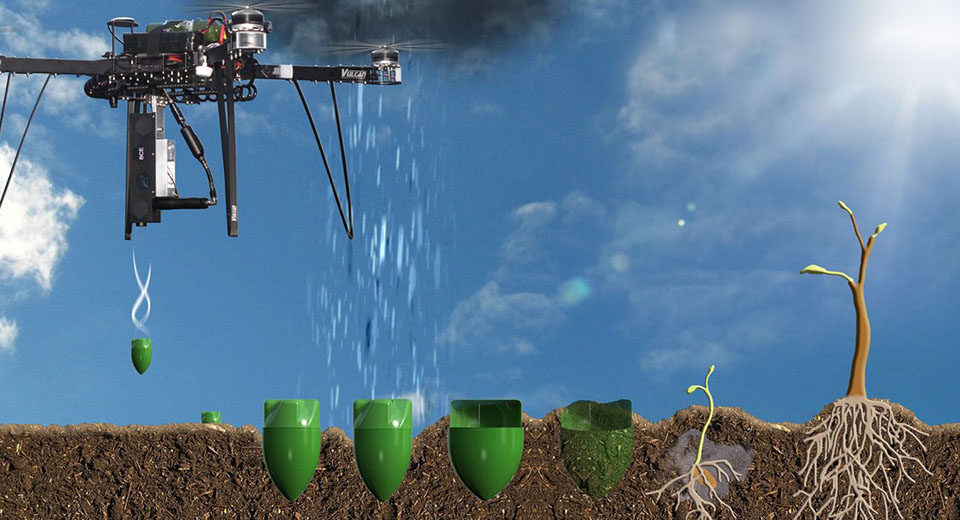
One of the major causes of the increasing carbon dioxide levels in the atmosphere is deforestation.   We chop down about 15 billion trees each year.  Over time, our activities have reduced the number of trees on earth by about 50%.  We do plant trees – these days, about 9 billion a year.  It is a substantial number, but still leaves a net loss of 6 billion trees annually.

[Read more…] about Tree-Planting Drones

The Restoration Economy

March 2, 2018 By EarthWise Leave a Comment

https://earthwiseradio.org/wp-content/uploads/2018/03/EW-03-02-18-The-Restoration-Economy.mp3

Deforestation is one of the largest contributors to climate change.  Forests cover about 30% of the world’s land area and are a crucial sink for carbon dioxide.   Over time, we have been steadily reducing the amount of forest in the world to obtain wood and timber, open up farmland, build towns and cities, produce paper, make palm oil, and mine for minerals.

[Read more…] about The Restoration Economy

A Carbon Loophole

February 12, 2018 By EarthWise Leave a Comment

https://earthwiseradio.org/wp-content/uploads/2018/02/EW-02-12-18-A-Carbon-Loophole.mp3

Many power plants in Europe and elsewhere are replacing coal with wood.  For example, the Drax Power Station in Britain was its largest coal-burning plant and is now using wood pellets shipped from the southern U.S. in its boilers.    According to the carbon accounting rules at the EU and elsewhere, the process is considered to be “carbon neutral.”   But is it?

The idea is that new trees are being planted in the forests where the trees are cut to be burned in power plants.  So, there is carbon neutrality.  In principle.

European countries have embarked on a massive effort to switch to generating power from renewable energy.  While there has indeed been major growth in wind and solar power in the 28 countries of the European Union, much of the new “green” power has come from burning wood in converted coal power stations.

A group of 200 scientists wrote to the EU last September insisting that bioenergy from forest biomass is not carbon neutral and that there must be tighter rules to protect forests and their carbon.  Wood burning has become a loophole in controlling carbon emissions.

There are problems with the claims of carbon neutrality.  There is no way to know whether enough new trees are actually being planted to replace those being burned.  And then there is the time lag for tree replacement.  Trees don’t grow overnight.  There are also the carbon emissions associated with harvesting, processing and transporting wood.

There are most certainly ways in which burning biomass can be carbon neutral and can represent real progress over the use of fossil fuels.  But caution must be taken to avoid exploiting loopholes in current climate rules that might actually result in increased carbon emissions.

**********


Web Links

Carbon Loophole: Why Is Wood Burning Counted as Green Energy?

Photo, posted April 26, 2014, courtesy of Flickr.


‘A Carbon Loophole’ from Earth Wise is a production of WAMC Northeast Public Radio.

Cities Can Help Bees

December 14, 2017 By EarthWise Leave a Comment

https://earthwiseradio.org/wp-content/uploads/2017/12/EW-12-14-17-Cities-Can-Help-Bees.mp3

Global bee populations have been drastically declining as a result of habitat loss, pesticides and climate change.  But studies are showing that planting flower patches in urban gardens and green spaces can make a real difference in restoring natural pollinators.   There are already positive results in cities from Chicago to London to Melbourne.

[Read more…] about Cities Can Help Bees

The Monarch Highway

August 24, 2017 By EarthWise

https://earthwiseradio.org/wp-content/uploads/2017/08/EW-08-24-17-The-Monarch-Highway.mp3

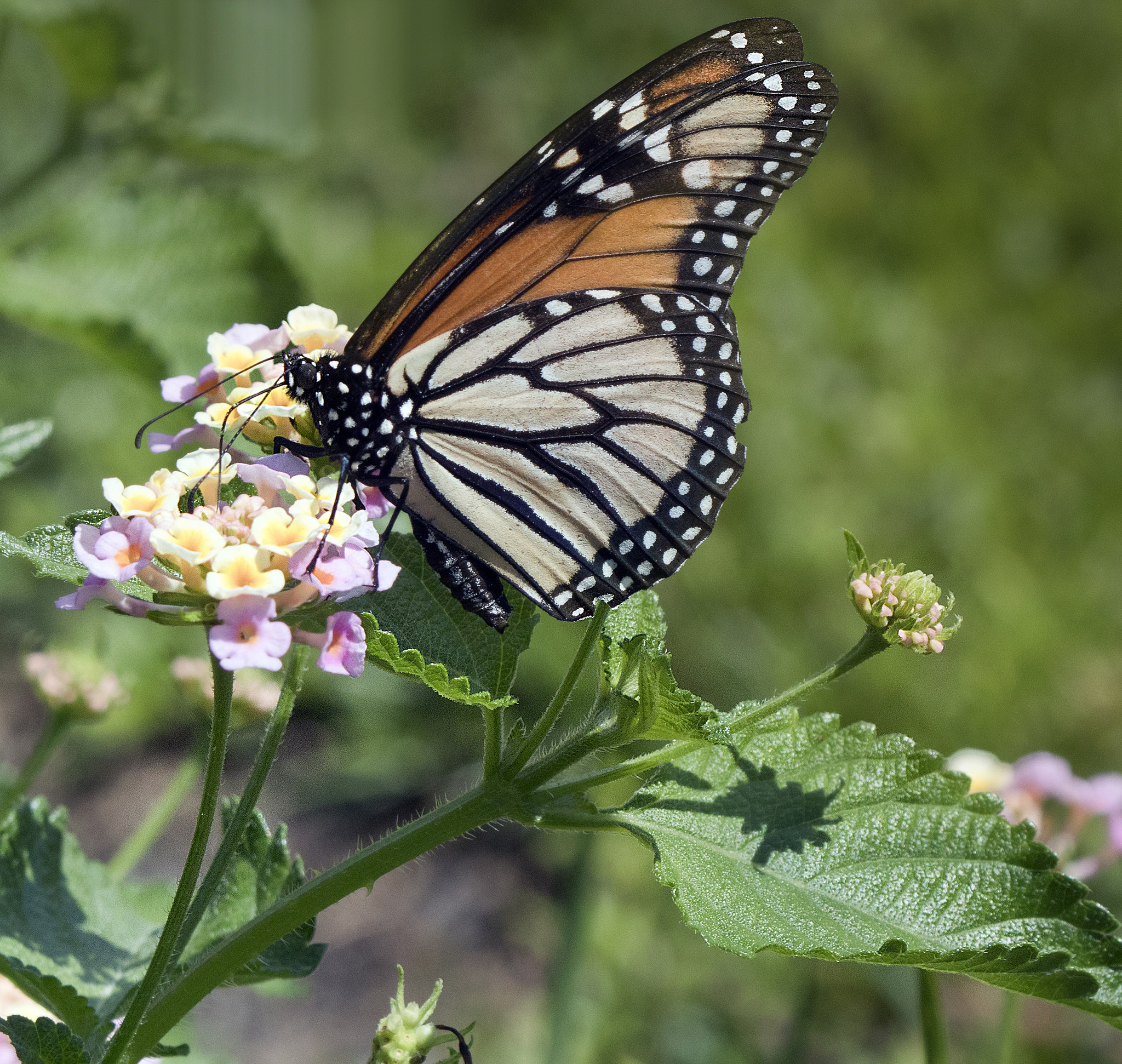
We have talked about the monarch butterfly on a number of occasions.  The population of these iconic orange and black butterflies in North America has plummeted from 1 billion to 33 million over the past 20 years.  People have undertaken a variety of efforts to try to save the species but now a major project to restore the dwindling habitat of the monarch is underway.

[Read more…] about The Monarch Highway

Trees Are Not Enough

July 18, 2017 By EarthWise

https://earthwiseradio.org/wp-content/uploads/2017/06/EW-06-26-17-Trees-Are-Not-Enough.mp3

Trees are nature’s way of removing carbon dioxide from the atmosphere.  Growing plants take up CO2 and store it in the form of their roots, stems and leaves.  And in fact, a significant factor in the growing levels of carbon dioxide in the atmosphere has been the extensive deforestation that has gone on over the past couple of centuries.

[Read more…] about Trees Are Not Enough

Primary Sidebar

Recent Episodes

  • An uninsurable future
  • Clean energy and jobs
  • Insect declines in remote regions
  • Fossil fuel producing nations ignoring climate goals
  • Trouble for clownfishes

WAMC Northeast Public Radio

WAMC/Northeast Public Radio is a regional public radio network serving parts of seven northeastern states (more...)

Copyright © 2026 ·