
• Skip to primary navigation
  • Skip to main content
  • Skip to primary sidebar

Earth Wise

A look at our changing environment.

  • Home
  • About Earth Wise
  • Where to Listen
  • All Articles
  • Show Search
Hide Search
You are here: Home / Archives for water

water

Road Salt Pollution

January 8, 2020 By EarthWise 1 Comment

Road salt pollution mirror lake

Mirror Lake is a popular recreational lake located in the Village of Lake Placid.  It is the most developed lake within the Adirondack Park, which is a publicly protected area that is actually larger than Yellowstone, Yosemite, Glacier, and Grand Canyon National Parks combined.

New research has revealed that road salt runoff into Mirror Lake is preventing natural water turnover which poses a risk to the balance of its ecology.  The study, which was published in Lake and Reservoir Management, found that road salt runoff is preventing spring mixing of the water column.    This creates more anoxic water conditions, meaning there is less oxygen in the water, and limits the ability of the habitat to support the native lake trout. 

Mirror Lake is the first lake in the Adirondack Park to show an interruption in lake turnover due to road salt.  Many lakes in northern climes experience so-called “dimictic turnover”, which is a natural process where wind and less stratified water conditions of spring and fall allow mixing of the water column that redistribute oxygen and nutrients throughout the lake.  High levels of surface-water chloride introduced into the lake from road salt runoff inhibit the mixing of the water column.

The lack of mixing and oxygenation is bad news for fish species such as lake trout, which require cold, oxygenated water to survive.  It may also put the lake at a greater risk of algal blooms.

Mirror Lake is small, surrounded by concentrated development, and receives the direct discharge of stormwater.  So, it is particularly vulnerable to road salt contamination.  Other lakes elsewhere in New York may experience similar conditions.  The researchers are confident that natural turnover conditions could be restored to the lake if road salt application in the watershed is reduced.

**********

Web Links

Road salt pollutes lake in one of the largest US protected areas, new study shows

Photo, posted January 5, 2018, courtesy of MTA of the State of NY via Flickr.

Earth Wise is a production of WAMC Northeast Public Radio.
Solar And Wind Energy And Groundwater

December 30, 2019 By EarthWise Leave a Comment

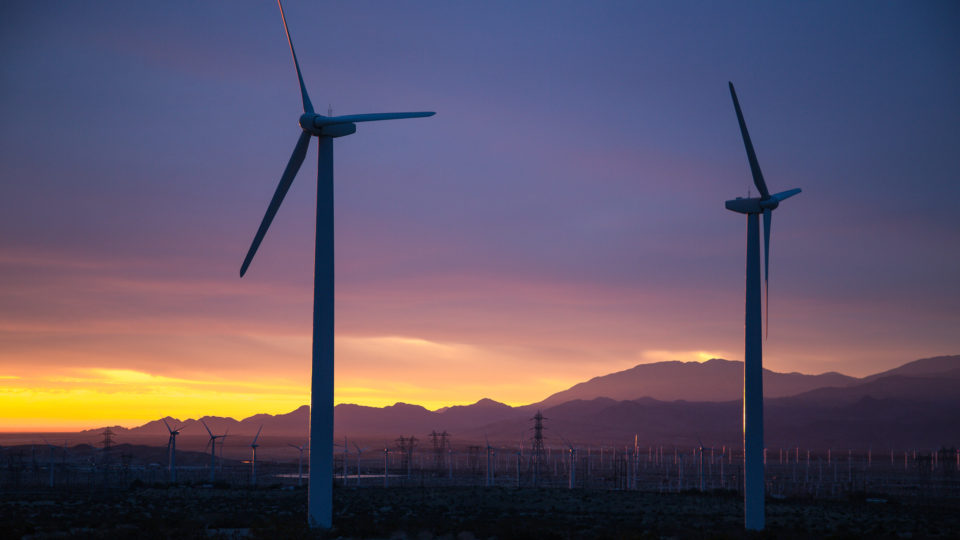
The use of both solar and wind farms has been expanding all over the country as a way of lowering carbon emissions from the electric power sector.   According to a new study led by Princeton University, these renewable energy sources have another important benefit:  they keep more water in the ground.

The study focused on drought-prone California where both solar and wind power have been expanding dramatically.  California is the largest agricultural producer in the United States and has also experienced one of the most severe droughts on record between 2012 and 2017.

The study determined that increased solar and wind energy can reduce the reliance on hydropower, especially during times of drought. 

The study looked at multiple scenarios in order to determine how much solar and wind energy should be used to maximize economic revenue and to see how solar and wind power could ensure groundwater recovery.  They created a framework to quantify the optimal pathways for maximizing hydroelectricity and agricultural income while avoiding groundwater depletion.

During the long drought, California’s agriculture industry relied heavily on tapping into groundwater stores, which is an unsustainable practice.  With more droughts likely to occur in California as well as increasing water demand from the growing California population, the burden on the state’s groundwater supply will only grow.

According to the researchers, it is far more practical to impose further regulations on groundwater use if sufficient solar and wind power is deployed.   They caution that these resources need to be deployed long before groundwater aquifers are depleted, or it will be too late for them to do any good.

**********

Web Links

Solar and Wind Energy Preserve Groundwater for Drought, Agriculture

Photo, posted December 11, 2014, courtesy of Tony Webster via Flickr.

Earth Wise is a production of WAMC Northeast Public Radio.

Lake George Health Report

December 26, 2019 By EarthWise Leave a Comment

The Offshore Chemistry Program, run by the Darrin Fresh Water Institute at RPI, has been monitoring the deep waters of Lake George in New York for 40 years.  Lake George, nicknamed the Queen of American Lakes, is famed for the transparency of its water and a new report on the health of the lake reveals that it is doing rather well.

According to the report, although concentrations of chemicals and pollutants like salt and nutrients have increased in the deep waters of Lake George, they are still too low to harm the ecosystem at those depths.

The Offshore Chemistry Program studies the lake as part of a collaboration between RPI, IBM Research, and the FUND for Lake George that is called the Jefferson Project.  This long-term commitment provides a wealth of information over time matched by few lake studies in the world.

The recent results show that levels of salt, the nutrient orthophosphate, and chlorophyll have increased substantially over time, but none are yet at a level that will cause harm.

Orthophosphate occurs naturally, but most likely the higher levels are due to improperly functioning septic systems, failing wastewater treatment systems, and stormwater runoff.  The orthophosphate most likely triggered the increase in chlorophyll, which probably is associated with increased density of chlorophyll in individual algal cells, rather than an increase in total algal mass in the lake.

Overall, the results demonstrate the continuing resilience of Lake George to a growing array of stressors.  In nearly 40 years of human activities, the lake has changed in a number of ways, but the changes have so far been relatively small.  With such careful monitoring, we can hope to keep them that way.

**********

Web Links

Four Decades of Data Sounds Early Warning on Lake George

Photo, posted September 24, 2009, courtesy of GPA Photo Archive via Flickr.

Earth Wise is a production of WAMC Northeast Public Radio.

Keeping Plants Plump

December 3, 2019 By EarthWise Leave a Comment

The leading cause of crop failures worldwide is drought.  Ironically, the very close runner-up is flooding.  Facing a changing and increasingly erratic climate, farmers need all the help they can get in protecting their crops.

Researchers at the University of California, Riverside, have created a chemical to help plants hold onto water, which could stem the tide of massive annual crop losses from drought.  Details of the team’s work is described in a paper published in Science.

The chemical is called Opabactin, but is also known as “OP.” OP is gamer slang for overpowered, referring to the best character or weapon in a game.

OP mimics abscisic acid, or ABA, which is the natural hormone produced by plants in response to drought stress.  ABA slows a plant’s growth, so it doesn’t consume more water than is available and doesn’t wilt.  OP is 10-times stronger than ABA, which makes it a super hormone.  It works fast.  Within hours, there is a measurable improvement in the amount of water plants release.  Because it works so quickly, OP could give farmers more flexibility in how they deal with drought.   Plants can’t predict the future, but if, for example, farmers think there is a reasonable chance of drought, they could make decisions such as to apply OP to improve crop yields.

The research team is now trying to find a second chemical tool.  Whereas OP slows down plant growth, the team wants to find a molecule that will accelerate it.  Such a molecule could be useful in controlled environments such as indoor greenhouses.  There are times when you want to speed up growth and times when you want to slow it down.

**********

Web Links

Game changer: New chemical keeps plants plump

Photo, posted June 7, 2013, courtesy of Bayer CropScience UK via Flickr.

Earth Wise is a production of WAMC Northeast Public Radio.
Safe And Simple Hydrogen Peroxide

November 29, 2019 By EarthWise Leave a Comment

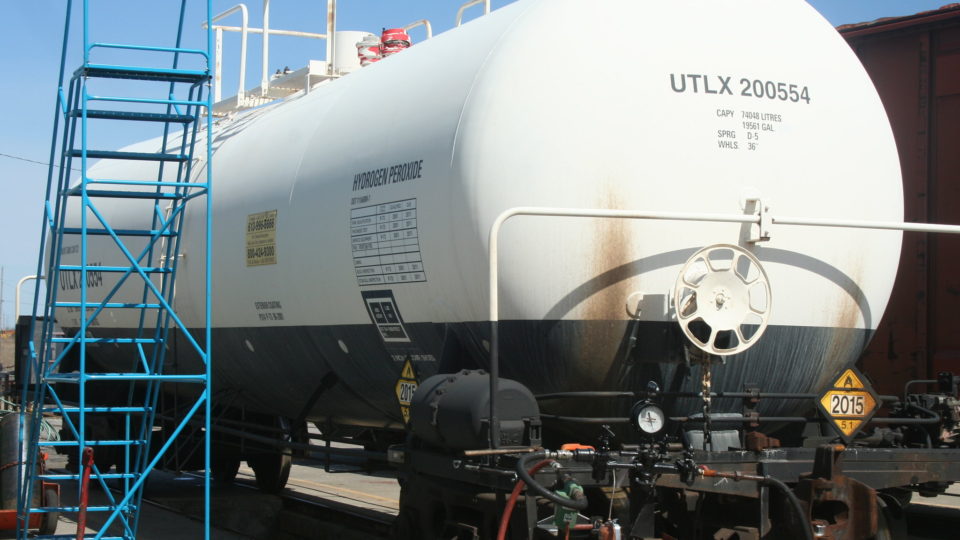
We don’t think about hydrogen peroxide very often.  Perhaps we have a bottle of it under our bathroom sink that we haven’t touched in a few years.   But it is an important product manufactured in the millions of tons each year and the basis of a $6 billion global business.

Hydrogen peroxide is widely used as an antiseptic, a detergent, in cosmetics, as a bleaching agent, in water purification, and in many other applications.  It is produced in industrial concentrations of up to 60% in solution with water in order to maximize the economics of transportation.  This makes transportation hazardous and costly because the concentrated form is unstable.  Most applications use a far more diluted form.

Researchers at Rice University have developed a new method for producing hydrogen peroxide that is much simpler and safer than the current technology, which actually dates back to the 1930s.  The Rice technique requires only air, water and electricity to produce the chemical.  The electrosynthesis process, which is detailed in the journal Science, uses an oxidized carbon nanoparticle-based catalyst.

The process could enable point-of-use production of pure hydrogen peroxide solutions, which would eliminate the need to transport the hazardous concentrated chemical.  The use of a solid electrolyte instead of the traditional liquid electrolyte eliminates the need for product separation or purification that is part of the current technology.

In the future, instead of storing containers of hydrogen peroxide, hospitals that use it as a disinfectant could turn on a spigot and get, for example a 3% solution on demand.  Instead of storing chemicals to disinfect swimming pool water, future homeowners could flick a switch and turn on their peroxide reactor to clean their pools.

**********

Web Links

Water + air + electricity = hydrogen peroxide

Photo, posted April 19, 2009, courtesy of Robert Taylor via Flickr.

Earth Wise is a production of WAMC Northeast Public Radio.

Clean Gas From An Artificial Leaf

November 27, 2019 By EarthWise Leave a Comment

Photosynthesis is the process used by plants, algae and certain bacteria to harness energy from sunlight and turn it into chemical energy.  It is often described as the green engine of life on earth.

For quite some time, there have been extensive research efforts around the world in the area of artificial photosynthesis.  The goal is to somehow mimic the behavior of plants in order to generate clean-burning fuels using nothing more than sunlight and the carbon dioxide in the air.

Researchers at the University of Cambridge have recently demonstrated a so-called artificial leaf that can directly produce syngas using sunlight.   Syngas is a fuel gas mixture consisting primarily of hydrogen and carbon monoxide.  Most people haven’t heard of syngas, but many products are created using it.  Being able to produce it sustainably would be a critical step to a far greener chemical and fuel industry.

The artificial leaf contains two light absorbers, similar to the molecules in plants that harvest sunlight, which are combined with a catalyst made from the naturally abundant element cobalt.  When the device is immersed in water, one light absorber uses the catalyst to produce oxygen.  The other carries out the chemical reaction that reduces carbon dioxide and water into carbon monoxide and hydrogen.  The result is the syngas mixture.

It turns out that even a rainy or overcast day provides enough light to drive the process.

Previous artificial leaf devices have mostly just produced hydrogen.  The Cambridge device produces syngas thanks to the novel combination of materials and catalysts it uses.

The researchers are now focused on finding ways to use the technology to produce a sustainable gasoline substitute.

**********

Web Links

‘Artificial leaf’ successfully produces clean gas

Photo, posted August 15, 2014, courtesy of Mike Mozart via Flickr.

Earth Wise is a production of WAMC Northeast Public Radio.
Geoengineering And Volcanoes

November 14, 2019 By EarthWise Leave a Comment

Solar geoengineering is a theoretical strategy for curbing the effects of climate change by introducing aerosol particles in the upper atmosphere to reflect some of the Sun’s radiation back into space and thereby cool the planet.  It would basically be intentionally tinkering with the climate system on a global scale.

The concept is fraught with the danger of unintended consequences and most experts consider the idea almost unthinkable.  But there are those who see it as a last resort if all our other efforts to mitigate the effects of climate change are unsuccessful.

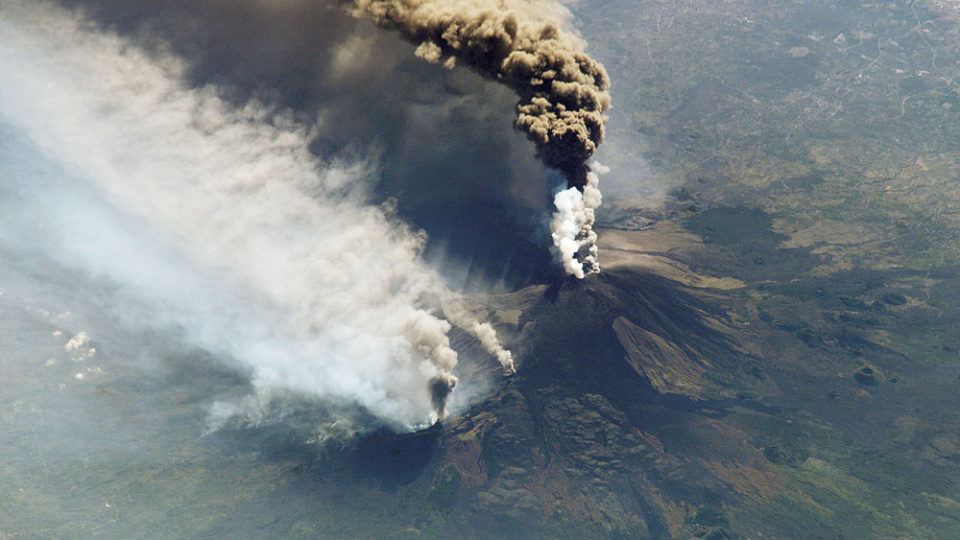
Proponents of the idea like to describe the technique as being like a human-made volcano.  Major volcanic eruptions spew ash particles into the atmosphere which can linger for as long as a few years.  The result is cooler temperatures, sometimes across much of the globe.  The Krakatoa eruption of 1883 lowered average Northern Hemisphere temperatures by more than 2 degrees and created chaotic weather patterns until about 1888.

Researchers at the Carnegie Institution and two Chinese research institutions used sophisticated modeling techniques to compare the effects on the climate of a volcanic eruption with long-term geoengineering deployment.

They found that the volcanic eruption created a greater temperature difference between the land and sea than the geoengineering and resulted in very different precipitation scenarios.  In both cases, there would be less available water for people on land.

Overall, the study demonstrated that volcanic eruptions are imperfect analogs for geoengineering and that scientists should be very cautious about extrapolating too much from them.  It is important to evaluate geoengineering from an informed position, but the truth is that it represents a great and perilous unknown.

**********

Web Links

Geoengineering Versus A Volcano

Photo, posted November 1, 2002, courtesy of the NASA Goddard Space Flight Center via Flickr.

Earth Wise is a production of WAMC Northeast Public Radio.

Emissions-Free Cement

October 29, 2019 By EarthWise Leave a Comment

The production of cement – which is the world’s leading construction material – is a major source of greenhouse gas emissions, accounting for about 8% of global man-made emissions. 

Cement production produces carbon dioxide in two ways:  from a key chemical process and from burning fuel to produce the cement.  The process of making “clinker” – the key constituent of cement – emits the largest amount of CO2.  Raw materials, mainly limestone and clay – are fed into huge kilns and heated to over 2,500 degrees Fahrenheit, requiring lots of fossil fuel.  This calcination process splits the material into calcium oxide and CO2.  The so-called clinker is then mixed with gypsum and limestone to produce cement.

A team of researchers at MIT has come up with a new way of manufacturing cement that greatly reduces the carbon emissions.  The new process makes use of an electrolyzer, where a battery is hooked up to two electrodes in water producing oxygen at one electrode and hydrogen at the other.  The oxygen-evolving electrode produces acid and the hydrogen-evolving electrode produces a base.  In the new process, pulverized limestone is dissolved in the acid at one electrode and calcium hydroxide precipitates out as a solid at the other.

High-purity carbon dioxide is released at the acid electrode, but it can be easily captured for further use such as the production of liquid fuels or even in carbonated beverages and dry ice.  The new approach could eliminate the use of fossil fuels in the heating process, substituting electricity generated from renewable sources. 

The process looks to be scalable and represents a possible approach to greatly reducing one of the perhaps lesser known but nevertheless very significant sources of greenhouse gas emissions.

**********

Web Links

New approach suggests path to emissions-free cement

Photo, posted March 26, 2014, courtesy of Michael Coghlan via Flickr.

Earth Wise is a production of WAMC Northeast Public Radio.

Eco-Friendly Agriculture

October 21, 2019 By EarthWise Leave a Comment

Modern agriculture has steadily destroyed native grasslands, among other ecosystems.  In fact, farming is one of the most ecologically destructive things that humans do.  But we do have to eat.  In response, there is a growing movement for agrarian reform, from grain farming on the prairie, to agroforestry, to raising livestock more sustainably.  Efforts are accelerating to develop a kinder, gentler agriculture adapted to a changing world.

One such effort has come from the Land Institute, an organization in Kansas that works on natural systems agriculture, which seeks to retain the ecological stability of the prairie with its perennial seed plants along with a grain and seed yield comparable to that from annual crops.

After four decades of effort, the institute has introduced its first commercial grain, a trademarked variety called Kernza.  Kernza is a domesticated perennial wild grass – a so-called intermediate wheatgrass – that has a long, slender head that resembles wheat seeds.  People describe its taste as sweet and nutty.   Kernza is already being made into a cereal called Honey Toasted Kernza by Cascadian Farms.  Patagonia Provisions – a spin-off from the clothing company – is making beer from the new grain.

Although Kernza is already being grown and sold commercially, it is not yet ready for prime time.  Last year, there were only about 1,000 acres in cultivation and the yield is only a third to a tenth of the yield of wheat. 

Developing a sustainable perennial polyculture of edible plants would have major benefits such as not having to plow every year, plants developing large root systems that can reach water far beneath the surface and, without annual plowing, having soil carbon remain in the ground.

**********

Web Links

With New Perennial Grain, a Step Forward for Eco-Friendly Agriculture

Photo courtesy of Cascadian Farms/General Mills.

Earth Wise is a production of WAMC Northeast Public Radio.
Pulling Water From The Air

October 14, 2019 By EarthWise Leave a Comment

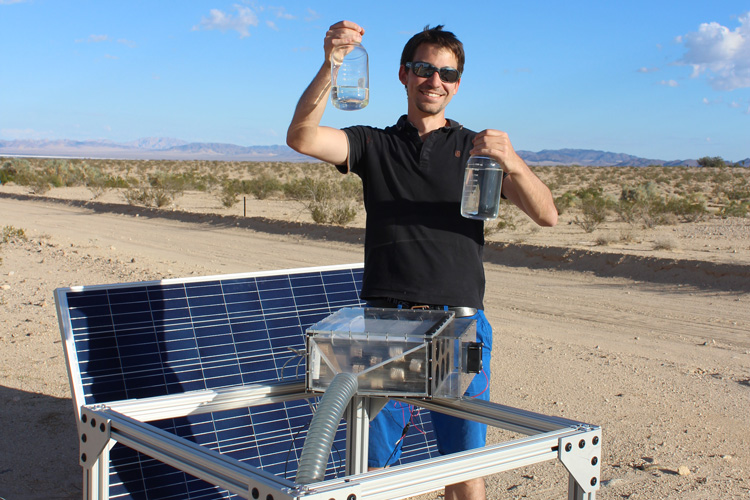
A couple of years ago, we reported on the early development of a device that harvests water from the air that even works in the low humidity environment of a desert.  Since then, the researchers from UC Berkeley have continued to improve the device and it is now 10 times better than it was two years ago.

The harvester is based on a porous water-absorbing material called a metal-organic framework, or MOF.  The latest version can pull more than five cups of water from low-humidity air per day for every kilogram of the improved MOF material and that is more than enough water to sustain a person.  The harvester cycles around the clock and is powered by solar panels and a battery.

Previous techniques for condensing water from air at low humidity required cooling down the air to temperatures below freezing, which is not economically practical.  The MOF-based device does not require any cooling.

The Berkeley researchers have formed a startup company – Water Harvester, Inc. – which is now testing and will soon market a device the size of a microwave oven that can supply 7 to 10 liters of water per day, which is enough drinking and cooking water for two or three adults.

An even larger version of the harvester, which would be the size of a small refrigerator, would provide 200 to 250 liters of water per day, enough for a household to drink, cook, and shower.  The new company envisions a village-scale harvester that would produce 20,000 liters per day, still running off of solar panels and a battery.

Water Harvester believes the water needs for many people can come out of the thin air.

**********

Web Links

Water harvester makes it easy to quench your thirst in the desert

Photo courtesy of Grant Glover (University of South Alabama) via UC Berkeley.

Earth Wise is a production of WAMC Northeast Public Radio.

Beavers And Biodiversity

October 10, 2019 By EarthWise Leave a Comment

Beavers are large, semi-aquatic rodents known best for their ability to construct dams, canals, and lodges (their homes).  They are among the largest rodents in the world.  With powerful jaws and strong teeth, beavers fell trees to use as building materials, often changing their environment in ways few other animals can. But in a good way.  As it turns out, beavers are important for biodiversity. 

According to new research from the Faculty of Natural Sciences at the University of Stirling in Scotland, reintroducing beavers to their native habitats is an important step towards solving the freshwater biodiversity crisis. 

Researchers surveyed water plants and beetles in 20 wetlands in Sweden – 10 created by beavers and 10 that were not – in order to understand what impact beavers might have on the variety of plant and animal life around them. 

The research team’s findings build on previous work that has shown that beavers have an important impact on biodiversity.  This latest study discovered that the number of species found only in beaver-built ponds was 50% higher than in other non beaver-built wetlands in the same region. 

Beavers are known to be profound engineers of the environment. They use wood to build dams across rivers in order to form ponds behind them.  They do this to raise the water level in order to avoid predators, like bears and wolves. But it turns out many other plants and animals, like water plants and beetles, also benefit from their work.

According to the research team, reintroducing beavers to their native habitats should benefit the wider biodiversity and be seen as an important step towards solving the freshwater biodiversity crisis. 

**********

Web Links

Beaver reintroduction key to solving freshwater biodiversity crisis

Photo, posted October 2, 2014, courtesy of USFWS Midwest Region via Flickr.

Earth Wise is a production of WAMC Northeast Public Radio.
Removing Microplastics with Magnetism

October 7, 2019 By EarthWise 2 Comments

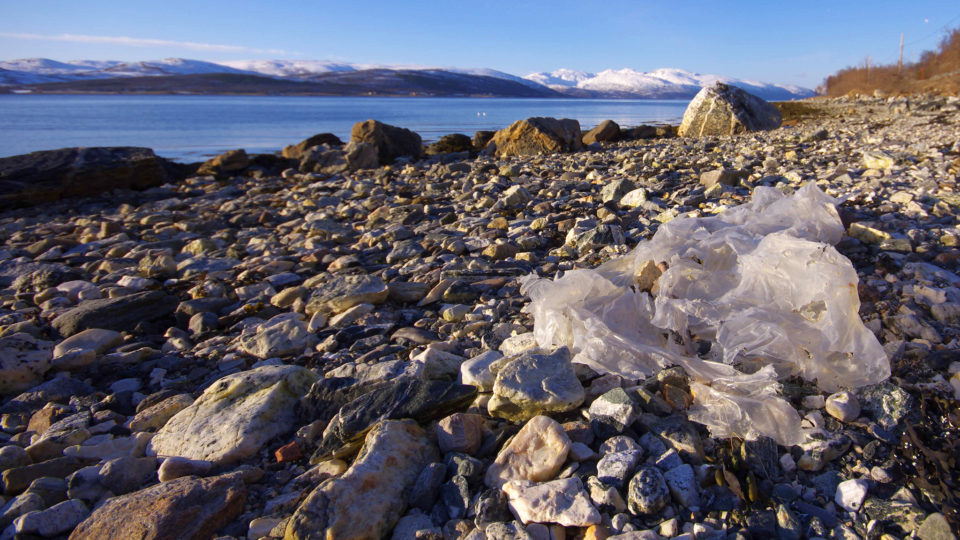
A new method for removing microplastics from the oceans has emerged from, of all things, a science fair project.  An Irish 18-year-old named Fionn Ferreira developed his project for the annual Google Science Fair and it won the grand prize of $50,000 in educational funding.

The teenager was walking on the beach in his hometown and ran across a stone with oil and plastic stuck to it and became focused on the problem of microplastics increasingly entering the environment.

His idea was to make use of ferrofluids, which are nontoxic magnetic fluids made of oil and magnetite, which is an iron-based mineral.  In the presence of water, the ferrofluids attract microplastics because both have similar properties.

Ferreira added oil and magnetite to water and mixed in a solution of microplastic particles.  When the microplastics latched onto the ferrofluids, he dipped a magnet into the solution several times and the magnet removed both substances, leaving clear water.  After almost 1000 tests, he demonstrated the method to be 88% effective in removing a variety of microplastics from water; a result even better than his original hypothesis of an 85% removal rate.

Ferreira is planning to further his education at a prestigious chemistry institute in the Netherlands starting in the fall.

According to a recent study, Americans eat, drink and breathe between 74,000 and 121,000 microplastic particles each year and, if they drink bottle water only instead of tap water, an additional 90,000 particles.  So, a science fair project that might provide a way to get rid of most these things is definitely prize-worthy.

**********

Web Links

This Irish teenager may have a solution for a plastic-free ocean

Photo, posted April 25, 2016, courtesy of Boe Eide via Flickr.

Earth Wise is a production of WAMC Northeast Public Radio.
Solar-Powered Desalination

October 4, 2019 By EarthWise Leave a Comment

Turning seawater into drinking water is an energy-intensive process and is therefore pretty expensive.  Worldwide, one third of people don’t have reliable access to safe drinking water and they are the least able to afford expensive ways to get it.   By 2025, half of the world’s population is expected to live in water-stressed areas.

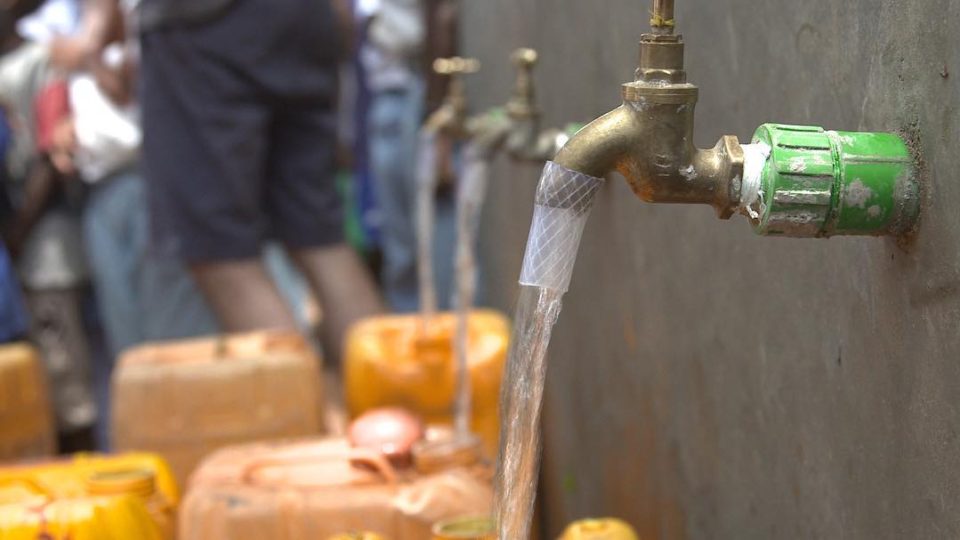
At a newly-constructed facility in Kenya, a nonprofit company called GivePower has built a desalination system that runs on solar power.  The system started operating in the coastal area of Kiunga in July 2018 and can create nearly 20,000 gallons of fresh drinking water each day – enough for 25,000 people.

GivePower started in 2013 as a nonprofit branch of SolarCity, the solar-panel company that ultimately merged with Tesla in 2016.  However, GivePower spun off as a separate enterprise shortly before that.

GivePower mostly focuses on building solar-energy systems to provide electricity across the developing world. 

Desalination technology is not new, but it is notoriously energy-intensive because it requires high-power pumps.  The GivePower system is integrated with a solar microgrid that makes use of Tesla batteries to store energy for when the sun is not shining. 

Local residents pay about a quarter of one cent for every quart of water from the system.  The Kiunga community has faced ongoing drought and before the GivePower system was installed, was forced to drink from salt water wells, which present serious health risks.

The GivePower system cost $500,000 to build and is expected to generate $100,000 a year, to be eventually used to fund similar facilities in other places.

**********

Web Links

A solar-powered system can turn salt water into fresh drinking water for 25,000 people per day. It could help address the world’s looming water crisis.

Photo courtesy of GivePower.

Earth Wise is a production of WAMC Northeast Public Radio.

The Decline Of Earth’s Largest Freshwater Creatures

September 23, 2019 By EarthWise Leave a Comment

While nearly 70% of the globe is covered by water, only 2.5% of it is freshwater.  The rest is saline and ocean-based.  And only 1% of our freshwater is easily accessible, with much of it locked away in snowfields and glaciers.  

Despite freshwater only making up a small fraction of all water on the planet, it’s home to one third of all vertebrate species.  Some have survived hundreds of millions of years, but many of the world’s largest freshwater creatures – including fish, reptiles, amphibians, and mammals – may soon find themselves on the brink of extinction.

According to a study recently published in the journal Global Change Biology, scientists from the Leibniz-Institute of Freshwater Ecology and Inland Fisheries and international colleagues have quantified the global decline of freshwater megafauna for the first time.  In four decades since 1970, the global populations of these freshwater giants have declined 88% – twice as much as the loss of vertebrate populations on land or in the oceans. 

Freshwater megafauna include all freshwater animals that weigh 30 kilograms (about 66 pounds) or more, such as certain dolphins, beavers, crocodiles, turtles and sturgeons.

Overexploitation is one of the main threats to freshwater megafauna.  (These animals are often targeted for their meat, eggs, and skin).  The other main threat is the loss of free-flowing rivers. Many of the world’s large rivers are already highly fragmented, which impacts access to spawning and feeding grounds.  The research team says another 3700 large dams are planned or under construction, including 800 in habitats rich with freshwater megafauna, including the Amazon, Congo, and Ganges river basins.

Current conservation measures are clearly failing our freshwater creatures. 

********** 

Web Links

88 percent decline of big freshwater animals

Earth’s largest freshwater creatures at risk of extinction

Photo, posted March 25, 2012, courtesy of the U.S. Fish and Wildlife Service via Flickr.

Earth Wise is a production of WAMC Northeast Public Radio.

The State Of The Climate

September 19, 2019 By EarthWise Leave a Comment

The federal government has issued the annual State of the Climate report and it is a sobering one.  The report states that carbon dioxide in the atmosphere rose to levels the world has not seen in at least 800,000 years.  Global carbon dioxide concentrations reached a record 407.4 parts per million during 2018.  That is 2.4 ppm more than 2017.

Other greenhouse gases like methane and nitrous oxide also continued their rapid increase.  Taken together, the global warming power of greenhouse gases was 43% stronger than it was in 1990.

Along with greenhouse gases, global sea levels also reached their highest levels on record for the seventh consecutive year.  Ocean levels are rising about an inch per decade, but that number may rise if ice melt at the poles continues to accelerate.

Global temperatures had their fourth highest level on record in 2018, slightly lagging 2016, 2015, and 2017 for the highest ever.  A La Niña over the Pacific cooled ocean waters for part of 2018, keeping temperatures a bit lower.  So far, 2019 is on track to be the warmest year in recorded history.

Global sea temperatures also set a record level in 2018.  And glaciers continued to melt at an alarming rate for the 30th consecutive year.

The State of the Climate report is yet another in a series of expert, science-based reports that continue to sound the alarm about the climate crisis.  Climate change is affecting our weather, agricultural productivity, water supply, public health and national security.  Unfortunately, the facts continue to be drowned out for many people by blogs, pundits, and posts on social media.

**********

Web Links

Greenhouse Gases Reach Unprecedented Level

Photo, posted January 13, 2014, courtesy of Ronnie Robertson via Flickr.

Earth Wise is a production of WAMC Northeast Public Radio.
The Importance Of The Amazon Rainforest Fires

September 10, 2019 By EarthWise Leave a Comment

The Amazon rainforest covers extensive parts of Brazil, Peru, Colombia, and small parts of six other countries.  It is the largest rainforest in the world and is instrumental in driving the weather and climate in South America.

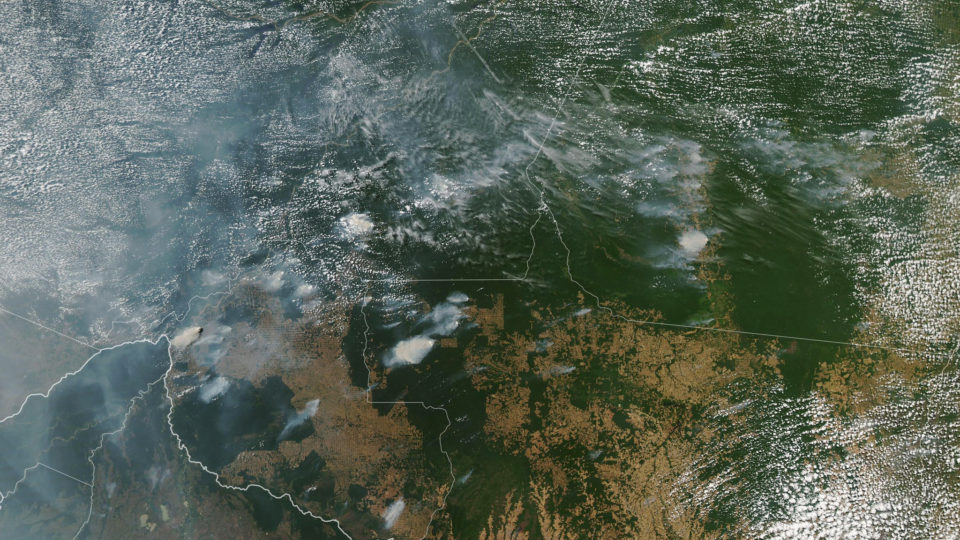
The raging wildfires in the Amazon rainforest are a source of great concern.  The Amazon is always prone to wildfires during the dry season in South America, but the extent and number of fires this year cannot be attributed simply to drought.  The surge in fires has come from illegal deforestation by loggers and farmers, who are using the cleared-out land for cattle ranching.

Rainforests produce consistently high amounts of rainfall throughout the year by pulling water from the soil and then releasing it into the atmosphere.  The Amazon rainforest essentially makes it rain in South America. 

Over time, the forest plays a crucial role in cycling carbon out of the atmosphere by turning it into biomass.  The Amazon jungle sucks up as much as a quarter of the planet’s atmospheric carbon dioxide.

Pristine rainforest burns less frequently and less intensely than cleared and recovering forest.  As more and more of the Amazon rainforest is deforested, it becomes more likely to burn each year.

The major disruption of the water dynamics in South America has the potential to not only drive the weather in South American countries but even potentially influence natural resources like snow packs in the Northern Hemisphere.

The skies of Sāo Paulo, Brazil’s financial hub have been dark at midday because of the Amazon fires.  This is like having a fire in California and seeing the smoke in Boston.  The Amazon rainforest fires are a big problem for the whole world.

**********

Web Links

The Amazon Rainforest has been burning for weeks. Here’s why that matters.

Photo, posted August 21, 2019, courtesy of NASA Goddard Space Flight Center via Flickr.

Earth Wise is a production of WAMC Northeast Public Radio.

China And Rare Earth Mining

September 4, 2019 By EarthWise Leave a Comment

Rare earth elements are a crucial part of much of modern technology.  Everything from computers to X-ray machines and aircraft engines needs one or more rare earth elements for magnets, lenses, and other functions.  The world’s tech giants such as Apple, Huawei, and Tesla depend on suppliers of rare earths.

Rare earth elements are not actually rare, but they are very expensive to extract in ways that are not extremely harmful to the environment.  China has been a major source of these elements since its rare earth mining industry took off in the 1990s.  The removal of rare earths from the earth’s crust, using a mix of water and chemicals, has caused extensive water and soil pollution.

Today, concrete leaching ponds and plastic-lined wastewater pools dot the hills of Southeast China.  Large wastewater ponds sit uncovered and open to the elements in many places.  Landslides or barrier failures can spill contaminated contents into waterways or groundwater.

Local and federal officials in China have started to shut down illegal and small-scale rare earth mining operations and have embarked on a cleanup of polluted sites.  The rare earth mining cleanup operation is part of wider efforts across China to address severe problems of water, air and soil pollution.

China’s Ministry of Industry and Information Technology estimated that the cleanup bill for southern Jiangxi Province could amount to more than $5 billion.  Many environmental experts and local officials say that the cost of the cleanup should not be shouldered by the Chinese government alone, but also by the rare earth industry and the global companies and consumers that benefit from rare earth technology.  As rare earth mining efforts start up elsewhere around the world, it is important not to repeat the mistakes made in China.

**********

Web Links

China Wrestles with the Toxic Aftermath of Rare Earth Mining

Photo, posted April 21, 2019, courtesy of John Beans via Flickr.

Earth Wise is a production of WAMC Northeast Public Radio.
The Hottest Month Ever

August 27, 2019 By EarthWise Leave a Comment

European climate researchers announced that July was the hottest July ever recorded and since July is generally the hottest month of the year, it was indeed the hottest month ever recorded.  It just barely beat out the previous record set in July 2016.  There are multiple agencies that track temperatures around the world, and it is possible that some of them may report slightly different results. 

But whatever July’s ultimate ranking is, it is part of a long-term trend.  The past five years have been the hottest on record.   The 10 hottest years ever recorded have all occurred during the past twenty years.

This June was also the warmest on record, and the previous five months were all among the four warmest for their respective months.  All of that puts this year on track to be in the top five warmest years, or perhaps the hottest ever.

The highest above-average conditions were recorded across Alaska, Greenland, and large areas of Siberia.   Large parts of Africa and Australia were warmer than normal, as was much of central Asia.  New temperature records were set in Belgium, the Netherlands, and Germany with temperatures over 104 degrees Fahrenheit.  Great Britain saw an all-time record of 101.7 degrees and Anchorage, Alaska stayed above 79 degrees for a record six days in a row.

Wildfires have raged across the Russian Arctic, India has suffered heatwaves and severe water shortages, and Japan saw more than 5,000 people seek hospital treatment during a heatwave.

While scientists cannot directly link any particular heatwave to climate change, the trend for new heat records is likely to continue and accelerate unless we do something about curbing greenhouse gas emissions.

**********

Web Links

How Hot Was July? Hotter Than Ever, Global Data Shows

Photo, posted May 25, 2019, courtesy of Jakob Montrasio via Flickr.

Earth Wise is a production of WAMC Northeast Public Radio.
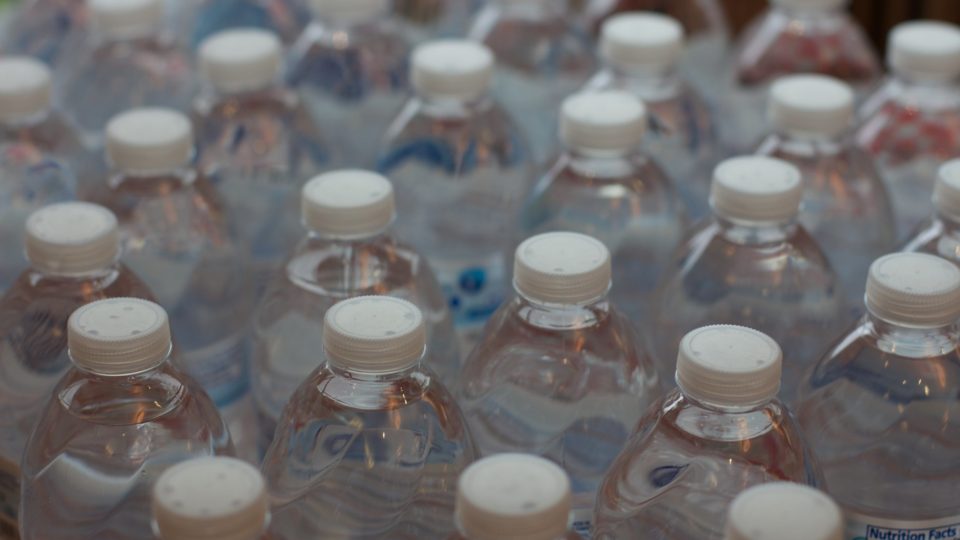
Heat And Plastic Bottles

August 21, 2019 By EarthWise Leave a Comment

In the middle of July, Americans along the East Coast and in the Midwest suffered through a massive heat wave that saw actual temperatures soaring and so-called feels-like temperatures go much higher.  The punishing heat had many of us reaching for those plastic water bottles all day long as we tried to keep hydrated.

Studies have shown that those single-use plastic bottles do not handle the heat very well.  Most plastic items release tiny amounts of chemicals into the beverages or food that they contain.   But the hotter it gets, the more the substances in plastic can move into food or drinking water.  As temperature and time increase, the chemical bonds in plastics increasingly break down and chemicals are more likely to leach.

A study at Arizona State University in 2008 looked at how heat sped up the release of the element antimony in bottles made of the common plastic PET.  Antimony is used to manufacture the plastic and can be toxic in high doses.  At mild temperatures, very little antimony is released.  But PET and other plastics can leach a variety of chemicals when exposed to higher temperatures.

According to the FDA, the amounts of chemicals released by plastics are too miniscule to cause health problems.  However, scientists are still looking at the long-term effects of using so much plastic.  The question is whether all those small doses can eventually add up to something not so harmless.  Given that we don’t really know the cumulative effect of being surrounded by plastics in the goods we buy as well as the presence of microplastics in our water, it seems like a good idea to try to limit our exposure when alternatives are available.

**********

Web Links

Exposed to extreme heat, plastic bottles may ultimately become unsafe

Photo, posted June 7, 2013, courtesy of Tim Stahmer via Flickr.

Earth Wise is a production of WAMC Northeast Public Radio.
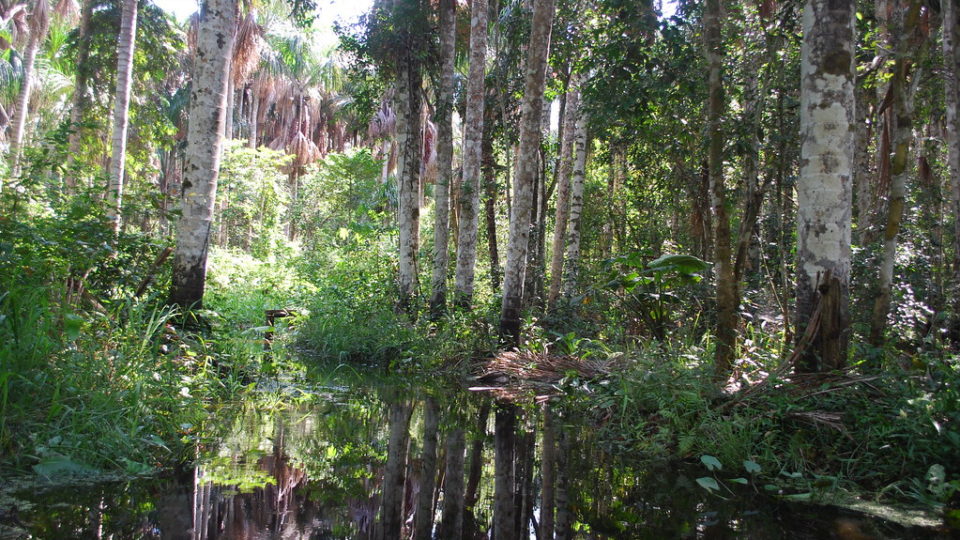
Trees And Methane

August 14, 2019 By EarthWise Leave a Comment

The Amazon is a source of many mysteries.  One that was as troubling as it was mysterious was the large amounts of methane emissions coming from the rainforest that were observed by satellites but that nobody could find on the ground.  In total, there were 20 million tons of methane whose origin was unknown.

An expedition by a British postdoctoral researcher who spent two months strapping gas-measuring equipment to thousands of trees has solved the mystery.  It turns out that trees, especially in the extensive flooded forests, were stimulating methane production in the waterlogged soils and pumping it into the atmosphere.

This research has uncovered a previously-ignored major source of the second most important greenhouse gas in the world.  Apparently, most of the world’s estimated 3 trillion trees emit methane at least some of the time.

This in no way implies that trees are bad for the climate and therefore should be cut down.  The reality is that the carbon storage capability of trees far outweighs their methane emissions.  But since corporations these days are planting trees to offset their carbon emissions, it is essential to know if their numbers add up.  Carbon accounting has to include the complex chemistry of trees and methane.

Wetland tree trunks can act as passive conduits for methane generated by micro-organisms in waterlogged soils.  The solid-looking trunks contain spaces and channels through which gases travel up and down.  But in wetland systems, trees also create the conditions, and provide the raw materials, for methane generation by micro-organisms.  Trees are essentially bioreactors.  Some trees even actively generate methane from photochemical reactions in their foliage.

Understanding the interactions of ecosystems and the atmosphere is a complicated business.

**********

Web Links

Scientists Zero in on Trees as a Surprisingly Large Source of Methane

Photo, posted December 13, 2008, courtesy of Ivan Mlinaric via Flickr.

Earth Wise is a production of WAMC Northeast Public Radio.

  • « Go to Previous Page
  • Page 1
  • Interim pages omitted …
  • Page 22
  • Page 23
  • Page 24
  • Page 25
  • Page 26
  • Interim pages omitted …
  • Page 34
  • Go to Next Page »

Primary Sidebar

Recent Episodes

  • An uninsurable future
  • Clean energy and jobs
  • Insect declines in remote regions
  • Fossil fuel producing nations ignoring climate goals
  • Trouble for clownfishes

WAMC Northeast Public Radio

WAMC/Northeast Public Radio is a regional public radio network serving parts of seven northeastern states (more...)

Copyright © 2026 ·