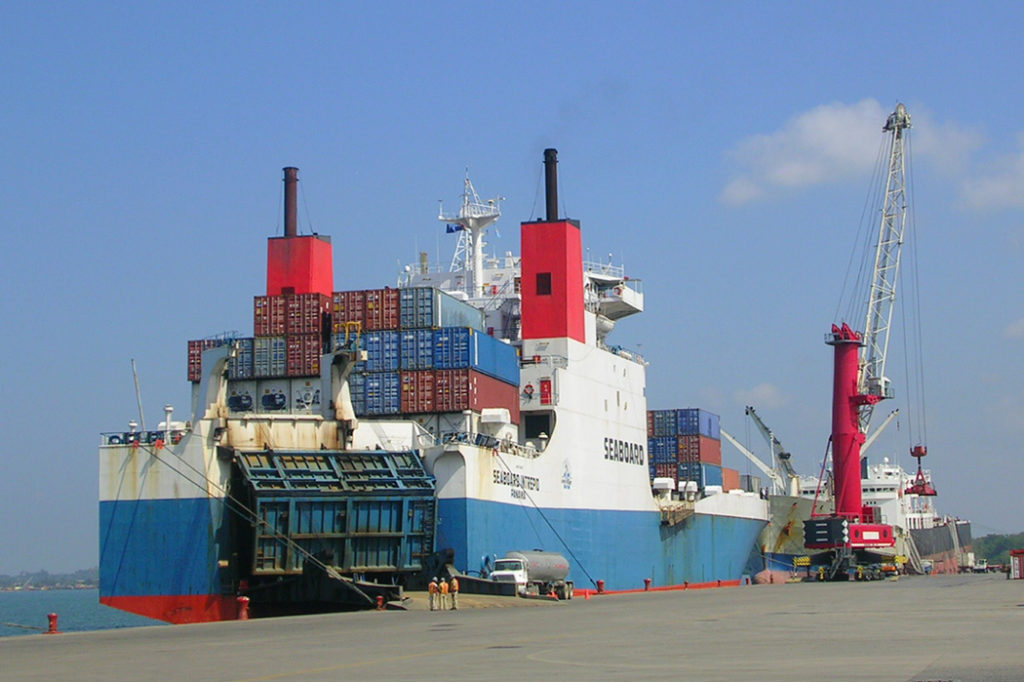
The increasing numbers of invasive species around the world are a major driver of biodiversity change and cause billions of dollars in economic damages annually. Climate change is a major factor in the spread of invasive species, but a new study by McGill University suggests that global shipping growth will far outweigh climate change in the spread of non-indigenous pests to new environments in the coming decades.
One of the most significant ways in which the disparate regions of the world are interconnected is via transportation networks. The global shipping network is the primary means by which materials and goods are moved worldwide, accounting for over 80% of world trade. And for this reason, the global shipping network is responsible for much of the introduction of non-indigenous species across the planet.
Living organisms are often transported through ballast water, which is taken up to stabilize cargo vessels. Other species are transported by biofouling, whereby they attach to the hulls of ships. Taken together, these two pathways account for anywhere between 60 and 90% of marine bioinvasions. (Terrestrial invaders are generally moved as a byproduct of shipping, for example by infesting wood packaging material).
The McGill study looked at trends in global shipping and how socioeconomic factors are driving change. For example, China’s share of global container throughput has gone from 1.4% in 1990 to 20.1% in 2013. So, the distribution and patterns of shipping have been changing dramatically and with it the spread of non-indigenous species.
Awareness of this issue is increasing. For example, there have been policy initiatives such as the International Ballast Water Management Convention that is an effort to control bio-invasions through measures such as ballast exchange. We need to take measures to limit the unintentional spread of species.
**********
Web Links
Global forecasts of shipping traffic and biological invasions to 2050
Photo, posted December 3, 2009, courtesy of Roger W via Flickr.
Earth Wise is a production of WAMC Northeast Public Radio.
Leave a Reply