• Skip to primary navigation
  • Skip to main content
  • Skip to primary sidebar

Earth Wise

A look at our changing environment.

  • Home
  • About Earth Wise
  • Where to Listen
  • All Articles
  • Show Search
Hide Search
You are here: Home / Archives for goods

goods

An electric reactor for industry

September 17, 2024 By EarthWise Leave a Comment

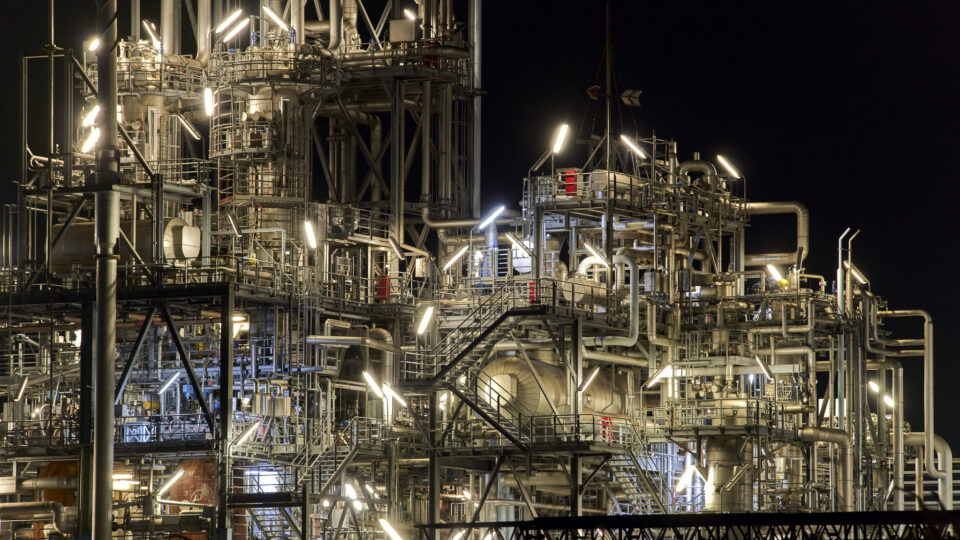
The industrial sector accounts for nearly a third of greenhouse gas emissions in the US, which is more than the annual emissions from cars, trucks, and airplanes combined.  These emissions primarily come from burning fossil fuels to produce goods from raw materials as well as from the chemical reactions associated with production.  Many industrial processes require very high temperatures that are not easily achieved other than by burning fossil fuels.

Researchers at Stanford University have developed and demonstrated a new kind of thermochemical reactor that can generate the huge amounts of heat required for many industrial processes that runs on electricity rather than the burning of fossil fuels.  The researchers claim that the design is also smaller, cheaper, and more efficient than the fossil fuel technology it would replace.

Standard industrial thermochemical reactors burn fossil fuel to heat a fluid that is piped into the reactor, much like the way home radiators work, albeit at far higher temperatures.  The new reactor uses magnetic induction, similar to the way that induction cooktops work.  Heat is transferred by inducing a current into materials that heat up as the current flows.

A proof-of-concept demonstration powered a chemical reaction called the reverse water gas shift reaction and resulted in more than 85% efficiency.  The reaction in question converts carbon dioxide into a valuable gas that can be used to create sustainable fuels. 

The Stanford researchers are working to scale up their new reactor technology and expand its potential applications.  They are working on designs for reactors for capturing carbon dioxide and for manufacturing cement. 

**********

Web Links

Electric reactor could cut industrial emissions

Photo, posted October 30, 2022, courtesy of Helmut via Flickr.

Earth Wise is a production of WAMC Northeast Public Radio

Electric planes: Fantasy or reality?

December 1, 2023 By EarthWise Leave a Comment

Airplanes have been around for over a century, but the idea of powering them with electricity rather than with liquid fuels has been little more than a fantasy.  Over the years, billions of dollars have been invested trying to make electric planes practical.  In recent times, progress on battery technology has provided a much-needed boost for the field.

Electric planes are nowhere near becoming competitive with long distance commercial aircraft.  The weight and power requirements for such craft are far beyond what electric plane technology can do.  But electric planes could offer a very practical solution for transporting relatively small numbers of passengers over relatively short distances.

A plane built by the well-funded private company Beta Technologies has flown as far as 386 miles on a single battery charge.  The company envisions such planes to be mostly used for trips of 100 to 150 miles.  These planes could open new opportunities, like better connecting rural areas that have little or no direct air service.

Their latest model was tested on a trip between Burlington, Vermont and Florida, making multiple stops and flying through congested airspace over Boston, New York, and Washington.

Commercial versions of the planes will likely have lift rotors to take off and land like helicopters, making them deployable in a wide range of places.  Many companies are working on electric aviation, and they have backers like major automakers, major airlines, and large investment firms. 

Electric planes are not likely to replace conventional aircraft but are likely to have a meaningful impact how we move goods and services and reconnect rural parts of the country.

**********

Web Links

Electric Planes, Once a Fantasy, Start to Take to the Skies

Photo courtesy of Beta Technologies.

Earth Wise is a production of WAMC Northeast Public Radio

Europe’s Green Deal: Bad For The Planet? | Earth Wise

December 28, 2020 By EarthWise Leave a Comment

Europe's Green Deal might simply be exporting its environmental pollution

In 2019, the European Union announced the “Green Deal,” a comprehensive program aimed at making Europe the first climate-neutral continent, implementing environmentally friendly transport, increasing recycling, and expanding renewable energy.

The Green Deal involves significant changes to European agriculture.  Over the next ten years, under the ambitious environmental program, at least a quarter of all agricultural areas will be farmed organically, the use of fertilizers and pesticides greatly reduced, 3 billion trees planted, 15,000 miles of rivers restored, and the population declines of pollinators reversed.

However, in a recent article published in Nature, scientists at the Karlsruhe Institute of Technology show that this Green Deal might actually be a bad deal for the planet.

The problem is that the EU is likely to basically be outsourcing environmental damage by its high imports of agricultural products.

According to the Karlsruhe study, the EU annually imports millions of tons of agricultural products, as much as 20% of its produce and much of its meat and dairy products.  Quite often, these imports come from countries whose environmental laws are far less stringent than those in Europe.

The EU cannot impose environmental standards on other countries, but it can demand that goods entering the European market meet EU requirements.  The study points out that Europe’s carbon footprint has to be evaluated on a global basis.  If the EU is truly to become a climate-neutral continent, it must include foreign trade goals and requirements in its environmental programs.  Otherwise, Europe will simply be outsourcing its environmental problems and will continue to cause damage to the planet.

**********

Web Links

Green Deal: Good for a Climate-neutral Europe – Bad for the Planet

Photo, posted July 17, 2009, courtesy of Edmund Garman via Flickr.

Earth Wise is a production of WAMC Northeast Public Radio.

Shipping And Invasive Species

May 7, 2019 By EarthWise Leave a Comment

The increasing numbers of invasive species around the world are a major driver of biodiversity change and cause billions of dollars in economic damages annually.  Climate change is a major factor in the spread of invasive species, but a new study by McGill University suggests that global shipping growth will far outweigh climate change in the spread of non-indigenous pests to new environments in the coming decades.

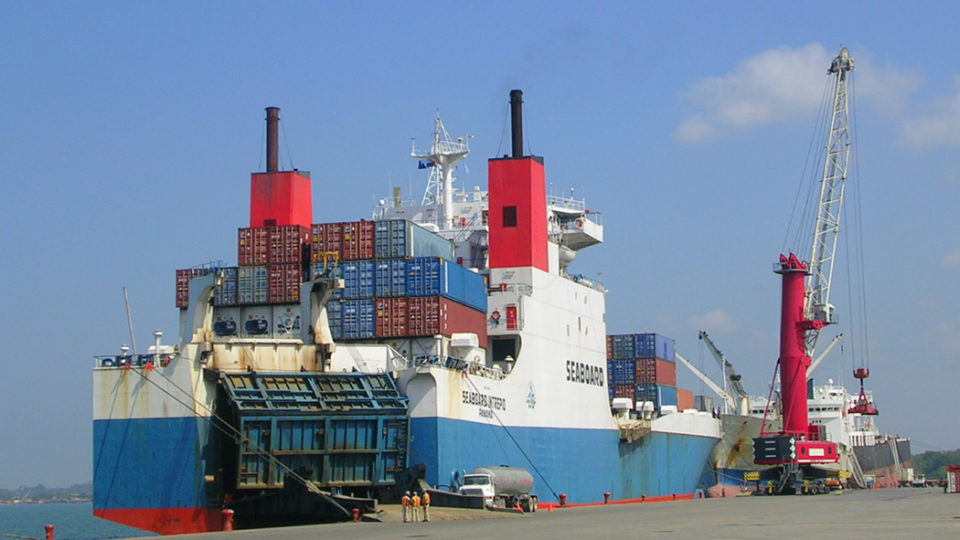
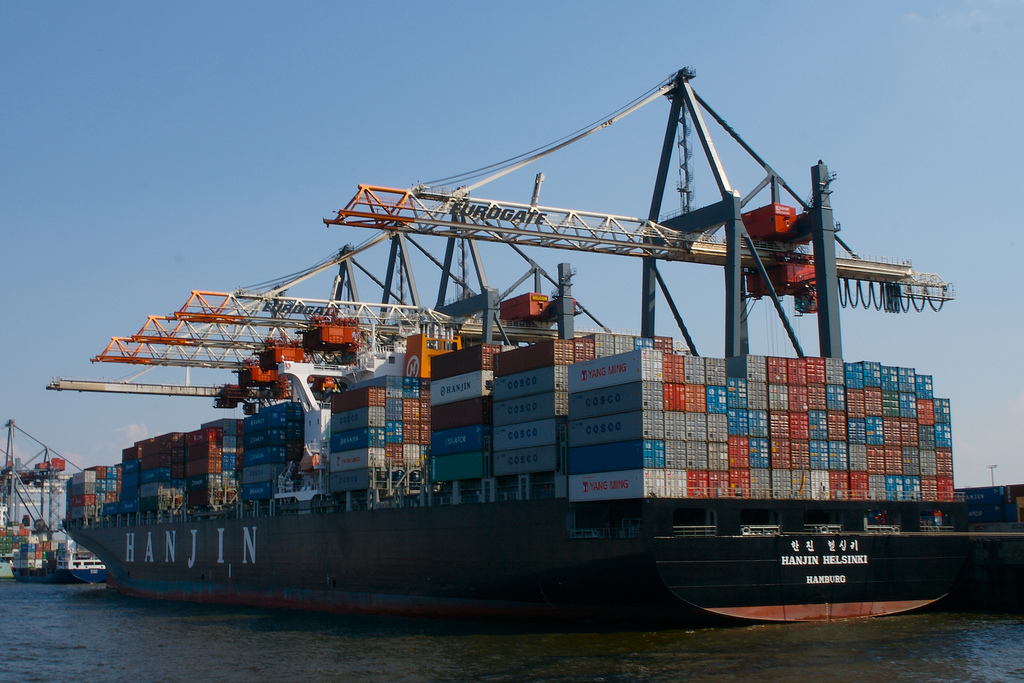
One of the most significant ways in which the disparate regions of the world are interconnected is via transportation networks.   The global shipping network is the primary means by which materials and goods are moved worldwide, accounting for over 80% of world trade.  And for this reason, the global shipping network is responsible for much of the introduction of non-indigenous species across the planet.

Living organisms are often transported through ballast water, which is taken up to stabilize cargo vessels.  Other species are transported by biofouling, whereby they attach to the hulls of ships.  Taken together, these two pathways account for anywhere between 60 and 90% of marine bioinvasions.   (Terrestrial invaders are generally moved as a byproduct of shipping, for example by infesting wood packaging material).

The McGill study looked at trends in global shipping and how socioeconomic factors are driving change.  For example, China’s share of global container throughput has gone from 1.4% in 1990 to 20.1% in 2013.  So, the distribution and patterns of shipping have been changing dramatically and with it the spread of non-indigenous species.

Awareness of this issue is increasing.  For example, there have been policy initiatives such as the International Ballast Water Management Convention that is an effort to control bio-invasions through measures such as ballast exchange.  We need to take measures to limit the unintentional spread of species.

**********

Web Links

Global forecasts of shipping traffic and biological invasions to 2050

Photo, posted December 3, 2009, courtesy of Roger W via Flickr.

Earth Wise is a production of WAMC Northeast Public Radio.

An Electric, Autonomous Container Ship

September 18, 2017 By EarthWise Leave a Comment

https://earthwiseradio.org/wp-content/uploads/2017/09/EW-09-18-17-Autonomous-Container-Ship.mp3

Electric cars are big news these days and so are self-driving cars.   But now there is about to be an electric, self-navigating cargo ship.  The soon-to-be-finished ship is called the Yara Birkeland, and is being built under a partnership between two Norwegian companies.

[Read more…] about An Electric, Autonomous Container Ship

Wiping Out Wildlife

December 1, 2016 By WAMC WEB

https://earthwiseradio.org/wp-content/uploads/2016/12/EW-12-01-16-Wiping-Out-Wildlife.mp3

According to a new report from the World Wildlife Fund, the world’s animal populations have suffered widespread population declines in the last half century.  And thousands of species are now scrambling to survive. 

[Read more…] about Wiping Out Wildlife

Primary Sidebar

Recent Episodes

  • An uninsurable future
  • Clean energy and jobs
  • Insect declines in remote regions
  • Fossil fuel producing nations ignoring climate goals
  • Trouble for clownfishes

WAMC Northeast Public Radio

WAMC/Northeast Public Radio is a regional public radio network serving parts of seven northeastern states (more...)

Copyright © 2026 ·