• Skip to primary navigation
  • Skip to main content
  • Skip to primary sidebar

Earth Wise

A look at our changing environment.

  • Home
  • About Earth Wise
  • Where to Listen
  • All Articles
  • Show Search
Hide Search
You are here: Home / Archives for ballast

ballast

Saving Costs And Reducing Emissions From Shipping | Earth Wise

March 2, 2020 By EarthWise Leave a Comment

Reducing freight costs and greenhouse gas emissions

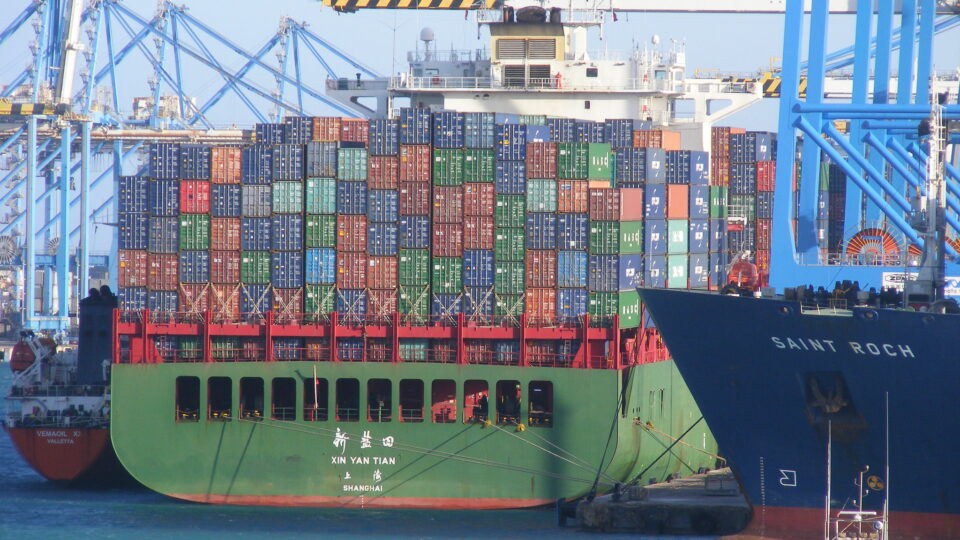
International shipping is a large and growing source of greenhouse gas emissions.  Maritime transport produces about a billion tons of CO2 annually, accounting for about 2.5% of global greenhouse gas emissions.  The environmental impact of shipping includes air pollution, water pollution, and even acoustic pollution.  In many coastal areas, ships are responsible for more than 18% of some air pollutants.  Overall, there are more than 100,000 transport ships at sea, of which about 6,000 are large container ships.

In recent years, the shipping sector has had both internal willingness and external pressure to reduce emissions, but shipping is a tough, competitive business and it isn’t easy to stay competitive and help protect the environment.

A recent study at Abo Akademi University in Finland has found that improved ship utilization rates and investments in environmentally sustainable technologies for enhanced energy efficiency would significantly reduce carbon dioxide emissions.  Of equal importance, those same measures would contribute to lowering of freight costs.

If the same cargo volume can be shipped using less fuel, shipping companies will gain major savings in terms of fuel costs.  Digitalization can provide valuable benefits.  For example, new digital planning and booking systems would enable smarter use of routes while also diminishing traffic with half-empty vessels or even ones with no cargo aboard.  Reducing such underutilization would improve the capacity utilization rate and eliminate emissions caused by so-called ballast traffic.

Global shipping continues to grow.  It is essential that it becomes smarter and more efficient to protect the environment and improve its economics.

**********

Web Links

Environmentally friendly shipping helps to reduce freight costs

Photo, posted February 18, 2016, courtesy of Flickr.

Earth Wise is a production of WAMC Northeast Public Radio.
Shipping And Invasive Species

May 7, 2019 By EarthWise Leave a Comment

The increasing numbers of invasive species around the world are a major driver of biodiversity change and cause billions of dollars in economic damages annually.  Climate change is a major factor in the spread of invasive species, but a new study by McGill University suggests that global shipping growth will far outweigh climate change in the spread of non-indigenous pests to new environments in the coming decades.

One of the most significant ways in which the disparate regions of the world are interconnected is via transportation networks.   The global shipping network is the primary means by which materials and goods are moved worldwide, accounting for over 80% of world trade.  And for this reason, the global shipping network is responsible for much of the introduction of non-indigenous species across the planet.

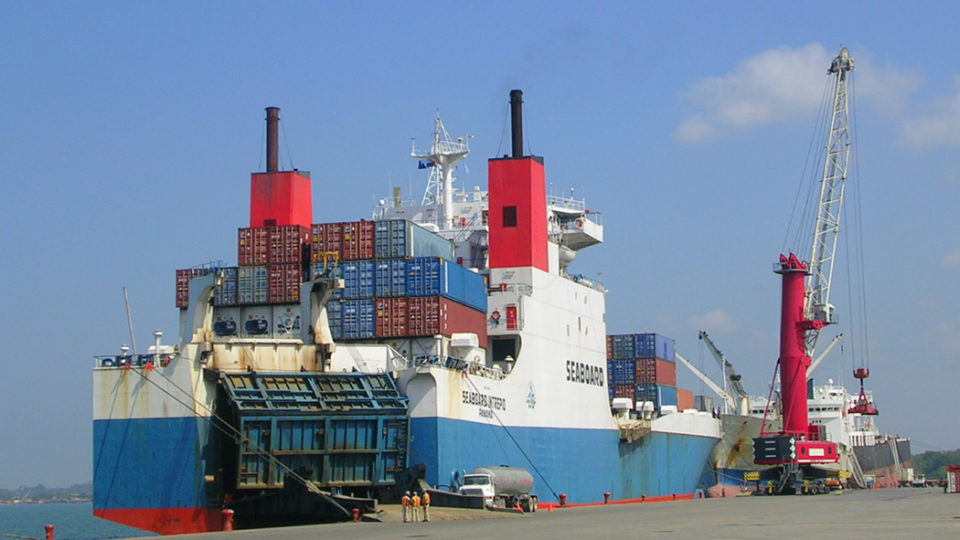
Living organisms are often transported through ballast water, which is taken up to stabilize cargo vessels.  Other species are transported by biofouling, whereby they attach to the hulls of ships.  Taken together, these two pathways account for anywhere between 60 and 90% of marine bioinvasions.   (Terrestrial invaders are generally moved as a byproduct of shipping, for example by infesting wood packaging material).

The McGill study looked at trends in global shipping and how socioeconomic factors are driving change.  For example, China’s share of global container throughput has gone from 1.4% in 1990 to 20.1% in 2013.  So, the distribution and patterns of shipping have been changing dramatically and with it the spread of non-indigenous species.

Awareness of this issue is increasing.  For example, there have been policy initiatives such as the International Ballast Water Management Convention that is an effort to control bio-invasions through measures such as ballast exchange.  We need to take measures to limit the unintentional spread of species.

**********

Web Links

Global forecasts of shipping traffic and biological invasions to 2050

Photo, posted December 3, 2009, courtesy of Roger W via Flickr.

Earth Wise is a production of WAMC Northeast Public Radio.

Primary Sidebar

Recent Episodes

  • An uninsurable future
  • Clean energy and jobs
  • Insect declines in remote regions
  • Fossil fuel producing nations ignoring climate goals
  • Trouble for clownfishes

WAMC Northeast Public Radio

WAMC/Northeast Public Radio is a regional public radio network serving parts of seven northeastern states (more...)

Copyright © 2026 ·