• Skip to primary navigation
  • Skip to main content
  • Skip to primary sidebar

Earth Wise

A look at our changing environment.

  • Home
  • About Earth Wise
  • Where to Listen
  • All Articles
  • Show Search
Hide Search
You are here: Home / Archives for wildfires

wildfires

Wildfires And Giant Sequoias

October 28, 2021 By EarthWise Leave a Comment

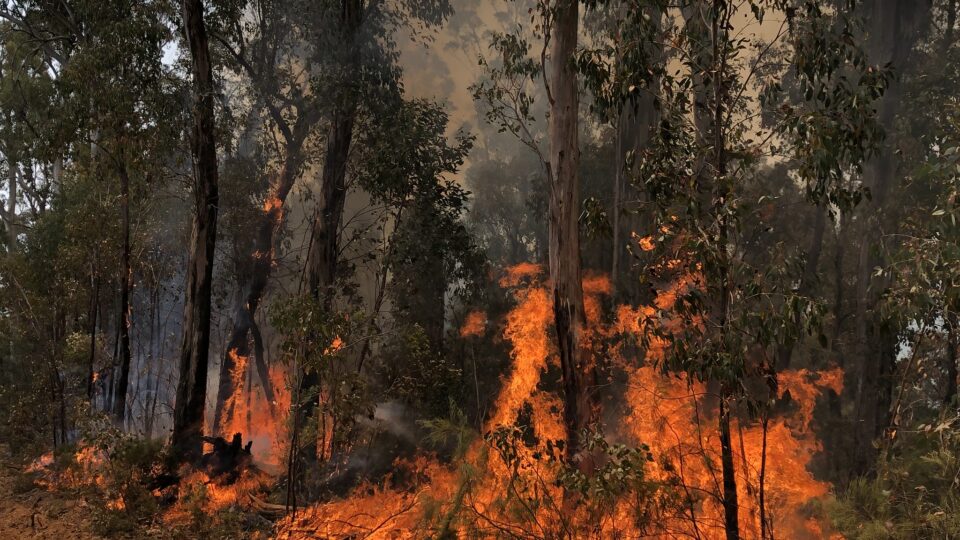
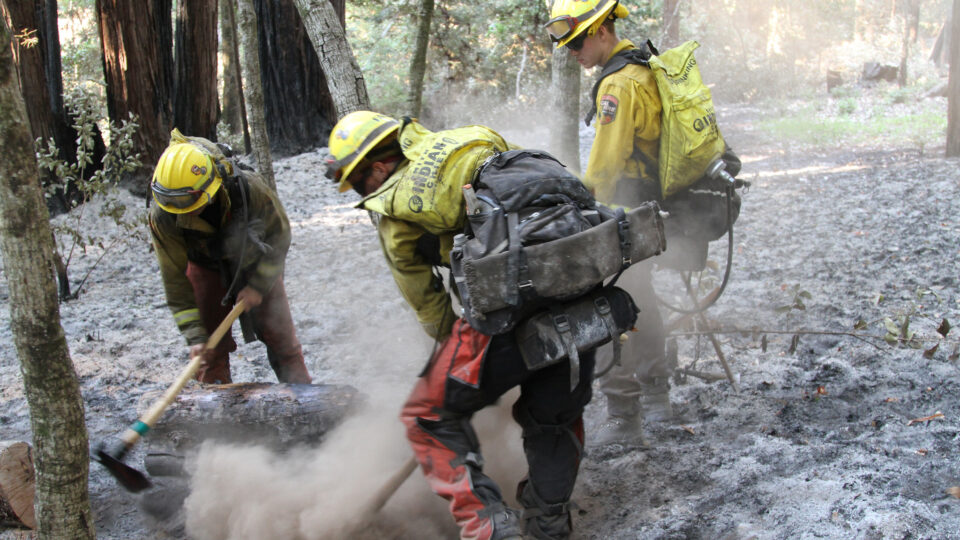
Two massive California wildfires that erupted during a lightning storm on September 9 have continued to threaten groves of giant sequoia trees in the southern Sierra Nevada mountains.  As of the beginning of October, flames from the KNP Complex fire had burned in or passed through 11 sequoia groves, including the famed Giant Forest in Sequoia National Park.

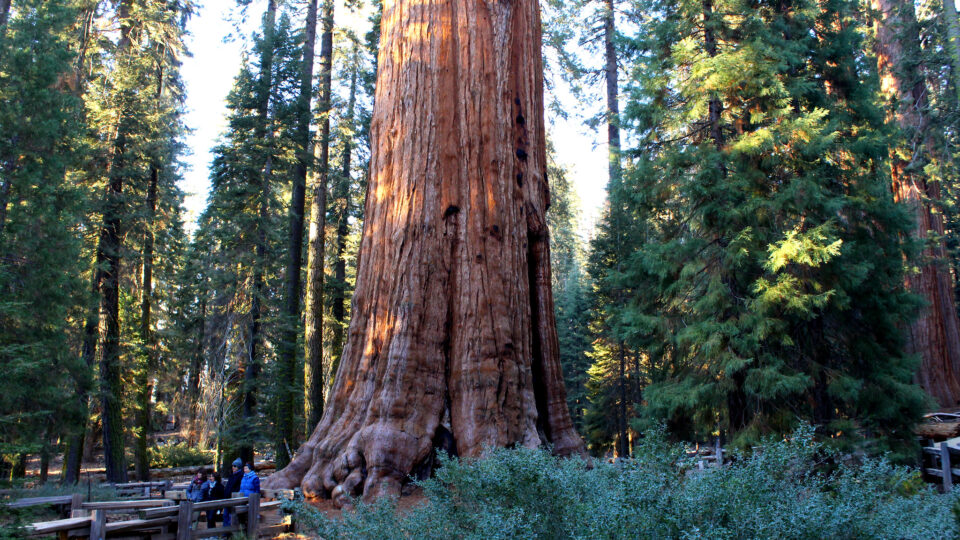
Hundreds of firefighters battled to protect some of the most renowned trees, including the 275-foot-tall General Sherman tree, widely considered to be the largest tree on earth by overall volume.  That tree and many near it are over 2,000 years old.

Firefighters wrapped the base of the General Sherman and several other trees with fire-resistant blankets to protect them from the intense heat of approaching fires.  Sequoias are actually well-adapted to fires because of their thick bark that protects them from heat.  But intense fires like the KNP Complex and Windy fires are more than the trees can handle.

As of the beginning of October, both fires continue to blaze, but thanks to the efforts of firefighters, most of the giant sequoias have survived.  One massive tree in the Giant Forest recently toppled over after burning for several days, but most are still standing and haven’t suffered serious damage.

As of early October, the two fires had blackened over 140,000 acres across national parks, national forests, the Tule River Indian Reservation, and local communities.  These two are among multiple wildfires burning in California this past summer.  The largest – the Dixie fire – has burned nearly a million acres as of early October.  In total, over 2.5 million acres have already burned in California this year.

**********

Web Links

KNP Complex fire triggers flurry of new evacuations, as flames threaten more giant sequoia trees

—

Hundreds of California firefighters battle to protect ancient sequoia groves from raging wildfires – with world’s largest tree General Sherman wrapped in aluminum foil blanket

Photo, posted November 5, 2017, courtesy of Ken Lund via Flickr.

XXXXXXXXXXXXXXXX
Wildfires And Algal Blooms

October 12, 2021 By EarthWise Leave a Comment

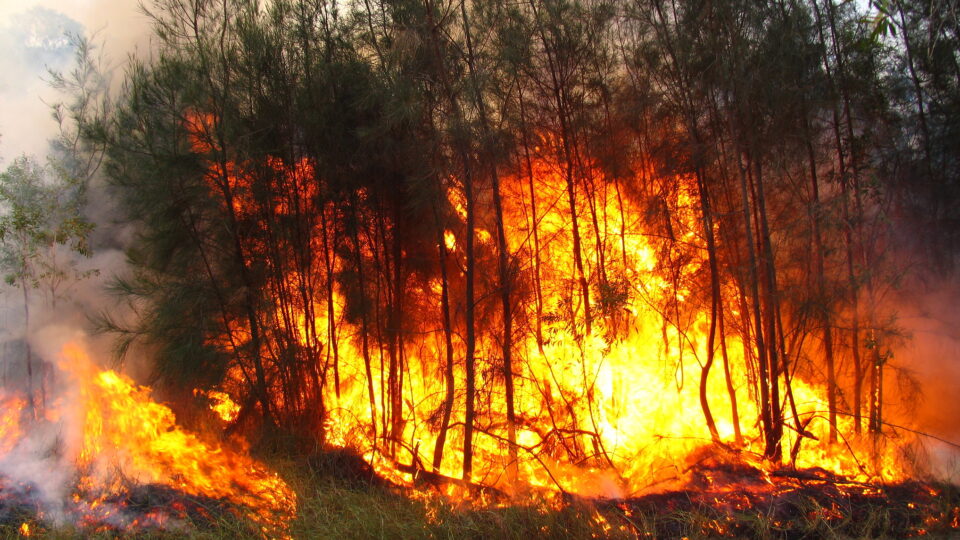
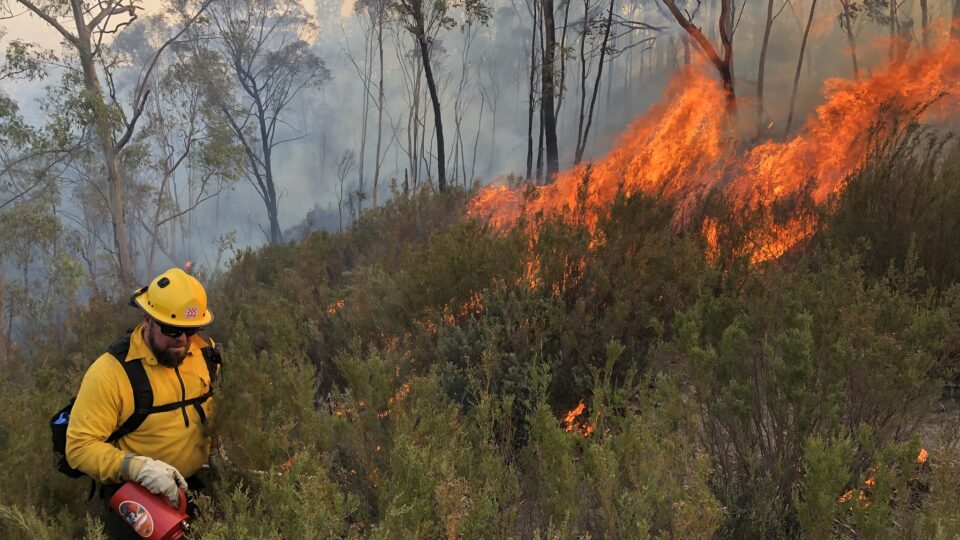
Australia is no stranger to wildfires. But the 2019-2020 season proved to be particularly severe: wildfires destroyed 3,100 homes, displaced 65,000 people, and burned more than 72,000 square miles – roughly the same size as Washington State. The season is colloquially referred to as the Black Summer.

According to a new study recently published in the journal Nature, clouds of smoke and ash from these wildfires triggered widespread algal blooms thousands of miles downwind to the east in the Southern Ocean.

The study, which was led by researchers from Duke University, shows that aerosol particles in the smoke and ash fertilized the water as they fell into it.  This provided the nutrients that fueled unprecedented blooms in that region, conclusively linking for the first time a large-scale response in marine life to fertilization by pyrogenic iron aerosols from a wildfire.

This finding raises questions about the role wildfires may play in the growth of phytoplankton, the microscopic marine algae that – through photosynthesis – absorbs large amounts of climate-warming carbon dioxide from Earth’s atmosphere. 

According to the research team, the Australian algal blooms were so extensive that the subsequent increase in photosynthesis may have temporarily offset a substantial portion of the wildfires’ CO2 emissions.  It remains to be seen how much of the absorbed CO2 remains safely stored in the ocean and how much it has been released back into the atmosphere. 

The researchers plan to investigate the fate of the phytoplankton further.  They also plan more research to better predict where and when aerosol deposition will boost phytoplankton growth in the future.  

**********

Web Links

Australian wildfires triggered massive algal blooms in Southern Ocean

Photo, posted January 12, 2020, courtesy of BLM-Idaho via Flickr.

XXXXXXXXXXXXXXX

Wildfires And The Climate | Earth Wise

September 24, 2021 By EarthWise Leave a Comment

Wildfires had a bigger impact on climate than the pandemic lockdowns

Scientists from the National Center for Atmospheric Research recently published a study analyzing the events that influenced the world’s climate in 2020.  Among these were the pandemic-related lockdowns that reduced emissions and resulted in clearer air in many of the world’s cities.

While this was a significant event, the study found that something entirely different had a more immediate effect on global climate:  the enormous bushfires that burned in Australia from late 2019 to 2020, producing plumes of smoke that reached the stratosphere and circled much of the southern hemisphere.

Those fires sprung up in September 2019 and lasted until March 2020.  The fires burned more than 46 million acres (about 72,000 square miles), which is roughly the same area as the entire country of Syria.  Thousands of homes and other buildings were lost.

Major fires inject so many sulfates and other particles into the atmosphere that they can disrupt the climate system, push tropical thunderstorms northward from the equator, and potentially influence the periodic warming and cooling of tropical Pacific Ocean waters known as El Nino and La Nina.

According to the study, the COVID-19 lockdowns actually had a slight warming influence on global climate, as a result of clearer skies enabling more heat to reach the earth’s surface.  In contrast, the Australian bushfires cooled the Southern Hemisphere because the atmospheric particles reflected some of the incoming solar radiation back to space.

This summer, there have been raging wildfires in the western US and Canada, which have affected air quality in many parts of the nation and have been a serious health hazard.  Undoubtedly, these fires are influencing the climate system as well in ways that we are still trying to understand.

**********

Web Links

Bushfires, not pandemic lockdowns, had biggest impact on global climate in 2020

Photo, posted January 18, 2020, courtesy of BLM-Idaho via Flickr.

Earth Wise is a production of WAMC Northeast Public Radio.

Overwintering Fires | Earth Wise

July 6, 2021 By EarthWise Leave a Comment

Early detection of overwintering fires could help with fire management

Fires that go on for long periods of time, surviving the snow and rain of winter to reemerge in the spring, are becoming more common in high northern latitudes as the climate warms.  Such fires are called holdover fires, hibernating fires, overwintering fires, or even zombie fires.  Whatever people choose to call them, this type of wildfire is occurring more often.

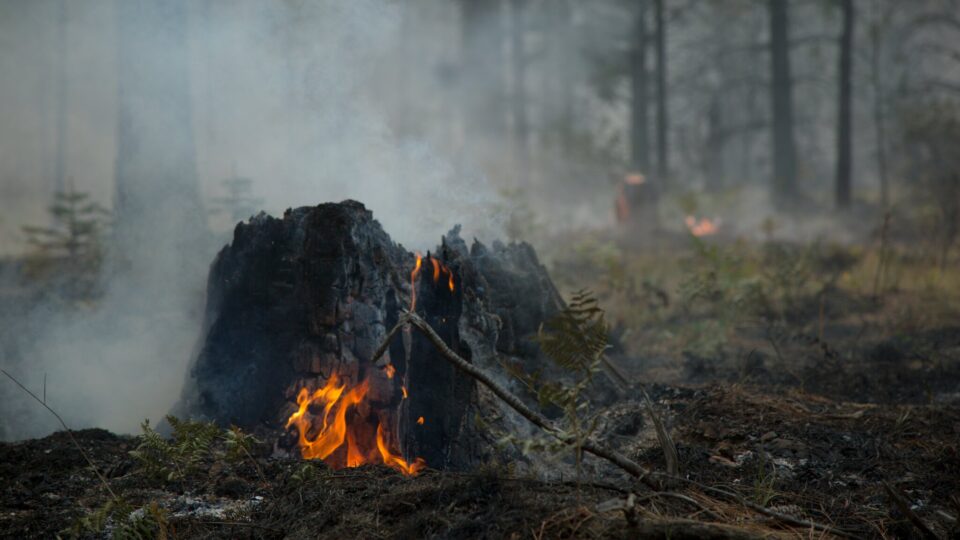
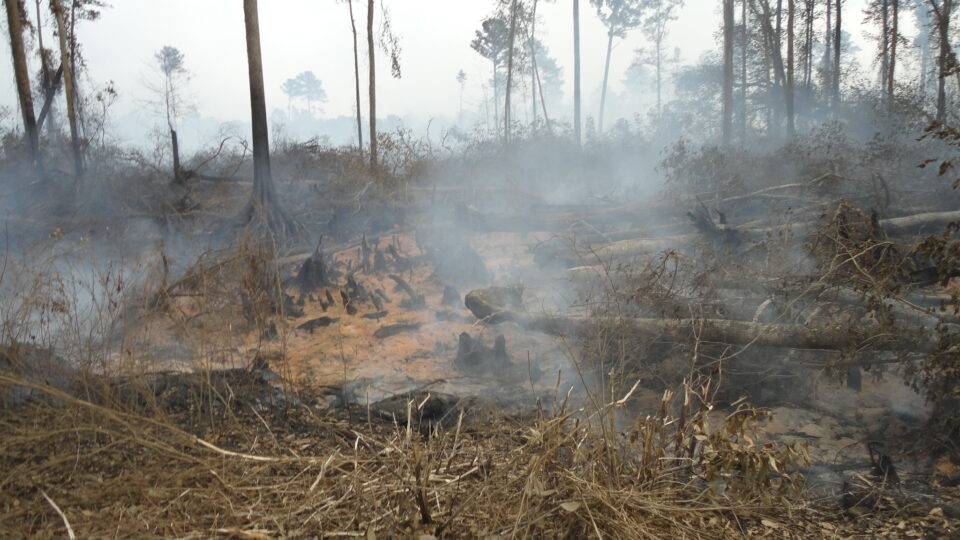
These smoldering fires start out as flaming fires but then enter an energy-saver mode.  They start above ground but then smolder in the soil or under tree roots through the winter.  They barely survive based on the oxygen and fuel resources that they have but can transition back into flaming fires once conditions are more favorable.

Dutch researchers used ground-based data with fire detection data from NASA’s Moderate Resolution Imaging Spectroradiometer instruments on the Terra and Aqua satellites to study fires in the boreal forests of Alaska and Canada’s Northwest Territories.  They found a way to identify overwintering fires based on their unique characteristics.  

Their data indicates that overwintering fires tend to be linked to high summer temperatures and large fire seasons.  Between 2002 and 2018, overwintering fires generally accounted for a small amount of the total burned area in the region but in individual years with hot and severe fire seasons, the number can escalate.  In 2008 in Alaska, for example, overwintering fires accounted for nearly 40% of the burned area.

Early detection of these overwintering fires could help with fire management and reduce the amount of carbon – which is stored in large amounts in the region’s organic soils – that gets released to the atmosphere during fires.

**********

Web Links

Overwintering Fires on the Rise

Photo, posted September 14, 2017, courtesy of Andrew R. Mitchell/USDA via Flickr.

Earth Wise is a production of WAMC Northeast Public Radio.

Radar Satellites And Hazard Mitigation | Earth Wise

May 26, 2021 By EarthWise Leave a Comment

Using satellites to keep tabs on natural disasters

Scientists have concluded that the changing climate is primarily the result of increased human-caused greenhouse gas emissions.  Some of the effects of global climate change include melting glaciers, warming oceans, intensifying storms, and rising seas.

Another consequence of global climate change is natural disasters like floods and wildfires.  Climate change is increasing the frequency and severity of wildfires and increasing the odds of record-breaking floods in many parts of the United States and all around the world.

As a result, scientists in Australia have turned to technology for better assistance in keeping tabs on these climate change-driven natural disasters.  Researchers from Curtin University in Perth, Australia have found that satellites can improve the ability to detect, monitor, prepare for, and withstand natural disasters, including floods, wildfires, and earthquakes.

The research team used Synthetic Aperture Radar (SAR) data, which was acquired by the European Space Agency Sentinel-1 satellite.  The researchers also used data acquired by other satellites to evaluate these Australia-specific case studies.

According to the researchers, SAR data provides remote monitoring capabilities of Earth’s surface around the clock and in all weather, which is something that traditional optical Earth Observation (EO) imagery cannot do. The ability to function through fog, clouds, rainfall, and smoke is what makes SAR so valuable.

The research team says that the data can be used to improve how people track and respond to natural disasters, by precisely mapping topography, tracking movements of the ground, and mapping damage to infrastructure. 

As the climate continues to change, the ability to mitigate hazards like floods and wildfires will be increasingly important. 

**********

Web Links

Radar satellites can better protect against bushfires and floods

Photo, posted May 11, 2007, courtesy of Bert Knottenbeld via Flickr.

Earth Wise is a production of WAMC Northeast Public Radio.

Fighting Zombie Fires | Earth Wise

April 30, 2021 By EarthWise Leave a Comment

New tool in the fight against zombie fires

Peat fires are a global threat to both economies and the environment.  They generally burn a smaller area than fast-moving forest fires, but they can burn up to ten times more fuel matter per acre, producing far more smoke and far more carbon emissions.  They ignite very easily, are notoriously difficult to put out, all while releasing as much as 100 times more carbon into the atmosphere than flaming fires.  Some smoldering peat megafires are the largest and longest burning fires on Earth and are responsible for as much as 15% of annual global greenhouse gas emissions.

Peat fires are known as “zombie fires” because of their ability to hide and smolder underground and then reemerge as new flames days or weeks after they were supposedly extinguished.

Firefighters use billions of gallons of water to tackle a peat fire.  For example, fighting the 2008 Evans Road peat fire in North Carolina used up 2 billion gallons of water.  When water alone is used to extinguish peat fires, it tends to create large channels in the soil, which diverts water from nearby smoldering hotspots.  This is one reason that it is so difficult to extinguish a peat fire.

Researchers at Imperial College London have combined water with an environmentally friendly fire suppressant – one already used on flaming wildfires – and tested its use on peat fires.  They found that adding the suppressant to water helped them put out peat fires nearly twice as fast as using water alone, while using only a third to half of the usual amount of water.  The suppressant reduces the surface tension of the liquid, making it less likely to create large channels.  Instead, the liquid flows uniformly through the soil.  This could be an important tool in battling peat fires.

**********

Web Links

‘Magical’ fire suppressant kills zombie fires 40% faster than water alone

Photo, posted in August, 2011, courtesy of Chris Lowie / USFWS via Flickr.

Earth Wise is a production of WAMC Northeast Public Radio.

Climate Change And The Coronavirus | Earth Wise

March 19, 2021 By EarthWise Leave a Comment

Climate change may have played a role in the emergence of the Covid-19 pandemic

It’s no secret that our planet is heating up.  Scientists have concluded that the changing climate is primarily the result of increased human-caused (or anthropogenic) greenhouse gas emissions.  Some of the effects of global climate change include thawing permafrost, warming oceans, intensifying storms and wildfires, and rising seas.     

In southern China, the surge in greenhouse gas emissions over the past century has driven the growth of forest habitat favored by bats, leading to the creation of a hotspot for bat-borne coronaviruses in that region. 

According to a new study by researchers from the University of Cambridge in the UK, climate change could have played a direct role in the emergence of SARS-CoV-2, the virus that caused the COVID-19 pandemic.

The study, which was recently published in the journal Science of the Total Environment, revealed large-scale changes in the type of vegetation in the southern Chinese Yunnan province over the last century, as well as in the adjacent regions of Myanmar and Laos.  Increases in temperature, sunlight, atmospheric carbon dioxide and other climatic changes have transformed natural habitats from tropical shrubland to tropical savannah and deciduous woodland.  These changes have created ideal habitats for many bat species that predominantly live in forests.

According to the study, an additional 40 bat species moved into Yunnan province over the past century.  This is the region where genetic data suggests SARS-CoV-2 may have arisen.  Each bat species harbors an average of 2.7 coronaviruses. 

The researchers urge policymakers to acknowledge the role that climate change plays in outbreaks of viral diseases and to work together to reduce global greenhouse gas emissions. 

**********

Web Links

Climate change may have driven the emergence of SARS-CoV-2

Photo, posted July 21, 2013, courtesy of the U.S. Fish and Wildlife Service/Ann Froschauer via Flickr.

Earth Wise is a production of WAMC Northeast Public Radio.

Wildfire Smoke And Dangerous Microbes | Earth Wise

February 12, 2021 By EarthWise Leave a Comment

Wildfire smoke is a major global health concern

The worsening severity of wildfires across the globe is a major public health concern.  The pulmonary and cardiovascular consequences of wildfire smoke inhalation have been well researched and have been an increasing focus for officials in places like California, other western states, and Australia.  More recently, another public health concern has emerged related to the fact that wildfire smoke can carry microbes that cause infectious diseases.

A new analysis, published in the journal Science, points out that the risk of potential infection from airborne microbes has not been the subject of much research.

The fungus coccidioides, for example, becomes airborne when soils are disturbed by fire. When this fungus is inhaled, it can cause Valley fever, an infection with flu-like symptoms that sometimes progresses to pneumonia or meningitis.  Inhalation risk of these microbes is highest closest to fires, so coccidioidomycosis is listed as a professional risk for firefighters.

A recent study found an increase in cases of invasive mold infection, aspergilliosis, as well as cases of coccidioidomycosis at hospitals within 200 miles of major wildfires in California.

Wildfire smoke has been shown to carry airborne particles of fungal and bacterial cells, hitching a ride on water vapor or charred carbon, over thousands of miles.  Some microbes in soil appear to be tolerant of or even thrive under high temperatures following wildfires.

A multidisciplinary research collaboration is needed to better understand the relationship between microbes, wildfire, and public health.  Such knowledge is increasingly vital as severe wildfires become seasonal norms in parts of the world such as the United States and Australia.

**********

Web Links

Wildfire Smoke Can Carry Dangerous Microbes Thousands of Miles, Scientists Warn

Photo, posted September 9, 2020, courtesy of Christopher Michel via Flickr.

Earth Wise is a production of WAMC Northeast Public Radio.

Wildfires And Superfund Sites | Earth Wise

January 14, 2021 By EarthWise Leave a Comment

Wildfires threaten Superfund sites

Thousands of contaminated sites exist nationally due to hazardous waste being dumped, left out in the open, or otherwise improperly managed. These sites include manufacturing facilities, processing plants, landfills, and mining sites.  A Congressional act in 1980 established authority by the EPA to ultimately clean up these “Superfund” sites.

According to a government survey last year, 945 Superfund sites are vulnerable to hurricanes, flooding, sea level rise, increased precipitation, or wildfires, all of which are intensifying as the climate warms.   In particular, there are 245 sites vulnerable to wildfires and 68 of them have recently seen wildfires approach.

A comprehensive investigation by Inside Climate News, NBC News, and the Texas Observer has found that the threat presented by wildfires is exceeding authorities’ ability to adequately prepare and respond.  Fires at Superfund sites could release toxins ranging from acid mine drainage to radioactive smoke.

There have already been a number of close calls.  The 2013 Patch Springs Fire near Salt Lake City came within 10 miles of the Tooele Army Depot, a Superfund site with 902 ammunition bunkers along with soil and groundwater contaminated with hazardous chemicals.

The 2018 Carr Fire in Northern California over swept the Iron Mountain Mine Superfund site and threatened to release corrosive chemicals into the watershed.

For sites where no polluter can be made to pay and the EPA lacks cleanup funds, the agency will need to design protections that shield the sites from wildfires as long as the contamination remains. 

**********

Web Links

Fueled by Climate Change, Wildfires Threaten Toxic Superfund Sites

Photo, posted July 26, 2018, courtesy of the Bureau of Land Management California via Flickr.

Earth Wise is a production of WAMC Northeast Public Radio.

More Mega-Droughts | Earth Wise

December 2, 2020 By EarthWise Leave a Comment

Climate change leading to more mega-droughts

According to a new report led by researchers from the University of Queensland in Australia, mega-droughts are expected to increase as global temperatures rise with the progression of climate change.  While mega-droughts have no strict scientific definition, most studies – including this one – define them as prolonged droughts lasting two decades or longer. 

The research team analyzed geological records from the Eemian Period – 129,000 to 116,000 years ago – to create a model of what to expect over the next 20-50 years.  The Eemian Period is the most recent in Earth’s history when global temperatures were similar – or maybe even slightly warmer – than they are today. 

By analyzing the climate during this period, the research team found that the world will likely experience increased water scarcity, reduced winter snow cover, more frequent wildfires and wind erosion as a result of global warming.

In the report, which was recently issued by the University of Queensland, the researchers collaborated with the New South Wales Parks and Wildlife Service to identify stalagmites in the northern section of Kosciuszko National Park.  They were able to study small samples of calcium carbonate powder contained in the cave stalagmites, allowing them to identify periods of reduced precipitation during the Eemian Period. 

Historically, mega-droughts have been associated with mass exoduses of people from the affected areas.  In fact, mega-droughts are suspected of contributing to the collapse of several pre-industrial civilizations across Southeast Asia and the Americas.

If humans continue to warm the planet, the researchers say more mega-droughts will be in our future.

**********

Web Links

Expect more mega-droughts

Photo, posted March 28, 2014, courtesy of Marufish via Flickr.

Earth Wise is a production of WAMC Northeast Public Radio.

Fall Safety Tips | Earth Wise

November 4, 2020 By EarthWise Leave a Comment

Tips for fall safety

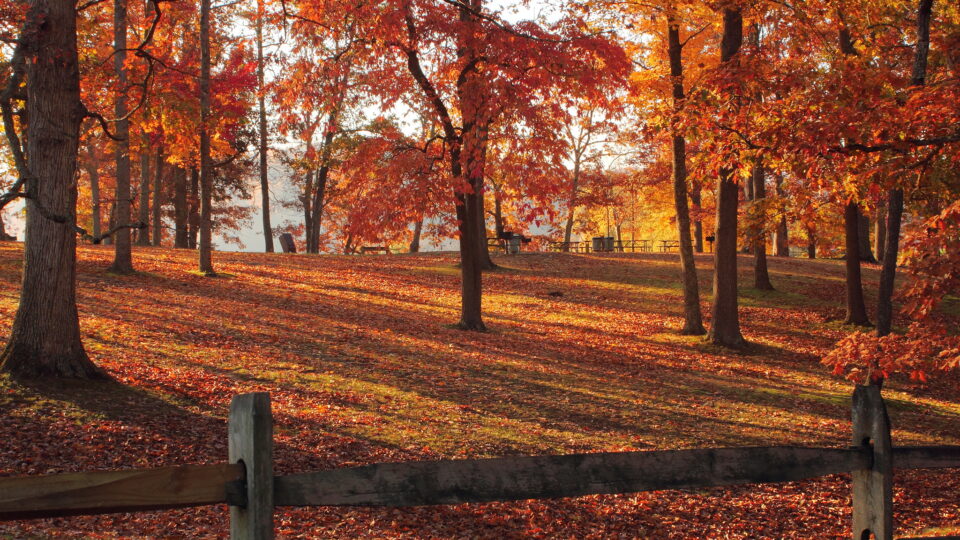
The fall season has its own weather-related hazards, such as raging wildfires across the West and a busy hurricane season in the Atlantic.  There might even be snow in some places.  The National Weather Service issued a set of four broad safety tips for being prepared for the dangers of fall weather.

With regard to wildfires, it is important for smokers to properly discard cigarettes, for people to avoid activities with open flames or sparks, and to use fire-resistant landscaping around our homes. The Weather Service issues Red Flag Warnings when conditions are ripe for wildfires.

In this busy hurricane season, even people who don’t live in hurricane surge evacuation areas need to know their home’s vulnerability to damage from high winds and inland flooding.  People should have a plan that includes an emergency kit and a safe place to shelter should they need to evacuate.

It is important to have a plan in case strong winds pose a threat.  When preparing for an extreme wind event, secure objects that can be tossed or rolled, trim trees near homes, and have a plan in case of an extended power failure.  Strong winds can even happen on a clear day.

The key advice in case you encounter flood waters is “turn around, don’t drown.”  It is never safe to walk or drive into a flooded roadway.  It is best to delay travel until roads are clear.

Fall can be the most beautiful season of the year, but it also has its dangers.  Following advice such as that provided by the Weather Service is prudent and potentially life-saving.

**********

Web Links

Four safety tips for fall hazards: Small actions can have big impacts

Photo, posted October 30, 2014, courtesy of Virginia State Parks via Flickr.

Earth Wise is a production of WAMC Northeast Public Radio.

The Changing Climate Is Changing Insurance

October 21, 2020 By EarthWise Leave a Comment

Climate Change is Changing Insurance

As the climate changes, wildfires get bigger and more destructive and hurricanes and powerful storms are more frequent and damaging.  In places where these things are occurring, it is getting harder and more expensive for many homeowners to get insurance.  The affordability of home insurance in the face of climate change has become a huge issue in many states.

In California, the number of homeowners who got non-renewal notices from their insurance companies rose by 6% between 2017 and 2018.  In areas directly affected by wildfires between 2015 and 2017, that number jumped by 10%. Similar things have happened in Florida, Louisiana, Mississippi, and Texas, where hurricanes and flooding have caused extensive damage.  Because of this, many homeowners have been forced to turn to bare-bone plans such as the California Fair Access to Insurance Plan, which can cost two or three times as much as normal insurance policies.

According to a 2019 survey of insurance companies, more than half of insurance regulators said that climate change was likely to have a high impact or an extremely high impact on the availability of insurance coverage and the assumptions used for underwriting.  In the past, governments have been able to mandate coverage in certain areas or even provide coverage themselves in some cases.  As the occurrence of climate-related damage becomes increasingly frequent, homeowners have to face up to a grim reality.

The challenges of dealing with wildfires, floods, powerful storms, and the like are significant enough for people who live in high-risk areas.  Increasingly, home insurance in these places is becoming much more expensive, harder to find, and is worth less.

**********

Web Links

As Climate Impacts Worsen, Homeowners Struggle to Find Affordable Insurance

Photo, posted September 1, 2020, courtesy of The National Guard via Flickr.

XXXXXXXXXXXXXXXXX

Widespread Drought | Earth Wise

September 7, 2020 By EarthWise Leave a Comment

united states drought

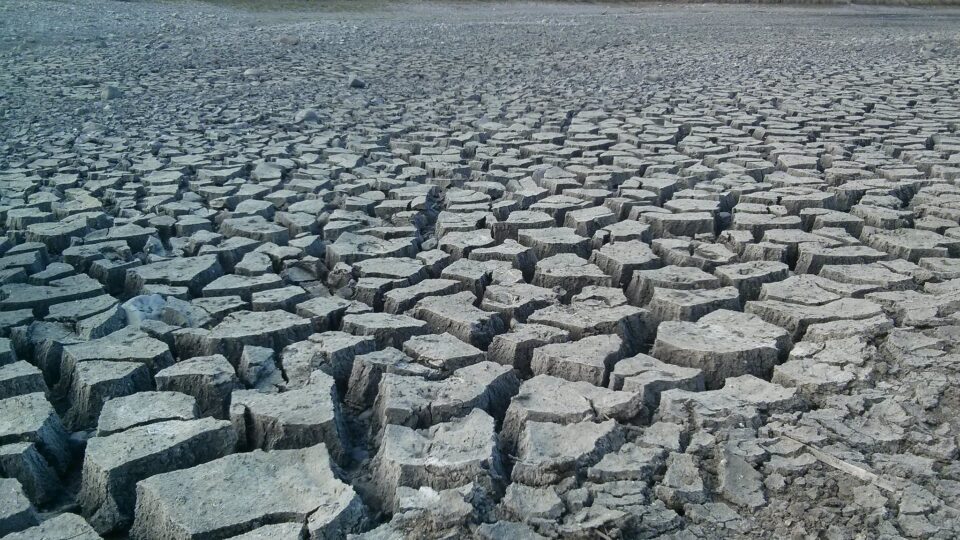
As the U.S. enters the last part of the summer, fully one-third of the country is experiencing at least a moderate level of drought.   Much of the West is reaching severe drought conditions and New England has been unusually dry and hot.  In total, over 50 million Americans are living in drought-affected areas.

According to the U.S. Drought Monitor program, more than 93% of Utah, Colorado, Nevada, and New Mexico are experiencing drought to some degree.  More than 60% of both Utah and Colorado are in severe drought.   More than three-quarters of Oregon, Arizona, and Wyoming are also in drought.  And most of these areas had no sign of drought this time last year.

Severe drought conditions result in stunted and browning crops, limited pasture yields, dust storms, reduced well water levels, and an increase in the number and severity of wildfires.

Warm air temperatures and minimal snowfall in spring set the stage for this summer’s drought conditions.  A ridge of high pressure over the northeastern Pacific Ocean pushed the jet stream farther north than usual.  And, once again, there has been a failure of the southwestern monsoon in Arizona and New Mexico and the Four Corners region.  Monsoon rains provide half of the year’s precipitation in many of those areas. 

Instead, there has been extreme heat in the region.  Phoenix has already smashed the record for the most days over 110oF in a calendar year (42 as of August 18), with five months to go.  Las Vegas hasn’t seen measurable rainfall since April, and Cedar City, Utah has recorded a record low of 0.05 inches of rain this summer.

Conditions are not expected to get better for a couple of months.

**********

Web Links

A Third of the U.S. Faces Drought

Photo, posted May 7, 2014, courtesy of Tyler Bell via Flickr.

Earth Wise is a production of WAMC Northeast Public Radio.

Alaska Is Getting Wetter | Earth Wise

August 31, 2020 By EarthWise Leave a Comment

alaska is getting wetter

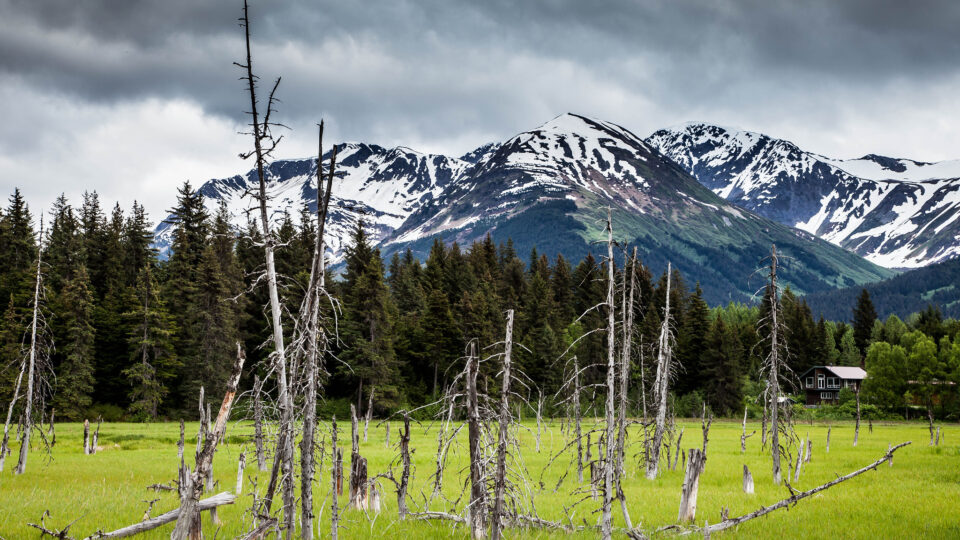
Siberia has been in the news for record-setting heat waves and wildfires, but it is not the only northern region experiencing unusual weather.   Alaska, apart from setting its own warm weather records, is experiencing the rainiest five years in its century-long meteorological record.

Extreme weather in the Arctic is being driven by an aspect of climate change called Arctic amplification, which leads to temperatures rising faster than the global average.  The physical basis of Arctic amplification is well understood, but its effects over time are much less predictable.

The past five years included two summers with average precipitation, one that was a little drier than usual, and two of the wettest summers on record.    Researchers have taken measurements of how far below the surface permafrost has thawed by the end of summer over a wide range of Alaskan environments.

About 85% of Alaska sits upon permafrost and the increasing rainfall over the past five years is leading to a deeper thaw of permafrost across the state.  The wettest summer on record was 2014 and permafrost didn’t freeze back to previous levels even when the next couple of summers were relatively drier.

The study demonstrated how different types of land cover govern relationships between summer rainfall and permafrost thaw.  As Alaska becomes warmer and wetter, the vegetation cover is projected to change, and the increasing occurrence of wildfires will disturb larger areas of the landscape.  These conditions are likely to lead to a feedback loop driving more and more permafrost thawing.

Fundamental changes to Alaskan ecosystems are occurring on an unprecedented timescale – not gradually over decades or lifetimes, but over mere months or years.

**********

Web Links

Alaska is getting wetter. That’s bad news for permafrost and the climate.

Photo, posted June 10, 2011, courtesy of Peter Rintels via Flickr.

Earth Wise is a production of WAMC Northeast Public Radio.

A New Carbon Capture Technique | Earth Wise

August 25, 2020 By EarthWise Leave a Comment

Reducing carbon dioxide emissions using carbon capture

Carbon dioxide emissions by electricity generating plants, fossil-fuel burning vehicles, and industry produce about 2/3 of the greenhouse gases driving climate change.  Without decreasing these emissions, the earth will continue to get warmer, sea levels will continue to rise, and the world will face more droughts, floods, wildfires, famine and conflict.

Electrification of vehicles and reliance upon renewable energy sources will ultimately drastically reduce the use of fossil fuels and the resultant emissions, but that transition may take too long to reverse the direction of climate change.  In the meantime, there is a great need to find effective and efficient ways to capture emissions from fossil fuel plants. 

Recent research at the University of California, Berkeley, Lawrence Berkeley National Laboratory, and ExxonMobil has developed a new technique for carbon capture.  The technique makes use of metal-organic framework (or MOF) technology.  An MOF, modified with nitrogen-containing amine molecules, captures CO2 and then low-temperature steam is used to flush out the CO2 either to be used or sequestered underground.

Experiments demonstrated the technique to have a six-times greater capacity for removing CO2 from the flue gas of a refinery than current amine-based technology.  It selectively removed 90% of the emitted CO2. 

There is a relatively limited market for captured CO2, so power plants using the capture technology would likely pump the CO2 into the ground, or otherwise sequester it.  The cost of doing this sort of emission scrubbing would have to be facilitated by government policies, such as carbon trading or a carbon tax, which would provide the necessary economic incentive for doing carbon capture and sequestration.

**********

Web Links

New technique to capture CO2 could reduce power plant greenhouse gases

Photo courtesy of UC Berkeley.

Earth Wise is a production of WAMC Northeast Public Radio.

Expensive And Dangerous Storms | Earth Wise

August 7, 2020 By EarthWise Leave a Comment

billion-dollar united states weather disasters becoming common

Severe storms are getting more and more common.  Early in July, the United States experienced its 10th billion-dollar weather disaster of the year – the earliest this has happened.  It also marks 2020 as the sixth consecutive year with at least 10 such extreme weather events, which is also a record.  With the country struggling with the effects of a global pandemic, extreme weather is pretty much the last thing we need.

This year’s 10 storms have primarily consisted of tornadoes, damaging winds, and hail.  Seven out of the 10 storms were in the South or Southeast.  An Easter Sunday outbreak in that region saw 190 tornadoes and 36 people were killed that day.

Since 1980, the US has averaged nearly 7 billion-dollar weather disasters per year.  But the last five years have seen nearly 14 severe storms on average.  The way things are going this year, there will probably be more than that number.

This year’s growing total does not include the looming hurricane season, which is widely predicted to be more active than usual.  Because so many places in the South are still recovering from earlier disasters, they are particularly vulnerable to the effects of an active hurricane season.

Meanwhile, much of the country is suffering from drought conditions, making wildfires a major concern.  Recent years have seen deadly and destructive wildfires in many places, notably in California two years ago.  Between hurricanes and wildfires, the prospects are alarming for what could turn out to be a disastrous year for expensive and dangerous severe weather.

**********

Web Links

US hits 10th billion-dollar weather disaster of the year — at a record pace

Photo, posted March 3, 2020, courtesy of Flickr.

Earth Wise is a production of WAMC Northeast Public Radio.

Record Siberian Heat | Earth Wise

July 24, 2020 By EarthWise Leave a Comment

Record temperatures recorded in Siberia

Siberia has been experiencing unprecedented high temperatures in recent months.  May was the hottest May on record and temperatures in Siberia have stayed well above average for the past year.

On June 20, temperatures in the small Siberian town of Verkhoyansk hit 100.4 degrees Fahrenheit, which is a record-high temperature in one of the fastest-warming places in the world.  Average high temperatures in June reach 68 degrees.  Verkhoyansk sits on the Yana River in the Arctic Circle and, during the winter, is one of the world’s coldest towns.  In 1892, its temperature dropped to -90 degrees Fahrenheit.  And now there is hundred-degree heat above the Arctic Circle.

Siberia tends to experience large temperature swings month-to-month and year-to year.  But it is very unusual for temperatures to stay well over average over an extended period of time as they have for the past year.  According to climate scientists, the kind of temperature swings seen recently would only happen once in 100,000 years if it were not for climate change.

Siberia has seen raging wildfires and structural damage from thawing permafrost as its temperatures have stayed warmer than normal.  The prolonged Siberian heatwave is an alarming situation.

The Arctic is warming twice as fast as the rest of the Earth because of a process known as Arctic amplification.  The acceleration of the Arctic ice melt leads to a seasonal snow cover that isn’t as white.  It therefore absorbs more sunlight, which then leads to more warming.

The amplified warming of the Arctic with its increased melting of ice leads to higher sea levels, and not just in the Arctic Ocean.  With less Arctic ice to reflect sunlight, the world’s oceans continue to warm. 

**********

Web Links

Temperatures in an Arctic Siberian town hit 100 degrees, a new high

Photo, posted December 7, 2014, courtesy of Olga Dudenko via Flickr.

Earth Wise is a production of WAMC Northeast Public Radio.

A High-Tech Fire Alarm | Earth Wise

July 23, 2020 By EarthWise Leave a Comment

In recent years, wildfires have been a global problem, notably in California, Brazil, and Australia.  It has become increasingly important to be able to respond to new fires as soon and as quickly as possible.  Such response can make the task of extinguishing them easier, thereby reducing the amount of damage and the loss of property and life.

Traditional methods for detecting forest fires include satellite monitoring, ground patrols, and watch towers, all of which have high labor and financial costs but suffer from low efficiency.  Remote sensing technologies are becoming increasingly common but rely on batteries for power, requiring servicing in remote locations to replace depleted batteries.  Solar cells represent an alternative to batteries, but it is challenging to use them in forests because of shading and foliage coverage.

A team of researchers at Michigan State University has developed a remote forest fire detection and alarm system powered by nothing more than the movement of tree limbs in the wind.  The device is known as an MC-TENG, which is an acronym for multilayered cylindrical triboelectric nanogenerator.  The triboelectric effect is a phenomenon where certain materials become electrically charged when they separate from a second material with which they were previously in contact.  In the new device, two cylindrical sleeves fit within one another – one anchored and the other free to slide.  The device is tied to a tree branch and when the branch sporadically moves in the wind, electricity is generated and stored in a carbon-nanotube-based micro supercapacitor.  This powers a sensing system that can continuously monitor environmental conditions without requiring any maintenance.

A combination of carbon monoxide and temperature sensors provides a high-tech fire alarm that can operate continuously in the most remote forest.

**********

Web Links

Self-Powered Alarm Fights Forest Fires, Monitors Environment

Photo, posted August 3, 2012, courtesy of Lukas Schlagenhauf via Flickr.

Earth Wise is a production of WAMC Northeast Public Radio.

Turning Dead Trees Into Biomass Energy | Earth Wise

July 1, 2020 By EarthWise Leave a Comment

Biomass energy from dead trees

California has suffered from numerous large wildfires in recent years.  The two largest in the past century took place in 2017 and 2018, and just these two alone burned nearly 750,000 acres, destroyed over 1,200 structures, and killed 24 people.

Apart from the fires, drought, the warming climate, and bark-beetle infestations have killed 147 million California trees since 2013, most of them along the spine of the Sierra mountains.  These dead trees represent a significant danger in forthcoming fire seasons as they threaten to burn with enormous intensity.

There are now biomass projects in California that thin trees in overcrowded forests and remove dead and diseased trees and turn them into wood chips to supply community biomass facilities that burn them to produce heat and electricity.

Proponents say these projects help rebuild rural communities by creating jobs, while at the same time reducing fire risk. 

There are critics of these programs who claim that they are damaging and destroying ecosystems.    They also point out that burning forest fuels emits 50% more carbon than burning coal and three times as much as burning natural gas.  This is true of biomass in general but is mitigated by the fact that it in principle the carbon can be recaptured by new forest growth.

However, the dominant argument about emissions is that wildfires emit far more carbon dioxide than biomass plants, or much of anything else, for that matter.  In 2018 alone, California wildfires released 50% more carbon dioxide than California’s entire industrial sector.  So, reducing the extent of wildfires is a big deal for many reasons.

**********

Web Links

In California, A Push Grows to Turn Dead Trees into Biomass Energy

Photo, posted August 24, 2016, courtesy of the USDA via Flickr.

Earth Wise is a production of WAMC Northeast Public Radio.

More Extreme Wildfire Seasons | Earth Wise

April 29, 2020 By EarthWise Leave a Comment

extreme wildfire seasons

According to a new study led by researchers at Stanford University, autumn in California feels more like summer now as a result of climate change, and this hotter and drier weather increases the risk of longer and more dangerous wildfire seasons.

The research team, whose work was recently published in the journal Environmental Research Letters, found that the frequency of extreme fire weather conditions in the fall in California has doubled since the early 1980s.  Average temperatures during the season have increased by more than 2 degrees Fahrenheit, and rainfall has fallen by approximately 30%.  The most pronounced warming has occurred in the late summer and early fall.  That finding means that tinder-dry conditions coincide with the strong “Diablo” and “Santa Ana” winds that are typical in California at this time of year.     

In recent years, these conditions have fed large and fast-moving wildfires across California.  The state’s two largest wildfires, two most destructive wildfires, and the most deadly wildfire all occurred during 2017 and 2018, resulting in more than 150 deaths and $50 billion in damage.

Because summertime has typically been peak fire season, the recent spate of autumn fires is putting a strain on firefighting resources and funding.  The ongoing COVID-19 pandemic could further strain emergency resources.  Since fire-prone regions have historically shared  wildfire-fighting resources throughout the year, the consequences of California’s extended wildfire season could have a global impact.  (For example, California’s recent autumn wildfires have coincided with the beginning of wildfires in Australia). 

The researchers highlight some opportunities to manage the intensifying wildfire risk in California, including limiting the trajectory of global warming in keeping with the targets identified in the United Nations’ Paris agreement.

**********

Web Links

Researchers forecast longer, more extreme wildfire seasons

Photo, posted September 12, 2019, courtesy of the California National Guard via Flickr.

Earth Wise is a production of WAMC Northeast Public Radio.

  • « Go to Previous Page
  • Page 1
  • Page 2
  • Page 3
  • Page 4
  • Page 5
  • Page 6
  • Go to Next Page »

Primary Sidebar

Recent Episodes

  • An uninsurable future
  • Clean energy and jobs
  • Insect declines in remote regions
  • Fossil fuel producing nations ignoring climate goals
  • Trouble for clownfishes

WAMC Northeast Public Radio

WAMC/Northeast Public Radio is a regional public radio network serving parts of seven northeastern states (more...)

Copyright © 2026 ·