• Skip to primary navigation
  • Skip to main content
  • Skip to primary sidebar

Earth Wise

A look at our changing environment.

  • Home
  • About Earth Wise
  • Where to Listen
  • All Articles
  • Show Search
Hide Search
You are here: Home / Archives for population

population

Solar-Powered Desalination | Earth Wise

March 20, 2020 By EarthWise Leave a Comment

simple desalination using solar power

About 1% of the world’s population is dependent on desalinated water to meet daily needs, but water scarcity is a growing problem that experts believe will affect 14% of the world’s population within the next five years.

Desalination takes much more energy than, for example, transporting fresh water over large distances.  In general, desalination costs are much higher than those associated with fresh water, but beyond costs, freshwater is simply not always available.

Researchers at MIT and Shanghai Jiao Tong University in China have developed a completely passive solar-powered desalination system that could provide more than 1.5 gallons of fresh drinking water per hour for every square meter of solar collecting area.   Such a system could provide an efficient, low-cost water source for coastal areas that are off the grid.

The system uses multiple layers of flat solar evaporators and condensers topped with transparent aerogel insulation.  The key to its efficiency is the way it uses each of its multiple stages to desalinate water.  At each stage, heat released by the previous stage is harnessed instead of wasted.  The proof-of-concept device, which was tested on an MIT building rooftop, produced more than twice as much water as the record amount produced by any previous passive solar-powered desalination system.

The researchers plan further experiments aimed at optimizing the choice of materials and configurations and to test the system under realistic conditions.  The hope is to have a technology that can play a role in alleviating water scarcity in parts of the world where electricity is scarce, but seawater and sunlight are abundant.

**********

Web Links

Simple, solar-powered water desalination

Photo courtesy of MIT/researchers.

Earth Wise is a production of WAMC Northeast Public Radio.
Conspicuous Consumption

February 6, 2020 By EarthWise 2 Comments

human consumption and the circular economy

Human civilization consumes vast amounts of material.   The Circle Economy think tank actually puts some numbers on it.  According to their latest report, the amount of material consumed by humanity has passed 100 billion tons every year.  So, on average, every person on Earth uses more than 13 tons of materials per year.

That number has quadrupled since 1970, which is far faster than the population, which has only doubled during that time.  In the past two years alone, consumption has jumped by more than 8%.  While this has been going on, the proportion being recycled has been falling.

Of the 100 billion tons of materials, half of the total is sand, clay, gravel, and cement used for building, along with other minerals used for fertilizer.  Coal, oil and gas make up 15% and metal ores 10%. The final quarter are plants and trees used for food and fuel.  About 40% of all materials are turned into housing.  A third of the annual materials consumed remain in use, such as in buildings or vehicles.  But 15% is emitted into the atmosphere as greenhouse gases and a third is treated as waste.

The global emergencies of climate change and disappearing wildlife have been driven by the unsustainable extraction of fossil fuels, metals, building materials, and trees.  The authors of the report warn that if we continue to treat the world’s resources as limitless, we are heading for a global disaster.

The Circle Economy think tank promotes the idea of a circular economy in which renewable energy supports systems where waste and pollution are reduced to zero.  Some nations are taking steps towards circular economies, while others are not.  This is a problem we can’t allow to be unaddressed.

**********

Web Links

World Consumes 100 Billion Tons of Materials Every Year, Report Finds

Photo, posted March 13, 2015, courtesy of Joyce Cory via Flickr.

XXXXXXXXXXX

The March Of The Penguins Toward Extinction

November 28, 2019 By EarthWise Leave a Comment

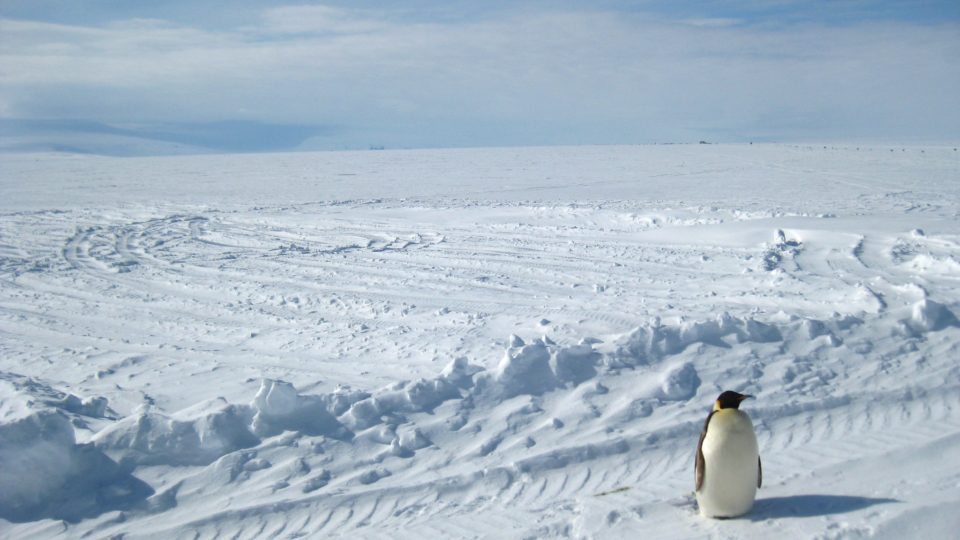
According to a new study from the Woods Hole Oceanographic Institution, the warming climate may render emperor penguins extinct by the end of this century.  The study, which was part of an international collaboration between scientists, finds that emperor penguins will likely experience an 86% decline by 2100 if the global climate continues to warm at the current rate.  At that point, it would be very unlikely for them to recover, according to the study’s lead author.       

The research was funded by the National Science Foundation and recently published in the journal Global Change Biology.

The fate of emperor penguins is largely tied to the fate of sea ice.  The penguins use sea ice as a place for breeding, feeding, and molting.  They look for very specific conditions of sea ice – it must be locked in to the Antarctic shoreline but also close enough to open seawater to give them access to food. The study predicts that this sea ice will gradually disappear, depriving the birds of their habitat, food sources, and ability to raise their young.     

The researchers combined two existing computer models to study three different climate change scenarios.  If the average global temperature increases by only 1.5 degrees Celsius, the study found that only 5% of sea ice would be lost by 2100, resulting in a 19% drop in penguin colonies.  If the planet warms by 2 degrees Celsius, the sea ice loss nearly triples and more than a third of penguin colonies disappear.  The ‘business as usual’ scenario where the planet continues to warm at the current rate will ensure a near complete loss of emperor penguin colonies by 2100. 

**********

Web Links

Unless warming is slowed, emperor penguins will be marching towards extinction

Photo, posted January 15, 2011, courtesy of Eli Duke via Flickr.

Earth Wise is a production of WAMC Northeast Public Radio.
Electric Buses In Latin America

October 31, 2019 By EarthWise Leave a Comment

Latin America has become increasingly urbanized.  In fact, about 80% of the region’s population lives in cities today and by 2050, that figure could climb to 90%.  Transportation is the largest and fastest-growing source of energy-related emissions in Latin America and accounts for about a third of all of the region’s carbon dioxide emissions. 

Private vehicle ownership is rising in Latin America but at the same time, the region’s rapidly growing cities have increased demand for buses, taxis, and motorcycles.  Currently, an estimated 64,000 people die prematurely every year in Latin America and the Caribbean as a result of air pollution, which is mostly caused by transportation emissions.

Given this situation, major cities across Latin America – from Colombia to Argentina – are starting to adopt electric bus fleets.   Latin America actually has the highest use of buses per person globally.  So, the transition to electric buses is an important step toward meeting climate targets, cutting fuel costs, and improving air quality.

Medellin, Colombia – whose metropolitan area has 3.7 million people – has started to add electric buses to its fleet, the rest of which runs on natural gas.  When new units arrive from China later this year, Medellin will have the second largest electric bus fleet in Latin America, after Santiago, Chile. 

Worldwide, 425,000 electric buses are in operation, 99% in China.  Europe has a couple of thousand while the United States has only 300.  But going forward, and especially in Latin America, electric buses are the wave of the future.  Estimates are that there will be 1.3 million on the roads by 2040.

**********

Web Links

An Increasingly Urbanized Latin America Turns to Electric Buses

Photo, posted April 22, 2018, courtesy of Hans Johnson via Flickr.

Earth Wise is a production of WAMC Northeast Public Radio.

Which Cities To Save From The Changing Climate

October 28, 2019 By EarthWise Leave a Comment

After several years of brutal flooding and hurricanes in the U.S., a distressing debate is emerging:  if there is not enough money available to protect every coastal community from the effects of global warming, how do we decide which ones to save first.

Recent research looked at the costs involved in providing basic storm-surge protection in the form of sea walls for all coastal cities with more than 25,000 residents.  That number was $42 billion.  Expanding the list to include communities smaller than 25,000 people would increase that cost to more than $400 billion.   Realistically, that is just not going to happen.

This particular study only looked at sea walls and no other methods for minimizing flood risk, such as moving homes and businesses away from the most flood-prone areas.   It also didn’t look at additional and costlier actions that will be required even with sea walls, such as revamping sewers, storm water, and drinking water infrastructure.

The facts are that many cities, especially small ones, will not be able to meet the costs facing them.  Those that can’t will depend on federal funding.  But even optimistically large proposals for federal infrastructure spending are likely to fall far short of the vast need.  Ultimately, the money will end up being spent where it can do the most good – even if it means that some places are left out.

But what criteria will be used to direct the money?  Economic value?  Historic significance?  Population?  Political influence?

This is a looming and massive issue whose chief obstacle may be that many officials refuse to acknowledge that it is happening.  This is the next wave of climate denial – denying the costs that we are all facing.

**********

Web Links

With More Storms and Rising Seas, Which U.S. Cities Should Be Saved First?

Photo, posted October 31, 2018, courtesy of Patrick Kinney via Flickr.

Earth Wise is a production of WAMC Northeast Public Radio.
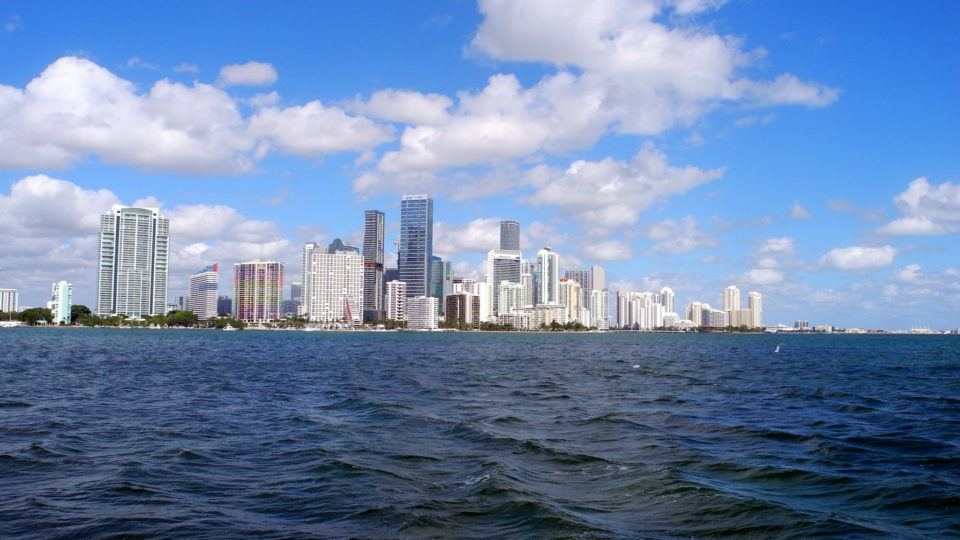
Solar-Powered Desalination

October 4, 2019 By EarthWise Leave a Comment

Turning seawater into drinking water is an energy-intensive process and is therefore pretty expensive.  Worldwide, one third of people don’t have reliable access to safe drinking water and they are the least able to afford expensive ways to get it.   By 2025, half of the world’s population is expected to live in water-stressed areas.

At a newly-constructed facility in Kenya, a nonprofit company called GivePower has built a desalination system that runs on solar power.  The system started operating in the coastal area of Kiunga in July 2018 and can create nearly 20,000 gallons of fresh drinking water each day – enough for 25,000 people.

GivePower started in 2013 as a nonprofit branch of SolarCity, the solar-panel company that ultimately merged with Tesla in 2016.  However, GivePower spun off as a separate enterprise shortly before that.

GivePower mostly focuses on building solar-energy systems to provide electricity across the developing world. 

Desalination technology is not new, but it is notoriously energy-intensive because it requires high-power pumps.  The GivePower system is integrated with a solar microgrid that makes use of Tesla batteries to store energy for when the sun is not shining. 

Local residents pay about a quarter of one cent for every quart of water from the system.  The Kiunga community has faced ongoing drought and before the GivePower system was installed, was forced to drink from salt water wells, which present serious health risks.

The GivePower system cost $500,000 to build and is expected to generate $100,000 a year, to be eventually used to fund similar facilities in other places.

**********

Web Links

A solar-powered system can turn salt water into fresh drinking water for 25,000 people per day. It could help address the world’s looming water crisis.

Photo courtesy of GivePower.

Earth Wise is a production of WAMC Northeast Public Radio.
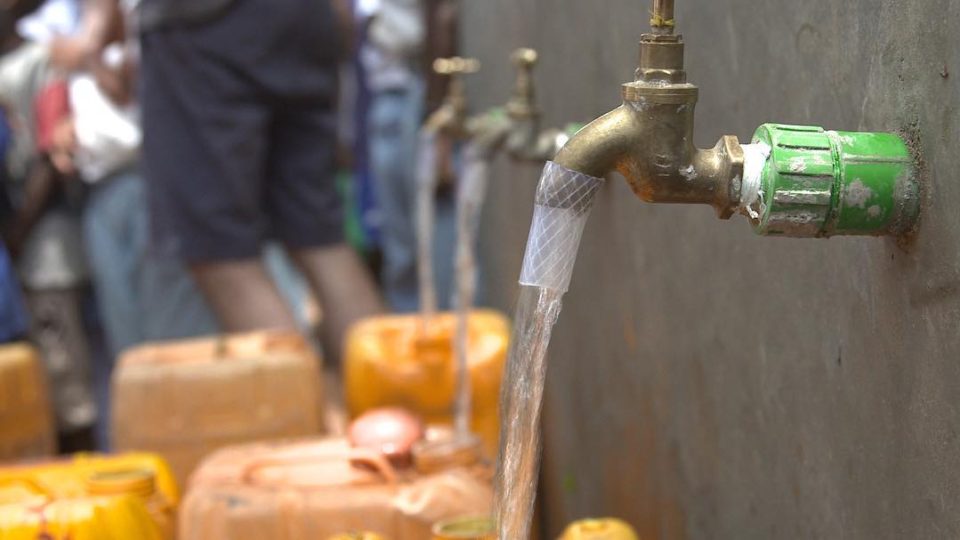
Climate Change And Energy Demand

August 7, 2019 By EarthWise Leave a Comment

Human beings are utterly dependent upon energy both for our well-being and for societal development.  Our energy use is highly dependent upon climate since so much energy is expended either keeping us warm in winter or cool in summer.  As the climate changes, it is important to understand how energy demand is likely to be affected.

A new study published in Nature Communications by researchers in Austria, Italy and the United States explored this topic.  The study is a global analysis using temperature projections from 21 climate models, and population and economy projections for five socioeconomic scenarios.  The purpose was to determine how energy demand would shift relative to today’s climate under modest and high-warming scenarios by the year 2050.

The findings indicate that, compared to scenarios in which energy demand is driven only by population and income growth, climate change will increase the global demand for energy by 11-27% by the year 2050 under a modest warming scenario.  With vigorous climate warming, energy demand would increase by 25-58%.  (Large areas of the tropics, as well as southern Europe, China, and the US are likely to experience the highest increases).

These findings are important because if energy use rises and leads to additional emissions of heat-trapping greenhouse gases, it will be increasingly difficult to mitigate future climate warming.  Quantifying this risk provides even more incentive for reducing greenhouse gas emissions before these effects upon demand are realized and it becomes even more difficult to prevent further impacts.

Policymakers need to be aware that even moderate levels of climate change will lead to increases in energy demand that will make it increasingly difficult to minimize the harmful effects on their societies.

**********

Web Links

More energy needed to cope with climate change

Photo, posted December 15, 2008, courtesy of Matt Hintsa via Flickr.

Earth Wise is a production of WAMC Northeast Public Radio.

Bad News For Penguins

June 21, 2019 By EarthWise Leave a Comment

The second-largest breeding colony of emperor penguins in Antarctica, located in the Waddell Sea, has experienced “catastrophic breeding failure” for the past three years.  Nearly all of the colony’s chicks have failed to survive due to the breakup of sea ice, according to a new study published in the journal Antarctic Science.

The colony was once home to 14,000 to 25,000 breeding pairs, which represents as much as 9% of the global emperor penguin population.  Emperor penguins are the tallest and heaviest of all living penguins, reaching up to 4 feet in height and weighing between 50 and 100 pounds.  They are the only penguin species that breeds during the Antarctic winter and their lengthy treks to breeding colonies have been the subject of numerous films and television shows.

Sea ice at Halley Bay in Antarctica had been stable and reliable for nearly 60 years but stormy weather in 2016 driven by El Nino conditions, strong winds, and record low ice extent caused the ice on which penguin chicks gather to break up.  This happened again in 2017 and 2018.  By last year, just a few hundred adult pairs were present at the breeding site and almost no chicks survived the ice breakup.

Researchers say that they have never seen a breeding failure on a scale like this in 60 years of studying the colonies.  On a more positive note, while the population of the Halley Bay site has collapsed, the Dawson-Lambton breeding area – located about 34 miles away – has actually seen significant growth over the past four years.  While this is encouraging, the growth at Dawson-Lambton does not fully compensate for the losses at Halley Bay, which was once considered relatively safe from the impacts of climate change.

**********

Web Links

Emperor Penguin Colony Experiences “Catastrophic Breeding Failure”

Photo, posted February 22, 2011, courtesy of Krishna via Flickr.

Earth Wise is a production of WAMC Northeast Public Radio.
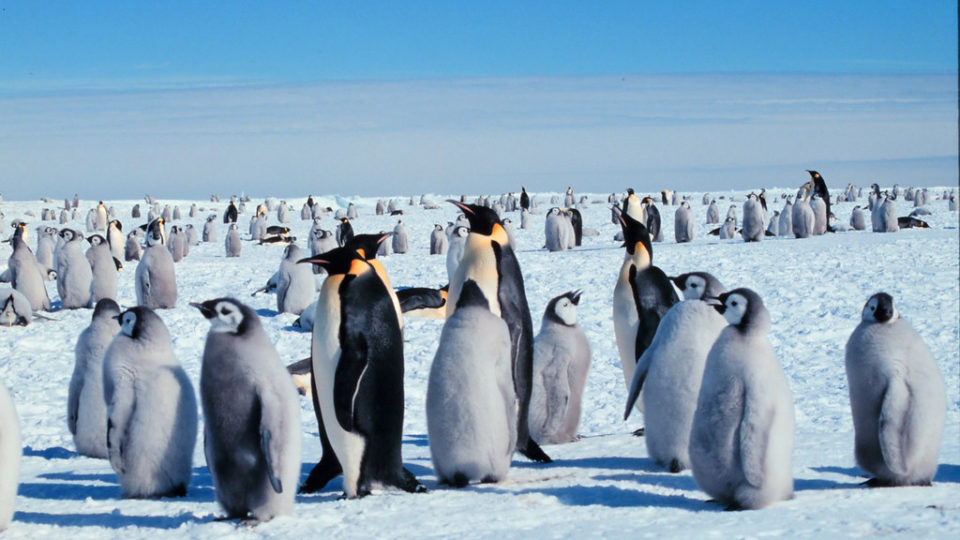
The Problem Of Urban Growth

January 2, 2019 By EarthWise Leave a Comment

https://earthwiseradio.org/wp-content/uploads/2018/12/EW-01-02-19-The-Problem-of-Urban-Growth.mp3

The rapid expansion of cities around the world has accelerated in recent decades.  If current trends continue, the equivalent of a city the size of London could be created every seven weeks by the year 2050, according to a study at Texas A&M University.

[Read more…] about The Problem Of Urban Growth

Fighting Hunger With A Shrub

December 20, 2018 By EarthWise Leave a Comment

https://earthwiseradio.org/wp-content/uploads/2018/12/EW-12-20-18-Fighting-Hunger-with-a-Shrub.mp3

A recent study has revealed that a tough, woody shrub that grows throughout Western Africa can actually share its water with adjacent cultivated plants and boost grain production.

[Read more…] about Fighting Hunger With A Shrub

The Global Vertebrate Population Is Struggling

December 6, 2018 By EarthWise Leave a Comment

https://earthwiseradio.org/wp-content/uploads/2018/12/EW-12-06-18-The-Global-Vertebrate-Population.mp3

According to a new report by the World Wildlife Fund, the planet’s populations of vertebrates have dropped an average of 60% since 1970.

[Read more…] about The Global Vertebrate Population Is Struggling

Pests And Crops In A Warming World

October 1, 2018 By EarthWise Leave a Comment

https://earthwiseradio.org/wp-content/uploads/2018/09/EW-10-01-18-Pests-and-Crops-in-Warming-World.mp3

By the year 2050, scientists predict that there will be two billion more people to feed in the world.  And climate change isn’t making that task any simpler.  From extreme weather events to rising global temperatures, climate change is expected to affect the types of food we grow, and to negatively affect the food production needed to feed the growing population.

[Read more…] about Pests And Crops In A Warming World

Fires And Atmospheric Cooling

September 11, 2018 By EarthWise Leave a Comment

https://earthwiseradio.org/wp-content/uploads/2018/08/EW-09-11-18-Fires-and-Atmospheric-Cooling.mp3

Aerosols – tiny particles in the atmosphere released from fires and other sources – can cool the planet by reflecting sunlight back into space and by increasing cloud brightness.

[Read more…] about Fires And Atmospheric Cooling

The Return Of The Bald Ibis

September 6, 2018 By EarthWise 1 Comment

https://earthwiseradio.org/wp-content/uploads/2018/08/EW-09-06-18-The-Return-of-the-Bald-Ibis.mp3

The northern bald ibis, also known as the waldrapp, is a strange-looking bird with a long, curved beak, a naked head, and feathers that point straight into the air like a Mohawk haircut.  In former centuries, it occurred widely in northern and eastern Africa, Asia Minor, Arabia, and parts of Europe.  The ancient Egyptians considered it to be an afterworld divinity and its likeness can be seen in hieroglyphs dating back thousands of years.

[Read more…] about The Return Of The Bald Ibis

Conflicts In Conservation

July 20, 2018 By EarthWise Leave a Comment

https://earthwiseradio.org/wp-content/uploads/2018/07/EW-07-20-18-Conflicts-in-Conservation.mp3

In recent years there has been a great deal of discussion about animal intelligence and the idea of animal consciousness.   In the past, the notion that animals have feelings had been relegated to fringe status, but these days, a wealth of scientific findings has made it much more mainstream to entertain such ideas.

[Read more…] about Conflicts In Conservation

Hunting Grizzly Bears

June 7, 2018 By EarthWise Leave a Comment

https://earthwiseradio.org/wp-content/uploads/2018/06/EW-06-07-18-Hunting-Grizzly-Bears.mp3

One year ago, the U.S. Department of the Interior announced that the grizzly bear population in the Yellowstone area would be delisted from the Endangered Species Act, and more recently, announced that those federal protections would not be restored.

[Read more…] about Hunting Grizzly Bears

The Sahara Desert Is Expanding

May 15, 2018 By EarthWise Leave a Comment

https://earthwiseradio.org/wp-content/uploads/2018/05/EW-05-15-18-The-Sahara-Desert-Is-Expanding.mp3

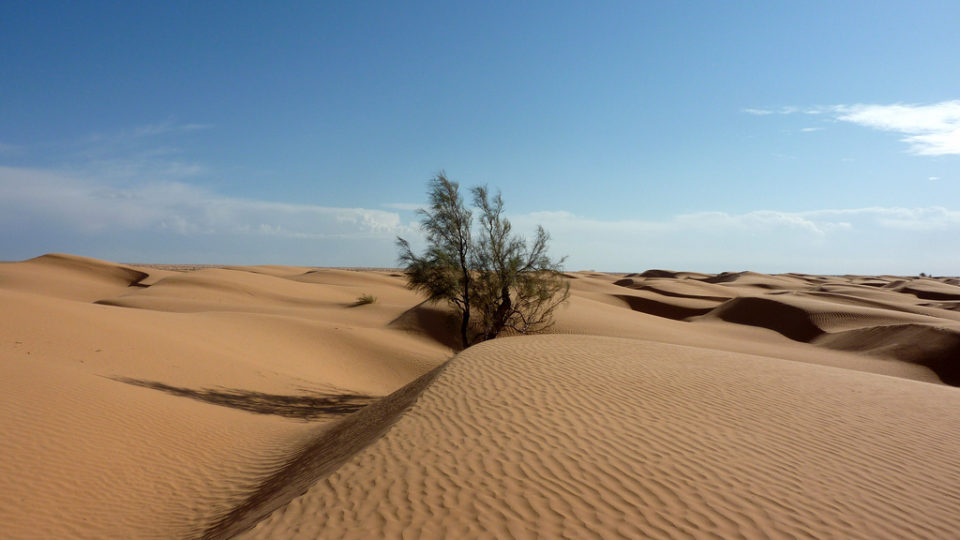
Deserts are barren areas of land where little precipitation occurs, resulting in living conditions that are hostile for plant and animal life. These regions are typically defined by low average annual rainfall—usually 100 millimeters (less than 4 inches) of rain per year or less. 

[Read more…] about The Sahara Desert Is Expanding

Saving The Siberian Tiger

March 13, 2018 By EarthWise Leave a Comment

https://earthwiseradio.org/wp-content/uploads/2018/03/EW-03-13-18-Saving-the-Siberian-Tiger.mp3

The northeastern part of China, wedged between North Korea to the south and Russia to the northeast, is home to two highly endangered big cats:  the Siberian tiger and the Amur leopard.   Siberian tigers, which can weigh over 600 pounds and grow to more than 10 feet in length, now number only about 500 in the wild, mostly in Russia.  Amur leopards, weighing more than 100 pounds and growing to more than four feet in length, number only about 80 in the wild.  While both species are right on the edge of extinction, both are slowly rebounding.

[Read more…] about Saving The Siberian Tiger

Polar Bears Are Struggling To Find Food

March 9, 2018 By EarthWise Leave a Comment

https://earthwiseradio.org/wp-content/uploads/2018/03/EW-03-09-18-Polar-Bears-Struggling.mp3

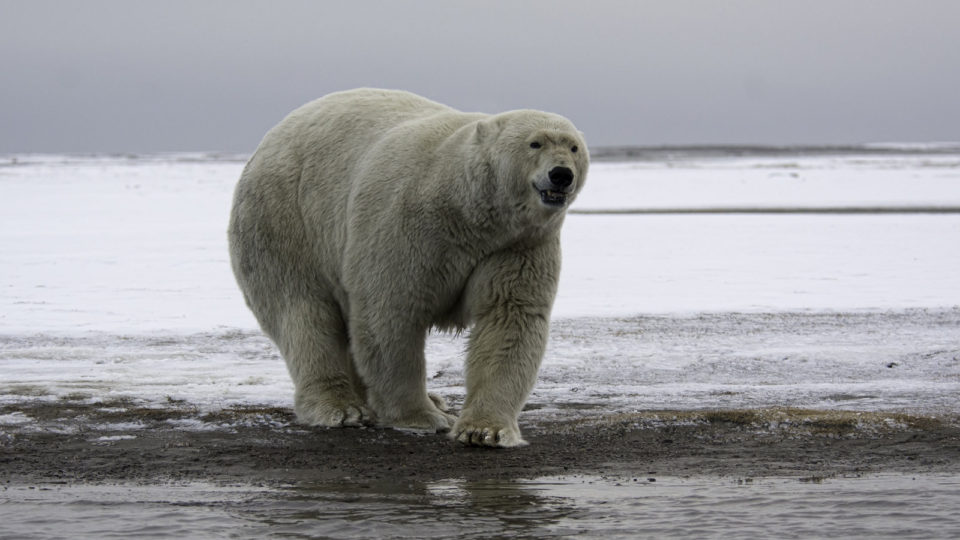
Climate change continues to pose a major threat to polar bear survival.  Polar bears, whose native range largely lies within the Arctic Circle, depend on sea ice for nearly all of their life cycle functions.  And rising global temperatures are causing that sea ice to disappear. 

[Read more…] about Polar Bears Are Struggling To Find Food

Making Room For Wildlife

February 28, 2018 By EarthWise Leave a Comment

https://earthwiseradio.org/wp-content/uploads/2018/01/EW-02-28-18-Making-Room-for-Wildlife.mp3

Protecting biodiversity is a critical challenge facing humanity.  Global vertebrate populations – from elephants to amphibians – declined by 58% from 1970 to 2012 and losses are expected to reach 67% in the next two years.  Think about it:  at least two-thirds of all vertebrate animals on earth have vanished over the lifetime of anyone fifty years old or over.

[Read more…] about Making Room For Wildlife

  • « Go to Previous Page
  • Page 1
  • Interim pages omitted …
  • Page 3
  • Page 4
  • Page 5
  • Page 6
  • Page 7
  • Go to Next Page »

Primary Sidebar

Recent Episodes

  • An uninsurable future
  • Clean energy and jobs
  • Insect declines in remote regions
  • Fossil fuel producing nations ignoring climate goals
  • Trouble for clownfishes

WAMC Northeast Public Radio

WAMC/Northeast Public Radio is a regional public radio network serving parts of seven northeastern states (more...)

Copyright © 2026 ·