• Skip to primary navigation
  • Skip to main content
  • Skip to primary sidebar

Earth Wise

A look at our changing environment.

  • Home
  • About Earth Wise
  • Where to Listen
  • All Articles
  • Show Search
Hide Search
You are here: Home / Archives for global warming

global warming

More Mega-Droughts | Earth Wise

December 2, 2020 By EarthWise Leave a Comment

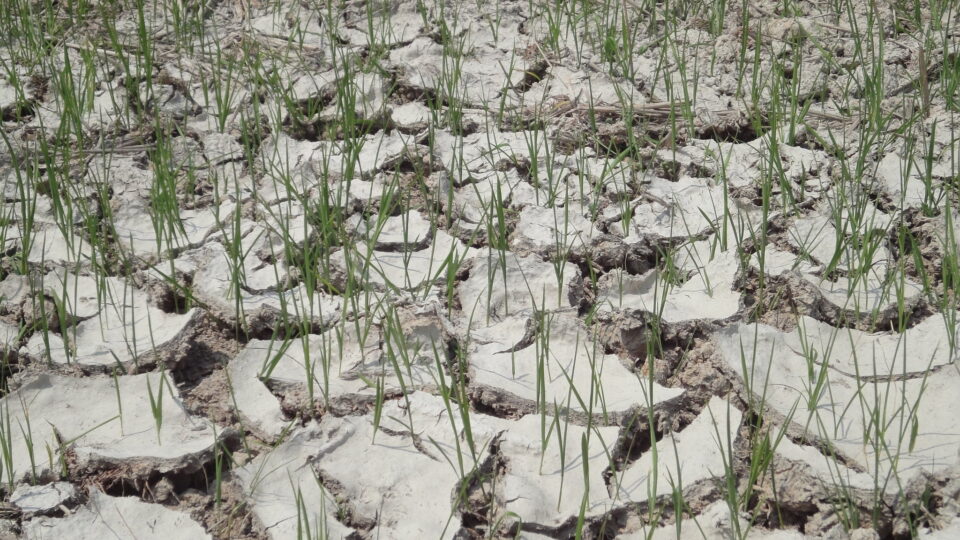
Climate change leading to more mega-droughts

According to a new report led by researchers from the University of Queensland in Australia, mega-droughts are expected to increase as global temperatures rise with the progression of climate change.  While mega-droughts have no strict scientific definition, most studies – including this one – define them as prolonged droughts lasting two decades or longer. 

The research team analyzed geological records from the Eemian Period – 129,000 to 116,000 years ago – to create a model of what to expect over the next 20-50 years.  The Eemian Period is the most recent in Earth’s history when global temperatures were similar – or maybe even slightly warmer – than they are today. 

By analyzing the climate during this period, the research team found that the world will likely experience increased water scarcity, reduced winter snow cover, more frequent wildfires and wind erosion as a result of global warming.

In the report, which was recently issued by the University of Queensland, the researchers collaborated with the New South Wales Parks and Wildlife Service to identify stalagmites in the northern section of Kosciuszko National Park.  They were able to study small samples of calcium carbonate powder contained in the cave stalagmites, allowing them to identify periods of reduced precipitation during the Eemian Period. 

Historically, mega-droughts have been associated with mass exoduses of people from the affected areas.  In fact, mega-droughts are suspected of contributing to the collapse of several pre-industrial civilizations across Southeast Asia and the Americas.

If humans continue to warm the planet, the researchers say more mega-droughts will be in our future.

**********

Web Links

Expect more mega-droughts

Photo, posted March 28, 2014, courtesy of Marufish via Flickr.

Earth Wise is a production of WAMC Northeast Public Radio.
Arctic Methane Starting To Release | Earth Wise

November 24, 2020 By EarthWise Leave a Comment

methane is releasing from the arctic

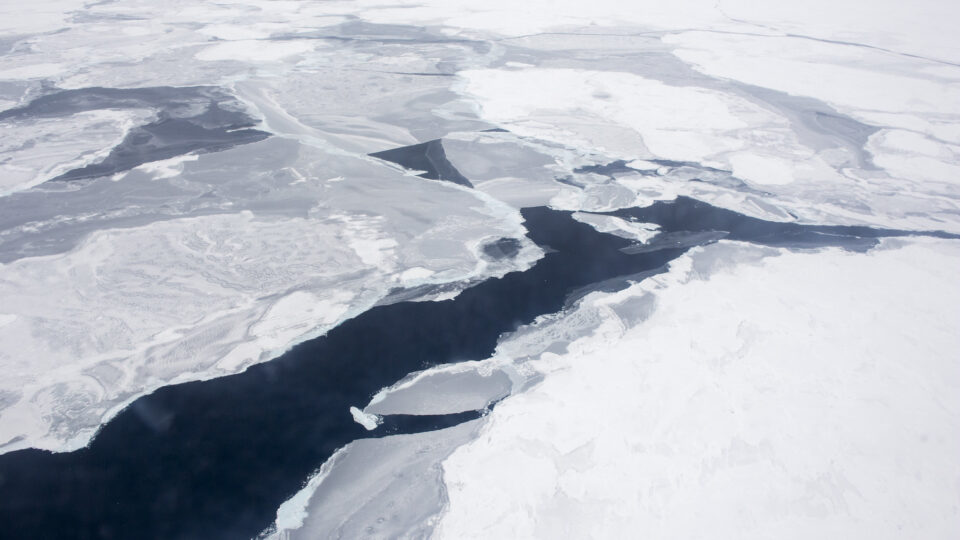
An international team of researchers has found evidence that frozen methane deposits in the Arctic Ocean have started to be released over a large area of the continental slope off the East Siberian coast.  High levels of methane have been detected down to a depth of 1,100 feet in the Laptev Sea near Russia.

The slope sediments in the Arctic contain huge quantities of methane and other gases, known as hydrates.  Methane has a warming effect 80 times stronger than carbon dioxide over a 20-year period.  The US Geological Survey has identified Arctic hydrate destabilization as one of the four most serious scenarios for abrupt climate change.

The research team aboard a Russian ship said that most of the bubbles they observed coming up from the sea bottom were dissolving in the water, but that methane levels at the surface were four to eight times what would normally be expected.

Frozen methane deposits have been called the “sleeping giants of the carbon cycle.”  If these deposit releases were to reach a high enough level, it would be a tipping point that could greatly increase the speed of global warming.  With Arctic temperatures now rising more than twice as fast as the global average, the likelihood of a significant release of the frozen methane grows greater all the time.

Temperatures in Siberia were 9 degrees Fahrenheit higher than average from January to June this year.  Last winter’s sea ice melted unusually early.  This winter’s freeze has yet to begin, which is already a later start than any time on record.

These new discharges of methane are larger than anything found before and are a very worrisome occurrence.

**********

Web Links

Arctic methane deposits ‘starting to release’, scientists say

Photo, posted September 26, 2014, courtesy of the Office of Naval Research via Flickr. Photo credit: U.S. Navy photo by John F. Williams/Released.

Earth Wise is a production of WAMC Northeast Public Radio.

More Extreme Weather | Earth Wise

November 23, 2020 By EarthWise Leave a Comment

the costs of extreme weather

If it seems like natural disasters happen more frequently than they used to, that is because they do.  A new report from the United Nations entitled “The Human Cost of Disasters 2000-2019” provides the facts.  From 2000 to 2019, there were 7,348 natural disasters around the world, compared with 4,212 natural disasters from 1980-1999. 

The culprit is the climate.  Climate-related disasters increased from 3,556 events during the 1980-1999 period to 6,681 in the past 20 years, again an increase of more than 3,000.

The global economic losses associated with natural disasters have been staggering.  The earlier 20-year period saw $1.63 trillion in losses while the recent period resulted in $2.97 trillion in losses.   Disasters killed 1.19 million people in the earlier period and 1.23 million in the recent period.  It is a testimonial to the skills and efforts of disaster management agencies, civil protection departments, fire brigades, public health authorities, the Red Cross and Red Crescent, and many NGOs that the cost in human lives was not much greater over the past 20 years.

According to a statement from the UN, human society is being willfully destructive.  They draw that conclusion in light of reviewing the disaster events over the past 20 years and seeing the failure of society to act on science and early warnings to invest in prevention, climate change adaptation, and disaster risk reduction.  

**********

Web Links

Extreme Weather Events Have Increased Significantly in the Last 20 Years

Photo, posted September 18, 2020, courtesy of the National Guard via Flickr.

Earth Wise is a production of WAMC Northeast Public Radio.

The Hottest September | Earth Wise

November 5, 2020 By EarthWise Leave a Comment

The hottest September

Here’s a news item that is like many other recent news items:  September 2020 was the hottest September since 1880, according to the National Oceanic and Atmospheric Administration.   The warm September is a part of a year that so far is poised to be at least the second hottest year in the 141-year climate record.

The ten warmest Septembers on record have all occurred since 2005, and the seven warmest Septembers have occurred in the past seven years.

So far, the year-to-date average global temperature has been the second warmest on record, being just 0.07 degrees Fahrenheit lower than the record year-to-date temperature set in 2016.  Expectations are that 2020 will end up somewhere among the three warmest years on record for the globe.

September was warm in many places around the world.  California and Oregon had their warmest September ever.  Europe had its warmest September on record, Asia had its second warmest September on record as did Australia and South America. 

So far, it has been the hottest year-to-date on record in Europe, Asia, and the Gulf of Mexico.  No land or ocean areas anywhere had record-cold year-to-date temperatures. 

Global temperatures represent an average over the entire surface of the planet.  The fact that the global temperature is now nearly one Celsius degree above the 20th century average means that a vast amount of heat has been added in order to warm all the oceans, atmosphere, and land by that much.  So, every uptick in global temperature is a big deal.

Meanwhile, the average Arctic sea ice coverage for September was the second smallest on record.  The 14 smallest minimum annual sea ice extents have all occurred in the past 14 years.

**********

Web Links

Earth just had its hottest September on record

Photo, posted September 2, 2020, courtesy of Tim Vrtiska via Flickr.

Earth Wise is a production of WAMC Northeast Public Radio.
Paying To Combat Climate Change | Earth Wise

November 2, 2020 By EarthWise Leave a Comment

Fighting climate change

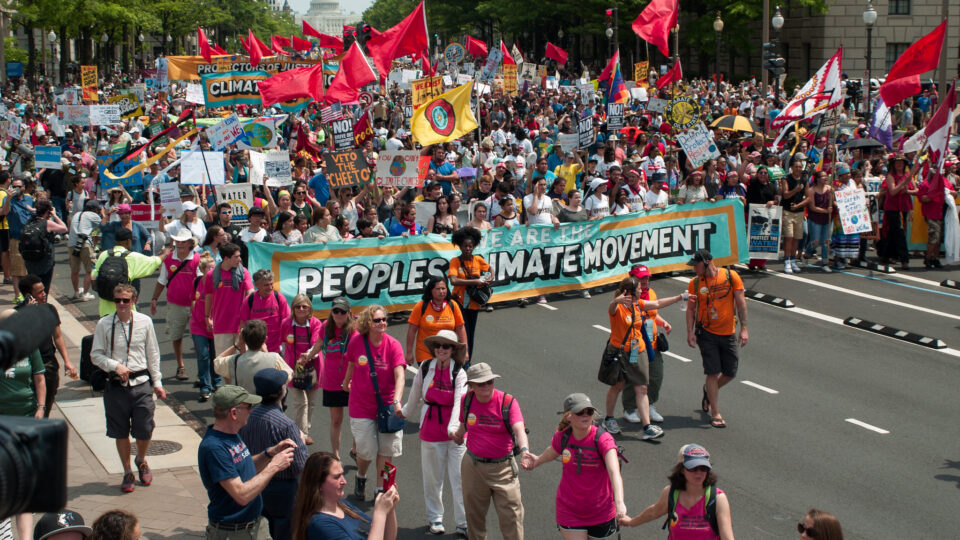
The majority of Americans believe that climate change is happening, that human activities are largely responsible, and are actually willing to put up their own money to help fight it.   Unfortunately, these views diverge sharply along party lines and, as in many other areas these days, the will of the overall majority has little influence on policy.

According to Yale University research, 73% of adults think that global warming in happening and 57% think it is mostly caused by human activities.  Furthermore, only 32% believe it is due to natural forces.

A survey conducted in the U.S. in August found that more than two-thirds of Americans – actually 70% – indicated willingness to donate a percentage of their personal income to support the fight against climate change.

Breaking that down further, 28% were willing to provide less than 1% of their income, 33% were willing to contribute 1-5% of their income, 6% said they would give 6-10% of their income, and 3% said they would contribute more than 10% of their income.  On the other hand, roughly 30% indicated that they were unwilling to contribute.

The survey also looked at opinions on how the fight against climate change should be paid for.  The majority (59%) chose government incentives for both businesses and consumers.   Three other options each favored by over 40% of those surveyed were taxes, conservation programs, and business investments. 

Another finding of the survey was that 44% are dissatisfied with the job that the federal and state governments are doing to address climate change, 35% are somewhat satisfied, and only 21% are very or completely satisfied with the government’s role.

**********

Web Links

Yale Climate Opinion Maps 2020

Two-thirds of Americans are willing to donate part of their income to fight climate change

Photo, posted April 29, 2017, courtesy of majunznk via Flickr.

Earth Wise is a production of WAMC Northeast Public Radio.
Helping Out Corals With Cool Water | Earth Wise

October 22, 2020 By EarthWise Leave a Comment

Saving corals with cooler water

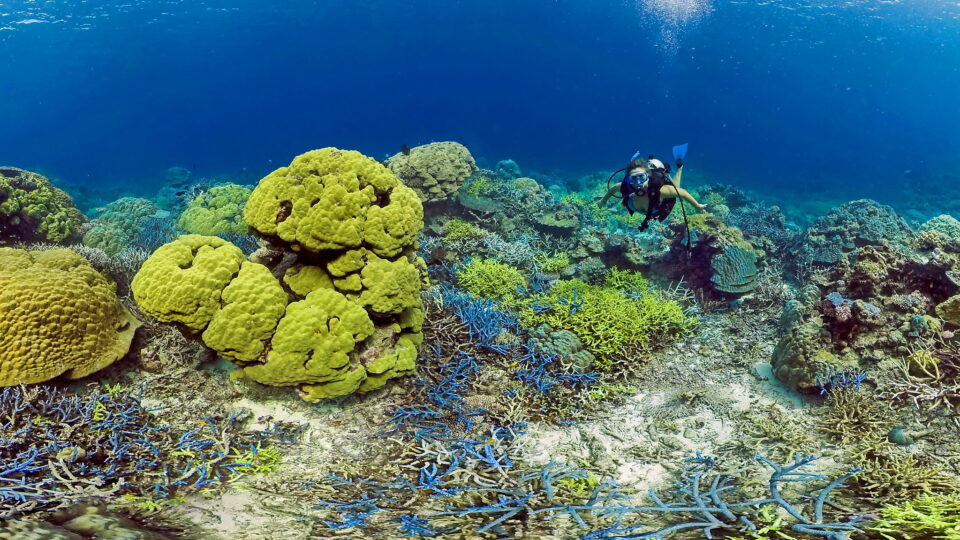
Coral bleaching is happening five times more frequently than it did forty years ago.  Its increasing occurrence is a result of global warming which leads to marine heat waves – periods of higher ocean water temperatures.  Heat stress on living coral animals causes them to expel the algae that live symbiotically within the coral structure.  As the algae is expelled, the coral fades in color looking like it is bleached.  Without its algae partner, the coral eventually dies.

Given the increasing occurrence of marine heat waves, scientists are seeking novel ways to decrease heat stress in corals.  A new study by the Bermuda Institute of Ocean Science is investigating the use of artificial upwelling – the application of cooler, deep water – as a way to mitigate thermal stress on corals.

Upwelling is a natural process in the ocean in which winds push surface water away from a region – for example, a coastline – which then allows the uplift of deeper, colder waters to the surface.  Because such deeper waters are typically rich in nutrients, upwelling is important for supporting many of the world’s important commercial fisheries.  For this reason, artificial upwelling has sometimes been used to increase fish stocks in certain locations.

The new work placed coral colonies in aquaria in Bermuda and tested the effects of varying amounts and temperatures of deep cold-water pulses upon corals subjected to thermal stress.  The results showed that even short intrusions of cooler deep water (less than two hours per day) can mitigate thermal stress in corals.  The next steps are to find suitable parameters for artificial upwelling that maximize the benefits while minimizing potential harmful side effects on the corals and the ecosystems they support.

**********

Web Link

Can pumping up cold water from deep within the ocean halt coral bleaching?

Photo, posted February 24, 2008, courtesy of Roderick Eime via Flickr.

Earth Wise is a production of WAMC Northeast Public Radio.
Shrinking Ice In The Bering Sea | Earth Wise

October 19, 2020 By EarthWise Leave a Comment

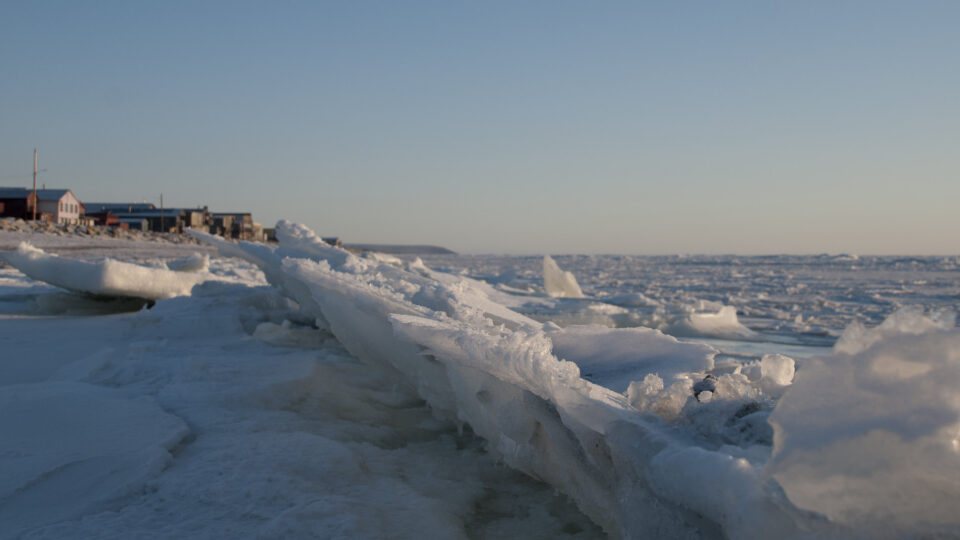
Bering Sea ice continues to shrink

The Bering Sea forms the divide between the two largest landmasses on Earth:  Eurasia and the Americas.  Recent analysis of vegetation from a Bering Sea island has determined that the extent of sea ice in the region is the lowest it has been for over 5,000 years.

St. Matthew Island, a small island in the middle of the Bering Sea, has essentially been recording what is happening in the ocean and atmosphere around it, in the form of the composition of peat layers on the island.  By analyzing the chemical composition of peat core samples, scientists can estimate how sea ice in the region has changed over the course of time.

Changes in the relative amounts of two oxygen isotopes in the sediment and plant debris trapped in the peat on the island reflect the nature of precipitation during the period when the peat layers formed.  That ratio is correlated with the amount of sea ice in the region.  Satellite data acquired over the past 40 years confirms this correlation.

Analysis of the data shows that the current ice levels are unprecedented in the last 5,500 years.  These long-term findings affirm that reductions in Bering Sea ice are due to more than recent higher temperatures associated with global warming.  Atmospheric and ocean currents, which have also been altered by climate change, play a large role in the presence of sea ice.

Summertime sea ice in the Arctic was expected to reach its second-lowest extent in September in 40 years of observation.  Sea ice typically builds up again each winter, but the changes in ice extents actually lag behind changes in greenhouse gas level by decades.  Future ice loss is already built into the system.

**********

Web Links

Bering Sea ice extent is at most reduced state in last 5,500 years

Photo, posted December 2, 2012, courtesy of Bering Land Bridge National Preserve via Flickr.

Earth Wise is a production of WAMC Northeast Public Radio.
Climate Change and Komodo Dragons | Earth Wise

October 12, 2020 By EarthWise Leave a Comment

climate change threatens komodo dragons

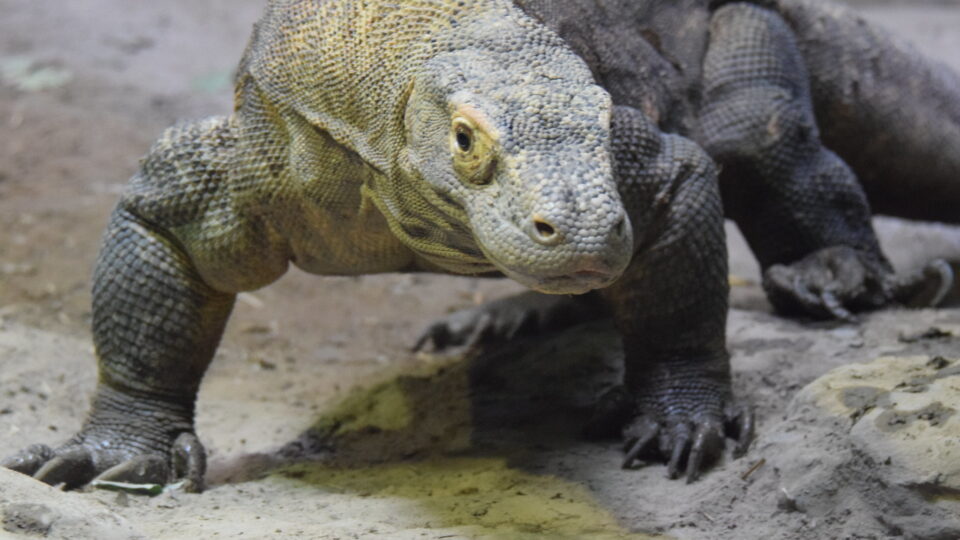
The Komodo dragon is the world’s largest and most iconic lizard.  Growing up to 10 feet long and weighing up to 360 pounds, Komodo dragons are endemic to five islands in southeast Indonesia, four of which are part of Komodo National Park, as well as a fifth that has three nature reserves.  Komodo dragons have existed on earth for at least four million years, and it’s estimated that 4,000 of them survive in the wild today.

But according to a new study by researchers from the University of Adelaide and Deakin University in Australia, Komodo dragons could soon be driven to extinction.  The research team found that the impacts of both global warming and sea level rise are likely to cause a sharp decline in  available habitat for Komodo dragons.  Current conservation strategies are not enough to avoid climate-driven Komodo dragon population declines. 

The study, which was recently published in the journal Ecology and Evolution, involved close collaboration with Komodo National Park and the Eastern Lesser Sunda Central Bureau for Conservation of Natural Resources.

Climate-change-informed decisions should be a common part of conservation practice.  According to the research team’s conservation model, Komodo dragons on two of the five Indonesian islands are less vulnerable to climate change.  But those two islands might not be enough for the survival of the species.  Conservation managers may need to translocate Komodo dragons in the future – to sites where these animals have not been found for decades – in order to protect the species from extinction. 

Without taking immediate action to mitigate climate change, the research team says many range-restricted species like Komodo dragons are at risk of extinction.

**********

Web Links

Climate change threatens Komodo dragons

Photo, posted August 6, 2016, courtesy of Tony Alter via Flickr.

Earth Wise is a production of WAMC Northeast Public Radio.
Crops May Need To Move | Earth Wise

October 5, 2020 By EarthWise Leave a Comment

Climate change might force crops to move

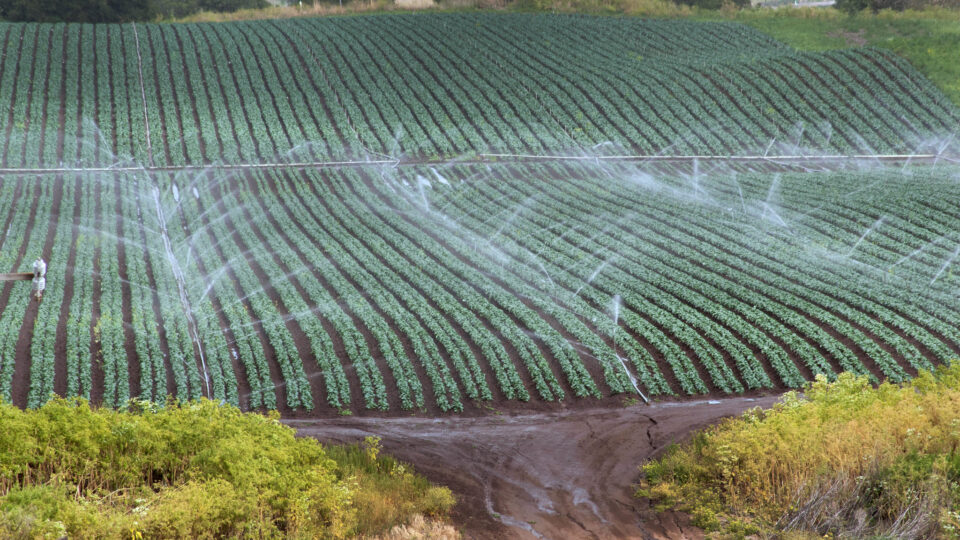
California has unique micro-climate diversity that creates ideal growing conditions for a wide range of crops.  One third of the vegetables and two-thirds of the fruits and nuts we eat in this country are grown on the more than 76,000 farms in California.  But as the climate continues to change, many farmers have started to worry about where and when crops can be grown in the future.   Within the next 20 years or so, some parts of California may become too hot and dry to sustain agricultural production.

According to new research from the Lawrence Berkeley National Laboratory, by the years 2045-2049, warmer temperatures will have a significant effect on cool-season crops such as broccoli and lettuce such that their growing season will need to shift.  On the other hand, warm-season crops like cantaloupe, tomatoes, and carrots will need to move to entirely new growing locations.

The study looked at five key crops that are produced more in California than elsewhere and studied the climate conditions under which they prosper and those under which they fail.  They established the range of conditions for which the crops can remain successful.  Finally they looked at climate projections for various parts of the state.

California’s agriculture is an essential part of our food security, so it is important to predict how future warming will affect when and where crops can be grown.  Changing these things presents challenges.  For example, when considering relocating crops, growers have specialized knowledge of their land and their crops.  If crops need to move to a new area, either the farmers have to move to that area, or they have to grow a different crop.  Either way, it presents a practical and economic burden on the farmer.

**********

Web Links

Some of America’s Favorite Produce Crops May Need to Get a Move On by 2045

Photo, posted June 16, 2011, courtesy of the U.S. Department of Agriculture via Flickr.

Earth Wise is a production of WAMC Northeast Public Radio.
Greenland Glaciers Past The Point Of No Return | Earth Wise

September 18, 2020 By EarthWise Leave a Comment

warming greenland glaciers

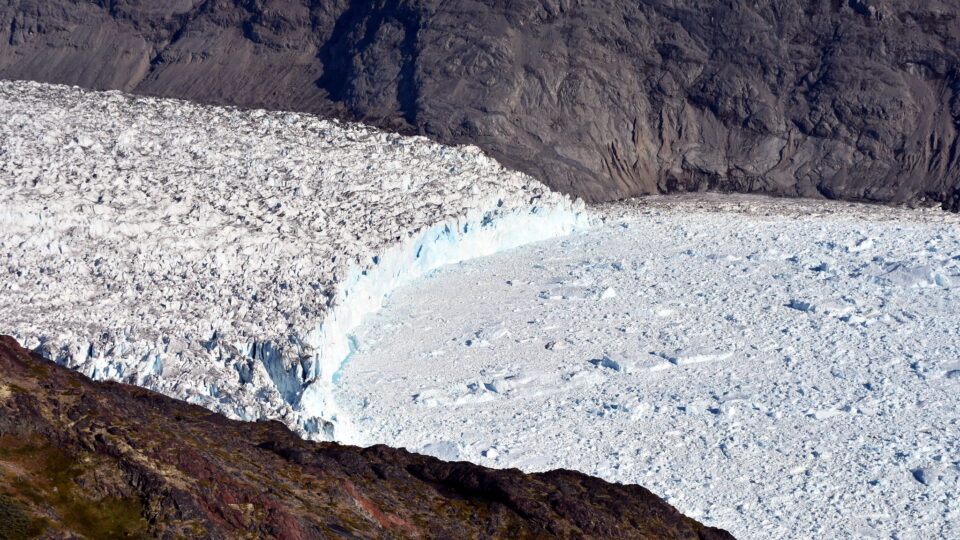
Forty years of satellite data from Greenland shows that the glaciers on the island have shrunk so much that even if global warming came to an abrupt halt, the Greenland ice sheet would continue to shrink.

This conclusion was published in the journal Communications Earth and Environment by researchers at Ohio State University.  According to their study, Greenland’s glaciers have passed a tipping point where the snowfall that replenishes the ice sheet each year can no longer keep up with the ice that is flowing into the ocean from the glaciers.

The study analyzed monthly satellite data from more than 200 large glaciers that drain into the ocean around Greenland.  It looked at how much ice breaks off into icebergs or melts from the glaciers into the ocean as well as the amount of snowfall each year that replenishes the glaciers.

Throughout the 1980s and 90s, these two processes were mostly in balance, keeping the ice sheet intact.  But the amount of ice being lost each year started to increase steadily around the year 2000 while there was no increase in snowfall.   Both processes fluctuate from year to year, but the baseline for ice loss has steadily risen.  Before 2000, the Greenland ice sheet had about the same chance of gaining or losing mass each year.  At this point, the ice sheet is likely to gain mass in only one out of every 100 years.

Large glaciers in Greenland have retreated about 2 miles since 1985, so that many of them are sitting in deeper water with more ice in contact with warmer water making it harder for glaciers to grow back.  At this point, even if the climate reverses its trend, the ice sheet will continue to lose mass.

**********

Web Links

Warming Greenland ice sheet passes point of no return

Photo, posted August 27, 2015, courtesy of Joxean Koret via Flickr.

Earth Wise is a production of WAMC Northeast Public Radio.

A Hot July | Earth Wise

September 2, 2020 By EarthWise Leave a Comment

record temperatures

The numbers are in and, unsurprisingly, July was a hot month.  July 2020 tied for the second-hottest July on record for the planet, according to the National Oceanic and Atmospheric Administration.  In our own backyard, the Northern Hemisphere saw the hottest July ever, breaking the previous record set just last year.

The July 2020 global temperature was 62.06 Fahrenheit, which is 1.66 degrees above the 20th-century average.  The combined land and ocean surface average temperature for the Northern Hemisphere, the highest ever recorded for July, was 2.12 degrees F above average, breaking the previous record by 0.14 degrees.

Record-hot July temperatures were also recorded across parts of southeastern Asia, northern South America, across the west and northern Pacific Ocean, the northern Indian Ocean, and parts of the Caribbean Sea.

The year-to-date global land and ocean surface temperature was the second highest in the 141 years of record keeping at 58.79 degrees Fahrenheit, which is 1.89 degrees F above the 20th-century average. 

So far it is been the hottest year to date on record across a large portion of northern Asia, parts of Europe, China, Mexico, northern South America, as well as the Atlantic, northern Indian and Pacific oceans.

Meanwhile, the extent of sea ice in the Arctic for July 2020 was the smallest ever measured in the 42 years of record-keeping, over 23% below the 1981-2010 average.  July’s Arctic sea ice extent was smaller than the previous record (set last year) by 120,000 square miles, an area roughly the size of New Mexico.

*********

Web Links

July 2020 was record hot for N. Hemisphere, 2nd hottest for planet

Photo, posted July 24, 2018, courtesy of Maria Eklund Flickr.

Earth Wise is a production of WAMC Northeast Public Radio.

A New Carbon Capture Technique | Earth Wise

August 25, 2020 By EarthWise Leave a Comment

Reducing carbon dioxide emissions using carbon capture

Carbon dioxide emissions by electricity generating plants, fossil-fuel burning vehicles, and industry produce about 2/3 of the greenhouse gases driving climate change.  Without decreasing these emissions, the earth will continue to get warmer, sea levels will continue to rise, and the world will face more droughts, floods, wildfires, famine and conflict.

Electrification of vehicles and reliance upon renewable energy sources will ultimately drastically reduce the use of fossil fuels and the resultant emissions, but that transition may take too long to reverse the direction of climate change.  In the meantime, there is a great need to find effective and efficient ways to capture emissions from fossil fuel plants. 

Recent research at the University of California, Berkeley, Lawrence Berkeley National Laboratory, and ExxonMobil has developed a new technique for carbon capture.  The technique makes use of metal-organic framework (or MOF) technology.  An MOF, modified with nitrogen-containing amine molecules, captures CO2 and then low-temperature steam is used to flush out the CO2 either to be used or sequestered underground.

Experiments demonstrated the technique to have a six-times greater capacity for removing CO2 from the flue gas of a refinery than current amine-based technology.  It selectively removed 90% of the emitted CO2. 

There is a relatively limited market for captured CO2, so power plants using the capture technology would likely pump the CO2 into the ground, or otherwise sequester it.  The cost of doing this sort of emission scrubbing would have to be facilitated by government policies, such as carbon trading or a carbon tax, which would provide the necessary economic incentive for doing carbon capture and sequestration.

**********

Web Links

New technique to capture CO2 could reduce power plant greenhouse gases

Photo courtesy of UC Berkeley.

Earth Wise is a production of WAMC Northeast Public Radio.
Side Effects Of Geoengineering | Earth Wise

July 20, 2020 By EarthWise Leave a Comment

Reflecting sunlight to cool the planet will cause other global changes

As the world struggles to reduce the greenhouse gas emissions that are warming the global climate, some researchers are exploring proposals to deliberately engineer climate changes to counteract the warming trend.  One of the most widely discussed approaches is to shade the Earth from a portion of the sun’s heat by injecting the stratosphere with reflective aerosol particles.  Proponents of this idea point out that volcanoes do essentially the same thing, although generally for only a limited amount of time.  Particularly large eruptions, such as the Krakatowa eruption of 1883, wreaked havoc with weather around the world for an entire year.

Schemes to launch reflective aerosols – using planes, balloons, and even blimps – appear to be quite feasible from the standpoint of physically accomplishing them. But this says nothing about the political, ethical, and societal issues involved.  The point is that such an approach could indeed lower global temperatures and thereby potentially offset the warming effects of greenhouse gases.

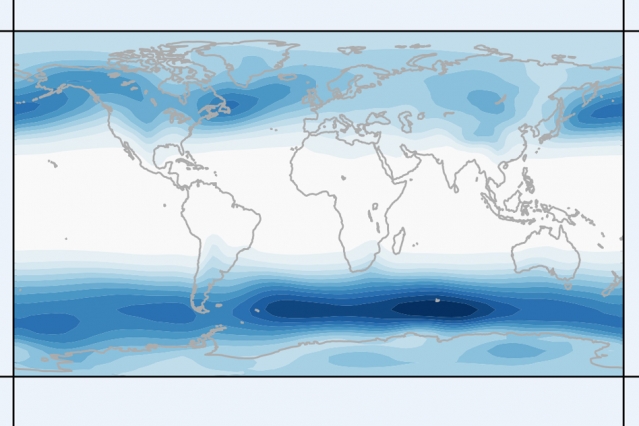
A study by scientists at MIT looked at what other effects such a solar geoengineering project might have on the climate.  Their modeling concluded that it would significantly change storm tracks in the middle and high latitudes.  These tracks give rise to cyclones, hurricanes, and many more ordinary weather phenomena.

According to the study, the northern hemisphere would have weakened storm tracks, leading to less powerful winter storms, but also stagnant conditions in summer and less wind to clear away air pollution.  In the southern hemisphere, there would be more powerful storm tracks.

Aside from turning the world’s weather patterns inside out, solar geoengineering would do nothing to address the serious issue of ocean acidification caused by increasing carbon dioxide levels.

As many have pointed out, playing the geoengineering game would have many unintended consequences.

**********

Web Links

Study: Reflecting sunlight to cool the planet will cause other global changes

Photo courtesy of MIT.

Earth Wise is a production of WAMC Northeast Public Radio.
Heat-Resistant Coral | Earth Wise

June 23, 2020 By EarthWise Leave a Comment

heat resistant coral

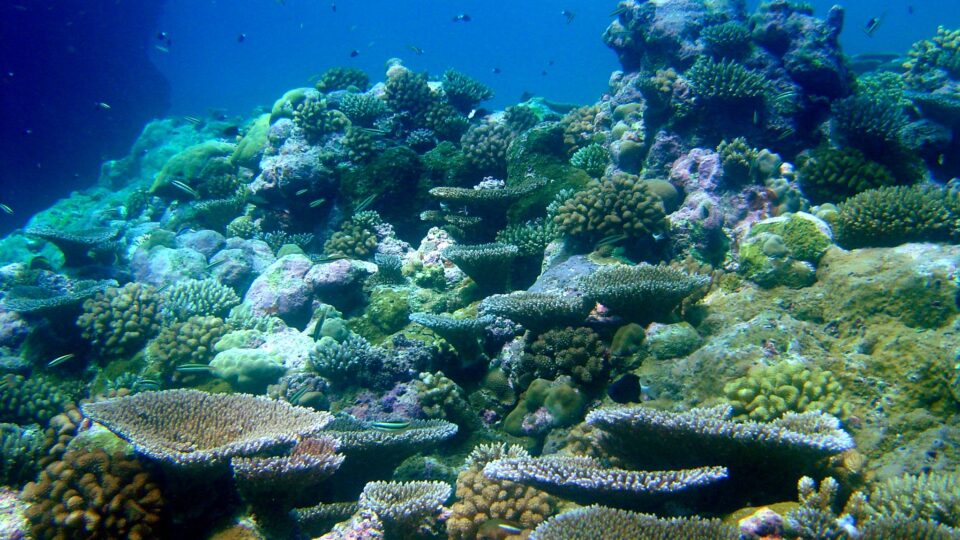
Coral reefs are in decline all over the world.  Corals are under increasing pressure as water temperatures rise and the frequency and severity of coral bleaching events increase.  Nowhere is this more evident than in Australia’s Great Barrier Reef system, where severe bleaching events have happened in three of the past five years. Long-term prospects for the survival of the world’s largest reef system are now considered to be poor.

A team of scientists at Australia’s national science agency – the Commonwealth Scientific and Industrial Research Organization – along with the Australian Institute of Marine Science and the University of Melbourne have successfully produced in a laboratory setting a coral that is more resistant to increased seawater temperatures.

The team made the coral more tolerant to temperature-induced bleaching by bolstering the heat tolerance of the microalgae symbionts that live inside the coral tissue.  They isolated the microalgae from coral and cultured it in the laboratory using a technique called “directed evolution”.  Over the course of four years, they exposed the microalgae to increasingly warmer temperatures.  When the heat-adapted strain of algae was reintroduced into coral larvae, the newly established coral-algal symbiosis was more heat tolerant than the original one.  The heat-tolerant microalgae are better at photosynthesis and improve the heat response of the coral animal.

The next step is to further test the algal strains in adult colonies across a range of coral species.  This groundbreaking research provides a promising and novel tool to increase the heat tolerance of corals and might potentially lead to a way to save the Great Barrier Reef as the world continues to warm.

**********

Web Links

Scientists successfully develop heat resistant coral to fight bleaching

Photo, posted September 22, 2010, courtesy of NOAA via Flickr.

Earth Wise is a production of WAMC Northeast Public Radio.
Living In Extreme Heat | Earth Wise

June 3, 2020 By EarthWise Leave a Comment

extreme heat from climate change

Global climate change has already left observable effects on the planet.  Glaciers have shrunk, trees are flowering sooner, plant and animal ranges have shifted, and so on. Many effects of climate change that scientists had predicted in the past are now occurring.  The loss of sea ice, intensifying heat waves, and accelerating sea level rise are some examples.

According to a new study recently published in the journal Proceedings of the National Academy of Sciences, climate change is going to affect humans earlier, harder, and more widely than previously projected.  The research team found that one billion people will be either displaced or endure insufferable heat for every one degree Celsius rise in global temperatures.  

Under a worst case climate scenario, land that one third of the world’s population currently calls home will be as hot as the hottest parts of the Sahara desert within 50 years.  Even under a more optimistic climate outlook, 1.2 billion people will still be exposed to temperatures outside the climate niche in which humans have thrived for at least 6,000 years.

The majority of the human population has always lived in regions where the average annual temperatures were between 43 degrees Fahrenheit and 82 degrees Fahrenheit.  These are ideal temperatures for human health and for food production.  But this temperature range is shrinking and shifting as a result of climate change. 

The study’s authors predict there will be more change in the next 50 years than there has been in the past 6,000 years.  They hope their findings will convince policymakers to accelerate their plans for emissions reductions and other climate mitigation strategies.   

**********

Web Links

Future of the human climate niche

One billion people will live in insufferable heat within 50 years – study

Photo, posted November 22, 2008, courtesy of Ronnie Finger via Flickr.

Earth Wise is a production of WAMC Northeast Public Radio.
Antarctica’s Hot Summer | Earth Wise

May 1, 2020 By EarthWise Leave a Comment

Extreme heat in Antarctica

The Southern Hemisphere’s recent summer brought drought, heatwaves and bush-fires that ravaged Australia.  At the same time, Antarctica experienced a summer of extreme weather.

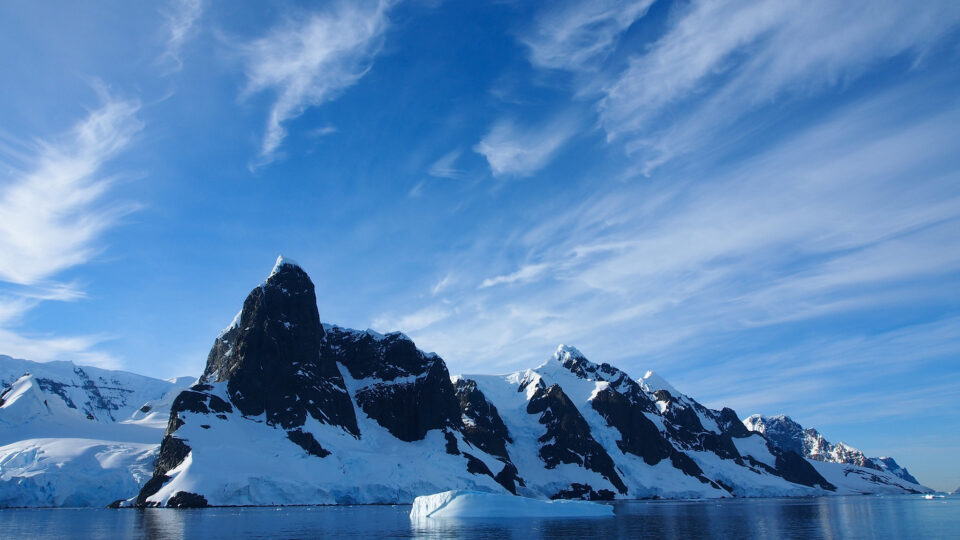
In East Antarctica, the Casey research station in the Australian Antarctic Territory had its first heatwave event, recording extreme maximum and minimum temperatures over three consecutive days in January.  Record high temperatures were also reported at bases on the Antarctic Peninsula.

The Casey station recorded a record high maximum temperature of 49 degrees Fahrenheit and a record overnight low of 36 degrees.  In February, Brazilian scientists reported a high temperature of 69 degrees at Marambio, an all-time record for Antarctica.

Ecologists say that the hot summer would most likely lead to long-term disruption of local populations, communities, and the broader ecosystem.  That disruption could be both positive and negative.

Most life in Antarctica exists in small ice-free oases and depends on melting snow and ice for a water supply.  Melt water from the warming temperatures will lead to increased growth and reproduction of mosses, lichens, microbes and invertebrates.

However, excessive flooding can dislodge plants and alter the composition of communities of invertebrates and microbial mats. If the ice completely melts early in the season, then ecosystems will suffer drought for the rest of the season.

Extreme events often have impacts for years after the event.  There will be long-term studies of the areas affected by the recent Antarctic heat wave. Such extreme events associated with global climate change are predicted to increase in frequency and impact, and even the most remote areas of the planet are not immune to them.

**********

Web Links

Antarctica’s summer of extreme heat

Photo, posted January 30, 2014, courtesy of Andreas Kambanis via Flickr

Earth Wise is a production of WAMC Northeast Public Radio.

More Extreme Wildfire Seasons | Earth Wise

April 29, 2020 By EarthWise Leave a Comment

extreme wildfire seasons

According to a new study led by researchers at Stanford University, autumn in California feels more like summer now as a result of climate change, and this hotter and drier weather increases the risk of longer and more dangerous wildfire seasons.

The research team, whose work was recently published in the journal Environmental Research Letters, found that the frequency of extreme fire weather conditions in the fall in California has doubled since the early 1980s.  Average temperatures during the season have increased by more than 2 degrees Fahrenheit, and rainfall has fallen by approximately 30%.  The most pronounced warming has occurred in the late summer and early fall.  That finding means that tinder-dry conditions coincide with the strong “Diablo” and “Santa Ana” winds that are typical in California at this time of year.     

In recent years, these conditions have fed large and fast-moving wildfires across California.  The state’s two largest wildfires, two most destructive wildfires, and the most deadly wildfire all occurred during 2017 and 2018, resulting in more than 150 deaths and $50 billion in damage.

Because summertime has typically been peak fire season, the recent spate of autumn fires is putting a strain on firefighting resources and funding.  The ongoing COVID-19 pandemic could further strain emergency resources.  Since fire-prone regions have historically shared  wildfire-fighting resources throughout the year, the consequences of California’s extended wildfire season could have a global impact.  (For example, California’s recent autumn wildfires have coincided with the beginning of wildfires in Australia). 

The researchers highlight some opportunities to manage the intensifying wildfire risk in California, including limiting the trajectory of global warming in keeping with the targets identified in the United Nations’ Paris agreement.

**********

Web Links

Researchers forecast longer, more extreme wildfire seasons

Photo, posted September 12, 2019, courtesy of the California National Guard via Flickr.

Earth Wise is a production of WAMC Northeast Public Radio.
Why The Arctic Is Warming So Fast | Earth Wise

April 7, 2020 By EarthWise Leave a Comment

rapid arctic warming

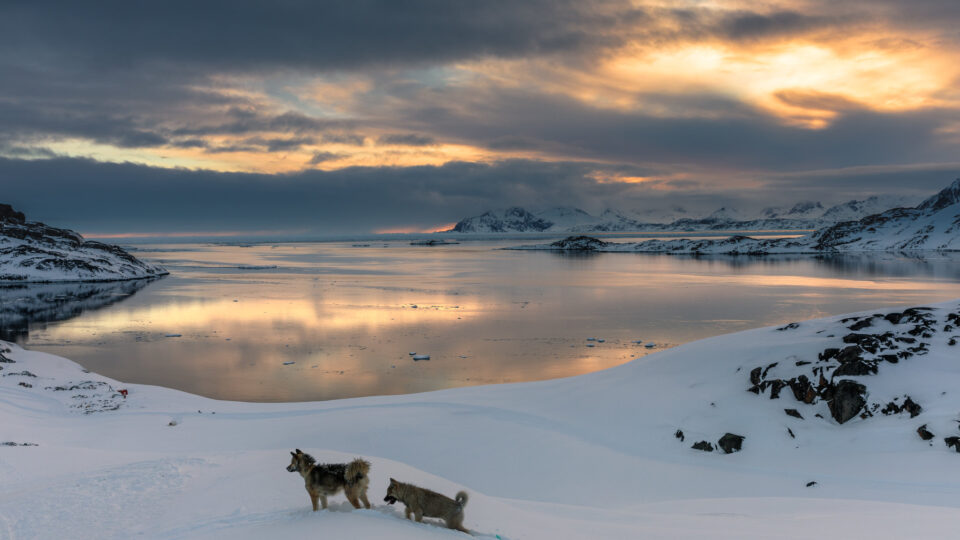
The Arctic has been warming at the fastest rate of any place on Earth.  There have long been observations of amplification of Arctic warming, meaning that its temperature increases have been well above what would be expected from the global temperature rise.

Many climate models have attributed this warming to the melting of sea ice.  As the bright white ice disappears for longer periods of the year, the dark surface waters that are exposed absorb sunlight rather than reflecting it back into space the way the ice does.  This is known as the ice-albedo feedback.  But it does not entirely explain the amount of warming in the Arctic.

Researchers at the Scripps Institution of Oceanography have developed a new theory that helps to explain what is going on.

In the areas of the Arctic Ocean where there is sea ice, the water is actually warmer at depth and colder near the surface.  The deeper waters are fed by the relatively warm Pacific and Atlantic Oceans while the surface water is cooled by the ice.  The increasing temperature difference between surface and deeper water causes a greater upward flow of heat.  This was first observed in research cruises that revealed evidence that the Arctic Ocean water was becoming more turbulent over time.

According to computer modeling, this phenomenon is responsible for about 20% of the amplification of global warming that occurs in the Arctic.

There are multiple ongoing studies looking at the Arctic warming trend.  Other factors that have contributed over time are the presence of chlorfluorocarbons in the atmosphere.   That contribution is waning since the use of CFCs has been phasing out over time.

**********

Web Links

Researchers Find New Reason Why Arctic is Warming So Fast

Photo, posted April 19, 2017, courtesy of Markus Trienke via Flickr.

Earth Wise is a production of WAMC Northeast Public Radio.
Clouds And Global Warming | Earth Wise

March 9, 2020 By EarthWise Leave a Comment

clouds global warming

Recent climate models from multiple organizations project that the amount of warming that doubling atmospheric carbon dioxide would cause would be much more than previously estimated.  And one of the significant changes to the models relates to the role of clouds.

Clouds have long been a major uncertainty in climate calculations.  Clouds can shade the earth and thereby provide cooling.  But clouds can also trap heat.  Which effect dominates depends on how reflective the clouds are, how high up they are, and whether it is day or night.  The dynamics of clouds are complicated.

If you fly across the ocean, you will see blankets of low clouds extending for hundreds of miles.  These marine stratus and stratocumulus clouds predominantly cool the Earth.  In fact, they shade roughly a fifth of the oceans and reflect 30-60% of the solar radiation that hits them back into space.

Recent studies indicate that as global temperatures rise, these clouds are likely to become thinner or burn off entirely, leaving more clear skies through which the sun may add another degree Celsius or more to global warming.

The concerns about clouds are part of the larger issue about feedbacks in warming the world.  It has long been clear that the greenhouse effect of doubling CO2 levels in the atmosphere would raise global temperature.  But there are amplifying feedback effects.  Melting large areas of snow and ice reduces reflectivity and allows the land and oceans to absorb more heat.  More water vapor entering the atmosphere traps more heat.  And now clouds are another concern.

Overall, these effects are leading to climate models predicting much larger global temperature increases, which is a scary prospect for the world.

**********

Web Links

Why Clouds Are the Key to New Troubling Projections on Warming

Photo, posted September 10, 2006, courtesy of Nicholas A. Tonelli via Flickr.

Earth Wise is a production of WAMC Northeast Public Radio.
A Record Antarctic Temperature | Earth Wise

March 5, 2020 By EarthWise Leave a Comment

warmest temperatures ever recorded

It is still early in the year, but extreme weather events are already piling up.  January was the warmest month on record globally and there have been many records shattered in Europe and Asia.  A number of places in Eastern Europe, including parts of Russia, have seen temperatures 12 to 13 degrees above average.

While the warming of the Arctic has been in the news with increasing frequency, the Antarctic is also seeing rising temperatures and is one of the fastest-warming regions in the world. 

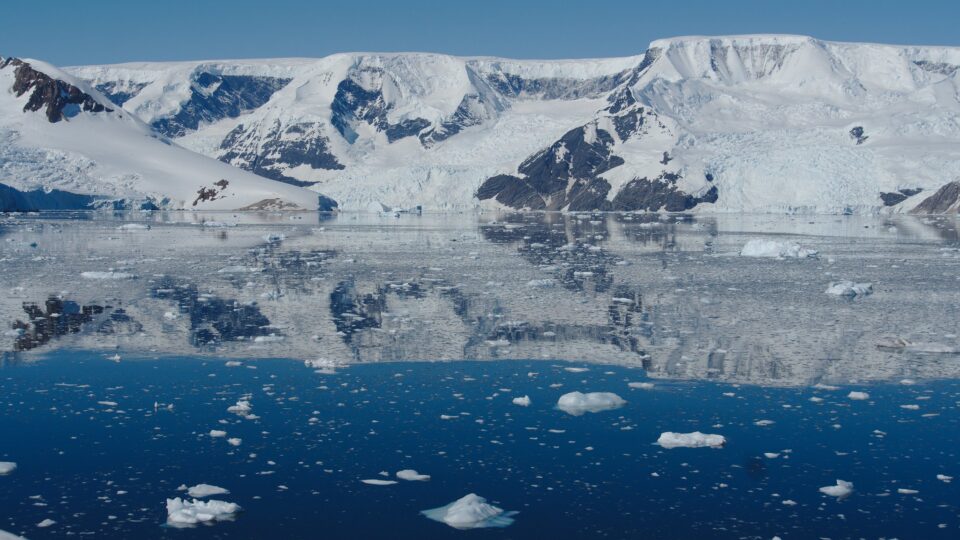
On February 6th, Esperanza Base along Antarctica’s Trinity Peninsula measured a temperature of 65 degrees Fahrenheit, which is the highest temperature ever recorded on that continent.   This rather balmy temperature narrowly beat out the previous record of 63.5 degrees, which occurred in March of 2015.

This one-time reading is certainly anomalous, and scientists say it is associated with a ridge of high pressure that was lingering over the region for several days.  Local wind conditions led to additional warming.

However, the conditions leading to record-breaking high temperatures are not one-time anomalous events. Over the past 50 years, temperatures in the Antarctic have surged by an extraordinary 5 degrees in response to the Earth’s rapidly warming climate.  A rise of five degrees in day-to-day weather is no big deal. A five-degree rise in a region’s average temperature is enormous.

About 87% of the glaciers along the west coast of Antarctica’s Trinity Peninsula have retreated over that 50-year period, most of which doing so during just the past 12 years.

Some researchers claim that the new temperature record is an extreme event that doesn’t tell us anything about the changing climate.  Many others are convinced that there will be many more high temperature records to follow.

**********

Web Links

Antarctica just hit 65 degrees, its warmest temperature ever recorded

Photo, posted February 24, 2019, courtesy of Mike via Flickr.

Earth Wise is a production of WAMC Northeast Public Radio.

  • « Go to Previous Page
  • Page 1
  • Interim pages omitted …
  • Page 4
  • Page 5
  • Page 6
  • Page 7
  • Page 8
  • Interim pages omitted …
  • Page 12
  • Go to Next Page »

Primary Sidebar

Recent Episodes

  • An uninsurable future
  • Clean energy and jobs
  • Insect declines in remote regions
  • Fossil fuel producing nations ignoring climate goals
  • Trouble for clownfishes

WAMC Northeast Public Radio

WAMC/Northeast Public Radio is a regional public radio network serving parts of seven northeastern states (more...)

Copyright © 2026 ·