• Skip to primary navigation
  • Skip to main content
  • Skip to primary sidebar

Earth Wise

A look at our changing environment.

  • Home
  • About Earth Wise
  • Where to Listen
  • All Articles
  • Show Search
Hide Search
You are here: Home / Archives for global warming

global warming

Climate Promises | Earth Wise

November 23, 2022 By EarthWise Leave a Comment

Countries are making climate promises, but are they following through?

The United Nations climate change conference that recently took place in Egypt is an annual event.  Last year, the conference was in Glasgow, Scotland, and the participants – heads of state and business leaders – produced a long list of promises aimed at fighting global warming.  How have the countries and companies making those promises done so far?  Unfortunately, not very well.

Participants made pledges for progress in several major areas.

Countries promised to cut greenhouse gas emissions faster, but only 24 countries out of the 140 participants have actually done so.

Countries agreed to expedite the deployment of clean energy and the phasing out of government subsidies for fossil fuels.  There has been considerable progress on green power, but coal use actually reached record highs this year primarily because of Russia’s invasion of Ukraine, which caused natural gas prices to spike.

Countries pledged $100 billion a year to help poorer countries shift to cleaner energy sources.  There has been lots of effort in this area, but the target has not been met and it isn’t clear that all the money is going where it is supposed to.

More than 100 countries pledged to slash methane emissions, but most nations are only getting started.

More than 130 countries pledged to halt and reverse deforestation by 2030.  Deforestation is slowly declining, but not fast enough to meet the goals of the pledge.

An important goal for this year’s climate conference was to try to find a way to not just set admirable and valuable climate goals, but to actually accomplish them.  It isn’t easy, but it is essential.

**********

Web Links

Countries Made Bold Climate Promises Last Year. How Are They Doing?

Photo, posted July 25, 2009, courtesy of Wagner T. Cassimiro via Flickr.

Earth Wise is a production of WAMC Northeast Public Radio

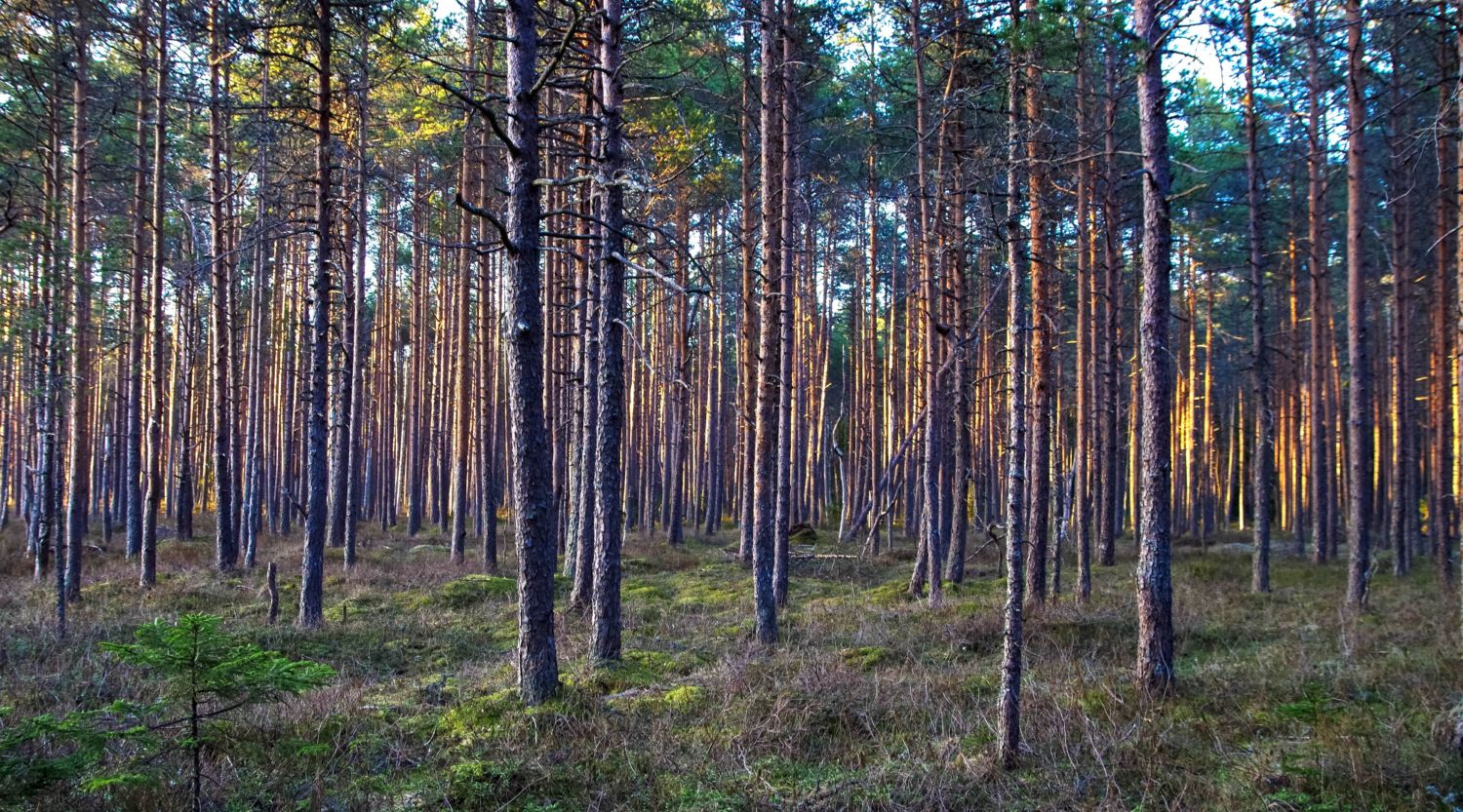
Trees Are Growing Bigger | Earth Wise

November 3, 2022 By EarthWise Leave a Comment

The alarming rate of carbon dioxide flowing into the atmosphere is having a real and actually positive effect on plant life. Higher concentrations of carbon dioxide make plants more productive because photosynthesis makes use of the sun’s energy to synthesize sugar out of carbon dioxide and water.  Plants make use of the sugar both as a source of energy and as the basic building block for growth.  When carbon dioxide levels go up, plants can take it up faster, supercharging the rate of photosynthesis.

In a new study published in the journal Nature Communications, scientists at Ohio State University found that trees are feasting on decades of carbon dioxide emissions and are growing bigger as a result. 

The researchers tracked wood volume in 10 different tree groups from 1997 to 2017 and found that all of them except aspens and birches grew larger.  Over that time period, carbon dioxide levels climbed from 363 parts per million to 405 parts per million.  According to the study, each 1% increase in lifetime CO2 exposure for trees has led to more than a 1% increase in wood volume.

In the big picture, the news isn’t so positive.  The global warming caused by increasing carbon dioxide levels increasingly threatens the forests of the world.  It has led to worsening droughts, insect infestations, and wildfires.  So overall, increasing levels of carbon dioxide are by no means a good thing for the world’s trees.  However, since trees are growing bigger more quickly, it means that planting them is an increasingly cost-effective method for fighting climate change because the same number of trees can sequester more carbon.

**********

Web Links

As Carbon Dioxide Grows More Abundant, Trees Are Growing Bigger, Study Finds

Photo, posted September 12, 2015, courtesy of Nicholas A. Tonelli via Flickr.

Earth Wise is a production of WAMC Northeast Public Radio
The U.S. Ratifies A Climate Treaty | Earth Wise

October 14, 2022 By EarthWise Leave a Comment

The United States ratifies a climate treaty

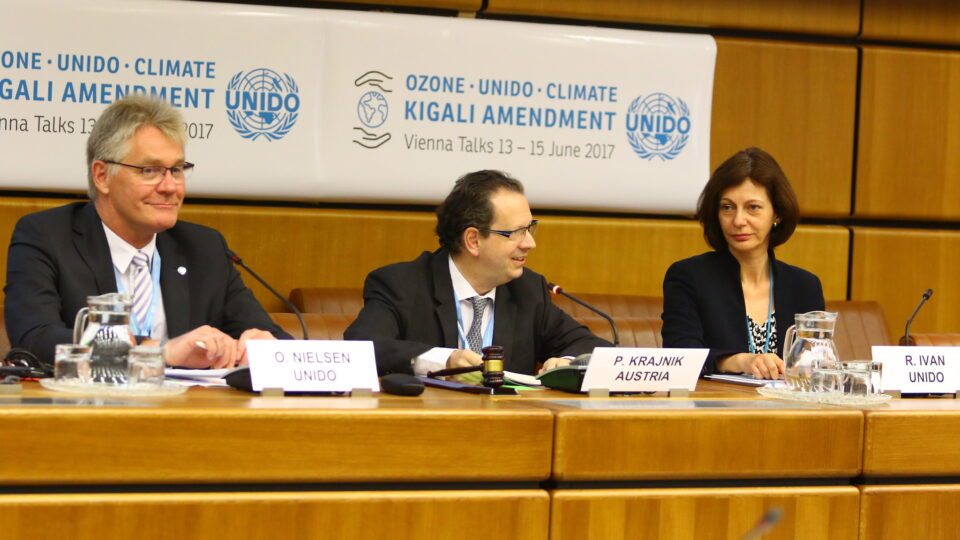
In a rare display of bipartisanship, the U.S. Senate voted 69-27 in favor of ratifying a key international climate agreement aimed at curbing global warming.  The Kigali Amendment to the Montreal Protocol, which has been ratified by 137 other countries so far, ends the use of climate-warming hydrofluorocarbons that are 1,000 times more potent than carbon dioxide in warming the atmosphere.   This is the first international climate treaty that the U.S. has joined in 30 years.

The Kigali Agreement was established in Kigali, Rwanda in 2016 to phase out HFCs, which have been the replacements for CFCs (chlorofluorocarbons) in air conditioners and refrigerators.  CFCs were found to be depleting the ozone layers that protects the earth from harmful ultraviolet rays.  HFCs do not deplete the ozone layer, but they have been a significant contributor to global warming.

The U.S. ratification of the treaty is largely symbolic.  The American Innovation and Manufacturing Act, passed by Congress in 2020, gave the EPA authority to regulate HFCs and the agency has already been doing so.  However, the Senate action shows that the U.S. is back on the international climate bandwagon. 

Failure to ratify the Kigali Amendment would have closed segments of the chemical and manufacturing industries to U.S. producers after 2023 because the Montreal Protocol prohibits trade with countries not party to it or its amendments.

Environmental advocates are hopeful that the U.S. can move forward on other climate actions.  A next step would be to focus on methane, the second leading driver of climate change after carbon dioxide.

**********

Web Links

Senate Votes to Ratify the Kigali Amendment, Joining 137 Nations in an Effort to Curb Global Warming

Photo, posted June 13, 2017, courtesy of UNIDO via Flickr.

Earth Wise is a production of WAMC Northeast Public Radio
Propane Refrigerants | Earth Wise

September 20, 2022 By EarthWise Leave a Comment

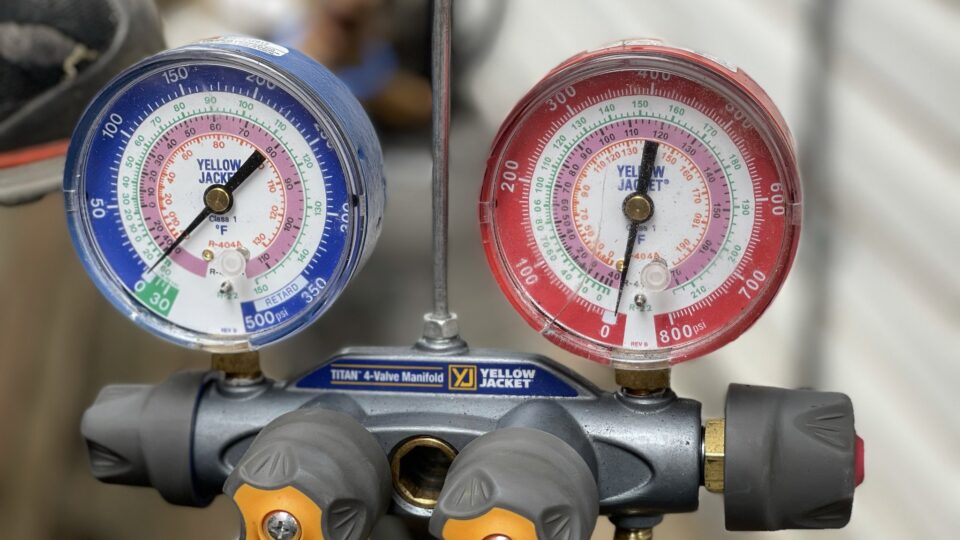
Propane refrigerants a climate-friendly solution

About 10% of the world’s total electricity supply is used for air conditioning.  If current temperature trends continue, the energy demands for space cooling will more than triple by the year 2050.  Air conditioning is a double threat to the environment.  Apart from using lots of energy, ACs also make use of halogenated refrigerants that are extremely powerful greenhouse gases.

The most common space cooling appliances are split-air conditioners, which use an indoor unit and an outdoor unit connected by pipes.  These split ACS mostly utilize HCFC-22 and HFC-410 as refrigerants, which have global warming potential scores as high as 2,256 – meaning they trap 2,256 times more heat than carbon dioxide. 

A study by the International Institute of Applied Systems Analysis in Austria has shown that propane is a far better choice as an air conditioning refrigerant.  Its global warming potential is actually less than 1 meaning it traps less heat than carbon dioxide.  According to the study, if air conditioners switched to propane refrigerants, the world would avoid about a tenth of a degree Celsius of additional warming, which is a significant contribution to meeting the goals of the Paris climate agreement.

Propane-based split-ACs are already available commercially in China and India.  Elsewhere, many national regulations prohibit their use, primarily due to codes restricting the use of refrigerants with higher flammability.  Given the increasingly urgent need for climate action, it seems to be time to reconsider regulations on refrigerants.

**********

Web Links

Propane — a solution for more sustainable air conditioning

Photo, posted March 24, 2021, courtesy of Phyxter Home Services via Flickr.

Earth Wise is a production of WAMC Northeast Public Radio

Climate Change And The Next Pandemic | Earth Wise

May 26, 2022 By EarthWise Leave a Comment

Climate change could lead to the next pandemic

As the planet continues to heat up, animals big and small are moving towards the poles to escape the heat.  According to researchers, these animals are likely to come into contact with other animals that they normally wouldn’t, and are likely to relocate to regions with large human populations.  These factors create opportunities for pathogens to get into new hosts, which dramatically increases the risk of a viral jump to humans.  Climate change could lead to the next pandemic.      

An international research team led by scientists at Georgetown University recently made this connection between climate change and viral transmission.  In the study, which was recently published in the journal Nature, researchers conducted the first comprehensive assessment of how climate change will restructure the global mammalian virome.  Their work focused on geographic range shifts. 

As animals eccounter other animals for the first time, the study projects that they will share thousands of viruses.  And as animals increasingly move into the same areas as humans, there will be greater opportunities for these viruses to jump to humans.  The research team says that the impact on conservation and human health could be alarming as viruses jump between species at unprecedented rates. 

In our warming world, much of this process may unfortunately already be underway.  And efforts to reduce greenhouse gas emissions may not be enough to stop these events from unfolding. 

According to the study, climate change will become the biggest upstream risk factor for disease emergence, eclipsing deforestation, industrial agriculture, and the wildlife trade.  Pairing wildlife disease surveillance with real-time studies of environmental change may be part of the solution to predicting and preventing the next pandemic. 

**********

Web Links

Climate change could spark the next pandemic, new study finds

Coronavirus and Climate Change

Photo, posted October 16, 2014, courtesy of Shawn Thomas / NPS via Flickr.

Earth Wise is a production of WAMC Northeast Public Radio.

Wind And Solar And Meeting Climate Goals | Earth Wise

May 20, 2022 By EarthWise Leave a Comment

Meeting climate goals using solar and wind power

According to a new report from the climate think tank Ember, the rapid growth that has been going on for solar and wind power could allow the global electricity sector to do its part in limiting global warming to 1.5 degrees Celsius.

In 2021, solar power grew by 23% worldwide and wind power grew by 14%.  The Netherlands, Australia, and Vietnam had the largest gains in renewable energy.  Solar power in Vietnam grew by 337%.

The trends over the past decade, if continued across the globe, would result in the power sector being on track for meeting climate goals.  But not all the news is good.  The overall power sector has not been adequately reducing emissions.  Coal power actually grew by 9% last year as a result of increased demand for power during the rapid economic recovery in the easing of the pandemic shutdowns.  A spike in natural gas prices made coal more cost-competitive.

In order for the power sector to do its part in keeping warming below 1.5 degrees, wind and solar power will need to provide 40% of the world’s power by 2030 and nearly 70% by 2050.  Today, they supply only 10% of the world’s electricity.

With rising gas prices during Russia’s war with Ukraine, there is real danger of increased use of coal, threatening the gains made by renewable energy.

Nonetheless, a study published in Oxford Open Energy modeled various scenarios for the growth of renewable energy and found that it is feasible to meet climate goals.  In order to achieve this, countries’ policies will need to stimulate significant increases in energy and resource efficiency and rapid deployment of low-carbon technologies, promote strong environmental actions, and encourage low population growth.

**********

Web Links

Rapid Growth of Wind and Solar Could Help Limit Warming to 1.5 degrees C

Photo, posted October 11, 2011, courtesy of Michael Coghlan via Flickr.

Earth Wise is a production of WAMC Northeast Public Radio.

Permafrost Thaw | Earth Wise

March 18, 2022 By EarthWise Leave a Comment

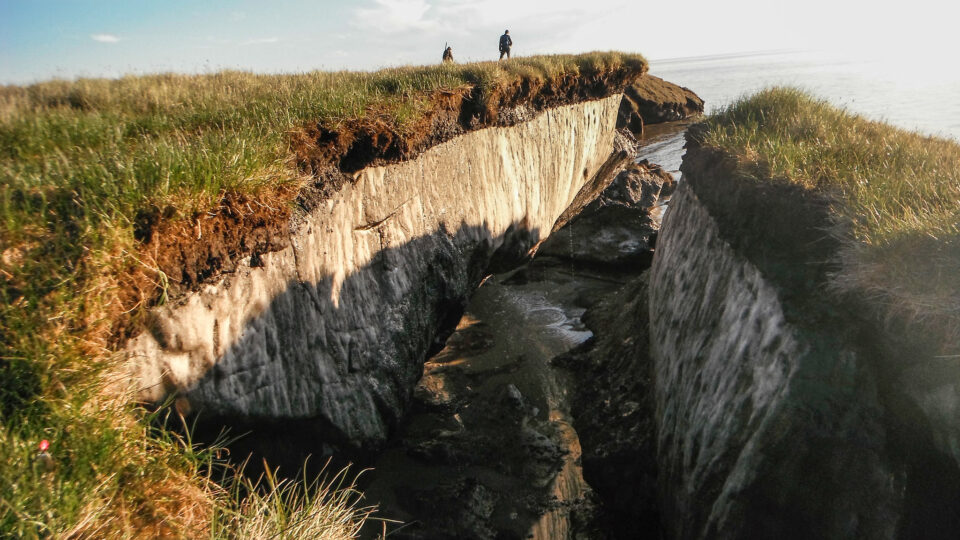
We’ve talked about permafrost before.  It is the frozen soil, rock, or sediment piled up in the Arctic that has been there at least for two years but, for the most part, for millennia or even over a million years.  Permafrost holds the carbon-filled remains of vegetation and animals that froze before they could start decomposing.   Estimates are that there are nearly 2,000 billion tons of carbon trapped in Arctic permafrost.  To put that in perspective, annual global carbon emissions are less than 40 billion tons.

Keeping all that carbon frozen plays a critical role in preventing the planet from rapidly heating. The ongoing warming of the Arctic is causing the subsurface ground to thaw and release long-held carbon to the atmosphere.

Scientists from Europe and the US are working together to better track permafrost carbon dynamics.  They are trying to understand the mechanisms that lead to abrupt thaws in the permafrost that have taken place in some locations.  These rapid thawing events are not well understood.  Researchers are also studying the effects of the increasingly frequent wildfires in the Arctic on the permafrost.

Researchers are using satellites to better understand the effects climate change is having on the Arctic environment and how these changes, in turn, are adding to the climate crisis.  Permafrost cannot be directly observed from space, so that its presence has to be inferred from measurements like land-surface temperature and soil moisture readings.  Terrestrial observations are also necessary for understanding how greenhouse gases – both CO2 and methane – are being emitted from the Arctic.

Thawing permafrost is a ticking timebomb for the environment that demands the growing attention of the scientific community.

**********

Web Links

Permafrost thaw: it’s complicated

Photo, posted January 24, 2014, courtesy of Brandt Meixell / USGS via Flickr.

Earth Wise is a production of WAMC Northeast Public Radio.

Antarctic Ice Collapse | Earth Wise

March 2, 2022 By EarthWise Leave a Comment

Warming temperatures are causing Antarctic ice collapse

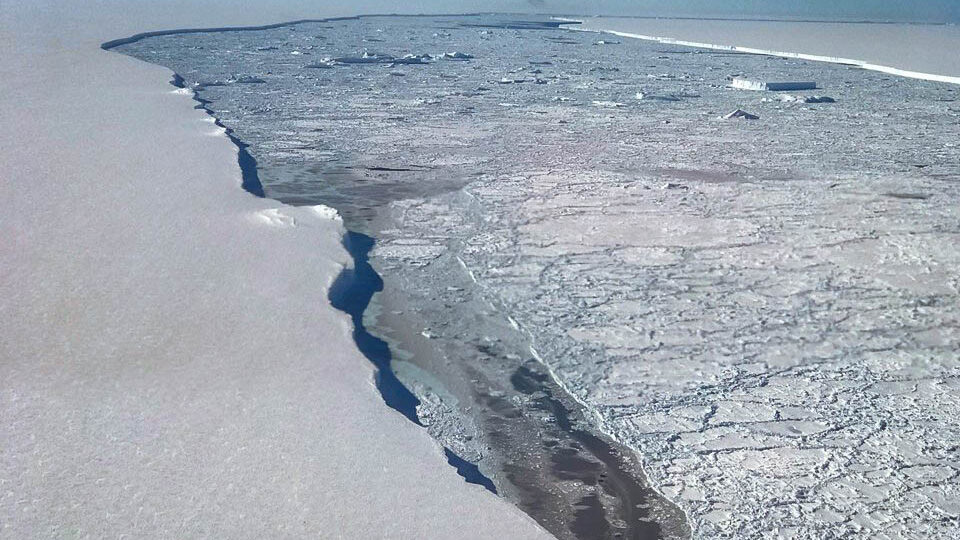
In Antarctica, a huge chunk of the Larsen B Ice Shelf collapsed suddenly and spectacularly in January.

The Larsen Ice Shelf is located on the northeastern side of the Antarctic Peninsula on the Weddell Sea.  It was formed over the course of more than 12,000 years.  The Weddell Sea used to be a completely frozen body of water.  The famous Ernest Shackleton expedition in 1915 was trapped in its ice.  But the Antarctic Peninsula has been steadily warming in recent decades.

The Larsen A Ice shelf collapsed in 1995 and the 1,250-square-mile Larsen B Ice Shelf collapsed in 2002.  After that event, a portion of the detached ice shelf refroze in 2011 and was attached to the Scar Inlet Ice Shelf.  The refrozen ice was called the Larsen B embayment.

In January, the embayment broke apart, taking with it a portion of the Scar Inlet Ice Shelf.  It disintegrated within a matter of days.  The combined Larsen Ice Shelves – called A, B, C, and D – once extended along a 1000-mile stretch of the eastern Antarctic Peninsula.  Since 1995, it has shrunk from 33,000 square miles to 26,000 square miles.

These ice shelves float on the ocean, so their loss does not actually increase global sea levels.   However, the shelves act as dams that hold back glaciers located on the land behind them.  The loss of Antarctic ice shelves dramatically increases the rate at which glaciers flow into the sea, and that does increase global sea levels. 

Now that the sea ice from the Larsen B embayment is gone, it is likely that there will be additional inland ice losses from the newly exposed glaciers.

**********

Web Links

Remnant of Antarctica’s Larsen B Ice Shelf Disintegrates

Photo, posted February 13, 2018, courtesy of NASA/Nathan Kurtz via Flickr.

Earth Wise is a production of WAMC Northeast Public Radio.

Climate Change And Hurricanes In The Northeast | Earth Wise

February 9, 2022 By EarthWise Leave a Comment

Climate change making hurricanes in the Northeast more likely

According to a new study led by Yale University, more hurricanes are likely to hit Connecticut and the northeastern U.S. as global warming continues to increase temperatures in the region.

Hurricane Henri made landfall in August as a tropical storm on the Connecticut/Rhode Island border.  In September 2020, subtropical storm Alpha made landfall in Portugal, the first subtropical or tropical cyclone ever observed to make landfall in the mainland of that country.

Tropical cyclones, hurricanes, and typhoons are typically intense and destructive in the lower latitudes. 

The study concludes that violent storms could migrate northward in our hemisphere and southward in the southern hemisphere as a result of warming caused by greenhouse gas emissions.

The research predicts that tropical cyclones will likely occur over a wider range of latitudes than has been the case on Earth for the last 3 million years.

In Connecticut, Hurricane Henri was not the only tropical storm to affect the region in 2021.  The remnants of Hurricane Ida brought damaging winds and torrential rain that felled trees and flooded streets and basements.

The northern expansion of such violent storms is going on as water levels in the Atlantic Ocean and Long Island Sound keep rising.  Because of melting glaciers thousands of miles away, water levels in Long Island Sound could rise by as much as 20 inches by 2050, enough to submerge parts of Groton’s shore and cause regular flooding in roads and neighborhoods.

Future hurricane prediction is an inexact science, but the ongoing trends do not bode well for the region.

**********

Web Links

More hurricanes likely to slam Connecticut and region due to climate change, says study

Photo, posted October 29, 2012, courtesy of Rachel via Flickr.

Earth Wise is a production of WAMC Northeast Public Radio.

Climate Change And The Winter Olympics | Earth Wise

February 8, 2022 By EarthWise Leave a Comment

Climate change is threatening winter sports

According to a new study led by researchers from the University of Waterloo in Canada, climate change will limit where the Winter Olympics can be held as winter changes across the Northern Hemisphere. 

The international research team found that by the end of the century only one of the 21 cities that have previously hosted the Winter Olympics would be able to reliably provide fair and safe conditions for winter sports if global greenhouse gas emissions are not dramatically reduced. 

However, if the emissions targets set forth in the Paris Climate Agreement can be reached, the number of climate-reliable host cities for the Winter Olympics would jump to eight.

In the study, which was recently published in the journal Current Issues in Tourism, the researchers reviewed historical climate data from the 1920s to today, as well as future climate change scenarios for the 2050s and 2080s.  The researchers also surveyed international athletes and coaches, and found that 89% of them felt that changing weather patterns are already affecting competition conditions. 

The average February daytime temperature of host cities has been steadily increasing.  At the winter games held between the 1920s and 1950s, the average temperature was 32.7°F.  It rose to 37.6°F at games between the 1960s and 1990s, and has spiked to 43.3°F in the games held in the twenty-first century.  The planet is projected to warm another 3.6°F to 7.9°F this century depending on our ability to mitigate greenhouse gas emissions.

Reducing global greenhouse gas emissions is critical to ensure that there remain places across the globe to host the Winter Olympics.

**********

Web Links

Climate change threatens future Winter Olympics

Photo, posted February 21, 2010, courtesy of Michael via Flickr.

Earth Wise is a production of WAMC Northeast Public Radio.

Liquid Fuels From Carbon Dioxide | Earth Wise

January 5, 2022 By EarthWise Leave a Comment

Converting carbon dioxide into liquid fuels

Most of the world’s energy demands are still being met by burning fossil fuels, thereby releasing carbon dioxide into the atmosphere.  The energy system is in the midst of a transition to renewable sources such as solar and wind power, but it will be quite some time before fossil fuels are only a minor part of energy production.  To reduce global warming, it will be necessary to prevent the carbon dioxide from fossil fuels from entering the atmosphere by capturing it and either locking it away or making use of it.

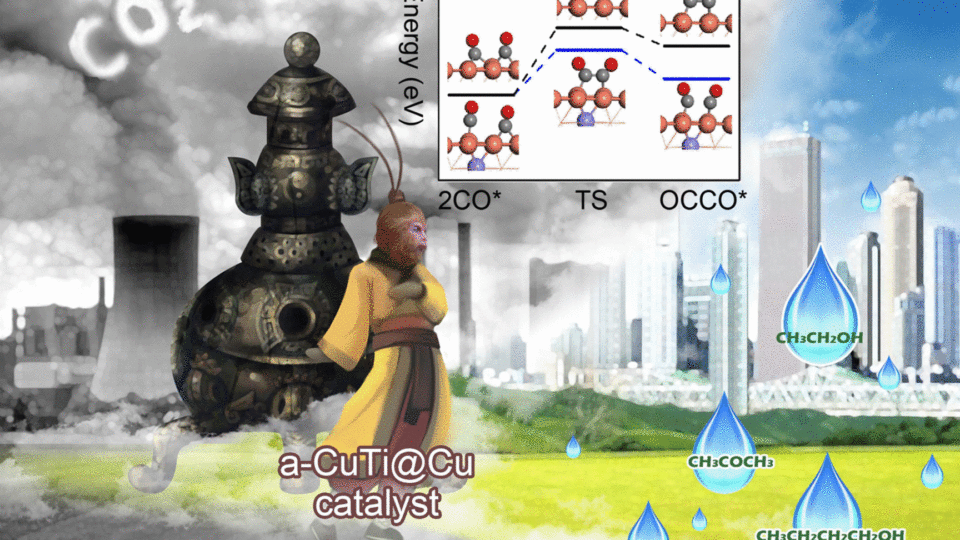
Recent research at several Chinese universities has developed a novel electrocatalyst that efficiently converts CO2 to liquid fuels containing multiple carbon atoms.  The main products of the high-efficiency reaction are ethanol, acetone, and n-butanol.  Previous electrocatalystic methods have mostly produced simpler hydrocarbons – namely, ones with only a single carbon atom.  The fuels the new catalyst produces are much more useful.

The catalyst is made from thin ribbons of a copper/titanium alloy that are etched with hydrofluoric acid to remove the titanium from the surface.  The process results in a material with a porous copper surface on an amorphous CuTi alloy.  The substance exhibits remarkably high activity, selectivity, and stability for catalyzing the reactions leading to the production of the hydrocarbon fuels.

Converting carbon dioxide into liquid fuels would be advantageous because they have high energy density and are safe to store and transport.  Apart from preventing carbon dioxide from entering the atmosphere, the process could also be a way to make use of excess energy produced by solar and wind generation by essentially storing that energy in the form of liquid fuels.

**********

Web Links

Liquid Fuels from Carbon Dioxide

Photo courtesy of Angewandte Chemie via Wiley-VCH.

Earth Wise is a production of WAMC Northeast Public Radio.

Armadillos Heading North | Earth Wise

December 27, 2021 By EarthWise Leave a Comment

Armadillos are heading north

Armadillos are small mammals known for their unique armor-like shell and their digging habits.  There are 21 species, primarily native to South America.  Some species have expanded northward due to their rapid breeding cycle, adaptability, and reduced number of predators.  Only one species – the nine-banded armadillo – is found in the United States.  In fact, it is the official small mammal of the state of Texas.

Over time, armadillos have expanded their range to states in the Deep South.  More recently, the animals have been pushing further north.  Milder winters in the changing climate have allowed them to inhabit new areas, including parts of the Blue Ridge Mountains. They were first sighted in North Carolina in 2007 and their numbers have recently been growing in the western half of the state.

There are now armadillos as far north as Missouri, Nebraska, and Iowa, and there is little to halt their further advance.  They are able to hold their breath for six minutes at a time, so they can cross rivers by walking along the bottom or by inflating their intestines and floating across the top.  Their hard shell provides protection from predators.  They reproduce prolifically.  Females give birth to quadruplets multiple times over the course of their 12-15-year lifespan.

Armadillos are fun to look at, but they are a nuisance where people live.  They are prone to digging holes in lawns.  In parts of North Carolina, some people have placed bounties on the animals.  They are difficult to trap and there aren’t common repellents for them.  As the climate continues to warm, it is only a matter of time before the range of armadillos expands into other states.

**********

Web Links

Armadillos Advance Northward As Temperatures Rise

Photo, posted May 2, 2017, courtesy of Gail Hampshire via Flickr.

Earth Wise is a production of WAMC Northeast Public Radio.

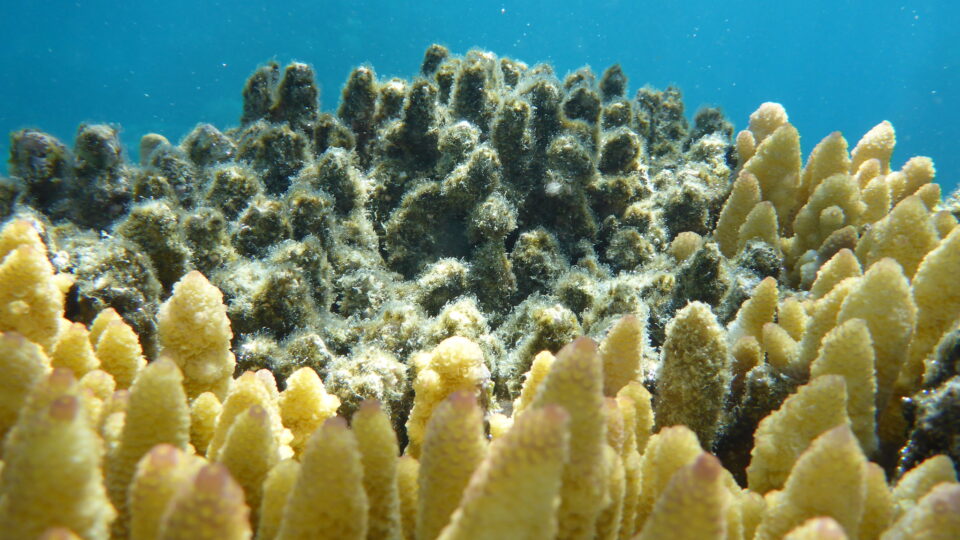
Coral Reef Status Report | Earth Wise

December 23, 2021 By EarthWise Leave a Comment

The status of the world's coral

In October, the Global Coral Reef Monitoring Network released the first-ever report collecting global statistics on the world’s corals.  It documents the status of reefs across 12,000 sites in 73 countries over 40 years.  Overall, the news is not good, but there were some bright spots.

From 2009 to 2018, the world has lost 14% of its corals, corresponding to about 4,500 square miles of coral.  Global warming has led to prolonged marine heatwaves that trigger coral bleaching.  Local pollution has also damaged reefs.   The International Panel on Climate Change has reported that 2 degrees Celsius of global warming would wipe out 99% of the world’s corals.

The report does show that corals can recover globally if given a decade of cooler waters.  Some places in the world – particularly the Coral Triangle in Asia, which contains nearly a third of the world’s coral – have actually seen coral growth over the past decade. 

The Global Coral Reef Monitoring network started collecting data in 1978.  Coral health was fairly steady until 1998 when the first mass bleaching event occurred, triggered by a powerful El Niño event.  For the next 12 years, corals recovered nicely, but then bleaching events in 2010 and 2015-17 took their toll.

The Pacific, Australia, and the Caribbean have all seen major decreases in coral.  The Coral Triangle is a major exception which is thought to be a result of genetic diversity among the region’s corals.

Coral conservationists globally are working to protect corals and to actively restore them.  The situation is fairly dire, but there continue to be reasons for hope.

**********

Web Links

Finding Bright Spots in the Global Coral Reef Catastrophe

Photo, posted October 13, 2015, courtesy of Albert Straub via Flickr.

Earth Wise is a production of WAMC Northeast Public Radio.

Global Flood Risk From Melting Ice | Earth Wise

December 13, 2021 By EarthWise Leave a Comment

Melting ice is posing a global flood risk

Approximately 10% of the land area on Earth is covered by ice.  This includes glaciers, ice caps, and the ice sheets of Antarctica and Greenland.  Nearly 70% of all fresh water on earth is locked away in ice.  If all this land ice were to melt, global sea levels would rise by more than 200 feet. 

According to new research led by researchers at the University of Leeds in the U.K., global warming is causing extreme ice melting events in Greenland to become more frequent and more intense over the past 40 years, leading to an increased risk of flooding worldwide.   

According to the findings, which were recently published in the journal Nature Communications, approximately 3.85 trillion tons of ice has melted from the surface of Greenland and into the ocean during the past decade alone.  That’s enough melted ice to cover all of New York City with nearly 15,000 feet of water. 

Rising sea levels threaten the lives and livelihoods of those living in coastal communities around the world.  Beyond the obvious risk of flooding in low-lying areas, rising seas also disrupt marine ecosystems that many coastal communities rely on for food and work.       

Rising sea levels can also alter patterns of ocean and atmospheric circulation, which in turn affect weather conditions around the planet.

Estimates from models suggest that melting ice from Greenland will contribute between 1 inch and 9 inches to global sea level rise by 2100. 

These findings are just another reminder of how we need to act urgently to mitigate climate change if we want to prevent the worst-case scenarios from becoming reality. 

**********

Web Links

Increased frequency of extreme ice melting in Greenland raises global flood risk

Photo, posted April 21, 2017, courtesy of Markus Trienke via Flickr.

Earth Wise is a production of WAMC Northeast Public Radio.

How Quickly Can The Planet Recover? | Earth Wise

December 6, 2021 By EarthWise Leave a Comment

Climate change refers to long-term shifts in temperatures and weather patterns.  Historically, these shifts were natural.  But since the Industrial Revolution, scientists have found that the main driver of climate change has been human activities, primarily by adding significant amounts of greenhouse gases into the atmosphere through the burning of fossil fuels. 

Today, climate change is destabilizing Earth’s temperature equilibrium and is having a widespread impact on humans, animals, and the environment.  Some of the consequences of anthropogenic climate change include warmer air and ocean temperatures, shrinking glaciers, increasing spread of pests and pathogens, declining biodiversity, and more intense and frequent extreme weather events. 

But how quickly can the climate recover from the warming caused by an increase in carbon dioxide in the atmosphere? 

Researchers from Johannes Gutenberg-University Mainz in Germany looked into this question by investigating the significant rise in global temperatures that took place 56 million years ago.  Likely triggered by a volcanic eruption,  the increase of between 5 and 8 degrees Celsius was the fastest natural period of global warming that has impacted the climate. 

Because higher temperatures cause rocks to weather faster, the research team decided to analyze the weathering processes that occurred during the warming event 56 million years ago.  Their findings, which were recently published in the Journal Science Advances, indicate that the climate took between 20,000 and 50,000 years to stabilize following the rise in global temperatures.

Climate change is not some distant problem.  It is happening now and it poses a serious threat to all forms of life.  We need to address the problem with more urgency. 

**********

Web Links

How quickly does the climate recover?

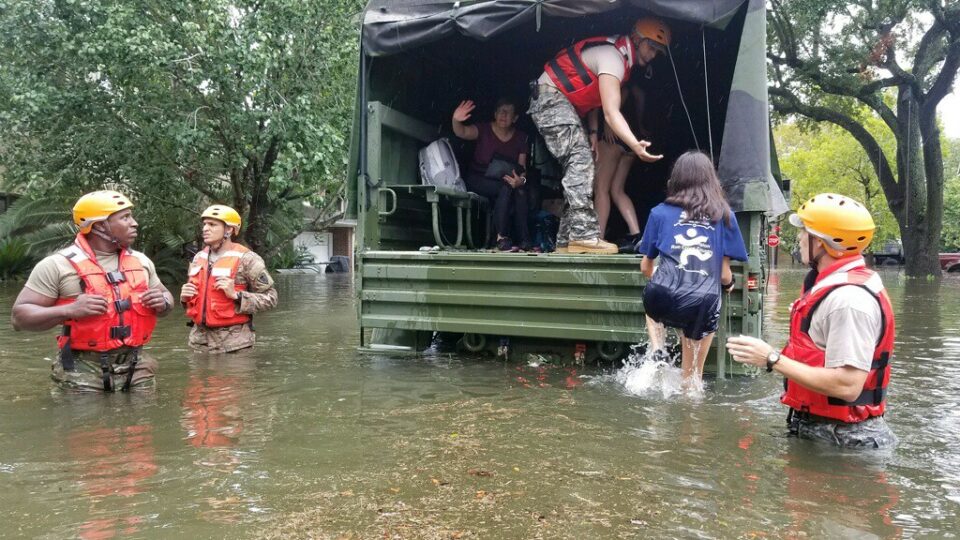
Photo, posted August 27, 2017, courtesy of Lt. Zachary West (100th MPAD) / Texas Military Department via Flickr.

Earth Wise is a production of WAMC Northeast Public Radio.

Greenhouse Gas Removal And Net Zero | Earth Wise

November 18, 2021 By EarthWise Leave a Comment

Reducing the amount of greenhouse gas emissions can slow the progress of global warming but only reaching and sustaining net zero global emissions can halt the progress of climate change.

The move to renewable power and the use of electric transport are substantial and essential ways to reduce emissions.  But even if these transitions take place on a rapid timescale, they will not eliminate all emissions.  Many industrial activities and, especially, agriculture will continue to contribute substantial greenhouse gas emissions.   There are efforts to reduce the contributions of these things, but there are no zero-emission substitutes for most of them.

As a result, actually removing CO2 from the atmosphere once it is there is essential to achieve net zero emissions.  If greenhouse gas removal can be scaled up sufficiently, it opens the option of going “net negative”, which would be the ideal way to mitigate and, better still, reverse the effects of climate change.

There are multiple approaches to carbon dioxide removal.  Some are natural, involving ways of capturing and storing carbon in trees, biochar, and peatlands.  Others are technological.  An example is the system that has just gone into operation in Iceland that uses fans, chemicals, and heat to capture CO2 and then mineralize it in volcanic rock.   Another is a system being tested in the UK that captures CO2 from growing biomass and pipes it to storage under the North Sea.

Much of the attention on carbon capture technology is aimed at trapping the emissions from fossil fuel power plants, but the need to remove carbon dioxide that has entered the atmosphere in other ways is ultimately far greater.

**********

Web Links

CO2 removal is essential to achieving net zero

Photo, posted August 17, 2013, courtesy of Joshua Mayer via Flickr.

Earth Wise is a production of WAMC Northeast Public Radio.

The Coastal Northeast Is A Hotspot | Earth Wise

November 16, 2021 By EarthWise Leave a Comment

Temperatures rising fast in the Coastal Northeast

Global warming is, obviously, a world-wide phenomenon.  When the concept of a 2 degrees Celsius temperature rise is discussed, it refers to the average global temperature and the effects that would have on such things as sea level rise and weather patterns.  But the effects of the changing climate are not homogeneous.  Very different things can happen and are happening in different places.

One such place is the coastal northeastern United States, which is a global warming hotspot.  The region is heating faster than most regions of North America and, indeed, 2 degrees of summer warming has already happened in the Northeast.

New research led by the University of Massachusetts Amherst has determined that this heating is linked to significant alterations in the ocean and atmospheric conditions over the North Atlantic.

Several studies have found that the Atlantic Meridional Circulation is slowing down.  The AMOC conveys warm, salty water from the tropics north towards Greenland, where it cools and sinks.  The cooled water than flows back south as deep-water currents.  As the warming climate melts glaciers in Greenland, the circulation slows down, less cooled water arrives in the south, and there is more heating of the ocean off the Northeastern coast.

At the same time, the North Atlantic Oscillation, a weather phenomenon that governs the strength and position of the winds that blow from the U.S. over the Atlantic, has tended to settle into a pattern that enhances the influence of ocean air on the eastern seaboard climate.  Warmer ocean air being blown over the region has led to rising temperatures in Boston, New York, and Providence, Rhode Island.

As the average temperature of the world rises, some places will warm more quickly and others more slowly.

**********

Web Links

The Coastal Northeastern U.S. Is A Global Warming Hotspot

Photo, posted August 8, 2010, courtesy of Doug Kerr via Flickr.

Earth Wise is a production of WAMC Northeast Public Radio.

The Earth Is Dimming | Earth Wise

November 3, 2021 By EarthWise Leave a Comment

According to a new study published in the journal Geophysical Research Letters, warming ocean waters have caused a drop in the brightness of the earth.

Researchers measure the earth’s albedo by observing the light reflected from earth that illuminates the surface of the moon as well as with satellite measurements. The earth reflects about 30% of the sunlight that shines on it.  The data shows that the earth now reflects about half a percent less light than it did 20 years ago, with most of the drop occurring in the last three years.  That number had been fairly constant for most of the past 20 years.

According to the researchers at the New Jersey Institute of Technology, New York University, and a Spanish astrophysical agency, the apparent cause of the albedo drop has been a reduction of bright, reflective low-lying clouds over the eastern Pacific Ocean in most recent years.  That is the same area off the west coasts of North and South America where increases in sea surface temperature have been observed because of the reversal of a climate condition called the Pacific Decadal Oscillation, which is likely a result of global climate change.

The dimming of the earth implies that more solar energy is being absorbed rather than reflected, which may contribute further to global warming.

These results are somewhat surprising.  Scientists had postulated that the warming of the earth could lead to more clouds and therefore a higher albedo – more reflection of the sun’s light.  If that were the case, it would help to moderate warming and balance the climate system.  These new results indicate that the opposite is true.

**********

Web Links

The Earth Is Dimming Due To Climate Change

Photo, posted August 18, 2021, courtesy of Arek Socha/GPA Photo Archive via Flickr.

Earth Wise is a production of WAMC Northeast Public Radio.

People And The Earth’s Increasing Heat | Earth Wise

September 23, 2021 By EarthWise Leave a Comment

Humans are driving climate change

A new study by Princeton University and the National Oceanic and Atmospheric Administration had found clear evidence that human activity is the primary cause of the significant increase in heat stored in our planet.  In fact, the study found that there is less than a 1% chance that natural variability is the sole cause of the increase.

The researchers looked at data from satellite observations to determine the amount of energy received by the earth and the amount reflected and emitted by the Earth.  In a balanced physical system, the amount of incoming energy should equal the amount of outgoing energy.  But the earth’s system is not balanced at this point.  More energy is coming in than going out, which is driving changes in the climate system.  There have been other studies looking at the human influence on the climate, but this new study is the first to examine a 20-year continuous satellite energy balance record to see if natural fluctuations in the climate system or human activities is the primary driver for the significant change in the planet’s energy balance.

The study examined 50 different climate models to look at this energy balance under scenarios where there was no human influence.  These include changes in the sun’s output, volcanic eruptions, variations in pollution aerosols, and more.

The results, to no great surprise, are that increasing greenhouse gases over the last twenty years is by far the most important driver for the energy imbalance.  This imbalance is what is driving rising temperatures, increasing sea levels, and causing other climate changes.

**********

Web Links

Human activities responsible for rapid increase in Earth’s heat

Photo, posted May 6, 2021, courtesy of Marlis Borger via Flickr.

Earth Wise is a production of WAMC Northeast Public Radio.

July Was A Scorcher | Earth Wise

September 2, 2021 By EarthWise Leave a Comment

Record setting July 2021 was the hottest month ever

July 2021 has the unfortunate distinction as being the world’s hottest month ever recorded according to global data from the National Oceanic and Atmospheric Administration.   July is typically the warmest month of the year, but this July was the warmest month of any year on record.

The combined global land and ocean surface temperature was 62.07 degrees Fahrenheit, which is 1.67 degrees above the 20th century average.  This was the highest monthly average since records began 142 years ago.  It broke the previous record set in July 2016 and tied in 2019 and 2020.

The Northern Hemisphere was 2.77 degrees above average.  Asia had its hottest July on record.  Europe had its second hottest July on record.  Places like Africa, Australia, and New Zealand all had top-ten warmest Julys.

Other aspects of the changing climate included the observation that Arctic sea ice coverage for July was the fourth-smallest in the 43-year record.  Interestingly, Antarctic sea ice extent was actually above average in July.  Global tropic cyclone activity this year so far is above normal for the number of named storms.  In the Atlantic basin, the formation of the storm Elsa on July 1 was the earliest date for a 5th named storm.

It remains very likely that 2021 will rank among the 10 hottest years on record.  Extreme heat is a reflection on the long-term climate changes that were outlined recently in a major report released by the Intergovernmental Panel on Climate Change.  These latest global observations add to the disturbing and disruptive path that the changing climate has set for the world.

**********

Web Links

It’s official: July was Earth’s hottest month on record

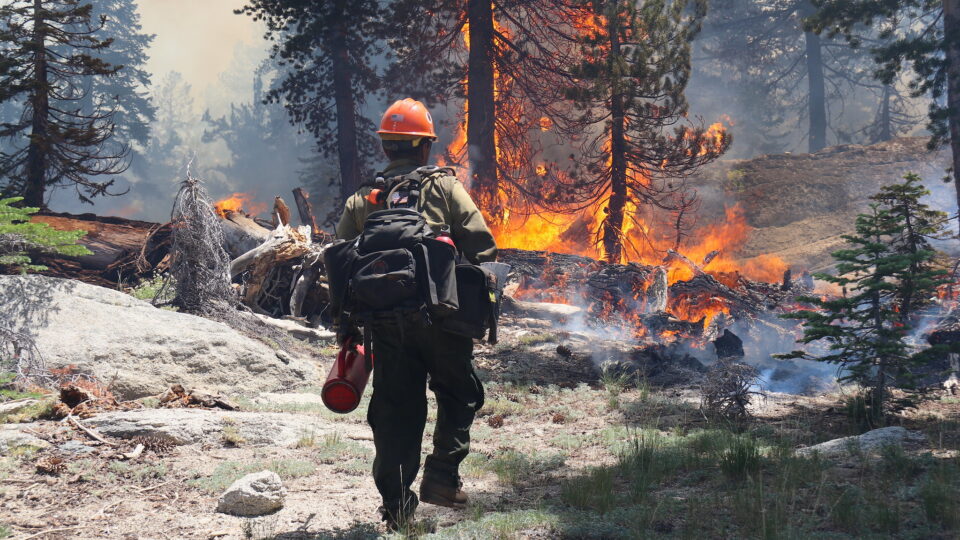
Photo, posted July 15, 2021, courtesy of Lori Iverson/National Interagency Fire Center via Flickr.

Earth Wise is a production of WAMC Northeast Public Radio.

  • « Go to Previous Page
  • Page 1
  • Page 2
  • Page 3
  • Page 4
  • Page 5
  • Page 6
  • Interim pages omitted …
  • Page 12
  • Go to Next Page »

Primary Sidebar

Recent Episodes

  • An uninsurable future
  • Clean energy and jobs
  • Insect declines in remote regions
  • Fossil fuel producing nations ignoring climate goals
  • Trouble for clownfishes

WAMC Northeast Public Radio
WAMC/Northeast Public Radio is a regional public radio network serving parts of seven northeastern states (more...)

Copyright © 2026 ·