• Skip to primary navigation
  • Skip to main content
  • Skip to primary sidebar

Earth Wise

A look at our changing environment.

  • Home
  • About Earth Wise
  • Where to Listen
  • All Articles
  • Show Search
Hide Search
You are here: Home / Archives for politics

politics

It’s only getting warmer

July 2, 2025 By EarthWise Leave a Comment

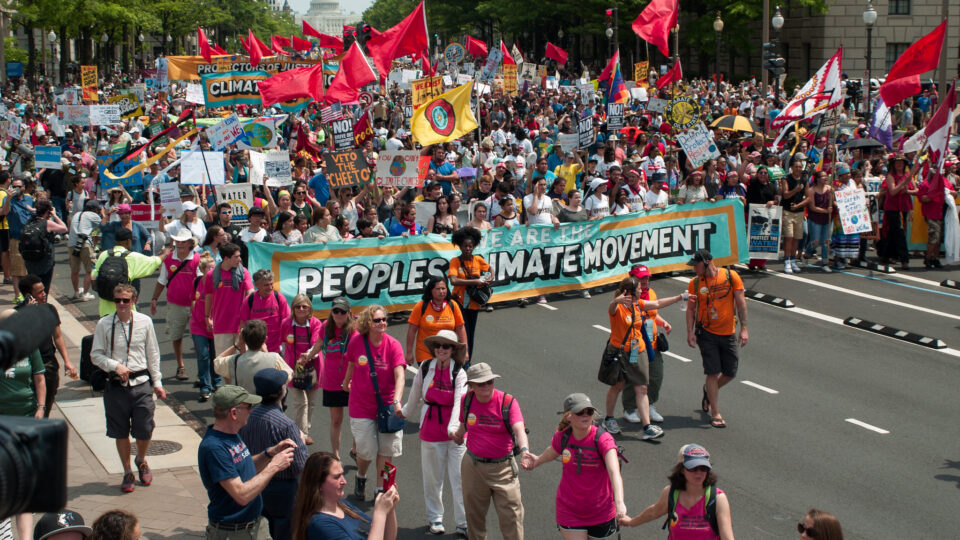
Global warming continues and the planet cannot withdraw from its consequences

Climate science is not popular with the current administration.  Phrases like “climate crisis”, “clean energy”, and “climate science” itself are prohibited from websites, reports, regulations, and other communications by government employees and federal funding recipients.  Once again, the United States is turning away from climate mitigation efforts and will have a drastically reduced ability to forecast disasters and head off their worst consequences.

Meanwhile, global warming continues, and the planet can’t withdraw from its consequences.

The hottest year in nearly two centuries was recorded in 2024.  According to a new report by the World Meteorological Organization, there is an 80% chance that at least one year over the next four will surpass 2024 as the warmest year on record. 

The consequences of warming will probably vary widely across the world.  But likely occurrences include rapid thawing of Arctic Sea ice, drier seasons in the Amazon, excess rain in places like Alaska, northern Europe, and the Sahel in north-central Africa.  Hotter temperatures lead to more evaporation of water from plants and soil, leading to droughts and failed crop seasons.  The warmer atmosphere holds more moisture, which increases the chance of flooding from downpours and stronger hurricanes.

Ignoring what is going on with the climate or thinking that it will only impact other people in other places is nothing short of foolhardy.  The planet does not care about politics.  What is happening to the climate will be in just about everyone’s backyard soon enough.

**********

Web Links

‘It’s pretty bleak’: A warming planet is poised to get even hotter, forecasters warn

Photo, posted December 1, 2015, courtesy of Adam Matsumoto via Flickr.

Earth Wise is a production of WAMC Northeast Public Radio
A record year for solar and batteries

March 20, 2025 By EarthWise Leave a Comment

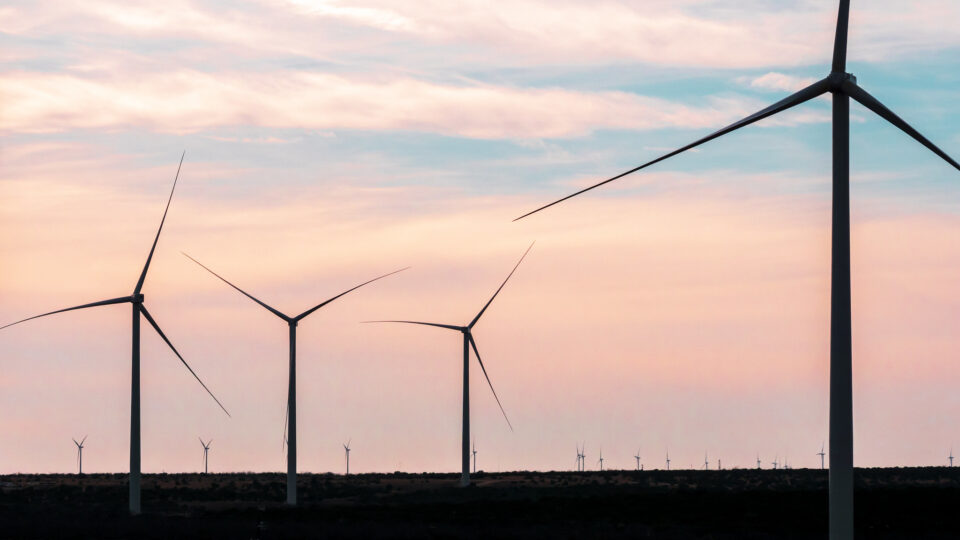
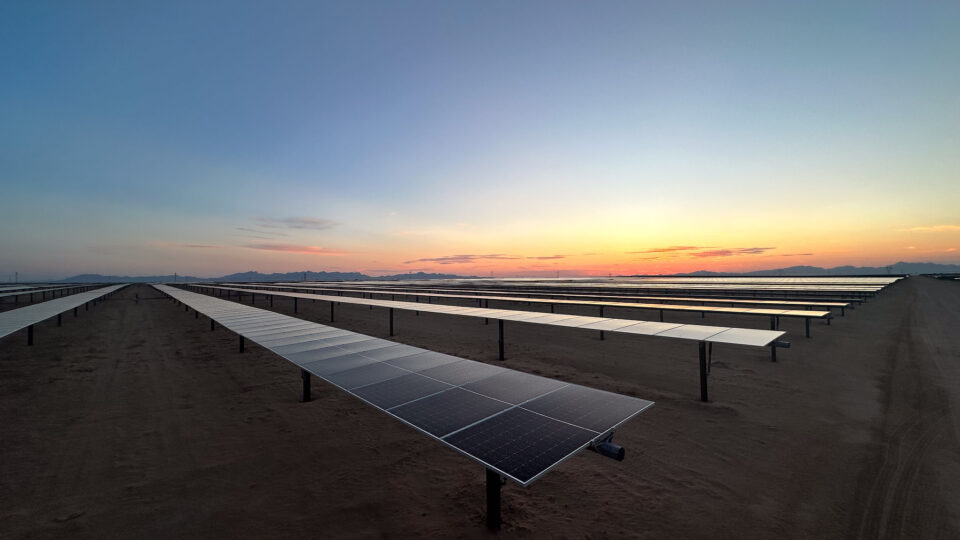
According to a recent forecast from the U.S. Energy Information Administration, solar panels and batteries will account for more than 80% of new power capacity installed in the U.S. this year.  The record growth of these technologies is hastening the decline of coal power in this country.

Solar power alone will account for more than half of the country’s new power capacity and most of it will be in Texas and California.

Wind power is expected to provide only 12% of new capacity this year.  Wind is facing rising costs, lengthy permitting, public backlash, and clear opposition from the Trump administration which is determined to stifle its growth.

As renewable energy grows, coal power continues to decline.  The U.S. will retire twice as much coal power this year as it did last year, closing about 5% of the country’s capacity.  Not only are older coal plants shutting down; the remaining plants are generating less power.

One of the most significant changes in technology over the last few decades has been the massive drop in the cost of clean energy.  Solar photovoltaic costs have fallen by 90% in the past decade, onshore wind by 70%, and batteries by more than 90%.  The connection between cost reduction and volume has been very strong:  costs of these technologies have fallen by around 20% every time global cumulative capacity doubles.   Over the past 40 years, solar power has transformed from one of the most expensive electricity sources to the cheapest in many countries.  That trend is likely to continue.  Setting politics aside, market forces generally are the strongest driver.

**********

Web Links

U.S. Solar and Batteries Headed for Record Year

Photo, posted December 16, 2024, courtesy of Bureau of Land Management California via Flickr.

Earth Wise is a production of WAMC Northeast Public Radio

The battle over wolves

January 10, 2025 By EarthWise Leave a Comment

Thirty years ago, wolves were reintroduced into Yellowstone National Park.  Grey wolves had almost disappeared entirely throughout the northern Rockies.  They were listed as endangered by the federal government since 1974.  The reintroduction was hailed as a wildly successful effort yielding significant benefits to Yellowstone’s ecosystems.

Since then, wolf populations have increased greatly across the West.  There are at least 7,000 or 8,000 wolves living in Western States.  But this conservation triumph is considered a plague by some residents of those states.   Wolves kill livestock, game animals, and sometimes pets.

Because of this backlash, federal protections have been lifted in some states, leaving wolf management up to state agencies.  Montana, Idaho, Wyoming, eastern Oregon, eastern Washington, and parts of Utah have no federal protections and hunting wolves is legal.  Initial, careful hunting quotas in some states have given way to widespread killing driven by anti-wolf sentiment. 

Emotions run high with regard to wolves, and unlike that of other protected species, the fate of wolves is a matter of politics rather than science or law.  State legislatures have gotten involved, often trying to prove that they hate wolves more than the next guy. 

Wolves are resilient animals and are likely to survive unless there is an organized government strategy like what took place in the 1900s with unlimited poisoning and shooting.  But experts note that wolf populations must persist at a high enough level in order to play important ecological roles.

**********

Web Links

As Wolf Populations Rebound, an Angry Backlash Intensifies

Photo, posted March 7, 2023, courtesy of Eric Kilby via Flickr.

Earth Wise is a production of WAMC Northeast Public Radio

Politics and plastic

December 19, 2024 By EarthWise Leave a Comment

Political differences are blocking plastic reforms

The world currently produces nearly half a billion tons of plastic each year.  This is more than twice the amount it produced 20 years ago.  Half of all plastics ever manufactured have been made in the past 20 years.  Plastic waste is everywhere.  About eight million tons of plastic waste escapes into the ocean each year.

Environmental groups have urged nations to adopt a legally binding treaty to address the ever-growing problem of plastic pollution. The United Nations climate conference in South Korea last month took up the issue of reaching agreement on such a treaty.  At what was supposed to be the final round of talks on the topic, delegates could not bridge wide differences on what such a treaty should contain.

The main bone of contention was whether the treaty should include limits on plastic production itself.  Saudi Arabia, Russia, Kuwait, and other oil-producing countries opposed any curbs on plastic production.   They also opposed the phase-out of harmful chemicals used in the production of plastic.

The Saudi delegation claimed that if the issue of plastic pollution is addressed, there should be no problem with producing plastics.  They said the problem is pollution itself, not plastics.  They proposed a focus on improving recycling and waste management.

Of course, preventing plastic pollution from occurring is an extremely challenging thing to do.  Delegates from countries pushing for a wide-ranging treaty – led by Rwanda – were unwilling to accept a toothless theory lacking real constraints on the plastics industry.

As the conference ended, delegates said that they would reconvene in future months to try again to produce a treaty.  No date or place has been announced.

**********

Web Links

Nations Fail to Reach an Agreement on Plastic Pollution

Photo, posted February 4, 2023, courtesy of Ingrid Taylar via Flickr.

Earth Wise is a production of WAMC Northeast Public Radio

Generations Z and Alpha and climate change

November 19, 2024 By EarthWise Leave a Comment

Gen Z and Gen Alpha are overwhelmingly concerned about climate change.

People’s views and level of concern about climate change tend to vary according to age, political affiliation, and other demographic categories.  But one clear trend is that young people are overwhelmingly concerned about climate change.  Given that they will ultimately suffer from its effects far more than older generations, this is not really surprising.

A new study investigated the views about climate change of 16,000 young Americans aged 16 to 25.  The study found that about 60% of respondents said they were either very or extremely worried when asked “How worried, if at all, are you about climate change and its impact on people and the planet?”  More than 85% said they experienced at least some level of climate anxiety.

There was similarity in responses across dramatically different geopolitical regions of the country.  Responses never differed by more than 25% across all surveyed populations.  Concern about climate change transcended political identification.  While the Republican group did have a lower level of concern, endorsement of climate issues was still above 50% no matter what group people identified with.

People from Generations Z and Alpha, those with fewer economic resources, people of color, and other vulnerable communities are experiencing the highest levels of climate distress. Research finds that 3% of Americans are experiencing clinically significant climate anxiety. 

The true number of people experiencing climate-triggered anxiety may be much higher as some people are hesitant or reluctant to even acknowledge that climate change is happening.  Some level of climate anxiety is undoubtedly beneficial for climate action.  People who are experiencing distress are the ones most likely to take action. 

**********

Web Links

The Depths of Their Discontent: Young Americans Are Distraught Over Climate Change

Photo, posted April 23, 2022, courtesy of Mark Dixon via Flickr.

Earth Wise is a production of WAMC Northeast Public Radio

Electric cars: Boom or bust?

September 25, 2024 By EarthWise Leave a Comment

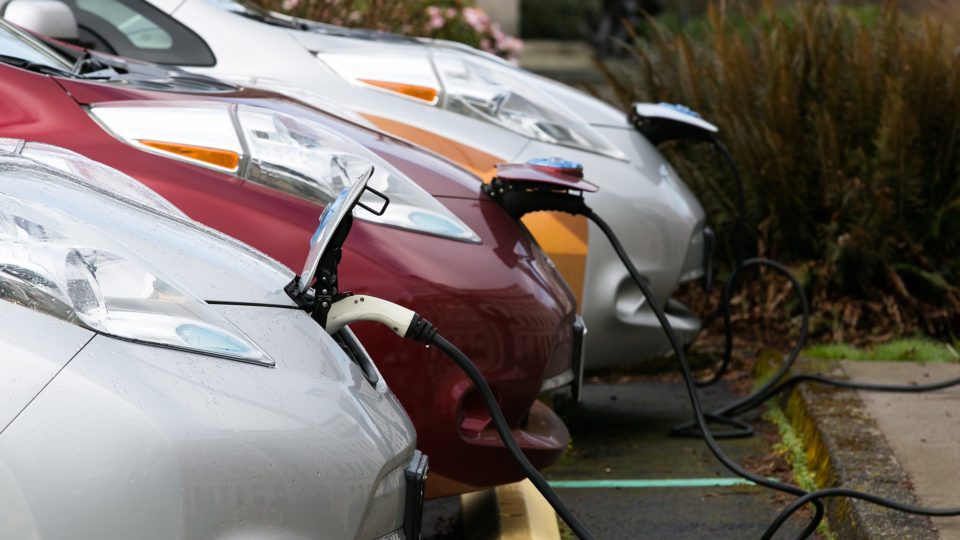
Electric cars are booming

Media coverage of electric cars in this country is pretty confusing.  Are electric cars taking over or has the EV bubble burst?

EVs currently represent about 8% of the US new car market.  But they continue to face some relatively unique headwinds in this country.  A very powerful and influential oil industry makes sure that anti-EV stories occupy center stage in the media.  Traditional car dealers don’t want to sell EVs because they don’t make much money from parts and service.  And EVs often find themselves tangled up in American politics.

Meanwhile, the rest of the world tells a very different story.  Globally, EVs constitute 20% of new car sales, but in some places, they are doing much better than that.

So far this year, almost 87% of new car sales in Norway are electric and in August, the figure was 94%.  Norway has some incentives in place for EV owners, but the fact that nearly all new cars on the road are electric is far more than the result of incentives.

One might argue that Norway, a country with only 5 million people, faces a much easier task of transitioning to EVs.   But how about China with its 1.4 billion people?  In July, plug-in vehicles in China were 51% of new auto sales.  And the numbers continue to rise.

There are plenty of articles out there explaining why electric cars just can’t meet people’s needs, have insurmountable problems, and how having too many of them would collapse electric grids and otherwise wreak havoc with society.  Apparently, the Norwegians and Chinese, among a growing number of other countries, haven’t gotten the memo.

**********

Web Links

Elbil Thinks Electric Car Sales In Norway Could Hit 100% By Next Year

Photo, posted July 27, 2024, courtesy of Amaury Laporte via Flickr.

Earth Wise is a production of WAMC Northeast Public Radio
A Huge American Lithium Discovery | Earth Wise

October 12, 2023 By EarthWise Leave a Comment

A huge discovery of lithium in the United States

Human history has often been described in terms of a succession of metal ages:  the copper age, the bronze age, and the iron age.  In many ways, we have now entered the lithium age.  The light metal goes into the batteries that power smartphones, electric vehicles, and massive storage banks for the power grid.  Lithium has become a critical strategic resource.

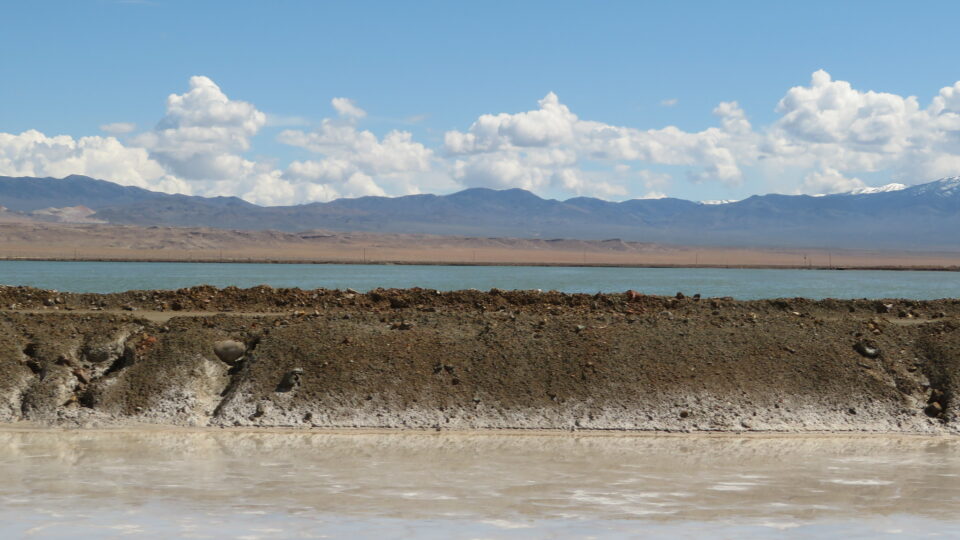
As it stands now, the U.S. gets most of its lithium from imports from Australia and South America.  Major lithium sources are not commonplace; in 2022 there were only 45 lithium mines in the world.  Many of the known deposits are not in North America but in Chile, Bolivia, Argentina, China, and Australia.  The current largest known lithium deposits lie beneath the salt flats of Bolivia.

Lithium Americas Corporation, a company dedicated to advancing lithium projects to the stage of production, funded research over the past decade that has identified vast deposits of lithium-rich clay in a dormant volcanic crater along the Nevada-Oregon border.  The McDermitt Caldera is estimated to hold between 20 and 40 million tons of lithium, which would make it the largest deposit in the world.

There are many questions still to answer.  It is not clear how easy it will be to extract lithium from the clay, in particular how expensive or carbon-intensive it will be.  There are also political complexities since the area where the lithium deposit was found is considered to be unceded ancestral land for both the Paiute and Shoshone tribes.

Apart from a dearth of domestic sources of lithium, the US also lags well behind China in lithium processing capabilities.  The country has catching up to do in the new lithium age.

**********

Web Links

America Just Hit the Lithium Jackpot

Photo, posted April 19, 2020, courtesy of Ken Lund via Flickr.

Earth Wise is a production of WAMC Northeast Public Radio

A Tough Day For Big Oil | Earth Wise

June 24, 2021 By EarthWise Leave a Comment

Big blows for Big Oil

May 26th was a difficult day for big oil.  Three major setbacks for the industry occurred on the same day.

A Dutch court ruled in a case against Shell, ordering the company to cut emissions by 2030 in accordance with the goals of the Paris Climate Agreement.  The case was brought by climate activists, ultimately comprising 17,000 co-plaintiffs.  The ruling will probably be appealed but it does represent a major precedent for holding polluters accountable for their actions.

That same day, shareholders of ExxonMobil replaced at least two of the company’s board members with candidates dedicated to decarbonizing the company. Having two board seats filled by climate supporters is not likely to radically transform the company, but it is a powerful rebuke of Exxon’s iconic business model of “drill, baby, drill”.

Finally, Chevron’s shareholder meeting on May 26th saw 61% of shareholders voting for the company to reduce its so-called Scope 3 emissions, meaning the pollution from all the fossil fuels it sells.  In addition, 48% of shareholders voted to demand a report on Chevron’s dark money lobbying.  That initiative did not carry, but nevertheless, nearly half of the company’s shareholders expressed concern about how Chevron is corrupting the political process in order to achieve its ends.

These events are examples of mainstream activism where the pressure on fossil fuel companies is not just coming from the usual environmental activists but rather from shareholders, who after all actually own the companies.  The fossil fuel industry still wields enormous power, but it appears increasingly possible to challenge it and even to win.

**********

Web Links

A landmark day in the fight against fossil fuels

Photo, posted August 15, 2014, courtesy of Mike Mozart via Flickr.

Earth Wise is a production of WAMC Northeast Public Radio.

California’s Silent Health Hazard | Earth Wise

April 23, 2021 By EarthWise Leave a Comment

California oil wells a silent public health hazard

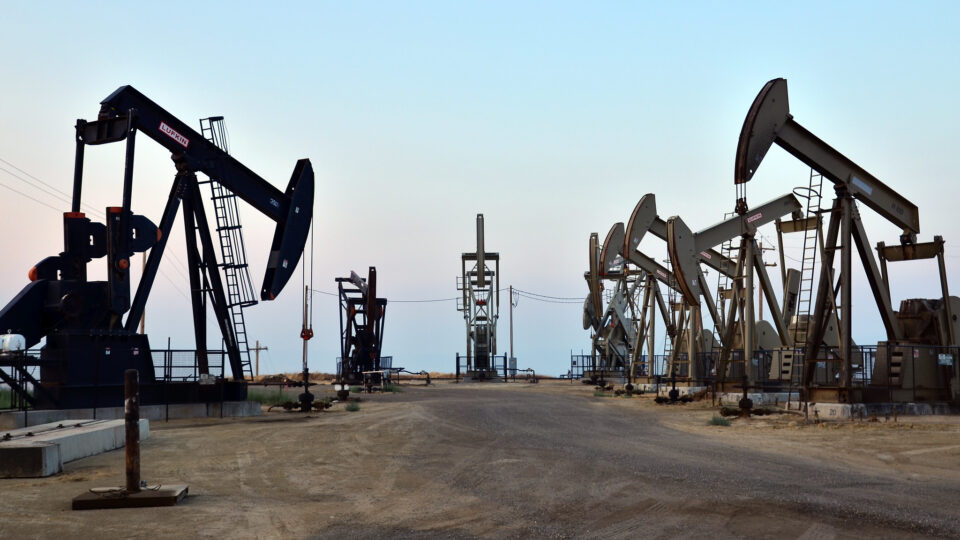
For people in the Los Angeles area, it is a familiar sight to see oil wells pumping away on hillsides, in residential neighborhoods, and other places.  In fancier parts of town, oil wells are hidden behind facades located next door to dry cleaners and lamp stores.

Every year, more than 140 million barrels of oil are extracted from the state of California, coming from a vast subterranean formation that spans nearly the entire state along the coast and spreading inland as well.  About 30% of the state’s oil comes from the Los Angeles area.

The oilfields are mostly old, and their wells played out.  As a result, high-tech drilling and a slew of toxic chemicals are needed to extract the last dregs of crude oil.

Unlike more rural oil-producing states, where oilfields might be uninhabited except for the people who work on them, drilling in California happens to a large degree in residential settings.  Over the years, it has become increasingly clear that certain chemical byproducts of oil extraction, among them benzene and hydrogen sulfate, can cause a variety of health problems.  For example, recent research has found connections between exposure to oil and gas well sites and spontaneous pre-term births, low-birthweight babies, and other adverse birth outcomes.

Statewide, little is being done to protect residents and schoolchildren from any of the suspected consequences of living near an oil or gas well.  Regulations are weak and spottily enforced because the oil industry still wields a lot of political power in the state.  Environmental groups and justice advocates are actively seeking to create new protections for California citizens, but it remains an uphill battle.

**********

Web Links

The Oil Well Next Door: California’s Silent Health Hazard

Photo, posted July 11, 2017, courtesy of John Ciccarelli / Bureau of Land Management California via Flickr.

Earth Wise is a production of WAMC Northeast Public Radio.

Paying To Combat Climate Change | Earth Wise

November 2, 2020 By EarthWise Leave a Comment

Fighting climate change

The majority of Americans believe that climate change is happening, that human activities are largely responsible, and are actually willing to put up their own money to help fight it.   Unfortunately, these views diverge sharply along party lines and, as in many other areas these days, the will of the overall majority has little influence on policy.

According to Yale University research, 73% of adults think that global warming in happening and 57% think it is mostly caused by human activities.  Furthermore, only 32% believe it is due to natural forces.

A survey conducted in the U.S. in August found that more than two-thirds of Americans – actually 70% – indicated willingness to donate a percentage of their personal income to support the fight against climate change.

Breaking that down further, 28% were willing to provide less than 1% of their income, 33% were willing to contribute 1-5% of their income, 6% said they would give 6-10% of their income, and 3% said they would contribute more than 10% of their income.  On the other hand, roughly 30% indicated that they were unwilling to contribute.

The survey also looked at opinions on how the fight against climate change should be paid for.  The majority (59%) chose government incentives for both businesses and consumers.   Three other options each favored by over 40% of those surveyed were taxes, conservation programs, and business investments. 

Another finding of the survey was that 44% are dissatisfied with the job that the federal and state governments are doing to address climate change, 35% are somewhat satisfied, and only 21% are very or completely satisfied with the government’s role.

**********

Web Links

Yale Climate Opinion Maps 2020

Two-thirds of Americans are willing to donate part of their income to fight climate change

Photo, posted April 29, 2017, courtesy of majunznk via Flickr.

Earth Wise is a production of WAMC Northeast Public Radio.

Renewable Energy And The Post-COVID World | Earth Wise

June 2, 2020 By EarthWise Leave a Comment

As is the case for virtually all sectors of the global economy, the short-term prospects for wind and solar power look pretty grim.  Lockdowns, social distancing requirements, and financial upheavals have put many new projects on ice and have halted production at factories making solar panels and wind turbines.  Sales of home solar have struggled as people have put off spending during the economic slowdown.

Ironically, the shutdowns aimed at reducing the spread of the Coronavirus have led to renewable sources accounting for an increased share of power generation.  Global energy demand has plummeted and, because of the low cost of solar and wind power, sources like coal and nuclear power have been curtailed in favor of the renewables.  The dramatically reduced demand has pushed oil and gas prices to historic lows and has left fossil fuel companies struggling to find storage space for the glut of product.

When the world emerges from the pandemic, the question is whether renewable energy will end up on a faster track than before or will end up in a long-term slowdown.  The answer will depend to large extent on the choices political leaders make.

Leaders will unquestionably be designing economic recovery packages.  Such packages could accelerate the shift towards wind and solar power, or they could prop up the fossil fuel economy.  Unfortunately, leaders are prone to be motivated by lobbyists more than by the greater needs of society.  The global economic upheaval represents a real opportunity to change the pace of efforts to address climate change.  Whether that change is a positive one or a negative one is just another looming question facing society when we emerge from the pandemic.

**********

Web Links

How Renewable Energy Could Emerge on Top After the Pandemic

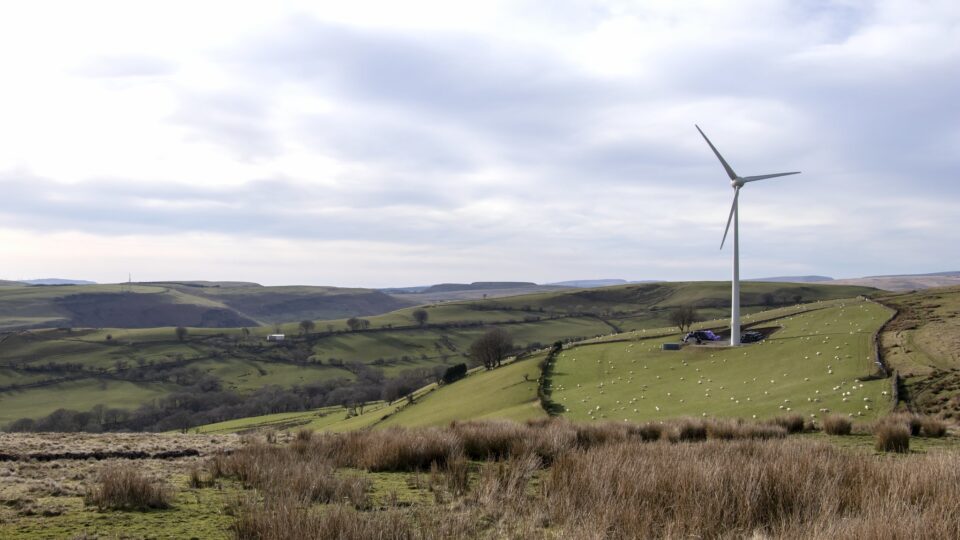
Photo, posted April 12, 2020, courtesy of Jeremy Segrott via Flickr.

Earth Wise is a production of WAMC Northeast Public Radio.

The Danger Of Relying On Future Technology | Earth Wise

May 22, 2020 By EarthWise Leave a Comment

technology and climate change

The need to mitigate the effects of climate change has been a global focus for about 40 years and has seen ever-changing views on what actions are needed.  The historical record has been defined by over-reliance on promises of new technology to solve climate change.  Looking to future technology to save the environment has been an excuse to postpone necessary action and avoid inconvenient changes in how we do things.

A study at Lancaster University in the UK published in Nature Climate Change exposes how such promises have raised expectations of more effective policy options becoming available in the future and have enabled the continued politics of inadequate action and skirting around the truth.

Even after four decades, rather than acting forcefully to reduce emissions, we are hoping that nuclear fusion power, giant carbon sucking machines, ice-restoration using vast numbers of wind-powered pumps, and spraying particulates into the atmosphere can address the climate crisis rather than dramatic changes in fossil fuel use.

The researchers mapped the history of climate targets in five phases.  Early on, the focus was on improved energy efficiency, large-scale enhancement of carbon sinks, and nuclear power.  Next, the focus was on cutting emissions with efficiency, fuel switching, and carbon capture and storage.  After that, bioenergy was the major focus.  Then, global carbon budgeting and potential negative emission technologies.  Currently, the focus is on temperature outcomes rather than emission targets.

Each novel promise competes with existing ideas and downplays any sense of urgency.   The researchers conclude that putting our hopes on yet more new technologies is unwise.  The time to act is now.

**********

Web Links

Why relying on new technology won’t save the planet

Photo, posted February 13, 2019, courtesy of Jonathan Cutrer via Flickr.

Earth Wise is a production of WAMC Northeast Public Radio.

An Upside Of Climate Change

October 15, 2019 By EarthWise Leave a Comment

In contrast with most countries in the world, the main political factions in the United States have very different views of climate change.  Somehow, one side of the aisle remains skeptical about the changing climate even as temperature records are broken, arctic ice disappears, and powerful storms become increasingly common.

But putting aside the increasingly inexplicable political schism about climate change, there are instances where the consequences of the warming climate are not all dire.  In fact, there are places where climate change is having a positive effect.

One such place is West Virginia, where research studies are finding a real upside to the changing climate.

A recent study of the climate in West Virginia over the period from 1900 to 2016 found the maximum temperatures trended downward, average minimum temperatures ascended, and annual precipitation increased.  On average, West Virginians are now seeing cooler summers, warmer winters and wetter weather.

Given these changes, there have been big changes in agriculture.  Yields of important crops like hay, corn, winter wheat, and soybeans have all increased.  The winter season has shrunk by as much as 20 days and the growing season itself has increased by approximately 13 days.  A number of crops that historically did not fare well in West Virginia may now become viable.  It may even be possible to pursue double cropping, meaning that the longer growing season may allow farmers to raise one crop, harvest it, and then raise and harvest a second crop within the same year.

In the big picture, climate change is shaping up as a global calamity, but for a few people in certain places – such as West Virginia – it may have some real upside.

**********

Web Links

The positive implications of…climate change? WVU researcher sees agricultural, food availability and economic possibilities

Photo, posted November 12, 2014, courtesy of Mike via Flickr.

Earth Wise is a production of WAMC Northeast Public Radio.

Wildlife And The Border Wall

February 14, 2019 By EarthWise Leave a Comment

The border between the United States and Mexico is nearly 2,000 miles long, stretching from San Ysidro, California to Brownsville, Texas.  Discontinuous barriers currently cover approximately 650 miles of our southern border. As the particulars of how to better secure the remaining 1,350 miles of border are worked out, one thing is abundantly clear: extending physical barriers would negatively impact wildlife and the environment.

The Trump Administration has called for a 1,000-mile wall, which would cut across land that includes important habitats for wildlife.  According to an article signed by nearly 3,000 scientists, this plan would “threaten some of the continent’s most biologically diverse regions” by inhibiting species movement and triggering flooding. The paper, which was published in the journal Bioscience, highlights how more than 1,500 native animal and plant species would be affected by the wall, including 62 that are listed as endangered or vulnerable.

An extended border wall would not only impede movement of many wildlife species but it would also put pressure on creatures already in peril, such as the Mexican gray wolf and the Sonoran pronghorn.  Other at risk animals include the ocelot, black bear, and desert bighorn sheep. 

According to researchers, extending the border wall could cause problems for low-flying birds and insects. Even plants, including the endangered wildflower Zapata bladderpod and the threatened whiskerbush cactus, are particularly at risk.

According to a 2011 study, bird-watching and other forms of ecotourism in the Lower Rio Grande Valley brought in more than $344 million in economic activity and approximately 4,400 jobs. 

Preserving our natural heritage must be part of this national security discussion. 

**********

Web Links

Nature Divided, Scientists United: US–Mexico Border Wall Threatens Biodiversity and Binational Conservation

Photo, posted December 14, 2014, courtesy of Tony Webster via Flickr.

Earth Wise is a production of WAMC Northeast Public Radio.

Support For A Green New Deal

January 23, 2019 By EarthWise Leave a Comment

Shortly after the November election, activists held a sit-in at Nancy Pelosi’s office calling for a Green New Deal – a plan to transform the U.S. energy economy in order to mitigate the effects of climate change as well as address various issues of economic justice.   While a number of Congress people have pledged to back the creation of a select committee to develop such a plan, it remains a political football and it remains to be seen whether anything will come of the idea.

There appears to be much less reticence on the part of voters, at least according to a survey conducted by the Yale Program on Climate Change Communication at the end of November.  The survey gave a brief explanation of the Green New Deal and asked respondents “How much do you support or oppose this idea?”

The result was that 81% of registered voters either “strongly” or “somewhat” supported it.  Support was stronger among Democrats at 92%, but a majority of Republicans were also in favor.  Some 57% of self-identified conservative Republicans even thought it was a good idea.

The Green New Deal would accelerate the transition from fossil fuels to clean, renewable energy.  The goal would be to generate 100% of the nation’s electricity from renewable sources within the next 10 years; upgrade the nation’s energy grid, buildings, and transportation infrastructure; increase energy efficiency; invest in green technology research and development; and provide training for jobs in the new green economy.

Even though most Americans have strong support for the ideas of the Green New Deal, it is quite uncertain whether such an initiative could become a reality, given that very influential special interest groups – notably the fossil fuel industry – will be fighting it tooth and nail.

**********

Web Links

81% of Voters Support a Green New Deal, Survey Finds

Photo, posted March 19, 2012, courtesy of Kate Ausburn via Flickr.

Earth Wise is a production of WAMC Northeast Public Radio.

Clean Water In The Corn Belt

October 26, 2018 By EarthWise Leave a Comment

https://earthwiseradio.org/wp-content/uploads/2018/10/EW-10-26-18-Clean-Water-in-the-Corn-Belt.mp3

Iowa is grappling with a growing battle over the integrity of its water.  Nitrogen and phosphates have been flowing in ever-increasing quantities into Iowa’s public water supplies and dealing with the problem has become a major political issue in the state.

[Read more…] about Clean Water In The Corn Belt

Trouble With China And Climate Progress

July 12, 2018 By EarthWise Leave a Comment

https://earthwiseradio.org/wp-content/uploads/2018/07/EW-07-12-18-Trouble-with-China-and-Climate-Progress.mp3

With the United States backing away from the Paris climate agreement and with Europe taking a less active role in climate negotiations, China has become the bellwether on global climate change.  Recent climate negotiations in Bonn, Germany were rather acrimonious as countries accused other countries of not doing their part or keeping their promises.

[Read more…] about Trouble With China And Climate Progress

Whom Should We Save?

April 27, 2018 By EarthWise Leave a Comment

https://earthwiseradio.org/wp-content/uploads/2018/04/EW-04-27-18-Whom-Should-We-Save.mp3

The list of endangered species continues to get longer around the world and society is increasingly faced with the nearly impossible decision of which ones to take off life support.

[Read more…] about Whom Should We Save?

Green Tech In 2018

January 25, 2018 By EarthWise Leave a Comment

https://earthwiseradio.org/wp-content/uploads/2018/01/EW-01-25-18-Green-Tech-in-2018.mp3

Clean power gathered unprecedented momentum in 2017.  With climate problems on the rise, national and local governments are pushing for more renewable energy and the end of fossil-fueled cars.  Corporations around the globe are making major commitments to green technology.  Despite the Trump Administration’s open hostility toward clean power and its rejection of climate science, American states, municipalities and private companies are all getting with the program.

[Read more…] about Green Tech In 2018

Sea Turtle Populations Are Rebounding

November 7, 2017 By EarthWise Leave a Comment

https://earthwiseradio.org/wp-content/uploads/2017/11/EW-11-07-17-Sea-Turtle-Populations.mp3

The increasing disappearance of so many plants and animals around the world has made many scientists believe that we are experiencing a sixth mass extinction.  Despite ongoing conservation efforts, living things are struggling with habitat loss, climate change, and many other natural and man-made pressures.  Conservation success stories seem to be rare events.

[Read more…] about Sea Turtle Populations Are Rebounding

  • Page 1
  • Page 2
  • Go to Next Page »

Primary Sidebar

Recent Episodes

  • An uninsurable future
  • Clean energy and jobs
  • Insect declines in remote regions
  • Fossil fuel producing nations ignoring climate goals
  • Trouble for clownfishes

WAMC Northeast Public Radio
WAMC/Northeast Public Radio is a regional public radio network serving parts of seven northeastern states (more...)
Copyright © 2026 ·