• Skip to primary navigation
  • Skip to main content
  • Skip to primary sidebar

Earth Wise

A look at our changing environment.

  • Home
  • About Earth Wise
  • Where to Listen
  • All Articles
  • Show Search
Hide Search
You are here: Home / Archives for weather

weather

Fire And Ice | Earth Wise

January 17, 2022 By EarthWise Leave a Comment

As the climate changes, fire and ice are related

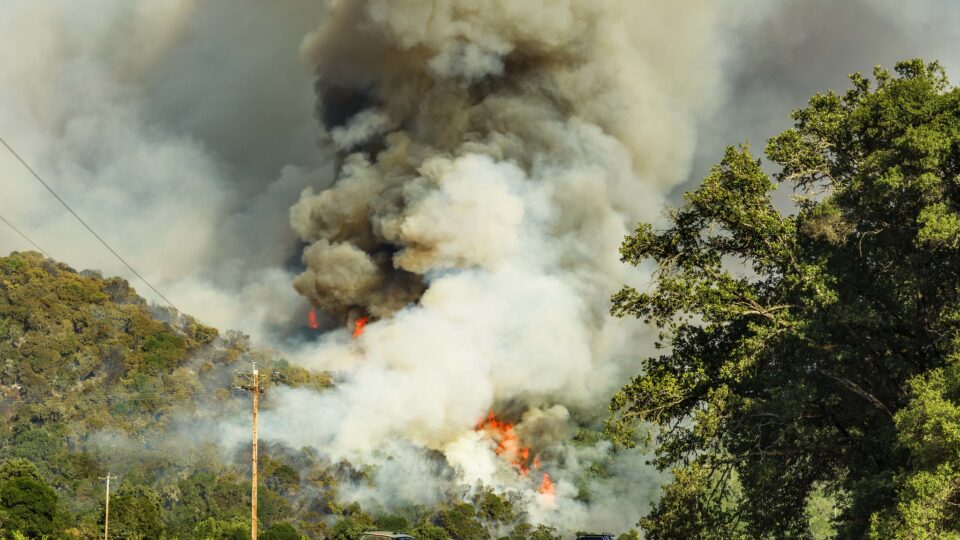
In recent years, there have been countless stories about the effects of the changing climate.  Many of those stories have been about the dwindling sea ice in the Arctic and many others have been about the worsening wildfires in the western United States.   According to a recent study published by the Pacific Northwest National Laboratory, those two things are very much related.

As sea ice in the Arctic melts from July to October, sunlight warms the surrounding land and sea surfaces.  The resulting differences in air pressure create and strengthens a vortex in the atmosphere above the heated area which spins counterclockwise like a cyclone.

The powerful vortex pushes the polar jet stream out of its typical pattern and diverts moist air away from the western United States.  With the jet stream moved off its usual course, a second vortex, this time spinning clockwise, forms under the ridge of the polar jet stream above the Western U.S.  This second vortex brings with it clear skies and dry conditions:  fire-favorable weather.

Arctic sea ice has continually declined at least since the late 1970s.  It is predicted that there will be periods of entirely iceless Arctic waters before the 2050s.  In turn, conditions in the already fire-ravaged West are likely to be further exacerbated.  More than three million acres have burned across California alone during the 2021 wildfire season.

Climate conditions in one part of the world can, over time, influence climate outcomes thousands of miles away.  The research at Pacific Northwest Laboratory reveals how regional land and sea surface warming caused by Arctic ice melting can trigger hotter and drier conditions in the West later in the year.

**********

Web Links

Fire and Ice: The Puzzling Link Between Western Wildfires and Arctic Sea Ice

Photo, posted July 28, 2018, courtesy of Bob Dass via Flickr.

Earth Wise is a production of WAMC Northeast Public Radio.
Global Flood Risk From Melting Ice | Earth Wise

December 13, 2021 By EarthWise Leave a Comment

Melting ice is posing a global flood risk

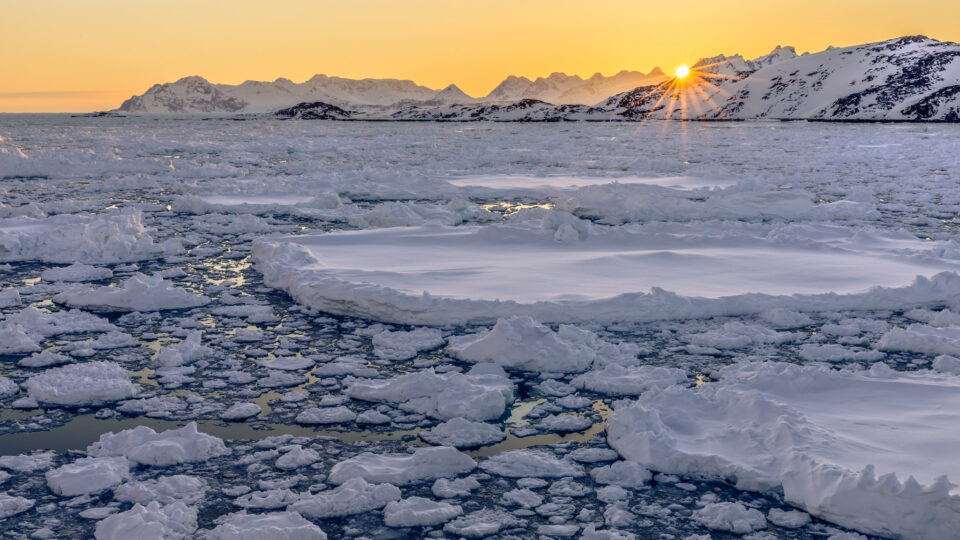
Approximately 10% of the land area on Earth is covered by ice.  This includes glaciers, ice caps, and the ice sheets of Antarctica and Greenland.  Nearly 70% of all fresh water on earth is locked away in ice.  If all this land ice were to melt, global sea levels would rise by more than 200 feet. 

According to new research led by researchers at the University of Leeds in the U.K., global warming is causing extreme ice melting events in Greenland to become more frequent and more intense over the past 40 years, leading to an increased risk of flooding worldwide.   

According to the findings, which were recently published in the journal Nature Communications, approximately 3.85 trillion tons of ice has melted from the surface of Greenland and into the ocean during the past decade alone.  That’s enough melted ice to cover all of New York City with nearly 15,000 feet of water. 

Rising sea levels threaten the lives and livelihoods of those living in coastal communities around the world.  Beyond the obvious risk of flooding in low-lying areas, rising seas also disrupt marine ecosystems that many coastal communities rely on for food and work.       

Rising sea levels can also alter patterns of ocean and atmospheric circulation, which in turn affect weather conditions around the planet.

Estimates from models suggest that melting ice from Greenland will contribute between 1 inch and 9 inches to global sea level rise by 2100. 

These findings are just another reminder of how we need to act urgently to mitigate climate change if we want to prevent the worst-case scenarios from becoming reality. 

**********

Web Links

Increased frequency of extreme ice melting in Greenland raises global flood risk

Photo, posted April 21, 2017, courtesy of Markus Trienke via Flickr.

Earth Wise is a production of WAMC Northeast Public Radio.
How Quickly Can The Planet Recover? | Earth Wise

December 6, 2021 By EarthWise Leave a Comment

Climate change refers to long-term shifts in temperatures and weather patterns.  Historically, these shifts were natural.  But since the Industrial Revolution, scientists have found that the main driver of climate change has been human activities, primarily by adding significant amounts of greenhouse gases into the atmosphere through the burning of fossil fuels. 

Today, climate change is destabilizing Earth’s temperature equilibrium and is having a widespread impact on humans, animals, and the environment.  Some of the consequences of anthropogenic climate change include warmer air and ocean temperatures, shrinking glaciers, increasing spread of pests and pathogens, declining biodiversity, and more intense and frequent extreme weather events. 

But how quickly can the climate recover from the warming caused by an increase in carbon dioxide in the atmosphere? 

Researchers from Johannes Gutenberg-University Mainz in Germany looked into this question by investigating the significant rise in global temperatures that took place 56 million years ago.  Likely triggered by a volcanic eruption,  the increase of between 5 and 8 degrees Celsius was the fastest natural period of global warming that has impacted the climate. 

Because higher temperatures cause rocks to weather faster, the research team decided to analyze the weathering processes that occurred during the warming event 56 million years ago.  Their findings, which were recently published in the Journal Science Advances, indicate that the climate took between 20,000 and 50,000 years to stabilize following the rise in global temperatures.

Climate change is not some distant problem.  It is happening now and it poses a serious threat to all forms of life.  We need to address the problem with more urgency. 

**********

Web Links

How quickly does the climate recover?

Photo, posted August 27, 2017, courtesy of Lt. Zachary West (100th MPAD) / Texas Military Department via Flickr.

Earth Wise is a production of WAMC Northeast Public Radio.
Bomb Cyclones | Earth Wise

December 2, 2021 By EarthWise Leave a Comment

Extreme weather phenomena becoming increasingly common

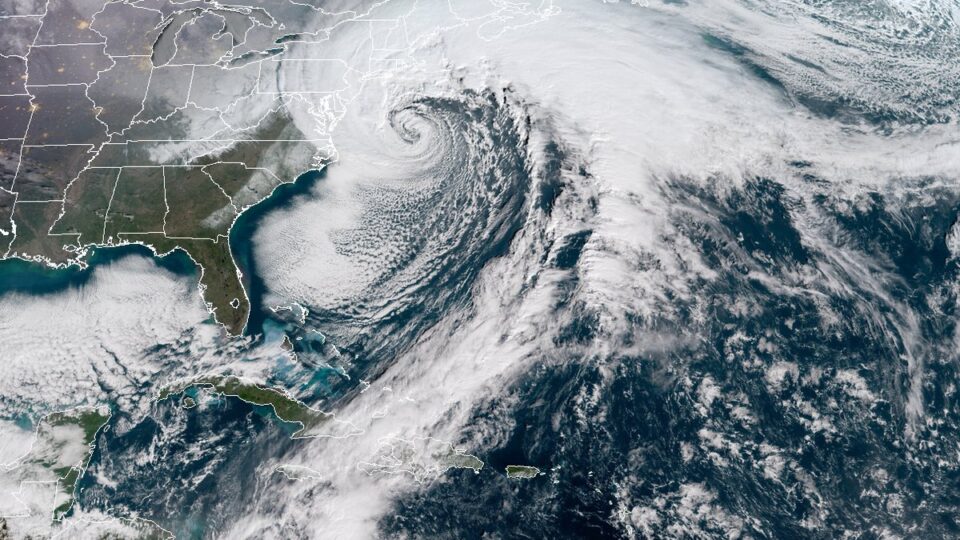
It seems like we are hearing about new weather phenomena pretty frequently these days.  One name that has popped up lately is “bomb cyclones.”  Bomb cyclones, it turns out, are storms that undergo “bombogenesis.”  What that means is a low-pressure area (in other words, a storm) that undergoes rapid strengthening and can be described as a weather bomb, or popularly, a bomb cyclone.

These things usually take place over remote tropical ocean areas but a really intense one struck the Pacific Northwest on October 24th.  The storm off the coast of Washington, with a barometric pressure reading equivalent to a category 4 hurricane, was the second extreme low-pressure storm in the North Pacific in a single week.  Both storms involved pressure drops of more than 24 millibars in 24 hours, making them bomb cyclones.

These storms brought high winds and extreme precipitation that doused wildfires and provided some relief to the extreme drought in Central and Northern California.  Along with these positive effects, however, the storms also caused power outages, flooding, landslides, and mud and debris that washed out roads.

The October 24-25 event brought 16.55 inches of rain to Mount Tamalpais in Marin County, California in a 48-hour period.  Sacramento got 5.44 inches of rain, breaking a 140-year-old record.  And the city had just broken another extreme weather record for the longest dry spell in history.

The storms directed streams of moisture from north of Hawaii toward the West Coast in long, narrow bands of moisture known as atmospheric rivers.  We are learning about all sorts of unfamiliar weather phenomena as extreme weather events become increasingly common.

**********

Web Links

Extratropical Cyclones Drench West Coast

Photo, posted January 4, 2018, courtesy of NOAA/CIRA via Flickr.

Earth Wise is a production of WAMC Northeast Public Radio.

The Coastal Northeast Is A Hotspot | Earth Wise

November 16, 2021 By EarthWise Leave a Comment

Temperatures rising fast in the Coastal Northeast

Global warming is, obviously, a world-wide phenomenon.  When the concept of a 2 degrees Celsius temperature rise is discussed, it refers to the average global temperature and the effects that would have on such things as sea level rise and weather patterns.  But the effects of the changing climate are not homogeneous.  Very different things can happen and are happening in different places.

One such place is the coastal northeastern United States, which is a global warming hotspot.  The region is heating faster than most regions of North America and, indeed, 2 degrees of summer warming has already happened in the Northeast.

New research led by the University of Massachusetts Amherst has determined that this heating is linked to significant alterations in the ocean and atmospheric conditions over the North Atlantic.

Several studies have found that the Atlantic Meridional Circulation is slowing down.  The AMOC conveys warm, salty water from the tropics north towards Greenland, where it cools and sinks.  The cooled water than flows back south as deep-water currents.  As the warming climate melts glaciers in Greenland, the circulation slows down, less cooled water arrives in the south, and there is more heating of the ocean off the Northeastern coast.

At the same time, the North Atlantic Oscillation, a weather phenomenon that governs the strength and position of the winds that blow from the U.S. over the Atlantic, has tended to settle into a pattern that enhances the influence of ocean air on the eastern seaboard climate.  Warmer ocean air being blown over the region has led to rising temperatures in Boston, New York, and Providence, Rhode Island.

As the average temperature of the world rises, some places will warm more quickly and others more slowly.

**********

Web Links

The Coastal Northeastern U.S. Is A Global Warming Hotspot

Photo, posted August 8, 2010, courtesy of Doug Kerr via Flickr.

Earth Wise is a production of WAMC Northeast Public Radio.
Weather Disasters On The Rise | Earth Wise

November 1, 2021 By EarthWise Leave a Comment

Weather disasters are on the rise as the planet warms

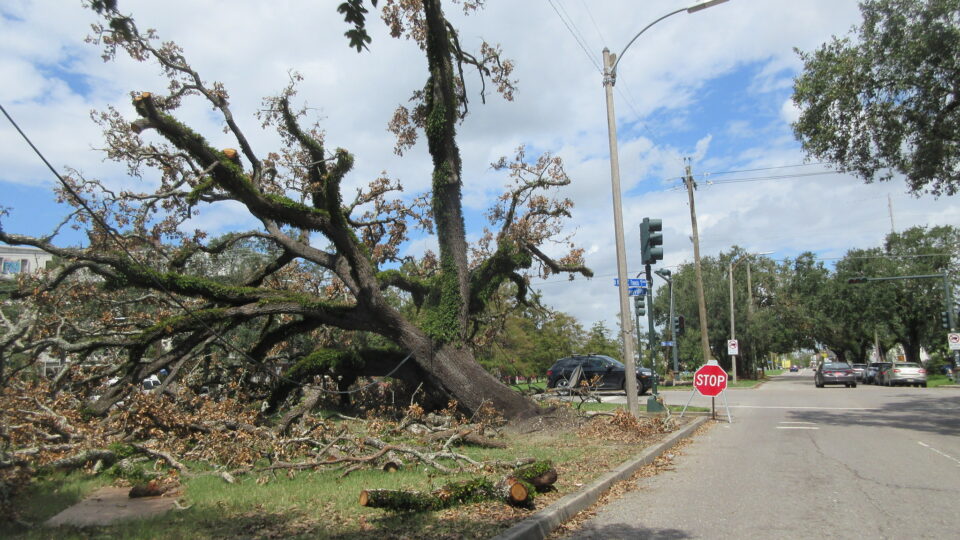
It seems like the news is always filled with stories about storms, heatwaves, drought, and forest fires.  This is because these things are happening with unprecedented frequency.

According to a new report from the World Meteorological Organization, weather disasters have become five times more common since 1970, in large part a result of climate change.  Extreme weather, climate, and water events are increasing and are becoming more frequent and severe in many parts of the world.

Between 1970 and 2019, there were more than 11,000 reported disasters attributed to weather, resulting in over 2 million deaths and $3.64 trillion dollars in economic losses.

Storms and floods were the most prevalent disasters.  The five costliest disasters ever are all hurricanes that have struck the United States over the past 20 years.

Droughts accounted for the greatest number of human losses, with severe droughts in Ethiopia, Mozambique, and Sudan responsible for 650,000 deaths.

About the only positive news in the report was that even as disasters have grown more prevalent, deaths have declined, dropping from about 50,000 a year in the 1970s to fewer than 20,000 in the 2010s.  This is a result of better early warning systems.  We have gotten better at saving lives.  But early warning systems are woefully insufficient in much of the developing world, where more than 90% of disaster-related deaths occur.

Of the 77 weather-related disasters that struck between 2015 and 2017, 62 show the influence of human-caused climate change.  With the pace of climate change now accelerating, there are likely to be more frequent catastrophic disasters in the years to come.

**********

Web Links

As the Planet Has Warmed, Weather Disasters Have Grown Fivefold, Analysis Shows

Photo, posted September 16, 2021, courtesy of Flickr.

Earth Wise is a production of WAMC Northeast Public Radio.

The Most Powerful Tidal Turbine Is Generating Power | Earth Wise

October 1, 2021 By EarthWise Leave a Comment

The movement of waves, tides, and currents in the ocean carry enormous amounts of energy that in principle could be harnessed and converted into electricity to help power our homes, buildings, and cities.  Oceans cover nearly three-quarters of our planet, and the most populated areas of the world are located near oceans.

Ocean energy technologies lag far behind solar and wind power and remain mostly undeveloped.  This is a result of the unique challenges standing in the way of widespread deployment.  There are the considerable expenses of early-stage development, the wide variety of technical approaches from which winning strategies have yet to emerge, and the substantial challenges of operating in the ocean environment that include the physical impact of waves and tides, powerful and unpredictable weather, and corrosion and bio-fouling from the ocean and its inhabitants.

Despite these challenges, there is ongoing progress on ocean energy.   The world’s most powerful tidal turbine has come online this past April.  Known as the Orbital O2, the floating turbine is anchored in Scotland’s Fall of Warness, where a subsea cable connects it to the European Marine Energy Center.

The turbine produces enough electricity to meet the demand of about 2,000 homes in the UK.  It is expected to operate for the next 15 years.

Built by the Scottish engineering company Orbital Marine, the O2 was financed by the ethical investment platform Abundance Investment as well as being supported by the Scottish government and the European Union.   Orbital Marine’s goal is to commercialize this technology to play a role in tackling climate change using this new green energy technology.

**********

Web Links

The world’s most powerful tidal turbine is now generating power

Photo, posted June 12, 2015, courtesy of David Stanley via Flickr.

Earth Wise is a production of WAMC Northeast Public Radio.

The Pacific Northwest Heatwave | Earth Wise

August 18, 2021 By EarthWise Leave a Comment

Analyzing the Pacific Northwest Heatwave

The late-June heatwave in the Pacific Northwest shattered temperature records in dozens of locations.  Cities like Portland and Seattle saw historic high temperatures and one town in British Columbia saw temperatures hotter than ever recorded in Las Vegas.

An international team of weather and climate experts analyzed this extreme weather event and came to a preliminary conclusion that it was a 1-in-1000-year event in today’s climate.  “Today’s climate” means the already warmer conditions that the world is experiencing as a result of the changing climate.

If that analysis is accurate, then such an extreme temperature event would have been at least 150 times rarer in the era before global warming.  In other words, they concluded that it would have been a 1-in-150,000-year event, which means that it would have been virtually impossible in pre-industrial times.

Given that they estimated that the extreme temperatures were a 1-in-1000-year event at this point, it would follow that such events are not about to become commonplace any time soon.  On the face of it, that is somewhat comforting to hear.

However, all of this assumes that global warming will not radically change the statistical distribution of global temperatures.  If that assumption fails to hold, then all bets are off.  Perhaps temperatures like those experienced in the Pacific Northwest might be a 1-in-50-year event, for example, but we just don’t realize it yet.  Follow-up studies will be looking for evidence of significant changes in the distribution of weather events.  For now, a 1-in-1000-year event means there is only a 0.1% chance of occurring in a given year.  That’s good news for the residents of that region.

**********

Web Links

Preliminary analysis concludes Pacific Northwest heat wave was a 1,000-year event…hopefully

Photo, posted June 4, 2016, courtesy of Jody Claborn via Flickr.

Earth Wise is a production of WAMC Northeast Public Radio.

The Hottest June | Earth Wise

July 29, 2021 By EarthWise Leave a Comment

Climate change continues to fuel the heat records

A series of heatwaves from coast to coast caused June 2021 to be the hottest June on record in the U.S. The average June temperature across the contiguous U.S. was 72.6 degrees Fahrenheit, making it the hottest June in 127 years of record keeping and breaking the previous record set in 2016 by nearly a full degree. Eight states had their hottest June on record and six others marked their second hottest June.

One of the most extreme heatwaves in modern history impacted the Pacific Northwest of the U.S. and western Canada late in the month.  Temperature records were not merely broken in the region; they were smashed over an incredibly hot four-day period from June 26th through June 29th when all-time records over 100 degrees were set at dozens of locations.

Portland, Oregon’s average high temperature over this period was 112 degrees, breaking the previous 3-day record by an amazing 6 degrees.  The high on June 28th was 116 degrees, an all-time record for the city.  Seattle set back-to-back all-time heat records of 104 on June 27th and then 108 on June 28th.  In the previous 126 years, Seattle had only hit 100 degrees three times.  It reached that mark 3 days in a row in June.

Crossing the border, the town of Lytton, British Columbia reached a temperature of 121 degrees on June 29th, the third day in a row in which the town registered a new all-time high temperature ever measured in Canada.  To put this in perspective, this temperature is hotter than has ever been recorded in Las Vegas.

June was a hot month indeed.

**********

Web Links

June 2021 was the hottest June on record for U.S.

Astounding heat obliterates all-time records across the Pacific Northwest and Western Canada in June 2021

Photo, posted July 7, 2021, courtesy of Poyson / GPA Photo Archive via Flickr.

Earth Wise is a production of WAMC Northeast Public Radio.
Wind Farms Slowing Each Other Down | Earth Wise

July 13, 2021 By EarthWise Leave a Comment

Wind farms placed too closely together slow one another down

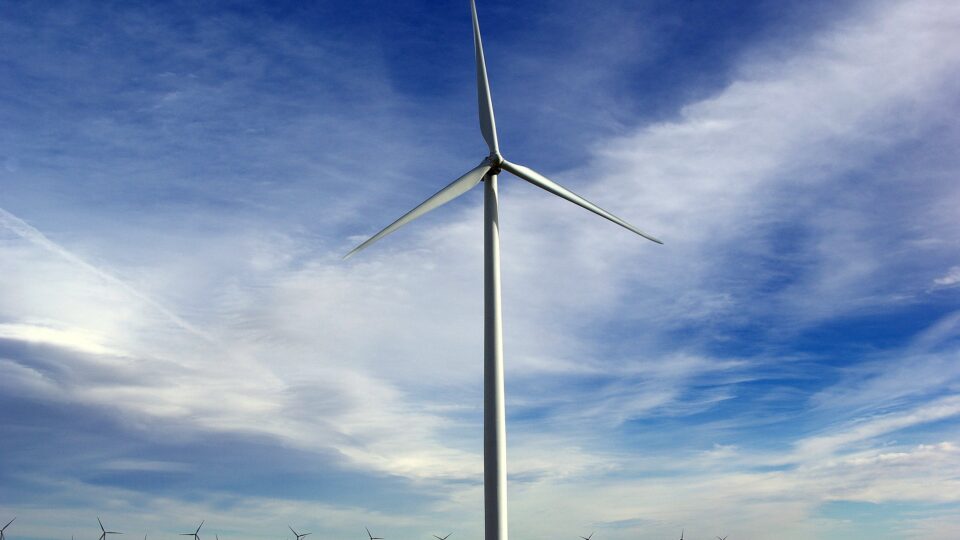
Offshore wind is booming in Europe.  The expansion of wind energy in the German Bight and Baltic Sea has been especially dramatic.  At this point, there are about 8 gigawatts of wind turbines in German waters, the equivalent of about 8 nuclear power plants.  But space in this region is limited so that wind farms are sometimes built very close to one another.

A team of researchers from the Helmholtz Center Hereon, a major German research institute, has found that wind speeds downstream from large windfarms are significantly slowed down.  In a study published in the journal Nature Scientific Reports, they found that this braking effect can result in astonishingly large-scale lowering of wind speeds.

On average, the regions of lowered wind can extend 20-30 miles and, under certain weather conditions, can even extend up to 60 miles.  As a result, the output of a neighboring wind farm located within this distance can be reduced by 20 to 25 percent.

These wake effects are weather dependent.  During stable weather conditions, which are typically the case in the spring in German waters, the effects can be especially large.  During stormy times, such as in November and December, the atmosphere is so mixed that the wind farm wake effects are relatively small.

Based on their modeling, it is clear that if wind farms are planned to be located close together, these wake effects need to be taken into account.  The researchers next want to investigate the effects that reduced wind speeds have on life in the sea.  Ocean winds affect salt and oxygen content, temperatures, and nutrients in the water.  It is important to find out how reduced winds might affect marine ecosystems.

**********

Web Links

Are wind farms slowing each other down?

Photo, posted November 23, 2011, courtesy of David J Laporte via Flickr.

Earth Wise is a production of WAMC Northeast Public Radio.
Should We Block The Sun? | Earth Wise

May 10, 2021 By EarthWise Leave a Comment

The risks of geoengineering need to be better understood

There is growing concern that greenhouse gas emissions are not falling quickly enough to avoid dangerous levels of global warming.  As a result, there is the impetus to examine other options.  Among these are geoengineering, which is one of the most contentious issues in climate policy.  Geoengineering embodies many risks that make even seriously considering it seem risky in itself.

Despite this, the National Academies of Science, Engineering, and Medicine has issued a report saying that governments urgently need to know whether solar geoengineering could work and what its side effects might be.

Solar geoengineering is also called solar radiation modification, which entails reflecting more of the sun’s energy back into space.  This would likely be accomplished by injecting aerosols into the atmosphere, much like what happens after large volcanic eruptions.

Schemes for solar geoengineering raise numerous issues.  Although solar geoengineering might cool the earth’s surface to a global temperature target, the cooling may not be evenly distributed, affecting many ecosystem functions and biodiversity.   It would likely upset regional weather patterns in potentially devastating ways, for example by changing the behavior of the monsoon in South Asia.  It might dangerously relax public commitments to reduce greenhouse emissions. 

Despite these concerns, or perhaps because of them, the committee that produced the report believes that technology to reflect sunlight deserves substantial funding and should be researched as rapidly and effectively as possible.  Once any geoengineering projects get into the hands of policymakers, they may gather momentum that bypasses the advice of scientists.  So, it important to make progress on the science while geoengineering is still only theoretical.

**********

Web Links

Should We Block the Sun? Scientists Say the Time Has Come to Study It.

To intervene or not to intervene? That is the future climate question

Photo, posted August 3, 2018, courtesy of Tomasz Baranowski via Flickr.

Earth Wise is a production of WAMC Northeast Public Radio.

Climate Change And Farming Productivity | Earth Wise

May 3, 2021 By EarthWise Leave a Comment

Climate change is already hindering farm productivity

The future potential impacts of anthropogenic climate change on global agricultural systems has been well studied, but how human-caused climate change has already affected the agricultural sector is not as well understood.  But a new study led by researchers at Cornell University and supported by the USDA National Institute of Food and Agriculture and the National Science Foundation examined this issue. 

Despite important agricultural breakthroughs in technology, fertilizer use and global trade during the past 60 years, it turns out that the climate crisis is already eroding farm productivity.  According to the study, which was recently published in the journal Nature Climate Change, global farming productivity is 21% lower than it could have been without climate change.  This is the equivalent of losing approximately seven years of farm productivity increases since the 1960s. 

The researchers developed a model linking annual changes in weather and productivity with output from the latest climate models over six decades to quantify the effect of anthropogenic climate change on what economists call “total factor productivity.” This measure captures the overall productivity of the agricultural sector. 

The research team reviewed 200 variations of the model, but the results remained largely consistent:  anthropogenic climate change is already slowing down global food production.  The researchers say the historical impacts of climate change have been larger in naturally warmer climates, like in parts of Africa, Asia, and Latin America.   

Climate change is not some distant problem to solve in the future.  It is already having an impact on the planet and it needs to be addressed now.

**********

Web Links

Climate change cut global farming productivity 21% since 1960s

Photo, posted October 2, 2013, courtesy of the United Soybean Board via Flickr.

Earth Wise is a production of WAMC Northeast Public Radio.
Return Of The Blue Whales | Earth Wise

December 21, 2020 By EarthWise Leave a Comment

Blue whales making a comeback

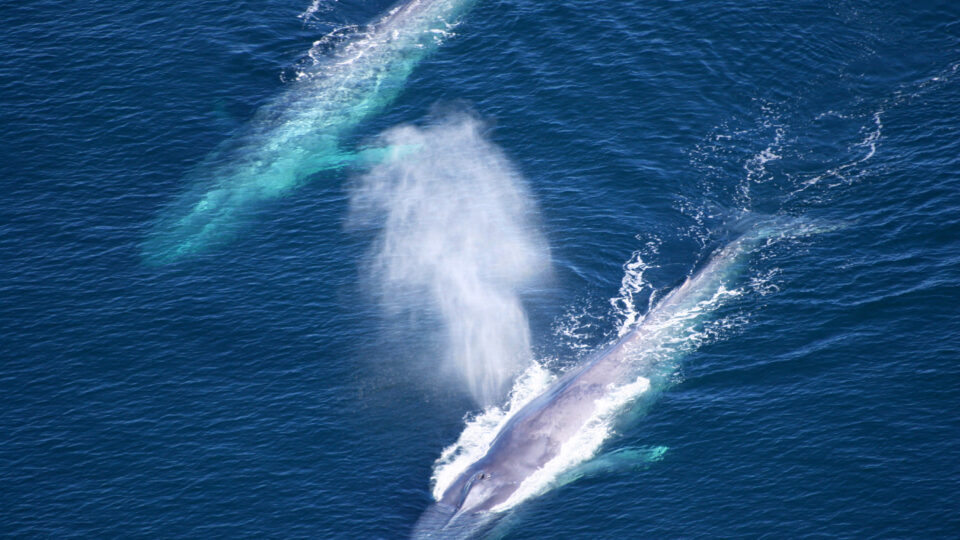
An international research team has revealed that critically endangered Antarctic blue whales have returned to the sub-Antarctic island of South Georgia, 50 years after whaling just about wiped them out.  Other recent research has found that humpback whales are also returning to the region.

Blue whales were commonplace off South Georgia before 20th century industrial whaling taking place between 1904 and 1971 killed over 42,000 of them there.  Most of that number were killed before the mid-1930s.  As a result, blue whales essentially vanished from the region.  Whale survey ships sighted only a single blue whale between 1998 and 2018.

But things have changed in recent years.  A survey this past February resulted in 58 blue whale sightings and numerous acoustic detections.  Although commercial whaling was banned in the area in the 1960s, it has taken a long time for the whales to make a comeback.

Researchers are not sure why blue whales have taken so long to return to the area.  It may be that so many were killed over the years that the remaining population had little or no cultural memory of South Georgia Island as a foraging ground, and that it is only now being rediscovered.

In total, 41 individual blue whales have been photo-identified from South Georgia over the past 10 years, although none of those matched the 517 whales in the current Antarctic blue whale photographic catalogue.  Dedicated whale surveys are difficult in a region known for its harsh weather and inaccessibility but are crucial to the future management of South Georgia’s seas.  In any case, researchers see the recent sightings as a very positive step forward for conservation of the Antarctic blue whale. 

*********

Web Links

Blue whales return to South Georgia after near extinction

Photo, posted September 7, 2007, courtesy of the NOAA Office of National Marine Sanctuaries via Flickr. Photo credit: NOAA.

Earth Wise is a production of WAMC Northeast Public Radio.

Reduced Air Travel And Weather Forecasts | Earth Wise

December 16, 2020 By EarthWise Leave a Comment

The pandemic is affecting weather forecasting

There have been countless stories about the major and minor changes in the world caused by the Covid-19 pandemic.  A few of those changes, such as reductions in pollution and traffic, have been positive.  Most have been decidedly negative.

One of the stranger things that has happened is that the pandemic has affected the quality of weather forecasting by sharply reducing the amount of atmospheric data routinely collected by commercial airliners.

It turns out that atmospheric observations from passenger and cargo flights are among the most important data used in weather forecasting models.  These observations are made by instruments aboard thousands of airliners, mostly based in North America and Europe.  The observation program has been in place for decades.  The data is transmitted in real time to forecasting organizations around the world, including the National Weather Service.  About 40 airlines participate in the program, which has equipment aboard about 3,500 aircraft.  Here in the US, Delta, United, American, and Southwest Airlines participate, as do UPS and FedEx.

During the first few months of the pandemic, air traffic declined by 75% or more worldwide.  As a result, atmospheric observations dropped by the same percentage.  A government research study showed that when weather forecasting models receive less data on temperature, wind, and humidity from aircraft, the accuracy of forecasts was reduced.

The amount of data from aircraft has increased in recent months as air travel has picked up to roughly 50% of pre-pandemic levels.  So, the observation program is on the mend.  Nonetheless, impaired weather forecasting is just another unexpected result of the global pandemic.

**********

Web Links

Slump in Air Travel Hindered Weather Forecasting, Study Shows

Photo, posted July 15, 2017, courtesy of Daria Nepriakhina via Flickr. Photo by Photo by Daria / epicantus.

Earth Wise is a production of WAMC Northeast Public Radio.

The Hot Year Continues | Earth Wise

December 8, 2020 By EarthWise Leave a Comment

the warming trend continues

The National Oceanic and Atmospheric Administration’s monthly global climate report for October reports yet another month of high temperatures.  October 2020 was the fourth-hottest October on record, continuing the pace for the year to be the second hottest on record.

The 10 warmest Octobers have occurred since 2005 and the seven warmest have all occurred in the last seven years.  Europe had its warmest October ever, surpassing the previous record set in 2001.

For the year to date, the global temperature was a full degree Celsius (or 1.8 degrees Fahrenheit) above the 20th century average.  This was just 0.03 Celsius degrees lower than the record set in 2016.   Europe and Asia have had their warmest year-to-date period on record.

Other notable observations in the report included that Arctic sea ice coverage was almost 37% below the 1981-2010 average and was the smallest October coverage on record.  The previous record was set last year.

Heat records were set around the world including parts of the northern and western Pacific Ocean, southern North America, South America, eastern Europe, the northern Middle East, the eastern Mediterranean Sea, southern Asia, and in small areas across the Indian and Atlantic Oceans.

Despite the record global temperatures, the Northern Hemisphere’s snow coverage in October was the 10th largest over the past 53 years.  The snow coverage in North America was the largest on record for October.

Adding in the extremely active hurricane season, with 12 hurricanes and 29 tropical depressions, weather around the world continues to be anything but typical.

**********

Web Links

Remarkably warm October fuels march toward 2nd-hottest year

Photo, posted February 8, 2016, courtesy of Jasmin Toubi via Flickr.

Earth Wise is a production of WAMC Northeast Public Radio.
Side Effects Of Geoengineering | Earth Wise

July 20, 2020 By EarthWise Leave a Comment

Reflecting sunlight to cool the planet will cause other global changes

As the world struggles to reduce the greenhouse gas emissions that are warming the global climate, some researchers are exploring proposals to deliberately engineer climate changes to counteract the warming trend.  One of the most widely discussed approaches is to shade the Earth from a portion of the sun’s heat by injecting the stratosphere with reflective aerosol particles.  Proponents of this idea point out that volcanoes do essentially the same thing, although generally for only a limited amount of time.  Particularly large eruptions, such as the Krakatowa eruption of 1883, wreaked havoc with weather around the world for an entire year.

Schemes to launch reflective aerosols – using planes, balloons, and even blimps – appear to be quite feasible from the standpoint of physically accomplishing them. But this says nothing about the political, ethical, and societal issues involved.  The point is that such an approach could indeed lower global temperatures and thereby potentially offset the warming effects of greenhouse gases.

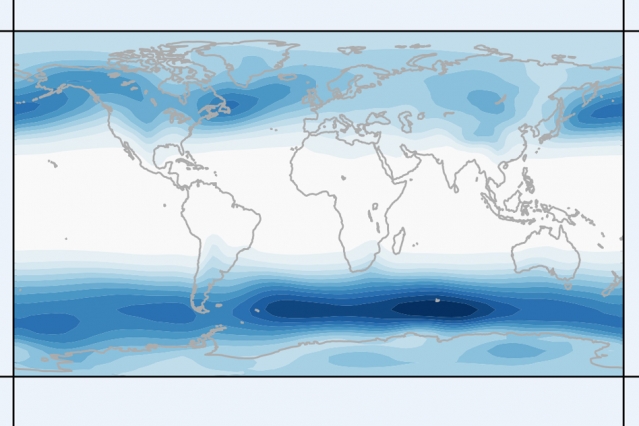
A study by scientists at MIT looked at what other effects such a solar geoengineering project might have on the climate.  Their modeling concluded that it would significantly change storm tracks in the middle and high latitudes.  These tracks give rise to cyclones, hurricanes, and many more ordinary weather phenomena.

According to the study, the northern hemisphere would have weakened storm tracks, leading to less powerful winter storms, but also stagnant conditions in summer and less wind to clear away air pollution.  In the southern hemisphere, there would be more powerful storm tracks.

Aside from turning the world’s weather patterns inside out, solar geoengineering would do nothing to address the serious issue of ocean acidification caused by increasing carbon dioxide levels.

As many have pointed out, playing the geoengineering game would have many unintended consequences.

**********

Web Links

Study: Reflecting sunlight to cool the planet will cause other global changes

Photo courtesy of MIT.

Earth Wise is a production of WAMC Northeast Public Radio.
Antarctica’s Hot Summer | Earth Wise

May 1, 2020 By EarthWise Leave a Comment

Extreme heat in Antarctica

The Southern Hemisphere’s recent summer brought drought, heatwaves and bush-fires that ravaged Australia.  At the same time, Antarctica experienced a summer of extreme weather.

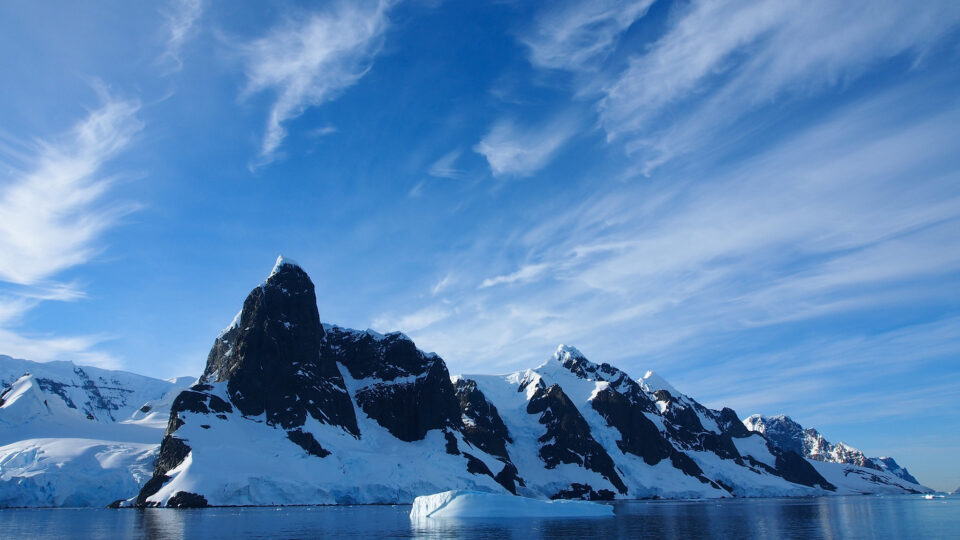
In East Antarctica, the Casey research station in the Australian Antarctic Territory had its first heatwave event, recording extreme maximum and minimum temperatures over three consecutive days in January.  Record high temperatures were also reported at bases on the Antarctic Peninsula.

The Casey station recorded a record high maximum temperature of 49 degrees Fahrenheit and a record overnight low of 36 degrees.  In February, Brazilian scientists reported a high temperature of 69 degrees at Marambio, an all-time record for Antarctica.

Ecologists say that the hot summer would most likely lead to long-term disruption of local populations, communities, and the broader ecosystem.  That disruption could be both positive and negative.

Most life in Antarctica exists in small ice-free oases and depends on melting snow and ice for a water supply.  Melt water from the warming temperatures will lead to increased growth and reproduction of mosses, lichens, microbes and invertebrates.

However, excessive flooding can dislodge plants and alter the composition of communities of invertebrates and microbial mats. If the ice completely melts early in the season, then ecosystems will suffer drought for the rest of the season.

Extreme events often have impacts for years after the event.  There will be long-term studies of the areas affected by the recent Antarctic heat wave. Such extreme events associated with global climate change are predicted to increase in frequency and impact, and even the most remote areas of the planet are not immune to them.

**********

Web Links

Antarctica’s summer of extreme heat

Photo, posted January 30, 2014, courtesy of Andreas Kambanis via Flickr

Earth Wise is a production of WAMC Northeast Public Radio.

American Robins And Climate Change | Earth Wise

April 30, 2020 By EarthWise Leave a Comment

changing climate is making birds migrate earlier

American robins are migratory songbirds that can be found throughout much of North America.  Named after European robins because of their reddish-orange breast, American robins are often found hopping across lawns and nesting on porches.  Their rich caroling is among the first pre-dawn bird songs heard in spring and summer.  

While some overwinter in northern parts of the United States and southern Canada, most American robins migrate south to overwinter in places like Florida and the Gulf Coast, as well as central Mexico and the Pacific Coast.  They typically head south by the end of August and return north sometime between February and March to their breeding grounds in Canada and Alaska.  They spend their short time there trying to find a mate, build a nest, raise a family, and consume enough food to sustain themselves on their long return journey south.

But climate change is making these seasonal rhythms less predictable.  According to a new study recently published in the journal Environmental Research Letters, American robin migration is kicking off earlier by about five days each decade.  The birds now migrate 12 days earlier than they did in 1994.  

For 25 years, researchers at Canada’s Slave Lake have been recording the timing of American robin spring migration.  They attached GPS devices to 55 robins, tracking their movements from April through June. The researchers linked the birds’ movement with weather data, including air temperature, snow depth, wind speed, and precipitation.  The results showed that robins start migrating north earlier when winters are warm and dry. 

Understanding the influence over the timing of migratory events is important because the timing of migration can influence reproductive success.

**********

Web Links

A Migration Mystery

American robins now migrate 12 days earlier than in 1994

Photo, posted January 1, 2020, courtesy of Becky Matsubara via Flickr.

Earth Wise is a production of WAMC Northeast Public Radio.
Wind Power Overtakes Hydroelectric Power | Earth Wise

April 10, 2020 By EarthWise Leave a Comment

wind power is now top renewable

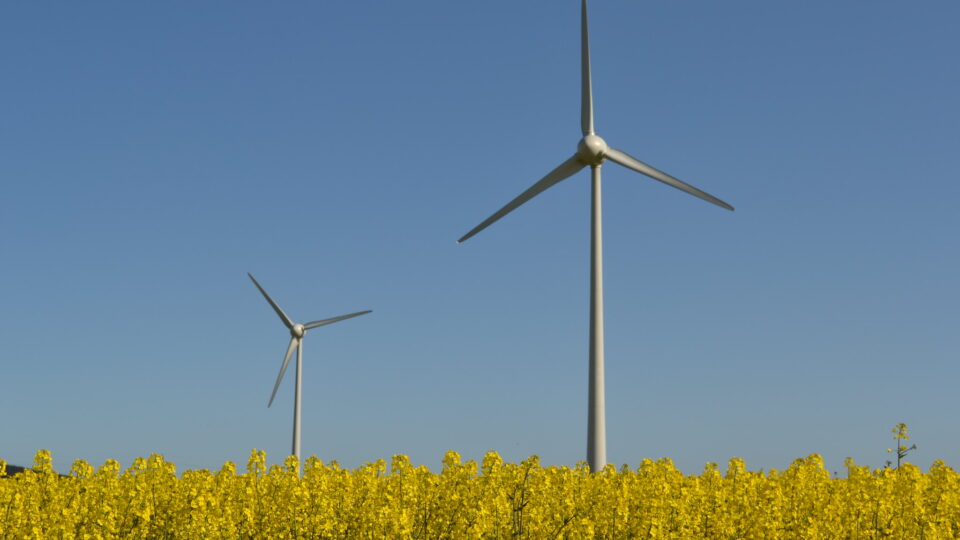
In 2019, the amount of electricity generated by wind power surpassed hydroelectric power for the first time, making wind the largest renewable source of electricity generation in the country.

Total wind generation in 2019 was 300 million MWh, which was 26 million MWh more than was produced by hydroelectric plants.

Hydroelectric generation has fluctuated between 250 and 320 million MWh over the past decade.  The capacity base has been stable, so the fluctuations were a result of variable annual precipitation.   Hydroelectric generation is generally greatest in the spring when rain and melting snow pack increase water runoff.

The growth in wind power is primarily a result of increasing capacity rather than any major fluctuations in wind caused by changing weather.  The U.S. added about 10 GW of wind capacity in 2019, making it the second largest year for capacity additions ever, second only to 2012.

Wind energy is an intermittent source, meaning that it isn’t windy all the time.  The average annual capacity factor for the U.S. wind fleet over the past decade has been 28 to 35%, meaning that is the amount of energy actually produced compared with the systems running at continuous full power all the time.  By comparison, the U.S. hydroelectric fleet operated at 35 to 43% of capacity during that period.  So, wind power is actually not that much less a steady source than hydroelectric power.

According to the U.S. Energy Information Administration, the government’s production tax credit, which was extended through this year, means that wind power capacity in the U.S. will continue to grow at a robust pace.  Meanwhile, some dams are being decommissioned and there is little new construction in the hydropower sector.

**********

Web Links

Wind has overtaken the top position for renewable generation in the U.S., EIA says

Photo courtesy of Flickr.

Earth Wise is a production of WAMC Northeast Public Radio.
A Record Antarctic Temperature | Earth Wise

March 5, 2020 By EarthWise Leave a Comment

warmest temperatures ever recorded

It is still early in the year, but extreme weather events are already piling up.  January was the warmest month on record globally and there have been many records shattered in Europe and Asia.  A number of places in Eastern Europe, including parts of Russia, have seen temperatures 12 to 13 degrees above average.

While the warming of the Arctic has been in the news with increasing frequency, the Antarctic is also seeing rising temperatures and is one of the fastest-warming regions in the world. 

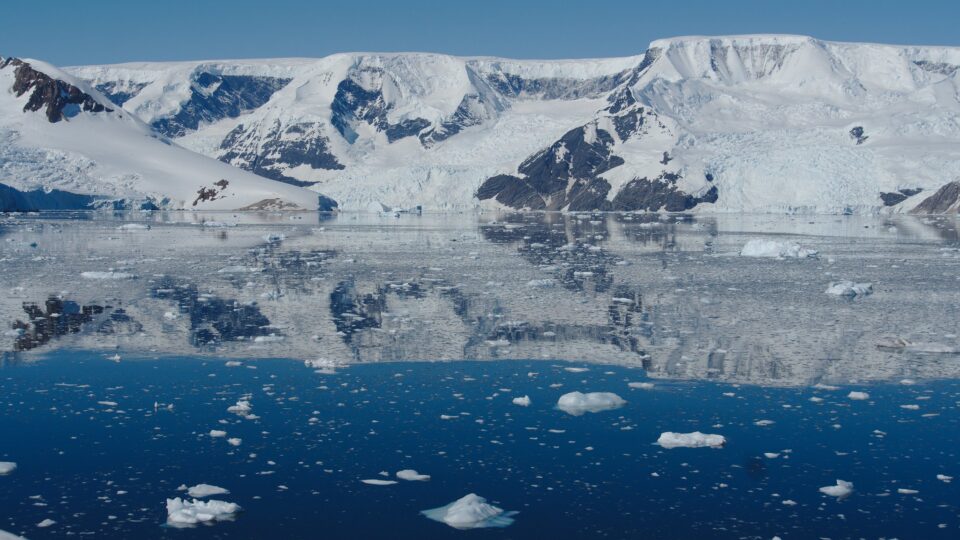
On February 6th, Esperanza Base along Antarctica’s Trinity Peninsula measured a temperature of 65 degrees Fahrenheit, which is the highest temperature ever recorded on that continent.   This rather balmy temperature narrowly beat out the previous record of 63.5 degrees, which occurred in March of 2015.

This one-time reading is certainly anomalous, and scientists say it is associated with a ridge of high pressure that was lingering over the region for several days.  Local wind conditions led to additional warming.

However, the conditions leading to record-breaking high temperatures are not one-time anomalous events. Over the past 50 years, temperatures in the Antarctic have surged by an extraordinary 5 degrees in response to the Earth’s rapidly warming climate.  A rise of five degrees in day-to-day weather is no big deal. A five-degree rise in a region’s average temperature is enormous.

About 87% of the glaciers along the west coast of Antarctica’s Trinity Peninsula have retreated over that 50-year period, most of which doing so during just the past 12 years.

Some researchers claim that the new temperature record is an extreme event that doesn’t tell us anything about the changing climate.  Many others are convinced that there will be many more high temperature records to follow.

**********

Web Links

Antarctica just hit 65 degrees, its warmest temperature ever recorded

Photo, posted February 24, 2019, courtesy of Mike via Flickr.

Earth Wise is a production of WAMC Northeast Public Radio.

  • « Go to Previous Page
  • Page 1
  • Page 2
  • Page 3
  • Page 4
  • Page 5
  • Page 6
  • Page 7
  • Go to Next Page »

Primary Sidebar

Recent Episodes

  • An uninsurable future
  • Clean energy and jobs
  • Insect declines in remote regions
  • Fossil fuel producing nations ignoring climate goals
  • Trouble for clownfishes

WAMC Northeast Public Radio

WAMC/Northeast Public Radio is a regional public radio network serving parts of seven northeastern states (more...)

Copyright © 2026 ·