• Skip to primary navigation
  • Skip to main content
  • Skip to primary sidebar

Earth Wise

A look at our changing environment.

  • Home
  • About Earth Wise
  • Where to Listen
  • All Articles
  • Show Search
Hide Search
You are here: Home / Archives for temperatures

temperatures

Another Way To Make Solar Cells

March 21, 2019 By EarthWise Leave a Comment

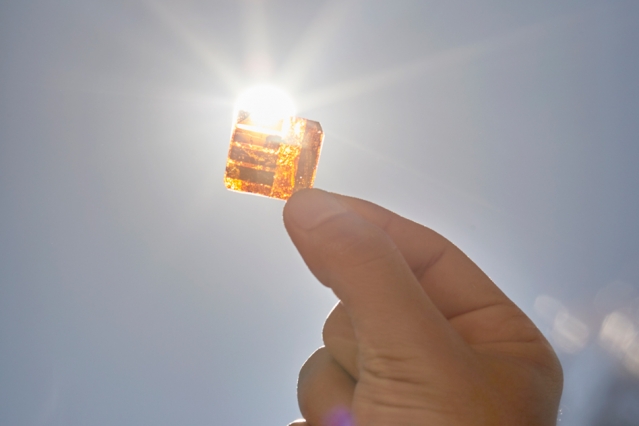
Millions of rooftops now contain solar panels and the majority of the solar cells that make up those panels today are made from silicon.  Silicon solar cells require expensive, multi-step processing conducted at very high temperatures in special clean room facilities.  Despite these complications, the price of solar panels has continued to drop dramatically over the years.

But even as the price of solar cells gets lower and lower, there are still widespread efforts to find even better ways to make them.   One of those ways is with perovskite solar cells.  Perovskites are materials with a characteristic crystal structure and are quite common in nature.  Perovskites can be formed with a wide range of elements and can exhibit a variety of properties.

They were first used to make solar cells about 10 years ago and those first cells were unimpressive in most respects.  However, there has been steady progress since that time.  The potential advantages of perovskite solar cells are that they can be made from low-cost materials and can be manufactured using liquid chemistry, a far cheaper process than what is used to make silicon cells.

Researchers at MIT and several other institutions have recently published the results of research on how to tailor the composition of perovskite solar cells to optimize their properties.   What used to be a trial-and-error process can now become much more engineered and should lead to perovskite solar cells with performance that could exceed that of silicon cells.

Silicon solar panels are a huge, worldwide industry and displacing them in favor of an alternative technology is a tall order.  But if perovskite cells can be optimized for large-scale manufacturability, efficiency and durability, they could definitely give silicon a run for its money.

**********

Web Links

Unleashing perovskites’ potential for solar cells

Photo courtesy of Ken Richardson/MIT.

Earth Wise is a production of WAMC Northeast Public Radio.
Shrinking Arctic Glaciers

March 18, 2019 By EarthWise Leave a Comment

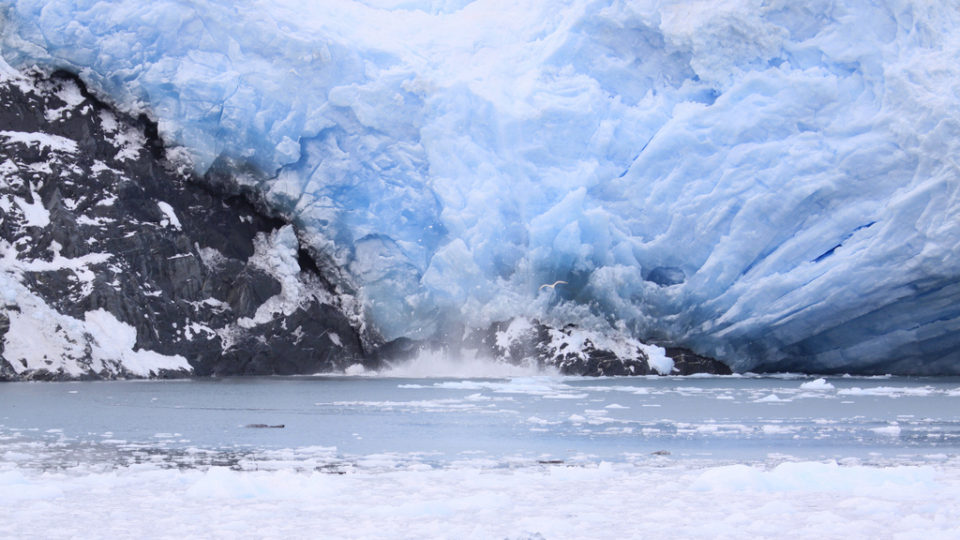
The glaciers on Baffin Island, located in Canada’s northeastern Arctic, have been shrinking as the climate warms.  The melting, receding glaciers have exposed fragments of ancient plants that had frozen in the places where they once grew.  New research has shown that these spots have not seen the light of day for at least 40,000 years.

The entire planet has been warming since humanity started flooding the atmosphere with greenhouse gases at the start of the Industrial Revolution, but the effects are not uniform across the globe.  Some regions – like the Arctic – are seeing temperature rises that are greater and faster than anywhere else in the world.  As a result, glaciers in the Arctic have been melting away at rates never before observed in modern human history.

Researchers at the University of Colorado performed radiocarbon dating experiments in order to find out when the last time was that the Arctic was as warm as today.   There have been natural variations in Arctic temperatures caused by the complicated way the Earth wobbles on its axis.  For example, 10,000 years ago the northern latitudes pointed at the sun more directly during the summer than they do now, providing about 9% more sunshine during the summer.

The results of the study showed that the newly-uncovered plants had died at least 40,000 years earlier, indicating that the glaciers had not melted back to today’s size for at least that long.  Global measurements indicate that the planet as a whole has not been as warm as it is today for about 115,000 years, back then again a result of the orientation of the Earth.

Well, the Earth hasn’t wobbled recently.  The Arctic is melting because we are dumping massive amounts of greenhouse gases into the atmosphere.

**********

Web Links

These Arctic glaciers are smaller than ever before in human history

Photo, posted September 1, 2010, courtesy of Doryce S. via Flickr.

Earth Wise is a production of WAMC Northeast Public Radio.
Ice Melt In Greenland

March 12, 2019 By EarthWise 1 Comment

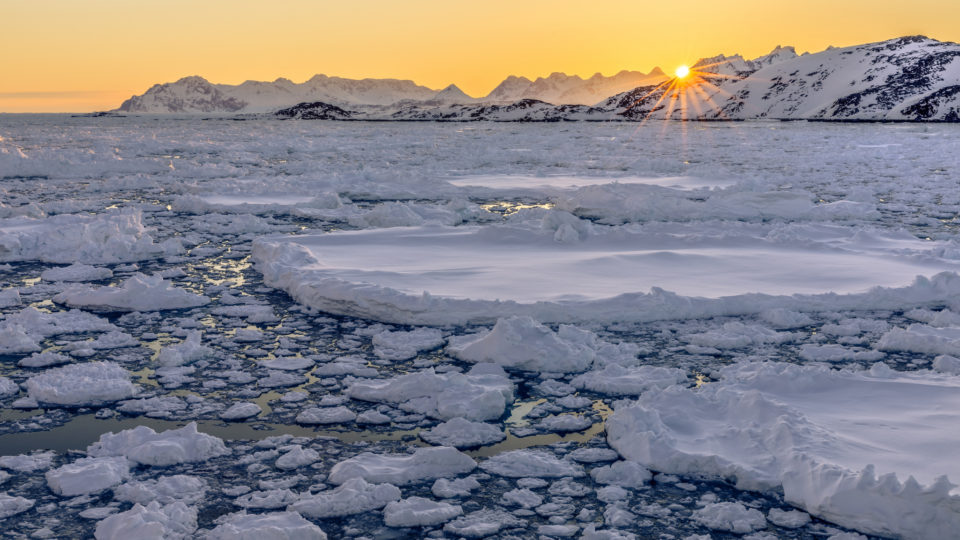
A new study published in the Proceedings of the National Academy of Sciences warns that Greenland’s ice Is melting much faster than previously thought.  The ice loss rapidly accelerated around 2002-2003 and by 2012 the annual loss was nearly four times the rate in 2003.

Most of the new ice melt is in southwest Greenland, a part of the island that wasn’t known to be losing ice that rapidly and is not where most of the large glaciers are in Greenland.  The loss is coming from the land-fast ice sheet itself.

Data from NASA satellites and GPS stations scattered around Greenland’s coast shows that between 2002 and 2016, Greenland lost approximately 280 billion tons of ice per year.  That is enough melt to cover the entire states of Florida and New York hip deep in meltwater, as well as drowning Washington, D.C. and one or two other small states.

Global warming of just 1 degree Celsius is the main driver behind this massive meltdown of ice.  The temperature rise coupled with a negative phase of the North Atlantic Oscillation causes rapid surface melt of the ice sheet during summers.  The Oscillation is a natural, irregular change in atmospheric pressure that brings warm, sunny weather to the western side of Greenland during its negative phase.

The Greenland ice sheet is 2 miles thick in some places and contains enough ice to raise sea levels 23 feet if it all melted.  The melting Greenland ice is already slowing the Gulf Stream, which is wreaking havoc with European weather.  If we don’t get a handle on global temperature rise, things are only going to get worse.

**********

Web Links

Greenland’s ice is melting four times faster than thought—what it means

Photo, posted April 21, 2017, courtesy of Markus Trienke via Flickr.

Earth Wise is a production of WAMC Northeast Public Radio.

Climate Change And Infertility

March 8, 2019 By EarthWise Leave a Comment

Many of us are all too familiar with the effects of climate change.  Our changing climate, as a result of our actions, is leading to rising global temperatures, biodiversity loss, ocean acidification, wildfires, more weather extremes like floods and droughts. But a lesser known effect of climate change could lead to frightening consequences: infertility.

According to researchers at the University of Liverpool, rising temperatures could make some species sterile and lead them to succumb to the effects of climate change far earlier than currently thought. Their work was recently published in the journal Trends in Ecology and Evolution, and it was produced in collaboration with scientists from the University of Leeds, University of Melbourne, and Stockholm University.

Biologists and conservationists are trying to predict where species will be lost due to climate change so that suitable reserves can be established in other locations.  But the problem is that most data on when temperature will make an area unlivable for a species is based on its ‘critical thermal limit’ or CTL.  This is the temperature at which a species would collapse, stop moving, or die. 

The authors of the article fear that the impact of climate change on species survival is being underestimated.  Because rather than zeroing in on lethal temperatures, the scientists argue the focus should be on the temperatures at which organisms can no longer breed.  Extensive plant and animal data suggest organisms lose fertility at a lower temperature than their CTL.

The scientists have proposed a new fertility-based metric to gauge how organisms function as temperatures climb: Thermal Fertility Limit or TFL.  Understanding when a species will cease to reproduce will certainly help conservation measures. 

**********

Web Links

Climate change and infertility — a ticking time bomb?

Photo, posted August 11, 2013, courtesy of Mike Lewinski via Flickr.

Earth Wise is a production of WAMC Northeast Public Radio.
Disease On Coral Reefs

February 19, 2019 By EarthWise Leave a Comment

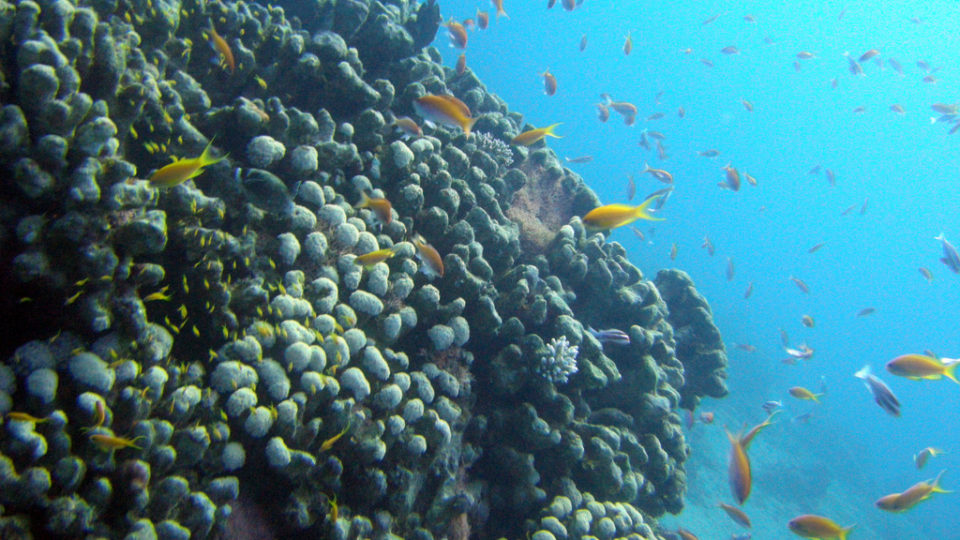
The warming oceans have led to bleaching events in coral reefs around the world, but bleaching is not the only problem corals face.  Disease outbreaks are also becoming more frequent, severe, and widespread.

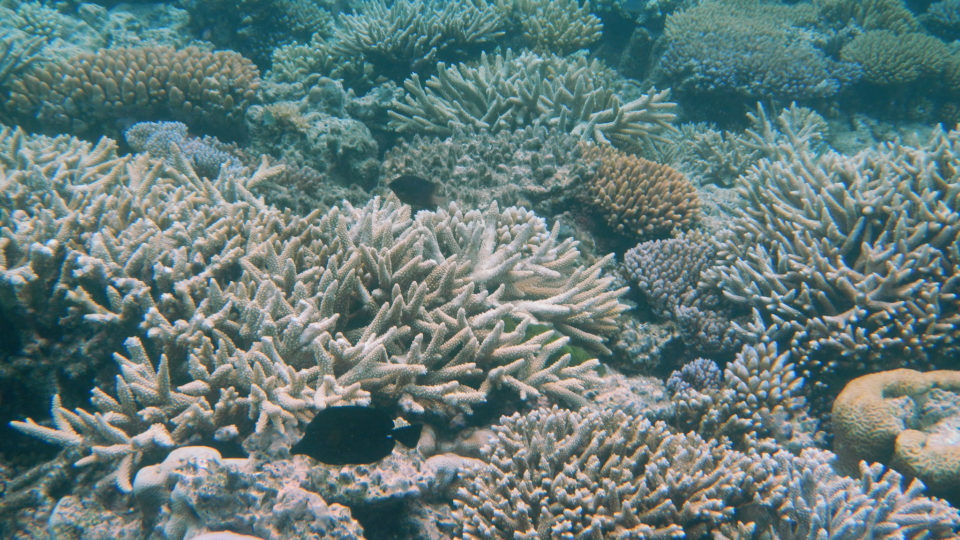
Many factors are contributing to the problem, including pollution and nitrogen runoff from fertilizers and coastal sewer and septic systems.  However, the key culprit is likely the steadily increasing ocean temperatures, which are the cause of coral bleaching.  Elevated water temperatures can cause coral polyps to expel the algae that sustains them and gives them color. 

According to scientists, bleaching makes corals more susceptible to illness.  In the Caribbean, a coral disease hotspot, about 80% of coral cover has disappeared, largely from outbreaks of “white band disease”, so called because of a white band of dead tissue that forms in affected corals.  Two crucial reef-building species, elkhorn and staghorn coral, are now nearing extinction in the regions.  The reef extending along the Florida coastline is the third largest reef ecosystem in the world and nearly 35% of it has been lost to disease.

Estimates are that disease outbreaks have wiped out at least 6% of the corals on the Great Barrier Reef in Australia.  In that region, diseases are more prevalent in areas where corals were damaged by fishing and other human activity because wounded coral provides an entry point for pathogens and bacteria.

In the face of climate change and mounting disease outbreaks, scientists are scrambling for solutions to stave off catastrophe.  Assisting the migration of hardier coral species and breeding so-called “super corals” are among the strategies being pursued.  It is unknown whether these and other forms of intervention can be used on a wide enough scale to really make a difference.

**********

Web Links

As Disease Ravages Coral Reefs, Scientists Scramble for Solutions

Photo, posted November 29, 2012, courtesy of Robert Linsdell via Flickr.

Earth Wise is a production of WAMC Northeast Public Radio.
Melting Ice In Greenland

January 18, 2019 By EarthWise Leave a Comment

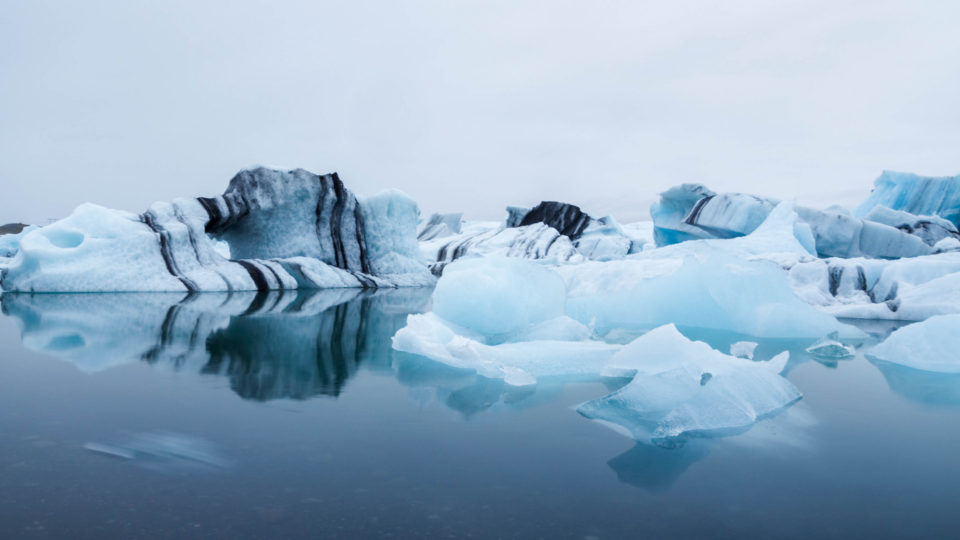
The Greenland ice sheet is the second largest ice body in the world after the Antarctic ice sheet.  It covers over 660,000 square miles, more than twice the size of the state of Texas.  But it is melting.

According to a new study published in the journal Nature, the Greenland ice sheet is melting faster today than at any point in the last 350 years.  A team of U.S. and European researchers analyzed more than three centuries of melt patterns in ice cores from western Greenland. They then linked this historical data to modern observations of melting and runoff across the entire ice sheet.

According to the researchers, from an historical perspective, today’smelt rates are off the charts.  There is a 50% increase in total ice sheet melt water runoff since the start of the industrial era and a 30% increase since the 20th century alone.

Over the last 20 years, melt intensity has increased 250 to 575 percent compared to pre-industrial melt rates. The period from 2004-2013, the most recent decade analyzed, experienced a more sustained and greater magnitude of melt than in any previous 10-year period in the 350-year record.

The Greenland ice sheet is the largest single contributor to global sea level rise.  It is adding 72 cubic miles of meltwater to the world’s oceans every year.

The melting of the Greenland ice sheet is accelerating which is a frightening prospect.  If the sheet were to melt in its entirety, global sea levels would rise by 23 feet.  The world needs to do whatever it can to keep that doomsday scenario from happening.

**********

Web Links

Greenland Ice Sheet Melting At Fastest Rate in 350 Years

Photo, posted September 8, 2014, courtesy of Marco Verch via Flickr.  

Earth Wise is a production of WAMC Northeast Public Radio.
Is There Hope For Coral Reefs?

January 16, 2019 By EarthWise Leave a Comment

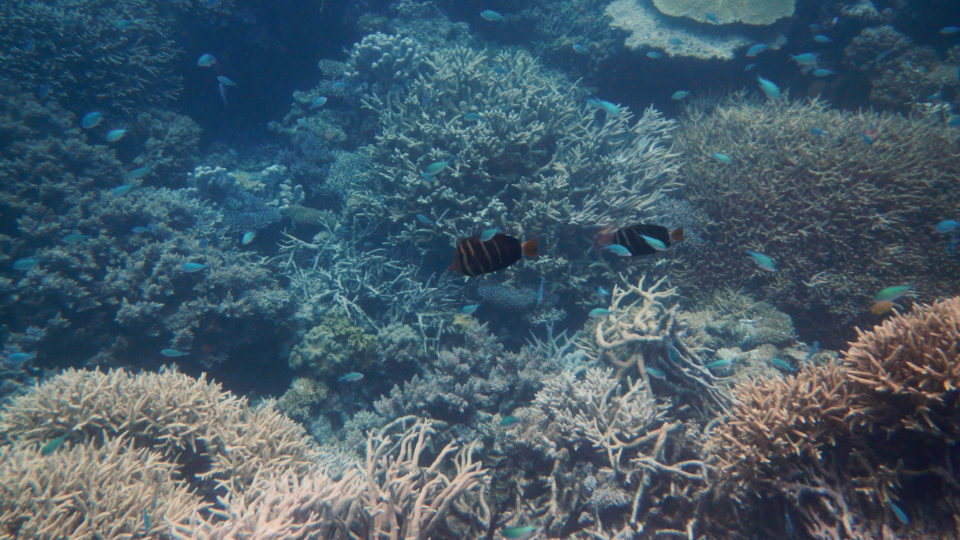
News about the world’s coral reefs has been relentlessly bad for a number of years.  Warming, acidifying oceans have wreaked havoc with coral reefs leading to enormous losses.  Nowhere have things been more dire than in Australia’s Great Barrier Reef.  Coral bleaching events have been increasingly common and severe over the past two decades.  In fact, only 7% of the Great Barrier Reef has escaped bleaching entirely since 1998.

While the future of the world’s coral reefs is very much uncertain as global heating continues, there is a recent bit of hopeful news.   According to a study published in Nature Climate Change, the response of the Great Barrier Reef to the extreme temperatures in 2017 was quite different from that of the previous year in the aftermath of back-to-back bouts of coral bleaching.

Surprisingly, corals that bleached in 2016 but managed to survive were more resistant to the recurrence of hot conditions in 2017.

Many corals don’t survive bleaching events at all and, of course,those corals don’t bleach for a second time. But the surviving corals from the 2016 bleaching event were tougher species.   As a result of bleaching, the mix of coral species on the reef is changing very rapidly.  The net result was that there was less bleaching in 2017 even though the temperatures that year were even more extreme than in 2016.

There have now been four mass bleaching events on the Great Barrier Reef over the past 20 years and it is only a matter of time before another one occurs triggered by the next marine heatwave. Almost half of the corals on the northern two-thirds of the reef have been killed.  But at least some of the reef is showing impressive survival skills.

**********

Web Links

A glimmer of hope for the world’s coral reefs

Photo, posted November 29, 2012, courtesy of Robert Linsdell via Flickr. 

Earth Wise is a production of WAMC Northeast Public Radio.
Endangered Language Species

January 14, 2019 By EarthWise Leave a Comment

There are approximately 7,000 languages spoken in the world today but only about half of them are expected to survive this century.  There are many factors contributing to the decline in languages.  Perhaps the most significant is globalization, which pushes countries and individuals to shift to national or international languages for economic reasons.   Other factors include the lack of support for regional languages in educational systems and mass media, persecution of minority linguistic groups by governments, and disruption of communities during war and emigration.

Predicting which languages will survive and which won’t is difficult.  A potential tipping point for languages is the same one affecting the survival of species:  climate change.  Many small linguistic communities are located on islands and coastlines that are vulnerable to hurricanes and rising sea levels.  Other communities live in places where increases in temperatures and erratic rainfall threaten traditional farming and fishing economies.

These climate-related changes will force communities to relocate,creating climate change refugees. Dispersing these people will lead to the splintering of linguistic communities and the need for the use of other languages.  Such changes will place additional pressures on languages that are already struggling to survive.

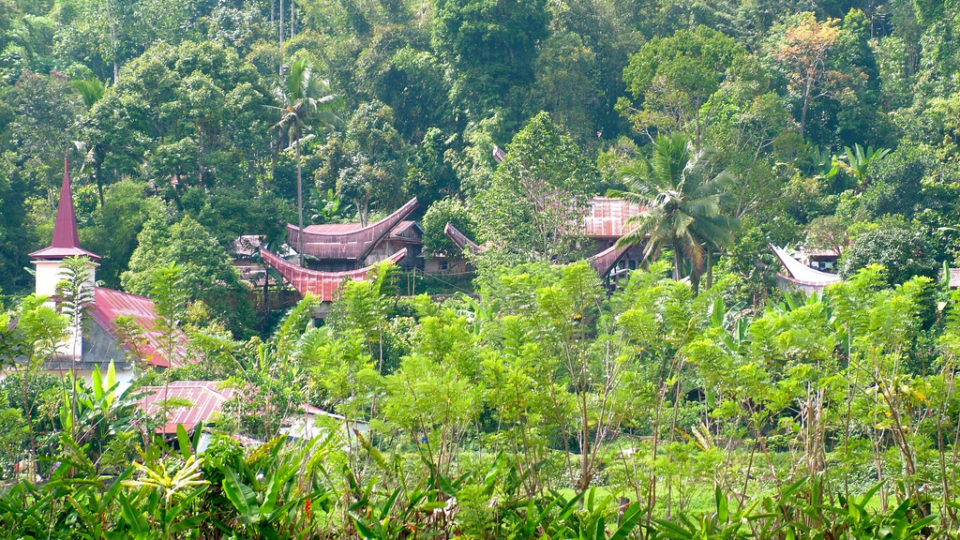
There are endangered languages in many places around the world.  Some are exotic such as the island of Sulawesi in Indonesia, which is home to dozens of distinct languages spoken by no more than a few thousand people. Others are much closer to home, such as in indigenous communities in Canada.

The rich tapestry of human language is just another of many things threatened by the changing climate.

**********

Web Links

The Conversation: The impact of climate change on language loss

Photo, posted May 19, 2009, courtesy of Flickr. 

Earth Wise is a production of WAMC Northeast Public Radio.

A See-Through Heat Shield

January 8, 2019 By EarthWise Leave a Comment

It is estimated that air conditioners use about 6% of all the electricity produced in the United States for an annual cost of $29 billion.  With rising temperatures, this expense is only going to get larger.

A significant part of the heat load in buildings arises from heat coming through windows.  It turns out that for every square meter of window, about 500 watts of heat energy can be brought in by sunlight, equivalent to 5 old-fashioned light bulbs.

Researchers at MIT and the University of Hong Kong have developed a heat-rejecting film that can applied to a building’s windows that will reflect 70% of the sun’s incoming heat.  The film is similar to transparent plastic wrap. It remains highly transparent at temperatures below 89 degrees Fahrenheit.  Above that temperature, tiny microparticles embedded in the film shrink and the film becomes more translucent or frosted, still letting in a good amount of light, but rejecting a lot of heat.

There are already so-called smart windows on the market, similar to the electrochromic mirrors in cars that darken to prevent trailing headlights from blinding drivers.  But that technology is not very effective in rejecting heat and it requires power to operate, which means you would have to pay to turn windows opaque.

Tests of the new film demonstrated its ability to reject heat and lower temperatures.  The researchers estimate that if every exterior-facing window in a building were covered in the heat-rejecting film, the building’s air conditioning and energy costs could drop by 10%.  Saving ten percent of tens of billions of dollars is no minor matter.

**********

Web Links

See-through film rejects 70 percent of incoming solar heat

Photo courtesy of MIT researchers/MIT. 

Earth Wise is a production of WAMC Northeast Public Radio.
The Cockroaches Of The Ocean

December 14, 2018 By EarthWise Leave a Comment

https://earthwiseradio.org/wp-content/uploads/2018/12/EW-12-14-18-The-Cockroaches-of-the-Ocean.mp3

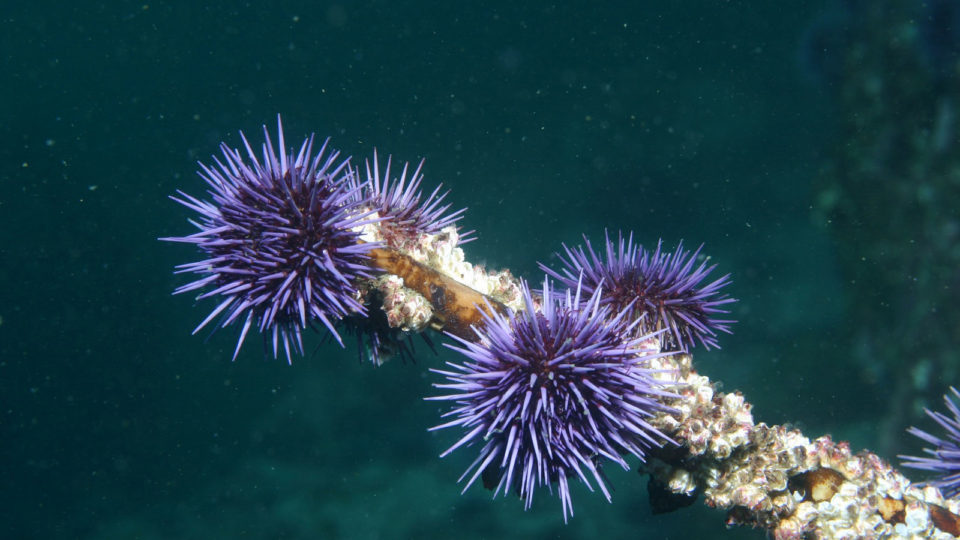
The coast of Northern California is home to underwater forests – huge, sprawling tangles of brown seaweed.  Kelp forests play a similar role in the oceans as the one that ordinary tree forests play on land.  Like trees, kelp absorbs carbon emissions and provides critical habitat and food for a wide range of species.

[Read more…] about The Cockroaches Of The Ocean

A Supermaterial From Plastic Waste

December 13, 2018 By EarthWise Leave a Comment

https://earthwiseradio.org/wp-content/uploads/2018/12/EW-12-13-18-A-Supermaterial-From-Plastic-Waste.mp3

Researchers at the National University of Singapore have created a way to convert plastic bottle waste into an ultralight aerogel material that has multiple potential applications.

[Read more…] about A Supermaterial From Plastic Waste

Bad News For Beer

November 28, 2018 By EarthWise Leave a Comment

https://earthwiseradio.org/wp-content/uploads/2018/10/EW-11-28-18-Bad-News-for-Beer.mp3

As extreme weather events become increasingly common, arctic ice disappears, and wildfires burn for weeks on end, many people wonder just what it will take to change some of the entrenched opinions about climate change.

[Read more…] about Bad News For Beer

Greenland Turning Pink

November 20, 2018 By EarthWise Leave a Comment

https://earthwiseradio.org/wp-content/uploads/2018/11/EW-11-20-18-Greenland-Turning-Pink.mp3

A burgeoning ecosystem of algae is turning parts of the Greenland ice sheet pinkish-red.  It isn’t just colorful.  It is contributing more than a little to the melting of one of the biggest frozen bodies of water in the world.

[Read more…] about Greenland Turning Pink

Rapid Response To Climate Change More Important Than Ever

October 17, 2018 By EarthWise Leave a Comment

https://earthwiseradio.org/wp-content/uploads/2018/10/EW-10-17-18-Rapid-Response-to-Climate-Change.mp3

The Intergovernmental Panel on Climate Change has issued a new report emphasizing the importance of taking rapid action to limit global warming to 1.5 degrees Celsius and examining the consequences of allowing temperatures to rise 2 degrees instead.

[Read more…] about Rapid Response To Climate Change More Important Than Ever

Pests And Crops In A Warming World

October 1, 2018 By EarthWise Leave a Comment

https://earthwiseradio.org/wp-content/uploads/2018/09/EW-10-01-18-Pests-and-Crops-in-Warming-World.mp3

By the year 2050, scientists predict that there will be two billion more people to feed in the world.  And climate change isn’t making that task any simpler.  From extreme weather events to rising global temperatures, climate change is expected to affect the types of food we grow, and to negatively affect the food production needed to feed the growing population.

[Read more…] about Pests And Crops In A Warming World

A New Way To Store Hydrogen

September 20, 2018 By EarthWise Leave a Comment

https://earthwiseradio.org/wp-content/uploads/2018/09/EW-09-20-18-A-New-Way-to-Store-Hydrogen.mp3

Several major automakers including Toyota, Honda and BMW are betting that hydrogen-fueled cars will be a dominant technology in the future.  There are a number of technical and economic problems to be solved before that can happen.  Producing hydrogen in an cost-effective and environmentally-friendly way is critical.  But beyond that, one of the biggest challenges is the transportation and storage of hydrogen.

[Read more…] about A New Way To Store Hydrogen

Fires And Atmospheric Cooling

September 11, 2018 By EarthWise Leave a Comment

https://earthwiseradio.org/wp-content/uploads/2018/08/EW-09-11-18-Fires-and-Atmospheric-Cooling.mp3

Aerosols – tiny particles in the atmosphere released from fires and other sources – can cool the planet by reflecting sunlight back into space and by increasing cloud brightness.

[Read more…] about Fires And Atmospheric Cooling

Heat-Resistant Corals

August 31, 2018 By EarthWise Leave a Comment

https://earthwiseradio.org/wp-content/uploads/2018/08/EW-08-31-18-Heat-Resistant-Corals.mp3

All over the world, coral reefs are being wiped out by rising sea temperatures brought about by climate change.  When sea temperatures get too high, the symbiotic relationship between coral polyps and microscopic algae living within the coral breaks down and the coral either digests or expels the algae.   The result is coral bleaching which weakens, and if it persists, kills the coral.

[Read more…] about Heat-Resistant Corals

Global Warming And Air Conditioners

August 24, 2018 By EarthWise Leave a Comment

https://earthwiseradio.org/wp-content/uploads/2018/08/EW-08-24-18-Global-Warming-and-Air-Conditioners.mp3

All those record high temperatures around the world this summer – such as during the unprecedented heatwave in Japan – put the spotlight on the growing dependence we all have on air conditioning. 

[Read more…] about Global Warming And Air Conditioners

Drought In Europe

August 22, 2018 By EarthWise Leave a Comment

https://earthwiseradio.org/wp-content/uploads/2018/08/EW-08-22-18-Drought-in-Europe.mp3

Even as Californians fought giant wildfires and Japan struggled with record high temperatures, the unusual summer heat in central and northern Europe has led to the worst drought conditions in over 40 years.

[Read more…] about Drought In Europe

  • « Go to Previous Page
  • Page 1
  • Interim pages omitted …
  • Page 8
  • Page 9
  • Page 10
  • Page 11
  • Page 12
  • Page 13
  • Go to Next Page »

Primary Sidebar

Recent Episodes

  • An uninsurable future
  • Clean energy and jobs
  • Insect declines in remote regions
  • Fossil fuel producing nations ignoring climate goals
  • Trouble for clownfishes

WAMC Northeast Public Radio

WAMC/Northeast Public Radio is a regional public radio network serving parts of seven northeastern states (more...)

Copyright © 2026 ·