• Skip to primary navigation
  • Skip to main content
  • Skip to primary sidebar

Earth Wise

A look at our changing environment.

  • Home
  • About Earth Wise
  • Where to Listen
  • All Articles
  • Show Search
Hide Search
You are here: Home / Archives for Technology

Technology

A Room-Temperature Superconductor | Earth Wise

November 18, 2020 By EarthWise Leave a Comment

room temperature superconductor

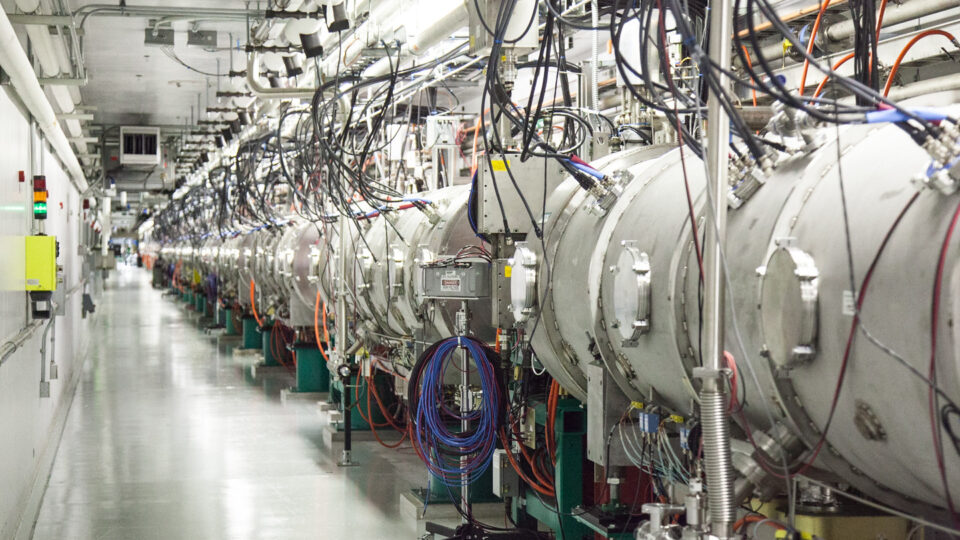
One of the Holy Grails of science has apparently been found:  a room-temperature superconductor.   In a paper recently published in Nature, scientists from the University of Rochester and collaborators announced that they had observed superconductivity at 59 degrees Fahrenheit in an exotic material they produced in the laboratory.

Superconductivity is a phenomenon occurring in certain materials characterized by the total absence of electrical resistance.  Current flowing in a closed loop of superconducting wire can go on forever.  Superconductors have other unique characteristics as well, all of which combine to make them quite useful in a number of applications.  Superconductors are used in high-powered magnets in particle accelerators and in MRI machines.  They continue to be developed for use in electrical power transmission, energy storage, communication filters, magnetic sensors, and more.

The problem with superconductors is that they only work at very low temperatures.  For most of a century – after superconductivity was discovered in 1911 – those temperatures were very close to absolute zero:  459 degrees below zero Fahrenheit.  (In the late 1980s, so-called high-temperature superconductors were discovered.  Those materials superconduct at the temperature of liquid nitrogen:  about 320 degrees below zero).

The dream has been to find a superconductor that works at ambient temperatures.  The Rochester team has produced tiny amounts of a mysterious combination of hydrogen, carbon, and sulfur which, when subjected to extraordinarily high pressures (over 2 million atmospheres), superconducts at the temperature of a pleasant fall day.

 There is no practical value for this first room-temperature superconductor, but it proves that superconductivity can exist at ambient temperature.  Once something is shown to exist at all, there is reason to hope that it can occur in ways that are easier and more practical to attain.

**********

Web Links

First room-temperature superconductor excites — and baffles — scientists

Photo, posted June 18, 2013, courtesy of Oak Ridge National Laboratory via Flickr.

Earth Wise is a production of WAMC Northeast Public Radio.

Community Solar With Storage In New York | Earth Wise

November 16, 2020 By EarthWise Leave a Comment

Community solar

Community solar allows members of a community to share the benefits of solar power even if they cannot or prefer not to install solar panels on their own property.  There are several models for how community solar works, but all of them allow members to benefit from solar power being generated by an offsite solar array by effectively allocating a portion of its output to them.  In any event, community solar can save money on electric bills and allow people to make use of renewable energy for their needs.

A next step in the evolution of a decentralized energy system is incorporating energy storage into community solar projects.  The first one of these in New York State has now been completed in Yorktown Heights in Westchester County.  The project consists of 557kW of rooftop solar in the form of nearly 1,500 solar panels paired with 490kW of four-hour Tesla Powerpack battery energy storage.  The system is expected to provide 150 participants with approximately 10% savings on their monthly electric bills over 25 years, as well as providing power to 12 Tesla electric vehicle charging stations.

The project was funded by NYSERDA, under its Retail Energy Storage Incentive program, which currently includes 50 community solar-storage paired projects across New York State that are expected to be installed in the next two to three years.

New York has been actively promoting community projects in support of goals announced by Governor Andrew Cuomo to install 6,000MW of solar in the state by 2025 and 3,000MW of energy storage by 2030.

**********

Web Links

First community solar-storage project completed in New York

Photo, posted June 21, 2017, courtesy of Franck Michel via Flickr.

Earth Wise is a production of WAMC Northeast Public Radio.

The Largest Turbines In The Largest Offshore Wind Farm | Earth Wise

November 11, 2020 By EarthWise Leave a Comment

wind energy progress

The world’s largest planned offshore wind farm is going to make use of the world’s largest installed offshore wind turbines.  The Dogger Bank Wind Farm in the North Sea off the Yorkshire coast of England will ultimately generate electricity for more than 4.5 million homes in the United Kingdom.

The 3.6 GW project will cost $10 billion and will be developed in three phases, the first two of which will use 13-MW wind turbines built by General Electric.  The turbine’s blades measure 351 feet – longer than a soccer field.  The turbines stand more than 850 feet tall, which is five times the size of the Arc de Triomphe.  GE claims that a single rotation of one of these huge turbines can supply enough electricity to power the average British household for two days.  When the project is completed in 2026, it will generate 5% of the United Kingdom’s electricity.

The previous version of GE’s Haliade-X turbines, rated at 12 MW, were ordered by the energy company Orsted for installation in two forthcoming U.S. windfarm: the Skipjack Farm off the coast of Maryland, and the Ocean Wind farm off the coast of New Jersey.  The new version will be the largest turbines to reach operation in a commercial project.  Meanwhile, Siemens Gamesa has a 14 MW turbine under development.

The order for 190 of the 13 MW giant turbines for the Dogger Bank farm arrived at GE on the same day that the company announced that it will no longer supply power equipment to new coal plants.  Work on the Dogger Bank project started in January in an area of the North Sea that was previously dominated by oil and gas development.

**********

Web Links

World’s Biggest Offshore Wind Farm Will Boast World’s Largest Installed Turbines

Photo, posted February 22, 2014, courtesy of Jonny Longrigg via Flickr.

Earth Wise is a production of WAMC Northeast Public Radio.

Hydropower And Floating Solar | Earth Wise

October 30, 2020 By EarthWise Leave a Comment

Combining hydropower and solar power

According to a new analysis by the National Renewable Energy Laboratory, hybrid systems of floating solar panels and hydroelectric plants have the potential to produce a significant portion of the world’s electricity.

According to their estimates, adding floating solar panels to bodies of water that host hydropower stations could produce up to 7.6 terawatts of power a year from the solar systems, resulting in about 10,600 terawatt-hours of energy.  The total global electricity consumption in 2018 was 22,300 terawatt-hours.  So, the potential in terms of the global appetite for electricity is very large.

This estimate is certainly optimistic.  It does not take into account economic feasibility or specific market demand.  What it does represent is an estimate of the technical and performance potential of floating photovoltaics at hydroelectric facilities.

Floating solar is just starting to be used in the U.S., but it has already caught on overseas where space for ground-mounted systems is at a greater premium. 

According to the NREL study, nearly 400,000 freshwater hydropower reservoirs across the globe could host floating PV sites that could be used in conjunction with the existing hydroelectric plants.  One important advantage of this approach is that the hybrid system would reduce transmission costs by linking to a common substation.  In addition, the two technologies could balance each other, with solar power taking up the slack in dry seasons and hydropower working well in rainy seasons.  In some places, pumped storage hydropower could be used to store excess solar generation.

There is great potential in hybrid floating solar/hydroelectric power.

**********

Web Links

Untapped potential exists for blending hydropower, floating solar panels

Photo, posted April 12, 2009, courtesy of Alexis Nyal via Flickr.

Earth Wise is a production of WAMC Northeast Public Radio.
Using CO2 To Convert Seawater Into Drinking Water | Earth Wise

October 27, 2020 By EarthWise Leave a Comment

Converting Seawater into Drinking Water

A chemist at the University of Copenhagen has invented a technology that uses carbon dioxide to convert seawater into drinking water within minutes.  This desalination technology has the potential to replace electricity with CO2 and be used in survival gear and in large-scale industrial plants in places where people don’t have clean drinking water.

Over 800 million people worldwide lack access to clean drinking water and that number is growing rapidly.  Seawater is a vital source of drinking water in many parts of the world, but desalination faces the major challenge of being highly energy intensive.  Desalination plants use huge amounts of fossil fuel-generated electricity and therefore contribute to climate change.

The Copenhagen technology is reminiscent of a SodaStream machine.  Carbon dioxide is added to water, initiating a chemical reaction.  But instead of using it for bubbly carbonation, it is used to separate salt from water.  It works by adding a chemical called CO2-responsive diamine to saltwater.  The diamine compound binds with the added CO2 and acts as a sponge to absorb the salt, which can then be separated.  The entire process takes one to ten minutes.  Once the CO2 is removed, the salt is released again, allowing the diamine to be reused for several more rounds of desalination.

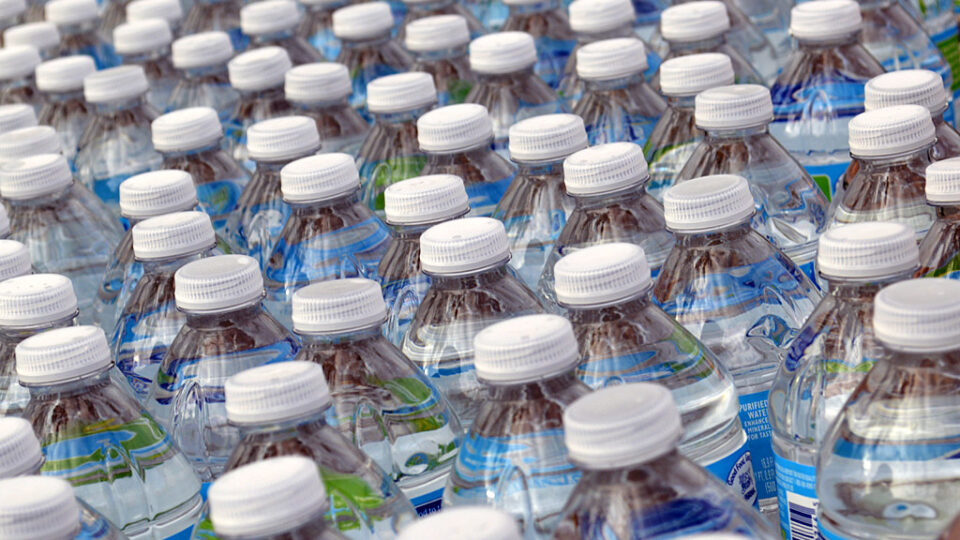
In the laboratory, the method removed 99.6% of the salt in seawater.  The technology is still being developed to lower its price and optimize the recycling process.  It is also being tested on a small scale in the form of water bottles fitted with special filters that can be used in lifeboats or in other outdoor settings.  Ultimately, it could be used to greatly reduce the energy consumption of desalination plants.

**********

Web Links

Chemist uses CO2 to convert seawater into drinking water

Photo, posted January 10, 2015, courtesy of Daniel Orth via Flickr.

Earth Wise is a production of WAMC Northeast Public Radio.

The Dangers Of Negative Emissions Technologies | Earth Wise

September 28, 2020 By EarthWise Leave a Comment

The dangers of negative emissions technologies

Reducing carbon emissions is not easy and there are plenty of people who don’t even want to try for various reasons, generally related to their perceived economic interests and convenience.  As a result, there is a great deal of interest in so-called negative emissions technologies or NETs.   These are methods for removing carbon dioxide from the atmosphere.  Even the UN Intergovernmental Panel on Climate Change assumes that NETs will play a role in mitigating the effects of climate change and meeting international goals.

The most widely studied approaches to negative emissions technology are bioenergy with carbon capture and storage – which entails growing crops for fuel, and then capturing and burying the CO2 produced from burning the fuel; planting more forests; and direct air capture, which involves actually pulling CO2 out of the air and storing it – probably underground. 

A new study published in Nature Climate Change points out that none of these technologies has even been tried at the demonstration scale, much less at the massive levels required to make a dent in current CO2 emissions. 

Their analysis of the biofuel and reforestation strategies show that each would take up vast land and water resources already needed for agriculture and nature.  Air capture uses less water than the other two approaches, but still uses quite a bit and even more energy, which if supplied by fossil fuels, would offset the benefits of carbon capture.

Negative emissions technologies may well play an important role in combating climate change, but it is essential that we understand what the consequences will be from implementing them.  We need to know the pitfalls that could arise.  It would be a major mistake to simply count on NETs to be some kind of silver bullet.

**********

Web Links

Remove CO2 from the air? Don’t bet on it before examining costs, researchers say

Photo, posted January 11, 2008, courtesy of Al Pavangkanan via Flickr.

Earth Wise is a production of WAMC Northeast Public Radio.
Artificial Aquatic Polyps | Earth Wise

September 16, 2020 By EarthWise Leave a Comment

Aquatic robots can clean water

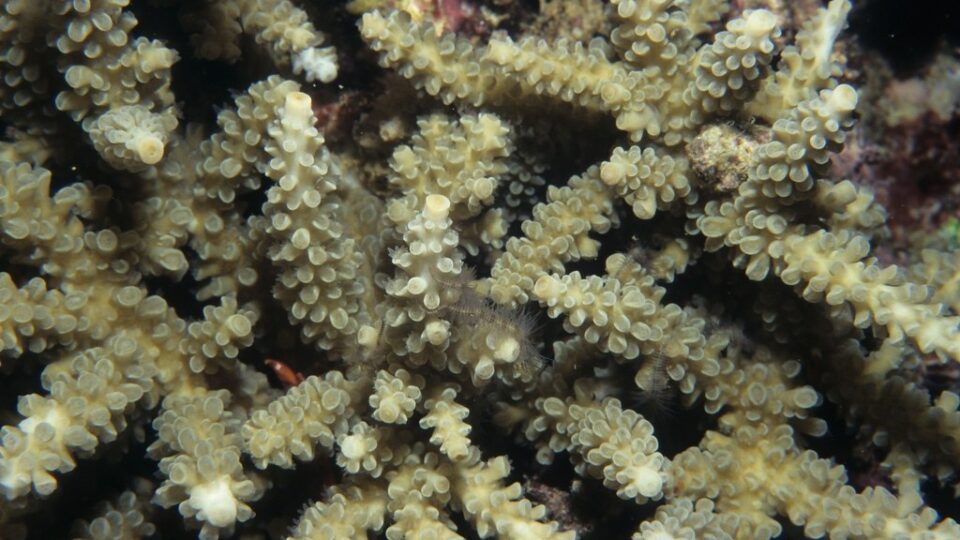
Corals are often mistaken for rocks because of their hardened surfaces.  And, since they attach or “take root” to the sea floor, they are often mistaken for plants.  But unlike rocks, corals are alive.  And unlike plants, corals do not make their own food.  Corals are actually animals. 

Most of these structures that we call “coral” are made up of hundreds to thousands of tiny coral creatures called polyps.  A coral polyp, which is often no thicker than a nickel, has a saclike body and mouth that is encircled by stinging tentacles.  Polyps are responsible for a host of ecosystem services, including nourishing corals, and aiding coral survival by generating self-made currents through the motion of their soft bodies. 

Inspired by these marine organisms, researchers from the University of Warwick in the UK and Eindhoven University of Technology in the Netherlands have collaborated to develop an artificial aquatic polyp capable of removing contaminants from water.  The 1 square centimeter wireless robot polyp can attract, grasp, and release objects, moving under the influence of a magnetic field and whose “tentacles” are triggered by light. 

The next step for the researchers is to see if the technology can be successfully scaled up from laboratory to pilot scale.  In order for that to happen, the team has to design an array of artificial polyps capable of working harmoniously together.   

Corals are an incredibly important part of ocean ecosystems.  And while it remains to be seen how much value artificial polyps can achieve in future applications, it serves as another example of scientists emulating nature to create more sustainable designs. 

**********

Web Links

Aquatic robots can remove contaminant particles from water

An artificial aquatic polyp that wirelessly attracts, grasps, and releases objects

Photo, posted April 14, 2011, courtesy of Derek Keats via Flickr.

Earth Wise is a production of WAMC Northeast Public Radio.
Finding Plastic In Seafood | Earth Wise

September 15, 2020 By EarthWise Leave a Comment

plastic in seafood

Researchers from the University of Exeter in the UK and the University of Queensland in Australia have developed a new method for identifying and measuring the presence of five different types of plastic in seafood.

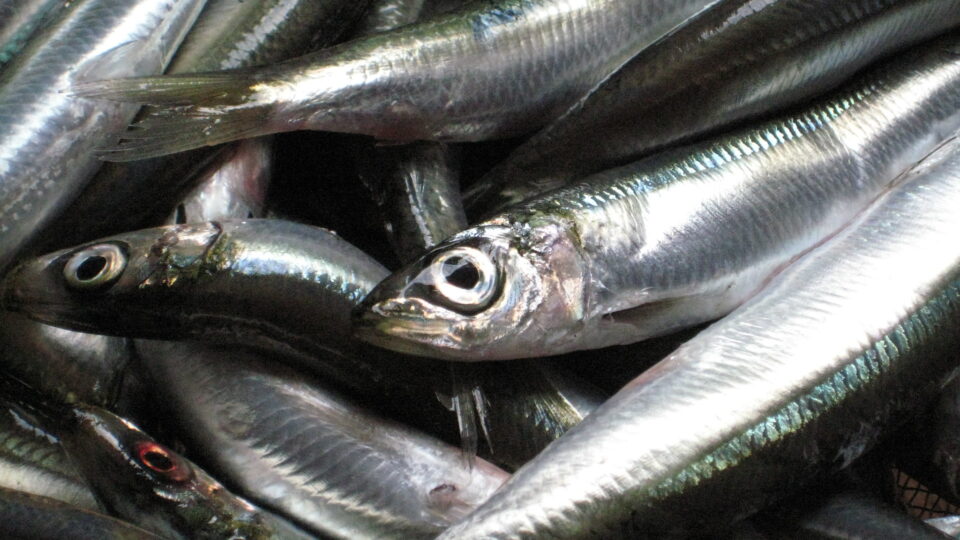
The researchers purchased oysters, prawns, squid, crabs, and sardines from a market in Australia and analyzed them using the new technique.  They found plastic in every single sample.

Their findings showed that the amount of plastics present varies greatly among species and differs between individuals of the same species.  The measured plastic levels were 0.04 mg per gram of seafood in squid, 0.07 mg in prawns, 0.1 mg in oysters, 0.3 mg in crabs, and 2.9 mg in sardines. 

All the plastics are types commonly used in plastic packaging and synthetic textiles and are increasingly found in marine litter:  polystyrene, polyethylene, polyvinyl chloride, polypropylene, and polymethyl methacrylate.

The new method treats the seafood tissues with chemicals that dissolve the plastics present within them.  The resulting solution is then analyzed using a highly sensitive technique called Pyrolysis Gas Chromatography Mass Spectrometry which both identifies and quantifies the plastics.

Microplastics are an increasing source of pollution for much of the planet, including the oceans where they are eaten by all types of marine creatures ranging from planktonic organisms to large mammals.  Microplastics enter our diet not only from seafood, but also from bottled water, sea salt, beer, and honey, as well as from dust that settles on our food.

**********

Web Links

Seafood study finds plastic in all samples

Photo, posted June 23, 2007, courtesy of Flickr.

Earth Wise is a production of WAMC Northeast Public Radio.

Sustainable Flip-Flops | Earth Wise

September 9, 2020 By EarthWise Leave a Comment

Sustainable technologies

Flip-flops are the world’s most popular shoe.  They are lightweight, comfortable, affordable, and durable.  In fact, the global market for flip-flops is expected to reach a whopping $23.8 billion by the year 2025. 

But the popularity comes with a price.  Flip-flops account for a troubling percentage of plastic waste that ends up in our landfills and oceans.  As a result, demand for alternatives is compelling researchers to develop more sustainable versions of the popular footwear.

Scientists at the University of California San Diego have spent years working on this issue, and recently announced a breakthrough.  According to a study recently published in Bioresource Technology Reports, the research team has formulated polyurethane foams – made from algae oil – to meet commercial specifications for mid-sole shoes and the foot-bed of flip-flops.   In other words, the scientists have created sustainable, biodegradable, and consumer-ready materials that could replace plastics in some footwear. 

The UC San Diego scientists collaborated with Algenesis Materials – a technology startup – on the research.  Together, they worked to not only create the shoes, but to degrade them as well.  The team tested their customized foams by immersing them in traditional compost and soil.  The algae-based materials degraded after just 16 weeks.  

The life of any material should be proportionate to the life of the product.  The researchers point out that it doesn’t make sense to create a product that will last 500 years if it’ll only be used for a year or two. 

The research team is currently working on production details with its manufacturing partners.  The creation of biodegradable flip-flops that meet commercial footwear standards could eliminate tons of plastic waste from the environment.   

************ 

Web Links

New science behind algae-based flip-flops

Flip Flops Market Size Worth $23.8 Billion by 2025

Photo, posted December 12, 2019, courtesy of Flickr.

Earth Wise is a production of WAMC Northeast Public Radio.

A Fabric To Keep You Cool | Earth Wise

September 1, 2020 By EarthWise Leave a Comment

cooling fabric technology

About 10% of all electricity consumption in the U.S. is devoted to keeping us cool with air conditioning and other methods.  Researchers at two universities in Shanghai, China have developed a new material that can be made into clothing that cools the wearer without using any electricity.

The new fabric transfers heat, allows moisture to evaporate from the skin, and repels water.  Cooling off a person’s body is much more efficient than cooling off an entire room or a building.  There have been textiles and types of clothing designed to perform the cooling function, but most of those have disadvantages.  These include some combination of poor cooling capacity, high energy consumption, complex and time-consuming manufacturing, and high cost.

The researchers wanted to develop a personal cooling fabric that can efficiently transfer heat away from the body while at the same time being breathable, water resistant and easy to make.

The new fabric is made by electrospinning an ordinary polyurethane polymer with a water-repelling fluorinated version of polyurethane polymer along with a thermally conductive filler composed of boron nitride nanosheets.  The resultant material is a nanofibrous membrane that repels water from the outside but has large enough pores to allow sweat to evaporate from the skin and air to circulate. 

Tests of the membrane demonstrated higher thermal conductivity than other conventional or high-tech fabrics.  Used in clothing, the material would be more effective than previous fabrics in conducting heat away from the body. It may be possible to beat the heat without turning on the AC.   These membranes could also be useful for solar energy collection, seawater desalination, and thermal management of electronic devices.

**********

Web Links

New fabric could help keep you cool in the summer, even without A/C

Photo courtesy of the American Chemical Society on Youtube.

Earth Wise is a production of WAMC Northeast Public Radio.
A Camera For Insects | Earth Wise

August 26, 2020 By EarthWise Leave a Comment

Developing tiny cameras for insects

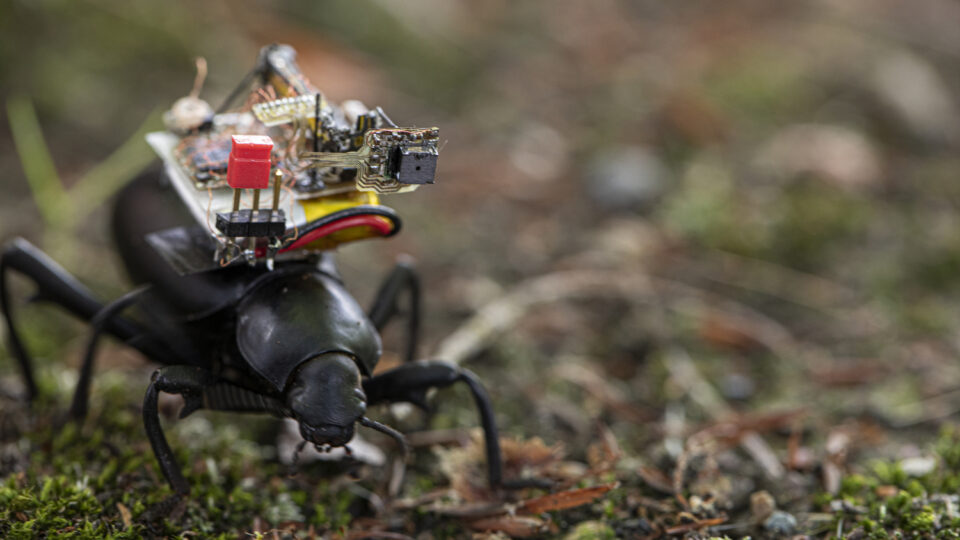
Electronic devices get smaller and smaller all the time.  We are used to carrying around phones in our pockets that incorporate a whole host of sophisticated devices. But we can still be amazed by miniaturization.  Recently, scientists at the University of Washington announced the development of a tiny, wireless camera small enough to be worn by insects.  The work was published in the journal Science Robotics.

The device weighs only 250 milligrams, which is less than one hundredth of an ounce.  The camera streams high-resolution video to a smartphone at up to 5 frames per second, which allows scientists to record video of what insects see in real time.

The device has a mechanical arm that allows the camera to pivot 60 degrees, which can allow it to create panoramic shots.  It is controlled by a smartphone app and can be operated up to 120 meters away from the insect.

The new camera system enables scientists to better understand insect behavior and explore novel environments.  Having a first-person view from the back of a beetle while it is walking around allows researchers to explore how it responds to different stimuli that it sees in its environment.

Of more general interest, the technology can be used to help develop the next generation of small robots.  Insects can traverse rocky environments, which is really challenging for small robots to do.  The device will allow engineers to study how insects can move around in such environments.  It will also be useful for observing and collecting samples from hard-to-navigate spaces.

It is remarkable how sophisticated technology keeps getting smaller and smaller.

*********

Web Links

Scientists Develop Tiny Camera Backpack for Insects

Photo courtesy of Mark Stone/University of Washington.

Earth Wise is a production of WAMC Northeast Public Radio.

Better Paint For Cooler Buildings | Earth Wise

August 20, 2020 By EarthWise 2 Comments

white paints help keep buildings cool

A research team led by scientists at UCLA have developed a super-white paint that reflects as much as 98% of incoming heat from the sun.  Such paint, if used on rooftops and other parts of buildings, could have a major impact on reducing the costs of keeping buildings cool.

Passive daytime radiative cooling is a well-known method to keep buildings cooler.  By having building surfaces reflect sunlight and radiate heat into space, building temperatures can be significantly lowered.  This in turn cuts down on air conditioner use and associated carbon emissions.

A roof painted white will result in lower indoor temperatures than a darker roof.  But a white roof will do even more:  it can reject heat at infrared wavelengths that are invisible to our eyes.  This results in even more radiative cooling.

The best performing white paints currently available reflect about 85% of incoming solar radiation.  The rest is absorbed by materials in the paint.  The new research has identified simple modifications in paint ingredients that lead to a major increase in reflectivity.

Current reflective white paints use titanium dioxide, which absorbs UV radiation and therefore heats up under sunlight.  The researchers studied replacing it with other substances such as barite – an artist’s pigment – or with powdered Teflon, both of which allow the paint to reflect more of the sun’s radiation. 

Many cities are encouraging the use of cool-roof technologies on new buildings.  Using the most reflective coatings possible on rooftops, if applied on a sufficiently large scale, could have a real impact on climate change as well as saving significant amounts of energy used for running air conditioners in buildings.

**********

Web Links

UCLA-led Team Develops Ways to Keep Buildings Cool with Improved Super White Paints

Photo, posted August 15, 2012, courtesy of Flickr.

Earth Wise is a production of WAMC Northeast Public Radio.
Better Radar For Cars | Earth Wise

August 14, 2020 By EarthWise Leave a Comment

new radar technology for safer driving

Major automakers as well as dedicated specialized companies are actively developing autonomous vehicle technology.  Many cars already offer varying degrees of self-driving capability.  These vehicles have a variety of sensor systems that allow them to detect other objects on the road.  Many rely on lidar or on cameras using visible or near-infrared light and these sensors do a pretty good job of preventing collisions.   But all of these systems are pretty much limited to detecting objects within a car’s line of sight.  Of course, human drivers have the same limitation.  We can’t see things hidden around corners or blocked by other objects.

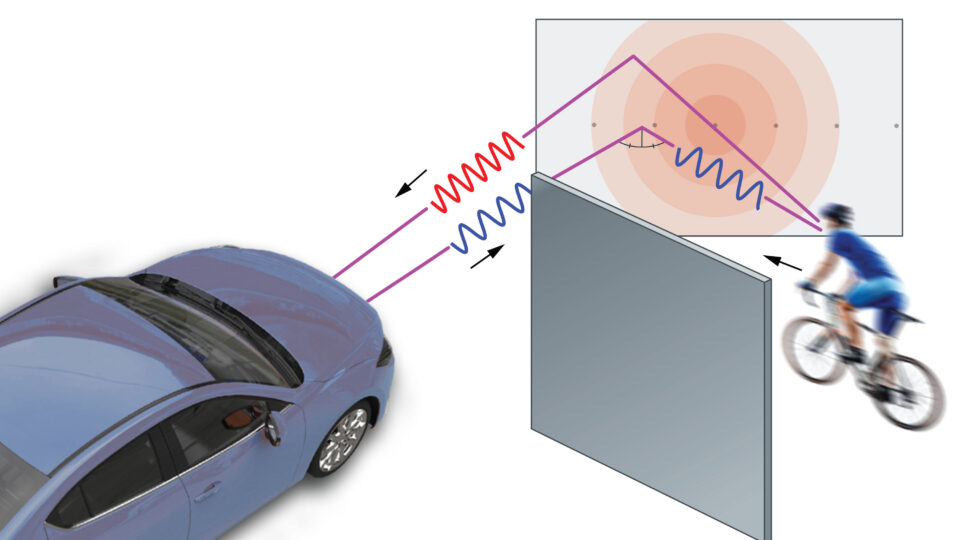
Researchers at Princeton University have developed an automated system that will allow cars to peer around corners and spot oncoming traffic and pedestrians.  The system uses Doppler radar to bounce radio waves off of surfaces such as buildings and parked automobiles.  The radar signal hits a surface at an angle and its reflection bounces off much like a cue ball hits the wall of a pool table.  The reflected signal then hits objects hidden around the corner.  Some of that radar signal bounces back to be detected by sensors on the car.  In this way, the system can see objects around the corner and even tell whether they are moving or stationary.

This new technology could easily be integrated into today’s vehicles.  It would enable cars to see objects that current sensor systems cannot record.  For example, it would allow a self-driving vehicle to see around a dangerous intersection.

The system will require further development, refinement, and testing before it can find its way into our vehicles, but it does represent yet another way that self-driving technology may ultimately result in a safer transportation system.

**********

Web Links

New radar lets cars spot hazards around corners

Photo courtesy of Princeton University.

Earth Wise is a production of WAMC Northeast Public Radio.

Massachusetts And Energy Policy | Earth Wise

August 4, 2020 By EarthWise Leave a Comment

Massachusetts and clean energy

The transition to a renewables-based energy future continues to accelerate, but there are still many forces that can slow it down.  Government policy has a major role to play.  At the moment, the federal government is trying to prop up the fossil fuel industry with financial incentives and rampant deregulation.  So more than ever, innovative policies at the state level are essential drivers for revolutionizing the energy system.

One state where policy is trying to make a big difference is Massachusetts, which has created the Clean Peak Energy Standard or CPS, finalized and approved in late March and now taking effect.   A clean peak standard is a regulatory tool to reduce the costs and environmental impact of periods when electricity demand is highest, and generation tends to be the most polluting.  The CPS requires electric retailers to procure a minimum percentage of their annual electricity sales from renewable generation or energy storage.  That minimum amount will increase each year.

The CPS is formulated to incentivize better utilization of clean energy technologies to supply power when energy demand is high.  The problem is that there are times when the sun is not shining and the wind isn’t blowing, but energy demand is at its highest.  The solution is to use energy storage technologies that can supply power when it is needed.  Furthermore, storage can be relied upon during times of extreme weather that cause power outages.

Massachusetts has already started using energy storage in its grid.  The small town of Sterling installed an energy storage system in 2016 that provides crucial backup power to the police station and emergency dispatch center, thereby keeping first responder operations running even during extended power outages.

**********

Web Links

Massachusetts is setting the benchmark for nationwide clean energy transformation

Photo, posted March 30, 2012, courtesy of Flickr.

Earth Wise is a production of WAMC Northeast Public Radio.
Monitoring Wildlife For Warning Signs of the Next Pandemic | Earth Wise

July 29, 2020 By EarthWise Leave a Comment

Monitoring wildlife to prevent the next pandemic

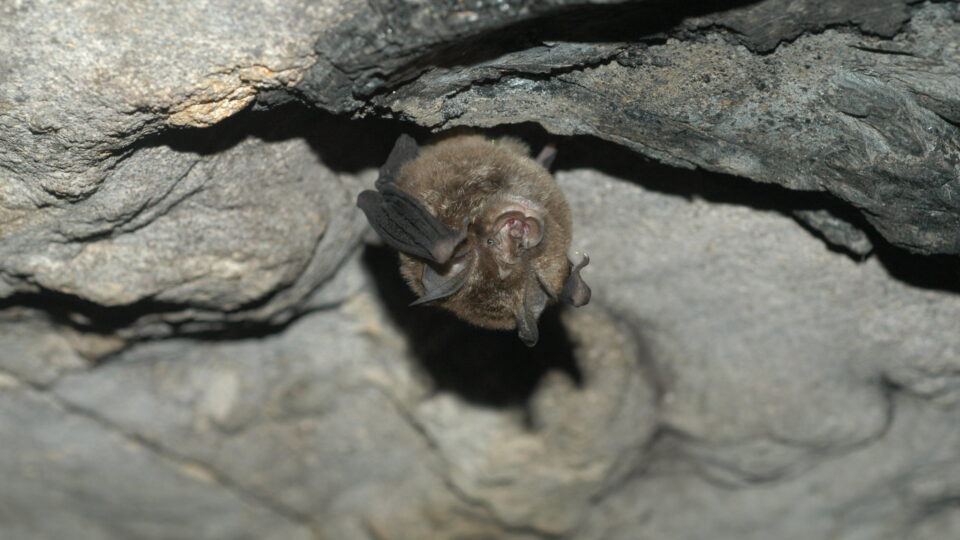
According to the World Health Organization, the coronavirus that causes COVID-19 likely originated in wild bats near Wuhan, China, and may have been passed to a second animal species before infecting people.  Since then, according to data from Johns Hopkins University, more than 13 million people around the world have been infected by COVID-19 and about 600,000 have died. 

But despite the ever-present threat of a new virus sparking the next pandemic, there is currently no global system to screen for viruses in wild animals that could eventually spill over to humans. 

In an article recently published in the journal Science, a group of scientists is calling for the creation of a decentralized global system of wildlife surveillance.  The establishment of this global system could help identify viruses in wild animals that have the potential to infect and sicken people before another global disease outbreak begins. 

According to the scientists, coronaviruses alone have caused outbreaks in humans three times in the last 20 years:  SARS (or Severe Acute Respiratory Syndrome), MERS (or Middle East Respiratory Syndrome), and COVID-19. 

While it’s impossible to know today how often viruses jump from animals to humans, human activity is making such spillover events more and more likely.  For instance, many continue to develop wild animal habitat to build new homes or businesses.  Some catch wild animals and re-sell them either for consumption or as exotic pets.  Parts from these wild animals are often shipped around the world as trinkets or as ingredients for traditional medicines. 

A global system that could identify potentially harmful viruses before they jump to humans is technologically feasible, affordable, and clearly necessary. 

**********

Web Links

COVID-19 Dashboard by the Center for Systems Science and Engineering (CSSE) at Johns Hopkins University (JHU)

Global wildlife surveillance could provide early warning for next pandemic

Photo, posted January 15, 2008, courtesy of Doug Beckers via Flickr.

Earth Wise is a production of WAMC Northeast Public Radio.

A High-Tech Fire Alarm | Earth Wise

July 23, 2020 By EarthWise Leave a Comment

In recent years, wildfires have been a global problem, notably in California, Brazil, and Australia.  It has become increasingly important to be able to respond to new fires as soon and as quickly as possible.  Such response can make the task of extinguishing them easier, thereby reducing the amount of damage and the loss of property and life.

Traditional methods for detecting forest fires include satellite monitoring, ground patrols, and watch towers, all of which have high labor and financial costs but suffer from low efficiency.  Remote sensing technologies are becoming increasingly common but rely on batteries for power, requiring servicing in remote locations to replace depleted batteries.  Solar cells represent an alternative to batteries, but it is challenging to use them in forests because of shading and foliage coverage.

A team of researchers at Michigan State University has developed a remote forest fire detection and alarm system powered by nothing more than the movement of tree limbs in the wind.  The device is known as an MC-TENG, which is an acronym for multilayered cylindrical triboelectric nanogenerator.  The triboelectric effect is a phenomenon where certain materials become electrically charged when they separate from a second material with which they were previously in contact.  In the new device, two cylindrical sleeves fit within one another – one anchored and the other free to slide.  The device is tied to a tree branch and when the branch sporadically moves in the wind, electricity is generated and stored in a carbon-nanotube-based micro supercapacitor.  This powers a sensing system that can continuously monitor environmental conditions without requiring any maintenance.

A combination of carbon monoxide and temperature sensors provides a high-tech fire alarm that can operate continuously in the most remote forest.

**********

Web Links

Self-Powered Alarm Fights Forest Fires, Monitors Environment

Photo, posted August 3, 2012, courtesy of Lukas Schlagenhauf via Flickr.

Earth Wise is a production of WAMC Northeast Public Radio.
Renewables Could Take Over By 2035 | Earth Wise

July 15, 2020 By EarthWise Leave a Comment

Renewable energy taking over

A study by UC Berkeley looked at the prospects for renewable energy sources to become the primary source of energy in the United States over the next 15 years.  Even though fossil fuels continue to fill that role at present, the plummeting costs of alternative energy sources – primarily solar and wind power – are making them increasingly attractive on the competitive market.

These cost reductions have occurred much faster than what was anticipated even just a few years ago.  According to the study, it is technically and economically feasible for renewable sources to provide 90% of our electricity by 2035.

The Berkeley researchers took the available data on renewable energy and created two scenarios for the next 15 years.  The first has energy policy remaining as it is now, without ambitious policy changes that encourage the growth of renewable energy.  In that scenario, they estimated that 55% of the US energy infrastructure would come from renewables.  That amount will not produce the change needed to meet Paris Climate Agreement goals but would simply come about because of the dramatically lower costs for renewable energy.

The second scenario includes state and federal governments leading the way to finance and facilitate the energy reform needed for a greener 2035.  It also relies on the large-scale use of grid-scale batteries to store the energy collected from solar and wind installations for when it is needed.

Which scenario is more realistic will depend on several major influential factors, notably the trajectory and consequences of the COVID-19 pandemic as well as the results of the November elections.   These things will have a huge impact on the future of our energy system.

**********

Web Links

Report: By 2035, 90 Percent of the US Could Be Powered by Renewables

Photo, posted May 25, 2019, courtesy of Flickr.

Earth Wise is a production of WAMC Northeast Public Radio.

Nanotech Water Purification | Earth Wise

July 14, 2020 By EarthWise Leave a Comment

Ultrathin nanosheets separate ions from water

We have occasionally talked about metal-organic frameworks, which are organic-inorganic hybrid crystalline structures that have a microscopic cage-like structure.  MOFs have been under development for a diverse set of applications including gas storage and separation, liquid purification, energy storage, catalysis, and sensing.

For the first time, an international research team, led by researchers from Monash University in Australia, has created an ultrathin porous membrane based on MOF technology that can completely separate potentially harmful ions, such as lead and mercury, from water.

This innovation could enhance water desalination and transform even the dirtiest water into something potable for millions of people around the world.  The new membrane performed steadily in tests for more than 750 hours using only limited energy.

The technology uses water-stable monolayer aluminum-based MOFs just a millionth of a millimeter in thickness.  These are essentially two-dimensional structures.  The ultrathin membrane is permeable to water – it achieves maximum porosity – but rejects nearly 100 percent of ions.  It has been a daunting challenge to fabricate ultra-thin MOFs for water-based processing.  Most previous membranes were too thick and unstable in water. 

Most existing ion separation membrane technologies are based on polymers and have the limitation that they have limited selectivity.  They don’t reject all unwanted ions.

The new membrane technology has great potential based on its precise and fast ion separation and could be ideal for a variety of filtration applications such as gas separation and separation of organic solvents such as paint.  Such membranes might also be used to remove harmful carcinogens from the atmosphere.

**********

Web Links

Ultrathin nanosheets separate ions from water

Photo courtesy of Monash University.

Earth Wise is a production of WAMC Northeast Public Radio.
Fighting Mildew With Robots | Earth Wise

July 10, 2020 By EarthWise Leave a Comment

Using robots to fight mildew in agriculture

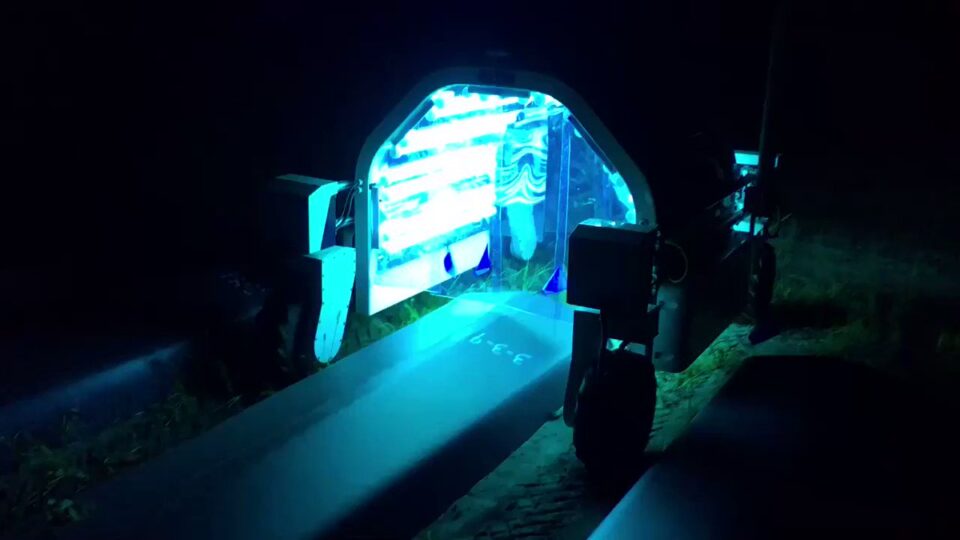
Cornell Researchers have partnered with Norwegian company SAGA Robotics to develop autonomous robots that can roam vineyards at night armed with ultraviolet lamps that can kill powdery mildew, which is a pathogen that devastates many crops, including grapes.

The robots are being field tested on Chardonnay grapes at two sites:  Cornell AgriTech’s research vineyards in Geneva, New York, and at Anthony Road Wine Co. in Penn Yan, New York.

Cornell has been researching the use of UV light to kill grapevine powdery mildew for nearly 30 years.  They have also worked with the University of Florida on using it to control powdery mildew in strawberries.

The UV treatment has been shown to suppress powdery mildew over a period of two years with the application of treatments once a week.  The technique represents a breakthrough because the mildew can adapt to chemical anti-fungal sprays in a single season, making them ineffective.  UV light damages DNA, but mildews have natural biochemical defenses that are triggered by the blue light present in sunlight.  By applying the UV at night, when there is no blue light from the sun, the defenses of the mildew are defeated.

In earlier trials, the researchers used UV lamps mounted on a tractor wagon, but this required all-night labor to treat an entire vineyard.  That has now been replaced with autonomous vehicles that can work seven nights a week, all night long.

The next development will be imaging technology that will detect and quantify mildew on grape leaves.  With this, the dose of UV light applied to a particular vine will depend on whether it is sick or healthy.

A high-tech solution to a problem that plagues vineyards.

**********

Web Links

Robots armed with UV light fight grape mildew

Photo courtesy of Rodrigo Onofre/Twitter.

Earth Wise is a production of WAMC Northeast Public Radio.

Making Use Of Invasive Seaweed | Earth Wise

June 26, 2020 By EarthWise Leave a Comment

In recent years, millions of tons of brown Sargassum seaweed have formed gigantic blooms stretching all the way across the Atlantic Ocean from West Africa to the Gulf of Mexico.  The seaweed has become a problem for shorelines in the Caribbean, the Gulf of Mexico, and the east coast of Florida.  The massive increase in seaweed populations is related to changes in ocean chemistry resulting from nutrients from fertilizer use entering the water as well as from changes to the climate affecting ocean currents and temperatures.  The seaweed is harming the tourism industry as well as fisheries and ocean ecosystems.

Cleaning up the seaweed that washes ashore is labor-intensive and therefore expensive.  A research team led by two British universities has developed a cheap and simple way to pre-process seaweed to facilitate making it into bulk chemicals and biofuels.  With the new process, cleaning up the seaweed can be both economically and environmentally viable.

Previous techniques for processing seaweed generally required removing it from the saltwater, washing it in fresh water, and drying it – all of which add significant costs.  The new technique makes use of catalysts to release sugars from untreated seaweed that feed a yeast to produce a palm oil substitute.  At the same time, the process creates heat and pressure, turning the residual materials into a bio-oil that can be processed further into fuels, and a high-quality, low-cost fertilizer.

Apart from getting economic value out of the seaweed that is collected, any plastic collected alongside the seaweed can be converted to useful materials as well. 

It appears that the seaweed scourge is here to stay, so finding an economically viable way to deal with it is a welcome development.

**********

Web Links

Solve invasive seaweed problem by turning it into biofuels and fertilisers

Photo, posted August 10, 2015, courtesy of Flickr.

Earth Wise is a production of WAMC Northeast Public Radio.

  • « Go to Previous Page
  • Page 1
  • Interim pages omitted …
  • Page 27
  • Page 28
  • Page 29
  • Page 30
  • Page 31
  • Interim pages omitted …
  • Page 40
  • Go to Next Page »

Primary Sidebar

Recent Episodes

  • An uninsurable future
  • Clean energy and jobs
  • Insect declines in remote regions
  • Fossil fuel producing nations ignoring climate goals
  • Trouble for clownfishes

WAMC Northeast Public Radio

WAMC/Northeast Public Radio is a regional public radio network serving parts of seven northeastern states (more...)

Copyright © 2026 ·