• Skip to primary navigation
  • Skip to main content
  • Skip to primary sidebar

Earth Wise

A look at our changing environment.

  • Home
  • About Earth Wise
  • Where to Listen
  • All Articles
  • Show Search
Hide Search
You are here: Home / Archives for habitat

habitat

The March Of The Penguins Toward Extinction

November 28, 2019 By EarthWise Leave a Comment

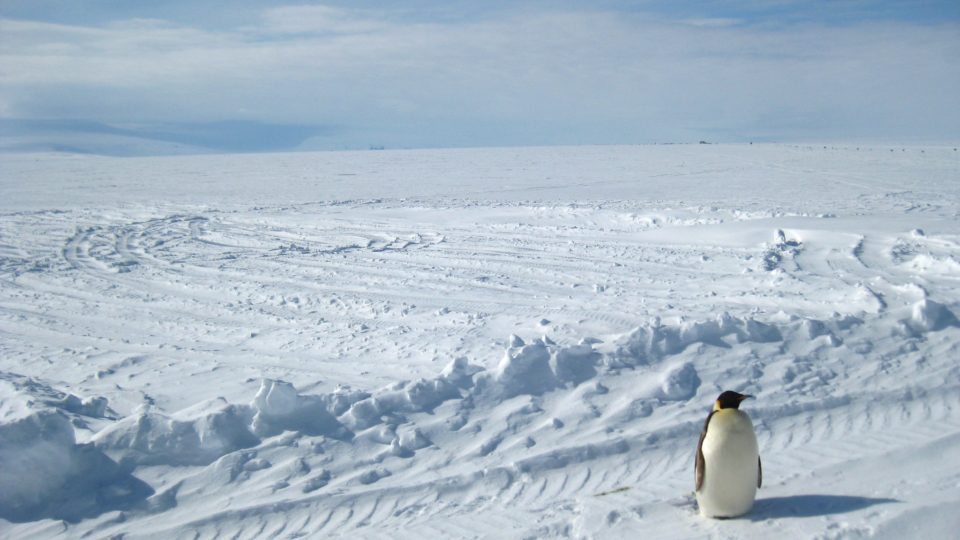
According to a new study from the Woods Hole Oceanographic Institution, the warming climate may render emperor penguins extinct by the end of this century.  The study, which was part of an international collaboration between scientists, finds that emperor penguins will likely experience an 86% decline by 2100 if the global climate continues to warm at the current rate.  At that point, it would be very unlikely for them to recover, according to the study’s lead author.       

The research was funded by the National Science Foundation and recently published in the journal Global Change Biology.

The fate of emperor penguins is largely tied to the fate of sea ice.  The penguins use sea ice as a place for breeding, feeding, and molting.  They look for very specific conditions of sea ice – it must be locked in to the Antarctic shoreline but also close enough to open seawater to give them access to food. The study predicts that this sea ice will gradually disappear, depriving the birds of their habitat, food sources, and ability to raise their young.     

The researchers combined two existing computer models to study three different climate change scenarios.  If the average global temperature increases by only 1.5 degrees Celsius, the study found that only 5% of sea ice would be lost by 2100, resulting in a 19% drop in penguin colonies.  If the planet warms by 2 degrees Celsius, the sea ice loss nearly triples and more than a third of penguin colonies disappear.  The ‘business as usual’ scenario where the planet continues to warm at the current rate will ensure a near complete loss of emperor penguin colonies by 2100. 

**********

Web Links

Unless warming is slowed, emperor penguins will be marching towards extinction

Photo, posted January 15, 2011, courtesy of Eli Duke via Flickr.

Earth Wise is a production of WAMC Northeast Public Radio.
Beavers And Biodiversity

October 10, 2019 By EarthWise Leave a Comment

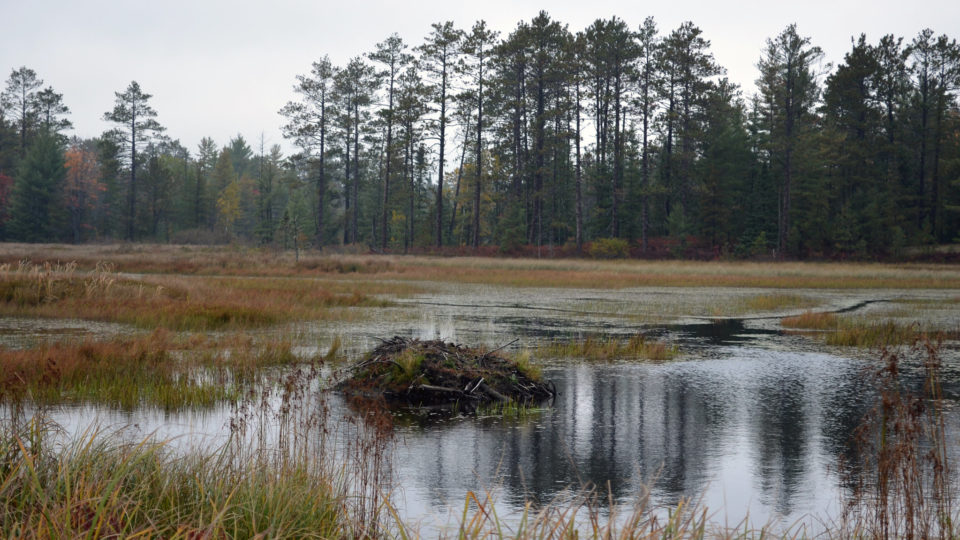
Beavers are large, semi-aquatic rodents known best for their ability to construct dams, canals, and lodges (their homes).  They are among the largest rodents in the world.  With powerful jaws and strong teeth, beavers fell trees to use as building materials, often changing their environment in ways few other animals can. But in a good way.  As it turns out, beavers are important for biodiversity. 

According to new research from the Faculty of Natural Sciences at the University of Stirling in Scotland, reintroducing beavers to their native habitats is an important step towards solving the freshwater biodiversity crisis. 

Researchers surveyed water plants and beetles in 20 wetlands in Sweden – 10 created by beavers and 10 that were not – in order to understand what impact beavers might have on the variety of plant and animal life around them. 

The research team’s findings build on previous work that has shown that beavers have an important impact on biodiversity.  This latest study discovered that the number of species found only in beaver-built ponds was 50% higher than in other non beaver-built wetlands in the same region. 

Beavers are known to be profound engineers of the environment. They use wood to build dams across rivers in order to form ponds behind them.  They do this to raise the water level in order to avoid predators, like bears and wolves. But it turns out many other plants and animals, like water plants and beetles, also benefit from their work.

According to the research team, reintroducing beavers to their native habitats should benefit the wider biodiversity and be seen as an important step towards solving the freshwater biodiversity crisis. 

**********

Web Links

Beaver reintroduction key to solving freshwater biodiversity crisis

Photo, posted October 2, 2014, courtesy of USFWS Midwest Region via Flickr.

Earth Wise is a production of WAMC Northeast Public Radio.
Shifting Ecosystems

August 29, 2019 By EarthWise Leave a Comment

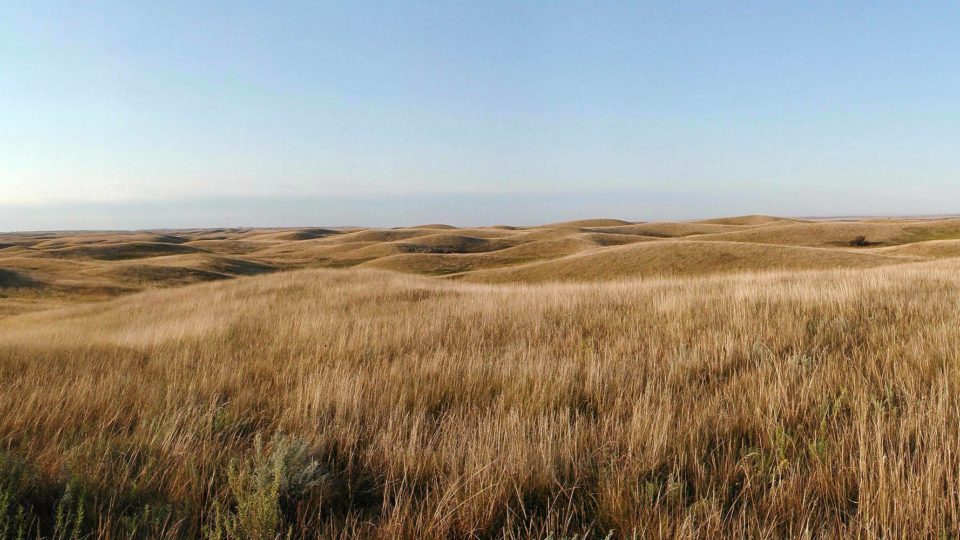
The Great Plains ecosystem has been shifting northward over the past fifty years, driven by climate change, wildfire suppression, energy development, land use changes, and urbanization.  The ecosystem is an area historically rich with grasslands and shrub steppe and is prime habitat for grassland birds.

According to a recent study published in the journal Nature Climate Change, the northernmost ecosystem boundary of the Great Plains has moved more than 365 miles north since 1970, amounting to about 8 miles a year.  The region’s southernmost ecosystem boundary has shifted 160 miles north, or about 4 miles a year.

The study used bird distribution data as an indicator of shifting ecosystem boundaries.  The researchers analyzed 46 years of data for 400 bird species across a 250-mile-wide strip stretching from Texas to North Dakota.  They tracked how the birds’ distributions changed as a measure of how these ecosystems were shifting.

While climate change has been a major driver of these ecosystem shifts since the 1970s, several other factors such as wildfire trends, land use changes, and invasion of tree species into grassland habitat have also played a role.  Like most things in ecological systems, the changes are likely to have multiple causes.  One cannot really separate causes like tree invasions, warming climate, and wildfires, as they are all interrelated.

Using bird distribution patterns for tracking ecosystem shifts could be a useful tool for scientists and land managers in the coming decades to give them an early warning of how habitats are changing in response to rising global temperatures and therefore allow them to take action to protect vulnerable species.

**********

Web Links

Great Plains’ Ecosystems Have Shifted 365 Miles Northward Since 1970

Photo, posted March 24, 2017, courtesy of Rick Bohn / USFWS via Flickr.

Earth Wise is a production of WAMC Northeast Public Radio.
A Giant Seaweed Bloom

August 19, 2019 By EarthWise Leave a Comment

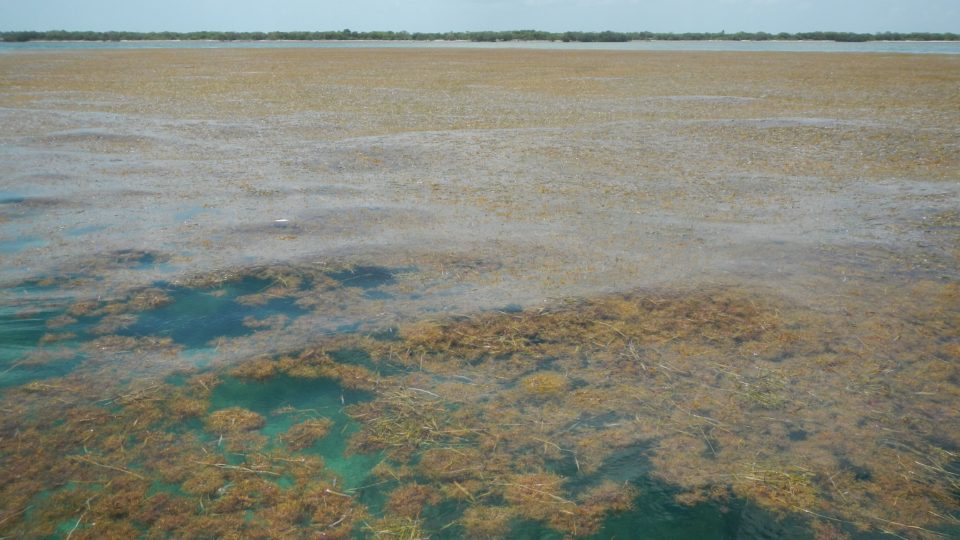
Scientists using data from NASA satellites have discovered and documented the largest bloom of seaweed in the world, stretching all the way from West Africa to the Gulf of Mexico.  The gigantic macroalgae bloom has been dubbed the Great Atlantic Sargassum Belt. 

The brown seaweed floats in surface water and in recent years has become a problem to shorelines lining the tropical Atlantic, Caribbean Sea, Gulf of Mexico, and east coast of Florida.  The stuff carpets popular beach destinations and crowded coastal waters. In 2018, more than 20 million tons of it floated on the ocean surface.

Scientists have been studying the Sargassum algae using satellites since 2006, but the major blooms have only started appearing since 2011.  They have occurred every year between 2011 and 2018 except for 2013.  Before 2011, most of the free-floating Sargassum in the ocean was primarily found in patches around the Gulf of Mexico and the Sargasso Sea located on the western edge of the central Atlantic Ocean.

Sargassum provides habitat for turtles, crabs, fish and birds, and produces oxygen via photosynthesis.  However, too much of it can crowd out many marine species.

According to researchers, the ocean’s chemistry must have changed in order for the bloom to get so out of hand.  The factors involved include a large seed population left over from a previous bloom, nutrient input from West Africa, and nutrient input from the Amazon River.  The increase in nutrients may be a result of deforestation and fertilizer use.

Climate-change effects on precipitation and ocean currents ultimately do play a role in this, but increased ocean temperatures do not.  Unfortunately, these giant seaweed blooms are probably here to stay.

**********

Web Links

NASA Satellites Find Biggest Seaweed Bloom in the World

Photo courtesy of NASA.

Earth Wise is a production of WAMC Northeast Public Radio.
Cities And Monarch Butterflies

August 13, 2019 By EarthWise Leave a Comment

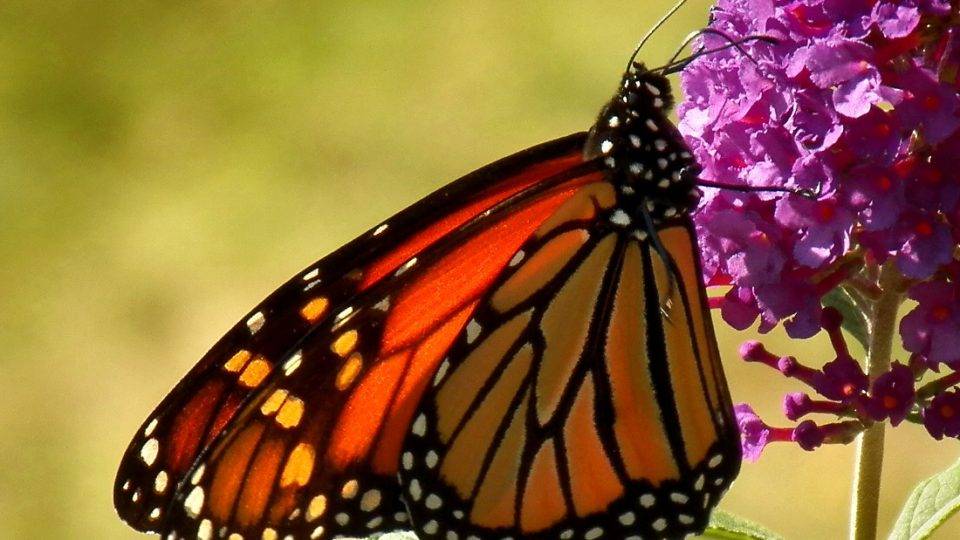
Monarchs are some of the most well-known butterflies in the U.S.   It is well-known that populations of the iconic orange-and-black butterflies have been in a steep decline for the last 20 years.  In fact, the Monarch population has declined by 80% over that period.

Milkweed, the only plant that Monarchs can lay their eggs on, continues to disappear across the United States and with it, the butterflies can disappear too.

Two new studies published in the journal Frontiers of Ecology and Evolution show that one of the most important things that can be done to save the Monarchs is to plant milkweed in cities.

We tend to think of cities as being the enemy of nature.  But metropolitan areas actually matter for wildlife conservation and that is especially true for pollinators like butterflies that can actually survive with very small patches of habitat.

The new study estimates the amount of habitat in cities that is available to Monarchs and other pollinators and how much more can potentially be added.  It looked at cities from the Monarch’s point of view by identifying the best places and most effective ways to engage land owners to transform low-quality green space – such as lawns – into high-quality homes for butterflies and other wildlife.

Just because urban dwellers can plant milkweed doesn’t always mean that they will.  There has to be a public perception that milkweed and other native flowers are acceptable and beautiful elements in home landscaping.  It will require some shifting of societal norms of what is desirable in neighborhood gardens in order for cities to be able to do their part in protecting butterflies and other species struggling in the modern world.

**********

Web Links

Cities are Key to Saving Monarch Butterflies

Photo, posted August 31, 2012, courtesy of Chris via Flickr.

Earth Wise is a production of WAMC Northeast Public Radio.
Wildlife Bridges

June 17, 2019 By EarthWise Leave a Comment

Highway accidents involving animals are a big problem for both people and animals.  About 200 people die every year in the U.S. as a result of collisions with animals.  In total, one to two million large animals are killed by motorists every year.  And these crashes are expensive:  deer-car collisions cost an average of more than $8,000 each; elk-vehicle collisions about $25,000; and moose-vehicle collisions over $44,000. 

In the United States, there are 21 threatened and endangered species whose very survival is threatened by road mortalities.   These include Key deer in Florida, bighorn sheep in California, and red-bellied turtles in Alabama.

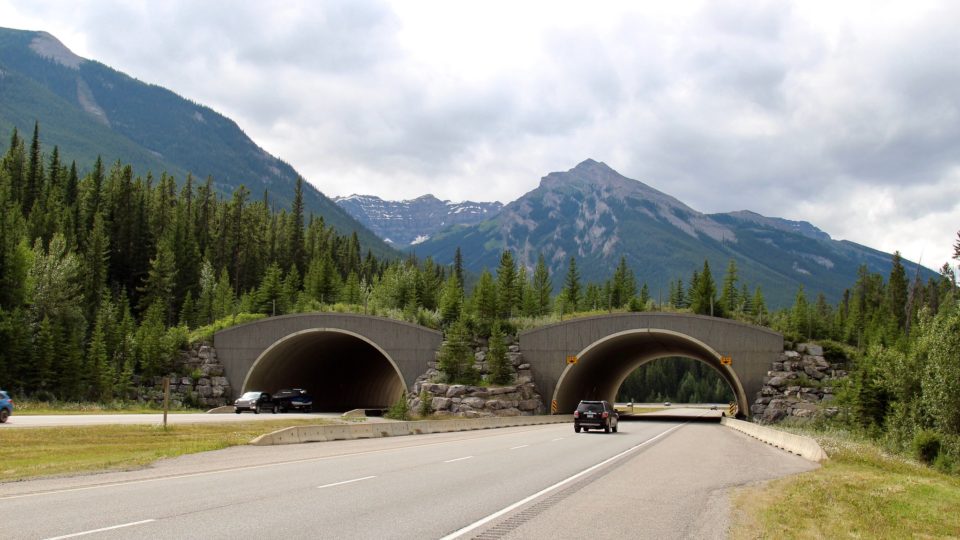
One solution that has been quite effective around the world in reducing car-animal collisions is wildlife overpasses and underpasses.  Crossings and fencing that guide animals over or under highways reduce collisions by 85-95%.

These traffic-spanning bridges and tunnels have been popular in Europe since the 1950s.  The overpasses usually look much like regular overpasses for cars but are decked out with native flora.  The underpasses, which assist shyer and smaller animals, are typically invisible to drivers.

Washington State has recently started building wildlife bridges and underpasses on Interstate 90.  These passes will allow elk, black bears, mountain lions, pika, and even trout to traverse what was once a near-impenetrable barrier of road.

Some animals that are accustomed to human structures start using the crossings almost immediately.  For others, there is learning curve.  As in many things, the early adapters are important as they provide paths and model behavior that more reticent animals learn to follow.

Wildlife bridges are a very good thing for wildlife and for people.

**********

Web Links

How wildlife bridges over highways make animals—and people—safer

Photo, posted July 22, 2017, courtesy of David Fulmer via Flickr.

Earth Wise is a production of WAMC Northeast Public Radio.
The Future Of Animals

June 12, 2019 By EarthWise Leave a Comment

Researchers at the University of Southampton have forecast a global shift towards smaller birds and mammals over the next century.   

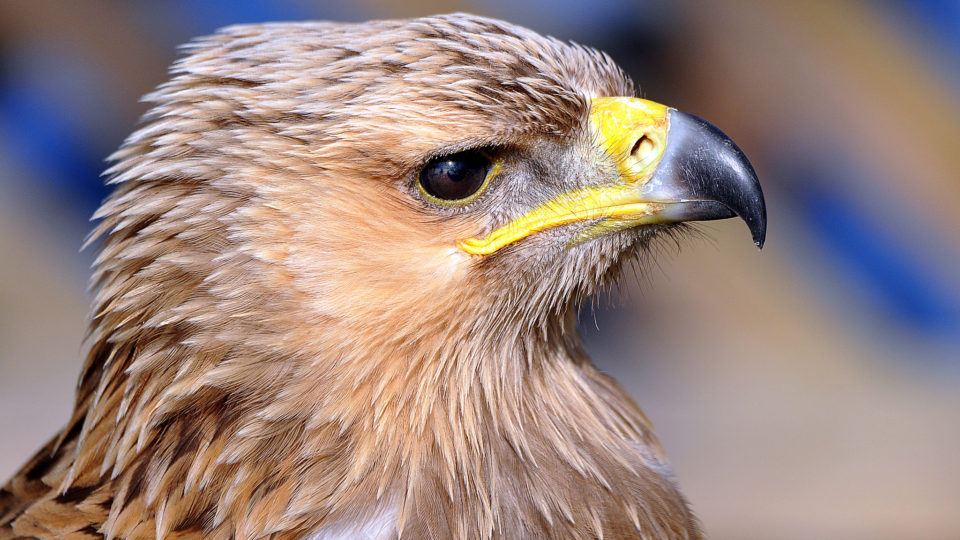
According to the research team, small, fast-lived, highly fertile, and insect-eating animals, which can thrive in all sorts of habitats, will predominate in the future.  Rodents and songbirds are examples of the so-called ‘winners.’  Less adaptable, slow-lived species, requiring specialist habitats, will be more likely to face extinction.  Among the so-called ‘losers’ are the black rhino and the tawny eagle. 

The researchers focused on more than 15,000 living mammals and birds and considered the following five characteristics: body mass, breadth of habitat, diet, litter or clutch size, and length of time between generations.  Using this data and data from the IUCN’s Red List of Threatened Species, the researchers used modern statistical tools to project and evaluate the loss of biodiversity.  

The study, which was recently published in the journal Nature Communications, predicts that the average body mass of mammals will collectively decline by 25% over just the next 100 years.  Over the past 130,000 years, the average body size of mammals only declined 14%.

This substantial downsizing of animals is forecasted to occur due to the effects of ecological change. But, according to the study’s lead author, the loss of these species, which perform unique functions within the global ecosystem, may ironically wind up being a driver of change as well.       

The researchers hope future studies will further explore the long-term effects of species extinction on habitats and ecosystems. 

**********

Web Links

Study predicts shift to smaller animals over next century

Photo, posted April 6, 2013, courtesy of Nic Trott via Flickr.

Earth Wise is a production of WAMC Northeast Public Radio.

Deepwater Impacts Lingering

May 10, 2019 By EarthWise Leave a Comment

On April 20, 2010, an explosion on the BP-owned Deepwater Horizon drilling rig released an estimated 210 million of gallons of oil into the Gulf of Mexico.  Some of the oil was recovered, burned, or dispersed at sea, while some washed up onto coastal shorelines. 

Now, more than nine years later, a long-term study suggests the oil is still affecting the salt marshes of the Gulf Coast.  A multi-institutional research team began sampling in the region once the spill was contained and continue their work to this day.

The researchers found that heavily-oiled marsh areas remained less healthy than less polluted sites more than six years after the spill.  They fear that complete recovery of these oil-soaked regions will likely take more than a decade. 

But the researchers also discovered that salt marsh grasses play a key role in coastal wetland recovery.  Two plants dominate healthy salt marshes in the Gulf: smooth cordgrass and black needlerush.  Single-celled, plant-like organisms known as benthic microalgae also abound in healthy salt marshes, as do many small invertebrates. 

In heavily-oiled areas, the researchers found that nearly all the plants died, and benthic microalgae and small invertebrate populations declined significantly.  Importantly, however, they also found that it was only after smooth cordgrass started its comeback in these areas that invertebrate populations began to recover.  They noted that these salt marsh grasses provide habitat, bind soil, slow water, facilitate colonization, and fuel the food web. 

Plants are the foundation of and play a crucial role in salt marshes.  The researchers hope these findings will help shape the mitigation strategies of any future oil spills. 

**********

Web Links

Continuing impacts of Deepwater Horizon oil spill

Photo, posted April 21, 2010, courtesy of Deepwater Horizon Response via Flickr.

Earth Wise is a production of WAMC Northeast Public Radio.
Fish And Ships

April 25, 2019 By EarthWise Leave a Comment

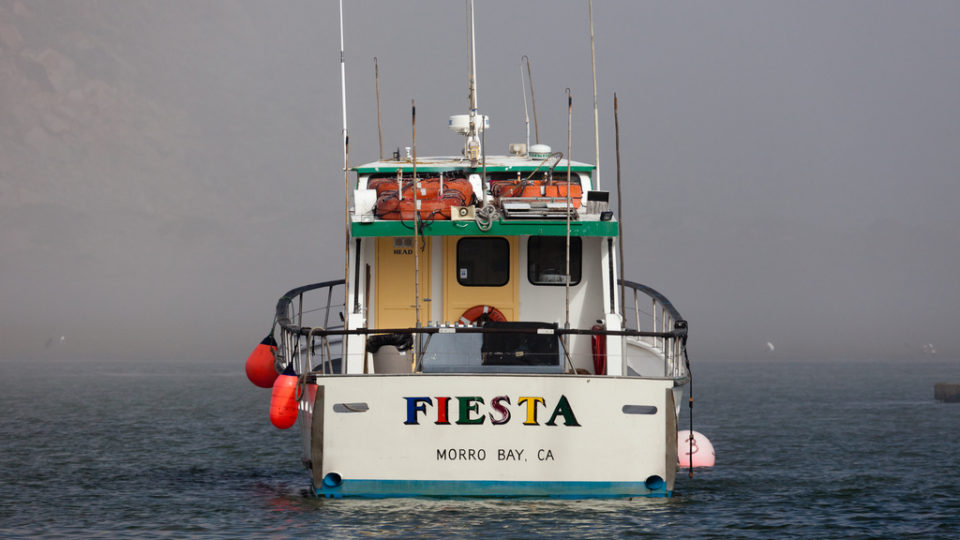
Solutions to overfishing of certain tuna and shark populations have been hindered by some significant unknowns:  where the fishing is happening, and where the fish are.  But researchers from Stanford University have recently shed some light on this mystery. 

According to a paper recently published in the journal Science Advances, the researchers have developed a map of shark, tuna, and ship movements that could help ocean managers identify regions of the sea where vulnerable species may be at risk. 

The researchers’ work builds on a 2018 study in which four years of satellite vessel movement data was used to develop a machine learning algorithm that mapped the footprint of 70,000 different fishing vessels around the world.  In their paper, the researchers zeroed in on the activities of 900 vessels from 12 countries in the northeast Pacific Ocean to figure out to what degree fishing fleets, sharks, and tunas overlapped. 

The researchers combined the vessel data with the ocean habitat preferences of sharks and tunas obtained from a decade-long tracking program called Tagging of Pacific Predators (or TOPP).  According to the IUCN, most of the 876 individuals tagged in TOPP belong to species that are either threatened or near-threatened.

By synthesizing this data, researchers were able to map where sharks and tunas would have the highest overlap with commercial fishing vessels.  Increasing the transparency of where fish meets fleets will allow ocean managers to determine where international protections may be needed. 

The United Nations is currently developing the world’s first legally binding treaty to protect international waters.  The Stanford University researchers hope their findings can help with this treaty’s formulation. 

**********

Web Links

Tunas, sharks and ships at sea

Photo, posted June 20, 2011, courtesy of Mike Baird via Flickr.

Earth Wise is a production of WAMC Northeast Public Radio.
Indonesian Deforestation

February 28, 2019 By EarthWise Leave a Comment

Deforestation is defined as the intentional destruction of trees and other vegetation without reforesting or allowing the forest to regenerate itself. 

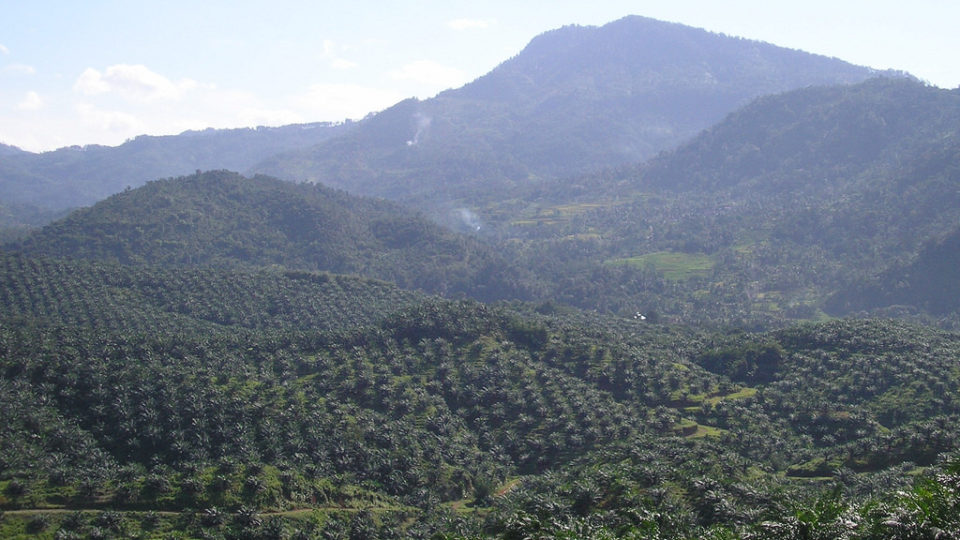
In Indonesia, industrial agriculture, primarily for the production of palm oil, is a major driver of deforestation.  But, according to researchers at Duke University, its impact has diminished  proportionately in recent years as other natural and human causes have emerged. Their peer-reviewed findings were recently published in the journal Environmental Research Letters.

According to the study’s lead author, large-scale plantations were responsible for more than half of Indonesia’s deforestation in the late 2000s, peaking between 2008-2010 when an average of 1.5 million acres of forest was lost annually.  The expansion of the massive plantations was responsible for 57% of the forest loss. Between 2014-2016, an average of more than 2 million acres of forest was lost annually, but plantation expansion only accounted for 25% of this figure.  While the overall rate of deforestation continued to grow, other factors were responsible for most of it.

Conversions of forests to grasslands rose sharply in 2015 and 2016 when El Nino caused severe droughts and forest fires. Small-scale farming, often overshadowed by industrial agriculture, was also found to play a bigger role, accounting for 25% of all forest loss. 

Indonesia has experienced some of the highest rates of deforestation.  Its forests absorb and store vast amounts of climate-warming carbon dioxide, help prevent erosion and flooding, and provide habitat to thousands of species.  Understanding the varied causes of Indonesian deforestation should help conservationists and policymakers better address the problem.

************

Web Links

Palm oil not the only driver of forest loss in Indonesia

Photo, posted March 26, 2018, courtesy of Achmad Rabin Taim via Flickr.

Earth Wise is a production of WAMC Northeast Public Radio.
Bee Friendly Amsterdam

February 11, 2019 By EarthWise Leave a Comment

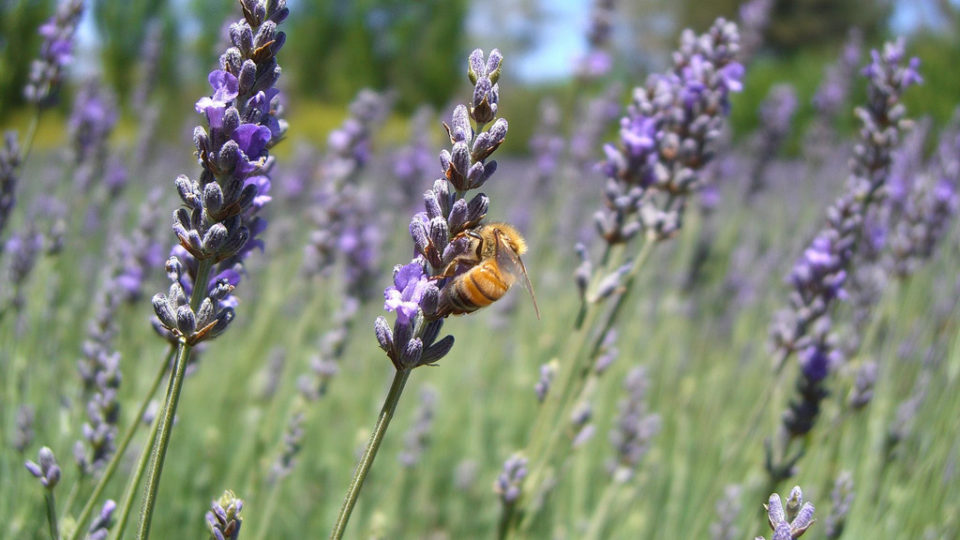
Scientists around the world have been sounding the alarm for years about the decline of bees and other pollinators that are crucial to the growth of crops.   One place where this trend has been bucked is in Amsterdam.  The diversity of wild bee and honeybee species in the Dutch capital has actually increased by 45% since 2000.

The city attributes this success to creating bee-friendly environments including the installation of so-called insect hotels.  There has also been a ban on the use of chemical pesticides on public land.

Four years ago, Amsterdam set a goal to convert half of all public green spaces to native plants including species that produce flowers and fruits that provide nourishment for bees.  Developers in Amsterdam are encouraged to install green roofs on new buildings which reduce reliance on heating and cooling systems and also create habitat for wildlife.

Residents can request to have a 16-inch strip of pavement adjacent to their homes removed in order to plant shrubs, flowers or climbing vines.  When a new highway was built in the area in 2015, local activists planted wildflowers along the sides of the road that otherwise would have been left with only gravel or grass.  This practice has spread to other major routes and along dikes and railways and is referred to as the Honey Highway.

All of these efforts seem to be having a positive effect.  An initial survey was conducted in 2000 to establish a baseline.  A 2015 survey of pollinators found 21 bee species not previously documented in the city.  The rest of the Netherlands has not done as well, and the Dutch government has recently introduced a pollinator strategy to revive bees, butterflies and other insects crucial to the country’s food crop.

**********

Web Links

Bees are dying at an alarming rate. Amsterdam may have the answer.

Photo, posted December 28, 2006, courtesy of Flickr.

Earth Wise is a production of WAMC Northeast Public Radio.
Your Children’s Yellowstone

January 25, 2019 By EarthWise Leave a Comment

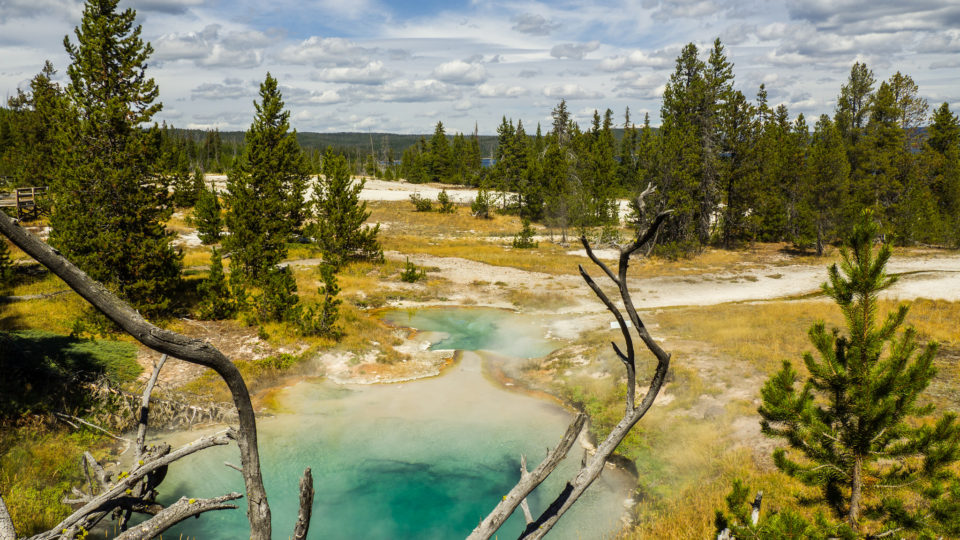
Yellowstone National Park was the first national park in the US and according to some sources, the first in the world.  It is the home of charismatic megafauna and stunning geysers that attract over four million visitors a year.  It is the only place in the United States where bison and wolves can be seen in great numbers.  And it is changing.

Over the next few decades of climate change, Yellowstone will quite likely see increased fire, less forest, expanding grasslands, shallower, warmer waterways, and more invasive plants.  All these things will alter how and how many animals move through the landscape.   Ecosystems are always changing, but climate change is transforming habitats so quickly that many plants and animals may not be able to make the transition at all.

Since 1948, the average annual temperature in the Greater Yellowstone ecosystem has gone up by 2 degrees Fahrenheit.  On balance, winter is 10 days shorter and less cold.  The Northern Rockies snowpack has fallen to its lowest level in eight centuries. Summers in the park are warmer, drier, and increasingly prone to fire.

Non-nutritious invasive plants like cheatgrass and desert madwort have replaced nutritious native plants.  When plants like these take over, they suck moisture out of the ground early so that bison and elk cannot be sustained throughout the summer.

The behavior of elk and other animals is already changing, with many staying outside the park to nibble lawns and alfalfa fields.  In turn, wolves go where the elk go.   Forests and waterways are changing as well.

The rapid changes going on at Yellowstone mean that the park that our children and grandchildren will visit in the future is likely to be a very different one from the Yellowstone we remember.

**********

Web Links

In Yellowstone National Park, warming has brought rapid changes.

Photo, posted September 7, 2016, courtesy of Mike Yang via Flickr.  

Earth Wise is a production of WAMC Northeast Public Radio.

The Problem Of Urban Growth

January 2, 2019 By EarthWise Leave a Comment

https://earthwiseradio.org/wp-content/uploads/2018/12/EW-01-02-19-The-Problem-of-Urban-Growth.mp3

The rapid expansion of cities around the world has accelerated in recent decades.  If current trends continue, the equivalent of a city the size of London could be created every seven weeks by the year 2050, according to a study at Texas A&M University.

[Read more…] about The Problem Of Urban Growth

Agroforestry

December 27, 2018 By EarthWise 2 Comments

https://earthwiseradio.org/wp-content/uploads/2018/12/EW-12-27-18-Agroforestry.mp3

It has become increasingly evident that reducing carbon dioxide emissions is not happening quickly enough to prevent runaway climate change and that negative emission techniques will need to be utilized as well.  Negative emissions means removing carbon dioxide that is already in the atmosphere.

[Read more…] about Agroforestry

The Cockroaches Of The Ocean

December 14, 2018 By EarthWise Leave a Comment

https://earthwiseradio.org/wp-content/uploads/2018/12/EW-12-14-18-The-Cockroaches-of-the-Ocean.mp3

The coast of Northern California is home to underwater forests – huge, sprawling tangles of brown seaweed.  Kelp forests play a similar role in the oceans as the one that ordinary tree forests play on land.  Like trees, kelp absorbs carbon emissions and provides critical habitat and food for a wide range of species.

[Read more…] about The Cockroaches Of The Ocean

Fish And Their Sense Of Smell

September 4, 2018 By EarthWise Leave a Comment

https://earthwiseradio.org/wp-content/uploads/2018/08/EW-09-04-18-Fish-And-Their-Sense-Of-Smell.mp3

We use our sense of smell for all sorts of things, like locating food and habitat, avoiding danger, and so on.  Fish do as well.  But instead of smelling scent molecules in the air like humans do, fish use their nostrils to sense chemicals suspended in water.  

[Read more…] about Fish And Their Sense Of Smell

Insects In A Warming World

July 19, 2018 By EarthWise Leave a Comment

https://earthwiseradio.org/wp-content/uploads/2018/07/EW-07-19-18-Insects-in-a-Warming-World.mp3

The revered biologist E. O. Wilson once said that “if all mankind were to disappear, the world would regenerate back to the rich state of equilibrium that existed ten thousand years ago.  If insects were to vanish, the environment would collapse into chaos.”

[Read more…] about Insects In A Warming World

Losing Forests Is Felt Far Away

July 6, 2018 By EarthWise 2 Comments

https://earthwiseradio.org/wp-content/uploads/2018/06/EW-07-06-18-Losing-Forests-is-Felt-Far-Away.mp3

Large areas of forests in our country are vulnerable to drought, fires and disease.  When forests are heavily damaged, there are well-known local impacts:  drier soils, stronger winds, increased erosion, loss of shade and loss of habitat.

[Read more…] about Losing Forests Is Felt Far Away

Fracking And Streams

March 8, 2018 By EarthWise Leave a Comment

https://earthwiseradio.org/wp-content/uploads/2018/03/EW-03-08-18-Fracking-and-Streams.mp3

Hydraulic fracturing – better known as fracking – is a method of extracting oil and gas from shale deposits in which millions of gallons of freshwater and chemicals are injected into deep underground deposits.  There has been a great deal of concern related to the effects that this process has on water quality and also on the stability of the ground in the vicinity of where it takes place.

[Read more…] about Fracking And Streams

Are Big Cats In Big Trouble?

January 16, 2018 By EarthWise Leave a Comment

https://earthwiseradio.org/wp-content/uploads/2017/12/EW-01-16-18-Big-Cats-in-Big-Trouble.mp3

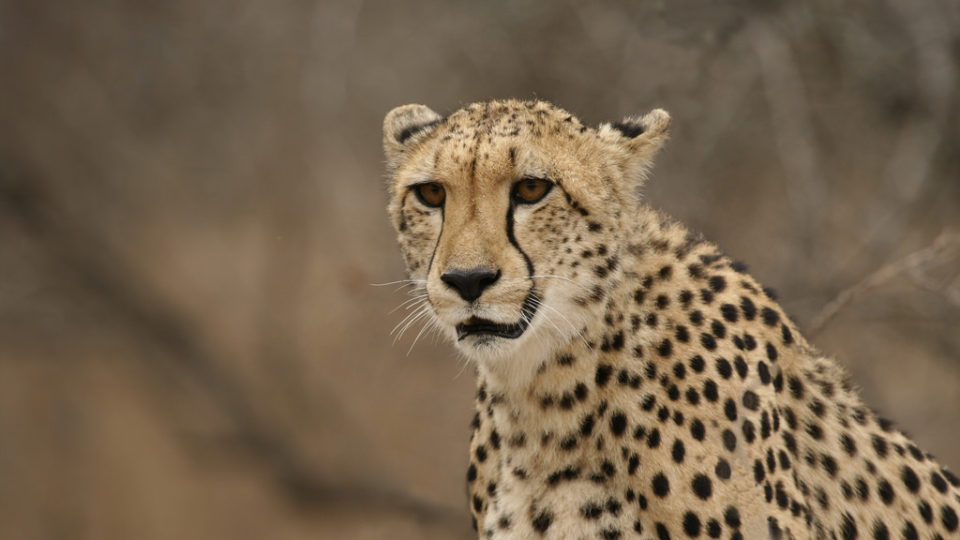
According to researchers with the National Geographic Society’s Big Cats Initiative, cheetahs are much closer to extinction than previously thought. The research team has released a study, which was recently published in the journal PeerJ, that updates the cheetah population numbers in southern Africa, the largest of its remaining habitat.

[Read more…] about Are Big Cats In Big Trouble?

  • « Go to Previous Page
  • Page 1
  • Page 2
  • Page 3
  • Page 4
  • Page 5
  • Page 6
  • Go to Next Page »

Primary Sidebar

Recent Episodes

  • An uninsurable future
  • Clean energy and jobs
  • Insect declines in remote regions
  • Fossil fuel producing nations ignoring climate goals
  • Trouble for clownfishes

WAMC Northeast Public Radio

WAMC/Northeast Public Radio is a regional public radio network serving parts of seven northeastern states (more...)

Copyright © 2026 ·