• Skip to primary navigation
  • Skip to main content
  • Skip to primary sidebar

Earth Wise

A look at our changing environment.

  • Home
  • About Earth Wise
  • Where to Listen
  • All Articles
  • Show Search
Hide Search
You are here: Home / Archives for global warming

global warming

Shrinking polar ice

November 12, 2024 By EarthWise Leave a Comment

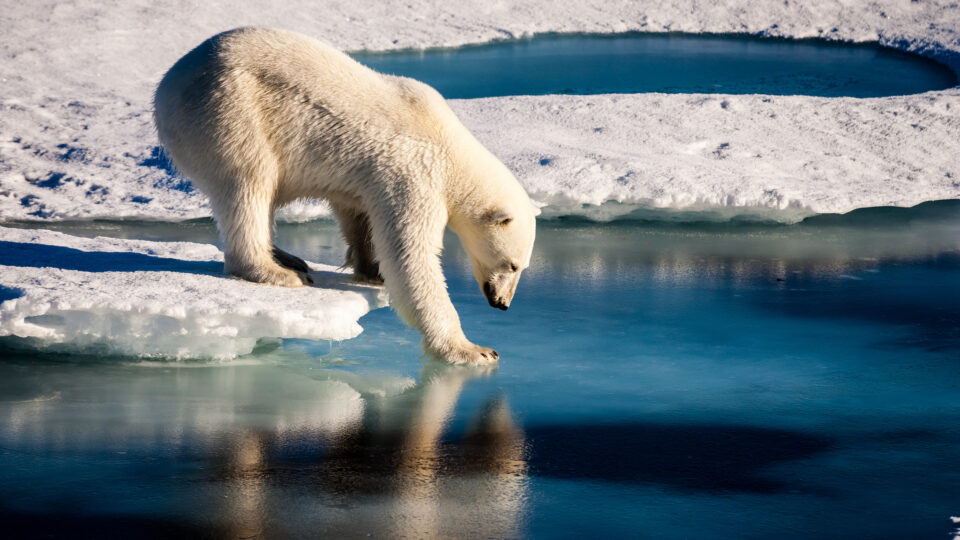
Arctic sea ice has shrunk to near-historic lows during this Northern Hemisphere summer.  The minimum extent for the year occurred on September 11th.  Ice cover in the Arctic Ocean has been shrinking and thinning for more than 40 years.  The amount of frozen seawater in the Arctic goes up and down during the year as sea ice thaws and regrows between seasons.

This year, the minimal extent of sea ice shrank to 1.65 million square miles.  That’s about 750,000 square miles less than the average for late summer over the years between 1981 and 2010, representing a decrease of more than 30%.  The all-time low of 1.31 million square miles was actually set in 2012.  Sea ice coverage can fluctuate from year to year, but it has trended downward since it has started being tracked in the late 1970s.  The loss of sea ice has averaged about 30,000 square miles per year.

Sea ice extent has not only been shrinking; the ice has been getting younger and thinner.  Presently, the overwhelming majority of ice in the Arctic Ocean is first-year ice, which is thinner and less able to survive the warmer months.  There is far less ice that is three years or older.

Meanwhile, sea ice in the southern polar regions was also low this year.  In the sea around Antarctica, scientists are tracking near record-low sea ice at a time when it should have been growing extensively during the darkest and coldest months in the Southern Hemisphere.

Polar ice loss compounds polar ice loss.  The loss of sea ice increases heat in the polar regions, where temperatures have risen about four times more than the global average.

**********

Web Links

Arctic Sea Ice Near Historic Low; Antarctic Ice Continues Decline

Photo, posted September 15, 2016, courtesy of Mario Hoppmann via Flickr.

Earth Wise is a production of WAMC Northeast Public Radio

Renegade geoengineering

October 30, 2024 By EarthWise Leave a Comment

Geoengineering inc

As the dangers of climate change continue to grow, so has interest in geoengineering – deliberate tinkering with the earth’s climate system.  In particular, stratospheric solar geoengineering – releasing aerosols into the stratosphere to reduce the amount of heat from the sun reaching the Earth – is attracting increasing interest.  Scientists at Harvard, Cornell, Colorado State, Princeton, and the University of Chicago are all researching the topic.

Actually doing it on a scale that matters is fraught with peril from unintended consequences of disrupting the delicate interactions between the Earth’s atmosphere, ocean, land, and sea ice. 

Meanwhile, a tiny start-up company in Silicon Valley has raised more than a million dollars in venture capital and is busy releasing balloons full of sulfur dioxide into the atmosphere in the name of combatting global warming.  Furthermore, they are selling so-called “cooling credits” to customers who want to offset their personal carbon emissions.

The aerosol being released is on such a small scale that it can’t possibly have a meaningful effect on temperatures.  There really isn’t scientific analysis guiding or accompanying the work. 

There are no laws prohibiting the dispersal of small amounts of sulfur dioxide in California.  Even if there were, these people could go offshore or elsewhere to do their work.  But this renegade geoengineering highlights a serious issue; namely, that there doesn’t have to be scientific, political, or any other kind of consensus for someone to undertake a potentially catastrophic attempt to alter the climate.  It’s a real worry.

**********

Web Links

Silicon Valley Renegades Pollute the Sky to Save the Planet

Photo, posted September 24, 2006, courtesy of Doc Searls via Flickr.

Earth Wise is a production of WAMC Northeast Public Radio
Wildlife crossings

October 23, 2024 By EarthWise Leave a Comment

Building more wildlife crossings to reduce collisions between cars and animals

Every year, there are one to two million collisions between motor vehicles and large animals in the U.S.  About 200 people are killed annually.  Counting smaller vertebrates, around a million animals are killed by vehicles each day.  Research has shown that global warming is triggering widespread species redistribution.  As a result, more and more animals are on the move, changing their habitats to escape warming temperatures and climate extremes.

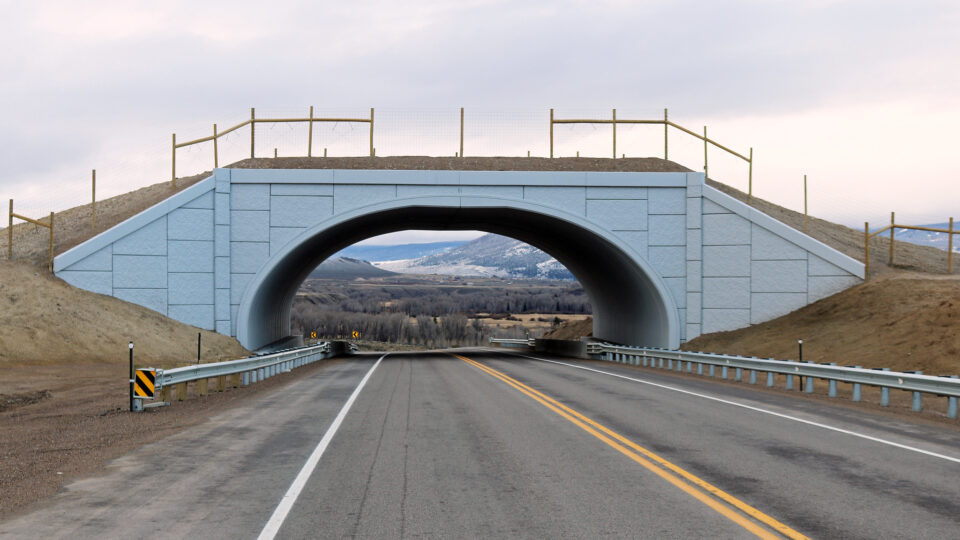
This situation has created renewed interest in creating wildlife crossings.  These are various kinds of structures that allow animals to traverse human-made barriers like highways.  They include such things as a grassy overpass that allows pronghorn to run across a highway in Wyoming and a long underpass that allows tigers to scamper beneath a highway in India.

In the U.S., there are more than 1,000 wildlife crossings and there are more being built all the time.  Data shows that they are highly effective.  A study of wildlife crossings on Highway 9 through the Blue River Valley in Colorado found that they reduced wildlife-vehicle collisions by nearly 90%. 

Wildlife crossing structures can be expensive to build, costing between $500,000 and $6 million, but research has shown that the money saved by avoiding crashes can recoup these costs in just a few years along with the fact that they potentially save lives.  Federal funding is largely distributed based on areas with the highest number of wildlife-vehicle collisions, which is crucial for addressing public safety issues.  However, a recent study suggests that future proposals need to incorporate climate-driven changes in animal behavior and habitat.

**********

Web Links

As Climate Changes Fuels Animal Movement, Will These Structures Still Help Species Cross the Road?

Photo, posted April 5, 2017, courtesy of Jeffrey Beall via Flickr.

Earth Wise is a production of WAMC Northeast Public Radio

Rising methane emissions

October 22, 2024 By EarthWise Leave a Comment

Methane is a colorless and odorless gas that occurs abundantly in nature and is also a product of certain human activities.  It’s a short-lived but highly potent greenhouse gas and, as a result, is a major driver of climate change.  In fact, methane heats the atmosphere nearly 90 times faster than carbon dioxide over a 20-year period. 

Despite a global pledge from more than 150 nations to reduce methane emissions by 30% this decade, methane emissions continue to rise.  In fact, according to a new paper led by researchers from Stanford University, total annual methane emissions have increased 20% over the past two decades. 

The paper, which was recently published in the journal Environmental Research Letters, found that atmospheric concentrations of methane today are more than 2.6 times higher than in pre-industrial times.  In fact, atmospheric methane concentrations are currently the highest they’ve been in at least 800,000 years.

Methane emissions from coal mining, oil and gas production and use, cattle and sheep ranching, and decomposing organic waste in landfills are responsible for driving the growth.  In 2020, the most recent year for which data was available, nearly 400 million tons – or about two-thirds – of global methane emissions came directly from human activities. 

Methane concentrations in Earth’s atmosphere have increased at record speed over the past five years.  According to the research team, only the European Union and possibly Australia seem to have decreased methane emissions from human activities over the past two decades.  This trend “cannot continue if we are to maintain a habitable climate.”

**********

Web Links

Methane emissions are rising faster than ever

Photo, posted December 4, 2010, courtesy of Dani Mettler via Flickr.

Earth Wise is a production of WAMC Northeast Public Radio

The impact of climate change on agriculture

October 18, 2024 By EarthWise Leave a Comment

Climate change is changing the landscape of global agriculture

Agriculture is a major part of the climate problem and remains one of the hardest human activities to decarbonize.  Agriculture is responsible for approximately 30% of global greenhouse gas emissions.

On farms around the world, excess fertilizer gets broken down by microbes in the soil, releasing nitrous oxide into the atmosphere.  Nitrous oxide is a greenhouse gas that is 300 times more potent than carbon dioxide.

According to a sweeping global research review recently published in the journal Science, greenhouse gas emissions from agriculture are now 18 times higher than they were in the 1960s. 

The research, which was co-written by professors at the University of Minnesota with more than 20 experts around the world, also reveals the likelihood of an emergent feedback loop between climate and agriculture.  As the changing climate puts more pressure on the global food supply, agriculture will, out of necessity, adopt practices that may exacerbate its environmental impact. Without changes in agriculture, this feedback loop could make it impossible to achieve the Paris Climate Agreement goal of limiting global warming to 1.5 degrees Celsius above pre-industrial levels. 

The research identifies several agricultural practices that could improve efficiency and stabilize our food supply in the decades to come, including precision farming, perennial crop integration, agrivoltaics, nitrogen fixation, and novel genome editing. 

Finding ways to reduce the warming impact of agriculture while maintaining high crop yields are essential to both mitigating climate change and protecting our food supply from its impacts.

**********

Web Links

Impact of Climate Change on Agriculture Suggests Even Greater Challenges to the Environment, Global Food Supply and Public Health

Photo, posted October 16, 2010, courtesy of Timlewisnm via Flickr.

Earth Wise is a production of WAMC Northeast Public Radio

Weather extremes for most people

October 7, 2024 By EarthWise Leave a Comment

Weather extremes are becoming common for many people

Scientists from the CICERO Center for International Climate Research in Norway along with researchers at the University of Reading in the UK have analyzed how global warming can combine with normal variations in the weather to produce decades-long periods of very rapid changes involving both extreme temperatures and extreme amounts of rainfall.

Many parts of the world have already been experiencing record temperatures and extreme rainfall events.  Previously, most analyses of the changing climate have focused on the global mean and not on the impact of extreme weather on specific countries.

The study made use of large climate model simulations to show that if global emissions continue on the path they have been on, large parts of the tropics and subtropics – which are home to 70% of the world’s population – are expected to experience strong rates of change in temperature and precipitation extremes over the next 20 years.  But even if there is strong emissions mitigation – meaning that emissions are reduced enough to reach the goals of the Paris Climate Agreement – the expectation is that 20% of the world’s population will face extreme weather risks. 

These extreme events currently account for a disproportionate share of the realized impacts of climate change.  Heatwaves cause heat stress and excess mortality of both people and livestock.  Extreme precipitation leads to flooding, damage to settlements, infrastructure, crops, and ecosystems, as well as to reduced water quality. 

Society will be increasingly vulnerable to these extreme events, especially when multiple hazards occur at the same time.

**********

Web Links

Extreme weather to strengthen rapidly over next two decades

Photo, posted May 20, 2024, courtesy of Dale Cruse via Flickr.

Earth Wise is a production of WAMC Northeast Public Radio
Just say ‘climate change’

September 20, 2024 By EarthWise Leave a Comment

In recent years, climate advocates have pushed for the use of more dramatic language to describe ‘climate change.’  The notion was that phrases like ‘climate crisis’ and ‘climate emergency’ better convey the urgency of the planet’s plight, while terms like ‘climate change’ and ‘global warming’ are too gentle and vague.  However, it turns out that the gentler approach may actually be more effective.

According to a new study led by researchers from the University of Southern California, the terms ‘climate change’ and ‘global warming’ are not only more familiar to people than some of their common synonyms, but they also generate more concern about the warming of the Earth.

In the study, which was recently published in the journal Climatic Change, the research team found that nearly 90% of respondents were familiar with the terms ‘climate change’ and ‘global warming.’  However, familiarity dropped sharply for the other terms, including ‘climate crisis’ and ‘climate emergency.’  In fact, only 33% of respondents recognized the term ‘climate justice.’

The study, which surveyed more than 5,000 randomly selected U.S. residents, examined the degree to which each term generated concern, urgency, willingness to support climate-friendly policies, and willingness to eat less red meat. 

The research team found that the terms ‘climate change’ and ‘global warming’ were most concerning and most urgent.  ‘Climate justice’ was the least, with ‘climate crisis’ and ‘climate emergency’ falling in between.  The support for climate policy and willingness to eat less red meat was roughly the same, regardless of what terms were used. 

The research team hopes its findings will help us communicate more effectively about climate change in the future.

**********

Web Links

Just Say “Climate Change” – not “Climate Emergency”

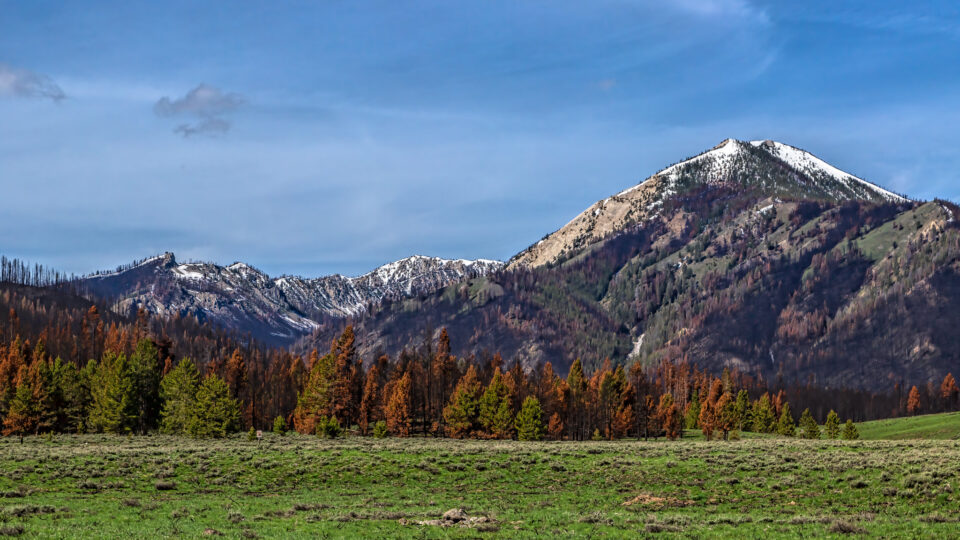
Photo, posted July 1, 2023, courtesy of Sheila Sund via Flickr.

Earth Wise is a production of WAMC Northeast Public Radio
Nearly everyone wants climate action

July 29, 2024 By EarthWise Leave a Comment

Almost everyone wants more action on climate change

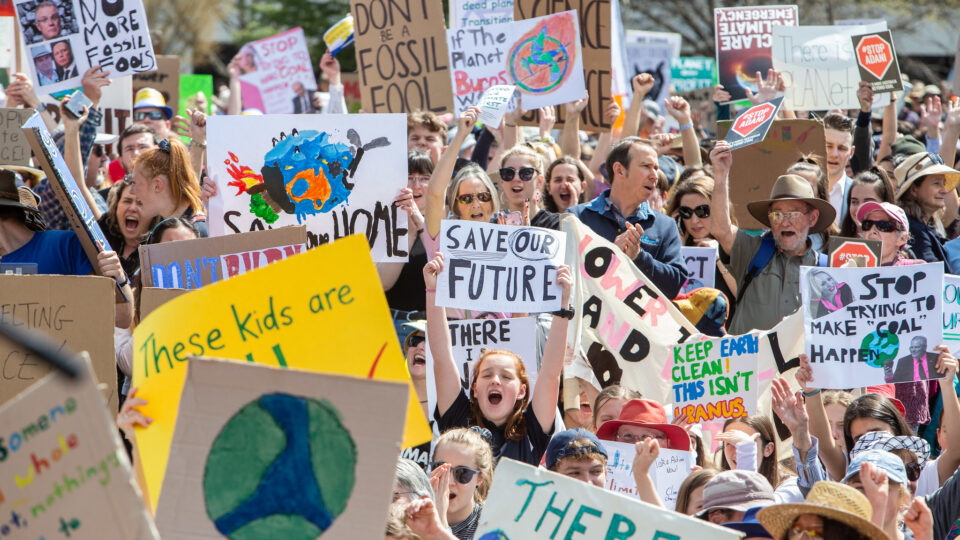
A global survey of 75,000 people revealed that 80% of participants want their governments’ climate action commitments to be stronger.  The poll, conducted by the United Nations Development Program, GeoPoll, and Oxford University, asked 15 questions in telephone calls to residents of 77 countries representing 87% of the global population.

According to the survey, 89% of poorer countries favored increasing efforts to curb global emission, while 76% of wealthy G20 nations supported tougher climate action.

The two biggest greenhouse emitters in the world were less enthusiastic:  Chinese participants were 73% in favor of stronger action and Americans were 66% in favor of greater efforts to combat global warming. 

Other demographic differences included that in the big emitting countries of Canada, France, Germany, Australia, and the U.S., women were 10 to 17% more in support of stronger climate action than men.

Overall, only 7% of those polled globally thought their government should not transition away from fossil fuels at all.  More than half of those polled said that they were more worried about climate change this year than last year.  A worldwide majority of 72% support a fast fossil fuel phaseout, including those in nations that are among the top ten coal, oil, and gas producers.

As is the case across the board with respect to climate issues, the more influential factor continues to be economic as opposed to scientific or humanitarian.  Those who stand to lose the most money from the transition away from fossil fuels continue to hold sway over those who will lose in many other ways.

**********

Web Links

Four Out of Five People Want Increased Climate Action, UN Poll Says

Photo, posted July 31, 2020, courtesy of School Strike 4 Climate via Flickr.

Earth Wise is a production of WAMC Northeast Public Radio
The slippery slopes of the ski industry

July 18, 2024 By EarthWise Leave a Comment

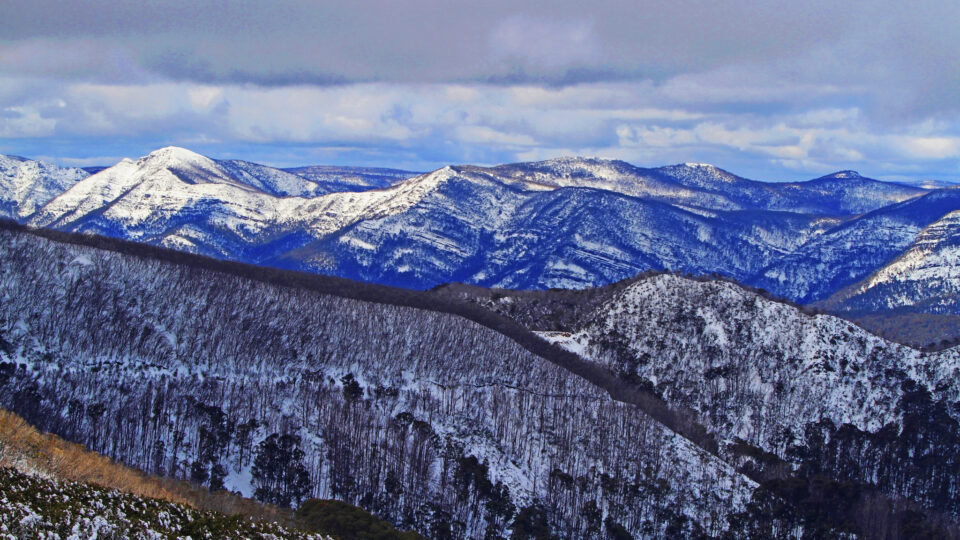
According to the National Oceanic and Atmospheric Administration, snowfall is declining globally as temperatures warm because of human-caused climate change.  Less snow threatens to reinforce global warming, and to disrupt food, water, and livelihoods for billions of people.   

According to new modeling by researchers from Protect Our Winters Australia and The Australian National University, the ski industry in Australia is at risk of major disruptions and shorter seasons if climate change continues unabated.  The researchers found the average ski season across all resorts in Australia will be 44 days shorter by 2050 under a mid-greenhouse gas emissions scenario, and 55 days shorter under a high-emissions scenario.

But the research team also revealed that the Australian ski industry would fare significantly better if decisive action is taken to reduce climate pollution.  In fact, under a low-emissions scenario, the ski season would be 28 days shorter by 2050, before starting to improve by 2080 if emissions are kept down.

However, if decisive climate action isn’t taken, the researchers warn some ski resorts in Australia may be forced to close for good.  But this threat isn’t unique to Australia. 

In fact, according to a study recently published in the journal PLOS ONE, 13% of ski areas around the world are predicted to lose all natural snow cover under the high-emissions scenario by 2071-2100 – relative to their historic baselines. 

The future losses of ski areas around the world will be significant if global emissions continue unchecked.

**********

Web Links

Climate crisis puts Australia’s ski industry on slippery slope, but not all hope is lost

“Our Changing Snowscapes” Report Released

The future is likely less skiable, thanks to climate change

Photo, posted June 6, 2018, courtesy of Clement Tang via Flickr.

Earth Wise is a production of WAMC Northeast Public Radio

Research on solar geoengineering

July 12, 2024 By EarthWise Leave a Comment

Ideas for potential technologies that could artificially cool the planet as a countermeasure against global warming have been considered radical and dangerous for a long time.  But as climate change continues to become increasingly apparent, ideas like solar geoengineering are gaining increasing attention.

Most environmental organizations are at best skeptical about such ideas and oppose them.  Their opposition is in part based on the assertion that there are no quick fixes for climate change and that not addressing its root causes is a dangerous path to take.  But an even greater concern is that intentionally manipulating global temperatures is likely to have a host of unintended consequences that could prove disastrous.

One of the world’s largest environmental organizations, the Environmental Defense Fund, has decided to fund research into solar geoengineering.  The EDF cautions that is in not in favor of deploying such technology.  Its position is that the discussion about ways to cool the planet is not going away and cannot be ignored.  The lack of proper research can promote unfounded optimism about such technology  So, they are going to fund research that can provide information based on solid, well-formulated science.

A major focus will be what other effects technologies like cloud brightening and injecting aerosols into the atmosphere might have apart from providing cooling. 

The EDF’s own position is that deliberate climate interventions present serious ecological, moral, and geopolitical concerns.  However, they believe that policymakers need to be informed by the most accurate information possible.

**********

Web Links

Environmental Group to Study Effects of Artificially Cooling Earth

Photo, posted February 3, 2008, courtesy of Camilla Cannarsa via Flickr.

Earth Wise is a production of WAMC Northeast Public Radio
Thawing permafrost:  Is it a ticking timebomb?

July 8, 2024 By EarthWise Leave a Comment

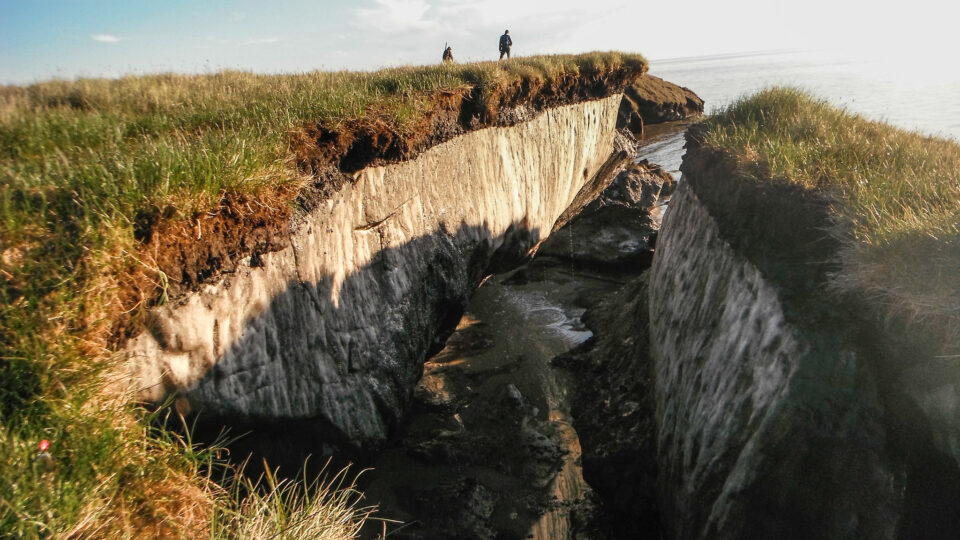
Permafrost covers about a quarter of the landmass in the Northern Hemisphere.  It stores vast quantities of organic carbon in the form of dead plant matter.  As long as it stays frozen, it is no threat to the climate.  But as it thaws, microorganisms start breaking down that plant matter and large amounts of carbon are released into the atmosphere in the form of carbon dioxide and methane.

This process has often been described as a ticking timebomb for the climate.  The theory is that once global warming reaches a certain level, the process will become self-amplifying setting off a catastrophic amount of warming.  If that level was reached, it would be a tipping point in the changing climate.

An international research team from the Alfred Wegener Institute in Germany has extensively researched this hypothesis.  Their conclusion is that within the permafrost, there are multiple geological, hydrological, and physical processes that are self-amplifying and, in some cases, irreversible.  However, these processes act only locally or regionally.  There is no evidence that some particular threshold in global warming could affect all permafrost and accelerate its thawing on a global level.

This research does not mean that Arctic permafrost is nothing to worry about.  In fact, there are ways in which it is more worrisome.  Because the permafrost is very heterogenous – meaning it is very different in different places – there will be numerous small, local tipping points that will be exceeded at different times and at different levels of warming.  All of this will proceed in step with global warming, contributing to the overall worsening situation.  There is no warming level below which permafrost thawing is not a problem.

**********

Web Links

Thawing permafrost: Not a climate tipping element, but nevertheless far-reaching impacts

Photo, posted January 24, 2014, courtesy of Brandt Meixell / USGS via Flickr.

Earth Wise is a production of WAMC Northeast Public Radio
Glaciers in Venezuela

June 24, 2024 By EarthWise Leave a Comment

There are nearly 200,000 glaciers in the world.  About 91% of them are in Antarctica and 8% in Greenland.  The rest are scattered across nearly 50 countries.  The non-polar country with the most glaciers is actually Pakistan, which has over 7,200 of them.  But as the world continues to warm, glaciers are shrinking back, and many are disappearing altogether.

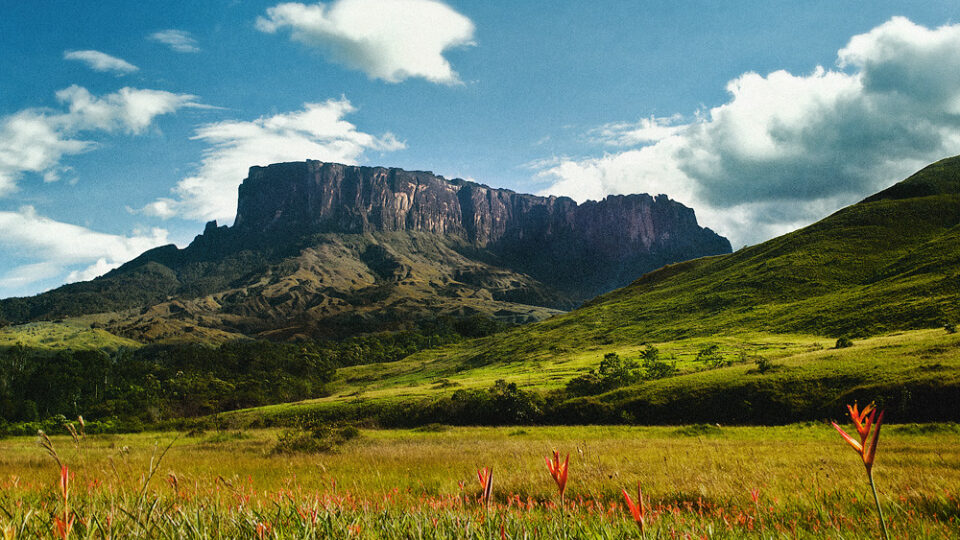
Venezuela, once home to six glaciers, has become the first country in the Americas to lose all of its glaciers.  Slovenia is considered to be the first country to lose its glaciers in modern times, perhaps as long as 30 years ago.  Glacial thawing has been worsening over the past decade throughout the Andes, which cover parts of Colombia, Venezuela, Bolivia, Ecuador, Peru, Chile, and Argentina.

Five of Venezuela’s glaciers had largely melted away by 2011.  The Humboldt glacier, which is on the highest peak in the Cordillera de Mérida mountain range in Venezuela, has now been declared as too small to be classified as a glacier.  It once covered over a thousand acres; it now has less than 5 acres of ice.  The US Geological Survey defines glaciers as ice bodies extending 25 acres or more.

The loss of glaciers in the Andes has serious consequences for communities that live on their slopes and depend upon glacial melt for water and for energy and food production. 

At least 80% of glaciers worldwide are on track to mostly disappear by the year 2100 because of global warming.  Given that previous forecasts estimated that the Humboldt glacier might last another decade, the prospects for the world’s remaining glaciers are not good.

**********

Web Links

Venezuela becomes first nation in the Americas to lose all glaciers

Photo, posted November 11, 2012, courtesy of Tim Snell via Flickr.

Earth Wise is a production of WAMC Northeast Public Radio
Beware of the blob

June 20, 2024 By EarthWise Leave a Comment

For the past 10 years, there have been several occurrences of a vast expanse of ocean stretching from Alaska to California in which water temperatures are as much as 7 degrees Fahrenheit warmer than normal.  Known jocularly as “the Blob,” the phenomenon can last for several years and decimates fish stocks, starves seabirds, creates blooms of toxic algae, prevents salmon from returning to rivers, and displaces sea lions and whales.

Until recently, there was no accepted explanation for this abrupt ocean heating.  Climate change, even combined with natural cycles like El Niños, is not enough to account for it.

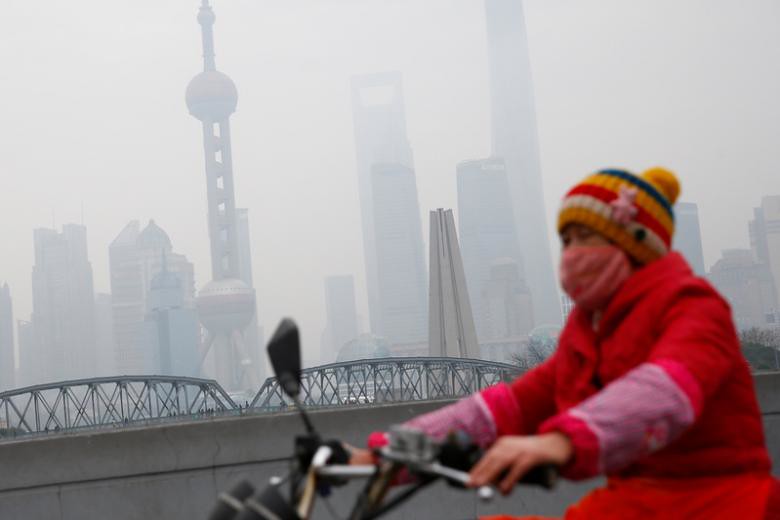
In depth analysis by an international team of researchers has found that the extraordinary heating is the result of a dramatic cleanup of Chinese air pollution.  The decline of smog particles, which to some extent shield the planet from the sun’s rays, has accelerated warming and set off a chain of atmospheric events across the Pacific, essentially cooking the ocean.

This is an example of what can be called the pollution paradox in which global warming is actually increased when air pollution is reduced.  Reduced air pollution on the US West Coast has even been identified as a factor contributing to increased wildfires.  However, air pollution causes more than 4 million premature deaths from cancers and respiratory and cardiovascular diseases each year. 

Nobody thinks that we should stop cleaning up the air to slow down global warming.  The only viable solution is to reduce greenhouse gas emissions as rapidly as possible.

**********

Web Links

Pollution Paradox: How Cleaning Up Smog Drives Ocean Warming

Photo, posted December 18, 2017, courtesy of SGUP via Flickr.

Earth Wise is a production of WAMC Northeast Public Radio

A month of extra-hot days

June 19, 2024 By EarthWise Leave a Comment

Climate change increasing number of hot days each year

The past 12 months have been the hottest ever measured across the globe.  This may not be everyone’s experience in every location, but the average person on Earth experienced 26 more days of abnormally high temperatures than they would have in the absence of climate change.

Researchers considered a given day’s temperature to be abnormally high in a particular location if it exceeded 90% of the daily temperatures recorded there between 1991 and 2020.  Nearly 80% of the world’s population experienced at least 31 days of abnormal warmth since May of 2023.  Theoretically, the number of unusually warm days would have been far fewer in the absence of global warming.

In some countries, the extra-warm days added up to two or three weeks.  In others, such as Colombia, Indonesia, and Rwanda, there were up to 4 months of them. The average American experienced 39 days of extra-warm temperatures since last May.

Scientists also added up how many extreme heat waves the planet experienced since last May.  These are defined as episodes of unseasonable warmth across a large area, lasting three or more days, and causing significant loss of life or disruption to infrastructure or industry.  In total, the researchers identified 76 such episodes, affecting 90 countries, on every continent except Antarctica.

The world’s climate is now shifting toward the La Niña phase of the cyclical pattern called the El Niño-Southern Oscillation. This usually leads to cooler temperatures on average, but the recent heat could have lingering effects on weather and storms for months to come, including what is expected to be an extraordinarily active Atlantic hurricane season.

**********

Web Links

Climate Change Added a Month’s Worth of Extra-Hot Days in Past Year

Photo, posted December 21, 2011, courtesy of Maggie Lin Photography via Flickr.

Earth Wise is a production of WAMC Northeast Public Radio
Cloud brightening

June 17, 2024 By EarthWise Leave a Comment

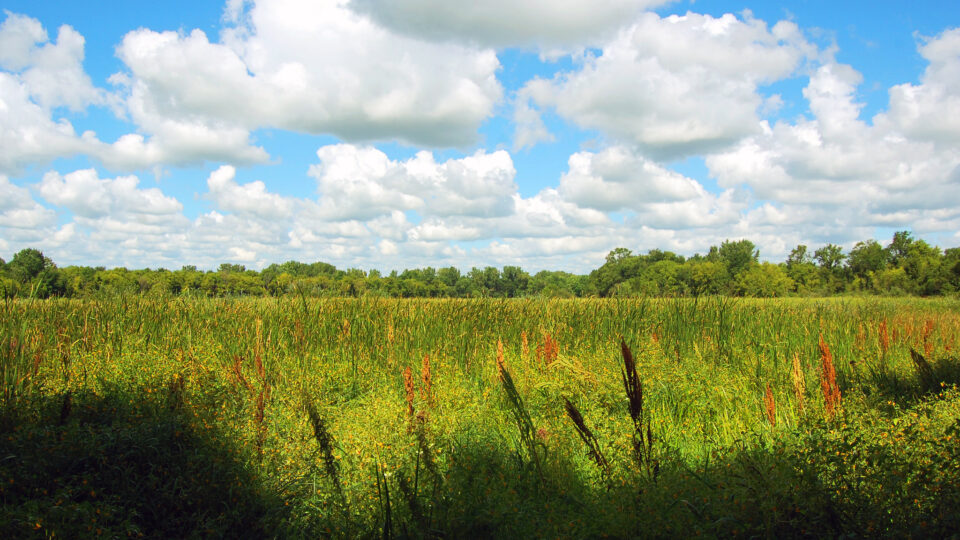
Solar geoengineering is a type of climate intervention:  deliberate actions designed to affect the climate.  There are several ways to try to reduce the amount of sunlight reaching the surface of the earth and all of them are controversial.  Perhaps the least controversial approach is cloud brightening.

The idea is based on something called the Twomey effect, which is that large numbers of small droplets in the atmosphere reflect more sunlight than small numbers of large droplets.  Spraying vast quantities of minuscule aerosols into the sky, thereby forming many small droplets, could change the reflective properties of clouds.  If clouds are more reflective, then less sunlight reaches the surface, and the temperature goes down.

This form of geoengineering is thought to be less risky because it can be performed on a localized basis and can use relatively benign materials such as sea salt. 

In early April, scientists from the University of Washington started testing a device that sprays tiny sea-salt particles into the air from the deck of a decommissioned aircraft carrier in Alameda, California.  The test was simply to see whether the machine propelled a mist of suitable size.

Within two weeks, Alameda officials ordered a stop to the experiment, citing potential health and environmental risks.  After a month-long investigation, Alameda ruled that the experiment does not generate a measurable risk to health, wildlife, or the environment.

But before more ambitious experiments take place, there are potential side effects of cloud brightening that need to be studied.  It may turn out to be a useful tool in fighting global warming, but in any case, such technology should not be viewed as a substitute for moving away from fossil fuels.

**********

Web Links

A Test of Cloud-Brightening Machines Poses No Health Risk, Officials Say

Photo, posted September 8, 2011, courtesy of Justin Ladia via Flickr.

Earth Wise is a production of WAMC Northeast Public Radio
Wind farms and land use

May 20, 2024 By EarthWise Leave a Comment

Analyzing wind power and land use

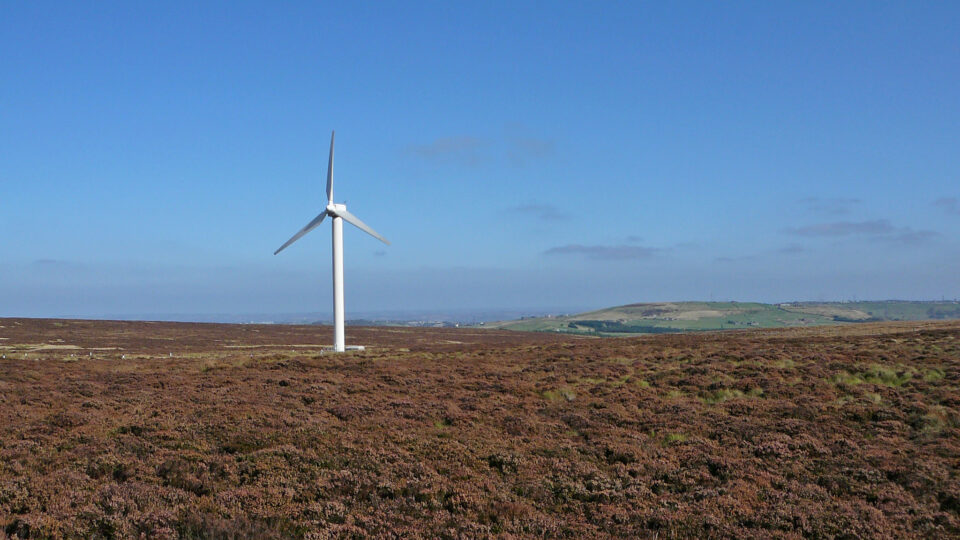
Wind power has become one of the most affordable ways to generate electricity as well as being renewable and not contributing to global warming.  But there has been the perception that wind farms require a lot of land compared with fossil fuel power plants. This issue of land use has made decision-makers reluctant to invest in wind energy in many instances.

A new study by McGill University in Montreal looked at this issue and has found that land use for wind power is far more efficient than previously thought.  The study combined data from geographic information systems with machine learning models to assess land usage associated with nearly 16,000 wind turbines in the western U.S.

The study assessed the land use of 320 wind farms.  They found that wind power infrastructure (mostly the turbines themselves and the roads that lead to them) typically only uses 5% of the land area of a wind farm.  If the wind farm is sited in locations with existing infrastructure, such as on agricultural land, then it can be as much as seven times more land-efficient – meaning the amount energy produced in a given area of land impacted by the infrastructure – than a wind farm that is developed on unused land.

Previous studies of wind farm land usage assumed that all of the land where the wind farm was located was devoted to energy generation.  In reality, most of land in question is often used for other purposes, such as agriculture.

The methods developed by the researchers are potentially useable for future assessments of various energy technologies in terms of their environmental sustainability.

**********

Web Links

Clearing the air: wind farms more land efficient than previously thought

Photo, posted September 29, 2009, courtesy of Tim Green via Flickr.

Earth Wise is a production of WAMC Northeast Public Radio
An active hurricane season

May 13, 2024 By EarthWise Leave a Comment

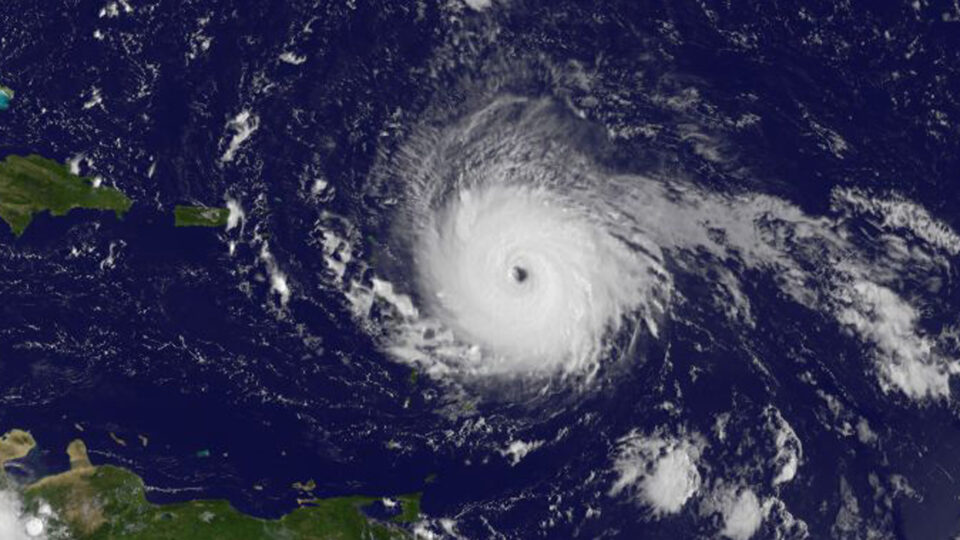
The Atlantic hurricane season officially runs from June 1st until November 30th.  Forecasters at Colorado State University have issued forecasts of Atlantic basin hurricane activity since 1984 based on the pioneering work of Professor William Gray.  This year’s forecast, issued in April, predicts a higher-than-average number of Atlantic storms.  In fact, it may be one of the most active seasons on record.

On average, there are 14 named storms each season.  This year, the prediction is for 23 of them.  On average, there are 7 hurricanes each season.  This year, the prediction is for 11. The prediction is for 5 major hurricanes among them.  These predictions are among the highest on record, although in 2020 they predicted 12 hurricanes.  In fact, that year there were 14 that actually took place.

Among the factors at play are that the El Niño that was occurring last year has dissipated and there is a good chance of a La Niña forming, which suppresses upper-level winds thereby making conditions ideal for hurricane formation and intensification.  But the overarching factor is global warming which is driving ocean temperature rise.  The water in the Atlantic, especially in the eastern Atlantic where most hurricanes form, has seen record-breaking warmth.  More warm water means more chances for storms.

Other research groups echo the predictions from Colorado State and, in some cases, see ever greater chances for an extremely active hurricane season.  The University of Pennsylvania forecast calls for 33 named storms.

The overall forecast is for a well above-average probability for major hurricanes making landfall along the continental United States coastline and the Caribbean. 

**********

Web Links

Weather tracker: US experts predict one of most active hurricane seasons on record

Photo, posted September 5, 2017, courtesy of NASA/NOAA GOES Project via Flickr.

Earth Wise is a production of WAMC Northeast Public Radio
Where not to plant trees

May 10, 2024 By EarthWise Leave a Comment

Tree plantings are not always a good thing

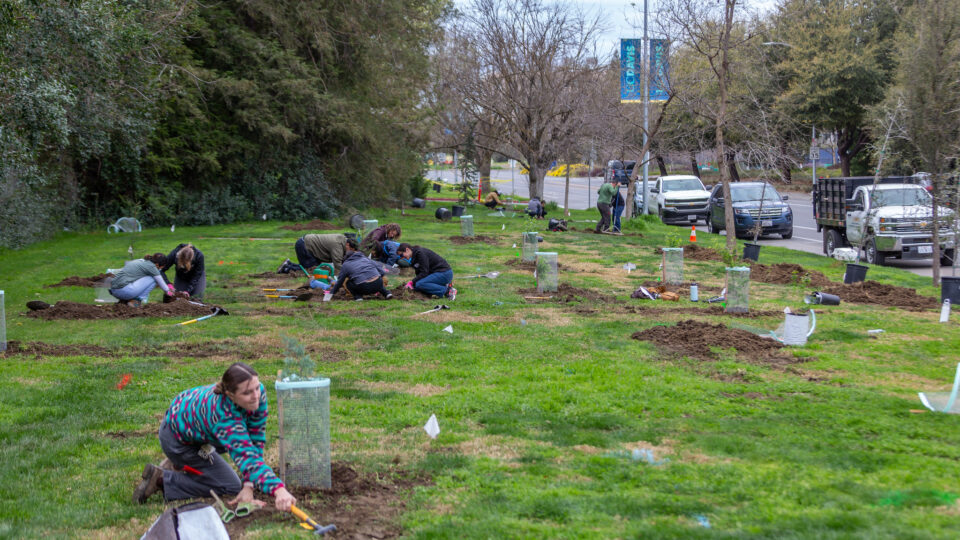
Planting huge numbers of trees is often proposed as a way to reduce the severity of climate change.  Studies have looked at the potential for Earth‘s ecosystems to support large additional areas of forest and have found that it would be possible to have at least 25% more forested area than we do now.  This in turn could capture large amounts of carbon and substantially reduce the amount in the atmosphere.

A recent study by researchers at Clark University in Massachusetts and The Nature Conservancy mapped the climate impact of tree planting across the globe, identifying where it would be most and also least beneficial.  The study, published in Nature Communications, found that trees planted in arid, desert regions or in snowy places like the Arctic would, on balance, worsen warming rather than reduce it.

Trees take up carbon dioxide from the atmosphere, which helps to keep warming in check.  But trees with dark, green leaves also absorb heat from sunlight.   Snow and desert sand, on the other hand, are light-colored and reflect more sunlight back into space.  For this reason, trees planted in snowy areas or in the desert will absorb more sunlight than their surroundings.  This can negate the climate benefits of soaking up carbon dioxide.

Previous studies only looked at how much carbon dioxide would be removed by planting trees in order to determine how much warming would be prevented.  The new study finds that it matters where the trees are planted.

Fortunately, the new study also shows that tree planting projects that are currently underway or that are in the pipeline are largely concentrated in regions where they will indeed help slow global warming.

**********

Web Links

This Map Shows Where Planting Trees Would Make Climate Change Worse

Photo, posted April 5, 2022, courtesy of UC Davis Arboretum and Public Garden via Flickr.

Earth Wise is a production of WAMC Northeast Public Radio
Rising fossil fuel emissions

April 22, 2024 By EarthWise Leave a Comment

Fossil fuel emissions are rising globally

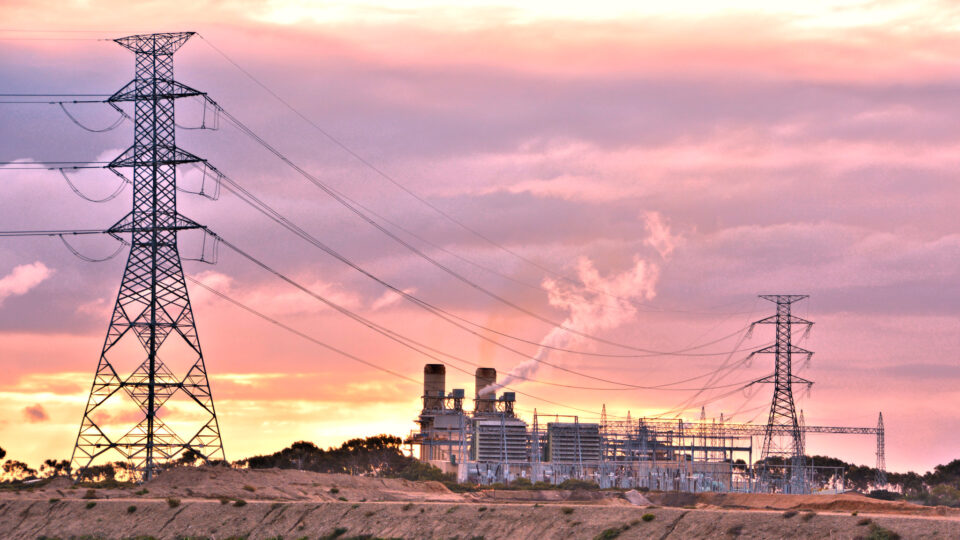
Almost every nation in the world has pledged to reduce carbon dioxide emissions.  There is expanding use of renewable energy sources and growing numbers of electric cars.  But despite all this, carbon dioxide emissions from fossil fuels rose again in 2023, reaching record levels.

The world’s population continues to grow and nations with large, rapidly growing populations are becoming increasingly industrialized and are embracing more and more of the trappings of modern life.  As a result, the global burning of oil, coal, and natural gas is increasing.

Analysis of 2023 date shows that emissions from fossil fuels rose 1.1 percent compared to 2022 levels.  The total fossil fuel emissions in 2023 was 40 billion tons of carbon dioxide. 

Clearly, the world continues to head in the wrong direction in order to limit global warming.  The concentration of carbon dioxide in the atmosphere has increased from about 278 parts per million in 1750 – considered to be the start of the industrial era – to 420 parts per million in 2023.

The rise in heat-trapping carbon dioxide along with other greenhouse gases such as methane is the primary reason that the planet’s temperature is continuing to rise.  The average global surface temperature in 2023 was 1.2 degrees Celsius – or 2.1 degrees Fahrenheit – higher than it was in the NASA baseline period of 1951-1980.  Last year was the hottest year on record.  Unfortunately, the rise in global ocean temperature was even larger, compounding the effects of global warming.

**********

Web Links

Emissions from Fossil Fuels Continue to Rise

Photo, posted June 22, 2020, courtesy of John Morton via Flickr.

Earth Wise is a production of WAMC Northeast Public Radio
The health impacts of gas venting and flaring

April 15, 2024 By EarthWise Leave a Comment

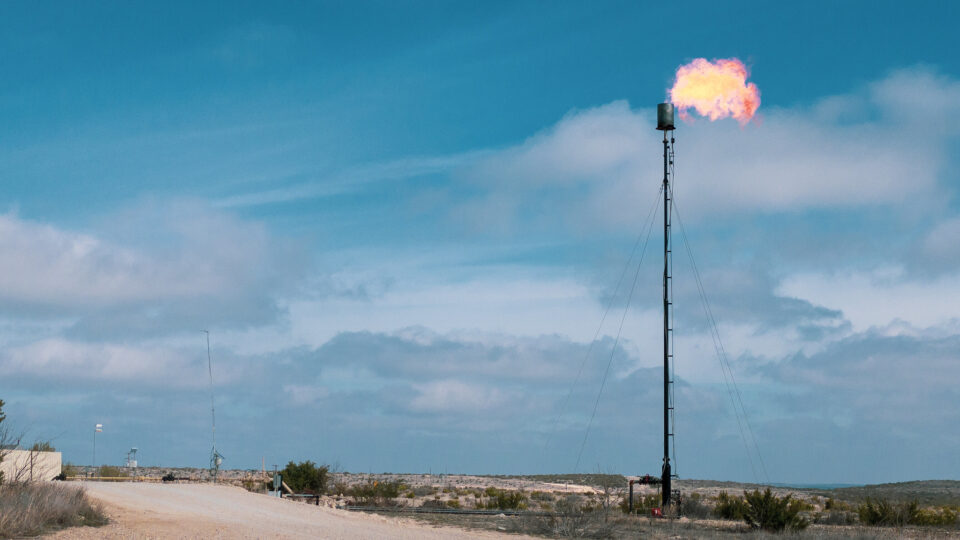
Oil and gas producers around the world use venting and flaring to remove excess natural gas in crude oil production.  Flaring is the process of burning excess natural gas at the production well using a flare to ignite the methane and other components in the gas, while venting is the direct release of natural gas into the atmosphere. 

Both practices are major sources of greenhouse gas emissions contributing to global warming.   Venting and flaring release carbon dioxide and methane – two major greenhouse gases. 

The practices contribute to air pollution in surrounding and downwind communities, resulting in increased risk of hospitalizations, emergency room visits, worsening asthma, and even premature death.  In fact, according to a new study recently published in the journal GeoHealth, pollution from oil and gas venting and flaring results in $7.4 billion in health damages, more than 700 premature deaths, and 73,000 asthma exacerbations among children in the United States annually. 

The study, which was led by researchers at the University of North Carolina, Boston University, and the Environmental Defense Fund, also found that emissions are underreported, and controlling emissions would be profitable for operators and would significantly improve public health.

The research team found that Texas, Pennsylvania, and Colorado had the highest health burdens in this analysis, accounting for 45% of the premature deaths. 

The researchers hope their findings will help improve air quality and human health by reducing emissions from venting and flaring. 

**********

Web Links

New study quantifies health impacts from oil and gas flaring in U.S. 

Photo, posted June 20, 2020, courtesy of Jonathan Cutrer via Flickr.

Earth Wise is a production of WAMC Northeast Public Radio
  • « Go to Previous Page
  • Page 1
  • Page 2
  • Page 3
  • Page 4
  • Interim pages omitted …
  • Page 12
  • Go to Next Page »

Primary Sidebar

Recent Episodes

  • An uninsurable future
  • Clean energy and jobs
  • Insect declines in remote regions
  • Fossil fuel producing nations ignoring climate goals
  • Trouble for clownfishes

WAMC Northeast Public Radio

WAMC/Northeast Public Radio is a regional public radio network serving parts of seven northeastern states (more...)

Copyright © 2026 ·