
• Skip to primary navigation
  • Skip to main content
  • Skip to primary sidebar

Earth Wise

A look at our changing environment.

  • Home
  • About Earth Wise
  • Where to Listen
  • All Articles
  • Show Search
Hide Search
You are here: Home / Archives for energy

energy

The Potential Of Artificial Photosynthesis | Earth Wise

August 2, 2021 By EarthWise Leave a Comment

Artificial photosynthesis could dramatically improve our ability to power society cleanly and efficiently.

The sun is the primary source of energy on the earth.  Enough solar energy hits the earth in one hour to meet all of human civilization’s energy needs for an entire year.  The two leading forms of renewable energy – photovoltaic solar power and wind power – are ways of making use of the sun’s energy.  Wind power is indirectly provided by the sun; photovoltaic power uses sunlight to generate electricity.

The most efficient use of solar energy on the planet is one perfected by plants millions of years ago:  photosynthesis.  Photosynthesis is a complex sequence of processes by which plants convert sunlight and water into usable energy in the form of glucose.  Plants utilize a combination of pigments, proteins, enzymes, and metals to perform their magic.  If we can develop artificial photosynthesis, it would be a dramatic improvement of humans’ ability to power society cleanly and efficiently.  Whereas photovoltaics capture about 20% of the sun’s energy, photosynthesis stores 60% of the sun’s energy as chemical energy.

Researchers across the globe are working to develop artificial photosynthesis.  A group at Purdue university has been making progress in trying to mimic the ability of leaves to collect light and split water molecules to generate hydrogen. This is a critical step in photosynthesis that is accomplished by protein and pigment complexes known as “photosystems II”.  The Purdue group is experimenting with these proteins and various synthetic catalysts in order to try to develop artificial leaves based on abundant, nontoxic materials. 

It is likely to take a decade or more for artificial photosynthesis technology to become part of our energy system, but its ultimate potential is enormous.

**********

Web Links

Soaking up the sun: Artificial photosynthesis promises a clean, sustainable source of energy

Photo, posted June 14, 2007, courtesy of Alex Holyoake via Flickr.

Earth Wise is a production of WAMC Northeast Public Radio.

Turning Atmospheric Carbon Into Useful Materials | Earth Wise

July 7, 2021 By EarthWise Leave a Comment

Transforming atmospheric carbon into useful materials

Plants have the ability to capture carbon dioxide from the atmosphere and incorporate it into leaves, fruits, wood, and other plant materials.  This beneficial process is mostly temporary, as much of this carbon dioxide from plant matter ends up back in the atmosphere through decomposition, or even burning.

Researchers at the Salk Institute have proposed a more permanent fate for captured carbon by turning plant matter into a valuable industrial material called silicon carbide.

In a recent study published in the journal RSC Advances, Salk scientists transformed tobacco and corn husks into silicon carbide and evaluated and quantified the benefits of the process.

The researchers used a previously reported method to transform plant matter into silicon carbide in three stages and carefully tracked the carbon utilization at each stage.

Stage one is growing the plants.  They used tobacco from seed, chosen for its short growing season.  Then the harvested plants are frozen, ground into a powder, and treated with chemicals including a silicon-containing compound.  Finally, the powder is subjected to a high-temperature process resulting in the production of silicon carbide.

Their analysis showed that much of the carbon sequestered by growing the plants could be preserved through the full process and the amount of energy required for the production of the silicon carbide (mostly from the high-temperature process) is comparable to current manufacturing processes for the material.

Permanently sequestering carbon from agricultural waste products by incorporating it into a valuable industrial material would be a valuable addition to strategies for reducing greenhouse gases in the atmosphere.

**********

Web Links

Transforming Atmospheric Carbon Into Industrially Useful Materials

Photo, posted August 3, 2013, courtesy of AJ Garrison via Flickr.

Earth Wise is a production of WAMC Northeast Public Radio.

Strategies To Cool Off Cities | Earth Wise

July 2, 2021 By EarthWise Leave a Comment

Effective strategies to naturally cool cities

Heatwaves in cities are becoming increasingly common and increasingly intense.  The warming climate is a big factor, but it is the nature of our cities that really drives up temperatures.  Solar radiation stored throughout the day on asphalt and buildings is released slowly during the night, which generates significant heat stress.

A study carried out by a major Barcelona university and published in the journal Urban Climate looked at the effectiveness of various ways to mitigate the heating effects in cities.  In particular, the study examined the effects of the use of white roofs on buildings and the expansion of urban green areas with daily irrigation in the Barcelona metropolitan area.  It simulated various scenarios incorporating combinations of these two mitigation strategies.

The strategy with the greatest impact was a combination of the use of both white roofs and the addition of six urban parks, which is a target set by the Barcelona Urban Master Plan.  This scenario resulted in an average temperature reduction of 2.25 degrees Fahrenheit.  The maximum reduction occurs during the mid-afternoon with a reduction of 7 degrees and the combination still provides more than 3 degrees of reduction at 9 pm.  Reducing temperatures this way also results in a reduction in energy consumption, with 26% less spending on air conditioning.

The 2-pronged strategy combines the benefits of reducing the temperature at night due to more urban green areas with the reduction of daytime heat due to both the increased reflectivity of white roofs as well as the irrigation of the green areas.

The study demonstrates how modeling efforts can help urban planners to counteract the impacts of heatwaves, which are likely to increase with climate change and intensification of urbanization.

**********

Web Links

White roofs and more green areas would mitigate the effects of heat waves in cities

Photo, posted January 16, 2011, courtesy of Sean MacEntee via Flickr.

Earth Wise is a production of WAMC Northeast Public Radio.
Utility-Scale Solar In Upstate New York | Earth Wise

June 22, 2021 By EarthWise 2 Comments

utility scale solar projects to generate jobs and profits to upstate ny communities

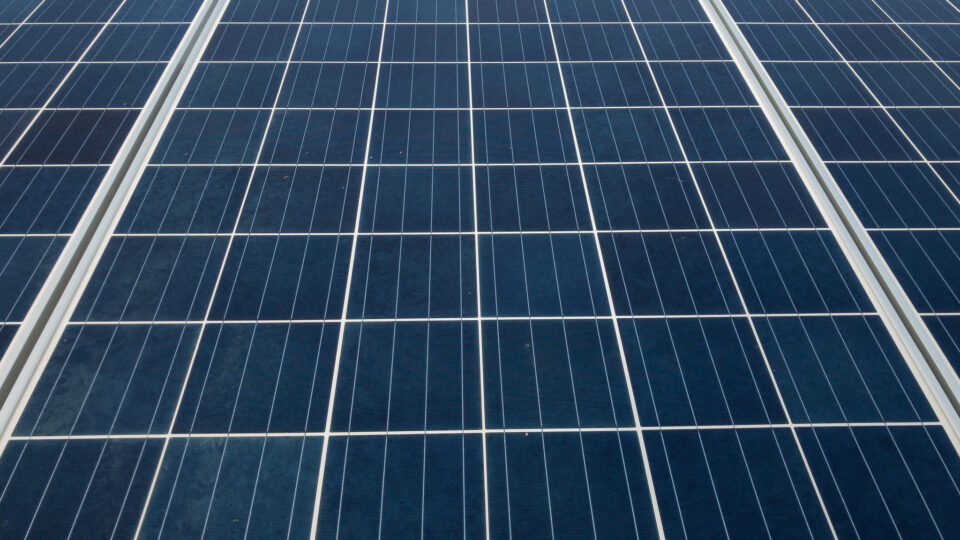
The first operational utility-scale solar projects in upstate New York are expected to commence commercial operations by the end of this year.  A portfolio of eight projects comprising over 200 megawatts of generating capacity is being developed by CS Energy in partnership with Goldman Sachs Renewable Power Group and NYSERDA.

The projects include three 27-megawatt installations in the Capital Region – in Easton and Stillwater, three 27-megawatt installations in the Mohawk Valley – in Mohawk and Pattersonville, and two 27-megawatt installations in the Southern Tier – in Willet and Greene.

The projects will support more than 500 jobs and represent more than $160 million of private investment that is expected to generate over $80 million in benefits to local communities and regions.  Those benefits will come to local landowners, property tax jurisdictions, and to local contractors who will provide ongoing operations and maintenance support for the projects.

The projects are the result of New York’s Clean Energy Standard, established in 2016 as well as 2019’s Climate Leadership and Community Protection Act.  These initiatives made commitments that 70% of the electricity consumed in New York would be generated by renewable energy sources by 2030. 

CS Energy has built over 150 megawatts of solar projects in New York to date.  By the end of this year, that number will be close to 500 megawatts.  CS Energy recently opened a regional headquarters in Albany to further support the company’s growth. The Goldman Sachs Renewable Power Group owns and operates more than 2.3 gigawatts of clean power across the country.

**********

Web Links

Upstate New York’s first utility-scale solar projects set to come online this year

Photo, posted October 16, 2019, courtesy of Jonathan Cutrer via Flickr.

Earth Wise is a production of WAMC Northeast Public Radio.

The World’s Largest Tidal Device | Earth Wise

June 18, 2021 By EarthWise Leave a Comment

the world's largest tidal power device will be operational soon

Most of the world’s activity in renewable energy is focused on solar and wind power.  The use of both is expanding rapidly. But there is also marine energy to be exploited.  Ocean waves and tidal movements hold huge amounts of energy.  Estimates are that the European Union could get 15% of its power from marine sources.  But ocean energy is currently expensive and there are significant technical challenges still to be overcome.

The world’s largest tidal power device will soon begin testing off the coast of Scotland.  The 680-ton, 240-foot-long, airplane-shaped device will be connected to the European Marine Energy Center for testing. 

The device, built by the Scottish company Orbital Marine Power, is designed to produce 2 megawatts of electricity, enough to power 2,000 homes.   It has a pair of 52-foot-long turbines attached to two wings.

Compared to wind and solar power, the marine energy sector has been much slower to develop because of the many difficulties of working in harsh marine environments as well as the technical challenges associated with harnessing power from waves and tides. But ocean waves and tidal movements hold enormous amounts of energy and have the advantage that they are available at all times, unlike wind and solar energy, which are variable in nature. 

Experts say that the future of tidal energy lies with arrays of floating or sea-bottom-mounted turbines that capture the energy of tidal currents in unobstructed waters.  There are various places around the world where this is an attractive opportunity, most notably in Nova Scotia’s Bay of Fundy, where the world’s most extreme tides – rising and falling more than 50 feet – contain vast amounts of power.

**********

Web Links

The World’s Largest Tidal Power Device Will Soon Begin Testing Off Scotland

Photo, posted May 18, 2017, courtesy of Chris via Flickr.

Earth Wise is a production of WAMC Northeast Public Radio.
Insanely Cheap Energy | Earth Wise

June 11, 2021 By EarthWise Leave a Comment

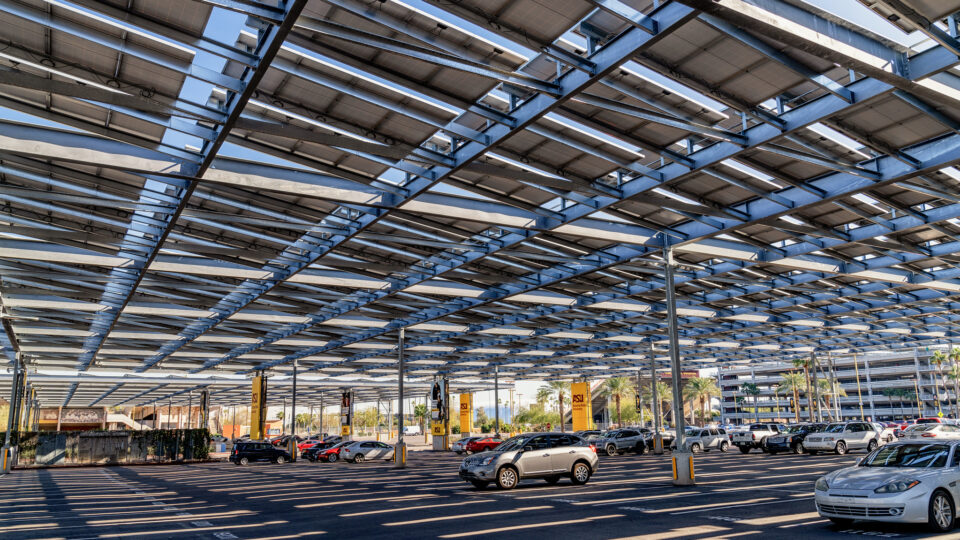
Solar power is cheapest energy option in most places

The International Energy Agency, founded in 1974, keeps track of the world’s energy systems and anticipates how they are likely to change over time.  Policymakers around the world look to the agency’s annual World Energy Outlook publication for guidance.

In 2000, the agency made the prediction that by the year 2020, there would be a total of 18 gigawatts of photovoltaic solar power installed.  Within seven years, that number was already too small.

The IEA was not the only source to miss the mark on solar power.  The head of solar analysis at BloombergNEF in 2005 expected solar to eventually supply 1% of the world’s electricity.  It is already 3% and Bloomberg now predicts that it will be 23% by 2050 and expects that to be an underestimate. 

What has happened is that the world has unexpectedly gotten to the point where solar is the cheapest source of energy in most places.  Over the past decade, every time solar production capacity has doubled, its cost has dropped by 28%.

Historically, a combination of groundbreaking research in Australia and intense Chinese industrial development led to the creation of a massive new industry.  When Germany passed laws encouraging the use of solar power, suddenly there was massive global demand and a struggle to keep up with supply.

The industry had its fits and starts, and many players fell by the wayside.    But at this point, solar technology continues to get better and cheaper.  Market forces are pretty hard to beat and when solar technology can supply insanely cheap energy, it is going to be used in more and more places.

**********

Web Links

‘Insanely cheap energy’: how solar power continues to shock the world

Photo, posted January 10, 2020, courtesy of Tony Webster via Flickr.

Earth Wise is a production of WAMC Northeast Public Radio.
Progress Towards Carbon-Free Power | Earth Wise

June 3, 2021 By EarthWise Leave a Comment

Making progress towards carbon-free power

Climate change has driven countries, states, utilities, and corporations to set goals to eliminate power-sector carbon emissions.  So far, 17 U.S. states plus Washington, D.C. and Puerto Rico have adopted laws or executive orders to achieve 100% carbon-free electricity over the next couple of decades.  Forty-six U.S. utilities have pledged to go carbon-free no later than 2050.   Adding these together, these government and industry goals cover about half of the U.S. population and economy.

New research from the Lawrence Berkeley National Laboratory has analyzed historical trends to determine how much progress the power sector has already made in reducing emissions.  The study focused on the 2005 Annual Energy Outlook from the U.S. government’s Energy Information Administration.

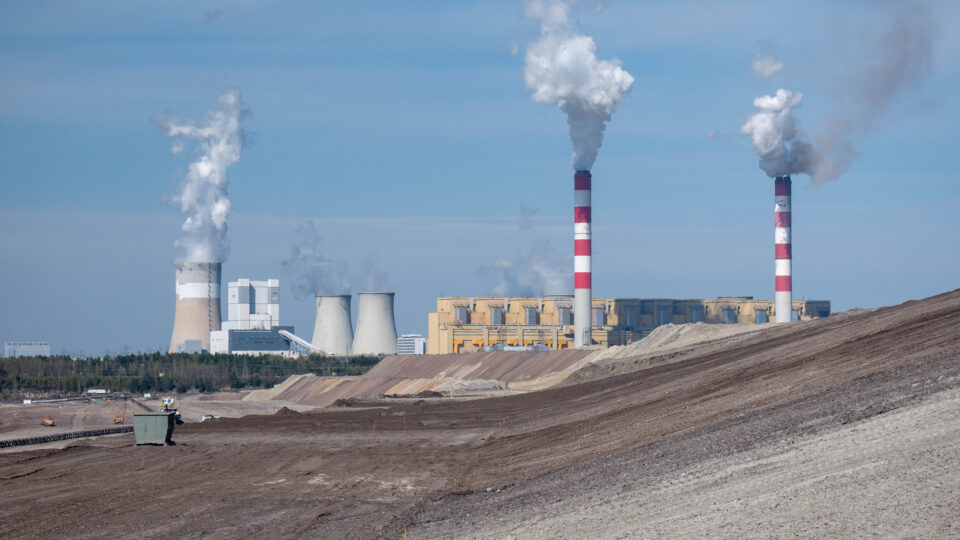
If the previous growth in emissions had continued from 2005 to 2020, annual CO2 emissions would have risen from 2,400 to 3,000 million metric tons.  But actual 2020 emissions fell to only 1,450 metric tons.  So, by this metric, the U.S. power sector cut emission by 52% below projected levels.

According to the study, total consumer electricity costs were 18% lower than projected values, but meanwhile, the number of jobs in electricity generation was 29% higher. 

Among the driving forces for these trends were wind and solar power dramatically outperforming earlier expectations, delivering 13 times more generation in 2020 than projected. 

The study shows that dramatic changes in emissions are possible over a 15-year span, but much has to happen over the next 15 years to ensure the progress required to meet the ambitious goals set for emissions reductions.

**********

Web Links

U.S. Power Sector is Halfway to Zero Carbon Emissions

Photo, posted April 18, 2020, courtesy of Roman Ranniew via Flickr.

Earth Wise is a production of WAMC Northeast Public Radio.
A Solar Power Boom In Texas | Earth Wise

May 31, 2021 By EarthWise Leave a Comment

Texas is becoming a leader in renewable energy

Texas has been a leader in wind energy for a number of years.  In 2020, wind made up 23% of the state’s generating capacity and provided 20% of in-state generation.  But although wind capacity in Texas has grown rapidly in recent years, solar power is expected to make up the largest share of the state’s capacity additions over the next two years.

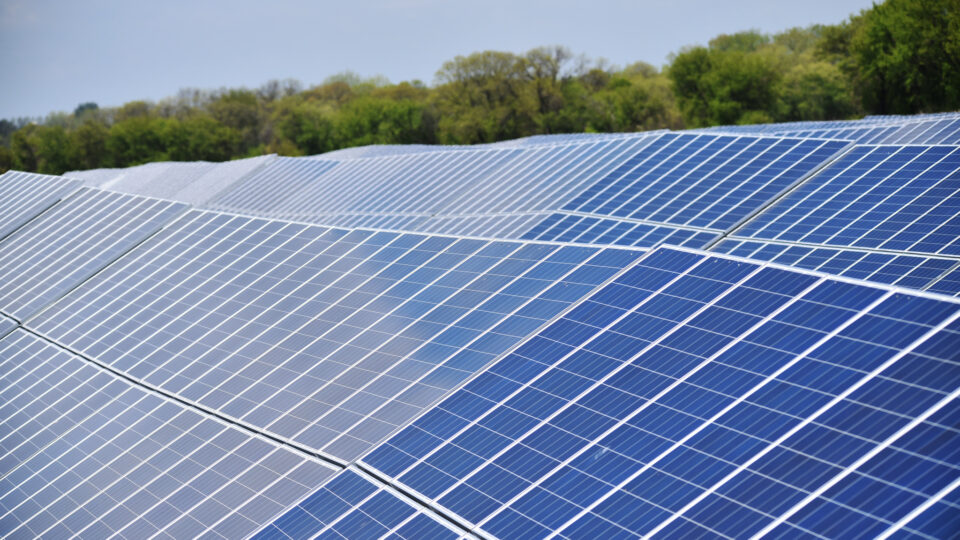
Texas plans to add 4.6 gigawatts of utility-scale solar power this year and 5.4 gigawatts in 2022.  This will give the state a total capacity of 15 gigawatts, which will nearly catch up to California, the state with the most large-scale solar power.  California already has 16 gigawatts of installed solar capacity and plans to add about two more over the next two years.

The planned capacity for Texas will provide enough power for roughly 5 million homes, taking into account the intermittency of solar energy.  Much of the new solar capacity will be in the Permian Basin in West Texas, which is a particularly sunny place.  Because solar generation is greatest in the middle of the day, when wind generation is typically lower, the transmission line infrastructure already in place for the wind power will be adequate for the new solar installations.

The boom in solar power in Texas is driven in part by the federal solar Investment Tax Credit that is available to project developers as well as by the ever-lower cost of solar technology. 

One-third of the utility-scale solar capacity planned to come online in the U.S. in the next two years will be in Texas.  Currently, utility-scale solar only makes up 4% of electrical generating capacity in Texas, but that is clearly changing.

**********

Web Links

Texas likely to add 10 GW of utility-scale solar capacity in the next two years

Photo, posted May 14, 2020, courtesy of Courtney Celley/USFWS via Flickr.

Earth Wise is a production of WAMC Northeast Public Radio.

Post-COVID Emissions Rebound | Earth Wise

May 28, 2021 By EarthWise Leave a Comment

Emissions are on the rise as COVID crisis lessons

The extensive shutdowns associated with the COVID-19 pandemic resulted in reduced activity across many sectors of the global economy.  As a result, global pollution and greenhouse gas emissions also saw lower levels.  As the COVID crisis lessens, an economic recovery is growing and as that occurs, emissions are on the rise.

The International Energy Agency forecasts that energy-related carbon dioxide emissions are projected to increase by 1.5 billion tons this year, the second-largest increase in history.

The emissions increase in 2021 is expected to be nearly 5%, reversing most of last year’s emissions decline caused by the pandemic. This would be the largest annual rise since the 2010 recovery from the global financial crisis.  In many places across the globe, people are making up for lost time and doing more of all the things that cause carbon emissions.

A key driver of the emissions increase is a rise in coal use.  The forecast is that coal-burning in 2021 would come close to the all-time peak of 2014.  Both natural gas and oil use are also expected to increase this year.  These increases are in spite of a predicted 17% increase in electricity generation from wind power and an 18% increase in solar-power generation. 

Atmospheric concentrations of CO2 are now at 417 parts per million and have increased by 3 PPM in the past year.  If human CO2 emissions are not reined in, atmospheric concentrations of planet-warming greenhouse gases could double those of pre-Industrial levels by mid-century, which would have disastrous impacts on the climate.

**********

Web Links

Global CO2 Emissions Set to Surge in 2021 in Post-Covid Economic Rebound

Photo, posted October 22, 2020, courtesy of Hospital Clínic Barcelona via Flickr.

Earth Wise is a production of WAMC Northeast Public Radio.

A Green Light For Commercial-Scale Offshore Wind | Earth Wise

May 27, 2021 By EarthWise Leave a Comment

Offshore wind era in United States begins

The Biden administration has given final approval to a project it hopes will usher in a new era of wind energy in the United States.  The greenlight was announced by the Department of the Interior on May 11.

The Vineyard Wind project intends to install up to 84 huge wind turbines about 12 nautical miles off the cost of Martha’s Vineyard, Massachusetts.  In total, Vineyard Wind could generate 800 megawatts of electricity, enough to power about 400,000 homes.  The construction project will create about 3,600 jobs.  The $2.8 billion project is a joint venture of the energy firms Avangrid Renewables and Copenhagen Infrastructure Partners.

The idea of a wind farm off the Massachusetts coast was conceived 20 years ago but ran into repeated setbacks, delays, and well-funded opposition from waterfront property owners concerned about what will ultimately be the barely discernable sight of tiny blips on the distant horizon.  The Trump administration moved to cancel the permitting process for Vineyard Wind, but the Biden administration revived the project in March as part of its greater efforts to tackle climate change.

Electricity generated by Vineyard Wind will travel via cables buried six feet below the ocean floor to Cape Cod, where they will connect to a substation and feed into the New England grid.  The project is expected to begin delivering wind-powered electricity in 2023.

The Biden administration says that it intends to fast-track permits for other wind projects off the Atlantic Coast and that it will offer $3 billion in federal loan guarantees for offshore wind projects and invest in upgrades to ports across the United States to support wind turbine construction.

**********

Web Links

Biden Administration Approves Nation’s First Major Offshore Wind Farm

Photo, posted February 8, 2007, courtesy of mmatsuura via Flickr.

Earth Wise is a production of WAMC Northeast Public Radio.
Ever Cheaper Solar Power | Earth Wise

May 14, 2021 By EarthWise Leave a Comment

The cost of solar panels continues to decline

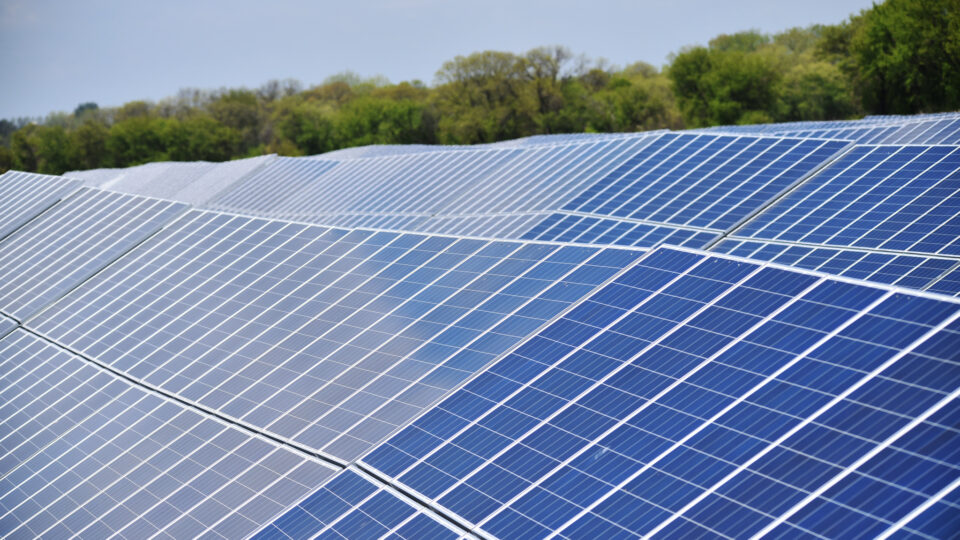
The price of electricity from solar panels has been dropping dramatically over the last decade.  The average cost of utility-scale solar power has gone down more than 80% since 1980, making it the least expensive power source in many places.  The plunging price of solar power is one of the driving forces behind the transition to clean energy. 

The 2020 average cost of solar power was 4.6 cents per kilowatt-hour.  The Department of Energy has recently set a target of reducing the cost of solar power by more than half again by 2030, to an unsubsidized average of 2 cents per kilowatt-hour.  The 2-cent goal is not just the ordinary cost of electricity; it is the levelized cost of energy which is based on a formula that includes the cost of construction and operation of a power plant.

If the least expensive power source becomes that much cheaper, it will really shake the foundation of many energy debates.  One of these debates is how to meet the need for more interstate power lines to transport renewable energy from rural areas to population centers.   If large amounts of additional renewable energy sources are added, policymakers will need to work harder to reform the regulatory system to make sure that new interstate power lines get built.

If the average cost of solar power reaches 2 cents a kilowatt-hour, the actual price will be lower in sunnier regions and higher in those that get less sun.  However, the continuing decrease in solar electricity costs will actually have the greatest impact in the northern, less sunny regions, because solar power may not currently be the least expensive option there but it will become the cheapest alternative over time.

**********

Web Links

Inside Clean Energy: What Happens When Solar Power Gets Much, Much Cheaper?

Photo, posted May 14, 2020, courtesy of Courtney Celley/USFWS via Flickr.

Earth Wise is a production of WAMC Northeast Public Radio.

Cleaner Water Using Corn | Earth Wise

May 12, 2021 By EarthWise Leave a Comment

Using corn waste to clean water

Corn is the largest agricultural crop in the U.S., and it is also one of the most wasteful.  About half of the harvest ends up as stover – corn stalks, leaves, husks, and cobs – once the kernels are used for food.

Corn stover has relatively few commercial or industrial uses.  It can be used to produce biofuel, but that is not very energy efficient.  It is sometimes used as a low-quality livestock feed as well.  Mostly, it is just burned if it is used at all.

Researchers at the University of California Riverside have developed an energy-efficient way to make good use of stover by transforming it into activated carbon for use in water treatment.

Activated carbon – often called activated charcoal – is an organic material that is specially treated to contain millions of microscopic pores that make it highly absorbent.  It has many industrial uses, the most common of which is for filtering pollutants out of drinking water.  Most household water filters such as Brita filters as well as the ones built into refrigerators make use of activated carbon.

The Riverside researchers explored methods for producing activated carbon from charred corn stover and found that processing the material with hot compressed water – a process known as hydrothermal carbonization – produced highly absorbent activated carbon with superior properties compared to material produced by slow pyrolysis, where corn stover is charred at increasing temperatures over a long period of time.

According to the researchers, it is important to create approaches that convert waste into high-value materials, fuels, and chemicals in order to create new value streams and eliminate the environmental harm that comes from a so-called “take-make-dispose” economic model.

**********

Web Links

Cleaner Water Through Corn

Photo, posted September 15, 2010, courtesy of the United Soybean Board / the Soybean Checkoff via Flickr.

Earth Wise is a production of WAMC Northeast Public Radio.

The Plunging Cost Of Lithium-Ion Batteries | Earth Wise

May 11, 2021 By EarthWise Leave a Comment

The cost of lithium-ion batteries is plunging

Lithium-ion batteries are the power source for phones, laptops, and electric cars.  These rechargeable batteries were first commercially introduced in 1991.  Since then, their performance has improved, and their cost has dropped tremendously.

There have been dramatic cost declines in many advanced technologies.   The price of big-screen televisions is a prime example.  Most people think of solar photovoltaic panels as the most exceptional case.  In the 1970s, solar panels cost over $100 per watt. Today, they are 20 cents a watt.

How much lithium-ion batteries have dropped in price has been somewhat unclear.  This is because much of the information about battery costs is in the form of closely held corporate data.  Most lithium-ion batteries are not sold directly to consumers but rather are built into consumer electronics and cars.  Large companies like Apple and Tesla buy batteries by the millions or manufacture them themselves, and the true costs are not publicly disclosed.

Recently, MIT researchers have carried out an extensive analysis of lithium-ion battery costs over the past three decades.  The researchers found that the cost of these batteries has dropped by 97% over that period.

It is clear that the decline in battery costs has been an enabler of the recent growth in sales of electric vehicles.  It is also clear that further declines in lithium-ion battery costs are likely to increase the batteries’ usage in stationary applications such as storing energy from intermittent green power sources like solar and wind.

The batteries have ever-improving energy density (energy stored within a given volume) and specific energy (energy stored within a given mass.)  As lithium-ion batteries continue to get better and cheaper, their role in the world continues to grow.

**********

Web Links

Study reveals plunge in lithium-ion battery costs

Photo, posted October 26, 2020, courtesy of Ajay Suresh via Flickr.

Earth Wise is a production of WAMC Northeast Public Radio.

Should We Block The Sun? | Earth Wise

May 10, 2021 By EarthWise Leave a Comment

The risks of geoengineering need to be better understood

There is growing concern that greenhouse gas emissions are not falling quickly enough to avoid dangerous levels of global warming.  As a result, there is the impetus to examine other options.  Among these are geoengineering, which is one of the most contentious issues in climate policy.  Geoengineering embodies many risks that make even seriously considering it seem risky in itself.

Despite this, the National Academies of Science, Engineering, and Medicine has issued a report saying that governments urgently need to know whether solar geoengineering could work and what its side effects might be.

Solar geoengineering is also called solar radiation modification, which entails reflecting more of the sun’s energy back into space.  This would likely be accomplished by injecting aerosols into the atmosphere, much like what happens after large volcanic eruptions.

Schemes for solar geoengineering raise numerous issues.  Although solar geoengineering might cool the earth’s surface to a global temperature target, the cooling may not be evenly distributed, affecting many ecosystem functions and biodiversity.   It would likely upset regional weather patterns in potentially devastating ways, for example by changing the behavior of the monsoon in South Asia.  It might dangerously relax public commitments to reduce greenhouse emissions. 

Despite these concerns, or perhaps because of them, the committee that produced the report believes that technology to reflect sunlight deserves substantial funding and should be researched as rapidly and effectively as possible.  Once any geoengineering projects get into the hands of policymakers, they may gather momentum that bypasses the advice of scientists.  So, it important to make progress on the science while geoengineering is still only theoretical.

**********

Web Links

Should We Block the Sun? Scientists Say the Time Has Come to Study It.

To intervene or not to intervene? That is the future climate question

Photo, posted August 3, 2018, courtesy of Tomasz Baranowski via Flickr.

Earth Wise is a production of WAMC Northeast Public Radio.

Breaking Down Polystyrene | Earth Wise

April 20, 2021 By EarthWise Leave a Comment

Scientists have developed a way to break down polystyrene

The proliferation of global plastic waste continues to be a growing problem for the world.  Hundreds of millions of tons of plastics are produced each year and most of it is used once and then discarded.  The properties that make plastics so attractive – durability and chemical stability – make it difficult to do anything with discarded plastics other than deposit them in landfills – where they don’t easily degrade over time – or burn them, which dumps carbon dioxide and various hazardous gases into the atmosphere.

Polystyrene is one of the most widely used plastics.  It is found in foam packaging materials, disposable food containers, plastic cutlery, storage containers, and many other places. 

Recycling plastics like polystyrene is generally not economically feasible.  Sorting plastics by type is time and labor intensive and the chemical processes required to break down plastics into usable precursor materials require significant energy input and the use of toxic solvents.

Recently, a team of scientists at Ames Laboratory in Iowa has developed a process based on ball-milling that deconstructs commercial polystyrene in a single step, at room temperature, in ambient atmosphere, and in the absence of harmful solvents.

Ball-milling is a technique that places materials in a milling vial with metal ball bearings which is then agitated to initiate a chemical reaction.  This approach is known as mechanochemistry.

The method represents an important breakthrough that enables dismantling of a polymer that includes its chemical breakdown without requiring solvents or the high temperatures generally needed to thermally decompose it.  This discovery opens up new avenues for low-temperature recovery of monomers from polymer-based systems that include composites and laminates.  It could be a very useful weapon in the battle against plastic waste.

**********

Web Links

Polystyrene waste is everywhere, and it’s not biodegradable. Scientists just found a way to break it down.

Photo, posted December 11, 2010, courtesy of Warrenski via Flickr.

Earth Wise is a production of WAMC Northeast Public Radio.
Transmission Lines And Wildlife Habitat Connectivity | Earth Wise

April 14, 2021 By EarthWise Leave a Comment

Using transmission lines to build wildlife habitat connectivity

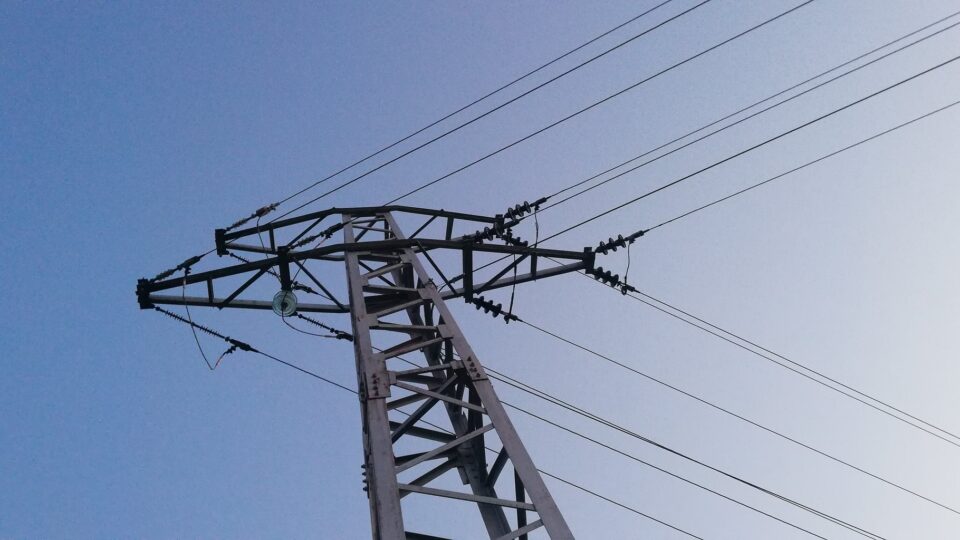
Electrical transmission lines and their support towers tend to be a blight on the landscape but are something modern society cannot avoid.  Power transmission networks – with towers every 200 meters or so of line – are in place throughout the world’s developed nations.  Another common feature of developed nations is the fragmentation of animal species caused by human activity breaking up their natural habitats.

It is important for biodiversity conservation for animals to get their environments connected.   It turns out that transmission line infrastructure can provide an important tool for reconnecting wildlife habitats.

In a study conducted in Spain’s Andalusia region, scientists planted native shrubs and seedlings under six towers along power lines running through cereal cropland.  The area of each tower base was 100 square meters.

Compared to four control sites, the researchers measured increased population density and diversity among arthropods and small mammals observed in the four-year study. 

Enhancing connectivity through networks of habitat corridors or stepping-stone patches has become a key concept in conservation biology and landscape ecology.  Renting or buying large parcels of land to connect protected natural areas to one another would be cost prohibitive but planting suitable native shrubs and other flora under existing transmission line networks can provide many of the same benefits.

In general, power companies pay rent to landowners – often farmers or agribusinesses – for the rights to place towers on their land.  Because it is difficult to work the areas under towers with farm equipment, that space is typically unused, which opens the door to low-cost efforts by environmentalists.

**********

Web Links

Electrical transmission lines have power to enhance habitat connectivity for wildlife

Photo, posted April 29, 2018, courtesy of Georgi Todorov/digitalnovas.com via Flickr.

Earth Wise is a production of WAMC Northeast Public Radio.

How Green Are Electric Cars? | Earth Wise

April 12, 2021 By EarthWise Leave a Comment

Electric cars are becoming even greener

Environmental groups, governments, and automakers are all promoting electric vehicles as an important technology to combat climate change.  For example, GM plans to stop selling gas-powered cars by 2035 and Volvo intends to be all-electric by 2030.

There are still those who question how green electric vehicles actually are.  All products and technologies do have their environmental impacts.  In general, today’s electric cars produce significantly fewer planet-warming emissions than gas-powered cars, but there are factors that affect the results for specific vehicles.

The biggest issue is the source of electricity used to charge up the cars.  In places where coal still provides a substantial fraction of electric generation, electric cars don’t fare as well.  But coal’s contributions to the grid are declining rapidly and even cleaner fossil fuels like natural gas are gradually being replaced by green generation from wind and solar power.  If the grid was entirely carbon-free, then there would be no emissions associated with operating the vehicle.

MIT has created an interactive online tool that incorporates a comprehensive set of factors contributing to the emissions associated with cars:  what it takes to manufacture the cars, how much gasoline conventional cars burn, and where the electricity to charge electric vehicles comes from.

The tool provides information like the average amount of carbon dioxide emitted for every mile driven over a car’s lifetime. 

Results will vary with location and various other vehicle factors, but in the great majority of cases, electric cars are much greener than gasoline cars, and as the grid becomes greener, the cars will become greener as well.

**********

Web Links

CarbonCounter 2021

How Green Are Electric Vehicles?

Photo, posted January 29, 2020, courtesy of Tony Webster via Flickr.

Earth Wise is a production of WAMC Northeast Public Radio.

Prickly Pear As A Sustainable Crop | Earth Wise

April 6, 2021 By EarthWise Leave a Comment

Searching for more sustainable food and fuel crops

The fruits and pads of opuntia, better known as prickly pear cactus, find their way into people’s diets in many arid and semi-arid places around the world.  In Mexico, the pads are known as nopales and are used in a variety of dishes.  The pears themselves are used in jams, salads, and juices.

A five-year study by the University of Nevada Reno College of Agriculture, Biotechnology & Natural Resources investigated the prospects for cactus pear to become a major crop like soybeans and corn and to help provide a biofuel source.

As the climate changes, dry areas are going to get dryer and drought issues will increasingly affect traditional crops.

The study looked at the particular opuntia species called the spineless cactus pear and found that it had the highest fruit production while using up to 80% less water than some traditional crops.  Cactus pear can be used for both human consumption and livestock feed.  As a perennial crop, once the fruit and pads are harvested for food, the remaining biomass can be used for biofuel production.

Corn and sugar cane are the most utilized bioenergy crops right now, but these use three to six times more water than cactus pear.  The cactus pear productivity is on par with corn and sugar cane, but not only do they use a fraction of the water, they also have higher heat tolerance.

Over 40% of land area around the world is classified as semi-arid or arid.  There is enormous potential for planting cactus for carbon sequestration.  If nothing else, it makes great sense to grow cactus pear crops in abandoned areas that are marginal and may not be suitable for other crops.

**********

Web Links

Study shows cactus pear as drought-tolerant crop for sustainable fuel and food

Photo, posted April 16, 2020, courtesy of Kevin Dooley via Flickr.

Earth Wise is a production of WAMC Northeast Public Radio.

Residential Gardens And Pollinators | Earth Wise

April 2, 2021 By EarthWise Leave a Comment

Residential gardens play an important role for pollinators

A new study led by the University of Bristol in the UK measured for the first time how much nectar is produced in urban areas to gauge the role of residential gardens in providing nutrients for pollinators.  They discovered that home gardens accounted for the vast majority of the crucial nutrients for pollinators; in fact, some 85% on average.

The study found that gardens generated a daily average of about a teaspoon of the unique sugar-rich liquid found in flowers which pollinators drink for energy.  A teaspoon sounds like very little, but it is enough to feed thousands of bees.

The research examined nectar production in four major UK towns and cities and measured nectar production in nearly 200 species of plants.  The results were that the nectar supply in urban landscapes is more diverse than in farmland and nature reserves.   In addition, gardens are critical because they produce the most nectar per unit area of land and actually cover the largest area of land in the cities studied.  In those cities, nearly a third of the land comprised domestic gardens, which is six times the area of parks and 40 times the area of small green allotments.

The upshot of the research is that home gardeners have a huge role to play in pollinator conservation.  Without domestic gardens, there would be far less food for pollinators that include bees, wasps, butterflies, moths, flies, and beetles.  Thus, it is important for home gardeners to keep planting nectar-rich flowers, mow lawns less often to let dandelions, clovers, and daisies flourish, avoid harmful pesticides, and avoid covering gardens in paving, decking, or artificial turf.

**********

Web Links

Pioneering research reveals gardens are secret powerhouse for pollinators

Photo, posted June 23, 2018, courtesy of Wolfferl via Flickr.

Earth Wise is a production of WAMC Northeast Public Radio.

30 Million Solar Homes | Earth Wise

March 29, 2021 By EarthWise Leave a Comment

An ambitious rooftop solar initiative

A national coalition made up of more than 230 organizations has launched an initiative called the 30 Million Solar Homes campaign.  The goal is to add enough rooftop and community solar energy to power 30 million homes across the U.S. over the next five years.  That would be the equivalent of one in four American households.

The major focus of the 30 Million Solar Homes initiative is to rapidly and massively scale programs that help low-income families benefit from solar power.  The coalition lists 15 federal policy initiatives including making solar tax incentives more equitable, providing more reliable low-income energy assistance through solar energy, supplementing low-income weatherization assistance with solar energy, and specifically funding solar projects in marginalized communities.

The federal government spends billions of dollars every year to help families to pay their energy costs, but these efforts only serve less than a fifth of the eligible population.  Funding rooftop and community solar access for these households would provide long-term financial relief and reduce the need for annual energy bill assistance.

The more than 230 organizations in the coalition represent organizations focused on energy equity, climate, business, environment, faith, and public health.  The coalition estimates that executing the plan would create three million good-paying jobs, lower energy bills by at least $20 billion a year, and reduce total annual greenhouse gas emissions by 1.5%.

Over the coming months, the campaign will seek to educate lawmakers and the Biden-Harris Administration about the benefits of distributed solar energy.  The vision outlined by the coalition is an ambitious one to say the least.

**********

Web Links

30 Million Solar Homes

Supporters of 30MSH

Photo, posted May 20, 2009, courtesy of Solar Trade Association via Flickr.

Earth Wise is a production of WAMC Northeast Public Radio.

  • « Go to Previous Page
  • Page 1
  • Interim pages omitted …
  • Page 19
  • Page 20
  • Page 21
  • Page 22
  • Page 23
  • Interim pages omitted …
  • Page 36
  • Go to Next Page »

Primary Sidebar

Recent Episodes

  • An uninsurable future
  • Clean energy and jobs
  • Insect declines in remote regions
  • Fossil fuel producing nations ignoring climate goals
  • Trouble for clownfishes

WAMC Northeast Public Radio

WAMC/Northeast Public Radio is a regional public radio network serving parts of seven northeastern states (more...)

Copyright © 2026 ·