• Skip to primary navigation
  • Skip to main content
  • Skip to primary sidebar

Earth Wise

A look at our changing environment.

  • Home
  • About Earth Wise
  • Where to Listen
  • All Articles
  • Show Search
Hide Search
You are here: Home / Archives for energy

energy

Vineyard Wind Prepares For Construction | Earth Wise

November 5, 2021 By EarthWise Leave a Comment

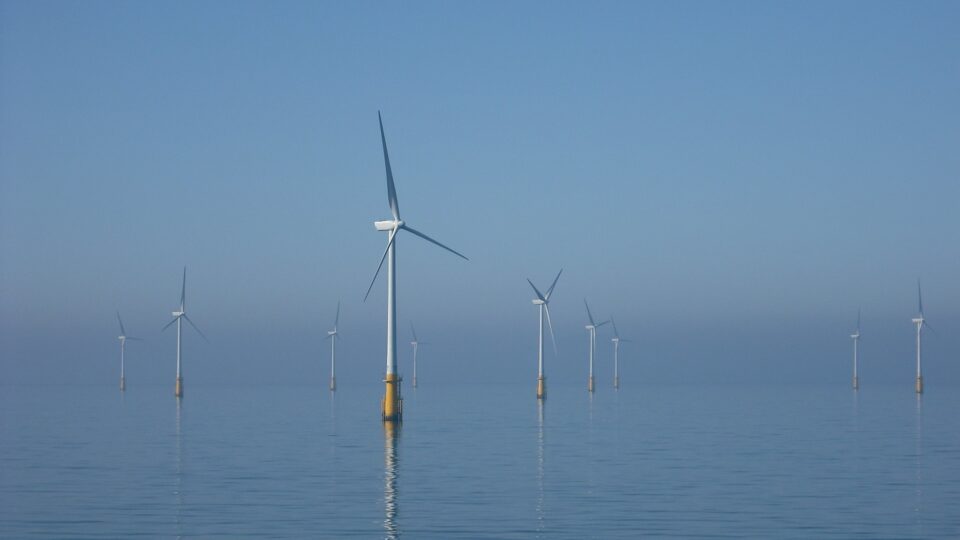
Vineyard Wind 1 will be the first utility-scale offshore wind energy project in the United States.  It will be located 15 miles off the coast of Massachusetts and will consist of an array of 62 wind turbines, spaced one nautical mile apart.  It will generate 800 megawatts of electricity, enough to power over 400,000 homes.

The project has recently closed on $2.3 billion of senior debt financing, which sets the stage for construction to begin.  The joint venture between Avangrid Renewables and Copenhagen Infrastructure partners is one of the single largest investments in a renewable energy project in the U.S.  The financial close is basically the final milestone for launching the project following years of clearing regulatory and other hurdles.

With the financial closing, Vineyard Wind will be instructing its contractors to begin work.  Onshore work will start this fall and offshore work will begin in 2022.

The project will use Haliade-X wind turbine generators made by GE.  These are some of the largest and most powerful wind turbines currently available, each one capable of generating 13 megawatts of electricity.  The electricity generated by the turbines will be collected by an offshore substation and then transmitted to shore.  Two submarine cables will bring the electricity from the substation to a landing point in Barnstable.  The cables will be buried six feet below the seafloor.  Underground cables will then route the power to an onshore substation in the village of Hyannis where it will be connected to the New England Grid.

Vineyard Wind is the first of many offshore wind farms in the works for the Northeastern United States.

**********

Web Links

U.S.’s first commercial-scale offshore wind project prepares for construction

Photo, posted March 24, 2016, courtesy of Andy Dingley via Flickr.

Earth Wise is a production of WAMC Northeast Public Radio.
Clean Energy In Rochester | Earth Wise

October 26, 2021 By EarthWise Leave a Comment

New York’s largest community choice clean energy program has been activated in the City of Rochester.   The program, offered by Rochester Community Power, offers 57,000 residences and small businesses access to clean energy from hydropower and wind sources.  It requires customers to opt out rather than enroll in order to provide clean energy to the greatest number of people.

Rochester Community Power is the city’s local community choice aggregation (CCA) program that leverages the collective buying power of participating residents to purchase renewable electricity and negotiate better terms for energy supply contracts.

The program will supply customers with more than 300 million kWh of renewable energy each year, which will avoid the emission of about 250,000 tons of carbon dioxide.  Rochester plans to add a community solar program next year which will provide additional clean energy opportunities, including offering guaranteed savings to thousands of participants in its Home Energy Assistance Program.

The project will be managed by Joule Assets, which is a provider of energy reduction market analysis, tools, and financing. Joule Assets, as program administrator for the Rochester program, managed the competitive bidding process that secured a fixed rate for electricity for the next two years, shielding participating residences and businesses from volatile market prices.

Community choice aggregation programs are local, not-for-profit public agencies that are an alternative to investor-owned utilities.  They give municipalities the ability to make decisions about the procurement, sourcing, and rates for energy for its residents.

**********

Web Links

New York activates its largest opt-out 100% renewable energy program

Photo, posted June 25, 2011, courtesy of Paulo Valdivieso via Flickr.

Earth Wise is a production of WAMC Northeast Public Radio.

Emissions From Global Computing

October 20, 2021 By EarthWise Leave a Comment

Global computing creates enormous amounts of carbon emissions

A recent study from Lancaster University in the UK has concluded that global computing is likely to be responsible for a greater share of greenhouse gas emissions than previously thought and that share is continuing to grow.

Previous calculations of the contributions from information and communications technology (or ICT) estimated that globally it accounts for 1.8 to 2.8% of total emissions.  According to the new study, these estimates likely fall short of the sector’s real climate impact because they only show a partial picture.

Prior estimates do not account for the full lifecycle and supply chain of ICT products and infrastructure.  They do not include the energy expended in manufacturing the products and equipment, the carbon cost associated with all the components in the products, and the operational carbon footprint of the companies producing those components. 

The study argues that the true contribution of ICT to global greenhouse gas emissions could be between 2.1 and 3.9%, which is more than the aviation industry.  Furthermore, the study warns that new trends in computing and ICT such as the use of big data and artificial intelligence, the so-called Internet of Things, and the use of blockchain and cryptocurrencies, risk driving further substantial growth in ICT’s greenhouse gas footprint.

It has been a commonly held believe that ICT and computing technologies lead to greater efficiencies across many other sectors, leading to savings in net greenhouse gas emissions.  According to the new study, the historical evidence indicates the opposite.  ICT has driven wide-ranging efficiency and productivity improvements, but the net result in emissions has been that they have been growing steadily.

**********

Web Links

Emissions from computing and ICT could be worse than previously thought

Photo, posted March 13, 2018, courtesy of Flickr.

XXXXXXXXXX

Giant Wind Turbines | Earth Wise

October 19, 2021 By EarthWise Leave a Comment

Wind turbines are getting enormous

Wind turbines keep getting bigger and bigger.  The reason is that the power a wind turbine can theoretically generate is proportional to the disk-shaped area swept out by its blades.  So, the bigger the blades, the more power can be produced by a single turbine.

That being said, real-world turbines don’t achieve their theoretical power output because they have limitations on efficiency.  Things like rotor blade friction and drag, gearbox losses, and generator losses limit the actual power output of a turbine. 

Despite all of these things, the latest and greatest wind turbines are absolutely enormous and produce almost unbelievable amounts of power.  Chinese manufacturer MingYang Smart Energy has recently unveiled an 866-foot tall, 16-megawatt capacity offshore wind turbine.  This narrowly exceeds both the Vestas V236 Turbine announced earlier this year and GE’s Haliade-X Turbine, rated at 15 megawatts and 14 megawatts respectively.

The rotor diameter of the giant Chinese turbine is nearly 800 feet, set by its 387-foot blades that sweep out an area of nearly 50,000 square feet.  A single one of these turbines can generate 80,000 MWh of electricity in a year, enough to power more than 20,000 households.  (It boggles the mind to consider that just one rotation of the blades of such a turbine can power a couple of homes for an entire day).

Offshore wind farms choose the largest wind turbines in part because of the high cost of installing turbines and transporting the electricity.  It is preferable to build fewer turbines because fewer towers, cables, and ground anchoring systems need to be constructed, making the project less complicated.

**********

Web Links

This 264-meter tall offshore wind turbine is now the largest of its kind

Photo, posted November 19, 2015, courtesy of Scott Flaherty / USFWS via Flickr.

Earth Wise is a production of WAMC Northeast Public Radio.
Global Light Pollution

October 14, 2021 By EarthWise 1 Comment

Light pollution increasing globally

Light pollution is excessive or obtrusive artificial light. It’s a consequence of industrial civilization.  Too much artificial light can cause a host of problems, including disrupting ecosystems, causing adverse health effects, and wasting energy. 

According to a new study led by researchers from the University of Exeter in the U.K., global light pollution has increased by at least 49% over 25 years.  But this figure only includes light visible via satellites.  Scientists estimate that the true increase may be significantly higher – up to 270% more globally. 

That’s because there is a hidden impact of LED technology that isn’t accounted for in the satellite data. LEDs emit more blue light than previous lighting technologies, but satellite sensors fail to pick up this blue light.   This leads to a large underestimate of global light pollution.

The researchers examined light pollution from 1992 to 2017.  They found persistently increasing light pollution in Asia, South America, Oceania and Africa.  In Europe, detected light increased until around 2010, after which it leveled off.  In North America, artificial light appears to be on the decline.  However, the researchers point out that the satellites inability to detect blue light of LEDs means that light pollution has likely actually increased in most locations.

Light pollution has widespread impacts on both animals and plants.  For example, light pollution can confuse the migratory patterns of animals and change predator-prey relationships.   It’s also been shown to cause trees to bud earlier in spring.      

While there’s no off switch for the planet, there are ways that we could reduce the amount of light drastically with little impact on our lives. 

**********

Web Links

Rapid increase in global light pollution

Photo, posted November 2, 2008, courtesy of Timothy Tsui via Flickr.

XXXXXXXXXXXXXXXXXX

Drought And Desalination | Earth Wise

October 11, 2021 By EarthWise Leave a Comment

Improving water desalination to combat droughts

The Western US is currently experiencing what might be the worst drought in over 1,000 years.   The region has seen many droughts in the past, but the changing climate is making dry years drier and wet years wetter.   Diminishing snow-packs mean that rivers, streams, reservoirs, and soil are not replenished enough in the spring and summer.

Meanwhile, the Southwest has seen a growth rate over the past 60 years that is twice that of the rest of the country.  More and more people are moving to areas expected to get even drier in the years to come.  There have been unprecedented water allocation cuts from the Colorado River – which provides water to seven states – and there have been shutdowns of hydroelectric power plants.

Only three percent of the planet’s water is fresh water and much of that is not available for our use.  Over 120 countries have turned to desalination for at least some of their drinking water.  In the US, the largest plant is in Carlsbad, California and a huge new plant is likely to be built in Huntington Beach, California.

Desalination has its drawbacks.  It is expensive, consumes large amounts of energy, and has detrimental environmental impacts.  Most of the world’s desal plants now use membrane filtration technology but there are still many that use the thermal distillation method.

There are efforts around the world aimed at improving desalination.  A giant project in Saudi Arabia is based on solar heating of sea water.  The U.S. Army and the University of Rochester are working on a different solar-based system.  European companies are developing a floating seawater desalination plant powered by wind energy. 

Droughts seem to be here to stay.  Finding better ways to get fresh water is essential.

**********

Web Links

A 1,000 Year Drought is Hitting the West. Could Desalination Be a Solution?

Photo, posted May 31, 2021, courtesy of Frank Schulenburg via Flickr.

Earth Wise is a production of WAMC Northeast Public Radio.

Bitcoin And Energy Use | Earth Wise

October 6, 2021 By EarthWise Leave a Comment

Cryptocurrencies consume astonishing amounts of electricity

In recent years we’ve heard more and more about cryptocurrencies.  They are digital currencies managed by a decentralized network of users.  No country, person, or other entity controls the value of a cryptocurrency.  Some people think that they will ultimately replace traditional currencies.

The eventual status of cryptocurrencies can be debated endlessly but there is one thing that is certain:  in the process of simply existing as they do today, cryptocurrencies like Bitcoin consume astonishing amounts of electricity.

Bitcoin, the most popular cryptocurrency, uses about half a percent of all the electricity consumed in the world.  The process of creating Bitcoin consumes over 90 terawatt-hours of electricity annually, which is more than the entire country of Finland with its 5.5 million people.  Where does all the energy go?

The answer is something called Bitcoin mining.  It is the process by which new Bitcoins are created.  It is something like playing a lottery.  Miners effectively have to guess an extremely long number called the “target hash” in order to be awarded Bitcoins.   There is no magic formula to finding the answer.  It isn’t really advanced math; it is brute force searching among trillions of possibilities.  Specialized computer equipment is designed to make as many guesses as possible as quickly as possible.  The faster the electronic circuits and the more of them there are, the better the chances are of beating out other miners to win the mining lottery.  As a result, the amount of power-hungry computing equipment dedicated across the globe to mining Bitcoins has mushroomed.

Whether it pays to be a Bitcoin miner is increasingly difficult, but those that are doing it are consuming extraordinary amounts of energy in the effort to make a few more digital bucks.

**********

Web Links

Bitcoin Uses More Electricity Than Many Countries. How Is That Possible?

Photo, posted February 14, 2018, courtesy of Stock Catalog via Flickr.

Earth Wise is a production of WAMC Northeast Public Radio.

Wastewater As A Freshwater Source | Earth Wise

September 27, 2021 By EarthWise Leave a Comment

Water covers three-quarters of our planet, but freshwater – the water we drink, bathe in, and irrigate crops with – comprises only 3% of the world’s water and much of that is frozen in glaciers or otherwise unavailable.  Nearly 3 billion people suffer from water scarcity for at least some of the year.

Natural freshwater sources – lakes, rivers, and groundwater – are under stress from the effects of climate change and from the increasing demands of city populations.  The wastewater treatment plants in large cities represent a significant potential water source provided that sustainable and economical technologies to produce it can be developed.

Researchers at Lehigh University in Pennsylvania have patented an innovative ion exchange desalination process that is a legitimate candidate to transform wastewater into usable water.

Existing large-scale desalination systems make use of semipermeable reverse osmosis membranes that require an energy source to run the system.  The Lehigh process, which they call HIX-Desal, harnesses the unique chemistry of carbon dioxide to take the place of the energy used in reverse osmosis systems. 

Tests of the new system show that the salinity of treated wastewater can be reduced by more than 60% by the HIX-Desal process without requiring any reverse osmosis.  At an Allentown, Pennsylvania water treatment plant where the system was tested, the researchers estimated that using the system could save about a million kWh per day in electricity usage, enough energy to power 94 homes for a year.

With this system, waste carbon dioxide from landfills or turbine exhaust can be used to desalinate municipal wastewater.  It could be the basis of a circular economy.

**********

Web Links

Desalination tech uses CO2 to tap into municipal wastewater as alternative freshwater source

Photo, posted November 28, 2020, courtesy of Richard Ricciardi via Flickr.

Earth Wise is a production of WAMC Northeast Public Radio.

People And The Earth’s Increasing Heat | Earth Wise

September 23, 2021 By EarthWise Leave a Comment

Humans are driving climate change

A new study by Princeton University and the National Oceanic and Atmospheric Administration had found clear evidence that human activity is the primary cause of the significant increase in heat stored in our planet.  In fact, the study found that there is less than a 1% chance that natural variability is the sole cause of the increase.

The researchers looked at data from satellite observations to determine the amount of energy received by the earth and the amount reflected and emitted by the Earth.  In a balanced physical system, the amount of incoming energy should equal the amount of outgoing energy.  But the earth’s system is not balanced at this point.  More energy is coming in than going out, which is driving changes in the climate system.  There have been other studies looking at the human influence on the climate, but this new study is the first to examine a 20-year continuous satellite energy balance record to see if natural fluctuations in the climate system or human activities is the primary driver for the significant change in the planet’s energy balance.

The study examined 50 different climate models to look at this energy balance under scenarios where there was no human influence.  These include changes in the sun’s output, volcanic eruptions, variations in pollution aerosols, and more.

The results, to no great surprise, are that increasing greenhouse gases over the last twenty years is by far the most important driver for the energy imbalance.  This imbalance is what is driving rising temperatures, increasing sea levels, and causing other climate changes.

**********

Web Links

Human activities responsible for rapid increase in Earth’s heat

Photo, posted May 6, 2021, courtesy of Marlis Borger via Flickr.

Earth Wise is a production of WAMC Northeast Public Radio.

Busting Electric Vehicle Myths | Earth Wise

September 20, 2021 By EarthWise Leave a Comment

Electric vehicles result in lower emissions than internal combustion vehicles

From the early days of hybrid vehicles right on through the current booming market for electric cars, there has been the contention by some people that these cars are responsible for comparable or even greater amounts of greenhouse gas emissions over their product lifetimes.  The arguments generally centered around the carbon costs of creating batteries for the cars as well as the emissions associated with generating the electricity used to charge them.

A new study published by the International Council for Clean Transportation reports a life cycle assessment (or LCA) that considers every source of carbon generated from the cradle to the grave of the vehicle.

Included in the assessment are the mining costs of the lithium to make batteries, the transportation of batteries across the world by container ship, the end-of-life burden, the mix of energy generation in various places around the world, and so on.

The results of the analysis are that even in India and China, which are the biggest burners of coal and oil on earth, it still results in lower emissions to drive an EV instead of an internal combustion vehicle.

Lifetime emissions of today’s average medium-size EVs are lower than comparable gasoline cars by 66-69% in Europe, 60-68% in the US, 37-45% in China, and 19-34% in India.  As electricity generation continues to further decarbonize, all these numbers will only get better.  While it is somewhat more carbon-intensive to manufacture an EV, it doesn’t take very long in the car’s life to come out ahead owning one.

Early skeptics of EVs and hybrids had more legitimate concerns a decade or so ago, but the advantages of these vehicles are now unambiguous.

**********

Web Links

One of the Biggest Myths About EVs is Busted in New Study

Photo, posted December 30, 2020, courtesy of Chris Yarzab via Flickr.

Earth Wise is a production of WAMC Northeast Public Radio.

Carbon Capture And The Infrastructure Bill | Earth Wise

September 17, 2021 By EarthWise Leave a Comment

carbon capture in the infrastructure bill

The trillion-dollar infrastructure bill contains a variety of provisions related to energy and the environment.  Among them is authorization for more than $12 billion for carbon capture technologies, including direct air capture and demonstration projects on coal, natural gas, and industrial plants and supporting carbon dioxide infrastructure.

Inclusion of this provision has largely been driven by energy companies, electrical utilities, and other industrial sectors.  The strongest proponents have been fossil fuel companies.  The reasons are fairly clear.

Support for carbon capture and storage (or CCS) technologies would yield billions of dollars for corporate polluters while allowing them to continue to burn fossil fuels.  To date, CCS technology has not progressed very far.  It is very expensive and has done little to reduce emissions. 

The strongest argument against directing significant resources into CCS for the power sector is that the plummeting costs of wind and solar energy have made renewable energy sources competitive with or cheaper than burning fossil fuels to generate electricity.  Adding expensive carbon capture equipment to a power plant only makes the economics of using fossil fuels worse.

The infrastructure bill does promote direct air capture technology, which is literally pulling carbon dioxide out of the air independent of any industrial activities generating it.  Given the world’s progress on reducing emissions, direct air capture technology may be an essential part of the global strategy to combat climate change.  If infrastructure funds largely go in that direction rather than for propping up fossil fuel companies, they may prove to be of great value.

**********

Web Links

Fossil Fuel Companies Are Quietly Scoring Big Money for Their Preferred Climate Solution: Carbon Capture and Storage

Photo, posted March 15, 2021, courtesy of Michael Swan via Flickr.

Earth Wise is a production of WAMC Northeast Public Radio.

Lower Power Sector Emissions | Earth Wise

September 16, 2021 By EarthWise Leave a Comment

Large decrease in United States power sector emissions

A combination of factors led to emissions from the U.S. power sector dropping 10% between 2019 and 2020, which was the largest one-year drop measured since annual reports first began being published in 1997.

The coronavirus pandemic was certainly a contributing factor, but the drop in emissions is part of a long-term trend being driven by increasing reliance on renewable energy sources, diminishing use of coal, and improving energy efficiency.

Between 2000 and 2020, power generation from solar, wind, and geothermal generation more than doubled.  Coupled with the declining use of coal power, power sector emissions during that period dropped by 37% even though the U.S. gross domestic product grew by 40% over the same years.   Overall, at this point zero-carbon electricity sources – which include wind, solar, geothermal, hydropower, and nuclear power – provide about 38% of U.S. electricity.

The Biden Administration has set a target of 100% zero-carbon power by the year 2035.  Given that the costs of wind and solar power continue to fall, there are power companies pushing for setting an intermediate goal of 80% clean power by 2030.

According to recent research, the increasingly attractive cost of renewable power along with the job creation associated with it means that reaching at least 90% clean power by the year 2035 could be achieved at no extra cost to consumers.  Being able to separate economic growth from emissions makes it far more likely that the goals of decarbonization can be met without encountering economic resistance. 

**********

Web Links

U.S. Power Sector Sees Biggest One-Year Drop in Emissions in More Than Two Decades

Photo, posted June 30, 2019, courtesy of Stephen Strowes via Flickr.

Earth Wise is a production of WAMC Northeast Public Radio.
Better Batteries For The Grid | Earth Wise

September 14, 2021 By EarthWise Leave a Comment

Building better batteries for energy storage

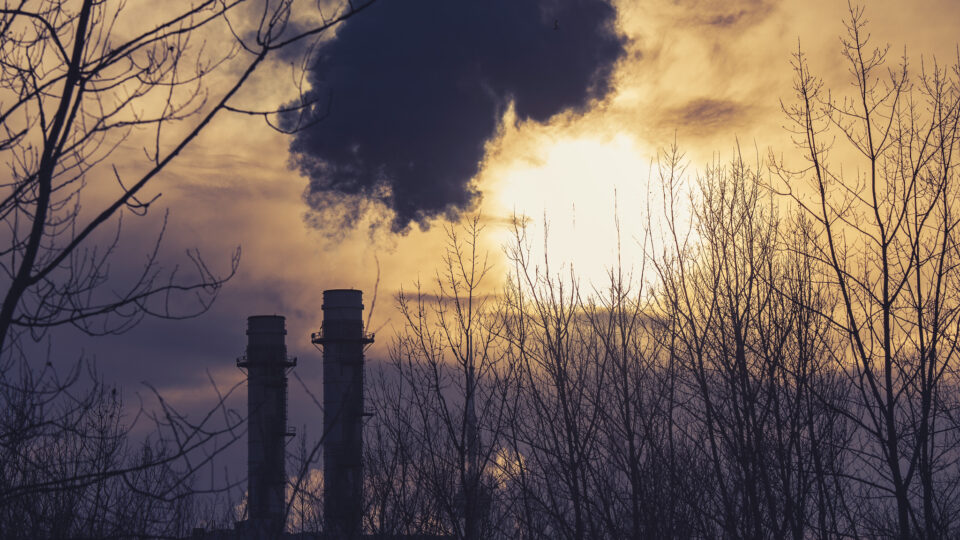
As more and more solar and wind power is added to the electric grid, the need for ways to store the energy produced increases.  Using batteries for this purpose is increasingly popular, mostly driven by the improving economics of the lithium-ion batteries used in electric vehicles as well as consumer electronics.

There are other battery technologies besides lithium ion that are not suitable for use in automobiles and cell phones but have potential advantages for the grid.  One such technology is molten sodium batteries.  These batteries have high energy density, a high efficiency of charge and discharge, and a long cycle life.  They are fabricated with inexpensive materials and they are especially suitable for large-scale grid energy storage because their economics improves with increasing size.

A drawback of molten sodium batteries is that they operate at 520-660 degrees Fahrenheit, which adds cost and complexity.  Researchers at Sandia National Laboratories have designed a new class of molten sodium batteries that operates at a much cooler 230 degrees Fahrenheit instead.

The battery chemistry that works at 550 degrees doesn’t work at 230 degrees. The Sandia group developed something they call a catholyte, which is a liquid mixture of two salts, in this case sodium iodide and gallium chloride.  (Gallium chloride is rather costly, so the researchers hope to replace it in a future version of the battery).

By lowering the operating temperature, there are multiple cost savings including the use of less expensive materials, the requirement for less insulation, and the use of thinner wire.

This work is the first demonstration of long-term, stable cycling of a low-temperature molten-sodium battery.  The hope is to have a battery technology that requires fewer cells, fewer connections between cells, and an overall lower cost to store electricity for the grid.

**********

Web Links

Sandia designs better batteries for grid-scale energy storage

Photo, posted March 14, 2021, courtesy of Michael Mueller via Flickr.

Earth Wise is a production of WAMC Northeast Public Radio.
Promoting Biodiversity In Agriculture | Earth Wise

September 13, 2021 By EarthWise Leave a Comment

The best methods to promote biodiversity in agriculture

The organic foods industry is one of the fastest growing agricultural segments in the United States.  According to the Organic Trade Association, U.S. organic sales reached $61.9 billion in 2020, a jump of more than 12% over the previous year. 

Organic food has many benefits.  Organic food is free of antibiotics, growth hormones, and GMOs, and is grown using fewer pesticides.  Organic farming tends to be better for the environment by reducing pollution, conserving water, reducing soil erosion, increasing soil fertility, and using less energy.   And it’s also better for the health of nearby wildlife as well as the people who live close to farms. 

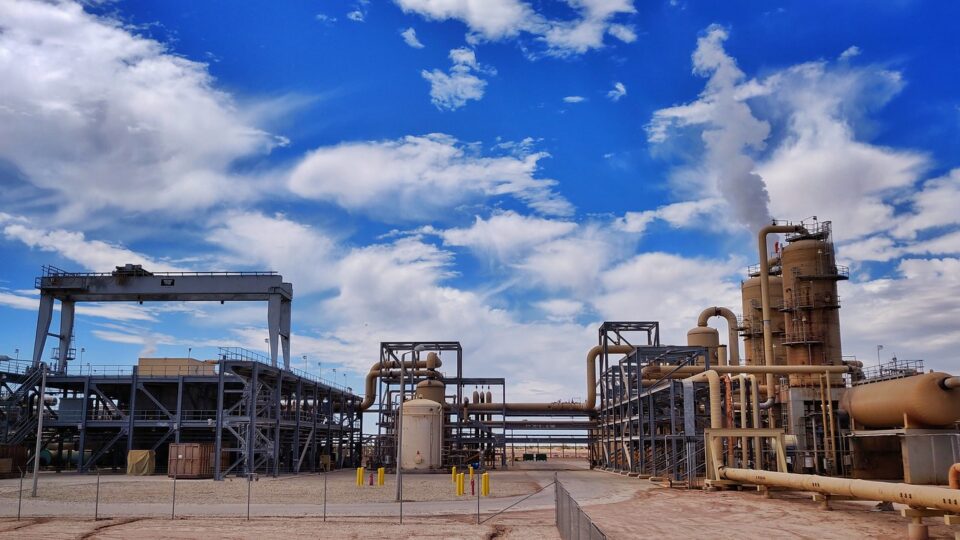
But when it comes to promoting biodiversity in agriculture, is organic farming the only alternative to conventional agriculture? It turns out it’s not – at least according to a new study recently published in the journal Trends in Ecology and Evolution. 

According to an international research team led by the University of Göttingen in Germany, a landscape mosaic of natural habitats and small-scale and diverse cultivated areas is the key to promoting biodiversity on a large scale in both conventional and organic agriculture.

According to the research team, areas cultivated to organic standards have one third more species, but don’t reach the yield level of conventional farming.  This means that more land would need to be cultivated organically in order to produce the same amount of food.  But as larger areas are cultivated, the advantages for biodiversity would disappear.    

Landscapes with small fields, long edges, high crop diversity, and at least 20% near-natural habitats can promote biodiversity significantly more than just organic certification.   

**********

Web Links

U.S. Organic Industry Survey 2021

Promoting biodiversity-friendly landscapes – beyond organic farming

Photo, posted August 29, 2019, courtesy of Lance Cheung/USDA via Flickr.

Earth Wise is a production of WAMC Northeast Public Radio.
Cutting The Cost Of Energy Storage | Earth Wise

September 9, 2021 By EarthWise Leave a Comment

Energy storage is the solution to the problem of intermittency with renewables

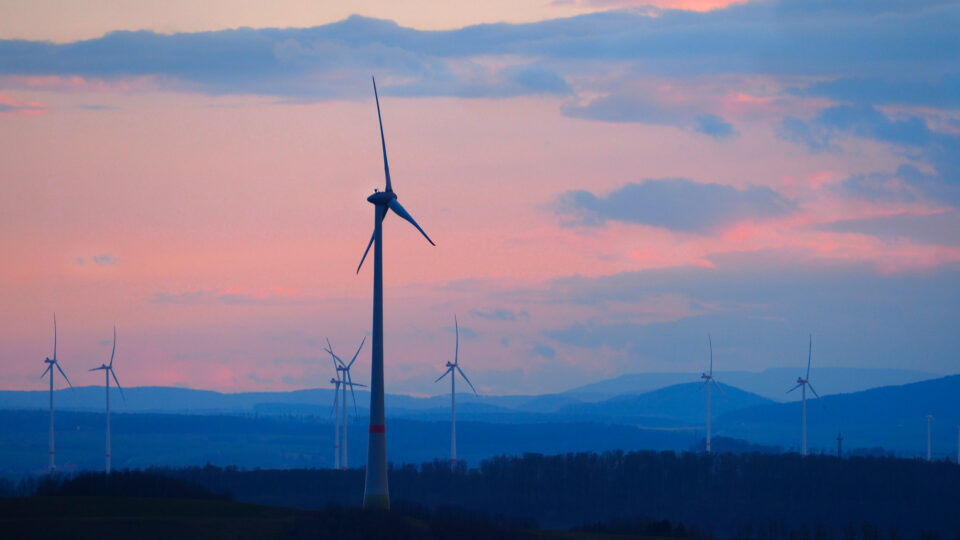
The cost of both solar and wind power continues to drop making the two renewable energy sources the cheapest way to make electricity in more and more places.  Given the virtually inexhaustible supply of both wind and sun power, these clean electricity sources can in principle meet all our energy needs.  The hang up is that both of them are intermittent sources – the wind doesn’t blow all the time and the sun doesn’t shine all the time.

The solution to the intermittency problem is energy storage.  If energy produced by wind and sun can be stored so it can be made available for use at any time, then the goal of having 100% clean energy can be realized.

Energy storage technology has continued to improve over time and to get cheaper.  The Department of Energy recently announced a new initiative aimed at accelerating both of these trends.

The new program – called Long Duration Storage Shot –  has the goal of reducing the cost of grid-scale, long-duration energy storage by 90% within this decade.

Long-duration energy storage is defined as systems that can store energy for more than ten hours at a time.  Such systems can support a low-cost, reliable, carbon-free electric grid that can supply power even when energy generation is unavailable or lower than demand.  With long-duration storage, solar-generated power can be used at night.

The program will consider multiple types of storage technologies – electrochemical (that is: batteries), mechanical, thermal, chemical carriers, and various combinations thereof.  Any technology that has the potential to meet the necessary duration and cost targets for long-term grid storage are fair game for the program.

**********

Web Links

DOE announces goal to cut costs of long-duration energy storage by 90%

Photo, posted October 16, 2017, courtesy of UC Davis College of Engineering via Flickr.

Earth Wise is a production of WAMC Northeast Public Radio.

Better Ways To Make Bioplastics | Earth Wise

August 27, 2021 By EarthWise Leave a Comment

How to replace plastic

The world produces over 300 million tons of plastics each year, mostly produced from petroleum.  The environmental consequences are substantial and there is a critical need to replace as much of that plastic production with biodegradable plastics as possible.  Thus, there is global research aimed at making bioplastics more economical and as environmentally friendly as possible.

Researchers at Texas A&M University have developed an improved approach for making bioplastics from corn stubble, grasses, and mesquite agricultural production.  Apart from the obvious environmental benefits of having biodegradable plastics, producing bioplastics from common agricultural waste would create new revenue streams for farmers as well as the people who transport harvested feedstock and byproduct crops to refinery operations.

The key to bioplastic production is the efficient extraction and use of lignin, the organic polymer that is the primary structural support material in most plants.  The new research takes five conventional pretreatment technologies for plant materials and modifies them to produce both biofuel and plastics together at a lower cost.  The new method is called “plug-in preconditioning processes of lignin” and it can be directly and economically added into current biorefineries.  The process is designed to integrate dissolving, conditioning, and fermenting lignin, extracting energy from it and making it easily adaptable to biorefinery designs.

The so-called bioeconomy currently supports some 286,000 jobs.  Innovation is the key to achieving more widespread use of biodegradable plastic.  With improved economics of so-called lignocellulosic biorefineries, there can be new avenues to use agricultural waste to produce biodegradable plastics.

**********

Web Links

‘Plugging in’ to produce environmentally friendly bioplastics

Photo, posted November 5, 2015, courtesy of Kathryn Faith via Flickr.

Earth Wise is a production of WAMC Northeast Public Radio.
Offshore Wind In New Jersey | Earth Wise

August 26, 2021 By EarthWise Leave a Comment

Offshore wind coming to New Jersey coast

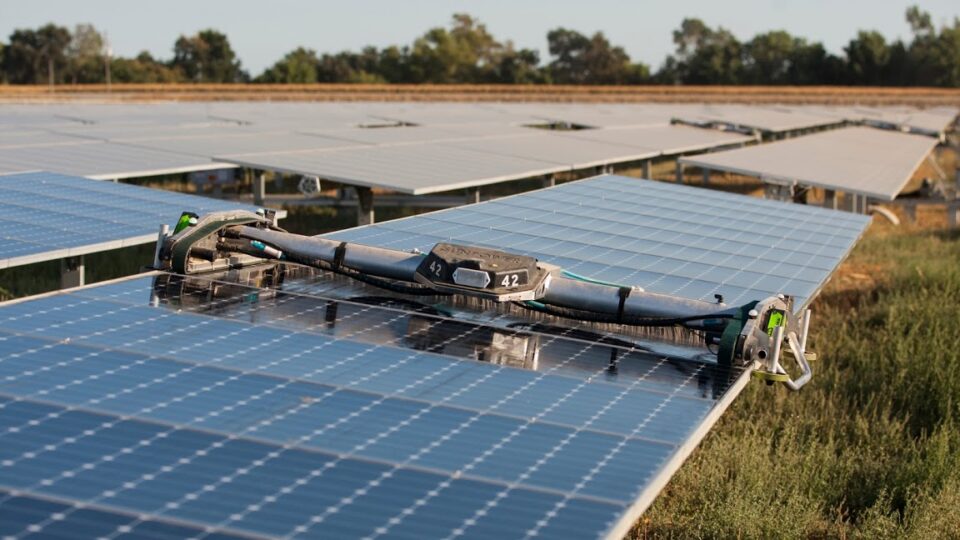
The New Jersey Board of Public Utilities recently selected to fund Ocean Wind 2, a 1,148-MW offshore wind energy project proposed by the Danish company Ørsted.  The agency also awarded Atlantic Shores Offshore Wind a contract to develop 1,410-MW of offshore wind capacity.

Ocean Wind 2 will develop the second section of the Ocean Wind federal lease area and will provide enough power for half a million New Jersey homes.  The first Ocean Wind project, also under development by Ørsted, was awarded in 2019. It’s expected to come online in 2024, and is located 15 miles off the coast of southern New Jersey. (The second project will be located adjacent to the first).

As part of the project, Ørsted is contributing to an expansion for the EEW facility in Paulsboro, where monopiles, which are foundation supports for offshore wind turbines, are manufactured.  That facility will be home to 500 full-time jobs and represents a $250 million investment into southern New Jersey.  The project is also bringing a commitment from GE Renewables to locate one of the country’s first offshore wind nacelle assembly facilities in New Jersey.  (This facility will assemble the nacelles for Ocean Wind 2 as well as other American offshore wind projects).

Overall, Ocean Wind 2 is expected to generate nearly $5 billion in net economic benefits for the state of New Jersey. 

The Atlantic Shores Offshore Wind project will be located 10-20 miles off the coast of New Jersey between Atlantic City and Barnegat Light and will bring about $850 million in local economic benefits to the state, including a variety of investments in local communities.

Overall, New Jersey has the goal of supplying more than 3.2 million homes with offshore wind power by 2035.

**********

Web Links

New Jersey moves forward with two offshore wind projects representing almost 3 GW of capacity

Photo, posted March 24, 2016, courtesy of TEIA via Flickr.

Earth Wise is a production of WAMC Northeast Public Radio.

New York And Green Hydrogen | Earth Wise

August 23, 2021 By EarthWise Leave a Comment

Green hydrogen to be a part of New York's decarbonization strategy

In July, outgoing New York Governor Andrew Cuomo announced plans for the state to explore the potential role of green hydrogen as part of New York’s decarbonization strategy.

Green hydrogen is hydrogen produced using renewable energy, such as wind, solar, and hydro power.  While hydrogen itself is a carbon-free fuel, most of the hydrogen produced today is made with a process called natural gas reforming which has byproducts of carbon monoxide and carbon dioxide.  As a result, the environmental benefits of using hydrogen are largely lost.  Hydrogen is the most plentiful element in the universe but extracting it for use as a fuel is not easy.

Green hydrogen is obtained by splitting water molecules into their constituent hydrogen and oxygen parts.  In principle, oxygen is the only byproduct of the process.  The main drawback of electrolysis, as this process is called, is that it is energy intensive as well as being expensive.  But if that energy comes from renewable sources, then it is a clean process.

New York’s announcement is that the state will collaborate with the National Renewable Energy Laboratory and join two hydrogen-focused organizations to inform state decision-making, as well as make $12.5 million in funding available for long duration energy storage techniques and demonstration projects that may include green hydrogen.

Green hydrogen has the potential to decarbonize many of the more challenging sectors of the economy.  Hydrogen is a storable, transportable fuel that can replace fossil fuels in many applications.  Many experts believe that the so-called hydrogen economy could be the future of the world’s energy systems.  For that to happen, green hydrogen will need to be plentiful, sustainable, and inexpensive.

**********

Web Links

New York announces initiatives to explore green hydrogen for decarbonization

Photo, posted October 26, 2019, courtesy of Pierre Blache via Flickr.

Earth Wise is a production of WAMC Northeast Public Radio.
Coal In The UK And Asia | Earth Wise

August 20, 2021 By EarthWise Leave a Comment

Coal power is in a permanent decline

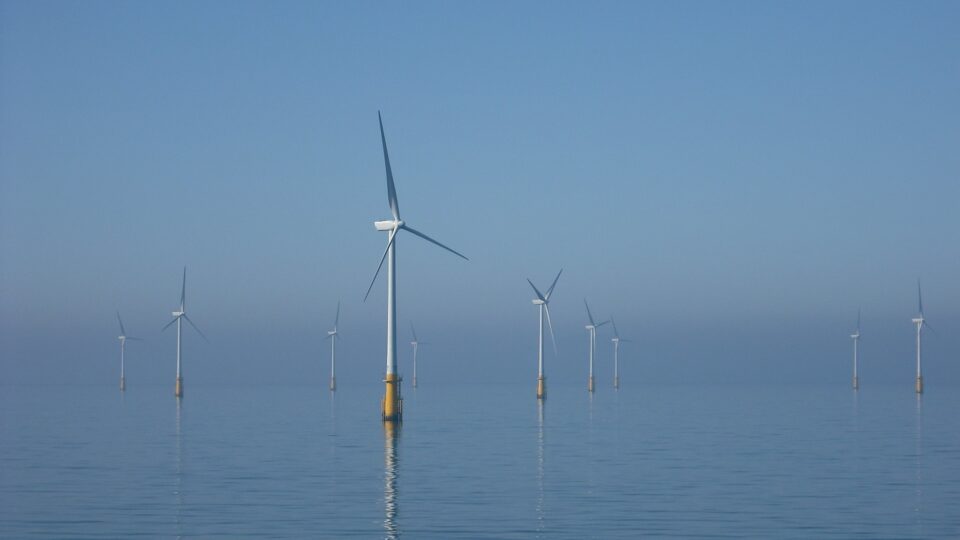
Coal was the driving force of the British industrial revolution beginning in the 18th century.  Coal was used for manufacturing iron, heating buildings, driving locomotives, and more.  Annual coal production in the UK peaked in the year 1913 at 316 million tons.  Until the late 1960s, coal was the main source of energy produced in the UK.

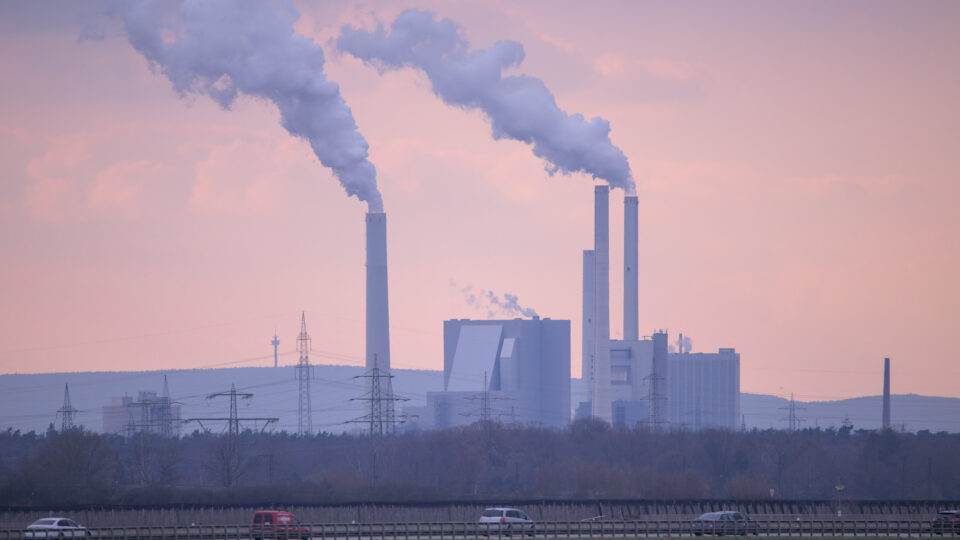
Recently, Britain announced that it plans to phase out coal power entirely by October 2024, one year earlier than its previous target date.  This is on the heels of a dramatic decline in coal usage over the past decade.  In 2012, coal accounted for 40% of the UK’s power generation.  By 2020, that number was 1.8%.

In both Europe and the United States, coal power is generally significantly more expensive than renewable power from the sun and wind.  As a result, market forces have driven the demise of coal power in those places.

The situation is different across much of Asia where coal power remains cost competitive.  Five Asian countries – China, India, Indonesia, Japan, and Vietnam – still have plans to build more than 600 new coal-fired power plants, which is bad news for the environment.  In 2020, China produced more than half of the world’s coal power, which reflects both the growth of coal in Asia and its decline in the U.S. and Europe.

Despite all this, experts predict that it will be more expensive to run almost all coal plants globally than to build new renewable energy projects by the year 2026.  Sooner or later, coal power will no longer make its unfortunate contributions to the world.

**********

Web Links

UK Aims to Dump Coal Early, While Asia Stays the Course

Photo, posted March 8, 2021, courtesy of Stanze via Flickr.

Earth Wise is a production of WAMC Northeast Public Radio.

Is Peak Oil Here? | Earth Wise

August 17, 2021 By EarthWise Leave a Comment

Has peak oil already come and gone?

For many years there has been talk of “peak oil”, the point at which rising world oil consumption would peak and then start declining.  Some analysts have been predicting that this could happen by the 2030s.   But the coronavirus pandemic drove a 9% slump in oil demand in 2020 that some economists are saying might never be entirely reversed.

There are three major forces driving down the world’s appetite for oil:  decarbonization of economies to meet the goals of the Paris climate agreement, declining demand for oil as renewable energy sources and electric vehicles are increasingly adopted, and detoxification as cities act to curb particulates and emissions from burning petroleum.

The largest single factor is electric vehicles.  Automobiles currently consume almost half of the world’s oil.  As of the end of 2020, there were an estimated 10 million electric cars as well as more than 600,000 electric buses and trucks.  This is still less than 1% of all vehicles, but 5% of all new cars being bought are now electric and the number is growing rapidly.  Experts estimate that nearly a quarter of global car sales will be electric vehicles by 2025 and many car manufacturers are promising to sell only electric cars within the next 10 years.

The decline in oil demand is pretty much inevitable at this point.  The main question is how quickly it will happen.  Road transport makes up 48% of global oil demand, petrochemicals account for 14%, aviation 7%, and shipping 6%.  Ultimately all these things are likely to diminish over time. 

Only time will tell, but the long-awaited arrival of peak oil may already have happened.

**********

Web Links

Amid Troubles for Fossil Fuels, Has the Era of ‘Peak Oil’ Arrived?

Photo, posted April 14, 2019, courtesy of Tony Webster via Flickr.

Earth Wise is a production of WAMC Northeast Public Radio.
  • « Go to Previous Page
  • Page 1
  • Interim pages omitted …
  • Page 18
  • Page 19
  • Page 20
  • Page 21
  • Page 22
  • Interim pages omitted …
  • Page 36
  • Go to Next Page »

Primary Sidebar

Recent Episodes

  • An uninsurable future
  • Clean energy and jobs
  • Insect declines in remote regions
  • Fossil fuel producing nations ignoring climate goals
  • Trouble for clownfishes

WAMC Northeast Public Radio

WAMC/Northeast Public Radio is a regional public radio network serving parts of seven northeastern states (more...)

Copyright © 2026 ·