• Skip to primary navigation
  • Skip to main content
  • Skip to primary sidebar

Earth Wise

A look at our changing environment.

  • Home
  • About Earth Wise
  • Where to Listen
  • All Articles
  • Show Search
Hide Search
You are here: Home / Archives for commercial

commercial

Fishers Helping To Clean The Oceans

August 2, 2019 By EarthWise Leave a Comment

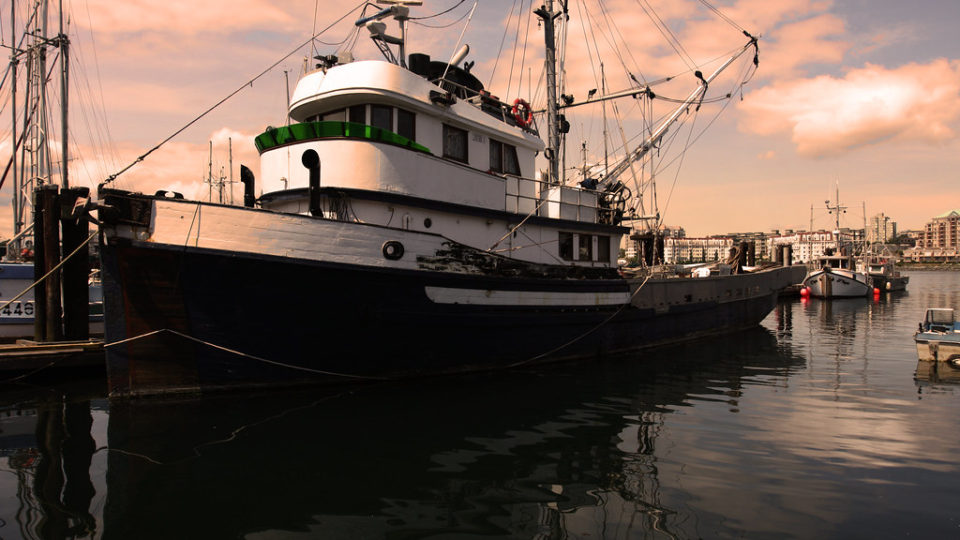
Marine litter – particularly plastics – is a global, persistent, and increasing threat to the oceans.  Much of it comes from discarded materials on shore that makes their way to the sea but waste from the fishing industry is a also a major contributor to the problem. 

Commercial fishers are acutely aware of the potential for marine litter to damage and even destroy their livelihoods and are starting to try to be part of the solution instead of just part of the problem.

An initiative called Fishing for Litter, which has been operating around the British coastline since 2006, is an example.

With hubs in Scotland and South West of England, FFL aims to reduce the amount of marine litter in the sea by physically removing it while also highlighting the importance of good waste management in the fishing fleet.  Fishers have to assume responsibility for their own waste and dispose of it in a responsible manner.  They also have a unique ability to access remote and hard to reach marine litter caused by others.

A survey of 120 commercial fishers revealed that they often found marine litter in their hauls and that keeping the sea and coasts clean was important to them. 

The responsibility for reducing marine litter does not belong to any single industry or organization.  It requires a collective global change of behavior.  The problem directly affects fishers, so they are especially motivated to do something about it.   They can make an important contribution to an issue that ultimately affects us all.  Groups like Fishing for Litter are providing a model for behavior that we can only hope that others around the world can emulate.

**********

Web Links

Fishers keen to help address the problem of marine litter

Photo, posted July 9, 2009, courtesy of Rennett Stowe via Flickr.

Earth Wise is a production of WAMC Northeast Public Radio.
Capital Region Community Solar

July 19, 2019 By EarthWise Leave a Comment

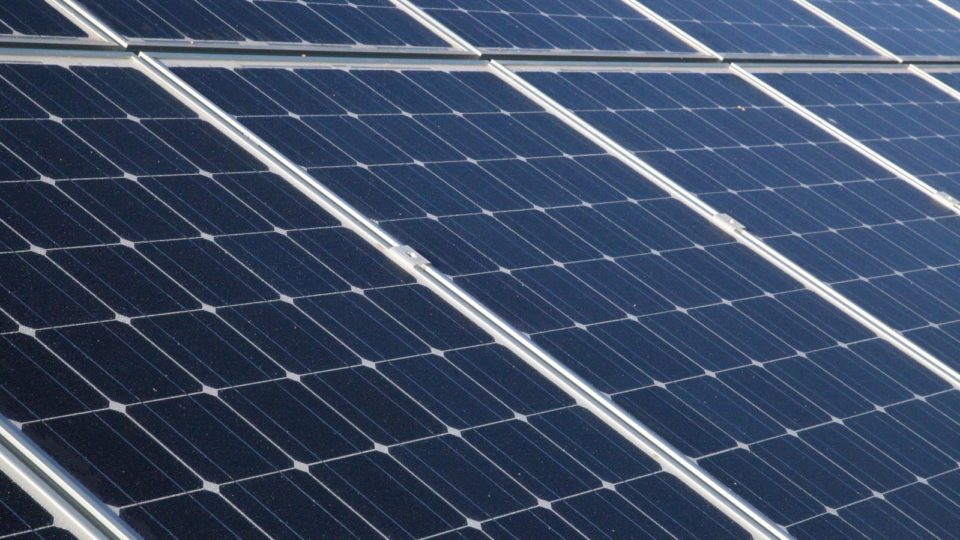
New York’s Capital Region is getting a major new community solar farm.  A community solar farm is a solar power installation whose output is shared by multiple community subscribers who receive credit on their electricity bills for their share of the power produced.  The primary purpose of community solar is to allow members of a community to have the benefits of solar power even if they cannot or prefer not to install solar panels on their own property.

US Light Energy has broken ground on the Sugar Hill Solar Farm, to be located on 40 acres of land on the Sugar-Hill/Sugar-View Farm in Clifton Park.  The 7-megawatt, ground-mounted solar project will include nearly 20,000 solar modules.  When fully operational later this year, the facility is expected to produce more than 8.6 million kilowatt-hours of energy a year.

The farm will be part of New York state’s Community Solar Program, and the electricity it generates can be supplied to customers anywhere in National Grid’s existing distribution system.  Residential and commercial properties in Clifton Park will have 30 days to subscribe before the solar energy generated by the farm is opened to the general public.  Subscribers of community solar farms typically save 10% on their electricity bills.

There are already community solar programs in operation in several Capital Region communities, but this is the first one in the Clifton Park Area.  Apart from providing savings on utility bills, community solar allows consumers to support clean, locally generated power with little or no upfront costs.  Not everyone is in a position to put solar panels on their roof, but community solar is increasingly an option for New York residents.

**********

Web Links

Construction begins on 7-MW community solar farm in New York

Photo, posted March 19, 2012, courtesy of Kate Ausburn via Flickr.

Earth Wise is a production of WAMC Northeast Public Radio.

Hybrid-Electric Aircraft

May 20, 2019 By EarthWise Leave a Comment

The commercial aviation industry is a major source of carbon dioxide emissions and, as other industries try to move towards decarbonization, its share is getting larger.  But reducing emissions from aircraft is challenging because powering planes without burning fossil fuel is hard to do.

The biggest problem is that powering aircraft with electric motors instead of fossil fuel motors requires so much energy that the batteries needed to supply it become impractically heavy.  While research goes on to develop lighter-weight batteries, an interim concept may pay dividends.

Just as hybrid cars represent a stepping stone towards full electrification, hybrid-electric aircraft may be a way to obtain substantial reductions in aircraft emissions.  The idea is to use battery-powered electric motors to power planes, but to greatly reduce the capacity requirements of the batteries by having an on-board fossil-fuel generator to charge the batteries and supply additional needed power.

A study by the University of Illinois looked at the potential emissions reductions for hybrid-electric aircraft taking into account the emissions associated with generating the electricity that charges the batteries in the plane.  The requirements in the study were that the plane needs to be able to carry the same number of passengers and travel the same distance as current aircraft. 

The results were that a drivetrain that gets 50% of its power from battery charge reduced emissions by about 50% over the full lifecycle of the plane.

As batteries get lighter and the electric grid gets greener, the possibility of making major reductions in aircraft carbon emissions looks increasingly realistic.  But there is a long way to go.

**********

Web Links

Study Examines Commercial Hybrid-Electric Aircraft, Reduced Carbon Emissions

Photo, posted September 26, 2014, courtesy of Jeff Turner via Flickr.

Earth Wise is a production of WAMC Northeast Public Radio.
Utility-Scale Solar On The Rise

May 8, 2019 By EarthWise Leave a Comment

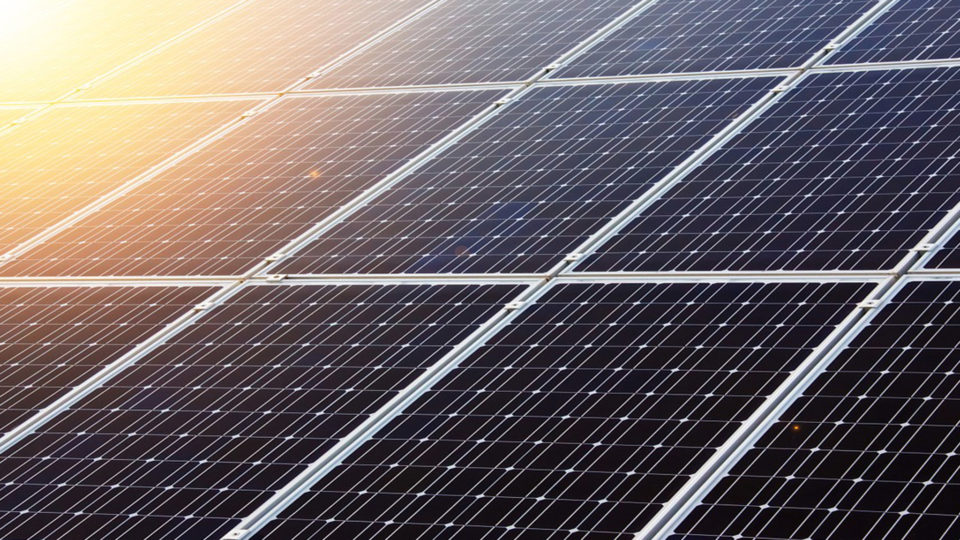
According to research from Goldman Sachs, utility-scale solar power capacity is expected to grow by double digits globally over the next two years.  The growth will be driven by expanding use of the technology in the United States, Europe, the Middle East, and China.

Solar power is the world’s fastest growing source of electricity generation and is slowly taking market share from fossil fuels like coal and natural gas.  The transition is being driven by a combination of continuously lower prices for solar power and the impact of policies aimed at reducing emissions.

Utility-scale solar is defined as installations designed solely to feed electricity into the grid, in contrast to smaller-scale residential or commercial building units.  There are now solar farms larger than half a gigawatt in generating capacity.  According to the Goldman report, global utility-scale solar installations will reach 108 gigawatts in 2019, up 12% over the previous year, and will then grow another 10% to 119 gigawatts in 2020.

When residential and other smaller installations are included, most analysts expect global solar power capacity to soon hit 600 gigawatts.  To put this in perspective, the global capacity only reached 100 gigawatts in 2012 and was actually less than 10 gigawatts in 2007.

Even more dramatic than the growth of solar installations is the reduction in solar cost, and the two are obviously closely related.  Solar panel costs have dropped from around $70 per watt of electricity generated in 1980 to 36 cents per watt currently in the United States.  When favorable policies both from governments and related to corporate sustainability targets are added to the mix, the booming growth in solar power is easy to understand.

**********

Web Links

Large-scale solar power set for double-digit growth: Goldman Sachs

Photo, posted March 7, 2019, courtesy of Hedgerow Inc via Flickr.

Earth Wise is a production of WAMC Northeast Public Radio.
Fish And Ships

April 25, 2019 By EarthWise Leave a Comment

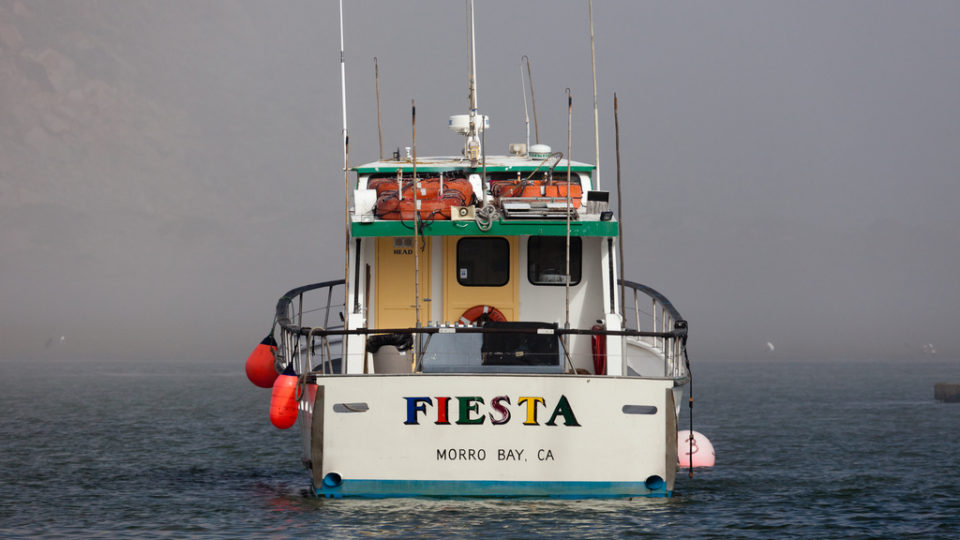
Solutions to overfishing of certain tuna and shark populations have been hindered by some significant unknowns:  where the fishing is happening, and where the fish are.  But researchers from Stanford University have recently shed some light on this mystery. 

According to a paper recently published in the journal Science Advances, the researchers have developed a map of shark, tuna, and ship movements that could help ocean managers identify regions of the sea where vulnerable species may be at risk. 

The researchers’ work builds on a 2018 study in which four years of satellite vessel movement data was used to develop a machine learning algorithm that mapped the footprint of 70,000 different fishing vessels around the world.  In their paper, the researchers zeroed in on the activities of 900 vessels from 12 countries in the northeast Pacific Ocean to figure out to what degree fishing fleets, sharks, and tunas overlapped. 

The researchers combined the vessel data with the ocean habitat preferences of sharks and tunas obtained from a decade-long tracking program called Tagging of Pacific Predators (or TOPP).  According to the IUCN, most of the 876 individuals tagged in TOPP belong to species that are either threatened or near-threatened.

By synthesizing this data, researchers were able to map where sharks and tunas would have the highest overlap with commercial fishing vessels.  Increasing the transparency of where fish meets fleets will allow ocean managers to determine where international protections may be needed. 

The United Nations is currently developing the world’s first legally binding treaty to protect international waters.  The Stanford University researchers hope their findings can help with this treaty’s formulation. 

**********

Web Links

Tunas, sharks and ships at sea

Photo, posted June 20, 2011, courtesy of Mike Baird via Flickr.

Earth Wise is a production of WAMC Northeast Public Radio.

Sustainable Plastics

January 28, 2019 By EarthWise Leave a Comment

According to the United Nations, plastic accounts for up to 90% of all the pollutants in the ocean. Conventional plastics take hundreds of years to decay, so all the plastic that gets into the oceans piles up and endangers marine life and pollutes the environment. Unfortunately, there are few comparable, environmentally friendly alternatives.  

An often-proposed solution is bioplastics, which are not made from petroleum and degrade quickly.  The downside of bioplastics is that growing the plants or bacteria used to make the plastic requires fertile soil and fresh water, which are scarce commodities in many places.

One such place is Israel.  So, researchers there at Tel Aviv University have developed a process to make a bioplastic polymer that doesn’t require land or fresh water.  The new polymer is derived from microorganisms that feed on seaweed.  It is biodegradable, produces zero toxic waste and recycles into organic waste.

The polymer is called polyhydroxyalkanoate, or PHA for short.  The raw material is multicellular seaweed, cultivated in the ocean.  These algae are eaten by single-celled microorganisms, which also grow in salty seawater and produce a polymer that can be used to make bioplastic.  PHA is already produced in commercial quantities, but it is currently made from plants that require agricultural land and fresh water.  The new process would enable countries with limited fresh water, such as Israel, China and India, to switch from petroleum-based plastics to biodegradable plastics.

Plastics from fossil sources are one of the world’s biggest pollution problems.  The new study shows that it is possible to produce bioplastic completely based on marine resources in an environmentally-friendly process. 

**********

Web Links

Sustainable ‘plastics’ are on the horizon

Photo, posted March 14, 2015, courtesy of Flickr.

Earth Wise is a production of WAMC Northeast Public Radio.
Japan And Whaling

January 10, 2019 By EarthWise Leave a Comment

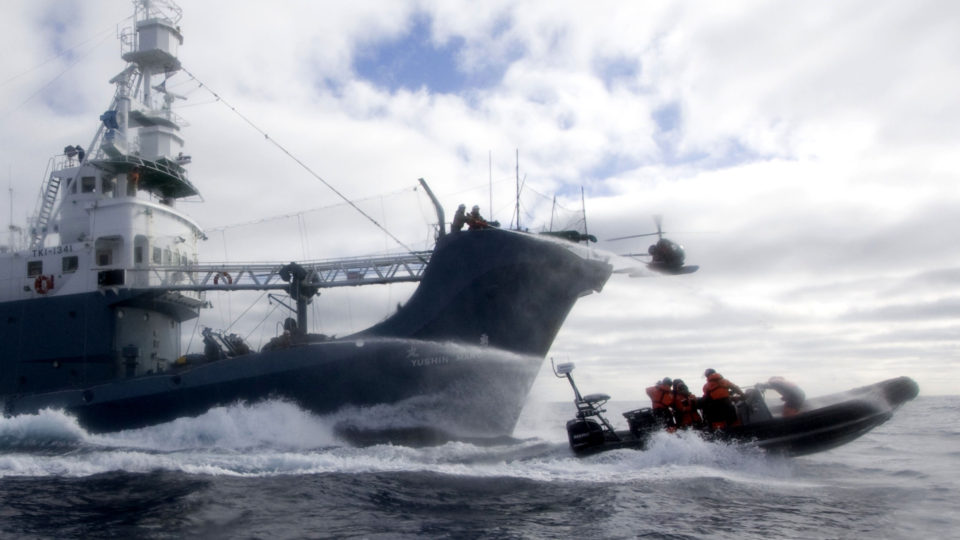
The commercial hunting of whales nearly drove the giant mammals to extinction.  By the 1960s, as hunting technologies improved and ships began to resemble floating factories, it became clear that whaling could not continue unchecked. 

But despite all this, commercial whaling was never actually banned.  Instead, in 1986, members of the International Whaling Committee (IWC) agreed to a whaling moratorium in order to allow whale stocks to recover.  Pro-whaling nations like Japan, Iceland, and Norway expected the moratorium to be temporary until the whales stocks recovered, and a consensus on catch quotas could be established.  But the temporary moratorium became a quasi-permanent ban, much to the delight of conservationists and to the dismay of whaling nations. 

As a result, Japan recently announced it is leaving the international agreement and plans to resume commercial whaling.  The agreement though never really stopped Japanese whaling in the first place, because it allowed the country to kill whales for scientific research.  Japan has had an annual Antarctic catch quota of 333 minke whales, producing notoriously little in terms of whale science while producing  lots of whale meat.  As part of its withdrawal from the IWC, Japan will cease its Antarctic hunts and limit whalers to its own waters.  Commercial Japanese whaling will resume in July. 

Once popular in Japan, whale meat consumption has plummeted, falling 98% between 1962 and 2016. The industry employs fewer than 1,000 people and is dependent on government subsidies. 

Many governments and conservationist groups condemned Japan’s withdrawal, declaring the move out of step with the international community.  They argue that, rather than hunting whales, urgent action is needed to conserve marine ecosystems. 

**********

Web Links

Japan to Resume Commercial Whaling, Defying International Ban

Photo, posted February 5, 2009, courtesy of Flickr.

Earth Wise is a production of WAMC Northeast Public Radio.

Sustainable Whaling?

October 10, 2018 By EarthWise Leave a Comment

https://earthwiseradio.org/wp-content/uploads/2018/10/EW-10-10-18-Sustainable-Whaling.mp3

The hunting of whales in the 19th and 20th Century nearly drove the giant mammals to extinction. By the 1960s, improved hunting methods and factory ships made it clear that whaling could not continue unchecked. 

[Read more…] about Sustainable Whaling?

Saving Wheat

July 3, 2018 By EarthWise Leave a Comment

https://earthwiseradio.org/wp-content/uploads/2018/07/EW-07-03-18-Saving-Wheat.mp3

Rising temperatures, drought, pests and diseases are moving north into the U.S. heartland and are increasingly posing a threat to the wheat crop.  An insect called the Hessian fly is reducing crop yields by 10% a year in the Midwest.  Average temperatures in the Midwest have risen by 2 degrees since 2000, and periods of time between rainfalls is lengthening.  Conditions in some areas of the Midwest are getting to be more like those in the Middle East.

[Read more…] about Saving Wheat

Accidentally Saving The Bees

March 7, 2018 By EarthWise Leave a Comment

https://earthwiseradio.org/wp-content/uploads/2018/02/EW-03-07-18-Accidentally-Saving-the-Bees.mp3

There is no shortage of dangers to honey bees, but a parasitic mite known as Verroa destructor is considered to be the greatest threat because it transmits virus diseases which lead to colony death.

[Read more…] about Accidentally Saving The Bees

Trends Influencing Our Cities

February 23, 2018 By EarthWise Leave a Comment

https://earthwiseradio.org/wp-content/uploads/2018/02/EW-02-23-18-Trends-Influencing-Our-Cities.mp3

The Environmental Protection Agency removed its information hub about climate change last year.  In response, 17 cities reposted the information on their own city government sites.  This is indicative of the fact that cities are increasingly taking on a leadership role in environmental, social and economic change.

[Read more…] about Trends Influencing Our Cities

Disappearing Kelp Forests

January 9, 2018 By EarthWise Leave a Comment

https://earthwiseradio.org/wp-content/uploads/2018/01/EW-01-09-18-Disappearing-Kelp-Forests.mp3

In recent decades, ocean temperatures in many places have warmed by nearly 3 degrees Fahrenheit.  An effect of this warmer water is the decimation of what were once luxuriant giant kelp forests in eastern Australia and Tasmania.  There used to be thick canopies covering much of the region’s coastal sea surface, but they have wilted in the intolerably warm and nutrient-poor water.

[Read more…] about Disappearing Kelp Forests

An All-Electric Plane

November 14, 2017 By EarthWise Leave a Comment

https://earthwiseradio.org/wp-content/uploads/2017/11/EW-11-14-17-An-All-Electric-Plane.mp3

The British discount airline EasyJet recently announced a partnership with American company Wright Electric to develop an all-electric commercial airplane that they said could be flying within 10 years.  The goal of the partnership is to develop aircraft with a maximum range of 335 miles, which is long enough for many of the European routes that EasyJet flies from its hub in England.

[Read more…] about An All-Electric Plane

Looking For “Super Coral”

November 2, 2017 By EarthWise Leave a Comment

https://earthwiseradio.org/wp-content/uploads/2017/11/EW-11-02-17-Looking-for-Super-Coral.mp3

Coral reefs are essential for much of marine life and are the basis of many commercial fisheries.  In places from Florida to Australia, they are major tourist attractions.  Estimates are that the economic impact of coral reefs is more than $375 billion a year.  And apart from all of that, they are some of the most beautiful places on the planet.

[Read more…] about Looking For “Super Coral”

Saving Chocolate

October 26, 2017 By EarthWise Leave a Comment

https://earthwiseradio.org/wp-content/uploads/2017/10/EW-10-26-17-Saving-Chocolate.mp3

On previous occasions, we have talked about the problems faced by the global banana industry, which is based almost entirely on a single cultivar, the Cavendish banana, which makes the industry extremely vulnerable to a single disease or blight that may arise.

[Read more…] about Saving Chocolate

Offshore Wind Progress

July 14, 2017 By EarthWise

https://earthwiseradio.org/wp-content/uploads/2017/07/EW-07-14-17-Offshore-Wind-Progress.mp3

Last December, the first commercial offshore wind farm in the United States started operation off the coast of Rhode Island.   The Fisherman’s Energy Atlantic City Windfarm off the coast of New Jersey is under construction.  With the lengthy logjam finally broken, there is increasing activity in the emerging U.S. offshore wind sector.

[Read more…] about Offshore Wind Progress

An Aluminum Battery

June 28, 2017 By EarthWise

https://earthwiseradio.org/wp-content/uploads/2017/06/EW-06-28-17-An-Aluminum-Battery.mp3

The battery industry is currently dominated by lithium-ion batteries.  We have them in our phones and computers. They power electric cars.  And they are increasingly being used to store energy generated by solar panels and other renewable energy sources.

[Read more…] about An Aluminum Battery

Delivery By Fuel Cell

June 19, 2017 By EarthWise

https://earthwiseradio.org/wp-content/uploads/2017/06/EW-06-19-17-Delivery-by-Fuel-Cell.mp3

UPS recently announced a demonstration project that will put a prototype electric truck powered by a hydrogen fuel cell through the delivery company’s challenging paces.   Fuel cells have been used in some commercial vehicles to power auxiliary systems, but this is the first time that they will be used to propel a vehicle.

[Read more…] about Delivery By Fuel Cell

Spray-On Solar Cells

May 15, 2017 By EarthWise

https://earthwiseradio.org/wp-content/uploads/2017/04/EW-05-15-17-Spray-On-Solar-Cells.mp3

One of the most exciting possibilities for future solar energy technology is that of solar cells that can be sprayed or printed on to surfaces like the windows of skyscrapers, the roofs of sports utility vehicles, or the walls of houses.  And the expectation is that such technology would be far cheaper than today’s silicon-based solar panels.

[Read more…] about Spray-On Solar Cells

DNA Analysis of River Water

April 17, 2017 By EarthWise

https://earthwiseradio.org/wp-content/uploads/2017/04/EW-04-17-17-DNA-Analysis-of-River-Water.mp3

DNA analysis has become commonplace and inexpensive.  Millions of people have their DNA tested to learn about their origins and family connections.  And the technology has spread to biological research in the form of Environmental DNA or eDNA, which is such a powerful tool that it is transforming the field of wildlife biology.

[Read more…] about DNA Analysis of River Water

  • « Go to Previous Page
  • Page 1
  • Page 2
  • Page 3
  • Page 4
  • Go to Next Page »

Primary Sidebar

Recent Episodes

  • An uninsurable future
  • Clean energy and jobs
  • Insect declines in remote regions
  • Fossil fuel producing nations ignoring climate goals
  • Trouble for clownfishes

WAMC Northeast Public Radio

WAMC/Northeast Public Radio is a regional public radio network serving parts of seven northeastern states (more...)

Copyright © 2026 ·