• Skip to primary navigation
  • Skip to main content
  • Skip to primary sidebar

Earth Wise

A look at our changing environment.

  • Home
  • About Earth Wise
  • Where to Listen
  • All Articles
  • Show Search
Hide Search
You are here: Home / Archives for cities

cities

Fighting Climate Change With Trees

August 20, 2019 By EarthWise Leave a Comment

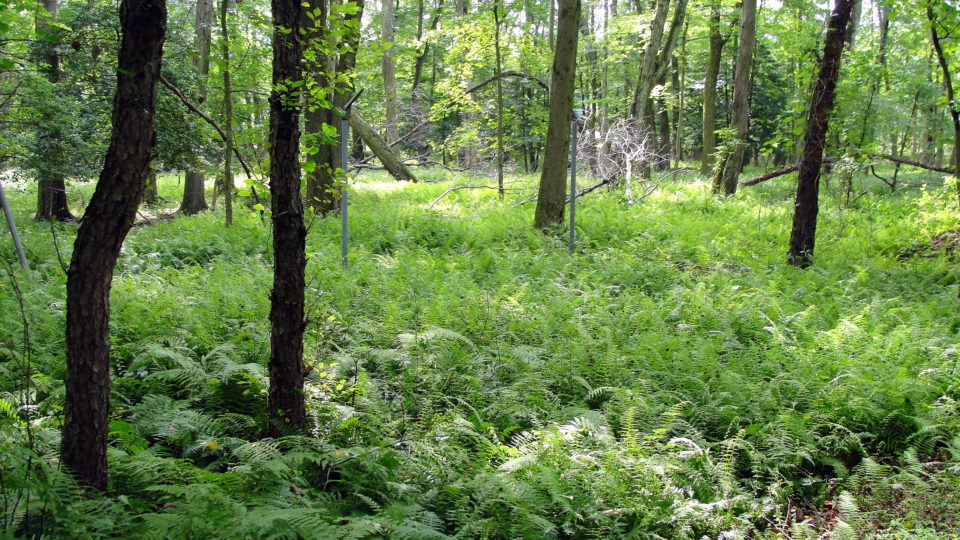
We cut down forests all around the world for a myriad of reasons, including livestock grazing, agricultural production, timber, and urban development.  But what if we stopped cutting down forests for these things and additionally grew new forests on vacant lots and any other available parcels of land on earth?  What impact could this have on our survival? 

For the first time, scientists have quantified what impact this plan could have.  According to a new study by researchers at ETH Zurich – a university that specializes in science, technology, and engineering – the planet could support nearly 2.5 billion additional acres of forest without shrinking current cities and farms.  When all those acres of forest mature, the trees could store an extra 200 gigatons of carbon.  This reforestation could stave off the most devastating impacts of global climate change. 

Russia could restore the most acres of forest – 373 million acres to be precise – followed by the United States with 255 million acres and Canada with 193 million acres.  Australia, Brazil, and China also have large areas well-suited for forest restoration. 

The average global temperature has risen by 1.8 degrees Fahrenheit since the start of the industrial age with its surge in greenhouse gas emissions.  Temperatures are projected to rise even more in the coming years as the planet continues to warm.   

Trees absorb CO2 from the atmosphere and store it in their roots and branches.  The absorbed carbon becomes part of the soil when trees die and decompose, and it can linger there for millennia depending on things like temperature and soil management.  Trees are critical in the fight against climate change. 

**********

Web Links

How trees could save the climate

Photo, posted June 18, 2011, courtesy of K.W. Barrett via Flickr.

Earth Wise is a production of WAMC Northeast Public Radio.
Dangerous Cities For Migrating Birds

May 14, 2019 By EarthWise Leave a Comment

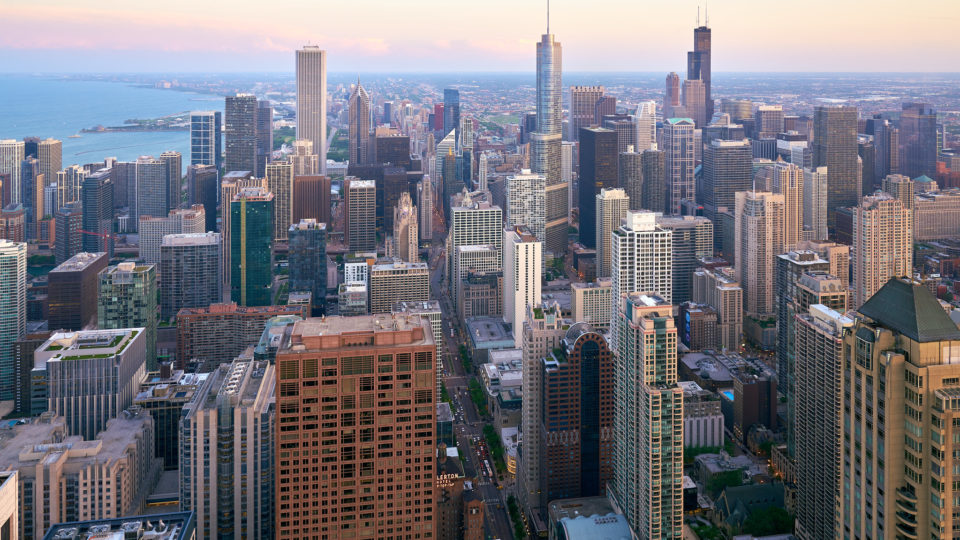
Billions of birds migrate north in the spring and south in the fall.  The majority of them fly at night. But as they pass over large cities, the birds can become disoriented by bright artificial light – so-called light pollution, causing them to crash into buildings or windows.

Researchers estimate that 600 million birds die from building collisions in the United States every year.  Now, a new paper from researchers at Cornell University reveals which metropolitan areas are most dangerous for birds and why.

The researchers ranked cities where, as a result of geography and exposure to light pollution, birds are at the greatest risk of becoming attracted to and disoriented by lights and crashing into buildings. They combined light pollution levels with bird density data in order to make their calculations.  Their paper was recently published in the journal Frontiers in Ecology and the Environment.    

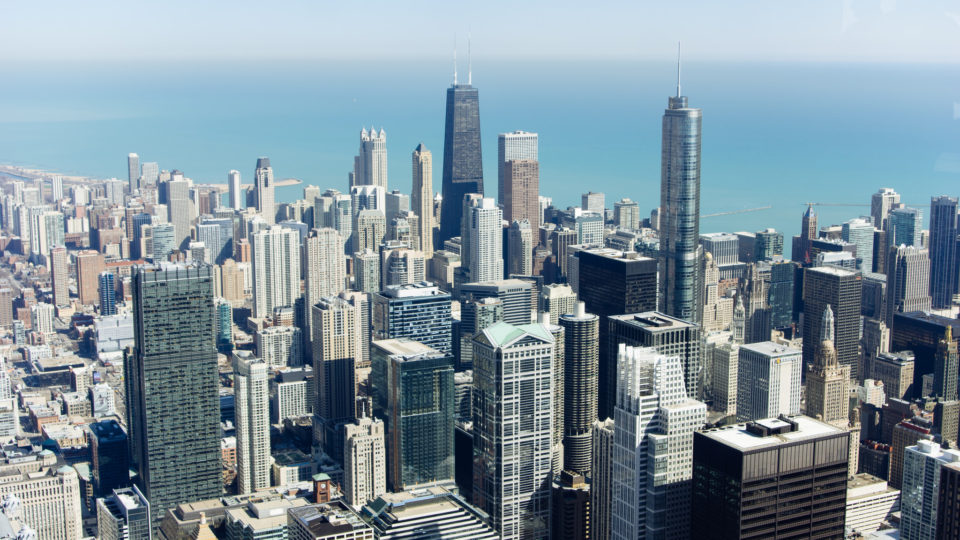
Chicago, Houston, and Dallas finished as the three most dangerous cities for migrating birds.  While migration routes vary depending on the season, these three cities still topped all others during both the spring and fall migrations due to their size and geographic positioning in the heart of North America’s most trafficked aerial corridors.  

Audubon’s Lights Out program is one of several national efforts encouraging cities to reduce light pollution, particularly on heavy migration nights, in order to reduce bird mortality. 

But homeowners need to do their part as well since an estimated quarter-million birds die from collisions with residential houses every year.  The suggestion to cities and homeowners alike is the same:  If you don’t need the lights, turn them off. 

**********

Web Links

Chicago tops list of most dangerous cities for migrating birds

Photo, posted May 18, 2017, courtesy of Pedro Szekely via Flickr.

Earth Wise is a production of WAMC Northeast Public Radio.
China And Plastic Waste

April 26, 2019 By EarthWise Leave a Comment

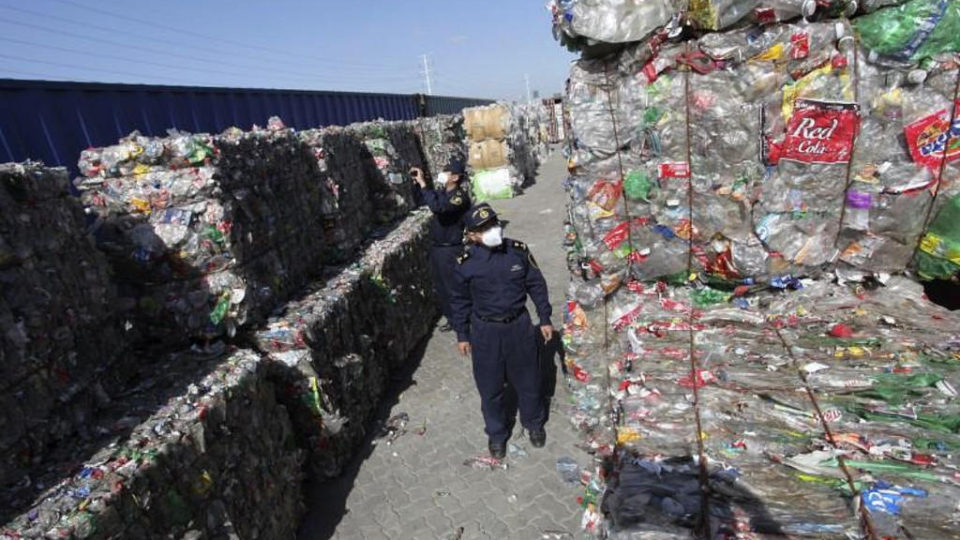
In January 2018, China enacted its “National Sword” policy which banned the import of most plastics and other materials headed for that country’s recycling processors.  Those processors had handled nearly half of the world’s recyclable waste for the past quarter century.  China took this step because the deluge of soiled and contaminated materials was overwhelming its processing facilities and creating yet another environmental problem for the country, this time not even of its own making.

Prior to China’s ban, 95% of the plastics collected for recycling in the European Union and 70% in the U.S. were sold and shipped to Chinese processors.  A combination of favorable rates for shipping in cargo vessels that carried Chinese goods abroad and low Chinese labor rates made it a very profitable enterprise.

Before China’s ban, only 9% of globally discarded plastics were being recycled and 12% were burned.  The rest ended up in landfills or simply dumped into the environment.  Over the coming decade, as many as 11 million tons of plastic will have to find a new place to be processed or otherwise disposed of.  There is already evidence that plastic waste is accumulating in countries that are dependent on exporting.  In many places, including a number of American cities, there are curtailed collections and new restrictions on what kinds of plastics are accepted.

Some experts are hopeful that China’s ban might actually have an upside if it leads to better solutions for managing the world’s waste.  North America and Europe need to expand processing capabilities and manufacturers need to make their products more easily recyclable.  Mostly, the Chinese ban should be a wake-up call to the world on the need to greatly reduce single-use plastics.

**********

Web Links

Piling Up: How China’s Ban on Importing Waste Has Stalled Global Recycling

Photo, posted August 8, 2017, courtesy of Sino-German Urbanisation Partnership via Flickr.

Earth Wise is a production of WAMC Northeast Public Radio.

Trees And The Future Of Cities

April 16, 2019 By EarthWise Leave a Comment

The shade of a single tree is a welcome source of relief on a hot summer day.  But even a relatively small patch of woods can have a profound cooling effect.  A new study at the University of Wisconsin-Madison looks at the role trees play in keeping towns and cities cool.

According to the study, the right amount of tree cover can lower daytime temperatures in the summer by as much as 10 degrees.  The effects are noticeable from neighborhood to neighborhood and even on a block-by-block basis.

Cities are well-known to be hot spots due to the urban heat islanding effect.  Using trees to keep temperatures more comfortable in cities can make a big difference for the people who live and work there.

The man-made structures of cities – roads, sidewalks, and buildings – absorb heat from the sun during the day and slowly release it at night.  Trees, on the other hand, not only shade those structures from the sun, but they also transpire -or release water in the air through their leaves – which helps to cool things down.

According to the study, to get maximum cooling benefits, tree canopies must exceed forty percent, meaning that city blocks need to be nearly halfway covered by tree branches and leaves.  To get the biggest bang for the buck, cities should start planting more trees in areas that are already near the forty percent threshold.  But

trees can’t just be in parks.  They need to be in places where people are active.

If we want the places where we live to be more comfortable and resilient in a warming world, we need to plant more trees.

**********

Web Links

Study suggests trees are crucial to the future of our cities

Photo, posted May 26, 2012, courtesy of Mislav Marohnic via Flickr.

Earth Wise is a production of WAMC Northeast Public Radio.
A Quiet Clean Energy Revolution

March 5, 2019 By EarthWise Leave a Comment

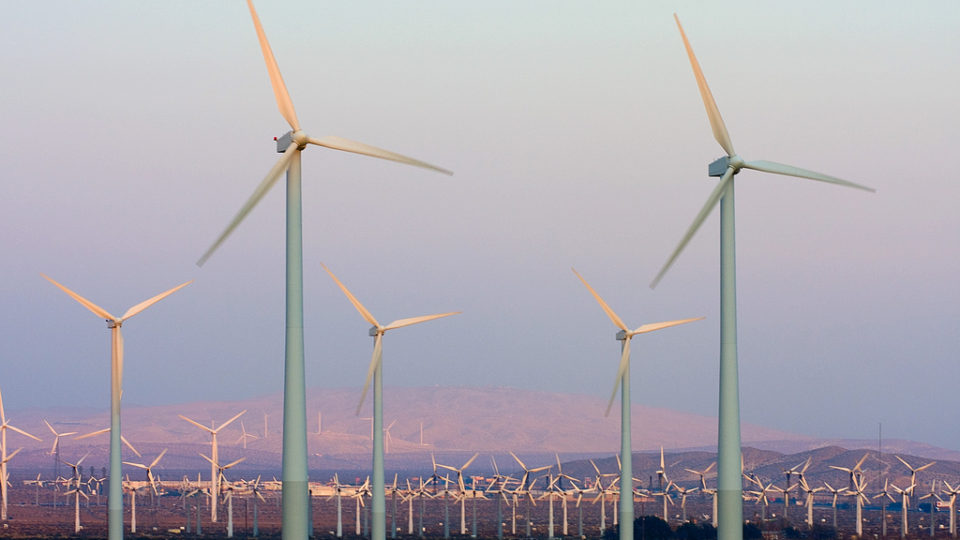
While the Trump administration seeks to prop up and promote use of fossil fuels, the country continues to move in the opposite direction.  Last year was actually a pretty positive year for clean energy in the U.S.

In terms of public opinion, 70% of Americans surveyed believe the country should produce 100% of its electricity from renewable energy sources and more than half of survey respondents think renewables are a good idea even if they raise energy bills.

Companies in the U.S. purchased a record 6.43 gigawatts of renewable power, enough to power 1.5 million homes.  The number of corporations entering into renewable energy deals doubled last year.

More than 300 U.S. cities, towns or counties have made commitments to climate action and, as of November, 99 cities have committed to 100% renewable energy, doubling the total from a year ago.

A number of gubernatorial candidates running on ambitious renewable energy platforms were elected in November including those in Illinois, Colorado, New Mexico, Maine and Nevada.

Utilities are responding to the growing demand for clean energy.  Consumers Energy in Michigan plans to cut carbon emissions by 80% and stop using coal.  Iowa-based MidAmerican Energy will become the first U.S. utility to source 100% of its electricity from renewable sources next year.  Xcel Energy, one of the biggest utilities in the country, has committed to be 80% carbon-free by 2030 and go completely carbon-free by 2050.

The fossil fuel industry with its supporters in high places is still kicking and screaming, but there is no doubt that the U.S. energy system is changing, and the quiet clean energy revolution will only pick up more steam in 2019.

**********

Web Links

The US Underwent a Quiet Clean Energy Revolution Last Year

Photo, posted August 15, 2009, courtesy of Ken via Flickr.

Earth Wise is a production of WAMC Northeast Public Radio.

Examining Sea Level Rise

January 17, 2019 By EarthWise Leave a Comment

It’s no secret that sea levels along the East Coast of the United States are rising.  But what’s less known is that the water isn’t rising at the same rate everywhere.  As the climate continues to change, some cities may remain dry while others struggle to keep water out. 

During the 20th century, sea levels rose about 18 inches near Cape Hatteras in North Carolina and along the Chesapeake Bay in Virginia.  During that same time period, New York City and Miami experienced a 12 inch sea level rise, while the waters near Portland, Maine only rose 6 inches.  According to a study recently published in the journal Nature, there’s an explanation for this. 

The variation is a result of a phenomenon called “post-glacial rebound.”  During the last ice age, huge sheets of ice once covered land areas in the Northern Hemisphere, including parts of the Northeast U.S.  The weight of the ice weighted down the land like a boulder on a trampoline.  At the same time, peripheral lands such as the U.S. mid-Atlantic coast rose up.  As the ice melted, the previously weighted-down regions rebounded while the peripheral lands began to sink.  While these ice sheets disappeared some 7,000 years ago, this see-sawing of post-glacial rebound continues to this day. 

Researchers combined data from GPS satellites, tide gauges, and fossils in sediment with complex geophysical models to produce this comprehensive view of sea level change since 1900.  While post-glacial rebound accounts for most of the sea level variation along the East Coast, researchers noted that when that factor is stripped away, “sea level trends increased steadily from Maine all the way down to Florida.”

**********

Web Links

Why is sea level rising faster in some places along the US East Coast than others?

Photo, posted August 24, 2014, courtesy of Bill Dickinson via Flickr.

Earth Wise is a production of WAMC Northeast Public Radio.
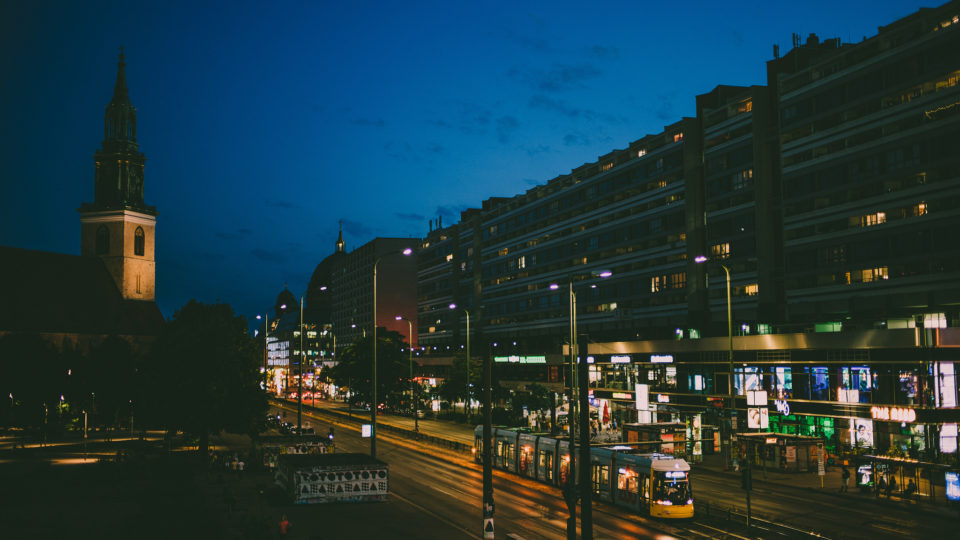
The Problem Of Urban Growth

January 2, 2019 By EarthWise Leave a Comment

https://earthwiseradio.org/wp-content/uploads/2018/12/EW-01-02-19-The-Problem-of-Urban-Growth.mp3

The rapid expansion of cities around the world has accelerated in recent decades.  If current trends continue, the equivalent of a city the size of London could be created every seven weeks by the year 2050, according to a study at Texas A&M University.

[Read more…] about The Problem Of Urban Growth

Cloudbursts And New York City

November 13, 2018 By EarthWise Leave a Comment

https://earthwiseradio.org/wp-content/uploads/2018/11/EW-11-13-18-Cloudbursts-and-New-York-City.mp3

Cloudbursts are intense rainstorms that drop enormous amounts of water over a short period of time.  Climate change is expected to make cloudbursts occur more frequently.  Cities around the world are looking for better ways to cope with weather phenomena like cloudbursts. 

[Read more…] about Cloudbursts And New York City

Rapid Response To Climate Change More Important Than Ever

October 17, 2018 By EarthWise Leave a Comment

https://earthwiseradio.org/wp-content/uploads/2018/10/EW-10-17-18-Rapid-Response-to-Climate-Change.mp3

The Intergovernmental Panel on Climate Change has issued a new report emphasizing the importance of taking rapid action to limit global warming to 1.5 degrees Celsius and examining the consequences of allowing temperatures to rise 2 degrees instead.

[Read more…] about Rapid Response To Climate Change More Important Than Ever

Cleaning Up Storm Water

October 4, 2018 By EarthWise Leave a Comment

https://earthwiseradio.org/wp-content/uploads/2018/09/EW-10-04-18-Cleaning-Up-Storm-Water.mp3

Storm water reclamation is an important activity for cities with limited water resources, such as those in Southern California.   Many places have small-scale reclamation efforts using rain gardens and bioswales.  Collecting storm water on a large scale faces a number of problems.

[Read more…] about Cleaning Up Storm Water

Making Cities Cooler

September 5, 2018 By EarthWise Leave a Comment

https://earthwiseradio.org/wp-content/uploads/2018/08/EW-09-05-18-Making-Cities-Cooler.mp3

Cities are particularly miserable during heatwaves.   With lots of concrete and asphalt surfaces, they soak up lots of heat and re-radiate it.  Lots of tall buildings block cooling breezes.  Factor in car exhaust and heat from air conditioners and it all adds up to the urban heat island effect.  Cities can be several degrees warmer during the day and as much as 20 degrees warmer at night.  All of this extra heat is not just a comfort issue, it is a serious health problem.

[Read more…] about Making Cities Cooler

Dirty Air In The National Parks

August 27, 2018 By EarthWise Leave a Comment

https://earthwiseradio.org/wp-content/uploads/2018/08/EW-08-27-18-Dirty-Air-in-National-Parks.mp3

Our national parks are supposed to be places that allow us to commune with nature.  They offer incredible vistas and amazing sights.  As a result, millions of Americans and visitors from around the world are drawn to these places – too many millions, in fact.

[Read more…] about Dirty Air In The National Parks

Traffic Air Pollution And Health

July 27, 2018 By EarthWise Leave a Comment

https://earthwiseradio.org/wp-content/uploads/2018/06/EW-07-27-18-Traffic-Air-Pollution-and-Health.mp3

There are frequent stories in the news about the terrible air pollution problems in major Chinese and Indian cities.  With pollutant levels far in excess of any recommended safety thresholds, the air in these places represents a health crisis.

[Read more…] about Traffic Air Pollution And Health

City Geometry And Urban Heat Islands

May 16, 2018 By EarthWise Leave a Comment

https://earthwiseradio.org/wp-content/uploads/2018/05/EW-05-16-18-City-Geometry-and-Heat.mp3

More than half of the world’s people now live in cities so understanding climate issues in cities is crucial.  One of the most important city climate effects which has a profound impact on both human health and energy consumption is the Urban Heat Island Effect.

[Read more…] about City Geometry And Urban Heat Islands

Cooling Cities With White Roofs

April 16, 2018 By EarthWise Leave a Comment

https://earthwiseradio.org/wp-content/uploads/2018/04/EW-04-16-18-Cooling-Cities-with-White-Roofs.mp3

The phenomenon of urban heat islands has been well known since the 19th century.  The materials from which city buildings and roads are made reflect much less solar radiation and absorb more of it than the vegetation they have replaced.  The absorbed energy is then radiated in the form of heat into the surrounding air making cities warmer.

[Read more…] about Cooling Cities With White Roofs

The Chinese War On Pollution

April 10, 2018 By EarthWise Leave a Comment

https://earthwiseradio.org/wp-content/uploads/2018/03/EW-04-10-18-The-Chinese-War-on-Pollution.mp3

For years, China has been struggling with some of the worst air pollution in the world.  According to the European Union, only 1% of the country’s half a billion city dwellers were considered safe because almost all of its major cities were covered with what was described as a toxic grey cloud.

[Read more…] about The Chinese War On Pollution

Renewable Powered Cities

March 29, 2018 By EarthWise Leave a Comment

https://earthwiseradio.org/wp-content/uploads/2018/03/EW-03-29-18-Renewable-Powered-Cities.mp3

Cities are responsible for 70% of the world’s energy-related CO2 emissions and it appears that they are taking responsibility for reducing them.  Over 7,000 mayors around the world have signed up to the Global Covenant of Mayors for Climate and Energy, thereby pledging to act on climate change.

[Read more…] about Renewable Powered Cities

Making Room For Wildlife

February 28, 2018 By EarthWise Leave a Comment

https://earthwiseradio.org/wp-content/uploads/2018/01/EW-02-28-18-Making-Room-for-Wildlife.mp3

Protecting biodiversity is a critical challenge facing humanity.  Global vertebrate populations – from elephants to amphibians – declined by 58% from 1970 to 2012 and losses are expected to reach 67% in the next two years.  Think about it:  at least two-thirds of all vertebrate animals on earth have vanished over the lifetime of anyone fifty years old or over.

[Read more…] about Making Room For Wildlife

Trends Influencing Our Cities

February 23, 2018 By EarthWise Leave a Comment

https://earthwiseradio.org/wp-content/uploads/2018/02/EW-02-23-18-Trends-Influencing-Our-Cities.mp3

The Environmental Protection Agency removed its information hub about climate change last year.  In response, 17 cities reposted the information on their own city government sites.  This is indicative of the fact that cities are increasingly taking on a leadership role in environmental, social and economic change.

[Read more…] about Trends Influencing Our Cities

Floating Cities

January 1, 2018 By EarthWise Leave a Comment

https://earthwiseradio.org/wp-content/uploads/2017/12/EW-01-01-18-Floating-Cities.mp3

A familiar theme in science fiction is the idea of floating cities – independent, self-sustaining nation-states at sea where start-up societies work to redesign society and government and don’t have to fight over who owns the land.  The concept even has a name:  seasteading.

[Read more…] about Floating Cities

  • « Go to Previous Page
  • Page 1
  • Page 2
  • Page 3
  • Page 4
  • Page 5
  • Go to Next Page »

Primary Sidebar

Recent Episodes

  • An uninsurable future
  • Clean energy and jobs
  • Insect declines in remote regions
  • Fossil fuel producing nations ignoring climate goals
  • Trouble for clownfishes

WAMC Northeast Public Radio

WAMC/Northeast Public Radio is a regional public radio network serving parts of seven northeastern states (more...)

Copyright © 2026 ·