• Skip to primary navigation
  • Skip to main content
  • Skip to primary sidebar

Earth Wise

A look at our changing environment.

  • Home
  • About Earth Wise
  • Where to Listen
  • All Articles
  • Show Search
Hide Search
You are here: Home / Archives for united nations

united nations

Fish And Ships

April 25, 2019 By EarthWise Leave a Comment

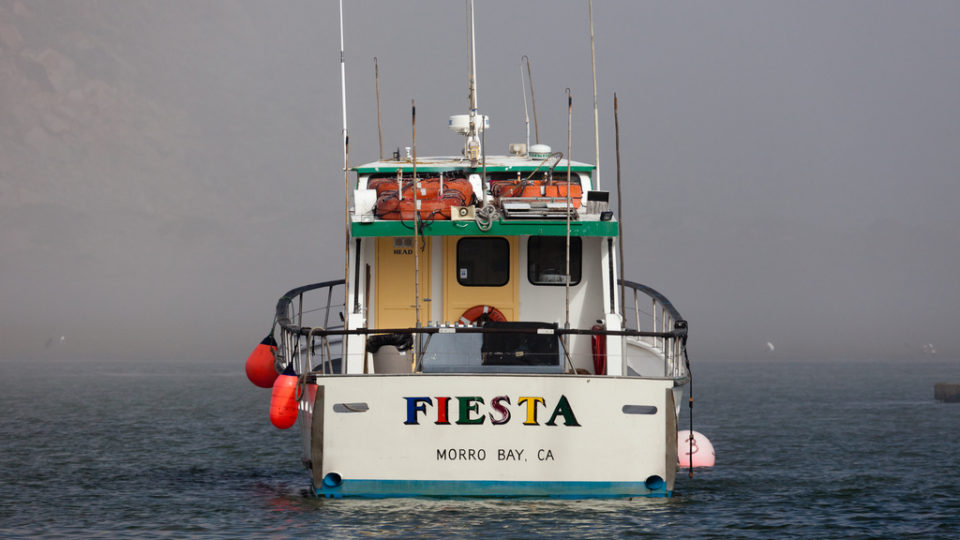
Solutions to overfishing of certain tuna and shark populations have been hindered by some significant unknowns:  where the fishing is happening, and where the fish are.  But researchers from Stanford University have recently shed some light on this mystery. 

According to a paper recently published in the journal Science Advances, the researchers have developed a map of shark, tuna, and ship movements that could help ocean managers identify regions of the sea where vulnerable species may be at risk. 

The researchers’ work builds on a 2018 study in which four years of satellite vessel movement data was used to develop a machine learning algorithm that mapped the footprint of 70,000 different fishing vessels around the world.  In their paper, the researchers zeroed in on the activities of 900 vessels from 12 countries in the northeast Pacific Ocean to figure out to what degree fishing fleets, sharks, and tunas overlapped. 

The researchers combined the vessel data with the ocean habitat preferences of sharks and tunas obtained from a decade-long tracking program called Tagging of Pacific Predators (or TOPP).  According to the IUCN, most of the 876 individuals tagged in TOPP belong to species that are either threatened or near-threatened.

By synthesizing this data, researchers were able to map where sharks and tunas would have the highest overlap with commercial fishing vessels.  Increasing the transparency of where fish meets fleets will allow ocean managers to determine where international protections may be needed. 

The United Nations is currently developing the world’s first legally binding treaty to protect international waters.  The Stanford University researchers hope their findings can help with this treaty’s formulation. 

**********

Web Links

Tunas, sharks and ships at sea

Photo, posted June 20, 2011, courtesy of Mike Baird via Flickr.

Earth Wise is a production of WAMC Northeast Public Radio.
Sand Mining And The Environment

April 2, 2019 By EarthWise Leave a Comment

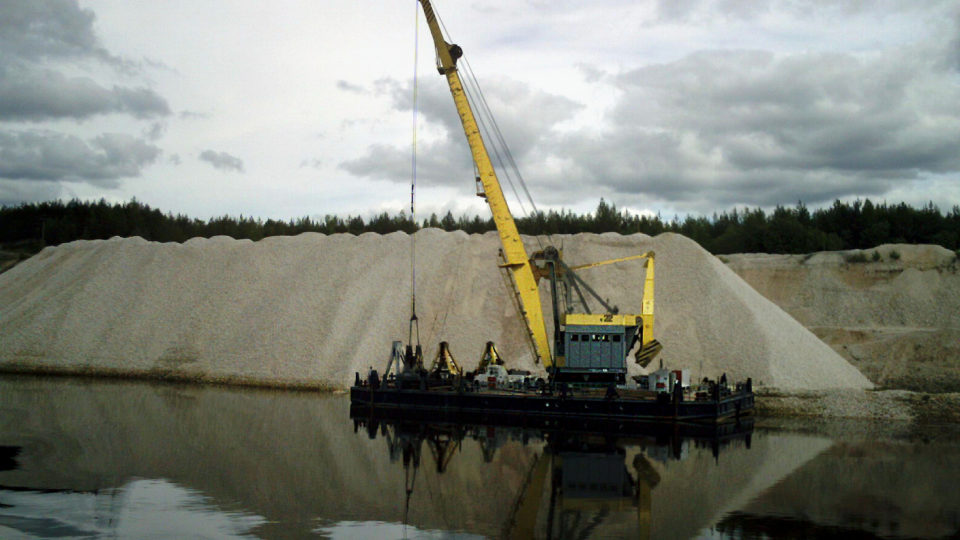
In discussions of the environment, we don’t hear much about sand mining.  But sand mining is the world’s largest mining endeavor, responsible for 85% of all mineral extraction.  Sand and gravel are mined on a huge scale around the world.  The UN estimates that the total exceeds 40 billion tons a year.  Most of this activity is unregulated and unmeasured, and much of it is corrupt and environmentally destructive.

Concrete is the predominant use for sand.  Every ton of cement requires six to seven tons of sand and gravel in order to make concrete.  But sand also makes up 90% of asphalt on roads and it is used for land reclamation in places like Singapore.  Sand is also widely used in industries such as glass manufacturing and fracking.

There are different sorts of sand.  Desert sand is mostly useless for making concrete because its grains are too rounded by erosion and don’t bind well in the concrete.   Marine sand is not great for concrete either because it has to be washed clean of corrosive salts.

As a result, salt miners mostly get sand from pits on land and dredged up from lakes and riverbeds.  Dredging massive quantities of sand from rivers and lakes drastically alters river flow, erodes riverbanks, dries up tributaries, lowers water tables, and trashes wetlands and fisheries.  In many countries, this even goes on in national parks where officials turn a blind eye to the activity.  India is the world’s second-largest sand mining country (after China) and widespread illegal extraction occurs throughout the country run by highly organized and even violent “sand mafias.”

Sand mining is a huge problem and, to date, is one that is pretty much off of most people’s radar.

**********

Web Links

The Hidden Environmental Toll of Mining the World’s Sand

Photo, posted June 3, 2017, courtesy of Andrey Talalov via Flickr.

Earth Wise is a production of WAMC Northeast Public Radio.
Falling Behind On Climate Goals

December 24, 2018 By EarthWise Leave a Comment

https://earthwiseradio.org/wp-content/uploads/2018/12/EW-12-24-18-Falling-Behind-on-Climate-Goals.mp3

A series of reports from both the US Government and from the United Nations has underlined the dangers presented by the increasing effects of climate change.  To date, national commitments to reduce emissions have come up short.

[Read more…] about Falling Behind On Climate Goals

Pests And Crops In A Warming World

October 1, 2018 By EarthWise Leave a Comment

https://earthwiseradio.org/wp-content/uploads/2018/09/EW-10-01-18-Pests-and-Crops-in-Warming-World.mp3

By the year 2050, scientists predict that there will be two billion more people to feed in the world.  And climate change isn’t making that task any simpler.  From extreme weather events to rising global temperatures, climate change is expected to affect the types of food we grow, and to negatively affect the food production needed to feed the growing population.

[Read more…] about Pests And Crops In A Warming World

A Small Win For Coral

August 15, 2018 By EarthWise Leave a Comment

https://earthwiseradio.org/wp-content/uploads/2018/08/EW-08-15-18-A-Small-Win-for-Coral.mp3

The Belize Barrier Reef is the largest barrier reef system in the Northern Hemisphere.  It extends roughly 200 miles, and is made up of a series of coral reefs, cays and islands, many of which are covered with mangroves. It was designated a Unesco World Heritage Site in 1996, and added to its endangered list in 2009.  

[Read more…] about A Small Win For Coral

Climate Change And Temperature Variations

June 20, 2018 By EarthWise Leave a Comment

https://earthwiseradio.org/wp-content/uploads/2018/06/EW-06-20-18-Climate-Change-and-Temperature-Variations.mp3

It’s no surprise that not everyone on the planet is equally responsible for the effects of climate change.  For instance, the Northern Hemisphere, which is home to 13 of the 15 largest countries by GDP, emits far more greenhouse gases than the Southern Hemisphere does.  But the whole planet heats up as a result. 

[Read more…] about Climate Change And Temperature Variations

New Rules For Ocean Conservation

September 21, 2017 By EarthWise Leave a Comment

https://earthwiseradio.org/wp-content/uploads/2017/08/EW-09-21-17-New-Rules-for-Ocean-Conservation.mp3

In a recent report to a United Nations ocean conference, scientists are warning that new rules are desperately needed to protect marine life in the open seas.  That’s because more than 60% of the ocean has no conservation rules since it’s located outside national jurisdictions.  The open ocean is at risk from climate change, over-fishing, deep sea mining, farm pollution, and plastics pollution. 

[Read more…] about New Rules For Ocean Conservation

Could Coral Reefs Be Wiped Out?

August 8, 2017 By EarthWise

https://earthwiseradio.org/wp-content/uploads/2017/08/EW-08-08-17-Could-Coral-Reefs-Disappear.mp3

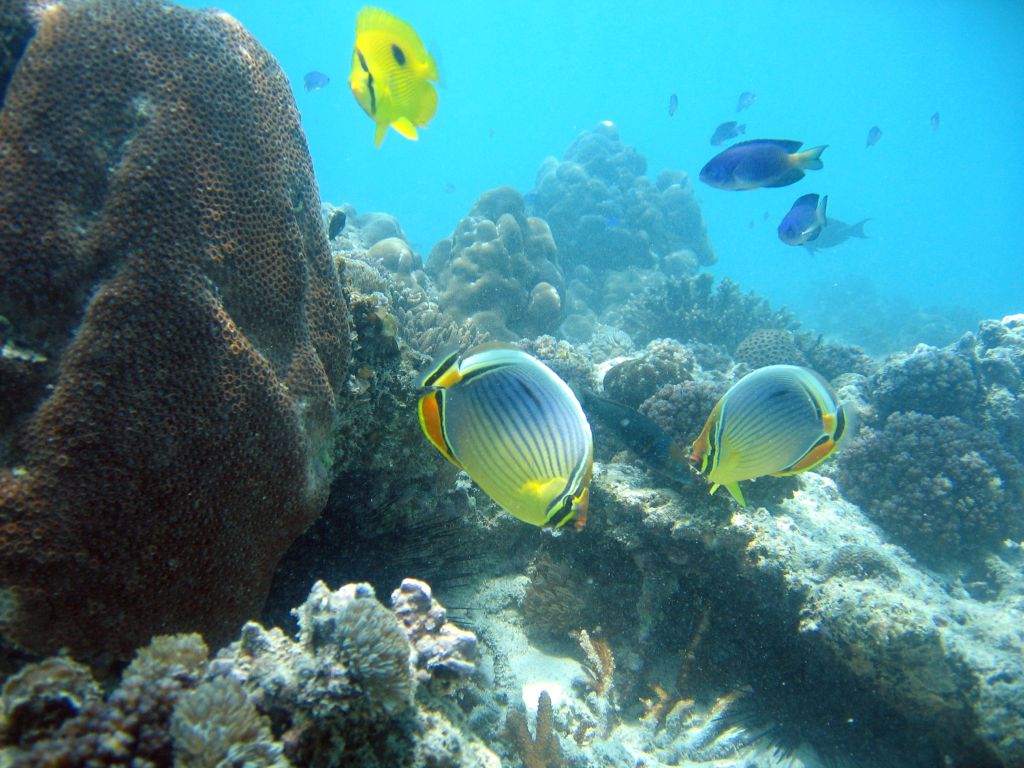
A new study warns that coral reefs are in danger of disappearing forever.  According to U.N. research, the world’s coral reefs could die out completely by mid-century unless carbon emissions are reduced enough to slow ocean warming.

[Read more…] about Could Coral Reefs Be Wiped Out?

A Plastics Promise

July 19, 2017 By EarthWise

https://earthwiseradio.org/wp-content/uploads/2017/07/EW-07-19-17-A-Plastics-Promise.mp3

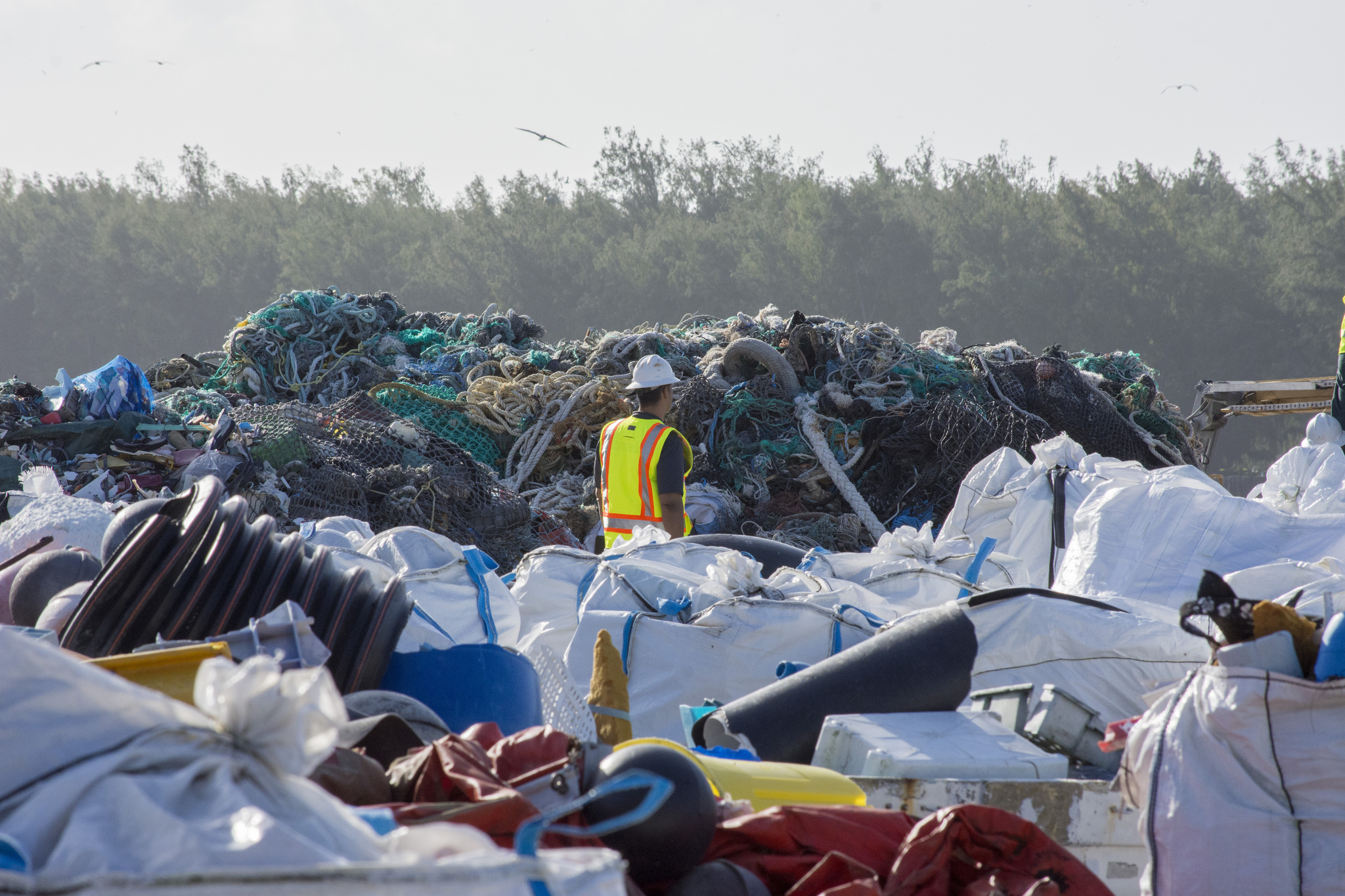
It’s estimated that five to thirteen million tons of plastic enters our oceans annually, where much of it can linger for hundreds of years.  According to a report by the World Economic Forum and the Ellen MacArthur Foundation, scientists estimate that there is 165 million tons of plastic swirling about in the oceans right now.   And we are on pace to have more plastic than fish (by weight) in the world’s oceans by 2050. That’s some scary stuff. 

[Read more…] about A Plastics Promise

Pesticides And Food Insecurity

April 19, 2017 By EarthWise

https://earthwiseradio.org/wp-content/uploads/2017/03/EW-04-19-17-Pesticides-and-Food-Insecurity.mp3

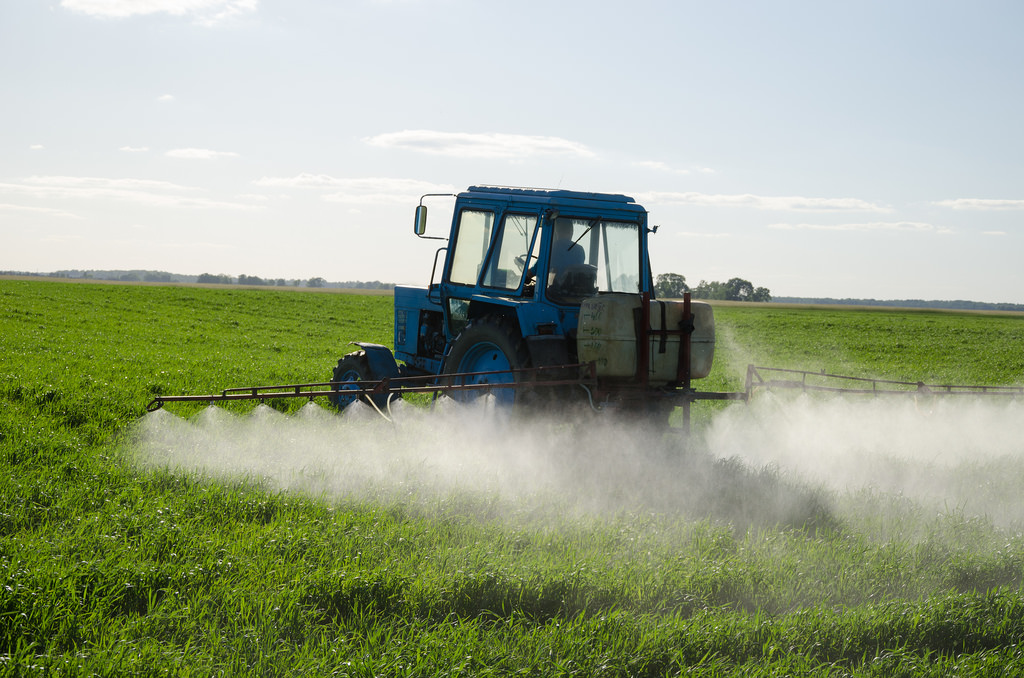
A newly released report by the United Nations takes a strong stance against the use of industrial agrochemicals, saying that they are not necessary for feeding the world.  The continued use of pesticides at the rate the world currently does in fact can have very detrimental consequences.

[Read more…] about Pesticides And Food Insecurity

Bleached And Dying

February 23, 2017 By EarthWise

https://earthwiseradio.org/wp-content/uploads/2017/02/EW-02-23-17-Coral-Reefs-Die-Off.mp3

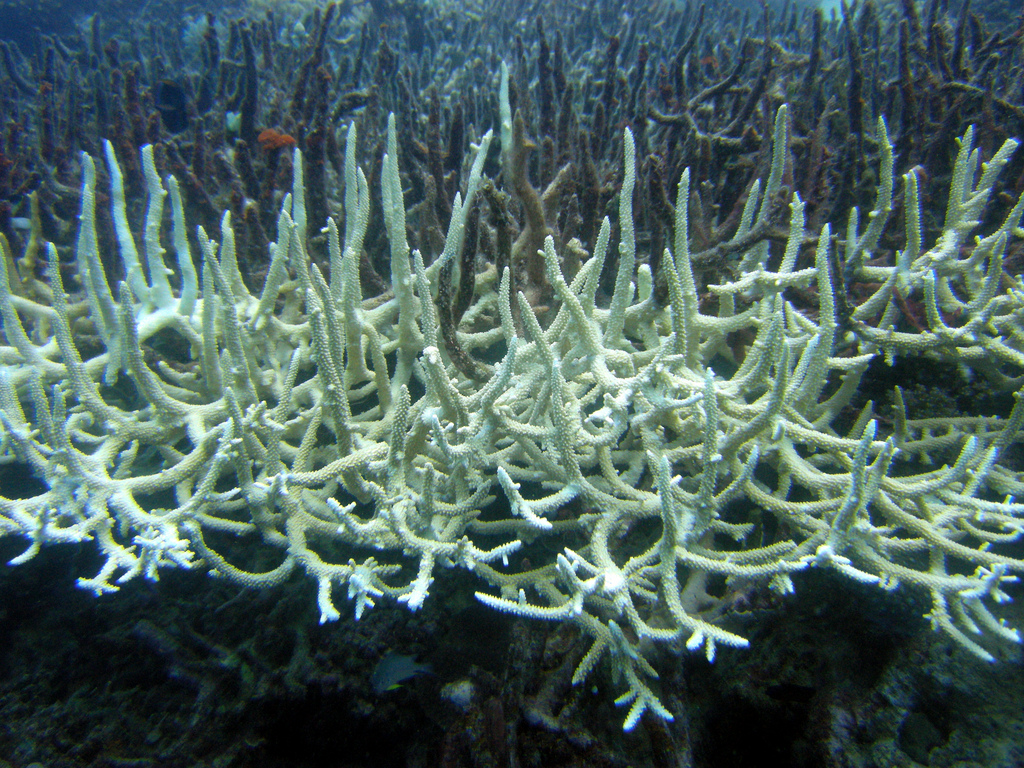
Climate change is posing a major threat to the future of coral reefs.  According to a recent United Nations-backed study, if swift action is not taken to curb greenhouse gas emissions, annual coral bleaching events will affect nearly all of the world’s coral reefs.  And coral bleaching can result in serious coral mortality – as Australia’s Great Barrier Reef has recently illustrated.  

[Read more…] about Bleached And Dying

Plant Protein On The Rise

February 9, 2017 By EarthWise

https://earthwiseradio.org/wp-content/uploads/2017/02/EW-02-09-17-Plant-Protein-on-the-Rise.mp3

The United Nations declared 2016 to be the International Year of Pulses.  Pulses, which are also known as grain legumes, are a group of 12 crops that includes dry beans, dry peas, chickpeas and lentils.  They are high in protein as well as fiber and various vitamins.  Pulse crops are highly sustainable and require much less water than many other food crops.  So there is a real effort underway to promote their production as part of improving food security around the world.

[Read more…] about Plant Protein On The Rise

New Doubts About GMO Crops

November 30, 2016 By EarthWise

https://earthwiseradio.org/wp-content/uploads/2016/11/EW-11-30-16-New-Doubts-about-GMOs.mp3

Genetically modified crops have been at the center of a great deal of controversy for a number of years.  There have been widespread fears that they are unsafe to eat.  Continuing studies have indicated that those fears appear to be unsubstantiated.

[Read more…] about New Doubts About GMO Crops

Natural World Heritage Sites

May 5, 2016 By WAMC WEB

https://earthwiseradio.org/wp-content/uploads/2016/04/EW-05-05-16-Natural-World-Heritage-Sites.mp3

Natural world heritage sites exemplify the world’s greatest areas of natural beauty, ecology, geology, and biodiversity.  They are recognized internationally for their value as places with significance that is “so exceptional as to transcend national boundaries and be of common importance for present and future generations of all humanity.”  Many of these areas also are a vital source of food, fuel, and water for rural communities, and provide a revenue stream for national economies through tourism and recreation.  The livelihoods of some 11 million people are directly dependent on these areas. 

[Read more…] about Natural World Heritage Sites

The Second Hottest Year On Record

January 29, 2016 By WAMC WEB

https://earthwiseradio.org/wp-content/uploads/2016/01/EW-01-29-16-Warm-2015.mp3

According to the National Oceanic and Atmospheric Administration – or NOAA – 2015 was the second hottest year ever recorded in the contiguous United States.

[Read more…] about The Second Hottest Year On Record

Biodiversity And Our Diet

December 14, 2015 By WAMC WEB

https://earthwiseradio.org/wp-content/uploads/2015/12/EW-12-14-15-Biodiversity-And-Our-Diet.mp3

We often talk about the importance of biodiversity in maintaining the health of ecosystems.   One ecosystem we don’t often think about in those terms is the human diet.

[Read more…] about Biodiversity And Our Diet

  • « Go to Previous Page
  • Page 1
  • Page 2

Primary Sidebar

Recent Episodes

  • An uninsurable future
  • Clean energy and jobs
  • Insect declines in remote regions
  • Fossil fuel producing nations ignoring climate goals
  • Trouble for clownfishes

WAMC Northeast Public Radio

WAMC/Northeast Public Radio is a regional public radio network serving parts of seven northeastern states (more...)

Copyright © 2026 ·