• Skip to primary navigation
  • Skip to main content
  • Skip to primary sidebar

Earth Wise

A look at our changing environment.

  • Home
  • About Earth Wise
  • Where to Listen
  • All Articles
  • Show Search
Hide Search
You are here: Home / Archives for plants

plants

Rainforest Promises | Earth Wise

December 23, 2022 By EarthWise Leave a Comment

Rainforest promises in Brazil

The recent UN climate summit in Sharm el Sheikh, Egypt brought with it lots of pledges for action.   Among them was a promise from the three countries that are home to more than half of the world’s tropical rainforests to try to do something to protect them.

The ministers of Brazil, Indonesia, and the Democratic Republic of Congo signed an agreement pledging cooperation on sustainable management and conservation, restoration of critical ecosystems, and creation of economies that would ensure the health of both their people and their forests.

The plan has no financial backing of its own.  The countries are pledging to work together to establish a funding mechanism that could help to preserve the tropical forests that both help regulate the Earth’s climate and sustain a wide range of animals, plants, birds, and insects.

That such an agreement has come about at all is a result of the election of Luiz Lula da Silva as Brazilian president, replacing Jair Bolsonaro, who was famously an opponent of any and all environmental conservation or protections.  President Lula addressed the attendees of the climate summit promising that “Brazil is back.”   He described his country as having been in a cocoon for the past four years under his predecessor.  He declared that going forward, Brazil will be a force to combat climate change.  Given the importance of the Amazon rainforest, that is critical for the success of the world’s efforts.

Like all other issues on the table at the climate summit, the real challenge is not to come up with meaningful pledges on climate action, it is to be able to follow through on those pledges.  If past summits are any indication, that is not an easy task.

**********

Web Links

Brazil, Indonesia and Congo Sign Rainforest Protection Pact

Photo, posted September 15, 2013, courtesy of Moises Silva Lima via Flickr.

Earth Wise is a production of WAMC Northeast Public Radio

Glacial Loss In The Swiss Alps | Earth Wise

December 14, 2022 By EarthWise Leave a Comment

Record glacial loss in the Swiss Alps

In 2022, glaciers in the Swiss Alps melted more than in any year on record.   This is the latest piece of bad news for the country’s glaciers, which have lost more than half of their volume of ice since the 1930s.

The melting season for Switzerland’s snow and ice typically starts in May and ends in early October.  This year’s melting season caused glaciers in the Diablerets mountain group to thin by an average of 13 feet, which is 3 times the amount of thinning observed over the past decade.   The Tsanfleuron pass between two of the glaciers is now exposed as bare rock for the first time in several thousand years. Across Switzerland, glaciers lost about 6% of their remaining volume just this year.  The previous worst year for glaciers was 2003, when losses were nearly 4%. 

There was significant melting this year in part because of the small amount of snowfall over the winter.  That snow melted quickly, being sped up by the warming effect of dust from the Sahara Desert falling on the snow.  By early summer, there was no longer a protective blanket of snow on the glaciers, exposing them to summer heat.

The loss of glaciers is far more serious than the disappearance of aesthetically pleasing landscape features.   Glaciers act as reservoirs of water that persist through the summer months.  Melt from glaciers provides water to ecosystems and creates habitats for plants and animals.  Cold runoff from glaciers affects downstream water temperatures which have a major impact on insects, fish, and other creatures.  Globally, melting glaciers contribute more than 20% of the observed ongoing sea-level rise.

**********

Web Links

Rocky Road for Swiss Glaciers

Photo, posted June 22, 2015, courtesy of Dennis Jarvis via Flickr.

Earth Wise is a production of WAMC Northeast Public Radio

New York Bans Some Crypto Mining | Earth Wise

December 13, 2022 By EarthWise Leave a Comment

New York bans some cryptocurrency mining

Crypto mining, the arcane process by which cryptocurrencies are generated, is incredibly energy-intensive.  As of this past summer, global electricity usage for the activity is as much as 240 billion kilowatt-hours per year, which is more than many entire countries use (for example Australia and Argentina.)  Crypto mining consumes as much electricity as all the conventional computer data centers in the world.

All that energy usage is problematic for the environment, but a growing practice has made it far worse.  Crypto miners have been re-powering decommissioned fossil fuel power plants to produce electricity strictly for mining operations.  Doing so eliminates the climate benefits achieved by shutting down those plants.

The New York State Legislature passed a bill in June that would place a two-year moratorium on permits to re-power fossil fuel plants.  It does not prevent crypto mining from existing generation sources.  The bill had sat on the governor’s desk until after the recent election.   But in late November, Governor Hochul signed the bill despite considerable lobbying against it.

The temporary ban was heavily opposed by cryptocurrency industry groups, to no surprise.  While some states actually offer tax incentives to lure crypto mining operations, supporters of the legislation hope that New York’s action may cause others to follow its lead and stop the reactivation of old fossil fuel plants.

The two-year moratorium will allow time to properly evaluate the impact of the crypto mining industry on the state’s climate goals.  It is pretty obvious that reactivating old, retired fossil fuel power plants as an energy source is a move in the wrong direction.

**********

Web Links

New York Enacts 2-Year Ban on Some Crypto-Mining Operations

Photo, posted February 27, 2021, courtesy of Ivan Radic via Flickr.

Earth Wise is a production of WAMC Northeast Public Radio
Perennial Rice | Earth Wise

December 9, 2022 By EarthWise Leave a Comment

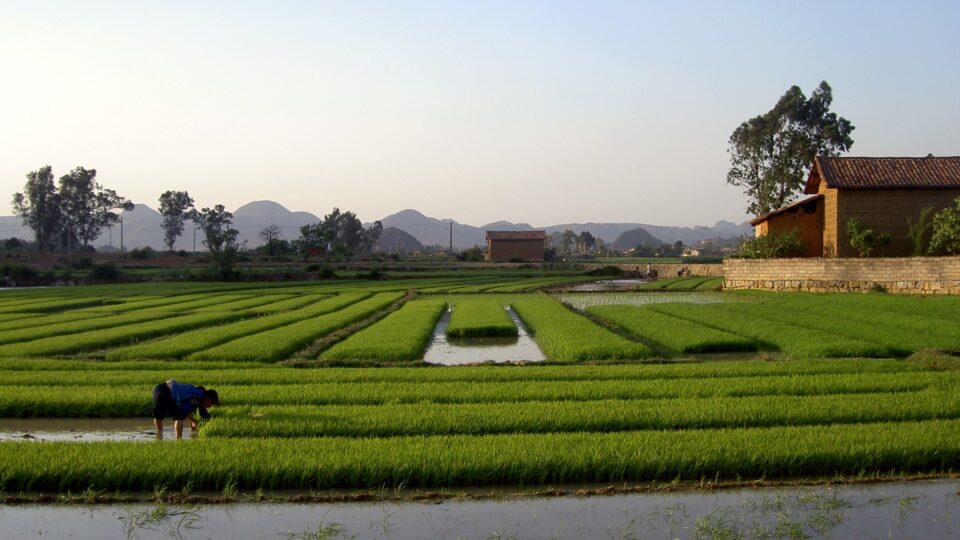
People have been cultivating rice for more than 9,000 years.  Cultivated rice is an annual crop which is often extended to two crops a year by a process called ratooning, which is cutting back annual rice to obtain a second, weaker harvest.

An extensive project involving multiple institutions in China, the U.S., and Australia has been developing perennial rice.  The researchers developed it through hybridization, crossing a type of Asian domesticated annual rice with a wild perennial rice from Africa.  Using modern genetic tools to identify candidate plants, the team identified a promising hybrid in 2007, planted large-scale field experiments in 2016, and released the first commercial perennial rice variety, called PR23, in 2018.

The researchers spent five years studying the performance of the perennial rice alongside annual rice on farms in China’s Yunnan Province.  For the most part, the yield of the perennial rice was equivalent to that of annual rice over a period of four years. 

Because farmers don’t have to plant rice each season, growing perennial rice requires almost 60% less labor and saves nearly half the costs of seed, fertilizer, and other inputs.

Perennial rice is already changing the lives of more than 55,000 smallholder farmers in southern China and Uganda.  The economic benefits vary by location, but overall profit increases ranged from 17% to 161% over annual rice.

There are already three perennial rice varieties available to farmers, but researchers aren’t done refining the crop.  They plan to use their methodology to enhance traits such as aroma, disease resistance, and drought tolerance to newer versions.

**********

Web Links

Farmers in China, Uganda move to high-yielding, cost-saving perennial rice

Photo, posted February 25, 2002, courtesy of Matthieu Lelievre via Flickr.

Earth Wise is a production of WAMC Northeast Public Radio
Hybrid Renewable Energy Plants | Earth Wise

November 17, 2022 By EarthWise Leave a Comment

Hybrid renewable energy systems combine multiple renewable energy and/or energy storage technologies into a single plant.  The goal is to reduce costs and increase energy output relative to separate systems taking advantage of common infrastructure and the ability of one renewable energy source having appreciable output while a second one might not at a particular time.

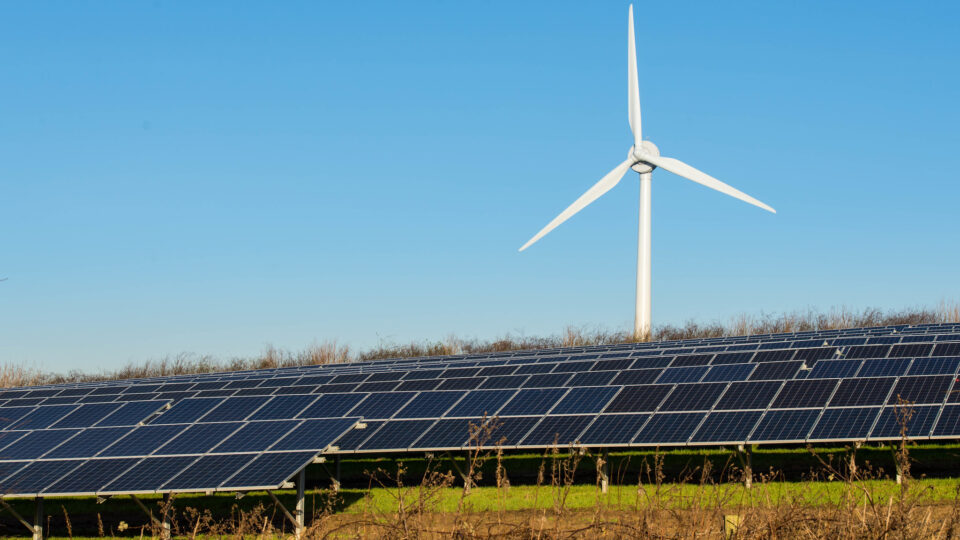
Recently, the largest hybrid renewable power plant in the United States was completed in rural Oregon.  The Wheatridge Renewable Energy Facility combines a wind farm, a solar array, and battery storage.

Plants that include just solar power and energy storage are also called hybrid plants, but the Wheatridge Facility is special because it includes wind power.  The facility comprises a 200-megawatt wind farm, a 50-megawatt solar array, and a 30-megawatt battery system capable of providing power for four hours.  The combined system can provide for the electricity needs of about 100,000 homes.

There are about 140 projects in the United States that combine solar and storage.  There are 14 that combine solar and wind.  There are only four plants – with the completion of Wheatridge – that have wind, solar, and storage.  

Wind and solar energy are generally complementary technologies.  Wind is usually strongest at night while solar, of course, is a daytime source of energy.  Solar and wind plants don’t need to be close together to take advantage of this, but hybrid projects benefit from needing only one grid connection and one lease for land.

**********

Web Links

A Clean Energy Trifecta: Wind, Solar and Storage in the Same Project

Photo, posted December 27, 2015, courtesy of Gerry Machen via Flickr.

Earth Wise is a production of WAMC Northeast Public Radio
Agrivoltaics | Earth Wise

November 15, 2022 By EarthWise Leave a Comment

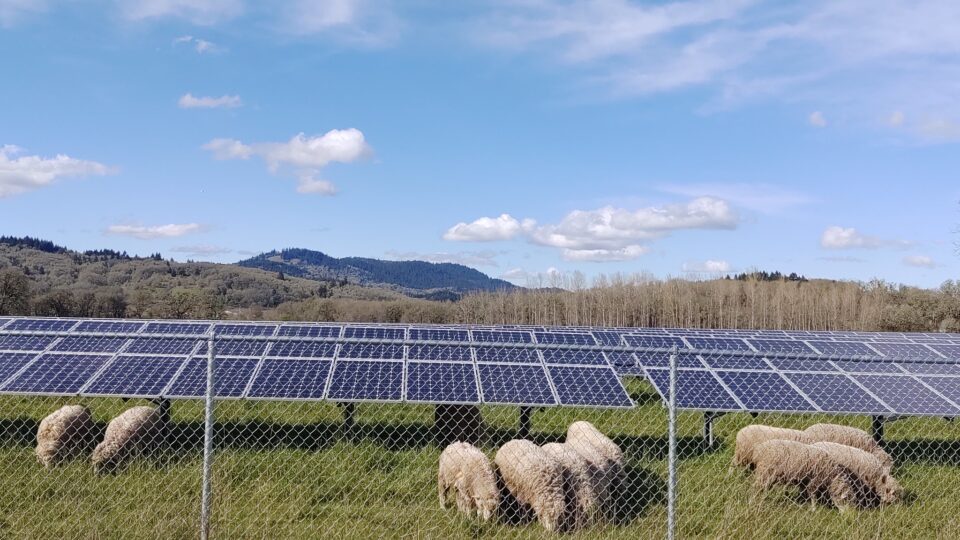
According to a study last year at Oregon State University, co-developing land for both solar photovoltaic power and agriculture could provide 20% of total electricity generation in the United States with an investment of less than 1% of the annual U.S. budget.  Widespread installation of agrivoltaic systems could reduce carbon emissions by 330,000 tons annually and create more than 100,000 jobs in rural communities.

Agrivoltaics could provide the synergistic combination of more food, more energy, lower water demand, lower carbon emissions, and improved local prosperity.  The problem with agrivoltaics to date is that the existing implementations have used solar arrays designed strictly for electricity generation rather than to be used in combination with agriculture.  They are not that well suited to co-exist with growing crops or grazing animals.

A new project is underway at Oregon State that will help researchers to optimize agrivoltaic systems.  The five-acre Solar Harvest Project is being built at the university’s North Willamette Research and Extension Center in Aurora, Oregon in partnership with the Oregon Clean Power Cooperative. 

The solar array for the project is designed specifically for agrivoltaics research and uses panels that are more spread out and able to rotate to a near vertical position to allow farm equipment to pass through.  The project will allow researchers to study the impact of solar panels on soil health, water use, and plant physiology and yields.

Electricity generated from the 326-kW solar system will be available for purchase by Oregon State and community members. 

**********

Web Links

Construction starts on Oregon State agrivoltaics farm that will merge agriculture and solar energy

Photo, posted April 5, 2020, courtesy of Sean Nealon / Oregon State University via Flickr.

Earth Wise is a production of WAMC Northeast Public Radio
Trees Are Growing Bigger | Earth Wise

November 3, 2022 By EarthWise Leave a Comment

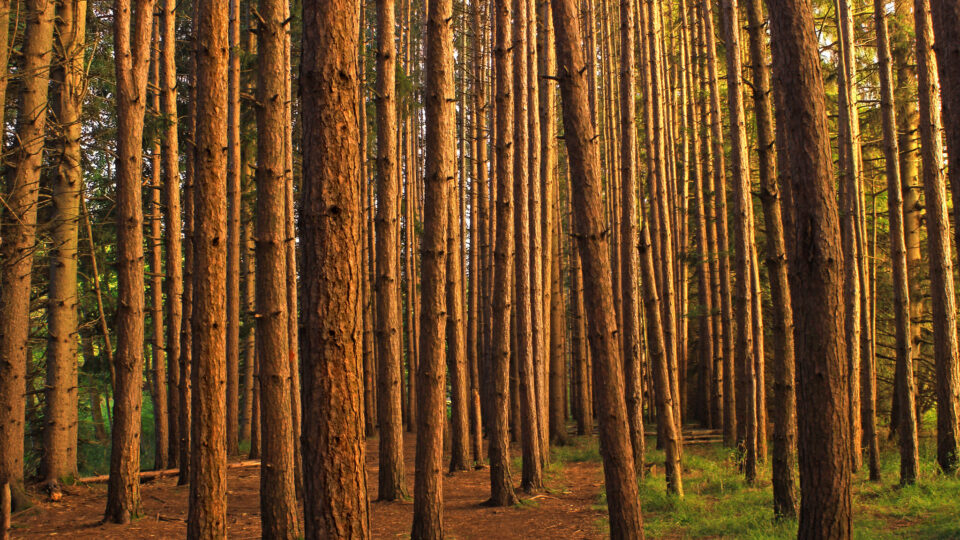
The alarming rate of carbon dioxide flowing into the atmosphere is having a real and actually positive effect on plant life. Higher concentrations of carbon dioxide make plants more productive because photosynthesis makes use of the sun’s energy to synthesize sugar out of carbon dioxide and water.  Plants make use of the sugar both as a source of energy and as the basic building block for growth.  When carbon dioxide levels go up, plants can take it up faster, supercharging the rate of photosynthesis.

In a new study published in the journal Nature Communications, scientists at Ohio State University found that trees are feasting on decades of carbon dioxide emissions and are growing bigger as a result. 

The researchers tracked wood volume in 10 different tree groups from 1997 to 2017 and found that all of them except aspens and birches grew larger.  Over that time period, carbon dioxide levels climbed from 363 parts per million to 405 parts per million.  According to the study, each 1% increase in lifetime CO2 exposure for trees has led to more than a 1% increase in wood volume.

In the big picture, the news isn’t so positive.  The global warming caused by increasing carbon dioxide levels increasingly threatens the forests of the world.  It has led to worsening droughts, insect infestations, and wildfires.  So overall, increasing levels of carbon dioxide are by no means a good thing for the world’s trees.  However, since trees are growing bigger more quickly, it means that planting them is an increasingly cost-effective method for fighting climate change because the same number of trees can sequester more carbon.

**********

Web Links

As Carbon Dioxide Grows More Abundant, Trees Are Growing Bigger, Study Finds

Photo, posted September 12, 2015, courtesy of Nicholas A. Tonelli via Flickr.

Earth Wise is a production of WAMC Northeast Public Radio

Cleaning Up Urban Rivers With Nature’s Tools | Earth Wise

October 7, 2022 By EarthWise Leave a Comment

Fifty years after the passage of the Clean Water Act, urban waterways across the United States are continuing their comeback and are showing increasing signs of life.  A strategy that is being adopted in many places is to use natural restoration techniques focused on bolstering plants and wildlife to improve water quality.

A nonprofit called the Upstream Alliance has focused on public access, clean water, and coastal resilience in the Delaware, Hudson, and Chesapeake watersheds.  Working with the Center for Aquatic Sciences and with support from the EPA and the National Fish and Wildlife Foundation, the alliance has been repopulating areas of an estuary of the Delaware River near Camden, New Jersey with wild celery grass, which is a plant vital to freshwater ecosystems.

In many places, scientists, nonprofits, academic institutions, and state agencies are focusing on organisms like bivalves (typically oysters and mussels) along with aquatic plants to help nature restore fragile ecosystems, improve water quality, and increase resilience.

Bivalves and aquatic vegetation improve water clarity by grounding suspended particles, which allows more light to penetrate.  These organisms also cycle nutrients both by absorbing them as food and by making them more available to other organisms.

Underwater restoration projects have been underway in New York Harbor for more than a decade, where the Billion Oyster Project has engaged 10,000 volunteers and 6,000 students. 

The hope is that bringing back bivalves and aquatic plants can create a lasting foundation for entire ecosystems.  It is restoring nature’s ability to keep itself clean.

**********

Web Links

How Using Nature’s Tools Is Helping to Clean Up Urban Rivers

Photo, posted December 19, 2019, courtesy of Scott via Flickr.

Earth Wise is a production of WAMC Northeast Public Radio

Rewilding The American West | Earth Wise

September 14, 2022 By EarthWise Leave a Comment

Re-establishing ecosystems in the American West

Oregon State University scientists have proposed a series of management changes for western federal lands aimed at re-establishing ecosystems there.  Their proposal would result in more gray wolves and beavers in nearly 200,000 square miles of federal lands in 11 states.

In each of those states, the researchers identified areas containing prime wolf habitat.  Gray wolves were hunted to near extinction in the West but have been gradually reintroduced in some areas starting in the 1990s.  Wolf restoration offers significant ecological benefits by helping to naturally control the population of grazing animals such as elk.  This in turn facilitates the regrowth of vegetation species such as aspen, which ultimately supports diverse plant and animal communities.

Beaver populations, which used to be robust across the West, declined roughly 90% after settler colonialism and are now nonexistent in many areas.  By felling trees and shrubs and constructing dams, beavers enrich fish habitat, increase water and settlement retention, maintain water flows during droughts, and increase carbon sequestration.

According to the researchers, the biggest threat to these western lands is livestock grazing, which has degraded ecosystems to a great extent.  They recommend the removal of grazing on about 30% of the federal lands being used for that purpose and instead would have rewilding efforts go on. 

The American West is going through a period of converging crises including extended drought and water scarcity, extreme heat waves, massive fires, and loss of biodiversity.  Rewilding is a way to reestablish long-standing ecosystems.

**********

Web Links

More wolves, beavers needed as part of improving western United States habitats, scientists say

Photo, posted October 1, 2020, courtesy of Tina DaPuglet via Flickr.

Earth Wise is a production of WAMC Northeast Public Radio.

Making Cotton More Sustainable | Earth Wise

August 16, 2022 By EarthWise Leave a Comment

Producing cotton more sustainably

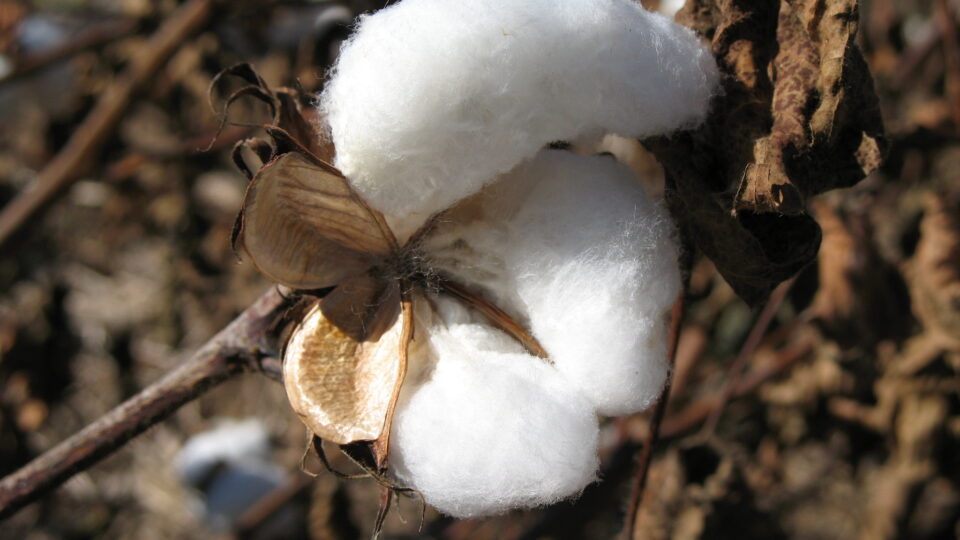
In the United States, cotton is a $7 billion annual crop grown in 17 states.  Cotton plants in the largest producing countries in the world – India, China, and the U.S. – are genetically very similar and, like other crops that lack diversity, can be at risk.

Cultivated cotton around the world has been bred to look and act very similar.  It is high yielding and easy to harvest using machines.  But it is also wildly unprepared to fight disease, drought, or insect-borne pathogens.

Researchers are looking beyond breeding for ways to combat the low genetic diversity of cultivated cotton.  There are new approaches that combine breeding with elements of genetic modification.  Most cotton in the U.S. has already been genetically modified to resist caterpillar pests.  But as new problems emerge, new solutions will be needed that may require complicated changes to the cotton genome.  Getting regulatory approval for a genetically modified crop is a long and expensive process.

However, ordinary genetic modification is not the only possibility.  Modern genetic sequencing technology can allow researchers to examine various wild cotton varieties and identify the genetic markers for desirable traits.  Once valuable genes in wild species have been identified, traditional plant breeding techniques could be used to produce cultivated cotton varieties that are more resistant to disease and drought.

Climate change is raising average global temperatures and some important cotton-producing regions such as the U.S. Southwest are becoming drier.  Researchers are hoping to produce cultivated cotton that can tolerate drought at the seedling stage.  The ultimate goal is to create more sustainable and genetically diverse cotton that can thrive in a changing world.

**********

Web Links

Cotton Breeders Are Using Genetic Insights To Make This Global Crop More Sustainable

Photo, posted November 9, 2008, courtesy of BP Takoma via Flickr.

Earth Wise is a production of WAMC Northeast Public Radio.

North American Birds And Climate Change | Earth Wise

August 10, 2022 By EarthWise Leave a Comment

Climate change negatively impacting north american birds

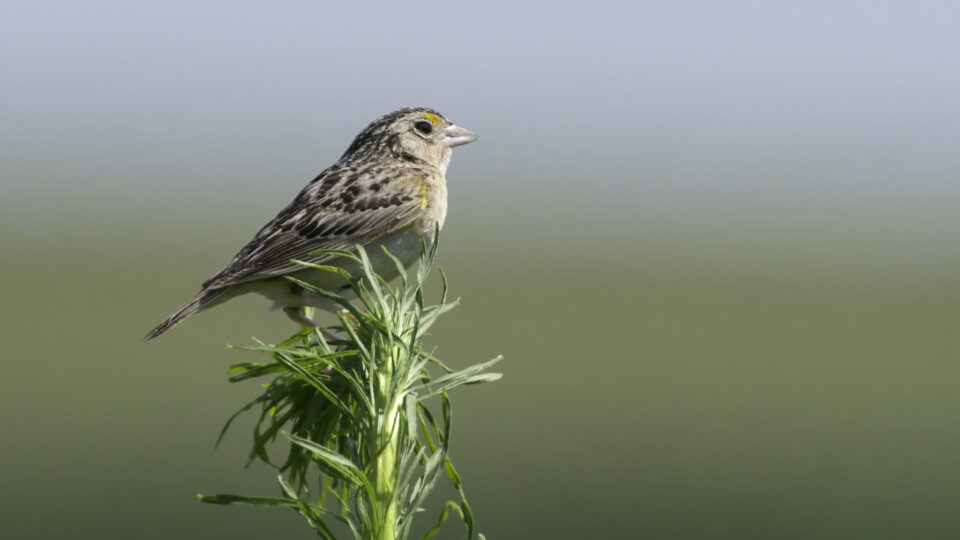
Most plants and animals live in areas with specific climate conditions, such as rainfall patterns and temperature, that enable them to thrive. Any change in the climate of an area can affect the plants and animals living there, which in turn can impact the composition of the entire ecosystem.   

As such, the changing climate poses many challenges to plants and animals.  For example, appropriate climatic conditions for many species are changing.  As a result, some may even disappear altogether.  These problems can be compounded when the climate is changing in tandem with other human-caused stressors, such as land use change.

When there is increasing divergence between suitable climatic conditions for a particular species and its abundance and distribution through time, this is known as climate decoupling.

According to a new study recently published in the journal Nature Ecology & Evolution, some species of North American birds have not fully adjusted their distributions in response to climate change.  The areas where these birds live have become more decoupled from their optimal climate conditions.  Climate decoupling as a result of ongoing climate change could lead to additional stressors on many bird species and exacerbate bird population declines.

In the study, the research team analyzed data on bird population changes through time from the North American Bird Survey.  They found that at least 30 out of 114 species (or 26%) of North American birds have become less well adjusted to their climate over the last 30 years. This means that their distributions and abundances were increasingly decoupled from climate over time.

The researchers also found that the overall trend of climate decoupling shows no signs of slowing down. 

**********

Web Links

North American birds not fully adjusting to changing climate

Photo, posted July 16, 2016, courtesy of Kelly Azar via Flickr.

Earth Wise is a production of WAMC Northeast Public Radio.

Progress On Artificial Photosynthesis | Earth Wise

August 8, 2022 By EarthWise Leave a Comment

Photosynthesis is the process by which plants use the energy from sunlight to turn water and carbon dioxide into biomass and ultimately the foods we and other organisms eat.  Scientists at the University of California Riverside and the University of Delaware have found a way to create food from water and carbon dioxide without using biological photosynthesis and without needing sunlight.

The research, recently published in the journal Nature Food, uses a two-step electrocatalytic process to convert carbon dioxide, electricity, and water into acetate, which is the primary component of vinegar.   Food-producing microorganisms then consume the acetate in order to grow.   Solar panels are used to generate the electricity to power the electrocatalysis.  The result is a hybrid organic-inorganic system that is far more efficient in converting sunlight into food than biological photosynthesis.

The research showed that a wide range of food-producing organisms can be grown in the dark directly on the acetate output of the electrolyzer.  These include green algae, yeast, and the fungal mycelium that produce mushrooms.   Producing algae with this technology is about 4 times more energy efficient than growing it with photosynthesis.  Yeast production is about 18 times more energy efficient than the typical method of cultivating it using sugar extracted from corn.

Artificial photosynthesis has the potential to liberate agriculture from its complete dependence on the sun, opening the door to a wide range of possibilities for growing food under the increasingly difficult conditions imposed by the changing climate.

**********

Web Links

Artificial photosynthesis can produce food without sunshine

Photo, posted September 7, 2016, courtesy of Kevin Doncaster via Flickr.

Earth Wise is a production of WAMC Northeast Public Radio.

Bumblebees And Climate Change | Earth Wise

July 26, 2022 By EarthWise Leave a Comment

Pollinators, such as bees and bats, are vital for global food production.  They provide an ecological service that’s necessary for the reproduction of nearly 75% of the world’s flowering plants, including more than two-thirds of global food crops.

Bumblebees are among the most important plant pollinators.  They pollinate many food crops, including apples, tomatoes, blueberries and legumes, as well as countless types of trees, shrubs, and wildflowers.

According to a new study by researchers from Simon Fraser University in Canada, temperature changes have negatively impacted most bumblebee species during the past 120 years.  The research, which was recently published in the journal Biology Letters, found that these changes in temperature had more of a negative impact than other factors such as precipitation or floral resources. 

The research team analyzed existing data on 46 bumblebee species across North America between 1900 and 2020.  The researchers created two occupancy models – one that was focused on time and the other that focused on environmental factors – to see how climate change and land-use variables impacted species’ occupancy.  They found that six bumblebee species decreased through time, 22 increased, and 18 remained stable.

Temperature changes had primarily negative impacts on bumblebees.  In fact, 37 of the 46 species studied exhibited declines or less positive occupancy increases under observed changes in temperature when compared with temperatures remaining constant.  Approximately half of the bumblebee species were negatively impacted by changes in precipitation or floral resources while the other half were positively impacted.

Bumblebee populations are changing as a consequence of climate change. 

**********

Web Links

The American Bumblebee

Climate change negatively impacting bumble bees: Study

Photo, posted July 14, 2019, courtesy of Dmitry Grigoriev via Flickr.

Earth Wise is a production of WAMC Northeast Public Radio.

A Better Way To Recycle Plastic | Earth Wise

July 25, 2022 By EarthWise Leave a Comment

Researchers are developing a better way to recycle plastic

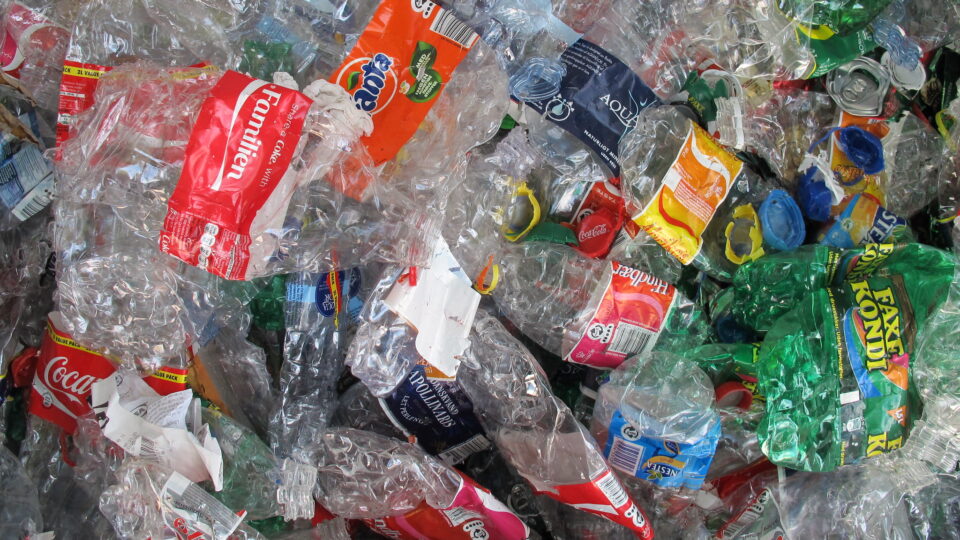
The current state of plastic recycling is not very effective.  Plastic recycling is only able to replace 15-20% of the fossil-fuel-derived raw material needed to produce society’s demand for plastic.

Researchers at Chalmers University in Sweden have now demonstrated how the carbon content in mixed waste could be used to replace all of the fossil raw materials in the production of new plastic.  In principle, their technology could completely eliminate the climate impact of plastic materials.

According to the researchers, there are enough carbon atoms in waste to meet the needs of all global plastic production.

The Chalmers process is based on thermochemical technology and involves heating waste to 1100-1500 degrees Fahrenheit.  The waste is thereby vaporized and when hydrogen is added, becomes a carbon-based substance that can replace the fossil-fuel building blocks of plastic.  The method does not require sorting the waste materials.  Different types of waste, such as old plastic products and even paper cups, with or without food residues, can be fed into the recycling reactors.  The researchers are now developing the techniques required to utilize their recycling technology in the same factories in which plastic products are currently being made from fossil oil or gas.

The principle of the process is inspired by the natural carbon cycle in which plants break down into carbon dioxide when they wither and die, and then photosynthesis uses carbon dioxide and solar energy to grow new plants.

Producing new plastics would no longer require petroleum or other fossil fuels as raw materials.  If the energy needed to drive the recycling reactors is taken from renewable sources, plastics could become the basis of a sustainable and circular economy.

**********

Web Links

Pioneering recycling turns mixed waste into premium plastics with no climate impact

Photo, posted August 10, 2013, courtesy of Lisa Risager via Flickr.

Earth Wise is a production of WAMC Northeast Public Radio.

Less Phytoplankton In The Gulf Of Maine | Earth Wise

July 20, 2022 By EarthWise Leave a Comment

The Gulf of Maine is changing

Phytoplankton, also known as microalgae, are the base of the marine food web and also play a key role in removing carbon dioxide from the air.  They are eaten by primary consumers like zooplankton, small fish, and crustaceans. 

Phytoplankton, like land plants, absorb carbon dioxide from the atmosphere and use photosynthesis to grow.  Then they become a food source for other organisms and ultimately for people who depend upon marine ecosystems.   If phytoplankton productivity is disrupted, there can be adverse effects on regional fisheries and the communities that depend on them.

The Gulf of Maine is becoming warmer and saltier, because of ocean currents pushing warm water into the gulf from the Northwest Atlantic.  These temperature and salinity changes have led to a significant decrease in the productivity of phytoplankton.   According to a new paper from scientists at Bigelow Laboratory of Ocean Sciences in Maine, phytoplankton are about 65% less productive in the gulf than they were 20 years ago.

The study’s results come from the analysis of the Gulf of Maine North Atlantic Time Series, a 23-year sampling program of the temperature, salinity, chemical, biological, and optical measurements of the gulf.  The scientists refer to what they describe as a giant windmill effect happening in the North Atlantic, which is changing the circulation of water coming into the Gulf of Maine.  In the past, inflows from the North Atlantic brought water from the Labrador Current, which made the gulf cooler and fresher.  The new circulation is making the water warmer and saltier.

These changes have significant implications for higher marine species, fisheries, the lobster industry, and other activities in the states that border the Gulf of Maine.

**********

Web Links

NASA-funded Study: Gulf of Maine’s Phytoplankton Productivity Down 65%

Photo, posted November 15, 2015, courtesy of Paul VanDerWerf via Flickr.

Earth Wise is a production of WAMC Northeast Public Radio.

Methane From Thawing Permafrost | Earth Wise

June 29, 2022 By EarthWise Leave a Comment

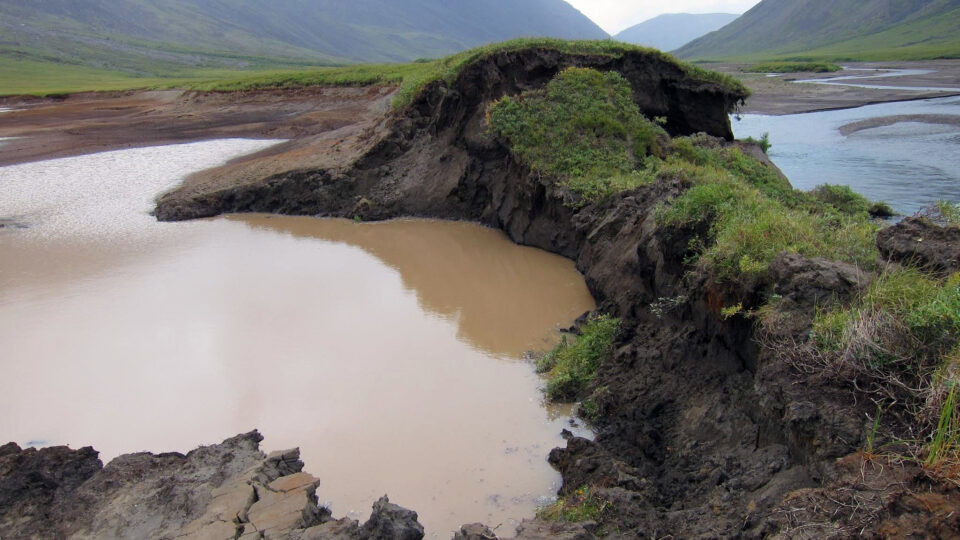
The Arctic permafrost contains a massive amount of carbon in the form of frozen soil, which contains remnants of plants and animals that died millennia ago.  Estimates are that there is 2 ½ times as much carbon trapped in this Arctic soil than there is in total in the atmosphere today.

As the Arctic warms, the permafrost is starting to thaw.  Once that happens, microbes begin to consume the previously frozen organic matter trapped in the soil.  As part of this process, the microbes produce large amounts of methane, which is an extremely potent greenhouse gas.   Thus, there continues to be great concern that wide-scale thawing of the permafrost would result in massive amounts of methane being released into the atmosphere.

A recent study in northern Sweden revealed a glimmer of hope.  The study gauged methane emissions from a swath of permafrost that thawed in the 1980s and another that thawed 10 or 15 years later. 

In the first area, as ice melted underground, water on the surface sank down into the soil.  As the surface dried out, new plants emerged that helped to keep methane emissions buried underground.

Grasses found in wet areas have straw-like structures that convey oxygen to their roots.  The straws also allow methane in the soil to escape into the atmosphere.  As the areas dry out, other plants lacking the straws can sometimes replace the grasses.  When methane can’t escape, soil bacteria break it down into carbon dioxide.

The result is that the permafrost releases only a tenth of the methane as expected.  The hope is that changes in plant cover driven by climate change may limit methane emissions from thawing permafrost.

**********

Web Links

Thawing Permafrost In Sweden Releases Less Methane Than Feared, Study Finds

Photo, posted July 7, 2014, courtesy of NPS Climate Change Response via Flickr.

Earth Wise is a production of WAMC Northeast Public Radio.

Climate Change And Sleep | Earth Wise

June 22, 2022 By EarthWise Leave a Comment

Climate change negatively impacts sleep and human health

It’s no secret that our planet is heating up.  According to scientists, the warming is primarily the result of increased anthropogenic greenhouse gas emissions.  In fact, human activities are responsible for nearly all of the increase in atmospheric greenhouse gas emissions over the last 150 years. 

Climate change has already left observable effects on the planet.  For example, glaciers have shrunk, oceans have warmed, heatwaves have become more intense, and plant and animal ranges have shifted.

Most research examining the impact of climate change on human life has centered around extreme weather events and how they will affect social and economic health.  But climate change may also have a major influence on fundamental daily human activities, like sleep, that are essential to well-being.   

According to a new study recently published in the journal One Earth, scientists have found that increasing temperatures are negatively impacting human sleep around the globe.  In the study, the research team analyzed anonymized global sleep data from sleep-tracking wristbands.  The data included 7 million nightly sleep records from more than 47,000 adults across 68 countries, spanning all continents except Antarctica.     

Before the year 2100, researchers say that suboptimal temperatures may erode 50 to 58 hours of sleep per person per year.  On warm nights – where temperatures are greater than 86 degrees Fahrenheit – sleep declines an average of more than 14 minutes.  To little surprise, they found that the effect of increasing temperatures on sleep loss is substantially greater for residents in lower income countries as well as in older adults. 

Sleep is an essential restorative process integral to human health and productivity.  And it’s threatened by our changing climate. 

**********

Web Links

Climate change likely to reduce the amount of sleep that people get per year

Photo, posted March 16, 2006, courtesy of Joe Green via Flickr.

Earth Wise is a production of WAMC Northeast Public Radio.

Weaning Off Fossil Fuels | Earth Wise            

June 2, 2022 By EarthWise Leave a Comment

How to break free of our dependence on fossil fuel

We recently talked about California producing 97% of its electricity from renewables on one sunny afternoon in April.  On May 8th, the state produced enough renewable electricity to meet 103% of consumer demand.  These sorts of records are likely to be increasingly commonplace in the spring when the weather is still fairly mild.

But even while renewables were producing more electricity than California needed, natural gas power plants in the state were still running.

Turning off the gas power plants is not possible.  The reason is that as the sun sets and solar farms stop producing power, California has to quickly replace the power with electricity from other sources.  Natural gas plants are massive industrial facilities that cannot be turned on and off rapidly.  Some take as many as 4 to 8 hours to switch on.  Operators back them down as far as they can go, but even when there is plenty of solar power during the day, natural gas plants are still running.

The state is rapidly building huge battery storage projects as an alternative to gas plants, but so far, they are still only a small fraction of what is needed.   Wind power is another part of the solution along with hydropower.  California imports some power from other states as well and, in fact, also exports power when there is excess.  But keeping the energy system balanced and stable is an ongoing challenge.

California is building huge amounts of solar, huge amounts of wind, and huge amounts of energy storage, which should get the state to at least 90% of the way to a clean grid.  It’s the last 5-10% that is much harder to accomplish before natural gas is no longer part of the energy system.

**********

Web Links

California just ran on 100% renewable energy, but fossil fuels aren’t fading away yet

Photo, posted January 10, 2014, courtesy of F.G. via Flickr.

Earth Wise is a production of WAMC Northeast Public Radio.

Climate Change And Forest Loss | Earth Wise

May 23, 2022 By EarthWise Leave a Comment

India is one of the most biodiverse countries in the world.  An estimated 47,000 plant species and 89,000 animal species can be found in India, with more than 10% of each thought to be on the list of threatened species. 

India is also among the top ten countries in the world in terms of total forest coverage.  According to Indian government data, the total forest and tree cover in India is 312,000 square miles, which is 24.62% of the geographical area of the country.

However, forest loss in India has been a problem for many decades driven largely (researchers thought) by land use change.  But it turns out that climate change may also have been contributing to forest loss, and its impact is projected to become an even bigger problem in the coming years. 

In the first ever national-scale study of the relationship between forest loss and rainfall and temperature trends in India, researchers from the University of Reading in the U.K. found that climate change may have contributed to large declines in forest since the turn of the century.

The study, which was recently published in the journal Global Change Biology, found far greater forest losses were observed where and when the climate was changing most rapidly.  Decreases in rainfall had the strongest impact on forest loss. 

These findings exacerbate concerns about the already-worrying levels of deforestation in the country, and contradict official reports that have shown relatively small decreases in forest coverage in recent years. 

The research team warns that rapid changes to the climate in some regions will require targeted preservation action to reduce the risk to biodiversity in India. 

*********

Web Links

Indian forest loss ‘worse than feared’ due to climate change

Photo, posted January 20, 2013, courtesy of Dicky Broadhurst / Frontier Official via Flickr.

Earth Wise is a production of WAMC Northeast Public Radio.

Peak Natural Gas Generation | Earth Wise

May 17, 2022 By EarthWise Leave a Comment

Peak natural gas generation is in the past

According to a new report from the Institute for Energy Economics and Finance (the IEEFA), the U.S. most likely hit its peak usage of natural gas to generate electricity in 2020.  Growth in wind and solar power are beginning to erode the use of natural gas.

At the moment, natural gas prices are unusually high as a result of supply chain issues and the war in Ukraine.  The U.S. is shipping record amounts of gas to Europe in order to help allies to wean off of Russian gas imports.  As a result, U.S. natural gas prices are at their highest level in more than 13 years.  Heating bills in the Northeast have been exceptionally high this past winter.

These high gas prices have also thrown a temporary lifeline to coal, which has seen a recent surge.  Despite this, coal in the U.S. is continuing its long-term decline.  Several of the largest power companies – including the Tennessee Valley Authority, Duke Energy, and Georgia Power – are planning to phase out coal entirely by 2035 and shift to renewable power.

The surging prices in fossil fuels – at the gas pump and in the home – along with multiple disruptions in energy security, are supercharging the already rapid pace of growth in solar, wind, and battery energy storage projects.

Wind, solar, and hydropower currently account for about 20% of U.S. power generation.  According to the IEEFA, these renewable sources could provide more than a third of our power by 2027.  Including both renewables and nuclear power plants, the U.S. could generate more than half of its electricity from carbon-free sources by that year, which represents a massive transition from just five years ago.

**********

Web Links

U.S. May Have Hit Peak Natural Gas Power Generation, Report Says

Photo, posted July 11, 2017, courtesy of John Ciccarelli / BLM via Flickr.

Earth Wise is a production of WAMC Northeast Public Radio.

  • « Go to Previous Page
  • Page 1
  • Interim pages omitted …
  • Page 3
  • Page 4
  • Page 5
  • Page 6
  • Page 7
  • Interim pages omitted …
  • Page 13
  • Go to Next Page »

Primary Sidebar

Recent Episodes

  • An uninsurable future
  • Clean energy and jobs
  • Insect declines in remote regions
  • Fossil fuel producing nations ignoring climate goals
  • Trouble for clownfishes

WAMC Northeast Public Radio
WAMC/Northeast Public Radio is a regional public radio network serving parts of seven northeastern states (more...)
Copyright © 2026 ·