• Skip to primary navigation
  • Skip to main content
  • Skip to primary sidebar

Earth Wise

A look at our changing environment.

  • Home
  • About Earth Wise
  • Where to Listen
  • All Articles
  • Show Search
Hide Search
You are here: Home / Archives for oil

oil

Low Fares Clean German Air | Earth Wise

September 29, 2022 By EarthWise Leave a Comment

Low fare for public transportation help clean the air in Germany

Germany’s parliament set summer public transport fares at 9 euros a month as a way to slash pollution and reduce imports of Russian oil.   The low price included all buses, trams, subways, and regional trains, effectively lowering prices by more than 90% in some cities.  Berliners saved 98 euros on their monthly travel pass; commuters in Hamburg saved even more.

The program began June 1 and ended August 31.  The bargain rates drove widespread use of public transport and discouraged the use of cars, which already was undesirable due to high gasoline prices.   Over the three-month period, transit authorities sold over 50 million subsidized tickets.  One out of five travelers were using public transport for the first time, according to surveys.

According to an estimate from the Association of German Transport Companies, the program helped to avoid 1.8 million tons of carbon dioxide emissions.  This is roughly equivalent to taking 1.5 million cars off the road for the summer or planting 30 million trees.

The discount transit program had a clearly positive effect on the climate and, obviously, was a source of financial relief for German citizens.  Last year, Germany was the largest buyer of Russian oil in Europe and it wanted to make drastic reductions in its purchases.  The success of the program prompted many to ask for it to be continued.  However, the program cost the government about 2.5 billion euros in reimbursements to transit companies.  The German government has said it would not be extended.

Nonetheless, German policymakers are weighing other proposals for low-cost public transit.  Clearly encouraging people to use public transit pays dividends.

**********

Web Links

Germany’s Cheap Summer Train Fares Prevented 1.8 Million Tons of Carbon Pollution

Photo, posted June 6, 2022, courtesy of 7C0 via Flickr.

Earth Wise is a production of WAMC Northeast Public Radio

A Miracle Tree | Earth Wise

September 27, 2022 By EarthWise Leave a Comment

Pongamia could be a miracle tree

The world needs to be fed without destroying the environment.   We need to grow more trees to store more carbon on earth and reduce the amount in the atmosphere.  But meanwhile, we decimate rainforests to produce palm oil and grow soybeans.

A startup company in California called Terviva thinks they have a solution.  It’s called pongamia, which is an ordinary looking tropical tree.  It produces beans packed with protein and oil, much like soybeans.  However, it has the potential to produce much more nutrition per acre than soybeans and it is hardy enough to grow on pretty much any kind of land without the use of pesticides, fertilizers, or irrigation.  In short, it is a miracle crop for a hot and hungry planet that is running out of fertile farmland and fresh water.

Pongamia is not a new or rare tree.  It is common in India but grows all over the world.  It is often planted as an ornamental here in the U.S.

The initial idea for making use of the hardy tree was to use its oil as a biofuel.  The seeds of pongamia are known to have a bitter taste and disagreeable odor, which is why the seeds or oil were never used for human or animal feed.  However, Terviva has developed a way to de-bitter pongamia oil.  Once this is done, it becomes a golden-colored substitute for olive oil. It also has enormous potential as a protein for plant-based milks and meats, since it contains all nine essential amino acids.

Terviva has raised more than $100 million to further develop pongamia and is now partnering with Danone, a $25 billion multinational food company, to develop pongamia as a climate-friendly, climate-resilient, non-GMO alternative to soy and palm oil.

***********

Web Links

This super-tree could help feed the world and fight climate change

Photo, posted December 15, 2015, courtesy of Lauren Gutierrez via Flickr.

Earth Wise is a production of WAMC Northeast Public Radio

A Law To Tackle Climate Change | Earth Wise

September 8, 2022 By EarthWise Leave a Comment

The Inflation Reduction Act signed into law in mid-August is the most comprehensive U.S. legislation addressing climate change ever enacted.   It contains $369 billion in funding for clean energy and electric vehicle tax breaks, domestic manufacturing of batteries and solar panels, and pollution reduction.

The legislation for the most part makes use of carrots rather than sticks to coax American consumers and industry away from reliance on fossil fuels.  Rather than establishing more carbon taxes, mandates, and penalties, the law largely makes use of tax credits to provide incentives for the use of clean energy.

The law provides a large mix of tax breaks intended to bring down the costs of solar, wind, batteries, electric cars, heat pumps, and other clean technology.  For example, consumers will get a $7,500 credit for purchasing many new electric car models and about $4,000 for buying a used vehicle.

On the stick side of the ledger, oil and gas companies that emit methane above certain threshold levels will incur fees that escalate over time.  The law also increases the cost to the oil industry for extracting fossil fuels from public lands.

The act provides $60 billion for overall environmental justice priorities, including $15 billion targeted specifically for low-income and disadvantaged communities. There are many other provisions in the law addressing multiple climate-related issues.

According to three separate analyses by economic modelers, the investments from the Inflation Reduction Act are likely to cut pollution by about 40% below 2005 levels by the year 2030.

**********

Web Links

The US finally has a law to tackle climate change

Photo, posted December 15, 2021, courtesy of Mario Duran-Ortiz via Flickr.

Earth Wise is a production of WAMC Northeast Public Radio.

A Better Way To Recycle Plastic | Earth Wise

July 25, 2022 By EarthWise Leave a Comment

Researchers are developing a better way to recycle plastic

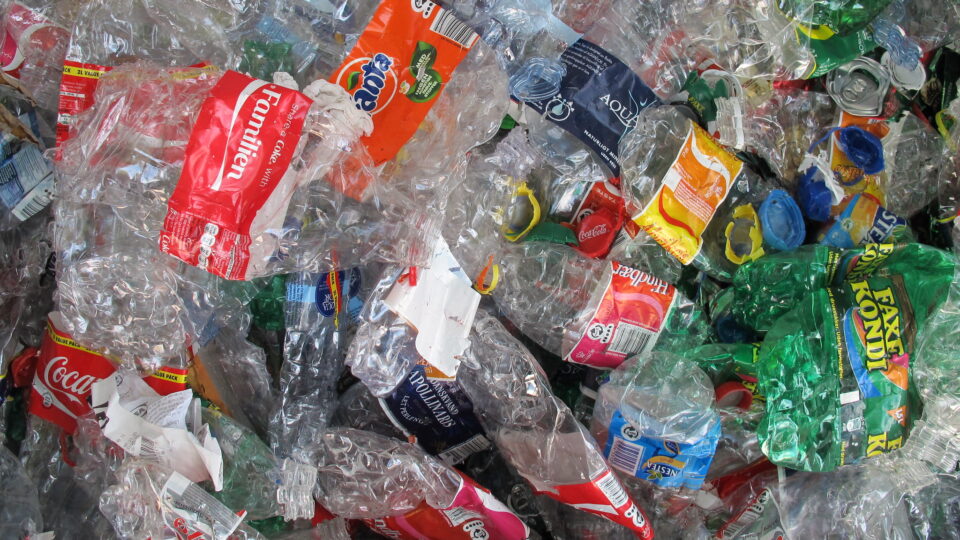
The current state of plastic recycling is not very effective.  Plastic recycling is only able to replace 15-20% of the fossil-fuel-derived raw material needed to produce society’s demand for plastic.

Researchers at Chalmers University in Sweden have now demonstrated how the carbon content in mixed waste could be used to replace all of the fossil raw materials in the production of new plastic.  In principle, their technology could completely eliminate the climate impact of plastic materials.

According to the researchers, there are enough carbon atoms in waste to meet the needs of all global plastic production.

The Chalmers process is based on thermochemical technology and involves heating waste to 1100-1500 degrees Fahrenheit.  The waste is thereby vaporized and when hydrogen is added, becomes a carbon-based substance that can replace the fossil-fuel building blocks of plastic.  The method does not require sorting the waste materials.  Different types of waste, such as old plastic products and even paper cups, with or without food residues, can be fed into the recycling reactors.  The researchers are now developing the techniques required to utilize their recycling technology in the same factories in which plastic products are currently being made from fossil oil or gas.

The principle of the process is inspired by the natural carbon cycle in which plants break down into carbon dioxide when they wither and die, and then photosynthesis uses carbon dioxide and solar energy to grow new plants.

Producing new plastics would no longer require petroleum or other fossil fuels as raw materials.  If the energy needed to drive the recycling reactors is taken from renewable sources, plastics could become the basis of a sustainable and circular economy.

**********

Web Links

Pioneering recycling turns mixed waste into premium plastics with no climate impact

Photo, posted August 10, 2013, courtesy of Lisa Risager via Flickr.

Earth Wise is a production of WAMC Northeast Public Radio.

Methane Leaks Are Worse Than We Thought | Earth Wise

May 4, 2022 By EarthWise Leave a Comment

Methane leaks are worse than was previously thought

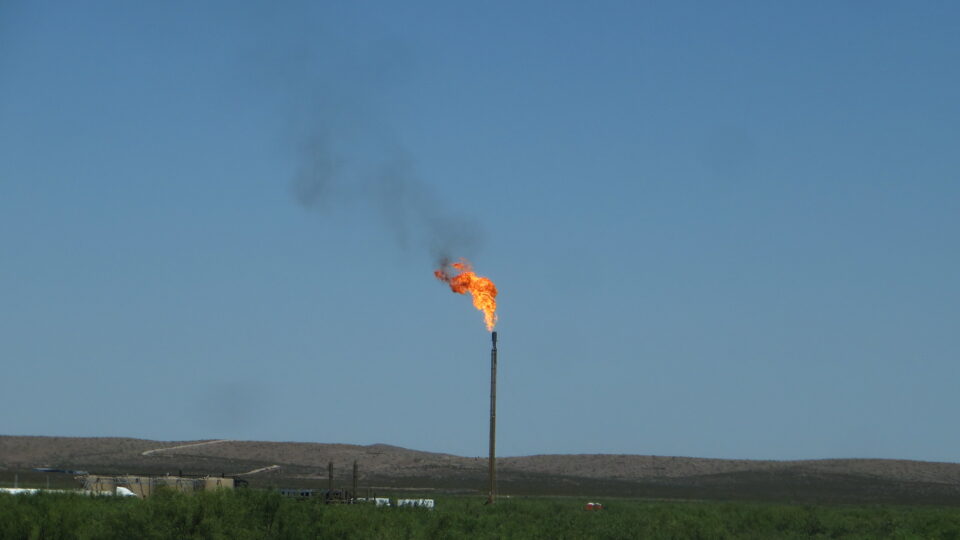
Methane leaking from oil and gas wells is a real problem for the environment because methane is far more potent at trapping heat than carbon dioxide.   The EPA has estimated that about 1.4% of the methane produced by wells nationally leaks into the atmosphere.   However, environmental experts and energy industry engineers have been concerned that leaks from mines, wells, refineries, storage facilities, and pipelines are vastly underreported.  But until recently, there really wasn’t a good way to find out.

Researchers at Stanford University have developed a technique based on the use of hyperspectral cameras mounted to airplanes.  The cameras measure sunlight reflected off of chemicals in the air that are invisible to the human eye.  Each chemical, including methane, has a unique fingerprint.  Using these sensors, methane is easy to spot and the technique can measure the output of individual wells.

The researchers performed a study of almost every oil and gas asset in the New Mexico Permian Basin, one of the largest and highest-producing oil and gas regions in the world.  They surveyed the sites for an entire year.  They estimate that more than 9% of all methane produced in the region is being leaked into the skies, far more than EPA estimates.

The positive outcome of the survey is that the researchers found that fewer than 4% of the 26,000 sites studied produced half of all the methane emissions observed.  Being able to identify the so-called super-emitter sites and dealing with them could lead to a major improvement in the situation.

The new technique is more accurate, faster, and more cost-effective than current ways to monitor emissions.

**********

Web Links

Stanford-led study: Methane leaks are far worse than estimates, at least in New Mexico, but there’s hope

Photo, posted July 10, 2016, courtesy of Ken Lund via Flickr.

Earth Wise is a production of WAMC Northeast Public Radio.

New York Bight Offshore Wind | Earth Wise

May 2, 2022 By EarthWise Leave a Comment

Late in February, the U.S. completed the most successful offshore wind lease auction in history.  The auction for rights to develop offshore wind in the New York Bight brought in a record $4.37 billion from the companies bidding for them.

The New York Bight is an area of ocean off the coasts of New York and New Jersey that the Bureau of Ocean Energy Management has divided into six lease areas for offshore wind development.  It covers a total of 480,000 acres.  The more than $4 billion secured in the auction is more than three times the revenue received from all U.S. offshore oil and gas lease auctions over the past five years.

Five out of the six winning bids have European connections in the form of various partnerships.  Europe has a far more advanced offshore wind market than the U.S. with a total of 25 GW of installations as of 2020.  Winning bidders included participation by RWE from Germany, British-owned National Grid, and Copenhagen Infrastructure Partners, among others.  Chicago-based Invenergy was the only American company without a European partner to have a winning bid.

The expected installed capacity for the 6 leased areas in the New York Bight is expected to be between 5.6 and 7 GW, enough to power 2 million homes.  The Bureau of Ocean Energy Management said capacity could be even higher.

The successful action has set the tone and expectations for auctions to come.  BOEM has six more offshore wind auctions planned over the next three years.  Forthcoming auctions are for areas of the Carolinas, Northern and Central California, the Gulf of Mexico, the Central Atlantic, Oregon, and the Gulf of Maine.

**********

Web Links

New York Bight: 5 takeaways from the record-breaking offshore wind auction

Photo, posted August 13, 2013, courtesy of Larry via Flickr.

Earth Wise is a production of WAMC Northeast Public Radio.

Turning Pollution Into Cash | Earth Wise     

April 22, 2022 By EarthWise Leave a Comment

Developing ways to turn pollution into cash

Power plants and other industrial facilities are a major source of carbon emissions.  There are a variety of techniques under development to prevent those emissions by capturing them rather than releasing them into the atmosphere.  All of them add costs to the functioning of the facility.  A good way to offset those costs is to convert the emissions into useful products, ideally making it profitable to capture emissions.

Engineers at the University of Cincinnati have developed an electrochemical system that converts carbon dioxide into ethylene, which is a chemical used in a wide range of manufacturing.  Ethylene has sometimes been called “the world’s most important chemical”.  It is used in many kinds of plastics, textiles, and the rubber found in tires and insulation. It is also used in heavy industry such as steel and cement plants as well as in the oil and gas industry.

The Cincinnati process is a two-stage cascade reaction that converts carbon dioxide to carbon monoxide and then into ethylene.  It is based on the underlying principle of the plug-flow reactor that is used for variety of production applications.  The study, published in the journal Nature Catalysis, demonstrates that the process has high ethylene selectivity – meaning that it effectively isolates the desired compound – as well as high productivity – meaning that it makes a lot of it.  The system will take more time to become truly economical, but the researchers are continuing to make progress on that front with improved catalysts.

The researchers believe that this technique can reduce carbon emissions and make a profit doing it.  Power plants and other facilities emit a lot of carbon dioxide.  With this process, it may be possible to capture it and produce a valuable chemical.

**********

Web Links

Conversion process turns pollution into cash

Photo, posted February 27, 2018, courtesy of Cyprien Hauser via Flickr.

Earth Wise is a production of WAMC Northeast Public Radio.

Corn Ethanol And The Climate | Earth Wise

March 29, 2022 By EarthWise 1 Comment

Corn ethanol hurts - not helps - the planet

The Renewable Fuel Standard legislation, first passed in 2005 and updated in 2007, requires billions of gallons of renewable fuel to be added to the country’s transportation fuel supplies.  It created the world’s largest biofuels program.

The standard was hailed as a major victory for the climate as well as a way to reduce our dependence upon foreign oil.

The intent of the legislation was to encourage various forms of renewable fuels – especially cellulosic ethanol from plant and wood fiber – to become an increasing part of the fuel mix.  That has yet to happen.  Instead, corn ethanol has been the backbone of the program.

Back in 2007, the EPA determined that ethanol from corn would lead to a 20% reduction in greenhouse gases compared to gasoline.  But the next year, a study published in the journal Nature projected that corn ethanol would double greenhouse gas emissions over 30 years because demand for corn would drive farmers to plow up increasing amounts of carbon-rich forest and grassland.

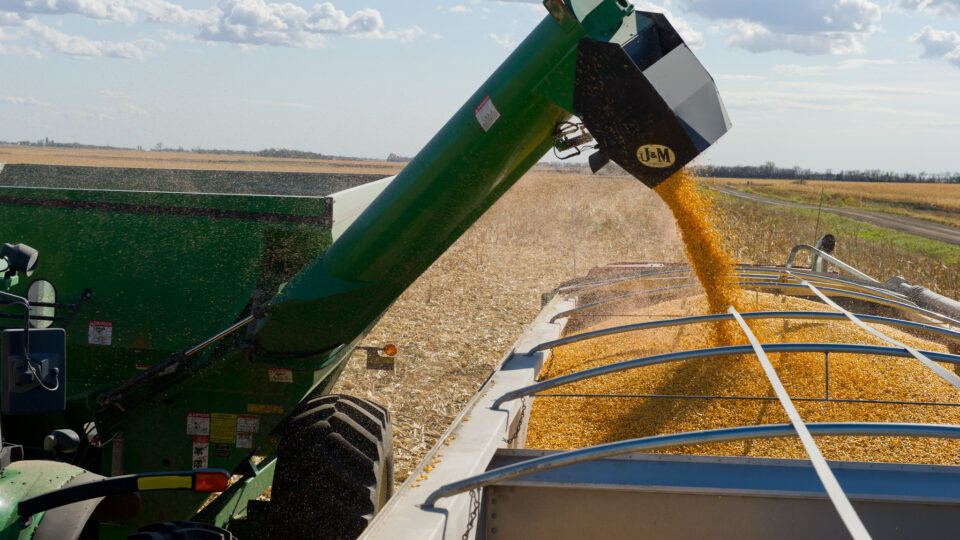
A new study published by researchers at the University of Wisconsin, Madison, has again concluded that corn-based ethanol may actually be worse for the climate than fossil-based gasoline as well as having other environmental downsides.  According to the study, since the fuel standard was passed, farmers have expanded corn production on nearly 7 million acres each year, causing the conversion of lands to cropland.  The result is that the carbon intensity of corn ethanol could be as much as 24% higher than gasoline.

The issue is still being debated in Congress, but if these results are verified, the time has come to revamp the terms of the renewable fuel standard.

**********

Web Links

Corn-Based Ethanol May Be Worse For the Climate Than Gasoline, a New Study Finds

Trots den höga effektiviteten leder inte vissa patienter som tar läkemedlet till en förbättring av erektion. Detta beror på felaktig användning av medicinen eller på att ED helt enkelt är en följd online apotek viagra av en annan sjukdom. I sådana fall är det obligatoriskt att konsultera och undersöka en läkare.

Photo, posted October 23, 2011, courtesy of the United Soybean Board via Flickr.

Earth Wise is a production of WAMC Northeast Public Radio.

Cleaning Up Abandoned Wells | Earth Wise      

March 3, 2022 By EarthWise Leave a Comment

Addressing the abandoned oil and gas wells

There are 130,000 documented abandoned oil and gas wells in the US, according to the Department of the Interior.  The key word is documented.  According to an EPA study in 2018, the actual number of abandoned wells could be as high as two or three million.  According to an analysis by the Environmental Defense Fund and McGill University, about nine million people in the United States live within a mile of one of these wells.

Some of these wells might be fairly harmless, and others might be quite dangerous.  Wells can emit a variety of gasses, including methane, which is a far stronger greenhouse gas than carbon dioxide.  Leaking wells are a major source of air and groundwater pollution.  Apart from methane, substances such as arsenic can continue to leak from wells even after they are no longer operational.

At the end of January, the Biden Administration announced a series of new actions to tackle methane pollution.  Among these measures is $1.15 billion in funds from the Department of the Interior that states can use to seal up abandoned oil and gas wells.  That funding comes from the Bipartisan Infrastructure Law passed in November, which sets aside $4.7 billion for a federal program dedicated to orphaned wells.

Addressing the largely ignored problem of abandoned wells is important from the standpoint of climate pollution as well as human health.  Efforts to plug the wells will also provide high-paying jobs

Other methane-reduction measures include increased enforcement from the Department of Transportation on reducing pipelines leaks, research funding for limiting methane emissions from beef and dairy farming, and technical assistance from the Department of Energy on well-plugging efforts.

**********

Web Links

Photo, posted March 23, 2011, courtesy of David Stone via Flickr.

Earth Wise is a production of WAMC Northeast Public Radio.

Safely Storing Carbon | Earth Wise

February 28, 2022 By EarthWise Leave a Comment

How to safely store carbon

As carbon dioxide levels continue to increase in the atmosphere and emissions reductions aren’t happening as fast as needed, there is growing interest in carbon capture and storage technologies.

The idea is to capture the CO2 emitted from industrial processes or from the burning of fossil fuels in power generation, and then permanently store it out of harm’s way.  There are several different types of sites where the CO2 might be stored.  Deep saline aquifers are particularly desirable for the purpose, but depleted hydrocarbon reservoirs are commonplace and relatively simple to use.  These are oil and gas wells that have been drained of their resources.

In many cases, CO2 has already been injected into these depleted wells as a means of enhanced oil recovery.  Therefore, such wells provide a unique opportunity to study what happens to carbon dioxide when it’s stored in these places.

Researchers from Oxford University recently published a paper in the journal Nature that compared the state of depleted wells with injected carbon dioxide to that of wells without the injected gas.  They found that nearly 3/4 of the CO2 was dissolved in the groundwater.  Unexpectedly, they also found that 13-19% of the carbon dioxide was converted into methane by methanogenic bacteria.  Methane is less soluble, less compressible, and less reactive than carbon dioxide.

Producing methane in these wells is therefore undesirable.  Deeper sites that have temperatures too high for the bacteria to thrive are much more suitable.  This research is important for identifying future carbon capture and storage sites and for designing long-term monitoring programs that are essential for low-risk, long-term carbon storage.

**********

Web Links

Safer carbon capture and storage

Photo, posted November 6, 2015, courtesy of CL Baker via Flickr.

Earth Wise is a production of WAMC Northeast Public Radio.

Oil Drilling In Los Angeles | Earth Wise      

February 24, 2022 By EarthWise Leave a Comment

Los Angeles may close its oil drilling chapter

Movies were not the first industry to boom in Los Angeles.  Oil was.  There was a lot of it, and it flowed close to the surface triggering rampant drilling all over the area.  By the 1920s, Los Angeles was one of the largest oil-exporting regions in the world.

A century later, there are over 20,000 active, idle, or abandoned wells spread across LA county, home to 10 million people.  Some are hidden behind facades; others are plainly visible, pumping away day and night.  About a third of Angelenos live less than a mile from an active well site.  In the last 20 years, improved oil extraction technology has actually led to a resurgence of oil drilling in Los Angeles.

Studies of the health impact of LA’s oil wells found that asthma is significantly more common among people living near oil wells than elsewhere in the county.  Surveys of residents’ lung functions revealed lower function on average when people live near wells.   Measurements of toxins in the air – such as benzene, toluene, and n-hexane – showed that levels of these substances were significantly reduced when oil production at a site stopped.

This issue has finally come to the forefront after a nearly a decade of community organizing and studies of adverse health effects.  In a unanimous vote on January 26, the Los Angeles City Council took the first step toward phasing out all oil and gas extraction in the city by declaring oil extraction a nonconforming land use.  The LA County Board of Supervisors voted unanimously to phase out oil extraction in unincorporated county areas.  Los Angeles’ long, troubled history with urban oil drilling appears to be nearing an end.

**********

Web Links

Los Angeles’ long, troubled history with urban oil drilling is nearing an end after years of health concerns

Photo, posted March 26, 2016, courtesy of Giuseppe Milo via Flickr.

Earth Wise is a production of WAMC Northeast Public Radio.

Synthetic Palm Oil | Earth Wise

February 18, 2022 By EarthWise Leave a Comment

Palm oil is the world’s cheapest and most widely used vegetable oil.  Producing it is a primary driver of deforestation and biodiversity loss in the tropics.  In Borneo, for example, oil palm cultivation has accounted for more than half of all deforestation over the past two decades.   More than one million square miles of biodiversity hotspots could be threatened by oil palm cultivation, which could potentially affect more than 40% of all threatened bird, mammal, and amphibian species.

Today, the world consumes over 70 million tons of palm oil each year, used in products ranging from toothpaste and oat milk to biodiesel and laundry detergent.

Given this situation, there are now multiple companies developing microbial oils that might offer an alternative to palm oil while avoiding its most destructive impacts.

A company called C16 Biosciences is working on the problem in Manhattan, backed by $20 million from a Bill Gates’ climate solutions investment fund.  A California-based startup called Kiverdi is working to manufacture yeast oil using carbon captured from the atmosphere. 

Xylome, a Wisconsin-based startup is working to produce a palm oil alternative that they call “Yoil”, produced by a proprietary strain of yeast.  The oil from the yeast strain is remarkably similar to palm oil. 

The challenge is to be able to produce microbial oils at large scale and at a competitive price.  Unless valuable co-products could be manufactured along with the oil, it may be difficult to compete with palm oil.  Without regulatory pressures and willingness of consumers to pay more, it may be difficult to replace palm oil in many of its applications.

**********

Web Links

Can Synthetic Palm Oil Help Save the World’s Tropical Forests?

Photo, posted December 9, 2008, courtesy of Fitri Agung via Flickr.

Earth Wise is a production of WAMC Northeast Public Radio.

The Importance Of City Trees | Earth Wise

January 28, 2022 By EarthWise Leave a Comment

The importance of street trees in cities

It is well known that green spaces can improve the quality of life and create a better climate in cities.  City trees and vegetation can help reduce urban heat island effects by shading buildings and roads, deflecting radiation from the sun, and releasing moisture into the atmosphere.  City trees and green spaces have also been proven to increase property values, promote wildlife and plant diversity, reduce noise pollution, and improve human health.  But how important are trees and vegetation for producing cleaner air in cities?

According to a new study led by researchers at the University of Gothenburg in Sweden, trees do contribute to cleaner air in cities, but the degree to which they do so varies greatly between different locations. 

The research team measured air pollutants across seven urban settings in the city of Gothenburg, and compared them with pollutants on the leaves of deciduous trees.  The researchers chose to focus on polycyclic aromatic hydrocarbons (PAHs), which are pollutants generated primarily during the incomplete combustion of organic materials, like coal, oil, and wood.

The results revealed that the pollutants in leaves did increase over time.  The researchers were able to show a clear correlation between the level of air pollutants and the concentration of pollutants in leaves. 

But at the same time, the researchers discovered that pollution levels varied greatly between measurement sites.  For example, the levels of PAHs were seven times higher at the most polluted site (the city’s main bus station) than they were at a location on the periphery of the city.

The research team hopes its findings will be used to help guide the planning of future urban landscapes.

**********

Web Links

Trees are important for cleaner air in cities

Photo, posted November 5, 2021, courtesy of Maria Eklind via Flickr.

Earth Wise is a production of WAMC Northeast Public Radio.

Carbon Capture In Denmark | Earth Wise

January 11, 2022 By EarthWise Leave a Comment

Denmark pursuing carbon capture technologies

Denmark has pledged to reduce greenhouse gas emissions 70% by 2030 compared with 1990 levels. The country has also banned oil exploration in Danish waters and plans to phase out offshore drilling in the North Sea by 2050.

Instead of pumping oil from the North Sea, Denmark plans to capture CO2 and store it there.  To meet its climate goals, Denmark is investing $2.4 billion in a plan to capture carbon dioxide from its energy and industrial sectors and inject it into the seabed in geological formations that previously held oil and gas deposits.

The first North Sea carbon capture and storage facilities will be put into service in 2025 and will remove nearly half a million tons of emissions from the atmosphere each year.  The carbon dioxide will be captured from energy and industrial sectors such as waste incineration and cement production.

There are multiple carbon capture projects underway around the world.  Many are directed at so-called direct air capture, which is taking carbon dioxide out of the air once it is already there.  In Iceland, a project named “Orca” is extracting CO2 from the air and piping into a processing facility where it is mixed with water and diverted into a deep underground well.  Other large direct air capture plants are being built in the U.S. Southwest and in Scotland.

Whether capturing carbon from industrial operations or directly from the air ultimately makes environmental and economic sense remains to be seen.  What is driving the development of these technologies is the troubling math that reducing emissions is not happening fast enough to stave off the destructive effects of climate change that will result from global temperatures rising too much.

**********

Web Links

Denmark bets on North Sea carbon capture to hit climate goals

Photo, posted July 2, 2018, courtesy of Ansgar Koreng via Flickr.

Earth Wise is a production of WAMC Northeast Public Radio.

Capturing Methane To Feed Fish | Earth Wise

December 30, 2021 By EarthWise Leave a Comment

Using captured methane as food for fish

Methane in the atmosphere is an extremely potent greenhouse gas.  Its warming potential is about 85 times that of carbon dioxide over a 20-year period.  It also worsens air quality by increasing atmospheric ozone.  Many human activities add methane to the atmosphere, notably emissions from landfills and oil and gas facilities.

Capturing methane from these sources for subsequent use is currently uneconomical but new research from Stanford University analyzes the market for using the methane to feed bacteria to produce fishmeal.

Methane-consuming bacteria called methanotrophs can be grown in chilled, water-filled bioreactors containing pressurized methane, oxygen, and nutrients.  The bacteria produce a protein-rich biomass that can be used as fishmeal in aquaculture.  This could offset demand for fishmeal made from small fish or plant-based feeds that require land, water, and fertilizer.

Some companies already do this using natural gas provided by utility pipelines, but it would be far better for the environment to use methane emitted at large landfills, wastewater treatment plants, and oil and gas facilities.

Consumption of seafood has more than quadrupled since 1960, depleting wild fish stocks.  Farmed fish now provide half of all the animal-sourced seafood we eat.

The Stanford research analyzed the cost of methanotrophic fishmeal production under various scenarios and found it to be very competitive with and in some cases considerably cheaper than current market prices for fishmeal. 

According to the study, this process could profitably supply total global demand for fishmeal with methane captured in the U.S. alone.

**********

Web Links

Stanford researchers reveal how to turn a global warming liability into a profitable food security solution

Photo, posted April 30, 2017, courtesy of Artur Rydzewski via Flickr.

Earth Wise is a production of WAMC Northeast Public Radio.

Is Peak Oil Here? | Earth Wise

August 17, 2021 By EarthWise Leave a Comment

Has peak oil already come and gone?

For many years there has been talk of “peak oil”, the point at which rising world oil consumption would peak and then start declining.  Some analysts have been predicting that this could happen by the 2030s.   But the coronavirus pandemic drove a 9% slump in oil demand in 2020 that some economists are saying might never be entirely reversed.

There are three major forces driving down the world’s appetite for oil:  decarbonization of economies to meet the goals of the Paris climate agreement, declining demand for oil as renewable energy sources and electric vehicles are increasingly adopted, and detoxification as cities act to curb particulates and emissions from burning petroleum.

The largest single factor is electric vehicles.  Automobiles currently consume almost half of the world’s oil.  As of the end of 2020, there were an estimated 10 million electric cars as well as more than 600,000 electric buses and trucks.  This is still less than 1% of all vehicles, but 5% of all new cars being bought are now electric and the number is growing rapidly.  Experts estimate that nearly a quarter of global car sales will be electric vehicles by 2025 and many car manufacturers are promising to sell only electric cars within the next 10 years.

The decline in oil demand is pretty much inevitable at this point.  The main question is how quickly it will happen.  Road transport makes up 48% of global oil demand, petrochemicals account for 14%, aviation 7%, and shipping 6%.  Ultimately all these things are likely to diminish over time. 

Only time will tell, but the long-awaited arrival of peak oil may already have happened.

**********

Web Links

Amid Troubles for Fossil Fuels, Has the Era of ‘Peak Oil’ Arrived?

Photo, posted April 14, 2019, courtesy of Tony Webster via Flickr.

Earth Wise is a production of WAMC Northeast Public Radio.

Have We Reached Peak Internal Combustion Engine? | Earth Wise

August 3, 2021 By EarthWise 1 Comment

Global sales of gas-powered cars may have peaked in 2017

According to new analysis from Bloomberg New Energy Finance, global sales of gas-powered cars may well have peaked in 2017, representing a significant milestone in the transition to electric vehicles.

Demand for gas cars dropped in 2018 and 2019, and then plummeted in 2020 as a result of the coronavirus pandemic.  While sales are surely picking up as the pandemic ebbs, the increasing demand (and supply as well) for plug-in vehicles is likely to put gas-powered cars in a state of permanent decline.

Global EV sales are projected to go from 3.1 million last year to 14 million in 2025.  The growth is being driven by falling battery prices, government policies, and increasing choices of vehicles.  Virtually all automobile manufacturers are introducing electric vehicles over the next couple of years and increasing numbers of them are planning a complete transition to EVs in the near future.  Projections are that EVs will account for the majority of new car sales by 2035.

While all this progress is encouraging, there are still over a billion gas- and diesel-powered cars on the road and the fleet turns over slowly.  The current average operating life of cars here in the US is 12 years.

To reach the net-zero carbon emission goals by 2050 as many governments have mandated, additional policies and regulations will be needed.  For example, electric cars will need to account for essentially all new sales by 2035, not just the majority.  Reaching net-zero by mid-century will require all hands on deck, including trucks and heavy commercial vehicles that have barely started to become electrified.

**********

Web Links

New Analysis Suggests We Have Already Hit Peak Internal Combustion Engine

Photo, posted December 23, 2017, courtesy of Davide Gambino via Flickr.

Earth Wise is a production of WAMC Northeast Public Radio.

Post-COVID Emissions Rebound | Earth Wise

May 28, 2021 By EarthWise Leave a Comment

Emissions are on the rise as COVID crisis lessons

The extensive shutdowns associated with the COVID-19 pandemic resulted in reduced activity across many sectors of the global economy.  As a result, global pollution and greenhouse gas emissions also saw lower levels.  As the COVID crisis lessens, an economic recovery is growing and as that occurs, emissions are on the rise.

The International Energy Agency forecasts that energy-related carbon dioxide emissions are projected to increase by 1.5 billion tons this year, the second-largest increase in history.

The emissions increase in 2021 is expected to be nearly 5%, reversing most of last year’s emissions decline caused by the pandemic. This would be the largest annual rise since the 2010 recovery from the global financial crisis.  In many places across the globe, people are making up for lost time and doing more of all the things that cause carbon emissions.

A key driver of the emissions increase is a rise in coal use.  The forecast is that coal-burning in 2021 would come close to the all-time peak of 2014.  Both natural gas and oil use are also expected to increase this year.  These increases are in spite of a predicted 17% increase in electricity generation from wind power and an 18% increase in solar-power generation. 

Atmospheric concentrations of CO2 are now at 417 parts per million and have increased by 3 PPM in the past year.  If human CO2 emissions are not reined in, atmospheric concentrations of planet-warming greenhouse gases could double those of pre-Industrial levels by mid-century, which would have disastrous impacts on the climate.

**********

Web Links

Global CO2 Emissions Set to Surge in 2021 in Post-Covid Economic Rebound

Photo, posted October 22, 2020, courtesy of Hospital Clínic Barcelona via Flickr.

Earth Wise is a production of WAMC Northeast Public Radio.

Not Such Climate Champions | Earth Wise

April 5, 2021 By EarthWise Leave a Comment

Problems with the Paris Climate Accord

The goal of the Paris Climate Accord is to limit warming to below 2 degrees Celsius and if possible to stay as close as close to 1.5 degrees above pre-industrial levels.  Nations around the world have made commitments to drastically reduce their carbon dioxide emissions from the use of fossil fuels that are in large part responsible for the rising temperatures.

There are a number of countries that proudly claim to be leading the world in the fight against climate change but who are actually still a major part of the problem.  Among these are Norway, the UK, and Canada.

Norway powers its streetlamps with renewables, runs its public transportation system entirely by renewable energy, and leads the world in the adoption of electric cars.  Both the UK and Canada have set ambitious targets for emissions reductions leading to zero net emissions by 2050. 

The problem is that under the Paris Agreement, each country is only responsible for the greenhouse gas emissions produced within its territory.  That means that the UK, Canada, and Norway (like many other countries) don’t need to worry about the emissions caused by the burning of their oil, gas, and coal in other places around the world.

Norway’s annual domestic emissions reached about 53 million tons in 2017 according to its government.  The emissions from the oil and gas Norway sold abroad reached roughly 470 million tons in 2017.  Canada has huge proven oil reserves it is exploiting.

Canada, Norway, and the UK all plan to keep producing fossil fuels, investing in new fossil fuel projects, and explorations.  As long as this continues, these countries are not really climate champions; they are climate hypocrites.

**********

Web Links

Norway, the UK and Canada are not climate champions. They are climate hypocrites

Photo, posted September 4, 2008, courtesy of Statkraft via Flickr.

Earth Wise is a production of WAMC Northeast Public Radio.

What’s The Best Way To Reduce Emissions? | Earth Wise

April 1, 2021 By EarthWise Leave a Comment

Taxing carbon is the best solution to climate change

A carbon tax is a fee imposed on the burning of carbon-based fuels, like coal, oil, and gas.  It’s one way to make the users of carbon fuels pay for the climate damage caused by releasing carbon dioxide into the atmosphere. 

According to a new study by researchers at Ohio State University, putting a price on producing carbon is the cheapest and most efficient policy change that legislators can make in order to reduce climate change-causing emissions. 

The case study, which was recently published in the journal Current Sustainable/Renewable Energy Reports, looked at the impact that a variety of policy changes would have on reducing carbon dioxide emissions from electricity generation in Texas. The researchers found that assigning a price to carbon, based on the cost of climate change, was most effective. 

The study did not look at how policy changes might affect the reliability of the Texas power system, an important consideration after the failure of the state’s power grid following winter storms in February. 

But the study did examine other policies and found that they were either more expensive or not as effective, including mandates that a certain amount of energy in a portfolio come from renewable sources.  Subsidizing renewable energy sources was also found to be less effective. 

According to researchers, market-based solutions have previously proven effective combating environmental issues.  For example, a cap-and-trade approach was used to reduce levels of sulfur dioxide, one of the chemicals that causes acid rain. 

For the sake of the climate, we should probably tax carbon. 

**********

Web Links

Want to cut emissions that cause climate change? Tax carbon

What’s a carbon tax?

Photo, posted June 5, 2011, courtesy of John Englart via Flickr.

Earth Wise is a production of WAMC Northeast Public Radio.

  • « Go to Previous Page
  • Page 1
  • Page 2
  • Page 3
  • Page 4
  • Page 5
  • Interim pages omitted …
  • Page 7
  • Go to Next Page »

Primary Sidebar

Recent Episodes

  • An uninsurable future
  • Clean energy and jobs
  • Insect declines in remote regions
  • Fossil fuel producing nations ignoring climate goals
  • Trouble for clownfishes

WAMC Northeast Public Radio

WAMC/Northeast Public Radio is a regional public radio network serving parts of seven northeastern states (more...)
Copyright © 2026 ·