
• Skip to primary navigation
  • Skip to main content
  • Skip to primary sidebar

Earth Wise

A look at our changing environment.

  • Home
  • About Earth Wise
  • Where to Listen
  • All Articles
  • Show Search
Hide Search
You are here: Home / Archives for hydrogen

hydrogen

Primary Ways To Mitigate Climate Change | Earth Wise

May 30, 2022 By EarthWise Leave a Comment

How to mitigate climate change

The most recent report issued by the Intergovernmental Panel on Climate Change states that the world must halt the increase in greenhouse gases within three years, reduce emissions by 43% in the next seven years, and eliminate them entirely by 2050.  Otherwise, there will likely be catastrophic and irreversible impacts on the climate.

With respect to achieving these reductions, the report emphasizes decarbonizing the energy sector through electrification by replacing fossil fuels anywhere and everywhere possible.  Where that isn’t yet practical – such as in shipping and aviation – the use of biofuels and hydrogen can provide a stopgap until battery technology becomes a viable alternative.

The economics of this approach continue to improve.  Since 2010, the cost of wind, solar, and batteries has declined by as much as 85%.  In many cases, costs have fallen below those of fossil fuels.  Nonetheless, the report stresses that continuing to provide national, state, and local incentives for using renewable energy is a key factor in achieving the necessary reductions.

However, reducing emissions will no longer be enough.  This is the first major IPCC report that states that man-made carbon dioxide removal strategies will be necessary to meet the goals of the Paris Climate Agreement.  So-called natural carbon storage options, like planting trees and using farming methods that sequester carbon in soil, are also important parts of the strategy.

It is up to governments, policymakers, and investors to implement the necessary changes to mitigate climate change.  There is lots of talk about it, but it will take concerted action to avoid increasingly dire consequences.

**********

Web Links

Report highlights affordable, available ways to mitigate climate change now

Photo, posted September 8, 2007, courtesy of Kevin Dooley via Flickr.

Earth Wise is a production of WAMC Northeast Public Radio.
Decarbonizing The Most Polluting Heavy Industries | Earth Wise

November 23, 2021 By EarthWise Leave a Comment

how to decarbonize the most polluting industries

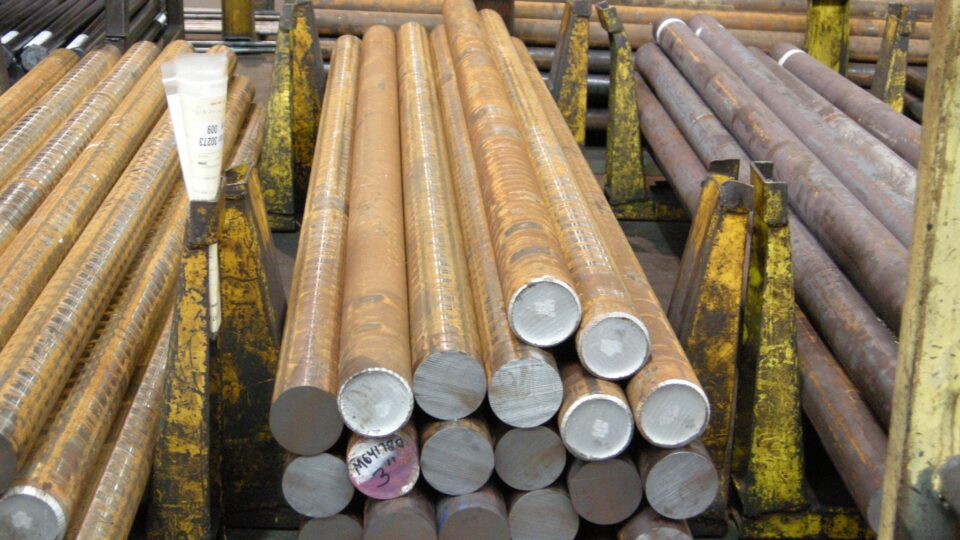
The production of steel, cement, and ammonia accounts for about 20% of the carbon dioxide humans pour into the atmosphere.  Modern cities are largely constructed from concrete and steel and most of our food is grown using fertilizer made from ammonia. 

The most widely discussed solutions to decarbonizing these industries are green hydrogen and carbon capture and storage or CCS.

Steel manufacture is responsible for 11% of society’s emissions.  Most production starts by burning coal in a blast furnace. Using CCS could reduce emissions from burning the coal.  But the blast furnace could be eliminated entirely by the use of electrolysis to produce the pure iron needed to make steel.  This would be extremely energy-intensive but using a low-carbon source like green hydrogen could greatly reduce the emissions from making steel.

Ammonia is made by producing hydrogen from natural gas and then combining it with atmospheric nitrogen.  Both the hydrogen production and ammonia synthesis are energy intensive.  Using green hydrogen would eliminate emissions from the hydrogen production itself and new research on catalysts aims at lower-temperature, less-energy intensive ammonia synthesis.

Decarbonizing cement manufacturing is perhaps the toughest challenge.  Cement is made in a high-temperature kiln, typically heated by burning fossil fuels.  The process converts calcium carbonate and clay into a hard solid called clinker.  The main byproduct of that is even more carbon dioxide.  Burning green hydrogen and capturing carbon emission are about the best hope for reducing cement manufacturing emissions.

**********

Web Links

Can the World’s Most Polluting Heavy Industries Decarbonize?

Photo, posted June 30, 2009, courtesy of Portland Bolt via Flickr.

Earth Wise is a production of WAMC Northeast Public Radio.

Reducing Emissions From Shipping And Aviation | Earth Wise

November 19, 2021 By EarthWise Leave a Comment

The global marine shipping and aviation industries are each responsible for about 3% of greenhouse gas emissions.  These are relatively small numbers, but as other industries decarbonize, the contributions from shipping and aviation will loom larger and larger.

In October, both of these industries made commitments to reach net zero emissions by 2050.  How can they do it?  We don’t really have the details of the technologies to be used, and neither do these industries.  But there are ideas being considered.

For both ships and planes, the solution for short-distance trips can be electrification.  Electric planes are in the works for short distances.  Battery-powered container ships are also under development.  But the electrification of longer international and intercontinental routes for both industries is very difficult.  The size and weight of batteries needed for long hauls are major challenges to overcome.

The low-carbon solution slowly being deployed in aviation is sustainable aviation fuel made from renewable sources. Longer term, green hydrogen fuel for planes may be a solution.  For shipping, hydrogen may play an even larger role.  As in the other potential uses for hydrogen, the essential requirement is to be able to produce hydrogen in a way that does not emit greenhouse gases.

There are multiple ways to move towards the decarbonization of both aviation and shipping.  Which will turn out to be the most practical and successful is not yet known.  What is essential is for both industries to follow through on their commitments to research, develop, and deploy zero-carbon solutions.  They appear to have embraced the vision for the future.  Now comes the hard work of achieving that vision.

**********

Web Links

Shipping & Aviation Plan To Go Net Zero. How?

Photo, posted August 8, 2014, courtesy of Tomas Del Coro via Flickr.

Earth Wise is a production of WAMC Northeast Public Radio.
Wastewater And Ammonia | Earth Wise

October 22, 2021 By EarthWise Leave a Comment

Ammonia is the second most produced chemical in the world.  More than half of it is used in agriculture to produce various kinds of fertilizer, to produce cotton defoliants that make cotton easier to pick, and to make antifungal agents for fruits.  Globally, ammonia represents more than a $50 billion a year market.

Current methods to make ammonia require enormous amounts of heat – generated by burning fossil fuels – to break apart nitrogen molecules so that they can bind to hydrogen to form the compound. Ammonia production accounts for about 2% of worldwide fossil energy use and generates over 400 million tons of CO2 annually.

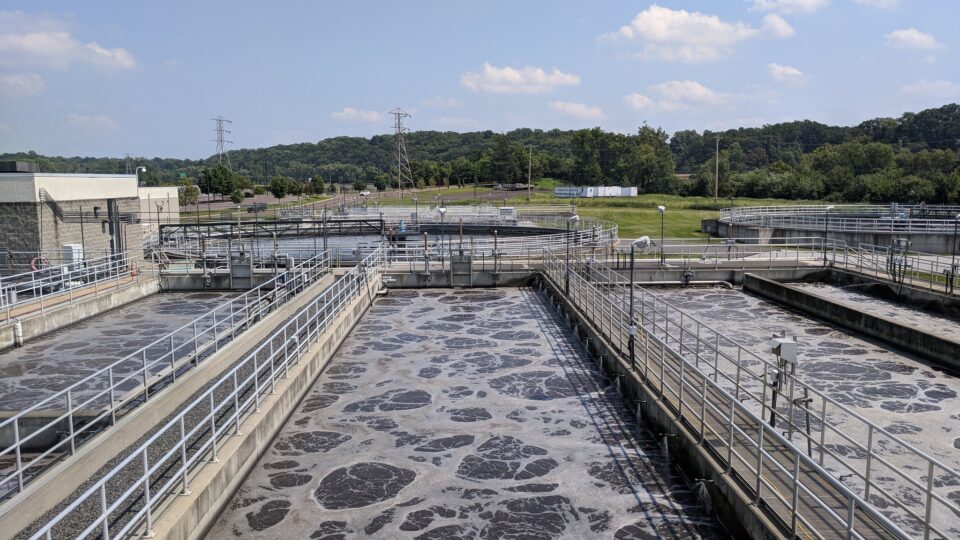
Engineers at the University of Illinois Chicago have created a solar-powered electrochemical reaction that uses wastewater to make ammonia and does it with a solar-to-fuel efficiency that is 10 times better than previous comparable technologies.

The process uses nitrate – which is one of the most common groundwater contaminates – to supply nitrogen and uses sunlight to power the reaction.  The system produces nearly 100% ammonia with almost no hydrogen side reactions.  No fossil fuels are needed, and no carbon dioxide or other greenhouse gases are produced.  The new method makes use of a cobalt catalyst that selectively converts nitrate molecules into ammonia.

Not only is the reaction itself carbon-neutral, which is good for the environment, but if it is scaled up for industrial use, it will consume wastewater, thereby actually being good for the environment.  The new process is the subject of a patent filing and the researchers are already collaborating with municipal corporations, wastewater treatment centers, and others in industry to further develop the system.

**********

Web Links

Combining sunlight and wastewater nitrate to make the world’s No. 2 chemical

Photo, posted August 29, 2018, courtesy of Montgomery County Planning Commission via Flickr.

Earth Wise is a production of WAMC Northeast Public Radio.

New York And Green Hydrogen | Earth Wise

August 23, 2021 By EarthWise Leave a Comment

Green hydrogen to be a part of New York's decarbonization strategy

In July, outgoing New York Governor Andrew Cuomo announced plans for the state to explore the potential role of green hydrogen as part of New York’s decarbonization strategy.

Green hydrogen is hydrogen produced using renewable energy, such as wind, solar, and hydro power.  While hydrogen itself is a carbon-free fuel, most of the hydrogen produced today is made with a process called natural gas reforming which has byproducts of carbon monoxide and carbon dioxide.  As a result, the environmental benefits of using hydrogen are largely lost.  Hydrogen is the most plentiful element in the universe but extracting it for use as a fuel is not easy.

Green hydrogen is obtained by splitting water molecules into their constituent hydrogen and oxygen parts.  In principle, oxygen is the only byproduct of the process.  The main drawback of electrolysis, as this process is called, is that it is energy intensive as well as being expensive.  But if that energy comes from renewable sources, then it is a clean process.

New York’s announcement is that the state will collaborate with the National Renewable Energy Laboratory and join two hydrogen-focused organizations to inform state decision-making, as well as make $12.5 million in funding available for long duration energy storage techniques and demonstration projects that may include green hydrogen.

Green hydrogen has the potential to decarbonize many of the more challenging sectors of the economy.  Hydrogen is a storable, transportable fuel that can replace fossil fuels in many applications.  Many experts believe that the so-called hydrogen economy could be the future of the world’s energy systems.  For that to happen, green hydrogen will need to be plentiful, sustainable, and inexpensive.

**********

Web Links

New York announces initiatives to explore green hydrogen for decarbonization

Photo, posted October 26, 2019, courtesy of Pierre Blache via Flickr.

Earth Wise is a production of WAMC Northeast Public Radio.

The Potential Of Artificial Photosynthesis | Earth Wise

August 2, 2021 By EarthWise Leave a Comment

Artificial photosynthesis could dramatically improve our ability to power society cleanly and efficiently.

The sun is the primary source of energy on the earth.  Enough solar energy hits the earth in one hour to meet all of human civilization’s energy needs for an entire year.  The two leading forms of renewable energy – photovoltaic solar power and wind power – are ways of making use of the sun’s energy.  Wind power is indirectly provided by the sun; photovoltaic power uses sunlight to generate electricity.

The most efficient use of solar energy on the planet is one perfected by plants millions of years ago:  photosynthesis.  Photosynthesis is a complex sequence of processes by which plants convert sunlight and water into usable energy in the form of glucose.  Plants utilize a combination of pigments, proteins, enzymes, and metals to perform their magic.  If we can develop artificial photosynthesis, it would be a dramatic improvement of humans’ ability to power society cleanly and efficiently.  Whereas photovoltaics capture about 20% of the sun’s energy, photosynthesis stores 60% of the sun’s energy as chemical energy.

Researchers across the globe are working to develop artificial photosynthesis.  A group at Purdue university has been making progress in trying to mimic the ability of leaves to collect light and split water molecules to generate hydrogen. This is a critical step in photosynthesis that is accomplished by protein and pigment complexes known as “photosystems II”.  The Purdue group is experimenting with these proteins and various synthetic catalysts in order to try to develop artificial leaves based on abundant, nontoxic materials. 

It is likely to take a decade or more for artificial photosynthesis technology to become part of our energy system, but its ultimate potential is enormous.

**********

Web Links

Soaking up the sun: Artificial photosynthesis promises a clean, sustainable source of energy

Photo, posted June 14, 2007, courtesy of Alex Holyoake via Flickr.

Earth Wise is a production of WAMC Northeast Public Radio.

Private Jets and CO2 Emissions | Earth Wise

July 16, 2021 By EarthWise Leave a Comment

Private jets are trouble for the planet

During the heart of the Covid-19 pandemic, private jet use saw record levels because chartered aircraft were estimated to have 30 times lower risk for covid than flying commercial.  By August 2020, while commercial flights were down 60% year-over-year, private jet traffic was actually up.  From an environmental perspective, however, flying on a private jet is about the worst thing one can do for the environment.

Private jets are 10 times more carbon intensive than airlines on average and 50 times more polluting than trains.  A four-hour private flight emits as much as the average person does in a year.

In Europe, 7 out of the 10 most polluting routes taken by private aircraft lie in the UK-France-Switzerland-Italy axis, with jets departing the UK and France being the biggest source of pollution.  One in 10 flights departing France are private jets, half of which travelled less than 300 miles.

A study by the research group Transport & Environment points out that wealthy private jet owners are ideally suited to aid in the decarbonization of the aviation sector.  Private jet short hops are prime targets for replacement by clean technologies like electric and hydrogen aircraft.  European policy makers could ban the use of fossil-fuel private jets for flights under 600 miles by 2030.  Until such a ban, jet fuel and flight taxes could be imposed on private jets to account for their disproportionate climate impact and support technology development.  And companies and individuals could commit to substantial reductions in private jet use when alternatives exist that do not unreasonably increase travel time.

The super-rich could be part of the solution instead of part of the problem.

**********

Web Links

Private Jet Use Rising, Sending CO2 Emissions Soaring

Photo, posted September 9, 2020, courtesy of Mackenzie Cole via Flickr.

Earth Wise is a production of WAMC Northeast Public Radio.

Scaling Up Green Hydrogen | Earth Wise

April 27, 2021 By EarthWise Leave a Comment

How to scale up green hydrogen

The global hydrogen market generates about $150 billion dollars a year.  The bulk of the market consists of hydrogen used to produce ammonia, refine oil, and produce methanol.  Advocates for hydrogen foresee a $600 billion a year market based on power and industry uses, mobility and transport uses, chemical feedstocks, and construction.  But the problem with expanding the use of hydrogen is that the vast majority of hydrogen in use today is produced from fossil fuels such as natural gas and coal and producing it creates carbon dioxide emissions.

The great hope of the industry is “green hydrogen”- hydrogen produced either without using fossil fuels at all or by capturing and storing the emissions generated. The most likely approach is electrolysis – using electricity to produce hydrogen from water.

Billions of dollars are being invested by both governments and by large oil companies in a race to scale up electrolysis and make it economically attractive.  According to the Hydrogen Council industry lobby group, at least $300 billion is expected to be invested globally over the next decade aimed at developing the green hydrogen that could one day meet almost a fifth of global energy demand.

Many argue that producing green hydrogen with electrolysis is an extremely inefficient way to utilize renewable energy.  Critics of hydrogen-powered vehicles particularly make this argument.   But industrial applications of hydrogen that currently use large amounts of fossil fuels – such as steel manufacturing – may be places where green hydrogen would make a real dent in global emissions.

The race to clean up hydrogen is definitely on.

**********

Web Links

The Race to Scale Up Green Hydrogen to Help Solve Some of the World’s Dirtiest Energy Problems

Photo, posted December 16, 2020, courtesy of Sharon Hahn Darlin via Flickr.

Earth Wise is a production of WAMC Northeast Public Radio.

Renewable Energy And Green Ammonia | Earth Wise

January 20, 2021 By EarthWise Leave a Comment

A breakthrough in greening ammonia

Several different clean technology trends may come together on farms across the country where wind turbines could power devices that produce green ammonia for fertilizer and zero emission fuel.

Distributed wind is a kind of renewable energy that doesn’t get much attention.  It refers to turbines that are used to generate electricity for on-site use, as for a factory or a farm.  It typically involves smaller turbines than the behemoths that are used in giant wind farms.

Installing a wind turbine or two on a farm could be quite valuable if the electricity generated could be used to make green ammonia.  Such an application would eliminate the problem of “stranded wind”, which is when a location has lots of wind but lacks access to the electricity transmission infrastructure.

If farmers could utilize wind energy to produce ammonia, they could make their own fertilizer as well as fuel and get relief from price spikes and uncertainties in the commodities market.  Of course, they would also make use of the electricity they generate on site.

Most ammonia is produced using a proven technology called the Haber-Bosch process.   Ammonia contains only nitrogen and hydrogen, both of which can be extracted from the air.  The trick is how to do it efficiently using renewable electricity.   The Department of Energy has a program called the REFUEL Initiative, which aims at deploying renewable energy to produce ammonia.  The University of Minnesota, among other places, has multiple programs dedicated to green ammonia technology. 

There is encouraging progress being made that may ultimately result in a common sight of wind turbines on farms producing fertilizer, fuel, and electricity.

**********

Web Links

The Renewable Energy Cows Come Home, Now With Green Ammonia

Photo, posted July 15, 2009, courtesy of Daniel_Bauer via Flickr.

Earth Wise is a production of WAMC Northeast Public Radio.

Hydrogen-Powered Jetliners | Earth Wise

December 18, 2020 By EarthWise Leave a Comment

Airbus developing hydrogen-powered jetliners

Airbus, the giant European aerospace company, hopes to have hydrogen-powered commercial airliners in the sky by 2035.  Such planes would have no carbon dioxide emissions.

Greenhouse gas emissions from commercial aviation have been a rapidly increasing contribution to the global total.  Of course, the Covid-19 pandemic has drastically reduced air travel, so emissions are currently lower than they have been in a very long time.  But at some point, they will resume at previous levels and continue to increase.

Planes themselves produce over 2% of global CO2 emissions, and between the climate effects of contrails and the emissions associated with the rest of the air travel industry, commercial aviation drives about 5% of global warming.

Airbus is studying design concepts in which planes run off of hydrogen and oxygen fuel and have no carbon exhaust.   Making such planes practical and environmentally advantageous requires solving an array of complex technical challenges. 

One of the biggest challenges is that the hydrogen on the market today is considered to be “brown” rather than green, meaning that it is not a sustainably produced energy source.  Almost all hydrogen produced today comes from natural gas reforming, which results in carbon emissions.  A viable hydrogen-powered aviation technology assumes that producing hydrogen by splitting water molecules into oxygen and hydrogen using renewable energy becomes the standard source for it.

There have been test flights of small planes and drones powered by hydrogen, but Airbus expects that intensive research and development for the next five years will be required to evolve its current preliminary designs to a stage where they could be developed for future use in its product line.  It won’t happen overnight, but according to Airbus, hydrogen planes are coming.

**********

Web Links

Airbus Hopes to Be Flying Hydrogen-Powered Jetliners With Zero Carbon Emissions by 2035

Photo, posted April 15, 2019, courtesy of Olivier Cabaret via Flickr.

Earth Wise is a production of WAMC Northeast Public Radio.

Green Hydrogen | Earth Wise

December 11, 2020 By EarthWise Leave a Comment

Countries betting big on hydrogen

Saudi Arabia is a country built around oil, but it is now placing a big bet on green hydrogen as the next big thing in its energy future.  The country is constructing a $500 billion futuristic city called Neom in the desert along the Red Sea.  The brand-new city will be home to a million people, and it will be powered by green hydrogen.

The U.S. company Air Products & Chemicals has been building a green hydrogen plant there for the last four years.  The giant plant will be powered by 4 gigawatts of wind and solar projects.

Green hydrogen is hydrogen produced without carbon emissions.  Most hydrogen produced commercially is made from natural gas, which results in CO2 emissions.  Green hydrogen is made by using electricity to split water into its component elements using renewable energy to power the process.

Saudi Arabia is an ideal place for a giant green hydrogen plant.  The Middle East has the world’s cheapest wind and solar power.  The sun reliably shines there almost every day and the wind blows almost every night.

While some proponents argue that hydrogen should fuel the entire energy system, other experts see it as a more targeted solution.  The view is that wind and solar power can provide the electricity we need to power homes and electric cars.  However, green hydrogen could be ideal to power energy-intensive industries like concrete and steel manufacturing, as well as parts of the transportation sector that are more difficult to electrify.

While green hydrogen is barely on the radar in the US, around the world a green hydrogen rush is underway, developing it as an energy source that could help end the reign of fossil fuels.

**********

Web Links

Green Hydrogen: Could It Be Key to a Carbon-Free Economy?

Photo, posted November 6, 2020, courtesy of RSM Chrystie via Flickr.

Earth Wise is a production of WAMC Northeast Public Radio.

Hydrogen-Powered Transport In Britain | Earth Wise

November 27, 2020 By EarthWise Leave a Comment

hydrogen powered train coming to the UK

The first hydrogen-powered train in the UK had its first mainline runs at the end of September.  The train, known as HydroFLEX, was developed under a project headed by the University of Birmingham under the UK government’s Department for Transport. 

Hydrogen-powered trains do not emit harmful gases but rather use hydrogen and oxygen to produce electricity, water, and heat.  The technology in the HydroFLEX train will be available by 2023 to retrofit existing diesel-powered trains and thereby de-carbonize the rail network and make train travel greener and more efficient.

The UK has ambitious plans for the use of hydrogen technology.  The Department of Transport plans to publish a master plan in January that will outline how green hydrogen could power buses, trucks, rail, maritime, and aviation transport across the UK.

The HydroFLEX trial is taking place in Tees Valley in northeastern England and the plan is for that area to become a Hydrogen Transport Hub that will include the world’s largest versatile hydrogen refueling facility.   The plans for Tees Valley involve academia, industry, and government participants.  The next stages of the HydroFLEX project are well underway with the University of Birmingham developing a hydrogen and battery-powered module that can be fitted underneath a train to allow for more space for passengers in train cars.

The UK government’s Hydrogen for Transport Program is also funding a green hydrogen refueling station and 19 hydrogen-powered garbage trucks in Glasgow, Scotland.

The UK plans to switch to a net zero economy and their current program increasingly embraces hydrogen technology to provide more sustainable, greener forms of transportation.

***********

Web Links

UK embraces hydrogen-fueled future as transport hub and train announced

Photo, posted May 15, 2019, courtesy of Jeremy Segrott via Flickr.

Earth Wise is a production of WAMC Northeast Public Radio.

Fuel From Lignin | Earth Wise

November 26, 2020 By EarthWise Leave a Comment

Lignin as a fuel

Lignin is an organic polymer that provides the rigid structure of plants and is what gives wood and bark their characteristic properties.  Lignin typically comprises between 20 and 35% of the mass of wood.  The two major substances extracted from trees, grasses, and other biomass materials are cellulose and lignin.  Cellulose is used to make paper, bioethanol, and other products, but lignin is largely unused because it is difficult to break down into useful substances such as feedstocks for fuels.  As a result, lignin is largely wasted.  Worldwide, some 50 million tons of lignin are produced from paper and bioethanol manufacturing each year and almost all of that is simply burned to generate heat.

Lignin can be broken down using pyrolysis techniques at high temperatures to create bio-oils, but those oils lack sufficient hydrogen and contain too much oxygen to be useful as fuels.  There is a process called hydrodeoxygenation that adds hydrogen and removes oxygen, but it requires high temperatures and very high pressures as well as producing char and tar that reduces the efficiency of the process.

Researchers at Georgia Tech recently published work describing a new process for turning lignin into useful products.  They developed a dual catalyst system of super-acid and platinum particles that adds hydrogen and removes oxygen from lignin bio-oil and makes it useful as a fuel and source of chemical feedstocks. 

The new process could help meet the growing demand for bio-based oils as well as helping the forest product, paper, and bioethanol industries by providing an additional revenue stream from what previously was a waste product.

**********

Web Links

New Process Boosts Lignin Bio-oil as a Next-Generation Fuel

Photo, posted August 16, 2017, courtesy of evcabartakova via Flickr.

Earth Wise is a production of WAMC Northeast Public Radio.
A Room-Temperature Superconductor | Earth Wise

November 18, 2020 By EarthWise Leave a Comment

room temperature superconductor

One of the Holy Grails of science has apparently been found:  a room-temperature superconductor.   In a paper recently published in Nature, scientists from the University of Rochester and collaborators announced that they had observed superconductivity at 59 degrees Fahrenheit in an exotic material they produced in the laboratory.

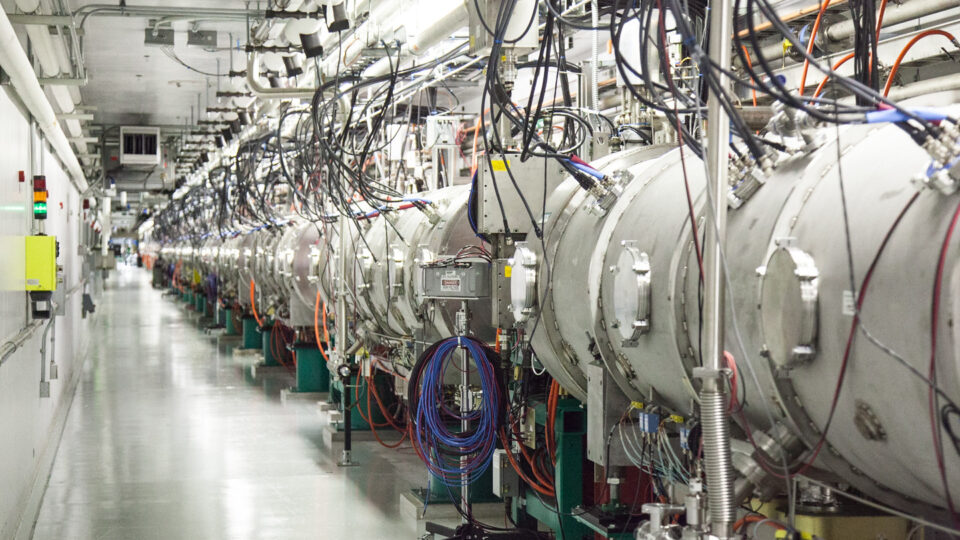
Superconductivity is a phenomenon occurring in certain materials characterized by the total absence of electrical resistance.  Current flowing in a closed loop of superconducting wire can go on forever.  Superconductors have other unique characteristics as well, all of which combine to make them quite useful in a number of applications.  Superconductors are used in high-powered magnets in particle accelerators and in MRI machines.  They continue to be developed for use in electrical power transmission, energy storage, communication filters, magnetic sensors, and more.

The problem with superconductors is that they only work at very low temperatures.  For most of a century – after superconductivity was discovered in 1911 – those temperatures were very close to absolute zero:  459 degrees below zero Fahrenheit.  (In the late 1980s, so-called high-temperature superconductors were discovered.  Those materials superconduct at the temperature of liquid nitrogen:  about 320 degrees below zero).

The dream has been to find a superconductor that works at ambient temperatures.  The Rochester team has produced tiny amounts of a mysterious combination of hydrogen, carbon, and sulfur which, when subjected to extraordinarily high pressures (over 2 million atmospheres), superconducts at the temperature of a pleasant fall day.

 There is no practical value for this first room-temperature superconductor, but it proves that superconductivity can exist at ambient temperature.  Once something is shown to exist at all, there is reason to hope that it can occur in ways that are easier and more practical to attain.

**********

Web Links

First room-temperature superconductor excites — and baffles — scientists

Photo, posted June 18, 2013, courtesy of Oak Ridge National Laboratory via Flickr.

Earth Wise is a production of WAMC Northeast Public Radio.
Generating Hydrogen From Poor-Quality Water | Earth Wise

September 8, 2020 By EarthWise Leave a Comment

generating hydrogen from polluted water

Hydrogen could be the basis of a complete energy system.  It could be stored and transported and could be used to power vehicles and to generate electricity in power plants.  Proponents of the so-called hydrogen economy contend that hydrogen is the best solution to the global energy challenge.  But among the challenges faced by a hydrogen economy is the development of an efficient and green method to produce hydrogen.

The primary carbon-free method of producing hydrogen is to break down water into its constituent elements – hydrogen and oxygen.  This can be done in a number of ways, notably by using electricity in a process called electrolysis.  A method that seems particularly attractive is to use sunlight as the energy source that breaks down the water molecule.

While there is an abundance of water on our planet, only some of it is suitable for people to drink and consume in other ways.    Much of the accessible water on earth is salty or polluted.  So, a technique to obtain hydrogen from water ideally should work with water that is otherwise of little use to people.

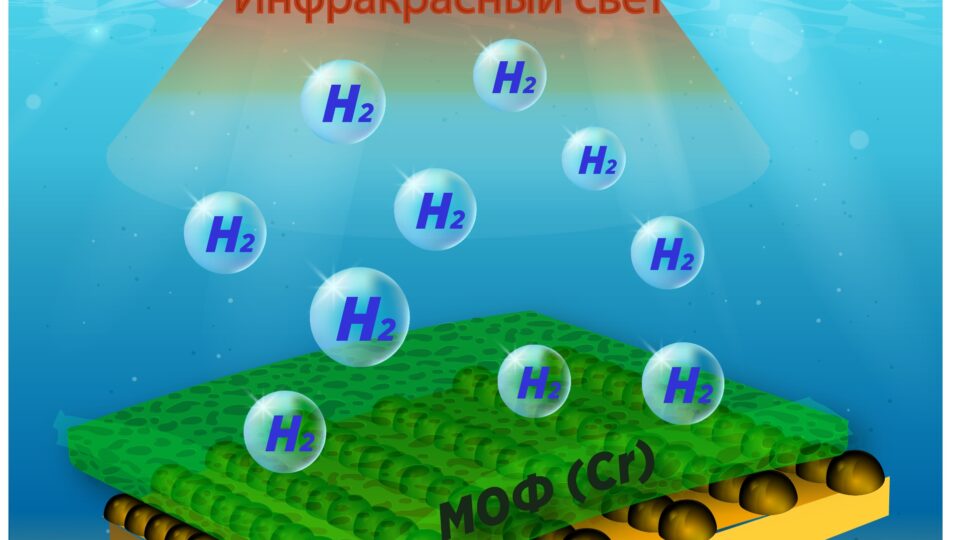
Researchers in Russia and the Czech Republic have recently developed a new material that efficiently generates hydrogen molecules by exposing water – even saltwater or polluted water – to sunlight. 

The new material is a three-layer structure composed of a thin film of gold, an ultra-thin layer of platinum, and a metal-organic framework or MOF of chromium compounds and organic molecules.  The MOF layer acts as a filter that gets rid of impurities.

Experiments have demonstrated that 100 square centimeters of the material can generate half a liter of hydrogen in an hour.  The researchers continue to improve the material and increase its efficiency over a broad range of the solar spectrum.

**********

Web Links

New Material Can Generate Hydrogen from Salt and Polluted Water

Photo courtesy of Tomsk Polytechnic University.

Earth Wise is a production of WAMC Northeast Public Radio.

Jet Fuel From Acetone | Earth Wise

February 25, 2020 By EarthWise Leave a Comment

Greening Jet Fuel

Acetone is a common organic solvent.  It is used to make plastic, fibers, drugs, and other chemicals.  It is commonly used by consumers as nail polish remover.  Acetone is a manufactured chemical, but it is also found naturally in the environment in plants, among other places. There are now companies that produce acetone entirely by fermentation of plant feedstocks, such as corn.

Researchers at Los Alamos National Laboratory have now developed a process by which acetone can be converted into a fuel additive that can improve the performance of petroleum-based jet fuel, providing both environmental and economic benefits.

The process takes biomass-derived acetone and converts it to isophorone, which they produce by a process called photochemical cycloaddition that creates more complex hydrocarbons.  They then use ultraviolet light to convert the isophorone into cyclobutane, which is a type of hydrocarbon with high energy density that is suitable for aviation fuel applications.

Acetone itself is quite volatile and is unsuitable for fuel applications.  It also cannot be added directly to any fuel supply since it can dissolve engine parts and o-rings.  Cyclobutane, on the other hand, is a safer and more energy-dense fuel that can be a replacement for additives that require high-pressure hydrogen treatment in their synthesis.  Currently, most hydrogen is produced by a process that generates carbon dioxide.  The new conversion process does not result in carbon emissions.

According to the Los Alamos researchers, their process can result in a domestically generated product that will provide environmental benefits, create domestic jobs, improve U.S. energy security, and further U.S. global leadership in bioenergy technologies.

**********

Web Links

Acetone plus light creates a green jet fuel additive

Photo, posted December 18, 2007, courtesy of Flickr.

Earth Wise is a production of WAMC Northeast Public Radio.

Clean Gas From An Artificial Leaf

November 27, 2019 By EarthWise Leave a Comment

Photosynthesis is the process used by plants, algae and certain bacteria to harness energy from sunlight and turn it into chemical energy.  It is often described as the green engine of life on earth.

For quite some time, there have been extensive research efforts around the world in the area of artificial photosynthesis.  The goal is to somehow mimic the behavior of plants in order to generate clean-burning fuels using nothing more than sunlight and the carbon dioxide in the air.

Researchers at the University of Cambridge have recently demonstrated a so-called artificial leaf that can directly produce syngas using sunlight.   Syngas is a fuel gas mixture consisting primarily of hydrogen and carbon monoxide.  Most people haven’t heard of syngas, but many products are created using it.  Being able to produce it sustainably would be a critical step to a far greener chemical and fuel industry.

The artificial leaf contains two light absorbers, similar to the molecules in plants that harvest sunlight, which are combined with a catalyst made from the naturally abundant element cobalt.  When the device is immersed in water, one light absorber uses the catalyst to produce oxygen.  The other carries out the chemical reaction that reduces carbon dioxide and water into carbon monoxide and hydrogen.  The result is the syngas mixture.

It turns out that even a rainy or overcast day provides enough light to drive the process.

Previous artificial leaf devices have mostly just produced hydrogen.  The Cambridge device produces syngas thanks to the novel combination of materials and catalysts it uses.

The researchers are now focused on finding ways to use the technology to produce a sustainable gasoline substitute.

**********

Web Links

‘Artificial leaf’ successfully produces clean gas

Photo, posted August 15, 2014, courtesy of Mike Mozart via Flickr.

Earth Wise is a production of WAMC Northeast Public Radio.

Hydrogen From The Ocean

November 15, 2019 By EarthWise Leave a Comment

https://earthwiseradio.org/wp-content/uploads/2016/08/EW-08-30-16-Hydrogen-from-the-Ocean.mp3

Hydrogen is the most abundant element in the universe.  Estimates are that it comprises 75% of all matter.  There is plenty of it here on earth too, but almost none of it is in its elemental form.  It is mostly bound up in compounds like water.

[Read more…] about Hydrogen From The Ocean

Emissions-Free Cement

October 29, 2019 By EarthWise Leave a Comment

The production of cement – which is the world’s leading construction material – is a major source of greenhouse gas emissions, accounting for about 8% of global man-made emissions. 

Cement production produces carbon dioxide in two ways:  from a key chemical process and from burning fuel to produce the cement.  The process of making “clinker” – the key constituent of cement – emits the largest amount of CO2.  Raw materials, mainly limestone and clay – are fed into huge kilns and heated to over 2,500 degrees Fahrenheit, requiring lots of fossil fuel.  This calcination process splits the material into calcium oxide and CO2.  The so-called clinker is then mixed with gypsum and limestone to produce cement.

A team of researchers at MIT has come up with a new way of manufacturing cement that greatly reduces the carbon emissions.  The new process makes use of an electrolyzer, where a battery is hooked up to two electrodes in water producing oxygen at one electrode and hydrogen at the other.  The oxygen-evolving electrode produces acid and the hydrogen-evolving electrode produces a base.  In the new process, pulverized limestone is dissolved in the acid at one electrode and calcium hydroxide precipitates out as a solid at the other.

High-purity carbon dioxide is released at the acid electrode, but it can be easily captured for further use such as the production of liquid fuels or even in carbonated beverages and dry ice.  The new approach could eliminate the use of fossil fuels in the heating process, substituting electricity generated from renewable sources. 

The process looks to be scalable and represents a possible approach to greatly reducing one of the perhaps lesser known but nevertheless very significant sources of greenhouse gas emissions.

**********

Web Links

New approach suggests path to emissions-free cement

Photo, posted March 26, 2014, courtesy of Michael Coghlan via Flickr.

Earth Wise is a production of WAMC Northeast Public Radio.

Floating Solar Fuel Farms

September 20, 2019 By EarthWise Leave a Comment

Limiting global warming will require a massive reduction in CO2 emissions from fossil fuel burning.  Renewable energy sources are playing a growing role in the power grid and electric cars are becoming increasingly popular.  Despite all this, carbon-based liquid fuels will continue to dominate our energy use for the foreseeable future.

Researchers in Norway and Switzerland have described a potential scheme that would help remove CO2 from the atmosphere and produce a valuable liquid fuel.

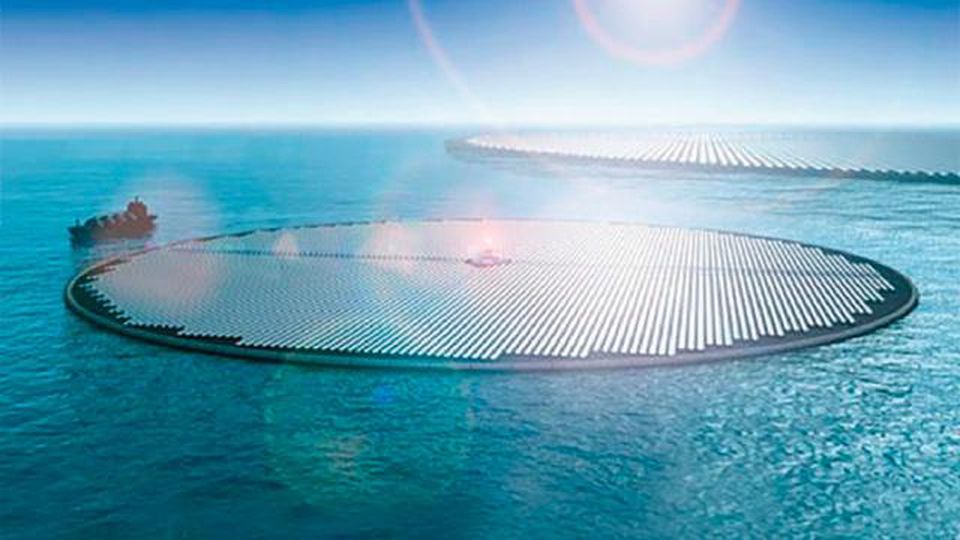
The idea is to create floating islands containing large numbers of solar panels that convert carbon dioxide in seawater into methanol, which can fuel airplanes and trucks.

A combination of largely existing technologies would be the basis of these floating islands, which would be similar to present-day floating fish farms.  The researchers envision clusters each composed of 70 circular solar panels that in total cover an area of roughly half a square mile.  The solar panels would produce electricity, which would split water molecules and isolate hydrogen.  The hydrogen would then react with carbon dioxide pulled from seawater to produce usable methanol.

The technology already exists to build the floating methanol islands on a large scale in areas of the ocean free from large waves and extreme weather.  Suitable locations are off the coasts of South America, North Australia, the Arabian Gulf, and Southeast Asia.

A single floating solar farm could produce more than 15,000 tons of methanol a year – enough to fuel a Boeing 737 airliner for more than 300 round-trip flights across the country.  Floating energy islands would not be a magic bullet for limiting the effects of climate change, but they could well be an important part of an overall strategy.

**********

Web Links

Giant Floating Solar Farms Could Make Fuel and Help Solve the Climate Crisis, Says Study

Photo courtesy of PNAS.

Earth Wise is a production of WAMC Northeast Public Radio.
  • « Go to Previous Page
  • Page 1
  • Page 2
  • Page 3
  • Page 4
  • Go to Next Page »

Primary Sidebar

Recent Episodes

  • An uninsurable future
  • Clean energy and jobs
  • Insect declines in remote regions
  • Fossil fuel producing nations ignoring climate goals
  • Trouble for clownfishes

WAMC Northeast Public Radio

WAMC/Northeast Public Radio is a regional public radio network serving parts of seven northeastern states (more...)

Copyright © 2026 ·