
• Skip to primary navigation
  • Skip to main content
  • Skip to primary sidebar

Earth Wise

A look at our changing environment.

  • Home
  • About Earth Wise
  • Where to Listen
  • All Articles
  • Show Search
Hide Search
You are here: Home / Archives for emissions

emissions

The Pandemic And Global Temperatures | Earth Wise

March 12, 2021 By EarthWise Leave a Comment

The pandemic has done little to slow the rise in global tempertures

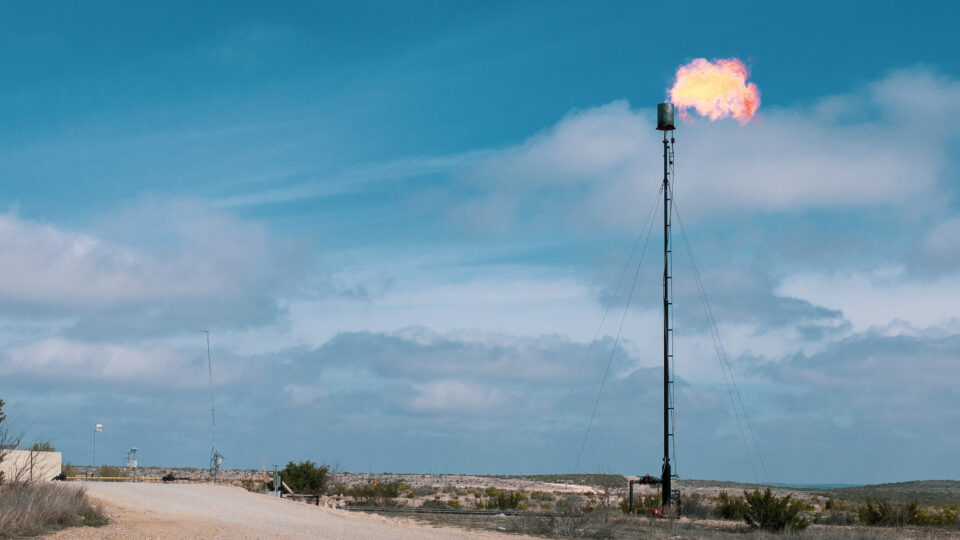
The early months of the Covid-19 pandemic last year saw dramatic reductions in travel and many forms of commerce.  With much of human activity greatly curtailed, greenhouse gas emissions were greatly reduced.   And yet, all of that did not slow down global warming: 2020 ended up tied with 2016 as the warmest year on record and atmospheric greenhouse gas levels reached a new high.

In order to understand how this came about, it is necessary to understand the complex climate influences of different types of emissions from power plants, motor vehicles, industrial facilities, and other sources.  The fact is that some types of pollution actually have a cooling effect rather than contributing to global warming.

Tiny industrial pollution particles called aerosols actually make clouds brighter, causing them to reflect away more solar heat from the surface of the planet.   During the drastic shutdown last year, the biggest emissions decline was from the most polluting industries.  The reduction of aerosols had immediate, short-term effects on temperatures.  These types of pollutants are very bad for human health, but when they are present, they do have the effect of reducing temperatures.

It is important to keep in mind that carbon dioxide spreads through the Earth’s atmosphere and stays there for a century or more, trapping heat on a global scale.  Industrial aerosols stay relatively concentrated in the region where they are emitted and are often removed by rain and winds within a few weeks.  So, their cooling effect doesn’t spread very far or last very long.

Overall, the initial pandemic slowdown probably didn’t have any real long-term impact on the climate but over the short term, the effects were not as simple as one might expect.

**********

Web Links

Covid-19 Cut Gases That Warm the Globe But a Drop in Other Pollution Boosted Regional Temperatures

Photo, posted July 7, 2020, courtesy of Joey Zanotti via Flickr.

Earth Wise is a production of WAMC Northeast Public Radio.
Short-Lived Climate Forcing Pollutants | Earth Wise

March 9, 2021 By EarthWise Leave a Comment

Short-lived climate forcing pollutants and climate change

When talking about the causes of climate warming, it is common practice to bundle together various pollutants and express their effects in terms of “CO2 equivalence.”  This involves comparing climate effects of the pollutants on a 100-year timescale.  Recent research from the Institute for Advanced Sustainability Studies in Germany points out the problems with this approach.

One of the worst qualities of carbon dioxide is that it accumulates in the atmosphere.  Once it gets there, it stays there for anywhere from decades to millennia.  On the other hand, short-lived climate forcing pollutants – or SLCPs – stay in the atmosphere for significantly shorter periods.  However, some of these are far more effective at trapping heat in the atmosphere.  As a result, the atmosphere and climate system react much more quickly to reductions in the emission of these pollutants.

The IASS research study determined that reducing SLCP emissions is an important way to slow near-term climate warming as well as having other positive benefits such as reducing air pollution and improving crop yields.  A number of studies indicate that a rapid reduction in SLCP emissions could slow the rate of climate change and reduce the risk of triggering dangerous and potentially irreversible climate tipping points.

Examples of SLCPs are the methane gas emitted from landfills and hydrofluorocarbons that are still widely used as coolants. HFCs only persist in the atmosphere for 15 years but are nearly 4,000 times more effective in trapping heat over a 20-year period.

In order to mitigate the most harmful consequences of climate change, we need to minimize both the near-term climate impacts of SLCPs and the long-term climate impacts of carbon dioxide.

**********

Web Links

More Than Just CO2: It’s Time To Tackle Short-Lived Climate-Forcing Pollutants

Photo, posted March 10, 2020, courtesy of Jonathan Cutrer via Flickr.

Earth Wise is a production of WAMC Northeast Public Radio.
The Path To Net Zero | Earth Wise

March 8, 2021 By EarthWise Leave a Comment

The path to reaching net zero emissions

Reaching net zero emissions is both feasible and affordable, according to researchers at the Department of Energy’s Lawrence Berkeley National Laboratory, the University of San Francisco, and consulting firm Evolved Energy Research.   The researchers created a detailed model of the entire U.S. energy and industrial system to produce the first detailed, peer-reviewed study of how to achieve carbon neutrality by 2050.

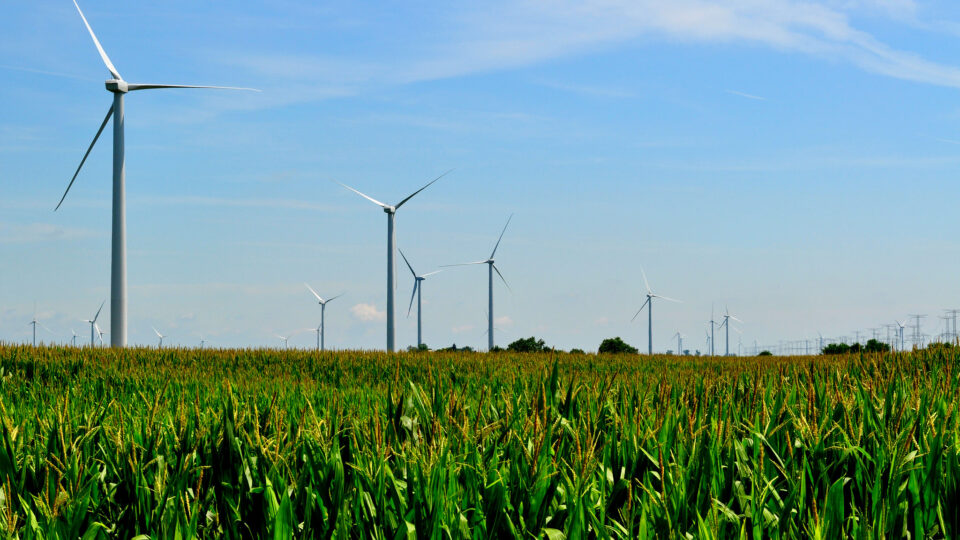
The study analyzed multiple feasible technology pathways based on very different assumptions of remaining fossil fuel use, land use, consumer adoption, nuclear energy, and biofuel use.  What they had in common was increasing energy efficiency, transitioning to electric technologies, utilizing clean electricity (especially wind and solar power), and deploying small amounts of carbon capture technology.

The decarbonization of the U.S. energy system is an infrastructure transformation.  Getting to net zero by 2050 means adding many gigawatts of wind and solar power plants, new transmission lines, a fleet of electric cars and light trucks, millions of heat pumps to replace conventional furnaces and water heaters, and more energy-efficient buildings.

The various pathways studied have net costs between 0.2% and 1.2% of GDP, which is as little as $1 per person per day.  The cost variations come from various tradeoffs such as the amount of land given to solar and wind farms as well as the amount of new transmission infrastructure required. 

A key result of the study is that the actions required over the next 10 years are similar among all the pathways.   We need to increase the use of renewable energy and make sure that all new infrastructure, such as cars and buildings are low carbon.

**********

Web Links

Getting to Net Zero – and Even Net Negative – is Surprisingly Feasible, and Affordable

Photo, posted July 12, 2010, courtesy of Tom Shockey via Flickr.

Earth Wise is a production of WAMC Northeast Public Radio.

Aircraft Emissions And Climate Change | Earth Wise

March 1, 2021 By EarthWise Leave a Comment

Using winds at altitude to reduce aircraft emissions

The aviation industry accounts for about 2.4% of global carbon dioxide emissions.  If the aviation industry was a country, it would place sixth in emissions, between Japan and Germany.

According to scientists at the University of Reading in the United Kingdom, aviation industry emissions could be reduced by simply better surfing the wind.  The researchers found that commercial flights between New York and London could have used up to 16% less fuel if they had made better use of the fast-moving winds at altitude.

The study, which was recently published in the journal Environmental Research Letters, analyzed approximately 35,000 flights in both directions between New York and London last winter.  The researchers compared how much fuel was burned during these flights to how much less fuel would have been burned by flying into or around the eastward jet stream air currents. 

They found that taking better advantage of the winds would have saved about 125 miles worth of fuel per flight on average.  The fuel saving per flight was 1.7% when flying west to New York, and 2.5% when flying east to London. 

New satellites will soon allow transatlantic flights to be tracked more accurately.  This should afford aircraft more flexibility in their flight paths, allowing them to better follow tailwinds and avoid headwinds. 

Upgrading aircraft or switching to greener fuels are two other ways that the aviation industry can reduce emissions, but those things are costly and take time to implement.  Optimizing flight paths is cheaper and offers immediate benefits.  

**********

Web Links

Aircraft could cut emissions by better surfing the wind

Photo, posted May 16, 2011, courtesy of Cory W. Watts via Flickr.

Earth Wise is a production of WAMC Northeast Public Radio.

Policy Moves on Electric Cars | Earth Wise

February 26, 2021 By EarthWise Leave a Comment

The transition to electric vehicles is underway

In recent times, there have been several significant events affecting the transition to electric vehicles.  The new administration has made aggressive moves toward fighting climate change.  Wall Street investors have placed more value on Tesla stock than that of GM, Toyota, Volkswagen, and Ford combined.  China, the world’s largest car market, recently mandated that most new cars must be powered by electricity within 15 years.

Against this background, the CEO of General Motors announced in late January that the company will aim to sell only zero-emission cars and trucks by 2035.

This announcement took the rest of the auto industry by surprise.  In the past, the industry tended to present a united message on emissions and other policy issues.  This time around, GM has stepped out in front of the issue.

GM has already committed to spending $27 billion to introduce 30 electric vehicle models by 2025 and is building a plant in Ohio to make batteries for those cars and trucks.

A key driver in the GM decision, no doubt, was an executive order signed by President Biden on his first day of office.  The order directed the Environmental Protection Agency to immediately begin developing tough new tailpipe pollution regulations, designed to reduce the nation’s largest source of greenhouse gas emissions.

Even before the change in administration, five other major automakers – BMW, Ford, Honda, Volkswagen, and Volvo – had already legally bound themselves to tougher fuel economy standards in a deal with California.  Those companies committed to an average fuel economy of 51 miles per gallon in 2026.

While no other large automaker has set a specific target date for selling only electric vehicles, many of them are moving in that direction.  The rapid growth of Tesla is an indicator of where the auto industry is heading.

**********

Web Links

G.M. Announcement Shakes Up U.S. Automakers’ Transition to Electric Cars

Photo, posted July 29, 2017, courtesy of Steve Jurvetson via Flickr.

Earth Wise is a production of WAMC Northeast Public Radio.
Global Warming Could Stabilize | Earth Wise

February 19, 2021 By EarthWise Leave a Comment

Reducing emissions could stabilize global temperatures

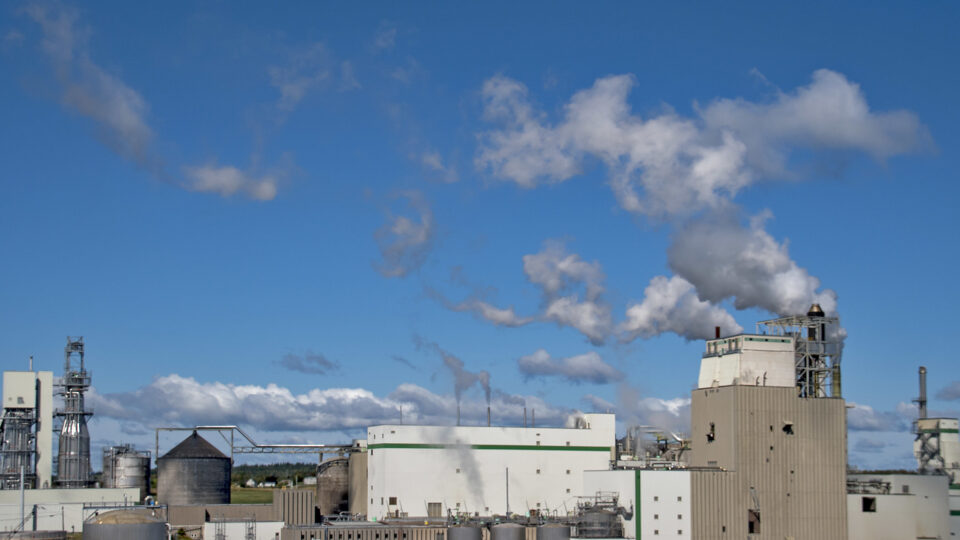
The world has been heading toward climate disaster with the effects of greenhouse gas-induced warming looming larger and larger.  But recent analysis published in Nature Climate Change offers hope that rapidly eliminating emissions could stabilize global temperatures just within a couple of decades.

For quite some time, it has been assumed that further global warming would be locked in for generations regardless of the extent of emissions reductions going forward.  This conclusion was based on having a certain carbon dioxide concentration in the atmosphere which would linger for hundreds of years even if emissions were reduced.

Recent analysis takes into account the dynamism of the Earth’s natural systems which could actually reduce atmospheric CO2 content because of the huge carbon absorption capacity of oceans, wetlands, and forests.  The key requirement is to drastically reduce emissions so that these natural systems can take over.

More than 100 countries have pledged to get to net zero emissions by 2050.  That means they will emit no more carbon dioxide than is removed from the atmosphere by such actions as restoring forests.   The UK, Japan, and the European Union are among the countries that have set this zero target, and the United States is joining the club.

Climate models show that a global temperature rise of 2 degrees Celsius over that of the pre-industrial period would lead to global calamities that include punishing heatwaves, flooding, and mass displacement of people.  The world has already heated up by 1.1 degrees and governments have committed to restrain the rise to less than 1.5 degrees under the Paris Climate Agreement.

**********

Web Links

Global Warming Could Stabilize Faster than Originally Thought If Nations Achieve Net Zero

Photo, posted September 10, 2017, courtesy of Ron Cogswell via Flickr.

Earth Wise is a production of WAMC Northeast Public Radio.

Restoring Environmental Rules Will Take Time | Earth Wise

February 17, 2021 By EarthWise Leave a Comment

Restoring Obama-era environmental rules will take time

Over the previous four years, the Trump administration weakened or rolled back more than 100 rules and regulations on air, water, public lands, endangered species, and climate change.  The Biden administration has vowed to review these changes and restore the environmental protections that were removed or weakened.

The process of restoring environmental protections generally fall into a few broad categories.  Some changes can happen by executive order.  The President can cancel individual fossil fuel infrastructure projects or reinstate federal protection of specific places.  On his first day in office, President Biden rescinded the construction permit for the Keystone XL pipeline.

The President is also expected to restore federal protection to the Bears Ears and Grand Staircase-Escalante national monuments in Utah, which the Trump administration opened up to mining, logging, and drilling.

However, it could take two years or more to restore Obama-era climate change regulations including limits on emissions, rules on industrial emissions of toxic pollutants such as mercury, and protections on wetlands and waterways.

Reinstating comprehensive regulations on air, water, and climate pollution will take years because the Trump administration, rather than eliminating rules entirely, often replaced them with weaker regulations.  Replacing the weak regulations cannot just happen by executive order.  The process involves scientific and economic analysis, and that takes time.

After four years of shrinking budget and shrinking staff, the Environmental Protection Agency has a lot of catching up to do and will need to prioritize its actions in order to deal with the most damaging consequences of the previous administration.

**********

Web Links

Restoring Environmental Rules Rolled Back by Trump Could Take Years

Photo, posted September 25, 2012, courtesy of Tar Sands Blockade via Flickr.

Earth Wise is a production of WAMC Northeast Public Radio.

Record Heat In The Arctic | Earth Wise

January 13, 2021 By EarthWise Leave a Comment

Heat in the Arctic is breaking records

By mid-November, the Arctic stays dark around the clock and twilight does not return until the end of January.  But even as winter darkness descended upon the Arctic this year, record-breaking high temperatures in the region continued.  In late November, temperatures across the entire Arctic basin were 12 degrees Fahrenheit above normal and some locations saw temperatures as high as 30 degrees above normal.

The entire summer and fall in the Arctic were characterized by exceptionally warm temperatures.  In June, the Siberian town of Verkhoyansk – located north of the Arctic Circle – registered a high temperature of 100.4 degrees.  The refreezing of the Arctic Ocean was greatly delayed this year.  The Northeast Passage along the Siberian Coast remained navigable for a record 112 days before freezing in November, breaking the previous record by more than a month.  The extent of sea ice covering the Arctic Ocean in October was the lowest ever recorded for that month.

The strongest warming occurring in the Arctic is during the fall.  That is because rapidly disappearing sea ice is enabling the dark waters of the Arctic Ocean to absorb heat in the summer and then radiate it back into the atmosphere until late in the fall.  The Arctic region is heating up three times faster than the rest of the planet, which has led to the volume of sea ice decreasing by 2/3 in the past 40 years.

According to researchers, the extreme heat in Siberia this year would have been virtually impossible without human-caused climate change and became 600 times more likely because of human emissions of greenhouse gases.

**********

Web Links

Record-shattering Warmth Pushes Arctic Temperatures to 12 Degrees F Above Normal

Photo, posted September 1, 2009, courtesy of the U.S. Geological Survey via Flickr. Photo Credit: Patrick Kelley, U.S. Coast Guard.

Earth Wise is a production of WAMC Northeast Public Radio.
Once In A Lifetime Floods And Climate Change | Earth Wise

January 8, 2021 By EarthWise Leave a Comment

Climate change is worsening flooding

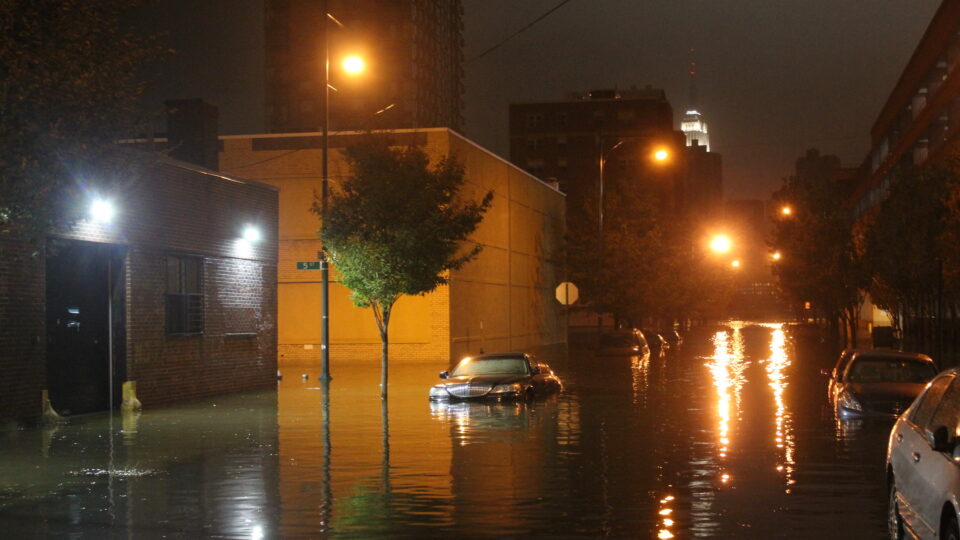
Superstorm Sandy was the deadliest hurricane of 2012 and one of the most destructive hurricanes ever to hit the United States.  According to the National Oceanic and Atmospheric Administration, Superstorm Sandy caused an estimated $74.1 billion dollars in damages.  That figure made it the fourth-costliest storm in U.S. history, trailing only Hurricane Katrina in 2005 and hurricanes Harvey and Maria in 2017.  Superstorm Sandy affected 24 states and all of the eastern seaboard.  

New York was one of the states pummeled by Superstorm Sandy.  The storm brought flood-levels to the region that had not been seen in generations.  But according to a new study published in the journal Climatic Change, those flood levels could become much more common. 

Researchers at Stevens Institute of Technology have found that 100-year and 500-year flood levels could become regular occurrences by the end of the century for the thousands of homes surrounding Jamaica Bay, NY.  The researchers say climate change is the culprit.  

Using anticipated greenhouse gas concentration levels, the research team created simulations to find the probability of different flood levels being reached by the end of the century.  The researchers found that the historical 100-year flood level would become a one-year flood level by the year 2100.  500-year floods, like Superstorm Sandy, would become a four-year flood level by the end of the century. 

While this particular study is specific to Jamaica Bay, it does serve as an example of just how severe and costly the consequences of climate change will be.   

*********

Web Links

Once in a lifetime floods to become regular occurrences by end of century

Photo, posted October 29, 2012, courtesy of Rachel via Flickr.

Earth Wise is a production of WAMC Northeast Public Radio.
 

New York And Renewables | Earth Wise

January 7, 2021 By EarthWise Leave a Comment

Renewables growing in New York

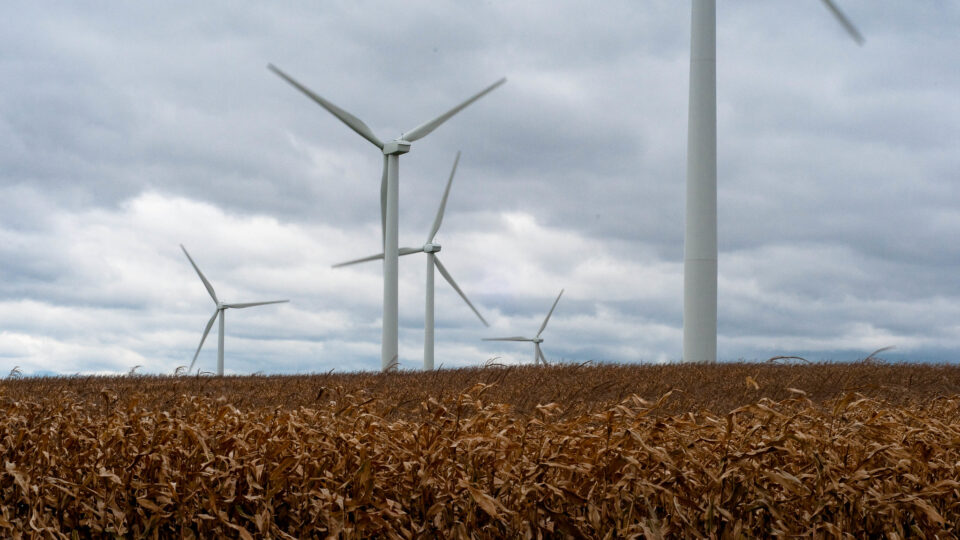
In 2019, New York generated more electricity from renewable sources than all but three other states.  The 39.4 million MWh of renewable electricity generated in New York was the largest of any state east of the Mississippi. 

New York has been a leader in renewable power long before it became a topic of great interest because of its hydroelectric power.  In 2019, 78% of the state’s renewable electricity came from hydropower.  The Robert Moses Niagara hydroelectric plant is the second-largest capacity conventional hydroelectric power plant in the country. 

The three states that generated more renewable electricity than New York are California, Texas, and Washington.  Washington gets 69% of all its electricity generation from its multiple hydroelectric plants which together produce a quarter of all hydroelectric power in the nation.  Texas leads the nation in wind-powered generation and gets over 17% of its in-state generation from wind.  California gets 14% of its power from solar generation, 7% from wind, and over 16% from its own hydroelectric resources.

Wind is the second-largest source of renewable power in New York, accounting for 11% of renewable generation in the state and 3% of total electricity generation.  Solar power is expanding in New York, but the great majority of it is still in the form of small-scale installations on residential and commercial rooftops.

New York’s renewable generation grew from 19% in 2005 to 30% at present.  New York’s Clean Energy Standard adopted in 2015 requires the state to generate 100% carbon-free electricity by 2040.

**********

Web Links

New York generated fourth most electricity from renewables of any state in 2019

Photo, posted October 15, 2010, courtesy of michael-swan via Flickr.

Earth Wise is a production of WAMC Northeast Public Radio.
A Large Drop In U.S. Greenhouse Gas Emissions | Earth Wise

December 29, 2020 By EarthWise Leave a Comment

Greenhouse gas emissions in the United States has dropped

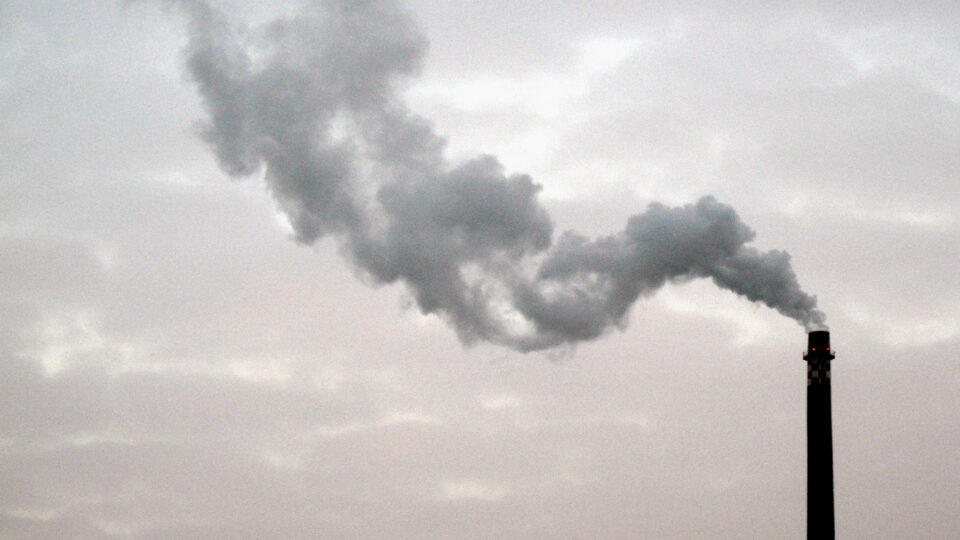
Greenhouse gas emissions in the U.S. in 2020 are on track to be at their lowest level in nearly 30 years as a result of the COVID-19 pandemic.  U.S. emissions haven’t been this low since 1983, when the economy was not even 40% of its current size.

According to a new study by the research group BloombergNEF, U.S. emissions for the year will be 9% lower than they were in 2019, which will be the largest yearly drop on record.  The report also anticipates that whatever happens in the pandemic, 2021 emissions will be well below pre-COVID levels as well.

The pandemic has inadvertently put the U.S. back on track to meet its original commitments to the Paris Climate Agreement, despite the fact that we have pulled out the agreement.  The incoming administration plans to return the U.S. to the pact.

Overall, U.S. emissions have been trending downward since 2008, primarily as a result of the lower dependence of the power sector on coal.  The report estimates that in the absence of the pandemic, 2020 emissions would have been 1% lower than last year’s.

The dramatic drop in emissions is not really a great cause for celebration.  Achieving significant emission reductions through massive economic hardship and societal disruption does not point the way towards making progress on climate change.  The economic upturn that will undoubtedly occur when the pandemic loses its grip on the world will lead to rebounding levels of greenhouse gas emissions.  But as is the case with all major crises, the current situation does present a chance to turn this temporary downturn in emissions into a more permanent one by making appropriate investments and policy changes.

*********

Web Links

Due to COVID-19, 2020 greenhouse gas emissions in the U.S. are predicted to drop to lowest level in three decades

Photo, posted January 13, 2013, courtesy of Onnola via Flickr.

Earth Wise is a production of WAMC Northeast Public Radio.

Europe’s Green Deal: Bad For The Planet? | Earth Wise

December 28, 2020 By EarthWise Leave a Comment

Europe's Green Deal might simply be exporting its environmental pollution

In 2019, the European Union announced the “Green Deal,” a comprehensive program aimed at making Europe the first climate-neutral continent, implementing environmentally friendly transport, increasing recycling, and expanding renewable energy.

The Green Deal involves significant changes to European agriculture.  Over the next ten years, under the ambitious environmental program, at least a quarter of all agricultural areas will be farmed organically, the use of fertilizers and pesticides greatly reduced, 3 billion trees planted, 15,000 miles of rivers restored, and the population declines of pollinators reversed.

However, in a recent article published in Nature, scientists at the Karlsruhe Institute of Technology show that this Green Deal might actually be a bad deal for the planet.

The problem is that the EU is likely to basically be outsourcing environmental damage by its high imports of agricultural products.

According to the Karlsruhe study, the EU annually imports millions of tons of agricultural products, as much as 20% of its produce and much of its meat and dairy products.  Quite often, these imports come from countries whose environmental laws are far less stringent than those in Europe.

The EU cannot impose environmental standards on other countries, but it can demand that goods entering the European market meet EU requirements.  The study points out that Europe’s carbon footprint has to be evaluated on a global basis.  If the EU is truly to become a climate-neutral continent, it must include foreign trade goals and requirements in its environmental programs.  Otherwise, Europe will simply be outsourcing its environmental problems and will continue to cause damage to the planet.

**********

Web Links

Green Deal: Good for a Climate-neutral Europe – Bad for the Planet

Photo, posted July 17, 2009, courtesy of Edmund Garman via Flickr.

Earth Wise is a production of WAMC Northeast Public Radio.

Hydrogen-Powered Jetliners | Earth Wise

December 18, 2020 By EarthWise Leave a Comment

Airbus developing hydrogen-powered jetliners

Airbus, the giant European aerospace company, hopes to have hydrogen-powered commercial airliners in the sky by 2035.  Such planes would have no carbon dioxide emissions.

Greenhouse gas emissions from commercial aviation have been a rapidly increasing contribution to the global total.  Of course, the Covid-19 pandemic has drastically reduced air travel, so emissions are currently lower than they have been in a very long time.  But at some point, they will resume at previous levels and continue to increase.

Planes themselves produce over 2% of global CO2 emissions, and between the climate effects of contrails and the emissions associated with the rest of the air travel industry, commercial aviation drives about 5% of global warming.

Airbus is studying design concepts in which planes run off of hydrogen and oxygen fuel and have no carbon exhaust.   Making such planes practical and environmentally advantageous requires solving an array of complex technical challenges. 

One of the biggest challenges is that the hydrogen on the market today is considered to be “brown” rather than green, meaning that it is not a sustainably produced energy source.  Almost all hydrogen produced today comes from natural gas reforming, which results in carbon emissions.  A viable hydrogen-powered aviation technology assumes that producing hydrogen by splitting water molecules into oxygen and hydrogen using renewable energy becomes the standard source for it.

There have been test flights of small planes and drones powered by hydrogen, but Airbus expects that intensive research and development for the next five years will be required to evolve its current preliminary designs to a stage where they could be developed for future use in its product line.  It won’t happen overnight, but according to Airbus, hydrogen planes are coming.

**********

Web Links

Airbus Hopes to Be Flying Hydrogen-Powered Jetliners With Zero Carbon Emissions by 2035

Photo, posted April 15, 2019, courtesy of Olivier Cabaret via Flickr.

Earth Wise is a production of WAMC Northeast Public Radio.

Dust And Himalayan Glaciers | Earth Wise

December 14, 2020 By EarthWise Leave a Comment

Dust playing a major role in melting glaciers

Glaciers in the Himalayas have been melting and retreating, as have glaciers around the world.  As is the case elsewhere, human-driven climate change is a major factor.  But at the lofty heights of the Himalayas, warming temperatures are not the biggest culprit.  Black carbon – released into the air by burning fossil fuels or biomass such as plants, trees, and shrubs – darkens the snow and causes it to absorb more of the sun’s heat.  A recent study by an international team of scientist has identified another important factor:  dust.

An estimated 5 billion tons of desert dust enters the Earth’s atmosphere every year.  Dust from places like Saudi Arabia gets picked up by spring winds and gets deposited on the western sides of mountains, where it can make the air 10 times more polluted than most European cities.  Dust blows across industrial and desert areas in the Indian subcontinent and the Middle East and lands in the Himalayas.  According to the new study, this dust is often the dominant cause of snow melt in those areas.

Desert dust causes snow melt in the same way that black carbon does.   Dirty snow absorbs sunlight more easily than clean snow.

Desert dust is a natural part of Earth’s systems, but the amount of it in the atmosphere has steadily increased since the Industrial Revolution, when humans greatly expanded into desert areas and broke through surface crust that held large amounts of dust in place.

There is not much we can do about desert dust, short of eliminating deserts.  But the disappearance of the Himalayan ice pack – which sustains over a billion people – can be mitigated by reducing greenhouse gas emissions to address climate change .

**********

Web Links

Himalayan glaciers melting because of high-altitude dust

Photo, posted March 13, 2018, courtesy of Sarunas Burdulis via Flickr.

Earth Wise is a production of WAMC Northeast Public Radio.
Getting Value From Plastic Waste | Earth Wise

November 30, 2020 By EarthWise Leave a Comment

Extracting value from plastic waste

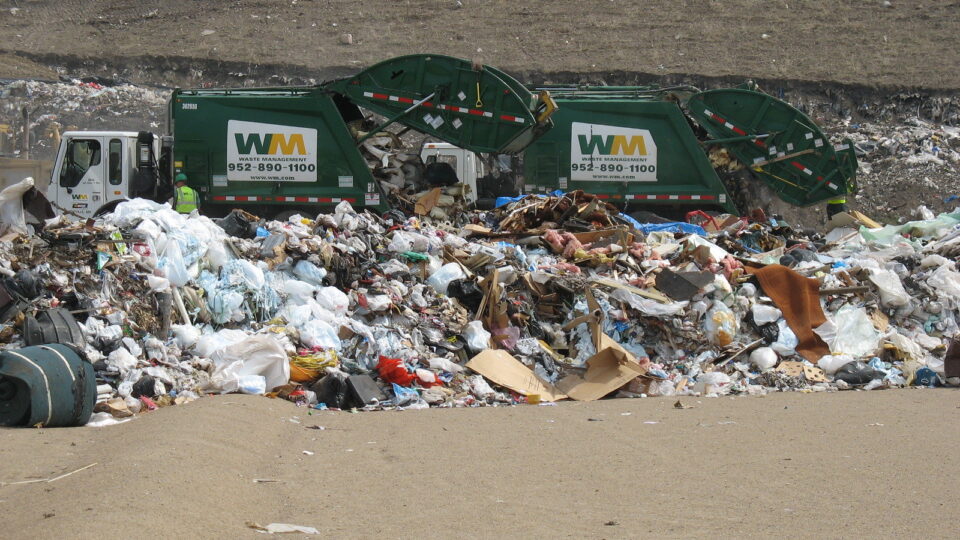
To date, the world has produced more than five billion tons of plastic and is making more all the time.  Based on the way things are currently done, most of that will end up in landfills or in the natural environment.  By 2050, the amount of plastic is expected to exceed 13 billion tons.   This is one of the world’s biggest environmental problems.

Recently, an international collaboration by universities and institutions in the UK, China, and Saudi Arabia has developed a method of converting plastic waste into hydrogen gas and high-value solid carbon.

The technique was achieved with a new type of catalysis that uses microwaves to activate catalyst particles that effectively strip hydrogen from plastic polymers.  The work was recently published in the journal Nature Catalysis and details how the researchers mixed mechanically pulverized plastic particles with a microwave-susceptor catalyst of iron oxide and aluminum oxide.  That mixture was then subjected to microwave treatment and yielded a large volume of hydrogen gas and a residue of carbonaceous material, most of which was identified as carbon nanotubes.

The process is more rapid than most methods for dealing with plastic waste and can extract over 97% of the hydrogen in plastic without producing any carbon dioxide emissions. 

The new method represents an attractive potential solution to the problem of plastic waste.  Instead of polluting the planet, plastics could become a valuable feedstock for producing clean hydrogen fuel as well as valuable carbon materials.  Proponents of the so-called hydrogen economy have continued to seek a green and economical way to produce hydrogen.  This new work might be just what they are looking for.

**********

Web Links

Turning plastic waste into hydrogen and high-value carbons

Photo, posted April 21, 2007, courtesy of Redwin Law via Flickr.

Earth Wise is a production of WAMC Northeast Public Radio.

Pandemic Lockdowns And Carbon Emissions | Earth Wise

November 25, 2020 By EarthWise Leave a Comment

pandemic impact on carbon emissions

The early months of the COVID-19 pandemic saw many human activities reduced to a fraction of what they were previously.  Notably, air pollution in major cities was dramatically lower than it had been in decades.  Now, a new study has looked at the effect of the pandemic shutdowns on carbon dioxide emissions.

An international team of climate scientists has published an assessment of carbon dioxide emissions by industry, transportation, and other sectors from January through June.  According to their measurements, this year’s pandemic lockdowns resulted in a 9% decline in emissions from 2019 levels.

An earlier study reported a 17% drop in CO2 emissions, but the new study was more comprehensive and detailed.

The new data includes estimates of day-by-day, sector-specific and country-level differences in CO2 emissions derived from frequently updated data sources, some of which are nearly in real-time.  It tracks the effects of COVID-19-related disruptions of human activities in China starting in February and in the United States and Europe in March through May.

The data revealed the resumption of emissions in many regions, such as in China, where they are now back to pre-pandemic levels.  Emissions in the Americas and Europe have been slower to recover, especially in the US, where COVID-19 hotspots are continuing to emerge. 

The reduction in carbon emissions has been due mostly to transportation with fewer people driving to work and traveling by air.  Even by June, when lockdowns were easing, global emissions were still significantly reduced.  In any case, a pandemic is a highly undesirable and unwelcome way to reduce carbon emissions, but the data from this year does show that it is effective.

**********

Web Links

Pandemic lockdowns caused steep and lasting carbon dioxide decline

Photo, posted August 7, 2020, courtesy of Michael Mueller via Flickr.

Earth Wise is a production of WAMC Northeast Public Radio.

Nitrous Oxide Is No Laughing Matter | Earth Wise

November 10, 2020 By EarthWise Leave a Comment

nitrous oxide is a big climate problem

Carbon dioxide is the most well-known of greenhouse gases.  But there are others deserving of their own spotlight.  Nitrous oxide is one of them.  It turns out that the same “laughing gas” once used by dentists as an anesthetic is pretty bad for the environment.  In fact, it’s more than 300 times more potent as a greenhouse gas than carbon dioxide, and it can remain in the atmosphere for more than 100 years.

According to a new study by a team of international scientists, rising nitrous oxide emissions around the world are jeopardizing the climate goals of the Paris Agreement.  The growing use of nitrogen fertilizers in global food production is increasing atmospheric concentrations of nitrous oxide.

The study, which was led by Auburn University and recently published in the journal Nature, finds that nitrous oxide emissions are increasing faster than any emission scenario developed by the Intergovernmental Panel on Climate Change.  The current trajectory would lead to global mean temperature increases well above 3°C from pre-industrial levels.  The Paris Agreement aims to limit global warming to less than 2°C.    

According to the study, nitrous oxide levels have risen 20% from pre-industrial levels, with the fastest growth observed in the last 50 years due to emissions from human activities.  The largest contributors to nitrous oxide emissions come from East Asia, South Asia, South America, and Africa.  The United States, China, and India dominate nitrous oxide emissions from synthetic fertilizers, while Africa and South America dominate releases of nitrous oxide from natural sources, like livestock manure. 

Nitrous oxide emissions pose an increasing threat to the climate.  

**********

Web Links

Nitrous oxide emissions pose an increasing climate threat, study finds

Photo, posted April 22, 2012, courtesy of Bill Meier via Flickr.

Earth Wise is a production of WAMC Northeast Public Radio.

Carbon In The Ocean | Earth Wise

October 13, 2020 By EarthWise Leave a Comment

carbon uptake by the ocean

New research from the University of Exeter in the UK reveals that the world’s oceans soak up more carbon than previously believed.  Previous estimates of the movement of carbon between the atmosphere and the oceans did not account for the temperature differences between the water’s surface and a few meters below.

The new model includes this factor and finds that there is a significantly higher flux of carbon into the oceans.

The study calculated carbon dioxide fluxes from 1992 to 2018 and found that at certain times and locations there was up to twice as much CO2 contained in the ocean as determined from previous models.

The temperature differences between the surface of the ocean and the water at a depth of a few meters is important because the amount of carbon dioxide that can be absorbed in water depends very strongly on the temperature of the water.   Anyone with a home soda maker knows this well as the devices always work much better with refrigerated water than room temperature water.

The difference in ocean carbon dioxide uptake measured from satellite data and calculated in the new modeling amounts to about 10% of global fossil fuel emissions, so it is a very significant revision.  The revised estimate for carbon dioxide uptake actually agrees much better with an independent method for calculating the amount of carbon dioxide in the oceans.  Those measurements came from a global ocean survey performed by research ships over decades.

Now that two so-called big data estimates of the ocean sink for CO2 agree pretty well, there is greater confidence that we understand this important aspect of the planet’s carbon cycle.

**********

Web Links

Ocean carbon uptake widely underestimated

Photo, posted December 30, 2012, courtesy of Jerome Decq via Flickr.

Earth Wise is a production of WAMC Northeast Public Radio.

Land Use Change And Flooding | Earth Wise

September 30, 2020 By EarthWise Leave a Comment

Land use change leads to increased flooding

Land use change refers to the conversion of a piece of land’s use by humans from one purpose to another. Land use change is commonly associated with biodiversity loss and increased greenhouse gas emissions.  But how does land use change impact water cycles? 

According to researchers from the University of Göttingen in Germany, IPB University, and BMKG (both in Indonesia), the expansion of monocultures, such as rubber and oil palm plantations, leads to more frequent and more severe flooding.  The researchers explain the increase in flooding “with a complex interplay of ecohydrological and social processes, including soil degradation in monocultures, the expansion of oil palm plantations into wetlands, and the construction of flood protection dams.” 

For the study, which was recently published in the journal Ecology & Society, the research team interviewed nearly 100 Indonesian farmers, villagers, and decision-makers in Sumatra.  The team supplemented its research with data on precipitation, river and groundwater levels, soil properties, and regional mapping. 

During large-scale land use change – like plantation expansions – newly-compacted soil causes rainwater to runoff as opposed to being absorbed.  As more plantations are established in floodplains, the owners try to control flooding on their land by building barriers.  But these dams often lead to increased flooding on neighboring lands.  This understandably triggers social tensions between other farmers and plantation owners.     

In order to reduce the negative impact of land use change on the water cycle, the research team suggests soil protection and improved planning – especially in floodplains – would be a good place to start.  

**********

Web Links

Land use change leads to increased flooding in Indonesia

Photo, posted October 8, 2018, courtesy of Artem Beliaikin via Flickr.

Earth Wise is a production of WAMC Northeast Public Radio.

The Dangers Of Negative Emissions Technologies | Earth Wise

September 28, 2020 By EarthWise Leave a Comment

The dangers of negative emissions technologies

Reducing carbon emissions is not easy and there are plenty of people who don’t even want to try for various reasons, generally related to their perceived economic interests and convenience.  As a result, there is a great deal of interest in so-called negative emissions technologies or NETs.   These are methods for removing carbon dioxide from the atmosphere.  Even the UN Intergovernmental Panel on Climate Change assumes that NETs will play a role in mitigating the effects of climate change and meeting international goals.

The most widely studied approaches to negative emissions technology are bioenergy with carbon capture and storage – which entails growing crops for fuel, and then capturing and burying the CO2 produced from burning the fuel; planting more forests; and direct air capture, which involves actually pulling CO2 out of the air and storing it – probably underground. 

A new study published in Nature Climate Change points out that none of these technologies has even been tried at the demonstration scale, much less at the massive levels required to make a dent in current CO2 emissions. 

Their analysis of the biofuel and reforestation strategies show that each would take up vast land and water resources already needed for agriculture and nature.  Air capture uses less water than the other two approaches, but still uses quite a bit and even more energy, which if supplied by fossil fuels, would offset the benefits of carbon capture.

Negative emissions technologies may well play an important role in combating climate change, but it is essential that we understand what the consequences will be from implementing them.  We need to know the pitfalls that could arise.  It would be a major mistake to simply count on NETs to be some kind of silver bullet.

**********

Web Links

Remove CO2 from the air? Don’t bet on it before examining costs, researchers say

Photo, posted January 11, 2008, courtesy of Al Pavangkanan via Flickr.

Earth Wise is a production of WAMC Northeast Public Radio.

  • « Go to Previous Page
  • Page 1
  • Interim pages omitted …
  • Page 23
  • Page 24
  • Page 25
  • Page 26
  • Page 27
  • Interim pages omitted …
  • Page 35
  • Go to Next Page »

Primary Sidebar

Recent Episodes

  • An uninsurable future
  • Clean energy and jobs
  • Insect declines in remote regions
  • Fossil fuel producing nations ignoring climate goals
  • Trouble for clownfishes

WAMC Northeast Public Radio

WAMC/Northeast Public Radio is a regional public radio network serving parts of seven northeastern states (more...)

Copyright © 2026 ·