• Skip to primary navigation
  • Skip to main content
  • Skip to primary sidebar

Earth Wise

A look at our changing environment.

  • Home
  • About Earth Wise
  • Where to Listen
  • All Articles
  • Show Search
Hide Search
You are here: Home / Archives for world

world

The Living Planet Index | Earth Wise

November 22, 2022 By EarthWise Leave a Comment

The World Wildlife Fund and the Zoological Society of London recently published the latest Living Planet Index, which is designed to measure how animal populations are changing through time.  The purpose is to provide an assessment of the health of ecosystems and the state of biodiversity.

The LPI only looks at the population of vertebrates:  birds, mammals, reptiles, amphibians, and fish.  The latest survey looked at how populations have changed between 1970 and 2018.  The results are that populations of these animal groups have declined by an average of 69% over that 48-year period.

This result highlights a very real and very severe crisis of biodiversity loss.  However, it does not mean that there are 2/3 fewer animals today than 48 years ago.  The way the index is calculated is to look at the changes in individual populations of over 5,000 different species.  Then these individual relative declines are averaged to get the result.  

There are shortcomings in the LPI.  For example, individual species that have seen massive population declines will bring the average down.  But even removing the outliers both of a negative and a positive impact does not dramatically change the result.

There is no perfect indicator for biodiversity and ecosystem health.  The Living Planet Index is nonetheless a useful metric and indicates that many species around the world are in decline.  Policymakers and environmental advocates need to make decisions about conservation and protection measures and this index is one tool they can use.

**********

Web Links

There’s a frightening new report about wildlife declines. But many are getting the story wrong.

Photo, posted October 12, 2019, courtesy of Visit Rwanda via Flickr.

Earth Wise is a production of WAMC Northeast Public Radio

Lithium Mining And Andes Ecosystems | Earth Wise

October 28, 2022 By EarthWise Leave a Comment

The global demand for lithium could be an ecological disaster

A remote region in the high Andes straddling the borders between Argentina, Bolivia, and Chile has become known as the Lithium Triangle.   The area has become the focus of a global rush for lithium to make batteries for electric cars.  The global demand for lithium is expected to quadruple by 2030 to 2.6 million tons a year.

According to the U.S. Geological Survey, more than half of the world’s lithium reserves are dissolved in ancient underground water within the Lithium Triangle.  The cheapest way to extract the lithium is to pump the underground water to the surface and evaporate it in the sun to concentrate the lithium carbonate contained in it.

Every ton of lithium carbonate extracted using this cheap, low-tech method dissipates into the air about half a million gallons of water that is vital to the arid high Andes.  The process lowers water tables and has the potential to dry up lakes, wetlands, springs, and rivers.  Hydrologists and conservationists say the lithium rush in Argentina is likely to turn the region’s delicate ecosystems to deserts.

The global drive for green vehicles to fight climate change has the potential to be an ecological disaster in this remote region of South America and for the indigenous people who live there.

The environmental impacts are not an inevitable price for the transition to electric vehicles.  First of all, there are alternatives to lithium.  Both zinc and nickel are potential substitutes in rechargeable batteries.  But, there are also ways of obtaining lithium that are less destructive than evaporating the metal from saline ecosystems.  It is up to battery manufacturers, automakers, and financiers to start demanding lithium from sources that are less environmentally destructive.

**********

Web Links

Why the Rush to Mine Lithium Could Dry Up the High Andes

Photo, posted September 25, 2015, courtesy of Nuno Luciano via Flickr.

Earth Wise is a production of WAMC Northeast Public Radio
Decarbonizing Could Save Trillions | Earth Wise

October 18, 2022 By EarthWise Leave a Comment

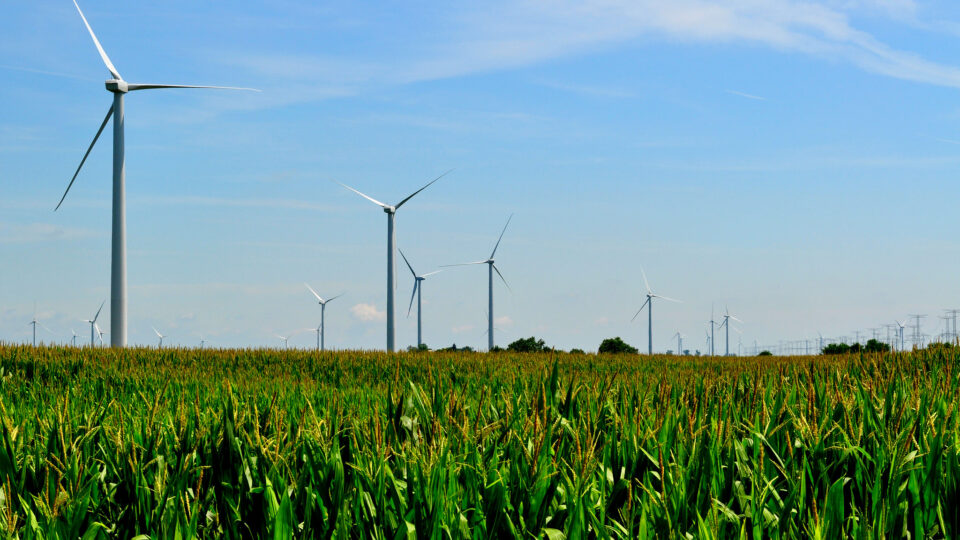
Decarbonizing could save $12 trillion globally

Scientists have long been calling for a transition to clean energy to prevent catastrophic impacts of climate change.  For much of that time, many people and, specifically, many of those in power, were skeptical of the need to do something about the warming climate.  But even as the facts about the changing climate became increasingly undeniable, there continued to be fears that the transition to clean energy sources would be unacceptably expensive and harmful to the economy.

A recent study published by Oxford University shows that the opposite is true:  a concerted effort to convert to green energy technologies such as solar, wind, and batteries, will save the world enormous amounts of money.

The Oxford study shows that a transition to nearly 100% clean energy by 2050 results in a lower-cost energy system that provides energy access to more people around the world.  The energy transition is expected to save the world at least $12 trillion compared to continuing our current levels of fossil fuel use.

The cost of renewable energy sources has been going down for decades and they are already cheaper than fossil fuels in many situations.  It is expected that they will become cheaper than fossil fuels across almost all applications over time.  Accelerating the transition will allow renewables to become cheaper faster.

The study made use of probabilistic models to estimate the costs of various possible future energy systems based on past data.  Even the most pessimistic models showed that scaling up green technologies is likely to drive their costs down so far that they will generate net cost savings and that the faster the transition goes, the more will be saved.  The result will be a cleaner, cheaper, more energy secure future.

**********

Web Links

Decarbonising the energy system by 2050 could save trillions

Photo, posted July 12, 2010, courtesy of Tom Shockey via Flickr.

Earth Wise is a production of WAMC Northeast Public Radio
Prospects For Floating Solar | Earth Wise

October 10, 2022 By EarthWise Leave a Comment

Floating solar may power the future

Countries are trying to figure out how to get enough energy from solar and wind generation to completely decarbonize their economies.  According to some estimates, nations might have to devote between half a percent and five percent of their land area to solar panels to get the job done.  Half a percent is about the amount of the U.S. that is covered by paved roads.  While there is lots of open land in many parts of the country, covering it with solar panels might not be acceptable to farmers, conservationists, or other interested parties.

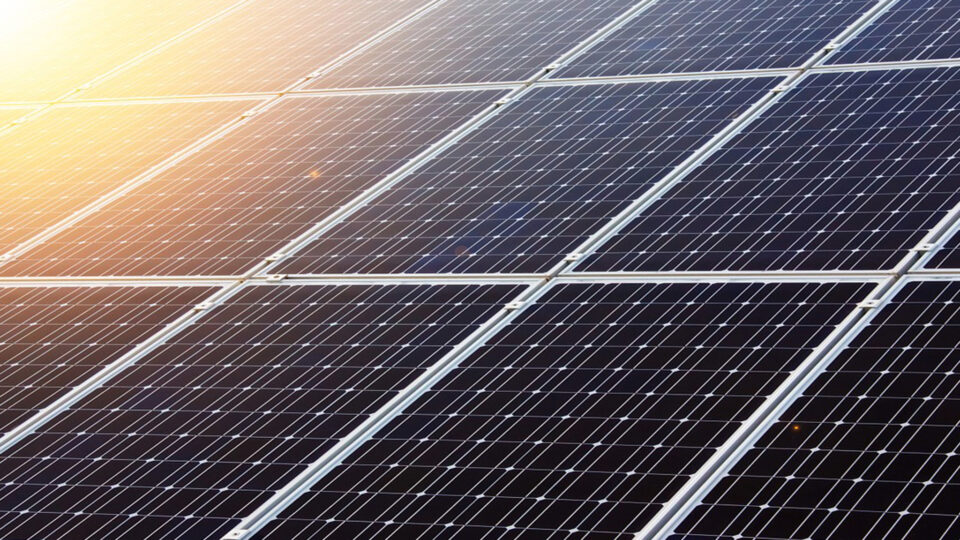
One way to deploy more solar panels without using up land is the use of floating solar panels.  Floating photovoltaic systems – also known as floatovoltaics – are becoming increasingly common, especially in Asia.  This year, China installed one of the largest floatovoltaic systems in the world on a reservoir near the city of Dezhou.

Floating solar panels stay cooler and run more efficiently than those on land.  The panels also help prevent evaporation from their watery homes and the shading they provide also help to minimize algal blooms.  Solar installations on reservoirs generally puts them near cities, making it easier to feed power into urban grids.

On the other hand, floating solar systems need to be able to withstand water and waves and are generally more expensive to build than land-based systems.

At present, the installed global capacity of floating solar is only about 3 gigawatts, compared with more than 700 gigawatts of land-based systems. However, reservoirs around the world collectively cover an area about the size of France.  Covering just 10 percent of them with floating solar could produce as much power as all the fossil-fuel plants in operation worldwide.

**********

Web Links

Solar Takes a Swim

Photo, posted March 7, 2019, courtesy of Hedgerow INC via Flickr.

Earth Wise is a production of WAMC Northeast Public Radio
California Climate Legislation | Earth Wise

October 6, 2022 By EarthWise Leave a Comment

California passes massive climate change legislation

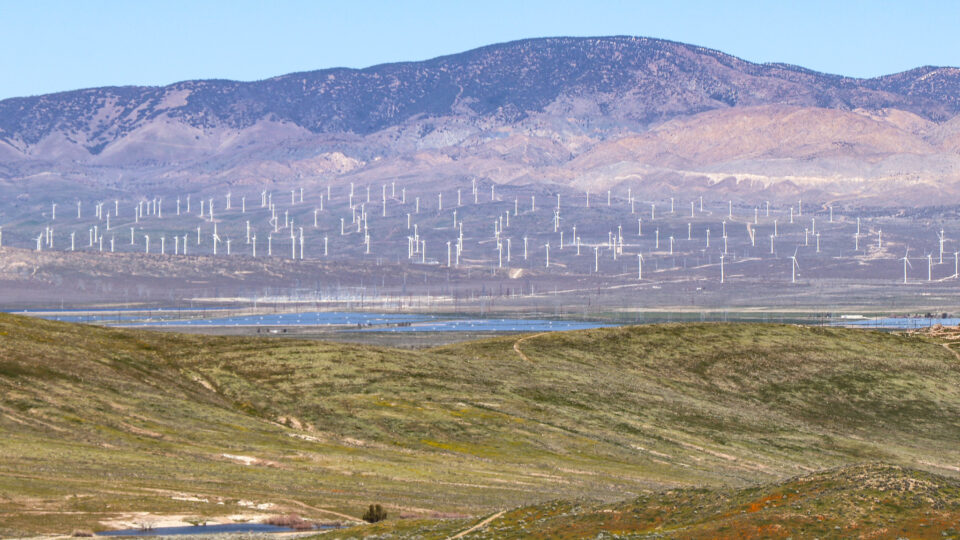
At the end of its summer session, California’s state legislature passed five climate-related bills including ones that it had been unable to pass in previous sessions.  Taking all of these actions puts California in the position of blazing a trail for the country and the rest of world in taking aggressive action on climate issues.

One bill confirmed California’s goal of reaching net-zero emissions by 2045.  Another bill added interim-term targets to go along with the state’s goal of 100% renewable electricity by 2045.  It sets a target of 90% by 2030 and 95% by 2040.  That bill mandates that California state agencies use 100% clean energy by 2035, which is a decade earlier than the previous requirement.

A third bill requires the California Air Resources Board to determine steps and regulations for carbon-capture and storage projects at pollution hotspots like oil refineries.

A fourth bill requires the state to set goals for removing carbon dioxide from the atmosphere through natural means such as tree planting.

The California state budget includes a record-breaking $54 billion to be spent on climate programs over the next five years, including $6.1 billion toward electric vehicles, $14.8 billion towards public transit projects, more than $8 billion for electric grid stabilization, $2.7 billion towards preventing wildfires, and $2.8 billion towards managing drought.

California has been dealing with ongoing drought and numerous wildfires and is highly motivated to take decisive action in dealing with the climate crisis.  California’s environmental initiatives often result in comparable actions taken by other states.

**********

Web Links

California Passes Massive Climate Legislation Package

Photo, posted March 16, 2019, courtesy of Raymond Shobe via Flickr.

Earth Wise is a production of WAMC Northeast Public Radio

A Miracle Tree | Earth Wise

September 27, 2022 By EarthWise Leave a Comment

Pongamia could be a miracle tree

The world needs to be fed without destroying the environment.   We need to grow more trees to store more carbon on earth and reduce the amount in the atmosphere.  But meanwhile, we decimate rainforests to produce palm oil and grow soybeans.

A startup company in California called Terviva thinks they have a solution.  It’s called pongamia, which is an ordinary looking tropical tree.  It produces beans packed with protein and oil, much like soybeans.  However, it has the potential to produce much more nutrition per acre than soybeans and it is hardy enough to grow on pretty much any kind of land without the use of pesticides, fertilizers, or irrigation.  In short, it is a miracle crop for a hot and hungry planet that is running out of fertile farmland and fresh water.

Pongamia is not a new or rare tree.  It is common in India but grows all over the world.  It is often planted as an ornamental here in the U.S.

The initial idea for making use of the hardy tree was to use its oil as a biofuel.  The seeds of pongamia are known to have a bitter taste and disagreeable odor, which is why the seeds or oil were never used for human or animal feed.  However, Terviva has developed a way to de-bitter pongamia oil.  Once this is done, it becomes a golden-colored substitute for olive oil. It also has enormous potential as a protein for plant-based milks and meats, since it contains all nine essential amino acids.

Terviva has raised more than $100 million to further develop pongamia and is now partnering with Danone, a $25 billion multinational food company, to develop pongamia as a climate-friendly, climate-resilient, non-GMO alternative to soy and palm oil.

***********

Web Links

This super-tree could help feed the world and fight climate change

Photo, posted December 15, 2015, courtesy of Lauren Gutierrez via Flickr.

Earth Wise is a production of WAMC Northeast Public Radio

Pumped Hydro Storage In Switzerland | Earth Wise

September 15, 2022 By EarthWise Leave a Comment

Pumped hydro energy storage is still by far the largest form of energy storage in the world, representing more than 90% of storage capacity worldwide.  The theory behind it is simple.  Water is pumped into an upper reservoir (that is, one at a higher elevation), and when electricity is needed, the water is allowed to flow downhill to power turbines and then is collected in a lower reservoir.   When there is excess electricity, it is used to pump water back uphill for use later.

Pumped hydro installations can’t be built just anywhere.  Geography and hydrology have to be suitable, which means high voltage transmission lines need to be constructed to link electricity sources like wind and solar farms with the storage location.  But in those situations where pumped hydro makes sense, it is a great solution to the energy storage problem.

Switzerland has just completed one of the largest pumped hydro facilities in the world.  The Nant de Drance installation makes use of the Emosson reservoir, which is an artificial lake built high in the Alps near the French border.  Over the past 14 years, 10 miles of tunnels have been dug into the mountains to connect the Emosson reservoir to the Vieux Emosson reservoir to the south.

In between the two reservoirs is a giant underground cavern where six of the largest water-driven turbines in the world are spun from the water rushing down from above.  The turbines have a capacity of 900 megawatts, making Nant de Drance one of the most powerful generating plants in Europe.  In terms of storage capacity, the installation has a maximum capacity of 20 gigawatt-hours, and can store that energy indefinitely, which is challenging for other storage technologies.

**********

Web Links

14 Years In The Making, 20 GWh Pumped Hydro Storage Facility Comes To Switzerland (With Video)

Photo, posted September 7, 2009, courtesy of Flickr.

Earth Wise is a production of WAMC Northeast Public Radio.

Rooftop Solar Taking Off In China | Earth Wise

August 11, 2022 By EarthWise Leave a Comment

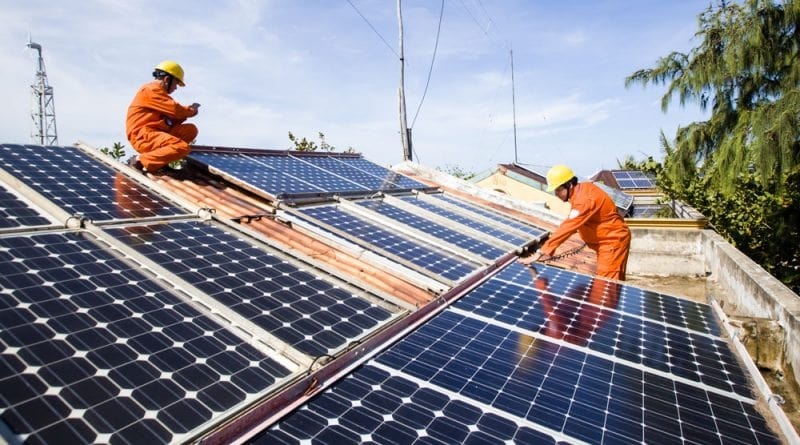
Rooftop solar is booming

The total amount of solar power generating capacity in the world has been growing rapidly.  In 2008, there was a total of only 15 gigawatts installed world-wide.  By 2012, the total was 100 gigawatts.  As of this spring, there is now 1 terawatt – that’s 1,000 gigawatts – of solar power installed in the world.   About a third of that total is in China, and solar power is really booming there.

Estimates are that China will install 108 gigawatts of solar capacity this year, which is about double the amount installed in 2021.  Much of the growth in solar in China is in the form of rooftop solar, as opposed to utility-scale solar farms.

China is aiming to have 50% of new factory rooftops carry solar installations by 2025.   By the end of next year, China’s National Energy Bureau is aiming for solar panels to cover 50% of rooftops on party and government buildings, 40% of schools, hospitals, and other public buildings, 30% of industrial and commercial buildings, and 20% of rural homes.  This new initiative will drive China’s installed solar capacity to impressive levels in the coming years.

After China, the leading installers of solar energy capacity are the European Union, the United States, and Japan. 

These figures are for generating capacity.  What ultimately matters is solar’s share of total electricity consumption.  In China and the EU, solar provides over 6% of the electricity used.  In the US, that figure is about 3.5%.  In Germany and Australia, solar power provides 10% of electricity needs.  All these numbers will continue to go up rapidly as solar installations grow.

**********

Web Links

China Sees Rooftop Solar Take Off as New Policies Bolster Growth

Photo, posted June 17, 2022, courtesy of Nguyễn Mỹ Hoa via Flickr.

Earth Wise is a production of WAMC Northeast Public Radio.

A Geoengineering Research Plan | Earth Wise

July 22, 2022 By EarthWise Leave a Comment

The 2022 federal appropriations act, signed into law in March, directed the Office of Science and Technology Policy to develop a cross-agency group to coordinate research on climate interventions, in partnership with NASA, the National Oceanic and Atmospheric Administration, and the Department of Energy.

The group is tasked with creating a research framework to “provide guidance on transparency, engagement, and risk management for publicly funded work on solar geoengineering research.”  The group is supposed to develop a five-year plan that will define research goals for the field, assess the potential hazards of climate interventions, and evaluate the level of federal funding required to carry out the work.

This marks the first federally coordinated effort of this kind and is especially significant because it contributes to the perception that geoengineering is an appropriate and important area of research as the climate continues to warm.

It is an understatement to say that such research is controversial.  Geoengineering has often been a taboo topic among scientists. There are significant questions about potential environmental side effects and concerns that the impact of any such efforts would be felt unevenly in different parts of the world.  There are challenging questions about global governance , including who should be able to make decisions about any potential deployment of climate interventions and what the goals of such interventions should be.

These are momentous issues to grapple with, but as the threat of climate change grows and nations continue to fail to make rapid progress on emissions, researchers, universities, and nations are increasingly motivated to seriously explore the potential effects of geoengineering approaches.  We can’t hide from the fact that these issues are going to be explored.

**********

Web Links

The US government is developing a solar geoengineering research plan

Photo, posted June 28, 2013, courtesy of Fernando Aramburu via Flickr.

Earth Wise is a production of WAMC Northeast Public Radio.

Carbon Capture: Solution Or Band-Aid? | Earth Wise

July 13, 2022 By EarthWise Leave a Comment

Can carbon is part of the solution to climate change

The idea of capturing the CO2 emissions from industry and locking them up is nothing new.  It’s been going on for decades in some places.  Norway’s state-owned oil company Equinor has been holing away a million tons of CO2 a year for a long time.  But overall, CCS – carbon capture and storage – has had very limited use.  As of last year, there were only about 30 large-scale projects in operation around the world, capturing only 0.1% of global emissions.

There is now growing interest in CCS and many new projects are underway.  A combination of rising carbon prices in Europe, tax breaks for CCS in the US, national net-zero targets, and the increasing need to ramp down global emissions are all driving rising CCS activities. 

While recent reports from the Intergovernmental Panel on Climate change still claim that it is possible to remain below 2 degrees Celsius of warming without using carbon capture, there is growing belief that it may be necessary given the present pace of the transition away from fossil fuels.

Two industries that together produce about 14% of global CO2 emissions are cement and steel.  These are both industries for which it is difficult to eliminate emissions regardless of the energy sources used. CCS may be the best approach to reducing their emissions.

But there is considerable pushback against CCS.  The concern is that CCS is primarily a way to delay decarbonization.  It encourages various industries to continue to use fossil fuels instead of shifting away from them.  Nonetheless, CCS no doubt has its place as part of the solution to climate change.

**********

Web Links

Solution or Band-Aid? Carbon Capture Projects Are Moving Ahead

Photo, posted June 5, 2022, courtesy of Mark Dixon via Flickr.

Earth Wise is a production of WAMC Northeast Public Radio.

Reshaping Our Planet | Earth Wise

July 12, 2022 By EarthWise Leave a Comment

Human activity is changing the planet

Human activity – especially agriculture – has altered 70% of the land on our planet.  According to a new report from the United Nations, damage to the Earth’s lands has put the planet on “crisis footing”.

Our health, our economy, and our well-being depend on land.  The food we eat, the water we drink, and the air we breathe all rely on status of the land to at least some extent.

According to the report, up to 40% of the planet’s land is already degraded, affecting half of the people alive today.  At current rates, an additional area nearly the size of South America will be degraded by 2050.

Degradation of land occurs in various ways, including deforestation, desertification, and the loss of wetlands or grasslands.  All of these things are caused by human activities.  As forests, savannas, wetlands, and mangrove swamps are converted to agriculture or are lost to urban expansion, greenhouse gas emissions rapidly increase, adding to the effects of climate change.  The climate crisis, biodiversity loss, and land degradation are integrally linked.

Much of the blame for degraded landscapes is on humanity’s ever-expanding need for food and the modern farming systems that produce it.  The global food system is responsible for 80% of the world’s deforestation, 70% of freshwater use, and is the greatest driver of land-based biodiversity loss.  Modern agriculture has altered the face of the planet more than any other human activity.

The report urges efforts at restoration of land.  Restoration can take multiple forms, including planting forests and shrubs or grazing livestock and growing crops between trees instead of clearing existing forests.

**********

Web Links

UN Report Says Humanity Has Altered 70 Percent of the Earth’s Land, Putting the Planet on a ‘Crisis Footing’

Photo, posted June 20, 2010, courtesy of Nicholas A. Tonelli via Flickr.

Earth Wise is a production of WAMC Northeast Public Radio.

The Race For American Lithium Mining | Earth Wise

July 7, 2022 By EarthWise Leave a Comment

A race is underway to source enough lithium to meet the global demand

The auto industry is making a massive transition from gas-powered cars to electric cars.  The exploding electric vehicle market has set off what some call a global battery arms race.  Battery manufacturers are urgently trying to source the raw materials needed to make batteries, which presently include cobalt, nickel, graphite, and lithium.  There is encouraging progress in reducing and even eliminating cobalt and nickel from electric car batteries, but so far lithium seems to be essential.

The International Energy Agency has named lithium as the mineral for which there is the fastest growing demand in the world.  Estimates are that if the world is to meet the global climate targets set by the Paris Agreement, at least 40 times more lithium will be needed in 2040 compared with today.

According to the US Geological Survey, the US has about 9 million tons of lithium, which puts it in the top 5 most lithium-rich countries in the world.  Despite this, our country mines and processes only 1% of global lithium output.  Most of the rest comes from China, Chile, and Australia.  Being dependent upon these foreign sources is a serious concern for national security.

There is only one operational lithium mine in the US at present.  Multiple companies are pressing to get more mining projects in operation, including sites in North Carolina and Nevada.  But there are serious environmental problems associated with lithium mining and there is considerable local opposition to establishing the mines.

The US wants to be a leader in the global race to build the batteries that will power the green transition but it is a complicated situation that combines both undeniably important benefits as well as very real dangers.

**********

Web Links

Powering electric cars: the race to mine lithium in America’s backyard

Photo, posted January 18, 2022, courtesy of Ivan Radic via Flickr.

Earth Wise is a production of WAMC Northeast Public Radio.

Continued Renewables Growth | Earth Wise

June 17, 2022 By EarthWise Leave a Comment

In 2021, the world added a record amount of 295 gigawatts of renewable power.  According to the International Energy Agency, it is on pace to surpass that amount in 2022.

Almost half of the renewable buildout in the world is taking place in China.  In 2021, China accounted for 46% of worldwide renewable energy additions.  The EU and United States are the next two leaders.  The rapid buildup is especially impressive given the challenges developers have faced from the coronavirus pandemic, supply chain issues, and various construction delays.

Predictions are that the global total added this year will be about 320 gigawatts of renewables.  This amount is equivalent to the total power demands of Germany, which is the world’s fourth-largest economy.  Solar photovoltaics are forecast to account for 60% of the increase in global renewable capacity this year. 

The rapid growth in China and the EU are driven by strong pro-renewable policies.  In our country, wrangling over climate legislation and investigations into potential trade violations by Asian suppliers have held back our progress.  But over the next several years, offshore wind will begin to have a real impact on U.S. renewable installations.

According to the report by the International Energy Agency, renewable energy growth is likely to plateau in 2023 unless stronger climate policies are enacted. 

There are now more than 3 terawatts – that’s 3,000 gigawatts – of renewable generation capacity globally.  This compares with a little over 4,000 terawatts of fossil fuel generation.  Global renewable energy generation is currently projected to surpass that of fossil fuels by 2035.

**********

Web Links

Following Record Growth in 2021, Renewables on Track for New High in 2022

Photo, posted October 17, 2016, courtesy of B Sarangi via Flickr.

Earth Wise is a production of WAMC Northeast Public Radio.

Primary Ways To Mitigate Climate Change | Earth Wise

May 30, 2022 By EarthWise Leave a Comment

How to mitigate climate change

The most recent report issued by the Intergovernmental Panel on Climate Change states that the world must halt the increase in greenhouse gases within three years, reduce emissions by 43% in the next seven years, and eliminate them entirely by 2050.  Otherwise, there will likely be catastrophic and irreversible impacts on the climate.

With respect to achieving these reductions, the report emphasizes decarbonizing the energy sector through electrification by replacing fossil fuels anywhere and everywhere possible.  Where that isn’t yet practical – such as in shipping and aviation – the use of biofuels and hydrogen can provide a stopgap until battery technology becomes a viable alternative.

The economics of this approach continue to improve.  Since 2010, the cost of wind, solar, and batteries has declined by as much as 85%.  In many cases, costs have fallen below those of fossil fuels.  Nonetheless, the report stresses that continuing to provide national, state, and local incentives for using renewable energy is a key factor in achieving the necessary reductions.

However, reducing emissions will no longer be enough.  This is the first major IPCC report that states that man-made carbon dioxide removal strategies will be necessary to meet the goals of the Paris Climate Agreement.  So-called natural carbon storage options, like planting trees and using farming methods that sequester carbon in soil, are also important parts of the strategy.

It is up to governments, policymakers, and investors to implement the necessary changes to mitigate climate change.  There is lots of talk about it, but it will take concerted action to avoid increasingly dire consequences.

**********

Web Links

Report highlights affordable, available ways to mitigate climate change now

Photo, posted September 8, 2007, courtesy of Kevin Dooley via Flickr.

Earth Wise is a production of WAMC Northeast Public Radio.

Climate Change And Forest Loss | Earth Wise

May 23, 2022 By EarthWise Leave a Comment

India is one of the most biodiverse countries in the world.  An estimated 47,000 plant species and 89,000 animal species can be found in India, with more than 10% of each thought to be on the list of threatened species. 

India is also among the top ten countries in the world in terms of total forest coverage.  According to Indian government data, the total forest and tree cover in India is 312,000 square miles, which is 24.62% of the geographical area of the country.

However, forest loss in India has been a problem for many decades driven largely (researchers thought) by land use change.  But it turns out that climate change may also have been contributing to forest loss, and its impact is projected to become an even bigger problem in the coming years. 

In the first ever national-scale study of the relationship between forest loss and rainfall and temperature trends in India, researchers from the University of Reading in the U.K. found that climate change may have contributed to large declines in forest since the turn of the century.

The study, which was recently published in the journal Global Change Biology, found far greater forest losses were observed where and when the climate was changing most rapidly.  Decreases in rainfall had the strongest impact on forest loss. 

These findings exacerbate concerns about the already-worrying levels of deforestation in the country, and contradict official reports that have shown relatively small decreases in forest coverage in recent years. 

The research team warns that rapid changes to the climate in some regions will require targeted preservation action to reduce the risk to biodiversity in India. 

*********

Web Links

Indian forest loss ‘worse than feared’ due to climate change

Photo, posted January 20, 2013, courtesy of Dicky Broadhurst / Frontier Official via Flickr.

Earth Wise is a production of WAMC Northeast Public Radio.

Wind And Solar And Meeting Climate Goals | Earth Wise

May 20, 2022 By EarthWise Leave a Comment

Meeting climate goals using solar and wind power

According to a new report from the climate think tank Ember, the rapid growth that has been going on for solar and wind power could allow the global electricity sector to do its part in limiting global warming to 1.5 degrees Celsius.

In 2021, solar power grew by 23% worldwide and wind power grew by 14%.  The Netherlands, Australia, and Vietnam had the largest gains in renewable energy.  Solar power in Vietnam grew by 337%.

The trends over the past decade, if continued across the globe, would result in the power sector being on track for meeting climate goals.  But not all the news is good.  The overall power sector has not been adequately reducing emissions.  Coal power actually grew by 9% last year as a result of increased demand for power during the rapid economic recovery in the easing of the pandemic shutdowns.  A spike in natural gas prices made coal more cost-competitive.

In order for the power sector to do its part in keeping warming below 1.5 degrees, wind and solar power will need to provide 40% of the world’s power by 2030 and nearly 70% by 2050.  Today, they supply only 10% of the world’s electricity.

With rising gas prices during Russia’s war with Ukraine, there is real danger of increased use of coal, threatening the gains made by renewable energy.

Nonetheless, a study published in Oxford Open Energy modeled various scenarios for the growth of renewable energy and found that it is feasible to meet climate goals.  In order to achieve this, countries’ policies will need to stimulate significant increases in energy and resource efficiency and rapid deployment of low-carbon technologies, promote strong environmental actions, and encourage low population growth.

**********

Web Links

Rapid Growth of Wind and Solar Could Help Limit Warming to 1.5 degrees C

Photo, posted October 11, 2011, courtesy of Michael Coghlan via Flickr.

Earth Wise is a production of WAMC Northeast Public Radio.

Training Corals To Tolerate Heat | Earth Wise

April 19, 2022 By EarthWise Leave a Comment

Conditioning corals to tolerate heat

When ocean water is too warm, corals expel the algae that lives in their tissues, which causes the coral to turn completely white.  This is called coral bleaching.   When this happens, the coral is not dead.  However, corals are dependent upon the symbiotic relationship with algae and if conditions don’t improve, they don’t let the algae back in and the corals will die.

According to the National Oceanic and Atmospheric Administration, between 2014 and 2017, around 75% of the world’s tropical coral reefs experienced heat stress severe enough to trigger bleaching.  For 30% of the world’s reefs, the heat stress was enough to kill the coral.

According to new research by the University of Miami published in the journal Coral Reefs, corals subjected to a stressful regimen of very warm water in the laboratory came to be more tolerant of high temperatures, offering a potential tool for preserving ailing coral reefs.

In the study, some corals were kept in water at a constant temperature of 82 degrees while others saw water temperatures fluctuating between 82 degrees and 88 degrees.  After 90 days of this treatment, the corals exposed to variable temperatures were able to tolerate high heat for longer periods before bleaching.  This training regime is akin to an athlete preparing for a race.

The findings suggest a possible approach for restoring coral reefs.  Nursery-raised corals that are “trained” to tolerate heat could be planted onto reefs endangered by warming waters.  Reefs populated by corals with boosted stamina to heat stress could have a greater chance of surviving the warming waters of the oceans.

**********

Web Links

Some Corals Can Be Conditioned to Tolerate Heat, Study Finds

Photo, posted December 16, 2015, courtesy of Big Cypress National Preserve via Flickr.

Earth Wise is a production of WAMC Northeast Public Radio.

Climate Change And The World’s Fisheries | Earth Wise

March 10, 2022 By EarthWise Leave a Comment

Climate change is affecting the world's fishing

According to a new study, approximately 70% of the world’s oceans could be suffocating from a lack of oxygen by 2080 as a consequence of climate change.  This has the potential to impact marine ecosystems all around the world.  

The study, which was recently published in the journal Geophysical Research Letters, is the first to use climate models to predict how and when deoxygenation will occur throughout the world’s oceans outside of its natural variability. 

According to the findings, significant and potentially irreversible deoxygenation of the ocean’s middle depths began occurring last year.  The models predict that deoxygenation will begin affecting all zones of the ocean by 2080.

According to the study’s models, mid-ocean depths are already losing oxygen at unnatural rates. Globally, the ocean’s middle depth – known as the mesopelagic zone – is home to many of the world’s commercially fished species.  This makes these new findings a potential harbinger of economic hardship, seafood shortages, and environmental disruption. 

Just like land animals, aquatic animals need oxygen to breathe.  As climate change warms the oceans, the water holds less oxygen and is more buoyant than cooler water.  This leads to less mixing of oxygenated water near the surface with deeper waters, which naturally contain less oxygen.  Warmer water also raises oxygen demand among living organisms, resulting in less availability for marine life. 

The researchers also found that oceans closer to both the North Pole and the South Pole are particularly vulnerable to deoxygenation.  While they are not yet sure why, accelerated climate warming could be the culprit. 

These findings should add new urgency to climate change mitigation efforts. 

**********

Web Links

Climate change has likely begun to suffocate the world’s fisheries

Photo, posted January 28, 2019, courtesy of Joseph Gage via Flickr.

Earth Wise is a production of WAMC Northeast Public Radio.

The All-Time Hottest Day | Earth Wise

February 14, 2022 By EarthWise Leave a Comment

Climate change helping set heat records around the world

Last year saw record high temperatures in many places around the world and this year started out with more of the same.  In mid-January, Onslow, a small town in Western Australia, measured a high temperature of 123.3 degrees, tying the all-time highest temperature ever recorded anywhere in the Southern Hemisphere.  The previous reading was also made in Australia back in 1960.

The new temperature record was set just as climate institutions around the world were announcing that the past seven years have been the highest in recorded history.

The list of temperature records set in 2020 and 2021 is a long one.   2020 was the hottest year in recorded history.  July 2021 was the hottest month ever recorded.   The hottest official temperature ever recorded anywhere in the world was 129.9 degrees, occurring in Death Valley, California on both August 16, 2020, and July 9, 2021. 

The hottest temperature ever recorded in the Arctic was 100.4 degrees on June 20, 2020 in Verkhoyansk in Russia’s Sakha Republic.  (Amazingly, that small town also holds the record for the coldest temperature ever recorded in Asia at -90 degrees). 2021 saw an all-time high temperature recorded in Europe, in Syracuse, Sicily, on August 11 at 119.8 degrees. 

Overall, 400 documented weather stations in communities or outposts worldwide established all-time high temperatures in 2021 alone.  The climate we have lived through over the past decades is changing and these changes will have consequences to our way of life.

**********

Web Links

Australia hits 123 degrees, tying hottest temperature on record in Southern Hemisphere

Photo, posted January 21, 2013, courtesy of A. Dombrowski via Flickr.

In ogni caso, un proverbio russo comune Informazioni: “Se curi un raffreddore, passa in sette giorni, e se non lo curi, in una settimana”, non è applicabile alla realtà spagnola.

Earth Wise is a production of WAMC Northeast Public Radio.

Lægemiddelbehandling, der kan nedsætte udskillelsen af FDE-hæmmere fra kroppen side. Beskrevne tilfælde af dødsfald i forbindelse med indtagelse af Viagra skyldtes oftest kombineret brug af dette lægemiddel med organiske nitrater.

Melting Himalayan Glaciers | Earth Wise

February 1, 2022 By EarthWise Leave a Comment

Accelerating melting of Himalayan glaciers poses a massive threat to regional water supply

The great mountain ranges of central Asia, including the Himalayas, contain the third-largest deposit of ice and snow in the world, trailing only Antarctica and the Arctic.  The Himalayan range contains about 15,000 glaciers, and is part of a region widely referred to as the Third Pole due to its extraordinary reserves of freshwater.

But in recent years, scientists have observed an increase in the rate of Himalayan glacier loss.  According to a new study led by researchers from the University of Leeds in the UK, the accelerating melting of the Himalayan glaciers threatens the water supply of millions of people in Asia. 

In the study, researchers reconstructed the reach of the Himalayan glaciers during the Little Ice Age, which was the last major glacier expansion 400-700 years ago. They found that these glaciers began losing ice 10 times faster during the modern era.  In fact, the glaciers have shrunk from a peak of nearly 11,000 square miles to around 7,500 square miles today.   

This exceptional acceleration of melting of the Himalayan glaciers could have significant implications.  Hundreds of millions of people rely on Asia’s major river systems for food and energy, and depend on these glaciers to feed rivers during the dry seasons.  These rivers include the Brahmaputra, Ganges, and Indus.  The changing global climate could disastrously impact water resources and livelihoods of the Greater Himalayan region.

According to the research team, people living in these regions have already seen changes that are unlike anything witnessed for centuries.  This study is the latest to confirm that these changes are accelerating and pose a significant threat to entire nations and regions. 

**********

Web Links

Himalayan glaciers melting at ‘exceptional rate’

Photo, posted March 13, 2018, courtesy of Sarunas Burdulis via Flickr.

Earth Wise is a production of WAMC Northeast Public Radio.

  • « Go to Previous Page
  • Page 1
  • Interim pages omitted …
  • Page 5
  • Page 6
  • Page 7
  • Page 8
  • Page 9
  • Interim pages omitted …
  • Page 13
  • Go to Next Page »

Primary Sidebar

Recent Episodes

  • An uninsurable future
  • Clean energy and jobs
  • Insect declines in remote regions
  • Fossil fuel producing nations ignoring climate goals
  • Trouble for clownfishes

WAMC Northeast Public Radio
WAMC/Northeast Public Radio is a regional public radio network serving parts of seven northeastern states (more...)

Copyright © 2026 ·