• Skip to primary navigation
  • Skip to main content
  • Skip to primary sidebar

Earth Wise

A look at our changing environment.

  • Home
  • About Earth Wise
  • Where to Listen
  • All Articles
  • Show Search
Hide Search
You are here: Home / Archives for rising

rising

Climate Change And El Niño

December 2, 2019 By EarthWise Leave a Comment

The term El Niño refers to a large-scale ocean-atmosphere climate interaction linked to a periodic warming in sea surface temperature across the central and east-central equatorial Pacific Ocean.  Amazingly, the phenomenon was originally recognized by fishermen off the coast of South America in the 1600s, with the appearance of unusually warm water in the Pacific Ocean.

According to a new study published in the Proceedings of the National Academy of Sciences, climate change is increasing the frequency of extreme El Niño events, leading to intensifying droughts, worsening floods, and shifting hurricane patterns.

The study, led by scientists in China and the US, looked at data from 33 El Niños dating back to 1901.  Since the 1970s, El Niños have been forming farther to the west in the Pacific Ocean, where temperatures are warmer.  Strong El Niños can cause severe drought in dry climates such as Australia and India, intense flooding in wetter climates such as the US Pacific Northwest and Peru, and more hurricanes to form in the Pacific and fewer in the Atlantic.

Before 1978, 12 out of 14 El Niños formed east of the International Dateline.  Since 1978, all 11 have formed in the central or western Pacific Ocean a shift of hundreds of miles.  There have been three so-called super El Niños since the shift – in 1982, 1997, and 2015.  These have set new average temperature records and triggered catastrophic natural disasters.

With rising global temperatures, El Niños are likely to continue to intensify, with major impacts on human societies around the world.

**********

Web Links

Climate Change is Making El Niños More Intense, Study Finds

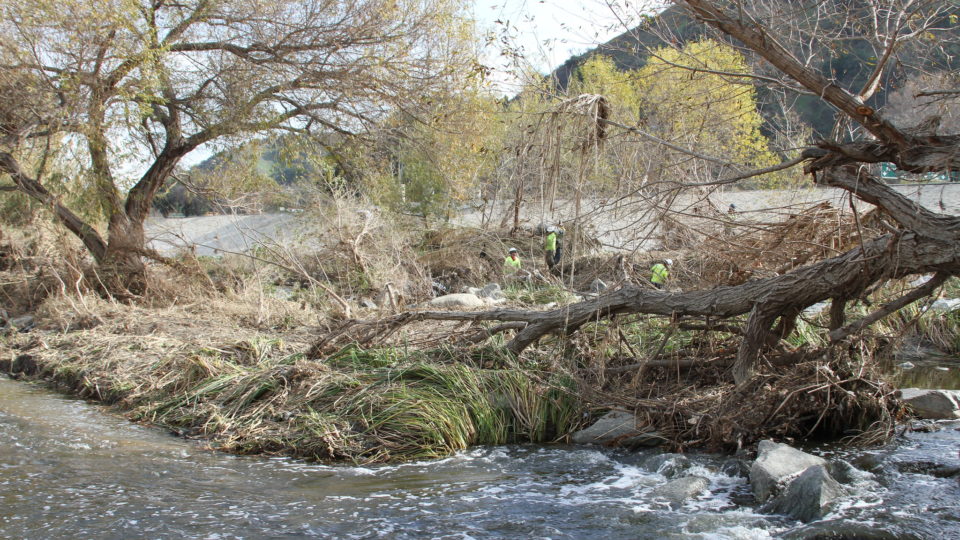
Photo, posted January 20, 2016, courtesy of Los Angeles District via Flickr.

Earth Wise is a production of WAMC Northeast Public Radio.
Hundred-Year Floods Becoming One-Year Floods

September 26, 2019 By EarthWise Leave a Comment

By definition, 100-year floods are intense flooding events that historically tend to happen once every 100 years.  Put another way, a 100-year flood has a 1 percent chance of happening in any given year.

According to new research published in the journal Nature Communications, rising global temperatures may turn 100-year floods into annual occurrences in parts of the United States.  The increase in severe coastal flooding events by the end of this century will be a result of rising sea levels and stronger, more frequent tropical storms and hurricanes.

The study, led by researchers at Princeton University and MIT, examined flood risk for 171 counties along the US East Coast and the Gulf of Mexico.  Their analysis concluded that 100-year floods will become annual events in New England.  In the US Southeast and Gulf of Mexico, counties could experience such floods as often as every year up to as seldom as every 30 years.

Previously, most analysis of coastal flooding has looked only at the impact of sea level rise on flood risk.  This new research combined the risk of rising seas with projected changes in coastal storms over the course of this century.  Data from the Gulf of Mexico revealed that the effect of stronger storms is comparable with or even more significant than the effect of sea level change for 40% of the counties studied.  So, neglecting the effects of storm climatology change is likely to significantly underestimate the impact of climate change in many places.

The hope is that more comprehensive flood risk data can be used to create more effective climate resiliency strategies all the way down to the county level.

**********

Web Links

100-Year Floods Could Soon Happen Annually in Parts of U.S., Study Finds

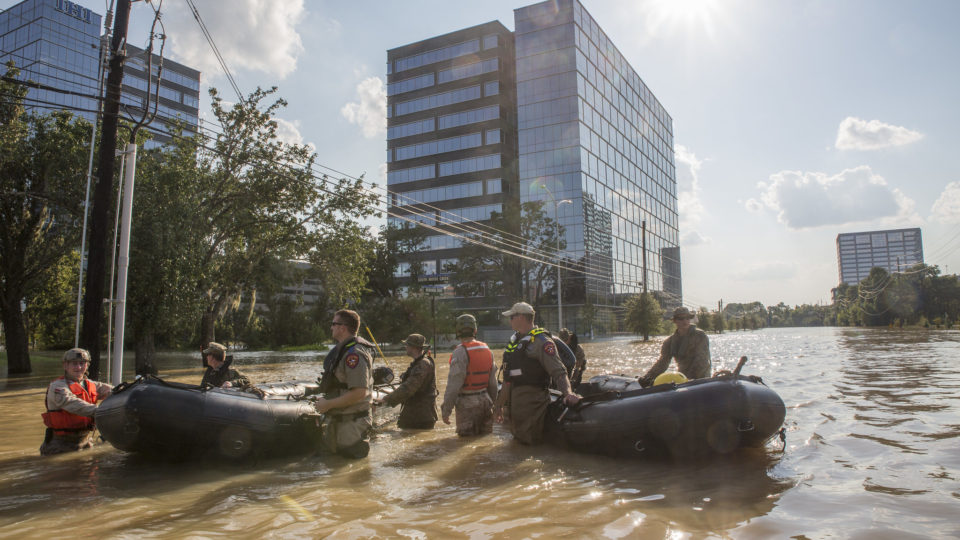
Photo, posted August 31, 2017, courtesy of the U.S. Department of Agriculture via Flickr.

Earth Wise is a production of WAMC Northeast Public Radio.

Climate Change And The Bottom Line

July 31, 2019 By EarthWise Leave a Comment

Large companies around the world are facing up to the fact that climate change could substantially affect their bottom lines within the next five years.  Shareholders and regulators have been applying pressure to companies to disclose the specific financial impacts they could face as the planet warms and companies are increasingly making those disclosures.

A non-profit charity called CDP (formerly known as the Carbon Disclosure Project) runs the global disclosure system for investors, companies, cities, states, and regions to manage their environmental impacts.  In 2018, more than 7,000 companies submitted reports to CDP and, for the first time, CDP explicitly asked firms to try to calculate how a warming planet might affect them financially.

Analysis of the reports from 215 of the world’s 500 largest corporations revealed that these companies alone potentially faced roughly $1 trillion in costs related to climate change in the decades ahead unless they took proactive steps to prepare. 

Climate-related risks range from extreme weather that could disrupt supply chains to stricter climate regulations that could hurt the value of coal, oil, and gas investments.  Technology companies like Google’s parent company, Alphabet, Inc., face increased costs to cool energy-hungry data centers as temperatures rise.

In all, the world’s largest companies estimated that at least $250 billion of assets may need to be written off or retired early as the planet heats up.  Previous studies, based on computer climate modeling, have estimated that the risks of global warming, if left unmanaged, could cost the world’s financial sector between $1.7 trillion to $24.2 trillion in net present value terms.

**********

Web Links

Companies See Climate Change Hitting Their Bottom Lines in the Next 5 Years

Photo, posted February 29, 2016, courtesy of Ben Nuttall via Flickr.

Earth Wise is a production of WAMC Northeast Public Radio.
Desalination On The Rise

July 23, 2019 By EarthWise Leave a Comment

Desalination has been regarded for decades as a solution for providing fresh water to places where it is scarce.  With drought becoming more common around the world – sometimes even in places where water supplies were thought to be ample – there is increasing pressure to bring new desalination plants online.

San Diego gets only 12 inches of rain a year and has no groundwater.  It gets half its water from the distant Colorado River, and that source is becoming increasingly unreliable.  Thus, it is no surprise that America’s largest desalination plant is in Carlsbad, about 30 miles north of San Diego.  That plant provides about 10% of the fresh water needs of the region’s 3.1 million people.

There are 11 desalination plants in California, and 10 more are proposed. Desalination is huge in Saudi Arabia, Australia and Israel.  Globally, more than 300 million people get their water from desalination.

But there are problems.  Desalination is expensive and energy-intensive.  If the process is powered by fossil fuels, it contributes to global warming.  There are ecological impacts as well since it takes two gallons of sea water to make a gallon of fresh water, and the gallon left behind is extremely briny and potentially harmful to dump back into the sea.  The intake systems of desalination plants are also harmful to fish and other aquatic creatures.

The cost of desalination has dropped by more than half over the last 30 years but water from it still costs about twice as much as that from other main sources.  The technology is getting better and cheaper, but the industry must confront and solve serious environmental and economic problems in order for desalination to be able to meet the needs of an increasingly thirsty world.

**********

Web Links

As Water Scarcity Increases, Desalination Plants Are on the Rise

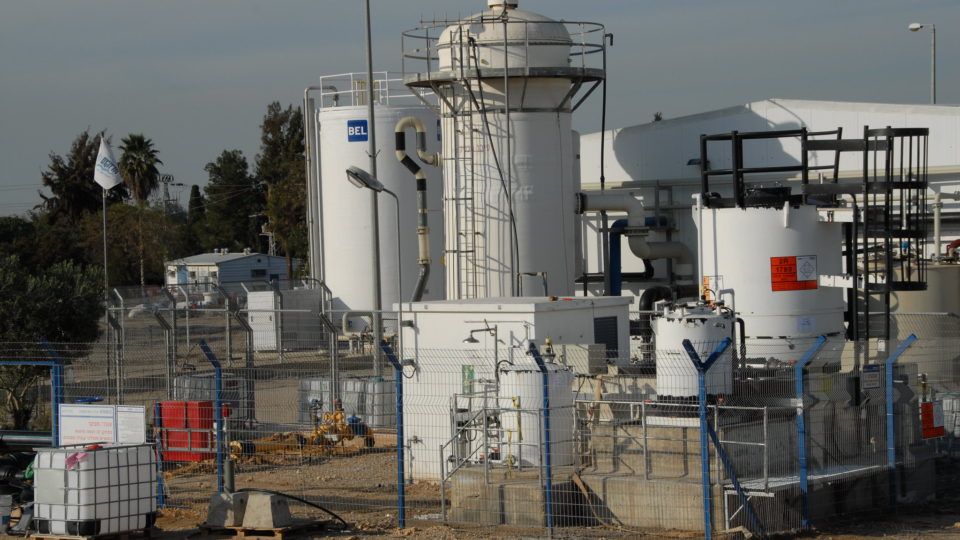
Photo, posted January 12, 2011, courtesy of Flickr.

Earth Wise is a production of WAMC Northeast Public Radio.
Climate Change And Economic Inequality

June 3, 2019 By EarthWise 1 Comment

A new study by Stanford University looked at the effects of climate change on global economic inequality.  The study found that the gap between the economic output of the world’s richest and poorest countries is larger today than it would have been without global warming.

The warming climate has enriched cooler countries like Norway and Sweden while dragging down economic growth in warm countries such as India and Nigeria.  The results of the study showed that most of the poorest countries on Earth are considerably poorer than they would have been in the absence of rising temperatures.  At the same time, the majority of rich countries are richer than they would have otherwise been.

Detailed analysis of 50 years of annual temperature and GDP measurements for 165 countries demonstrated that growth during warmer than average years has accelerated in cool nations and slowed in warm nations.  Historical data clearly show that crops are more productive, people are healthier, and they are more productive at work when temperatures are neither too hot nor too cold.  That means that in cold countries, a little bit of warming can help but the opposite is true in places that are already hot.

For most counties, whether global warming has helped or hurt economic growth is pretty certain.  Tropical countries in particular tend to have temperatures far outside the ideal for economic growth and they are already among the poorest countries.  It is less clear how warming has influenced growth in countries in the middle latitudes, such as here in the United States.  Some of the largest economies are near the perfect temperature for economic output but continued warming in the future is likely to push them away from the temperature optimum.

**********

Web Links

Climate change has worsened global economic inequality

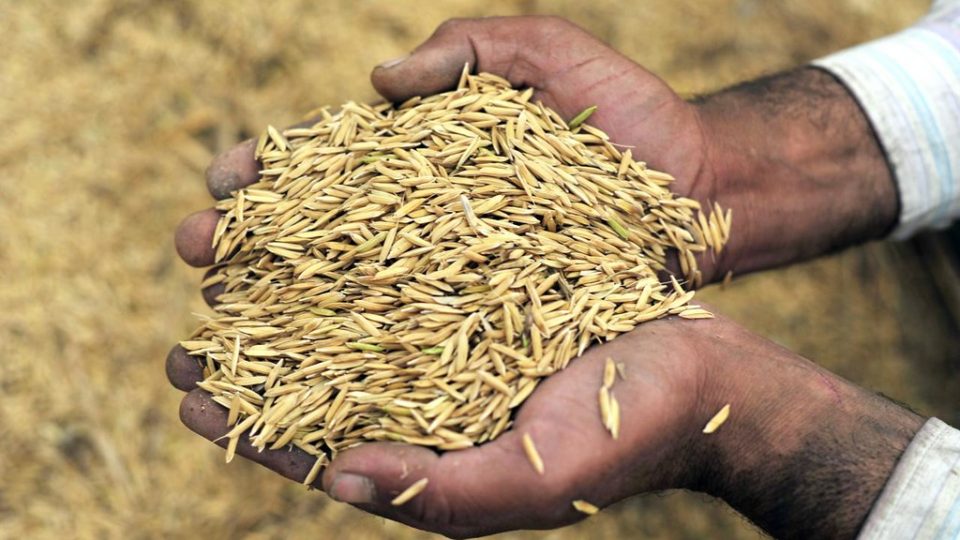
Photo, posted November 1, 2011, courtesy of CIAT via Flickr.

Earth Wise is a production of WAMC Northeast Public Radio.
High-Tide Flooding And Pollution

April 30, 2019 By EarthWise Leave a Comment

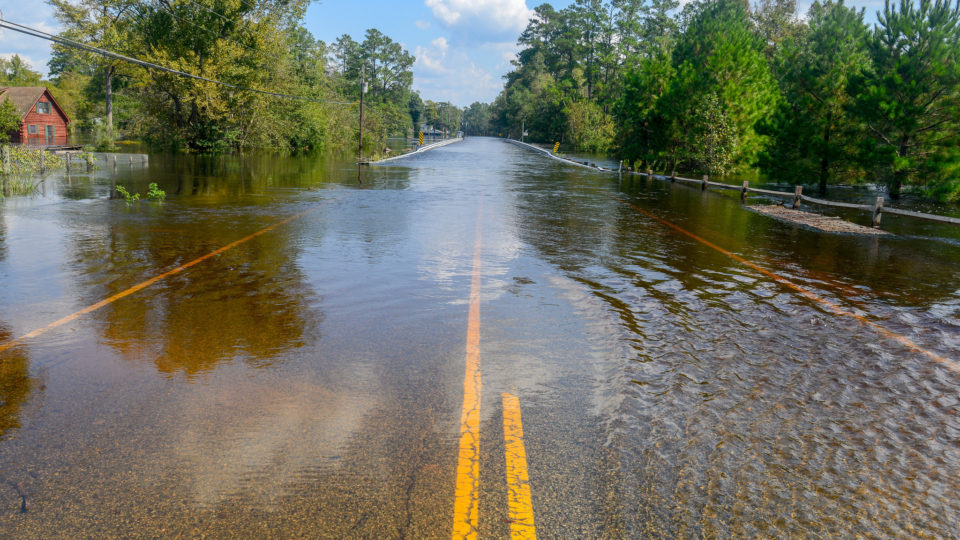
Global sea levels are steadily rising.  They are up 8 inches in the past century and now increasing at an average of 1.3 inches per decade.  As a result, the incidence of high-tide “sunny day” flooding is on the rise, especially along the U.S. East Coast.

Norfolk Virginia experienced fewer than 2 days of high-tide flooding a year in the 1960s; it had 14 in 2017.  Up and down the East Coast, flood days have increased by factors of 5 and more.

This has led to a form of pollution that hasn’t gathered much attention in the past:  when these floodwaters recede, they can carry debris, toxic pollutants and excess nutrients into rivers, bays, and oceans.

In the aftermath of high-tide flooding in Norfolk, Chesapeake Bay was littered with tipped-over garbage cans, tossed-away hamburgers, oil, dirty diapers, pet waste and all manner of other things.  Water that comes up on the landscape takes everything back into the river or ocean with it.

Analysis of tidal flooding along the Lafayette River in Norfolk indicated that just one morning of tidal flooding poured nearly the entire EPA annual allocation of nitrogen runoff for the river – nearly 2,000 pounds – into Chesapeake Bay.  The effects of excess nitrogen in the water are well-known and responsible for the toxic algal blooms that endanger aquatic life as well as human health.

According to the National Oceanic and Atmospheric Administration, high-tide flooding frequency along the southeastern coast of the U.S. rose 160% since 2000.  With the expected continuing rises in sea level, NOAA projects that as many as 85 days of high-tide flooding will occur along the coast by the year 2050.  It’s a big problem.

**********

Web Links

As High-Tide Flooding Worsens, More Pollution Is Washing to the Sea

Photo, posted September 20, 2018, courtesy of SC National Guard via Flickr.

Earth Wise is a production of WAMC Northeast Public Radio.
Shifting Climate Zones

November 16, 2018 By EarthWise Leave a Comment

https://earthwiseradio.org/wp-content/uploads/2018/11/EW-11-16-18-Shifting-Climate-Zones.mp3

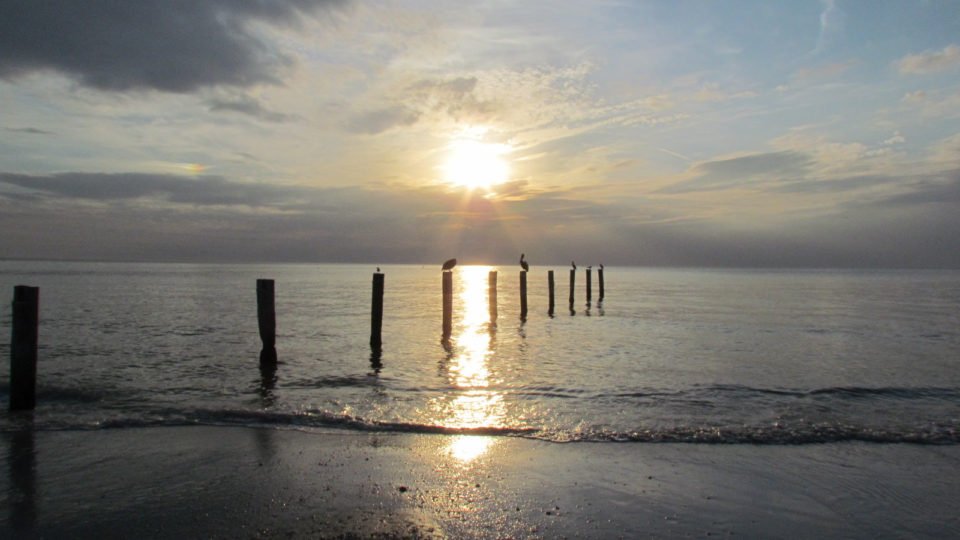
As the climate warms, the planet’s landscape is changing.  The Arctic ice is shrinking, the ocean is rising altering coastlines, and plants, animals and diseases are on the move.  The world’s climate zones are changing in significant and measurable ways.

[Read more…] about Shifting Climate Zones

Heat-Resistant Corals

August 31, 2018 By EarthWise Leave a Comment

https://earthwiseradio.org/wp-content/uploads/2018/08/EW-08-31-18-Heat-Resistant-Corals.mp3

All over the world, coral reefs are being wiped out by rising sea temperatures brought about by climate change.  When sea temperatures get too high, the symbiotic relationship between coral polyps and microscopic algae living within the coral breaks down and the coral either digests or expels the algae.   The result is coral bleaching which weakens, and if it persists, kills the coral.

[Read more…] about Heat-Resistant Corals

Rising Seas On The East Coast

June 6, 2018 By EarthWise Leave a Comment

https://earthwiseradio.org/wp-content/uploads/2018/06/EW-06-06-18-Rising-Seas-on-the-East-Coast.mp3

Global sea levels are rising by about a tenth of an inch per year, but in some places, the rise is faster… much faster.  From 2011 to 2015, sea levels rose up to 5 inches – an inch per year – in some locales along the Eastern Seaboard.  Places like Norfolk, Virginia and Miami are experiencing so-called sunny day flooding, something that had not been expected for decades according to climate projections.  So, what is going on?

[Read more…] about Rising Seas On The East Coast

Greenhouse Gas Emissions Rising Again

May 8, 2018 By EarthWise Leave a Comment

https://earthwiseradio.org/wp-content/uploads/2018/04/EW-05-08-18-Greenhouse-Gas-Emissions-Rising-Again.mp3

If we want to avoid drastic global warming this century, we need to sharply reduce greenhouse gas emissions over time.   For the previous three years, emissions had been holding steady, but last year, global emissions from the use of coal, oil and natural gas increased by 1.4%.  According to the International Energy Agency, this unfortunate new data should serve as a strong warning that we need to increase our efforts to combat climate change.

[Read more…] about Greenhouse Gas Emissions Rising Again

Saving Venice From The Sea

January 26, 2018 By EarthWise Leave a Comment

https://earthwiseradio.org/wp-content/uploads/2018/01/EW-01-26-18-Saving-Venice-from-the-Sea.mp3

The risks of rising sea waters are growing more apparent every year.  While the world struggles with taking action to reduce the carbon emissions that are driving the sea level rise, cities around the world are building sea walls designed to protect them from storm surges and flooding.   Most of these are massive, complex infrastructure projects that cost billions of dollars and take decades to complete.

[Read more…] about Saving Venice From The Sea

Migrating Trees

July 11, 2017 By EarthWise

https://earthwiseradio.org/wp-content/uploads/2017/07/EW-07-11-17-Migrating-Trees.mp3

The changing climate is having a marked effect on forests in this country.  In particular, trees along the U.S. eastern seaboard are changing their range as they slowly seek to escape rising temperatures.

[Read more…] about Migrating Trees

Dangerous Diseases From The Past

June 9, 2017 By EarthWise

https://earthwiseradio.org/wp-content/uploads/2017/06/EW-06-09-17-Dangerous-Diseases-from-the-Past.mp3

Climate change is poised to transform life on Earth as we know it.  The higher temperatures, the rising seas, the more frequent floods and droughts, among the countless other consequences associated with climate change, threaten to do irreversible damage to the world in the coming decades.

[Read more…] about Dangerous Diseases From The Past

Ocean Oxygen Levels

March 28, 2017 By EarthWise

https://earthwiseradio.org/wp-content/uploads/2017/03/EW-03-28-17-Ocean-Oxygen-Levels.mp3

When we think of global climate change, what comes to mind?  Rising seas? Melting glaciers? Shrinking sea ice?  How about diminishing ocean oxygen levels?  

[Read more…] about Ocean Oxygen Levels

Rising East Coast Seas

January 3, 2017 By EarthWise

https://earthwiseradio.org/wp-content/uploads/2016/12/EW-01-03-17-Rising-East-Coast-Seas.mp3

Sea levels are rising around the world because of melting ice as well as warming waters since water expands as its temperature goes up.  Average sea levels around the world are predicted to rise by about three feet by the end of the century as a consequence of the warming climate.

[Read more…] about Rising East Coast Seas

Carbon Dioxide Continues To Rise

November 7, 2016 By WAMC WEB

https://earthwiseradio.org/wp-content/uploads/2016/11/EW-11-07-16-Rising-Carbon-Dioxide.mp3

Back in December of 2013, a little less than three years ago, Earth Wise reported that the observatory on Mauna Loa in Hawaii had briefly measured carbon dioxide levels greater than 400 parts per million for the first time ever.  During the following year, readings above the 400 level started to pop up occasionally elsewhere as well.

[Read more…] about Carbon Dioxide Continues To Rise

Climate Change And Radioactive Waste

September 14, 2016 By WAMC WEB

https://earthwiseradio.org/wp-content/uploads/2016/08/EW-09-14-16-Climate-Change-and-Radioactive-Waste.mp3

What do climate change and radioactive waste have in common?  It turns out a lot more than we’d like.  According to research, which was was led by York University in collaboration with the University of Zurich and recently published in the journal Geophysical Research Letters, rising global temperatures could lead to the release of – yep, you guessed it – radioactive waste. 

[Read more…] about Climate Change And Radioactive Waste

  • « Go to Previous Page
  • Page 1
  • Page 2
  • Page 3

Primary Sidebar

Recent Episodes

  • An uninsurable future
  • Clean energy and jobs
  • Insect declines in remote regions
  • Fossil fuel producing nations ignoring climate goals
  • Trouble for clownfishes

WAMC Northeast Public Radio

WAMC/Northeast Public Radio is a regional public radio network serving parts of seven northeastern states (more...)

Copyright © 2026 ·