• Skip to primary navigation
  • Skip to main content
  • Skip to primary sidebar

Earth Wise

A look at our changing environment.

  • Home
  • About Earth Wise
  • Where to Listen
  • All Articles
  • Show Search
Hide Search
You are here: Home / Archives for power

power

California Climate Legislation | Earth Wise

October 6, 2022 By EarthWise Leave a Comment

California passes massive climate change legislation

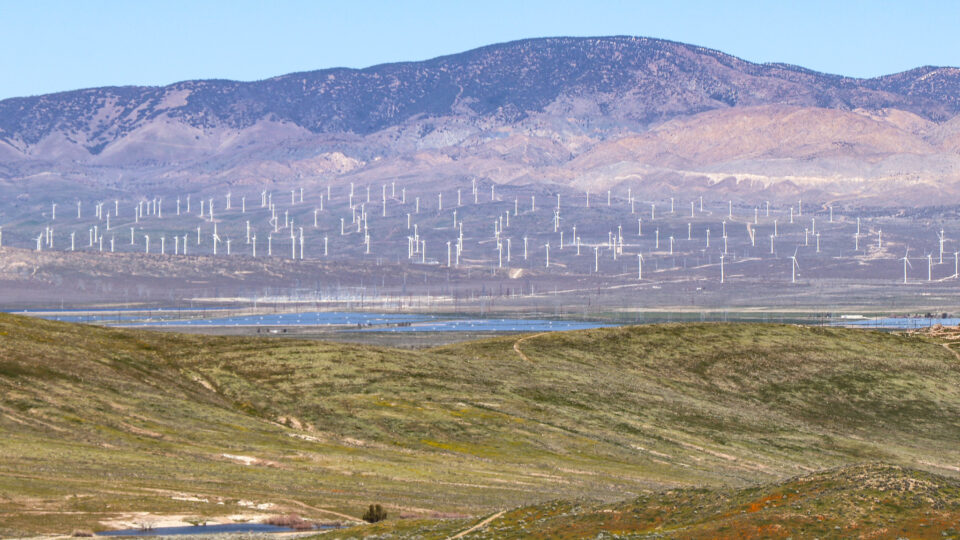
At the end of its summer session, California’s state legislature passed five climate-related bills including ones that it had been unable to pass in previous sessions.  Taking all of these actions puts California in the position of blazing a trail for the country and the rest of world in taking aggressive action on climate issues.

One bill confirmed California’s goal of reaching net-zero emissions by 2045.  Another bill added interim-term targets to go along with the state’s goal of 100% renewable electricity by 2045.  It sets a target of 90% by 2030 and 95% by 2040.  That bill mandates that California state agencies use 100% clean energy by 2035, which is a decade earlier than the previous requirement.

A third bill requires the California Air Resources Board to determine steps and regulations for carbon-capture and storage projects at pollution hotspots like oil refineries.

A fourth bill requires the state to set goals for removing carbon dioxide from the atmosphere through natural means such as tree planting.

The California state budget includes a record-breaking $54 billion to be spent on climate programs over the next five years, including $6.1 billion toward electric vehicles, $14.8 billion towards public transit projects, more than $8 billion for electric grid stabilization, $2.7 billion towards preventing wildfires, and $2.8 billion towards managing drought.

California has been dealing with ongoing drought and numerous wildfires and is highly motivated to take decisive action in dealing with the climate crisis.  California’s environmental initiatives often result in comparable actions taken by other states.

**********

Web Links

California Passes Massive Climate Legislation Package

Photo, posted March 16, 2019, courtesy of Raymond Shobe via Flickr.

Earth Wise is a production of WAMC Northeast Public Radio

Green Steel | Earth Wise

October 5, 2022 By EarthWise Leave a Comment

Construction using Green Steel

The Inflation Reduction Act provides $369 billion in investments to ramp up renewable energy generation and manufacturing of solar panels, wind turbines, energy storage, and electric vehicles. 

Every megawatt of solar power deployed requires 35 to 45 tons of steel.  Every megawatt of wind power uses 120 to 180 tons of steel.   Estimates are that it will take 1.7 billion tons of steel just to build all the wind turbines needed to reach net zero emissions by 2050.

This is a big problem because steel production accounts for roughly 10% of global carbon emissions and is one of the most carbon-intensive industries in the world.

Making steel is a complex and age-old process that hasn’t changed much over time.  Green steel is steel made with little or no carbon emissions.  There are a few ways to do it.  One is called the direct reduced iron method that uses green hydrogen instead of fossil fuel gas to produce iron and then a renewable-powered electric arc furnace to make the steel. 

Molten Oxide Electrolysis is an alternative green steel approach that doesn’t depend on having a green hydrogen infrastructure.  It uses electrolysis, powered by renewable energy, to separate the bonds of iron ore and produce liquid metal while releasing only oxygen in the process.

Green steel solutions rely on the availability of renewable energy, but the ultimate success of renewable energy will depend on the success of green steel.  The U.S. steel industry will leverage about $6 billion under the Inflation Reduction Act to make progress on it.

**********

Web Links

Building tomorrow’s clean energy systems on green steel

Photo, posted October 30, 2008, courtesy of Paul Bica via Flickr.

Earth Wise is a production of WAMC Northeast Public Radio
Banning Gas-Powered Cars | Earth Wise

September 30, 2022 By EarthWise Leave a Comment

Banning gasoline powered vehicles

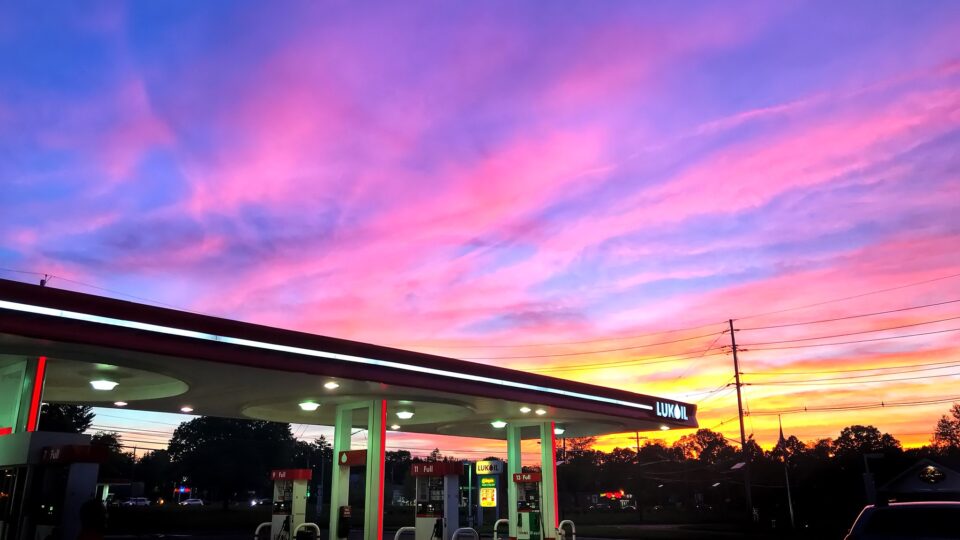
In June, the European Union voted to ban the sale of new gas- and diesel-powered vehicles starting in 2035.   The EU joined Canada, the United Kingdom, Japan, South Korea, and several other countries in imposing future gas car bans.

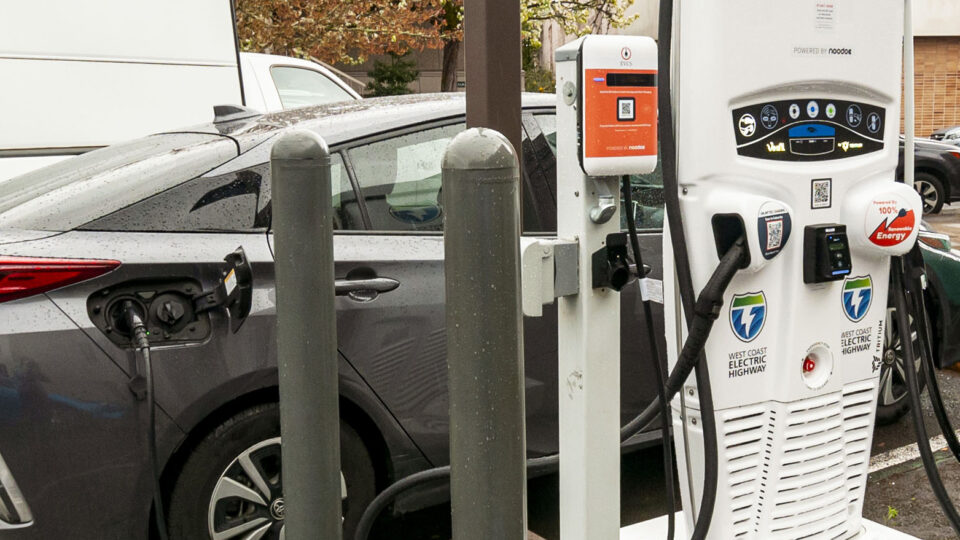
Here in the U.S., on August 25th, California adopted rules banning the sales of new gas-powered cars and light trucks by 2035.  New York passed a similar law last year and its ban will also cover heavy trucks by 2045.

California’s action is particularly significant because there are other states that have trigger laws that impose their own bans based on what California does.  Washington state, Massachusetts, and Virginia are in this category, although the governor of Virginia has said he plans to try to repeal the law.

An additional 12 states have policies tied to California’s and are likely to adopt their own versions of the 2035 ban.  These are Colorado, Connecticut, Delaware, Maine, Maryland, New Jersey, New Mexico, Nevada, Oregon, Pennsylvania, Rhode Island, and Vermont.

When these regulatory actions are coupled with the major investments in electric vehicles being made by virtually all automakers, the transition to electric vehicles appears to be inevitable.

As far as people who love their gas-powered cars are concerned, the new rules only apply to new car sales.  So, consumers can still buy and own used cars that run on gasoline.  If there are states that never impose bans on new gas-powered vehicles, then consumers can go to those states and buy one, assuming there are any being made at that point.   It seems likely that gas-powered cars will end up being made for hobbyists and aficionados only. 

**********

Web Links

California Just Banned Gas-Powered Cars. Here’s Everything You Need to Know

Photo, posted May 20, 2018, courtesy of James Loesch via Flickr.

Earth Wise is a production of WAMC Northeast Public Radio

Low Fares Clean German Air | Earth Wise

September 29, 2022 By EarthWise Leave a Comment

Low fare for public transportation help clean the air in Germany

Germany’s parliament set summer public transport fares at 9 euros a month as a way to slash pollution and reduce imports of Russian oil.   The low price included all buses, trams, subways, and regional trains, effectively lowering prices by more than 90% in some cities.  Berliners saved 98 euros on their monthly travel pass; commuters in Hamburg saved even more.

The program began June 1 and ended August 31.  The bargain rates drove widespread use of public transport and discouraged the use of cars, which already was undesirable due to high gasoline prices.   Over the three-month period, transit authorities sold over 50 million subsidized tickets.  One out of five travelers were using public transport for the first time, according to surveys.

According to an estimate from the Association of German Transport Companies, the program helped to avoid 1.8 million tons of carbon dioxide emissions.  This is roughly equivalent to taking 1.5 million cars off the road for the summer or planting 30 million trees.

The discount transit program had a clearly positive effect on the climate and, obviously, was a source of financial relief for German citizens.  Last year, Germany was the largest buyer of Russian oil in Europe and it wanted to make drastic reductions in its purchases.  The success of the program prompted many to ask for it to be continued.  However, the program cost the government about 2.5 billion euros in reimbursements to transit companies.  The German government has said it would not be extended.

Nonetheless, German policymakers are weighing other proposals for low-cost public transit.  Clearly encouraging people to use public transit pays dividends.

**********

Web Links

Germany’s Cheap Summer Train Fares Prevented 1.8 Million Tons of Carbon Pollution

Photo, posted June 6, 2022, courtesy of 7C0 via Flickr.

Earth Wise is a production of WAMC Northeast Public Radio
Colorful Solar Panels | Earth Wise

September 22, 2022 By EarthWise Leave a Comment

Creating color solar panels

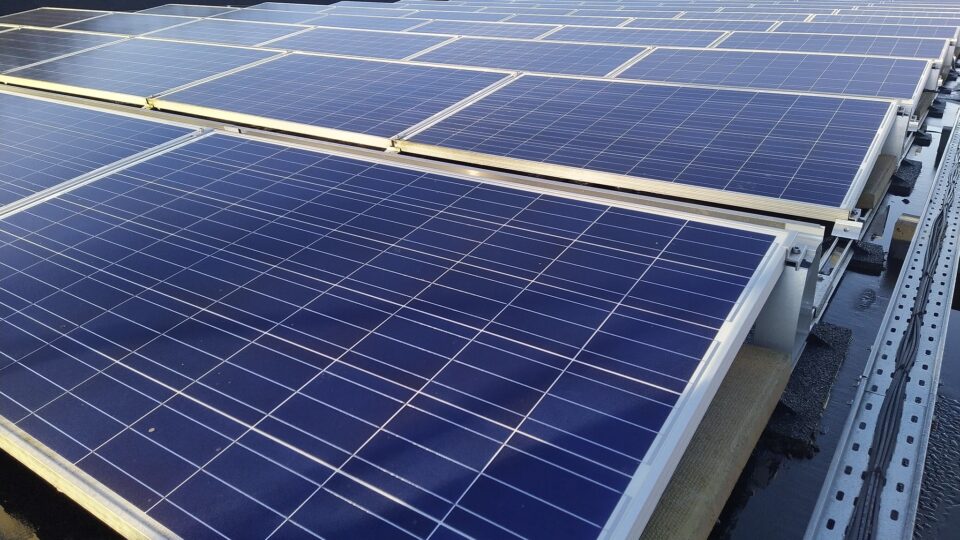
More and more buildings and public spaces are incorporating solar panels and not only just on rooftops.  Some buildings are incorporating power-generating structures all over their facades.

Using solar panels in this way puts some design constraints on buildings because solar panels are typically a deep black color.  This is because solar panels need to absorb light and making them any other color decreases their ability to do so and generate power.  But the problem is that people don’t necessarily want a black building.

One alternative to traditional solar panel design is to use structural sources of color that include microscopic shapes that only reflect specific light frequencies, like the scales on butterfly wings.  But this approach generally leads to iridescence – which might not be what is wanted – and is often quite expensive to implement.

A team of researchers at a university in Shanghai has now demonstrated a way to give solar panels color that is easy and inexpensive to apply and that does not reduce their ability to produce energy efficiently.

The technique involves spraying a thin layer of a material called a photonic glass onto the surface of solar cells.  The photonic glass is made of a thin, disorderly layer of dielectric microscopic zinc sulfide spheres.  Even though most light can pass through the photonic glass, certain colors are reflected back, depending on the sizes of the spheres.  By varying that size, the researchers created solar panels that were blue, green, or purple with only a very small drop in solar panel efficiency.

The solar panels made this way maintained their color and performance under durability testing.  With this new technology, there may soon be colorful solar panels on our buildings.

***********

Web Links

Colorful solar panels could make the technology more attractive

Photo, posted December 15, 2021, courtesy of Pete via Flickr.

Earth Wise is a production of WAMC Northeast Public Radio
Propane Refrigerants | Earth Wise

September 20, 2022 By EarthWise Leave a Comment

Propane refrigerants a climate-friendly solution

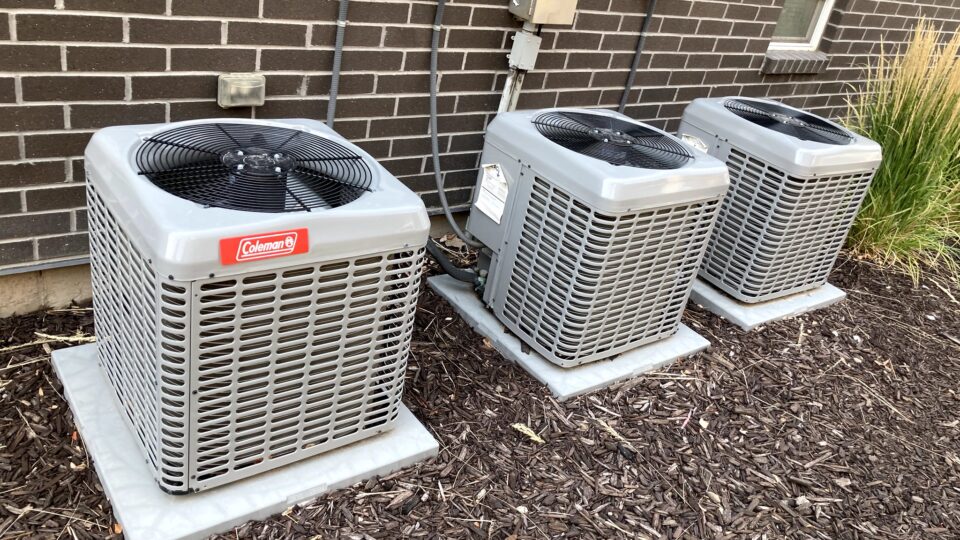
About 10% of the world’s total electricity supply is used for air conditioning.  If current temperature trends continue, the energy demands for space cooling will more than triple by the year 2050.  Air conditioning is a double threat to the environment.  Apart from using lots of energy, ACs also make use of halogenated refrigerants that are extremely powerful greenhouse gases.

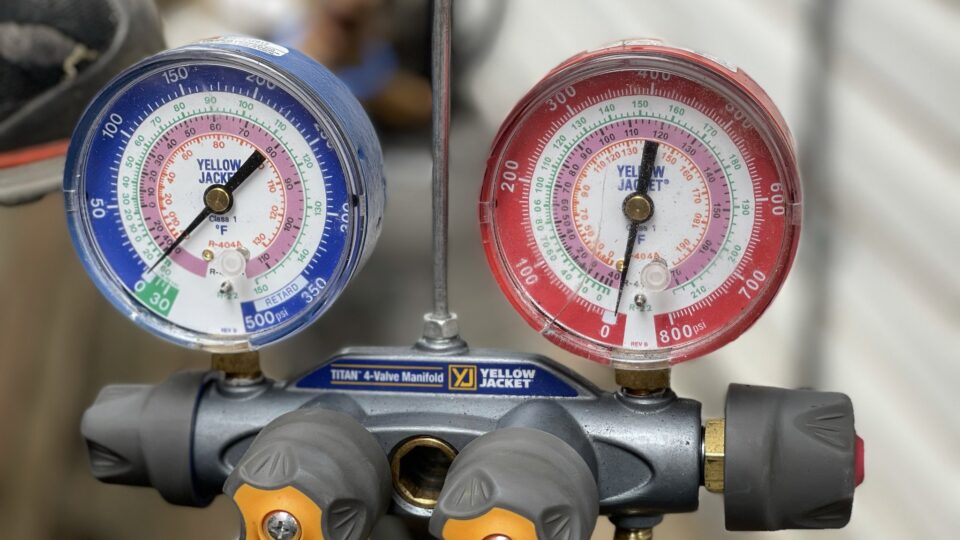
The most common space cooling appliances are split-air conditioners, which use an indoor unit and an outdoor unit connected by pipes.  These split ACS mostly utilize HCFC-22 and HFC-410 as refrigerants, which have global warming potential scores as high as 2,256 – meaning they trap 2,256 times more heat than carbon dioxide. 

A study by the International Institute of Applied Systems Analysis in Austria has shown that propane is a far better choice as an air conditioning refrigerant.  Its global warming potential is actually less than 1 meaning it traps less heat than carbon dioxide.  According to the study, if air conditioners switched to propane refrigerants, the world would avoid about a tenth of a degree Celsius of additional warming, which is a significant contribution to meeting the goals of the Paris climate agreement.

Propane-based split-ACs are already available commercially in China and India.  Elsewhere, many national regulations prohibit their use, primarily due to codes restricting the use of refrigerants with higher flammability.  Given the increasingly urgent need for climate action, it seems to be time to reconsider regulations on refrigerants.

**********

Web Links

Propane — a solution for more sustainable air conditioning

Photo, posted March 24, 2021, courtesy of Phyxter Home Services via Flickr.

Earth Wise is a production of WAMC Northeast Public Radio

Pumped Hydro Storage In Switzerland | Earth Wise

September 15, 2022 By EarthWise Leave a Comment

Pumped hydro energy storage is still by far the largest form of energy storage in the world, representing more than 90% of storage capacity worldwide.  The theory behind it is simple.  Water is pumped into an upper reservoir (that is, one at a higher elevation), and when electricity is needed, the water is allowed to flow downhill to power turbines and then is collected in a lower reservoir.   When there is excess electricity, it is used to pump water back uphill for use later.

Pumped hydro installations can’t be built just anywhere.  Geography and hydrology have to be suitable, which means high voltage transmission lines need to be constructed to link electricity sources like wind and solar farms with the storage location.  But in those situations where pumped hydro makes sense, it is a great solution to the energy storage problem.

Switzerland has just completed one of the largest pumped hydro facilities in the world.  The Nant de Drance installation makes use of the Emosson reservoir, which is an artificial lake built high in the Alps near the French border.  Over the past 14 years, 10 miles of tunnels have been dug into the mountains to connect the Emosson reservoir to the Vieux Emosson reservoir to the south.

In between the two reservoirs is a giant underground cavern where six of the largest water-driven turbines in the world are spun from the water rushing down from above.  The turbines have a capacity of 900 megawatts, making Nant de Drance one of the most powerful generating plants in Europe.  In terms of storage capacity, the installation has a maximum capacity of 20 gigawatt-hours, and can store that energy indefinitely, which is challenging for other storage technologies.

**********

Web Links

14 Years In The Making, 20 GWh Pumped Hydro Storage Facility Comes To Switzerland (With Video)

Photo, posted September 7, 2009, courtesy of Flickr.

Earth Wise is a production of WAMC Northeast Public Radio.

A Law To Tackle Climate Change | Earth Wise

September 8, 2022 By EarthWise Leave a Comment

The Inflation Reduction Act signed into law in mid-August is the most comprehensive U.S. legislation addressing climate change ever enacted.   It contains $369 billion in funding for clean energy and electric vehicle tax breaks, domestic manufacturing of batteries and solar panels, and pollution reduction.

The legislation for the most part makes use of carrots rather than sticks to coax American consumers and industry away from reliance on fossil fuels.  Rather than establishing more carbon taxes, mandates, and penalties, the law largely makes use of tax credits to provide incentives for the use of clean energy.

The law provides a large mix of tax breaks intended to bring down the costs of solar, wind, batteries, electric cars, heat pumps, and other clean technology.  For example, consumers will get a $7,500 credit for purchasing many new electric car models and about $4,000 for buying a used vehicle.

On the stick side of the ledger, oil and gas companies that emit methane above certain threshold levels will incur fees that escalate over time.  The law also increases the cost to the oil industry for extracting fossil fuels from public lands.

The act provides $60 billion for overall environmental justice priorities, including $15 billion targeted specifically for low-income and disadvantaged communities. There are many other provisions in the law addressing multiple climate-related issues.

According to three separate analyses by economic modelers, the investments from the Inflation Reduction Act are likely to cut pollution by about 40% below 2005 levels by the year 2030.

**********

Web Links

The US finally has a law to tackle climate change

Photo, posted December 15, 2021, courtesy of Mario Duran-Ortiz via Flickr.

Earth Wise is a production of WAMC Northeast Public Radio.

Solar Windows | Earth Wise

September 1, 2022 By EarthWise Leave a Comment

Solar windows offer massive potential

Solar windows are an attractive idea.  It is very appealing to have the vertical surfaces on the outside of almost any building generate electricity.  The challenge is to have a transparent window be able to function as an efficient-enough solar panel.

Most conventional solar panels use silicon solar cell technology, which is not based on a transparent material.  Transparent solar cells use dye-sensitized technology, which has been the subject of research for decades but has yet to achieve widespread use.

Researchers at the University of Michigan have recently published work on a new process to manufacture solar windows that can be large (over six feet in each dimension) and efficient at electricity production.

The windows make use of dye-sensitized cells which are connected to lines of metal so small that they are invisible to the naked eye.  The individual cells are fairly small but the connection technology allows the construction of large windows.

The solar window has an efficiency of 7%, meaning 7% of incoming sunlight energy is converted to electricity.  The researchers believe that 10% efficiency should be attainable with their technology.  Conventional solar panels have efficiencies of 15% or more.

However, the goal is not necessarily to compete with silicon solar panels.  The real opportunity is to be able to generate electricity when rooftop solar is not practical or to produce additional electricity even when there is already a solar roof.

Going forward, the goals of solar window development are to increase efficiency and to reduce costs to where installing the windows is economically attractive.  Estimates are that the windows currently would cost about twice as much as a conventional window but would pay for the difference in two to six years depending on such things as the level of sun exposure.

**********

Web Links

Inside Clean Energy: What’s Hotter than Solar Panels? Solar Windows.

Photo, posted April 17, 2017, courtesy of Shelby Bell via Flickr.

Earth Wise is a production of WAMC Northeast Public Radio.

Saving Lives With Air Conditioning | Earth Wise

August 26, 2022 By EarthWise Leave a Comment

This summer, extreme heatwaves struck the United States, Europe, and Africa.  Thousands of people died as a result.  In July, the impact of extreme heat in places ill-prepared for it was evident.  In the U.K., where air conditioning is uncommon, public transportation shut down, schools and offices closed, and hospitals cancelled non-emergency procedures.

Air conditioning, which we mostly take for granted in this country, is a life-saving tool during extreme heat waves.  However, only about 8% of the 2.8 billion people living in the hottest – and often poorest – parts of the world have AC in their homes.

A new study at Harvard modeled the future demand for air conditioning as the number of days with extreme heat continues to increase across the globe.  The researchers identified a massive gap between current AC capacity and what will be needed by 2050 to save lives, particularly in low-income and developing countries.

If the rate of greenhouse gas emissions continues on its present course, the study concluded that that at least 70% of the population in several countries will require air conditioning by 2050.  The number will be even higher in equatorial countries like India and Indonesia.  At this point, even if the goals of the Paris Climate Accords are met, an average of 40-50% of the population in many of the world’s warmest countries will still require AC.

The research looked at various scenarios.  One in which emissions continue to increase leads to widespread need for air conditioning even in temperate countries.  In Germany, 92% of the population would need it, and here in the U.S., 96% would need it.

Planning for future power systems must take into account the essential needs of a warming world.

**********

Web Links

In a hotter world, air conditioning isn’t a luxury, it’s a lifesaver

Photo, posted July 24, 2021, courtesy of Phyxter Home Services via Flickr.

Earth Wise is a production of WAMC Northeast Public Radio.

Rooftop Solar Taking Off In China | Earth Wise

August 11, 2022 By EarthWise Leave a Comment

Rooftop solar is booming

The total amount of solar power generating capacity in the world has been growing rapidly.  In 2008, there was a total of only 15 gigawatts installed world-wide.  By 2012, the total was 100 gigawatts.  As of this spring, there is now 1 terawatt – that’s 1,000 gigawatts – of solar power installed in the world.   About a third of that total is in China, and solar power is really booming there.

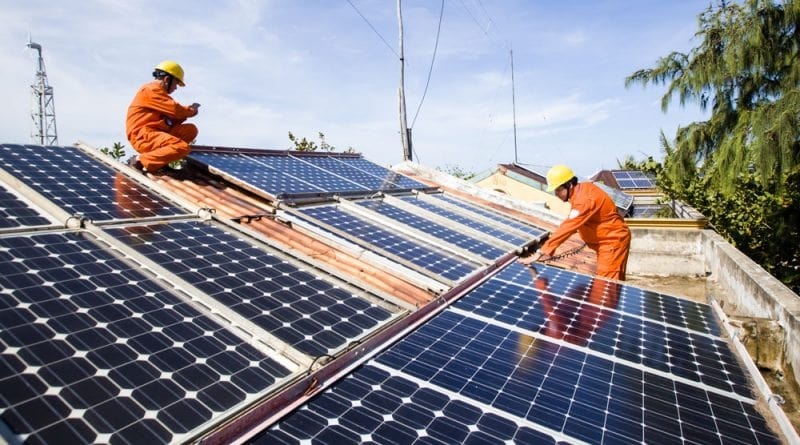
Estimates are that China will install 108 gigawatts of solar capacity this year, which is about double the amount installed in 2021.  Much of the growth in solar in China is in the form of rooftop solar, as opposed to utility-scale solar farms.

China is aiming to have 50% of new factory rooftops carry solar installations by 2025.   By the end of next year, China’s National Energy Bureau is aiming for solar panels to cover 50% of rooftops on party and government buildings, 40% of schools, hospitals, and other public buildings, 30% of industrial and commercial buildings, and 20% of rural homes.  This new initiative will drive China’s installed solar capacity to impressive levels in the coming years.

After China, the leading installers of solar energy capacity are the European Union, the United States, and Japan. 

These figures are for generating capacity.  What ultimately matters is solar’s share of total electricity consumption.  In China and the EU, solar provides over 6% of the electricity used.  In the US, that figure is about 3.5%.  In Germany and Australia, solar power provides 10% of electricity needs.  All these numbers will continue to go up rapidly as solar installations grow.

**********

Web Links

China Sees Rooftop Solar Take Off as New Policies Bolster Growth

Photo, posted June 17, 2022, courtesy of Nguyễn Mỹ Hoa via Flickr.

Earth Wise is a production of WAMC Northeast Public Radio.

Lithium-Sulfur Batteries | Earth Wise

July 19, 2022 By EarthWise Leave a Comment

Existuje také spousta přípravků ve formě vitaminových a minerálních komplexů, které nasycují tělo všemi užitečnými zdroji pro správné fungování celého těla a sexuálního systému. Nejoblíbenější jsou dnes syntetické stimulanty, protože poskytují silný apothekeein.com a stabilní účinek, doplňky stravy a homeopatické léky se častěji používají pro prevenci problémů tohoto druhu.

The growing use of electric vehicles as well as energy storage systems has created a major focus on the batteries for these applications.  Lithium-ion batteries dominate these applications and the demand for the materials needed to manufacture them continues to grow.

The raw materials for these batteries include not only lithium, but also can include nickel, manganese, and cobalt. 

Sulfur has been a desirable alternative for use in lithium-based batteries for quite a while because it is an abundant element and can be extracted in ways that are safe and environmentally friendly.  However, previous attempts to create lithium batteries that combine sulfur cathodes and the standard carbonate electrolytes used in lithium-ion batteries have not been successful because of irreversible chemical reactions between intermediate sulfur products and the electrolytes.

A group of chemical engineers at Drexel University has now found a way to introduce sulfur into lithium-ion batteries that solves the stability problem and also has major performance advantages.  The new batteries have three times the capacity of conventional lithium-ion batteries, and last more than 4,000 recharges, which is also a substantial improvement.

The new battery technology involves creating a stable form of sulfur called monoclinic gamma sulfur by depositing the sulfur on carbon nanofibers.   Previously, this sulfur phase was only observed at high temperatures and was only stable for 20 or 30 minutes.  This chemical phase of sulfur does not react with carbonate electrolytes and therefore produces a battery that is chemically stable over time.

 Incorporating this sulfur into battery cathodes results in a better battery that doesn’t need any cobalt, nickel, or manganese.  It could be the next big thing in electric vehicle batteries.

**********

Web Links

Breakthrough in Cathode Chemistry Clears Path for Lithium-Sulfur Batteries’ Commercial Viability

Photo, posted April 5, 2022, courtesy of Oregon Department of Transportation via Flickr.

Earth Wise is a production of WAMC Northeast Public Radio.

Carbon Capture: Solution Or Band-Aid? | Earth Wise

July 13, 2022 By EarthWise Leave a Comment

Can carbon is part of the solution to climate change

The idea of capturing the CO2 emissions from industry and locking them up is nothing new.  It’s been going on for decades in some places.  Norway’s state-owned oil company Equinor has been holing away a million tons of CO2 a year for a long time.  But overall, CCS – carbon capture and storage – has had very limited use.  As of last year, there were only about 30 large-scale projects in operation around the world, capturing only 0.1% of global emissions.

There is now growing interest in CCS and many new projects are underway.  A combination of rising carbon prices in Europe, tax breaks for CCS in the US, national net-zero targets, and the increasing need to ramp down global emissions are all driving rising CCS activities. 

While recent reports from the Intergovernmental Panel on Climate change still claim that it is possible to remain below 2 degrees Celsius of warming without using carbon capture, there is growing belief that it may be necessary given the present pace of the transition away from fossil fuels.

Two industries that together produce about 14% of global CO2 emissions are cement and steel.  These are both industries for which it is difficult to eliminate emissions regardless of the energy sources used. CCS may be the best approach to reducing their emissions.

But there is considerable pushback against CCS.  The concern is that CCS is primarily a way to delay decarbonization.  It encourages various industries to continue to use fossil fuels instead of shifting away from them.  Nonetheless, CCS no doubt has its place as part of the solution to climate change.

**********

Web Links

Solution or Band-Aid? Carbon Capture Projects Are Moving Ahead

Photo, posted June 5, 2022, courtesy of Mark Dixon via Flickr.

Earth Wise is a production of WAMC Northeast Public Radio.

The Race For American Lithium Mining | Earth Wise

July 7, 2022 By EarthWise Leave a Comment

A race is underway to source enough lithium to meet the global demand

The auto industry is making a massive transition from gas-powered cars to electric cars.  The exploding electric vehicle market has set off what some call a global battery arms race.  Battery manufacturers are urgently trying to source the raw materials needed to make batteries, which presently include cobalt, nickel, graphite, and lithium.  There is encouraging progress in reducing and even eliminating cobalt and nickel from electric car batteries, but so far lithium seems to be essential.

The International Energy Agency has named lithium as the mineral for which there is the fastest growing demand in the world.  Estimates are that if the world is to meet the global climate targets set by the Paris Agreement, at least 40 times more lithium will be needed in 2040 compared with today.

According to the US Geological Survey, the US has about 9 million tons of lithium, which puts it in the top 5 most lithium-rich countries in the world.  Despite this, our country mines and processes only 1% of global lithium output.  Most of the rest comes from China, Chile, and Australia.  Being dependent upon these foreign sources is a serious concern for national security.

There is only one operational lithium mine in the US at present.  Multiple companies are pressing to get more mining projects in operation, including sites in North Carolina and Nevada.  But there are serious environmental problems associated with lithium mining and there is considerable local opposition to establishing the mines.

The US wants to be a leader in the global race to build the batteries that will power the green transition but it is a complicated situation that combines both undeniably important benefits as well as very real dangers.

**********

Web Links

Powering electric cars: the race to mine lithium in America’s backyard

Photo, posted January 18, 2022, courtesy of Ivan Radic via Flickr.

Earth Wise is a production of WAMC Northeast Public Radio.

Saving Money By Predicting The Wind | Earth Wise

July 1, 2022 By EarthWise Leave a Comment

Managing an electrical grid that utilizes significant amounts of intermittent generation sources – solar and wind power – brings with it some unique challenges.  There are abundant wind resources in this country and more and utilities are taking advantage of these resources.   But there are times when there is more wind, times when there is less wind, and times when there is no wind at all.   Utilities need accurate wind forecasts to determine when they need to generate or purchase energy from alternative sources.

Poor wind forecasts can cost utilities a lot of money.  If there is overprediction – that is, when there is less wind than predicted – utilities have to purchase energy off the spot market at higher prices.  If there is underprediction – more wind than predicted – utilities may needlessly burn fossil fuels and waste money that way. 

The National Oceanic and Atmospheric Administration produces wind forecasts using its High-Resolution Rapid Refresh (HRRR) weather model, which provides hourly updated forecasts for every part of the United States looking forward up to 48 hours.  The model generates predictions of wind speed and direction at multiple levels of the atmosphere, information that utilities can use to predict the output of their wind turbines.

A new study by economists and scientists from Colorado State University and NOAA estimated the financial impact of the HRRR model on wind farm production.  The research team calculated that increasingly accurate weather forecasts over the last decade have saved consumers over $150 million a year.   Estimates are that if the newest model was in use in previous years, the savings would have been over $300 million a year.

**********

Web Links

NOAA wind forecasts result in $150 million in energy savings every year

Photo, posted May 2, 2022, courtesy of California Energy Commission via Flickr.

Earth Wise is a production of WAMC Northeast Public Radio.

Air Pollution: The Greatest Danger | Earth Wise            

June 27, 2022 By EarthWise Leave a Comment

Air pollution is one of the greatest dangers

The effort to reduce and ultimately eliminate the use of fossil fuels has largely been driven by the potentially catastrophic consequences of global climate change.  The need to stop dumping greenhouse gases into the atmosphere has become increasingly urgent.  But there is an equally compelling reason to stop burning fossil fuels.  According to a study published in the journal Lancet Planetary Health, outdoor air pollution is “the largest existential threat to human and planetary health.”

Pollution of various types was responsible for an estimated 9 million deaths around the world in 2019.  Half of those fatalities – 4.5 million deaths – were the result of outdoor air pollution coming from vehicles and industrial sources like power plants and factories.

The number of deaths attributed to air pollution has increased by 55% just since the year 2000.

The growth in air pollution deaths has offset a decline in deaths from other pollution sources that especially affect people living in extreme poverty, such as indoor air pollution and water pollution.  Overall, countries with lower collective incomes tend to bear a disproportionate share of pollution deaths.  Roughly 16% of deaths around the world are attributable to pollution, also resulting in more than $4 trillion in economic losses.

The peer-reviewed study was produced by the 2017 Lancet Commission on Pollution and Health.  The study notes that despite the enormous health, social, and economic impacts of pollution, preventing it is largely overlooked in the international development agenda.  The study calls upon governments, businesses, and other entities to abandon fossil fuels and adopt clean energy sources.

**********

Web Links

Study Identifies Outdoor Air Pollution as the ‘Largest Existential Threat to Human and Planetary Health’

Photo, posted November 4, 2019, courtesy of Ninara via Flickr.

Earth Wise is a production of WAMC Northeast Public Radio.

A Boom In Auto Battery Manufacturing | Earth Wise

June 24, 2022 By EarthWise Leave a Comment

A surge in automobile battery manufacturing

Nearly all automobile manufacturers are in a global race to build electric cars and trucks.  There is a rapidly growing need for the battery packs that power those vehicles and therefore manufacturers are in a race to build battery factories to address that need.

The latest battery plant announcement comes from Stellantis – the new company created in 2021 through the merger of Fiat Chrysler and Peugeot.  Stellantis aims to sell five million electric cars by 2030, which means they will need a lot of batteries.  They will be spending $2.5 billion in partnership with Samsung to build a battery factory in Kokomo, Indiana.  The facility is expected to create 1,400 jobs.  Stellantis already had announced that it would build a battery factory in Windsor, Ontario in partnership with LG Energy Solutions. 

They are not alone in their aggressive efforts on electric vehicle battery development.  Ford Motor is building two battery plants in Kentucky and a third one in Tennessee.   Ford has recently started production of its F-150 electric pickup truck which has attracted large numbers of pre-orders.  The gas-powered Ford F-150 has been the best-selling vehicle in America for years.

General Motors is opening a new battery production plant in Ohio this summer and has two others under construction in Tennessee and Michigan.   Hyundai plans to spend $5.5 billion on an electric vehicle and battery manufacturing facility near Savannah, Georgia that is expected to begin operations in 2025.

The auto industry has been struggling in recent times, but there is clearly a massive boom underway as the industry makes the transition from internal combustion engines to battery electric power.

**********

Web Links

Stellantis and Samsung to spend $2.5 billion on an electric vehicle battery plant in Indiana

Photo, posted July 29, 2017, courtesy of Steve Jurvetson via Flickr.

Earth Wise is a production of WAMC Northeast Public Radio.

Continued Renewables Growth | Earth Wise

June 17, 2022 By EarthWise Leave a Comment

In 2021, the world added a record amount of 295 gigawatts of renewable power.  According to the International Energy Agency, it is on pace to surpass that amount in 2022.

Almost half of the renewable buildout in the world is taking place in China.  In 2021, China accounted for 46% of worldwide renewable energy additions.  The EU and United States are the next two leaders.  The rapid buildup is especially impressive given the challenges developers have faced from the coronavirus pandemic, supply chain issues, and various construction delays.

Predictions are that the global total added this year will be about 320 gigawatts of renewables.  This amount is equivalent to the total power demands of Germany, which is the world’s fourth-largest economy.  Solar photovoltaics are forecast to account for 60% of the increase in global renewable capacity this year. 

The rapid growth in China and the EU are driven by strong pro-renewable policies.  In our country, wrangling over climate legislation and investigations into potential trade violations by Asian suppliers have held back our progress.  But over the next several years, offshore wind will begin to have a real impact on U.S. renewable installations.

According to the report by the International Energy Agency, renewable energy growth is likely to plateau in 2023 unless stronger climate policies are enacted. 

There are now more than 3 terawatts – that’s 3,000 gigawatts – of renewable generation capacity globally.  This compares with a little over 4,000 terawatts of fossil fuel generation.  Global renewable energy generation is currently projected to surpass that of fossil fuels by 2035.

**********

Web Links

Following Record Growth in 2021, Renewables on Track for New High in 2022

Photo, posted October 17, 2016, courtesy of B Sarangi via Flickr.

Earth Wise is a production of WAMC Northeast Public Radio.

Electricity From Bacteria | Earth Wise

June 3, 2022 By EarthWise Leave a Comment

Producing electricity from bacteria

Microbiologists at Radboud University in the Netherlands have demonstrated in the laboratory that methane-consuming bacteria can generate electrical power.  Their study was recently published in the journal Frontiers in Microbiology.

The bacteria studied is called Candidatus Methanoperedens and in the natural environment it consumes methane in water sources that are contaminated with nitrogen including places like water-filled ditches and some lakes. The bacteria in the study make use of the nitrates in the water to break down and digest the methane. Methanogens, which are bacteria that reduce carbon dioxide to form methane, are the source of the methane in these places. 

The researchers exploited these complex interactions of bacteria to create a source of electrical power that is essentially a kind of battery with two terminals.  One of the terminals is a chemical terminal and one is a biological terminal.  They grew the bacteria on one of the electrodes where the bacteria donate electrons that result from its conversion of methane.  (Other microbiologists at the same institution had previously demonstrated electrical generation from a similar battery containing anammox bacteria that use ammonium rather than methane in their metabolic processing).

In the study, the Radboud scientists managed to convert 31% of the methane in the water into electricity but they are aiming at higher efficiencies. 

This approach represents a potential alternative to conventional biogas electricity generation.  In those installations, methane is produced by microorganisms digesting plant materials and the methane is subsequently burned to drive a turbine to generate power.  Those systems in fact have an efficiency of less than 50%.  The researchers want to determine whether microorganisms can do a better job of generating electricity from biological sources than combustion and turbines can do.

**********

Web Links

Bacteria generate electricity from methane

Photo, posted December 3, 2008, courtesy of Martin Sutherland via Flickr.

Earth Wise is a production of WAMC Northeast Public Radio.

Weaning Off Fossil Fuels | Earth Wise            

June 2, 2022 By EarthWise Leave a Comment

How to break free of our dependence on fossil fuel

We recently talked about California producing 97% of its electricity from renewables on one sunny afternoon in April.  On May 8th, the state produced enough renewable electricity to meet 103% of consumer demand.  These sorts of records are likely to be increasingly commonplace in the spring when the weather is still fairly mild.

But even while renewables were producing more electricity than California needed, natural gas power plants in the state were still running.

Turning off the gas power plants is not possible.  The reason is that as the sun sets and solar farms stop producing power, California has to quickly replace the power with electricity from other sources.  Natural gas plants are massive industrial facilities that cannot be turned on and off rapidly.  Some take as many as 4 to 8 hours to switch on.  Operators back them down as far as they can go, but even when there is plenty of solar power during the day, natural gas plants are still running.

The state is rapidly building huge battery storage projects as an alternative to gas plants, but so far, they are still only a small fraction of what is needed.   Wind power is another part of the solution along with hydropower.  California imports some power from other states as well and, in fact, also exports power when there is excess.  But keeping the energy system balanced and stable is an ongoing challenge.

California is building huge amounts of solar, huge amounts of wind, and huge amounts of energy storage, which should get the state to at least 90% of the way to a clean grid.  It’s the last 5-10% that is much harder to accomplish before natural gas is no longer part of the energy system.

**********

Web Links

California just ran on 100% renewable energy, but fossil fuels aren’t fading away yet

Photo, posted January 10, 2014, courtesy of F.G. via Flickr.

Earth Wise is a production of WAMC Northeast Public Radio.

  • « Go to Previous Page
  • Page 1
  • Interim pages omitted …
  • Page 13
  • Page 14
  • Page 15
  • Page 16
  • Page 17
  • Interim pages omitted …
  • Page 29
  • Go to Next Page »

Primary Sidebar

Recent Episodes

  • An uninsurable future
  • Clean energy and jobs
  • Insect declines in remote regions
  • Fossil fuel producing nations ignoring climate goals
  • Trouble for clownfishes

WAMC Northeast Public Radio
WAMC/Northeast Public Radio is a regional public radio network serving parts of seven northeastern states (more...)
Copyright © 2026 ·