
• Skip to primary navigation
  • Skip to main content
  • Skip to primary sidebar

Earth Wise

A look at our changing environment.

  • Home
  • About Earth Wise
  • Where to Listen
  • All Articles
  • Show Search
Hide Search
You are here: Home / Archives for power

power

A Green New Year | Earth Wise

December 30, 2022 By EarthWise Leave a Comment

Every year, millions of people around the world make resolutions in hopes of sparking positive changes in the new year.  Popular resolutions include improving health and fitness, traveling more, spending less, and so on.  With the New Year just around the corner, here are seven resolutions we all could make that would collectively have a major impact on the planet: 

1) Eat less meat.  Resource-intensive animal-based foods like meat, dairy, and eggs are one of the chief contributors to climate change. 

2) Get a home energy audit.  It’s a great way to understand your home’s energy footprint and discover ways to improve the energy efficiency of your home. 

3) Buy local whenever possible.  Shopping locally supports the local economy and dramatically cuts down on the carbon emissions associated with shipping.

4) Carry reusable shopping bags on errands. While disposable shopping bags are convenient, they are difficult to recycle and are often thrown away. 

5) Air dry your laundry whenever possible.  Drying clothes outside or using an indoor drying rack can save money and energy.  Americans spend about $9 billion a year on electricity to dry clothing. 

6) Purchase used or pre-owned items.  The market for second-hand items is booming, making it possible to purchase pretty much anything you want at thrift stores or online. 

7) Bring a reusable water bottle everywhere.  According to the EPA, Americans throw away enough plastic bottles each year to circle the earth five times.  Carrying your own bottle helps reduce this waste and will save you money.

As we ring in the new year this weekend, let’s raise our glasses to a cleaner and greener 2023. 

**********

Web Links

10 Sustainable New Year’s Resolutions!

New Year’s Resolutions

Photo, posted December 31, 2014, courtesy of Doug Anderson via Flickr.

Earth Wise is a production of WAMC Northeast Public Radio
It Really Is Greenhouse Gases | Earth Wise

December 26, 2022 By EarthWise Leave a Comment

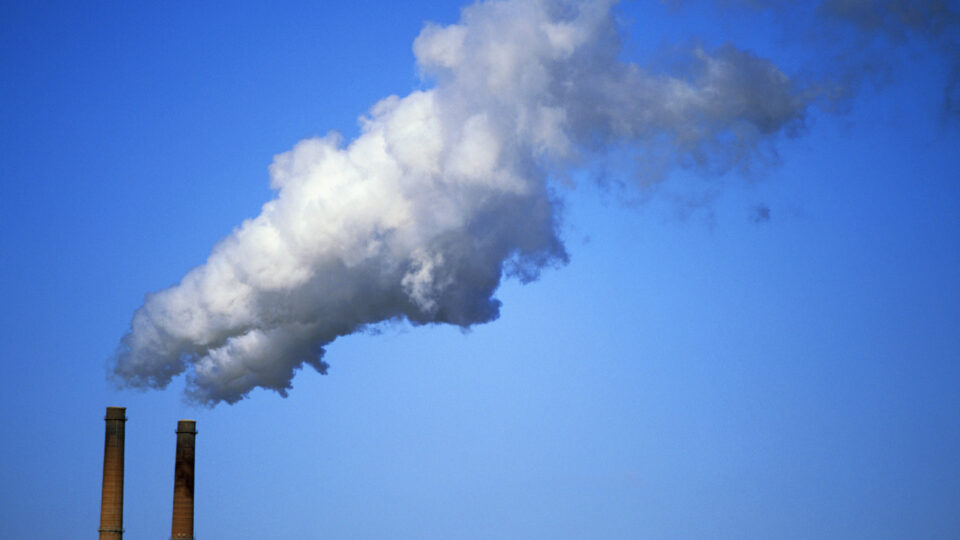
The scientific consensus that human-generated carbon dioxide is changing the climate began to form in the 1980s. 

For a long time, the changes to the climate were simply denied.  After a while, as those changes became increasingly hard to ignore, the argument shifted to the changes being real but not caused by anything people are doing.  The multi-trillion-dollar fossil fuel industry was strongly motivated to focus attention away from the association between carbon dioxide and climate change.

The greenhouse gas effect has been known since the 19th century.  It isn’t just real; it is essential to life on earth.  Without sufficient levels of carbon dioxide in the atmosphere to trap some of the sun’s heat, the earth would be an ice planet incapable of supporting much in the way of life.  But there can be too much of a good thing.

Naysayers continue to grasp at alternative explanations for the warming planet rather than the inconvenient truth.  Some people try to claim that it is the release of heat from all our energy-generating activities -power plants, heaters and air conditioners, vehicles, and so on – that is warming the planet.

That issue has been studied in detail.  Human activity does generate a lot of heat and, technically speaking, that heat does help warm the planet.  However, the sun dumps 10,000 times more heat on the earth than all of human energy production added together.  Just the normal fluctuations in solar energy are 10 times larger than everything we do put together.

What is increasingly warming the planet is not the continuing energy striking the earth; it is primarily the fact that growing levels of greenhouse gases in the atmosphere are trapping more and more of that heat and preventing it from escaping into space.

***********

Web Links

Integrating anthropogenic heat flux with global climate models

Photo, posted August 25, 2009, courtesy of Gerald Simmons via Flickr.

Earth Wise is a production of WAMC Northeast Public Radio

Climate A Winner In The Elections | Earth Wise

December 22, 2022 By EarthWise Leave a Comment

The climate was a big winner in recent elections

The dominant issues in midterm elections in November were the economy and abortion rights, but at the same time there were also ballot initiatives in various cities and states across the country related to climate.  What some describe as the ‘silent surprise’ of the election was that these initiatives generally passed and, in some cases, by large majorities.

The most significant of these ballot measures was in New York, where two-thirds  of voters passed the largest environmental bond measure in state history.  The measure funds up to $4.2 billion for environmental improvement projects including increasing flood resiliency, reducing greenhouse gas emissions, electrifying school buses, and creating more green and open spaces.

The Clean Water, Clean Air, and Green Jobs Environmental Bond Act provides up to $1.5 billion for projects aimed at climate change mitigation.  Another $1.1 billion is targeted for flood risk reduction and waterway restoration.  $650 million goes for water quality and infrastructure improvement. 

Rhode Island voters passed a green bonds act that will allow the state to invest in climate resiliency at the municipal level, as well as local recreation, open space protection, brownfields remediation, and forest and habitat restoration. 

Other climate-related ballot measures passed in Boulder, Colorado and in El Paso, Texas.  There were however a few climate measures that lost.  Proposition 30 in California that would have taxed very high-income residents to encourage sale of electric vehicles failed.  So did Arizona Proposition 310, which would have increased sales taxes by 0.1% to fund fire districts.

But overall, it was a good election for the climate.

**********

Web Links

Voters pass historic climate initiatives in ‘silent surprise’ of US midterms

Photo, posted September 24, 2021, courtesy of Ivan Radic via Flickr.

Earth Wise is a production of WAMC Northeast Public Radio

Are Companies Really Reducing Emissions? | Earth Wise

December 21, 2022 By EarthWise Leave a Comment

Many companies around the world are declaring tremendous progress in reducing their greenhouse gas emissions.  Sometimes these claims are the result of actions that really do  reduce emissions but other times they are the result of something called “market-based accounting”. Businesses buy credits from clean energy providers that allows them to say they are running on green power when they actually are not.

The market analysis firm Bloomberg Green analyzed almost 6,000 climate reports filed by corporations last year and found that over 1,300 of them employed market-based accounting to erase over 120 million tons of emissions from their records.

Some clean energy contracts do have major climate benefits.  For example, companies like Amazon, Nestle, and Target have signed long-term power purchase agreements that ultimately help renewable developers finance new energy projects.

On the other hand, renewable energy credits are often short-term transactions with existing facilities and do little to stimulate investment or otherwise lead to greater use of green power.  They simply shift around ownership of existing renewable energy without doing anything new for the climate.

Some companies have made meaningful cuts to their pollution by putting solar panels on their roofs, upgrading their lighting and air conditioning equipment, and so on.  But many are reluctant to spend their capital in this way, even if it eventually saves money through lower electric bills.

Customers and shareholders want to see corporations do their part in reducing emissions.  But too many are making grandiose claims enabled by market-based accounting while doing far too little to help the environment.  Dubious claims of climate progress are not harmless; it is essential for the world’s companies to really do their share.

**********

Web Links

What Really Happens When Emissions Vanish

Photo, posted July 16, 2014, courtesy of Mike Mozart via Flickr.

Earth Wise is a production of WAMC Northeast Public Radio
Getting Rid Of Hydrogen Sulfide | Earth Wise

December 20, 2022 By EarthWise Leave a Comment

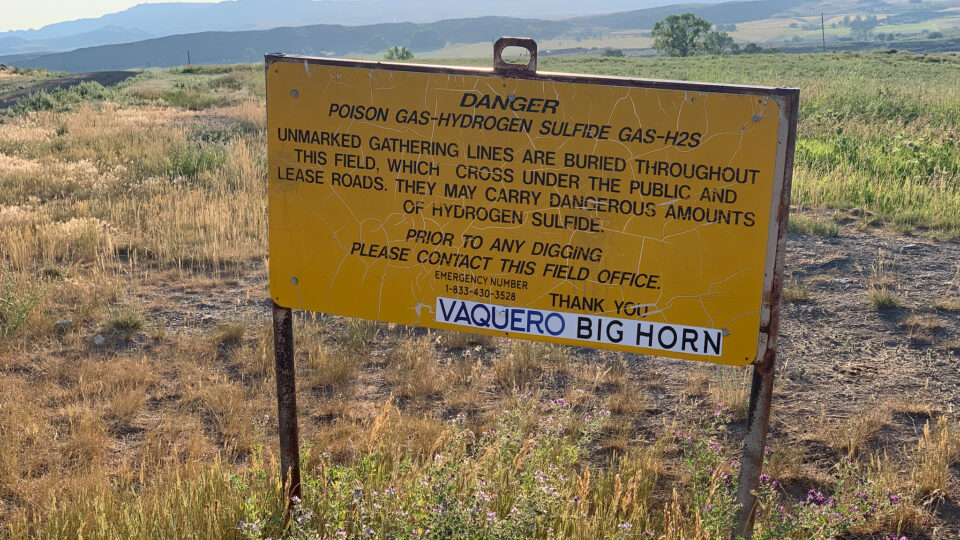
Hydrogen sulfide gas produces the characteristic smell of rotten eggs, sewers, stockyards, and landfills.  The petroleum industry produces thousands of tons of the stuff each year as a byproduct of the processes that remove sulfur from petroleum, natural gas, coal, and other products.  The industry faces substantial fines for emitting hydrogen sulfide, but remediation is expensive.

Researchers at Rice University have developed a method for turning hydrogen sulfide into hydrogen gas and sulfur in a single step.  Called plasmonic photocatalysis, it not only gets rid of an undesirable substance, it does so by producing valuable byproducts.

The established way of getting rid of hydrogen sulfide is called the Claus process.  It requires multiple steps, including some that require combustion chambers heated to 1,500 degrees Fahrenheit.  The end product is sulfur and water.

The Rice University process gets all of its energy from light.  A surface of grains of silicon dioxide is dotted with tiny gold nanoparticles.  These particles interact strongly with a specific wavelength of visible light and cause plasmonic reactions that create short-lived, high-energy electrons that drive the catalysis of hydrogen sulfide.  Given that the process requires only visible light and no external heating, it should be relatively straightforward to scale up using solar energy or very efficient LED lamps.

The new hydrogen sulfide remediation technology has been licensed by a Houston-based startup company with more than 60 employees whose founders include some of the Rice researchers.  The process may end up being efficient enough and cheap enough for cleaning up non-industrial sources of hydrogen sulfide such as sewers and animal waste.

**********

Web Links

New catalyst can turn smelly hydrogen sulfide into a cash cow

Photo, posted July 8, 2021, courtesy of Doug Letterman via Flickr.

Earth Wise is a production of WAMC Northeast Public Radio

Windows To Cool Buildings | Earth Wise

December 15, 2022 By EarthWise Leave a Comment

Developing windows that help to cool buildings

About 15% of global energy consumption is for cooling buildings.  Because of this, there is an ever- growing need for technologies that can more efficiently cool buildings.   Researchers at Notre Dame University have used advanced computing technology and artificial intelligence to design a transparent window coating that is able to lower the temperature inside buildings without using any energy.

The idea is to create a coating that blocks the sun’s ultraviolet and near-infrared light, which are parts of the solar spectrum that otherwise pass through glass and help to heat an enclosed room.  Cooling needs can be reduced further if the coating can radiate heat from the surface of the window so it can pass through the atmosphere into space.  Designing a coating that does both of those things simultaneously while transmitting visible light is difficult.  Coatings should not interfere with the view out the window.

The Notre Dame researchers used advanced computer modeling to create a so-called transparent radiative cooler that meets these goals.  The coating consists of alternating layers of common materials like silicon dioxide, silicon nitride, and aluminum oxide or titanium dioxide on top of a glass base and topped with a film of polydimethylsiloxane.  The computing method was able to optimize this structure far faster and better than conventional design techniques.

The researchers say that in hot, dry cities, the coating could potentially reduce cooling energy consumption by 31% compared with conventional windows.  The same materials could be used in other applications, such as car and truck windows.  In addition, the quantum computing-enabled optimization method used for this work could be used to design other composite materials.

**********

Web Links

Clear window coating could cool buildings without using energy

Photo, posted September 6, 2015, courtesy of Robert Otmn via Flickr.

Earth Wise is a production of WAMC Northeast Public Radio

New York Bans Some Crypto Mining | Earth Wise

December 13, 2022 By EarthWise Leave a Comment

New York bans some cryptocurrency mining

Crypto mining, the arcane process by which cryptocurrencies are generated, is incredibly energy-intensive.  As of this past summer, global electricity usage for the activity is as much as 240 billion kilowatt-hours per year, which is more than many entire countries use (for example Australia and Argentina.)  Crypto mining consumes as much electricity as all the conventional computer data centers in the world.

All that energy usage is problematic for the environment, but a growing practice has made it far worse.  Crypto miners have been re-powering decommissioned fossil fuel power plants to produce electricity strictly for mining operations.  Doing so eliminates the climate benefits achieved by shutting down those plants.

The New York State Legislature passed a bill in June that would place a two-year moratorium on permits to re-power fossil fuel plants.  It does not prevent crypto mining from existing generation sources.  The bill had sat on the governor’s desk until after the recent election.   But in late November, Governor Hochul signed the bill despite considerable lobbying against it.

The temporary ban was heavily opposed by cryptocurrency industry groups, to no surprise.  While some states actually offer tax incentives to lure crypto mining operations, supporters of the legislation hope that New York’s action may cause others to follow its lead and stop the reactivation of old fossil fuel plants.

The two-year moratorium will allow time to properly evaluate the impact of the crypto mining industry on the state’s climate goals.  It is pretty obvious that reactivating old, retired fossil fuel power plants as an energy source is a move in the wrong direction.

**********

Web Links

New York Enacts 2-Year Ban on Some Crypto-Mining Operations

Photo, posted February 27, 2021, courtesy of Ivan Radic via Flickr.

Earth Wise is a production of WAMC Northeast Public Radio

Fuel From Coffee Grounds | Earth Wise

December 8, 2022 By EarthWise Leave a Comment

Creating fuel from coffee waste

The world drinks a lot of coffee.  Americans alone consume 400 million cups a day.  Each cup of coffee results in about half an ounce of coffee grounds.  Adding that up, this country produces over 6,000 tons of coffee grounds each day.  While coffee grounds are not particularly harmful, that is an awful lot of waste that mostly ends up in landfills or is incinerated.

Researchers at Aston University in the UK have developed a method of producing high-quality biodiesel fuel from coffee grounds.  Their study was published in the journal Renewable and Sustainable Energy Reviews.

The technique consists of growing a particular species of microalgae (Chlorella vulgaris) directly on spent coffee grounds.  The coffee grounds provide both the nutrients for the microalgae and a structure upon which it can grow.   Exposing the algae to light for 20 hours a day and dark for just four hours a day produced the best quality biodiesel.

Microalgae is well-known as a feedstock for biodiesel production.  Previously, it has been grown on materials like polyurethane foam or nylon which don’t provide any nutrients.   Using the coffee grounds as the substrate for growth means that no external nutrients are needed.

The resultant enhanced biodiesel produces minimal emissions and good engine performance and meets both US and European specifications.  This feedstock for producing biodiesel is ideal since it doesn’t require any competition with food crops and instead makes use of a widely available waste product.  The hope is that it may reduce the cutting down of palm trees to extract oil for biofuel.  In southeast Asia, this has been a major source of deforestation and increased greenhouse gas emissions.

**********

Web Links

Aston University researchers ‘feed’ leftover coffee grounds to microalgae to produce low emission biodiesel

Photo, posted October 13, 2007, courtesy of David Joyce via Flickr.

Earth Wise is a production of WAMC Northeast Public Radio
Renewable Energy Booming in India | Earth Wise

December 6, 2022 By EarthWise Leave a Comment

Renewable power is booming in India

India is the country with the second largest population in the world – over 1.4 billion people – second only to China – and will undoubtedly pass China soon based on population trends in the two countries.   India is the third largest emitter of carbon dioxide, after China and the U.S.  With its rapidly growing population and an economy heavily dependent on coal and oil, emissions in India are on a steep upward trajectory.  Currently, fossil fuels account for about 60% of India’s installed energy capacity.  It is essential that actions are taken to curb its rapid increase in greenhouse gas emissions.

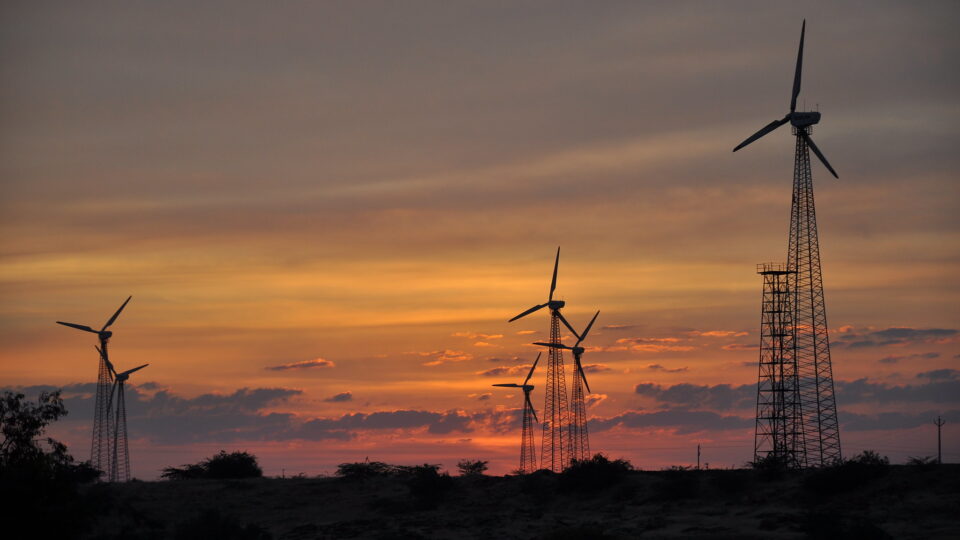
To that end, India’s renewables sector is booming.  The country is projected to add 35 to 40 gigawatts of renewable energy each year until 2030.  That’s enough energy to power up 30 million more homes each year.  The country has established a target of producing 50% of its electricity from non-fossil fuel sources by the end of this decade.

 India is expected to reach over 400 gigawatts of renewable energy capacity by 2030

according to the Institute for Energy Economics and Financial Analysis and Climate Energy Finance.  The Indian government’s own projections estimate that the country will reach 500 gigawatts of renewable capacity in that timeframe.

As is the case with China, a country with an enormous population undergoing major economic growth and modernization has vast energy needs.  While it is imperative for the entire world that India puts a cap on its growing greenhouse gas emissions, it is a difficult challenge for an energy-hungry country.

**********

Web Links

Renewable energy booms in India

Photo, posted November 14, 2011, courtesy of Amaury Laporte via Flickr.

Earth Wise is a production of WAMC Northeast Public Radio
The Clean Energy Transition Is Accelerating | Earth Wise

December 2, 2022 By EarthWise Leave a Comment

The transition to clean and renewable energy is accelerating

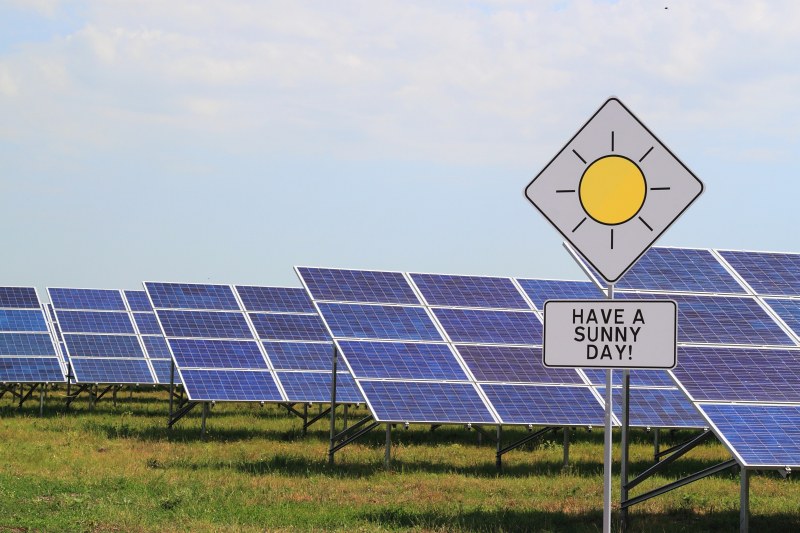
The world’s economies including its energy markets have been in turmoil in recent times but despite the chaotic conditions, the shift to clean energy is gaining momentum.  This year, for the first time, the world is investing more in wind and solar power than in oil and gas drilling.  Investments in renewables are expected to reach $494 billion this year, more than the $446 billion directed towards oil and gas extraction.  It is rather sobering to realize that the world is still spending nearly half a trillion dollars a year to dig up more oil and gas.

According to the International Energy Agency, there will be an estimated 340 gigawatts of new renewable power capacity installed in 2022.  This is roughly equal to the total installed power capacity of Japan, which has the world’s third-largest economy.  This year is also seeing tremendous growth in electric cars, which are projected to make up 13% of all light-duty vehicle sales across the globe.

According to analysis by Bloomberg Green, 87 countries are now getting at least 5% of their power from wind and solar.  This number is considered to be a critical tipping point at which emerging technologies become more widely adopted.  The United States reached that 5% threshold in 2011.  Last year, our country surpassed 20% solar and wind power.  If we follow trends set by pioneering countries like Denmark, Ireland, and others, wind and solar will supply at least half of our power within the next decade.

Despite the turbulence in global energy markets, the shift to clean power is ongoing.  Estimates are that global spending on renewables will double over the next 10 years. 

**********

Web Links

Despite Turmoil in Energy Markets, the Shift to Clean Energy Is Gaining Steam

Photo, posted June 12, 2013, courtesy of Activ Solar via Flickr.

Earth Wise is a production of WAMC Northeast Public Radio
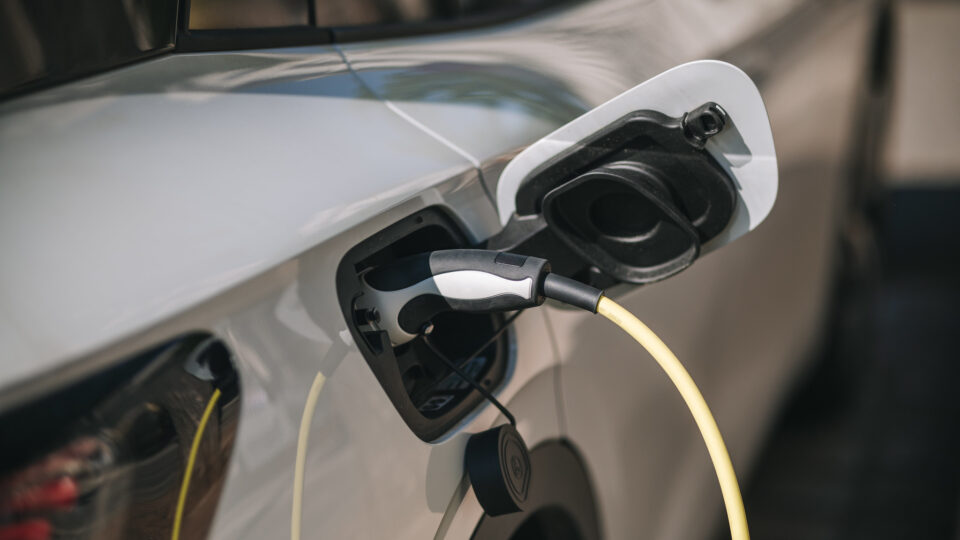
The Carbon Footprint Of Electric Vehicles | Earth Wise

November 29, 2022 By EarthWise Leave a Comment

Electric vehicles are widely known to be the environmentally friendly alternative to internal combustion-based cars.   But there are skeptics who argue that EVs actually have a larger carbon footprint than nonelectric vehicles.  The argument is that the manufacturing and disposal of vehicle batteries is very carbon intensive.  They also point to the reliance on coal to produce the electricity that powers the cars.

These claims have led to multiple studies in the form of life-cycle analyses comparing the amount of greenhouse gases created by the production, use, and disposal of a battery electric vehicle to that associated with a gasoline-powered car of a similar size.

In short, the studies have found that while it is true that the production of a battery electric vehicle results in more emissions than a gasoline-powered one, this difference disappears as the vehicle is driven. 

According to a study conducted by the University of Michigan and financed by the Ford Motor Company, the emissions equation evens out in 1.4-1.5 years for sedans, 1.6-1.9 years for S.U.V.s, and about 1.6 years for pickup trucks.

Emissions from driving come from burning gas in the nonelectric vehicles and from the generation of electricity used by the battery-powered cars.  In the current average power mix across the U.S., driving an EV results in a 35% reduction in emissions.  However, it varies tremendously by location.  There are some places with very dirty power and some with very clean power.  But of the more than 3,000 counties in the U.S., only 78 end up with higher emissions from electric cars.  Of course, as the electric grid gets greener, the advantages of electric cars only become greater.

**********

Web Links

E.V.s Start With a Bigger Carbon Footprint. But That Doesn’t Last.

Photo, posted May 21, 2022, courtesy of Ivan Radic via Flickr.

Earth Wise is a production of WAMC Northeast Public Radio

Climate Promises | Earth Wise

November 23, 2022 By EarthWise Leave a Comment

Countries are making climate promises, but are they following through?

The United Nations climate change conference that recently took place in Egypt is an annual event.  Last year, the conference was in Glasgow, Scotland, and the participants – heads of state and business leaders – produced a long list of promises aimed at fighting global warming.  How have the countries and companies making those promises done so far?  Unfortunately, not very well.

Participants made pledges for progress in several major areas.

Countries promised to cut greenhouse gas emissions faster, but only 24 countries out of the 140 participants have actually done so.

Countries agreed to expedite the deployment of clean energy and the phasing out of government subsidies for fossil fuels.  There has been considerable progress on green power, but coal use actually reached record highs this year primarily because of Russia’s invasion of Ukraine, which caused natural gas prices to spike.

Countries pledged $100 billion a year to help poorer countries shift to cleaner energy sources.  There has been lots of effort in this area, but the target has not been met and it isn’t clear that all the money is going where it is supposed to.

More than 100 countries pledged to slash methane emissions, but most nations are only getting started.

More than 130 countries pledged to halt and reverse deforestation by 2030.  Deforestation is slowly declining, but not fast enough to meet the goals of the pledge.

An important goal for this year’s climate conference was to try to find a way to not just set admirable and valuable climate goals, but to actually accomplish them.  It isn’t easy, but it is essential.

**********

Web Links

Countries Made Bold Climate Promises Last Year. How Are They Doing?

Photo, posted July 25, 2009, courtesy of Wagner T. Cassimiro via Flickr.

Earth Wise is a production of WAMC Northeast Public Radio
Hybrid Renewable Energy Plants | Earth Wise

November 17, 2022 By EarthWise Leave a Comment

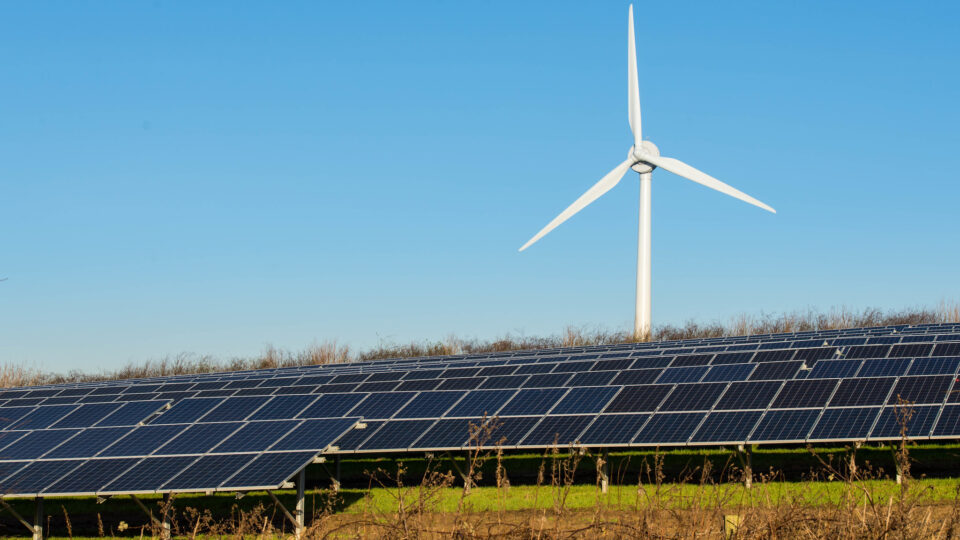
Hybrid renewable energy systems combine multiple renewable energy and/or energy storage technologies into a single plant.  The goal is to reduce costs and increase energy output relative to separate systems taking advantage of common infrastructure and the ability of one renewable energy source having appreciable output while a second one might not at a particular time.

Recently, the largest hybrid renewable power plant in the United States was completed in rural Oregon.  The Wheatridge Renewable Energy Facility combines a wind farm, a solar array, and battery storage.

Plants that include just solar power and energy storage are also called hybrid plants, but the Wheatridge Facility is special because it includes wind power.  The facility comprises a 200-megawatt wind farm, a 50-megawatt solar array, and a 30-megawatt battery system capable of providing power for four hours.  The combined system can provide for the electricity needs of about 100,000 homes.

There are about 140 projects in the United States that combine solar and storage.  There are 14 that combine solar and wind.  There are only four plants – with the completion of Wheatridge – that have wind, solar, and storage.  

Wind and solar energy are generally complementary technologies.  Wind is usually strongest at night while solar, of course, is a daytime source of energy.  Solar and wind plants don’t need to be close together to take advantage of this, but hybrid projects benefit from needing only one grid connection and one lease for land.

**********

Web Links

A Clean Energy Trifecta: Wind, Solar and Storage in the Same Project

Photo, posted December 27, 2015, courtesy of Gerry Machen via Flickr.

Earth Wise is a production of WAMC Northeast Public Radio
California Offshore Wind | Earth Wise

November 16, 2022 By EarthWise Leave a Comment

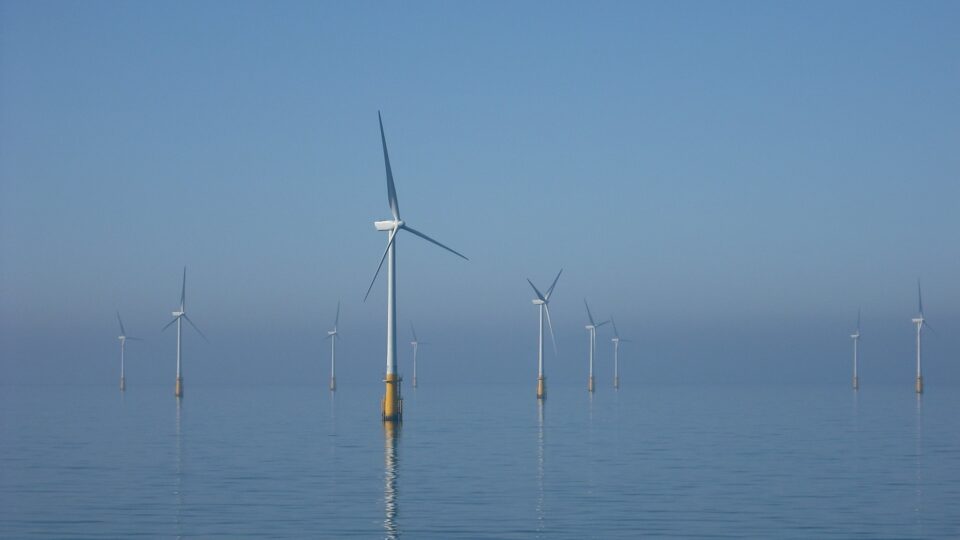
California has tremendous potential offshore wind resources.  The state set a preliminary target of 15 GW of offshore wind by 2045 earlier this year and may increase that number to 25 GW.  But installing offshore wind on the West Coast is much more challenging than it is on the East Coast.  The reason is that the ocean floor drops off rapidly on the Pacific Coast and it is simply not practical to attach wind turbines to the sea bottom.  Instead, floating turbine technology will be required.  That is more complicated and more expensive.

Despite the challenges, offshore wind in California is moving forward.  The federal Bureau of Ocean Energy Management announced that the auction for rights to develop waters off central and northern California will be held on December 6.  This will be the first wind auction ever along the U.S. Pacific Coast.

The auction will include three lease areas in the Morro Bay Wind Energy Area and two proposed areas in the Humboldt Wind Energy Area.  Combined, the two areas cover over 370,000 acres and could potentially host over 4.5 GW of wind generating capacity.  The projects developed in these areas are likely to become the first floating offshore wind projects in operation in the U.S.

Apart from the challenges of building floating wind installations, there will be the issue of the electric grid in the proposed regions being able to support the added generation from the wind farms.  Substantial grid upgrades will be needed to accommodate all the power coming from the offshore facilities.  In addition, California offshore wind projects will need to jump-start new supply chains in the U.S.

**********

Web Links

Date is set for California offshore wind lease auction

Photo, posted March 24, 2016, courtesy of Andy Dingley / TEIA via Flickr.

Earth Wise is a production of WAMC Northeast Public Radio
Agrivoltaics | Earth Wise

November 15, 2022 By EarthWise Leave a Comment

According to a study last year at Oregon State University, co-developing land for both solar photovoltaic power and agriculture could provide 20% of total electricity generation in the United States with an investment of less than 1% of the annual U.S. budget.  Widespread installation of agrivoltaic systems could reduce carbon emissions by 330,000 tons annually and create more than 100,000 jobs in rural communities.

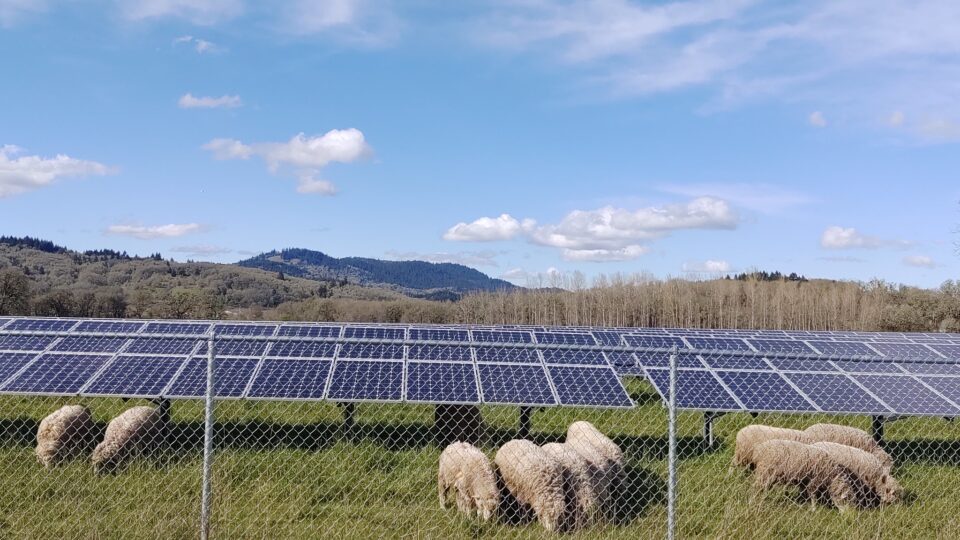
Agrivoltaics could provide the synergistic combination of more food, more energy, lower water demand, lower carbon emissions, and improved local prosperity.  The problem with agrivoltaics to date is that the existing implementations have used solar arrays designed strictly for electricity generation rather than to be used in combination with agriculture.  They are not that well suited to co-exist with growing crops or grazing animals.

A new project is underway at Oregon State that will help researchers to optimize agrivoltaic systems.  The five-acre Solar Harvest Project is being built at the university’s North Willamette Research and Extension Center in Aurora, Oregon in partnership with the Oregon Clean Power Cooperative. 

The solar array for the project is designed specifically for agrivoltaics research and uses panels that are more spread out and able to rotate to a near vertical position to allow farm equipment to pass through.  The project will allow researchers to study the impact of solar panels on soil health, water use, and plant physiology and yields.

Electricity generated from the 326-kW solar system will be available for purchase by Oregon State and community members. 

**********

Web Links

Construction starts on Oregon State agrivoltaics farm that will merge agriculture and solar energy

Photo, posted April 5, 2020, courtesy of Sean Nealon / Oregon State University via Flickr.

Earth Wise is a production of WAMC Northeast Public Radio

Bitcoin Mining And The Environment | Earth Wise

November 7, 2022 By EarthWise Leave a Comment

Bitcoin mining, the process by which the prominent cryptocurrency is created, is well-known to be energy intensive, but the environmental impact of it has not been extensively studied.  People have described Bitcoin as ‘digital gold.’  A new analysis by researchers at the University of New Mexico has found that Bitcoin mining shouldn’t be compared to gold mining.  It is more appropriately compared to the creation of much more energy-intensive products such as beef, natural gas, and crude oil.

Furthermore, the study found that rather than becoming more sustainable over time, Bitcoin mining is becoming dirtier and more damaging to the climate as long as it relies upon fossil-fuel generated electricity.  Estimates are that in 2020, Bitcoin mining used 75.4 terawatt hours of electricity, which is more electricity than the entire country of Austria, as well as 150 other nations around the world.

The study looked at the economic cost of the air pollution and carbon emissions associated with Bitcoin mining and found that in many instances, the negative economic impact of creating a single Bitcoin is more than what the resultant coin is worth.

Based on the market value of Bitcoins, the cost of climate damage for that value is a little less that that of electricity produced by natural gas and gasoline produced from crude oil, but actually more than that of beef production.

There are multiple cryptocurrencies.  Ether is one that voluntarily switched away from so-called proof-of-work mining.  Whether Bitcoin or others will act similarly absent potential regulation remains to be seen.  Until such time, Bitcoin mining remains an increasingly dirty and damaging business.

**********

Web Links

Technology: UNM researchers find Bitcoin mining is environmentally unsustainable

Photo, posted May 11, 2017, courtesy of Komers Real via Flickr.

Earth Wise is a production of WAMC Northeast Public Radio

Carbon Inequality | Earth Wise

November 4, 2022 By EarthWise Leave a Comment

Everyone contributes to climate change, but not equally

Everyone contributes to climate change through the generation of greenhouse gas emissions, but individual contributions vary greatly.   A study at the Paris School of Economics has determined that just 1 percent of the population is responsible for nearly a quarter of global carbon emissions growth since 1990.

The study estimated emissions from individuals’ consumption and their financial investments, and also from government spending in their country.  Individuals are responsible for carbon emissions as a result of their own activities, but they also bear their share of responsibility for the emissions of the firms that they own or invest in. 

In 2019, people living in sub-Saharan Africa produced an average of 1.8 tons of CO2 equivalent per capita.  In North America, the average per capita was more than 10 times higher.  Meanwhile, the top 10% of North America’s emitters produced more than 75 tons each.

From 1990 to 2019, the bottom 50% of emitters was responsible for just 16% of emissions growth, while the top 1% was responsible for 23%.  The top 0.1% saw emissions growth of 80%.

The inequality between rich and poor is driven more by inequality within countries than by inequality between countries.  This is particularly true for wealthy countries.  For example, over the study period, the top 1% saw their emissions grow by 26% while emissions actually declined 5-15% among low and middle earners even in wealthy nations.

Economic inequality drives a lot of the dynamics taking place within many countries around the world, and this even applies to pollution and greenhouse gas emissions.

**********

Web Links

Global carbon inequality over 1990–2019

Photo, posted December 11, 2017, courtesy of Bernal Saborio via Flickr.

Earth Wise is a production of WAMC Northeast Public Radio
Decarbonizing Could Save Trillions | Earth Wise

October 18, 2022 By EarthWise Leave a Comment

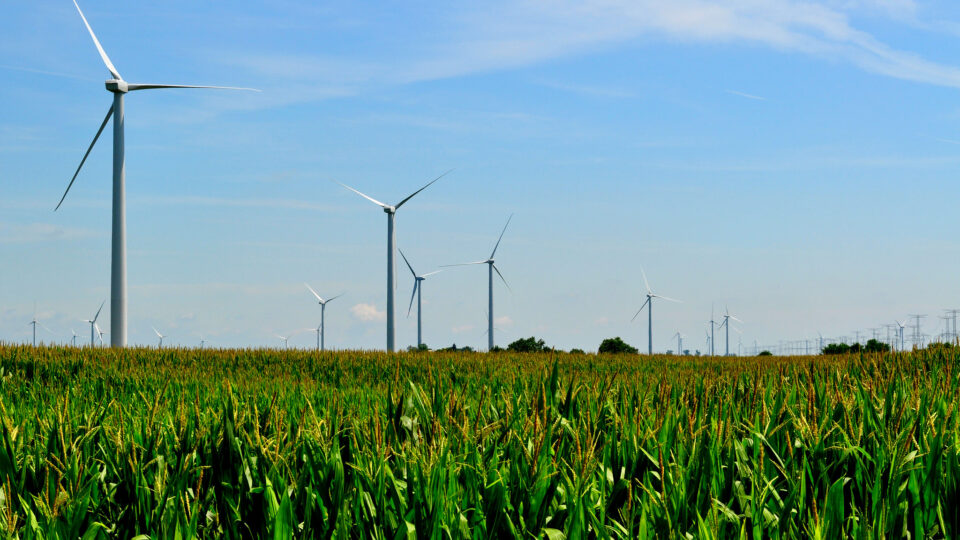
Decarbonizing could save $12 trillion globally

Scientists have long been calling for a transition to clean energy to prevent catastrophic impacts of climate change.  For much of that time, many people and, specifically, many of those in power, were skeptical of the need to do something about the warming climate.  But even as the facts about the changing climate became increasingly undeniable, there continued to be fears that the transition to clean energy sources would be unacceptably expensive and harmful to the economy.

A recent study published by Oxford University shows that the opposite is true:  a concerted effort to convert to green energy technologies such as solar, wind, and batteries, will save the world enormous amounts of money.

The Oxford study shows that a transition to nearly 100% clean energy by 2050 results in a lower-cost energy system that provides energy access to more people around the world.  The energy transition is expected to save the world at least $12 trillion compared to continuing our current levels of fossil fuel use.

The cost of renewable energy sources has been going down for decades and they are already cheaper than fossil fuels in many situations.  It is expected that they will become cheaper than fossil fuels across almost all applications over time.  Accelerating the transition will allow renewables to become cheaper faster.

The study made use of probabilistic models to estimate the costs of various possible future energy systems based on past data.  Even the most pessimistic models showed that scaling up green technologies is likely to drive their costs down so far that they will generate net cost savings and that the faster the transition goes, the more will be saved.  The result will be a cleaner, cheaper, more energy secure future.

**********

Web Links

Decarbonising the energy system by 2050 could save trillions

Photo, posted July 12, 2010, courtesy of Tom Shockey via Flickr.

Earth Wise is a production of WAMC Northeast Public Radio
Electrifying Delivery Vehicles | Earth Wise

October 12, 2022 By EarthWise Leave a Comment

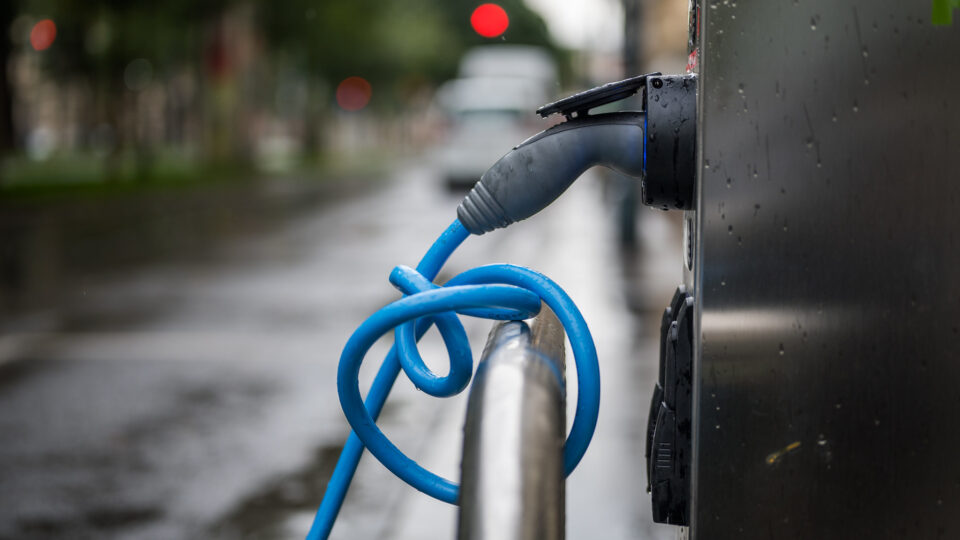
Electrifying delivery vehicles is important for the climate

Most of the buzz about electric vehicles relates to passenger cars as the auto industry is making a major transition away from gasoline power.  Recently, pickup trucks have started to get some attention as well as Ford’s electric version of the F-150 truck has hit the streets and the long-awaited Tesla Cybertruck will be introduced next year.  There hasn’t been as much talk about delivery vehicles, but there should be.

There are about 15 million delivery vehicles in the U.S., and they are a significant contributor to greenhouse gas emissions.   The post office alone has a quarter million of them.  Such vehicles are especially attractive candidates for electrification.  Most travel relatively consistent and short routes, which makes it easier for companies to be able to charge them and keep them charged.

Electrifying delivery vehicles in cities is especially important because the vehicles travel into and through residential neighborhoods, spreading pollution and particulates as they go.

Some provisions of the Inflation Reduction Act provide credits for the purchase of commercial vehicles.  Light-duty vans and trucks qualify for a credit of as much as $7,500.  Medium- and heavy-duty trucks qualify for credits as high as $40,000.  In addition, substantial tax credits are available for the installation of charging equipment.

According to a study by the Rocky Mountain Institute, sixty percent of new truck sales could be electric by 2030.  By 2035, the trucking industry could cut its emissions in half.

American companies are already stepping up to the plate.  Amazon plans to deploy 100,000 electric delivery vehicles from new automaker Rivian.  Walmart, UPS, FedEx, and others have also committed to electrified trucks.

**********

Web Links

The Climate Bill Will Electrify More Delivery Vans and Trucks

Photo, posted August 1, 2021, courtesy of Ivan Radic via Flickr.

Earth Wise is a production of WAMC Northeast Public Radio
Prospects For Floating Solar | Earth Wise

October 10, 2022 By EarthWise Leave a Comment

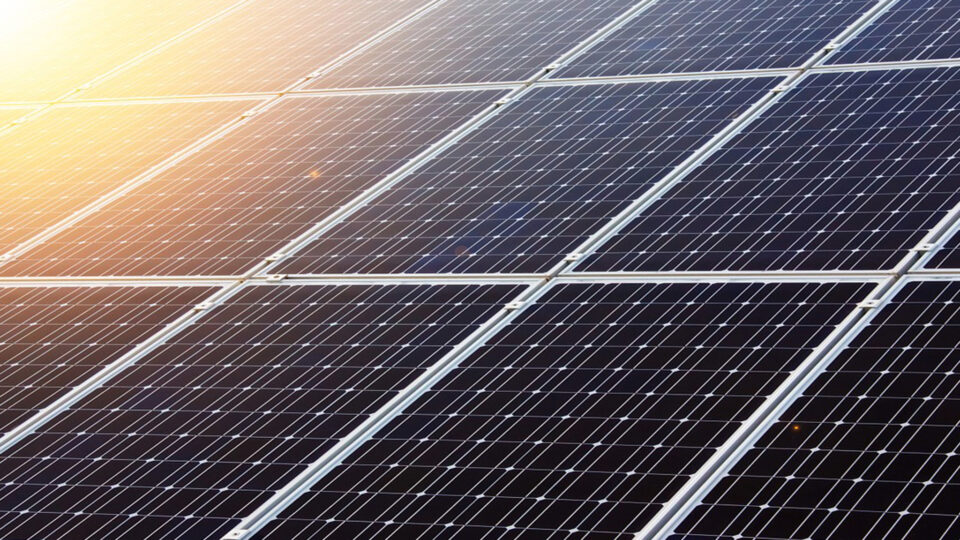
Floating solar may power the future

Countries are trying to figure out how to get enough energy from solar and wind generation to completely decarbonize their economies.  According to some estimates, nations might have to devote between half a percent and five percent of their land area to solar panels to get the job done.  Half a percent is about the amount of the U.S. that is covered by paved roads.  While there is lots of open land in many parts of the country, covering it with solar panels might not be acceptable to farmers, conservationists, or other interested parties.

One way to deploy more solar panels without using up land is the use of floating solar panels.  Floating photovoltaic systems – also known as floatovoltaics – are becoming increasingly common, especially in Asia.  This year, China installed one of the largest floatovoltaic systems in the world on a reservoir near the city of Dezhou.

Floating solar panels stay cooler and run more efficiently than those on land.  The panels also help prevent evaporation from their watery homes and the shading they provide also help to minimize algal blooms.  Solar installations on reservoirs generally puts them near cities, making it easier to feed power into urban grids.

On the other hand, floating solar systems need to be able to withstand water and waves and are generally more expensive to build than land-based systems.

At present, the installed global capacity of floating solar is only about 3 gigawatts, compared with more than 700 gigawatts of land-based systems. However, reservoirs around the world collectively cover an area about the size of France.  Covering just 10 percent of them with floating solar could produce as much power as all the fossil-fuel plants in operation worldwide.

**********

Web Links

Solar Takes a Swim

Photo, posted March 7, 2019, courtesy of Hedgerow INC via Flickr.

Earth Wise is a production of WAMC Northeast Public Radio

  • « Go to Previous Page
  • Page 1
  • Interim pages omitted …
  • Page 12
  • Page 13
  • Page 14
  • Page 15
  • Page 16
  • Interim pages omitted …
  • Page 29
  • Go to Next Page »

Primary Sidebar

Recent Episodes

  • An uninsurable future
  • Clean energy and jobs
  • Insect declines in remote regions
  • Fossil fuel producing nations ignoring climate goals
  • Trouble for clownfishes

WAMC Northeast Public Radio

WAMC/Northeast Public Radio is a regional public radio network serving parts of seven northeastern states (more...)

Copyright © 2026 ·