• Skip to primary navigation
  • Skip to main content
  • Skip to primary sidebar

Earth Wise

A look at our changing environment.

  • Home
  • About Earth Wise
  • Where to Listen
  • All Articles
  • Show Search
Hide Search
You are here: Home / Archives for oxygen

oxygen

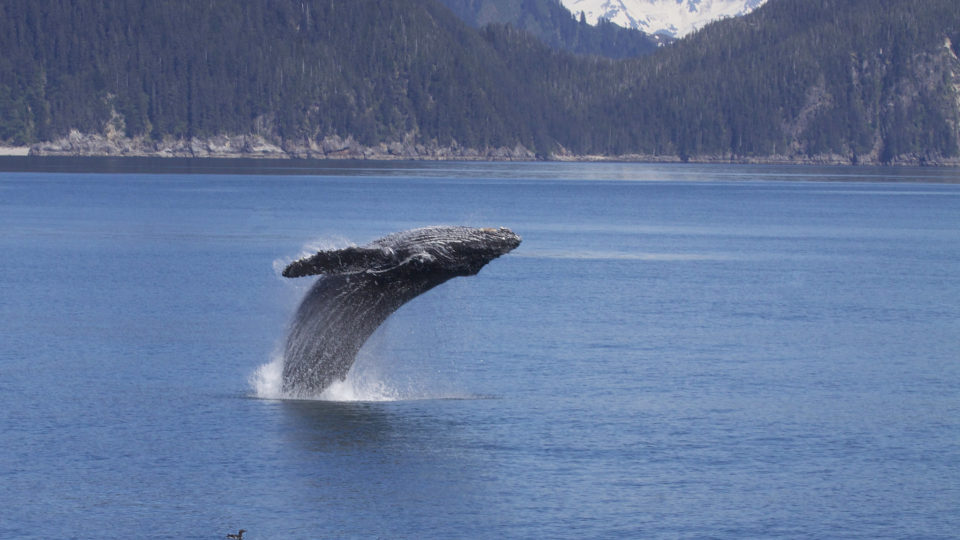
A Powerful Case For Protecting Whales

October 24, 2019 By EarthWise Leave a Comment

Efforts to mitigate climate change typically face two major challenges.  One is to find effective ways to reduce the amount of atmospheric carbon dioxide.  The other is how to raise enough money to implement climate mitigation strategies. 

Many proposed solutions to climate change, like carbon capture and storage, are complex, expensive, and in some cases, untested.  What if there was a low-tech solution that was effective and economical?

Well, it turns out there is one, and it comes from a surprisingly simple, “no-tech” strategy to capture CO2: increase global whale populations. 

According to a recent analysis by economists with the International Monetary Fund, whales help fight climate change by sequestering CO2 in the ocean. 

Whales sequester carbon in a few ways.  They hoard it in their fat and protein-rich bodies, stockpiling tons of carbon apiece.  When whales die, they turn into literal carbon sinks on the ocean floor.  While alive, whales dive to feed on tiny marine organisms like krill and plankton before surfacing to breathe and excrete. Those latter activities release an enormous plume of nutrients, including nitrogen, iron, and phosphorous, into the water.  These so-called “poo-namis” stimulate the growth of phytoplankton, microscopic marine algae that pull CO2 out of the air and return oxygen to the air via photosynthesis.  Phytoplankton are responsible for every other breath we take, contributing at least 50% of all oxygen to the atmosphere and capturing approximately 40% of all CO2 produced. 

With other economic benefits like ecotourism factored in, economists estimate that each whale is worth $2 million over its lifetime, making the entire global population possibly a one trillion dollar asset to humanity.

*********

Web Links

How much is a whale worth?

Photo, posted June 12, 2013, courtesy of Gregory Smith via Flickr.

XXXXXXXXXXXXXXXXXX
A Giant Seaweed Bloom

August 19, 2019 By EarthWise Leave a Comment

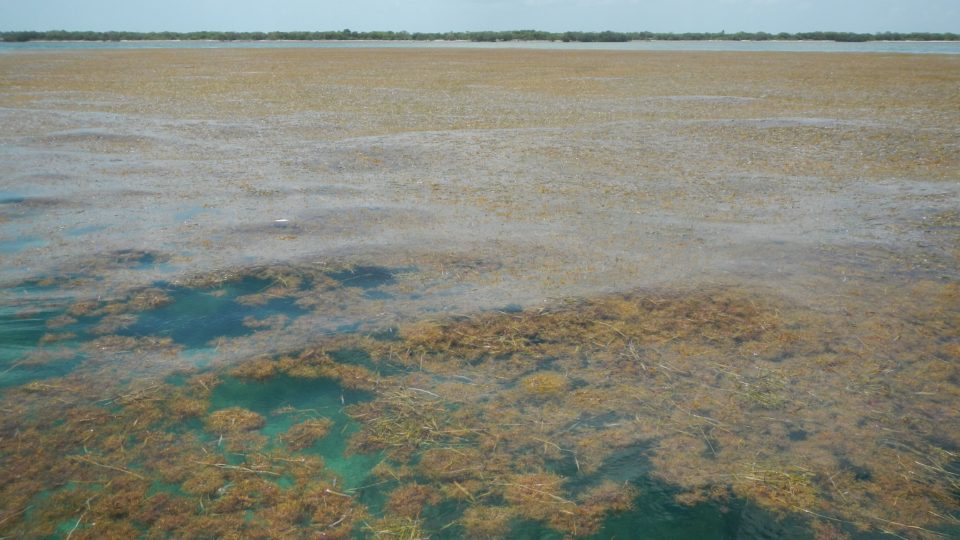
Scientists using data from NASA satellites have discovered and documented the largest bloom of seaweed in the world, stretching all the way from West Africa to the Gulf of Mexico.  The gigantic macroalgae bloom has been dubbed the Great Atlantic Sargassum Belt. 

The brown seaweed floats in surface water and in recent years has become a problem to shorelines lining the tropical Atlantic, Caribbean Sea, Gulf of Mexico, and east coast of Florida.  The stuff carpets popular beach destinations and crowded coastal waters. In 2018, more than 20 million tons of it floated on the ocean surface.

Scientists have been studying the Sargassum algae using satellites since 2006, but the major blooms have only started appearing since 2011.  They have occurred every year between 2011 and 2018 except for 2013.  Before 2011, most of the free-floating Sargassum in the ocean was primarily found in patches around the Gulf of Mexico and the Sargasso Sea located on the western edge of the central Atlantic Ocean.

Sargassum provides habitat for turtles, crabs, fish and birds, and produces oxygen via photosynthesis.  However, too much of it can crowd out many marine species.

According to researchers, the ocean’s chemistry must have changed in order for the bloom to get so out of hand.  The factors involved include a large seed population left over from a previous bloom, nutrient input from West Africa, and nutrient input from the Amazon River.  The increase in nutrients may be a result of deforestation and fertilizer use.

Climate-change effects on precipitation and ocean currents ultimately do play a role in this, but increased ocean temperatures do not.  Unfortunately, these giant seaweed blooms are probably here to stay.

**********

Web Links

NASA Satellites Find Biggest Seaweed Bloom in the World

Photo courtesy of NASA.

Earth Wise is a production of WAMC Northeast Public Radio.

Intense Rainfall And Crops

July 2, 2019 By EarthWise Leave a Comment

The warming of the planet does not necessarily imply local weather will be warmer or drier than average.  While heatwaves and droughts are increasingly common events in many places, so are intense rain events.

A new study led by scientists at the University of Illinois has found that intense rainfall is as damaging to the U.S. agricultural sector as heatwaves and excessive droughts.

The study examined more than three decades of crop insurance, climate, soil, and corn yield data.  Researchers found that since 1981, corn yields in the U.S. Midwest were reduced by as much as 34% during years with excessive rainfall.  Years with drought and heatwaves experienced yield losses of up to 37%.

Intense rain events can physically damage crops, delay planting and harvesting, restrict root growth, and cause oxygen deficiency and nutrient loss.  The study estimated that between 1989 and 2016, excessive rainfall caused $10 billion in agricultural losses. However, excessive rainfall can have either negative or positive impact on crop yield and the effects can vary regionally.

Parts of the Midwest have already experienced a 42% increase in the heaviest precipitation events since 1958.  Climate change models predict that much of this region will experience even more frequent and intense precipitation events in the coming decade.

According to the study, excessive rainfall is the major cause of crop damage currently in the U.S. for corn, and also has broad impacts for other staple crops such as soybeans and wheat. The authors suggest that as rainfall becomes more extreme, reforms will be needed in the U.S. crop insurance industry in order to better meet planting challenges faced by farmers. 

**********

Web Links

Intense Rainfall Is As Damaging to Crops As Heatwaves and Drought, and Climate Change Is Making It Worse

Photo, posted October 2, 2013, courtesy of the United Soybean Board via Flickr.

Earth Wise is a production of WAMC Northeast Public Radio.

Forecasting A Massive Dead Zone

June 18, 2019 By EarthWise Leave a Comment

The Gulf of Mexico dead zone occurs every summer, and is considered one of the largest dead zones in the world.  This cyclical event occurs where the Mississippi River empties into the Gulf of Mexico, just off the coast of Louisiana and Texas. 

This annual dead zone is primarily caused by excess nutrient pollution from human activities, such as urbanization and agriculture, occurring throughout the Mississippi River watershed.  Washed off the land by spring rains, these excess nutrients stimulate an overgrowth of algae once they reach the Gulf of Mexico.  The algae in the Gulf eventually die, and then sink and decompose in the water. The resulting area of the ocean ends up with a condition known as hypoxia, which is an insufficient amount of oxygen to support most marine life.  In hypoxic or dead zones, animals that can’t swim away will often suffocate and die. 

Scientists from the National Oceanic and Atmospheric Administration estimate that this year the dead zone in the Gulf of Mexico will be approximately 8,000 square miles, which is roughly the size of Massachusetts.  The research team uses U.S. Geological Survey river flow and nutrient data to make its forecast. 

According to NOAA, the abnormally high amount of spring rainfall is a major factor contributing to this year’s dead zone.  Last month, nitrate loads entering the Mississippi River watershed were 18% above the long-term average, and phosphorus loads were about 49% above the long-term average. 

While the 2019 forecast is slightly less than the record size of more than 8,700 square miles set in 2017, it’s still much larger than the five year average size of 5,700. 

**********

Web Links

Very large dead zone forecast for the Gulf of Mexico

Massive 8,000-mile ‘dead zone’ could be one of the gulf’s largest

Photo, posted May 22, 2009, courtesy of Michael McCarthy via Flickr.

Earth Wise is a production of WAMC Northeast Public Radio.

Hacking Photosynthesis

February 25, 2019 By EarthWise Leave a Comment

There is an enzyme known as RuBisCo that is involved in carbon fixation, the process plants use to convert carbon dioxide into sugar molecules.  The RuBisCo molecule is inside the leaves of most plants and is probably the most abundant protein in the world.

RuBisCo picks up carbon dioxide from the air and uses energy from the sun to turn the carbon into sugar molecules.  This process of photosynthesis is pretty much the foundation of life on Earth.

Wonderful as it is, the process is not perfect.  RuBisCo is not very selective in grabbing molecules from the air.  It picks up oxygen as well as CO2 and it produces a toxic compound when it does that.

Plants operate a whole other complicated chemical process to deal with this toxic byproduct and uses up a lot of energy along the way, leaving less energy for making leaves or food that we can eat.

A research program at the University of Illinois called Realizing Increased Photosynthetic Efficiency (or RIPE) has been trying to correct this problem; they have been trying to hack photosynthesis.  And they may well have succeeded.

Using genetic modification on tobacco plants, they have shut down the existing detoxification process and set up a much more efficient new one.  The result is super plants that grow faster and up to 40% bigger.

The next step is to get it to work on plants that people actually rely upon for food, like tomatoes, soybeans and black-eyed peas (which are a staple food crop in sub-Saharan Africa where food is scarce.)

It will be years before we know if the process can really produce more food and be safe, but it may end up leading to a major increase in crop productivity.

**********

Web Links

Scientists Have ‘Hacked Photosynthesis’ In Search Of More Productive Crops

Photo, posted June 10, 2013, courtesy of Boon Hong Seto via Flickr.

Earth Wise is a production of WAMC Northeast Public Radio.

A New Way to Make Hydrogen

January 31, 2019 By EarthWise Leave a Comment

Many people consider hydrogen to be the fuel of the future, both for powering vehicles and for storing energy generated by renewable sources.   Hydrogen itself is a clean and green fuel.  Generating energy from it using fuel cells results in only water as a byproduct.

The biggest problem with hydrogen is that the most economical way to produce it and therefore the way most hydrogen is produced today, is by reforming natural gas, which is a process that generates carbon emissions.

The desirable way to make hydrogen is to produce it by breaking apart water into its hydrogen and oxygen components, a process known as electrolysis.   There are many ways to do it, but none of them to date measures up in terms of efficiency, cost, and longevity.

Researchers at the University of Toronto have recently developed a new catalyst that uses abundant, low-cost elements to split water molecules into hydrogen and oxygen.  The catalyst is made from copper, nickel, and chromium, all of which are more abundant and less costly than platinum, which is the usual electrolysis catalyst.

The new catalyst performs well under pH-neutral conditions, which means it could even work on seawater without incurring the expense of desalination.  The Toronto researchers also believe their catalyst could be used as part of a process to make hydrocarbon fuels from hydrogen and CO22.  Their group is among the five finalists in the Carbon XPrize competition, which has a grand prize of $7.5 million for finding a way to convert waste CO2 into fuel.

Finding a low-cost, energy-efficient, and reliable way to make hydrogen out of water will be a big deal if it can be done on an industrial scale.

**********

Web Links

U of T researchers discover low-cost way to produce hydrogen from water

Photo, posted July 23, 2015, courtesy of Magnus Johansson via Flickr.

Earth Wise is a production of WAMC Northeast Public Radio.

Cleaning And Splitting Water

December 18, 2018 By EarthWise Leave a Comment

https://earthwiseradio.org/wp-content/uploads/2018/12/EW-12-18-18-Cleaning-and-Splitting-Water.mp3

Researchers at EPFL in Lausanne, Switzerland, have developed a photocatalytic system that can be used to degrade pollutants present in water while simultaneously producing hydrogen that can be captured and put to use.

[Read more…] about Cleaning And Splitting Water

Hippo Waste And Fish

September 10, 2018 By EarthWise Leave a Comment

https://earthwiseradio.org/wp-content/uploads/2018/08/EW-09-10-18-Hippo-Pools.mp3

Agricultural and sewage pollution can cause low-oxygen conditions and fish kills in rivers. A new study published in Nature Communications reports that hippo waste can have a similar effect in Africa’s Mara River, which passes through the world renowned Maasai Mara National Reserve of Kenya and is home to more than 4,000 hippos.

[Read more…] about Hippo Waste And Fish

A New Catalyst For Splitting Water

August 13, 2018 By EarthWise Leave a Comment

https://earthwiseradio.org/wp-content/uploads/2018/07/EW-08-13-18-New-Catalyst-for-Splitting-Water.mp3

Hydrogen is widely considered to be a desirable source of clean energy.  It can be used in fuel cells to power electric motors in cars or can be burned directly in internal combustion engines.   If it is compressed or converted to liquid, it can be efficiently stored and transported.  Most of all, when it is used as an energy source, the only emission it produces is water.

[Read more…] about A New Catalyst For Splitting Water

A Better Way To Make Hydrogen

February 7, 2018 By EarthWise Leave a Comment

https://earthwiseradio.org/wp-content/uploads/2018/01/EW-02-07-18-A-Better-Way-to-Make-Hydrogen.mp3

There is a great deal of interest in developing cost-effective, energy-efficient and environmentally-friendly ways of producing hydrogen.  If hydrogen-powered vehicles are to catch on, it is essential.

[Read more…] about A Better Way To Make Hydrogen

New Rules For Ocean Conservation

September 21, 2017 By EarthWise Leave a Comment

https://earthwiseradio.org/wp-content/uploads/2017/08/EW-09-21-17-New-Rules-for-Ocean-Conservation.mp3

In a recent report to a United Nations ocean conference, scientists are warning that new rules are desperately needed to protect marine life in the open seas.  That’s because more than 60% of the ocean has no conservation rules since it’s located outside national jurisdictions.  The open ocean is at risk from climate change, over-fishing, deep sea mining, farm pollution, and plastics pollution. 

[Read more…] about New Rules For Ocean Conservation

An Aluminum Battery

June 28, 2017 By EarthWise

https://earthwiseradio.org/wp-content/uploads/2017/06/EW-06-28-17-An-Aluminum-Battery.mp3

The battery industry is currently dominated by lithium-ion batteries.  We have them in our phones and computers. They power electric cars.  And they are increasingly being used to store energy generated by solar panels and other renewable energy sources.

[Read more…] about An Aluminum Battery

A Hydrogen-Powered Train

June 5, 2017 By EarthWise

https://earthwiseradio.org/wp-content/uploads/2017/06/EW-06-05-17-A-Hydrogen-Powered-Train.mp3

It seems like something out of a science fiction movie, but a nearly silent train that glides along its tracks emitting nothing but water is a reality.   In March, Germany conducted successful tests of the world’s first “Hydrail,” which is a hydrogen-powered, zero-emission train.

[Read more…] about A Hydrogen-Powered Train

Threats To Coral Reefs

May 12, 2017 By EarthWise

https://earthwiseradio.org/wp-content/uploads/2017/05/EW-05-12-17-Threats-to-Coral-Reefs.mp3

There has been much news recently about the growing bleaching events going on in the world’s coral reefs associated with ocean warming and acidification.  The massive damage to Australia’s Great Barrier Reef is an ongoing tragedy.

[Read more…] about Threats To Coral Reefs

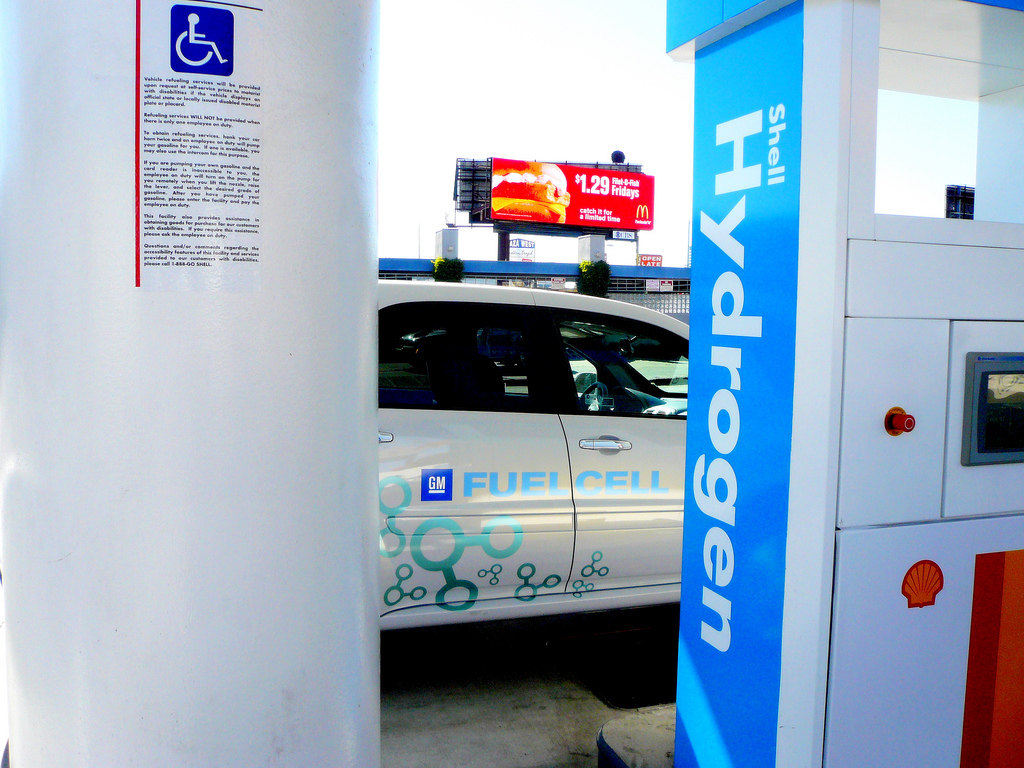
Hydrogen On Demand

April 28, 2017 By EarthWise

https://earthwiseradio.org/wp-content/uploads/2017/04/EW-04-28-17-Hydrogen-on-Demand.mp3

Researchers at the Technion-Israel Institute of Technology have developed a new method for producing hydrogen from water using solar energy.  If successfully developed, their approach would make it possible to produce hydrogen in a centralized manner at the point of sale such as at a fueling station for hydrogen-powered cars.

[Read more…] about Hydrogen On Demand

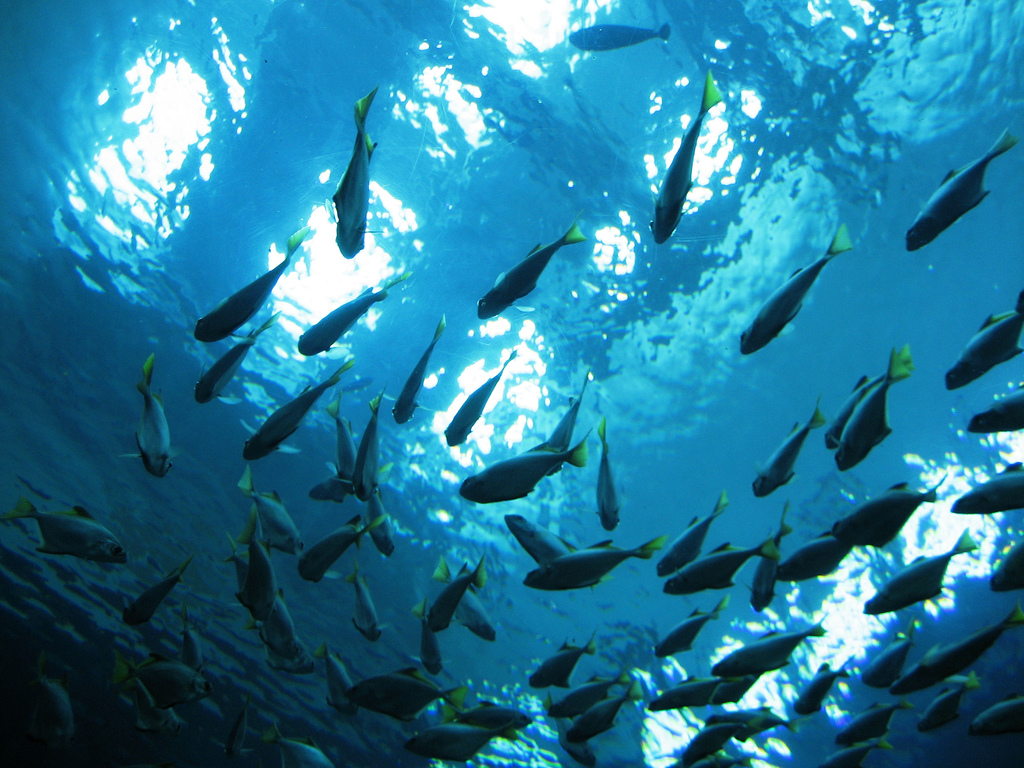
Ocean Oxygen Levels

March 28, 2017 By EarthWise

https://earthwiseradio.org/wp-content/uploads/2017/03/EW-03-28-17-Ocean-Oxygen-Levels.mp3

When we think of global climate change, what comes to mind?  Rising seas? Melting glaciers? Shrinking sea ice?  How about diminishing ocean oxygen levels?  

[Read more…] about Ocean Oxygen Levels

Climate Change And Fish

November 23, 2016 By WAMC WEB

https://earthwiseradio.org/wp-content/uploads/2016/11/EW-11-23-16-Climate-Change-and-Fish.mp3

According to a recent study published in the journal Global Change Biology, rising CO2 levels in the ocean can disrupt the sensory systems of fish and can even make them swim toward predators and ignore the sounds that normally deter them from risky habitats.

[Read more…] about Climate Change And Fish

Plastic From Milk

September 26, 2016 By WAMC WEB

https://earthwiseradio.org/wp-content/uploads/2016/09/EW-09-26-16-Plastic-from-Milk.mp3

These days, many of the foods we buy, such as meat, bread, cheese and snacks –  come wrapped in plastic.  We end up with lots of non-recyclable, non-biodegradable waste.  And thin plastic films are not even that great at preserving food because oxygen still gets through them.

[Read more…] about Plastic From Milk

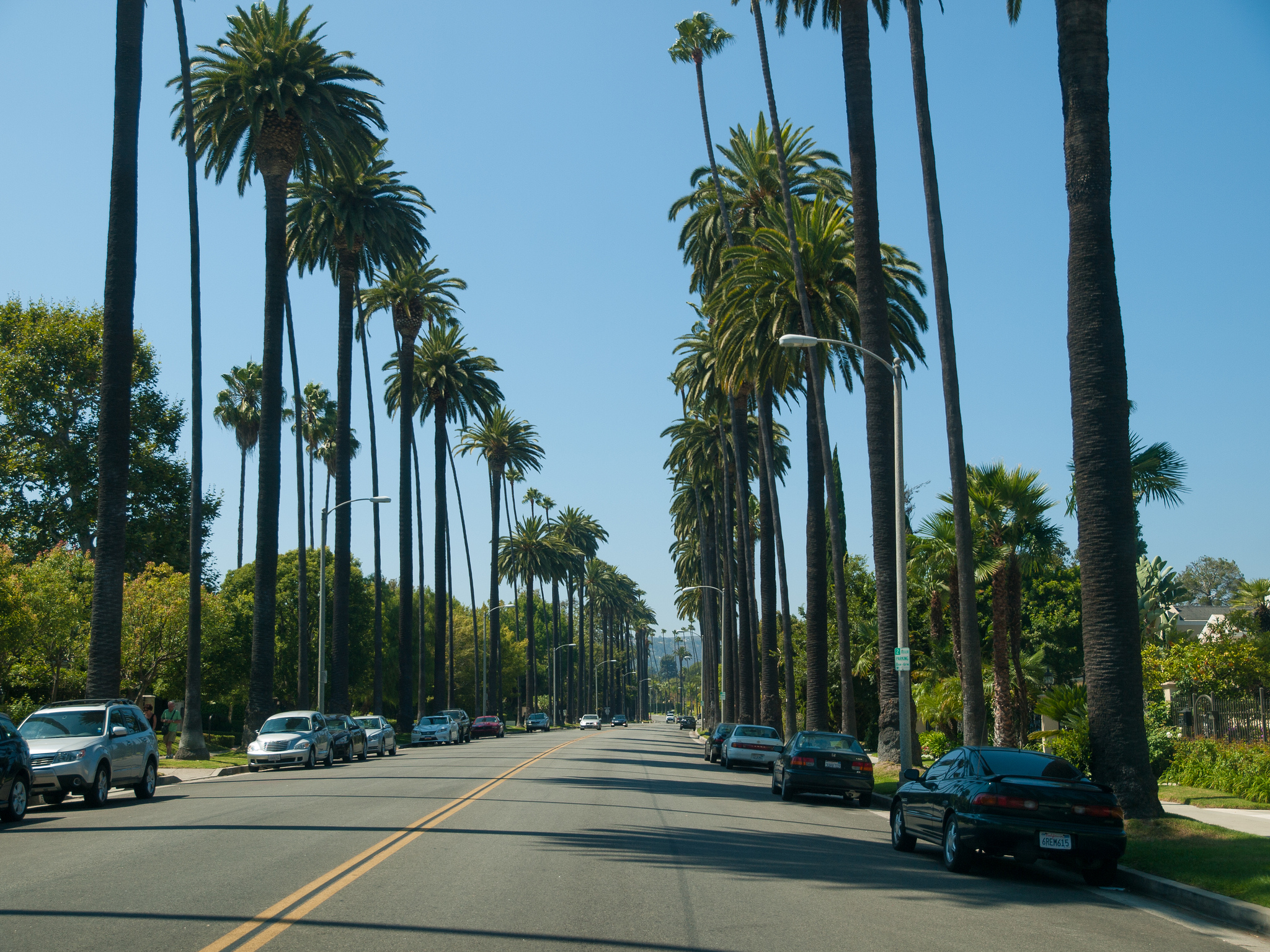
The Value Of Street Trees

July 13, 2016 By WAMC WEB

https://earthwiseradio.org/wp-content/uploads/2016/07/EW-07-13-16-California-Street-Trees.mp3

Why should you care whether there are trees on your street or on the streets nearby?  Besides the obvious fact that they make streets more attractive, street trees provide a number of real benefits both for residents and for the environment. 

[Read more…] about The Value Of Street Trees

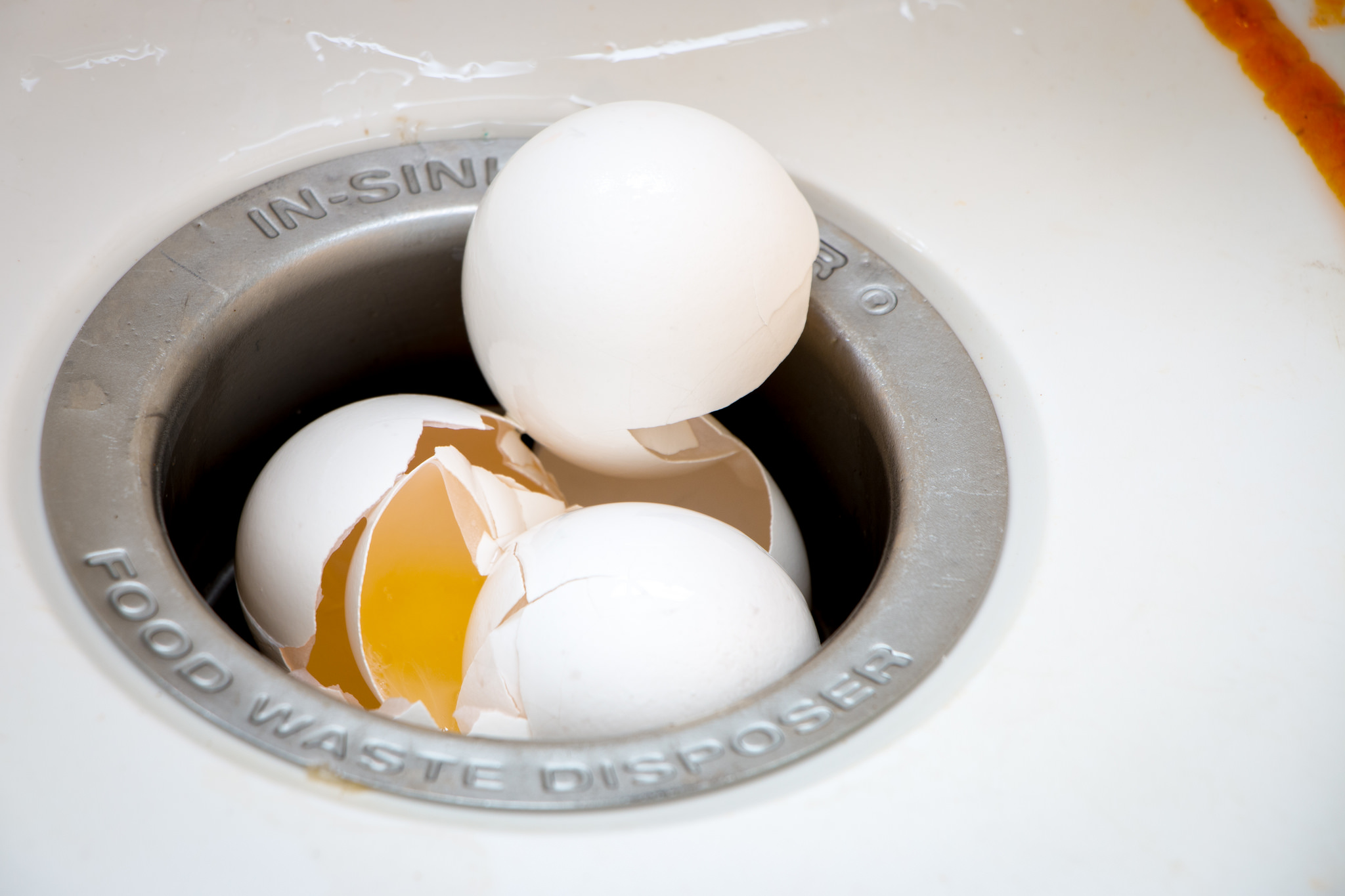
Stop Putting Food Waste Down The Drain

May 4, 2016 By WAMC WEB

https://earthwiseradio.org/wp-content/uploads/2016/04/EW-05-04-16-Kitchen-Disposals.mp3

Should we really be putting food scraps down our sinks? Advertisements for kitchen garbage disposals assure us that these devices are a ‘hygienic way of eliminating waste and keeping odors at bay’ – but behind marketing materials questions remain.

[Read more…] about Stop Putting Food Waste Down The Drain

  • « Go to Previous Page
  • Page 1
  • Page 2
  • Page 3
  • Page 4
  • Go to Next Page »

Primary Sidebar

Recent Episodes

  • An uninsurable future
  • Clean energy and jobs
  • Insect declines in remote regions
  • Fossil fuel producing nations ignoring climate goals
  • Trouble for clownfishes

WAMC Northeast Public Radio

WAMC/Northeast Public Radio is a regional public radio network serving parts of seven northeastern states (more...)

Copyright © 2026 ·