• Skip to primary navigation
  • Skip to main content
  • Skip to primary sidebar

Earth Wise

A look at our changing environment.

  • Home
  • About Earth Wise
  • Where to Listen
  • All Articles
  • Show Search
Hide Search
You are here: Home / Archives for Episode

Sharks On The Decline | Earth Wise

September 4, 2020 By EarthWise Leave a Comment

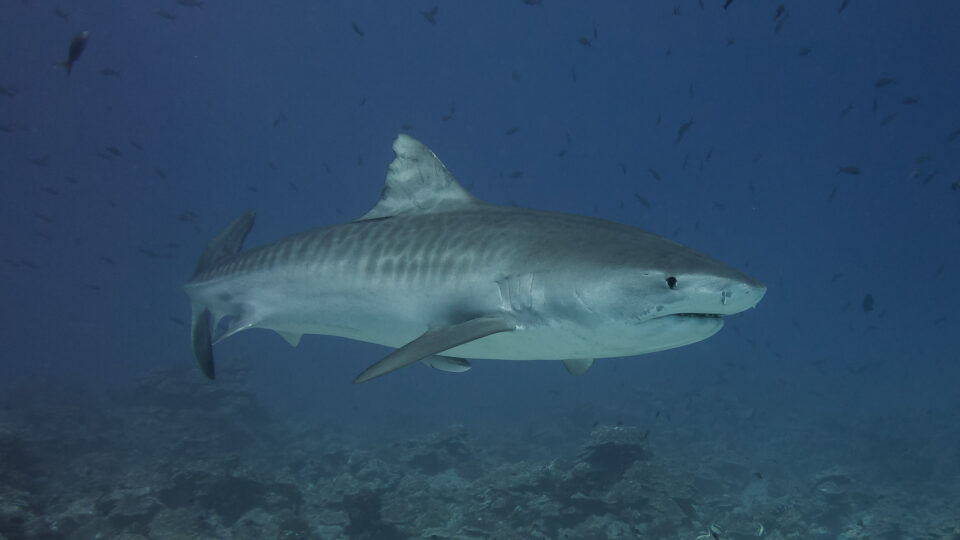
shark populations declining

During the past 70 years, global shark populations have been on the decline.   Many species have become threatened or endangered.  Conservation efforts have been underway in many places, but shark populations continue to be at risk because of over-fishing and habitat loss.

A comprehensive study by marine biologists at Texas A&M University deployed more than 15,000 baited remote underwater video stations on 371 coral reefs in 58 countries.   The study included 59 different shark species in the Atlantic, Pacific and Indian Oceans.  The researchers were surprised to find that no sharks at all were detected in almost 20% of the locations surveyed and were almost completely absent from coral reefs in several nations. 

Scientists believe that demand for shark products, such as fins and meat, and bycatch (that is, sharks captured in nets by fisherman trapping other kinds of fish) are strong contributors to the widespread declines in shark numbers around the world.

The study shows that if corrective steps are not taken in regions where marine management is still ineffective, continued depletion of shark populations is highly likely. 

Sharks have important roles in marine ecosystems.  When their habitats deteriorate and their populations decrease, ecosystem stability and health is degraded because sharks help regulate prey populations.

Some countries, notably the Bahamas, are combating the problem by providing sanctuaries for sharks where fishing and harvesting is prohibited.  Such places support some of the healthiest shark populations in the world.  However, the decline of coral reefs is just another challenge facing shark populations around the world.

**********

Web Links

Study Shows Alarming Decline In Shark Numbers Around The World

Photo, posted January 9, 2017, courtesy of Kris-Mikael Krister via Flickr.

Earth Wise is a production of WAMC Northeast Public Radio.

Recycling Tough Plastics | Earth Wise

September 3, 2020 By EarthWise Leave a Comment

recycling tough plastics

Thermoset plastics are ones that contain polymers that cross-link together during the curing process to form an irreversible chemical bond.  This improves the material’s mechanical properties, provides chemical resistance, heat resistance, and structural integrity.  Thermosets include epoxies, polyurethanes, and rubber used for tires.  The big problem with thermosets is that they cannot be easily recycled or broken down after use.

Seventy-five percent of all plastics are thermoplastics, which can be recycled by heating them until they become liquid and can then be remolded.   Thermoset plastics, on the other hand, have such strong chemical bonds that they simply will not melt.  They will typically burn before they can be remolded.

Chemists at MIT have recently developed a way to modify thermoset plastics with a chemical linker that makes them much easier to break down, but still retain the mechanical properties that make them so useful.

In a study published in Nature, the researchers produced a degradable version of a thermoset plastic called pDCPD.  They then broke the plastic down into a powder and were able to use the powder to create more pDCPD.  The paper also proposed a theoretical model that suggests that their approach could be used for a wide range of other plastics and polymers, including rubber.

By adding a chemical called a silyl ether monomer to the liquid precursors that from pDCPD plastic, they found that the resultant material retained its mechanical strength but can be broken down into a soluble powder upon exposure to fluoride ions.

Using this approach with other thermoset materials, the researchers believe it will be possible to create recyclable versions of many of the toughest plastic materials.

**********

Web Links

Chemists make tough plastics recyclable

Photo, posted September 1, 2019, courtesy of Luke McKernan via Flickr.

Earth Wise is a production of WAMC Northeast Public Radio.

A Hot July | Earth Wise

September 2, 2020 By EarthWise Leave a Comment

record temperatures

The numbers are in and, unsurprisingly, July was a hot month.  July 2020 tied for the second-hottest July on record for the planet, according to the National Oceanic and Atmospheric Administration.  In our own backyard, the Northern Hemisphere saw the hottest July ever, breaking the previous record set just last year.

The July 2020 global temperature was 62.06 Fahrenheit, which is 1.66 degrees above the 20th-century average.  The combined land and ocean surface average temperature for the Northern Hemisphere, the highest ever recorded for July, was 2.12 degrees F above average, breaking the previous record by 0.14 degrees.

Record-hot July temperatures were also recorded across parts of southeastern Asia, northern South America, across the west and northern Pacific Ocean, the northern Indian Ocean, and parts of the Caribbean Sea.

The year-to-date global land and ocean surface temperature was the second highest in the 141 years of record keeping at 58.79 degrees Fahrenheit, which is 1.89 degrees F above the 20th-century average. 

So far it is been the hottest year to date on record across a large portion of northern Asia, parts of Europe, China, Mexico, northern South America, as well as the Atlantic, northern Indian and Pacific oceans.

Meanwhile, the extent of sea ice in the Arctic for July 2020 was the smallest ever measured in the 42 years of record-keeping, over 23% below the 1981-2010 average.  July’s Arctic sea ice extent was smaller than the previous record (set last year) by 120,000 square miles, an area roughly the size of New Mexico.

*********

Web Links

July 2020 was record hot for N. Hemisphere, 2nd hottest for planet

Photo, posted July 24, 2018, courtesy of Maria Eklund Flickr.

Earth Wise is a production of WAMC Northeast Public Radio.

A Fabric To Keep You Cool | Earth Wise

September 1, 2020 By EarthWise Leave a Comment

cooling fabric technology

About 10% of all electricity consumption in the U.S. is devoted to keeping us cool with air conditioning and other methods.  Researchers at two universities in Shanghai, China have developed a new material that can be made into clothing that cools the wearer without using any electricity.

The new fabric transfers heat, allows moisture to evaporate from the skin, and repels water.  Cooling off a person’s body is much more efficient than cooling off an entire room or a building.  There have been textiles and types of clothing designed to perform the cooling function, but most of those have disadvantages.  These include some combination of poor cooling capacity, high energy consumption, complex and time-consuming manufacturing, and high cost.

The researchers wanted to develop a personal cooling fabric that can efficiently transfer heat away from the body while at the same time being breathable, water resistant and easy to make.

The new fabric is made by electrospinning an ordinary polyurethane polymer with a water-repelling fluorinated version of polyurethane polymer along with a thermally conductive filler composed of boron nitride nanosheets.  The resultant material is a nanofibrous membrane that repels water from the outside but has large enough pores to allow sweat to evaporate from the skin and air to circulate. 

Tests of the membrane demonstrated higher thermal conductivity than other conventional or high-tech fabrics.  Used in clothing, the material would be more effective than previous fabrics in conducting heat away from the body. It may be possible to beat the heat without turning on the AC.   These membranes could also be useful for solar energy collection, seawater desalination, and thermal management of electronic devices.

**********

Web Links

New fabric could help keep you cool in the summer, even without A/C

Photo courtesy of the American Chemical Society on Youtube.

Earth Wise is a production of WAMC Northeast Public Radio.
Alaska Is Getting Wetter | Earth Wise

August 31, 2020 By EarthWise Leave a Comment

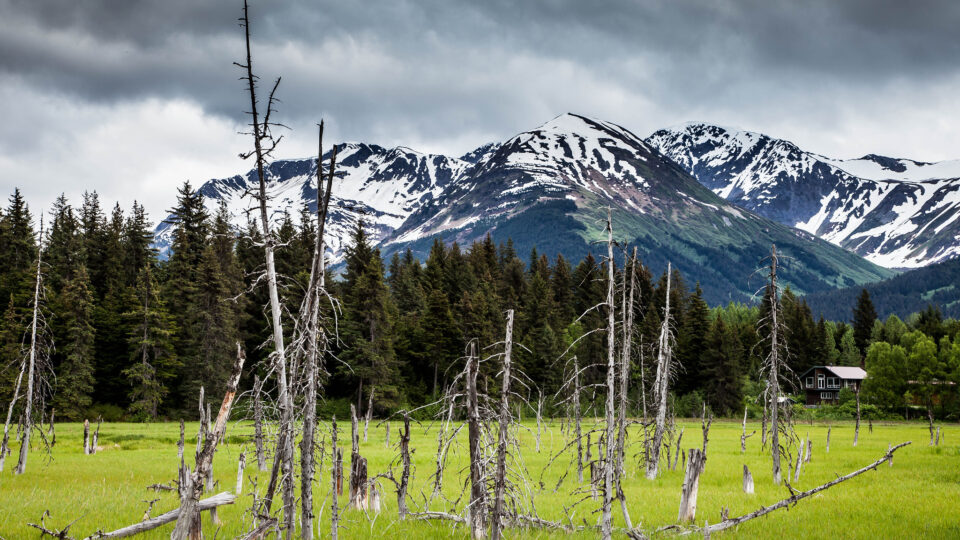
alaska is getting wetter

Siberia has been in the news for record-setting heat waves and wildfires, but it is not the only northern region experiencing unusual weather.   Alaska, apart from setting its own warm weather records, is experiencing the rainiest five years in its century-long meteorological record.

Extreme weather in the Arctic is being driven by an aspect of climate change called Arctic amplification, which leads to temperatures rising faster than the global average.  The physical basis of Arctic amplification is well understood, but its effects over time are much less predictable.

The past five years included two summers with average precipitation, one that was a little drier than usual, and two of the wettest summers on record.    Researchers have taken measurements of how far below the surface permafrost has thawed by the end of summer over a wide range of Alaskan environments.

About 85% of Alaska sits upon permafrost and the increasing rainfall over the past five years is leading to a deeper thaw of permafrost across the state.  The wettest summer on record was 2014 and permafrost didn’t freeze back to previous levels even when the next couple of summers were relatively drier.

The study demonstrated how different types of land cover govern relationships between summer rainfall and permafrost thaw.  As Alaska becomes warmer and wetter, the vegetation cover is projected to change, and the increasing occurrence of wildfires will disturb larger areas of the landscape.  These conditions are likely to lead to a feedback loop driving more and more permafrost thawing.

Fundamental changes to Alaskan ecosystems are occurring on an unprecedented timescale – not gradually over decades or lifetimes, but over mere months or years.

**********

Web Links

Alaska is getting wetter. That’s bad news for permafrost and the climate.

Photo, posted June 10, 2011, courtesy of Peter Rintels via Flickr.

Earth Wise is a production of WAMC Northeast Public Radio.

Giant Jellyfish | Earth Wise

August 28, 2020 By EarthWise Leave a Comment

There have been recent news stories about giant jellyfish washing ashore from Maine to the south coast of Massachusetts.  These stories have claimed that some of these lion’s mane jellyfish have been the largest on record and even might be the largest animals in the ocean.

The truth of these accounts is rather suspect.  For one thing, it is rather difficult to measure the size of a jellyfish when it is out of the water.  Gravity compresses and spreads out the bell portion of the animal, and that makes up the bulk of its mass.  For example, a jellyfish bell that measures four feet across on the beach would appear to be much smaller if the animal was floating in the water.

Some claims that lion’s mane jellyfish are larger than blue whales date back a full century and are very much disputable.  The claimed size certainly included the animal’s long tentacles, and such things hardly compare with a blue whale.

In any event, the current spate of jellyfish sightings is not necessarily that unusual.  Many factors influence jellyfish populations, including water temperature and food supply.  It is possible that warming water temperatures may be influencing the jellyfish population this year, but there is not enough data to know for sure.

People do need to be cautious around lion’s mane jellyfish.  They do sting and while their stings are not as bad as those of a number of other species, they can be a problem for people who have allergic reactions.  Furthermore, the stinging cells remain active in a jellyfish that has washed ashore.

Sightings of these animals are continuing, and reports of larger specimens continue as well, even if they don’t compare with blue whales.

**********

Web Links

Jellyfish larger than blue whales?

Photo, posted September 13, 2015, courtesy Derek Keats via Flickr.

Earth Wise is a production of WAMC Northeast Public Radio.

Chocolate Is Good For The Heart | Earth Wise

August 27, 2020 By EarthWise Leave a Comment

chocolate is healthy

At last a good news story about what we eat, or more specifically, about what we like to eat.   According to research published recently in the European Journal of Preventive Cardiology, eating chocolate at least once a week is linked with a reduced risk of heart disease.

In the past, clinical studies have shown that chocolate is beneficial for both blood pressure and the lining of blood vessels.   The new study suggests that chocolate helps to keep the heart’s blood vessels healthy.

The researchers conducted a combined analysis of studies from the past five decades examining the association between chocolate consumption and coronary artery disease.  The analysis included data from over 300,000 participants who reported their chocolate consumption.  About 14,000 participants in the study ultimately developed coronary heart disease.  Compared with consuming chocolate less than once a week, eating chocolate more than once a week was associated with an 8% decreased risk of coronary heart disease.

Chocolate contains heart-healthy nutrients such as flavonoids, methylxanthines, polyphenols, and steric acid.  These substances may reduce inflammation and increase good (HDL) cholesterol.

The study did not examine whether any particular type of chocolate is more beneficial or whether there is an ideal portion size.  So, while chocolate appears to be promising for reducing the occurrence of coronary heart disease, it will require more research to determine how much and what kind of chocolate could be recommended.

Not to be spoilsports, but the doctors who conducted the study warned against overeating.  Eating large quantities of chocolate products laden with calories, sugar, milk and fat, is not a recommended path to improved health.

**********

Web Links

Chocolate is good for the heart

Photo, posted February 22, 2014, courtesy of Jan David Hanrath via Flickr.

Earth Wise is a production of WAMC Northeast Public Radio.

A Camera For Insects | Earth Wise

August 26, 2020 By EarthWise Leave a Comment

Developing tiny cameras for insects

Electronic devices get smaller and smaller all the time.  We are used to carrying around phones in our pockets that incorporate a whole host of sophisticated devices. But we can still be amazed by miniaturization.  Recently, scientists at the University of Washington announced the development of a tiny, wireless camera small enough to be worn by insects.  The work was published in the journal Science Robotics.

The device weighs only 250 milligrams, which is less than one hundredth of an ounce.  The camera streams high-resolution video to a smartphone at up to 5 frames per second, which allows scientists to record video of what insects see in real time.

The device has a mechanical arm that allows the camera to pivot 60 degrees, which can allow it to create panoramic shots.  It is controlled by a smartphone app and can be operated up to 120 meters away from the insect.

The new camera system enables scientists to better understand insect behavior and explore novel environments.  Having a first-person view from the back of a beetle while it is walking around allows researchers to explore how it responds to different stimuli that it sees in its environment.

Of more general interest, the technology can be used to help develop the next generation of small robots.  Insects can traverse rocky environments, which is really challenging for small robots to do.  The device will allow engineers to study how insects can move around in such environments.  It will also be useful for observing and collecting samples from hard-to-navigate spaces.

It is remarkable how sophisticated technology keeps getting smaller and smaller.

*********

Web Links

Scientists Develop Tiny Camera Backpack for Insects

Photo courtesy of Mark Stone/University of Washington.

Earth Wise is a production of WAMC Northeast Public Radio.

A New Carbon Capture Technique | Earth Wise

August 25, 2020 By EarthWise Leave a Comment

Reducing carbon dioxide emissions using carbon capture

Carbon dioxide emissions by electricity generating plants, fossil-fuel burning vehicles, and industry produce about 2/3 of the greenhouse gases driving climate change.  Without decreasing these emissions, the earth will continue to get warmer, sea levels will continue to rise, and the world will face more droughts, floods, wildfires, famine and conflict.

Electrification of vehicles and reliance upon renewable energy sources will ultimately drastically reduce the use of fossil fuels and the resultant emissions, but that transition may take too long to reverse the direction of climate change.  In the meantime, there is a great need to find effective and efficient ways to capture emissions from fossil fuel plants. 

Recent research at the University of California, Berkeley, Lawrence Berkeley National Laboratory, and ExxonMobil has developed a new technique for carbon capture.  The technique makes use of metal-organic framework (or MOF) technology.  An MOF, modified with nitrogen-containing amine molecules, captures CO2 and then low-temperature steam is used to flush out the CO2 either to be used or sequestered underground.

Experiments demonstrated the technique to have a six-times greater capacity for removing CO2 from the flue gas of a refinery than current amine-based technology.  It selectively removed 90% of the emitted CO2. 

There is a relatively limited market for captured CO2, so power plants using the capture technology would likely pump the CO2 into the ground, or otherwise sequester it.  The cost of doing this sort of emission scrubbing would have to be facilitated by government policies, such as carbon trading or a carbon tax, which would provide the necessary economic incentive for doing carbon capture and sequestration.

**********

Web Links

New technique to capture CO2 could reduce power plant greenhouse gases

Photo courtesy of UC Berkeley.

Earth Wise is a production of WAMC Northeast Public Radio.

The Decline Of Pollinators Threatens Food Security | Earth Wise

August 24, 2020 By EarthWise Leave a Comment

Pollinator decline threatens food security

Scientists have been sounding the alarm on the global struggle of pollinators for many years.  According to a United Nations-sponsored report, 40% of invertebrate pollinator species, including bees and butterflies, are facing extinction.  Approximately 80% of all flowering plant species, which are responsible for 35% of global food production, depend on pollination. 

According to new research led by Rutgers University, crop yields for apples, blueberries, and cherries in the United States are being reduced by a lack of pollinators.  The study, the most comprehensive of its kind to date, found that crop production would be increased if crop flowers received more pollination.  In the U.S., the production of crops that depend on pollinators generates more than $50 billion a year.    

For the study, which was recently published in the journal Proceedings of the Royal Society B, researchers collected data on insect pollination of crop flowers and yield of apples, highbush blueberries, sweet cherries, tart cherries, almonds, watermelons, and pumpkins at 131 farms across the United States and British Columbia, Canada.  Four of those seven crops – apples, blueberries, sweet cherries, and tart cherries – showed evidence of being limited by pollination, meaning that their yields are lower than they would be with full pollination. 

The researchers observed that honey bees and wild bees provided similar amounts of overall pollination, so managing habitat for native bee species or stocking more honey bees would boost pollination levels and, in turn, crop production.

Bees and other pollinators play a critical role in food production, and their continued decline could have devastating consequences.

**********

Web Links

Decline of bees, other pollinators threatens US crop yields

Photo, posted April 22, 2012, courtesy of Flickr.

Earth Wise is a production of WAMC Northeast Public Radio.

Vehicle Electrification On The Rise | Earth Wise

August 21, 2020 By EarthWise Leave a Comment

increasing vehicle electrification

Nearly 70% of U.S. oil consumption is for transportation and transportation accounts for 28% of the country’s greenhouse gas emissions.  Therefore, technology improvements in transportation that can reduce emissions are a key element of combating climate change.  The highest impact strategy is the electrification of the transportation sector, and it is definitely accelerating.

Demand for electric vehicles is growing for multiple reasons.  These include long-term cost savings, tax incentives, declining battery costs, and greater environmental awareness.  This year, about 2.7 percent of global passenger vehicle sales will be for electric vehicles.  It is still a fairly small number, but that number is growing rapidly.  It is expected to be 10% in 2025, 28% in 2030, and more than half of all vehicle sales by 2040.  By that year, more than 30% of passenger vehicles on the road worldwide will be electric.  The numbers for electric buses, delivery vans and trucks, mopeds, scooters, and motorcycles are expected to be even higher.

The environmental impact of electrification will be significant in reducing carbon emissions and pollution in general.  Electric vehicles already reduce oil demand by a million barrels a day.  By the year 2040, they will displace nearly 18 million barrels of oil a day and reduce CO2 emissions by 2.5 billion tons per year.

Electric cars still face challenges.  They are still more expensive than gas-powered cars, but their cost-benefit analysis is changing rapidly as technology improvements and volume efficiencies drive down the cost of battery packs.  Analysts predict that electric vehicles will achieve price parity with internal combustion vehicles in as soon as two years but in any case within the next ten years.

**********

Web Links

Electrification of transportation sector nears tipping point

Photo, posted May 7, 2020, courtesy of Mark Vletter via Flickr.

Earth Wise is a production of WAMC Northeast Public Radio.

Better Paint For Cooler Buildings | Earth Wise

August 20, 2020 By EarthWise 2 Comments

white paints help keep buildings cool

A research team led by scientists at UCLA have developed a super-white paint that reflects as much as 98% of incoming heat from the sun.  Such paint, if used on rooftops and other parts of buildings, could have a major impact on reducing the costs of keeping buildings cool.

Passive daytime radiative cooling is a well-known method to keep buildings cooler.  By having building surfaces reflect sunlight and radiate heat into space, building temperatures can be significantly lowered.  This in turn cuts down on air conditioner use and associated carbon emissions.

A roof painted white will result in lower indoor temperatures than a darker roof.  But a white roof will do even more:  it can reject heat at infrared wavelengths that are invisible to our eyes.  This results in even more radiative cooling.

The best performing white paints currently available reflect about 85% of incoming solar radiation.  The rest is absorbed by materials in the paint.  The new research has identified simple modifications in paint ingredients that lead to a major increase in reflectivity.

Current reflective white paints use titanium dioxide, which absorbs UV radiation and therefore heats up under sunlight.  The researchers studied replacing it with other substances such as barite – an artist’s pigment – or with powdered Teflon, both of which allow the paint to reflect more of the sun’s radiation. 

Many cities are encouraging the use of cool-roof technologies on new buildings.  Using the most reflective coatings possible on rooftops, if applied on a sufficiently large scale, could have a real impact on climate change as well as saving significant amounts of energy used for running air conditioners in buildings.

**********

Web Links

UCLA-led Team Develops Ways to Keep Buildings Cool with Improved Super White Paints

Photo, posted August 15, 2012, courtesy of Flickr.

Earth Wise is a production of WAMC Northeast Public Radio.

Green Bills Pass In New York | Earth Wise

August 19, 2020 By EarthWise 3 Comments

Green legislation

In late July, the two houses of the New York legislature passed a number of environmental bills covering a wide range of topics.

These included a bill to add protected status for streams that support fisheries and non-contact recreation.  A second bill bans the use of PFAS in food packaging.  A third bill classifies all wastes resulting from oil and gas exploration, development, extraction or production as hazardous waste, closing a previous loophole in the law.

A fourth bill requires water works corporations with more than 1,000 service connections to post their annual water supply statements online, thereby providing transparency and openness to water quality data.  A fifth bill expands protections for endangered species to protect them from environmental rollbacks by the federal government.

A sixth bill prohibits non-electric vehicles from parking in spaces designated for electric vehicle charging, thereby establishing penalties for this practice that is often done for spite.  A seventh bill bans the use of glyphosate – the herbicide found in Roundup and other products – on state property.

An eighth bill reduces the use of road salt in the Adirondacks.  A ninth bill requires supermarkets to make good faith efforts to donate edible excess food to qualifying entities such as food pantries, food banks, or similar entities.   A tenth bill bans certain uses of trichloroethylene or TCE, including as a vapor degreaser, an intermediate chemical to produce other chemicals, a refrigerant, or an extraction solvent.

When signed by the governor, these ten pieces of legislation will help protect New York’s environment, water, and health.  It was a busy session for green legislation.

**********

Web Links

Several Green Bills Pass in State Legislature

Photo, posted September 12, 2018, courtesy of Flickr.

Earth Wise is a production of WAMC Northeast Public Radio.

Livestock Expansion And Global Pandemics | Earth Wise

August 18, 2020 By EarthWise 1 Comment

Livestock expansion a factor in pandemics

The domestication of cows, pigs, chickens, and other animals as livestock for their meat, milk, and eggs was historically revolutionary.  It boosted food security by giving people a readily-available means of feeding themselves as opposed to more traditional methods such as hunting and fishing. 

But animal agriculture has plenty of drawbacks.  The industrialization of animal agriculture has led to horrendous conditions.  Animals are kept in huge quantities and packed together with little regard for their health and welfare.  This approach to agriculture is simply designed to maximize production while minimizing costs. 

With its chemical inputs and toxic outputs, intensive animal agriculture is also a major threat to the environment.  In fact, it’s a major driver of habitat degradation and biodiversity loss all around the globe.   

But it’s not just animals and the planet that pay a price.  Humans have inherited several lethal pathogens from livestock over the years, including the influenza virus that likely jumped to humans from poultry.

According to a study recently published in Biological Conservation,  there is a connection between the global increase in the emergence of infectious diseases and epidemics, the accelerated loss of biodiversity, and the expansion of livestock.  In the study, the research team from the Institute of Evolution Sciences of Montpellier cross referenced databases on human and animal health, livestock expansion, and biodiversity loss between 1960-2019.  The team found that the number of epidemics identified in humans increased in correlation with both biodiversity loss and livestock expansion. 

In the era of COVID-19, it’s important to understand how global livestock expansion directly threatens both human health and the health of the planet. 

**********   

Web Links

Livestock expansion is a factor in global pandemics

Photo, posted July 22, 2018, courtesy of Artem Beliakin via Flickr.

Earth Wise is a production of WAMC Northeast Public Radio.
Renewables Are Slowly Taking Over | Earth Wise

August 17, 2020 By EarthWise Leave a Comment

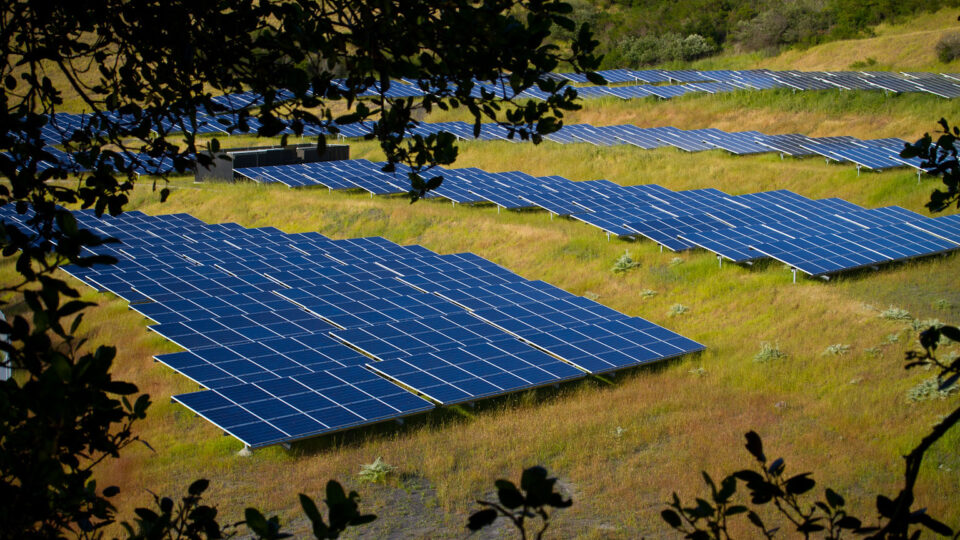
According to data released by the Federal Energy Regulatory Commission, wind, solar, and hydropower provided 100% of the 1.3 GW in new U.S. electrical generating capacity added in April 2020.  Furthermore, the FERC report revealed that renewable sources accounted for 56% of the 9 GW added during the first four months of the year.  Apart from renewables, the balance of new generation was almost entirely made up of new natural gas capacity.   There have been no new capacity additions by coal, oil, nuclear power, or geothermal energy since the beginning of the year.

Renewable energy sources now account for nearly 23% of the nation’s total available installed generating capacity and continue to increase their lead over coal, which now accounts for only 20% of the nation’s electricity generation.

FERC data also suggests that renewables’ share of generating capacity should increase significantly over the next three years.  So-called “high probability” generation capacity additions for wind, minus anticipated retirements, project a net increase of nearly 27 GW, while solar is projected to grow by 24 GW.  By comparison, net growth for natural gas is expected to be just over 20 GW. 

Hydropower, geothermal, and biomass are all expected to experience net growth while the generating capacity of coal and oil are expected to plummet.   Nuclear power is forecasted to remain essentially unchanged.

In total, over the next three years,  the mix of all renewables is predicted to add more than 50 times the net new generating capacity added by natural gas, coal, oil, and nuclear power combined.  Renewables are truly on the rise.

**********

Web Links

Renewable Energy Provides All New US Generating Capacity in April – Forecast to Add Almost 50x More Than Coal, Oil, Gas & Nuclear Over Next Three Years

Photo, posted May 24, 2011, courtesy of Michael Mees via Flickr.

Earth Wise is a production of WAMC Northeast Public Radio.

Better Radar For Cars | Earth Wise

August 14, 2020 By EarthWise Leave a Comment

new radar technology for safer driving

Major automakers as well as dedicated specialized companies are actively developing autonomous vehicle technology.  Many cars already offer varying degrees of self-driving capability.  These vehicles have a variety of sensor systems that allow them to detect other objects on the road.  Many rely on lidar or on cameras using visible or near-infrared light and these sensors do a pretty good job of preventing collisions.   But all of these systems are pretty much limited to detecting objects within a car’s line of sight.  Of course, human drivers have the same limitation.  We can’t see things hidden around corners or blocked by other objects.

Researchers at Princeton University have developed an automated system that will allow cars to peer around corners and spot oncoming traffic and pedestrians.  The system uses Doppler radar to bounce radio waves off of surfaces such as buildings and parked automobiles.  The radar signal hits a surface at an angle and its reflection bounces off much like a cue ball hits the wall of a pool table.  The reflected signal then hits objects hidden around the corner.  Some of that radar signal bounces back to be detected by sensors on the car.  In this way, the system can see objects around the corner and even tell whether they are moving or stationary.

This new technology could easily be integrated into today’s vehicles.  It would enable cars to see objects that current sensor systems cannot record.  For example, it would allow a self-driving vehicle to see around a dangerous intersection.

The system will require further development, refinement, and testing before it can find its way into our vehicles, but it does represent yet another way that self-driving technology may ultimately result in a safer transportation system.

**********

Web Links

New radar lets cars spot hazards around corners

Photo courtesy of Princeton University.

Earth Wise is a production of WAMC Northeast Public Radio.

Conserving The Colorado River | Earth Wise

August 13, 2020 By EarthWise Leave a Comment

Colorado River Water and Climate Adaptation

Last year, we talked about the troubles facing the Colorado River.  Nearly two decades of drought conditions have reduced the water levels of the two largest reservoirs of Colorado River water and have threatened the water supply of millions of people in the region.  Clear scientific evidence shows that climate change is constricting the iconic river and will do further damage as temperatures rise.

Faced with these facts, water resource managers have been implementing conservation policies in the region and the results so far are very encouraging.

The use of Colorado River water in the three states of the river’s lower basin – Arizona, California, and Nevada – fell to a 33-year low in 2019.  The three states consumed just over 6.5 million acre-feet for the year, which is about 1 million acre-feet less than the three states are entitled to use under the legal agreement that allocates Colorado River water.

The last time water consumption from the river was that low was in 1986, which is the year that Arizona opened a large canal that extracts river water for its entitlement. 

A key indicator of river health is the depth of Lake Mead, the largest reservoir of Colorado River water.  It has been steadily dropping in recent years, but last year, with the reduced consumption, the water level actually increased by 12 feet.

According to water managers, the steady drop in water consumption in recent years is a sign that conservation efforts are working and that there are strategies that can deal with chronic shortages on the river in the future.  It represents an important demonstration that it is possible to use less water in a region that irrigates 5 million acres of farmland and has 40 million people in 2 countries and 29 tribal nations.

**********

Web Links

Remarkable Drop in Colorado River Water Use a Sign of Climate Adaptation

Photo, posted July 7, 2015, courtesy of Flickr.

Earth Wise is a production of WAMC Northeast Public Radio.

Recovering Condors | Earth Wise

August 12, 2020 By EarthWise Leave a Comment

The recovery of condors

The California condor is the largest North American land bird.  Its wingspan is nearly 10 feet and its weight of up to 26 pounds nearly equals that of the trumpet swan, the heaviest native North American bird.  California condors can live up to 60 years, making them among the world’s longest-living birds as well.  But California condors became extinct in the wild in 1987.

Lead poisoning is the primary threat to condors.  The birds are scavengers and feeding on the carcasses of dead animals that contain fragments of lead rifle ammunition is responsible for half of all condor deaths.

Condors historically occupied California’s Sierra Nevada mountains and were known to nest in the cavities of giant sequoia trees.  By 1982, the wild population was reduced to just 22 birds, and all of those were eventually trapped and brought into captivity to prevent extinction of the species.

A captive breeding program was undertaken at the Los Angeles Zoo and the San Diego Wild Animal Park.  With the success of that program, in 1992 the U.S. Fish and Wildlife Service began releasing condors back into the wild in the mountains of Los Padres National Forest in Southern California.  That flock has grown to about 100 birds through both wild reproduction and additional release of captive-bred birds.

The Southern California flock continues to expand its range with birds in 8 California counties and even in Arizona, Utah, and Baja California in Mexico.  The total wild population of condors is now estimated to be about 340 birds.  Recently, condors have been spotted in Sequoia National Park, a part of its historic range where the birds have been absent for nearly 50 years.

**********

Web Links

California Condors Spotted in Sequoia National Park, First Time in Nearly Half a Century

Photo, posted May 20, 2005, courtesy of Flickr.

Earth Wise is a production of WAMC Northeast Public Radio.

Destroying Forever Chemicals | Earth Wise

August 11, 2020 By EarthWise Leave a Comment

PFAS, short for poly and perfluoroalkyl substances, have been used in commercial products since the 1940s.  There are more than 4,000 different chemicals in the class.   Some of the most commonly used PFAS chemicals, like PFOS and PFOA, have long half-lives, which has earned them the moniker “forever chemicals.” 

These dangerous chemicals have not been manufactured in the U.S. since the early 2000s, but they can still be found in various imported goods.  PFAS chemicals have been linked to cancer, birth defects, thyroid disease, and liver damage.  These forever chemicals linger in the environment and scientists have found them in the blood of virtually all Americans.

Researchers at Rice University have recently discovered an efficient catalyst for destroying PFAS forever chemicals.  Unexpectedly, the catalyst was actually in the control group in a study they were performing.

The study, published in the journal Environmental Science and Technology Letters, found that boron nitride, acting as a light-activated catalyst, destroyed PFOA at a faster clip than any previously reported photocatalyst.

The catalyst, boron nitride powder, is a commercially available synthetic mineral that is widely used in makeup, skincare products, thermal pastes for cooling computer chips, and various other industrial products.  The discovery began with dozens of failed experiments on a variety of more promising PFAS catalysts.  But along the way, they found that the boron nitride control material repeatedly yielded positive results.

The research has already attracted the attention of industrial partners seeking to develop off-grid water treatment systems that both protect human lives and support sustainable economic development.

**********

Web Links

Boron nitride destroys PFAS ‘forever’ chemicals PFOA, GenX

Photo, posted April 9, 2009, courtesy of Rex Roof via Flickr.

Earth Wise is a production of WAMC Northeast Public Radio.
Climate Change And The South Pole | Earth Wise

August 10, 2020 By EarthWise Leave a Comment

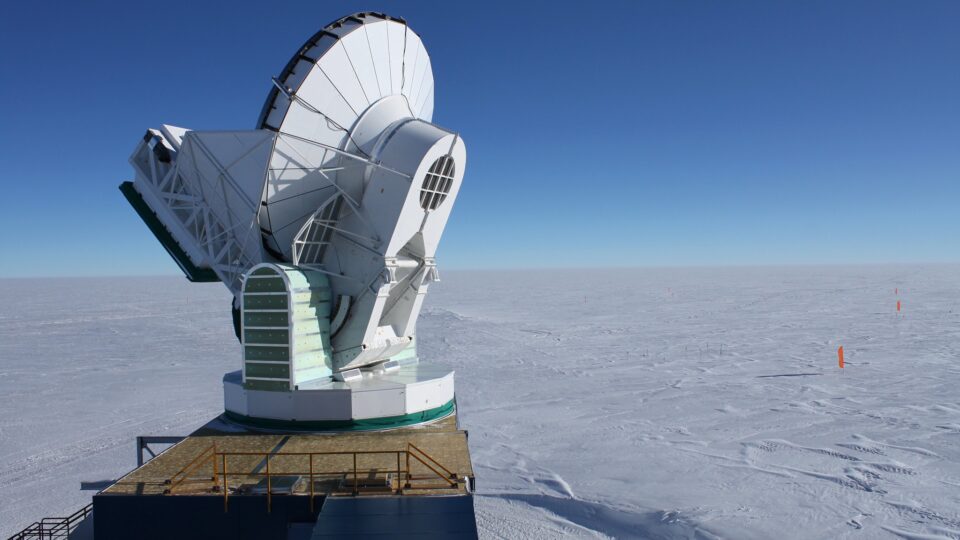
Extreme warming at the South Pole

According to a study led by researchers at Ohio University, the South Pole has warmed more than three times the global average over the past 30 years.  While the warming was driven by natural tropic climate variability, the researchers argue that rising greenhouse gas emissions likely intensified the warming. 

The climate in the antarctic has some of the largest ranges in temperature during the year.  Some regions, like most of West Antarctica and the Antarctic Peninsula, experienced warming during the late 20th century.  But the South Pole, which is located in the remote and high-altitude interior of the continent, actually cooled until the 1980s.  The South Pole, as the study highlights, has warmed substantially ever since. 

For the study, which was recently published in the journal Nature Climate Change, the researchers analyzed climate models and weather station data at the South Pole.  They found that, between 1989 and 2018, the South Pole had warmed by 1.8 degrees Celsius.  This warming trend of 0.6 degrees Celsius per decade is three times the global average. 

According to the study, the robust warming of the Antarctic interior has been mainly driven by the tropics.  Warm ocean temperatures in the western tropical Pacific Ocean have altered the winds in the South Atlantic, increasing the delivery of warm air to the South Pole.  These atmospheric changes are an important part of what’s driving the climate anomalies in the region.

But the researchers argue that the warming trends are unlikely a result of natural climate change alone.  The effects of anthropogenic – or human-caused – climate change in addition to the natural changes have combined to make this one of the strongest warming trends globally.    

**********

Web Links

Extreme warming of the South Pole

Photo, posted February 7, 2011, courtesy of Eli Duke via Flickr.

Earth Wise is a production of WAMC Northeast Public Radio.

  • « Go to Previous Page
  • Page 1
  • Interim pages omitted …
  • Page 66
  • Page 67
  • Page 68
  • Page 69
  • Page 70
  • Interim pages omitted …
  • Page 154
  • Go to Next Page »

Primary Sidebar

Recent Episodes

  • An uninsurable future
  • Clean energy and jobs
  • Insect declines in remote regions
  • Fossil fuel producing nations ignoring climate goals
  • Trouble for clownfishes

WAMC Northeast Public Radio

WAMC/Northeast Public Radio is a regional public radio network serving parts of seven northeastern states (more...)

Copyright © 2026 ·