
• Skip to primary navigation
  • Skip to main content
  • Skip to primary sidebar

Earth Wise

A look at our changing environment.

  • Home
  • About Earth Wise
  • Where to Listen
  • All Articles
  • Show Search
Hide Search
You are here: Home / Archives for heat

heat

Tepary Beans | Earth Wise

September 2, 2022 By EarthWise Leave a Comment

Tepary beans could prove to be a food of the future

Tepary beans are an ancient crop native to the northern part of Mexico and the southwestern part of the U.S..  They have been grown in those places by native peoples since pre-Columbian times.  They are still grown in Native American reservations in Arizona’s Sonoran Desert.  One can purchase them from some small farms in that region. 

What sets tepary beans apart from other beans is that they are among the most drought- and heat-tolerant legume crops in the world.  They can be grown without irrigation under conditions that are not viable for other crops.  They can be consumed by people like many other kinds of beans, and they can also provide forage for livestock with better nutrition content than many other plants.  They seem to be a very attractive option for a crop in the changing climate.  What is lacking, at present, is large supplies of tepary seeds to be planted.

Researchers at Texas A&M have been funded to bring tepary beans into modern cropping systems and diets.  The goal is to develop tepary bean cultivars with high biomass and yield that are still well-suited to drought and heat conditions.  Getting the beans to the point of widespread commercialization will take several years.  The end result should be of interest to pulse growers, seed industries, and food companies across the U.S.

Tepary beans are higher in fiber and protein than most other beans.  They come in several different colors, each of which has unique flavor and texture characteristics.  The white ones have a naturally sweet flavor.   The brown beans are slightly nutty in flavor and are similar to pinto beans.  If the Texas program is successful, we may all be eating tepary beans some day.

**********

Web Links

Tepary Beans Offer Producers A Low-Input, Climate-Resilient Legume Alternative

Photo, posted August 25, 2017, courtesy of Katja Schulz via Flickr.

Earth Wise is a production of WAMC Northeast Public Radio.
Saving Lives With Air Conditioning | Earth Wise

August 26, 2022 By EarthWise Leave a Comment

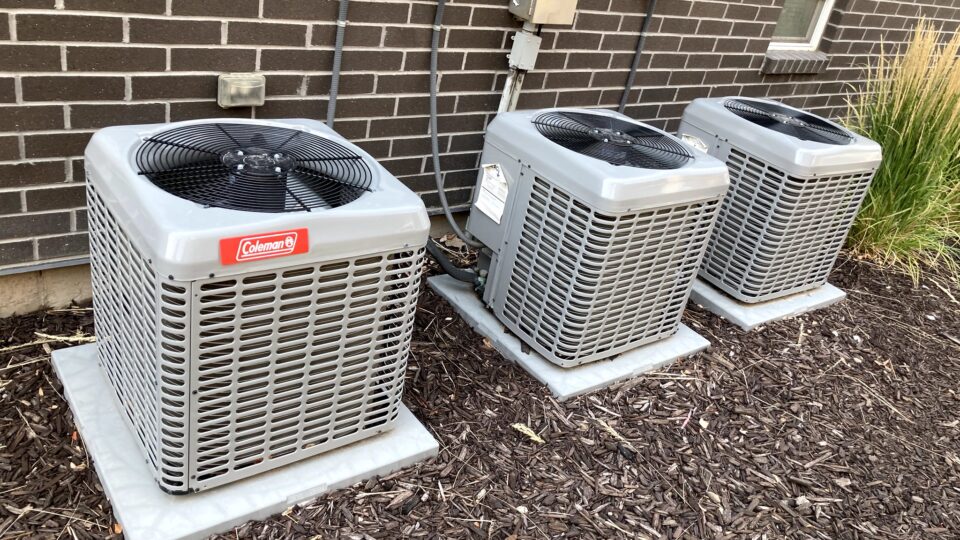
This summer, extreme heatwaves struck the United States, Europe, and Africa.  Thousands of people died as a result.  In July, the impact of extreme heat in places ill-prepared for it was evident.  In the U.K., where air conditioning is uncommon, public transportation shut down, schools and offices closed, and hospitals cancelled non-emergency procedures.

Air conditioning, which we mostly take for granted in this country, is a life-saving tool during extreme heat waves.  However, only about 8% of the 2.8 billion people living in the hottest – and often poorest – parts of the world have AC in their homes.

A new study at Harvard modeled the future demand for air conditioning as the number of days with extreme heat continues to increase across the globe.  The researchers identified a massive gap between current AC capacity and what will be needed by 2050 to save lives, particularly in low-income and developing countries.

If the rate of greenhouse gas emissions continues on its present course, the study concluded that that at least 70% of the population in several countries will require air conditioning by 2050.  The number will be even higher in equatorial countries like India and Indonesia.  At this point, even if the goals of the Paris Climate Accords are met, an average of 40-50% of the population in many of the world’s warmest countries will still require AC.

The research looked at various scenarios.  One in which emissions continue to increase leads to widespread need for air conditioning even in temperate countries.  In Germany, 92% of the population would need it, and here in the U.S., 96% would need it.

Planning for future power systems must take into account the essential needs of a warming world.

**********

Web Links

In a hotter world, air conditioning isn’t a luxury, it’s a lifesaver

Photo, posted July 24, 2021, courtesy of Phyxter Home Services via Flickr.

Earth Wise is a production of WAMC Northeast Public Radio.

Heatwaves And Alpine Mountain Climbing | Earth Wise

August 25, 2022 By EarthWise Leave a Comment

From June to August, there were persistent heat waves affecting parts of Europe that caused wildfires, evacuations, and heat-related deaths.  Nearly 12,000 people died from heat stroke or other causes associated with the high temperatures.  The highest temperature recorded during this period was 116.6 degrees F in Pinhao, Portugal on July 14th.  The RAF base in Coningsby, Lincolnshire recorded a temperature over 104 degrees on July 19th, the highest ever recorded in the United Kingdom.

Among the effects of the multiple European heatwaves has been the cancellation of climbing tours up some of the most iconic peaks in the Alps, including Mont Blanc and the Matterhorn.  The high temperatures and rapidly melting glaciers have made the climbing routes too dangerous.  Overall, climbing cancellations occurred on about a dozen peaks, including the Jungfrau in Switzerland, which cancelled tours for the first time in a century.

In previous years, during warm summers, some of these climbing routes were closed in August, but the glaciers were already in a condition that usually only happens at the end of summer or even later.

The combination of heat and glacier melt can be treacherous.  In July, 11 people were killed at Italy’s Marmolada glacier by falling ice and rock.

Glacial melt in the Alps is rapidly accelerating.  The Forni Glacier, the largest valley glacier in Italy, has retreated two miles since 1860 and its area has shrunk by half.  Forecasts are that it will retain only 20% of its current volume by 2050 and may disappear entirely by the end of the century.  Half of the 4,000 glaciers in the Alps are expected to disappear by 2050.

**********

Web Links

European Heat Waves Force Closure of Classic Climbing Routes in Alps

Photo, posted September 4, 2020, courtesy of Dmitry Djouce via Flickr.

Earth Wise is a production of WAMC Northeast Public Radio.

A Hot July | Earth Wise

August 24, 2022 By EarthWise Leave a Comment

July was a hot month around the world

At the beginning of July, the National Oceanic and Atmospheric Administration’s monthly climate outlook predicted temperatures well above average across much of the United States.  The prediction was quite correct.  Beyond that, world-wide, there were multiple heat waves, especially in Europe and Asia, where there were thousands of heat-related deaths.  On July 19th, the United Kingdom had its hottest day ever reported with a temperature over 104 degrees.

In the U.S., a series of atmospheric high-pressure systems resulted in stagnant heat domes, which resulted in more than 150 million people living under heat warnings and advisories.  Nearly every part of the continental U.S. saw above-average temperatures.  There were record-breaking triple-digit highs in several states, sometimes persisting for days.

The south-central part of the country developed a ridge of high pressure that established a heat dome that acted like a lid, trapping hot air over that area.  The extreme heat persisted throughout the month, at times expanding to the Southwest, Upper Midwest, and Southeast.

In the second half of the month, the Great Plains experienced temperatures as high as 115 degrees.  Utah and Oklahoma both broke long-standing records for the most consecutive days on which temperatures exceeded 100 degrees.  Utah saw 16 straight days over 100.

In the Pacific Northwest temperatures reached 110 degrees in Dallasport, Washington, and 114 in Medford, Oregon.  In the Northeast, Newark, New Jersey saw a record-breaking five straight days over 100 degrees.

In Albany, New York, where the average daily high temperature is 82 degrees in July, there were 10 days in the 90s, with highs of 97 on three occasions.

July was a hot month indeed.

**********

Web Links

A July of Extremes

Photo, posted July 10, 2022, courtesy of Dominic Alves via Flickr.

Earth Wise is a production of WAMC Northeast Public Radio.
Progress On Perovskite Solar Cells | Earth Wise

August 2, 2022 By EarthWise Leave a Comment

Improving perovskite solar cell technology

Es ist ratsam, 1-2 Stunden vor und nach der Einnahme von Viagra nichts zu essen oder zu trinken. Wenn Viagra mit dem Essen eingenommen wird, kann es sein, dass es nicht wirkt, besonders wenn starker-mann.com es kurz vor dem Geschlechtsverkehr eingenommen wird. Die Einnahme von Viagra mit Nahrungsmitteln, die reich an pflanzlichen oder tierischen Fetten sind, kann die Wirkung von Viagra verzögern – es kann anfangen zu wirken, wenn Sie es nicht mehr brauchen.

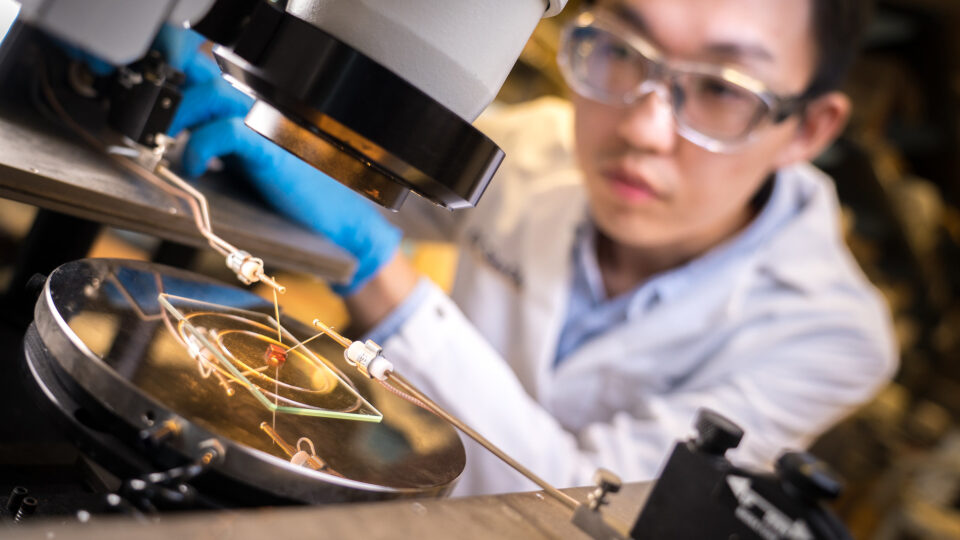
Perovskites are semiconductors with a specific crystal structure.  Their properties make them well suited for making solar cells.  They can be manufactured at room temperature, using much less energy than it takes to make the silicon-based solar cells widely used today.  As a result, perovskite solar panels would be cheaper and more sustainable to produce.  Manufacturing silicon solar cells takes a lot of energy because silicon is forged at around 3000 degrees Fahrenheit. In addition, perovskites can be made flexible and transparent, making it possible to use them in ways unavailable with silicon solar technology.

But unlike silicon, perovskites are very fragile.  The early solar cells made from perovskites in 2009 and 2012 lasted for only minutes.  Lots of potential, but little practicality.

Recently, Princeton Engineering researchers have developed the first perovskite solar cell with a commercially viable lifetime, which is a major breakthrough.  The team projects that the device can perform above industry standards for about 30 years, which is much more than the 20 years designated as a viability threshold for commercial cells.

The research team has developed an ultra-thin capping layer between two of the layers of a perovskite solar cell.  The layer is just few atoms thick but has been demonstrated to dramatically increase the durability of the device. 

There is great potential for the new solar cell technology.  It has efficiency to compete with silicon cells but can be tuned for specific applications and can be manufactured locally with low energy inputs.  If successfully commercialized, the result will be solar panels that are cheaper, more efficient, and more flexible than what are available today.

**********

Web Links

Once seen as fleeting, a new solar tech shines on and on

Photo, posted January 8, 2020, courtesy of David Baillot/UC San Diego Jacobs School of Engineering via Flickr.

Earth Wise is a production of WAMC Northeast Public Radio.

Step one. Find a hobby, which involves group activities. This may be a dance or yoga classes, literary evenings or theater studio hookups uk, volunteer work or a discussion club. Choose what’s closer to you, as long as you get to interact a lot with people of both genders. Step Two. Practice virtual communication. Learn to communicate with the opposite sex on social networks.

Heatwaves And Bird Populations | Earth Wise

July 28, 2022 By EarthWise Leave a Comment

How the changing climate is affecting bird populations

The increased occurrence and intensity of heatwaves around the world is affecting most living things.  Heatwaves can be lethal for warm-blooded animals – including people – but the behavioral and physiological effects of sub-lethal heat have not been extensively studied.  Heat that doesn’t kill animals can still impact their ability to adapt and thrive as the climate changes.

Researchers at the University of Tennessee in Knoxville recently published a new study that examined how heat impacts the behavior and physiology of Zebra finches.  They exposed the birds to a four-hour heat challenge, similar to what wild birds might experience during a hot summer afternoon.   They used Zebra finches because these songbirds experience extreme temperature fluctuations in their native Australia.

The team measured heat effects on thermoregulatory behavior, how heat alters gene activity in tissues critical to reproduction, and how heat affects the area of the brain that controls singing.  The evidence showed that even sub-lethal heat can change a bird’s ability to reproduce both from the functioning of its reproductive system and its motivational circuits for mating behavior.

The researchers found that some individual birds were better able to minimize the physiological effect of heat, for example by adjusting their behavior to dissipate heat.  Some individuals and even some species are likely to be able to adapt to increasingly extreme temperatures.

Global bird populations have been dramatically declining over the past few decades.  Previous studies have shown that birds sing less during heatwaves. Based on the new study, it appears that increasing heatwaves may be a potential underlying mechanism for the decline in bird populations.

**********

Web Links

New Research Suggests Heat Waves Could Lead to Avian Population Decline

Photo, posted August 22, 2017, courtesy of Dennis Jarvis via Flickr.

Earth Wise is a production of WAMC Northeast Public Radio.
A Better Way To Recycle Plastic | Earth Wise

July 25, 2022 By EarthWise Leave a Comment

Researchers are developing a better way to recycle plastic

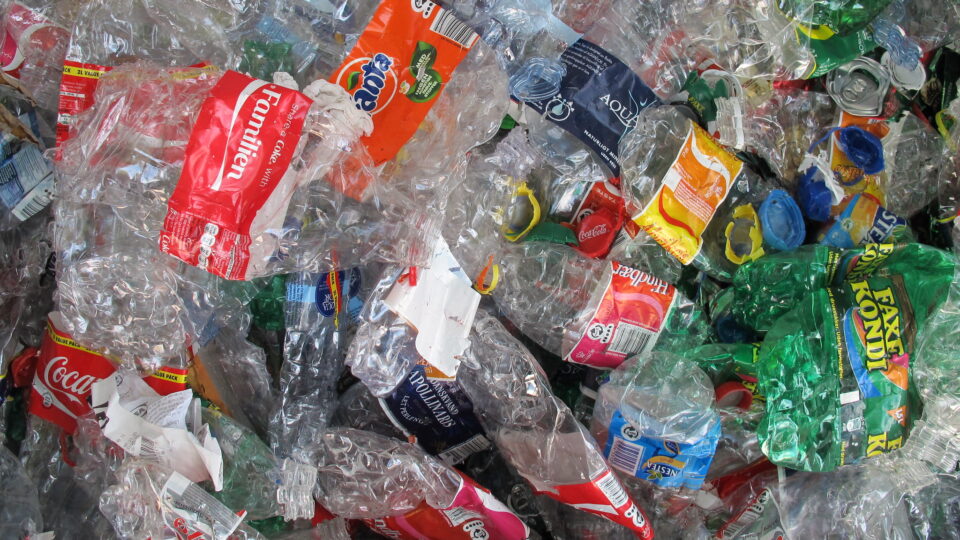
The current state of plastic recycling is not very effective.  Plastic recycling is only able to replace 15-20% of the fossil-fuel-derived raw material needed to produce society’s demand for plastic.

Researchers at Chalmers University in Sweden have now demonstrated how the carbon content in mixed waste could be used to replace all of the fossil raw materials in the production of new plastic.  In principle, their technology could completely eliminate the climate impact of plastic materials.

According to the researchers, there are enough carbon atoms in waste to meet the needs of all global plastic production.

The Chalmers process is based on thermochemical technology and involves heating waste to 1100-1500 degrees Fahrenheit.  The waste is thereby vaporized and when hydrogen is added, becomes a carbon-based substance that can replace the fossil-fuel building blocks of plastic.  The method does not require sorting the waste materials.  Different types of waste, such as old plastic products and even paper cups, with or without food residues, can be fed into the recycling reactors.  The researchers are now developing the techniques required to utilize their recycling technology in the same factories in which plastic products are currently being made from fossil oil or gas.

The principle of the process is inspired by the natural carbon cycle in which plants break down into carbon dioxide when they wither and die, and then photosynthesis uses carbon dioxide and solar energy to grow new plants.

Producing new plastics would no longer require petroleum or other fossil fuels as raw materials.  If the energy needed to drive the recycling reactors is taken from renewable sources, plastics could become the basis of a sustainable and circular economy.

**********

Web Links

Pioneering recycling turns mixed waste into premium plastics with no climate impact

Photo, posted August 10, 2013, courtesy of Lisa Risager via Flickr.

Earth Wise is a production of WAMC Northeast Public Radio.

Marine Predation And Climate Change | Earth Wise

July 11, 2022 By EarthWise Leave a Comment

Climate change is taking a toll on forests, farms, freshwater resources, and economies all around the world.  But ocean ecosystems remain the center of global warming.

Despite their vast ability to absorb heat and carbon dioxide, oceans are warming.  In fact, according to scientists, the oceans have absorbed 90% of all the warming that has occurred during the past 50 years. 

The ocean’s surface layer, which is home to most marine life, takes most of this heat.  As a result, the top 2,300 feet of global ocean water has warmed approximately 1.5°F since 1901.

Well it turns out that a hotter ocean is also a hungrier ocean.  According to a new study recently published in the journal Science, researchers discovered that predator impacts in the Atlantic and Pacific oceans peak at higher temperatures.  The effects of more intense marine predation could disrupt ecosystem balances that have existed for millennia. 

An international research team led by the Smithsonian Institution and Temple University analyzed predator and prey data collected from 36 sites, running along the Atlantic and Pacific coasts from Alaska in the north to Tierra de Fuego at the tip of South America.  The research team found that, in warmer waters, predators’ more voracious appetites left outsized marks on the prey community.  Total prey biomass plunged in warmer waters when prey were left unprotected.  However, in the coldest zones, leaving prey exposed or protected made nearly no difference at all.  

As the oceans continue to warm, more intense predation will create winners and losers and could jeopardize the overall health of marine ecosystems.  

***********

Web Links

As the ocean heats up hungrier predators take control

Photo, posted July 14, 2017, courtesy of Jonathan Chen via Flickr.

Earth Wise is a production of WAMC Northeast Public Radio.
Carbon Dioxide Levels Higher Again | Earth Wise

July 5, 2022 By EarthWise Leave a Comment

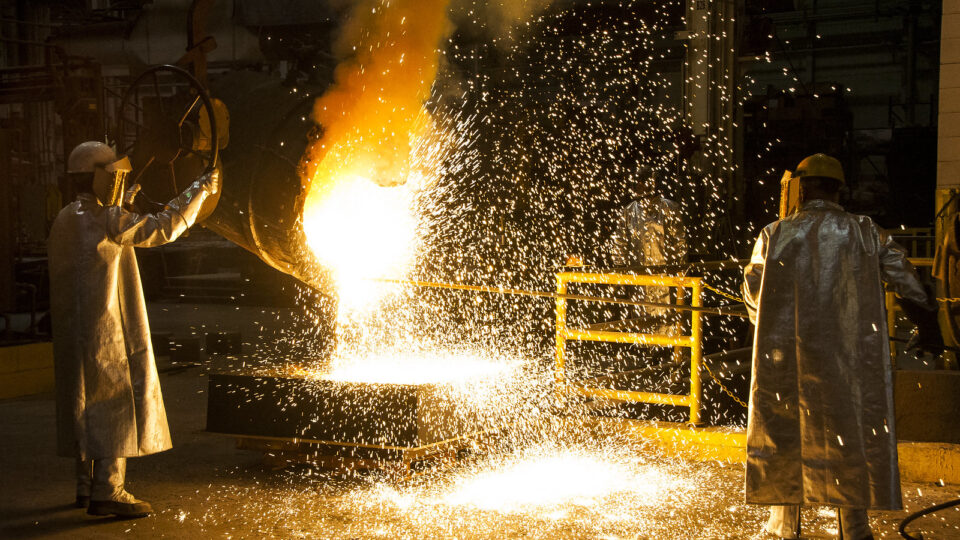
The National Oceanic and Atmospheric Administration reported that carbon dioxide levels measured in May at the Mauna Loa Observatory reached a value of 421 parts per million.  This is 50% greater than pre-industrial levels and is in a range not seen on earth for millions of years.

Before the Industrial Revolution, CO2 levels fairly steadily measured around 280 parts per million, pretty much for all 6,000 years of human civilization.  Since the Industrial Revolution began in the 18th century, humans have generated an estimated 1.5 trillion tons of CO2 pollution, much of which will continue to warm the atmosphere for thousands of years.

The present levels of carbon dioxide are comparable to those of an era known as the Pliocene Climatic Optimum, which took place over 4 million years ago. 

The bulk of the human-generated carbon dioxide comes from burning fossil fuels for transportation and electrical generation, from cement and steel manufacturing, and from the depletion of natural carbon sinks caused by deforestation, agriculture, and other human impacts on the natural environment.

Humans are altering the climate in ways that are dramatically affecting the economy, infrastructure, and ecosystems across the planet.  By trapping heat that would otherwise escape into space, greenhouse gases are causing the atmosphere to warm steadily, leading to increasingly erratic weather episodes ranging from extreme heat, droughts, and wildfires, to heavier precipitation, flooding, and tropical storm activity.

The relentless increase of carbon dioxide measured at Mauna Loa is a sober reminder that we need to take serious steps to try to mitigate the effects of climate change.

**********

Web Links

Carbon dioxide now more than 50% higher than pre-industrial levels

Photo, posted December 20, 2016, courtesy of Kevin Casey Fleming via Flickr.

Earth Wise is a production of WAMC Northeast Public Radio.
Floating Solar | Earth Wise

June 7, 2022 By EarthWise 1 Comment

Floating solar coming to New York

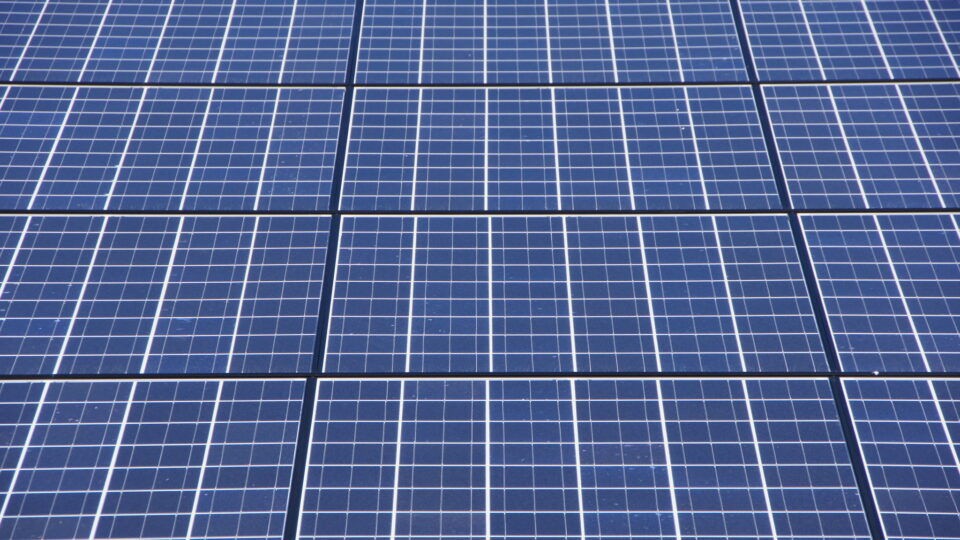
The largest floating solar array in Europe, 12,000 panels sitting on top of the Alqueva Reservoir in Portugal – will come online in July.  Installing floating solar arrays, which are sometimes called “floatovoltaics”, produce renewable energy while shielding significant expanses of water from the sun’s heat.  These dual benefits have led to floatovoltaic projects in multiple countries around the world.

The city of Cohoes, in New York’s Albany County, has proposed an 8,000-panel floating solar array on the city reservoir.  Federal funding of $3 million for the project was obtained by local Congressman Paul Tonko and, in May, utility National Grid donated $750,000 towards the project.  Engineering work will shortly be underway on the 3.2 megawatt grid of solar panels.

The city of Cohoes pumps its drinking water supplies from the Mohawk River into the 10-acre, manmade reservoir.  The surface of the water is the largest undeveloped open space in the city.  Such reservoirs constitute prime sites for solar arrays since the space cannot be used for other purposes.  In addition, covering the water’s surface with the solar panels greatly reduces evaporation and helps to inhibit the growth of algae.

There are currently only 14 floating solar arrays in the U.S. and all of those are privately owned.  The Cohoes municipal array will be the first of its kind.  There are nearly 500 reservoirs in New York State and 24,000 nationwide that could be sites for floating arrays.   Drought-stricken Western reservoirs like Lake Mead and Lake Powell could be ideal locations of solar arrays.  Those reservoirs lose huge amounts of water to evaporation.  There are estimates that floating arrays could provide as much as 10% of the nation’s electrical needs.

**********

Web Links

National Grid gives Cohoes $750,000 for floating solar array project

Photo, posted August 25, 2010, courtesy of Martin Abegglen via Flickr.

Earth Wise is a production of WAMC Northeast Public Radio.

Storing Sunshine To Make Electricity On Demand | Earth Wise

June 1, 2022 By EarthWise Leave a Comment

How to store sunshine to make electricity on demand

Researchers at Chalmers University in Sweden have developed an entirely new way of capturing and storing energy from sunlight.  The system is called the Molecular Thermal Energy Storage System or MOST.  It is based on a specially designed molecule that changes shape when it is exposed to sunshine.

The molecule is composed of carbon, hydrogen, and nitrogen.  When sunlight hits it, it changes into an energy-rich isomer – a molecule made up of the same atoms but arranged together in a different way.  That isomer is stable and can be stored for many years.  When a specially designed catalyst is applied, the stored energy is released in the form of heat and the molecule returns to its original form and can be reused. 

The Chalmers researchers sent some of the energy-laden isomer to researchers in China who used it to operate a micron-thin thermoelectric generator, which used the heat released by the isomer material to generate electricity.  The generator is an ultra-thin chip that could be integrated into electronics such as headphones, smart watches, and telephones.  It is currently only at the proof-of-concept stage, but the results are quite promising.  The integration with the MOST technology provides a way that solar energy can generate electricity regardless of weather, time of day, season, or geographical location.  The results of the study were recently published in the journal Cell Reports Physical Science.

In effect, for this demonstration, Swedish sunshine was sent to the other side of the world and converted into electricity in China. The ultimate goal of this research is to create self-charging electronics that uses stored solar energy on demand.

**********

Web Links

Converting solar energy to electricity on demand

Photo, posted March 11, 2013, courtesy of Steve Slater via Flickr.

Earth Wise is a production of WAMC Northeast Public Radio.

Climate Change And The Next Pandemic | Earth Wise

May 26, 2022 By EarthWise Leave a Comment

Climate change could lead to the next pandemic

As the planet continues to heat up, animals big and small are moving towards the poles to escape the heat.  According to researchers, these animals are likely to come into contact with other animals that they normally wouldn’t, and are likely to relocate to regions with large human populations.  These factors create opportunities for pathogens to get into new hosts, which dramatically increases the risk of a viral jump to humans.  Climate change could lead to the next pandemic.      

An international research team led by scientists at Georgetown University recently made this connection between climate change and viral transmission.  In the study, which was recently published in the journal Nature, researchers conducted the first comprehensive assessment of how climate change will restructure the global mammalian virome.  Their work focused on geographic range shifts. 

As animals eccounter other animals for the first time, the study projects that they will share thousands of viruses.  And as animals increasingly move into the same areas as humans, there will be greater opportunities for these viruses to jump to humans.  The research team says that the impact on conservation and human health could be alarming as viruses jump between species at unprecedented rates. 

In our warming world, much of this process may unfortunately already be underway.  And efforts to reduce greenhouse gas emissions may not be enough to stop these events from unfolding. 

According to the study, climate change will become the biggest upstream risk factor for disease emergence, eclipsing deforestation, industrial agriculture, and the wildlife trade.  Pairing wildlife disease surveillance with real-time studies of environmental change may be part of the solution to predicting and preventing the next pandemic. 

**********

Web Links

Climate change could spark the next pandemic, new study finds

Coronavirus and Climate Change

Photo, posted October 16, 2014, courtesy of Shawn Thomas / NPS via Flickr.

Earth Wise is a production of WAMC Northeast Public Radio.

Capturing Carbon Dioxide With Plastic | Earth Wise

May 11, 2022 By EarthWise 2 Comments

The world is awash in both waste plastic and in carbon dioxide emissions.   Researchers at Rice University have discovered a chemical technique for making waste plastic into an effective carbon dioxide absorbent for industry.

Chemists at Rice reported in the journal ACS Nano that heating plastic waste in the presence of potassium acetate produces particles with nanometer-scale pores that trap carbon dioxide molecules.   According to the researchers, these particles could be used to remove CO2 from the flue gas streams of power plants.

Significant sources of CO2 emissions like power plant exhaust stacks could be fitted with this waste-plastic-derived material to absorb large amounts of carbon dioxide that would otherwise enter the atmosphere. 

The Rice University process is an enhancement to the current process of pyrolyzing waste plastic – that is, breaking it down in the presence of heat.  By pyrolyzing plastic in the presence of potassium acetate, porous particles are formed that can hold up to 18% of their own weight in carbon dioxide.

According to the researchers, the cost of capturing carbon from a power plant would be $21 a ton, which is far less expensive than existing energy-intensive processes used to pull carbon dioxide from natural gas feeds.

The sorbent material can be reused.  Heating it to about 167 degrees Fahrenheit releases trapped carbon dioxide from the pores and regenerates about 90% of the material’s binding sites.

The Rice process may represent a much better way to capture carbon dioxide from power plant exhaust stacks.  It could be a way to make use of one environmental problem – waste plastic – to deal with another one.

**********

Web Links

Treated plastic waste good at grabbing carbon dioxide

Photo, posted April 19, 2021, courtesy of Ivan Radic via Flickr.

Earth Wise is a production of WAMC Northeast Public Radio.
Methane Leaks Are Worse Than We Thought | Earth Wise

May 4, 2022 By EarthWise Leave a Comment

Methane leaks are worse than was previously thought

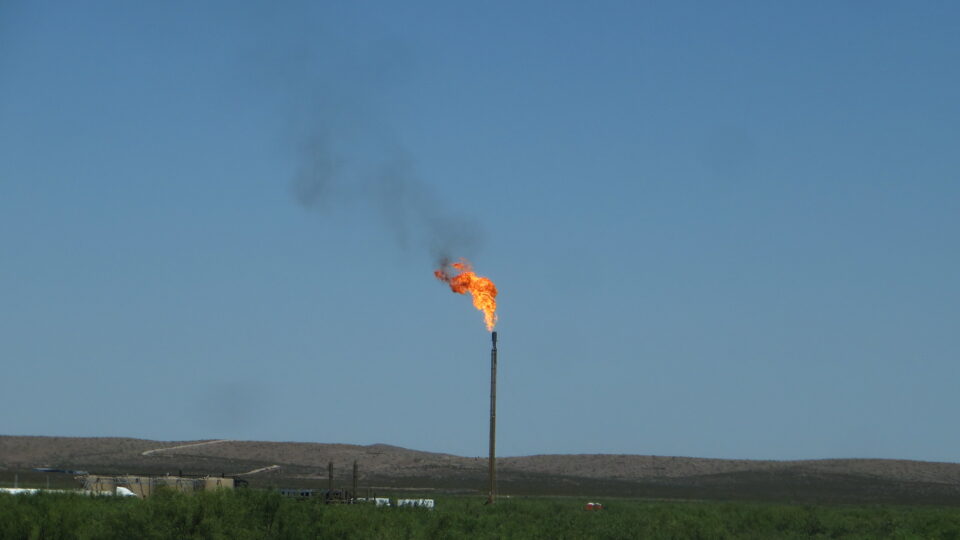
Methane leaking from oil and gas wells is a real problem for the environment because methane is far more potent at trapping heat than carbon dioxide.   The EPA has estimated that about 1.4% of the methane produced by wells nationally leaks into the atmosphere.   However, environmental experts and energy industry engineers have been concerned that leaks from mines, wells, refineries, storage facilities, and pipelines are vastly underreported.  But until recently, there really wasn’t a good way to find out.

Researchers at Stanford University have developed a technique based on the use of hyperspectral cameras mounted to airplanes.  The cameras measure sunlight reflected off of chemicals in the air that are invisible to the human eye.  Each chemical, including methane, has a unique fingerprint.  Using these sensors, methane is easy to spot and the technique can measure the output of individual wells.

The researchers performed a study of almost every oil and gas asset in the New Mexico Permian Basin, one of the largest and highest-producing oil and gas regions in the world.  They surveyed the sites for an entire year.  They estimate that more than 9% of all methane produced in the region is being leaked into the skies, far more than EPA estimates.

The positive outcome of the survey is that the researchers found that fewer than 4% of the 26,000 sites studied produced half of all the methane emissions observed.  Being able to identify the so-called super-emitter sites and dealing with them could lead to a major improvement in the situation.

The new technique is more accurate, faster, and more cost-effective than current ways to monitor emissions.

**********

Web Links

Stanford-led study: Methane leaks are far worse than estimates, at least in New Mexico, but there’s hope

Photo, posted July 10, 2016, courtesy of Ken Lund via Flickr.

Earth Wise is a production of WAMC Northeast Public Radio.
Training Corals To Tolerate Heat | Earth Wise

April 19, 2022 By EarthWise Leave a Comment

Conditioning corals to tolerate heat

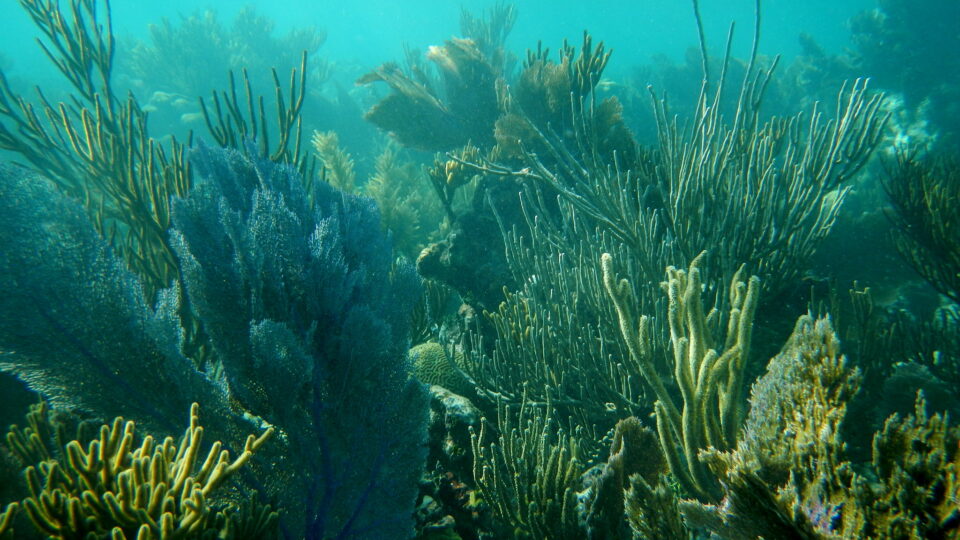
When ocean water is too warm, corals expel the algae that lives in their tissues, which causes the coral to turn completely white.  This is called coral bleaching.   When this happens, the coral is not dead.  However, corals are dependent upon the symbiotic relationship with algae and if conditions don’t improve, they don’t let the algae back in and the corals will die.

According to the National Oceanic and Atmospheric Administration, between 2014 and 2017, around 75% of the world’s tropical coral reefs experienced heat stress severe enough to trigger bleaching.  For 30% of the world’s reefs, the heat stress was enough to kill the coral.

According to new research by the University of Miami published in the journal Coral Reefs, corals subjected to a stressful regimen of very warm water in the laboratory came to be more tolerant of high temperatures, offering a potential tool for preserving ailing coral reefs.

In the study, some corals were kept in water at a constant temperature of 82 degrees while others saw water temperatures fluctuating between 82 degrees and 88 degrees.  After 90 days of this treatment, the corals exposed to variable temperatures were able to tolerate high heat for longer periods before bleaching.  This training regime is akin to an athlete preparing for a race.

The findings suggest a possible approach for restoring coral reefs.  Nursery-raised corals that are “trained” to tolerate heat could be planted onto reefs endangered by warming waters.  Reefs populated by corals with boosted stamina to heat stress could have a greater chance of surviving the warming waters of the oceans.

**********

Web Links

Some Corals Can Be Conditioned to Tolerate Heat, Study Finds

Photo, posted December 16, 2015, courtesy of Big Cypress National Preserve via Flickr.

Earth Wise is a production of WAMC Northeast Public Radio.

A Smart Window | Earth Wise

March 31, 2022 By EarthWise Leave a Comment

New smart window technology to reduce energy consumption

Researchers at Oxford University have developed a new adaptable smart window technology that has the potential of reducing the energy usage of the average home by a third.

The technology uses a spectrally tunable low-emissivity coating that can control the amount of heat that comes into a room without affecting the quality of the light that enters.

The thermal energy from the sun’s infrared rays is absorbed by the glass and then is re-emitted as heat.  That heat can either be used to warm the room using transparent electrical heaters embedded in the glass or can be reflected away to cool the room.  The windows can change according to seasonal needs.

The researchers built a prototype using a material called an active chalcogenide-based phase change material.  When it is cold, the infrared rays from the sunlight are harvested and used to heat the building.  When it is warm, the new glass can switch state to reflect the heat and reduce the need for air conditioning.  The active phase change material is adjustable so that the amount of heat absorbed or reflected can be tuned for precise temperature control.  There is essentially no effect on visible light passing through the window.  Current low-emissivity glass for windows can reduce heat transfer, but its properties cannot be altered according to seasonal needs.

The researchers estimate that using windows fitted with the new prototype glass – including the energy required to control the film – would save 20 to 34% in energy usage annually compared to double-glazed windows found in many modern homes.

A spinout company from Oxford called Bodle Technologies is collaborating with two existing industrial partners to develop the technology further.

**********

Web Links

New adaptable smart window coating could help heat or cool a home and save energy

Photo, posted April 26, 2008, courtesy of Lima Andruska via Flickr.

Earth Wise is a production of WAMC Northeast Public Radio.

The All-Time Hottest Day | Earth Wise

February 14, 2022 By EarthWise Leave a Comment

Climate change helping set heat records around the world

Last year saw record high temperatures in many places around the world and this year started out with more of the same.  In mid-January, Onslow, a small town in Western Australia, measured a high temperature of 123.3 degrees, tying the all-time highest temperature ever recorded anywhere in the Southern Hemisphere.  The previous reading was also made in Australia back in 1960.

The new temperature record was set just as climate institutions around the world were announcing that the past seven years have been the highest in recorded history.

The list of temperature records set in 2020 and 2021 is a long one.   2020 was the hottest year in recorded history.  July 2021 was the hottest month ever recorded.   The hottest official temperature ever recorded anywhere in the world was 129.9 degrees, occurring in Death Valley, California on both August 16, 2020, and July 9, 2021. 

The hottest temperature ever recorded in the Arctic was 100.4 degrees on June 20, 2020 in Verkhoyansk in Russia’s Sakha Republic.  (Amazingly, that small town also holds the record for the coldest temperature ever recorded in Asia at -90 degrees). 2021 saw an all-time high temperature recorded in Europe, in Syracuse, Sicily, on August 11 at 119.8 degrees. 

Overall, 400 documented weather stations in communities or outposts worldwide established all-time high temperatures in 2021 alone.  The climate we have lived through over the past decades is changing and these changes will have consequences to our way of life.

**********

Web Links

Australia hits 123 degrees, tying hottest temperature on record in Southern Hemisphere

Photo, posted January 21, 2013, courtesy of A. Dombrowski via Flickr.

In ogni caso, un proverbio russo comune Informazioni: “Se curi un raffreddore, passa in sette giorni, e se non lo curi, in una settimana”, non è applicabile alla realtà spagnola.

Earth Wise is a production of WAMC Northeast Public Radio.

Lægemiddelbehandling, der kan nedsætte udskillelsen af FDE-hæmmere fra kroppen side. Beskrevne tilfælde af dødsfald i forbindelse med indtagelse af Viagra skyldtes oftest kombineret brug af dette lægemiddel med organiske nitrater.

A Smart Roof | Earth Wise

January 21, 2022 By EarthWise Leave a Comment

Scientists are working on smart roof technology

Scientists at the Lawrence Berkeley Laboratory have developed an all-season smart roof coating that can keep homes warm during the winter and cool during the summer, and the coating does not consume any gas or electricity.

Existing cool roof systems consist of reflective coatings, membranes, shingles, or tile that lower house temperatures by reflecting sunlight as well as emitting some of the absorbed solar heat away from the roof as infrared radiation.  The problem with such systems is that they continue to radiate heat during the winter, which actually drives up heating costs.

The new material is called a temperature-adaptive radiative coating or TARC.  It enables energy savings by automatically turning off the radiative cooling in the winter.  TARC reflects about 75% of sunlight year-round, but its thermal emittance is high when the temperature is warm – promoting heat loss to the sky – but decreases in cooler weather, helping to retain the heat in a building.

The researchers produced thin-film TARC material that looks like Scotch tape that could be affixed to a surface like a rooftop.  They applied the material to a balcony alongside a sample of commercial dark roof material and a sample of commercial white roof material.

In experiments simulating 15 different climate zones across the US, they found that the TARC material outperforms existing roof coatings for energy savings in 12 out of the 15 zones, particularly in regions with wide temperature variations between day and night, such as in the San Francisco Bay Area, or between winter and summer, such as New York City.

The researchers believe that installing TARC coatings on roofs would save the average U.S. household about 10% in utility costs.

**********

Web Links

New Smart-Roof Coating Enables Year-Round Energy Savings

Photo, posted May 18, 2017, courtesy of Damian Gadal via Flickr.

Earth Wise is a production of WAMC Northeast Public Radio.

Living Walls | Earth Wise

December 28, 2021 By EarthWise 1 Comment

Green roofs are popular in many European countries.  A green roof is a layer of vegetation planted over a waterproofing system installed on a flat or slightly sloped roof.  Such roofs provide shade, remove heat from the air, and reduce temperatures of the roof surface, reducing energy use in the building and diminishing the urban heat-island effect.

A recent study by the University of Plymouth in the UK looked at the effectiveness of living walls – essentially the equivalent of a green roof located on the wall of a building.

The study looked at the effect of retrofitting an existing masonry wall with an exterior living wall façade consisting of a flexible felt fabric sheet system with pockets holding soil in which plants could grow.

Five weeks of measurements demonstrated that the amount of heat lost through the retrofitted wall was 31.4% lower than that of the original structure.  They also found that daytime temperatures within the newly covered section remained more stable than the area with exposed masonry, so that less energy was required to heat that area.

The concept of living walls is fairly new but could be valuable in temperate climates such as Great Britain.  Buildings in the UK account for 17% of greenhouse gas emissions and space heating accounts for 60% of all the energy used in buildings.  So, improving the thermal performance of buildings would have a significant effect on reducing energy use and therefore emissions.

So-called green infrastructure, including green roofs and living walls, provides a nature-based solution that can help tackle climate change, air pollution, and other modern urban problems.

**********

Web Links

Living walls can reduce heat lost from buildings by over 30%, study shows

Photo, posted June 19, 2011, courtesy of Linda Hartley via Flickr.

Earth Wise is a production of WAMC Northeast Public Radio.

A Smart Heat-Blocking Window | Earth Wise

December 9, 2021 By EarthWise Leave a Comment

An international research team led by Nanyang Technological University in Singapore has invented a ‘smart’ window material that controls the transmission of heat without blocking the view through the window.  The technology could help reduce the amount of energy needed to cool and heat buildings.

The new material can be the basis of an electrochromic window that can block or pass infrared radiation at the flick of a switch.  Current electrochromic windows can be darkened when switched on and are found in many ‘green’ buildings as well as in many car mirrors.  But these windows are only effective in blocking visible light so infrared radiation – meaning heat – still passes through them.

The new coating material blocks up to 70% of infrared radiation when switched on but still allows up to 90% of visible light to pass through.  The material is a specifically designed composite nanostructure and utilizes advanced materials including titanium dioxide, tungsten trioxide, neodymium, niobium, and tin oxide.  It is intended to be coated onto glass window panels and be activated by electricity when needed.  The material was put through rigorous on-off cycles to assess its stability and durability and it appears to offer superior performance in that regard compared with current electrochromic technology.

The researchers also created a switchable system that helps control conducted heat, which is the heat from the external environment.

The combination of the two technologies could result in smart windows that control two types of heat transmission:  infrared radiation and conduction heat.  Such technology could help conserve energy used for the heating and cooling of buildings and could contribute to the future design of sustainable green buildings.

**********

Web Links

Scientists invent ‘smart’ window material that blocks rays without blocking views

Photo, posted March 11, 2016, courtesy of Open Grid Scheduler via Flickr.

Earth Wise is a production of WAMC Northeast Public Radio.

  • « Go to Previous Page
  • Page 1
  • Interim pages omitted …
  • Page 3
  • Page 4
  • Page 5
  • Page 6
  • Page 7
  • Interim pages omitted …
  • Page 11
  • Go to Next Page »

Primary Sidebar

Recent Episodes

  • An uninsurable future
  • Clean energy and jobs
  • Insect declines in remote regions
  • Fossil fuel producing nations ignoring climate goals
  • Trouble for clownfishes

WAMC Northeast Public Radio

WAMC/Northeast Public Radio is a regional public radio network serving parts of seven northeastern states (more...)

Copyright © 2026 ·