
• Skip to primary navigation
  • Skip to main content
  • Skip to primary sidebar

Earth Wise

A look at our changing environment.

  • Home
  • About Earth Wise
  • Where to Listen
  • All Articles
  • Show Search
Hide Search
You are here: Home / Archives for heat

heat

Dust And Himalayan Glaciers | Earth Wise

December 14, 2020 By EarthWise Leave a Comment

Dust playing a major role in melting glaciers

Glaciers in the Himalayas have been melting and retreating, as have glaciers around the world.  As is the case elsewhere, human-driven climate change is a major factor.  But at the lofty heights of the Himalayas, warming temperatures are not the biggest culprit.  Black carbon – released into the air by burning fossil fuels or biomass such as plants, trees, and shrubs – darkens the snow and causes it to absorb more of the sun’s heat.  A recent study by an international team of scientist has identified another important factor:  dust.

An estimated 5 billion tons of desert dust enters the Earth’s atmosphere every year.  Dust from places like Saudi Arabia gets picked up by spring winds and gets deposited on the western sides of mountains, where it can make the air 10 times more polluted than most European cities.  Dust blows across industrial and desert areas in the Indian subcontinent and the Middle East and lands in the Himalayas.  According to the new study, this dust is often the dominant cause of snow melt in those areas.

Desert dust causes snow melt in the same way that black carbon does.   Dirty snow absorbs sunlight more easily than clean snow.

Desert dust is a natural part of Earth’s systems, but the amount of it in the atmosphere has steadily increased since the Industrial Revolution, when humans greatly expanded into desert areas and broke through surface crust that held large amounts of dust in place.

There is not much we can do about desert dust, short of eliminating deserts.  But the disappearance of the Himalayan ice pack – which sustains over a billion people – can be mitigated by reducing greenhouse gas emissions to address climate change .

**********

Web Links

Himalayan glaciers melting because of high-altitude dust

Photo, posted March 13, 2018, courtesy of Sarunas Burdulis via Flickr.

Earth Wise is a production of WAMC Northeast Public Radio.

The Hot Year Continues | Earth Wise

December 8, 2020 By EarthWise Leave a Comment

the warming trend continues

The National Oceanic and Atmospheric Administration’s monthly global climate report for October reports yet another month of high temperatures.  October 2020 was the fourth-hottest October on record, continuing the pace for the year to be the second hottest on record.

The 10 warmest Octobers have occurred since 2005 and the seven warmest have all occurred in the last seven years.  Europe had its warmest October ever, surpassing the previous record set in 2001.

For the year to date, the global temperature was a full degree Celsius (or 1.8 degrees Fahrenheit) above the 20th century average.  This was just 0.03 Celsius degrees lower than the record set in 2016.   Europe and Asia have had their warmest year-to-date period on record.

Other notable observations in the report included that Arctic sea ice coverage was almost 37% below the 1981-2010 average and was the smallest October coverage on record.  The previous record was set last year.

Heat records were set around the world including parts of the northern and western Pacific Ocean, southern North America, South America, eastern Europe, the northern Middle East, the eastern Mediterranean Sea, southern Asia, and in small areas across the Indian and Atlantic Oceans.

Despite the record global temperatures, the Northern Hemisphere’s snow coverage in October was the 10th largest over the past 53 years.  The snow coverage in North America was the largest on record for October.

Adding in the extremely active hurricane season, with 12 hurricanes and 29 tropical depressions, weather around the world continues to be anything but typical.

**********

Web Links

Remarkably warm October fuels march toward 2nd-hottest year

Photo, posted February 8, 2016, courtesy of Jasmin Toubi via Flickr.

Earth Wise is a production of WAMC Northeast Public Radio.

Fuel From Lignin | Earth Wise

November 26, 2020 By EarthWise Leave a Comment

Lignin as a fuel

Lignin is an organic polymer that provides the rigid structure of plants and is what gives wood and bark their characteristic properties.  Lignin typically comprises between 20 and 35% of the mass of wood.  The two major substances extracted from trees, grasses, and other biomass materials are cellulose and lignin.  Cellulose is used to make paper, bioethanol, and other products, but lignin is largely unused because it is difficult to break down into useful substances such as feedstocks for fuels.  As a result, lignin is largely wasted.  Worldwide, some 50 million tons of lignin are produced from paper and bioethanol manufacturing each year and almost all of that is simply burned to generate heat.

Lignin can be broken down using pyrolysis techniques at high temperatures to create bio-oils, but those oils lack sufficient hydrogen and contain too much oxygen to be useful as fuels.  There is a process called hydrodeoxygenation that adds hydrogen and removes oxygen, but it requires high temperatures and very high pressures as well as producing char and tar that reduces the efficiency of the process.

Researchers at Georgia Tech recently published work describing a new process for turning lignin into useful products.  They developed a dual catalyst system of super-acid and platinum particles that adds hydrogen and removes oxygen from lignin bio-oil and makes it useful as a fuel and source of chemical feedstocks. 

The new process could help meet the growing demand for bio-based oils as well as helping the forest product, paper, and bioethanol industries by providing an additional revenue stream from what previously was a waste product.

**********

Web Links

New Process Boosts Lignin Bio-oil as a Next-Generation Fuel

Photo, posted August 16, 2017, courtesy of evcabartakova via Flickr.

Earth Wise is a production of WAMC Northeast Public Radio.

Even The Deep Sea Is Warming | Earth Wise

November 17, 2020 By EarthWise Leave a Comment

the deep sea is warming

Approximately 75% of the area covered by ocean is deep, dark, and cold.  This is known as the deep sea.  But even in these remote regions of the planet things are heating up. 

According to a new study published in the journal Geophysical Research Letters, researchers analyzed a decade of hourly temperature readings at four depths in the Atlantic Ocean’s Argentine Basin, off the coast of Uruguay.  The research team selected recording depths that would best represent the average depth of the ocean, which is just over 12,000 feet. 

The researchers found that deep sea temperatures fluctuate more than was previously known.  They also detected a warming trend at the bottom of the ocean.  In fact, all recordings indicated a warming trend of 0.02 to 0.04 degrees Celsius per decade between 2009 and 2019.  This is a significant warming trend in the deep sea because temperature fluctuations are typically measured in thousandths of a degree. 

Researchers say this increase is consistent with warming trends in the shallow ocean associated with anthropogenic climate change.  However, they say more research is needed to better understand what is driving the warming temperatures in the deep sea. 

A better understanding of what is driving these changes could have far-reaching implications.  Since oceans absorb a significant amount of the world’s heat, learning about the oceans’ temperature trends could help researchers better understand temperature fluctuations in the atmosphere as well.

The researchers hope their findings will demonstrate the need to survey deep ocean temperatures annually in order to better identify the long-term trends. 

**********

Web Links

The deep sea is slowly warming

Photo, posted July 1, 2018, courtesy of NOAA Ocean Exploration and Research via Flickr.

Earth Wise is a production of WAMC Northeast Public Radio.

The Hottest September | Earth Wise

November 5, 2020 By EarthWise Leave a Comment

The hottest September

Here’s a news item that is like many other recent news items:  September 2020 was the hottest September since 1880, according to the National Oceanic and Atmospheric Administration.   The warm September is a part of a year that so far is poised to be at least the second hottest year in the 141-year climate record.

The ten warmest Septembers on record have all occurred since 2005, and the seven warmest Septembers have occurred in the past seven years.

So far, the year-to-date average global temperature has been the second warmest on record, being just 0.07 degrees Fahrenheit lower than the record year-to-date temperature set in 2016.  Expectations are that 2020 will end up somewhere among the three warmest years on record for the globe.

September was warm in many places around the world.  California and Oregon had their warmest September ever.  Europe had its warmest September on record, Asia had its second warmest September on record as did Australia and South America. 

So far, it has been the hottest year-to-date on record in Europe, Asia, and the Gulf of Mexico.  No land or ocean areas anywhere had record-cold year-to-date temperatures. 

Global temperatures represent an average over the entire surface of the planet.  The fact that the global temperature is now nearly one Celsius degree above the 20th century average means that a vast amount of heat has been added in order to warm all the oceans, atmosphere, and land by that much.  So, every uptick in global temperature is a big deal.

Meanwhile, the average Arctic sea ice coverage for September was the second smallest on record.  The 14 smallest minimum annual sea ice extents have all occurred in the past 14 years.

**********

Web Links

Earth just had its hottest September on record

Photo, posted September 2, 2020, courtesy of Tim Vrtiska via Flickr.

Earth Wise is a production of WAMC Northeast Public Radio.

Ocean Currents And Climate Change | Earth Wise

September 22, 2020 By EarthWise Leave a Comment

Climate change intensifies marine heatwaves

Oceans cover more than 70% of the earth and absorb 94% of incoming solar radiation.  As a result, oceans play a major role in the climate system.  With their massive size and capacity to store heat, oceans help keep temperature fluctuations in check.  But oceans also play a more active role.  Ocean currents are responsible for moving vast amounts of heat around the planet.  

According to a paper recently published in the journal Nature Communications, the world’s strongest ocean currents will experience more intense marine heatwaves than the global average in the coming decades.  These strong ocean currents play key roles in fisheries and ocean ecosystems.  

Sections of the Gulf Stream near the United States, the Kuroshio Current near Japan, the East Australian Current near Australia, and the Antarctic Circumpolar Current will all see more intense marine heatwaves over the next 30 years. 

Scientists from the University of Tasmania and CSIRO in Australia relied on high-resolution ocean modeling to carry out their research.  They confirmed the model’s accuracy by comparing outputs with observations from 1982-2018.  They then used the same model to project how marine heatwaves would alter with climate change out to 2050.

The model projects, for example, that intense marine heatwaves are more likely to form well off the coast of Tasmania, while more intense marine heatwaves along the Gulf Stream start to appear more frequently close to the shore from Virginia to New Brunswick, Canada. 

Marine heatwaves are on the rise globally, but knowing where they will occur and how much hotter they will be will help policymakers, ecologists, and fisheries experts in their regional decision-making. 

**********

Web Links

Where marine heatwaves will intensify fastest: New analysis

Photo, posted April 17, 2016, courtesy of Nicolas Henderson via Flickr.

Earth Wise is a production of WAMC Northeast Public Radio.
Widespread Drought | Earth Wise

September 7, 2020 By EarthWise Leave a Comment

united states drought

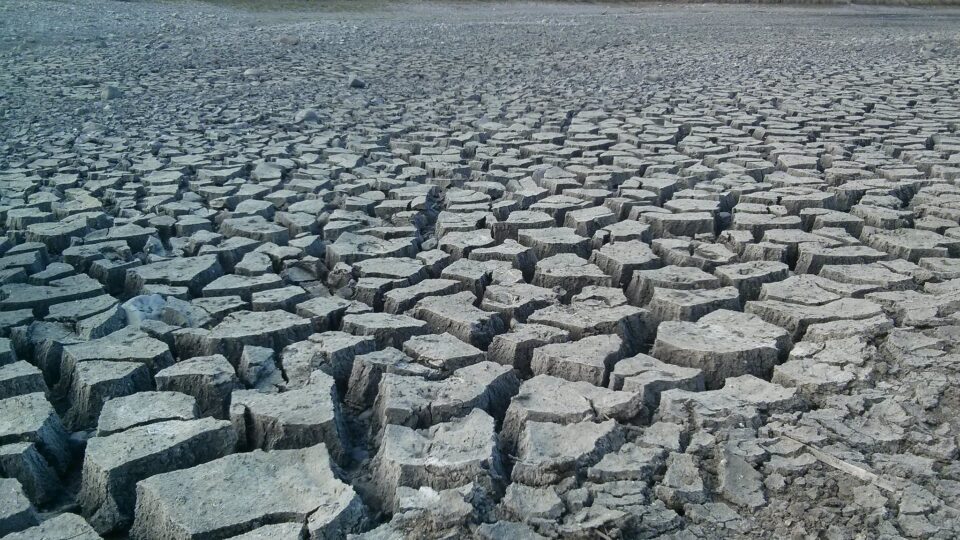
As the U.S. enters the last part of the summer, fully one-third of the country is experiencing at least a moderate level of drought.   Much of the West is reaching severe drought conditions and New England has been unusually dry and hot.  In total, over 50 million Americans are living in drought-affected areas.

According to the U.S. Drought Monitor program, more than 93% of Utah, Colorado, Nevada, and New Mexico are experiencing drought to some degree.  More than 60% of both Utah and Colorado are in severe drought.   More than three-quarters of Oregon, Arizona, and Wyoming are also in drought.  And most of these areas had no sign of drought this time last year.

Severe drought conditions result in stunted and browning crops, limited pasture yields, dust storms, reduced well water levels, and an increase in the number and severity of wildfires.

Warm air temperatures and minimal snowfall in spring set the stage for this summer’s drought conditions.  A ridge of high pressure over the northeastern Pacific Ocean pushed the jet stream farther north than usual.  And, once again, there has been a failure of the southwestern monsoon in Arizona and New Mexico and the Four Corners region.  Monsoon rains provide half of the year’s precipitation in many of those areas. 

Instead, there has been extreme heat in the region.  Phoenix has already smashed the record for the most days over 110oF in a calendar year (42 as of August 18), with five months to go.  Las Vegas hasn’t seen measurable rainfall since April, and Cedar City, Utah has recorded a record low of 0.05 inches of rain this summer.

Conditions are not expected to get better for a couple of months.

**********

Web Links

A Third of the U.S. Faces Drought

Photo, posted May 7, 2014, courtesy of Tyler Bell via Flickr.

Earth Wise is a production of WAMC Northeast Public Radio.

A Fabric To Keep You Cool | Earth Wise

September 1, 2020 By EarthWise Leave a Comment

cooling fabric technology

About 10% of all electricity consumption in the U.S. is devoted to keeping us cool with air conditioning and other methods.  Researchers at two universities in Shanghai, China have developed a new material that can be made into clothing that cools the wearer without using any electricity.

The new fabric transfers heat, allows moisture to evaporate from the skin, and repels water.  Cooling off a person’s body is much more efficient than cooling off an entire room or a building.  There have been textiles and types of clothing designed to perform the cooling function, but most of those have disadvantages.  These include some combination of poor cooling capacity, high energy consumption, complex and time-consuming manufacturing, and high cost.

The researchers wanted to develop a personal cooling fabric that can efficiently transfer heat away from the body while at the same time being breathable, water resistant and easy to make.

The new fabric is made by electrospinning an ordinary polyurethane polymer with a water-repelling fluorinated version of polyurethane polymer along with a thermally conductive filler composed of boron nitride nanosheets.  The resultant material is a nanofibrous membrane that repels water from the outside but has large enough pores to allow sweat to evaporate from the skin and air to circulate. 

Tests of the membrane demonstrated higher thermal conductivity than other conventional or high-tech fabrics.  Used in clothing, the material would be more effective than previous fabrics in conducting heat away from the body. It may be possible to beat the heat without turning on the AC.   These membranes could also be useful for solar energy collection, seawater desalination, and thermal management of electronic devices.

**********

Web Links

New fabric could help keep you cool in the summer, even without A/C

Photo courtesy of the American Chemical Society on Youtube.

Earth Wise is a production of WAMC Northeast Public Radio.

Better Paint For Cooler Buildings | Earth Wise

August 20, 2020 By EarthWise 2 Comments

white paints help keep buildings cool

A research team led by scientists at UCLA have developed a super-white paint that reflects as much as 98% of incoming heat from the sun.  Such paint, if used on rooftops and other parts of buildings, could have a major impact on reducing the costs of keeping buildings cool.

Passive daytime radiative cooling is a well-known method to keep buildings cooler.  By having building surfaces reflect sunlight and radiate heat into space, building temperatures can be significantly lowered.  This in turn cuts down on air conditioner use and associated carbon emissions.

A roof painted white will result in lower indoor temperatures than a darker roof.  But a white roof will do even more:  it can reject heat at infrared wavelengths that are invisible to our eyes.  This results in even more radiative cooling.

The best performing white paints currently available reflect about 85% of incoming solar radiation.  The rest is absorbed by materials in the paint.  The new research has identified simple modifications in paint ingredients that lead to a major increase in reflectivity.

Current reflective white paints use titanium dioxide, which absorbs UV radiation and therefore heats up under sunlight.  The researchers studied replacing it with other substances such as barite – an artist’s pigment – or with powdered Teflon, both of which allow the paint to reflect more of the sun’s radiation. 

Many cities are encouraging the use of cool-roof technologies on new buildings.  Using the most reflective coatings possible on rooftops, if applied on a sufficiently large scale, could have a real impact on climate change as well as saving significant amounts of energy used for running air conditioners in buildings.

**********

Web Links

UCLA-led Team Develops Ways to Keep Buildings Cool with Improved Super White Paints

Photo, posted August 15, 2012, courtesy of Flickr.

Earth Wise is a production of WAMC Northeast Public Radio.

Record Siberian Heat | Earth Wise

July 24, 2020 By EarthWise Leave a Comment

Record temperatures recorded in Siberia

Siberia has been experiencing unprecedented high temperatures in recent months.  May was the hottest May on record and temperatures in Siberia have stayed well above average for the past year.

On June 20, temperatures in the small Siberian town of Verkhoyansk hit 100.4 degrees Fahrenheit, which is a record-high temperature in one of the fastest-warming places in the world.  Average high temperatures in June reach 68 degrees.  Verkhoyansk sits on the Yana River in the Arctic Circle and, during the winter, is one of the world’s coldest towns.  In 1892, its temperature dropped to -90 degrees Fahrenheit.  And now there is hundred-degree heat above the Arctic Circle.

Siberia tends to experience large temperature swings month-to-month and year-to year.  But it is very unusual for temperatures to stay well over average over an extended period of time as they have for the past year.  According to climate scientists, the kind of temperature swings seen recently would only happen once in 100,000 years if it were not for climate change.

Siberia has seen raging wildfires and structural damage from thawing permafrost as its temperatures have stayed warmer than normal.  The prolonged Siberian heatwave is an alarming situation.

The Arctic is warming twice as fast as the rest of the Earth because of a process known as Arctic amplification.  The acceleration of the Arctic ice melt leads to a seasonal snow cover that isn’t as white.  It therefore absorbs more sunlight, which then leads to more warming.

The amplified warming of the Arctic with its increased melting of ice leads to higher sea levels, and not just in the Arctic Ocean.  With less Arctic ice to reflect sunlight, the world’s oceans continue to warm. 

**********

Web Links

Temperatures in an Arctic Siberian town hit 100 degrees, a new high

Photo, posted December 7, 2014, courtesy of Olga Dudenko via Flickr.

Earth Wise is a production of WAMC Northeast Public Radio.
Side Effects Of Geoengineering | Earth Wise

July 20, 2020 By EarthWise Leave a Comment

Reflecting sunlight to cool the planet will cause other global changes

As the world struggles to reduce the greenhouse gas emissions that are warming the global climate, some researchers are exploring proposals to deliberately engineer climate changes to counteract the warming trend.  One of the most widely discussed approaches is to shade the Earth from a portion of the sun’s heat by injecting the stratosphere with reflective aerosol particles.  Proponents of this idea point out that volcanoes do essentially the same thing, although generally for only a limited amount of time.  Particularly large eruptions, such as the Krakatowa eruption of 1883, wreaked havoc with weather around the world for an entire year.

Schemes to launch reflective aerosols – using planes, balloons, and even blimps – appear to be quite feasible from the standpoint of physically accomplishing them. But this says nothing about the political, ethical, and societal issues involved.  The point is that such an approach could indeed lower global temperatures and thereby potentially offset the warming effects of greenhouse gases.

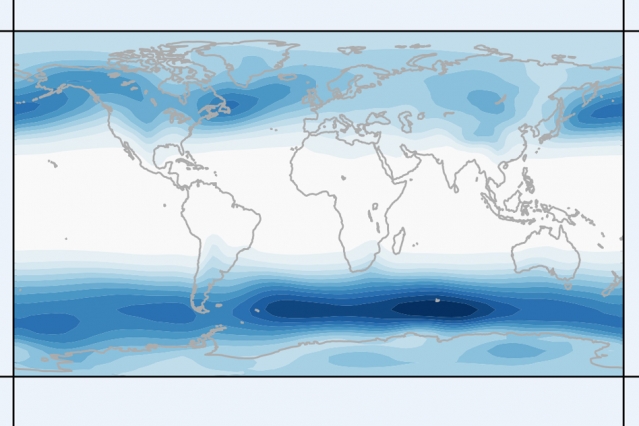
A study by scientists at MIT looked at what other effects such a solar geoengineering project might have on the climate.  Their modeling concluded that it would significantly change storm tracks in the middle and high latitudes.  These tracks give rise to cyclones, hurricanes, and many more ordinary weather phenomena.

According to the study, the northern hemisphere would have weakened storm tracks, leading to less powerful winter storms, but also stagnant conditions in summer and less wind to clear away air pollution.  In the southern hemisphere, there would be more powerful storm tracks.

Aside from turning the world’s weather patterns inside out, solar geoengineering would do nothing to address the serious issue of ocean acidification caused by increasing carbon dioxide levels.

As many have pointed out, playing the geoengineering game would have many unintended consequences.

**********

Web Links

Study: Reflecting sunlight to cool the planet will cause other global changes

Photo courtesy of MIT.

Earth Wise is a production of WAMC Northeast Public Radio.

Turning Dead Trees Into Biomass Energy | Earth Wise

July 1, 2020 By EarthWise Leave a Comment

Biomass energy from dead trees

California has suffered from numerous large wildfires in recent years.  The two largest in the past century took place in 2017 and 2018, and just these two alone burned nearly 750,000 acres, destroyed over 1,200 structures, and killed 24 people.

Apart from the fires, drought, the warming climate, and bark-beetle infestations have killed 147 million California trees since 2013, most of them along the spine of the Sierra mountains.  These dead trees represent a significant danger in forthcoming fire seasons as they threaten to burn with enormous intensity.

There are now biomass projects in California that thin trees in overcrowded forests and remove dead and diseased trees and turn them into wood chips to supply community biomass facilities that burn them to produce heat and electricity.

Proponents say these projects help rebuild rural communities by creating jobs, while at the same time reducing fire risk. 

There are critics of these programs who claim that they are damaging and destroying ecosystems.    They also point out that burning forest fuels emits 50% more carbon than burning coal and three times as much as burning natural gas.  This is true of biomass in general but is mitigated by the fact that it in principle the carbon can be recaptured by new forest growth.

However, the dominant argument about emissions is that wildfires emit far more carbon dioxide than biomass plants, or much of anything else, for that matter.  In 2018 alone, California wildfires released 50% more carbon dioxide than California’s entire industrial sector.  So, reducing the extent of wildfires is a big deal for many reasons.

**********

Web Links

In California, A Push Grows to Turn Dead Trees into Biomass Energy

Photo, posted August 24, 2016, courtesy of the USDA via Flickr.

Earth Wise is a production of WAMC Northeast Public Radio.

Making Use Of Invasive Seaweed | Earth Wise

June 26, 2020 By EarthWise Leave a Comment

In recent years, millions of tons of brown Sargassum seaweed have formed gigantic blooms stretching all the way across the Atlantic Ocean from West Africa to the Gulf of Mexico.  The seaweed has become a problem for shorelines in the Caribbean, the Gulf of Mexico, and the east coast of Florida.  The massive increase in seaweed populations is related to changes in ocean chemistry resulting from nutrients from fertilizer use entering the water as well as from changes to the climate affecting ocean currents and temperatures.  The seaweed is harming the tourism industry as well as fisheries and ocean ecosystems.

Cleaning up the seaweed that washes ashore is labor-intensive and therefore expensive.  A research team led by two British universities has developed a cheap and simple way to pre-process seaweed to facilitate making it into bulk chemicals and biofuels.  With the new process, cleaning up the seaweed can be both economically and environmentally viable.

Previous techniques for processing seaweed generally required removing it from the saltwater, washing it in fresh water, and drying it – all of which add significant costs.  The new technique makes use of catalysts to release sugars from untreated seaweed that feed a yeast to produce a palm oil substitute.  At the same time, the process creates heat and pressure, turning the residual materials into a bio-oil that can be processed further into fuels, and a high-quality, low-cost fertilizer.

Apart from getting economic value out of the seaweed that is collected, any plastic collected alongside the seaweed can be converted to useful materials as well. 

It appears that the seaweed scourge is here to stay, so finding an economically viable way to deal with it is a welcome development.

**********

Web Links

Solve invasive seaweed problem by turning it into biofuels and fertilisers

Photo, posted August 10, 2015, courtesy of Flickr.

Earth Wise is a production of WAMC Northeast Public Radio.

Heat-Resistant Coral | Earth Wise

June 23, 2020 By EarthWise Leave a Comment

heat resistant coral

Coral reefs are in decline all over the world.  Corals are under increasing pressure as water temperatures rise and the frequency and severity of coral bleaching events increase.  Nowhere is this more evident than in Australia’s Great Barrier Reef system, where severe bleaching events have happened in three of the past five years. Long-term prospects for the survival of the world’s largest reef system are now considered to be poor.

A team of scientists at Australia’s national science agency – the Commonwealth Scientific and Industrial Research Organization – along with the Australian Institute of Marine Science and the University of Melbourne have successfully produced in a laboratory setting a coral that is more resistant to increased seawater temperatures.

The team made the coral more tolerant to temperature-induced bleaching by bolstering the heat tolerance of the microalgae symbionts that live inside the coral tissue.  They isolated the microalgae from coral and cultured it in the laboratory using a technique called “directed evolution”.  Over the course of four years, they exposed the microalgae to increasingly warmer temperatures.  When the heat-adapted strain of algae was reintroduced into coral larvae, the newly established coral-algal symbiosis was more heat tolerant than the original one.  The heat-tolerant microalgae are better at photosynthesis and improve the heat response of the coral animal.

The next step is to further test the algal strains in adult colonies across a range of coral species.  This groundbreaking research provides a promising and novel tool to increase the heat tolerance of corals and might potentially lead to a way to save the Great Barrier Reef as the world continues to warm.

**********

Web Links

Scientists successfully develop heat resistant coral to fight bleaching

Photo, posted September 22, 2010, courtesy of NOAA via Flickr.

Earth Wise is a production of WAMC Northeast Public Radio.

Extreme Heat And Humidity | Earth Wise

June 15, 2020 By EarthWise Leave a Comment

heat and humidity

On hot, sticky summer days, one often hears the expression “it’s not the heat, it’s the humidity.” That isn’t just an old saw; it is a recognition of what might be the most underestimated direct, local danger of climate change.   Extreme humid heat events represent a major health risk.

There is an index called “wet-bulb temperature” that is calculated from a combination of temperature and humidity data.  The reading, which is taken from a thermometer covered in a wet cloth, is related to how muggy it feels and indicates how effectively a person sheds heat by sweating.  When the wet-bulb temperature surpasses 95o Fahrenheit, evaporation of sweat is no longer enough for our bodies to regulate their internal temperature.  When people are exposed to these conditions for multiple hours, organ failure and death can result. 

Climate models project that combinations of heat and humidity could reach deadly thresholds for anyone spending several hours outdoors by the end of this century. 

Dangerous extremes only a few degrees below the human tolerance limits – including in parts of the southwestern and southeastern US – have more than doubled in frequency since 1979.  Since then, there have been more than 7,000 occurrences of wet-bulb temperatures above 88o, 250 above 91o, and multiple reading above 95o.  Even at lower wet-bulb temperatures around 80o, people with pre-existing health conditions, the elderly, as well as those performing strenuous outdoor labor and athletic activities, are at high risk.

More research is needed on the factors that generate extreme wet-bulb temperatures as well as the potential impacts on energy, food systems, and human security.

**********

Web Links

Dangerous Humid Heat Extremes Occurring Decades Before Expected

Photo, posted April 16, 2012, courtesy of Flickr.

Earth Wise is a production of WAMC Northeast Public Radio.

Living In Extreme Heat | Earth Wise

June 3, 2020 By EarthWise Leave a Comment

extreme heat from climate change

Global climate change has already left observable effects on the planet.  Glaciers have shrunk, trees are flowering sooner, plant and animal ranges have shifted, and so on. Many effects of climate change that scientists had predicted in the past are now occurring.  The loss of sea ice, intensifying heat waves, and accelerating sea level rise are some examples.

According to a new study recently published in the journal Proceedings of the National Academy of Sciences, climate change is going to affect humans earlier, harder, and more widely than previously projected.  The research team found that one billion people will be either displaced or endure insufferable heat for every one degree Celsius rise in global temperatures.  

Under a worst case climate scenario, land that one third of the world’s population currently calls home will be as hot as the hottest parts of the Sahara desert within 50 years.  Even under a more optimistic climate outlook, 1.2 billion people will still be exposed to temperatures outside the climate niche in which humans have thrived for at least 6,000 years.

The majority of the human population has always lived in regions where the average annual temperatures were between 43 degrees Fahrenheit and 82 degrees Fahrenheit.  These are ideal temperatures for human health and for food production.  But this temperature range is shrinking and shifting as a result of climate change. 

The study’s authors predict there will be more change in the next 50 years than there has been in the past 6,000 years.  They hope their findings will convince policymakers to accelerate their plans for emissions reductions and other climate mitigation strategies.   

**********

Web Links

Future of the human climate niche

One billion people will live in insufferable heat within 50 years – study

Photo, posted November 22, 2008, courtesy of Ronnie Finger via Flickr.

Earth Wise is a production of WAMC Northeast Public Radio.

Why The Arctic Is Warming So Fast | Earth Wise

April 7, 2020 By EarthWise Leave a Comment

rapid arctic warming

The Arctic has been warming at the fastest rate of any place on Earth.  There have long been observations of amplification of Arctic warming, meaning that its temperature increases have been well above what would be expected from the global temperature rise.

Many climate models have attributed this warming to the melting of sea ice.  As the bright white ice disappears for longer periods of the year, the dark surface waters that are exposed absorb sunlight rather than reflecting it back into space the way the ice does.  This is known as the ice-albedo feedback.  But it does not entirely explain the amount of warming in the Arctic.

Researchers at the Scripps Institution of Oceanography have developed a new theory that helps to explain what is going on.

In the areas of the Arctic Ocean where there is sea ice, the water is actually warmer at depth and colder near the surface.  The deeper waters are fed by the relatively warm Pacific and Atlantic Oceans while the surface water is cooled by the ice.  The increasing temperature difference between surface and deeper water causes a greater upward flow of heat.  This was first observed in research cruises that revealed evidence that the Arctic Ocean water was becoming more turbulent over time.

According to computer modeling, this phenomenon is responsible for about 20% of the amplification of global warming that occurs in the Arctic.

There are multiple ongoing studies looking at the Arctic warming trend.  Other factors that have contributed over time are the presence of chlorfluorocarbons in the atmosphere.   That contribution is waning since the use of CFCs has been phasing out over time.

**********

Web Links

Researchers Find New Reason Why Arctic is Warming So Fast

Photo, posted April 19, 2017, courtesy of Markus Trienke via Flickr.

Earth Wise is a production of WAMC Northeast Public Radio.
Cooling The Earth With A Warmer Arctic | Climate Change | Earth Wise

January 24, 2020 By EarthWise 1 Comment

Melting Ice Cooling Earth Warmer Arctic Climate Change

Researchers are considering a wide range of approaches to mitigate the effects of global climate change.  Among these are various strategies of geoengineering, which must be viewed with enormous caution, given the high likelihood of unintended consequences from almost anything we might do.

Researchers at the International Institute for Applied Systems Analysis have investigated potential strategies for cooling the planet in the absence of Arctic sea ice.

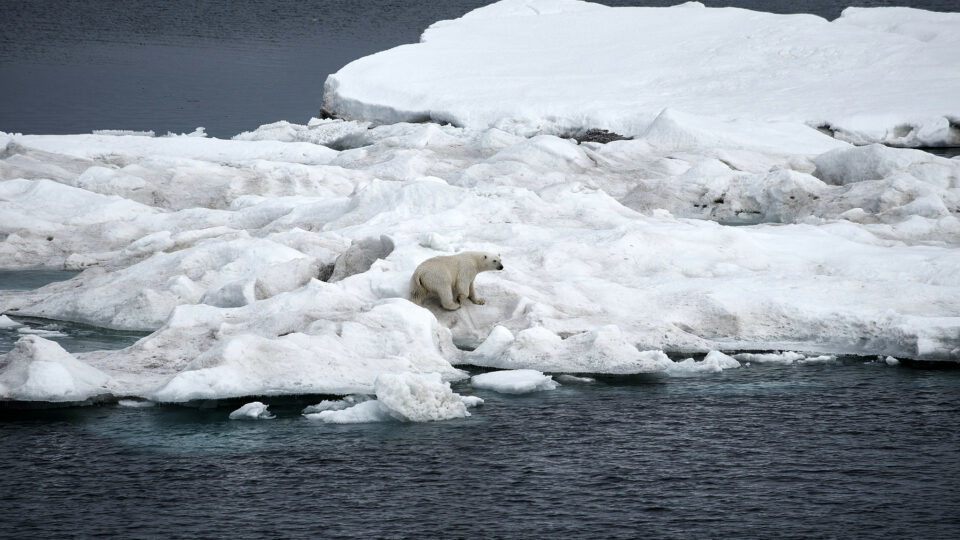
The Arctic region is heating up faster than any other place on earth and its sea ice is rapidly disappearing.  Estimates are that summer sea ice in the Arctic Ocean will be largely gone within a generation.  Arctic ice and snow reflect the sun’s energy into space, which helps to keep the planet cool.  What happens if that ice is gone?

The researchers explored the fact that the Arctic Ocean ice actually insulates the Arctic atmosphere from the warmer water under the ice.  Without the ice layer, the surface water would actually increase air temperatures by 20 degrees C during the winter.  That in turn would increase the heat irradiated into space and thereby cool down the planet.

The Arctic sea ice is in part maintained because the upper regions of the Arctic Ocean have lower salinity than the Atlantic Ocean.  This stops Atlantic water from flowing above the cold Arctic waters.  So, if we were to somehow deliberately increase the salinity of the Arctic Ocean surface water, warmer, less salty Atlantic Ocean water would flow in, increase the temperature of the Arctic atmosphere, and release heat trapped in the ocean into space.

It all sounds pretty crazy, but the researchers say that given the seriousness of climate change, all options should be considered when dealing with it.

**********

Web Links

Could we cool the Earth with an ice-free Arctic?

Photo, posted August 19, 2016, courtesy of Flickr.

Earth Wise is a production of WAMC Northeast Public Radio.

Extreme Heat From Solar Power | Earth Wise

January 23, 2020 By EarthWise Leave a Comment

Renewable sources are playing a growing role in meeting our energy needs, but one place where they have continued to fall short is in industrial processes that require extreme heat.  These include the cement, steel, and glass industries, among others.  These industries account for a significant amount of CO2 emissions because the most effective way to reach the necessary temperatures continues to be combustion of fossil fuels.  The cement industry alone accounts for 7% of global emissions and the need for cement continues to grow.

A previously stealthy startup company backed by Bill Gates and fellow billionaire Soon-Shiong has made a breakthrough in the area of using solar energy to achieve high temperatures.  The company, called Heliogen, has created a solar oven that is capable of generating heat above 1800 degrees Fahrenheit, which is enough for high-temperature industrial processes.

The Heliogen technology uses concentrated solar power to generate heat.  Concentrated solar power uses arrays of mirrors to reflect sunlight and focus it to a single point.  That technology is not new;  there are systems that use it to produce electricity and, to some extent, heat for industry.  But it could not achieve high enough temperatures for producing cement or steel.

The new system uses computer vision software, automatic edge detection and other sophisticated technologies to focus the sun’s rays far more finely than ever before and thereby generate far higher temperatures at the focal point.

Heliogen is now focused on demonstrating how the technology can be used in a large-scale application, such as cement-making.  The selling points to industry are that not only will there be no emissions generated, but that the fuel needed to obtain their extreme heat will be free.

**********

Web Links

Secretive energy startup backed by Bill Gates achieves solar breakthrough

Photo courtesy of Heliogen.

Earth Wise is a production of WAMC Northeast Public Radio.

A Possible Storage Breakthrough: Solar Energy | Earth Wise

January 10, 2020 By EarthWise 2 Comments

Solar energy is a nearly unlimited resource, but it is only available to us when the sun is shining.  For solar power to provide for the majority of our energy needs, there needs to be a way to capture the energy from the sun, store it, and release it when we need it.  There are many approaches to storing solar energy, but so far none have provided an ideal solution.

Scientists at the Chalmers Institute of Technology in Sweden have developed a way to harness solar energy and keep it in reserve so it can be released on demand in the form of heat—even decades after it was captured. Their solution combines several innovations, including an energy-trapping molecule, a storage system, and an energy-storing laminate for windows and textiles.

The energy-trapping molecule is made up of carbon, hydrogen, and nitrogen.  When hit by sunlight, the molecule captures the sun’s energy and holds on to it until it is released as heat by a catalyst.  The specialized storage unit is claimed to be able to store energy for decades.  The transparent coating that the team developed also collects solar energy and releases heat.  Using it would reduce the amount of electricity required for heating buildings.

So far, the team has concentrated on producing heat from stored solar energy.  It is unclear whether the technology can be adapted to produce electricity, which would be even more valuable.  In any event, the team does not yet have precise cost estimates for its technology, but there are no rare or expensive elements required, so the economics seem promising.  There is much more work to be done, but this could be a very important technology for the world’s energy systems.

**********

Web Links

An Energy Breakthrough Could Store Solar Power for Decades

Photo courtesy of Flickr.

Earth Wise is a production of WAMC Northeast Public Radio.

  • « Go to Previous Page
  • Page 1
  • Interim pages omitted …
  • Page 5
  • Page 6
  • Page 7
  • Page 8
  • Page 9
  • Interim pages omitted …
  • Page 11
  • Go to Next Page »

Primary Sidebar

Recent Episodes

  • An uninsurable future
  • Clean energy and jobs
  • Insect declines in remote regions
  • Fossil fuel producing nations ignoring climate goals
  • Trouble for clownfishes

WAMC Northeast Public Radio

WAMC/Northeast Public Radio is a regional public radio network serving parts of seven northeastern states (more...)

Copyright © 2026 ·