• Skip to primary navigation
  • Skip to main content
  • Skip to primary sidebar

Earth Wise

A look at our changing environment.

  • Home
  • About Earth Wise
  • Where to Listen
  • All Articles
  • Show Search
Hide Search
You are here: Home / Archives for cost

cost

The Cost Of Air Pollution | Earth Wise

March 12, 2020 By EarthWise Leave a Comment

quantifying the global economic and health impacts of fossil fuel-driven air pollution

The environmental consequences of burning fossil fuels are a dominant topic.  The increasing changes in the climate have far-reaching effects across the globe and are a growing geopolitical crisis.  But the climate effects of fossil fuel emissions are by no means the only problem they cause.  

A new report by the Center for Research on Energy and Clear Air has, for the first time, attempted to quantify the global economic and health impacts of fossil fuel-caused air pollution.  In total, the estimate is that the economic and health costs of air pollution from burning fossil fuels totaled $2.9 trillion in 2018, calculated in the form of work absences, years of life lost, and premature deaths. The cost represents 3.3 percent of global GDP, or about $8 billion per day. 

The study focused on the health impacts of three specific types of pollutants:  nitrogen dioxide, ozone, and fine particulate matter, which has the greater impact.  Collectively, these pollutants cause about 1.8 billion days of missed work due to disease and $2.2 trillion in air pollution costs every year. Together, air pollution from these three pollutants is responsible for 4.5 million premature deaths around the world each year.

According to the report, the most premature deaths from fossil fuel-related air pollution in 2018 were in mainland China (1.8 million), India (1 million), and the United States (230,000). As a result, those three countries also faced the highest annual costs: $900 billion in China, $600 billion in the U.S., and $150 billion in India. 

**********

Web Links

Toxic Air: The Price of Fossil Fuels (Full Report)

Photo, posted November 17, 2019, courtesy of Kristoffer Trolle via Flickr.

Earth Wise is a production of WAMC Northeast Public Radio.
American Households and Food Waste | Earth Wise

February 12, 2020 By EarthWise Leave a Comment

US household food waste

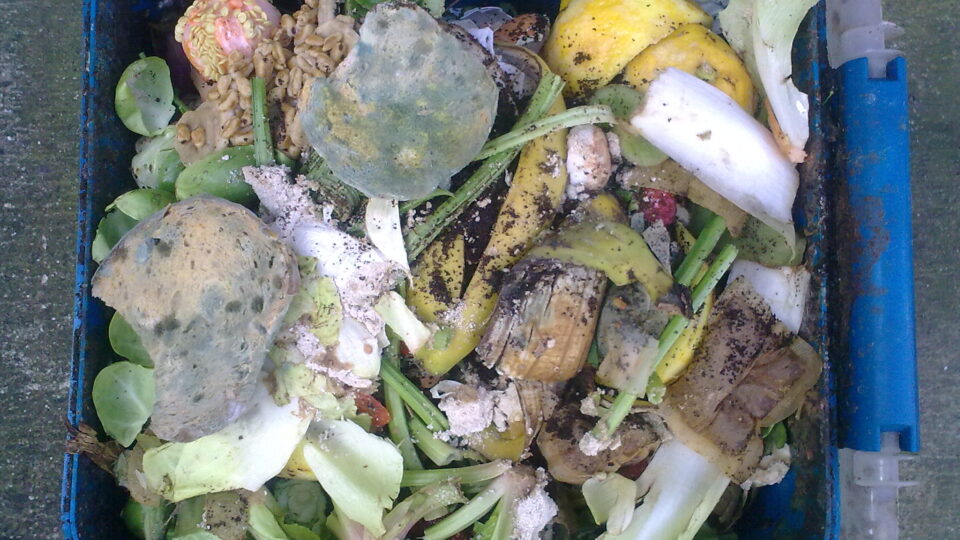
Food waste is a big problem.  According to the United Nations, approximately one-third of the food produced globally – more than 1.4 billion tons – goes to waste.  If food waste was a country adding carbon to the atmosphere, it would be the world’s third largest emitter of greenhouse gases – behind only the U.S. and China.  All of this food waste takes place in a world where 815 million people – more than 10% of the people on the planet – are chronically undernourished.

A new study recently published in the American Journal of Agricultural Economics has analyzed the level of food waste for individual American households. It found that American households waste, on average, nearly one-third of all the food they acquire.  This wasted food has an estimated aggregate value of $240 billion annually.  Divided by the number of U.S. households, this food waste could be costing the average household about $1,866 per year. 

According to researchers, the households with higher household incomes generate more food waste.  Those with healthier diets, which include more perishable fruits and vegetables, also waste more food.  

Meanwhile, households with greater food insecurity, especially those that participate in the federal SNAP food assistance program, as well as those households with a larger number of members, were associated with less food waste.  Households that use shopping lists and those that travel further to reach the grocery store were also associated with lower levels of food waste. 

When food is wasted, the resources used to produce food, including land, energy, water and labor, are wasted as well.  We have to do better. 

**********

Web Links

SAVE FOOD: Global Initiative on Food Loss and Waste Reduction

US households waste nearly a third of the food they acquire

Photo, posted March 22, 2009, courtesy of Nick Saltmarsh via Flickr.

Earth Wise is a production of WAMC Northeast Public Radio.

Hydrogen From The Ocean

November 15, 2019 By EarthWise Leave a Comment

https://earthwiseradio.org/wp-content/uploads/2016/08/EW-08-30-16-Hydrogen-from-the-Ocean.mp3

Hydrogen is the most abundant element in the universe.  Estimates are that it comprises 75% of all matter.  There is plenty of it here on earth too, but almost none of it is in its elemental form.  It is mostly bound up in compounds like water.

[Read more…] about Hydrogen From The Ocean

The Cost Of Rising Seas

October 1, 2019 By EarthWise Leave a Comment

Coastal cities in the United States are grappling with the need for extensive infrastructure projects to protect against rising seas and worsening storms.  The cost of these projects will be enormous, and it is unclear how to pay to them.

Boston has many neighborhoods in low-lying areas, and it is estimated that $2.4 billion will be needed to protect the city from flooding.  The city abandoned plans to build a harbor barrier that would have cost $6 to $12 billion because it was economically unfeasible.

Charleston, South Caroline needs $2 billion to reduce flooding that occurs regularly during high tides.  The Houston, Texas area needs $30 billion to provide protection against a 100-year flood.  Hurricane Harvey caused $125 billion in damages in Texas in 2017.  New York City is considering a $10 billion storm surge barrier and floodgates to shield parts of the city from rising waters.

Florida faces the greatest exposure to flooding with an estimated $76 billion in costs to address some of its problems.

At the federal level, multiple agencies represent potential funding sources, but none offer the kind of money required to address the need.  This places a heavy burden on state and local governments.  Various states have passed legislation related to shoreline resiliency and flood abatement, but relatively little funding has been approved.  Some bond measures have passed, but the totals are small compared with what is needed.

Educating people about the costs of not doing anything or not doing enough soon enough is essential.  As Hurricane Katrina demonstrated, not spending a large amount of money on resilience can result in having to spend a colossal amount of money on recovery.

**********

Web Links

Who Will Pay for the Huge Costs of Holding Back Rising Seas?

Photo, posted December 26, 2013, courtesy of Flickr.

Earth Wise is a production of WAMC Northeast Public Radio.

Capital Region Community Solar

July 19, 2019 By EarthWise Leave a Comment

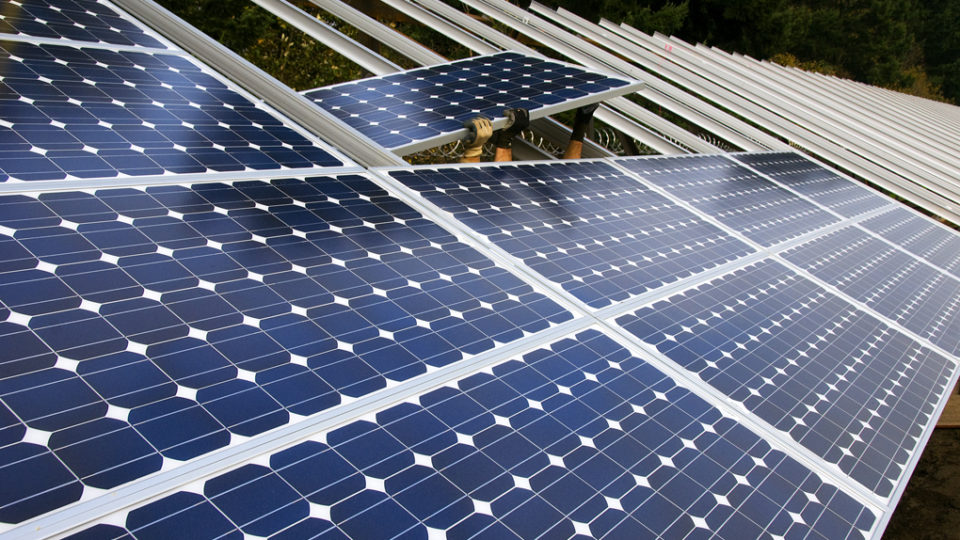
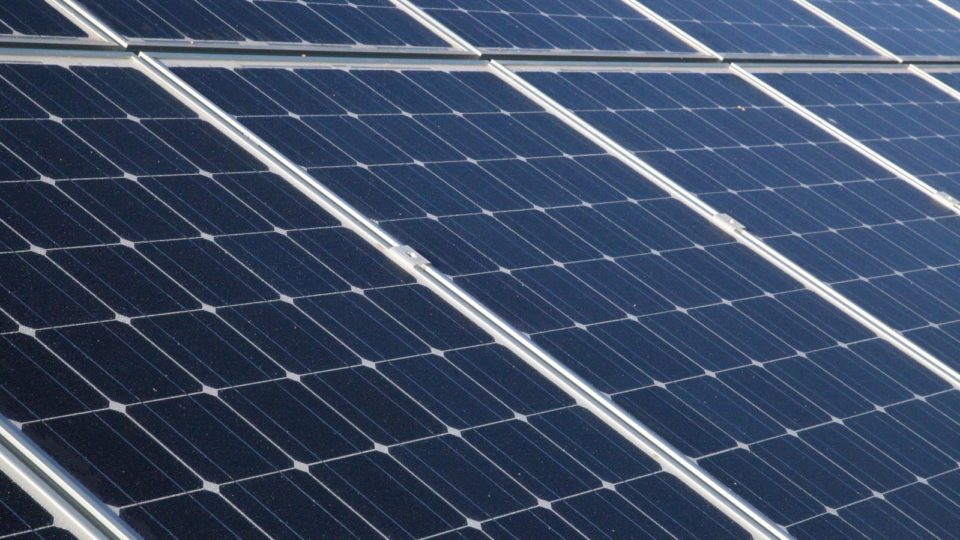
New York’s Capital Region is getting a major new community solar farm.  A community solar farm is a solar power installation whose output is shared by multiple community subscribers who receive credit on their electricity bills for their share of the power produced.  The primary purpose of community solar is to allow members of a community to have the benefits of solar power even if they cannot or prefer not to install solar panels on their own property.

US Light Energy has broken ground on the Sugar Hill Solar Farm, to be located on 40 acres of land on the Sugar-Hill/Sugar-View Farm in Clifton Park.  The 7-megawatt, ground-mounted solar project will include nearly 20,000 solar modules.  When fully operational later this year, the facility is expected to produce more than 8.6 million kilowatt-hours of energy a year.

The farm will be part of New York state’s Community Solar Program, and the electricity it generates can be supplied to customers anywhere in National Grid’s existing distribution system.  Residential and commercial properties in Clifton Park will have 30 days to subscribe before the solar energy generated by the farm is opened to the general public.  Subscribers of community solar farms typically save 10% on their electricity bills.

There are already community solar programs in operation in several Capital Region communities, but this is the first one in the Clifton Park Area.  Apart from providing savings on utility bills, community solar allows consumers to support clean, locally generated power with little or no upfront costs.  Not everyone is in a position to put solar panels on their roof, but community solar is increasingly an option for New York residents.

**********

Web Links

Construction begins on 7-MW community solar farm in New York

Photo, posted March 19, 2012, courtesy of Kate Ausburn via Flickr.

Earth Wise is a production of WAMC Northeast Public Radio.
Getting Rid Of Plastic Here And Abroad

May 23, 2019 By EarthWise Leave a Comment

Efforts in the fight against plastic pollution are really stepping up these days. 

New York State lawmakers have agreed to impose a statewide ban on most types of single-use plastic bags from retail sales.  The ban would be the second statewide ban after California, which banned the bags in 2016.  Hawaii effectively also has such a ban since all of the state’s counties have their own bans.

The New York ban would begin next March and would forbid stores from providing customers with single-use plastic bags.  There are a number of exceptions, including food takeout bags in restaurants, bags used to wrap deli or meat counter products, and newspaper bags.  New York counties could opt into a plan to charge a 5-cent fee on paper bags, with proceeds going to the state’s Environmental Protection Fund.  Some environmentalists point out, however, that paper bags have their own issues.  While they do decompose in landfills, they have a substantial carbon footprint since they are made from wood and being heavier, they are more costly to ship.  Business groups are concerned about the forthcoming ban based on increased costs.

Meanwhile, European Union member states have reached a provisional agreement to introduce restrictions on single-use plastic products.  In 2021. European citizens will say goodbye to plastic cutlery, plastic plates and plastic straws among other products.

According to the European Commission, plastics make up 85% of beach litter in the Mediterranean.  Large plastic pieces injure, suffocate, and often kill marine animals but microplastics have reached record levels of concentration – over a million fragments per square kilometer – in the Mediterranean.

Both here and abroad, the war on plastics is heating up.

**********

Web Links

Plastic Bags to Be Banned in New York; Second Statewide Ban, After California

The End Of Plastic Cutlery, Plates And Straws: EU Market Says Goodbye To Single-Use Plastic Products

Photo, posted March 20, 2007, courtesy of Flickr.

Earth Wise is a production of WAMC Northeast Public Radio.

Building For Climate Change

May 13, 2019 By EarthWise Leave a Comment

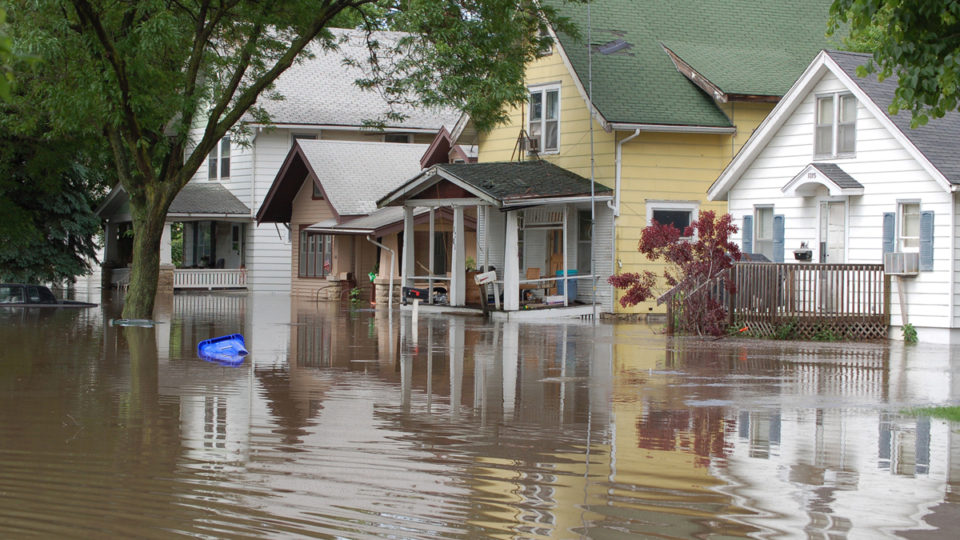
The manifestations of climate change are creating increasingly familiar images:  floodwaters rising up house windows, charred buildings in the wake of wildfires, and homes and businesses demolished by storm winds. As these sorts of calamities become ever more common, changes to how houses are built are going to be necessary.

How can homes become more resilient against severe and unpredictable weather?

Research at Carlton University’s Sprott School of Business looks at this issue.

As an example, houses can be framed and finished in certain ways that help protect them from wind and flooding.  But such methods are currently only happening in the custom-build fringes of the housing sector.  Widespread adoption will require, at the minimum, significant changes to building codes.

Revising building codes is not an easy matter.  The codes themselves are highly technical and complex, and beyond that, the process Is often politicized.

Even simple things like hurricane ties, which are small pieces of hardware that prevent a roof from lifting during a severe wind are not now included in building codes.  Insurance companies support their use as inexpensive protection for houses.  But even though the overall cost is relatively minor, the building industry pushes back at the additional expense.

The need to reduce carbon emissions has created a push for sustainable housing.  But the increasingly erratic weather means that houses also need resilience and adaptation.  These features will inevitably add costs and incorporating them into building codes requires producing convincing business cases.

The U.S. experienced 394 natural catastrophe events last year costing $225 billion in damage.  Finding ways to make homes and businesses more resilient is not just a good idea; it is essential.

**********

Web Links

How to Start Weather-Proofing Homes for Unpredictable Weather

Photo, posted June 12, 2008, courtesy of U.S. Geological Survey via Flickr.

Earth Wise is a production of WAMC Northeast Public Radio.
Misconceptions About Electric Cars

February 8, 2019 By EarthWise Leave a Comment

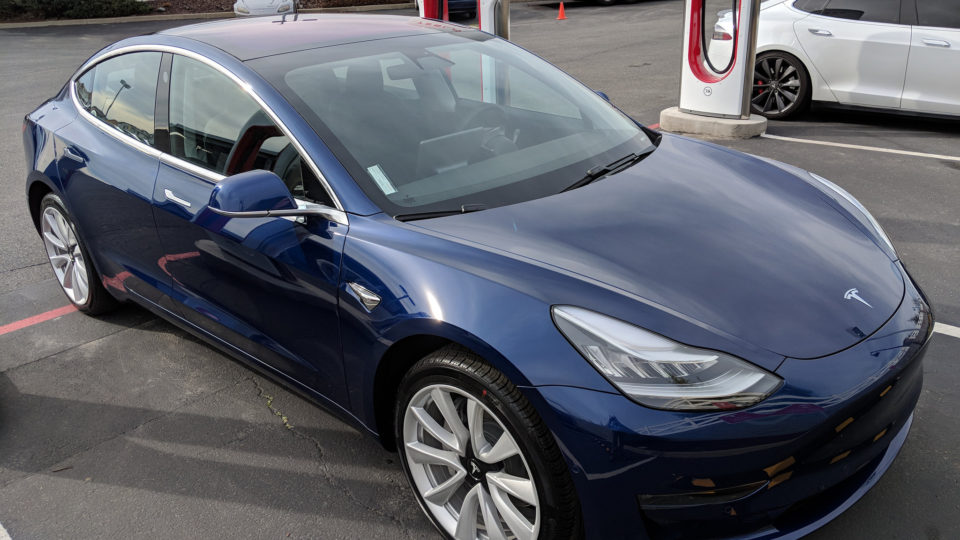
Tesla’s Model 3 was one of the best-selling cars in the United States last year, eclipsing all but a handful of sedans.  This was the first time that an electric car had that honor and is indicative of how electric cars are finally becoming mainstream.  A host of other new electric models from multiple manufacturers will be the entering the market over the next couple of years.

Despite all of this progress, there is still a great deal of misinformation about electric cars.  A new study commissioned by Volkswagen revealed some of the widespread misconceptions about the vehicles.

Some people believe that electric cars can’t be driven through puddles.  Nearly one in five people believe that electric cars slow down as the battery depletes.  Many people believe that electric cars are fundamentally less safe than gas-powered cars.

More generally, people are unaware of how far current electric cars can drive on a charge.  More and more models can go 200 and even over 300 miles between charging sessions.  People also don’t know how quickly cars can charge up either.  Fast chargers like Tesla’s Superchargers can add 200 miles worth of charge in about 20 minutes.  And people don’t know what it costs to charge electric cars.  In most places, it is only a fraction of what it costs to drive the same distance using gasoline.

Despite their limited knowledge about electric cars, the 2,000 people surveyed in Britain were positively disposed towards them with nearly 6 in 10 saying that they would like to own an electric car some day and would even consider one as their next vehicle.

Electric cars will become more familiar and less exotic as more and more of them are on our roads and highways.

**********

Web Links

Major misconceptions prevent drivers from buying electric cars, study claims

Photo, posted April 6, 2018, courtesy of Brian Doyle via Flickr.

Earth Wise is a production of WAMC Northeast Public Radio.
https://www.independent.co.uk/news/uk/home-news/electric-cars-misconceptions-battery-charging-safety-volkswagen-study-results-a8700536.html

A Disastrous Year

February 5, 2019 By EarthWise Leave a Comment

The number and economic impact of natural disasters around the world have increased dramatically over the past 30 years.  In dollar terms, the amount has actually more than doubled.  While 2017 and especially 2011 hold the records for worldwide economic damage, 2018 was pretty disastrous in its own right, totaling at least $160 billion.

The year was dominated by costly wildfires in California and tropical storms in the United States and Asia.   According to a recent report by the reinsurance company Munich Re, the Camp and Woolsey fires in California alone caused losses of $21.7 billion, $16.5 billion of which was insured.

Overall, insurance companies paid out $80 billion in damage claims from natural disasters last year.  This was less than the $140 billion in 2017 but is still double the 30-year average.

Losses from wildfires have increased dramatically in recent years and summers continue to get hotter and dryer, a likely consequence of climate change.  These mounting costs bring into question whether people can continue to build in high-risk wildfire areas without dramatic changes in materials and the aggressive use of other protective measures.

Twenty-nine natural disaster events in 2018 caused more than a billion dollars in damage each.  Tropical storms including hurricanes Michael and Florence in the United States and three Asian typhoons caused $57 billion in damage.

A severe drought in Europe that set off major wildfires and caused agricultural losses caused $3.9 billion in losses.  Only about $280 million of this damage was covered by insurance companies since farmers in Europe don’t typically purchase insurance against drought.  For them, 2018 was truly a disastrous year.

**********

Web Links

Natural Disasters Caused $160 Billion in Damage in 2018

Photo, posted July 26, 2018, courtesy of Bureau of Land Management California via Flickr.

Earth Wise is a production of WAMC Northeast Public Radio.

A New Way to Make Hydrogen

January 31, 2019 By EarthWise Leave a Comment

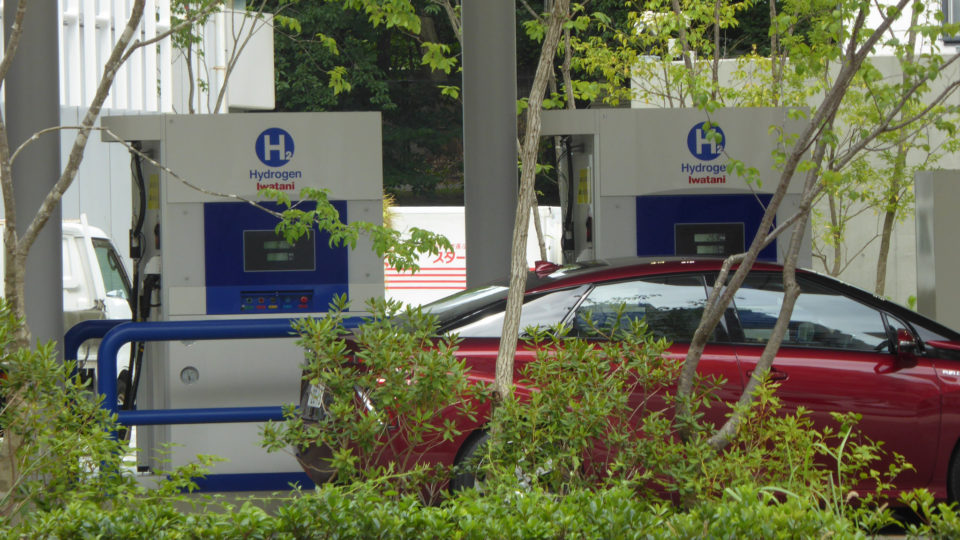
Many people consider hydrogen to be the fuel of the future, both for powering vehicles and for storing energy generated by renewable sources.   Hydrogen itself is a clean and green fuel.  Generating energy from it using fuel cells results in only water as a byproduct.

The biggest problem with hydrogen is that the most economical way to produce it and therefore the way most hydrogen is produced today, is by reforming natural gas, which is a process that generates carbon emissions.

The desirable way to make hydrogen is to produce it by breaking apart water into its hydrogen and oxygen components, a process known as electrolysis.   There are many ways to do it, but none of them to date measures up in terms of efficiency, cost, and longevity.

Researchers at the University of Toronto have recently developed a new catalyst that uses abundant, low-cost elements to split water molecules into hydrogen and oxygen.  The catalyst is made from copper, nickel, and chromium, all of which are more abundant and less costly than platinum, which is the usual electrolysis catalyst.

The new catalyst performs well under pH-neutral conditions, which means it could even work on seawater without incurring the expense of desalination.  The Toronto researchers also believe their catalyst could be used as part of a process to make hydrocarbon fuels from hydrogen and CO22.  Their group is among the five finalists in the Carbon XPrize competition, which has a grand prize of $7.5 million for finding a way to convert waste CO2 into fuel.

Finding a low-cost, energy-efficient, and reliable way to make hydrogen out of water will be a big deal if it can be done on an industrial scale.

**********

Web Links

U of T researchers discover low-cost way to produce hydrogen from water

Photo, posted July 23, 2015, courtesy of Magnus Johansson via Flickr.

Earth Wise is a production of WAMC Northeast Public Radio.
A See-Through Heat Shield

January 8, 2019 By EarthWise Leave a Comment

It is estimated that air conditioners use about 6% of all the electricity produced in the United States for an annual cost of $29 billion.  With rising temperatures, this expense is only going to get larger.

A significant part of the heat load in buildings arises from heat coming through windows.  It turns out that for every square meter of window, about 500 watts of heat energy can be brought in by sunlight, equivalent to 5 old-fashioned light bulbs.

Researchers at MIT and the University of Hong Kong have developed a heat-rejecting film that can applied to a building’s windows that will reflect 70% of the sun’s incoming heat.  The film is similar to transparent plastic wrap. It remains highly transparent at temperatures below 89 degrees Fahrenheit.  Above that temperature, tiny microparticles embedded in the film shrink and the film becomes more translucent or frosted, still letting in a good amount of light, but rejecting a lot of heat.

There are already so-called smart windows on the market, similar to the electrochromic mirrors in cars that darken to prevent trailing headlights from blinding drivers.  But that technology is not very effective in rejecting heat and it requires power to operate, which means you would have to pay to turn windows opaque.

Tests of the new film demonstrated its ability to reject heat and lower temperatures.  The researchers estimate that if every exterior-facing window in a building were covered in the heat-rejecting film, the building’s air conditioning and energy costs could drop by 10%.  Saving ten percent of tens of billions of dollars is no minor matter.

**********

Web Links

See-through film rejects 70 percent of incoming solar heat

Photo courtesy of MIT researchers/MIT. 

Earth Wise is a production of WAMC Northeast Public Radio.

More Power From The Sun’s Heat

November 29, 2018 By EarthWise Leave a Comment

https://earthwiseradio.org/wp-content/uploads/2018/11/EW-11-29-18-More-Power-From-The-Suns-Heat.mp3

When we think of solar power, we usually are talking about the panels that generate electricity using the photovoltaic effect.  These panels are on millions of rooftops around the world and in utility-scale solar farms.   There are also solar water heating systems that use the sun’s heat to provide hot water for homes and businesses.

[Read more…] about More Power From The Sun’s Heat

Solar Plus Storage In The Caribbean

November 22, 2018 By EarthWise Leave a Comment

https://earthwiseradio.org/wp-content/uploads/2018/11/EW-11-22-18-Solar-Plus-Storage-in-Caribbean.mp3

The Caribbean is home to nearly 30 island nations and more than 7,000 individual islands with a combined population of around 40 million.  All of the islands are susceptible to disasters such as hurricanes that can leave residents without electrical power for extended periods of time.

[Read more…] about Solar Plus Storage In The Caribbean

A Battery That Eats Carbon Dioxide

October 30, 2018 By EarthWise Leave a Comment

https://earthwiseradio.org/wp-content/uploads/2018/10/EW-10-30-18-A-Battery-That-Eats-CO2.mp3

Fossil fuel-based power plants are increasingly considering the use of carbon capture technologies as a way to reduce emissions.  The biggest challenge to the wide-spread adoption of such technology is its energy cost, which of course equates to economic cost.  Present-day power plants equipped with carbon capture systems can use up to 30% of the electricity they generate just to power the capture, release, and storage of carbon dioxide.

[Read more…] about A Battery That Eats Carbon Dioxide

Bacteria-Powered Solar Cell

August 29, 2018 By EarthWise 1 Comment

https://earthwiseradio.org/wp-content/uploads/2018/08/EW-08-29-18-Bacteria-Powered-Solar-Cell.mp3

Commercially-available solar panels are composed of solar cells that are most often made from various forms of silicon.  Some panels use thin-film cells made from other semiconductor materials.  Solar cells utilize a property of semiconductors that allows them to convert light energy into electrical energy.

[Read more…] about Bacteria-Powered Solar Cell

The Future Of Energy

August 3, 2018 By EarthWise Leave a Comment

https://earthwiseradio.org/wp-content/uploads/2018/07/EW-08-03-18-The-Future-of-Energy.mp3

A new report by Bloomberg New Energy Finance takes a long-term look at the world’s energy production.  According to the report, renewable energy, mostly in the form of solar and wind power, is set to provide close to 50% of the world’s energy by the year 2050.

[Read more…] about The Future Of Energy

Greenhouses Adapt To Climate Change

August 2, 2018 By EarthWise Leave a Comment

https://earthwiseradio.org/wp-content/uploads/2018/06/EW-08-02-18-Greenhouses-Adapt-to-Climate-Change.mp3

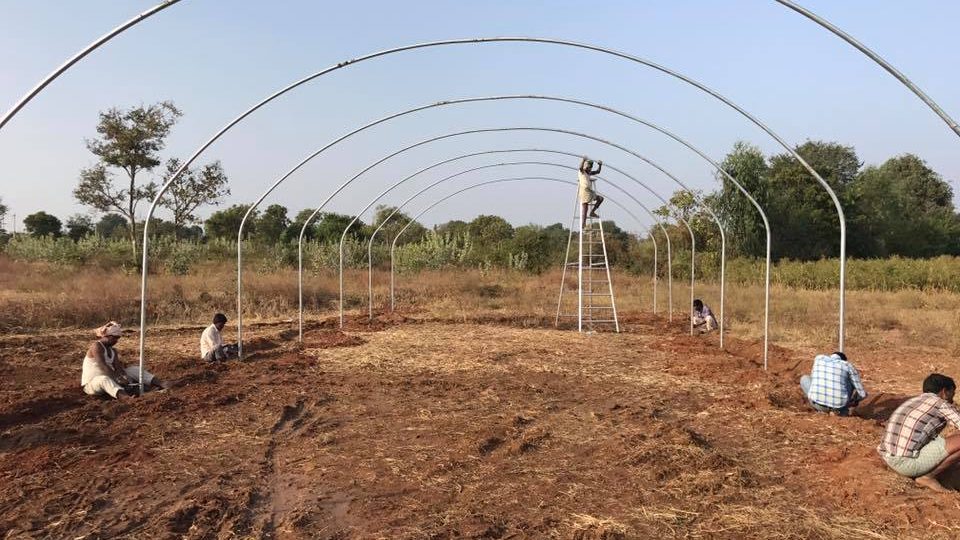
The Telangana region of India has struggled with extreme weather patterns attributed to climate change.  Extended periods of drought, heatwaves, and unpredictable heavy rainfalls have led to crop failures, mounting debt, and a heavy human toll.  More than 3,000 farmers committed suicide in Telangana during a three-year drought.

[Read more…] about Greenhouses Adapt To Climate Change

An App For Infection Testing

June 11, 2018 By EarthWise Leave a Comment

https://earthwiseradio.org/wp-content/uploads/2018/06/EW-06-11-18-An-App-for-Infection-Testing.mp3

Researchers at Washington State University have developed a low-cost, portable device that works with a smartphone to detect common viral and bacterial infections nearly as well as clinical laboratories.  Such a system could lead to faster and lower-cost lab results for fast-moving epidemics, especially in rural or lower-resource regions where laboratory equipment and medical personnel are not readily available.

[Read more…] about An App For Infection Testing

Mandatory Solar In California

May 30, 2018 By EarthWise Leave a Comment

https://earthwiseradio.org/wp-content/uploads/2018/05/EW-05-30-18-Mandatory-Solar-in-California.mp3

In May, California became the first state in the U.S. to require solar panels on almost all new homes.  Under new standards adopted by the California Energy Commission, most new homes, condos and apartment buildings built after January 1, 2020 will be required to include solar systems.

[Read more…] about Mandatory Solar In California

Investing In Solar Power

May 21, 2018 By EarthWise Leave a Comment

https://earthwiseradio.org/wp-content/uploads/2018/05/EW-05-21-18-Investing-in-Solar-Power.mp3

The total amount of solar power capacity installed in the world reached 100 gigawatts in 2012.  Getting to that amount took decades.  But things have changed in dramatic fashion in recent years.

[Read more…] about Investing In Solar Power

  • « Go to Previous Page
  • Page 1
  • Interim pages omitted …
  • Page 3
  • Page 4
  • Page 5
  • Page 6
  • Page 7
  • Go to Next Page »

Primary Sidebar

Recent Episodes

  • An uninsurable future
  • Clean energy and jobs
  • Insect declines in remote regions
  • Fossil fuel producing nations ignoring climate goals
  • Trouble for clownfishes

WAMC Northeast Public Radio

WAMC/Northeast Public Radio is a regional public radio network serving parts of seven northeastern states (more...)

Copyright © 2026 ·