• Skip to primary navigation
  • Skip to main content
  • Skip to primary sidebar

Earth Wise

A look at our changing environment.

  • Home
  • About Earth Wise
  • Where to Listen
  • All Articles
  • Show Search
Hide Search
You are here: Home / Archives for companies

companies

Companies Promise Climate Action | Earth Wise

March 30, 2020 By EarthWise Leave a Comment

Companies scramble to achieve climate promises

A growing number of major corporations are making promises on climate and the promises are getting more ambitious and for faster action.  More companies are disclosing their carbon emissions and more of those companies have emissions reduction targets. 

There has also been an acceleration in the rate at which companies set so-called science-based targets, which are specific, measurable carbon reduction goals that align the company with the Paris Agreement.  Among the hundreds of companies with such targets are Coca-Cola, Nike, Best Buy, Walmart, and Hilton Hotels.  According to one analysis, the number of Fortune 500 companies with concrete, ambitious carbon targets quadrupled in the past four year to 23%.

Environmental advocates have been pressuring companies for decades, but companies seem to be far more proactive now despite the fact that the U.S. government has largely dropped the ball on climate issues.

The reasons include the fact that the effects of climate change are becoming clearer to companies.  Wildfires, rising sea levels, droughts and other aspects of the crisis both make headlines and affect business operations.

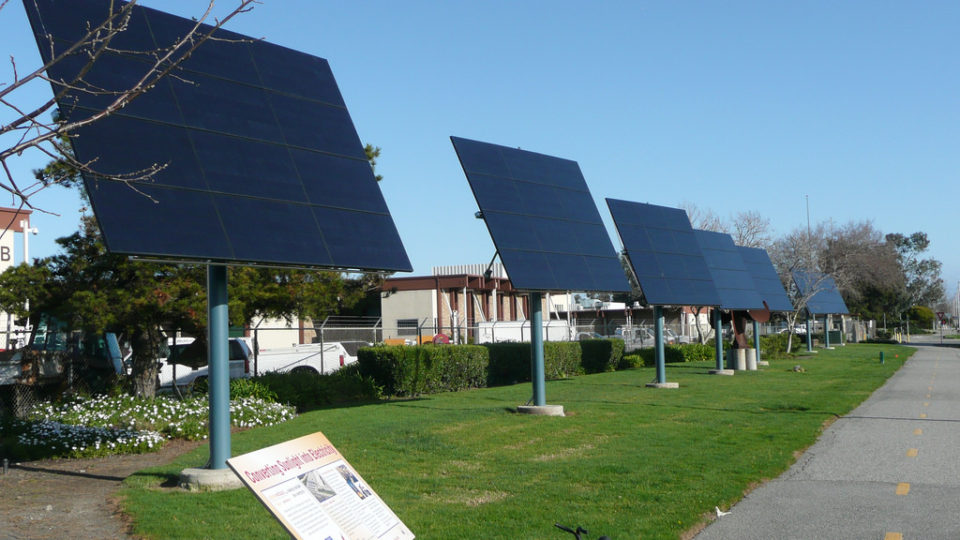
Meanwhile, solar and wind energy have gotten significantly cheaper, making it more attractive for companies to shift away from fossil fuels.

At the same time, investors are increasingly asking companies to act on climate issues.  Consumers, employees, and the general public are increasingly demanding action and even children are adding to the pressure to act.

Making these commitments is one thing; following through on them and sticking to them is another.  There are real concerns that there is a great deal of green-washing going on among companies trying to project a favorable image.  In any case, if companies really want to lead on climate, they need to put their money where their mouths are.

**********

Web Links

Better Late Than Never? Big Companies Scramble To Make Lofty Climate Promises

Photo, posted June 22, 2016, courtesy of Mike Mozart via Flickr.

Earth Wise is a production of WAMC Northeast Public Radio.

Jet Fuel From Acetone | Earth Wise

February 25, 2020 By EarthWise Leave a Comment

Greening Jet Fuel

Acetone is a common organic solvent.  It is used to make plastic, fibers, drugs, and other chemicals.  It is commonly used by consumers as nail polish remover.  Acetone is a manufactured chemical, but it is also found naturally in the environment in plants, among other places. There are now companies that produce acetone entirely by fermentation of plant feedstocks, such as corn.

Researchers at Los Alamos National Laboratory have now developed a process by which acetone can be converted into a fuel additive that can improve the performance of petroleum-based jet fuel, providing both environmental and economic benefits.

The process takes biomass-derived acetone and converts it to isophorone, which they produce by a process called photochemical cycloaddition that creates more complex hydrocarbons.  They then use ultraviolet light to convert the isophorone into cyclobutane, which is a type of hydrocarbon with high energy density that is suitable for aviation fuel applications.

Acetone itself is quite volatile and is unsuitable for fuel applications.  It also cannot be added directly to any fuel supply since it can dissolve engine parts and o-rings.  Cyclobutane, on the other hand, is a safer and more energy-dense fuel that can be a replacement for additives that require high-pressure hydrogen treatment in their synthesis.  Currently, most hydrogen is produced by a process that generates carbon dioxide.  The new conversion process does not result in carbon emissions.

According to the Los Alamos researchers, their process can result in a domestically generated product that will provide environmental benefits, create domestic jobs, improve U.S. energy security, and further U.S. global leadership in bioenergy technologies.

**********

Web Links

Acetone plus light creates a green jet fuel additive

Photo, posted December 18, 2007, courtesy of Flickr.

Earth Wise is a production of WAMC Northeast Public Radio.

China And Rare Earth Mining

September 4, 2019 By EarthWise Leave a Comment

Rare earth elements are a crucial part of much of modern technology.  Everything from computers to X-ray machines and aircraft engines needs one or more rare earth elements for magnets, lenses, and other functions.  The world’s tech giants such as Apple, Huawei, and Tesla depend on suppliers of rare earths.

Rare earth elements are not actually rare, but they are very expensive to extract in ways that are not extremely harmful to the environment.  China has been a major source of these elements since its rare earth mining industry took off in the 1990s.  The removal of rare earths from the earth’s crust, using a mix of water and chemicals, has caused extensive water and soil pollution.

Today, concrete leaching ponds and plastic-lined wastewater pools dot the hills of Southeast China.  Large wastewater ponds sit uncovered and open to the elements in many places.  Landslides or barrier failures can spill contaminated contents into waterways or groundwater.

Local and federal officials in China have started to shut down illegal and small-scale rare earth mining operations and have embarked on a cleanup of polluted sites.  The rare earth mining cleanup operation is part of wider efforts across China to address severe problems of water, air and soil pollution.

China’s Ministry of Industry and Information Technology estimated that the cleanup bill for southern Jiangxi Province could amount to more than $5 billion.  Many environmental experts and local officials say that the cost of the cleanup should not be shouldered by the Chinese government alone, but also by the rare earth industry and the global companies and consumers that benefit from rare earth technology.  As rare earth mining efforts start up elsewhere around the world, it is important not to repeat the mistakes made in China.

**********

Web Links

China Wrestles with the Toxic Aftermath of Rare Earth Mining

Photo, posted April 21, 2019, courtesy of John Beans via Flickr.

Earth Wise is a production of WAMC Northeast Public Radio.
Climate Change And The Bottom Line

July 31, 2019 By EarthWise Leave a Comment

Large companies around the world are facing up to the fact that climate change could substantially affect their bottom lines within the next five years.  Shareholders and regulators have been applying pressure to companies to disclose the specific financial impacts they could face as the planet warms and companies are increasingly making those disclosures.

A non-profit charity called CDP (formerly known as the Carbon Disclosure Project) runs the global disclosure system for investors, companies, cities, states, and regions to manage their environmental impacts.  In 2018, more than 7,000 companies submitted reports to CDP and, for the first time, CDP explicitly asked firms to try to calculate how a warming planet might affect them financially.

Analysis of the reports from 215 of the world’s 500 largest corporations revealed that these companies alone potentially faced roughly $1 trillion in costs related to climate change in the decades ahead unless they took proactive steps to prepare. 

Climate-related risks range from extreme weather that could disrupt supply chains to stricter climate regulations that could hurt the value of coal, oil, and gas investments.  Technology companies like Google’s parent company, Alphabet, Inc., face increased costs to cool energy-hungry data centers as temperatures rise.

In all, the world’s largest companies estimated that at least $250 billion of assets may need to be written off or retired early as the planet heats up.  Previous studies, based on computer climate modeling, have estimated that the risks of global warming, if left unmanaged, could cost the world’s financial sector between $1.7 trillion to $24.2 trillion in net present value terms.

**********

Web Links

Companies See Climate Change Hitting Their Bottom Lines in the Next 5 Years

Photo, posted February 29, 2016, courtesy of Ben Nuttall via Flickr.

Earth Wise is a production of WAMC Northeast Public Radio.

Climate Change And Insurance

May 17, 2019 By EarthWise Leave a Comment

While there are still some people who remain dubious about the reality of climate change, insurance companies are not among them.  And, in fact, insurers are warning that climate change could make coverage for ordinary people unaffordable.

Munich Reinsurance, the world’s largest reinsurance firm, blamed global warming for $24 billion in losses from California’s recent wildfires.  Such costs could soon be widely felt as premium rises are already under discussion with insurance companies having clients in vulnerable parts of the state.

With the risk from wildfires, flooding, storms and hail increasing, the only sustainable option for the insurance industry is to adjust risk prices accordingly.  Ultimately, this may become a social issue.  Affordability of insurance is critical because if rates go up too much, many people on low and average incomes in some regions may no longer be able to buy insurance.

The great majority of California’s 20 worst forest fires since the 1930’s has occurred since the year 2000 driven by abnormally high summer temperatures and persistent drought. The reinsurance giant analyzed decades of data with climate models and concluded that the fires are likely driven by climate change.

It isn’t just wildfires.  Insurance premiums are also being adjusted in regions facing an increased threat from severe convective storms whose energy and severity are driven by global warming.  These include parts of Germany, Austria, France, southwest Italy, and the U.S. Midwest.

Linking extreme weather events to climate change is a bit like attributing the performance of a steroid-using athlete to drug use.  The connections are clearer in patterns than in individual disasters.  But the pattern these days is pretty clear.

**********

Web Links

Climate Change Could Make Insurance Unaffordable for Most People

Photo, posted June 12, 2013, courtesy of Jeff Head via Flickr.

Earth Wise is a production of WAMC Northeast Public Radio.
Building For Climate Change

May 13, 2019 By EarthWise Leave a Comment

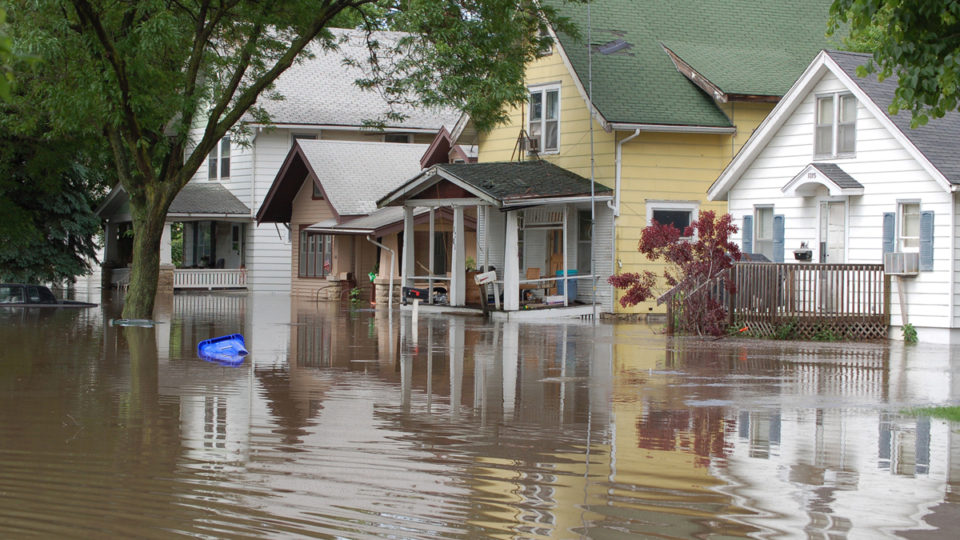
The manifestations of climate change are creating increasingly familiar images:  floodwaters rising up house windows, charred buildings in the wake of wildfires, and homes and businesses demolished by storm winds. As these sorts of calamities become ever more common, changes to how houses are built are going to be necessary.

How can homes become more resilient against severe and unpredictable weather?

Research at Carlton University’s Sprott School of Business looks at this issue.

As an example, houses can be framed and finished in certain ways that help protect them from wind and flooding.  But such methods are currently only happening in the custom-build fringes of the housing sector.  Widespread adoption will require, at the minimum, significant changes to building codes.

Revising building codes is not an easy matter.  The codes themselves are highly technical and complex, and beyond that, the process Is often politicized.

Even simple things like hurricane ties, which are small pieces of hardware that prevent a roof from lifting during a severe wind are not now included in building codes.  Insurance companies support their use as inexpensive protection for houses.  But even though the overall cost is relatively minor, the building industry pushes back at the additional expense.

The need to reduce carbon emissions has created a push for sustainable housing.  But the increasingly erratic weather means that houses also need resilience and adaptation.  These features will inevitably add costs and incorporating them into building codes requires producing convincing business cases.

The U.S. experienced 394 natural catastrophe events last year costing $225 billion in damage.  Finding ways to make homes and businesses more resilient is not just a good idea; it is essential.

**********

Web Links

How to Start Weather-Proofing Homes for Unpredictable Weather

Photo, posted June 12, 2008, courtesy of U.S. Geological Survey via Flickr.

Earth Wise is a production of WAMC Northeast Public Radio.
Bigger Is Better For Wind Energy

February 13, 2019 By EarthWise Leave a Comment

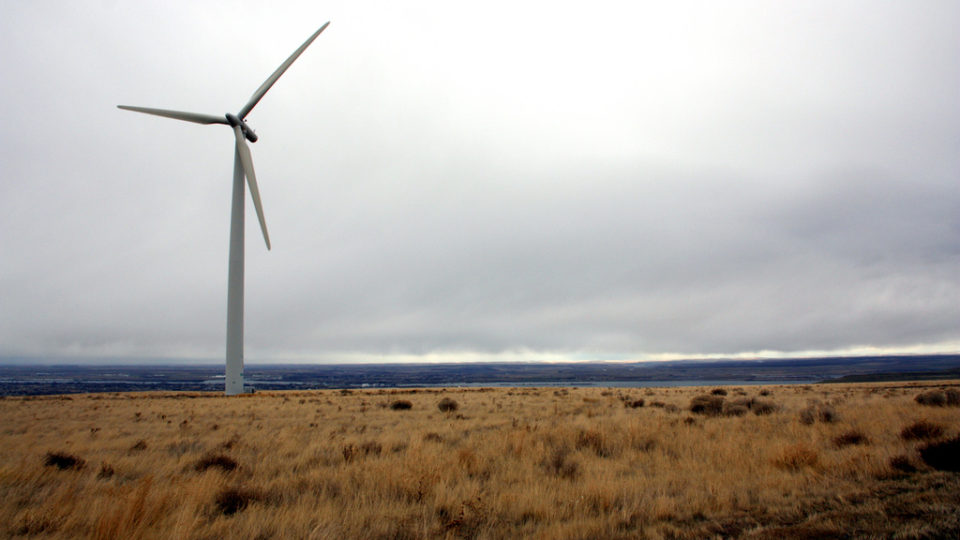
Bigger is almost always better for wind power.  Bigger wind farms are better than smaller wind farms and bigger wind turbines are better than smaller ones.

The biggest turbines currently available produce nearly 10 MW of power, which is enough to supply over 2,000 homes with electricity.  A wind farm with just a few of these turbines could produce enough electricity for a small town.  A big wind farm, like the giant 1,550 MW Alta Wind Energy Center in California can generate enough power for a small city.

Vestas Wind Systems, an industry leader based in Denmark, has announced a 10 MW turbine that will be ready for installation in two years.  The rotor diameter of the giant machine is 538 feet and the blades sweep out an area of 227,000 square feet, the size of nearly 4 football fields.

Not to be outdone, General Electric is developing a 12 MW offshore wind turbine that will stand 850 feet tall and sweep out an area of more than 400,000 square feet.  GE estimates that its 12 MW turbine will achieve nearly twice the capacity factor of its 6 MW turbine.

Companies are building bigger and bigger wind turbines because they are more cost effective.  The capacity factor, which is the actual energy production divided by the potential energy production, goes up as the turbines get bigger and more efficient.  In terms of dollars spent to produce a given amount of power, larger windfarms are less expensive to build than smaller ones.  A wind farm of 200-500 MW capacity is about 40% cheaper per MW capacity than a 25 MW wind farm.

When it comes to wind energy, there is no doubt that bigger is better.

**********

Web Links

Wind Energy — Where Bigger Is Better

Photo, posted February 14, 2012, courtesy of Aaron Warner via Flickr.

Earth Wise is a production of WAMC Northeast Public Radio.

The Labeling Of GMO Foods

February 12, 2019 By EarthWise Leave a Comment

American consumers will soon be able to discern whether or not foods contain genetically-modified ingredients.  The USDA’s so-called ‘National Bioengineered Food Disclosure Standard’ will be required for foods that have been altered in a way that doesn’t occur naturally. The mandatory compliance date is January 1st, 2022. 

While this does sound like great news, there are some major drawbacks.  The new guidelines use the uncommon term “bioengineered” instead of “genetically-modified” or “GMO.” The guidelines also allow the disclosure of bioengineered (or B.E.) ingredients in several formats: as text, a symbol, a phone number (that consumers can call for more info), or a digital link printed on the packaging.  Companies are allowed to use a QR code that asks consumers to “scan here for more food information.”  Scanning the QR code will bring consumers to a website where the GMO disclosure can be found. 

Advocates of the various labeling options say it’ll make it easier and faster for companies to comply with the new guidelines.  But critics worry consumers will find it confusing and restrict access for those without smartphones.  They say that companies who elect to use a QR code or phone number should be required to include the word “bioengineered” on their packaging.

Another drawback is that products won’t have to be labeled as ‘bioengineered’ if they’ve been processed to the point where their bioengineered DNA can’t be detected.  Examples include refined beet sugar, soybean oil, and high fructose corn syrup.  

The fight over the labeling of GMO foods has raged for many years.  But this labeling mandate falls short of consumer expectations by hiding the information about GMOs instead of disclosing it. We should expect better. 

**********

Web Links

Government lays out the rules for labeling for genetically modified foods

Photo, posted August 24, 2015, courtesy of Rob Bertholf via Flickr.

Earth Wise is a production of WAMC Northeast Public Radio.
A Disastrous Year

February 5, 2019 By EarthWise Leave a Comment

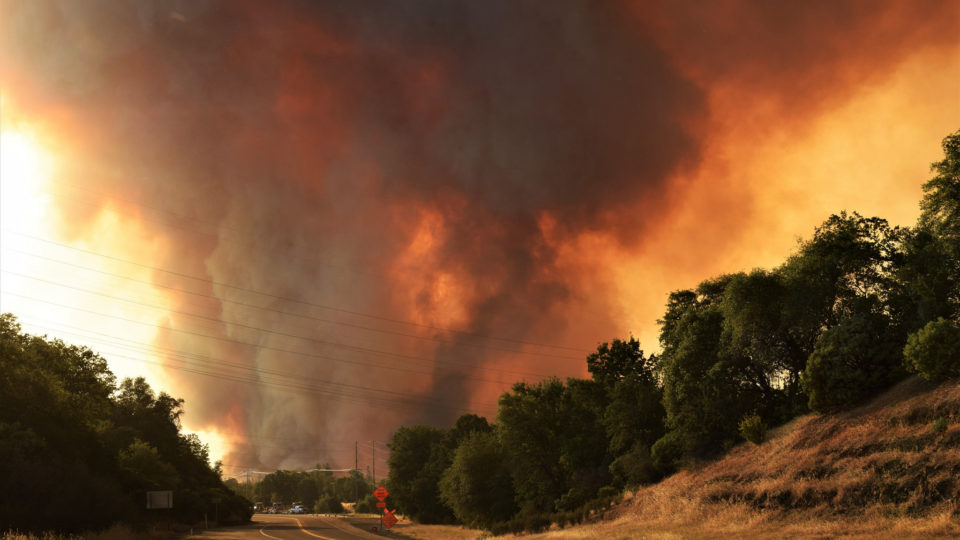
The number and economic impact of natural disasters around the world have increased dramatically over the past 30 years.  In dollar terms, the amount has actually more than doubled.  While 2017 and especially 2011 hold the records for worldwide economic damage, 2018 was pretty disastrous in its own right, totaling at least $160 billion.

The year was dominated by costly wildfires in California and tropical storms in the United States and Asia.   According to a recent report by the reinsurance company Munich Re, the Camp and Woolsey fires in California alone caused losses of $21.7 billion, $16.5 billion of which was insured.

Overall, insurance companies paid out $80 billion in damage claims from natural disasters last year.  This was less than the $140 billion in 2017 but is still double the 30-year average.

Losses from wildfires have increased dramatically in recent years and summers continue to get hotter and dryer, a likely consequence of climate change.  These mounting costs bring into question whether people can continue to build in high-risk wildfire areas without dramatic changes in materials and the aggressive use of other protective measures.

Twenty-nine natural disaster events in 2018 caused more than a billion dollars in damage each.  Tropical storms including hurricanes Michael and Florence in the United States and three Asian typhoons caused $57 billion in damage.

A severe drought in Europe that set off major wildfires and caused agricultural losses caused $3.9 billion in losses.  Only about $280 million of this damage was covered by insurance companies since farmers in Europe don’t typically purchase insurance against drought.  For them, 2018 was truly a disastrous year.

**********

Web Links

Natural Disasters Caused $160 Billion in Damage in 2018

Photo, posted July 26, 2018, courtesy of Bureau of Land Management California via Flickr.

Earth Wise is a production of WAMC Northeast Public Radio.

Legos And Plastics

October 23, 2018 By EarthWise Leave a Comment

https://earthwiseradio.org/wp-content/uploads/2018/10/EW-10-23-18-Legos-and-Plastics.mp3

Globally, consumers are voicing concerns about the impact of plastic waste on the planet. Conscious of these consumer concerns, many companies are trying to switch to recyclable or less-polluting packaging.  Some are even ditching plastics all together. 

[Read more…] about Legos And Plastics

Energy Justice In California

September 27, 2018 By EarthWise Leave a Comment

https://earthwiseradio.org/wp-content/uploads/2018/09/EW-09-27-18-Energy-Justice-in-California.mp3

California put in place a cap-and-trade program in 2013.  In such a program, companies pay penalties if they exceed a cap in carbon emissions but can buy and sell allowances that permit them to emit a given amount. Trading gives companies a strong incentive to save money by cutting emissions.  Since taking effect, the California program has raised more than $6.5 billion and is the fourth largest in the world.

[Read more…] about Energy Justice In California

Reducing Slavery In Seafood

August 28, 2018 By EarthWise Leave a Comment

https://earthwiseradio.org/wp-content/uploads/2018/08/EW-08-28-18-Reducing-Slavery-in-Seafood.mp3

The seafood industry is one of the largest employers in the world.  But according to a 2016 report, the seafood industry also contains widespread forced labor.   Forty seven seafood-producing countries were reported to utilize forced labor.  The seafood hub countries of Indonesia, Thailand, Vietnam, Peru, and the Philippines were also reported to use a significant percentage of child labor.

[Read more…] about Reducing Slavery In Seafood

Cleaning Up Shipping Fuel

August 21, 2018 By EarthWise Leave a Comment

https://earthwiseradio.org/wp-content/uploads/2018/08/EW-08-21-18-Cleaning-Up-Shipping-Fuel.mp3

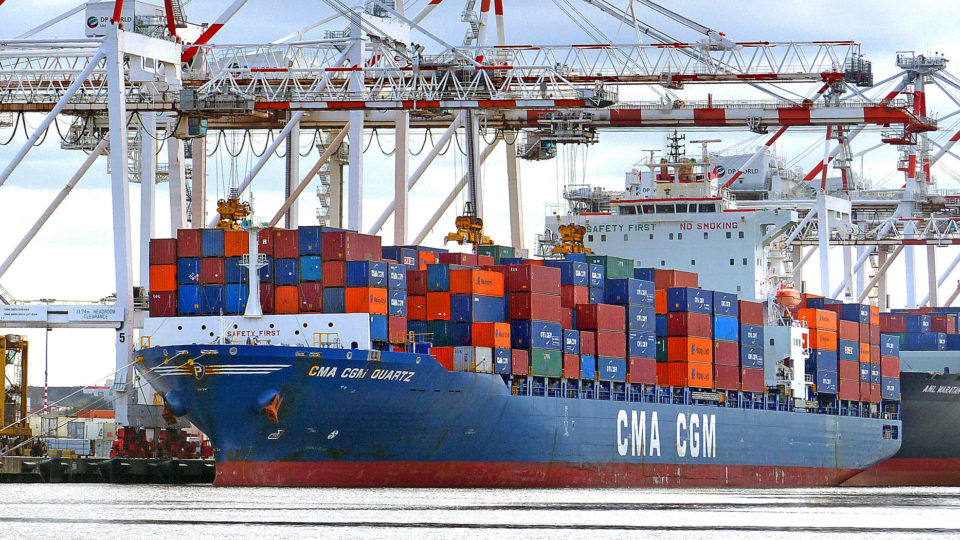
Cargo ships are significant sources of global air pollution because of their fuel oil.  Most ships burn something called “bunker fuel” which is a pitch-black, molasses-thick fuel made from the dregs of the oil refining process.  It is loaded with sulfur, so when it is burned it produces noxious gases and fine particles that can harm human health and the environment.  Because bunker fuel is made from petroleum refining residues, waste byproducts sometimes end up in the mix, making the stuff even a worse source of pollution.

[Read more…] about Cleaning Up Shipping Fuel

Oman’s Rocks

June 13, 2018 By EarthWise Leave a Comment

https://earthwiseradio.org/wp-content/uploads/2018/05/EW-06-13-18-Omans-Rocks.mp3

There is growing interest in the idea of capturing and storing carbon dioxide.  Reducing the amount of it we are putting into the atmosphere is essential for limiting the effects of climate change, but even eliminating emissions entirely is not enough because the CO2 already there stays in the atmosphere for decades or more.

[Read more…] about Oman’s Rocks

The High Cost Of The Cloud

May 2, 2018 By EarthWise Leave a Comment

https://earthwiseradio.org/wp-content/uploads/2018/05/EW-05-02-18-The-High-Cost-of-the-Cloud.mp3

More and more often we make use of “the cloud” – that mysterious place where we store, move, process and analyze data.  We keep our photos there.  We stream music and videos from there.  We do our work there.  Perhaps we have a mental image of all of this digital information floating above our heads in some ethereal way:  like in a cloud.

[Read more…] about The High Cost Of The Cloud

U.S. Offshore Wind Powering Up

February 26, 2018 By EarthWise Leave a Comment

https://earthwiseradio.org/wp-content/uploads/2018/02/EW-02-26-18-U.S.-Offshore-Wind.mp3

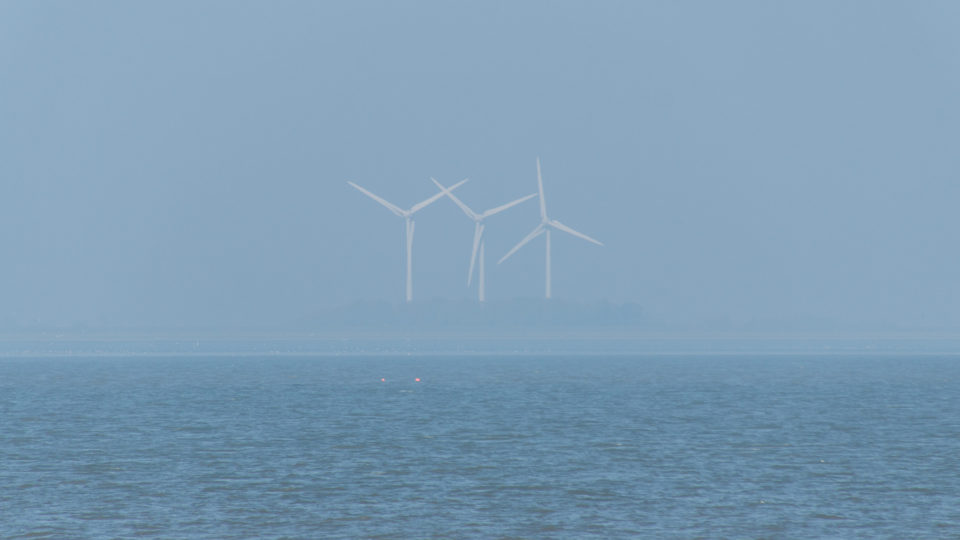
After many years of false starts and delays, the offshore wind industry in the U.S. finally seems to be gaining momentum.  According to the Department of Energy, more than 25 offshore wind projects with a generating capacity of 24 gigawatts are now being planned.  Most of these are off of the Northeast and Mid-Atlantic coasts.

[Read more…] about U.S. Offshore Wind Powering Up

An Internal Price On Carbon

December 11, 2017 By EarthWise Leave a Comment

https://earthwiseradio.org/wp-content/uploads/2017/11/EW-12-11-17-An-Internal-Price-on-Carbon.mp3

As the world looks to reduce carbon emissions, many companies are dealing with paying for their carbon emissions as part of the cost of doing business.  But apart from the situations in which companies already are required to pay for their carbon emissions, a growing number of companies now build carbon pricing into their business plans even if they are not yet directly paying for their emissions.  This practice is known as putting an internal price of carbon into their business plan.

[Read more…] about An Internal Price On Carbon

New Places For Solar Cells

October 5, 2017 By EarthWise Leave a Comment

https://earthwiseradio.org/wp-content/uploads/2017/10/EW-10-05-17-New-Places-for-Solar-Cells.mp3

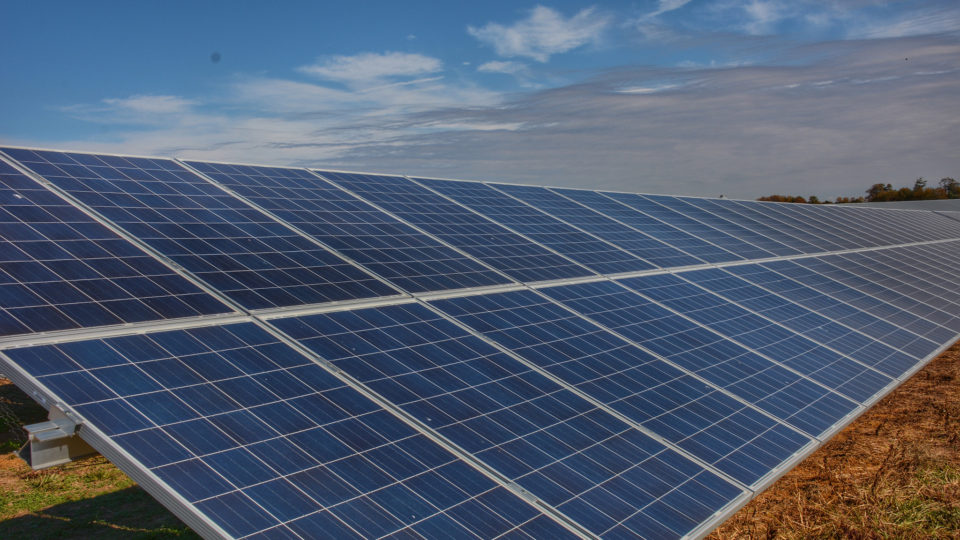
Solar panels are on more than a million rooftops in the United States, so they are getting to be a pretty common sight.   We also see them along our highways powering lights and signs and emergency call boxes.  As it gets cheaper and more common, solar technology is starting to show up in more unusual ways.

[Read more…] about New Places For Solar Cells

Old-School Companies And Renewable Energy

April 12, 2016 By WAMC WEB

https://earthwiseradio.org/wp-content/uploads/2016/03/EW-04-12-16-Companies-and-Renewables.mp3

The biggest Internet companies have been embracing renewable energy for years now.  The company that bought the largest amount of clean energy last year was Google, which has three times the renewable capacity of the next biggest user.  Other familiar names in the top ten companies in total wind and solar capacity include Amazon, Facebook, Microsoft, and Apple.  These companies have been ahead of the pack in looking for sustainable ways to meet their substantial energy needs.

[Read more…] about Old-School Companies And Renewable Energy

  • « Go to Previous Page
  • Page 1
  • Page 2
  • Page 3

Primary Sidebar

Recent Episodes

  • An uninsurable future
  • Clean energy and jobs
  • Insect declines in remote regions
  • Fossil fuel producing nations ignoring climate goals
  • Trouble for clownfishes

WAMC Northeast Public Radio

WAMC/Northeast Public Radio is a regional public radio network serving parts of seven northeastern states (more...)

Copyright © 2026 ·