• Skip to primary navigation
  • Skip to main content
  • Skip to primary sidebar

Earth Wise

A look at our changing environment.

  • Home
  • About Earth Wise
  • Where to Listen
  • All Articles
  • Show Search
Hide Search
You are here: Home / Archives for chemicals

chemicals

Jet Fuel From Acetone | Earth Wise

February 25, 2020 By EarthWise Leave a Comment

Greening Jet Fuel

Acetone is a common organic solvent.  It is used to make plastic, fibers, drugs, and other chemicals.  It is commonly used by consumers as nail polish remover.  Acetone is a manufactured chemical, but it is also found naturally in the environment in plants, among other places. There are now companies that produce acetone entirely by fermentation of plant feedstocks, such as corn.

Researchers at Los Alamos National Laboratory have now developed a process by which acetone can be converted into a fuel additive that can improve the performance of petroleum-based jet fuel, providing both environmental and economic benefits.

The process takes biomass-derived acetone and converts it to isophorone, which they produce by a process called photochemical cycloaddition that creates more complex hydrocarbons.  They then use ultraviolet light to convert the isophorone into cyclobutane, which is a type of hydrocarbon with high energy density that is suitable for aviation fuel applications.

Acetone itself is quite volatile and is unsuitable for fuel applications.  It also cannot be added directly to any fuel supply since it can dissolve engine parts and o-rings.  Cyclobutane, on the other hand, is a safer and more energy-dense fuel that can be a replacement for additives that require high-pressure hydrogen treatment in their synthesis.  Currently, most hydrogen is produced by a process that generates carbon dioxide.  The new conversion process does not result in carbon emissions.

According to the Los Alamos researchers, their process can result in a domestically generated product that will provide environmental benefits, create domestic jobs, improve U.S. energy security, and further U.S. global leadership in bioenergy technologies.

**********

Web Links

Acetone plus light creates a green jet fuel additive

Photo, posted December 18, 2007, courtesy of Flickr.

Earth Wise is a production of WAMC Northeast Public Radio.
Mealworms And Plastic | Earth Wise

January 21, 2020 By EarthWise Leave a Comment

Mealworms and Plastic

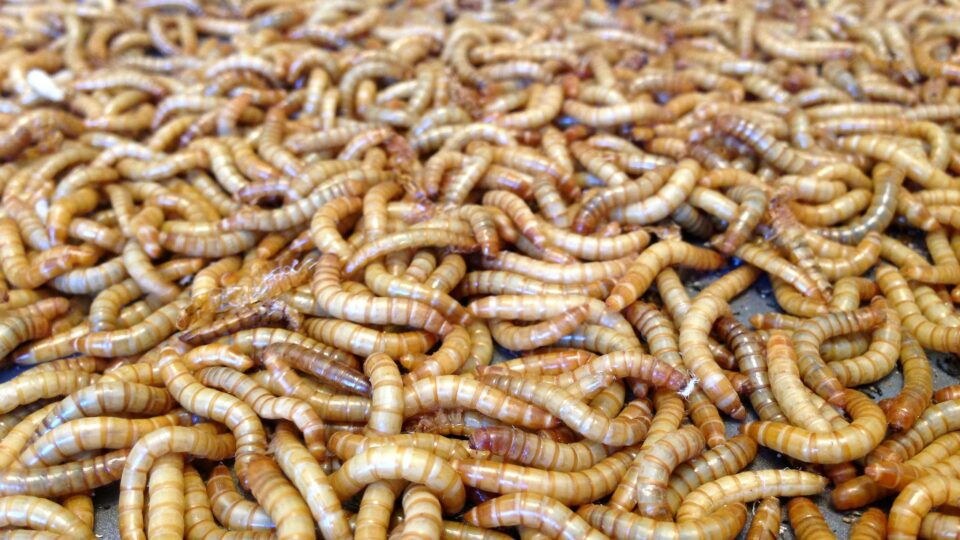
Mealworms are widely cultivated beetle larvae that people feed to pets and to wild birds.  But it turns out, they may have an even more valuable purpose:  they can eat plastic and even plastic containing dangerous chemical additives.

Four years ago, researchers at Stanford discovered that mealworms can actually subsist on a diet of various types of plastic.  They found that microorganisms in the worms’ guts actually biodegrade the plastic.  It might be possible to cultivate the worms using unrecyclable plastic, rather than feeding them grains and fruits.   However, there is the issue of whether it would be safe to feed the plastic-eating worms to other animals, given the possibility that harmful chemicals in plastic additives might accumulate in the worms over time.

Recently, the Stanford researchers studied what happens when the worms ingested Styrofoam or polystyrene.  The plastic commonly used for packaging and insulation typically contains a flame retardant called hexabromocyclododecane, or HBCD.  Studies have shown that HBCD can have significant health and environmental impacts, ranging from endocrine disruption to neurotoxicity.

According to the study, mealworms in the experiment excreted about half of the polystyrene they consumed as tiny, partially degraded fragments and the other half as carbon dioxide.  With it, they excreted the HBCD.  Mealworms fed a steady diet of HBCD-laden polystyrene were as healthy as those eating a normal diet.  And shrimp fed a steady diet of the HBCD-ingesting mealworms also had no ill effects.

It is true that the HBCD excreted by the worms still poses a hazard and must be dealt with in some manner, but mealworms may have a role to play in dealing with unrecyclable plastics like Styrofoam.

**********

Web Links

Stanford researchers show that mealworms can safely consume toxic additive-containing plastic

Photo, posted May 11, 2015, courtesy of Flickr.

Earth Wise is a production of WAMC Northeast Public Radio.
Converting A Toxin Into An Industrial Chemical | Earth Wise

January 16, 2020 By EarthWise Leave a Comment

Converting toxin into industrial chemical

Nitrogen dioxide is a prominent air pollutant produced by internal combustion engines burning fossil fuels as well as by a variety of industrial processes.  It is a toxic material associated with a number of respiratory illnesses. 

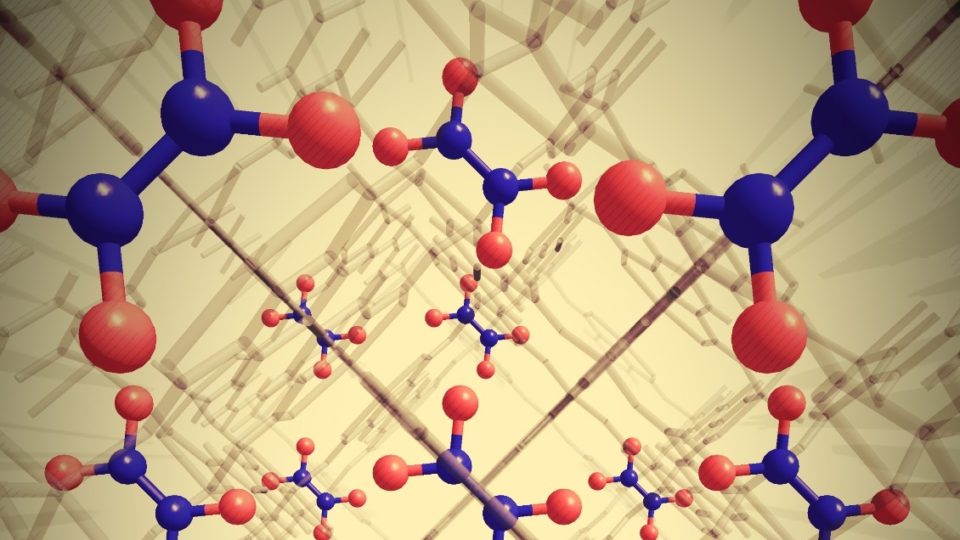
Researchers at the University of Manchester in the UK along with an international team of scientists have developed a new advanced material that can convert nitrogen dioxide from an exhaust gas stream into useful industrial chemical using only water and air.

The material is a metal-organic framework (or MOF) that provides a selective, fully reversible, and repeatable capability to capture nitrogen dioxide.  MOFs are tiny three-dimensional structures that are porous and can trap gases inside as though there were tiny cages.  MOFs have enormous amounts of surface area for their size.  One gram of material can have a surface area as large as a football field.

The material, named MOF-520, can capture nitrogen dioxide at ambient temperatures and pressures and even at low concentration and during flow in the presence of moisture, sulfur dioxide, and carbon dioxide.  Such conditions are typical of the exhaust of internal combustion engines. In fact, the process works best at the typical temperature of automobile exhausts.

Once the nitrogen oxide is absorbed, treating the material with water in air converts it into nitric acid and restores the MOF for additional use.  Nitric acid is the basis of a multi-billion dollar industry with uses including agricultural fertilizers, rocket propellant, and nylon.  Thus, there is great potential for recouping the costs of using the MOF technology and even profiting from it.

It would be great to convert a toxic pollutant into valuable industrial chemicals.

**********

Web Links

Clean air research converts toxic air pollutant into industrial chemical

Photo courtesy of the University of Manchester.

Earth Wise is a production of WAMC Northeast Public Radio.
Carbon Capture As Big Business

December 26, 2019 By EarthWise Leave a Comment

Removing greenhouse gasses from the atmosphere is an essential part of the overall effort to achieve zero net carbon emissions and stabilize the climate.  Since we have not been able to reduce emissions fast enough to do the job, it is important to find ways to pull carbon dioxide out of the atmosphere.

There are many ways to do it, but they tend to be rather expensive and, so far, the need to mitigate climate change does not seem to provide sufficient incentive. A new study by researchers at UCLA, the University of Oxford, and five other institutions, analyzed the possibility of creating a large global industry based on capturing carbon dioxide and turning it into commercial products.

The study investigated the potential future scale and cost of 10 different ways to use carbon dioxide, including in fuels and chemicals, plastics, building materials, soil management, and forestry.  The study looked at processes using carbon dioxide captured from waste products that are produced by burning fossil fuels as well as by simply capturing it directly from the atmosphere.  The study also looked at processes that use carbon dioxide captured biologically by photosynthesis.

The conclusions of the study were that on average each of the ten utilization pathways could use about half a billion tons of carbon dioxide that would otherwise escape into the atmosphere.  Thus, theoretically, these various pathways could take more than five billion tons of CO2 out of the atmosphere.   Currently, fossil fuel combustion emits about 40 billion tons of carbon dioxide.

The authors of the study stress that there is no silver bullet in the fight against climate change.  It will require multiple approaches – including CO2 removal for industrial use – to make real progress

**********

Web Links

Carbon dioxide capture and use could become big business

Photo, posted September 18, 2015, courtesy of Tony Webster via Flickr.

Earth Wise is a production of WAMC Northeast Public Radio.

Lake George Health Report

December 26, 2019 By EarthWise Leave a Comment

The Offshore Chemistry Program, run by the Darrin Fresh Water Institute at RPI, has been monitoring the deep waters of Lake George in New York for 40 years.  Lake George, nicknamed the Queen of American Lakes, is famed for the transparency of its water and a new report on the health of the lake reveals that it is doing rather well.

According to the report, although concentrations of chemicals and pollutants like salt and nutrients have increased in the deep waters of Lake George, they are still too low to harm the ecosystem at those depths.

The Offshore Chemistry Program studies the lake as part of a collaboration between RPI, IBM Research, and the FUND for Lake George that is called the Jefferson Project.  This long-term commitment provides a wealth of information over time matched by few lake studies in the world.

The recent results show that levels of salt, the nutrient orthophosphate, and chlorophyll have increased substantially over time, but none are yet at a level that will cause harm.

Orthophosphate occurs naturally, but most likely the higher levels are due to improperly functioning septic systems, failing wastewater treatment systems, and stormwater runoff.  The orthophosphate most likely triggered the increase in chlorophyll, which probably is associated with increased density of chlorophyll in individual algal cells, rather than an increase in total algal mass in the lake.

Overall, the results demonstrate the continuing resilience of Lake George to a growing array of stressors.  In nearly 40 years of human activities, the lake has changed in a number of ways, but the changes have so far been relatively small.  With such careful monitoring, we can hope to keep them that way.

**********

Web Links

Four Decades of Data Sounds Early Warning on Lake George

Photo, posted September 24, 2009, courtesy of GPA Photo Archive via Flickr.

Earth Wise is a production of WAMC Northeast Public Radio.

Breaking Down Forever Chemicals

October 25, 2019 By EarthWise Leave a Comment

One of the toughest classes of pollutants are per- and polyfluoralkyl substances, or PFAS, as they are known.  PFAS are often called “forever chemicals” because they are extremely long-lasting and difficult to clean up.  They are found in household products including non-stick pans, dental floss, water-repellent fabrics, and many others.  They can be found extensively in U.S. waterways and soil.

PFAS move through the food chain, accumulating in humans at levels that scientists say can cause adverse health effects.  While these have not been definitively proven, there is evidence that higher cholesterol levels, cancer, thyroid disruption, and low infant birth rates are all associated with PFAS ingestion.

PFAS are difficult to get rid of because their carbon-fluorine covalent bonds are some of the strongest in organic chemistry.  Researchers at Princeton University have been studying a process known as Feammox in which ammonium breaks down in acidic, iron-rich soils in New Jersey wetlands and similar locations.  They found that this reaction takes place when a bacterium called Acidimicrobium A6 is present.

Using gene-sequencing techniques, they found that the microbe has characteristics that could help break down carbon-fluorine bonds, and therefore break down PFAS.  In tests using microbe-loaded soil samples, they found that the bacterium removed 60% of PFAS pollutants within 60 days.

The research has been published in the journal Environmental Science and Technology and the team is now testing the bacterium’s effectiveness over different time-spans in lab conditions before testing it in the field.

**********

Web Links

New Jersey Soil Microbe Shown to Break Down ‘Forever Chemicals’

Photo, posted November 9, 2017, courtesy of the Department of Environmental Quality via Flickr.

Earth Wise is a production of WAMC Northeast Public Radio.

Birds Are Disappearing

October 16, 2019 By EarthWise 1 Comment

A new analysis, published in the journal Science, reports that the number of birds in the United States and Canada has fallen by 29% since 1970.  There are 2.9 billion fewer birds in the two countries now than there were 50 years ago.

The analysis is the most comprehensive attempt to date to look at the status of avian populations.  The results were a shock to researchers and conservation organizations.

It is well-known that some bird species have become vulnerable to extinction, but the new study, which surveyed more than 500 species, uncovered steep losses even among such traditionally abundant birds as robins and sparrows.

There appear to be multiple causes for the steep declines.  The largest ones are likely habitat loss and the wider use of pesticides.  Rachel Carson’s 1962 book Silent Spring warned of the dangers of pesticides and took its title from a world that has lost its birds.

The survey includes 76% of all bird species in the US and Canada, but actually represents almost the entire population of birds.  Grassland species have suffered the biggest declines by far, as a result of modern agriculture and development.  Pesticides, such as neonicotinoids, make it harder for birds to put on weight needed for migration, delaying their travel.

There are a few bright spots:  bald eagles are thriving, and falcon and waterfowl populations are on the upswing.  These are species that have been the subject of conservation measures in recent decades.

Stopping the bird decline will require a great deal of effort to defend habitats, restrict chemicals, and redesign buildings.  Without that effort, birds will continue to disappear.

**********

Web Links

Birds Are Vanishing From North America

Photo, posted April 1, 2012, courtesy of Barry Skeates via Flickr.

Earth Wise is a production of WAMC Northeast Public Radio.

Cleaner Air Saves Lives

September 25, 2019 By EarthWise Leave a Comment

A new study by Columbia University has concluded that lower air pollution levels saved an estimated 5,660 lives in New York State in 2012, compared to 2002 mortality levels.

The study looked at New York State levels of the specific type of pollution known as fine particulate matter, referred to as PM2.5.  These microscopic particulates are a mixture of solid particles and liquid droplets that either come from burning fuel or are formed in the atmosphere as a result of complex reactions of chemicals such as sulfur dioxide and nitrogen oxides from power plants, industries, and automobiles.

Long-term exposure to PM2.5 can lead to respiratory and cardiovascular problems.

The study looked at extensive amounts of data to analyze trends in PM2.5 levels across New York State.  The data showed that PM2.5 levels dropped by 28 to 37% between 2002 and 2012.  This was a result of continued progress in cleaner vehicles, the reduction of high sulfur-dioxide emitting coal-burning power plants, and other air pollution reduction programs.  They calculated that this amount of reduction in PM2.5 reduced the air pollution mortality burden for New York State residents by 67% – from 8,410 premature deaths in 2002 to 2,750 deaths in 2012.

The study provides evidence that emission controls on air pollutants – which were initiated by the Clean Air Act of 1970 and later expanded in 1990 – have improved public health across New York State.  According to the researchers, the study is a key step to documenting the health benefits from cleaner air.

**********

Web Links

Air Pollution Cuts Are Saving Lives in New York State

Photo, posted June 29, 2014, courtesy of Paul Comstock via Flickr.

Earth Wise is a production of WAMC Northeast Public Radio.

China And Rare Earth Mining

September 4, 2019 By EarthWise Leave a Comment

Rare earth elements are a crucial part of much of modern technology.  Everything from computers to X-ray machines and aircraft engines needs one or more rare earth elements for magnets, lenses, and other functions.  The world’s tech giants such as Apple, Huawei, and Tesla depend on suppliers of rare earths.

Rare earth elements are not actually rare, but they are very expensive to extract in ways that are not extremely harmful to the environment.  China has been a major source of these elements since its rare earth mining industry took off in the 1990s.  The removal of rare earths from the earth’s crust, using a mix of water and chemicals, has caused extensive water and soil pollution.

Today, concrete leaching ponds and plastic-lined wastewater pools dot the hills of Southeast China.  Large wastewater ponds sit uncovered and open to the elements in many places.  Landslides or barrier failures can spill contaminated contents into waterways or groundwater.

Local and federal officials in China have started to shut down illegal and small-scale rare earth mining operations and have embarked on a cleanup of polluted sites.  The rare earth mining cleanup operation is part of wider efforts across China to address severe problems of water, air and soil pollution.

China’s Ministry of Industry and Information Technology estimated that the cleanup bill for southern Jiangxi Province could amount to more than $5 billion.  Many environmental experts and local officials say that the cost of the cleanup should not be shouldered by the Chinese government alone, but also by the rare earth industry and the global companies and consumers that benefit from rare earth technology.  As rare earth mining efforts start up elsewhere around the world, it is important not to repeat the mistakes made in China.

**********

Web Links

China Wrestles with the Toxic Aftermath of Rare Earth Mining

Photo, posted April 21, 2019, courtesy of John Beans via Flickr.

Earth Wise is a production of WAMC Northeast Public Radio.
Controlling Malaria Without Chemicals

August 28, 2019 By EarthWise Leave a Comment

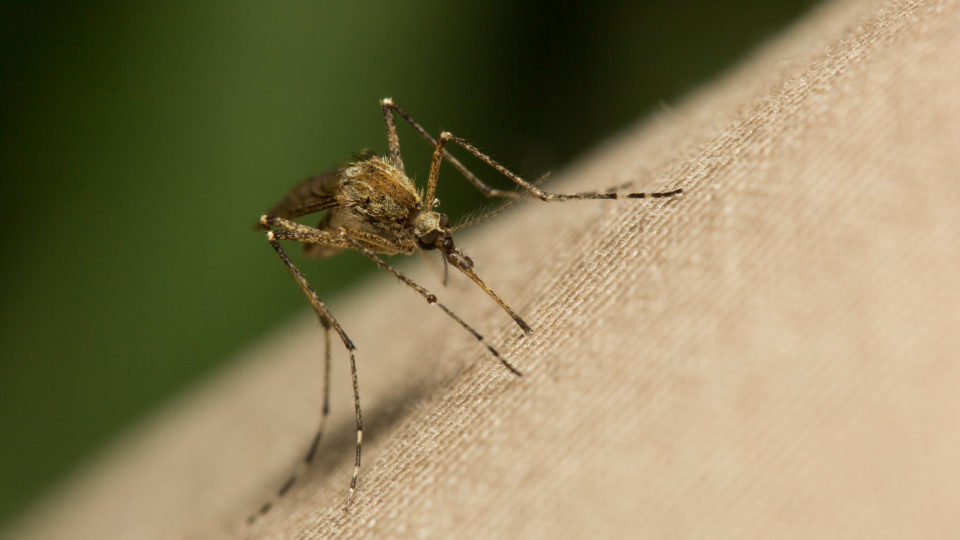
Nearly half of the world’s population lives in areas vulnerable to malaria.  The disease kills roughly 450,000 people each year, most of them children and pregnant women.  Malaria is spread by Anopheles mosquitoes and, over time, the mosquitoes have been developing resistance to the chemical insecticides that are used to control them.  In addition, there is great concern about the toxic side effects of the chemicals used on the mosquitoes.

About 30 years ago, scientists identified a type of bacteria that kills Anopheles, but the mechanism was not understood.  As a result, the bacteria could not be replicated or used as an alternative to chemical insecticides.

But now, an international research team, headed by researchers at UC Riverside, has identified the neurotoxin produced by the bacteria and has determined how it kills Anopheles.  The work is described in a paper published in Nature Communications.

It took the team 10 years to achieve a breakthrough in understanding the bacteria.  Modern gene sequencing techniques were the key.

While many neurotoxins target vertebrates and are highly toxic to humans, the neurotoxin that kills Anopheles mosquitoes does not affect humans, vertebrates, fish, or even other insects.  Known as PMP1, the substance is not even toxic to mice when given by direct injection.

The team has applied for a patent on this discovery and hopes to find partners to help them develop the bacteria-based insecticide.

There is a high likelihood that PMP1 actually evolved to kill the Anopheles mosquito.  This finding opens the door to new avenues of research into other environmentally friendly insecticides that would be targeted at other disease-spreading pests.

**********

Web Links

Controlling deadly malaria without chemicals

Photo, posted June 9, 2018, courtesy of Mario Yardanov via Flickr.

Earth Wise is a production of WAMC Northeast Public Radio.
Heat And Plastic Bottles

August 21, 2019 By EarthWise Leave a Comment

In the middle of July, Americans along the East Coast and in the Midwest suffered through a massive heat wave that saw actual temperatures soaring and so-called feels-like temperatures go much higher.  The punishing heat had many of us reaching for those plastic water bottles all day long as we tried to keep hydrated.

Studies have shown that those single-use plastic bottles do not handle the heat very well.  Most plastic items release tiny amounts of chemicals into the beverages or food that they contain.   But the hotter it gets, the more the substances in plastic can move into food or drinking water.  As temperature and time increase, the chemical bonds in plastics increasingly break down and chemicals are more likely to leach.

A study at Arizona State University in 2008 looked at how heat sped up the release of the element antimony in bottles made of the common plastic PET.  Antimony is used to manufacture the plastic and can be toxic in high doses.  At mild temperatures, very little antimony is released.  But PET and other plastics can leach a variety of chemicals when exposed to higher temperatures.

According to the FDA, the amounts of chemicals released by plastics are too miniscule to cause health problems.  However, scientists are still looking at the long-term effects of using so much plastic.  The question is whether all those small doses can eventually add up to something not so harmless.  Given that we don’t really know the cumulative effect of being surrounded by plastics in the goods we buy as well as the presence of microplastics in our water, it seems like a good idea to try to limit our exposure when alternatives are available.

**********

Web Links

Exposed to extreme heat, plastic bottles may ultimately become unsafe

Photo, posted June 7, 2013, courtesy of Tim Stahmer via Flickr.

Earth Wise is a production of WAMC Northeast Public Radio.

Plant-Based Jet Fuels

May 9, 2019 By EarthWise Leave a Comment

The global aviation industry uses a whole lot of fuel:  more than 5 million barrels a day.  It is an incredibly energy-intensive industry and almost all of its energy comes from petroleum-based fuels.

While other large energy sectors such as electric power, ground transportation and commercial buildings have well-defined pathways to adopting renewable energy sources, the aviation industry does not have such a straightforward way to make a transition to sustainability.  Electrifying planes using batteries or fuel cells is very challenging for a number of reasons, notably the weight restrictions on aircraft.  So liquid biofuels as replacements for petroleum-based fuels remain the most promising approach.

A new study at the Lawrence Berkeley National Laboratory concludes that sustainable plant-based biofuels could provide a competitive alternative to conventional petroleum fuels if current development and scale-up initiatives are successful.

Multidisciplinary teams based at the Department of Energy’s Joint BioEnergy Institute are focused on optimizing each stage of the bio-jet fuel production process.  This includes bioengineering ideal source plants and developing methods for efficiently isolating the carbohydrates in non-food biomass that bacteria can digest and bioconvert into fuel molecules.

The critical issue is cost.  The theoretical cost of bio-jet fuel has come down dramatically in recent years but is still around $16 a gallon.  The cost of standard jet fuel is about $2.50 a gallon.  So, the real challenge is bridging that gap.

Reducing the cost of the fuel could come both from the material and process improvements that are underway as well as by finding ways to turn the leftover lignin residuals from the bioconversion process into valuable chemicals. 

**********

Web Links

Bright Skies for Plant-Based Jet Fuels

Photo, posted March 28, 2009, courtesy of Yasuhiro Chatani via Flickr.

Earth Wise is a production of WAMC Northeast Public Radio.

Cleaner Air For China

December 5, 2018 By EarthWise Leave a Comment

https://earthwiseradio.org/wp-content/uploads/2018/12/EW-12-05-18-Cleaner-Air-for-China.mp3

For more than 15 years, the Chinese government has been grappling with some of the deadliest air pollution in the world.  Extreme pollution events are a regular wintertime occurrence and health experts estimate that more than a million people die each year in China from particulate air pollution.

[Read more…] about Cleaner Air For China

A Battery That Eats Carbon Dioxide

October 30, 2018 By EarthWise Leave a Comment

https://earthwiseradio.org/wp-content/uploads/2018/10/EW-10-30-18-A-Battery-That-Eats-CO2.mp3

Fossil fuel-based power plants are increasingly considering the use of carbon capture technologies as a way to reduce emissions.  The biggest challenge to the wide-spread adoption of such technology is its energy cost, which of course equates to economic cost.  Present-day power plants equipped with carbon capture systems can use up to 30% of the electricity they generate just to power the capture, release, and storage of carbon dioxide.

[Read more…] about A Battery That Eats Carbon Dioxide

Cleaning Up Storm Water

October 4, 2018 By EarthWise Leave a Comment

https://earthwiseradio.org/wp-content/uploads/2018/09/EW-10-04-18-Cleaning-Up-Storm-Water.mp3

Storm water reclamation is an important activity for cities with limited water resources, such as those in Southern California.   Many places have small-scale reclamation efforts using rain gardens and bioswales.  Collecting storm water on a large scale faces a number of problems.

[Read more…] about Cleaning Up Storm Water

Using The Sun To Remove Ice

October 3, 2018 By EarthWise Leave a Comment

https://earthwiseradio.org/wp-content/uploads/2018/09/EW-10-03-18-Using-the-Sun-to-Remove-Ice.mp3

Ice buildup can cause all sorts of problems ranging from performance issues to catastrophic failures.  For example, ice buildup can negatively impact things like airplanes, power lines, wind turbines, and the like.  Preventing this ice buildup typically requires energy-intensive heating systems or environmentally-harmful chemical sprays.

[Read more…] about Using The Sun To Remove Ice

A New Way To Store Hydrogen

September 20, 2018 By EarthWise Leave a Comment

https://earthwiseradio.org/wp-content/uploads/2018/09/EW-09-20-18-A-New-Way-to-Store-Hydrogen.mp3

Several major automakers including Toyota, Honda and BMW are betting that hydrogen-fueled cars will be a dominant technology in the future.  There are a number of technical and economic problems to be solved before that can happen.  Producing hydrogen in an cost-effective and environmentally-friendly way is critical.  But beyond that, one of the biggest challenges is the transportation and storage of hydrogen.

[Read more…] about A New Way To Store Hydrogen

Fish And Their Sense Of Smell

September 4, 2018 By EarthWise Leave a Comment

https://earthwiseradio.org/wp-content/uploads/2018/08/EW-09-04-18-Fish-And-Their-Sense-Of-Smell.mp3

We use our sense of smell for all sorts of things, like locating food and habitat, avoiding danger, and so on.  Fish do as well.  But instead of smelling scent molecules in the air like humans do, fish use their nostrils to sense chemicals suspended in water.  

[Read more…] about Fish And Their Sense Of Smell

Urban Streams Are Breeding Superbugs

August 14, 2018 By EarthWise Leave a Comment

https://earthwiseradio.org/wp-content/uploads/2018/08/EW-08-14-18-Urban-Streams.mp3

City streams are subjected to a constant onslaught of synthetic chemicals found in pharmaceuticals and personal care products. Wastewater treatment facilities are not designed to filter out these compounds. Instead, they flow into surface waters where they impact aquatic organisms like microbes – which perform key ecosystem services like removing excess nutrients and breaking down leaf litter.

[Read more…] about Urban Streams Are Breeding Superbugs

Infinitely Recyclable Plastic

June 8, 2018 By EarthWise Leave a Comment

https://earthwiseradio.org/wp-content/uploads/2018/06/EW-06-08-18-Infinitely-Recyclable-Plastic.mp3

Less than 10% of discarded plastic is recycled.  This is one of the major reasons that plastic waste is such a threat to the environment.  There are many challenges to recycling plastics.  For one thing, there are many different types of plastic and if they are melted together, they tend to phase-separate like oil and water and the resultant substance is structurally weak.  Sorting plastics by type is not a simple task.   More generally, it is very difficult to produce plastic with its original properties from recycled feedstock.  So recycled plastics generally end up being useful in only more limited applications.

[Read more…] about Infinitely Recyclable Plastic

  • « Go to Previous Page
  • Page 1
  • Page 2
  • Page 3
  • Page 4
  • Page 5
  • Go to Next Page »

Primary Sidebar

Recent Episodes

  • An uninsurable future
  • Clean energy and jobs
  • Insect declines in remote regions
  • Fossil fuel producing nations ignoring climate goals
  • Trouble for clownfishes

WAMC Northeast Public Radio

WAMC/Northeast Public Radio is a regional public radio network serving parts of seven northeastern states (more...)

Copyright © 2026 ·