• Skip to primary navigation
  • Skip to main content
  • Skip to primary sidebar

Earth Wise

A look at our changing environment.

  • Home
  • About Earth Wise
  • Where to Listen
  • All Articles
  • Show Search
Hide Search
You are here: Home / Archives for wood

wood

Beavers And Biodiversity

October 10, 2019 By EarthWise Leave a Comment

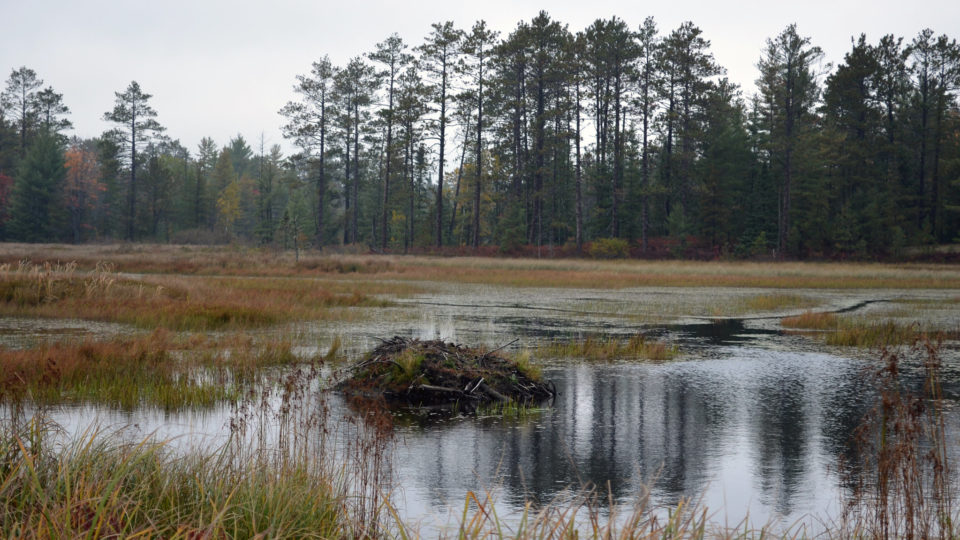
Beavers are large, semi-aquatic rodents known best for their ability to construct dams, canals, and lodges (their homes).  They are among the largest rodents in the world.  With powerful jaws and strong teeth, beavers fell trees to use as building materials, often changing their environment in ways few other animals can. But in a good way.  As it turns out, beavers are important for biodiversity. 

According to new research from the Faculty of Natural Sciences at the University of Stirling in Scotland, reintroducing beavers to their native habitats is an important step towards solving the freshwater biodiversity crisis. 

Researchers surveyed water plants and beetles in 20 wetlands in Sweden – 10 created by beavers and 10 that were not – in order to understand what impact beavers might have on the variety of plant and animal life around them. 

The research team’s findings build on previous work that has shown that beavers have an important impact on biodiversity.  This latest study discovered that the number of species found only in beaver-built ponds was 50% higher than in other non beaver-built wetlands in the same region. 

Beavers are known to be profound engineers of the environment. They use wood to build dams across rivers in order to form ponds behind them.  They do this to raise the water level in order to avoid predators, like bears and wolves. But it turns out many other plants and animals, like water plants and beetles, also benefit from their work.

According to the research team, reintroducing beavers to their native habitats should benefit the wider biodiversity and be seen as an important step towards solving the freshwater biodiversity crisis. 

**********

Web Links

Beaver reintroduction key to solving freshwater biodiversity crisis

Photo, posted October 2, 2014, courtesy of USFWS Midwest Region via Flickr.

Earth Wise is a production of WAMC Northeast Public Radio.
Mass Timber

June 10, 2019 By EarthWise Leave a Comment

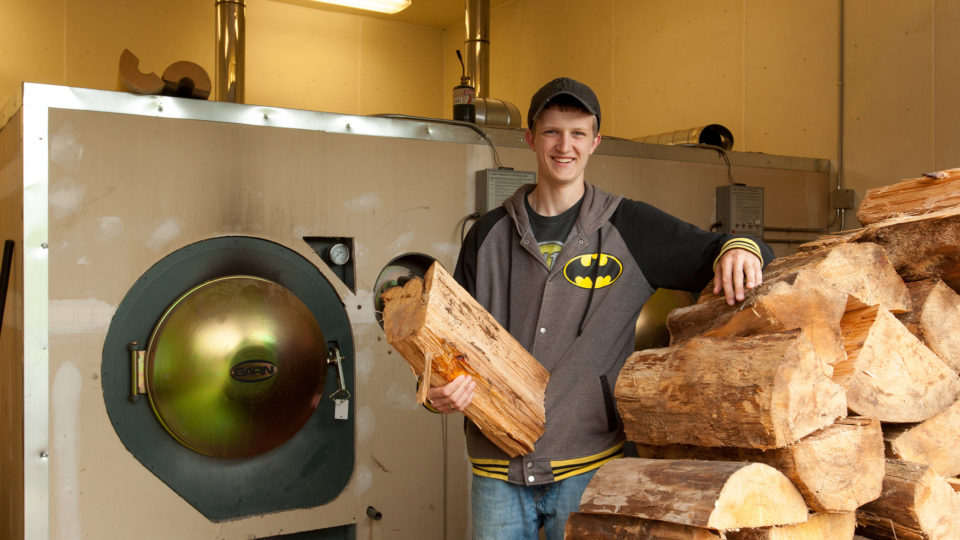
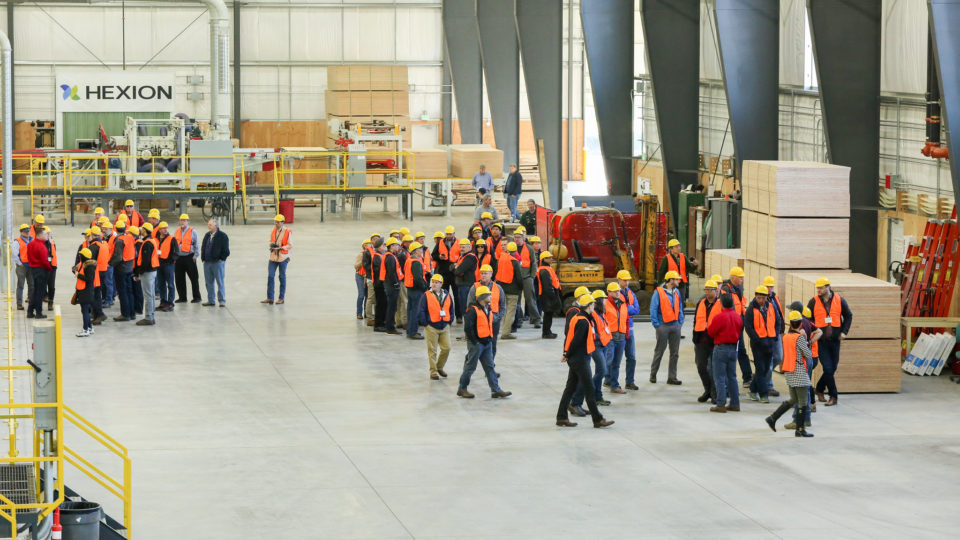
Mass timber is a type of construction typically characterized by the use of large solid wood panels for wall, floor, and roof construction. Large structural panels, posts, and beams glued under pressure or nailed together in layers, with the wood’s grain stacked perpendicular for extra strength – are prized as innovative building materials, superior to concrete and steel in many ways.  Mass timber has pushed the perceived boundaries of wood construction, leading to building heights and spans that traditionally have required concrete, steel or masonry for structural support. The move to mass timber has become something of a construction revolution and many see it as a significant part of a climate change solution. 

The question is just how green is mass timber construction?  How sustainable is it in terms of the forest management, logging, manufacture and transportation of wood products involved?

A number of environmental groups are very skeptical.  There is not yet comprehensive data on the subject.  Only recently have interdisciplinary scientists begun to study the potential climate impacts of the wide use of mass timber.

Despite these questions, the mass timber industry is taking off.  Demand for mass timber posts and beams has led to new sawmills opening in the U.S. Northwest and many new jobs for loggers.

The aesthetics and economics of mass timber are both very attractive compared with conventional large-scale construction materials.  The real unknowns relate to the environmental impact of its widespread use.  If that can take place in a sustainable and environmentally conscientious way, it would be very important in the fight against climate change.  Carbon dioxide emissions from the building industry account for more than a third of global emissions, primarily from the concrete and steel industries.

**********

Web Links

As Mass Timber Takes Off, How Green Is This New Building Material?

Photo, posted March 19, 2018, courtesy of Freres Lumber Co via Flickr.

Earth Wise is a production of WAMC Northeast Public Radio.
Carbon And North American Forests

September 24, 2018 By EarthWise Leave a Comment

https://earthwiseradio.org/wp-content/uploads/2018/09/EW-09-24-18-Carbon-and-North-American-Forests.mp3

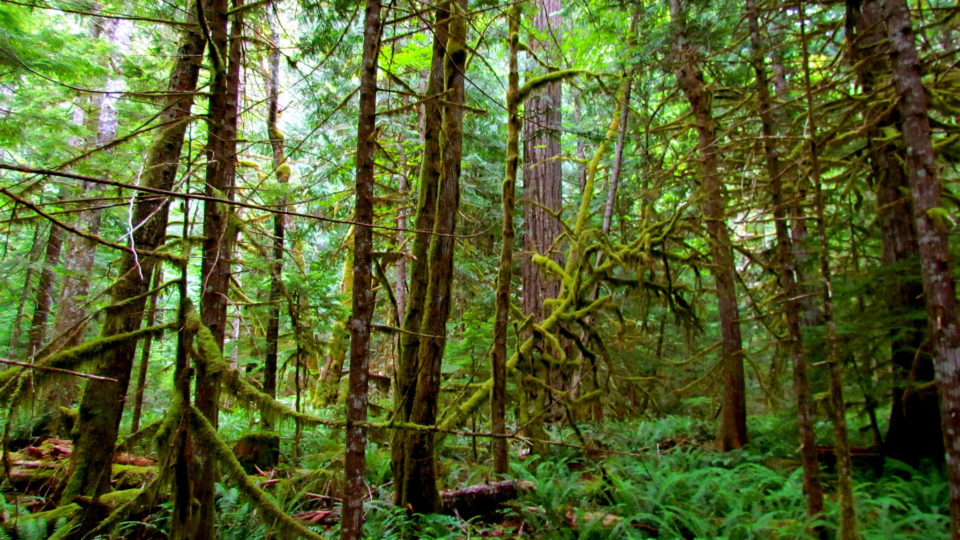
Researchers have for the first time calculated the capacity of North American forests to sequester carbon.  The detailed analysis by UC Santa Cruz and collaborators in China and Arizona considers two key factors:  the natural process of forest growth and regeneration, and effects brought about by climate change.

[Read more…] about Carbon And North American Forests

Biomass: Renewable But Not Sustainable

July 23, 2018 By EarthWise 1 Comment

https://earthwiseradio.org/wp-content/uploads/2018/07/EW-07-23-18-Biomass-Renewable-Not-Sustainable.mp3

Biomass is often touted as a green energy source. Just recently, the US Environmental Protection Agency declared biomass energy to be carbon neutral – a policy already embraced by many European countries. However, burning forests for fuel has hard limitations and ecological consequences.

[Read more…] about Biomass: Renewable But Not Sustainable

Renewable Energy From Wood

April 5, 2018 By EarthWise Leave a Comment

https://earthwiseradio.org/wp-content/uploads/2018/04/EW-04-05-18-Renewable-Energy-from-Wood.mp3

Biofuels are fuels produced through contemporary biological processes rather than geological processes such as those involved in the formation of fossil fuels.

[Read more…] about Renewable Energy From Wood

The Restoration Economy

March 2, 2018 By EarthWise Leave a Comment

https://earthwiseradio.org/wp-content/uploads/2018/03/EW-03-02-18-The-Restoration-Economy.mp3

Deforestation is one of the largest contributors to climate change.  Forests cover about 30% of the world’s land area and are a crucial sink for carbon dioxide.   Over time, we have been steadily reducing the amount of forest in the world to obtain wood and timber, open up farmland, build towns and cities, produce paper, make palm oil, and mine for minerals.

[Read more…] about The Restoration Economy

A Carbon Loophole

February 12, 2018 By EarthWise Leave a Comment

https://earthwiseradio.org/wp-content/uploads/2018/02/EW-02-12-18-A-Carbon-Loophole.mp3

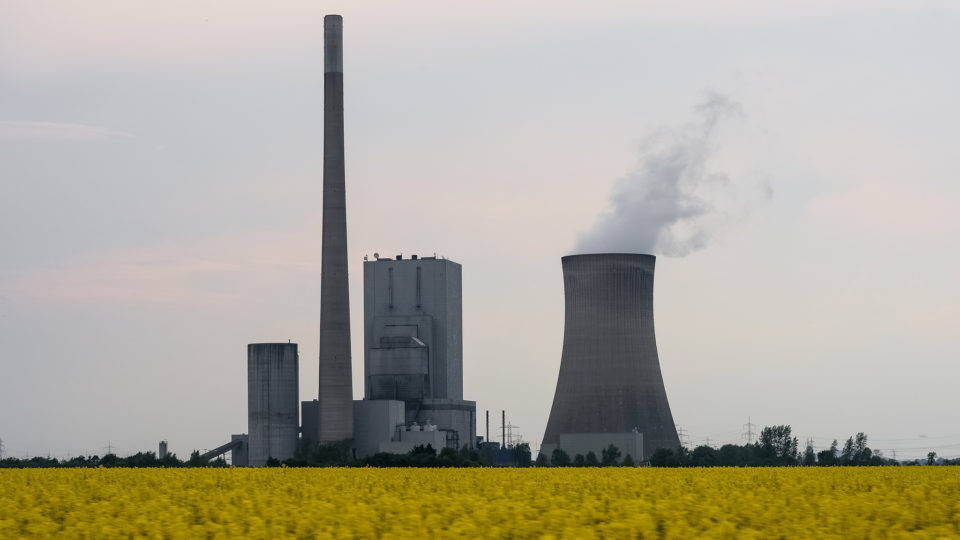
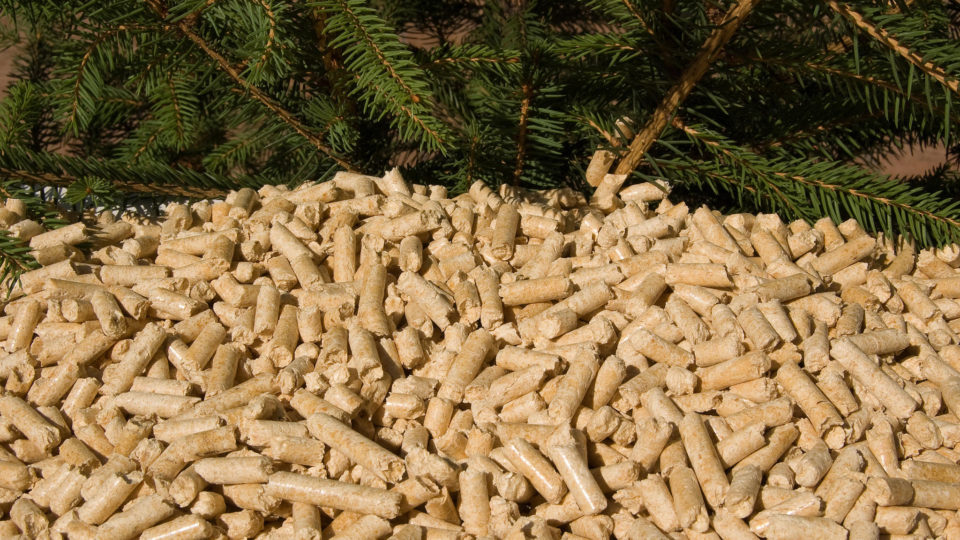
Many power plants in Europe and elsewhere are replacing coal with wood.  For example, the Drax Power Station in Britain was its largest coal-burning plant and is now using wood pellets shipped from the southern U.S. in its boilers.    According to the carbon accounting rules at the EU and elsewhere, the process is considered to be “carbon neutral.”   But is it?

The idea is that new trees are being planted in the forests where the trees are cut to be burned in power plants.  So, there is carbon neutrality.  In principle.

European countries have embarked on a massive effort to switch to generating power from renewable energy.  While there has indeed been major growth in wind and solar power in the 28 countries of the European Union, much of the new “green” power has come from burning wood in converted coal power stations.

A group of 200 scientists wrote to the EU last September insisting that bioenergy from forest biomass is not carbon neutral and that there must be tighter rules to protect forests and their carbon.  Wood burning has become a loophole in controlling carbon emissions.

There are problems with the claims of carbon neutrality.  There is no way to know whether enough new trees are actually being planted to replace those being burned.  And then there is the time lag for tree replacement.  Trees don’t grow overnight.  There are also the carbon emissions associated with harvesting, processing and transporting wood.

There are most certainly ways in which burning biomass can be carbon neutral and can represent real progress over the use of fossil fuels.  But caution must be taken to avoid exploiting loopholes in current climate rules that might actually result in increased carbon emissions.

**********


Web Links

Carbon Loophole: Why Is Wood Burning Counted as Green Energy?

Photo, posted April 26, 2014, courtesy of Flickr.


‘A Carbon Loophole’ from Earth Wise is a production of WAMC Northeast Public Radio.
The End Of British Coal

November 3, 2017 By EarthWise Leave a Comment

https://earthwiseradio.org/wp-content/uploads/2017/10/EW-11-03-17-The-End-of-British-Coal.mp3

In the 19th century, Britain produced 80% of the world’s coal.  Britain was the dominant global power in the industrial revolution with its giant blast furnaces, steam locomotives and steam ships.  And with advent of the electric age, coal once again was the power source of choice.  Even as late as the 1970s, Britain got 80% of its electricity from burning coal.

[Read more…] about The End Of British Coal

New Milestones For Renewable Energy

August 7, 2017 By EarthWise

https://earthwiseradio.org/wp-content/uploads/2017/08/EW-08-07-17-New-Renewable-Energy-Milestones.mp3

There is no question that solar power has been growing by leaps and bounds in recent years, but whenever one really looked at the numbers, it seemed to still be only a tiny fraction of the country’s power generation – until quite recently, less than one percent.

[Read more…] about New Milestones For Renewable Energy

Energy Intensity

September 7, 2016 By WAMC WEB

https://earthwiseradio.org/wp-content/uploads/2016/09/EW-09-07-16-Energy-Intensity.mp3

Every stage of civilization is characterized by its use of energy.   From burning wood to steam engines to our electrified society, energy is behind everything we do.  Over time, human society has become increasingly energy intensive.  As our standards of living have improved and as we overcome the effects of weather – either cold or warm – it takes more and more energy to live the lives we lead.

[Read more…] about Energy Intensity

Recycled Plastic Lumber

July 20, 2016 By WAMC WEB

https://earthwiseradio.org/wp-content/uploads/2016/07/EW-07-20-16-Recycled-Plastic-Lumber.mp3

One of the most notable success stories in recycling is that of structural plastic lumber.   The material is mostly polyethylene reinforced with stiff plastics or recycled composites.   Made from milk containers, coffee cups, and other recycled plastics, structural plastic lumber is lighter than steel, longer-lasting than natural lumber and strong enough to support 120-ton locomotives.

[Read more…] about Recycled Plastic Lumber

The Trouble With Burning Forests

June 23, 2016 By WAMC WEB

https://earthwiseradio.org/wp-content/uploads/2016/06/EW-06-23-16-Trouble-with-Burning-Forests.mp3

President Obama has set 2030 as the target for reducing U.S. carbon dioxide emissions to comply with the Paris Climate accord. Unfortunately, the Senate’s new Energy Bill would allow states to count wood as a “carbon neutral” fuel when drawing up plans to comply with the EPA’s Clean Power Plan.

[Read more…] about The Trouble With Burning Forests

Tiny Forest Pests Cause Big Problems

May 18, 2016 By WAMC WEB

https://earthwiseradio.org/wp-content/uploads/2016/05/EW-05-18-16-Trees-Trouble.mp3

Each year, more than 25 million shipping containers enter the U.S.  All too often, highly destructive forest pests are lurking among their imported goods. Wood boring insects arrive as stowaways in wood packaging, such as pallets and crates. Other forest pests and pathogens hitchhike in on foreign-reared plants bound for American nurseries.

[Read more…] about Tiny Forest Pests Cause Big Problems

  • « Go to Previous Page
  • Page 1
  • Page 2

Primary Sidebar

Recent Episodes

  • An uninsurable future
  • Clean energy and jobs
  • Insect declines in remote regions
  • Fossil fuel producing nations ignoring climate goals
  • Trouble for clownfishes

WAMC Northeast Public Radio

WAMC/Northeast Public Radio is a regional public radio network serving parts of seven northeastern states (more...)

Copyright © 2026 ·