• Skip to primary navigation
  • Skip to main content
  • Skip to primary sidebar

Earth Wise

A look at our changing environment.

  • Home
  • About Earth Wise
  • Where to Listen
  • All Articles
  • Show Search
Hide Search
You are here: Home / Archives for researchers

researchers

Arctic Methane Starting To Release | Earth Wise

November 24, 2020 By EarthWise Leave a Comment

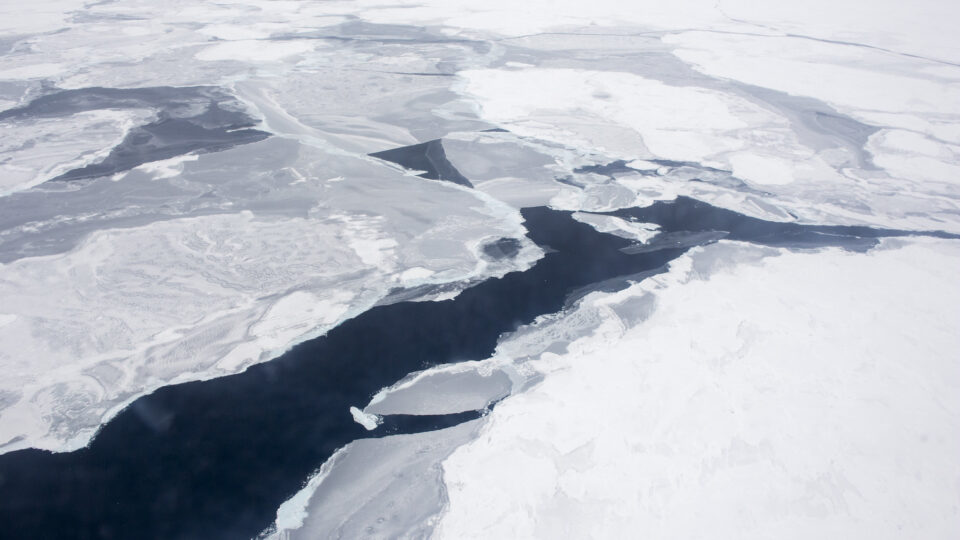
methane is releasing from the arctic

An international team of researchers has found evidence that frozen methane deposits in the Arctic Ocean have started to be released over a large area of the continental slope off the East Siberian coast.  High levels of methane have been detected down to a depth of 1,100 feet in the Laptev Sea near Russia.

The slope sediments in the Arctic contain huge quantities of methane and other gases, known as hydrates.  Methane has a warming effect 80 times stronger than carbon dioxide over a 20-year period.  The US Geological Survey has identified Arctic hydrate destabilization as one of the four most serious scenarios for abrupt climate change.

The research team aboard a Russian ship said that most of the bubbles they observed coming up from the sea bottom were dissolving in the water, but that methane levels at the surface were four to eight times what would normally be expected.

Frozen methane deposits have been called the “sleeping giants of the carbon cycle.”  If these deposit releases were to reach a high enough level, it would be a tipping point that could greatly increase the speed of global warming.  With Arctic temperatures now rising more than twice as fast as the global average, the likelihood of a significant release of the frozen methane grows greater all the time.

Temperatures in Siberia were 9 degrees Fahrenheit higher than average from January to June this year.  Last winter’s sea ice melted unusually early.  This winter’s freeze has yet to begin, which is already a later start than any time on record.

These new discharges of methane are larger than anything found before and are a very worrisome occurrence.

**********

Web Links

Arctic methane deposits ‘starting to release’, scientists say

Photo, posted September 26, 2014, courtesy of the Office of Naval Research via Flickr. Photo credit: U.S. Navy photo by John F. Williams/Released.

Earth Wise is a production of WAMC Northeast Public Radio.
Even The Deep Sea Is Warming | Earth Wise

November 17, 2020 By EarthWise Leave a Comment

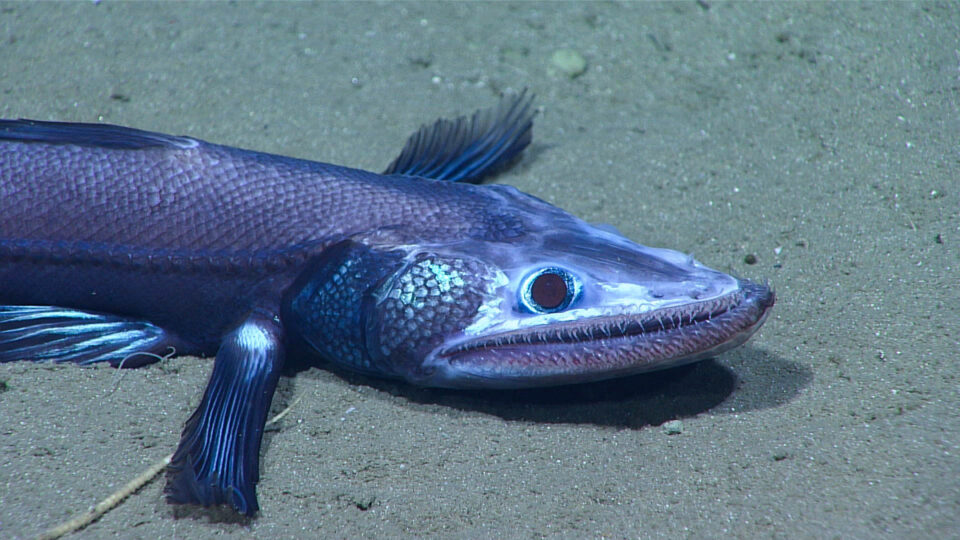
the deep sea is warming

Approximately 75% of the area covered by ocean is deep, dark, and cold.  This is known as the deep sea.  But even in these remote regions of the planet things are heating up. 

According to a new study published in the journal Geophysical Research Letters, researchers analyzed a decade of hourly temperature readings at four depths in the Atlantic Ocean’s Argentine Basin, off the coast of Uruguay.  The research team selected recording depths that would best represent the average depth of the ocean, which is just over 12,000 feet. 

The researchers found that deep sea temperatures fluctuate more than was previously known.  They also detected a warming trend at the bottom of the ocean.  In fact, all recordings indicated a warming trend of 0.02 to 0.04 degrees Celsius per decade between 2009 and 2019.  This is a significant warming trend in the deep sea because temperature fluctuations are typically measured in thousandths of a degree. 

Researchers say this increase is consistent with warming trends in the shallow ocean associated with anthropogenic climate change.  However, they say more research is needed to better understand what is driving the warming temperatures in the deep sea. 

A better understanding of what is driving these changes could have far-reaching implications.  Since oceans absorb a significant amount of the world’s heat, learning about the oceans’ temperature trends could help researchers better understand temperature fluctuations in the atmosphere as well.

The researchers hope their findings will demonstrate the need to survey deep ocean temperatures annually in order to better identify the long-term trends. 

**********

Web Links

The deep sea is slowly warming

Photo, posted July 1, 2018, courtesy of NOAA Ocean Exploration and Research via Flickr.

Earth Wise is a production of WAMC Northeast Public Radio.
Alien Species On The Rise | Earth Wise

November 3, 2020 By EarthWise Leave a Comment

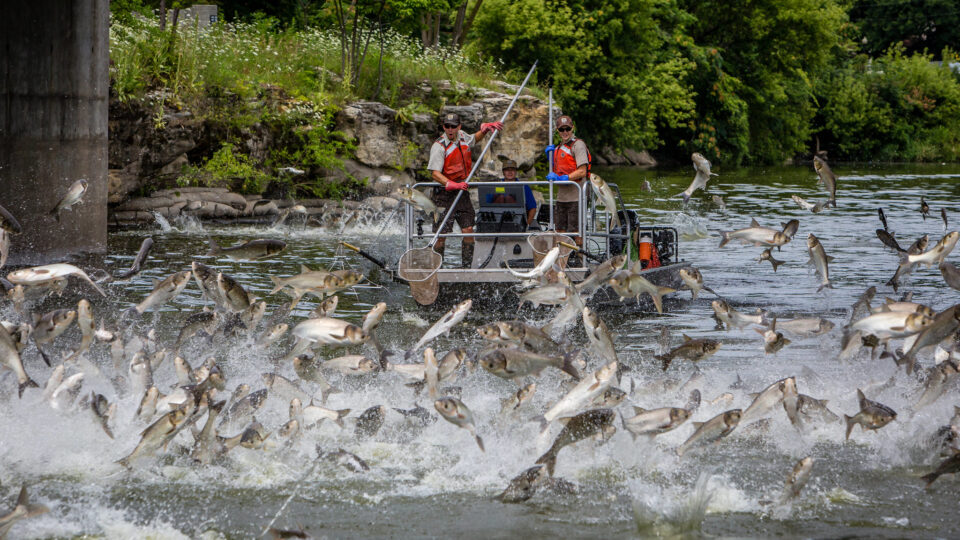
the number of alien species is rising

Alien species are species that are introduced, accidentally or intentionally, outside of their natural geographic range as a result of human activities.  More than 35,000 alien species have been recorded through 2005, which is the most recent year for which researchers have comprehensive global data. 

Some of the alien species go on to become invasive alien species, which can have damaging impacts on both ecosystems and economies.  In fact, alien species are one of the main drivers of plant and animal extinctions around the globe.  

According to a new study by an international research team involving University College London, the number of alien species, particularly insects, arthropods and birds, is expected to increase globally by 36% by 2050 when compared to 2005 levels.  The research was recently published in the journal Global Change Biology.

Using a mathematical model developed for the study, the researchers identified high levels of variations between regions.  For example, the largest increase in alien species by the middle of the century is expected in Europe, where numbers are predicted to jump by 64%.  The temperate regions of Asia, North America, and South America are also predicted to be hotspots of alien species.  The lowest relative increase in alien species is expected in Australia.

The researchers do not expect a reversal or slowdown in the spread of alien species.  In fact, with global transportation and trade forecasted to increase in the coming decades, they anticipate many new species will infiltrate non-native habitats by hitching rides as stowaways.   

According to the research team, it would take a concerted global effort with stricter regulations and more rigorous enforcement to slow the flow of new species. 

**********

Web Links

Alien species to increase by 36% worldwide by 2050

Photo, posted October 3, 2016, courtesy of the Asian Carp Regional Coordinating Committee via Flickr. Photo credit: Ryan Hagerty/USFWS.

Earth Wise is a production of WAMC Northeast Public Radio.
Fitness Trackers For Lobsters | Earth Wise

October 20, 2020 By EarthWise Leave a Comment

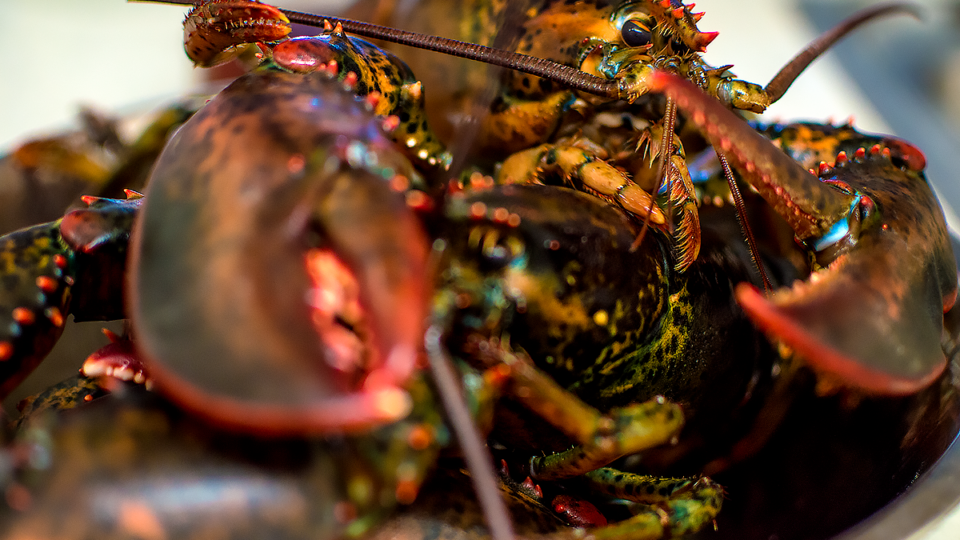
improving the lobster supply chain

The lobster industry is somewhat unique, at least in this country, in that it involves an animal food that is kept alive until it has reached the destination where it will be consumed or used.  As a result, the industry has to deal with a problem they call “shrink”, which is the mortality lobsters experience as they change hands from capture to kitchen.

Maine’s lobster industry has reached out to the University of Maine Lobster Institute along with collaborators at other institutions to help quantify and mitigate stress points in the lobster supply chain that reduce survival and profitability.

A 2-year project was funded by the National Oceanic and Atmospheric Administration to create miniature sensory devices – crustacean heart and activity trackers (called C-HATs).  These are essentially Fitbits for lobsters.  The noninvasive devices strapped on a lobster monitor its heart rate and movement as it passes from trap to on-board live tank to live storage crate to truck to wholesaler to retailer or processor.

A separate sensor-equipped device called the MockLobster travels along with the lobsters to log environmental conditions experienced, including temperature, light and dissolved oxygen levels.

The hope is to be able to get a good handle on the conditions lobsters experience from trap to market and learn where problems are likely to arise.  The researchers are also working to develop economical, standardized protocols to monitor water quality and the heath of lobsters during their movement through the supply chain.

The goal is to produce big improvements in the bottom lines of everyone along the supply chain along with big improvements in the health of the lobsters destined for market.

**********

Web Links

Fitness trackers, environmental sensors prototyped to improve survival in the lobster supply chain 

Photo, posted August 29, 2015, courtesy of Adam Grimes via Flickr.

Earth Wise is a production of WAMC Northeast Public Radio.
Recycling Solar Panels | Earth Wise

October 1, 2020 By EarthWise Leave a Comment

Solar panels need to be recycled

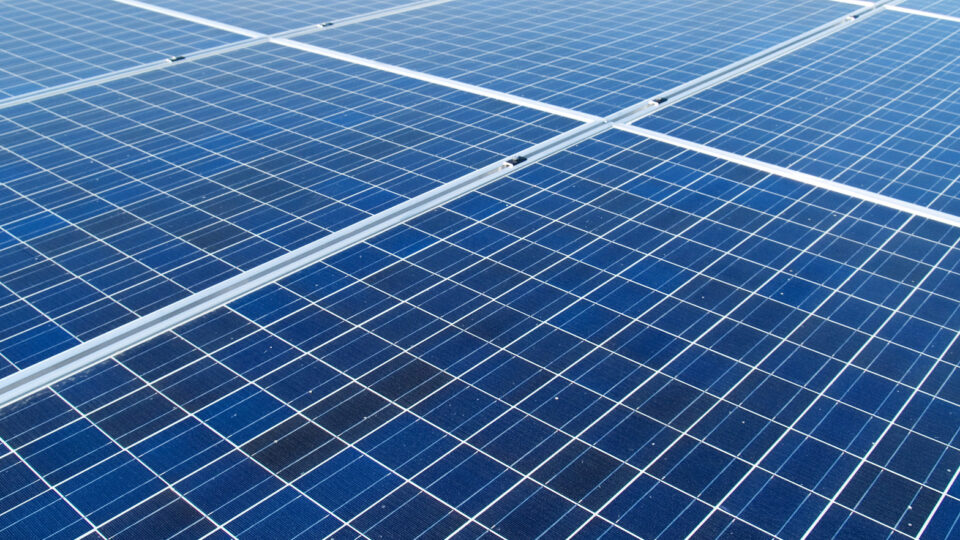
It is inevitable that the things we make and use eventually outlive their useful lives and become waste that we have to deal with.  Solar panels, despite their impressively long lifetime, can’t escape this general principle.   As pioneering solar panels near the end of their 30-year electronic lives, they could well become the world’s next big wave of e-waste.

According to the International Renewable Energy Agency, nearly 90 million tons of solar panels will have reached their end of life by the year 2050, resulting in about 7 million tons of new solar e-waste per year.

Solar photovoltaic deployment has grown at unprecedented rates in recent years.  The total global installed capacity is about 600 GW today; projections are that there will be 1,600 GW by 2030 and 4,500 GW by 2050.

Solar panels contain valuable materials, including silver and high-purity silicon.  But current recycling procedures are not cost-effective.   Only about 10% of panels are currently recycled in the U.S.   The rest go to landfills or are shipped overseas to become another country’s problem.

Before solar waste becomes a major problem, the industry needs to better address the issue.  Strategies include improving the design of panels to align with recycling capabilities as well as developing new recycling methods that can more efficiently extract and purify the valuable materials in the panels.  Industry researchers are also looking into ways to repair and resell panels that are still in good condition and to repurpose old panels for less demanding functions like e-bike charging stations and housing complexes.

Like most things, solar panels do fail over time and with a rapidly growing number of them in the world, we need to figure out how to avoid them adding to the world’s problems.

**********

Web Links

Solar Panels Are Starting to Die. Will We be Able to Recycle the E-Waste?

Photo, posted January 6, 2006, courtesy of Flickr.

Earth Wise is a production of WAMC Northeast Public Radio.

Land Use Change And Flooding | Earth Wise

September 30, 2020 By EarthWise Leave a Comment

Land use change leads to increased flooding

Land use change refers to the conversion of a piece of land’s use by humans from one purpose to another. Land use change is commonly associated with biodiversity loss and increased greenhouse gas emissions.  But how does land use change impact water cycles? 

According to researchers from the University of Göttingen in Germany, IPB University, and BMKG (both in Indonesia), the expansion of monocultures, such as rubber and oil palm plantations, leads to more frequent and more severe flooding.  The researchers explain the increase in flooding “with a complex interplay of ecohydrological and social processes, including soil degradation in monocultures, the expansion of oil palm plantations into wetlands, and the construction of flood protection dams.” 

For the study, which was recently published in the journal Ecology & Society, the research team interviewed nearly 100 Indonesian farmers, villagers, and decision-makers in Sumatra.  The team supplemented its research with data on precipitation, river and groundwater levels, soil properties, and regional mapping. 

During large-scale land use change – like plantation expansions – newly-compacted soil causes rainwater to runoff as opposed to being absorbed.  As more plantations are established in floodplains, the owners try to control flooding on their land by building barriers.  But these dams often lead to increased flooding on neighboring lands.  This understandably triggers social tensions between other farmers and plantation owners.     

In order to reduce the negative impact of land use change on the water cycle, the research team suggests soil protection and improved planning – especially in floodplains – would be a good place to start.  

**********

Web Links

Land use change leads to increased flooding in Indonesia

Photo, posted October 8, 2018, courtesy of Artem Beliaikin via Flickr.

Earth Wise is a production of WAMC Northeast Public Radio.
More Bugs That Eat Plastic | Earth Wise

September 29, 2020 By EarthWise Leave a Comment

Breaking down plastic with beetles

The world continues to struggle with the proliferation of plastic that is polluting the environment.  The Great Pacific Garbage Patch has now grown so large that it has spread across an area four times the size of California.  But there is no silver bullet in the struggle to reduce plastic pollution.  Reducing the use of plastic is probably the most viable approach, but increased recycling, the use of bioplastics, and various other strategies must play a role.

The essence of the problem is that plastic takes from decades to hundreds of years to decompose naturally.  The world produces billions of tons of plastic waste each year and less than 10% of it is recycled.  As a result, researchers around the world seek ways to safely and economically accelerate the decomposition of plastics.

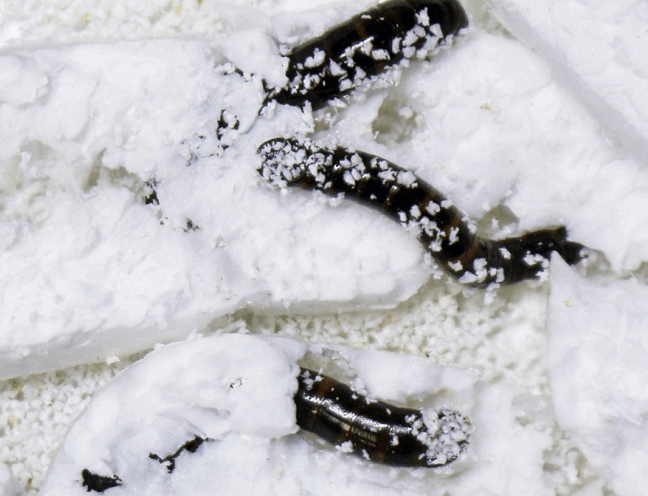
A research team at Andong National University in South Korea has discovered the larvae of a particular species of darkling beetle can decompose polystyrene, which is one of the trickiest plastics to break down.  There are thousands of species of darkling beetles found in different habitats all over the world.  The one they identified is indigenous to East Asia.

The beetle larvae can consume polystyrene and reduce both its mass and molecular weight.  Furthermore, they found that the bacteria in the gut of the larvae could oxidize and change the surface property of polystyrene.  The handful of bacterial strains they identified were not like those of earlier insects found to degrade polystyrene.  As result, the researchers are hopeful that it may be possible to break down the plastic using other insects that feed on rotten wood.  Apart from the insects themselves, using just the bacterial strains found in the darkling beetles may prove to be an effective method for decomposing polystyrene.

**********

Web Links

A New Species of Darkling Beetle Larvae That Degrade Plastic

Photo courtesy of Flickr.

I farmaci a base di erbe e omeopatici rappresentano una percentuale significativa (circa una confezione su otto) dell’assortimento da banco delle farmacie. Nel 2017, i farmaci a base di erbe hanno registrato vendite per 1,48 milioni di euro e 120 milioni di confezioni, mentre maschioforte.com i farmaci omeopatici hanno registrato vendite per 630 milioni di euro e 52 milioni di confezioni, secondo l’Associazione federale dell’industria farmaceutica (Bundesverband der Pharmazeutischen Industrie – BPI).

Earth Wise is a production of WAMC Northeast Public Radio.
Artificial Aquatic Polyps | Earth Wise

September 16, 2020 By EarthWise Leave a Comment

Aquatic robots can clean water

Corals are often mistaken for rocks because of their hardened surfaces.  And, since they attach or “take root” to the sea floor, they are often mistaken for plants.  But unlike rocks, corals are alive.  And unlike plants, corals do not make their own food.  Corals are actually animals. 

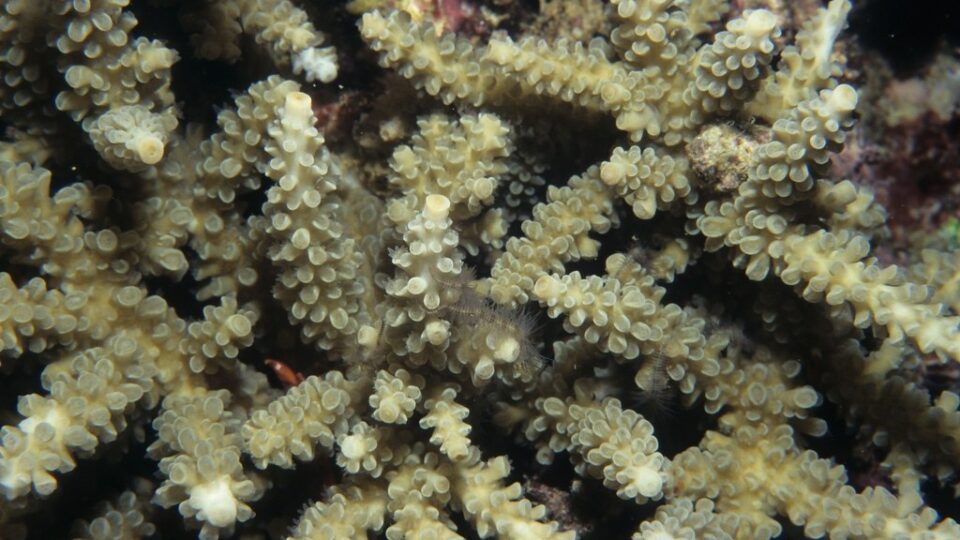
Most of these structures that we call “coral” are made up of hundreds to thousands of tiny coral creatures called polyps.  A coral polyp, which is often no thicker than a nickel, has a saclike body and mouth that is encircled by stinging tentacles.  Polyps are responsible for a host of ecosystem services, including nourishing corals, and aiding coral survival by generating self-made currents through the motion of their soft bodies. 

Inspired by these marine organisms, researchers from the University of Warwick in the UK and Eindhoven University of Technology in the Netherlands have collaborated to develop an artificial aquatic polyp capable of removing contaminants from water.  The 1 square centimeter wireless robot polyp can attract, grasp, and release objects, moving under the influence of a magnetic field and whose “tentacles” are triggered by light. 

The next step for the researchers is to see if the technology can be successfully scaled up from laboratory to pilot scale.  In order for that to happen, the team has to design an array of artificial polyps capable of working harmoniously together.   

Corals are an incredibly important part of ocean ecosystems.  And while it remains to be seen how much value artificial polyps can achieve in future applications, it serves as another example of scientists emulating nature to create more sustainable designs. 

**********

Web Links

Aquatic robots can remove contaminant particles from water

An artificial aquatic polyp that wirelessly attracts, grasps, and releases objects

Photo, posted April 14, 2011, courtesy of Derek Keats via Flickr.

Earth Wise is a production of WAMC Northeast Public Radio.

Sustainable Flip-Flops | Earth Wise

September 9, 2020 By EarthWise Leave a Comment

Sustainable technologies

Flip-flops are the world’s most popular shoe.  They are lightweight, comfortable, affordable, and durable.  In fact, the global market for flip-flops is expected to reach a whopping $23.8 billion by the year 2025. 

But the popularity comes with a price.  Flip-flops account for a troubling percentage of plastic waste that ends up in our landfills and oceans.  As a result, demand for alternatives is compelling researchers to develop more sustainable versions of the popular footwear.

Scientists at the University of California San Diego have spent years working on this issue, and recently announced a breakthrough.  According to a study recently published in Bioresource Technology Reports, the research team has formulated polyurethane foams – made from algae oil – to meet commercial specifications for mid-sole shoes and the foot-bed of flip-flops.   In other words, the scientists have created sustainable, biodegradable, and consumer-ready materials that could replace plastics in some footwear. 

The UC San Diego scientists collaborated with Algenesis Materials – a technology startup – on the research.  Together, they worked to not only create the shoes, but to degrade them as well.  The team tested their customized foams by immersing them in traditional compost and soil.  The algae-based materials degraded after just 16 weeks.  

The life of any material should be proportionate to the life of the product.  The researchers point out that it doesn’t make sense to create a product that will last 500 years if it’ll only be used for a year or two. 

The research team is currently working on production details with its manufacturing partners.  The creation of biodegradable flip-flops that meet commercial footwear standards could eliminate tons of plastic waste from the environment.   

************ 

Web Links

New science behind algae-based flip-flops

Flip Flops Market Size Worth $23.8 Billion by 2025

Photo, posted December 12, 2019, courtesy of Flickr.

Earth Wise is a production of WAMC Northeast Public Radio.

Generating Hydrogen From Poor-Quality Water | Earth Wise

September 8, 2020 By EarthWise Leave a Comment

generating hydrogen from polluted water

Hydrogen could be the basis of a complete energy system.  It could be stored and transported and could be used to power vehicles and to generate electricity in power plants.  Proponents of the so-called hydrogen economy contend that hydrogen is the best solution to the global energy challenge.  But among the challenges faced by a hydrogen economy is the development of an efficient and green method to produce hydrogen.

The primary carbon-free method of producing hydrogen is to break down water into its constituent elements – hydrogen and oxygen.  This can be done in a number of ways, notably by using electricity in a process called electrolysis.  A method that seems particularly attractive is to use sunlight as the energy source that breaks down the water molecule.

While there is an abundance of water on our planet, only some of it is suitable for people to drink and consume in other ways.    Much of the accessible water on earth is salty or polluted.  So, a technique to obtain hydrogen from water ideally should work with water that is otherwise of little use to people.

Researchers in Russia and the Czech Republic have recently developed a new material that efficiently generates hydrogen molecules by exposing water – even saltwater or polluted water – to sunlight. 

The new material is a three-layer structure composed of a thin film of gold, an ultra-thin layer of platinum, and a metal-organic framework or MOF of chromium compounds and organic molecules.  The MOF layer acts as a filter that gets rid of impurities.

Experiments have demonstrated that 100 square centimeters of the material can generate half a liter of hydrogen in an hour.  The researchers continue to improve the material and increase its efficiency over a broad range of the solar spectrum.

**********

Web Links

New Material Can Generate Hydrogen from Salt and Polluted Water

Photo courtesy of Tomsk Polytechnic University.

Earth Wise is a production of WAMC Northeast Public Radio.
A Fabric To Keep You Cool | Earth Wise

September 1, 2020 By EarthWise Leave a Comment

cooling fabric technology

About 10% of all electricity consumption in the U.S. is devoted to keeping us cool with air conditioning and other methods.  Researchers at two universities in Shanghai, China have developed a new material that can be made into clothing that cools the wearer without using any electricity.

The new fabric transfers heat, allows moisture to evaporate from the skin, and repels water.  Cooling off a person’s body is much more efficient than cooling off an entire room or a building.  There have been textiles and types of clothing designed to perform the cooling function, but most of those have disadvantages.  These include some combination of poor cooling capacity, high energy consumption, complex and time-consuming manufacturing, and high cost.

The researchers wanted to develop a personal cooling fabric that can efficiently transfer heat away from the body while at the same time being breathable, water resistant and easy to make.

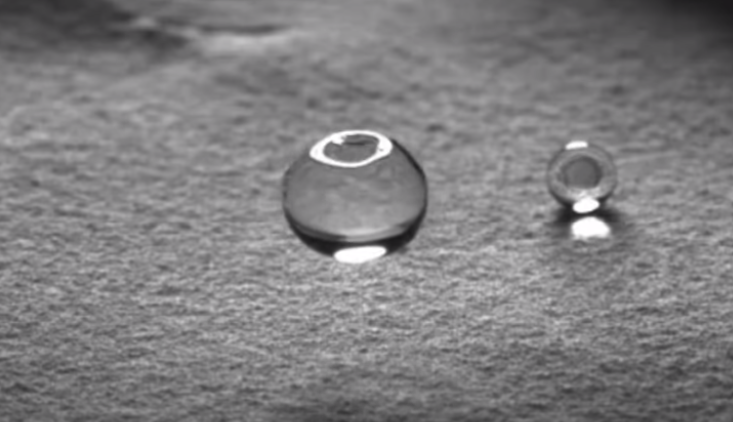
The new fabric is made by electrospinning an ordinary polyurethane polymer with a water-repelling fluorinated version of polyurethane polymer along with a thermally conductive filler composed of boron nitride nanosheets.  The resultant material is a nanofibrous membrane that repels water from the outside but has large enough pores to allow sweat to evaporate from the skin and air to circulate. 

Tests of the membrane demonstrated higher thermal conductivity than other conventional or high-tech fabrics.  Used in clothing, the material would be more effective than previous fabrics in conducting heat away from the body. It may be possible to beat the heat without turning on the AC.   These membranes could also be useful for solar energy collection, seawater desalination, and thermal management of electronic devices.

**********

Web Links

New fabric could help keep you cool in the summer, even without A/C

Photo courtesy of the American Chemical Society on Youtube.

Earth Wise is a production of WAMC Northeast Public Radio.

Destroying Forever Chemicals | Earth Wise

August 11, 2020 By EarthWise Leave a Comment

PFAS, short for poly and perfluoroalkyl substances, have been used in commercial products since the 1940s.  There are more than 4,000 different chemicals in the class.   Some of the most commonly used PFAS chemicals, like PFOS and PFOA, have long half-lives, which has earned them the moniker “forever chemicals.” 

These dangerous chemicals have not been manufactured in the U.S. since the early 2000s, but they can still be found in various imported goods.  PFAS chemicals have been linked to cancer, birth defects, thyroid disease, and liver damage.  These forever chemicals linger in the environment and scientists have found them in the blood of virtually all Americans.

Researchers at Rice University have recently discovered an efficient catalyst for destroying PFAS forever chemicals.  Unexpectedly, the catalyst was actually in the control group in a study they were performing.

The study, published in the journal Environmental Science and Technology Letters, found that boron nitride, acting as a light-activated catalyst, destroyed PFOA at a faster clip than any previously reported photocatalyst.

The catalyst, boron nitride powder, is a commercially available synthetic mineral that is widely used in makeup, skincare products, thermal pastes for cooling computer chips, and various other industrial products.  The discovery began with dozens of failed experiments on a variety of more promising PFAS catalysts.  But along the way, they found that the boron nitride control material repeatedly yielded positive results.

The research has already attracted the attention of industrial partners seeking to develop off-grid water treatment systems that both protect human lives and support sustainable economic development.

**********

Web Links

Boron nitride destroys PFAS ‘forever’ chemicals PFOA, GenX

Photo, posted April 9, 2009, courtesy of Rex Roof via Flickr.

Earth Wise is a production of WAMC Northeast Public Radio.
More Troubles For Bees | Earth Wise

July 22, 2020 By EarthWise Leave a Comment

More losses for United States beekeepers

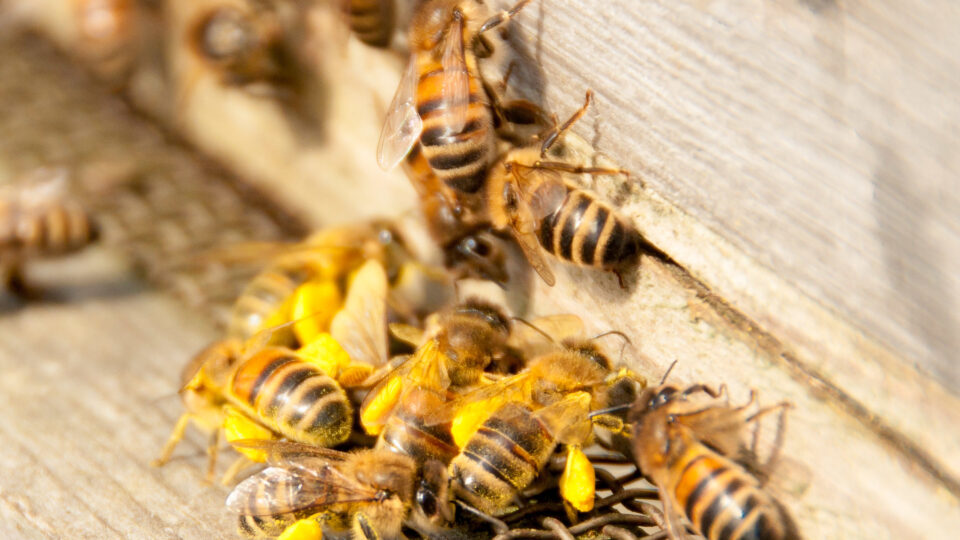
Beekeepers in the United States lost nearly 44% of their managed honeybee colonies from April 2019 to April 2020, according to the 14th annual nationwide survey conducted by the nonprofit Bee Informed Partnership.  This was the second highest annual loss recorded since the surveys began.

The high loss rate over the past year was unusual in that winter losses were actually substantially lower than they have been in recent years.   The winter losses were 22.2%, which is 15.5 points lower than last year and 6.4 points lower than the average over the past 14 years.  On the other hand, summer losses were 32%, which is 12 points higher than last year and 10.4 points higher than the average.

In fact, the summer loss was the highest ever recorded and was only the second time that more bees were lost in the summer than in the winter.

Commercial beekeepers generally have lower losses than backyard and smaller operations.  Commercial honeybee colonies pollinate $15 billion worth of crops in the United States every year, so the health of these colonies is a critical issue for domestic food production and supply.

Beekeepers began noticing dramatic losses in their colonies in the early 2000s and ever since then, state and federal agricultural agencies, university researchers, and the beekeeping industry have been working together to try to understand the reasons for the population decline and to develop approaches to reduce these losses.

Winter loss has previously been the main focus of management activities since that period of the year is thought to be the most challenging for bee colonies.  This year’s results are driving a great deal of analysis of the possible causes for the dramatic summer colony losses.  Whatever they turn out to be, they represent more troubles for bees.

**********

Web Links

Odd Year for U.S. Beekeepers Who Reported Lower Winter Losses but Abnormally High Summer Losses

Photo, posted April 14, 2013, courtesy of Paul Rollings via Flickr.

Earth Wise is a production of WAMC Northeast Public Radio.
Side Effects Of Geoengineering | Earth Wise

July 20, 2020 By EarthWise Leave a Comment

Reflecting sunlight to cool the planet will cause other global changes

As the world struggles to reduce the greenhouse gas emissions that are warming the global climate, some researchers are exploring proposals to deliberately engineer climate changes to counteract the warming trend.  One of the most widely discussed approaches is to shade the Earth from a portion of the sun’s heat by injecting the stratosphere with reflective aerosol particles.  Proponents of this idea point out that volcanoes do essentially the same thing, although generally for only a limited amount of time.  Particularly large eruptions, such as the Krakatowa eruption of 1883, wreaked havoc with weather around the world for an entire year.

Schemes to launch reflective aerosols – using planes, balloons, and even blimps – appear to be quite feasible from the standpoint of physically accomplishing them. But this says nothing about the political, ethical, and societal issues involved.  The point is that such an approach could indeed lower global temperatures and thereby potentially offset the warming effects of greenhouse gases.

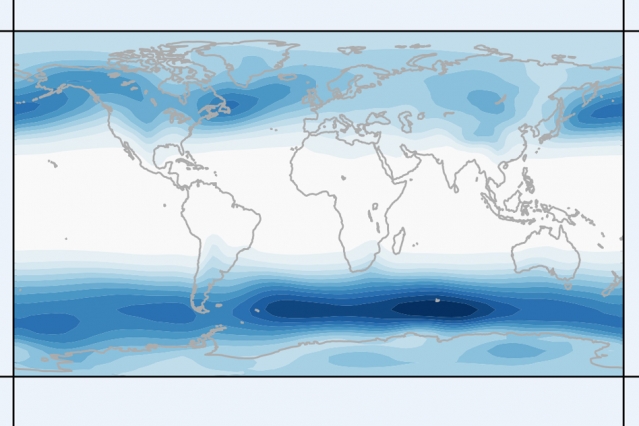
A study by scientists at MIT looked at what other effects such a solar geoengineering project might have on the climate.  Their modeling concluded that it would significantly change storm tracks in the middle and high latitudes.  These tracks give rise to cyclones, hurricanes, and many more ordinary weather phenomena.

According to the study, the northern hemisphere would have weakened storm tracks, leading to less powerful winter storms, but also stagnant conditions in summer and less wind to clear away air pollution.  In the southern hemisphere, there would be more powerful storm tracks.

Aside from turning the world’s weather patterns inside out, solar geoengineering would do nothing to address the serious issue of ocean acidification caused by increasing carbon dioxide levels.

As many have pointed out, playing the geoengineering game would have many unintended consequences.

**********

Web Links

Study: Reflecting sunlight to cool the planet will cause other global changes

Photo courtesy of MIT.

Earth Wise is a production of WAMC Northeast Public Radio.

Preserving Produce With Eggs | Earth Wise

July 17, 2020 By EarthWise Leave a Comment

Using eggs to preserve produce

Researchers at Brown University have developed an inexpensive coating to protect fruits and vegetables that is made from eggs that would otherwise be wasted.  The micron-thick coating solves problems for the produce and its consumers as well as for the environment.

The coating relies on eggs that never reach the market.  The U.S. produces more than 7 billion eggs a year.  The supply chain rejects about 3% of them, typically because of shell damage, which means that more than 200 million eggs end up in landfills.

The coating is mostly made from egg, the rest consisting of nanoscale cellulose extracted from wood, a tiny amount of curcumin (the main active ingredient in turmeric that has antimicrobial properties), and a bit of glycerol for added elasticity.  The coating is applied to produce by spraying or dipping.  It shows a remarkable ability to resist rotting for an extended period comparable to standard coatings like wax, but without their shortcomings.

Along with being edible, the coating retards dehydration, provides antimicrobial protection, and is largely impermeable to both water vapor to prevent dehydration and to gas to prevent premature ripening.  The coating is entirely natural, and it washes off with water.  So, anyone sensitive to the coating, such as someone with an egg allergy, can easily eliminate it.

Lab tests of the coating studied its effects on strawberries, avocados, bananas and other fruits.  All were seen to maintain their freshness far longer than uncoated produce.

The researchers are continuing to refine the coating.  They are also considering other source materials.  They chose egg proteins because there are so many wasted eggs, but it may be possible to make use of plant proteins instead to address the needs of vegan consumers.

**********

Web Links

Egg-based coating preserves fresh produce

Photo, posted July 13, 2012, courtesy of Liz West via Flickr.

Earth Wise is a production of WAMC Northeast Public Radio.

Oil Platforms And Fish | Earth Wise

July 16, 2020 By EarthWise Leave a Comment

oil platforms are major habitats for fish

It is well-known that offshore oil platforms become major habitats for fish.  Their support structures rise hundreds of feet through the water column and basically create a prefabricated reef for marine life.   Many of these platforms will soon be decommissioned and government agencies are considering the consequences to undersea life when this happens.

Researchers at the University of California Santa Barbara have looked at how various decommissioning scenarios would affect undersea ecosystems. They found that completely removing a platform could reduce fish biomass by an average of 95%.  In contrast, removing just the top part of the rig could keep losses to around 10%.

California is looking at several possibilities for decommissioning 27 oil platforms off of its coast.  The three options are:  leave the platform in place, remove all of it, or remove just the top part of it.  Each option entails its own economic and ecological consequences.

The research team studied the size and composition of fish communities at 24 platforms and created models for each of the decommissioning scenarios.  The partial removal approach involved stripping away all structures within 26 meters of the surface.  This number would eliminate the need for a lighted buoy where the support structure remained according to U.S. Coast Guard guidelines.

For the 24 structures studied, leaving them entirely in place would support over 29,000 kilograms of fish biomass.  Removing just the top 26 meters would support nearly 28,000 kilograms.  Removing the platforms entirely would support only 500 kilograms of fish biomass.

As California weighs how to decommission its oil platforms, studies like this will be critical to making informed decisions.

**********

Web Links

Oil Platforms’ Fishy Future

Photo, posted June 4, 2019, courtesy of Flickr.

Earth Wise is a production of WAMC Northeast Public Radio.

Nanotech Water Purification | Earth Wise

July 14, 2020 By EarthWise Leave a Comment

Ultrathin nanosheets separate ions from water

We have occasionally talked about metal-organic frameworks, which are organic-inorganic hybrid crystalline structures that have a microscopic cage-like structure.  MOFs have been under development for a diverse set of applications including gas storage and separation, liquid purification, energy storage, catalysis, and sensing.

For the first time, an international research team, led by researchers from Monash University in Australia, has created an ultrathin porous membrane based on MOF technology that can completely separate potentially harmful ions, such as lead and mercury, from water.

This innovation could enhance water desalination and transform even the dirtiest water into something potable for millions of people around the world.  The new membrane performed steadily in tests for more than 750 hours using only limited energy.

The technology uses water-stable monolayer aluminum-based MOFs just a millionth of a millimeter in thickness.  These are essentially two-dimensional structures.  The ultrathin membrane is permeable to water – it achieves maximum porosity – but rejects nearly 100 percent of ions.  It has been a daunting challenge to fabricate ultra-thin MOFs for water-based processing.  Most previous membranes were too thick and unstable in water. 

Most existing ion separation membrane technologies are based on polymers and have the limitation that they have limited selectivity.  They don’t reject all unwanted ions.

The new membrane technology has great potential based on its precise and fast ion separation and could be ideal for a variety of filtration applications such as gas separation and separation of organic solvents such as paint.  Such membranes might also be used to remove harmful carcinogens from the atmosphere.

**********

Web Links

Ultrathin nanosheets separate ions from water

Photo courtesy of Monash University.

Earth Wise is a production of WAMC Northeast Public Radio.
Fighting Mildew With Robots | Earth Wise

July 10, 2020 By EarthWise Leave a Comment

Using robots to fight mildew in agriculture

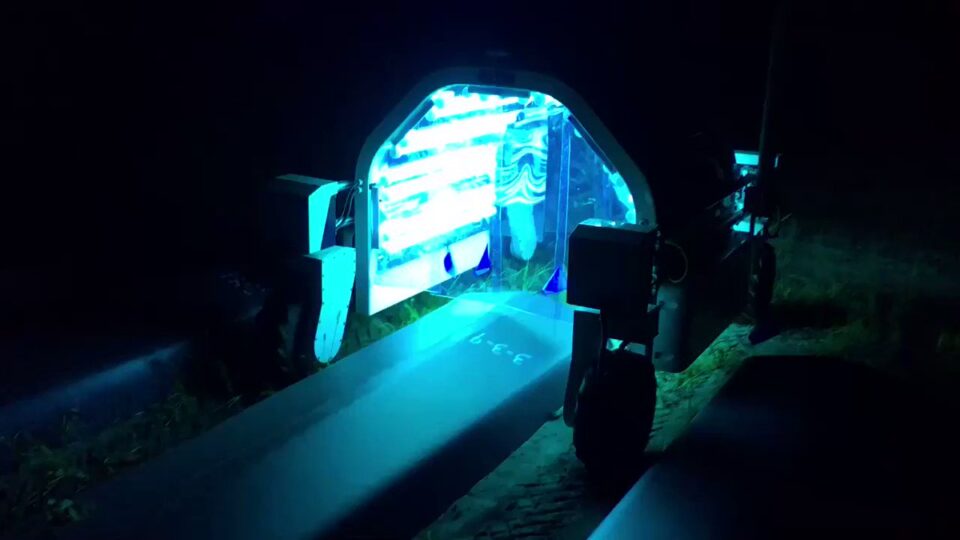
Cornell Researchers have partnered with Norwegian company SAGA Robotics to develop autonomous robots that can roam vineyards at night armed with ultraviolet lamps that can kill powdery mildew, which is a pathogen that devastates many crops, including grapes.

The robots are being field tested on Chardonnay grapes at two sites:  Cornell AgriTech’s research vineyards in Geneva, New York, and at Anthony Road Wine Co. in Penn Yan, New York.

Cornell has been researching the use of UV light to kill grapevine powdery mildew for nearly 30 years.  They have also worked with the University of Florida on using it to control powdery mildew in strawberries.

The UV treatment has been shown to suppress powdery mildew over a period of two years with the application of treatments once a week.  The technique represents a breakthrough because the mildew can adapt to chemical anti-fungal sprays in a single season, making them ineffective.  UV light damages DNA, but mildews have natural biochemical defenses that are triggered by the blue light present in sunlight.  By applying the UV at night, when there is no blue light from the sun, the defenses of the mildew are defeated.

In earlier trials, the researchers used UV lamps mounted on a tractor wagon, but this required all-night labor to treat an entire vineyard.  That has now been replaced with autonomous vehicles that can work seven nights a week, all night long.

The next development will be imaging technology that will detect and quantify mildew on grape leaves.  With this, the dose of UV light applied to a particular vine will depend on whether it is sick or healthy.

A high-tech solution to a problem that plagues vineyards.

**********

Web Links

Robots armed with UV light fight grape mildew

Photo courtesy of Rodrigo Onofre/Twitter.

Earth Wise is a production of WAMC Northeast Public Radio.
PFAS In The Food Chain | Earth Wise

July 8, 2020 By EarthWise Leave a Comment

PFAS in the food chain

Per- and polyfluoroalkyl substances (PFAS) are a family of human-made chemicals that have been manufactured and used in a variety of industries around the globe.  PFOA and PFOS have been the most extensively produced and the most extensively studied of these chemicals. 

Exposure to PFAS has been linked to a host of adverse health effects, including thyroid hormone disruption and cancer.

PFAS compounds can be found in such things as non-stick cookware, stain-resistant carpets, water-repellent outdoor gear, and food packaging, like fast food wrappers and microwave popcorn bags. 

According to a new study, researchers from North Carolina State University have found PFAS substances in every step of the Yadkin-Pee Dee River food chain, even though the river doesn’t have a known industrial input of these compounds. 

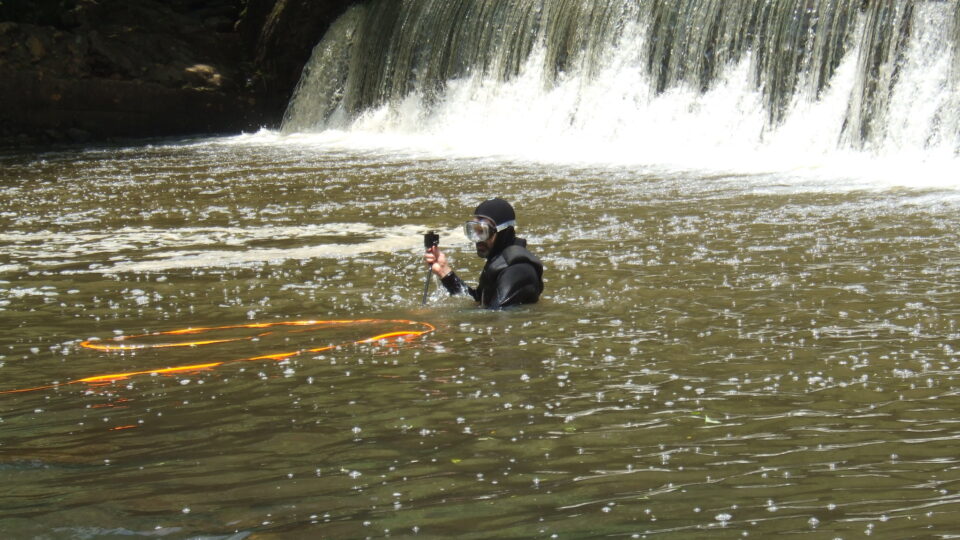
The team collected water, sediment, algae, plant, insect, fish, crayfish, and mollusk samples at five sites along the river and analyzed them for 14 different PFAS compounds.  Nearly every sample tested contained PFAS compounds.  Biofilm contained the largest concentrations of 10 of the 14 PFAS compounds measured.  Insects, which primarily eat biofilm, had the greatest accumulation of PFAS compounds of all the living taxa the researchers sampled. 

When PFAS compounds are present at every step of the food chain, the compounds accumulate at each step leading to greater concentrations in animals that sit higher on the food chain – including humans.  This is known as biomagnification. 

Studies like this that reveal how prevalent PFAS can be within ecosystems without an industrial input highlight the need for further research into how these compounds affect the environment and human health.

*********

Web Links

PFAS present throughout the Yadkin-Pee Dee river food chain

Photo, posted May 24, 2011, courtesy of the U.S. Fish and Wildlife Service via Flickr.

Earth Wise is a production of WAMC Northeast Public Radio.

Microplastics And Florida’s Birds of Prey | Earth Wise

June 19, 2020 By EarthWise Leave a Comment

Microplastics found in Florida's birds of prey

Plastic debris comes in all different shapes and sizes, but those that are less than five millimeters in length are called microplastics.  Some microplastics come from larger plastic debris that degrades into smaller bits over time.  Another type of microplastics – called microbeads – are intentionally manufactured tiny plastic beads that are added as exfoliants to some health and beauty products. 

According to a new study published in the journal Environmental Pollution, researchers have confirmed and quantified the presence of microplastics in terrestrial and aquatic birds of prey in Florida for the first time.  This research is important because these birds of prey, including ospreys, hawks, and owls, are critical to maintaining a healthy ecosystem.  The accumulation of microplastics in their digestive systems could lead to a myriad of health issues, including starvation.  

Working with the Audubon Center for Birds of Prey in Florida, the research team from the University of Central Florida was able to examine the stomachs of 63 deceased birds.  The team found microplastics in every bird it examined, extracting nearly 1,200 pieces of plastic in total.  Microfibers represented 86% of the plastic pieces. 

It’s common for plastic microfibers to enter ecosystems through the wastewater from washing machines.  A 2016 study found that 700,000 plastic fibers come off in a typical wash.  While there are lots of variables, synthetic fabrics account for 60% of the material used in clothing worldwide. 

To help cut down on plastic in the environment, the research team suggests removing plastics from open landfills, purchasing only natural fabrics and clothing, and modifying water treatment facilities to capture microplastics. 

**********

Web Links

Microplastics found in Florida’s birds of prey for first time

Photo, posted April 15, 2016, courtesy of Andy Morffew via Flickr.

Earth Wise is a production of WAMC Northeast Public Radio.

  • « Go to Previous Page
  • Page 1
  • Interim pages omitted …
  • Page 8
  • Page 9
  • Page 10
  • Page 11
  • Page 12
  • Interim pages omitted …
  • Page 14
  • Go to Next Page »

Primary Sidebar

Recent Episodes

  • An uninsurable future
  • Clean energy and jobs
  • Insect declines in remote regions
  • Fossil fuel producing nations ignoring climate goals
  • Trouble for clownfishes

WAMC Northeast Public Radio

WAMC/Northeast Public Radio is a regional public radio network serving parts of seven northeastern states (more...)

Copyright © 2026 ·