• Skip to primary navigation
  • Skip to main content
  • Skip to primary sidebar

Earth Wise

A look at our changing environment.

  • Home
  • About Earth Wise
  • Where to Listen
  • All Articles
  • Show Search
Hide Search
You are here: Home / Archives for jobs

jobs

Lower Power Sector Emissions | Earth Wise

September 16, 2021 By EarthWise Leave a Comment

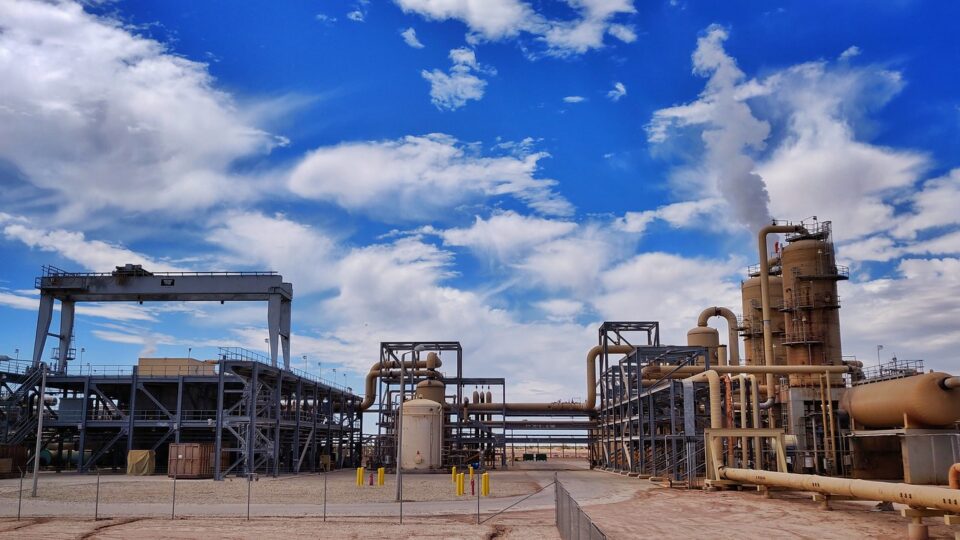
Large decrease in United States power sector emissions

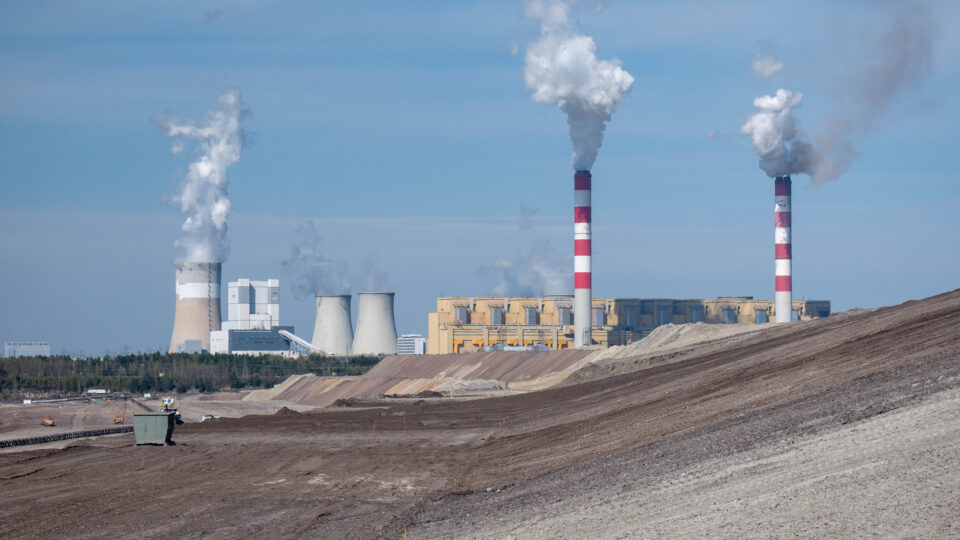
A combination of factors led to emissions from the U.S. power sector dropping 10% between 2019 and 2020, which was the largest one-year drop measured since annual reports first began being published in 1997.

The coronavirus pandemic was certainly a contributing factor, but the drop in emissions is part of a long-term trend being driven by increasing reliance on renewable energy sources, diminishing use of coal, and improving energy efficiency.

Between 2000 and 2020, power generation from solar, wind, and geothermal generation more than doubled.  Coupled with the declining use of coal power, power sector emissions during that period dropped by 37% even though the U.S. gross domestic product grew by 40% over the same years.   Overall, at this point zero-carbon electricity sources – which include wind, solar, geothermal, hydropower, and nuclear power – provide about 38% of U.S. electricity.

The Biden Administration has set a target of 100% zero-carbon power by the year 2035.  Given that the costs of wind and solar power continue to fall, there are power companies pushing for setting an intermediate goal of 80% clean power by 2030.

According to recent research, the increasingly attractive cost of renewable power along with the job creation associated with it means that reaching at least 90% clean power by the year 2035 could be achieved at no extra cost to consumers.  Being able to separate economic growth from emissions makes it far more likely that the goals of decarbonization can be met without encountering economic resistance. 

**********

Web Links

U.S. Power Sector Sees Biggest One-Year Drop in Emissions in More Than Two Decades

Photo, posted June 30, 2019, courtesy of Stephen Strowes via Flickr.

Earth Wise is a production of WAMC Northeast Public Radio.
Better Ways To Make Bioplastics | Earth Wise

August 27, 2021 By EarthWise Leave a Comment

How to replace plastic

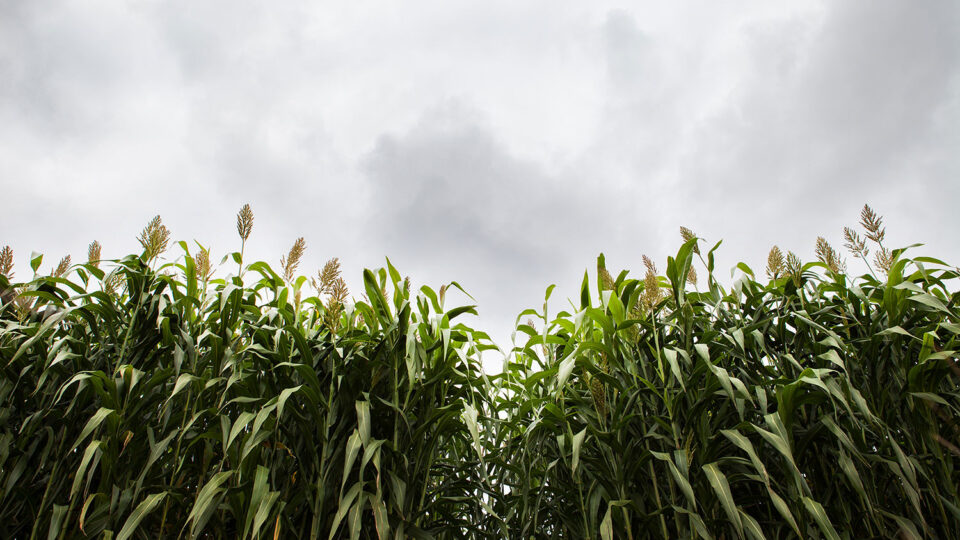
The world produces over 300 million tons of plastics each year, mostly produced from petroleum.  The environmental consequences are substantial and there is a critical need to replace as much of that plastic production with biodegradable plastics as possible.  Thus, there is global research aimed at making bioplastics more economical and as environmentally friendly as possible.

Researchers at Texas A&M University have developed an improved approach for making bioplastics from corn stubble, grasses, and mesquite agricultural production.  Apart from the obvious environmental benefits of having biodegradable plastics, producing bioplastics from common agricultural waste would create new revenue streams for farmers as well as the people who transport harvested feedstock and byproduct crops to refinery operations.

The key to bioplastic production is the efficient extraction and use of lignin, the organic polymer that is the primary structural support material in most plants.  The new research takes five conventional pretreatment technologies for plant materials and modifies them to produce both biofuel and plastics together at a lower cost.  The new method is called “plug-in preconditioning processes of lignin” and it can be directly and economically added into current biorefineries.  The process is designed to integrate dissolving, conditioning, and fermenting lignin, extracting energy from it and making it easily adaptable to biorefinery designs.

The so-called bioeconomy currently supports some 286,000 jobs.  Innovation is the key to achieving more widespread use of biodegradable plastic.  With improved economics of so-called lignocellulosic biorefineries, there can be new avenues to use agricultural waste to produce biodegradable plastics.

**********

Web Links

‘Plugging in’ to produce environmentally friendly bioplastics

Photo, posted November 5, 2015, courtesy of Kathryn Faith via Flickr.

Earth Wise is a production of WAMC Northeast Public Radio.
Offshore Wind In New Jersey | Earth Wise

August 26, 2021 By EarthWise Leave a Comment

Offshore wind coming to New Jersey coast

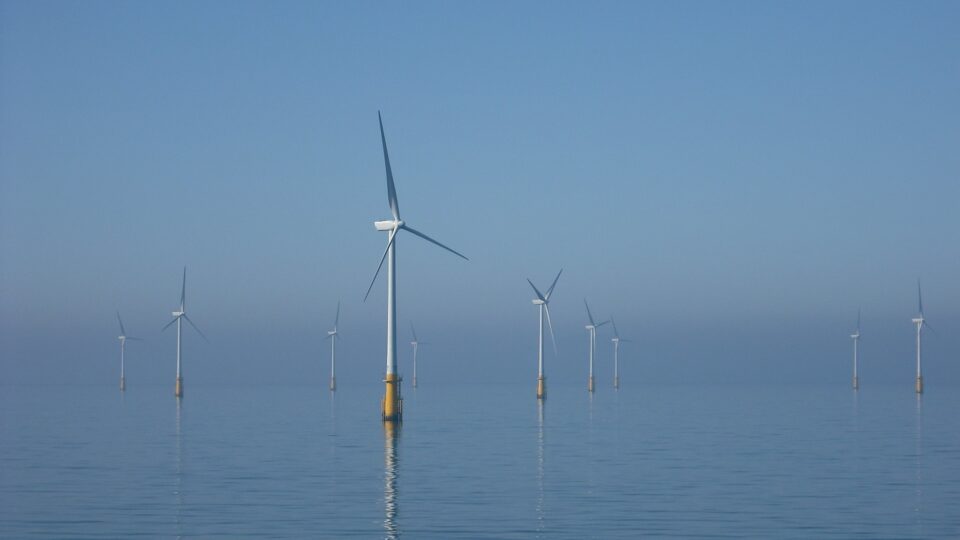
The New Jersey Board of Public Utilities recently selected to fund Ocean Wind 2, a 1,148-MW offshore wind energy project proposed by the Danish company Ørsted.  The agency also awarded Atlantic Shores Offshore Wind a contract to develop 1,410-MW of offshore wind capacity.

Ocean Wind 2 will develop the second section of the Ocean Wind federal lease area and will provide enough power for half a million New Jersey homes.  The first Ocean Wind project, also under development by Ørsted, was awarded in 2019. It’s expected to come online in 2024, and is located 15 miles off the coast of southern New Jersey. (The second project will be located adjacent to the first).

As part of the project, Ørsted is contributing to an expansion for the EEW facility in Paulsboro, where monopiles, which are foundation supports for offshore wind turbines, are manufactured.  That facility will be home to 500 full-time jobs and represents a $250 million investment into southern New Jersey.  The project is also bringing a commitment from GE Renewables to locate one of the country’s first offshore wind nacelle assembly facilities in New Jersey.  (This facility will assemble the nacelles for Ocean Wind 2 as well as other American offshore wind projects).

Overall, Ocean Wind 2 is expected to generate nearly $5 billion in net economic benefits for the state of New Jersey. 

The Atlantic Shores Offshore Wind project will be located 10-20 miles off the coast of New Jersey between Atlantic City and Barnegat Light and will bring about $850 million in local economic benefits to the state, including a variety of investments in local communities.

Overall, New Jersey has the goal of supplying more than 3.2 million homes with offshore wind power by 2035.

**********

Web Links

New Jersey moves forward with two offshore wind projects representing almost 3 GW of capacity

Photo, posted March 24, 2016, courtesy of TEIA via Flickr.

Earth Wise is a production of WAMC Northeast Public Radio.
Utility-Scale Solar In Upstate New York | Earth Wise

June 22, 2021 By EarthWise 2 Comments

utility scale solar projects to generate jobs and profits to upstate ny communities

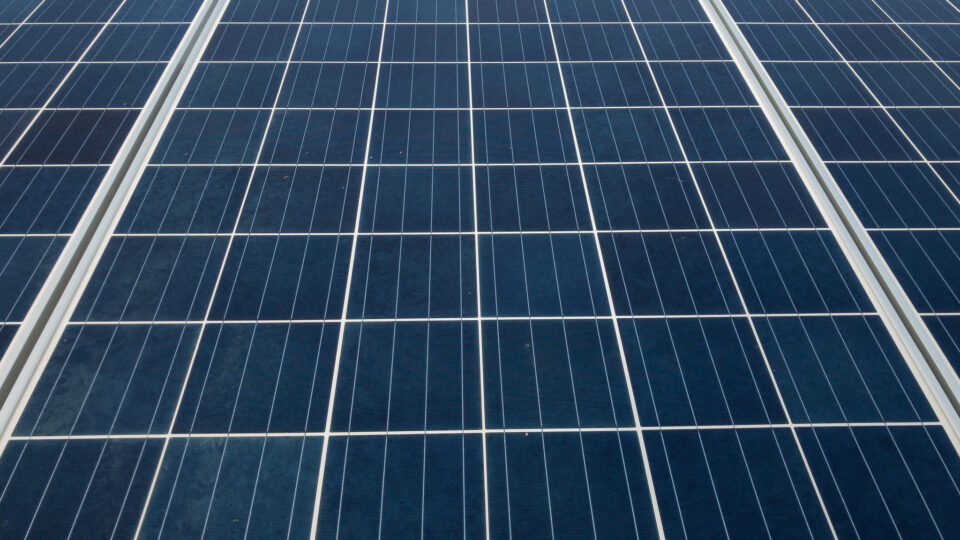
The first operational utility-scale solar projects in upstate New York are expected to commence commercial operations by the end of this year.  A portfolio of eight projects comprising over 200 megawatts of generating capacity is being developed by CS Energy in partnership with Goldman Sachs Renewable Power Group and NYSERDA.

The projects include three 27-megawatt installations in the Capital Region – in Easton and Stillwater, three 27-megawatt installations in the Mohawk Valley – in Mohawk and Pattersonville, and two 27-megawatt installations in the Southern Tier – in Willet and Greene.

The projects will support more than 500 jobs and represent more than $160 million of private investment that is expected to generate over $80 million in benefits to local communities and regions.  Those benefits will come to local landowners, property tax jurisdictions, and to local contractors who will provide ongoing operations and maintenance support for the projects.

The projects are the result of New York’s Clean Energy Standard, established in 2016 as well as 2019’s Climate Leadership and Community Protection Act.  These initiatives made commitments that 70% of the electricity consumed in New York would be generated by renewable energy sources by 2030. 

CS Energy has built over 150 megawatts of solar projects in New York to date.  By the end of this year, that number will be close to 500 megawatts.  CS Energy recently opened a regional headquarters in Albany to further support the company’s growth. The Goldman Sachs Renewable Power Group owns and operates more than 2.3 gigawatts of clean power across the country.

**********

Web Links

Upstate New York’s first utility-scale solar projects set to come online this year

Photo, posted October 16, 2019, courtesy of Jonathan Cutrer via Flickr.

Earth Wise is a production of WAMC Northeast Public Radio.
Progress Towards Carbon-Free Power | Earth Wise

June 3, 2021 By EarthWise Leave a Comment

Making progress towards carbon-free power

Climate change has driven countries, states, utilities, and corporations to set goals to eliminate power-sector carbon emissions.  So far, 17 U.S. states plus Washington, D.C. and Puerto Rico have adopted laws or executive orders to achieve 100% carbon-free electricity over the next couple of decades.  Forty-six U.S. utilities have pledged to go carbon-free no later than 2050.   Adding these together, these government and industry goals cover about half of the U.S. population and economy.

New research from the Lawrence Berkeley National Laboratory has analyzed historical trends to determine how much progress the power sector has already made in reducing emissions.  The study focused on the 2005 Annual Energy Outlook from the U.S. government’s Energy Information Administration.

If the previous growth in emissions had continued from 2005 to 2020, annual CO2 emissions would have risen from 2,400 to 3,000 million metric tons.  But actual 2020 emissions fell to only 1,450 metric tons.  So, by this metric, the U.S. power sector cut emission by 52% below projected levels.

According to the study, total consumer electricity costs were 18% lower than projected values, but meanwhile, the number of jobs in electricity generation was 29% higher. 

Among the driving forces for these trends were wind and solar power dramatically outperforming earlier expectations, delivering 13 times more generation in 2020 than projected. 

The study shows that dramatic changes in emissions are possible over a 15-year span, but much has to happen over the next 15 years to ensure the progress required to meet the ambitious goals set for emissions reductions.

**********

Web Links

U.S. Power Sector is Halfway to Zero Carbon Emissions

Photo, posted April 18, 2020, courtesy of Roman Ranniew via Flickr.

Earth Wise is a production of WAMC Northeast Public Radio.
A Green Light For Commercial-Scale Offshore Wind | Earth Wise

May 27, 2021 By EarthWise Leave a Comment

Offshore wind era in United States begins

The Biden administration has given final approval to a project it hopes will usher in a new era of wind energy in the United States.  The greenlight was announced by the Department of the Interior on May 11.

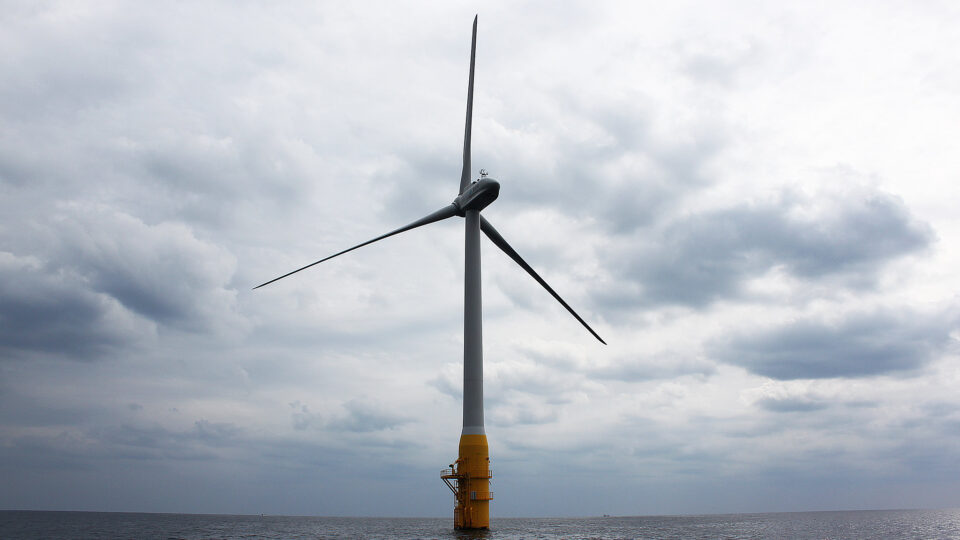
The Vineyard Wind project intends to install up to 84 huge wind turbines about 12 nautical miles off the cost of Martha’s Vineyard, Massachusetts.  In total, Vineyard Wind could generate 800 megawatts of electricity, enough to power about 400,000 homes.  The construction project will create about 3,600 jobs.  The $2.8 billion project is a joint venture of the energy firms Avangrid Renewables and Copenhagen Infrastructure Partners.

The idea of a wind farm off the Massachusetts coast was conceived 20 years ago but ran into repeated setbacks, delays, and well-funded opposition from waterfront property owners concerned about what will ultimately be the barely discernable sight of tiny blips on the distant horizon.  The Trump administration moved to cancel the permitting process for Vineyard Wind, but the Biden administration revived the project in March as part of its greater efforts to tackle climate change.

Electricity generated by Vineyard Wind will travel via cables buried six feet below the ocean floor to Cape Cod, where they will connect to a substation and feed into the New England grid.  The project is expected to begin delivering wind-powered electricity in 2023.

The Biden administration says that it intends to fast-track permits for other wind projects off the Atlantic Coast and that it will offer $3 billion in federal loan guarantees for offshore wind projects and invest in upgrades to ports across the United States to support wind turbine construction.

**********

Web Links

Biden Administration Approves Nation’s First Major Offshore Wind Farm

Photo, posted February 8, 2007, courtesy of mmatsuura via Flickr.

Earth Wise is a production of WAMC Northeast Public Radio.
Is U.S. Offshore Wind Finally Happening? | Earth Wise

March 26, 2021 By EarthWise Leave a Comment

United States offshore wind is finally happening

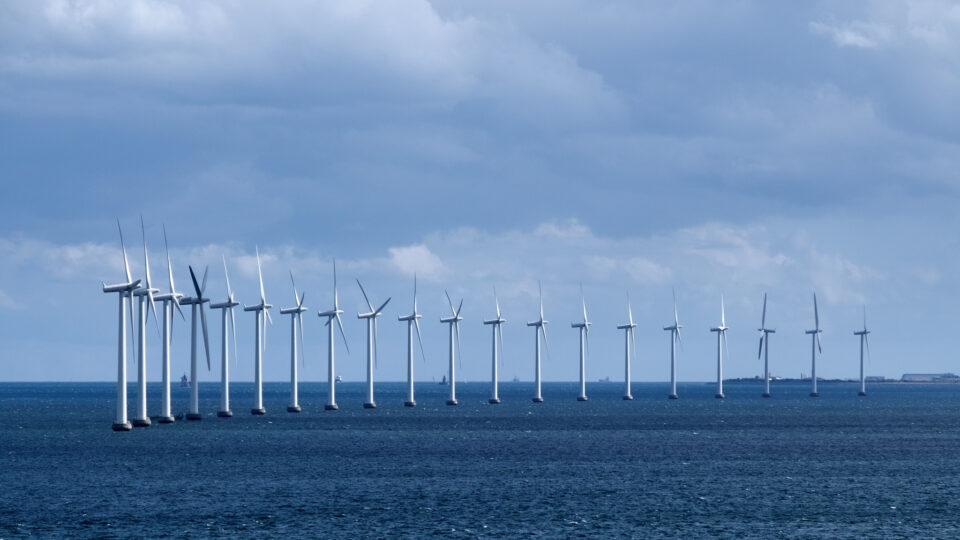
Offshore wind capacity has been growing rapidly in recent years, especially in Europe and China.  Globally, there is now more than 30 GW of offshore wind and industry experts predict that there will be well over 200 GW of installed capacity by 2030.

Meanwhile, the U.S. has only two small pilot projects, one with five turbines off Rhode Island and another with two turbines off Virginia.  But after many years of battles with determined opponents, false starts, regulatory struggles, and other hurdles, the U.S. offshore wind industry appears to be poised to take off.

A combination of significant commitments by power companies to purchase offshore wind power, strong support by the Biden administration, and billions of dollars in investments is creating the new-found momentum.

New York, New Jersey, Virginia, Massachusetts, Connecticut, Rhode Island, and Maryland have collectively committed to buying 30 GW of offshore electricity by 2035.  (That’s enough to power roughly 20 million homes).

Among the first major offshore installations to be completed in the next few years in the U.S. will be Vineyard Wind, 15 miles off of Martha’s Vineyard, another wind farm 60 miles east of New York’s Montauk Point, a third fifteen miles off Atlantic City, New Jersey, and a fourth off the Virginia Coast.

Offshore wind projects will create nearly 40,000 jobs just in the New York-New Jersey area over the next ten years.  There is still some opposition from elements of the commercial fishing industry and from some coastal residents.  However, with state and federal governments committed to reducing carbon emissions and rapidly reducing regulatory barriers, and with the price of offshore wind continuing to get lower and lower, most observers agree that the U.S. offshore wind industry is finally on the verge of really getting going.

**********

Web Links

On U.S. East Coast, Has Offshore Wind’s Moment Finally Arrived?

Photo, posted August 9, 2016, courtesy of Lars Plougmann via Flickr.

Earth Wise is a production of WAMC Northeast Public Radio.
Solar Energy And Agriculture | Earth Wise

March 10, 2021 By EarthWise Leave a Comment

Co-developing land for both solar and solar power could provide huge benefits with minimal costs

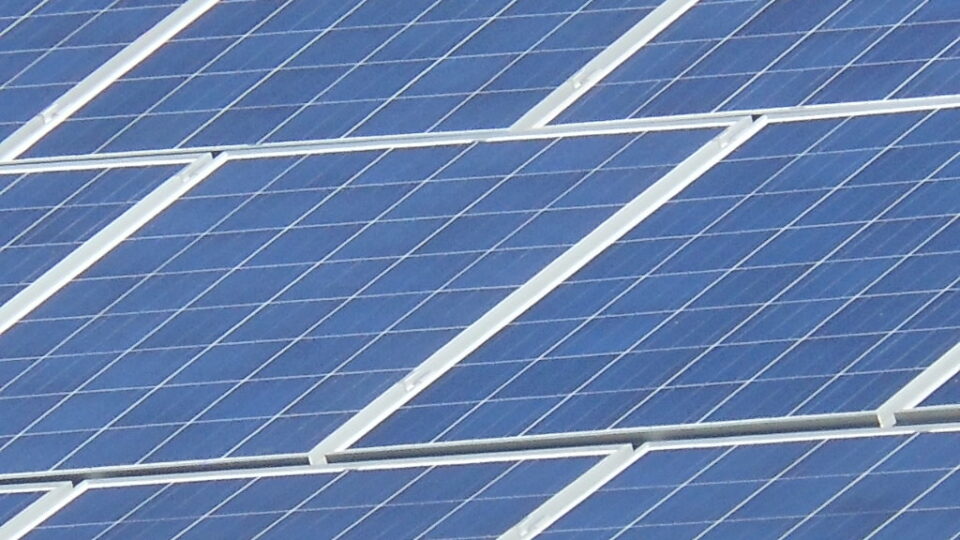
According to a new study by Oregon State University researchers, co-developing land for both solar voltaic power and agriculture could provide 20% of total electricity generation in the United States with an investment of less than 1% of the annual U.S. budget.

The concept is known as agrivoltaics – using the same land for both growing crops and generating solar energy.  The proponents of agrivoltaics say that it provides more food, more energy, lower water demand, lower carbon emissions, and more prosperous rural communities.

According to the study, wide-scale installation of agrivoltaic systems could lead to an annual reduction of 330,000 tons of carbon dioxide emission in the U.S. – the equivalent of taking 75,000 cars off the road – and the creation of more than 100,000 jobs in rural communities.  All of this could be achieved with minimal effects on crop yields.

The study finds that an area about the size of Maryland would be needed for agrivoltaics to produce 20% of U.S. electricity generation.  That area of 13,000 square miles constitutes about 1% of current U.S. farmland.

The cost of the solar installations would be $1.1 trillion over 35 years and they would pay for themselves from the electricity generated within 17 years.  Installing the arrays would create the equivalent of 117,000 jobs lasting 20 years.

The researchers are going to install a fully functional solar farm on 5 acres of university owned land to demonstrate to the agricultural community and potential future funders how the study’s findings can be applied in real world agricultural systems.

*********

Web Links

Combining solar energy and agriculture to mitigate climate change, assist rural communities

Photo, posted October 11, 2011, courtesy of Michael Coghlan via Flickr.

Earth Wise is a production of WAMC Northeast Public Radio.

Restoring Coastal Ecosystems | Earth Wise

February 1, 2021 By EarthWise Leave a Comment

Developing hardier corals for endangered reefs that resist the effects of climate change

Research published by CSIRO, Australia’s national science agency, examined the positive effects of restoration efforts for coastal ecosystems in terms of biodiversity, local economies, and human wellbeing.

Coastal ecosystems include saltmarshes, mangroves, seagrasses, oyster reefs, kelp beds, and coral reefs.  All of these have suffered declines of up to 85% over recent decades.  The research identified a number of successful coastal and marine restoration projects in recent years that indicate the likelihood that such efforts could be expanded by as much as a factor of ten to support human health and wellbeing, boost the adaptation response to climate change, and generate jobs. 

Some of the successful efforts identified included projects in the Great Barrier Reef to harvest coral larvae to boost large-scale coral restoration efforts.   Simple changes to how saltmarshes are planted have resulted in doubled survivorship and biomass.  In the U.S., the propagation of seagrass seeds has resulted in seagrass meadows recovering in areas where they had been lost decades ago.  In Indonesia, recovery of reefs impacted by blast fishing has been achieved by placing rocks or other hard structures underwater to help with coral colonization.

Investing in coral restoration creates jobs and can be used as a strategy to boost economic recovery and coastal marine health.  Restoration of marine habitats like kelp forests and oyster reefs has improved commercial and recreational fishing.

The United Nations has recognized the importance of coastal restoration and has declared the Decade on Ecosystem Restoration to start from 2021.

**********

Web Links

Scientists shine light on ‘bright spots’ to restore coastal ecosystems

Photo, posted November 29, 2012, courtesy of Robert Linsdell via Flickr.

Earth Wise is a production of WAMC Northeast Public Radio.
The Largest Renewable Energy Project In The World | Earth Wise

January 28, 2021 By EarthWise Leave a Comment

India is building the largest renewable energy project in the world

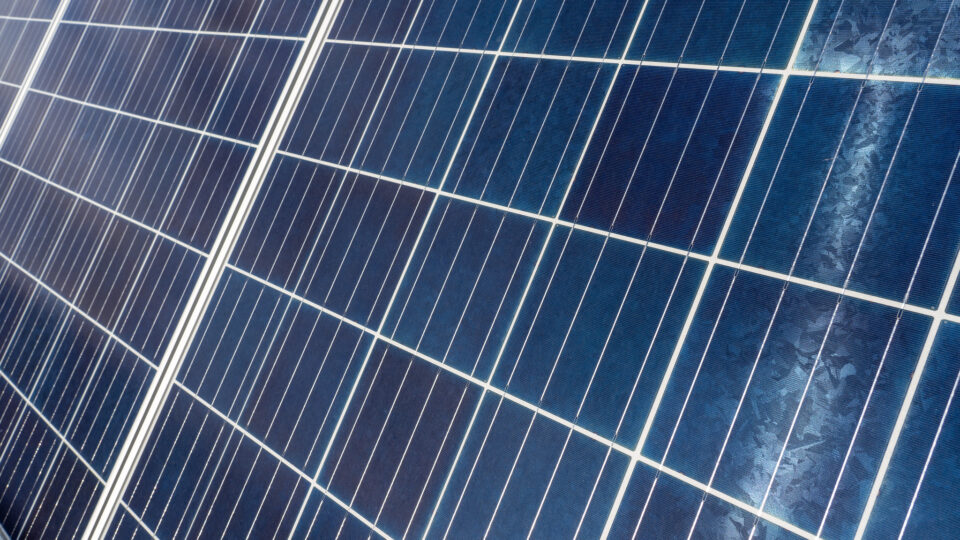
India has broken ground on what is planned to be the largest renewable energy project in the world:  a 30-gigawatt wind and solar power project in the state of Gujarat.

The renewable energy park will have two zones:  a 122,000-acre hybrid park zone that will accommodate 25 gigawatts of wind and solar power plants and a 57,000-acre zone entirely dedicated to wind power.  Multiple developers will be building the power plants in the hybrid zone.  A single company has been allotted the wind power zone.  The selected developers have to develop 50% of the total generation capacity in the next 3 years and finish the project in five years. The project is expected to create jobs for 100,000 people. Total investment in the project will be about $20 billion.

This is not technically a single standalone project but is rather an aggregation of multiple projects in a single general area.  Nonetheless, it represents the largest renewable energy development ever.  By comparison, the entire United States has a total of 50 gigawatts of installed solar power in large plants – which does not include any rooftop solar.  Total wind power capacity in the U.S. is a little over 100 gigawatts.  So, the 30-gigawatt Indian project is huge by any measure.

India already gets over 30% of its electricity from renewable sources, making it one of the largest renewable energy markets in the world.  The country has a goal of 60% renewable energy by 2030, amounting to 450 gigawatts of capacity.  This will require the country to double its already substantial renewable capacity in less than 10 years.  The Gujarat energy park will represent substantial progress towards that goal.

**********

Web Links

Largest Renewable Energy Project In World Will Be 30 Gigawatt Solar–Wind Project In India

Photo, posted October 16, 2019, courtesy of Jonathan Cutrer via Flickr.

Earth Wise is a production of WAMC Northeast Public Radio.

A New Problem For New York Apples | Earth Wise

August 6, 2020 By EarthWise Leave a Comment

new york apples in trouble

New York is the second largest apple-producing state in the country, trailing only Washington state.  New York averages nearly 30 million bushels of apples annually from approximately 600 commercial growers.  The apple industry supports 10,000 direct agricultural jobs as well as 7,500 indirect jobs involved with fruit handling, distribution, marketing and exporting.

Thus, there is considerable concern about the recent discovery by Cornell plant pathologists of a new fungal pathogen that causes bitter rot disease in apples.  They also found a second related fungus that is known to cause rot disease in other fruits but has now been found for the first time in apples.  The study was published in early July in the journal Scientific Reports.

Both of these pathogens belong to the genus Colletotichrum, which contains 189 species of fungi that cause devastating rot diseases in multiple fruit crops, including bananas, strawberries, citrus, avocados, papayas, mangoes and apples.

Unless protective measures are taken in a timely manner, apple losses from bitter rot in New York state can average up to 25% per year.  Some organic farms have lost essentially all of their crop at times.  Bitter rot also can destroy up to 5% of marketable fruit in post-harvest storage.

The Cornell study of samples from eight New York counties found both the Colletotrichum chrysophilum fungus, that had not been found in apples before, and a newly-discovered fungus that they named Colletotrichum noveboracense, after the Latin name for New York State.

The researchers plan to work with other plant pathologists and apple breeders to identify possible genes that confer natural resistance to Colletotrichum fungi that can be bred into apple cultivars.

**********

Web Links

Scientists identify new pathogen in NY apples

Photo, posted October 12, 2018, courtesy of Flickr.

Earth Wise is a production of WAMC Northeast Public Radio.
Turning Dead Trees Into Biomass Energy | Earth Wise

July 1, 2020 By EarthWise Leave a Comment

Biomass energy from dead trees

California has suffered from numerous large wildfires in recent years.  The two largest in the past century took place in 2017 and 2018, and just these two alone burned nearly 750,000 acres, destroyed over 1,200 structures, and killed 24 people.

Apart from the fires, drought, the warming climate, and bark-beetle infestations have killed 147 million California trees since 2013, most of them along the spine of the Sierra mountains.  These dead trees represent a significant danger in forthcoming fire seasons as they threaten to burn with enormous intensity.

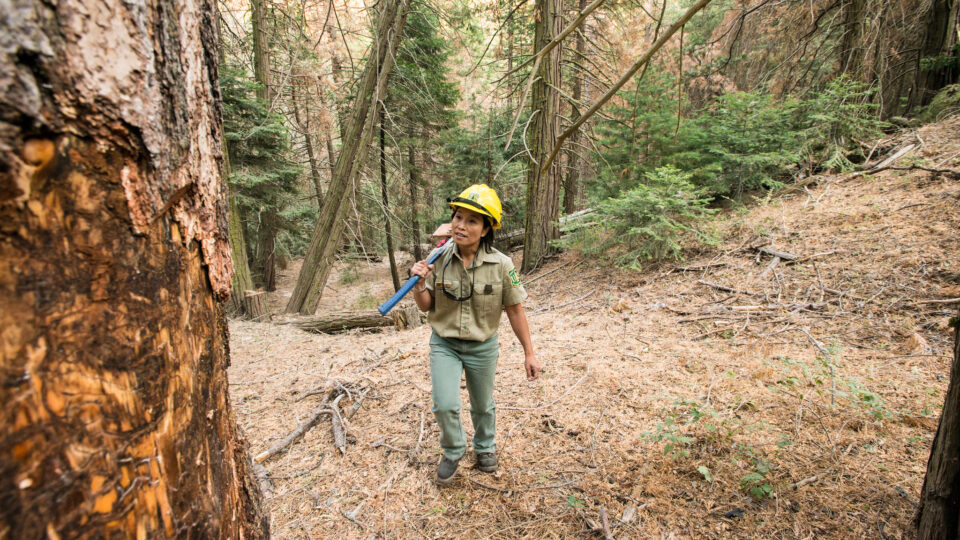
There are now biomass projects in California that thin trees in overcrowded forests and remove dead and diseased trees and turn them into wood chips to supply community biomass facilities that burn them to produce heat and electricity.

Proponents say these projects help rebuild rural communities by creating jobs, while at the same time reducing fire risk. 

There are critics of these programs who claim that they are damaging and destroying ecosystems.    They also point out that burning forest fuels emits 50% more carbon than burning coal and three times as much as burning natural gas.  This is true of biomass in general but is mitigated by the fact that it in principle the carbon can be recaptured by new forest growth.

However, the dominant argument about emissions is that wildfires emit far more carbon dioxide than biomass plants, or much of anything else, for that matter.  In 2018 alone, California wildfires released 50% more carbon dioxide than California’s entire industrial sector.  So, reducing the extent of wildfires is a big deal for many reasons.

**********

Web Links

In California, A Push Grows to Turn Dead Trees into Biomass Energy

Photo, posted August 24, 2016, courtesy of the USDA via Flickr.

Earth Wise is a production of WAMC Northeast Public Radio.

The Largest U.S. Solar Project | Earth Wise

May 28, 2020 By EarthWise Leave a Comment

The largest solar project to date in the U.S. has received final approval from the Department of the Interior.   A $1 billion, 690-megawatt solar array will be built on federal land in the Mojave Desert in Nevada.   The project includes battery energy storage and is expected to produce enough electricity to power more than a quarter million homes.  It will also offset the greenhouse gas emissions equivalent to about 83,000 cars a year.

The current largest U.S. installation, the Solar Star Farm in Southern California, completed in 2015, generates 579 megawatts of power.

Construction of the Gemini Solar Array is expected to start sometime this year and be completed by 2022 or 2023.  The first phase of the project will cover 11 square miles of desert land about 30 miles northeast of Las Vegas.

Some conservation groups have fought against the project, saying that it will destroy thousands of acres of habitat for endangered desert tortoises as well as other rare plant and animal species.  The groups agree that solar energy is a good thing but are convinced that the location selected is the wrong one. 

Interior Department representatives note that the Gemini Project will provide jobs and economic growth at a time when many Americans in general and Nevada citizens in particular are struggling with the impact of the COVID-19 pandemic.

The project is projected to generate $713 million in economic activity and employ about 2,000 people during construction.  However, once it is up and running, it will employ just 19 full-time workers.

**********

Web Links

The Largest Solar Project in the U.S. Gets Green Light

Photo, posted January 26, 2014, courtesy of Jannes Glas via Flickr.

Earth Wise is a production of WAMC Northeast Public Radio.
Last New York Coal Plant Closing | Earth Wise

April 13, 2020 By EarthWise Leave a Comment

closing coal power plants

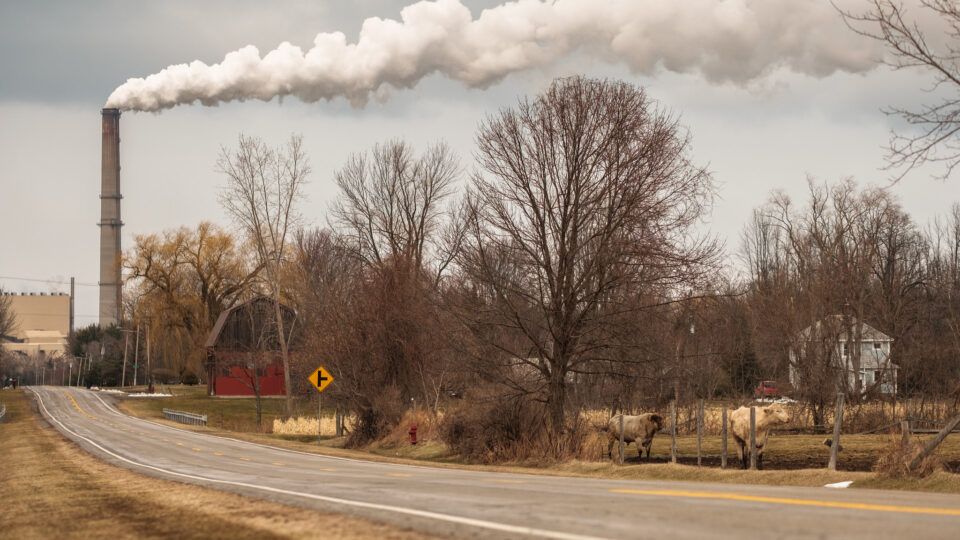
The last coal-fired power plant in New York State is closing.  The plant, located in Barker, about an hour’s drive from Buffalo, employs 44 people.  The plant’s closure is an early test of New York’s new climate law, which is one of the most ambitious in the country.  The law is supposed to transform the state’s energy grid to carbon-free by 2040. 

Coal plants across the country are going offline, priced out by natural gas and targeted by regulations and incentives aimed at reducing greenhouse gas emissions.  Coal plant closures bring common challenges:  lost tax revenues and jobs as well as efforts to retrain workers and clean up sites.  Every plant has a specific place in a community, and each community has its own story.

The new climate law is supposed to create thousands of new jobs, including high-paying union jobs like the ones the employees in Barker are losing.  But jobs are scarce in the northwest corner of the state where Barker is located.

The state government has recently issued rules that would make it easier to get permission to build renewable energy sites, including wind turbines and solar farms, allowing applicants to bypass zoning rules and other local regulations.  But residents of rural towns have environmental and aesthetic concerns about these potential new energy plants.

In 2010, the United States had 580 coal-fired power plants providing 45% of the country’s electricity. By March 2018, there were fewer than 350 plants and coal’s market share had dropped to 30%.  At this point, there are about 224 plants producing 18% of the country’s power.  The writing is on the wall for coal power.

**********

Web Links

New York’s Last Coal-Fired Power Plant Is Closing

Photo, posted March 13, 2018, courtesy of Joed Viera via Flickr.

Earth Wise is a production of WAMC Northeast Public Radio.

Jet Fuel From Acetone | Earth Wise

February 25, 2020 By EarthWise Leave a Comment

Greening Jet Fuel

Acetone is a common organic solvent.  It is used to make plastic, fibers, drugs, and other chemicals.  It is commonly used by consumers as nail polish remover.  Acetone is a manufactured chemical, but it is also found naturally in the environment in plants, among other places. There are now companies that produce acetone entirely by fermentation of plant feedstocks, such as corn.

Researchers at Los Alamos National Laboratory have now developed a process by which acetone can be converted into a fuel additive that can improve the performance of petroleum-based jet fuel, providing both environmental and economic benefits.

The process takes biomass-derived acetone and converts it to isophorone, which they produce by a process called photochemical cycloaddition that creates more complex hydrocarbons.  They then use ultraviolet light to convert the isophorone into cyclobutane, which is a type of hydrocarbon with high energy density that is suitable for aviation fuel applications.

Acetone itself is quite volatile and is unsuitable for fuel applications.  It also cannot be added directly to any fuel supply since it can dissolve engine parts and o-rings.  Cyclobutane, on the other hand, is a safer and more energy-dense fuel that can be a replacement for additives that require high-pressure hydrogen treatment in their synthesis.  Currently, most hydrogen is produced by a process that generates carbon dioxide.  The new conversion process does not result in carbon emissions.

According to the Los Alamos researchers, their process can result in a domestically generated product that will provide environmental benefits, create domestic jobs, improve U.S. energy security, and further U.S. global leadership in bioenergy technologies.

**********

Web Links

Acetone plus light creates a green jet fuel additive

Photo, posted December 18, 2007, courtesy of Flickr.

Earth Wise is a production of WAMC Northeast Public Radio.

Smarter Prospecting

November 18, 2019 By EarthWise Leave a Comment

The global demand for copper and gold continues to grow.  Copper is widely used in building materials, plumbing, and electronics.  Gold is still highly valued for jewelry and coinage, but nearly a third of the world’s gold is now used in electronics. 

Both of these metals are getting increasingly difficult to find as many of the known sources have been exhausted.  Companies spend millions of dollars drilling deeper and deeper in search of new deposits.

It costs about $400 to drill one meter into rock and it is not uncommon to drill to depths of one to two kilometers.  So, it can cost nearly a million dollars to drill a hole that has no guarantee of success.  Given that ore deposits are tiny compared with the totality of the search space, prospecting for these metals is very much like looking for a needle in a haystack.

A researcher at the University of South Australia has developed a suite of geochemical tools to more accurately target valuable mineral deposits and thereby save drilling companies millions of dollars.  The goal is to have drilling for valuable minerals be faster, cheaper and more environmentally friendly.

By mapping out where key chemical elements are found in greater concentrations, the new suite of tools greatly increases the chances of finding an ore deposit at a target site and thereby greatly improve the return on investment for exploration companies.  The tools have been successfully tested at an iron oxide-copper-gold deposit in the north of South Australia, leading to a four-fold increase in the known footprint of their ore body.  Finding economically viable enriched ore sites can generate both revenues and jobs.

**********

Web Links

Prospecting for gold just got a lot easier (and cheaper)

Photo, posted April 21, 2005, courtesy of Adam via Flickr.

Earth Wise is a production of WAMC Northeast Public Radio.

The Benefits Of Zero-Carbon Cities

November 8, 2019 By EarthWise Leave a Comment

A new report issued by a coalition of 50 leading international institutions shows that low carbon initiatives in cities could reduce urban emissions by nearly 90% and support 87 million jobs worldwide by 2030.  The report finds that implementing low carbon measures in cities would be worth almost $24 trillion by 2050.

Cities are home to more than half the world’s population but produce 80% of gross domestic product and 75% of carbon emissions.  The research highlights the significant benefits carbon reduction can bring to cities in areas such as public health, job creation, and poverty alleviation.

The report shows that it is possible to cut 90% of emissions from cities using currently available technologies and practices including carbon savings from buildings, transportation, materials efficiency, and waste reduction.  Doing so would require an investment of nearly $2 trillion per year but would generate annual returns of nearly $3 trillion in 2030 and $7 trillion in 2050 based on cost savings alone.  Many low carbon measures would pay for themselves in less than five years, including more efficient lighting, electric vehicles, improved freight logistics, and solid waste management.

In addition to economic benefits, compact, connected and clean cities could provide a higher standard of living and greater opportunity for all.  These measures would also reduce air pollution, cut chronic traffic congestion, and improve worker productivity.

The report offers case studies from around the world where national and local governments have worked together to rapidly and profoundly transform their cities for the better within 20 or 30 years.

**********

Web Links

The benefits of investing in zero-carbon cities

Photo, posted September 8, 2018, courtesy of Steffen Flor via Flickr.

Earth Wise is a production of WAMC Northeast Public Radio.
Lots Of Renewable Energy Jobs

August 16, 2019 By EarthWise Leave a Comment

According to the International Renewable Energy Agency, there were 11 million people employed in renewable energy worldwide in 2018.  This compares with 10.3 million in 2017.  So roughly three-quarters of a million new jobs were added last year.   As more and more countries manufacture, trade and install renewable energy technologies, renewables jobs continue to reach new high levels.

The geographic footprint of renewable energy jobs is changing.  Until now, renewable energy industries have remained relatively concentrated in a handful of major markets such as China, the US, and the European Union.  But more recently, East and Southeast Asian countries have emerged alongside China as key exporters of solar technology.  Malaysia, Thailand, and Vietnam were responsible for a greater share of growth in renewables last year.  Overall, Asia has a 60% share of renewable energy jobs worldwide.

Beyond climate goals, low-carbon economic growth has become a driver for renewables technology.  Renewables deliver on all the major elements of sustainable development:  environmental, economic and social.

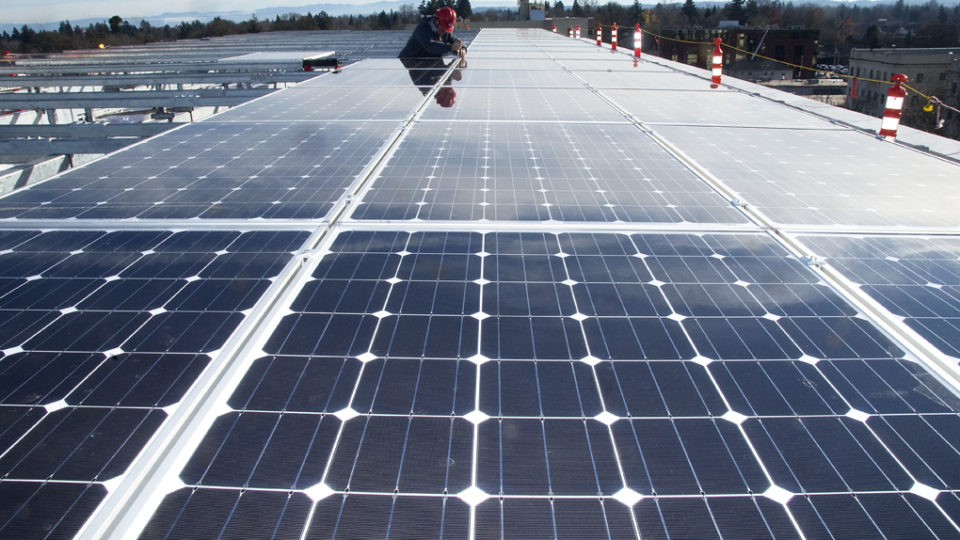
The solar photovoltaic industry continues to be the most dynamic renewable enterprise.  It accounts for a third of the renewable energy workforce with more than three million jobs.  

Biofuel jobs were up by 6% to over 2 million.  Wind power supports 1.2 million jobs, with onshore projects predominant.  But the offshore wind segment is gaining traction.  Hydropower is still the largest installed capacity of all renewables but is now only expanding slowly.  The hydropower sector employs 2.1 million people directly, three-quarters in operations and maintenance.

**********

Web Links

Renewable energy market employs 11 million in 2018 – IRENA

Photo, posted January 11, 2012, courtesy of the Oregon Department of Transportation via Flickr.

Earth Wise is a production of WAMC Northeast Public Radio.
Mass Timber

June 10, 2019 By EarthWise Leave a Comment

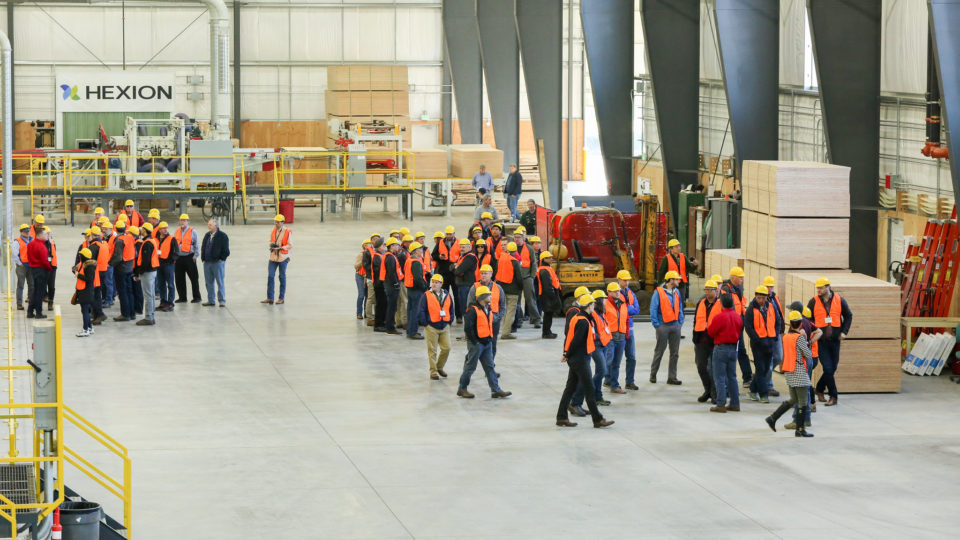
Mass timber is a type of construction typically characterized by the use of large solid wood panels for wall, floor, and roof construction. Large structural panels, posts, and beams glued under pressure or nailed together in layers, with the wood’s grain stacked perpendicular for extra strength – are prized as innovative building materials, superior to concrete and steel in many ways.  Mass timber has pushed the perceived boundaries of wood construction, leading to building heights and spans that traditionally have required concrete, steel or masonry for structural support. The move to mass timber has become something of a construction revolution and many see it as a significant part of a climate change solution. 

The question is just how green is mass timber construction?  How sustainable is it in terms of the forest management, logging, manufacture and transportation of wood products involved?

A number of environmental groups are very skeptical.  There is not yet comprehensive data on the subject.  Only recently have interdisciplinary scientists begun to study the potential climate impacts of the wide use of mass timber.

Despite these questions, the mass timber industry is taking off.  Demand for mass timber posts and beams has led to new sawmills opening in the U.S. Northwest and many new jobs for loggers.

The aesthetics and economics of mass timber are both very attractive compared with conventional large-scale construction materials.  The real unknowns relate to the environmental impact of its widespread use.  If that can take place in a sustainable and environmentally conscientious way, it would be very important in the fight against climate change.  Carbon dioxide emissions from the building industry account for more than a third of global emissions, primarily from the concrete and steel industries.

**********

Web Links

As Mass Timber Takes Off, How Green Is This New Building Material?

Photo, posted March 19, 2018, courtesy of Freres Lumber Co via Flickr.

Earth Wise is a production of WAMC Northeast Public Radio.

Making Roads From Ocean Plastic

June 7, 2019 By EarthWise Leave a Comment

Like many other places around the world, India has a big problem with plastic waste.  Its 1.3 billion people each use an average of 24 pounds of plastic per year and much of it ends up in the Arabian Sea and Indian Ocean.

Fishermen in India’s southern state of Kerala have taken on the battle against plastic waste in the ocean by launching a campaign called Suchitwa Sagaram, or Clean Sea, in which they are collecting the plastic and bringing it back to shore.

In the first 10 months of the program, fisherman have removed 25 tons of plastic from the Arabian Sea.  Once the plastic waste reaches shore, it is fed into a plastic shredding machine.  As is the case for many of India’s plastic recycling schemes, the shredded plastic from the sea is converted into material that is used for road surfacing.

There are more than 20,000 miles of plastic roads in India, mostly in rural areas.  In fact, more than half the roads in the southern state of Tamil Nadu are plastic.  Such roads have become popular because they are more resilient to India’s searing heat.  The melting point of plastic roads is around 150 degrees Fahrenheit as compared to 122 degrees for conventional roads.

Roads made from recycled plastic are also cheaper than ones using conventional plastic additives.  A mile of plastic road uses the equivalent of a million and a half plastic bags and saves about a ton and a half of asphalt.  Overall, plastic roads are about 8% cheaper than conventional roads and create jobs for people in the fishing communities.

India’s plastic roads are a promising way to fight the problem of ocean plastic pollution.

**********

Web Links

These Indian fishermen take plastic out of the sea and use it to build roads

Photo, posted April 25, 2016, courtesy of Bo Eide via Flickr.

Earth Wise is a production of WAMC Northeast Public Radio.

  • « Go to Previous Page
  • Page 1
  • Page 2
  • Page 3
  • Go to Next Page »

Primary Sidebar

Recent Episodes

  • An uninsurable future
  • Clean energy and jobs
  • Insect declines in remote regions
  • Fossil fuel producing nations ignoring climate goals
  • Trouble for clownfishes

WAMC Northeast Public Radio

WAMC/Northeast Public Radio is a regional public radio network serving parts of seven northeastern states (more...)

Copyright © 2026 ·