• Skip to primary navigation
  • Skip to main content
  • Skip to primary sidebar

Earth Wise

A look at our changing environment.

  • Home
  • About Earth Wise
  • Where to Listen
  • All Articles
  • Show Search
Hide Search
You are here: Home / Archives for energy efficiency

energy efficiency

More efficient cooling for data centers

July 22, 2025 By EarthWise Leave a Comment

Engineers are working on a more efficient method to cool data centers

Increasing reliance on digital technologies in general and artificial intelligence in particular are dramatically increasing the energy consumption of data centers.  Data centers consume far more energy per square foot than other commercial buildings.  By the year 2030, data center energy consumption in the US is projected to reach 9% of the country’s electricity generation. 

Computing hardware consumes large amounts of energy and generates large amounts of heat in the process.  Currently, cooling the equipment so it doesn’t burn out accounts for as much as 40% of a data center’s total energy use. 

Engineers at the University of California San Diego have developed a new cooling technology that could significantly improve the energy efficiency of data centers.  The technology makes use of a specially engineered fiber membrane that passively removes heat through evaporation.

The membrane has a network of tiny, interconnected pores that draw cooling liquid across the membrane surface using capillary action.  As the liquid evaporates, it removes heat from the electronics underneath.  No extra energy is required.

Tests of the membrane demonstrated record-breaking performance in removing heat from electronics and being able to withstand very high levels of heat flux.

The researchers say that the technology is still operating well below its theoretical limit, and with additional work, can lead to optimized performance.  The membranes will be integrated into cold plates, which are components that attach to power-hungry computing components to dissipate heat.  The team is also launching a startup company to commercialize the new cooling technology.

**********

Web Links

New Cooling Tech Could Curb Data Centers’ Rising Energy Demands

Photo, posted January 23, 2023, courtesy of Jefferson Lab via Flickr.

Earth Wise is a production of WAMC Northeast Public Radio
Lower Power Sector Emissions | Earth Wise

September 16, 2021 By EarthWise Leave a Comment

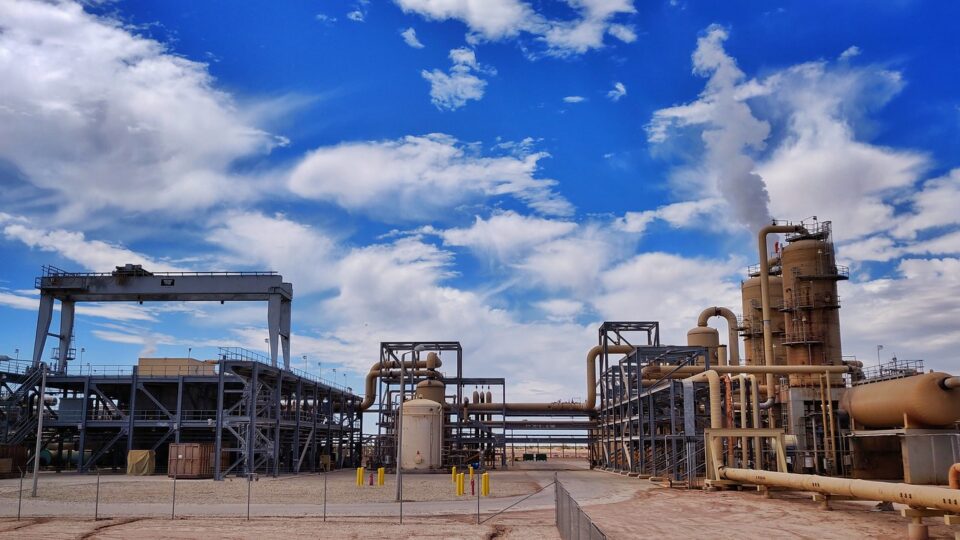
Large decrease in United States power sector emissions

A combination of factors led to emissions from the U.S. power sector dropping 10% between 2019 and 2020, which was the largest one-year drop measured since annual reports first began being published in 1997.

The coronavirus pandemic was certainly a contributing factor, but the drop in emissions is part of a long-term trend being driven by increasing reliance on renewable energy sources, diminishing use of coal, and improving energy efficiency.

Between 2000 and 2020, power generation from solar, wind, and geothermal generation more than doubled.  Coupled with the declining use of coal power, power sector emissions during that period dropped by 37% even though the U.S. gross domestic product grew by 40% over the same years.   Overall, at this point zero-carbon electricity sources – which include wind, solar, geothermal, hydropower, and nuclear power – provide about 38% of U.S. electricity.

The Biden Administration has set a target of 100% zero-carbon power by the year 2035.  Given that the costs of wind and solar power continue to fall, there are power companies pushing for setting an intermediate goal of 80% clean power by 2030.

According to recent research, the increasingly attractive cost of renewable power along with the job creation associated with it means that reaching at least 90% clean power by the year 2035 could be achieved at no extra cost to consumers.  Being able to separate economic growth from emissions makes it far more likely that the goals of decarbonization can be met without encountering economic resistance. 

**********

Web Links

U.S. Power Sector Sees Biggest One-Year Drop in Emissions in More Than Two Decades

Photo, posted June 30, 2019, courtesy of Stephen Strowes via Flickr.

Earth Wise is a production of WAMC Northeast Public Radio.

The Danger Of Relying On Future Technology | Earth Wise

May 22, 2020 By EarthWise Leave a Comment

technology and climate change

The need to mitigate the effects of climate change has been a global focus for about 40 years and has seen ever-changing views on what actions are needed.  The historical record has been defined by over-reliance on promises of new technology to solve climate change.  Looking to future technology to save the environment has been an excuse to postpone necessary action and avoid inconvenient changes in how we do things.

A study at Lancaster University in the UK published in Nature Climate Change exposes how such promises have raised expectations of more effective policy options becoming available in the future and have enabled the continued politics of inadequate action and skirting around the truth.

Even after four decades, rather than acting forcefully to reduce emissions, we are hoping that nuclear fusion power, giant carbon sucking machines, ice-restoration using vast numbers of wind-powered pumps, and spraying particulates into the atmosphere can address the climate crisis rather than dramatic changes in fossil fuel use.

The researchers mapped the history of climate targets in five phases.  Early on, the focus was on improved energy efficiency, large-scale enhancement of carbon sinks, and nuclear power.  Next, the focus was on cutting emissions with efficiency, fuel switching, and carbon capture and storage.  After that, bioenergy was the major focus.  Then, global carbon budgeting and potential negative emission technologies.  Currently, the focus is on temperature outcomes rather than emission targets.

Each novel promise competes with existing ideas and downplays any sense of urgency.   The researchers conclude that putting our hopes on yet more new technologies is unwise.  The time to act is now.

**********

Web Links

Why relying on new technology won’t save the planet

Photo, posted February 13, 2019, courtesy of Jonathan Cutrer via Flickr.

Earth Wise is a production of WAMC Northeast Public Radio.

Indoor Pollution

July 26, 2019 By EarthWise 1 Comment

We mostly think of air pollution as an outdoor problem.   The primary culprits are vehicle and factory exhaust as well as occasional wildfire smoke.  What we don’t think about is the air quality inside our own homes.

Researchers at Washington State University have found that indoor pollution levels can be surprisingly high and that they vary throughout the day and increase as temperatures rise.

Indoor air pollution comes from a variety of sources, including building materials, furniture, household chemical products, and from activities like cooking.  One of the most serious pollutants is formaldehyde, which often is emitted from gypsum wallboard.  About half of the gypsum used in homes as drywall is made from waste products from the coal industry.  When the material is heated, formaldehyde and possibly even mercury can be emitted.

Pollutant levels rise in homes as temperatures increase.  Thus, the highest levels of pollution occur in the afternoon and the lowest are in the early morning.  Before this research, manufacturers and builders assumed that pollution levels were pretty much constant over time.

Building laws require that homes are structurally sound, and that people are comfortable, but there is little regulation of air quality in people’s homes.  One of the best ways to clear out harmful chemicals is with ventilation to the outdoors.  But with increased concern about reducing energy use, builders are making homes more airtight, which may inadvertently be worsening the problem.

We need to balance making more energy efficient homes with protecting our health by being aware of the dangers that lurk in the air in our homes.  Running the air conditioning or opening windows are good things to do.

**********

Web Links

Researchers uncover indoor pollution hazards

Photo, posted October 14, 2010, courtesy of Flickr.

Earth Wise is a production of WAMC Northeast Public Radio.

Shutting Down Minnesota Coal Plants

July 8, 2019 By EarthWise Leave a Comment

One of the largest utilities in the United States, Xcel Energy Inc., announced that it will close its remaining coal-fired power plants in the Upper Midwest a decade ahead of its previously-announced schedule.  In addition, the company will add 3,000 megawatts of new solar capacity by 2030.

The Allen S. King plant in Oak Park Heights, Minnesota and the Sherburne County Generating Station in Becker, Minnesota are the plants in question.  The transition away from coal is a difficult challenge for such small communities.  The plant in Becker, for example, employs 300 people in a town of 4,500 and provides 75% of the city’s tax base.  Towns like this realize that coal is inevitably going away and must find ways to move beyond their dependence upon it.  The Becker plant will not completely close until 2030, but parts will now only run seasonally, and one of the 3 units will close permanently in 2023

Xcel Energy, based in Minneapolis, serves more than 3.3 million electricity customers in 8 states.  Last December, the company announced that it would deliver 100% clean, carbon-free electricity by 2050 and would achieve an 80% carbon reduction from its 2005 levels by 2035.  It is the first major US utility to set such a goal.

Xcel will increase its investment in energy efficiency measures, bring 1,850 megawatts of new wind capacity online in Minnesota by 2022, and keep its Monticello Nuclear Generating Station operating until 2040, a decade later than planned.  The company’s stepped-up clean energy strategy is part of a new legal settlement between the company, environmental organizations, and labor groups that involves Xcel’s proposed $650 million purchase of a 760-megawatt natural gas plant.

**********

Web Links

A Major U.S. Utility Is Closing Its Coal-Fired Power Plants a Decade Early

Photo, posted January 3, 2016, courtesy of Tony Webster via Flickr.

Earth Wise is a production of WAMC Northeast Public Radio.

Strategies For Limiting Global Warming

July 30, 2018 By EarthWise Leave a Comment

https://earthwiseradio.org/wp-content/uploads/2018/06/EW-07-30-18-Strategies-for-Limiting-Global-Warming.mp3

A new study published in Nature Energy shows that the goal of limiting global temperature rise to 1.5 degrees Celsius could be achieved by a combination of dramatic improvements in the energy efficiency of everyday activities.

[Read more…] about Strategies For Limiting Global Warming

Bursting The Carbon Bubble

July 25, 2018 By EarthWise Leave a Comment

https://earthwiseradio.org/wp-content/uploads/2018/06/EW-07-25-18-Bursting-the-Carbon-Bubble.mp3

One way or another, the fossil fuel industry seems to be destined to shrink away.  A combination of technological advances and climate policies are going to drastically reduce the global demand for fossil fuels over the course of time.   New research shows that the demise of the fossil fuel industry will have profound consequences.

[Read more…] about Bursting The Carbon Bubble

New Energy Goals For New York

June 1, 2018 By EarthWise Leave a Comment

https://earthwiseradio.org/wp-content/uploads/2018/06/EW-06-01-18-New-NY-Energy-Goals.mp3

Since 2015, New York has had in place an energy plan aimed at building a clean, resilient and cost-effective energy system for the state.  A key part of that plan is to reduce greenhouse gas emissions by 40% from 1990 levels by the year 2030.  Another major goal is to have 50% of the state’s electricity produced from renewable sources by the same year.

[Read more…] about New Energy Goals For New York

Greenhouse Gas Emissions Rising Again

May 8, 2018 By EarthWise Leave a Comment

https://earthwiseradio.org/wp-content/uploads/2018/04/EW-05-08-18-Greenhouse-Gas-Emissions-Rising-Again.mp3

If we want to avoid drastic global warming this century, we need to sharply reduce greenhouse gas emissions over time.   For the previous three years, emissions had been holding steady, but last year, global emissions from the use of coal, oil and natural gas increased by 1.4%.  According to the International Energy Agency, this unfortunate new data should serve as a strong warning that we need to increase our efforts to combat climate change.

[Read more…] about Greenhouse Gas Emissions Rising Again

Sunshine To Fuel

March 15, 2018 By EarthWise Leave a Comment

https://earthwiseradio.org/wp-content/uploads/2018/03/EW-03-15-18-Sunshine-to-Fuel.mp3

Hydrogen is touted to be the fuel of the future, particularly for cars.  But a more acccurate view of it is that hydrogen is an energy storage medium.  And the most promising form of energy to store using hydrogen is solar energy.

[Read more…] about Sunshine To Fuel

Hopeful Climate Trends

December 27, 2017 By EarthWise Leave a Comment

https://earthwiseradio.org/wp-content/uploads/2017/12/EW-12-27-17-Hopeful-Climate-Trends.mp3

In November, Syria joined the Paris Climate Accord.  As a result, the United States is now the only country in the world that has rejected the global pact.  Despite this embarrassing news, there is reason for optimism in the effort to stave off the worst impacts of climate change.  In particular, 7 major trends provide hope that things could move in the right direction.

[Read more…] about Hopeful Climate Trends

Clean Energy In Massachusetts

April 26, 2017 By EarthWise

https://earthwiseradio.org/wp-content/uploads/2017/04/EW-04-26-17-Clean-Energy-in-Massachusetts.mp3

Despite efforts by the new administration to increase support for fossil fuels, there is increasing momentum towards a clean-energy future.  State and local efforts are driving the country to a 21st-century energy infrastructure, with or without the federal government.

[Read more…] about Clean Energy In Massachusetts

Wind-Powered Trains

March 3, 2017 By EarthWise

https://earthwiseradio.org/wp-content/uploads/2017/03/EW-03-03-17-Wind-Powered-Trains.mp3

The Netherlands – the country long associated with picturesque windmills – is now operating 100% of its electric trains with wind energy.

[Read more…] about Wind-Powered Trains

Using Less Energy

December 19, 2016 By EarthWise

https://earthwiseradio.org/wp-content/uploads/2016/12/EW-12-19-16-Using-Less-Energy.mp3

Americans comprise less than 5% of the world’s population, but we use almost 20% of its energy.  This is a problem from many perspectives and it is one that we are at least trying to solve.

[Read more…] about Using Less Energy

Climate Change And Jobs

December 5, 2016 By EarthWise

https://earthwiseradio.org/wp-content/uploads/2016/11/EW-12-05-16-Climate-Change-and-Jobs.mp3

Combating climate change is a bit like treating a disease whose early stage symptoms are not very severe.  People are not as motivated as they should be.   Businesses have to comply with new regulations and spend money on new technologies, which seems like a losing proposition.

[Read more…] about Climate Change And Jobs

Canadian Carbon Tax

November 11, 2016 By WAMC WEB

https://earthwiseradio.org/wp-content/uploads/2016/11/EW-11-11-16-Canadian-Carbon-Tax.mp3

The Canadian government has chosen a carbon tax as its national policy to reduce greenhouse gas emissions.  This aggressive move could have major repercussions around the world.

[Read more…] about Canadian Carbon Tax

Keeping Up With Light Bulbs

March 8, 2016 By WAMC WEB

https://earthwiseradio.org/wp-content/uploads/2016/02/EW-03-08-16-Keeping-Up-With-Light-Bulbs.mp3

Light bulbs entered people’s lives in the 1880s.  Tungsten filament lightbulbs have been around for about 100 years.  Fluorescent lamps were invented in the 1920s.   These two mainstays dominated most lighting applications for most of the twentieth century.

[Read more…] about Keeping Up With Light Bulbs

Primary Sidebar

Recent Episodes

  • An uninsurable future
  • Clean energy and jobs
  • Insect declines in remote regions
  • Fossil fuel producing nations ignoring climate goals
  • Trouble for clownfishes

WAMC Northeast Public Radio

WAMC/Northeast Public Radio is a regional public radio network serving parts of seven northeastern states (more...)

Copyright © 2025 ·