• Skip to primary navigation
  • Skip to main content
  • Skip to primary sidebar

Earth Wise

A look at our changing environment.

  • Home
  • About Earth Wise
  • Where to Listen
  • All Articles
  • Show Search
Hide Search
You are here: Home / Archives for coral reefs

coral reefs

Sunscreen For Corals | Earth Wise

August 6, 2021 By EarthWise Leave a Comment

Scientists examine why some corals are better equipped to survive a changing environment

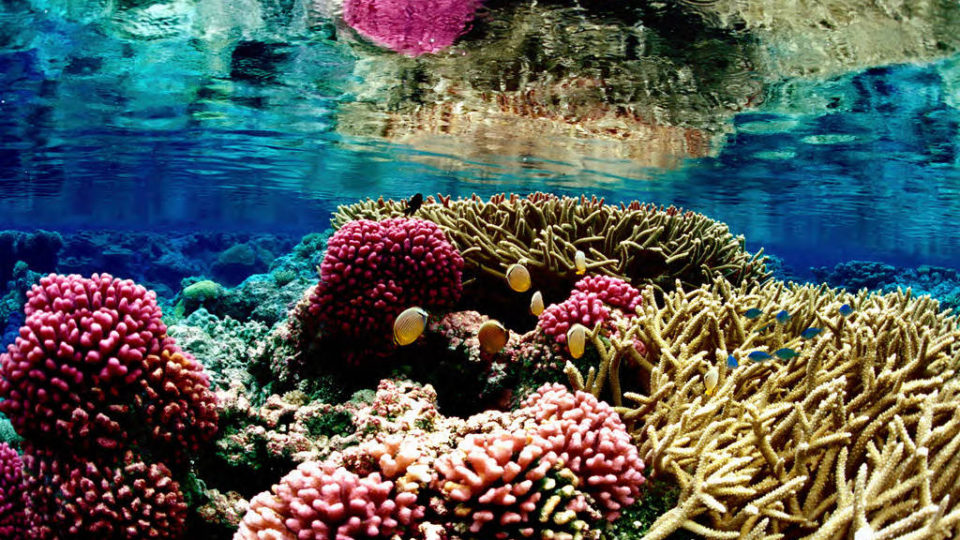
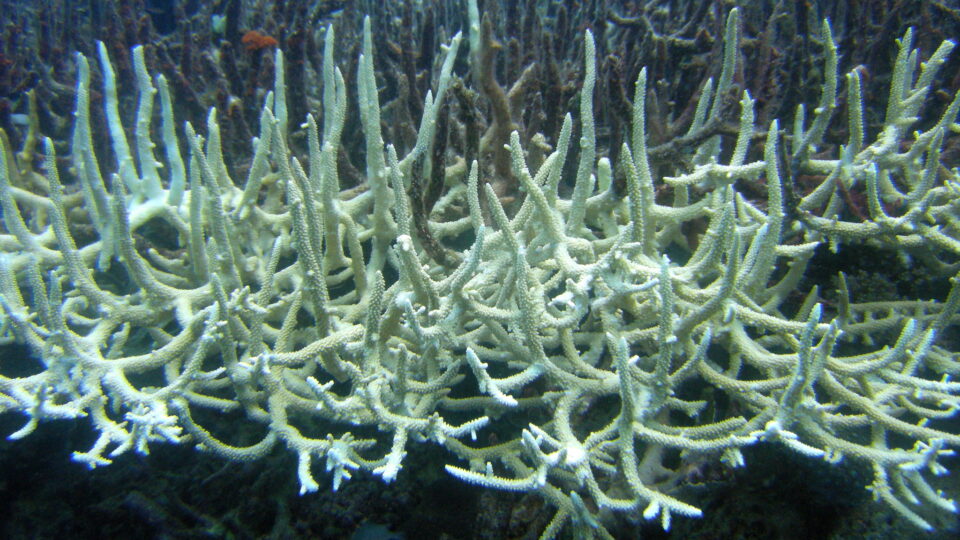
Sunscreen from beachgoers entering ocean waters is one of the greatest threats to coral reefs and there are global efforts to reduce or eliminate the use of many of the most harmful chemicals people use to protect themselves from the sun’s rays.  However, scientists at the Smithsonian Conservation Biology Institute have found that some corals have a natural sunscreen of their own that helps protect them from the effects of climate change.

Hawaiian blue rice corals feature a deep blue pigment that is created by chromoprotein that filters out harmful ultraviolet radiation from the sun.  UV damage has harmful impacts to reproduction in many coral species, but it appears not to have the same effect on blue rice coral.

In a study published in Scientific Reports, Smithsonian researchers studied the devastating effects that bleaching had on brown rice coral in the Hawaiian bleaching events of 2014 and 2015.  During the same events, blue rice coral either recovered quickly or was not affected by the elevated ocean temperature at all.

The blue-pigmented corals had dramatically greater reproductive vigor than the brown-pigmented version.  The key factor appears to be the sun-screening ability of the blue pigment in the particular symbiotic algae that lives inside the coral tissue known as zooxanthellae.  The coral protects the algae and in turn the algae provide the coral with food in the form of sugars produced as a waste product from photosynthesis.  In the case of the blue version, the algae also produce sunscreen for the coral.

By better understanding the role UV-protective pigments play in mitigating the adverse effects of climate change and warming oceans, scientists can learn why some species are better equipped to survive in a changing environment.

**********

Web Links

Smithsonian Conservation Biology Institute Scientists Find Corals’ Natural “Sunscreen” May Help Them Weather Climate Change

Photo, posted September 28, 2009, courtesy of Matt Kieffer via Flickr.

Earth Wise is a production of WAMC Northeast Public Radio.
Sunscreen And Coral Reefs | Earth Wise

May 18, 2021 By EarthWise Leave a Comment

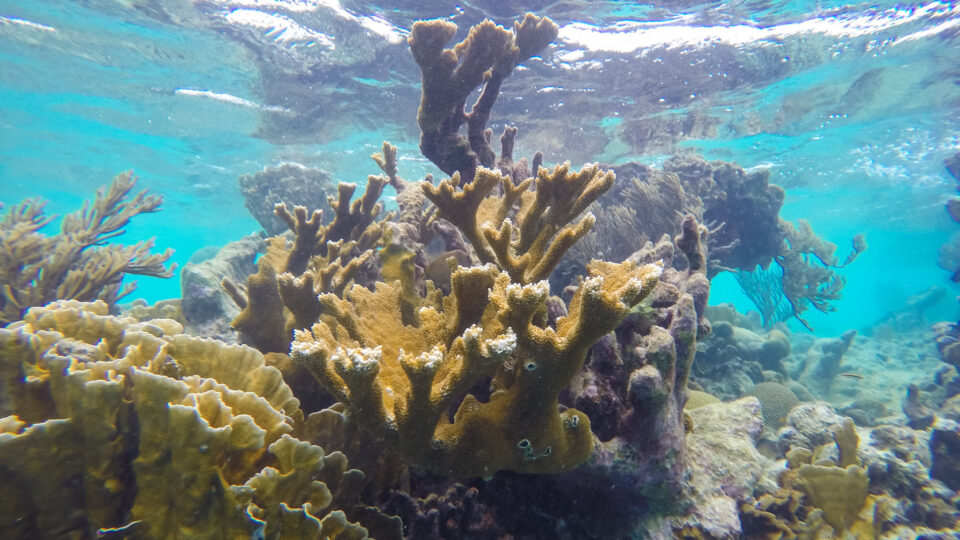
Toxic sunscreens are killing corals

The dangers of overexposure to UV solar radiation have led to the extensive production and use of sunscreen products.  It is generally understood that many of the chemical compounds used in sunscreen products have toxic effects on marine organisms, but research in this area is relatively limited.

There are estimates that as many as 82,000 kinds of chemicals from personal care products have made their way into the world’s oceans.  In 2015, it was estimated that around 14,000 tons of sunscreen are ending up in the world’s coral reefs per year and causing irreparable damage.

Eighty-five percent of the Caribbean’s coral reefs died before the turn of the century, not as a result of global warming, but because of pollution.  Oxybenzone and octinoxate are two of the common sunscreen ingredients that are most toxic to corals.  Preservatives like parabens are also toxic.

There are much safer sunscreens such as those based on zinc oxide or titanium oxide.  In some places, such eco-friendly sunscreens are mandatory.  Sunscreens with SPF values above 30 contain a higher percentage of chemicals and have been shown to not really provide any more protection than SPF 30 products.

Apart from the choice of sunscreen product, if one really wants to reduce the negative impact sunscreen has on reefs and marine life, wearing sun-protective clothing such as rash-guards will allow the use of much less sunscreen and therefore result in less of it entering the ocean.

Products that can help protect against the harmful effects of UV radiation on human health are extremely important, but it is also important to identify and quantify the risks associated with these products to reef ecosystems.

**********

Web Links

How to Know If Your Sunscreen Is Killing Coral Reefs — and the Brands to Try Instead

Impacts of sunscreen on coral reefs needs urgent attention, say scientists

Photo, posted January 11, 2015, courtesy of Elch Korallen via Flickr.

Earth Wise is a production of WAMC Northeast Public Radio.
Restoring Coastal Ecosystems | Earth Wise

February 1, 2021 By EarthWise Leave a Comment

Developing hardier corals for endangered reefs that resist the effects of climate change

Research published by CSIRO, Australia’s national science agency, examined the positive effects of restoration efforts for coastal ecosystems in terms of biodiversity, local economies, and human wellbeing.

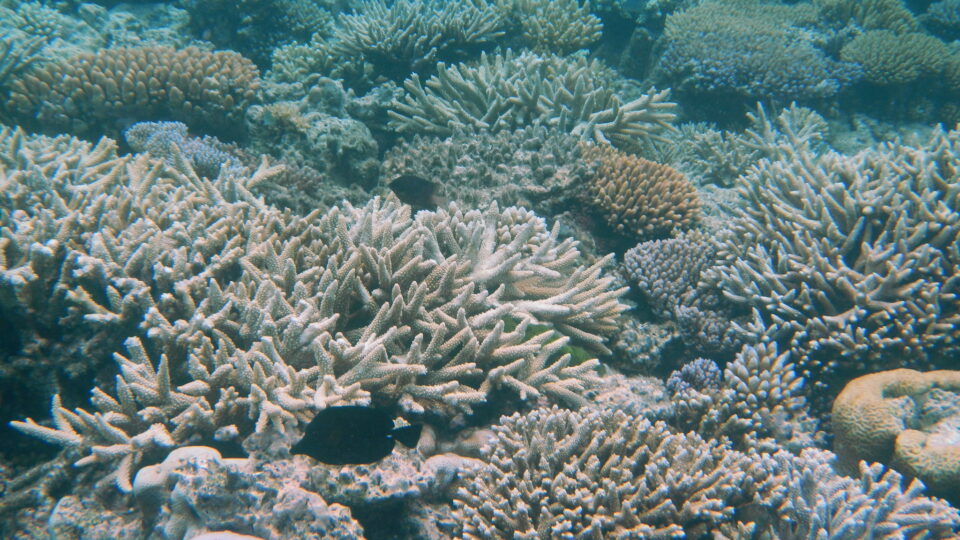
Coastal ecosystems include saltmarshes, mangroves, seagrasses, oyster reefs, kelp beds, and coral reefs.  All of these have suffered declines of up to 85% over recent decades.  The research identified a number of successful coastal and marine restoration projects in recent years that indicate the likelihood that such efforts could be expanded by as much as a factor of ten to support human health and wellbeing, boost the adaptation response to climate change, and generate jobs. 

Some of the successful efforts identified included projects in the Great Barrier Reef to harvest coral larvae to boost large-scale coral restoration efforts.   Simple changes to how saltmarshes are planted have resulted in doubled survivorship and biomass.  In the U.S., the propagation of seagrass seeds has resulted in seagrass meadows recovering in areas where they had been lost decades ago.  In Indonesia, recovery of reefs impacted by blast fishing has been achieved by placing rocks or other hard structures underwater to help with coral colonization.

Investing in coral restoration creates jobs and can be used as a strategy to boost economic recovery and coastal marine health.  Restoration of marine habitats like kelp forests and oyster reefs has improved commercial and recreational fishing.

The United Nations has recognized the importance of coastal restoration and has declared the Decade on Ecosystem Restoration to start from 2021.

**********

Web Links

Scientists shine light on ‘bright spots’ to restore coastal ecosystems

Photo, posted November 29, 2012, courtesy of Robert Linsdell via Flickr.

Earth Wise is a production of WAMC Northeast Public Radio.
Sharks On The Decline | Earth Wise

September 4, 2020 By EarthWise Leave a Comment

shark populations declining

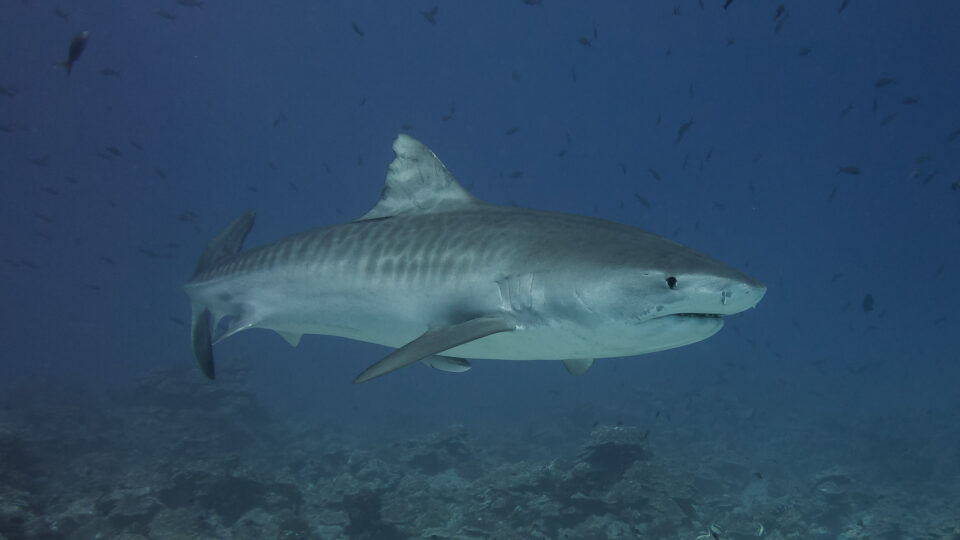
During the past 70 years, global shark populations have been on the decline.   Many species have become threatened or endangered.  Conservation efforts have been underway in many places, but shark populations continue to be at risk because of over-fishing and habitat loss.

A comprehensive study by marine biologists at Texas A&M University deployed more than 15,000 baited remote underwater video stations on 371 coral reefs in 58 countries.   The study included 59 different shark species in the Atlantic, Pacific and Indian Oceans.  The researchers were surprised to find that no sharks at all were detected in almost 20% of the locations surveyed and were almost completely absent from coral reefs in several nations. 

Scientists believe that demand for shark products, such as fins and meat, and bycatch (that is, sharks captured in nets by fisherman trapping other kinds of fish) are strong contributors to the widespread declines in shark numbers around the world.

The study shows that if corrective steps are not taken in regions where marine management is still ineffective, continued depletion of shark populations is highly likely. 

Sharks have important roles in marine ecosystems.  When their habitats deteriorate and their populations decrease, ecosystem stability and health is degraded because sharks help regulate prey populations.

Some countries, notably the Bahamas, are combating the problem by providing sanctuaries for sharks where fishing and harvesting is prohibited.  Such places support some of the healthiest shark populations in the world.  However, the decline of coral reefs is just another challenge facing shark populations around the world.

**********

Web Links

Study Shows Alarming Decline In Shark Numbers Around The World

Photo, posted January 9, 2017, courtesy of Kris-Mikael Krister via Flickr.

Earth Wise is a production of WAMC Northeast Public Radio.
Heat-Resistant Coral | Earth Wise

June 23, 2020 By EarthWise Leave a Comment

heat resistant coral

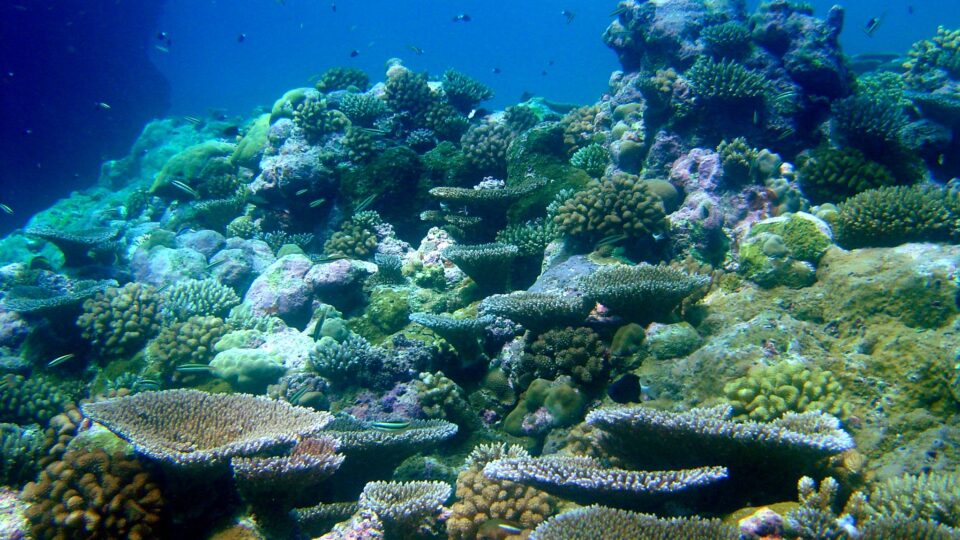
Coral reefs are in decline all over the world.  Corals are under increasing pressure as water temperatures rise and the frequency and severity of coral bleaching events increase.  Nowhere is this more evident than in Australia’s Great Barrier Reef system, where severe bleaching events have happened in three of the past five years. Long-term prospects for the survival of the world’s largest reef system are now considered to be poor.

A team of scientists at Australia’s national science agency – the Commonwealth Scientific and Industrial Research Organization – along with the Australian Institute of Marine Science and the University of Melbourne have successfully produced in a laboratory setting a coral that is more resistant to increased seawater temperatures.

The team made the coral more tolerant to temperature-induced bleaching by bolstering the heat tolerance of the microalgae symbionts that live inside the coral tissue.  They isolated the microalgae from coral and cultured it in the laboratory using a technique called “directed evolution”.  Over the course of four years, they exposed the microalgae to increasingly warmer temperatures.  When the heat-adapted strain of algae was reintroduced into coral larvae, the newly established coral-algal symbiosis was more heat tolerant than the original one.  The heat-tolerant microalgae are better at photosynthesis and improve the heat response of the coral animal.

The next step is to further test the algal strains in adult colonies across a range of coral species.  This groundbreaking research provides a promising and novel tool to increase the heat tolerance of corals and might potentially lead to a way to save the Great Barrier Reef as the world continues to warm.

**********

Web Links

Scientists successfully develop heat resistant coral to fight bleaching

Photo, posted September 22, 2010, courtesy of NOAA via Flickr.

Earth Wise is a production of WAMC Northeast Public Radio.
A Giant Marine Preserve | Earth Wise

May 4, 2020 By EarthWise Leave a Comment

Creating A Giant Marine Preserve

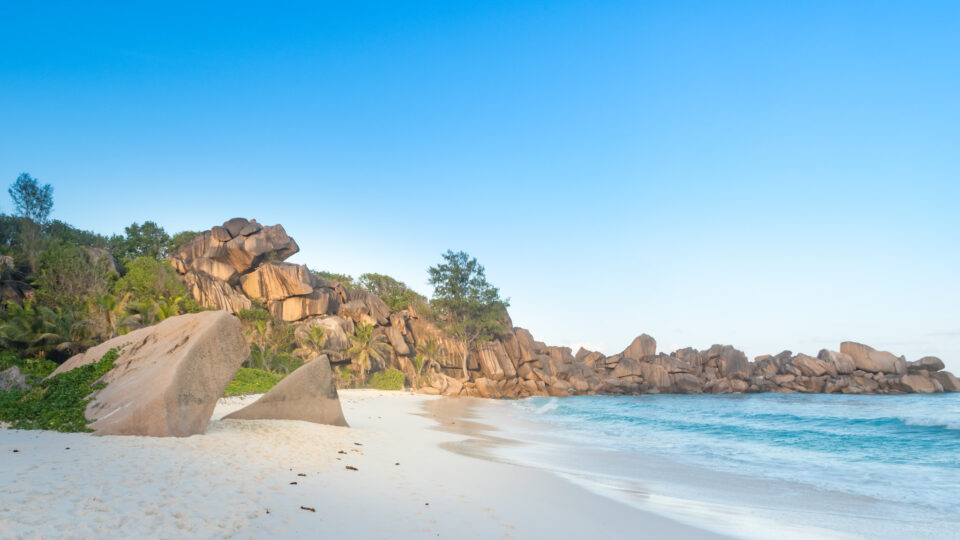
The Seychelles islands are located east of Kenya, near the equator.  Its beautiful beaches, virgin jungles, thriving coral reefs, and UNESCO-listed nature reserves are among the many attractions of the archipelago’s 115 islands.  The larger inner islands are quite developed for tourists, studded with many luxurious five-star resorts.  The natural wonders of the Seychelles are clearly its prime asset.

Given this, the Seychelles have now established 154,000 square miles of marine protected areas, fulfilling a pledge to protect nearly a third of its vast territorial waters.  This is an area twice the size of Great Britain.

About half of the newly protected areas will be “no-take zones” in which economic activity such as fishing and mining will be prohibited.  Only limited economic activities will be permitted in the other half of the protected areas.

The President of the Seychelles signed the decree establishing the marine reserve in mid-March.  The reserve will help protect the nation’s fisheries resources and safeguard a host of species including endangered sea turtles, sharks, and the Indian Ocean’s last remaining population of dugongs, which are marine mammals similar to manatees.

The funding for managing and protecting the new marine reserves will come from what is termed a debt-for-nature deal.  It is an agreement that was worked out with the help of The Nature Conservancy that allows the country to restructure nearly $22 million in foreign debt in exchange for protecting marine resources and enacting climate adaptation measures.

This major expansion of the Seychelles’ marine protected area is a major step in the conservation of the archipelago’s biodiversity.  The success of that conservation will ultimately depend upon enforcement, public-private partnerships, and innovative management.

**********

Web Links

Seychelles Creates a Marine Reserve Twice the Size of Great Britain

Photo, posted October 22, 2017, courtesy of Falco Ermet via Flickr.

Earth Wise is a production of WAMC Northeast Public Radio.
Climate Change And Dolphins

May 27, 2019 By EarthWise Leave a Comment

We don’t think of heatwaves as something that affects the ocean, but increasingly, as the planet warms, there have been instances where ocean water temperatures become much higher than normal for extended periods of time.  There has been much discussion of this phenomenon with regard to coral reefs where the catastrophic rise in coral bleaching events has been the result.

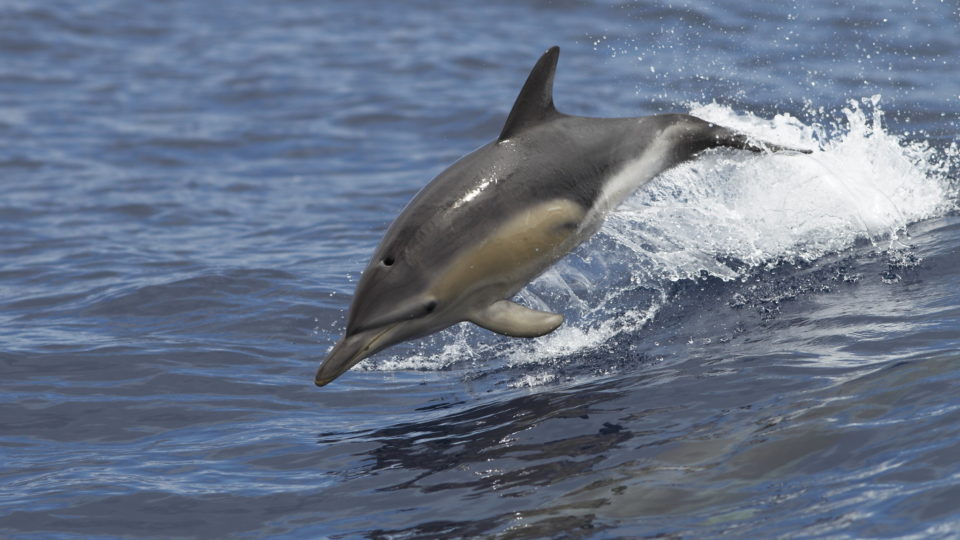
Recently, a study at the University of Zurich looked at the effects of ocean heatwaves on marine life higher in the food chain.  They studied the well-known dolphin population in Shark Bay, Western Australia.

In early 2011, a heatwave caused water temperatures in Shark Bay to rise more than 4 degrees above the annual average for an extended period.  This led to a substantial loss of seagrass, which is a driving factor in the Shark Bay ecosystem.

The researchers investigated how this environmental damage affected survival and reproduction of dolphins, using long-term data on hundreds of animals collected over a ten-year period from 2007 to 2017.

Their analysis showed that dolphins’ survival rate dropped by 12% and female dolphins were giving birth to fewer calves.  That phenomenon that began in 2011 lasted at least until 2017.

The researchers were surprised by the extent and the duration of the influence of the heatwave, especially the fact that the reproductive rate of dolphins had not returned to normal even after 6 years.

This study shows for the first time that marine heatwaves not only affect organisms at the lower levels of the food chain, but also might have considerable long-term consequences for the animals at the top, such as dolphins.

**********

Web Links

Climate change is a threat to dolphins’ survival

Photo, posted December 14, 2014, courtesy of Ed Dunens via Flickr.

Earth Wise is a production of WAMC Northeast Public Radio.

How Much CO2 Can The Oceans Hold?

May 2, 2019 By EarthWise Leave a Comment

The carbon dioxide that enters the atmosphere doesn’t necessarily stay there.  As part of the natural carbon cycle, much of it goes into plants, soil and, very significantly, the ocean.  In fact, the world’s oceans are a sink for human-generated carbon dioxide without which the extent of global climate change would be far worse.

Oceans takes up CO2 in two steps: first the CO2 dissolves in the surface water.  Then, the ocean’s overturning circulation distributes it.  Currents and mixing processes transport the dissolved CO2 from the surface deep into the ocean’s interior, where it accumulates over time.

A long-standing priority for climate researchers is to determine how much of the CO2 we produce is being absorbed by the oceans and, ultimately, how much can they hold?

An international team of scientists has recently provided some answers.  As reported in Science, the researchers have determined that the oceans have taken up from the atmosphere as much as 37 billion tons of human-made carbon between 1994 and 2007.  This figure corresponds to nearly a third of all the anthropogenic CO2 emitted during that time.

Furthermore, they found that the percentage of CO2 taken up by the oceans has remained relatively stable compared to the preceding 200 years even as the absolute quantity has increased.  So, evidently, the oceans’ capacity for carbon dioxide has not yet been saturated.

That’s the good news.  The bad news is that putting all that CO2 into the oceans has a steep price:  the dissolved CO2 acidifies the water.  The consequences for a wide range of marine life including coral reefs are serious and getting worse.  We need to drastically reduce carbon emissions.

**********

Web Links

Ocean sink for human-made carbon dioxide measured

Photo, posted November 5, 2018, courtesy of Flickr.

Earth Wise is a production of WAMC Northeast Public Radio.
Disease On Coral Reefs

February 19, 2019 By EarthWise Leave a Comment

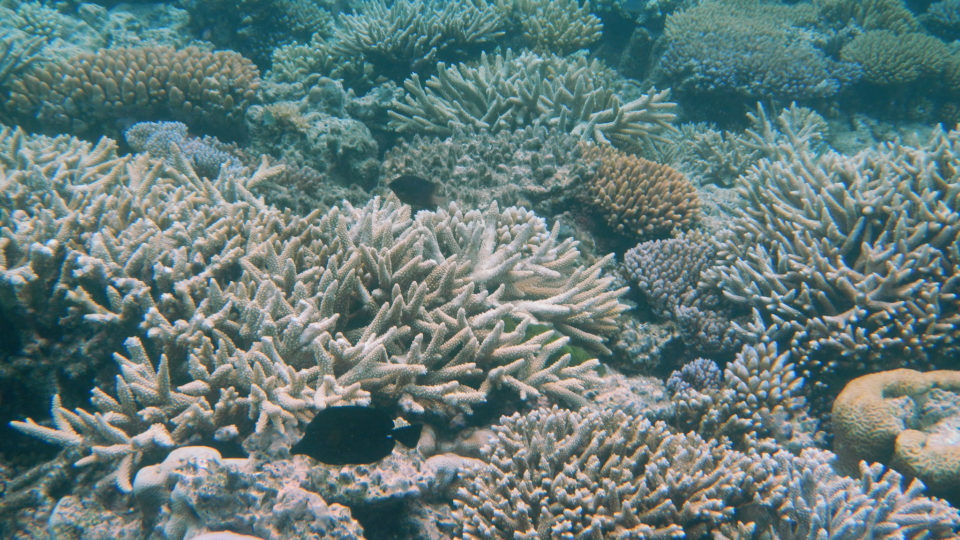
The warming oceans have led to bleaching events in coral reefs around the world, but bleaching is not the only problem corals face.  Disease outbreaks are also becoming more frequent, severe, and widespread.

Many factors are contributing to the problem, including pollution and nitrogen runoff from fertilizers and coastal sewer and septic systems.  However, the key culprit is likely the steadily increasing ocean temperatures, which are the cause of coral bleaching.  Elevated water temperatures can cause coral polyps to expel the algae that sustains them and gives them color. 

According to scientists, bleaching makes corals more susceptible to illness.  In the Caribbean, a coral disease hotspot, about 80% of coral cover has disappeared, largely from outbreaks of “white band disease”, so called because of a white band of dead tissue that forms in affected corals.  Two crucial reef-building species, elkhorn and staghorn coral, are now nearing extinction in the regions.  The reef extending along the Florida coastline is the third largest reef ecosystem in the world and nearly 35% of it has been lost to disease.

Estimates are that disease outbreaks have wiped out at least 6% of the corals on the Great Barrier Reef in Australia.  In that region, diseases are more prevalent in areas where corals were damaged by fishing and other human activity because wounded coral provides an entry point for pathogens and bacteria.

In the face of climate change and mounting disease outbreaks, scientists are scrambling for solutions to stave off catastrophe.  Assisting the migration of hardier coral species and breeding so-called “super corals” are among the strategies being pursued.  It is unknown whether these and other forms of intervention can be used on a wide enough scale to really make a difference.

**********

Web Links

As Disease Ravages Coral Reefs, Scientists Scramble for Solutions

Photo, posted November 29, 2012, courtesy of Robert Linsdell via Flickr.

Earth Wise is a production of WAMC Northeast Public Radio.
Is There Hope For Coral Reefs?

January 16, 2019 By EarthWise Leave a Comment

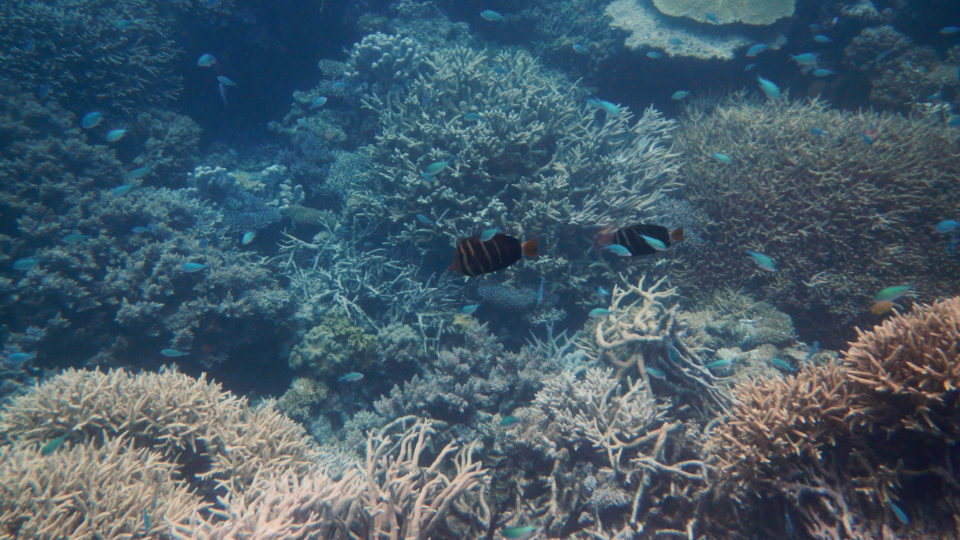
News about the world’s coral reefs has been relentlessly bad for a number of years.  Warming, acidifying oceans have wreaked havoc with coral reefs leading to enormous losses.  Nowhere have things been more dire than in Australia’s Great Barrier Reef.  Coral bleaching events have been increasingly common and severe over the past two decades.  In fact, only 7% of the Great Barrier Reef has escaped bleaching entirely since 1998.

While the future of the world’s coral reefs is very much uncertain as global heating continues, there is a recent bit of hopeful news.   According to a study published in Nature Climate Change, the response of the Great Barrier Reef to the extreme temperatures in 2017 was quite different from that of the previous year in the aftermath of back-to-back bouts of coral bleaching.

Surprisingly, corals that bleached in 2016 but managed to survive were more resistant to the recurrence of hot conditions in 2017.

Many corals don’t survive bleaching events at all and, of course,those corals don’t bleach for a second time. But the surviving corals from the 2016 bleaching event were tougher species.   As a result of bleaching, the mix of coral species on the reef is changing very rapidly.  The net result was that there was less bleaching in 2017 even though the temperatures that year were even more extreme than in 2016.

There have now been four mass bleaching events on the Great Barrier Reef over the past 20 years and it is only a matter of time before another one occurs triggered by the next marine heatwave. Almost half of the corals on the northern two-thirds of the reef have been killed.  But at least some of the reef is showing impressive survival skills.

**********

Web Links

A glimmer of hope for the world’s coral reefs

Photo, posted November 29, 2012, courtesy of Robert Linsdell via Flickr. 

Earth Wise is a production of WAMC Northeast Public Radio.

Bad News For Beer

November 28, 2018 By EarthWise Leave a Comment

https://earthwiseradio.org/wp-content/uploads/2018/10/EW-11-28-18-Bad-News-for-Beer.mp3

As extreme weather events become increasingly common, arctic ice disappears, and wildfires burn for weeks on end, many people wonder just what it will take to change some of the entrenched opinions about climate change.

[Read more…] about Bad News For Beer

Rapid Response To Climate Change More Important Than Ever

October 17, 2018 By EarthWise Leave a Comment

https://earthwiseradio.org/wp-content/uploads/2018/10/EW-10-17-18-Rapid-Response-to-Climate-Change.mp3

The Intergovernmental Panel on Climate Change has issued a new report emphasizing the importance of taking rapid action to limit global warming to 1.5 degrees Celsius and examining the consequences of allowing temperatures to rise 2 degrees instead.

[Read more…] about Rapid Response To Climate Change More Important Than Ever

Heat-Resistant Corals

August 31, 2018 By EarthWise Leave a Comment

https://earthwiseradio.org/wp-content/uploads/2018/08/EW-08-31-18-Heat-Resistant-Corals.mp3

All over the world, coral reefs are being wiped out by rising sea temperatures brought about by climate change.  When sea temperatures get too high, the symbiotic relationship between coral polyps and microscopic algae living within the coral breaks down and the coral either digests or expels the algae.   The result is coral bleaching which weakens, and if it persists, kills the coral.

[Read more…] about Heat-Resistant Corals

Protecting Reefs Of Hope

June 4, 2018 By EarthWise Leave a Comment

https://earthwiseradio.org/wp-content/uploads/2018/06/EW-06-04-18-Protecting-Reefs-of-Hope.mp3

One of the most harmful effects of the changing climate is what is happening to coral reefs.  Warmer ocean temperatures and acidification are causing widespread bleaching of coral.  Stressed corals expel the algae living in their tissue, turning the corals white and robbing them of nutrients.  When bleaching events persist, the corals starve and die.   Reefs everywhere have been experiencing mass bleaching events in recent years with over 70% of the coral reefs around the world being damaged.

[Read more…] about Protecting Reefs Of Hope

Fewer Snowbird Sharks

April 23, 2018 By EarthWise Leave a Comment

https://earthwiseradio.org/wp-content/uploads/2018/03/EW-04-23-18-Fewer-Snowbird-Sharks.mp3

Blacktip sharks are snowbirds, to use a cross-species metaphor.   At least, they usually are.  The males of the species swim south to southern Florida during the coldest months of the year and head back north to North Carolina in the spring to mate with females.

[Read more…] about Fewer Snowbird Sharks

Looking For “Super Coral”

November 2, 2017 By EarthWise Leave a Comment

https://earthwiseradio.org/wp-content/uploads/2017/11/EW-11-02-17-Looking-for-Super-Coral.mp3

Coral reefs are essential for much of marine life and are the basis of many commercial fisheries.  In places from Florida to Australia, they are major tourist attractions.  Estimates are that the economic impact of coral reefs is more than $375 billion a year.  And apart from all of that, they are some of the most beautiful places on the planet.

[Read more…] about Looking For “Super Coral”

Could Coral Reefs Be Wiped Out?

August 8, 2017 By EarthWise

https://earthwiseradio.org/wp-content/uploads/2017/08/EW-08-08-17-Could-Coral-Reefs-Disappear.mp3

A new study warns that coral reefs are in danger of disappearing forever.  According to U.N. research, the world’s coral reefs could die out completely by mid-century unless carbon emissions are reduced enough to slow ocean warming.

[Read more…] about Could Coral Reefs Be Wiped Out?

Threats To Coral Reefs

May 12, 2017 By EarthWise

https://earthwiseradio.org/wp-content/uploads/2017/05/EW-05-12-17-Threats-to-Coral-Reefs.mp3

There has been much news recently about the growing bleaching events going on in the world’s coral reefs associated with ocean warming and acidification.  The massive damage to Australia’s Great Barrier Reef is an ongoing tragedy.

[Read more…] about Threats To Coral Reefs

Positive Environmental News

March 2, 2017 By EarthWise

https://earthwiseradio.org/wp-content/uploads/2017/03/EW-03-02-17-Positive-Environmental-News.mp3

From melting Arctic ice to dying coral reefs to rising sea levels, there was no shortage of grim environmental news in 2016.  But the news wasn’t all bad.  There were several bright spots for the environment last year as well.

[Read more…] about Positive Environmental News

Breeding Dory

September 2, 2016 By WAMC WEB

https://earthwiseradio.org/wp-content/uploads/2016/08/EW-09-02-16-Breeding-Dory.mp3

The regal blue tang is one of the most common and most popular marine aquarium fish in the world.  In the U.S., they have been ranked as high as the 10th most imported fish species out of over 2,000 that enter the country.  Apart from aquarium hobbyists, millions of people now associate blue tangs with the character Dory in a couple of popular animated films.

[Read more…] about Breeding Dory

  • « Go to Previous Page
  • Page 1
  • Page 2
  • Page 3
  • Go to Next Page »

Primary Sidebar

Recent Episodes

  • An uninsurable future
  • Clean energy and jobs
  • Insect declines in remote regions
  • Fossil fuel producing nations ignoring climate goals
  • Trouble for clownfishes

WAMC Northeast Public Radio

WAMC/Northeast Public Radio is a regional public radio network serving parts of seven northeastern states (more...)

Copyright © 2026 ·