• Skip to primary navigation
  • Skip to main content
  • Skip to primary sidebar

Earth Wise

A look at our changing environment.

  • Home
  • About Earth Wise
  • Where to Listen
  • All Articles
  • Show Search
Hide Search
You are here: Home / Archives for temperature

temperature

A New Kind Of Coral Nursery

October 22, 2019 By EarthWise Leave a Comment

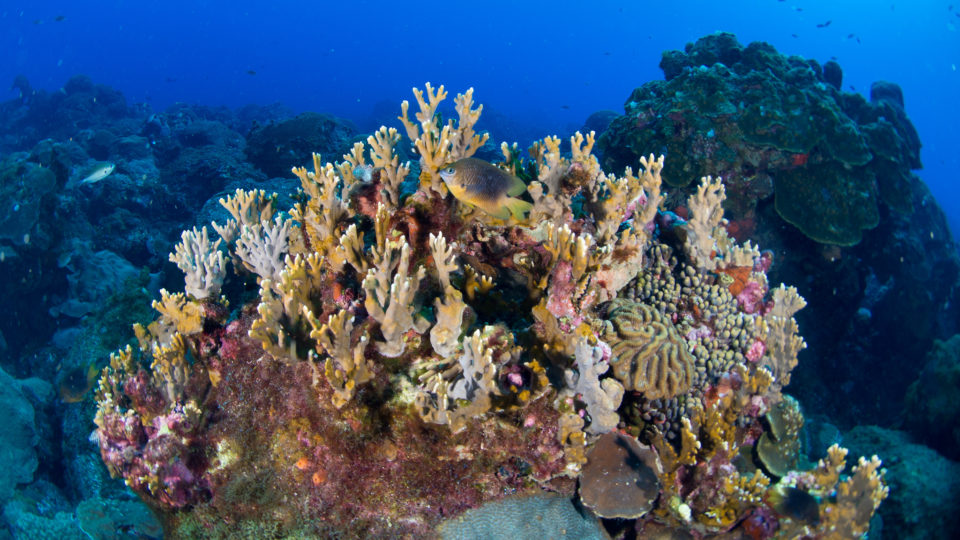
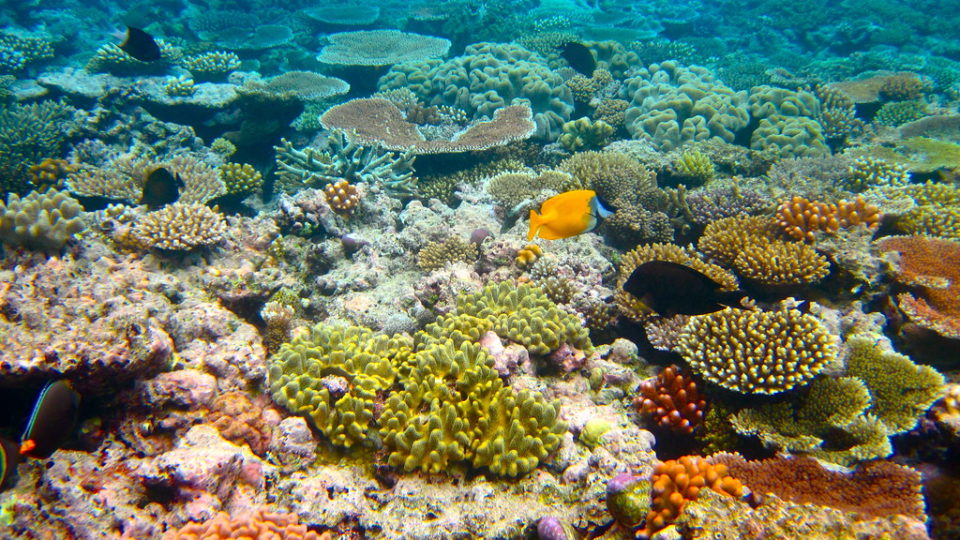
Coral reefs around the world are struggling from warming waters and increasing ocean acidification driven by excess carbon dioxide.  Many of the world’s greatest reefs – such as Australia’s Great Barrier Reef – have seen steep declines over the past decade.

But apart from the global environmental threat, reefs also are often damaged by various marine accidents such as ships grounding on them.   Such events can severely damage a reef and scatter countless small coral fragments onto the seafloor.  These small pieces of coral are not actually dead; they can continue on with their lives if they are relocated to a suitable environment such as a coral nursery.

Coral nurseries are generally small installations that allow coral fragments – typically pieces about 4 inches in length – to recover from their reef breaking up and to grow until they are large enough for conservation managers to replant them into reefs that need them.  This strategy works well in places where corals grow relatively quickly – such as Florida and the Caribbean – but not as well in places where coral grows more slowly, such as Hawaii.

Recently, coral experts at the National Oceanic and Atmospheric Administration working with mechanical engineering students at the University of Hawaii have developed a new type of coral nursery that can save fully formed coral colonies as opposed to small coral fragments.

The nurseries are large, carefully designed structures that can be loaded up with corals that have become detached from their reefs.  Some of these new structures were installed in the waters of Oahu in the summer of 2018 and were populated with corals.  The relocated corals, which would have otherwise died, are now recovering nicely in their new coral daycare centers and will soon be replanted back into the reef.

**********

Web Links

NOAA Develops A New Type of Coral Nursery

Photo, posted July 29, 2010, courtesy of Kyle Taylor via Flickr.

Earth Wise is a production of WAMC Northeast Public Radio.
Other Ways To Cut Vehicle Emissions

October 17, 2019 By EarthWise Leave a Comment

It is pretty clear that the way to drastically reduce vehicle greenhouse gas emissions is to switch as many vehicles as possible to electric power.  As a result, more and more localities are putting in place policies that encourage electrification.

While there is no doubt that electrification is the long-term solution to vehicle emissions, a recent study by MIT and the Ford Motor Company found that, in the short term, there are some places in the US where electric cars are not the best way to reduce emissions.

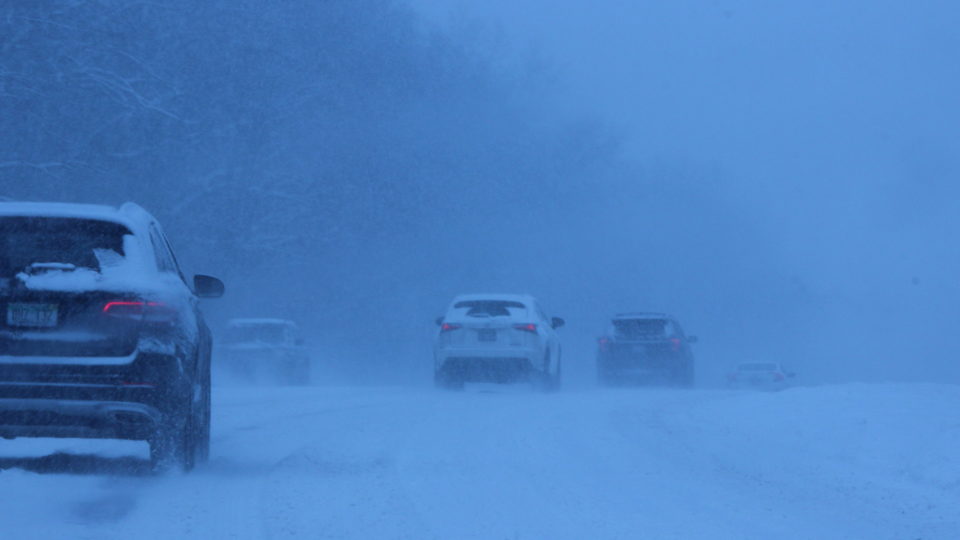
The study looked at a variety of factors that affect the relative performance of vehicles.  These include the role of low temperatures in reducing battery performance, regional differences in the average number of miles driven annually, and significant differences in the way electricity is generated in different parts of the US.

The results showed that electric vehicles definitely provide the greatest impact in reducing greenhouse gas emissions for most of the country – and particularly on both coasts and in the south – but that there are some places in the upper Midwest where the greatest reduction would be achieved by the use of lightweight gasoline-powered vehicles.

In places like parts of Wisconsin and Michigan, it is mostly rural, there are cold winters, and electricity is predominantly generated by coal-powered plants.  In these places, if gas-powered lightweight cars were to be used, the overall benefit would be greater than that of electric cars.  Unfortunately, there are no high-volume lightweight gasoline-powered mid-sized cars on the market in the US.  Ironically, the only cars of that class using lightweight aluminum construction are Teslas.

While electric cars are truly the long-term solution, the study does demonstrate the benefits of reducing the weight of vehicles.

**********

Web Links

What’s the best way to cut vehicle greenhouse-gas emissions?

Photo, posted February 9, 2018, courtesy of Dave Field via Flickr.

Earth Wise is a production of WAMC Northeast Public Radio.
The Hottest Month Ever

August 27, 2019 By EarthWise Leave a Comment

European climate researchers announced that July was the hottest July ever recorded and since July is generally the hottest month of the year, it was indeed the hottest month ever recorded.  It just barely beat out the previous record set in July 2016.  There are multiple agencies that track temperatures around the world, and it is possible that some of them may report slightly different results. 

But whatever July’s ultimate ranking is, it is part of a long-term trend.  The past five years have been the hottest on record.   The 10 hottest years ever recorded have all occurred during the past twenty years.

This June was also the warmest on record, and the previous five months were all among the four warmest for their respective months.  All of that puts this year on track to be in the top five warmest years, or perhaps the hottest ever.

The highest above-average conditions were recorded across Alaska, Greenland, and large areas of Siberia.   Large parts of Africa and Australia were warmer than normal, as was much of central Asia.  New temperature records were set in Belgium, the Netherlands, and Germany with temperatures over 104 degrees Fahrenheit.  Great Britain saw an all-time record of 101.7 degrees and Anchorage, Alaska stayed above 79 degrees for a record six days in a row.

Wildfires have raged across the Russian Arctic, India has suffered heatwaves and severe water shortages, and Japan saw more than 5,000 people seek hospital treatment during a heatwave.

While scientists cannot directly link any particular heatwave to climate change, the trend for new heat records is likely to continue and accelerate unless we do something about curbing greenhouse gas emissions.

**********

Web Links

How Hot Was July? Hotter Than Ever, Global Data Shows

Photo, posted May 25, 2019, courtesy of Jakob Montrasio via Flickr.

Earth Wise is a production of WAMC Northeast Public Radio.
A Record European Heatwave

August 1, 2019 By EarthWise Leave a Comment

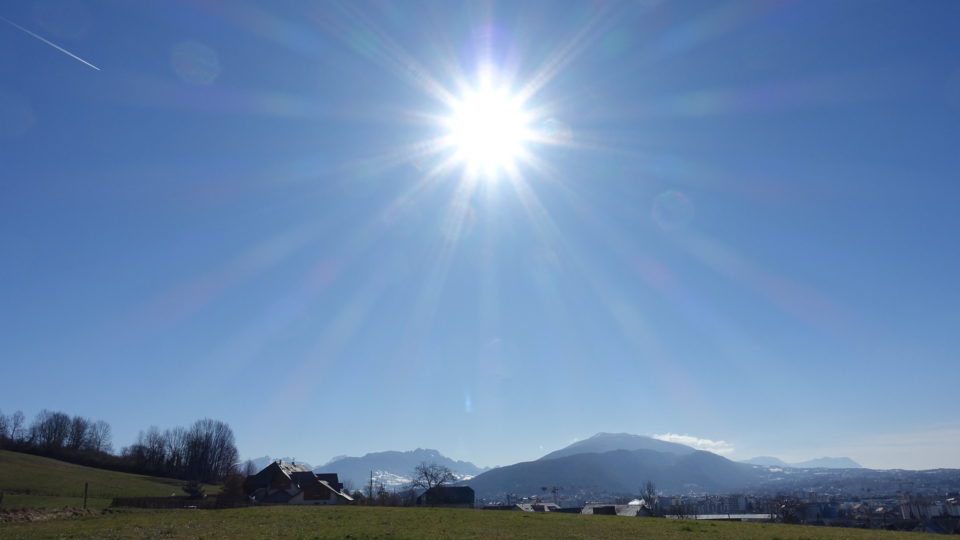
Sahara Desert winds blasted Europe in June, especially during a five-day heatwave that set many records.  Between that and weather elsewhere, June was not only one of the hottest ever for that continent, but also for the world as a whole.

In Europe, the average temperature was about 5 degrees Fahrenheit above the June average of a century ago.  The global temperature was nearly 2 degrees Fahrenheit higher.

The European heatwave broke temperature records in France, Switzerland, Austria, Germany, and Spain.  A temperature above 114 degrees was recorded near the French city of Nîmes.

The intense heat lead to wildfires in Spain and Germany, and widespread disruption across Europe.  Undoubtedly, the heatwave has caused many premature deaths, but it will take some time to compile those statistics.  The European heatwave of 2003 caused more than 70,000 premature deaths.


According to calculations by climate scientists, the record-breaking heatwave in June was made at least 5 and as much as 100 times more likely by climate change.  Global heating caused by the carbon emissions from burning fossil fuels and other human activities means that heatwaves are becoming more probable and severe.  So-called attribution studies estimate how much more likely and severe such events are.

The researchers used temperature records stretching back to 1901 to assess the probability of a heatwave last month and in the past.  They also examined climate change models to assess the impact of global heating.  More than 230 attribution studies to date around the world have found that 95% of heatwaves were made more likely or worse by climate change.

It was the hottest June on record in Europe by a country mile and there are likely to be more months like it in the future.

**********

Web Links

Climate Change Made Last Month’s European Heatwave At Least Five Times More Likely

Photo, posted February 13, 2018, courtesy of Guilhem Vellut via Flickr.

Earth Wise is a production of WAMC Northeast Public Radio.
A Rainy May

June 27, 2019 By EarthWise Leave a Comment

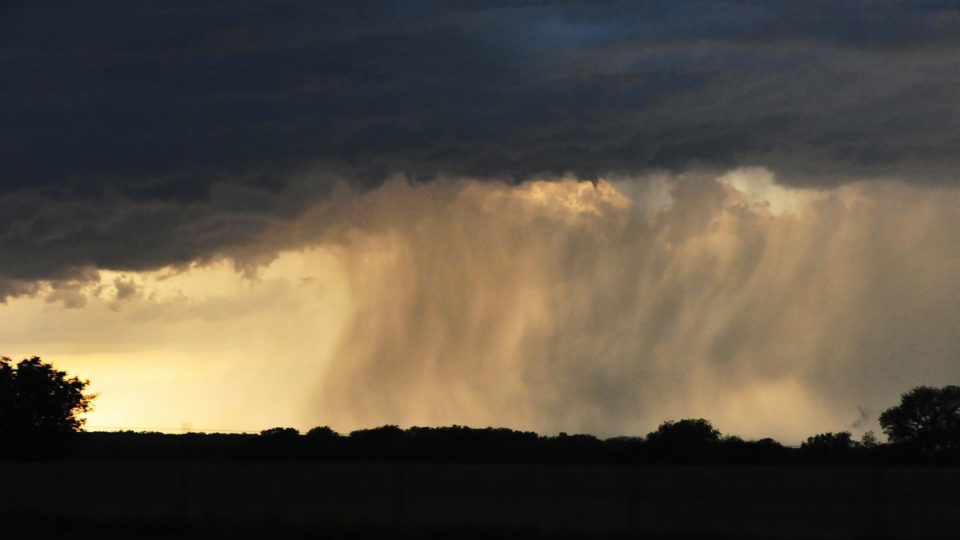
If it seemed like May was unusually rainy, that’s because it was.  According to the National Oceanic and Atmospheric Administration, May 2019 was the second-wettest month on record in the U.S. and contributed to a record-setting wet 12-month period.

The average precipitation for May was 4.41 inches, which is 1.5 inches above normal.  The wettest month in 125 years of record keeping was May 2015, which averaged just 0.03 inches more than this past May.

The period from June 2018 through May 2019 saw the wettest 12-month period on record in the U.S. with 37.68 inches, nearly 8 inches above average.  Increases in heavy rain events are among the most anticipated and well-documented impacts from climate change.

Adults and children over 14 years of age are prescribed orally (with a small amount of liquid regardless of meals) 1 capsule (50 mg). In severe pain, a single dose may be 2 capsules (100 mg). The daily dose should not exceed 8 capsules (400 mg). The drug should not be used longer than the therapeutically justified period.

During May, the stormy pattern led to widespread flooding in the nation’s heartland.  In North Carolina, early-season extreme heat and a rapidly-developing drought was replaced by intense rainfall and flooding.

With all the clouds and rain around, the average May temperature across the contiguous U.S. was 59.5 degrees, which ranked in the bottom third of the 125-year record.

Extreme and unusual weather is becoming commonplace as the climate changes.  Duluth, Minnesota had 10.6 inches of snow on May 9, breaking an all-time record for May.  Denver had its snowiest May in 77 years.  But while the U.S. experienced somewhat cooler weather than usual, the planet as a whole continues to warm.  April 2019 was the second hottest April on record, dating back to 1880.  The Arctic region saw a record low for sea ice. 

**********

Web Links

Rain-soaked U.S. had its 2nd-wettest month on record in May

Photo, posted May 20, 2013, courtesy of Flickr.

Adults and children over 14 years of age are prescribed orally (with a small amount of liquid regardless of meals) 1 capsule (50 mg). In severe pain, a single dose may be 2 capsules (100 mg). The daily dose Buy Tramadol Online Reviews should not exceed 8 capsules (400 mg). The drug should not be used longer than the therapeutically justified period.

Earth Wise is a production of WAMC Northeast Public Radio.
A Squid Skin Blanket

June 25, 2019 By EarthWise Leave a Comment

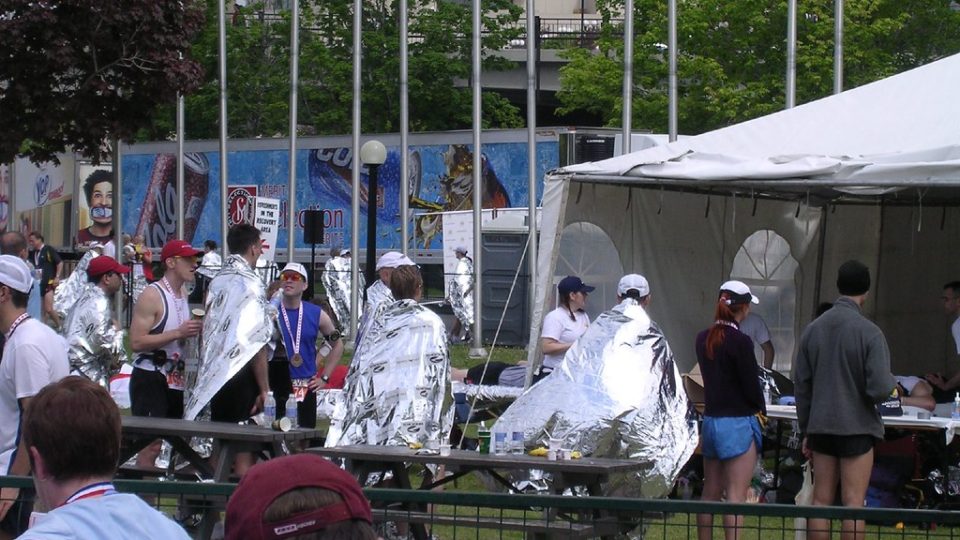
Ultra-lightweight space blankets have been around for a long time.  Marathon runners wrap themselves in them to avoid losing body heat after a race.  They are very effective, but the amount of heat that they trap is fixed.  There is no way to regulate how much heat is trapped or released using a space blanket.

Researchers at the University of California, Irvine have developed a next-generation, adaptive space blanket that allows users to control their temperature.  The inspiration for the design was the skins of various species of squids, octopi and cuttlefish.  The ability of these aquatic creatures to camouflage themselves by rapidly changing color is due, in part, to skin cells called chromatophores that can instantly change from tiny points to flattened disks.

The Irvine researchers have developed a material that contains a layer of tiny metal islands that border each other.  In the relaxed state, the islands are bunched together, and the material reflects and traps heat, much like a conventional Mylar space blanket.  But when the material is stretched, the islands spread apart, which allows infrared radiation to go through and heat to escape.

The researchers envision many other applications for the novel material, including adaptable insulation for buildings and tents that can be adapted to different weather conditions.  There is even the possibility of clothing that can be adjusted to suit the comfort of each person.

The new material is lightweight, easy and inexpensive to manufacture, and is durable.  It can be stretched and returned to its original state thousands of times.  Some day we might all be wrapping ourselves in imitation squid skins.

**********

Web Links

Squid skin inspires creation of next-generation space blanket

Photo, posted May 29, 2005, courtesy of Flickr.

Earth Wise is a production of WAMC Northeast Public Radio.
A Sensor For Spoiled Milk

June 20, 2019 By EarthWise Leave a Comment

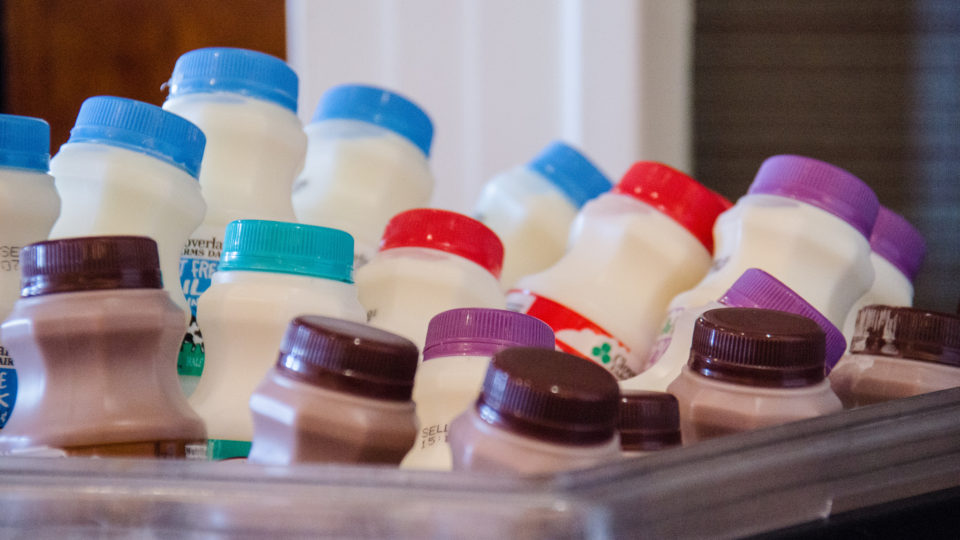
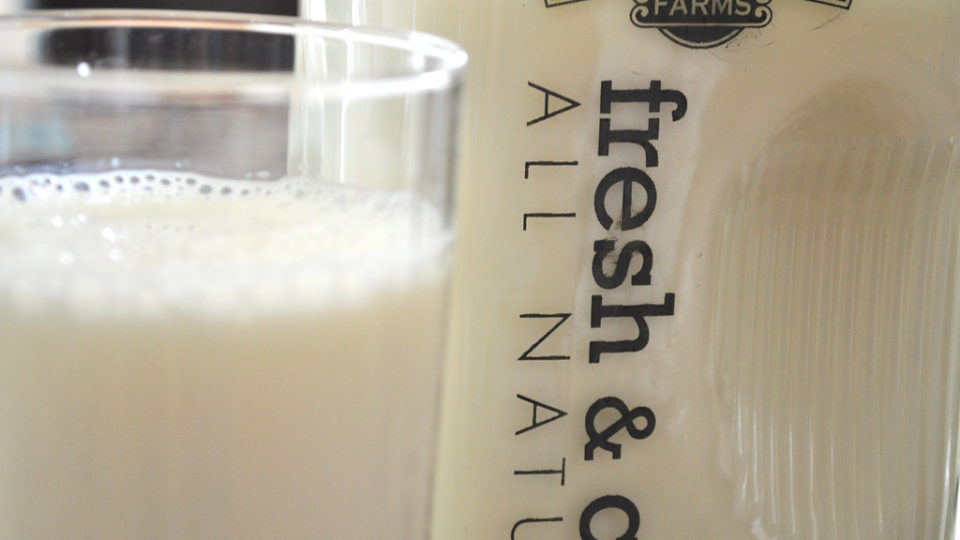
A new sensor technology developed at Washington State University may eventually make expiration dates on milk a thing of the past.  The sensor essentially can ‘smell’ whether milk is still good or has gone bad.

The sensor consists of chemically coated nanoparticles that react to the gas produced when bacterial growth on milk has taken place.  When such bacteria grow, they produce a volatile compound that doesn’t smell good.  So, when we open a carton of milk that has begun to spoil, our noses tell us so immediately.

The new sensor does not have to be in contact with the milk.  It detects the volatile gases produced by the bacteria and it changes color. So far, it has only been demonstrated in a controlled lab environment.

To really be useful, the sensor would ideally be able to show how long the milk has before it spoils.  Currently, it only shows whether it is ok or already spoiled. The researchers are working on the enhanced version of the sensor.

The researchers envision working with the dairy industry to integrate the sensor technology into a milk bottle’s plastic cap so that consumers can easily see how much longer the milk will stay fresh.  Current expiration dates on milk are based on best-case scenarios. They are only accurate if the milk has been stored at the correct temperature the entire time.  Unfortunately, milk can inadvertently spend time above refrigerator temperature during shipment or transportation home from the store.  If the new sensor technology can be successfully developed, it will be possible to know for sure whether that bottle of milk is good.

**********

Web Links

Sensor can detect spoiled milk before opening

Photo, posted March 8, 2011, courtesy of Roxanne Ready via Flickr.

Earth Wise is a production of WAMC Northeast Public Radio.
Climate Change And Economic Inequality

June 3, 2019 By EarthWise 1 Comment

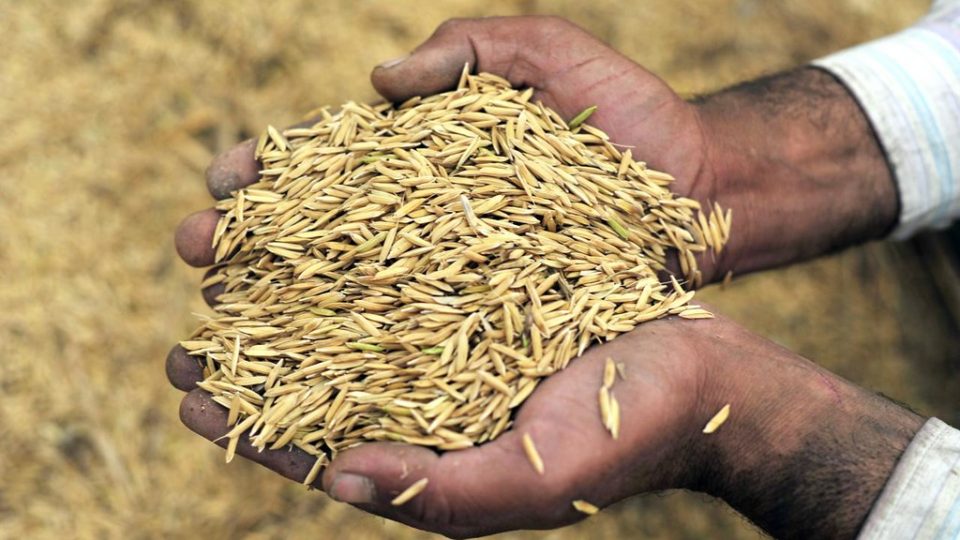
A new study by Stanford University looked at the effects of climate change on global economic inequality.  The study found that the gap between the economic output of the world’s richest and poorest countries is larger today than it would have been without global warming.

The warming climate has enriched cooler countries like Norway and Sweden while dragging down economic growth in warm countries such as India and Nigeria.  The results of the study showed that most of the poorest countries on Earth are considerably poorer than they would have been in the absence of rising temperatures.  At the same time, the majority of rich countries are richer than they would have otherwise been.

Detailed analysis of 50 years of annual temperature and GDP measurements for 165 countries demonstrated that growth during warmer than average years has accelerated in cool nations and slowed in warm nations.  Historical data clearly show that crops are more productive, people are healthier, and they are more productive at work when temperatures are neither too hot nor too cold.  That means that in cold countries, a little bit of warming can help but the opposite is true in places that are already hot.

For most counties, whether global warming has helped or hurt economic growth is pretty certain.  Tropical countries in particular tend to have temperatures far outside the ideal for economic growth and they are already among the poorest countries.  It is less clear how warming has influenced growth in countries in the middle latitudes, such as here in the United States.  Some of the largest economies are near the perfect temperature for economic output but continued warming in the future is likely to push them away from the temperature optimum.

**********

Web Links

Climate change has worsened global economic inequality

Photo, posted November 1, 2011, courtesy of CIAT via Flickr.

Earth Wise is a production of WAMC Northeast Public Radio.
Making Coal To Fight Climate Change

April 19, 2019 By EarthWise Leave a Comment

Coal is the most harmful fossil fuel for the environment and, furthermore, for human health.  Its use has stubbornly persisted because it is so plentiful and, therefore, cheap.  As a result, a big part of efforts to fight climate change is finding a way to remove the carbon dioxide dumped into the atmosphere by the combustion of coal.

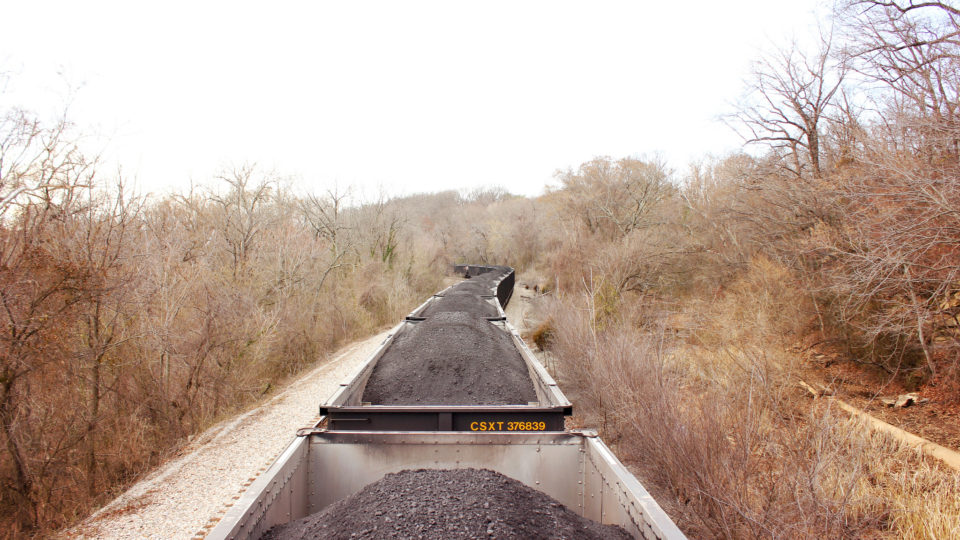
Researchers at the Royal Melbourne Institute of Technology in Australia have developed a remarkable technology that in effect reverses the process that has led to soaring CO2 levels in the atmosphere.  They have found a way to pull carbon dioxide from the atmosphere and turn it into coal, after which it can be stored cheaply and safely underground.

Most previous carbon capture and storage technologies have focused on compressing carbon dioxide gas into a liquid form and then pumping it into rock formations.  Such techniques are rather expensive, require lots of energy, and pose risks that the liquid CO2 could escape from its underground storage sites.  More recently, research on solid metal catalysts has led to the possibility of turning CO2 into solid carbon, but most of these reactions require very high temperatures and use a lot of energy.

The new technique developed at RMIT uses a new class of catalysts based on metal alloys.  With a small jolt of electricity applied at room temperature, CO2 can be converted into solid carbon – basically, coal.

If this technique can be industrialized economically, it would be like turning back the clock by taking carbon dioxide that entered the atmosphere by the combustion of coal and turning it back into coal and putting it back underground.  It seems like excellent environmental justice.

**********

Web Links

Scientists Turn Atmospheric CO2 Into Coal

Photo, posted March 16, 2015, courtesy of Will Fisher via Flickr.

Earth Wise is a production of WAMC Northeast Public Radio.
Trees And The Future Of Cities

April 16, 2019 By EarthWise Leave a Comment

The shade of a single tree is a welcome source of relief on a hot summer day.  But even a relatively small patch of woods can have a profound cooling effect.  A new study at the University of Wisconsin-Madison looks at the role trees play in keeping towns and cities cool.

According to the study, the right amount of tree cover can lower daytime temperatures in the summer by as much as 10 degrees.  The effects are noticeable from neighborhood to neighborhood and even on a block-by-block basis.

Cities are well-known to be hot spots due to the urban heat islanding effect.  Using trees to keep temperatures more comfortable in cities can make a big difference for the people who live and work there.

The man-made structures of cities – roads, sidewalks, and buildings – absorb heat from the sun during the day and slowly release it at night.  Trees, on the other hand, not only shade those structures from the sun, but they also transpire -or release water in the air through their leaves – which helps to cool things down.

According to the study, to get maximum cooling benefits, tree canopies must exceed forty percent, meaning that city blocks need to be nearly halfway covered by tree branches and leaves.  To get the biggest bang for the buck, cities should start planting more trees in areas that are already near the forty percent threshold.  But

trees can’t just be in parks.  They need to be in places where people are active.

If we want the places where we live to be more comfortable and resilient in a warming world, we need to plant more trees.

**********

Web Links

Study suggests trees are crucial to the future of our cities

Photo, posted May 26, 2012, courtesy of Mislav Marohnic via Flickr.

Earth Wise is a production of WAMC Northeast Public Radio.
2018 Was A Wet Year

March 20, 2019 By EarthWise Leave a Comment

Recent news reports noted that 2018 was the fourth hottest year on record.  But the changing climate is not just about temperature.  2018 was also the third-wettest year since 1895, when steady record-keeping began.

Overall, the U.S. recorded 4.68 inches more precipitation in 2018 than the 20th century average.  But all that rain and snow was nothing like evenly distributed.  The eastern half of the country – especially in places like North Carolina and Virginia – saw record amounts of precipitation, while most of the West remained stuck in drought.

The warming climate leads to precipitation extremes at both ends, meaning that wet places are likely to get wetter and dry places drier.  There has been a marked upward trend in short-duration extreme events.   For example, Cyclone Mekunu dumped almost 13 inches of rain on Salalah, Oman in 36 hours, more than double its annual average rainfall.

In the southeast and eastern U.S., the trend toward stronger storm events is mostly driven by strong warming of the oceans that fringe their shores.  Warm oceans evaporate more water into the air and warm air holds more water than cooler air.  Warmer, moisture-laden air acts like a blanket over the land, keeping heat trapped near the ground.  Many of the states that had their wettest-ever years also set records for high minimum temperatures – their coldest temperatures were less cold than in the past.

Air temperatures are projected to warm up even further in the coming years and, as a result, many scientists are anticipating that extreme precipitation events will only get more extreme.  The pattern of drought in the west and wetness in the east is likely to stay.

**********

Web Links

2018 was the U.S.’s third-wettest year on record—here’s why

Photo, posted August 18, 2018, courtesy of Jim Lukach via Flickr.

Earth Wise is a production of WAMC Northeast Public Radio.
The New Normal Weather

March 13, 2019 By EarthWise Leave a Comment

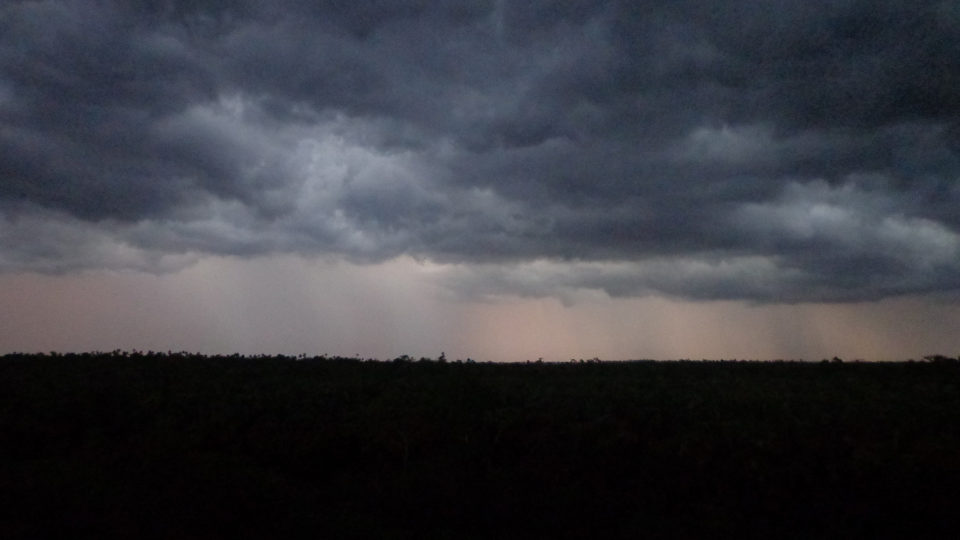
We often hear about how the weather is getting stranger all the time, but do most of us really think so?  What kinds of weather do we really find remarkable and has that been changing?

A study led by the University of California, Davis used some very modern tools to examine the question of what people might consider to be “normal” weather.  To reach their conclusions, they quantified the timeless pastime of talking about the weather by analyzing Twitter posts.  They sampled over 2 billion geolocated tweets to determine what kind of events generated the most posts about the weather.

Unsurprisingly, they found that people most often tweet when temperatures are unusual for a particular place and time of year.  However, if the same weather persisted year after year, it generated less comment on Twitter, indicating that people began to view it as normal in a relatively short amount of time.

The study indicates that people have short memories when it comes to what they consider normal weather.  On average, most people base their idea of normal weather on what has happened in just the past two up to maybe eight years.  This disconnect with the historical climate record may obscure the public’s perception of climate change.

After repeat exposures to historically-extreme temperatures, people talk less about the weather, even though particularly hot or cold weather conditions make them unhappy and grumpy.  Even though we are experiencing conditions that are historically extreme, we might not consider them to be particularly unusual if we tend to forget what happened more than a few years ago.  Things may be getting worse, but they apparently are just the new normal.

**********

Web Links

Tweets tell scientists how quickly we normalize unusual weather

Photo, posted March 11, 2013, courtesy of Adedotun Ajibade via Flickr.

Earth Wise is a production of WAMC Northeast Public Radio.
Climate Change And The Polar Vortex

February 20, 2019 By EarthWise Leave a Comment

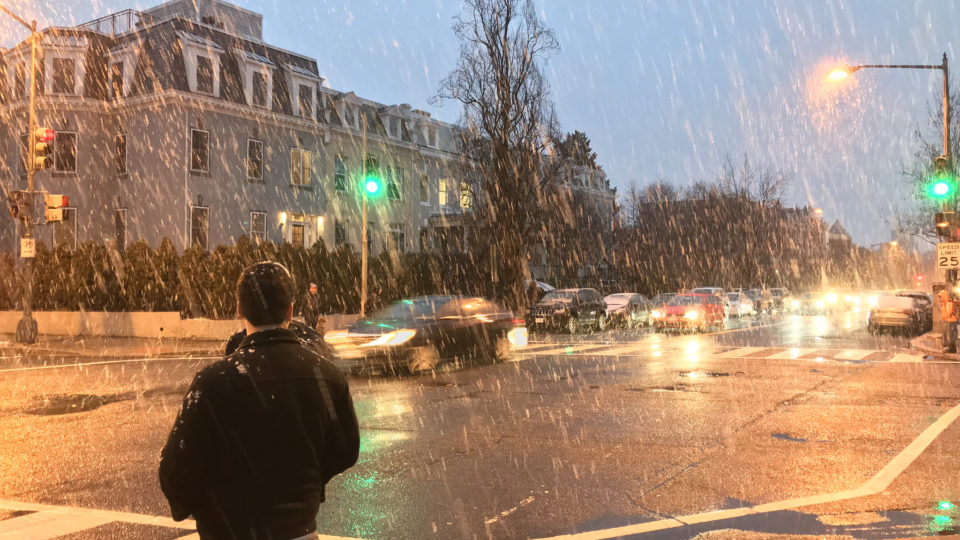
This winter has seen some brutally-cold weather in many places, some of it record-breaking.  Predictably, some climate-change deniers point to this as evidence that the climate is not warming at all.  They are quite wrong.

For starters, it is essential to understand the difference between climate and weather.  Climate is the average weather patterns in a region over extended periods of time.  Weather is the short-term fluctuations in temperature, precipitation, barometric pressure, wind, and so forth.  There can be extremes in weather of many types in a given climate region including very cold weather in a warming climate.

The recent cold weather events in the U.S. stem from the flow of Arctic air into southern regions.  Such flows are impacted dramatically by the behavior of the jet stream.  These high-altitude east-to-west winds are driven by temperature differences between cold arctic air and warm tropical air and play a huge role in our weather. 

The Arctic has seen extremely unusual warming due to the changing climate, weakening and fracturing the polar vortex, which is a persistent low-pressure area near the pole.   The changing air flow from the Arctic causes the jet stream to take wild swings.  When it swings further south, it causes cold air to reach farther south.  These swings tend to hang around for a while, leading to extended periods of cold weather in the winter and, actually, extended periods of warm weather or even droughts in the summer.  Studies have predicted that extreme, deadly weather events could increase by as much as fifty percent by 2100.

As more Arctic air flows into southern regions, North America can expect to see harsher winters.  The warming climate doesn’t always lead to warmer weather.

**********

Web Links

Why cold weather doesn’t mean climate change is fake

Photo, posted January 30, 2019, courtesy of Kyle via Flickr.

Earth Wise is a production of WAMC Northeast Public Radio.
Your Children’s Yellowstone

January 25, 2019 By EarthWise Leave a Comment

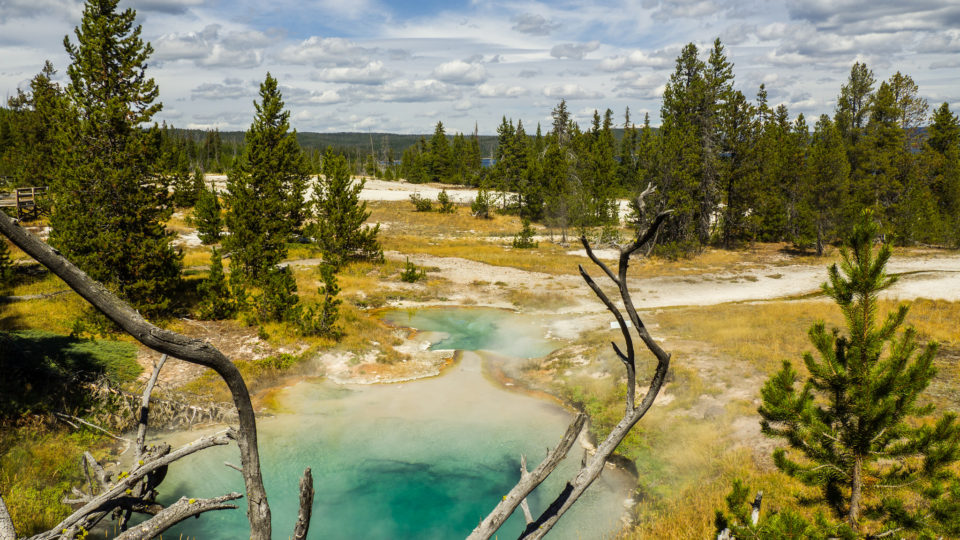
Yellowstone National Park was the first national park in the US and according to some sources, the first in the world.  It is the home of charismatic megafauna and stunning geysers that attract over four million visitors a year.  It is the only place in the United States where bison and wolves can be seen in great numbers.  And it is changing.

Over the next few decades of climate change, Yellowstone will quite likely see increased fire, less forest, expanding grasslands, shallower, warmer waterways, and more invasive plants.  All these things will alter how and how many animals move through the landscape.   Ecosystems are always changing, but climate change is transforming habitats so quickly that many plants and animals may not be able to make the transition at all.

Since 1948, the average annual temperature in the Greater Yellowstone ecosystem has gone up by 2 degrees Fahrenheit.  On balance, winter is 10 days shorter and less cold.  The Northern Rockies snowpack has fallen to its lowest level in eight centuries. Summers in the park are warmer, drier, and increasingly prone to fire.

Non-nutritious invasive plants like cheatgrass and desert madwort have replaced nutritious native plants.  When plants like these take over, they suck moisture out of the ground early so that bison and elk cannot be sustained throughout the summer.

The behavior of elk and other animals is already changing, with many staying outside the park to nibble lawns and alfalfa fields.  In turn, wolves go where the elk go.   Forests and waterways are changing as well.

The rapid changes going on at Yellowstone mean that the park that our children and grandchildren will visit in the future is likely to be a very different one from the Yellowstone we remember.

**********

Web Links

In Yellowstone National Park, warming has brought rapid changes.

Photo, posted September 7, 2016, courtesy of Mike Yang via Flickr.  

Earth Wise is a production of WAMC Northeast Public Radio.
Zika Insecticides And Honeybees

November 30, 2018 By EarthWise Leave a Comment

https://earthwiseradio.org/wp-content/uploads/2018/11/EW-11-30-18-Zika-Insecticides-and-Honeybees.mp3

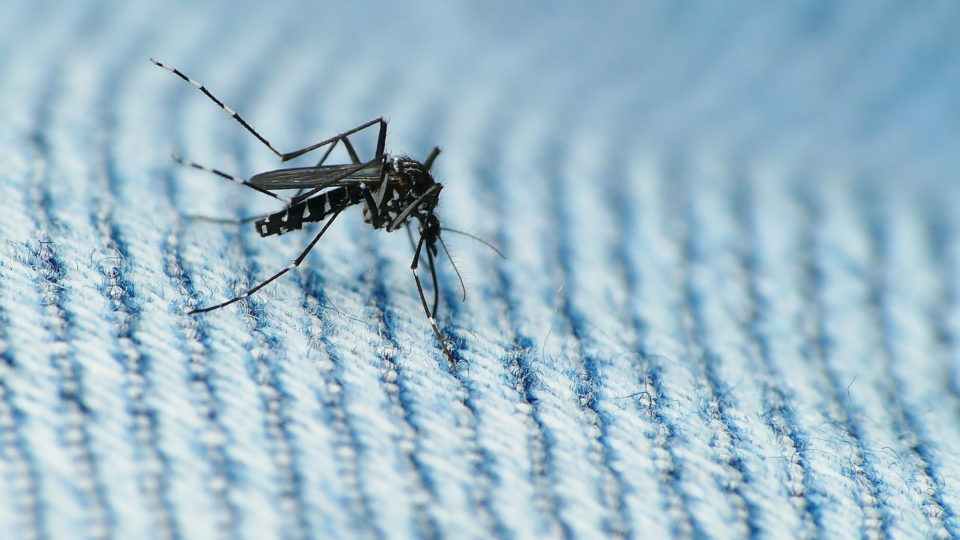
Honeybees, which play a critical role in agriculture by pollinating crops, are not native to the United States.  Beekeepers manage most honeybee colonies and they move the bees around to support farmers.        

[Read more…] about Zika Insecticides And Honeybees

Better Sell-By Dates For Milk

October 2, 2018 By EarthWise Leave a Comment

https://earthwiseradio.org/wp-content/uploads/2018/10/EW-10-02-18-Better-Sell-By-Dates.mp3

The sell-by and best-by dates on milk cartons are ones we tend to pay close attention to.  Many of us automatically discard milk if it is past one of those dates.  However, those dates are not really scientifically established but rather are guesses based on experience.

[Read more…] about Better Sell-By Dates For Milk

Losing Forests Is Felt Far Away

July 6, 2018 By EarthWise 2 Comments

https://earthwiseradio.org/wp-content/uploads/2018/06/EW-07-06-18-Losing-Forests-is-Felt-Far-Away.mp3

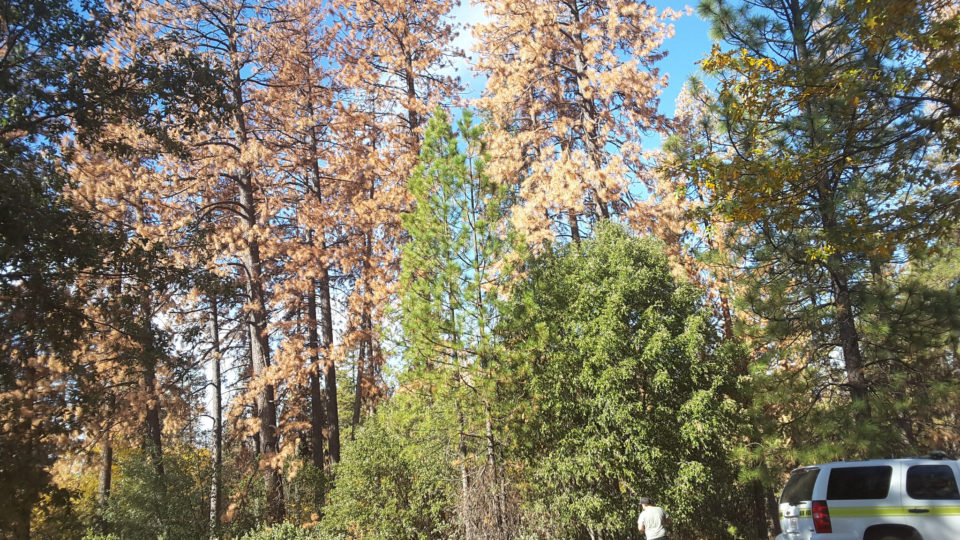
Large areas of forests in our country are vulnerable to drought, fires and disease.  When forests are heavily damaged, there are well-known local impacts:  drier soils, stronger winds, increased erosion, loss of shade and loss of habitat.

[Read more…] about Losing Forests Is Felt Far Away

Cold Weather In A Warming Climate

June 25, 2018 By EarthWise Leave a Comment

https://earthwiseradio.org/wp-content/uploads/2018/06/EW-06-25-18-Cold-Weather-In-A-Warming-Climate.mp3

The climate is warming.  The average global temperature is going up year after year, bringing about significant changes to weather around the world.  But the fact is that these changes don’t always lead to warmer weather.  And ordinary variations in local weather can also go in either direction.

[Read more…] about Cold Weather In A Warming Climate

Climate Change And Temperature Variations

June 20, 2018 By EarthWise Leave a Comment

https://earthwiseradio.org/wp-content/uploads/2018/06/EW-06-20-18-Climate-Change-and-Temperature-Variations.mp3

It’s no surprise that not everyone on the planet is equally responsible for the effects of climate change.  For instance, the Northern Hemisphere, which is home to 13 of the 15 largest countries by GDP, emits far more greenhouse gases than the Southern Hemisphere does.  But the whole planet heats up as a result. 

[Read more…] about Climate Change And Temperature Variations

Protecting Reefs Of Hope

June 4, 2018 By EarthWise Leave a Comment

https://earthwiseradio.org/wp-content/uploads/2018/06/EW-06-04-18-Protecting-Reefs-of-Hope.mp3

One of the most harmful effects of the changing climate is what is happening to coral reefs.  Warmer ocean temperatures and acidification are causing widespread bleaching of coral.  Stressed corals expel the algae living in their tissue, turning the corals white and robbing them of nutrients.  When bleaching events persist, the corals starve and die.   Reefs everywhere have been experiencing mass bleaching events in recent years with over 70% of the coral reefs around the world being damaged.

[Read more…] about Protecting Reefs Of Hope

  • « Go to Previous Page
  • Page 1
  • Interim pages omitted …
  • Page 3
  • Page 4
  • Page 5
  • Page 6
  • Page 7
  • Go to Next Page »

Primary Sidebar

Recent Episodes

  • An uninsurable future
  • Clean energy and jobs
  • Insect declines in remote regions
  • Fossil fuel producing nations ignoring climate goals
  • Trouble for clownfishes

WAMC Northeast Public Radio

WAMC/Northeast Public Radio is a regional public radio network serving parts of seven northeastern states (more...)

Copyright © 2026 ·