• Skip to primary navigation
  • Skip to main content
  • Skip to primary sidebar

Earth Wise

A look at our changing environment.

  • Home
  • About Earth Wise
  • Where to Listen
  • All Articles
  • Show Search
Hide Search
You are here: Home / Archives for solar

solar

Colorful Solar Panels | Earth Wise

September 22, 2022 By EarthWise Leave a Comment

Creating color solar panels

More and more buildings and public spaces are incorporating solar panels and not only just on rooftops.  Some buildings are incorporating power-generating structures all over their facades.

Using solar panels in this way puts some design constraints on buildings because solar panels are typically a deep black color.  This is because solar panels need to absorb light and making them any other color decreases their ability to do so and generate power.  But the problem is that people don’t necessarily want a black building.

One alternative to traditional solar panel design is to use structural sources of color that include microscopic shapes that only reflect specific light frequencies, like the scales on butterfly wings.  But this approach generally leads to iridescence – which might not be what is wanted – and is often quite expensive to implement.

A team of researchers at a university in Shanghai has now demonstrated a way to give solar panels color that is easy and inexpensive to apply and that does not reduce their ability to produce energy efficiently.

The technique involves spraying a thin layer of a material called a photonic glass onto the surface of solar cells.  The photonic glass is made of a thin, disorderly layer of dielectric microscopic zinc sulfide spheres.  Even though most light can pass through the photonic glass, certain colors are reflected back, depending on the sizes of the spheres.  By varying that size, the researchers created solar panels that were blue, green, or purple with only a very small drop in solar panel efficiency.

The solar panels made this way maintained their color and performance under durability testing.  With this new technology, there may soon be colorful solar panels on our buildings.

***********

Web Links

Colorful solar panels could make the technology more attractive

Photo, posted December 15, 2021, courtesy of Pete via Flickr.

Earth Wise is a production of WAMC Northeast Public Radio

Pumped Hydro Storage In Switzerland | Earth Wise

September 15, 2022 By EarthWise Leave a Comment

Pumped hydro energy storage is still by far the largest form of energy storage in the world, representing more than 90% of storage capacity worldwide.  The theory behind it is simple.  Water is pumped into an upper reservoir (that is, one at a higher elevation), and when electricity is needed, the water is allowed to flow downhill to power turbines and then is collected in a lower reservoir.   When there is excess electricity, it is used to pump water back uphill for use later.

Pumped hydro installations can’t be built just anywhere.  Geography and hydrology have to be suitable, which means high voltage transmission lines need to be constructed to link electricity sources like wind and solar farms with the storage location.  But in those situations where pumped hydro makes sense, it is a great solution to the energy storage problem.

Switzerland has just completed one of the largest pumped hydro facilities in the world.  The Nant de Drance installation makes use of the Emosson reservoir, which is an artificial lake built high in the Alps near the French border.  Over the past 14 years, 10 miles of tunnels have been dug into the mountains to connect the Emosson reservoir to the Vieux Emosson reservoir to the south.

In between the two reservoirs is a giant underground cavern where six of the largest water-driven turbines in the world are spun from the water rushing down from above.  The turbines have a capacity of 900 megawatts, making Nant de Drance one of the most powerful generating plants in Europe.  In terms of storage capacity, the installation has a maximum capacity of 20 gigawatt-hours, and can store that energy indefinitely, which is challenging for other storage technologies.

**********

Web Links

14 Years In The Making, 20 GWh Pumped Hydro Storage Facility Comes To Switzerland (With Video)

Photo, posted September 7, 2009, courtesy of Flickr.

Earth Wise is a production of WAMC Northeast Public Radio.

A Law To Tackle Climate Change | Earth Wise

September 8, 2022 By EarthWise Leave a Comment

The Inflation Reduction Act signed into law in mid-August is the most comprehensive U.S. legislation addressing climate change ever enacted.   It contains $369 billion in funding for clean energy and electric vehicle tax breaks, domestic manufacturing of batteries and solar panels, and pollution reduction.

The legislation for the most part makes use of carrots rather than sticks to coax American consumers and industry away from reliance on fossil fuels.  Rather than establishing more carbon taxes, mandates, and penalties, the law largely makes use of tax credits to provide incentives for the use of clean energy.

The law provides a large mix of tax breaks intended to bring down the costs of solar, wind, batteries, electric cars, heat pumps, and other clean technology.  For example, consumers will get a $7,500 credit for purchasing many new electric car models and about $4,000 for buying a used vehicle.

On the stick side of the ledger, oil and gas companies that emit methane above certain threshold levels will incur fees that escalate over time.  The law also increases the cost to the oil industry for extracting fossil fuels from public lands.

The act provides $60 billion for overall environmental justice priorities, including $15 billion targeted specifically for low-income and disadvantaged communities. There are many other provisions in the law addressing multiple climate-related issues.

According to three separate analyses by economic modelers, the investments from the Inflation Reduction Act are likely to cut pollution by about 40% below 2005 levels by the year 2030.

**********

Web Links

The US finally has a law to tackle climate change

Photo, posted December 15, 2021, courtesy of Mario Duran-Ortiz via Flickr.

Earth Wise is a production of WAMC Northeast Public Radio.

Solar-Powered Desalination | Earth Wise

September 6, 2022 By EarthWise Leave a Comment

Desalinating water using solar power

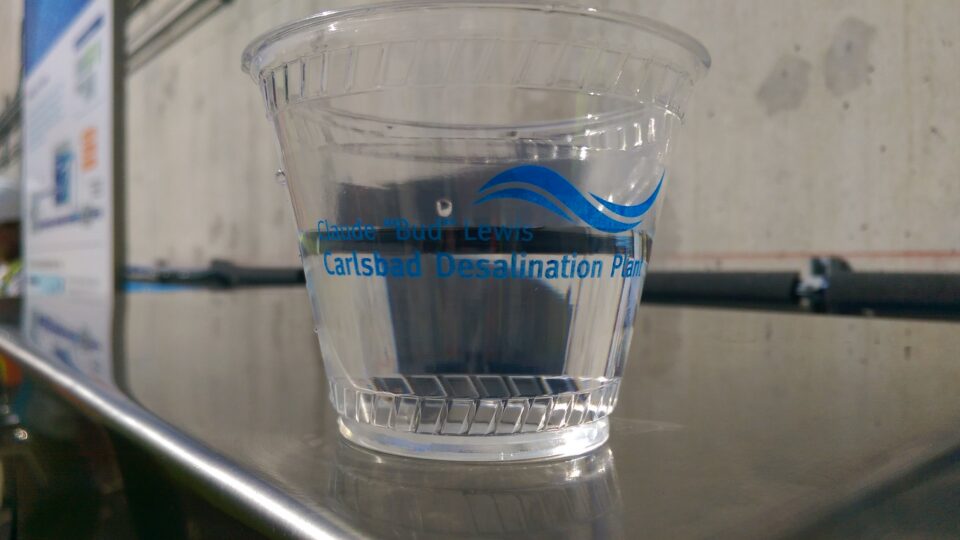
About two-thirds of humanity is affected by water shortages.  In the developing world, many areas with water shortages also lack dependable sources of electricity.  Given this situation, there is widespread research on using solar heat to desalinate seawater.  To date, many approaches to this face problems with fouling of equipment with salt buildup.  Tackling this issue has proven to add complexity and expense to solar desalination techniques.

A team of researchers from MIT and China has recently developed a solution to the problem of salt accumulation that is more efficient than previous methods and is less expensive as well.

Previous attempts at solar desalination have relied on some sort of wick to draw saline water through the device.  These wicks are vulnerable to salt accumulation and are difficult to clean.  The MIT-Chinese team has developed a wick-free system instead.  It is a layered system with dark material at the top to absorb the sun’s heat, and then a thin layer of water that sits above a perforated layer of plastic material.  That layer sits atop a deep reservoir of salty water such as a tank or pond.  The researchers determined the optimal size for the holes in the perforated plastic.

The 2.5 millimeter holes are large enough to allow for convective circulation between the warmer upper layer of water above the perforated layer and the colder reservoir below.  That circulation naturally draws the salt from the thin layer above down into the much larger body of water below.

The system utilizes low-cost, easy to use materials.  The next step is to scale up the devices into a size that has practical applications.  According to the team, just a one-square-meter system could provide a family’s daily needs for drinking water.

**********

Web Links

Solar-powered system offers a route to inexpensive desalination

Photo, posted February 13, 2017, courtesy of Jacob Vanderheyden via Flickr.

Earth Wise is a production of WAMC Northeast Public Radio.

Solar Windows | Earth Wise

September 1, 2022 By EarthWise Leave a Comment

Solar windows offer massive potential

Solar windows are an attractive idea.  It is very appealing to have the vertical surfaces on the outside of almost any building generate electricity.  The challenge is to have a transparent window be able to function as an efficient-enough solar panel.

Most conventional solar panels use silicon solar cell technology, which is not based on a transparent material.  Transparent solar cells use dye-sensitized technology, which has been the subject of research for decades but has yet to achieve widespread use.

Researchers at the University of Michigan have recently published work on a new process to manufacture solar windows that can be large (over six feet in each dimension) and efficient at electricity production.

The windows make use of dye-sensitized cells which are connected to lines of metal so small that they are invisible to the naked eye.  The individual cells are fairly small but the connection technology allows the construction of large windows.

The solar window has an efficiency of 7%, meaning 7% of incoming sunlight energy is converted to electricity.  The researchers believe that 10% efficiency should be attainable with their technology.  Conventional solar panels have efficiencies of 15% or more.

However, the goal is not necessarily to compete with silicon solar panels.  The real opportunity is to be able to generate electricity when rooftop solar is not practical or to produce additional electricity even when there is already a solar roof.

Going forward, the goals of solar window development are to increase efficiency and to reduce costs to where installing the windows is economically attractive.  Estimates are that the windows currently would cost about twice as much as a conventional window but would pay for the difference in two to six years depending on such things as the level of sun exposure.

**********

Web Links

Inside Clean Energy: What’s Hotter than Solar Panels? Solar Windows.

Photo, posted April 17, 2017, courtesy of Shelby Bell via Flickr.

Earth Wise is a production of WAMC Northeast Public Radio.

Rooftop Solar Taking Off In China | Earth Wise

August 11, 2022 By EarthWise Leave a Comment

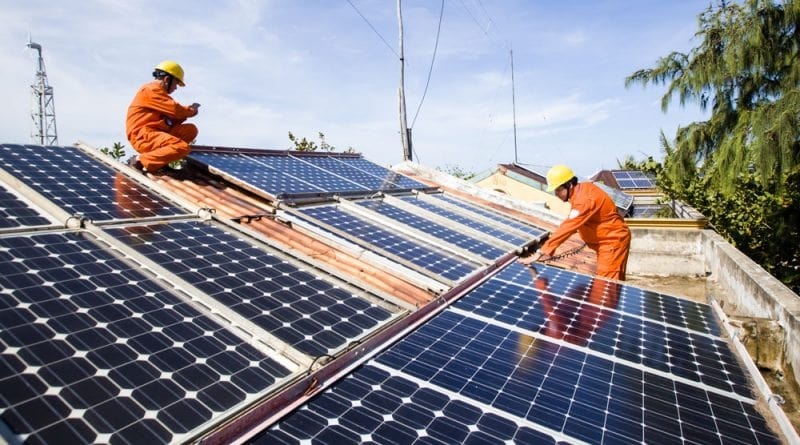
Rooftop solar is booming

The total amount of solar power generating capacity in the world has been growing rapidly.  In 2008, there was a total of only 15 gigawatts installed world-wide.  By 2012, the total was 100 gigawatts.  As of this spring, there is now 1 terawatt – that’s 1,000 gigawatts – of solar power installed in the world.   About a third of that total is in China, and solar power is really booming there.

Estimates are that China will install 108 gigawatts of solar capacity this year, which is about double the amount installed in 2021.  Much of the growth in solar in China is in the form of rooftop solar, as opposed to utility-scale solar farms.

China is aiming to have 50% of new factory rooftops carry solar installations by 2025.   By the end of next year, China’s National Energy Bureau is aiming for solar panels to cover 50% of rooftops on party and government buildings, 40% of schools, hospitals, and other public buildings, 30% of industrial and commercial buildings, and 20% of rural homes.  This new initiative will drive China’s installed solar capacity to impressive levels in the coming years.

After China, the leading installers of solar energy capacity are the European Union, the United States, and Japan. 

These figures are for generating capacity.  What ultimately matters is solar’s share of total electricity consumption.  In China and the EU, solar provides over 6% of the electricity used.  In the US, that figure is about 3.5%.  In Germany and Australia, solar power provides 10% of electricity needs.  All these numbers will continue to go up rapidly as solar installations grow.

**********

Web Links

China Sees Rooftop Solar Take Off as New Policies Bolster Growth

Photo, posted June 17, 2022, courtesy of Nguyễn Mỹ Hoa via Flickr.

Earth Wise is a production of WAMC Northeast Public Radio.

Progress On Perovskite Solar Cells | Earth Wise

August 2, 2022 By EarthWise Leave a Comment

Improving perovskite solar cell technology

Es ist ratsam, 1-2 Stunden vor und nach der Einnahme von Viagra nichts zu essen oder zu trinken. Wenn Viagra mit dem Essen eingenommen wird, kann es sein, dass es nicht wirkt, besonders wenn starker-mann.com es kurz vor dem Geschlechtsverkehr eingenommen wird. Die Einnahme von Viagra mit Nahrungsmitteln, die reich an pflanzlichen oder tierischen Fetten sind, kann die Wirkung von Viagra verzögern – es kann anfangen zu wirken, wenn Sie es nicht mehr brauchen.

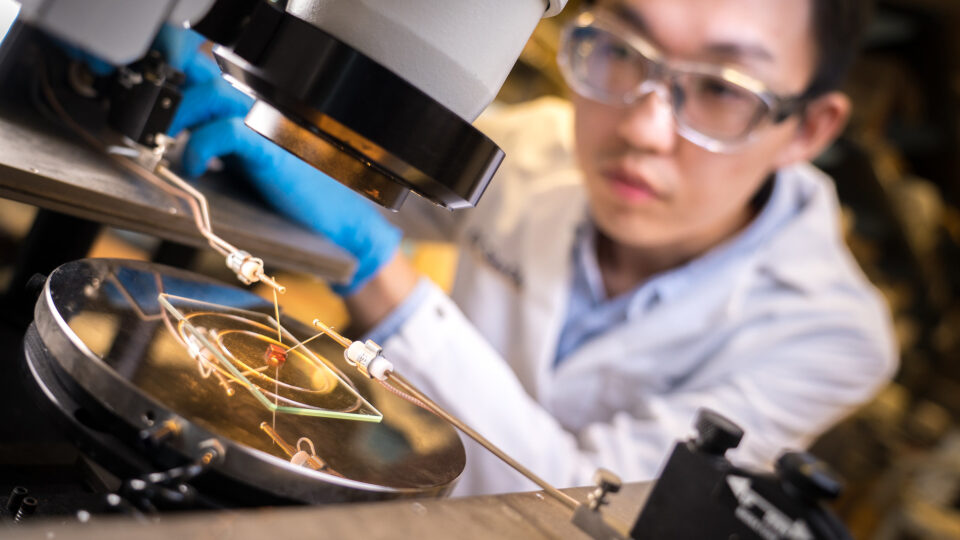
Perovskites are semiconductors with a specific crystal structure.  Their properties make them well suited for making solar cells.  They can be manufactured at room temperature, using much less energy than it takes to make the silicon-based solar cells widely used today.  As a result, perovskite solar panels would be cheaper and more sustainable to produce.  Manufacturing silicon solar cells takes a lot of energy because silicon is forged at around 3000 degrees Fahrenheit. In addition, perovskites can be made flexible and transparent, making it possible to use them in ways unavailable with silicon solar technology.

But unlike silicon, perovskites are very fragile.  The early solar cells made from perovskites in 2009 and 2012 lasted for only minutes.  Lots of potential, but little practicality.

Recently, Princeton Engineering researchers have developed the first perovskite solar cell with a commercially viable lifetime, which is a major breakthrough.  The team projects that the device can perform above industry standards for about 30 years, which is much more than the 20 years designated as a viability threshold for commercial cells.

The research team has developed an ultra-thin capping layer between two of the layers of a perovskite solar cell.  The layer is just few atoms thick but has been demonstrated to dramatically increase the durability of the device. 

There is great potential for the new solar cell technology.  It has efficiency to compete with silicon cells but can be tuned for specific applications and can be manufactured locally with low energy inputs.  If successfully commercialized, the result will be solar panels that are cheaper, more efficient, and more flexible than what are available today.

**********

Web Links

Once seen as fleeting, a new solar tech shines on and on

Photo, posted January 8, 2020, courtesy of David Baillot/UC San Diego Jacobs School of Engineering via Flickr.

Earth Wise is a production of WAMC Northeast Public Radio.

Step one. Find a hobby, which involves group activities. This may be a dance or yoga classes, literary evenings or theater studio hookups uk, volunteer work or a discussion club. Choose what’s closer to you, as long as you get to interact a lot with people of both genders. Step Two. Practice virtual communication. Learn to communicate with the opposite sex on social networks.

A Geoengineering Research Plan | Earth Wise

July 22, 2022 By EarthWise Leave a Comment

The 2022 federal appropriations act, signed into law in March, directed the Office of Science and Technology Policy to develop a cross-agency group to coordinate research on climate interventions, in partnership with NASA, the National Oceanic and Atmospheric Administration, and the Department of Energy.

The group is tasked with creating a research framework to “provide guidance on transparency, engagement, and risk management for publicly funded work on solar geoengineering research.”  The group is supposed to develop a five-year plan that will define research goals for the field, assess the potential hazards of climate interventions, and evaluate the level of federal funding required to carry out the work.

This marks the first federally coordinated effort of this kind and is especially significant because it contributes to the perception that geoengineering is an appropriate and important area of research as the climate continues to warm.

It is an understatement to say that such research is controversial.  Geoengineering has often been a taboo topic among scientists. There are significant questions about potential environmental side effects and concerns that the impact of any such efforts would be felt unevenly in different parts of the world.  There are challenging questions about global governance , including who should be able to make decisions about any potential deployment of climate interventions and what the goals of such interventions should be.

These are momentous issues to grapple with, but as the threat of climate change grows and nations continue to fail to make rapid progress on emissions, researchers, universities, and nations are increasingly motivated to seriously explore the potential effects of geoengineering approaches.  We can’t hide from the fact that these issues are going to be explored.

**********

Web Links

The US government is developing a solar geoengineering research plan

Photo, posted June 28, 2013, courtesy of Fernando Aramburu via Flickr.

Earth Wise is a production of WAMC Northeast Public Radio.

Saving Money By Predicting The Wind | Earth Wise

July 1, 2022 By EarthWise Leave a Comment

Managing an electrical grid that utilizes significant amounts of intermittent generation sources – solar and wind power – brings with it some unique challenges.  There are abundant wind resources in this country and more and utilities are taking advantage of these resources.   But there are times when there is more wind, times when there is less wind, and times when there is no wind at all.   Utilities need accurate wind forecasts to determine when they need to generate or purchase energy from alternative sources.

Poor wind forecasts can cost utilities a lot of money.  If there is overprediction – that is, when there is less wind than predicted – utilities have to purchase energy off the spot market at higher prices.  If there is underprediction – more wind than predicted – utilities may needlessly burn fossil fuels and waste money that way. 

The National Oceanic and Atmospheric Administration produces wind forecasts using its High-Resolution Rapid Refresh (HRRR) weather model, which provides hourly updated forecasts for every part of the United States looking forward up to 48 hours.  The model generates predictions of wind speed and direction at multiple levels of the atmosphere, information that utilities can use to predict the output of their wind turbines.

A new study by economists and scientists from Colorado State University and NOAA estimated the financial impact of the HRRR model on wind farm production.  The research team calculated that increasingly accurate weather forecasts over the last decade have saved consumers over $150 million a year.   Estimates are that if the newest model was in use in previous years, the savings would have been over $300 million a year.

**********

Web Links

NOAA wind forecasts result in $150 million in energy savings every year

Photo, posted May 2, 2022, courtesy of California Energy Commission via Flickr.

Earth Wise is a production of WAMC Northeast Public Radio.

Continued Renewables Growth | Earth Wise

June 17, 2022 By EarthWise Leave a Comment

In 2021, the world added a record amount of 295 gigawatts of renewable power.  According to the International Energy Agency, it is on pace to surpass that amount in 2022.

Almost half of the renewable buildout in the world is taking place in China.  In 2021, China accounted for 46% of worldwide renewable energy additions.  The EU and United States are the next two leaders.  The rapid buildup is especially impressive given the challenges developers have faced from the coronavirus pandemic, supply chain issues, and various construction delays.

Predictions are that the global total added this year will be about 320 gigawatts of renewables.  This amount is equivalent to the total power demands of Germany, which is the world’s fourth-largest economy.  Solar photovoltaics are forecast to account for 60% of the increase in global renewable capacity this year. 

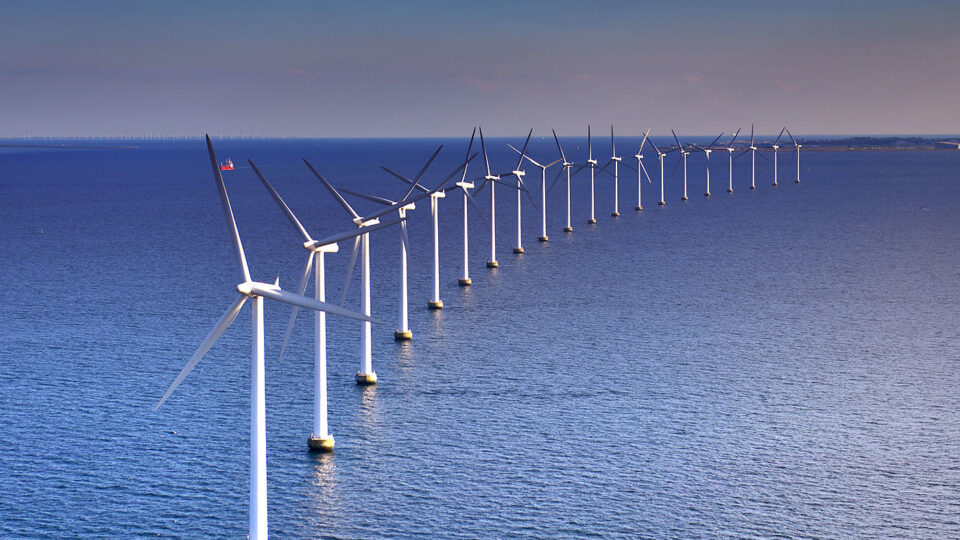
The rapid growth in China and the EU are driven by strong pro-renewable policies.  In our country, wrangling over climate legislation and investigations into potential trade violations by Asian suppliers have held back our progress.  But over the next several years, offshore wind will begin to have a real impact on U.S. renewable installations.

According to the report by the International Energy Agency, renewable energy growth is likely to plateau in 2023 unless stronger climate policies are enacted. 

There are now more than 3 terawatts – that’s 3,000 gigawatts – of renewable generation capacity globally.  This compares with a little over 4,000 terawatts of fossil fuel generation.  Global renewable energy generation is currently projected to surpass that of fossil fuels by 2035.

**********

Web Links

Following Record Growth in 2021, Renewables on Track for New High in 2022

Photo, posted October 17, 2016, courtesy of B Sarangi via Flickr.

Earth Wise is a production of WAMC Northeast Public Radio.

Floating Solar | Earth Wise

June 7, 2022 By EarthWise 1 Comment

Floating solar coming to New York

The largest floating solar array in Europe, 12,000 panels sitting on top of the Alqueva Reservoir in Portugal – will come online in July.  Installing floating solar arrays, which are sometimes called “floatovoltaics”, produce renewable energy while shielding significant expanses of water from the sun’s heat.  These dual benefits have led to floatovoltaic projects in multiple countries around the world.

The city of Cohoes, in New York’s Albany County, has proposed an 8,000-panel floating solar array on the city reservoir.  Federal funding of $3 million for the project was obtained by local Congressman Paul Tonko and, in May, utility National Grid donated $750,000 towards the project.  Engineering work will shortly be underway on the 3.2 megawatt grid of solar panels.

The city of Cohoes pumps its drinking water supplies from the Mohawk River into the 10-acre, manmade reservoir.  The surface of the water is the largest undeveloped open space in the city.  Such reservoirs constitute prime sites for solar arrays since the space cannot be used for other purposes.  In addition, covering the water’s surface with the solar panels greatly reduces evaporation and helps to inhibit the growth of algae.

There are currently only 14 floating solar arrays in the U.S. and all of those are privately owned.  The Cohoes municipal array will be the first of its kind.  There are nearly 500 reservoirs in New York State and 24,000 nationwide that could be sites for floating arrays.   Drought-stricken Western reservoirs like Lake Mead and Lake Powell could be ideal locations of solar arrays.  Those reservoirs lose huge amounts of water to evaporation.  There are estimates that floating arrays could provide as much as 10% of the nation’s electrical needs.

**********

Web Links

National Grid gives Cohoes $750,000 for floating solar array project

Photo, posted August 25, 2010, courtesy of Martin Abegglen via Flickr.

Earth Wise is a production of WAMC Northeast Public Radio.

Weaning Off Fossil Fuels | Earth Wise            

June 2, 2022 By EarthWise Leave a Comment

How to break free of our dependence on fossil fuel

We recently talked about California producing 97% of its electricity from renewables on one sunny afternoon in April.  On May 8th, the state produced enough renewable electricity to meet 103% of consumer demand.  These sorts of records are likely to be increasingly commonplace in the spring when the weather is still fairly mild.

But even while renewables were producing more electricity than California needed, natural gas power plants in the state were still running.

Turning off the gas power plants is not possible.  The reason is that as the sun sets and solar farms stop producing power, California has to quickly replace the power with electricity from other sources.  Natural gas plants are massive industrial facilities that cannot be turned on and off rapidly.  Some take as many as 4 to 8 hours to switch on.  Operators back them down as far as they can go, but even when there is plenty of solar power during the day, natural gas plants are still running.

The state is rapidly building huge battery storage projects as an alternative to gas plants, but so far, they are still only a small fraction of what is needed.   Wind power is another part of the solution along with hydropower.  California imports some power from other states as well and, in fact, also exports power when there is excess.  But keeping the energy system balanced and stable is an ongoing challenge.

California is building huge amounts of solar, huge amounts of wind, and huge amounts of energy storage, which should get the state to at least 90% of the way to a clean grid.  It’s the last 5-10% that is much harder to accomplish before natural gas is no longer part of the energy system.

**********

Web Links

California just ran on 100% renewable energy, but fossil fuels aren’t fading away yet

Photo, posted January 10, 2014, courtesy of F.G. via Flickr.

Earth Wise is a production of WAMC Northeast Public Radio.

Storing Sunshine To Make Electricity On Demand | Earth Wise

June 1, 2022 By EarthWise Leave a Comment

How to store sunshine to make electricity on demand

Researchers at Chalmers University in Sweden have developed an entirely new way of capturing and storing energy from sunlight.  The system is called the Molecular Thermal Energy Storage System or MOST.  It is based on a specially designed molecule that changes shape when it is exposed to sunshine.

The molecule is composed of carbon, hydrogen, and nitrogen.  When sunlight hits it, it changes into an energy-rich isomer – a molecule made up of the same atoms but arranged together in a different way.  That isomer is stable and can be stored for many years.  When a specially designed catalyst is applied, the stored energy is released in the form of heat and the molecule returns to its original form and can be reused. 

The Chalmers researchers sent some of the energy-laden isomer to researchers in China who used it to operate a micron-thin thermoelectric generator, which used the heat released by the isomer material to generate electricity.  The generator is an ultra-thin chip that could be integrated into electronics such as headphones, smart watches, and telephones.  It is currently only at the proof-of-concept stage, but the results are quite promising.  The integration with the MOST technology provides a way that solar energy can generate electricity regardless of weather, time of day, season, or geographical location.  The results of the study were recently published in the journal Cell Reports Physical Science.

In effect, for this demonstration, Swedish sunshine was sent to the other side of the world and converted into electricity in China. The ultimate goal of this research is to create self-charging electronics that uses stored solar energy on demand.

**********

Web Links

Converting solar energy to electricity on demand

Photo, posted March 11, 2013, courtesy of Steve Slater via Flickr.

Earth Wise is a production of WAMC Northeast Public Radio.

Primary Ways To Mitigate Climate Change | Earth Wise

May 30, 2022 By EarthWise Leave a Comment

How to mitigate climate change

The most recent report issued by the Intergovernmental Panel on Climate Change states that the world must halt the increase in greenhouse gases within three years, reduce emissions by 43% in the next seven years, and eliminate them entirely by 2050.  Otherwise, there will likely be catastrophic and irreversible impacts on the climate.

With respect to achieving these reductions, the report emphasizes decarbonizing the energy sector through electrification by replacing fossil fuels anywhere and everywhere possible.  Where that isn’t yet practical – such as in shipping and aviation – the use of biofuels and hydrogen can provide a stopgap until battery technology becomes a viable alternative.

The economics of this approach continue to improve.  Since 2010, the cost of wind, solar, and batteries has declined by as much as 85%.  In many cases, costs have fallen below those of fossil fuels.  Nonetheless, the report stresses that continuing to provide national, state, and local incentives for using renewable energy is a key factor in achieving the necessary reductions.

However, reducing emissions will no longer be enough.  This is the first major IPCC report that states that man-made carbon dioxide removal strategies will be necessary to meet the goals of the Paris Climate Agreement.  So-called natural carbon storage options, like planting trees and using farming methods that sequester carbon in soil, are also important parts of the strategy.

It is up to governments, policymakers, and investors to implement the necessary changes to mitigate climate change.  There is lots of talk about it, but it will take concerted action to avoid increasingly dire consequences.

**********

Web Links

Report highlights affordable, available ways to mitigate climate change now

Photo, posted September 8, 2007, courtesy of Kevin Dooley via Flickr.

Earth Wise is a production of WAMC Northeast Public Radio.

Wind And Solar And Meeting Climate Goals | Earth Wise

May 20, 2022 By EarthWise Leave a Comment

Meeting climate goals using solar and wind power

According to a new report from the climate think tank Ember, the rapid growth that has been going on for solar and wind power could allow the global electricity sector to do its part in limiting global warming to 1.5 degrees Celsius.

In 2021, solar power grew by 23% worldwide and wind power grew by 14%.  The Netherlands, Australia, and Vietnam had the largest gains in renewable energy.  Solar power in Vietnam grew by 337%.

The trends over the past decade, if continued across the globe, would result in the power sector being on track for meeting climate goals.  But not all the news is good.  The overall power sector has not been adequately reducing emissions.  Coal power actually grew by 9% last year as a result of increased demand for power during the rapid economic recovery in the easing of the pandemic shutdowns.  A spike in natural gas prices made coal more cost-competitive.

In order for the power sector to do its part in keeping warming below 1.5 degrees, wind and solar power will need to provide 40% of the world’s power by 2030 and nearly 70% by 2050.  Today, they supply only 10% of the world’s electricity.

With rising gas prices during Russia’s war with Ukraine, there is real danger of increased use of coal, threatening the gains made by renewable energy.

Nonetheless, a study published in Oxford Open Energy modeled various scenarios for the growth of renewable energy and found that it is feasible to meet climate goals.  In order to achieve this, countries’ policies will need to stimulate significant increases in energy and resource efficiency and rapid deployment of low-carbon technologies, promote strong environmental actions, and encourage low population growth.

**********

Web Links

Rapid Growth of Wind and Solar Could Help Limit Warming to 1.5 degrees C

Photo, posted October 11, 2011, courtesy of Michael Coghlan via Flickr.

Earth Wise is a production of WAMC Northeast Public Radio.

Record Renewable Use In California | Earth Wise

May 19, 2022 By EarthWise Leave a Comment

California, the most populous state, is the second largest electricity user.  Only Texas, the second most populous state, uses more energy, in part because it consumes large amounts in refining fossil fuels. Overall, California uses about 8% of the electricity generated in the U.S.

Thus, it was a significant milestone when briefly, on April 3, a record 97.6% of the energy on California’s statewide grid came from renewable energy resources.  (The previous record of 96.4% was set just a few days earlier).

Renewable energy’s share of the power typically peaks in the spring when mild temperatures keep demand relatively low and higher sun angles drive greater solar energy production.

On April 8, a record peak solar power production was set at 13,628 megawatts just after noon.  On March 4, the state set an all-time wind generation record of 6,265 megawatts. 

California now has over 15,000 MW of grid-connected solar power and 8,000 MW of wind.  Another 600 MW of solar and 200 MW of wind are coming online by June.  The state also has about 2,700 MW of energy storage online and that will climb to 4,000 MW by June.

In 2020, 34.5% of the state’s retail electricity sales came from wind and solar sources.  Adding in hydropower and nuclear power, nearly 60% of the state’s electricity came from non-fossil fuel.  Despite the effects of drought on hydropower generation and the impact of the pandemic on the pace of renewable energy projects, California continues its dramatic transition to sustainable energy.

**********

Web Links

Solar and wind notched records as renewables met California’s energy demand

Photo, posted September 20, 2016, courtesy of Tom Brewster Photography / BLM via Flickr.

Earth Wise is a production of WAMC Northeast Public Radio.

Peak Natural Gas Generation | Earth Wise

May 17, 2022 By EarthWise Leave a Comment

Peak natural gas generation is in the past

According to a new report from the Institute for Energy Economics and Finance (the IEEFA), the U.S. most likely hit its peak usage of natural gas to generate electricity in 2020.  Growth in wind and solar power are beginning to erode the use of natural gas.

At the moment, natural gas prices are unusually high as a result of supply chain issues and the war in Ukraine.  The U.S. is shipping record amounts of gas to Europe in order to help allies to wean off of Russian gas imports.  As a result, U.S. natural gas prices are at their highest level in more than 13 years.  Heating bills in the Northeast have been exceptionally high this past winter.

These high gas prices have also thrown a temporary lifeline to coal, which has seen a recent surge.  Despite this, coal in the U.S. is continuing its long-term decline.  Several of the largest power companies – including the Tennessee Valley Authority, Duke Energy, and Georgia Power – are planning to phase out coal entirely by 2035 and shift to renewable power.

The surging prices in fossil fuels – at the gas pump and in the home – along with multiple disruptions in energy security, are supercharging the already rapid pace of growth in solar, wind, and battery energy storage projects.

Wind, solar, and hydropower currently account for about 20% of U.S. power generation.  According to the IEEFA, these renewable sources could provide more than a third of our power by 2027.  Including both renewables and nuclear power plants, the U.S. could generate more than half of its electricity from carbon-free sources by that year, which represents a massive transition from just five years ago.

**********

Web Links

U.S. May Have Hit Peak Natural Gas Power Generation, Report Says

Photo, posted July 11, 2017, courtesy of John Ciccarelli / BLM via Flickr.

Earth Wise is a production of WAMC Northeast Public Radio.

The Atmosphere Is Thirstier | Earth Wise      

May 9, 2022 By EarthWise Leave a Comment

The American West is in the throes of a two-decade-long drought.  The climate there is getting warmer and drier, which has led to increasing demand for water resources from both humans and ecosystems.  According to a new study by the Desert Research Institute and collaborators, the atmosphere across much of the U.S. is also demanding a greater share of water than it used to.

Evaporative demand, which is also called atmospheric thirst, is a measure of the potential loss of water from the earth’s surface up to the atmosphere.  It is a function of temperature, humidity, wind speed, and solar radiation.  The study, published in the Journal of Hydrometeorology, assessed trends in evaporative demand during a 40-year period from 1980-2020.

The study’s findings showed substantial increases in atmospheric thirst across much of the Western U.S. over that period, with the largest increases centered around the Rio Grande and Lower Colorado rivers.  This is important because atmospheric thirst is a persistent force in pushing Western landscapes and water supplies toward drought.

The study found that, on average, increases in temperature were responsible for 57% of the changes observed in atmospheric thirst, humidity 26%, and the other factors playing lesser roles.

For farmers and other water users, increases in atmospheric thirst mean that, in the future, more water will be required to meet existing water needs.  Crops already require more water than they did in the past and can be expected to require more water in the future.  Over time, for every drop of precipitation that falls, less and less water is likely to drain into streams, wetlands, aquifers, or other water bodies.

**********

Web Links

New study shows robust increases in atmospheric thirst across much of U.S. during past 40 years

Photo, posted August 9, 2007, courtesy of William Clifford via Flickr.

Earth Wise is a production of WAMC Northeast Public Radio.

A Solar-Powered Target Store | Earth Wise

April 26, 2022 By EarthWise Leave a Comment

Target among many retailers adopting renewables

Many companies have made sustainability commitments of various types. Environmental organizations have urged big-box and grocery stores to install solar panels on their rooftops and parking lots thereby reducing their energy usage and expanding the country’s supply of renewable energy.  These places occupy large areas and therefore are capable of supporting large solar arrays.

According to a report by two environmental advocacy groups, rooftop solar panels on retail stores could generate enough electricity to power the equivalent of nearly 8 million U.S. homes.

Target Stores are one of the retailers that has been making an effort to be a greener company.  Target has installed solar panels on about 25% of its approximately 1,900 stores.  The Target store in Vista, California, about 40 miles north of San Diego, is the company’s most sustainable store.  It already had solar panels on its rooftop, powering a portion of the store.

But now it has installed massive carports topped with solar panels high above its parking lot.  With these panels, this Target can now produce enough renewable energy to power the entire store, from its refrigeration to its heating and air conditioning. Adding in some of the other energy-saving features of the store, Target expects to produce 10% more energy than the store needs, which it will return to the local power grid.  This is Target’s first net-zero energy store.

Target is not the only big retailer going solar.   Home Depot, Lowe’s, and Walmart all have been installing solar panels on some of their rooftops.  Even some restaurants are trying to reach sustainability goals with solar panels.  This is a trend that hopefully will continue to grow.

**********

Web Links

Target looks to massive solar panels in a California parking lot as a green model to power its stores

Photo, posted June 30, 2014, courtesy of Mike Mozart via Flickr.

Earth Wise is a production of WAMC Northeast Public Radio.

Avoiding Blackouts With Renewable Energy | Earth Wise

February 4, 2022 By EarthWise Leave a Comment

How to avoid blackouts while using renewables

There are some people who worry that an electric grid heavily dependent upon intermittent sources like solar and wind power may be more susceptible to blackouts.  According to a new study by Stanford University, these fears are misplaced.

The study, published in the journal Renewable Energy, found that an energy system running on wind, water, and solar, when combined with energy storage, avoids blackouts, and lowers energy requirements and consumer costs.  In addition, implementing such a system would create millions of jobs, improve people’s health, and reduce land requirements.

The study focused on the stability in all U.S. grid regions as well as individual states based on the requirement that all electricity is provided by clean and renewable sources. No fossil fuel use, bioenergy, blue hydrogen, or even nuclear power were included in the modeling.  Critics of such a shift in the energy system point to grid blackouts during extreme weather events in California in 2020 and Texas in 2021 as evidence that renewable sources can’t be trusted.  But in both cases, renewable energy was not found to be any more vulnerable than other sources.

The study looked at the costs of the transition – which would be substantial – but found that it would pay for itself fairly quickly based on energy cost savings alone.

A significant finding of the study was that long-duration batteries were neither necessary nor helpful for grid stability.  That stability could be obtained by linking together currently available short-duration batteries.  Interconnecting larger and larger geographic regions would make the power system smoother and more reliable.  Overall, intelligent management of the electric grid can result in a reliable and clean power system.

**********

Web Links

Stanford researchers point the way to avoiding blackouts with clean, renewable energy

Photo, posted October 17, 2016, courtesy of B Sarangi via Flickr.

Earth Wise is a production of WAMC Northeast Public Radio.

  • « Go to Previous Page
  • Page 1
  • Interim pages omitted …
  • Page 3
  • Page 4
  • Page 5
  • Page 6
  • Page 7
  • Interim pages omitted …
  • Page 17
  • Go to Next Page »

Primary Sidebar

Recent Episodes

  • An uninsurable future
  • Clean energy and jobs
  • Insect declines in remote regions
  • Fossil fuel producing nations ignoring climate goals
  • Trouble for clownfishes

WAMC Northeast Public Radio

WAMC/Northeast Public Radio is a regional public radio network serving parts of seven northeastern states (more...)

Copyright © 2026 ·