• Skip to primary navigation
  • Skip to main content
  • Skip to primary sidebar

Earth Wise

A look at our changing environment.

  • Home
  • About Earth Wise
  • Where to Listen
  • All Articles
  • Show Search
Hide Search
You are here: Home / Archives for solar

solar

Record renewable energy in Scotland

March 1, 2024 By EarthWise Leave a Comment

Record renewable energy in Scotland

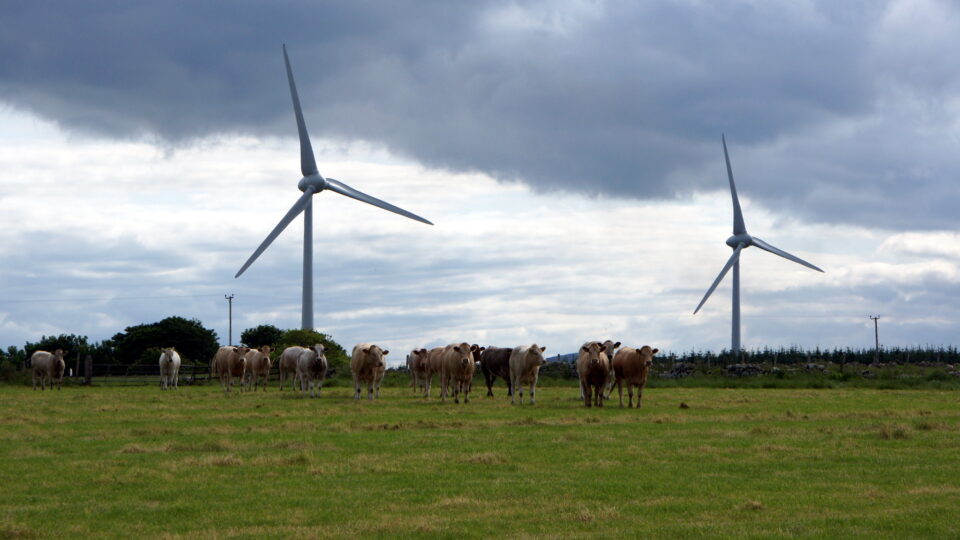
The Scottish government recently announced that in 2022, renewable technologies in that country produced the equivalent of 113% of Scotland’s electricity consumption.

Fossil fuels still supplied electricity in Scotland, helping to fill in gaps in renewable power, but the government figures showed that the growing amount of Scottish renewable generation can easily generate more power than the country uses.  Scotland has seen significant growth in wind power as well as a small drop in overall electricity consumption.

Scotland, with a population of only 5.5 million, aims to produce enough renewable power to both meet its own demand and export clean electricity to other countries.  The U.K. is the obvious potential customer, but it will need to upgrade its national power grid and develop enough capacity to store up surplus wind and solar power.

The U.K. itself is drawing less power from natural gas and coal than it has at any point in the last 66 years.  Fossil fuels supplied only 33% of British electricity in 2023 while renewables supplied 43%. 

Fossil power use in Britain peaked in 2008.  Since then, power from natural gas has fallen nearly in half while coal power has dropped by 97%.  The U.K. has aggressive decarbonization goals in place, but the current Conservative government under Prime Minister Sunak has recently set about weakening British climate policy.

Meanwhile, the Scottish government is talking about becoming a global renewables powerhouse and is making investments aimed at achieving it.

**********

Web Links

Record renewable energy output

Photo, posted July 21, 2010, courtesy of Martin Abegglen via Flickr.

Earth Wise is a production of WAMC Northeast Public Radio
Fusion energy

February 29, 2024 By EarthWise Leave a Comment

Nuclear fusion is the process that powers the sun.  Two atoms of hydrogen unite to form one helium atom and release energy in the process.  Hydrogen bombs work in this way and since their development in the 1950s, scientists have sought a way to use fusion to generate electricity.  Many scientists believe that the key to a fully decarbonized future is a combination of solar, wind, and fusion power.

Nuclear fusion does not involve radioactivity and thus does not have the dangers associated with the nuclear fission used in existing power plants.  Over the decades, billions of dollars have gone into fusion research, but the challenges faced in peacefully triggering a fusion reaction have made success always seem to be extremely far off in the future.

The world’s largest fusion project – the International Thermonuclear Experimental Reactor or ITER – was initiated in 1985.  The project involves 35 countries, and the reactor, still under construction in France, has yet to deliver any tangible results.

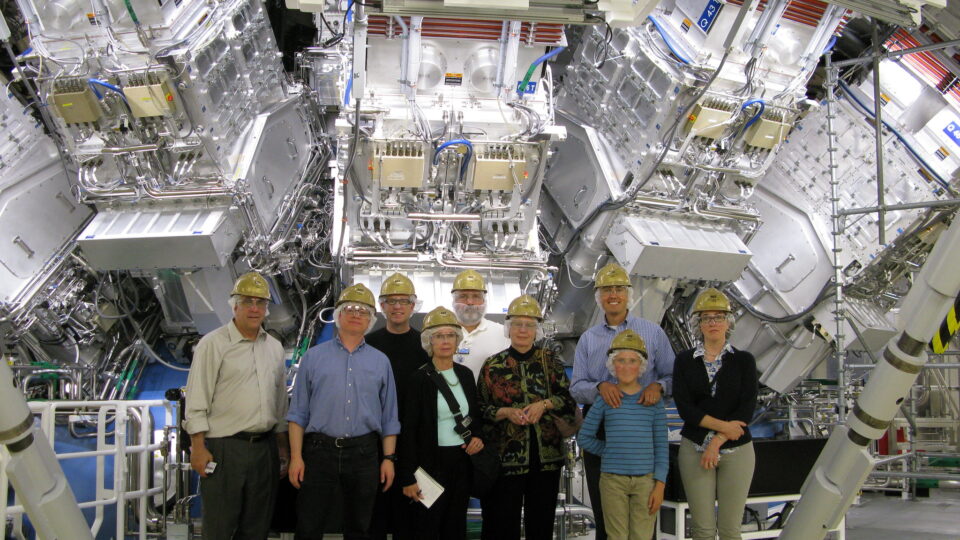
In the past couple of years, there have been important demonstrations of new and different ways to create nuclear fusion.  A system using laser fusion achieved fusion ignition, in which a reaction briefly became self-sustaining.  A system using magnetic confinement fusion produced a plasma that generated 11 megawatts of power for a world-record five seconds.

There are more than 30 companies competing in the race to deliver fusion energy.  Governments and private investors are funding efforts around the world.  Whether any of them will succeed remains to be seen.  The challenges are immense but so are the potential rewards.

**********

Web Links

Will Tech Breakthroughs Bring Fusion Energy Closer to Reality?

Photo, posted July 31, 2010, courtesy of Steve Jurvetson via Flickr.

Earth Wise is a production of WAMC Northeast Public Radio

Pollinator-friendly solar power

February 16, 2024 By EarthWise Leave a Comment

Global insect biodiversity has been in decline as a result of habitat loss, pesticide use, and climate change.  Restoring insect habitat is a way to reverse that trend.  Expanded use of solar energy is a critical part of mitigating climate change.  In order to meet the grid decarbonization goals the U.S. has set, approximately 10 million acres of land will be needed for large-scale solar development.  According to a new study by Argonne National Laboratory and the National Renewable Energy Laboratory, these two efforts are complementary.

Disturbed lands such as former agricultural fields are ideal locations to install solar panels.  These lands can also be established as excellent habitats for insect pollinators and other wildlife that provide important ecosystem services.

A five-year study looked at two solar sites in southern Minnesota that were built on retired agricultural land.  The sites were planted with native grasses and flowering plants in early 2018.  Over a five-year period, the researchers conducted hundreds of observational surveys for flowering vegetation and insect communities, evaluating changes in plant and insect abundance and diversity.

The team observed increases for all habitat and biodiversity metrics.  The total insect abundance tripled, while native bees showed a 20-fold increase in numbers. 

The research highlights the relatively rapid insect community responses to habitat restoration at solar energy sites.  If properly sited, the solar sites can offset the losses of natural areas created by solar farms and actually make prime farmland more productive through the pollination services provided by habitat-friendly solar energy.

**********

Web Links

Insect populations flourish in the restored habitats of solar energy facilities

Photo, posted February 28, 2014, courtesy of Tom Koerner/USFWS via Flickr.

Earth Wise is a production of WAMC Northeast Public Radio

A giant underground battery

February 5, 2024 By EarthWise Leave a Comment

Building a giant underground battery

Two up-and-coming energy technologies are coming together near a tiny town in central Utah.  Outside of the town of Delta, population 3,600, two caverns, each as deep as the Empire State Building, are being created from an underground salt formation to be used to store hydrogen gas.  The gas will be used as a fuel in a new electricity generation plant.

The plant will replace an aging local coal-fired power plant.  The new plant will burn a mixture of natural gas and hydrogen – green hydrogen produced without emitting greenhouse gases. To produce the hydrogen, the facility will operate 40 giant electrolyzers that will use excess solar and wind power generated at times of low demand to split water molecules into hydrogen and oxygen.

The caverns were created by a process called solution mining in which high-pressure water is pumped down into salt deposits that are dissolved. The resulting caverns are 200 feet in diameter and 1,200 deep and lie 3,000 to 4,000 feet below the surface.  Hydrogen cannot escape through the thick salt layers.

The amount of energy that can be stored in the form of hydrogen fuel in these caverns is massive – far more than all the battery storage installed in the U.S. to date.  Chevron has a majority stake in one of the projects and will supply the natural gas.  The facility is expected to go online in 2025.

While this will produce far fewer emissions than existing coal plants, it is not carbon-free.  Currently, turbine technology cannot operate with pure hydrogen fuel.  The Delta plant will run on only 30% hydrogen.  The hope is that turbine technology will improve in the future and permit operation on pure hydrogen.

**********

Web Links

A Huge Underground Battery Is Coming to a Tiny Utah Town

Photo, posted September 9, 2013, courtesy of Scott via Flickr.

Earth Wise is a production of WAMC Northeast Public Radio
The slow decline of coal

January 25, 2024 By EarthWise Leave a Comment

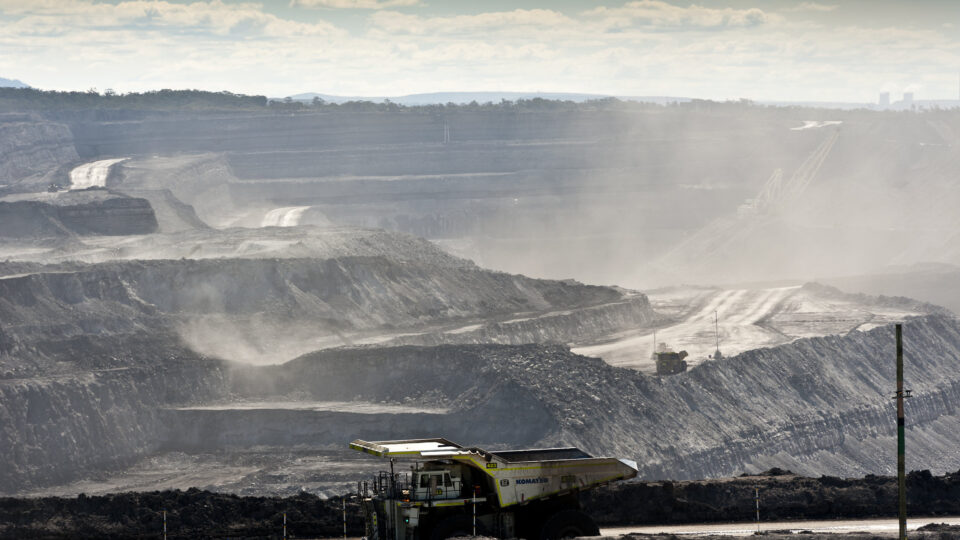
Despite the fact that coal is the dirtiest and most climate-harmful energy source we have, the global demand for it hit a record high in 2023. The demand for coal grew by 1.4% worldwide, according to an analysis by the International Energy Agency.

Coal use grew by 5% in China and 8% in India.  The two countries are the world’s largest producers and consumers of coal.  Meanwhile, coal use in the U.S. and the European Union fell by 20%.

Despite this discouraging news, the IEA forecasts that coal use will decline over the next two years.  There have been declines in coal demand a few times before, but they were driven by unusual events such as the collapse of the Soviet Union and the Covid-19 crisis.  But the IEA says that the forthcoming decline is different.  It will be driven by the formidable and sustained expansion of clean energy technologies.

According to the IEA, global coal demand will fall by 2.3% by 2026 even in the absence of new policies to curb coal use.  Forces at play will be increased hydropower in China as it recovers from drought and puts new wind and solar projects online.  China is responsible for more than half of global coal demand, but it is also responsible for more than half of the planned renewable power projects coming online over the next three years.  Experts believe that with these forthcoming projects, Chinese emissions may have peaked in 2023.

The projected drop in coal demand is still far short of what is required for the world to avoid catastrophic warming.  Much greater efforts are needed to meet international climate targets.

**********

Web Links

After a Record 2023, Coal Headed for Decline, Analysts Say

Photo, posted August 25, 2015, courtesy of Jeremy Buckingham via Flickr.

Earth Wise is a production of WAMC Northeast Public Radio
Solar forests

January 22, 2024 By EarthWise Leave a Comment

To plant trees or install solar panels is the question

Forests are one of the most iconic symbols of the power and diversity of nature but beyond that, their thick vegetation is crucial to the stability and balance of the Earth’s climate.  This is because the photosynthesis that powers the growth of plants removes carbon dioxide from the air.  Cutting down forests – especially the evergreen forests of the tropics – has played a significant role in the increasing climate crisis.  For this reason, many environmental initiatives focus on restoring destroyed forests and planting new trees.

But the truth is, even if we were to cover the entire surface of the planet with trees, there would still not be enough photosynthesis going on to absorb the huge surplus of carbon dioxide that people have been pumping into the atmosphere for the past 150 years.

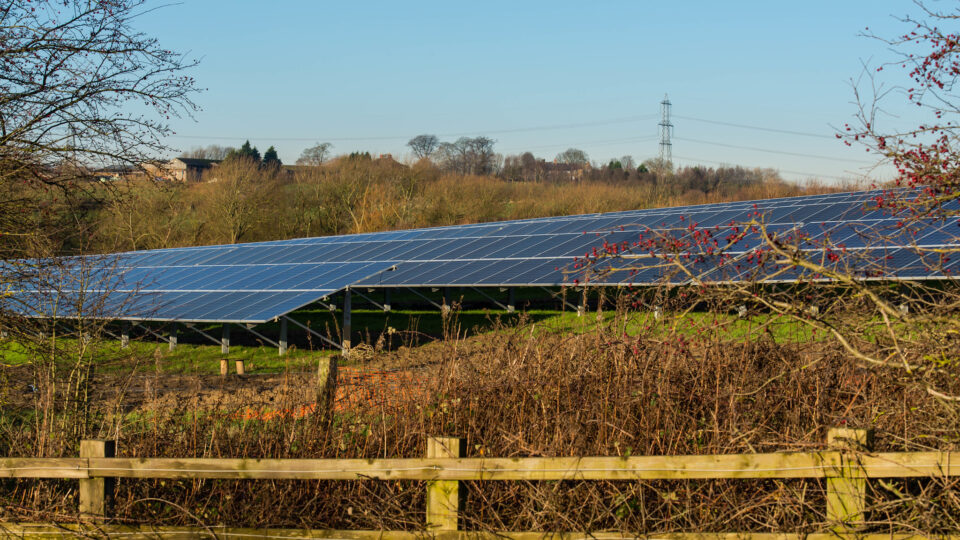
A study by the Weizmann Institute of Science in Israel looked at the impact of erecting fields of dark covered solar panels – so-called solar forests – that would generate electricity, thereby replacing power stations that use fossil fuels.  But dark fields absorb heat which eventually returns to the atmosphere.

The question is:  what is the best use of a plot of land in terms of the effect on the climate?  Planting a forest or erecting fields of solar panels?

The answer depends on where the land is.  In arid environments, building solar farms is far more effective and practical than planting forests.  But in humid places, forests currently absorb close to a third of humanity’s annual carbon emissions. 

The study concludes that combining planting and rehabilitating forests in humid regions and erecting fields of solar panels in arid regions is the most effective strategy.

**********

Web Links

The Solar Forest

Photo, posted December 27, 2015, courtesy of Gerry Machen via Flickr.

Earth Wise is a production of WAMC Northeast Public Radio
Cleaning the grid can create messes

January 9, 2024 By EarthWise Leave a Comment

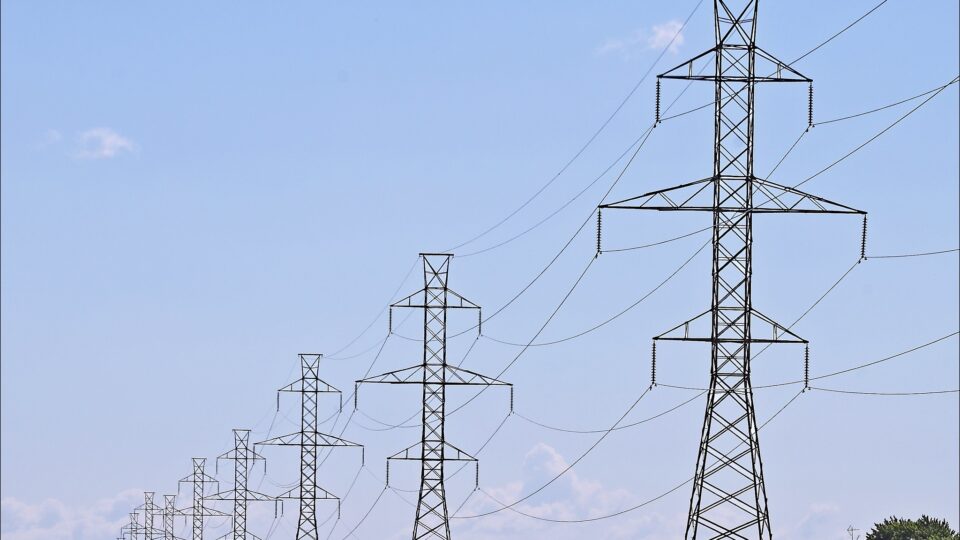
Renewables can create messes in the grid

The electric grid is increasingly embracing renewable energy sources like solar and wind power as well as the energy storage systems that support them.  These generation sources differ from traditional sources in that they produce direct current electricity rather than alternating current electricity.  Our power grid runs on alternating current.  Traditional generators produce alternating current that synchronizes with the grid.  Wind and solar power connect to the grid using electronic power converters called inverters that produce the required alternating current. 

All of this technical detail is something we don’t pay much attention to, except that the current state of inverter technology can lead to some problems that don’t exist with a fully synchronous power system. 

The electric grid frequently experiences disruptive events like trees falling on powerlines, squirrels shorting out substation equipment, and so on.  These things normally don’t cause widespread trouble, although there have been notable exceptions such as the massive Northeast blackout of 2003 triggered by an overloaded transmission line drooping onto foliage.

The issue with inverters is that they can shut down in the presence of certain disturbances to the grid.  This has happened on a number of occasions and has exposed vulnerabilities that need to be addressed by the industry.  Inverter-based resources currently constitute only a relatively small fraction of the grid, but that fraction is growing steadily and can have an increasingly widespread impact.  The grid was built predominantly for synchronous generation, and it must be adapted and improved to assure the reliability that is required and expected.  It is an issue that can’t be ignored.

**********

Web Links

Renewables are cleaning the grid. They’re also messing it up

Photo, posted July 5, 2017, courtesy of Sue Thompson via Flickr.

Earth Wise is a production of WAMC Northeast Public Radio
Record high emissions

January 3, 2024 By EarthWise Leave a Comment

Record high emissions in 2023

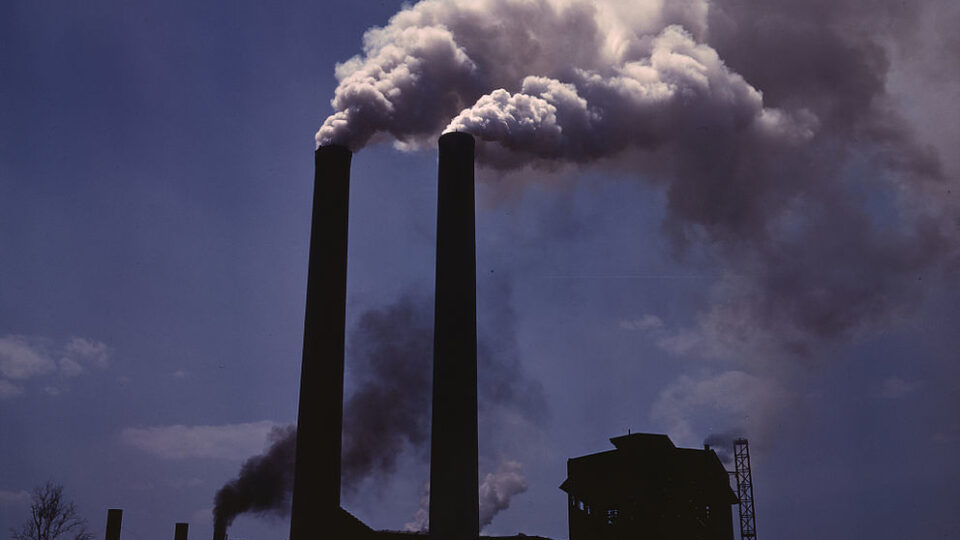
The world is adding solar and wind power to the grid.   We are driving more and more electric cars.  Countries are pledging to cut back fossil fuel use.  There are highly visible international conferences on the climate crisis.   But despite all of these things, global carbon emissions from fossil fuels have risen once again in 2023, reaching all-time record high levels of more than 40 billion tons, about 1.1% more than the previous year.

In some places, including Europe and the U.S., fossil fuel CO2 emissions are falling, but globally, they are still rising.  Emissions continued to increase in India and China.  Global action to cut fossil fuel use is not happening fast enough to prevent the increasingly dangerous effects of climate change.

Global CO2 emissions include both the contributions of fossil fuel use and the effects of land use change.  Adding the two together, in 2023 the total was about 45 billion tons, basically unchanged from last year. 

Adding insult to injury are the emissions from fires.  The extreme wildfire seasons in Canada, Australia, and other places have contributed CO2 emissions much larger than historical averages.

About half of all the carbon dioxide emitted on Earth is absorbed by carbon sinks on land and the oceans.  The other half remains in the atmosphere, where levels are now averaging 419 parts per million, 51% above pre-industrial levels.

Current efforts are simply not profound enough or widespread enough to put global emissions on a downward trajectory.  Some climate policies in some places are proving effective, but much more needs to be done.

**********

Web Links

Fossil CO2 emissions at record high in 2023

Photo, posted December 18, 2013, courtesy of Steve Nelson via Flickr.

Earth Wise is a production of WAMC Northeast Public Radio
Global climate progress is too slow

December 28, 2023 By EarthWise Leave a Comment

According to a new report by the World Resources Institute, the world is making progress on climate, but the progress is not fast enough.  The report looked at 37 indicators of climate progress towards the goals set forth by the Paris Agreement.  In some areas, the progress has been substantial, but in six areas, the world has been moving in the wrong direction entirely.

The rapid growth of clean energy has brought the world to the brink of peak fossil fuels, but to avoid the catastrophic effects of warming, countries need to build out wind and solar power nearly twice as fast and shut down coal plants seven times faster.  There has been progress in curbing deforestation, but the world needs to stem forest loss four times more quickly.  More work is needed to clean up heavy industry and the consumption of meat needs to be limited more than the present level.

Areas where things are getting worse rather than better include the use of public funds and subsidies for preserving the use of fossil fuels.  Because of wars and supply shocks affecting energy markets, countries have actually ramped up fossil fuel subsidies to combat rising prices.

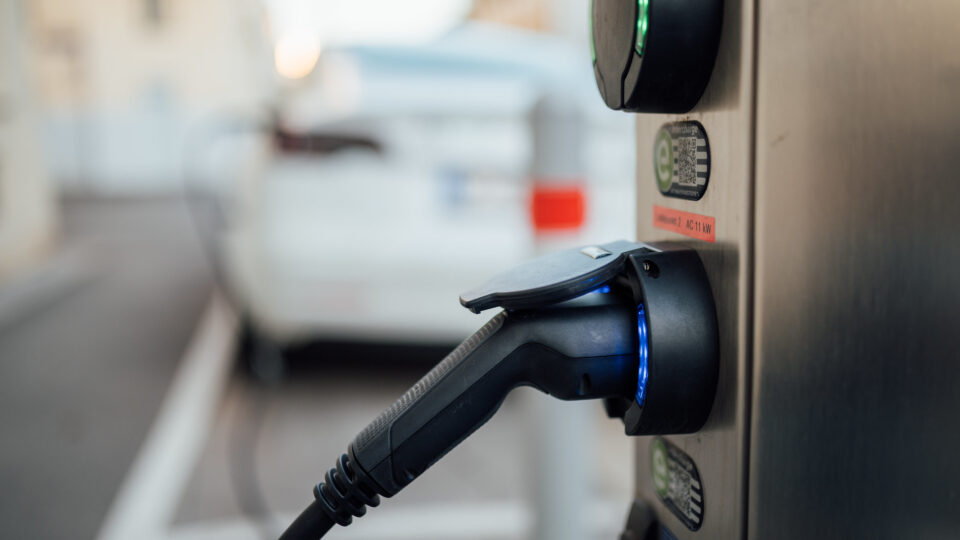
One area where the world is moving at the pace required to meet climate goals is in the sales of electric vehicles.  EVs accounted for 10% of car sales globally last year and if trends continue, they are predicted to account for more than 75% of cars sold by 2030.

The faster-than-predicted progress on electric cars demonstrates that transformative change is possible and could happen in other areas.

**********

Web Links

World Making Too Little Progress on Climate — Except on EV Sales, Report Finds

Photo, posted May 24, 2022, courtesy of Ivan Radic via Flickr.

Earth Wise is a production of WAMC Northeast Public Radio

Brownfields and solar power

December 19, 2023 By EarthWise Leave a Comment

Repurposing brownfields for solar power generation

Brownfields are blighted lands that have suffered environmental contamination, making it very difficult to redevelop them or make good use of them.  Generally, they are previously used lands that have the presence or at least the potential presence of hazardous substances, pollutants, or other contaminants at levels exceeding health-based or environmental standards.  There are nearly half a million brownfields in the U.S. that are ripe for repurposing.

One very attractive use for brownfields is to convert them to “brightfields,” which is the colloquial term for brownfields redeveloped into solar projects.  Estimates are that nearly 200,000 U.S. brownfield sites are eligible for brightfield conversion, which could provide hundreds of gigawatts of energy production.  Over 10,000 of these sites are inactive landfills, which alone could power 8 million homes.  Many of these sites have sat unused for decades.

A recent success story took place in Old Bridge Township, New Jersey where an abandoned waste site – designated a Superfund site by the EPA for decades – has now become a solar project that will generate more than $1.2 million a year for the township and will provide reduced-cost electricity for 400 homes, half of which are low- and moderate-income residents.

The site was on the EPA list of Superfund National Priorities , meaning it was considered one of the most serious abandoned hazardous waste sites.  Such sites required continuous monitoring, modifications, and cleanup. 

Projects like the Old Bridge solar project are likely to become increasingly common in the future, as legacy liabilities can be turned into valuable assets.

**********

Web Links

How solar installations give new life to blighted brownfields

Photo, posted November 11, 2015, courtesy of Martin Malec via Flickr.

Earth Wise is a production of WAMC Northeast Public Radio
Who wins: Wind or solar?

November 27, 2023 By EarthWise Leave a Comment

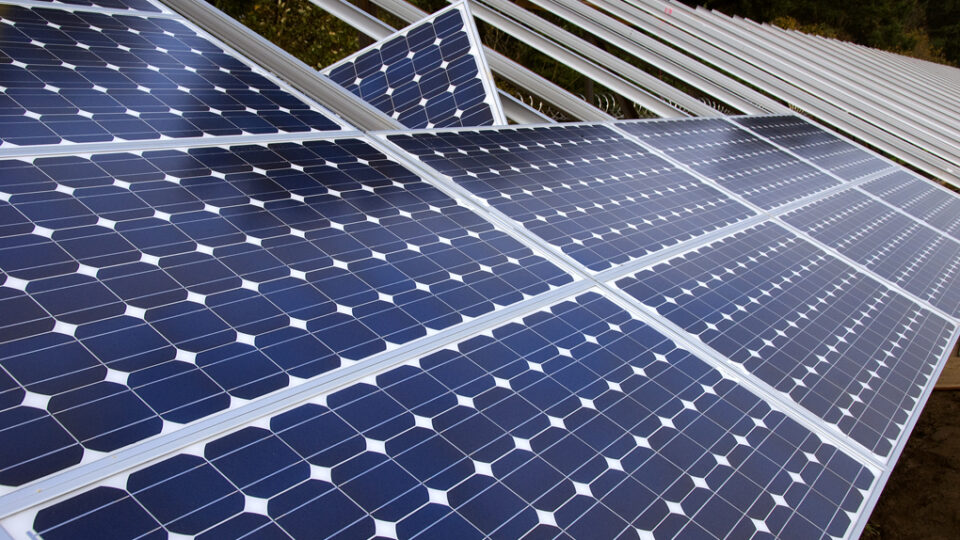
A new study by the University of Exeter in the UK suggests that the world may have crossed a tipping point that will inevitably make solar power our main source of energy.  This data-driven model of technology seems to fly in the face of the current situation in which wind power contributes considerably more generation than solar power – by a factor of 3 in the U.S. and nearly double worldwide.

Wind and solar power both have advantages and disadvantages.  Solar power is quiet, requires little maintenance, and presents little danger to wildlife.  It is also practical for individual homes.  Residential wind power is not really a viable option for most people in most places.  But on the other hand, wind energy can produce more power than solar, can work both day and night, and can be located offshore far away from people.  On land, both wind and solar power take up lots of space and compete with other land use needs as well as countering people’s aesthetic preferences.

Both technologies continue to get cheaper over time, although solar has especially seen significant cost reductions.  The cost of solar power, which is already the cheapest form of electricity production, is estimated to fall to as low as $20 per megawatt hour over time from the current level of $40 per megawatt hour.

Wind and solar energy are on track to account for more than a third of the world’s electricity by 2030, according to the Rocky Mountain Institute.  Despite the predictions of various studies and the ambitions of specific technologies, it seems likely that wind and solar power will both play an expanding role in our energy systems for a long time to come.

**********

Web Links

World may have crossed solar power ‘tipping point’

Photo, posted November 22, 2008, courtesy of Oregon Department of Transportation via Flickr.

Earth Wise is a production of WAMC Northeast Public Radio

Solar thermochemical hydrogen

November 23, 2023 By EarthWise Leave a Comment

For decades, there has been talk of the hydrogen economy in which hydrogen would take the place of fossil fuels in a wide range of domestic and industrial applications.  Over time, hydrogen’s potential advantages in some applications have diminished but it is still seen as perhaps the most promising way to decarbonize long-distance truck, ship, and plane transportation as well as many heavy-duty industrial processes.

Hydrogen is the most common element in the universe, but here on Earth, it is tightly bound up in chemical compounds, notably water and hydrocarbons.  Extracting hydrogen from these compounds takes lots of energy.  To date, most hydrogen is produced from fossil fuel sources, resulting in carbon dioxide emissions.  So-called green hydrogen is made by splitting up water into its component elements.

Getting hydrogen from water generally uses electrolysis, which requires lots of electrical power.  That is why it isn’t the standard way to produce hydrogen; it costs too much to pay for all that power.

MIT scientists have been developing a process to make solar thermochemical hydrogen, or STCH.  STCH uses the sun’s heat to split apart water and no other energy source.  An existing source of solar heat drives a thermochemical reaction in which a heated metal surface grabs oxygen from steam and leaves hydrogen behind.  MIT did not invent the concept; their efforts are to make it practical.

Previous STCH designs were only capable of using 7% of incoming solar heat to make hydrogen.  The MIT process may be able to harness up to 40% of the sun’s heat and therefore generate far more hydrogen. 

**********

Web Links

MIT design would harness 40 percent of the sun’s heat to produce clean hydrogen fuel

Photo, posted August 23, 2017, courtesy of Evan Lovely via Flickr.

Earth Wise is a production of WAMC Northeast Public Radio
Fossil-free fertilizer

November 9, 2023 By EarthWise Leave a Comment

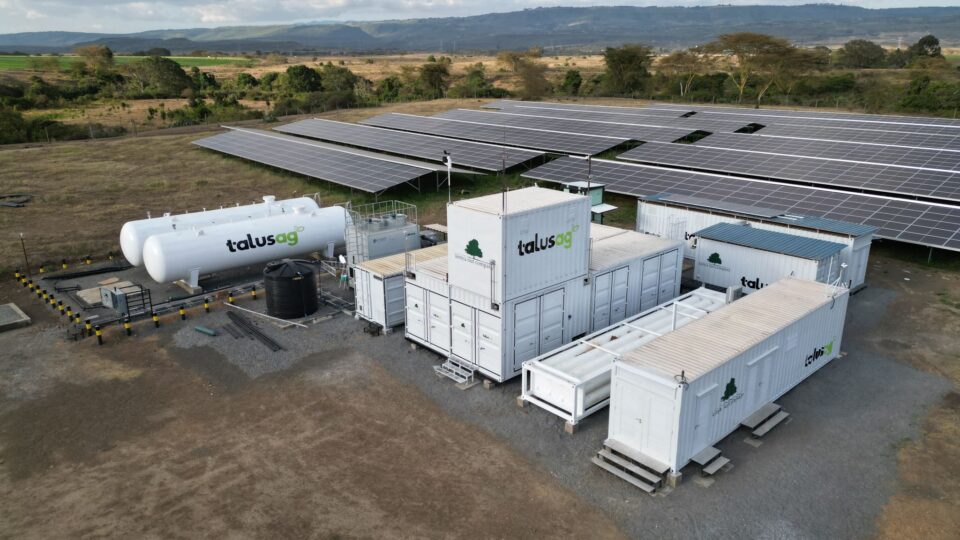
A fossil fuel-free ammonia plant in Kenya

Ammonia is a major industrial commodity.  About 70% of it is used to make fertilizer, with the rest for a wide range of industrial applications.  Ammonia is the starting point for all mineral nitrogen fertilizers. 

Typically, ammonia is a byproduct of isolating hydrogen from natural gas, which releases large amounts of carbon dioxide.  On a global scale, the climate impact of ammonia production is comparable to that of air travel.  The world needs more ammonia but really cannot afford the emissions that come with its production.

There are also political implications of ammonia production.  Because it relies so heavily on natural gas, ammonia supply is vulnerable to disruptions from events like the Russian invasion of Ukraine.  Sanctions imposed after the invasion have hindered fertilizer exports, driving up costs, especially in places like Africa.

A small fertilizer plant near Nairobi, Kenya will be the first farm in the world to produce its own nitrogen fertilizer on site that is free of fossil fuels.  The plant is being built by an American startup company Talus Renewables and will use solar power to strip hydrogen from water.  The hydrogen will then bond with nitrogen from the air to form liquid ammonia.  The plant will produce one ton of ammonia each day.

The typical bag of fertilizer in sub-Saharan Africa travels 6,000 miles to get there, which of course only adds to the environmental burden of using it as well as its cost.  By building a small green ammonia plant like the one coming online in Kenya, it is possible to locally produce a critical raw material in a carbon-free manner.

**********

Web Links

Farm in Kenya First to Produce Fossil-Free Fertilizer On Site

Photo courtesy of Talus Renewables via LinkedIn.

Earth Wise is a production of WAMC Northeast Public Radio

Floating Sea Farms | Earth Wise

October 18, 2023 By EarthWise Leave a Comment

Researchers at the University of South Australia have designed a self-sustaining solar-driven system that turns seawater into fresh water and grows crops without any involvement.  In theory, such a system could help address the growing problems of freshwater shortages and inadequate food supplies as the world’s population continues to increase.

The system can be described as a vertical floating sea farm.  It is made up of two chambers:  an upper layer similar to a greenhouse and a lower chamber for water harvesting.

Clean water is supplied by an array of solar evaporators that soak up seawater, trap the salts in the evaporator body and, heated by the sun, release clean water vapor into the air which is then condensed on belts that transfer the water into the upper plant growth chamber.

The researchers tested the system by growing broccoli, lettuce and bok choi on seawater surfaces without maintenance or additional clean water irrigation.  The system was powered entirely by solar light.

The design is only a proof-of-concept at this point.   The next step is to scale it up using an array of individual devices to increase plant production. 

The futuristic potential for such technology would be huge farm biodomes floating on the ocean.  The UN estimates that by 2050, nearly 2.5 billion people are likely to experience water shortages while the global supply of water for irrigation is expected to decline by 19%.  Nearly 98% of the world’s water is in the oceans.  Harnessing the sea and the sun to address growing global shortages could be the way to go.

**********

Web Links

Floating sea farms: a solution to feed the world and ensure freshwater by 2050

Photo, posted February 11, 2015, courtesy of Ed Dunens via Flickr.

Earth Wise is a production of WAMC Northeast Public Radio

Storing Energy In Abandoned Mines | Earth Wise

October 10, 2023 By EarthWise Leave a Comment

Using abandoned mines to store energy

An international study led by researchers from Austria has developed a novel way to store energy by transporting sand into abandoned underground mines.  The technique is called Underground Gravity Energy Storage or UGES.

As the world deploys growing amounts of wind and solar energy, it is increasingly important to find ways to accessibly and efficiently store that energy to eliminate the inherent variability of the generation.  There are many ways to store energy on a short-term basis – most commonly in batteries – but cost-effective long-term storage is still in its early stages.

The UGES technique generates electricity by lowering sand into an underground mine thereby converting the potential energy of the sand into electricity by the same regenerative braking effect used in hybrid and electric cars.  The lowering sand operates a generator.   Storing energy is accomplished by lifting the sand from the mine with electric motors to an upper reservoir where it is ready for the next cycle.  By its nature, this storage technique has an indefinite duration, unlike batteries, for example, which lose energy to self-discharge.

The main components of UGES are the mineshaft, motor/generator, sand storage sites, and mining equipment.  The deeper and broader the mineshaft, the more power can be extracted from the plant, and the larger the mine, the more energy can be stored. Mines generally already have the basic infrastructure needed and are connected to the power grid.  The researchers estimate that there is global potential of 7 to 70 TWh of storage. Total global generating capacity is currently at the lower end of that range.

**********

Web Links

Turning abandoned mines into batteries

Photo, posted October 21, 2020, courtesy of Christine Warner-Morin via Flickr.

Earth Wise is a production of WAMC Northeast Public Radio
Recycling Solar Panels | Earth Wise

September 29, 2023 By EarthWise Leave a Comment

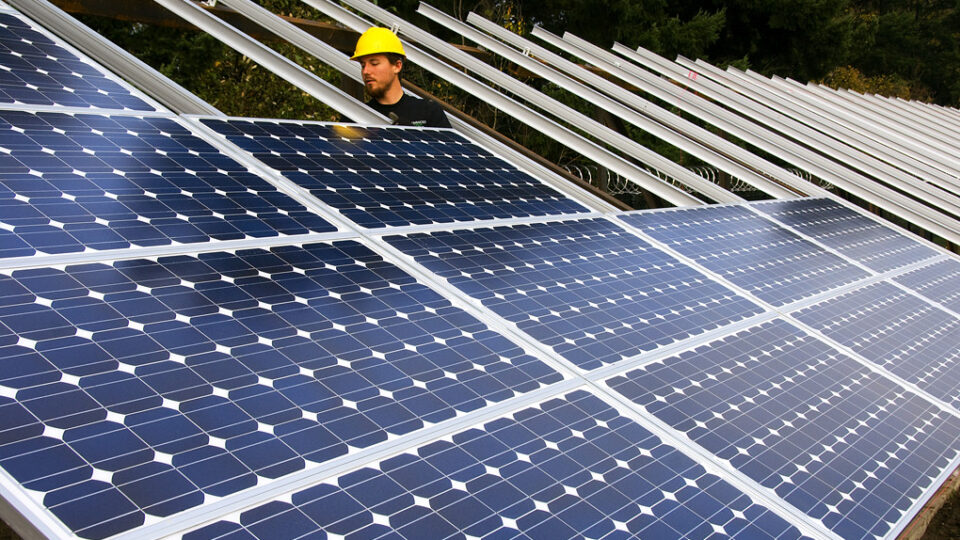
Solar panels generally have a useful life of around 20 to 25 years.  The great majority of deployed panels have been installed fairly recently, so they have a long way to go.  But the growth in solar technology dates back to the 1990s, so there are growing number of panels that have already or are shortly coming to their end-of-life.

Today, roughly 90% of solar panels that have lost their efficiency due to age, or that are defective, end up in landfills because recycling them is too expensive.  Nevertheless, solar panels contain valuable materials, including silver, copper, and crystalline silicon, as well as lower-value aluminum and glass. 

The rapid growth of solar technology means that in the coming years, large numbers of retired solar panels will enter the waste stream.  The area covered by solar panels that are due to be retired by 2030 in the U.S. alone would cover about 3,000 football fields.  Clearly, more cost-effective recycling methods are sorely needed.

Engineers at the University of New South Wales in Sydney Australia have developed a new, more effective way of recycling solar panels that can recover silver at high efficiency.  The panel frames and glass are removed leaving just the solar cells themselves.  The cells are then crushed and sieved in a vibration container that effectively separates 99% of the materials contained in them.

Silver is the most valuable material contained in solar cells.  The Australian researchers estimate that between 5 and 10 thousand tons of silver could potentially be recycled from retired solar panels by the year 2050.  But even the other materials contained in solar panels are well worth recovering if it can be done cost-effectively.

**********

Web Links

New environmentally friendly solar panel recycling process helps recover valuable silver

Photo, posted November 22, 2008, courtesy of Oregon Department of Transportation via Flickr.

Earth Wise is a production of WAMC Northeast Public Radio

Grid-Scale Gravity Energy Storage | Earth Wise

September 19, 2023 By EarthWise Leave a Comment

As wind and solar energy play a growing part in our energy system, the need for grid-scale energy storage is growing as well.  An historic form of energy storage and still the largest in installed capacity is pumped hydro storage, which makes use of the potential energy contained in having water sitting at a higher elevation where it can be released downward to operate turbine generators.  This is an effective system but is limited to places where geography cooperates.

For the past five years, a company called Energy Vault has been developing a system that uses the same principle to generate electricity but instead of pumping water to a higher elevation, it uses mechanical devices to lift heavy objects such as concrete blocks to an appropriate height.  Lowering the blocks back to the ground drives generators.

To date, Energy Vault has only built demonstration systems with a fraction of the storage capacity needed for grid-scale operation. Their EV1 Tower in Switzerland was successfully grid interconnected in 2020 and demonstrated round-trip efficiency (the fraction of the energy stored that was produced by the generators) above 75%.  Their improved EVx system is expected to do better than 80%.

This year the company, along with partners Atlas Renewable and China TIanying, is now in the first phases of commissioning a grid-scale system located outside of Shanghai, China.  The 25-MW system is built adjacent to a wind farm and a national grid interconnection site

This is the first grid-scale gravity energy storage system and is expected to be fully online in the fourth quarter of this year.  A second, similar system is now under contract to be built elsewhere in China.

**********

Web Links

First grid-scale gravity energy storage system undergoes commencement in China

Photo courtesy of Energy Vault.

Earth Wise is a production of WAMC Northeast Public Radio
Solar Panels On Canals | Earth Wise

August 25, 2023 By EarthWise Leave a Comment

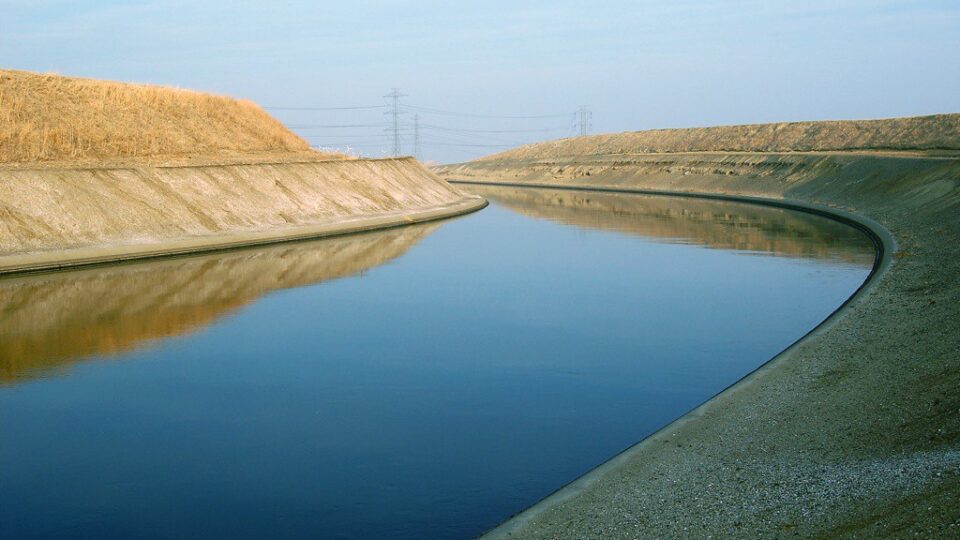
There has been growing interest in installing solar panels on top of reservoirs to make use of the available space to make electricity and reduce evaporation.  There has been far less interest in installing solar on canals and aqueducts.  But that is changing and a new project in California is part of that change.

A study by the University of California, Merced estimates that 63 billion gallons of water would be saved by covering California’s 4,000 miles of canals with solar panels.  All that installed solar would generate a significant amount of electricity.

The idea is going to be tested in the Turlock Irrigation District in Central California with Project Nexus, which is the installation of solar panels over 1.8 miles of canals that are between 20 and 110 feet wide.  The panels will sit between 5 and 15 feet off the ground.  UC Merced researchers will study impacts ranging from evaporation to water quality and use the results to make recommendations with respect to wider use of the technology.

California isn’t the first place to put solar on a canal.  India pioneered it on one of the largest irrigation projects in the world.  The Sardar Sarovar dam and canal project brings water to hundreds of thousands of villages in the dry, arid region of India’s Gujarat State.

Meanwhile, the Gila River Indian Community in Arizona received funding from the Bipartisan Infrastructure Law to install solar panels on their canals in an effort to save water and reduce stress on the struggling Colorado River.

The world of water infrastructure does not embrace change easily but covering canals with solar panels is an idea whose time may have come.

**********

Web Links

Solar panels on water canals seem like a no-brainer. So why aren’t they widespread?

Photo, posted December 11, 2005, courtesy of Dave Parker via Flickr.

Earth Wise is a production of WAMC Northeast Public Radio
Solar Power And Water | Earth Wise

August 8, 2023 By EarthWise Leave a Comment

Solar power and water conservation in California

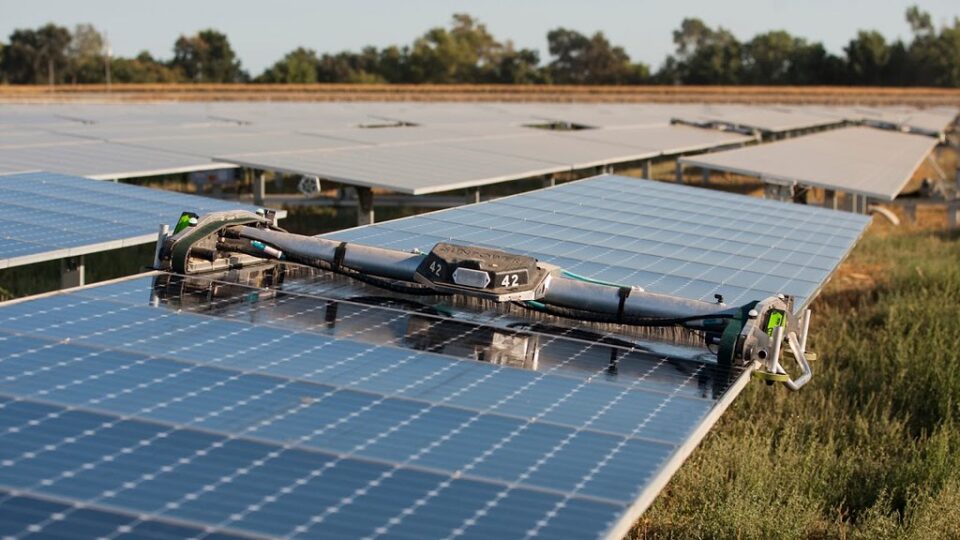
Solar power is a prime example of clean energy, but it does not come without complications and potential problems.  One problem that has arisen in the Californian desert is the effect on scarce water supplies.  Solar farms don’t use up water when they are operating but they consume it when they are being built.

One of the densest areas of solar development in North America is in a corridor along Interstate 10 near Palm Springs, California.  Multiple utility-scale solar projects are underway near the small town of Desert Center.  The projects are being built on public land overseen by the Department of Interior’s Bureau of Land Management.  The location is ideal for solar power projects:  endless sunshine, nearby transmission lines to distribute power, and a major highway for easy transportation of construction materials.

The problem is that during construction of the solar farms, the law requires developers to reduce the amount of dust being generated that can otherwise spread health problems like Valley Fever.  Preventing dust from flying requires water and lots of it.

The water comes from groundwater and building the solar farms is drying up local wells and emptying the aquifer that is part of the Chuckwalla Valley Groundwater Basin.  For the people who live in Desert Center and adjacent areas, this is a serious problem. It is also a problem for the desert ecosystem that supports palo verde and ironwood trees as well as endangered desert tortoises.

This isn’t an easy problem to solve. Seven approved new utility-scale solar projects in the area will provide enough electricity to power 2 million homes. But having enough water to build those projects won’t be easy.

**********

Web Links

Solar Is Booming in the California Desert, if Water Issues Don’t Get in the Way

Photo, posted October 16, 2017, courtesy of UC Davis College of Engineering via Flickr.

Earth Wise is a production of WAMC Northeast Public Radio
Wind And Solar Pass Coal | Earth Wise

August 3, 2023 By EarthWise Leave a Comment

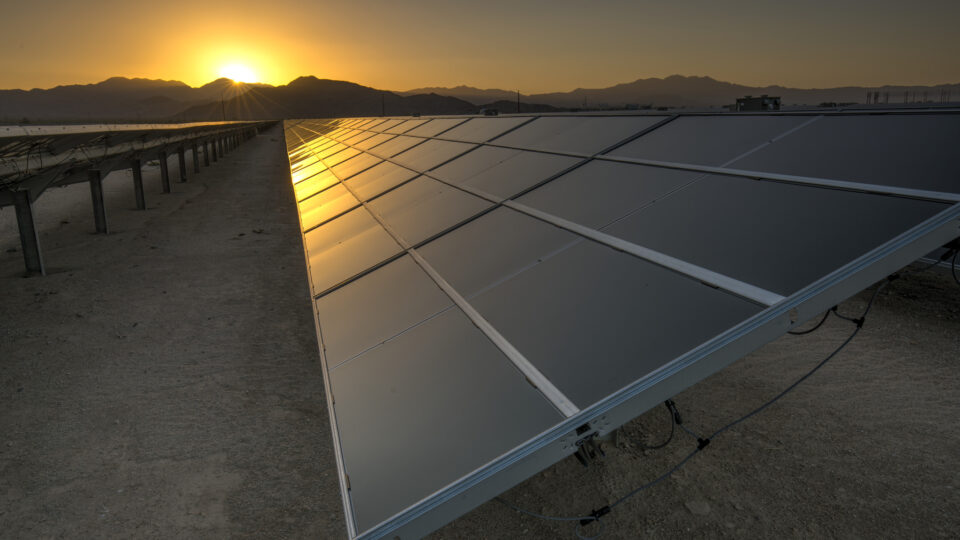
For the first five months of this year, wind and solar generated more electricity than coal in the United States.  This is a first.  Total renewable energy generation exceeded coal-fired power in both 2020 and 2022, but that counted hydroelectric power as one of the renewable sources.

This year, wind and solar alone generated a total of 252 terawatt-hours of energy through May compared with coal’s output of 249 terawatt-hours.  Hydropower generated an additional 117 terawatt-hours during that period.

While solar and wind power have been expanding at a rapid rate, the biggest change this year has been a precipitous drop in coal-fired generation due to a combination of low natural gas prices, a mild winter, and a series of coal plant retirements.

Coal generated almost half of the country’s electricity as recently as 2008.  Since then, coal has steadily declined as older coal plants shut down and were replaced by natural gas plants and renewable energy sources.  The coal industry had a bit of a reprieve last year when natural gas prices spiked in response to the disruptions in gas supplies in Europe due to the war in Ukraine.  The benchmark for natural gas prices – known as Henry Hub – was $8.81 in August 2022.  In May of this year, it was $2.15.  Given this trend, the demand for coal has steadily declined. 

The US has retired another 7% of the coal fleet – 14 gigawatts of capacity – since the start of 2022.  Meanwhile, power companies have added 22.5 GW of wind and solar capacity in just the past 12 months.

**********

Web Links

In a First, Wind and Solar Generated More Power Than Coal in U.S.

Photo, posted September 20, 2016, courtesy of Bureau of Land Management via Flickr.

Earth Wise is a production of WAMC Northeast Public Radio

  • « Go to Previous Page
  • Page 1
  • Page 2
  • Page 3
  • Page 4
  • Page 5
  • Interim pages omitted …
  • Page 17
  • Go to Next Page »

Primary Sidebar

Recent Episodes

  • An uninsurable future
  • Clean energy and jobs
  • Insect declines in remote regions
  • Fossil fuel producing nations ignoring climate goals
  • Trouble for clownfishes

WAMC Northeast Public Radio

WAMC/Northeast Public Radio is a regional public radio network serving parts of seven northeastern states (more...)

Copyright © 2026 ·