• Skip to primary navigation
  • Skip to main content
  • Skip to primary sidebar

Earth Wise

A look at our changing environment.

  • Home
  • About Earth Wise
  • Where to Listen
  • All Articles
  • Show Search
Hide Search
You are here: Home / Archives for scotland

scotland

A brief bout of bad air in Scotland

July 3, 2024 By EarthWise Leave a Comment

Explaining a brief period of poor air in Scotland

Scotland, and the UK in general, used to suffer from sulfur dioxide pollution.  Industrial and domestic emissions, especially from burning coal, contributed heavily to urban air leading to the London smog of the 1950s and the acid rain of the 1980s.  But national air pollution agreements and various international measures have been highly successful in reducing sulfur dioxide emissions.  Desulfurization of coal-fired powerplants and the introduction of ultralow sulfur fuels among other measures have decreased sulfur dioxide emission by 98% since 1970. 

As a result, it came as quite a surprise on May 31st when Edinburgh saw sulfur dioxide levels higher than had been observed in over 30 years.  The levels greatly exceeded air quality objectives for 10 hours with concentrations even creeping towards workplace exposure limits.

What happened?  For once, it was nothing that people did.  Two days earlier, a volcanic fissure eruption took place in the Reykjanes Peninsula in Iceland, some 850 miles from Edinburgh.  Because of an unusual meteorological configuration, the prevailing winds sent the plume of volcanic gases southward towards Scotland.  Had the eruption taken place 60 miles further north or happened a few hours later, the plume of gases would have missed the UK entirely and would have traveled north to the Arctic region.

Icelandic volcanic eruptions have impacted air travel in Europe on a number of occasions.  This non-explosive eruption had little impact outside of its local region, but it turned out to briefly wreak havoc in Scotland.  Fortunately, this pollution event was short-lived.

**********

Web Links

Atmospheric sulphur dioxide levels reach historic high in Scotland following Icelandic volcano eruption

Photo, posted November 17, 2021, courtesy of Catherine Poh Huay Tan via Flickr.

Earth Wise is a production of WAMC Northeast Public Radio
Record renewable energy in Scotland

March 1, 2024 By EarthWise Leave a Comment

Record renewable energy in Scotland

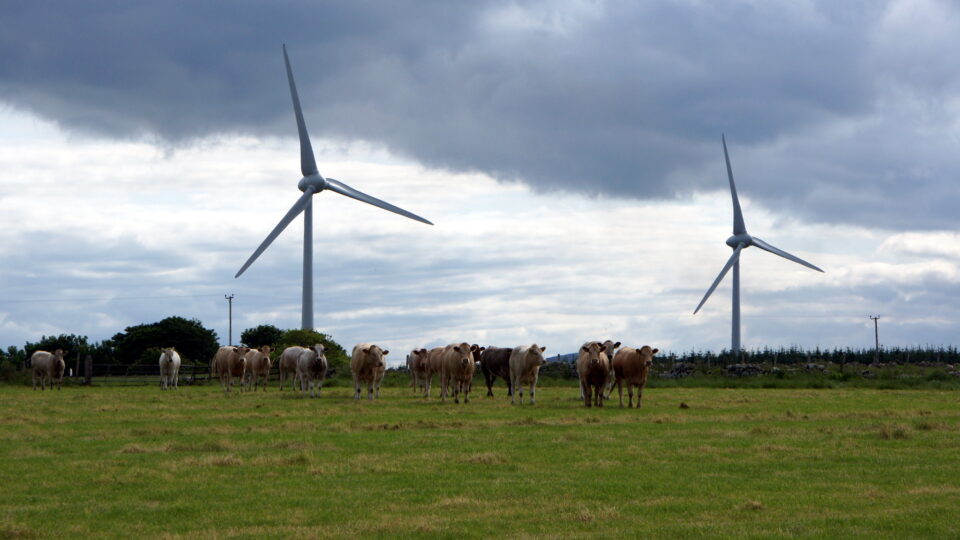
The Scottish government recently announced that in 2022, renewable technologies in that country produced the equivalent of 113% of Scotland’s electricity consumption.

Fossil fuels still supplied electricity in Scotland, helping to fill in gaps in renewable power, but the government figures showed that the growing amount of Scottish renewable generation can easily generate more power than the country uses.  Scotland has seen significant growth in wind power as well as a small drop in overall electricity consumption.

Scotland, with a population of only 5.5 million, aims to produce enough renewable power to both meet its own demand and export clean electricity to other countries.  The U.K. is the obvious potential customer, but it will need to upgrade its national power grid and develop enough capacity to store up surplus wind and solar power.

The U.K. itself is drawing less power from natural gas and coal than it has at any point in the last 66 years.  Fossil fuels supplied only 33% of British electricity in 2023 while renewables supplied 43%. 

Fossil power use in Britain peaked in 2008.  Since then, power from natural gas has fallen nearly in half while coal power has dropped by 97%.  The U.K. has aggressive decarbonization goals in place, but the current Conservative government under Prime Minister Sunak has recently set about weakening British climate policy.

Meanwhile, the Scottish government is talking about becoming a global renewables powerhouse and is making investments aimed at achieving it.

**********

Web Links

Record renewable energy output

Photo, posted July 21, 2010, courtesy of Martin Abegglen via Flickr.

Earth Wise is a production of WAMC Northeast Public Radio

Direct Air Capture | Earth Wise

October 15, 2021 By EarthWise Leave a Comment

How to make direct air capture feasible

There is a lot of interest in carbon capture and sequestration (or CCS) in the context of trapping the carbon dioxide emissions from power plants and industrial facilities.  The fossil fuel industry is especially enthusiastic about the potential for continuing to burn fuels without harming the environment.  Apart from the technical challenges, there is the looming problem of CCS adding significant costs to power generation that is already losing the economic battle to renewable sources.

Direct air capture is a different matter.   This is the idea of actively taking CO2 out of the atmosphere.  This already happens by natural means such as sequestering it in soil or forests.  But there is considerable work going on aimed at developing technology to capture atmospheric carbon dioxide in massive quantities.

This September marks the opening of a new project called “Orca” in Iceland, which will, for the time being, be the largest direct air capture system in the world.  Once it is running around the clock, Orca will remove up to 4,000 metric tons of CO2 from the atmosphere each year.

Even larger DAC plants – one in the southwestern U.S and another in Scotland – are planned to come online in the next few years.

Ultimately, the question is whether direct air capture is feasible at large enough scale and affordable cost.  The numbers are daunting.  Society releases over 30 billion metric tons of carbon dioxide into the atmosphere each year.  Removing significant amounts of that with DAC technology is an enormous challenge.  Eliminating emissions remains the most practical way to mitigate the effects of climate change.

**********

Web Links

The Dream of Carbon Air Capture Edges Toward Reality

Photo, posted November 10, 2017, courtesy of Governor Jay and First Lady Trudi Inslee via Flickr.

Earth Wise is a production of WAMC Northeast Public Radio.

The Most Powerful Tidal Turbine Is Generating Power | Earth Wise

October 1, 2021 By EarthWise Leave a Comment

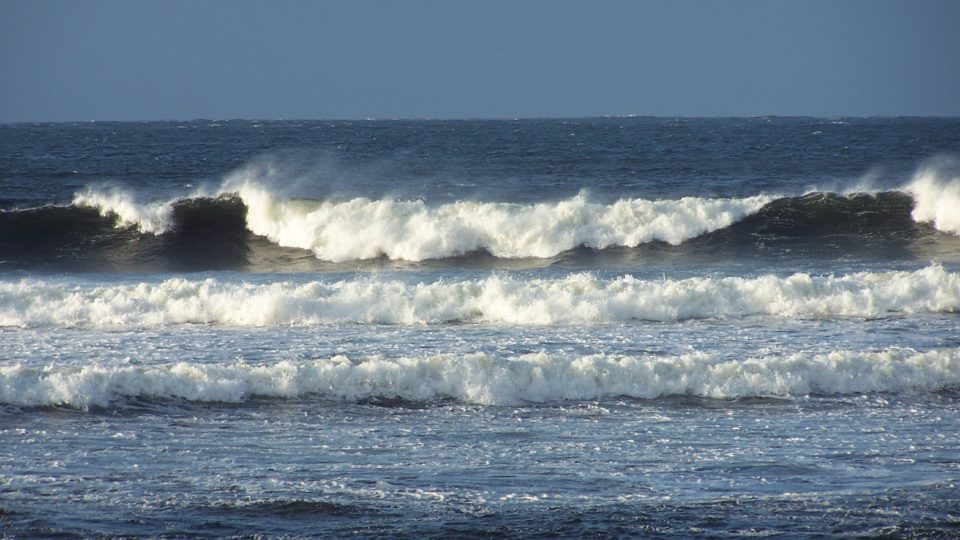
The movement of waves, tides, and currents in the ocean carry enormous amounts of energy that in principle could be harnessed and converted into electricity to help power our homes, buildings, and cities.  Oceans cover nearly three-quarters of our planet, and the most populated areas of the world are located near oceans.

Ocean energy technologies lag far behind solar and wind power and remain mostly undeveloped.  This is a result of the unique challenges standing in the way of widespread deployment.  There are the considerable expenses of early-stage development, the wide variety of technical approaches from which winning strategies have yet to emerge, and the substantial challenges of operating in the ocean environment that include the physical impact of waves and tides, powerful and unpredictable weather, and corrosion and bio-fouling from the ocean and its inhabitants.

Despite these challenges, there is ongoing progress on ocean energy.   The world’s most powerful tidal turbine has come online this past April.  Known as the Orbital O2, the floating turbine is anchored in Scotland’s Fall of Warness, where a subsea cable connects it to the European Marine Energy Center.

The turbine produces enough electricity to meet the demand of about 2,000 homes in the UK.  It is expected to operate for the next 15 years.

Built by the Scottish engineering company Orbital Marine, the O2 was financed by the ethical investment platform Abundance Investment as well as being supported by the Scottish government and the European Union.   Orbital Marine’s goal is to commercialize this technology to play a role in tackling climate change using this new green energy technology.

**********

Web Links

The world’s most powerful tidal turbine is now generating power

Photo, posted June 12, 2015, courtesy of David Stanley via Flickr.

Earth Wise is a production of WAMC Northeast Public Radio.

The World’s Largest Tidal Device | Earth Wise

June 18, 2021 By EarthWise Leave a Comment

the world's largest tidal power device will be operational soon

Most of the world’s activity in renewable energy is focused on solar and wind power.  The use of both is expanding rapidly. But there is also marine energy to be exploited.  Ocean waves and tidal movements hold huge amounts of energy.  Estimates are that the European Union could get 15% of its power from marine sources.  But ocean energy is currently expensive and there are significant technical challenges still to be overcome.

The world’s largest tidal power device will soon begin testing off the coast of Scotland.  The 680-ton, 240-foot-long, airplane-shaped device will be connected to the European Marine Energy Center for testing. 

The device, built by the Scottish company Orbital Marine Power, is designed to produce 2 megawatts of electricity, enough to power 2,000 homes.   It has a pair of 52-foot-long turbines attached to two wings.

Compared to wind and solar power, the marine energy sector has been much slower to develop because of the many difficulties of working in harsh marine environments as well as the technical challenges associated with harnessing power from waves and tides. But ocean waves and tidal movements hold enormous amounts of energy and have the advantage that they are available at all times, unlike wind and solar energy, which are variable in nature. 

Experts say that the future of tidal energy lies with arrays of floating or sea-bottom-mounted turbines that capture the energy of tidal currents in unobstructed waters.  There are various places around the world where this is an attractive opportunity, most notably in Nova Scotia’s Bay of Fundy, where the world’s most extreme tides – rising and falling more than 50 feet – contain vast amounts of power.

**********

Web Links

The World’s Largest Tidal Power Device Will Soon Begin Testing Off Scotland

Photo, posted May 18, 2017, courtesy of Chris via Flickr.

Earth Wise is a production of WAMC Northeast Public Radio.

Hydrogen-Powered Transport In Britain | Earth Wise

November 27, 2020 By EarthWise Leave a Comment

hydrogen powered train coming to the UK

The first hydrogen-powered train in the UK had its first mainline runs at the end of September.  The train, known as HydroFLEX, was developed under a project headed by the University of Birmingham under the UK government’s Department for Transport. 

Hydrogen-powered trains do not emit harmful gases but rather use hydrogen and oxygen to produce electricity, water, and heat.  The technology in the HydroFLEX train will be available by 2023 to retrofit existing diesel-powered trains and thereby de-carbonize the rail network and make train travel greener and more efficient.

The UK has ambitious plans for the use of hydrogen technology.  The Department of Transport plans to publish a master plan in January that will outline how green hydrogen could power buses, trucks, rail, maritime, and aviation transport across the UK.

The HydroFLEX trial is taking place in Tees Valley in northeastern England and the plan is for that area to become a Hydrogen Transport Hub that will include the world’s largest versatile hydrogen refueling facility.   The plans for Tees Valley involve academia, industry, and government participants.  The next stages of the HydroFLEX project are well underway with the University of Birmingham developing a hydrogen and battery-powered module that can be fitted underneath a train to allow for more space for passengers in train cars.

The UK government’s Hydrogen for Transport Program is also funding a green hydrogen refueling station and 19 hydrogen-powered garbage trucks in Glasgow, Scotland.

The UK plans to switch to a net zero economy and their current program increasingly embraces hydrogen technology to provide more sustainable, greener forms of transportation.

***********

Web Links

UK embraces hydrogen-fueled future as transport hub and train announced

Photo, posted May 15, 2019, courtesy of Jeremy Segrott via Flickr.

Earth Wise is a production of WAMC Northeast Public Radio.

Floating Turbines For Offshore Wind | Earth Wise

June 18, 2020 By EarthWise Leave a Comment

floating wind turbines

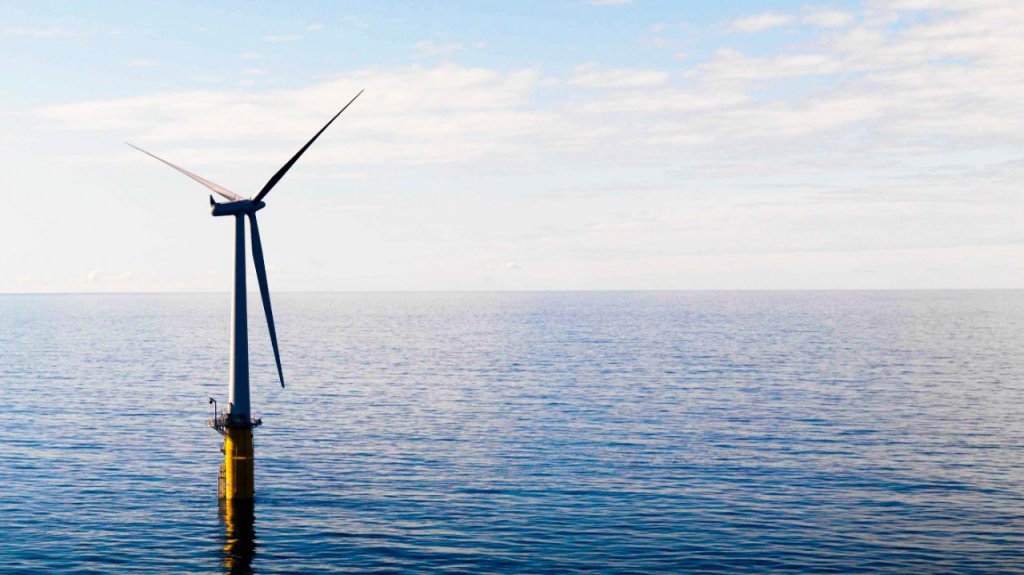
Offshore wind is big in Europe.  There are more than 5,000 offshore wind turbines across 12 European countries with a total capacity of more than 22 gigawatts.  Almost every one of those turbines sits on a long tower sunk into the seabed and bolted into place in places where the water is 60 to 160 feet deep.

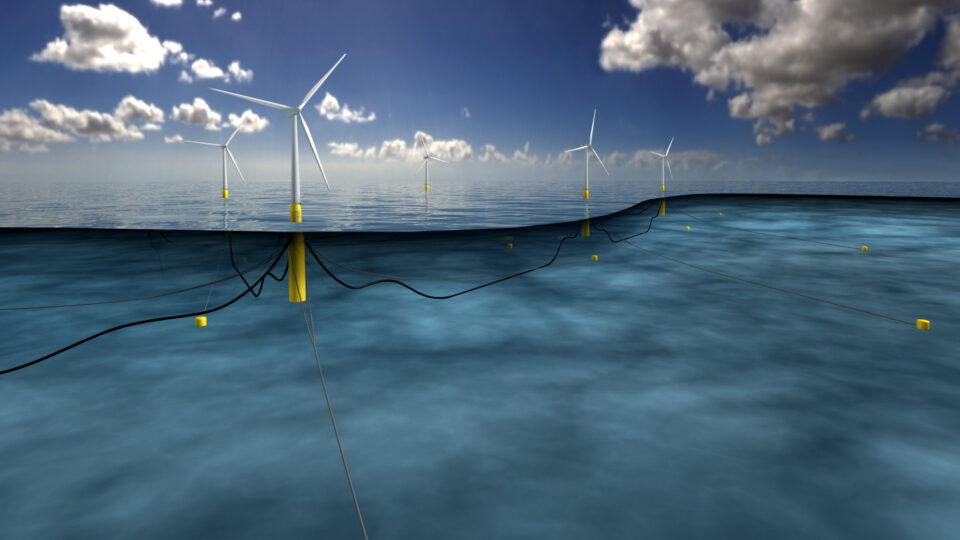
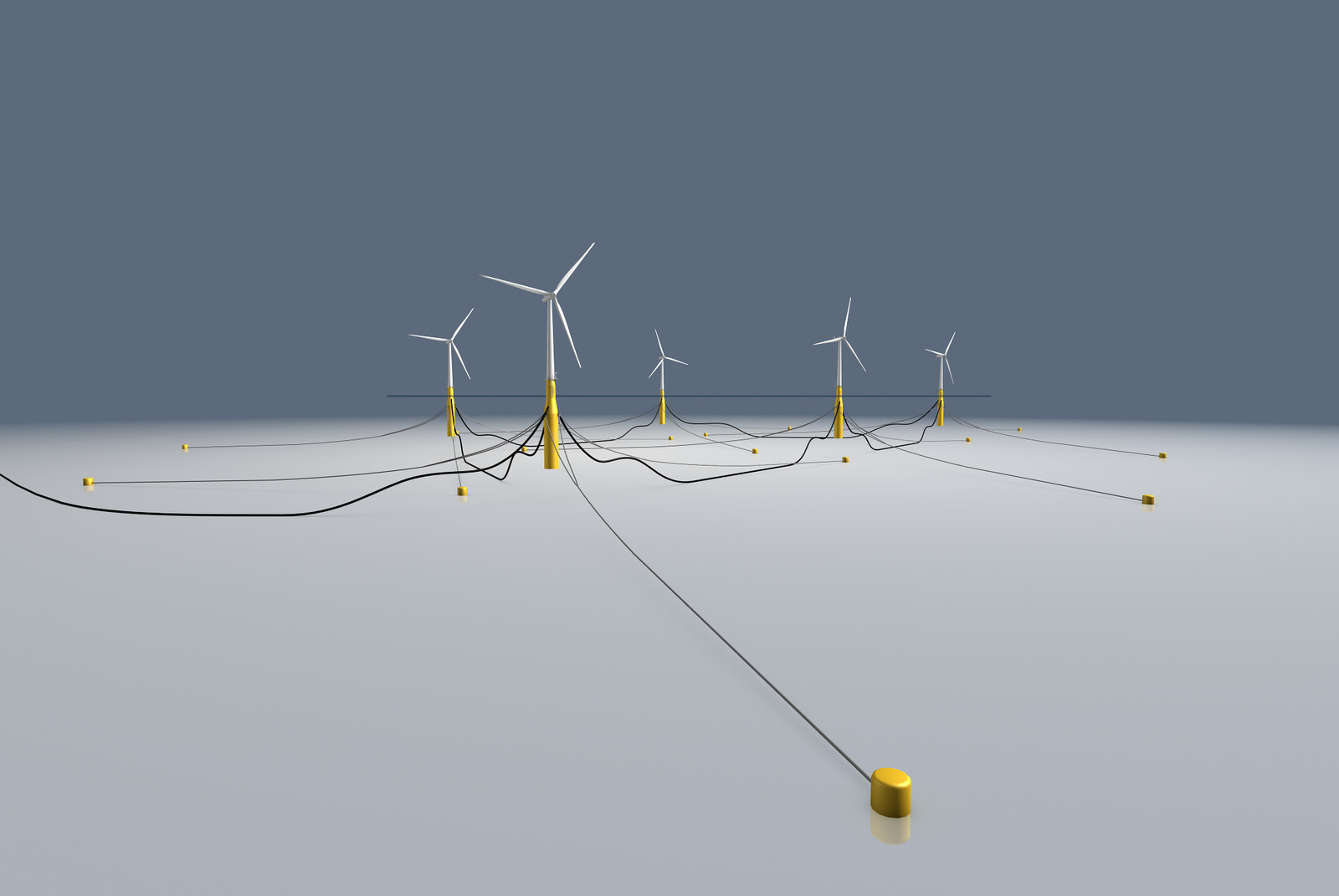
But off the coast of northern Scotland, there is the Hywind Wind Park which has five 574-foot-tall turbines located 15 miles offshore where the water is 300 feet deep.  The giant masts and turbines sit on buoyant concrete-and-steel keels that allow them to stand upright and float on the water like a giant buoy.  The giant cylindrical bases are held in place with mooring cables attached to anchors that sit on the seafloor.

A key advantage of floating turbines is that they can access outlying ocean waters up to half a mile deep, which is where the world’s strongest and most consistent winds blow.  Another advantage is that such turbines can be installed over the horizon, out of sight of coastal residents who might not like to have wind turbines visible in their scenic ocean views.

Floating wind power has enormous potential for contributing to the expansion of renewable energy.  Offshore wind is still quite a bit more expensive than land-based turbines, and the cost of electricity from distant floating turbines is more than that from near-shore wind turbines.   But all of these costs are likely to come down with improving technology and increased production volume.

There are real challenges to the expanded used of floating wind farms, but the promise of harnessing so much of the open seas for electricity generation is an attractive proposition.

**********

Web Links

Will Floating Turbines Usher in a New Wave of Offshore Wind?

Photo, posted July 17, 2017, courtesy of Crown Estate Scotland via Flickr.

Earth Wise is a production of WAMC Northeast Public Radio.

Beavers And Biodiversity

October 10, 2019 By EarthWise Leave a Comment

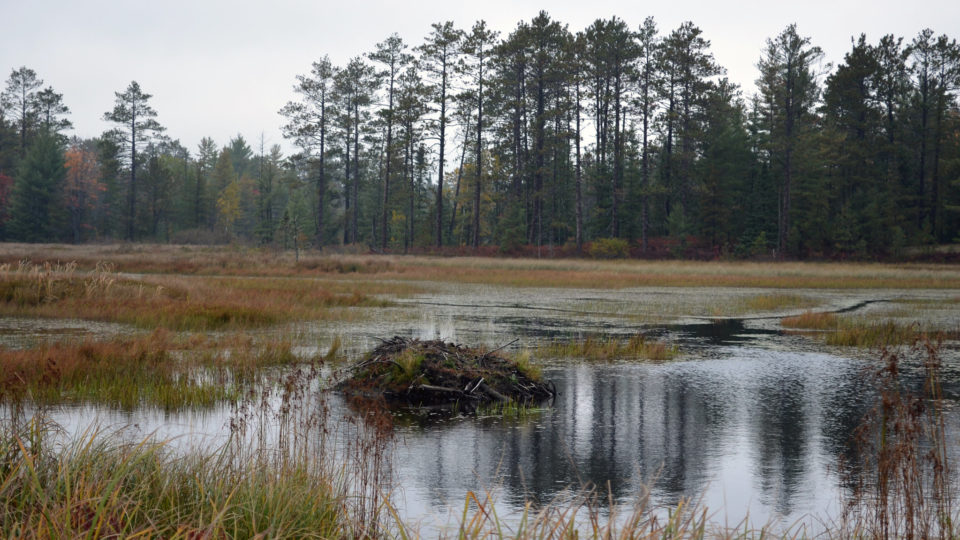
Beavers are large, semi-aquatic rodents known best for their ability to construct dams, canals, and lodges (their homes).  They are among the largest rodents in the world.  With powerful jaws and strong teeth, beavers fell trees to use as building materials, often changing their environment in ways few other animals can. But in a good way.  As it turns out, beavers are important for biodiversity. 

According to new research from the Faculty of Natural Sciences at the University of Stirling in Scotland, reintroducing beavers to their native habitats is an important step towards solving the freshwater biodiversity crisis. 

Researchers surveyed water plants and beetles in 20 wetlands in Sweden – 10 created by beavers and 10 that were not – in order to understand what impact beavers might have on the variety of plant and animal life around them. 

The research team’s findings build on previous work that has shown that beavers have an important impact on biodiversity.  This latest study discovered that the number of species found only in beaver-built ponds was 50% higher than in other non beaver-built wetlands in the same region. 

Beavers are known to be profound engineers of the environment. They use wood to build dams across rivers in order to form ponds behind them.  They do this to raise the water level in order to avoid predators, like bears and wolves. But it turns out many other plants and animals, like water plants and beetles, also benefit from their work.

According to the research team, reintroducing beavers to their native habitats should benefit the wider biodiversity and be seen as an important step towards solving the freshwater biodiversity crisis. 

**********

Web Links

Beaver reintroduction key to solving freshwater biodiversity crisis

Photo, posted October 2, 2014, courtesy of USFWS Midwest Region via Flickr.

Earth Wise is a production of WAMC Northeast Public Radio.

Scottish Wind Power

September 5, 2019 By EarthWise Leave a Comment

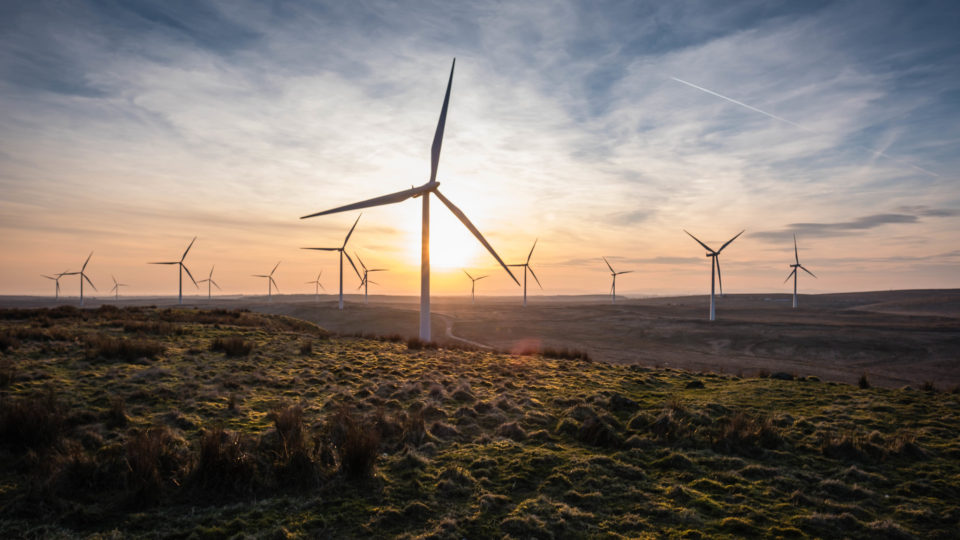
Scotland is a windy country.  Most wind turbines in the European Union produce electricity at an average of 25% of their maximum rated power as a result of the variability of wind resources.  The west and northern coasts of Scotland have an average capacity of 31% or more.  Some wind farms in Scotland have achieved more than 50% capacity over the course of a year.

As of the end of last year, Scotland had more than 8 GW of installed wind power capacity.  This included 7.8 GW of onshore wind and 623 MW of offshore wind generators.  Estimates are that more than 11 GW of onshore wind could be installed in Scotland.  The total offshore potential is far greater than that but would be much more expensive.  There are multiple large-scale wind farms proposed or under construction in Scotland.

All of this growth in wind power has led to some remarkable results.  During the first half of 2019, wind turbines in Scotland produced enough electricity to power every home in the country twice over.  Scottish wind farms generated nearly 10 million megawatt-hours between January and June, which is equal to the consumption of 4.5 million homes during that period.   That is enough to take care of all of Scotland’s homes plus a large portion of northern England’s. 

Scotland has set a target of generating half of its electricity from renewable sources by 2030 and decarbonizing its energy system almost entirely by 2050.  The recent performance of its wind power installations shows that the country might be able to reach its goal much sooner than anticipated.

**********

Web Links

Scotland’s Wind Farms Generate Enough Electricity to Power Nearly 4.5 Million Homes

Photo, posted March 27, 2017, courtesy of Ian Dick via Flickr.

Earth Wise is a production of WAMC Northeast Public Radio.

Drought In Europe

August 22, 2018 By EarthWise Leave a Comment

https://earthwiseradio.org/wp-content/uploads/2018/08/EW-08-22-18-Drought-in-Europe.mp3

Even as Californians fought giant wildfires and Japan struggled with record high temperatures, the unusual summer heat in central and northern Europe has led to the worst drought conditions in over 40 years.

[Read more…] about Drought In Europe

Conflicts In Conservation

July 20, 2018 By EarthWise Leave a Comment

https://earthwiseradio.org/wp-content/uploads/2018/07/EW-07-20-18-Conflicts-in-Conservation.mp3

In recent years there has been a great deal of discussion about animal intelligence and the idea of animal consciousness.   In the past, the notion that animals have feelings had been relegated to fringe status, but these days, a wealth of scientific findings has made it much more mainstream to entertain such ideas.

[Read more…] about Conflicts In Conservation

Tidal Turbines Set An Energy Record

October 20, 2017 By EarthWise Leave a Comment

https://earthwiseradio.org/wp-content/uploads/2017/10/EW-10-20-17-Tidal-Turbines-Set-An-Energy-Record.mp3

Two turbines in the Pentland Firth in Scotland recently set a world record for monthly energy production from a tidal stream power station.  In August, the MeyGen installation off the Caithness coast of Scotland produced 700 MWh of electricity, enough to power 2,000 homes.

[Read more…] about Tidal Turbines Set An Energy Record

A Floating Wind Farm

September 5, 2017 By EarthWise

https://earthwiseradio.org/wp-content/uploads/2017/09/EW-09-05-17-A-Floating-Wind-Farm.mp3

Offshore wind farms are becoming increasingly important around the world.  Europe has thousands of wind turbines off its coasts generating more and more of its power.  The first offshore wind farm in the U.S. opened for business last year and more are on the way.

[Read more…] about A Floating Wind Farm

Wave Energy In The United States

October 12, 2016 By WAMC WEB

https://earthwiseradio.org/wp-content/uploads/2016/10/EW-10-12-16-Wave-Energy-in-the-US.mp3

By some estimates, America’s oceans could provide enough electric power to meet a quarter of the country’s energy needs.  Despite this, until recently the contribution to the U.S. electric grid from marine energy has been exactly zero.

[Read more…] about Wave Energy In The United States

A Large-Scale Tidal Energy Plant

August 9, 2016 By WAMC WEB

https://earthwiseradio.org/wp-content/uploads/2016/07/EW-08-09-16-Large-Scale-Tidal-Power.mp3

Ocean energy is about to take an important step towards making a real impact in Scotland.  The MeyGen Tidal Array Project is reaching the final construction of its demonstration phase, which will be the first test of multiple underwater turbines sited together in a full-scale array.

[Read more…] about A Large-Scale Tidal Energy Plant

Scottish Coal

May 3, 2016 By WAMC WEB

https://earthwiseradio.org/wp-content/uploads/2016/04/EW-05-03-16-Sound-the-Bagpipes.mp3

The Scottish government has an ambitious plan to meet 100 percent of its demand for electricity from renewable sources by 2020.   Like much of the world, Scotland has produced significant amounts of its electricity by burning coal for more than 100 years.  But no longer.

[Read more…] about Scottish Coal

A Floating Wind Farm

May 2, 2016 By WAMC WEB

https://earthwiseradio.org/wp-content/uploads/2016/04/EW-05-02-16-Floating-Wind-Farm.mp3

The world’s first floating wind farm is being built 15 miles off the northeast coast of Scotland.  The Hywind pilot park, expected to come online late next year, will generate enough power for 20,000 homes.  The location will take advantage of average local North Sea wind speeds in excess of 20 miles per hour.

[Read more…] about A Floating Wind Farm

Ocean Energy Report Card

November 25, 2015 By WAMC WEB

https://earthwiseradio.org/wp-content/uploads/2015/11/EW-11-25-15-Ocean-Energy-Report-Card.mp3

Most of the world’s activity in renewable energy is focused on solar and wind power.  The use of both is expanding rapidly.

[Read more…] about Ocean Energy Report Card

Primary Sidebar

Recent Episodes

  • An uninsurable future
  • Clean energy and jobs
  • Insect declines in remote regions
  • Fossil fuel producing nations ignoring climate goals
  • Trouble for clownfishes

WAMC Northeast Public Radio
WAMC/Northeast Public Radio is a regional public radio network serving parts of seven northeastern states (more...)

Copyright © 2025 ·