• Skip to primary navigation
  • Skip to main content
  • Skip to primary sidebar

Earth Wise

A look at our changing environment.

  • Home
  • About Earth Wise
  • Where to Listen
  • All Articles
  • Show Search
Hide Search
You are here: Home / Archives for price

price

What’s The Best Way To Reduce Emissions? | Earth Wise

April 1, 2021 By EarthWise Leave a Comment

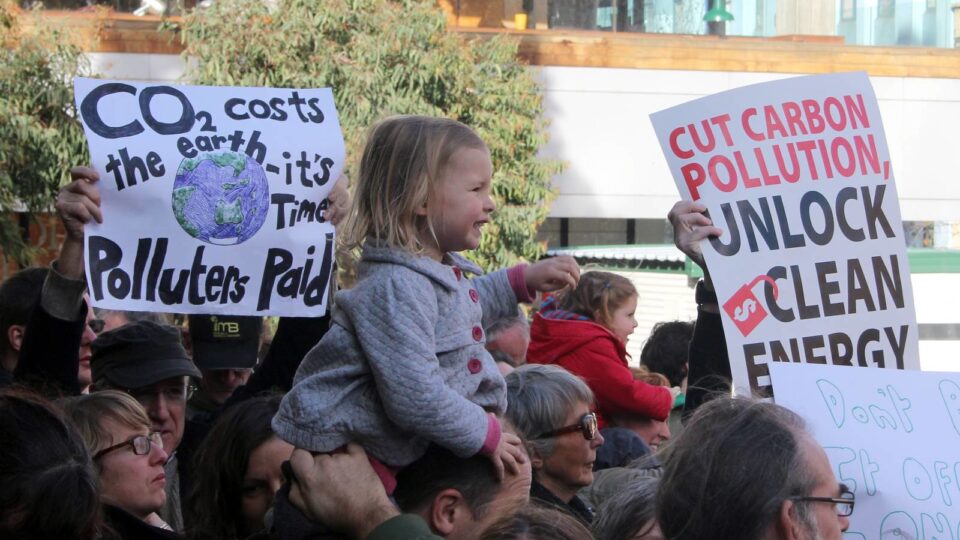
Taxing carbon is the best solution to climate change

A carbon tax is a fee imposed on the burning of carbon-based fuels, like coal, oil, and gas.  It’s one way to make the users of carbon fuels pay for the climate damage caused by releasing carbon dioxide into the atmosphere. 

According to a new study by researchers at Ohio State University, putting a price on producing carbon is the cheapest and most efficient policy change that legislators can make in order to reduce climate change-causing emissions. 

The case study, which was recently published in the journal Current Sustainable/Renewable Energy Reports, looked at the impact that a variety of policy changes would have on reducing carbon dioxide emissions from electricity generation in Texas. The researchers found that assigning a price to carbon, based on the cost of climate change, was most effective. 

The study did not look at how policy changes might affect the reliability of the Texas power system, an important consideration after the failure of the state’s power grid following winter storms in February. 

But the study did examine other policies and found that they were either more expensive or not as effective, including mandates that a certain amount of energy in a portfolio come from renewable sources.  Subsidizing renewable energy sources was also found to be less effective. 

According to researchers, market-based solutions have previously proven effective combating environmental issues.  For example, a cap-and-trade approach was used to reduce levels of sulfur dioxide, one of the chemicals that causes acid rain. 

For the sake of the climate, we should probably tax carbon. 

**********

Web Links

Want to cut emissions that cause climate change? Tax carbon

What’s a carbon tax?

Photo, posted June 5, 2011, courtesy of John Englart via Flickr.

Earth Wise is a production of WAMC Northeast Public Radio.

Using CO2 To Convert Seawater Into Drinking Water | Earth Wise

October 27, 2020 By EarthWise Leave a Comment

Converting Seawater into Drinking Water

A chemist at the University of Copenhagen has invented a technology that uses carbon dioxide to convert seawater into drinking water within minutes.  This desalination technology has the potential to replace electricity with CO2 and be used in survival gear and in large-scale industrial plants in places where people don’t have clean drinking water.

Over 800 million people worldwide lack access to clean drinking water and that number is growing rapidly.  Seawater is a vital source of drinking water in many parts of the world, but desalination faces the major challenge of being highly energy intensive.  Desalination plants use huge amounts of fossil fuel-generated electricity and therefore contribute to climate change.

The Copenhagen technology is reminiscent of a SodaStream machine.  Carbon dioxide is added to water, initiating a chemical reaction.  But instead of using it for bubbly carbonation, it is used to separate salt from water.  It works by adding a chemical called CO2-responsive diamine to saltwater.  The diamine compound binds with the added CO2 and acts as a sponge to absorb the salt, which can then be separated.  The entire process takes one to ten minutes.  Once the CO2 is removed, the salt is released again, allowing the diamine to be reused for several more rounds of desalination.

In the laboratory, the method removed 99.6% of the salt in seawater.  The technology is still being developed to lower its price and optimize the recycling process.  It is also being tested on a small scale in the form of water bottles fitted with special filters that can be used in lifeboats or in other outdoor settings.  Ultimately, it could be used to greatly reduce the energy consumption of desalination plants.

**********

Web Links

Chemist uses CO2 to convert seawater into drinking water

Photo, posted January 10, 2015, courtesy of Daniel Orth via Flickr.

Earth Wise is a production of WAMC Northeast Public Radio.

Restoring Tropical Forests | Earth Wise

September 10, 2020 By EarthWise Leave a Comment

forest restoration

Tropical forests store more than half of the world’s above-ground carbon.  For this reason, deforestation is one of the greatest threats to global climate regulation.   Once forests are degraded through partial clearing and agricultural conversion, they are often perceived as no longer having much ecological value even though degraded forests still provide important ecosystem services despite no longer storing as much carbon.

As a result, once forests have been degraded, they tend to be seen as prime candidates for full conversion to agricultural plantations.   But this is not actually the case.

An international team of scientists, including researchers from Arizona State University’s Center for Global Discovery and Conservation Science, has provided the first long-term comparison of above-ground carbon recovery rates between naturally regenerating and actively restored forests in Southeast Asia.

First of all, the research shows that allowing forests to regenerate naturally results in significant amounts of restored above-ground carbon storage.  It is definitely worthwhile to allow forests to recover rather than giving up on them and putting the land to other uses.

But more importantly, the researchers found that forest areas that undergo active restoration recover their carbon-storing ability 50% faster than naturally recovering forests.

Restoration methods include planting native tree species and thinning vegetation around saplings to improve their chances of survival.   

These findings suggest that restoring tropical forests is a viable and highly scalable solution to regaining lost carbon stocks on land.  What is needed is sufficient incentive to engage in active forest restoration.  The current price of carbon is not sufficient to pay for restoration, but as the climate crisis intensifies, this is likely to change.

**********

Web Links

Tempe to Hawaii: ASU professors teach Hawaiian youth about coral reef conservation

Photo, posted May 22, 2008, courtesy of Eric Chan via Flickr.

Earth Wise is a production of WAMC Northeast Public Radio.
An Incentive For Carbon Capture | Earth Wise

April 1, 2020 By EarthWise Leave a Comment

Convincing industries to reduce their carbon dioxide emissions has not been easy.  Many approaches have been debated, including carbon taxes, carbon tax-and-trade schemes, and passing a giant Green New Deal.  Most economists agree that putting a price on carbon is likely to be the most effective approach.

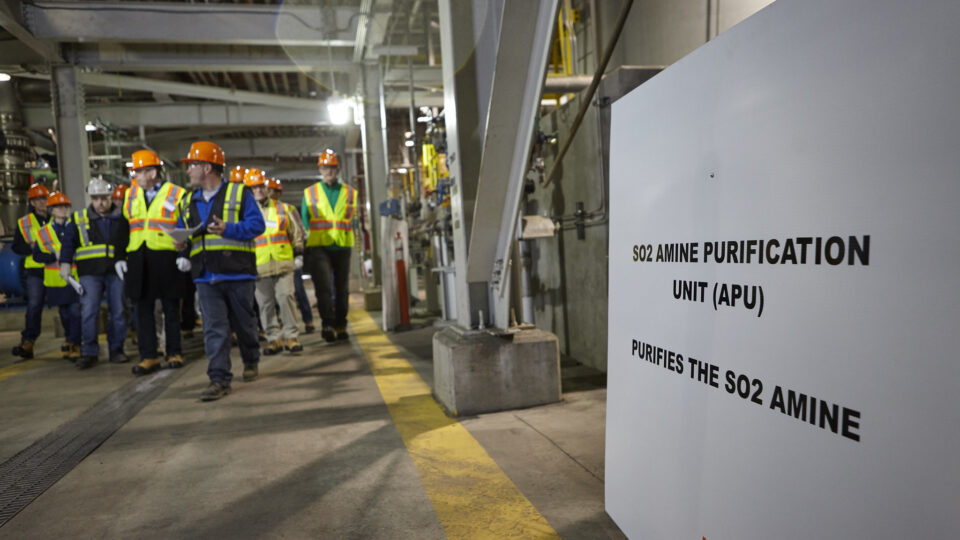
But there is already in place an adjustment to the US tax code that is more of a carrot than a stick.  It is a tax credit that is designed to make capturing CO2 a financial winner for a number of high-emitting industries.  The credit, called 45Q, was enacted in February 2018.

The 45Q credit earns industrial manufacturers $50 per metric ton of CO2 stored permanently or $35 per ton if the CO2 is put to use.  An earlier credit for capturing carbon dioxide was limited to only $20 per metric ton and was capped at 75 million tons.  Some large fossil fuel companies did make use of the earlier credit.

The new version does not have a cap, but to qualify, companies need to start constructing carbon-capture facilities within 7 years and have 12 years to claim their money.

Companies with emission-intensive operations are busy figuring out how to take advantage of the credit.  These include cement makers, steel and power plants, corn ethanol producers, and ammonia plants.

Because the credit mandates that companies start constructing their carbon-capture facilities within seven years, most companies will tend to rely on mature technologies.  But the tax credit should also drive demand for next-generation carbon-capture technologies, of which there are many under development.  Saving lots of money on taxes is likely to lure US companies to capture carbon dioxide.

**********

Web Links

45Q, the tax credit that’s luring US companies to capture CO2

Photo, posted October 2, 2014, courtesy of Sask Power via Flickr.

Earth Wise is a production of WAMC Northeast Public Radio.

A New Way To Remove CO2 From The Air

December 13, 2019 By EarthWise Leave a Comment

Researchers at MIT have developed a new way of removing carbon dioxide from a stream of air that could be a powerful tool in the battle against climate change.  The new system can pull carbon dioxide out of almost any concentration level of the gas, even including the roughly 400 parts per million level currently found in the atmosphere.

The technique is described in a new paper in the journal Energy and Environmental Science and is based on passing air through a stack of electrochemical plates. The device is essentially a large battery that absorbs carbon dioxide from the air passing over its electrodes as it is being charged up, and then releases the gas as it is being discharged.

To use it, the device would simply alternate between charging and discharging.  Fresh air or some other feed gas would be blown through the system during the charging cycle and then pure, concentrated carbon dioxide would be blown out during discharging.

The specialized battery uses electrodes coated with a compound called polyanthraquinone, which is composited with carbon nanotubes.  These unique electrodes have a binary affinity to carbon dioxide, which means that they either strongly want to capture carbon dioxide or not at all, depending upon whether the device is charging or discharging.

Carbon dioxide is important in many industries such as soft drinks and greenhouse agriculture.  With this device, the stuff could literally be pulled out of the air.  And, of course, in power plants where exhaust gas is dumped into the air, these novel electrochemical cells could be used to prevent the emission of CO2 into the atmosphere.  At the right price, this could be a game changer.

**********

Web Links

MIT engineers develop a new way to remove carbon dioxide from air

Photo, posted August 9, 2007, courtesy of William Clifford via Flickr.

Earth Wise is a production of WAMC Northeast Public Radio.

Bioacoustics

December 5, 2019 By EarthWise Leave a Comment

Researchers are increasingly placing microphones in forests and other ecosystems to monitor birds, insects, frogs, and other animals.  Advances in technology are enabling the wide-spread use of bioacoustics as an important research tool.

Studying animals in their natural habitat Is often a difficult task.  For one thing, many animals are difficult to find, and the presence of humans disrupts their behavior or even drives them off.  Remote cameras are useful, but cameras can only see what is in front of them and aren’t much use for detecting small animals, hidden animals, or ones high up in trees.

Biologists have long recognized the value of recording sound to identify animals and learn about their havior.  Animal sounds can be as definitive a means of identification as visual images and microphones can pick up the sounds from animals located anywhere within their detection range.

The two advances in technology that are turning bioacoustics into a widely used tool are a steep drop in the price of recording equipment and the rapidly expanding capabilities of user-friendly artificial intelligence algorithms.

Autonomous environmental audio recorders tended to cost between $500 and $1000 until quite recently.  Now, such equipment can be had for as little as $70.

The other big challenge is analyzing audio data.  Finding specific animal sounds among hundreds of hours of recordings is an untenably tedious task.  Identifying the characteristic sounds of specific species in crowded environments is a tricky business.  But neural network-based artificial intelligence technology is making such big data analysis quite practical and, remarkably, it is becoming quite user-friendly.

**********

Web Links

Listening to Nature: The Emerging Field of Bioacoustics

Photo, posted January 28, 2013, courtesy of Felix Uribe via Flickr.

Earth Wise is a production of WAMC Northeast Public Radio.

Protecting Canola Crops From Frost

November 20, 2019 By EarthWise Leave a Comment

Canola is one of Canada’s most valuable crops.  In fact, Canada is the world’s largest exporter of canola oil.  The international market for canola oil is $27 billion a year.  The oil is very popular because it has a relatively low amount of saturated fat, a substantial amount of monosaturated fat, and is very neutral tasting.

Canadian canola farmers worry a great deal about late season, non-lethal frosts because the frosts prevent chlorophyll – a photosynthetic pigment in the seeds – from breaking down, a process they call “degreening”.  The farmers seek to have high-quality yellow embryos at seed maturity.  When the harvest contains more than 2% of green seeds, it can no longer produce Grade No. 1 quality oil.  When green seeds are processed to extract canola oil, the chlorophyll in the seeds reduces the oil’s storability and quality.  As a result, farmers receive a lower price for frost-damaged green seed canola.  This costs Canadian farmers and estimated $150 million annually.

Researchers at the University of Calgary have developed gene-based technology to produce canola plants that can withstand late-season frost and still produce high-quality seed.  They identified a specific protein that controls chlorophyll breakdown and seed maturity.  Genetic manipulation is able to enhance the seed degreening system.  They were able to reduce the amount of chlorophyll in the genetically modified canola lines by 60% after the plants were exposed to non-lethal frost. 

Ultimately, the researchers plan to develop a method to incorporate the modification into canola hybrid lines in such a way that it will be readily accepted by consumers concerned about genetically modified organisms.

**********

Web Links

New technology helps protect valuable canola crops from frost

Photo, posted August 29, 2018, courtesy of Tinker and Rove via Flickr.

Earth Wise is a production of WAMC Northeast Public Radio.
The Energy Vault

May 28, 2019 By EarthWise Leave a Comment

A potentially transformative utility-scale energy storage technology has won a 2019 “World Changing Idea” award from Fast Company magazine.  Known as the Energy Vault, the technology seeks to be the successor to the granddaddy of grid energy storage:  pumped hydro.

Shifting water between higher and lower reservoirs is still basis of the vast majority of global grid storage capacity.  But it is limited both by its unique location needs and by environmental regulations.

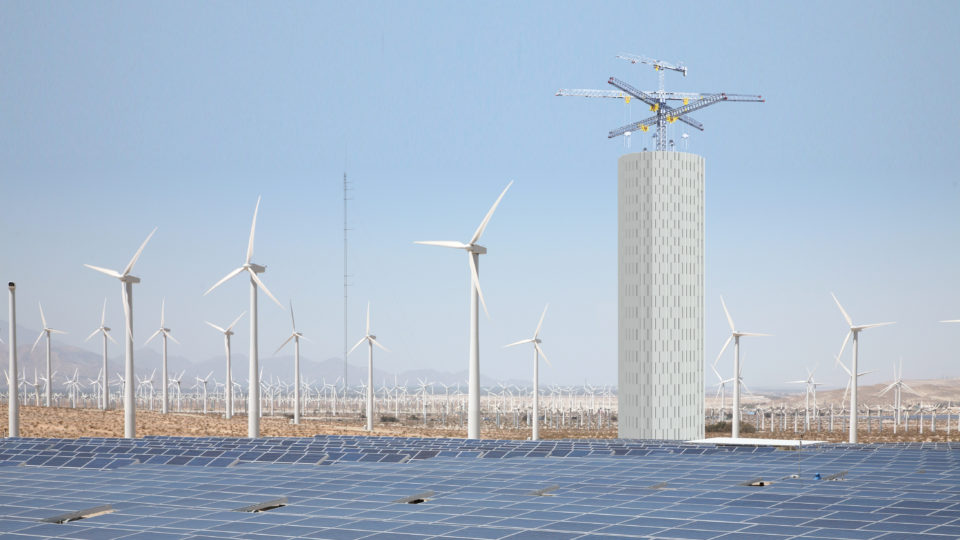
A start-up company also called Energy Vault and based in both Switzerland and Southern California has come up with an extremely creative grid storage concept.  The technology consists of a six-armed crane that stacks huge concrete blocks using a currently available source of cheap and abundant grid electricity, and then drops them down to generate electricity when needed.

The system is said to operate at about 90% efficiency and can deliver long-duration storage at half the prevailing price on the market today.

A full-scale Energy Vault plant, called an Evie, would look like a 35-story crane with six arms, surrounded by thousands of manmade concrete blocks, weighing nearly 40 tons each.  When charging, the plant will stack the blocks around itself higher and higher in a Babel-like tower.  To discharge, the cranes drop the blocks down, generating power from the speedy descent.  This configuration can deliver 4 megawatts of power and store about 35 megawatt-hours of energy.

There isn’t even a factory needed.  The company would deliver a crane from a manufacturer.  The crane will then assemble the blocks onsite using recycled concrete.  Operation is then fully automated.  The system is expected to run for 30 or 40 years.

So far there is only a one-seventh scale demo unit in Switzerland.  But this is a very intriguing idea.

**********

Web Links

Energy Vault Wins World Changing Idea Award 2019 from Fast Company for Transformative Utility-Scale Energy Storage Technology

Photo courtesy of Energy Vault.

Earth Wise is a production of WAMC Northeast Public Radio.
Coal Isn’t Even Cheap Anymore

May 15, 2019 By EarthWise Leave a Comment

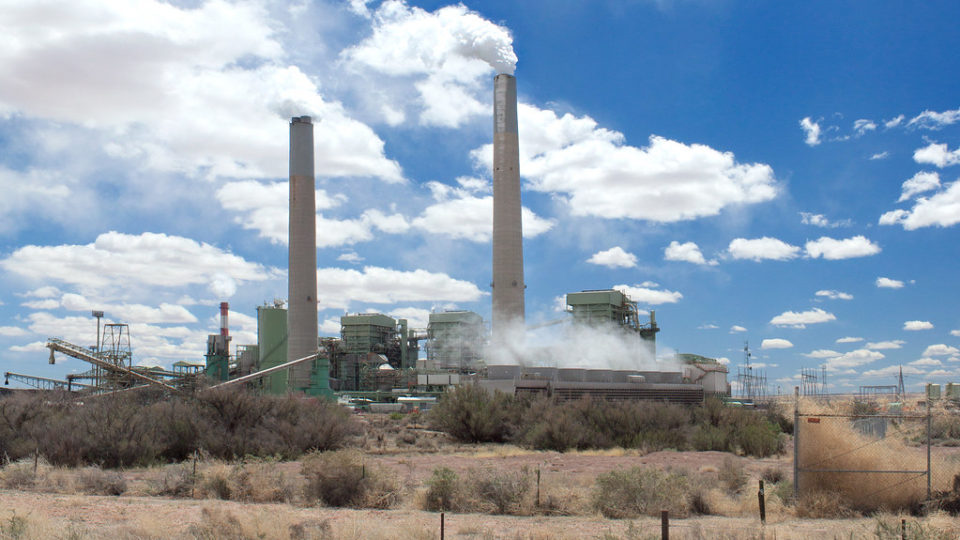
Coal has historically been very cheap compared with many other energy sources and the reason is that it is so plentiful.  The United States has especially abundant quantities of the stuff – perhaps a quarter of the world’s estimated recoverable reserves.  Estimates are that at the rate at which we are currently using coal here, the remaining reserves would last about 325 years. 

That would be great, of course, if the use of coal was not relentlessly destructive to the environment, hazardous to human health, and a major driver for global warming.  Despite all of that, the Trump administration is a big booster of coal.

But coal has little chance of holding on to its current status, much less having some kind of renaissance.  According to a new report from renewables analysis firm Energy Innovation, nearly 75% of coal-fired power plants in the United States generate electricity that is more expensive than local wind and solar resources.   Wind power, in particular, can at times provide electricity at half the cost of coal.

Wind and solar power are growing by leaps and bounds.  The Guardian reported that by 2025, enough wind and solar power will be generated at low enough prices in the U.S. that it could replace 86% of the entire U.S. coal fleet with lower-cost electricity.

It has been known for some time that there are places where the so-called coal crossover has already taken place.   But this is actually far more widespread than previously thought.  Substantial coal capacity is currently at risk in North Carolina, Florida, Georgia and Texas.  By 2025, Indiana, Michigan, Ohio, and Wisconsin will join their ranks.

The biggest threat to coal is not regulators or environmentalists; it is economics.

**********

Web Links

Renewables Cheaper Than 75 Percent of U.S. Coal Fleet, Report Finds

Photo, posted May 1, 2011, courtesy of Alan Stark via Flickr.

Earth Wise is a production of WAMC Northeast Public Radio.

Growing Rocks To Store Carbon

April 24, 2019 By EarthWise Leave a Comment

The US Geological Survey recently published a comprehensive review of geological carbon storage in sedimentary rocks through carbon mineralization.   That is the process by which carbon dioxide becomes a solid mineral, such as a form of carbonate.  Certain rocks undergo a chemical reaction when exposed to carbon dioxide and turn into different minerals as a result.

The idea is to use carbon mineralization as a way to permanently store carbon dioxide that has been captured from power plant emissions, other industrial activities, or even directly from the atmosphere.

Two basic approaches are injecting the CO2 deep underground or exposing it to crushed rocks at the surface.  The two types of rock best suited for mineralization through injection are basalt and various ultramafic rocks.  Pilot studies have shown that injection into basalt can lead to mineralization in under two years.

Exposing carbon dioxide to crushed rock at the surface generally makes use of crushed mining waste.  Mineralization can be much faster in this case because there is more surface area on the crushed rock where mineralization occurs.  (However, the quantities of rock available at the surface are much less than what exists deep underground).

Like all carbon capture and storage approaches, the key consideration is cost.  The USGS study estimates that underground injection would cost around $30 per metric ton of CO2.  The crushed rock approach might only cost $8 per metric ton, but that assumes the crushed rock is already available.  If it must be newly mined, the costs would obviously go up significantly.  To put this into perspective, a typical car produces around 4 metric tons of CO22 per year.  So, it would cost somewhere between $30 and $120 a year to eliminate the emissions from one car.  Perhaps that is a price we need to pay until we ditch gasoline cars.

**********

Web Links

How Growing Rocks Can Help Reduce Carbon Emissions

Photo, posted October 17, 2011, courtesy of Glen Bledsoe via Flickr.

Earth Wise is a production of WAMC Northeast Public Radio.

The Price of Chocolate

April 18, 2019 By EarthWise Leave a Comment

The Ivory Coast has lost more than 80% of its forests in the last 50 years, mainly as a result of cocoa production.

The Ivory Coast is a West African country the size of New Mexico and it produces more than a third of the world’s cocoa.  But around 40% of the country’s cocoa crop – supplying more than a tenth of the world’s chocolate bars – is grown illegally in the country’s national parks and 230 supposedly protected government-owned forests. 

Over the decades, as many as one million landless people from drought-stricken places like Mali and Burkina Faso moved into national parks and protected forests and started farming cocoa.  The Marahoue National Park alone has 30,000 illegal inhabitants.

Most cocoa is grown in monocultures of what is known as the full-sun system, which requires the removal of all surrounding trees.  As a result, many allegedly protected areas have been completely converted into farms.  Most of the cocoa in the Ivory Coast is grown on small farms, typically plots of 7 to 10 acres.  The farmers are caught in an exploitative and corrupt system of cocoa trading and land appropriation, and most earn less than a dollar a day.  Meanwhile, government agencies charged with protecting the forests are more interested in collecting bribes than safeguarding woodlands.

The Ivory Coast government is unveiling a plan to actually remove protection from most of its remaining forests and hand them over to the world’s chocolate traders.    The claim is that this will protect other forests by improving cocoa productivity in already deforested areas.  Needless to say, conservation groups are dubious that the new plan will positively impact an already terrible situation.

**********

Web Links

The Real Price of a Chocolate Bar: West Africa’s Rainforests

Photo, posted April 17, 2015, courtesy of Tom Coady via Flickr.

Earth Wise is a production of WAMC Northeast Public Radio.

Another Way To Make Solar Cells

March 21, 2019 By EarthWise Leave a Comment

Millions of rooftops now contain solar panels and the majority of the solar cells that make up those panels today are made from silicon.  Silicon solar cells require expensive, multi-step processing conducted at very high temperatures in special clean room facilities.  Despite these complications, the price of solar panels has continued to drop dramatically over the years.

But even as the price of solar cells gets lower and lower, there are still widespread efforts to find even better ways to make them.   One of those ways is with perovskite solar cells.  Perovskites are materials with a characteristic crystal structure and are quite common in nature.  Perovskites can be formed with a wide range of elements and can exhibit a variety of properties.

They were first used to make solar cells about 10 years ago and those first cells were unimpressive in most respects.  However, there has been steady progress since that time.  The potential advantages of perovskite solar cells are that they can be made from low-cost materials and can be manufactured using liquid chemistry, a far cheaper process than what is used to make silicon cells.

Researchers at MIT and several other institutions have recently published the results of research on how to tailor the composition of perovskite solar cells to optimize their properties.   What used to be a trial-and-error process can now become much more engineered and should lead to perovskite solar cells with performance that could exceed that of silicon cells.

Silicon solar panels are a huge, worldwide industry and displacing them in favor of an alternative technology is a tall order.  But if perovskite cells can be optimized for large-scale manufacturability, efficiency and durability, they could definitely give silicon a run for its money.

**********

Web Links

Unleashing perovskites’ potential for solar cells

Photo courtesy of Ken Richardson/MIT.

Earth Wise is a production of WAMC Northeast Public Radio.

More Renewables Without Storage In Texas

February 27, 2019 By EarthWise Leave a Comment

Texas has a Texas-sized appetite for electricity and relies most heavily on natural gas, coal and nuclear power to get it.  But in recent times, wind power has grown tremendously in the Lone Star State and it has already leapfrogged past nuclear power.  Coal could be the next domino to fall.

In the past few years, solar power has become competitive with wind in terms of price.  Texas is a large, coastal state in the sunny southwestern U.S. and has significant solar resources.  As a result, the amount of solar power in Texas is now growing rapidly.

In order for a combination of solar and wind power to address the bulk of electricity demand in Texas, there needs to be a way to provide reliability that these intermittent sources don’t necessarily provide.  Energy storage is a solution that ultimately is likely to be part of most electricity grids, but currently it is still expensive on a utility scale.

A new study from Rice University looked at the complementarity of solar and wind power in Texas.  Complementarity refers to balancing the output of solar and wind systems.  The peak performance of wind and solar occurs at very different times in different regions of the state.  The study suggests that the right mix of solar and wind systems in the right parts of Texas could provide a continuously reliable energy system.  On both a yearly and daily basis, wind and solar power resources in Texas complement each other in terms of peak performance.  It is a matter of locating the solar power and wind farms in the right places.

With the Texas solar industry really starting to boom, there is a real opportunity to integrate far more renewable energy into the Texas grid.

**********

Web Links

More Renewables with Less Energy Storage: Texas Shows How

Photo, posted June 8, 2018, courtesy of Laura Lee Dooley via Flickr.

Earth Wise is a production of WAMC Northeast Public Radio.

The Fight For Greener Cars

June 28, 2018 By EarthWise Leave a Comment

https://earthwiseradio.org/wp-content/uploads/2018/06/EW-06-28-18-The-Fight-for-Greener-Cars.mp3

U.S. automakers have always been reluctant partners in the nation’s efforts to reduce air pollution and improve fuel efficiency. There have been struggles for decades between the carmakers and the government in setting Corporate Average Fuel Economy (or CAFÉ) standards.  During the Obama administration, some of the most demanding fuel economy and emissions standards were mandated.

[Read more…] about The Fight For Greener Cars

Big Bucks For Meatless Meat

June 12, 2018 By EarthWise Leave a Comment

https://earthwiseradio.org/wp-content/uploads/2018/06/EW-06-12-18-Big-Bucks-for-Meatless-Meat.mp3

In recent years, alternative protein startup companies have been all the rage among investors.  Last year, these companies attracted a least a quarter of a billion dollars in funding and the interest is not slowing down. 

[Read more…] about Big Bucks For Meatless Meat

A Milestone For Energy Storage

April 24, 2018 By EarthWise Leave a Comment

https://earthwiseradio.org/wp-content/uploads/2018/04/EW-04-24-18-A-Milestone-for-Energy-Storage.mp3

The United States has now added the capacity to store a billion watts of power for one hour and it may double that total by the end of this year.   According to the firm GTM Research, the energy storage industry – previously nearly invisible – is undergoing rapid growth.  Much of the growth has been in homes with products like the Tesla Powerwall but has also been on the scale of the electric grid, where power companies can use storage to control when to deploy excess electricity generated from renewable sources such as solar power.

[Read more…] about A Milestone For Energy Storage

A Giant Wind Farm for Oklahoma

April 3, 2018 By EarthWise Leave a Comment

https://earthwiseradio.org/wp-content/uploads/2018/03/EW-04-03-18-A-Giant-Oklahoma-Wind-Farm.mp3

American Electric Power (AEP) is investing $4.5 billion to build the largest wind farm in the United States at a site in the Oklahoma panhandle.  Known as the Wind Catcher Energy Connection, the 2-gigawatt wind project will include 800 2.5-megawatt wind turbines built by General Electric.

[Read more…] about A Giant Wind Farm for Oklahoma

Myths About Organic Food

January 22, 2018 By EarthWise Leave a Comment

https://earthwiseradio.org/wp-content/uploads/2018/01/EW-01-22-18-Myths-About-Organic-Food.mp3

There is much to be said in favor of organic food.  The organic produce industry took in $65 billion in 2016 and that farming method is clearly increasingly popular and is here to stay.   Nevertheless, there are various misconceptions and inaccuracies related to organic food.

[Read more…] about Myths About Organic Food

Economics Of Solar And Wind Power

January 5, 2018 By EarthWise Leave a Comment

https://earthwiseradio.org/wp-content/uploads/2018/01/EW-01-05-18-Economics-of-Solar-and-Wind-Power.mp3

It is well-known that the cost of both solar and wind energy has been dropping dramatically in recent years.  That trend is largely responsible for the rapid growth of both power sources.   A recent study has revealed just how remarkable the economic progress has been.

[Read more…] about Economics Of Solar And Wind Power

An Internal Price On Carbon

December 11, 2017 By EarthWise Leave a Comment

https://earthwiseradio.org/wp-content/uploads/2017/11/EW-12-11-17-An-Internal-Price-on-Carbon.mp3

As the world looks to reduce carbon emissions, many companies are dealing with paying for their carbon emissions as part of the cost of doing business.  But apart from the situations in which companies already are required to pay for their carbon emissions, a growing number of companies now build carbon pricing into their business plans even if they are not yet directly paying for their emissions.  This practice is known as putting an internal price of carbon into their business plan.

[Read more…] about An Internal Price On Carbon

  • « Go to Previous Page
  • Page 1
  • Page 2
  • Page 3
  • Go to Next Page »

Primary Sidebar

Recent Episodes

  • An uninsurable future
  • Clean energy and jobs
  • Insect declines in remote regions
  • Fossil fuel producing nations ignoring climate goals
  • Trouble for clownfishes

WAMC Northeast Public Radio

WAMC/Northeast Public Radio is a regional public radio network serving parts of seven northeastern states (more...)

Copyright © 2026 ·