• Skip to primary navigation
  • Skip to main content
  • Skip to primary sidebar

Earth Wise

A look at our changing environment.

  • Home
  • About Earth Wise
  • Where to Listen
  • All Articles
  • Show Search
Hide Search
You are here: Home / Archives for change

change

Plant-Based Bottles | Earth Wise

June 30, 2020 By EarthWise Leave a Comment

Single-use plastic soda and water bottles are a real problem.  Every year, billions of them are produced – comprising nearly 300 million tons of plastic that mostly ends up in landfills or in the ocean.   This discarded plastic ends up on remote islands, in the snow atop mountains, and in trenches in the deepest parts of ocean.

There has been increasing pressure on beverage companies to put an end to this environmental disaster, but the convenience and economy of disposable bottles is just too attractive.

These bottles are made of plastic derived from oil and once they are produced, they take decades or even centuries to decompose.  Recycling them is a not-starter because it is cheaper to just make new ones.

A possible solution has emerged.  A Dutch company called Avantium has found a way to take plant sugars and transform them into a plastic capable of standing up to carbonated beverages like soda and beer but that will also break down in as little as a year in a composter or 3 years if left exposed to the elements.

Coca Cola and Carlsberg are working with Avantium to develop new drink packaging based on their material that could be in stores as soon as 2023.  The new packaging would be quite different from what we use today.  Instead of a clear or tinted bottle, beverages would come inside a cardboard container with a liner made of plant-based plastic.

It may take a while for people to get used to the change, but we have already managed to get used to milk, juice and other liquids coming in cardboard containers instead of glass or plastic bottles.  The benefits to the planet would make the effort well worthwhile.

**********

Web Links

Plant-Based Bottles Could Degrade In One Year

Photo courtesy of Avantium.

Earth Wise is a production of WAMC Northeast Public Radio.

Living In Extreme Heat | Earth Wise

June 3, 2020 By EarthWise Leave a Comment

extreme heat from climate change

Global climate change has already left observable effects on the planet.  Glaciers have shrunk, trees are flowering sooner, plant and animal ranges have shifted, and so on. Many effects of climate change that scientists had predicted in the past are now occurring.  The loss of sea ice, intensifying heat waves, and accelerating sea level rise are some examples.

According to a new study recently published in the journal Proceedings of the National Academy of Sciences, climate change is going to affect humans earlier, harder, and more widely than previously projected.  The research team found that one billion people will be either displaced or endure insufferable heat for every one degree Celsius rise in global temperatures.  

Under a worst case climate scenario, land that one third of the world’s population currently calls home will be as hot as the hottest parts of the Sahara desert within 50 years.  Even under a more optimistic climate outlook, 1.2 billion people will still be exposed to temperatures outside the climate niche in which humans have thrived for at least 6,000 years.

The majority of the human population has always lived in regions where the average annual temperatures were between 43 degrees Fahrenheit and 82 degrees Fahrenheit.  These are ideal temperatures for human health and for food production.  But this temperature range is shrinking and shifting as a result of climate change. 

The study’s authors predict there will be more change in the next 50 years than there has been in the past 6,000 years.  They hope their findings will convince policymakers to accelerate their plans for emissions reductions and other climate mitigation strategies.   

**********

Web Links

Future of the human climate niche

One billion people will live in insufferable heat within 50 years – study

Photo, posted November 22, 2008, courtesy of Ronnie Finger via Flickr.

Earth Wise is a production of WAMC Northeast Public Radio.
Why Choose Chicken Over Beef?

July 22, 2019 By EarthWise Leave a Comment

Food production is a major driver of climate change.  It’s responsible for more than a quarter of all greenhouse gas emissions.  But the environmental impact of different foods varies greatly, and making seemingly insignificant changes can actually have significant impacts. 

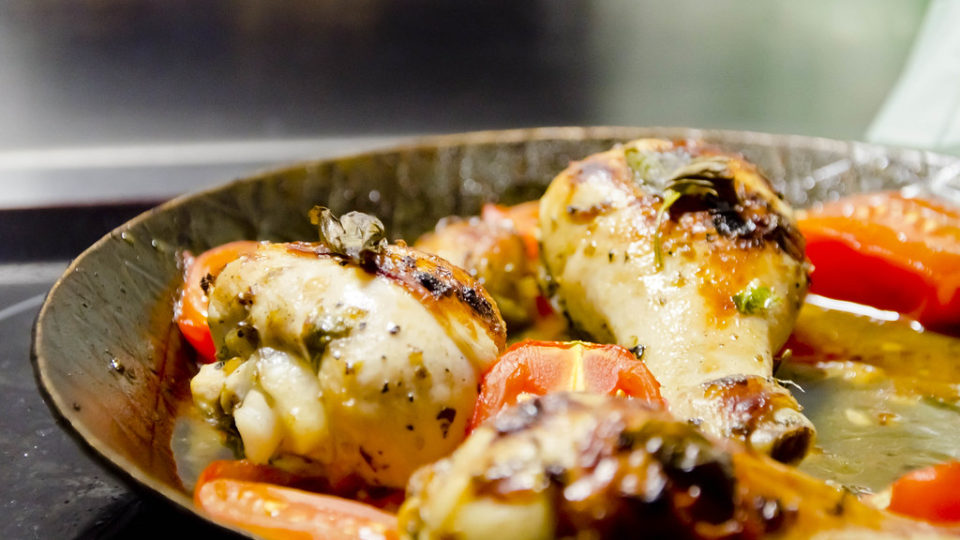
According to a first-ever national study of U.S. eating habits and their carbon footprints, choosing chicken over beef will cut your dietary carbon footprint in half.

The National Health and Nutrition Examination Survey asked more than 16,000 participating Americans to name all the foods they consumed in the past 24 hours. The research team then calculated the carbon footprint of what people said they ate.  If a respondent consumed broiled beef steak, for example, researchers calculated what the carbon footprint would have been had broiled chicken been consumed instead.   

The study’s findings illustrate how making one simple substitution can significantly reduce a person’s dietary carbon footprint.  A diet’s carbon footprint is the amount of greenhouse gas emissions that result from the energy, fertilizer, land use, and other inputs necessary to produce food.

In general, animal-based foods have a bigger carbon footprint than plant-based foods.  For example, producing beef uses 20 times the land and emits 20 times the emissions as growing beans (per gram of protein), and requires 10 times more resources than producing chicken. 

According to the World Resources Institute, keeping the increase in global warming below 2°C will be impossible without limiting the global rise in meat consumption. 

Last year, the EAT-Lancet Commission report found that a radical transformation of the global food system was needed because it’s threatening the stability of the climate. 

Make a change – big or small – today. 

**********

Web Links

Choosing chicken over beef cuts our carbon footprints a surprising amount

Photo, posted August 30, 2011, courtesy of Ken Hawkins via Flickr.

Earth Wise is a production of WAMC Northeast Public Radio.
Shipping And Invasive Species

May 7, 2019 By EarthWise Leave a Comment

The increasing numbers of invasive species around the world are a major driver of biodiversity change and cause billions of dollars in economic damages annually.  Climate change is a major factor in the spread of invasive species, but a new study by McGill University suggests that global shipping growth will far outweigh climate change in the spread of non-indigenous pests to new environments in the coming decades.

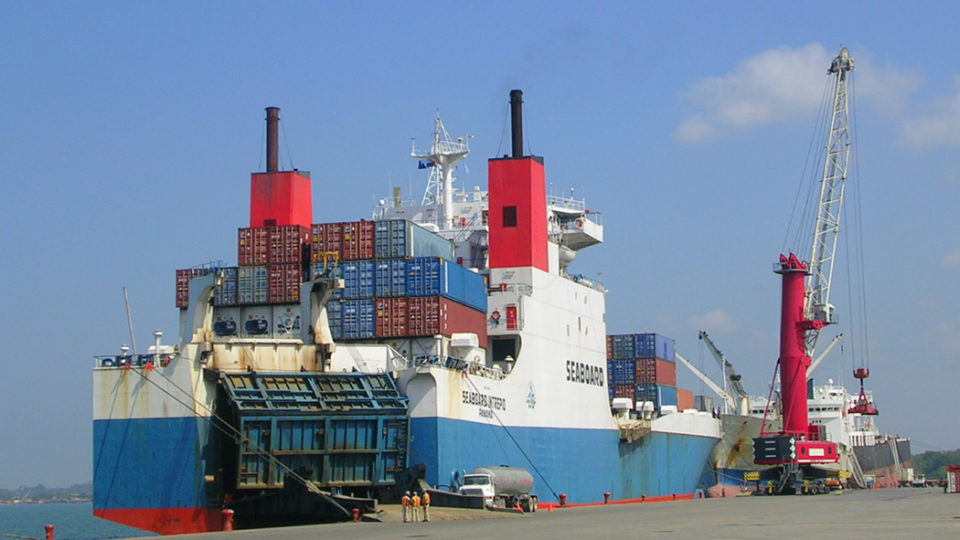
One of the most significant ways in which the disparate regions of the world are interconnected is via transportation networks.   The global shipping network is the primary means by which materials and goods are moved worldwide, accounting for over 80% of world trade.  And for this reason, the global shipping network is responsible for much of the introduction of non-indigenous species across the planet.

Living organisms are often transported through ballast water, which is taken up to stabilize cargo vessels.  Other species are transported by biofouling, whereby they attach to the hulls of ships.  Taken together, these two pathways account for anywhere between 60 and 90% of marine bioinvasions.   (Terrestrial invaders are generally moved as a byproduct of shipping, for example by infesting wood packaging material).

The McGill study looked at trends in global shipping and how socioeconomic factors are driving change.  For example, China’s share of global container throughput has gone from 1.4% in 1990 to 20.1% in 2013.  So, the distribution and patterns of shipping have been changing dramatically and with it the spread of non-indigenous species.

Awareness of this issue is increasing.  For example, there have been policy initiatives such as the International Ballast Water Management Convention that is an effort to control bio-invasions through measures such as ballast exchange.  We need to take measures to limit the unintentional spread of species.

**********

Web Links

Global forecasts of shipping traffic and biological invasions to 2050

Photo, posted December 3, 2009, courtesy of Roger W via Flickr.

Earth Wise is a production of WAMC Northeast Public Radio.
Whopping Change

April 10, 2019 By EarthWise Leave a Comment

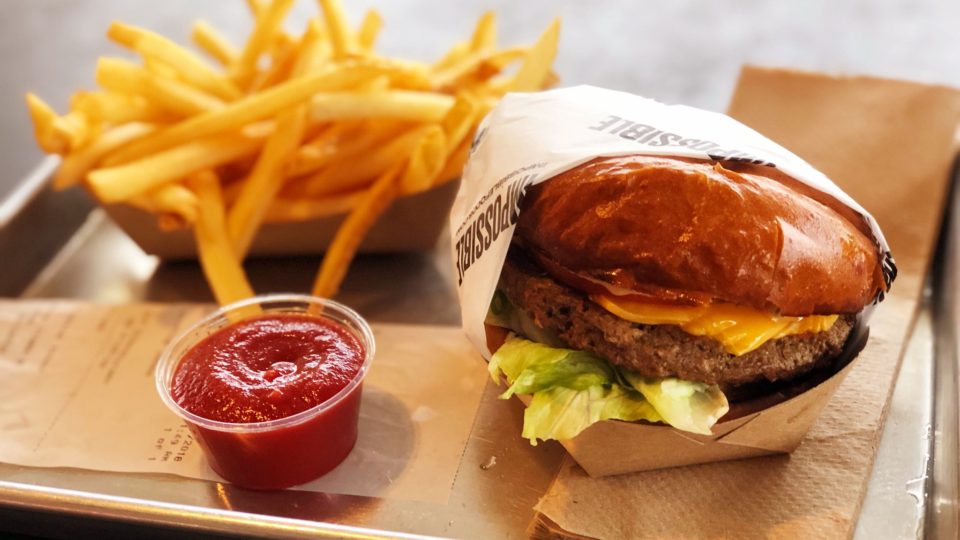
Burger King, the global hamburger fast food giant, recently made a huge announcement:  Customers will soon have the option to select either a beef patty or a plant-based patty when ordering the iconic Whopper sandwich. 

Burger King’s plant-based patty will be made by Impossible Foods, a California startup founded in 2011 with the explicit goal of decreasing the world’s reliance on animal agriculture.  Impossible Foods signature product, the Impossible burger, has already debuted as a slider in White Castle’s 380 or so stores.  It’s also being added to the menu at all 570 Red Robin locations.  Other plant-based innovators, such as Beyond Meat, have also found some mainstream success.  But the Impossible Whopper and the planned national roll-out at Burger King’s 7,200 locations is the biggest deal to date.

Impossible Foods’ major innovation comes from its use of heme, which is an iron-rich protein that in essence is what makes meat taste like meat.  Impossible Foods cultivates heme directly from plants – soybean plant roots to be exact – and then mass produces it using yeast.  This is then mixed with other plant-based ingredients to achieve the nutty texture of ground beef.

Meat production is one of the biggest single contributors to climate change.  The Impossible burger represents a better choice for the environment.  It requires 87% less water, 96% less land, and produces 89% fewer greenhouse gas emissions when compared with beef burgers.  At Burger King, the Impossible Whopper will have the same amount of protein as the regular Whopper, but 15% less fat and 90% less cholesterol. 

Meatless continues to push into the mainstream.

**********

Web Links

Behold the Beefless ‘Impossible Whopper’

Photo, posted November 27, 2018, courtesy of Sarah Stierch via Flickr.

Earth Wise is a production of WAMC Northeast Public Radio.

Australian Plastic Bag Ban

December 31, 2018 By EarthWise Leave a Comment

Last summer, the two largest supermarket chains in Australia – Coles and Woolworth’s – decided to stop offering single-use disposable plastic bags to customers.  The initial public reaction was decidedly negative.   However, within just three months after the radical change, the country’s National Retail Association reported an 80% drop in the consumption of plastic bags nationwide.

In that three-month period, it is estimated that 1.5 billion bags have been prevented from use.   Some retailers are reporting reduction rates as high as 90% in the use of the bags.  The move by the big supermarkets has paved the way for smaller businesses to follow suit. The smaller businesses typically can’t afford to risk the wrath of their customers with a major change like this. Customers have to learn to bring their own bags or buy reusable bags at the store.

In much of Australia, the phase-out of plastic bags has been legislated, but the state of New South Wales, home to Sydney, the country’s largest city, has not enacted such legislation. So, supermarkets themselves are doing the work of getting rid of the bags.

The change has not been without hiccups.  For the first couple of months after the plastic bag ban was put in place, Woolworth’s saw poor sales in its stores.  However, customers eventually got used to the new way of doing things and sales levels returned.

Disposable plastic bags often find their way into the oceans where they break down into microparticles. Studies have shown that these plastic bits are ingested by a wide variety of marine life.  For example, a UK study found that 100% of sea turtles in the Pacific and Atlantic oceans as well as the Mediterranean Sea had plastic in their digestive systems.

**********

Web Links

Australia-wide ban leads to ’80 per cent drop’ in plastic bag consumption

Photo, posted September 18, 2018, courtesy of Matthew Paul Argall via Flickr.  

Earth Wise is a production of WAMC Northeast Public Radio.
Salt Cocktails Compromise Freshwater

August 1, 2018 By EarthWise Leave a Comment

https://earthwiseradio.org/wp-content/uploads/2018/07/EW-08-01-18-Salt-Cocktails.mp3

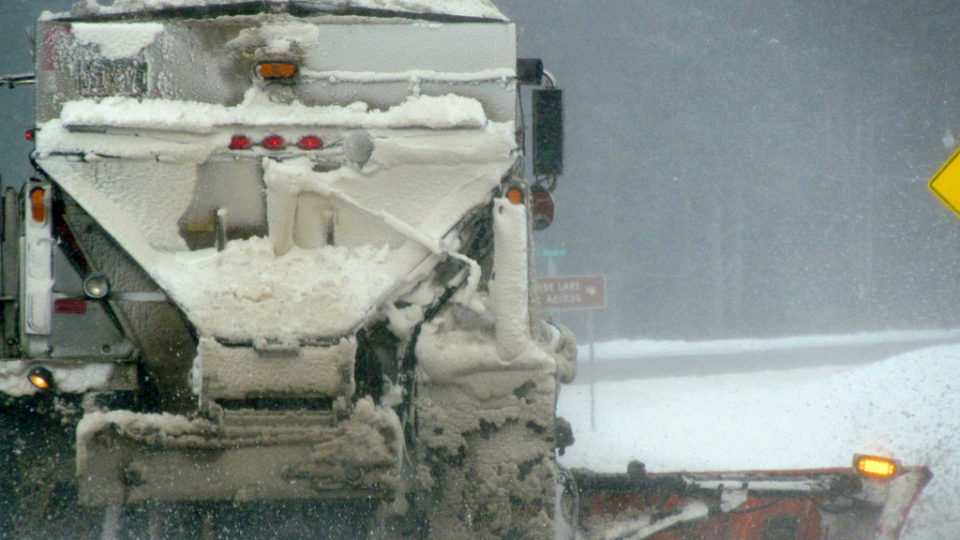
Human activities are exposing US rivers and streams to a cocktail of salts, with consequences for infrastructure and drinking water supplies. Road salt, fertilizers, and mining waste – as well as natural weathering of concrete, rocks, and soils – all contribute to increased salt in waterways. When these different salt compounds combine, their harmful effects can amplify.

[Read more…] about Salt Cocktails Compromise Freshwater

Tipping Points

August 9, 2017 By EarthWise

https://earthwiseradio.org/wp-content/uploads/2017/08/EW-08-09-17-Tipping-Points.mp3

A tipping point is a point in time when a small thing can make a big change happen.  The term was popularized in sociology in recent decades, but really comes from physics where is refers to adding a small amount of weight to a balanced object causing it to topple over.

[Read more…] about Tipping Points

A Trillion Ton Iceberg

July 24, 2017 By EarthWise

https://earthwiseradio.org/wp-content/uploads/2017/07/EW-07-24-17-A-Trillion-Ton-Iceberg.mp3

Back in February, we did a story about a rapidly-growing crack in the fourth-largest ice shelf in Antarctica.  At that time, the crack in the Larsen C ice shelf was more than 100 miles long and was growing at a pace of about 5 football fields a day.

[Read more…] about A Trillion Ton Iceberg

Fossil Fuel Companies And Renewables

June 12, 2017 By EarthWise

https://earthwiseradio.org/wp-content/uploads/2017/06/EW-06-12-17-Fossil-Fuel-Companies-and-Renewables.mp3

There is a tendency to think of the changes in the energy industry as a pitched battle between fossil fuel companies and renewable energy.  There is some truth to this, but only to a certain extent.   The multi-trillion-dollar fossil fuel industry is made up of businesses dedicated to growth and increased profits.  And like businesses in other industries when major changes occur, fossil fuel companies may read the tea leaves and change with the times.

[Read more…] about Fossil Fuel Companies And Renewables

Wiping Out Wildlife

December 1, 2016 By WAMC WEB

https://earthwiseradio.org/wp-content/uploads/2016/12/EW-12-01-16-Wiping-Out-Wildlife.mp3

According to a new report from the World Wildlife Fund, the world’s animal populations have suffered widespread population declines in the last half century.  And thousands of species are now scrambling to survive. 

[Read more…] about Wiping Out Wildlife

Big Changes To Big Poultry

July 19, 2016 By WAMC WEB

https://earthwiseradio.org/wp-content/uploads/2016/07/EW-07-19-16-Big-Changes-to-Big-Poultry.mp3

Perdue Farms, the fourth-largest poultry producer in the United States, produces over 60 million pounds of chicken a week.  They are arguably the most progressive of the giant poultry companies.  Two years ago, they were the first to renounce routine antibiotic use.   In late June, they announced a comprehensive animal-welfare plan – the first among large producers – that will change how its chickens are bred, raised and killed.

[Read more…] about Big Changes To Big Poultry

  • « Go to Previous Page
  • Page 1
  • Page 2

Primary Sidebar

Recent Episodes

  • An uninsurable future
  • Clean energy and jobs
  • Insect declines in remote regions
  • Fossil fuel producing nations ignoring climate goals
  • Trouble for clownfishes

WAMC Northeast Public Radio

WAMC/Northeast Public Radio is a regional public radio network serving parts of seven northeastern states (more...)

Copyright © 2026 ·